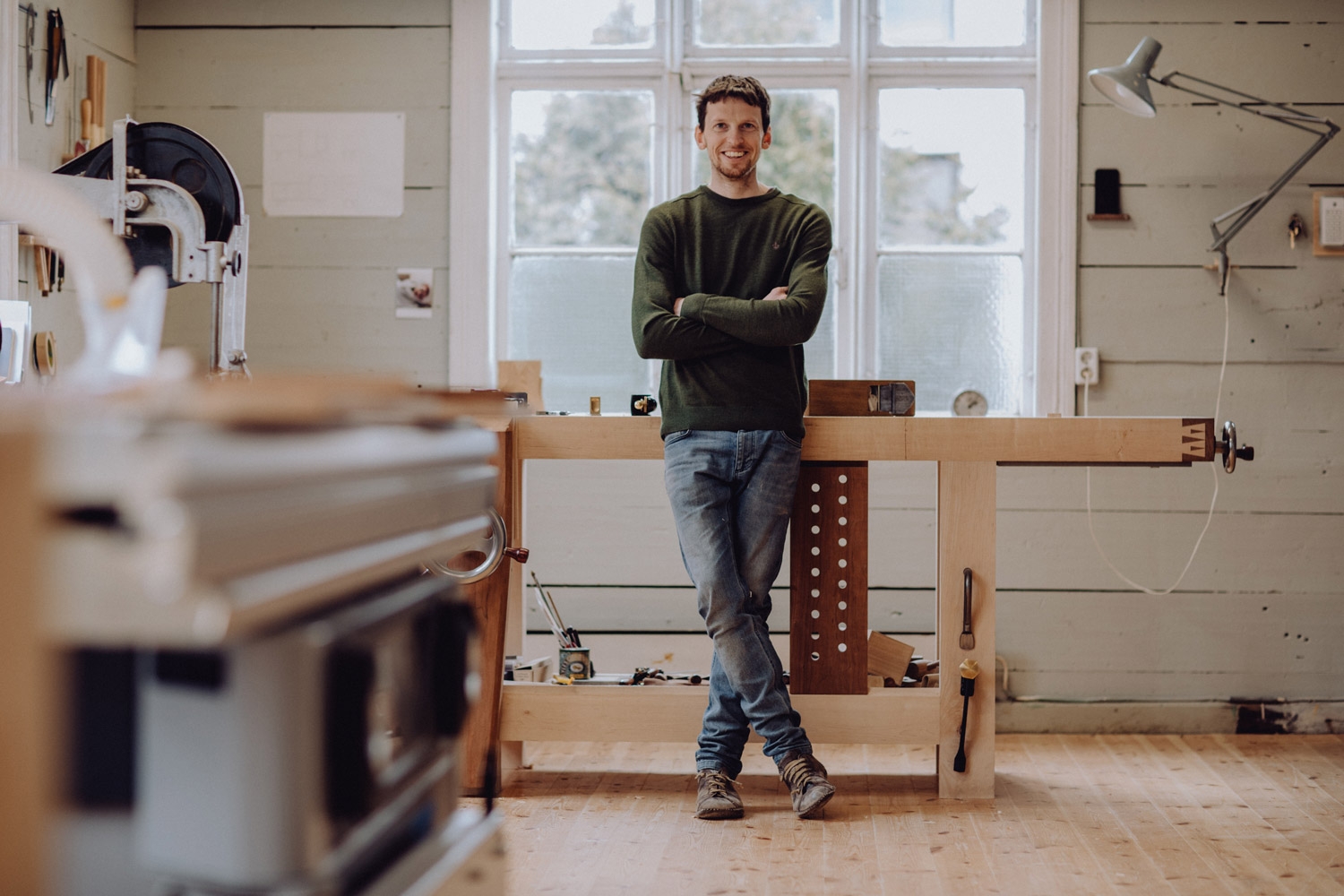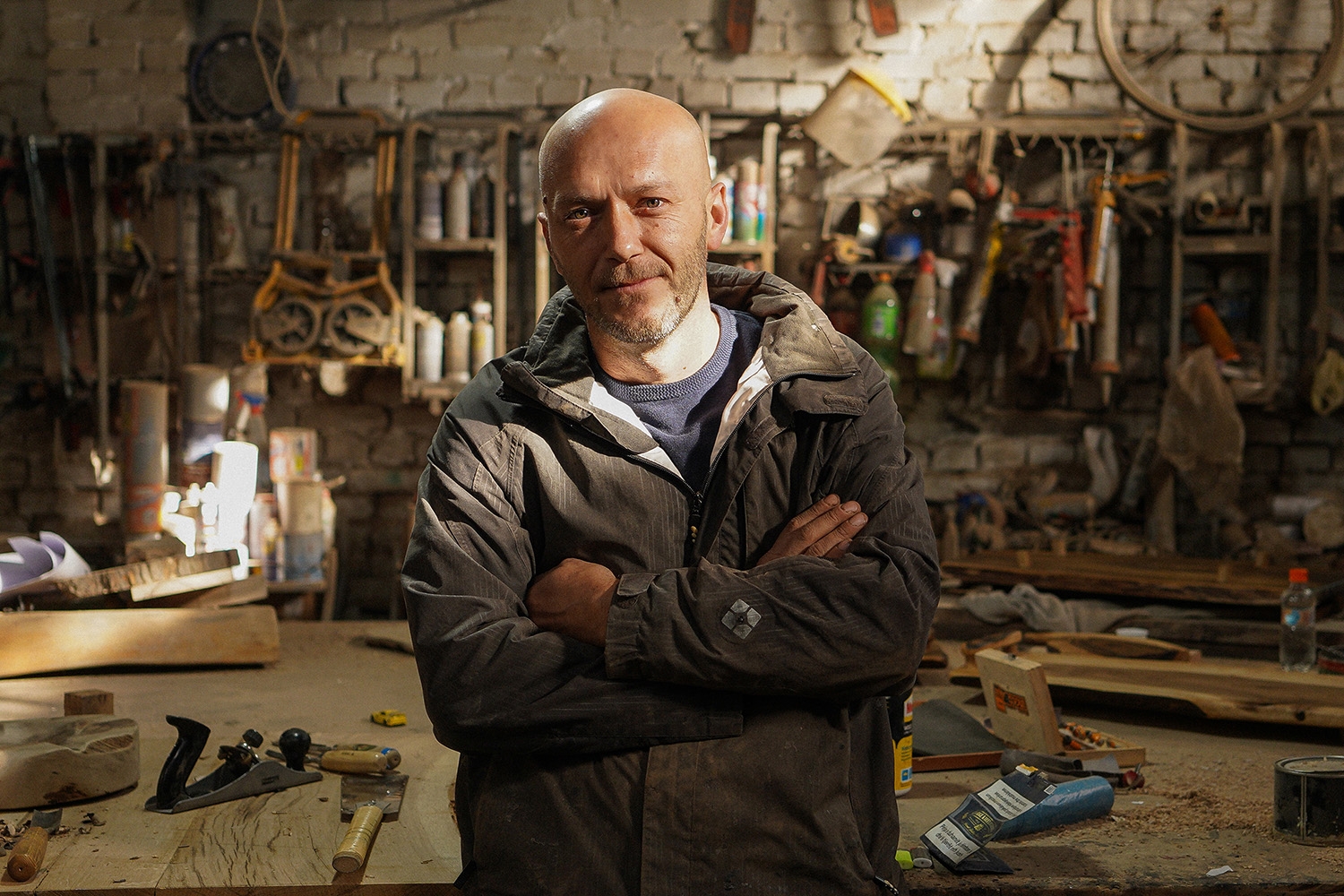
Woorim Kang
Furniture maker
Seoul, South Korea
To live alongside beauty
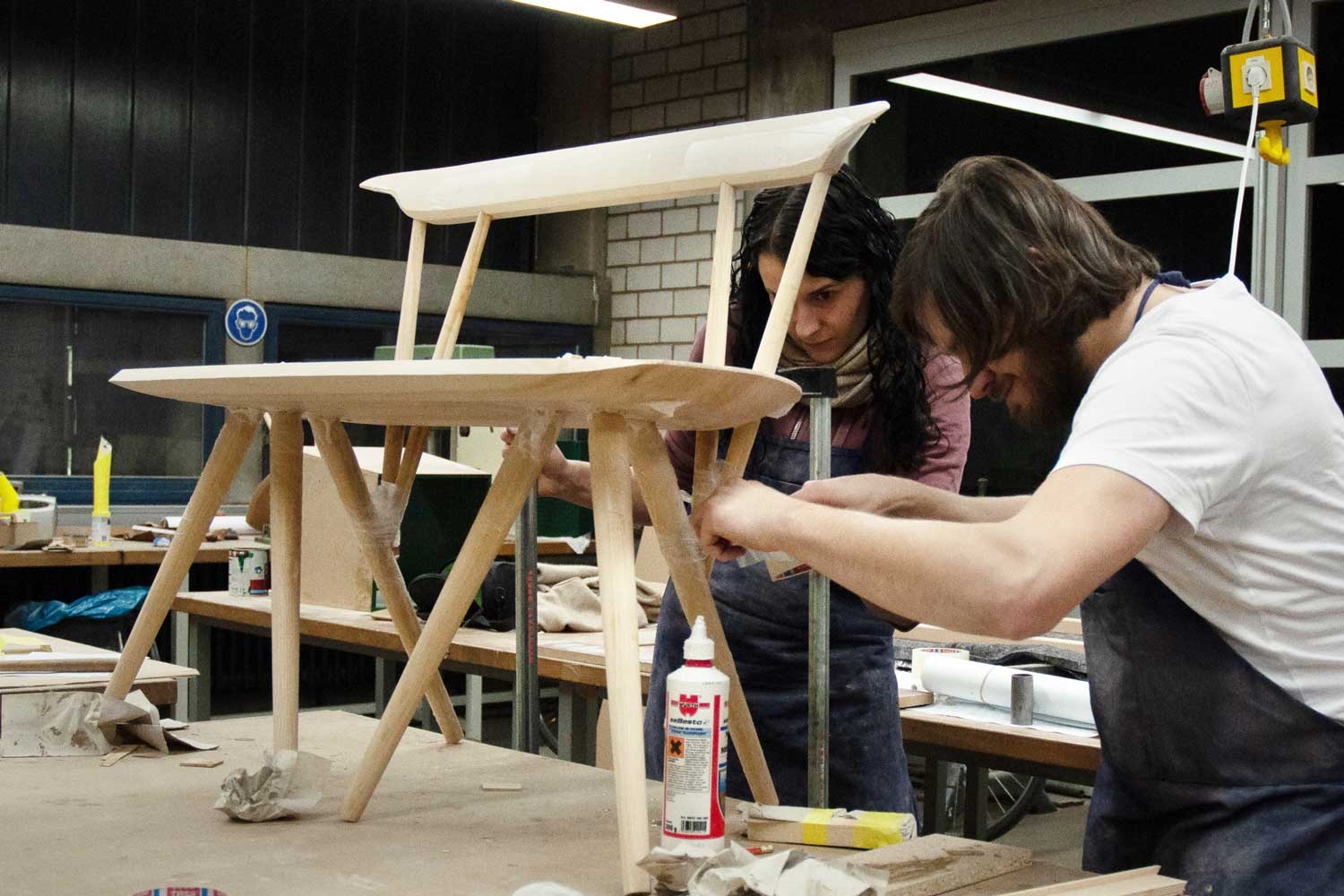
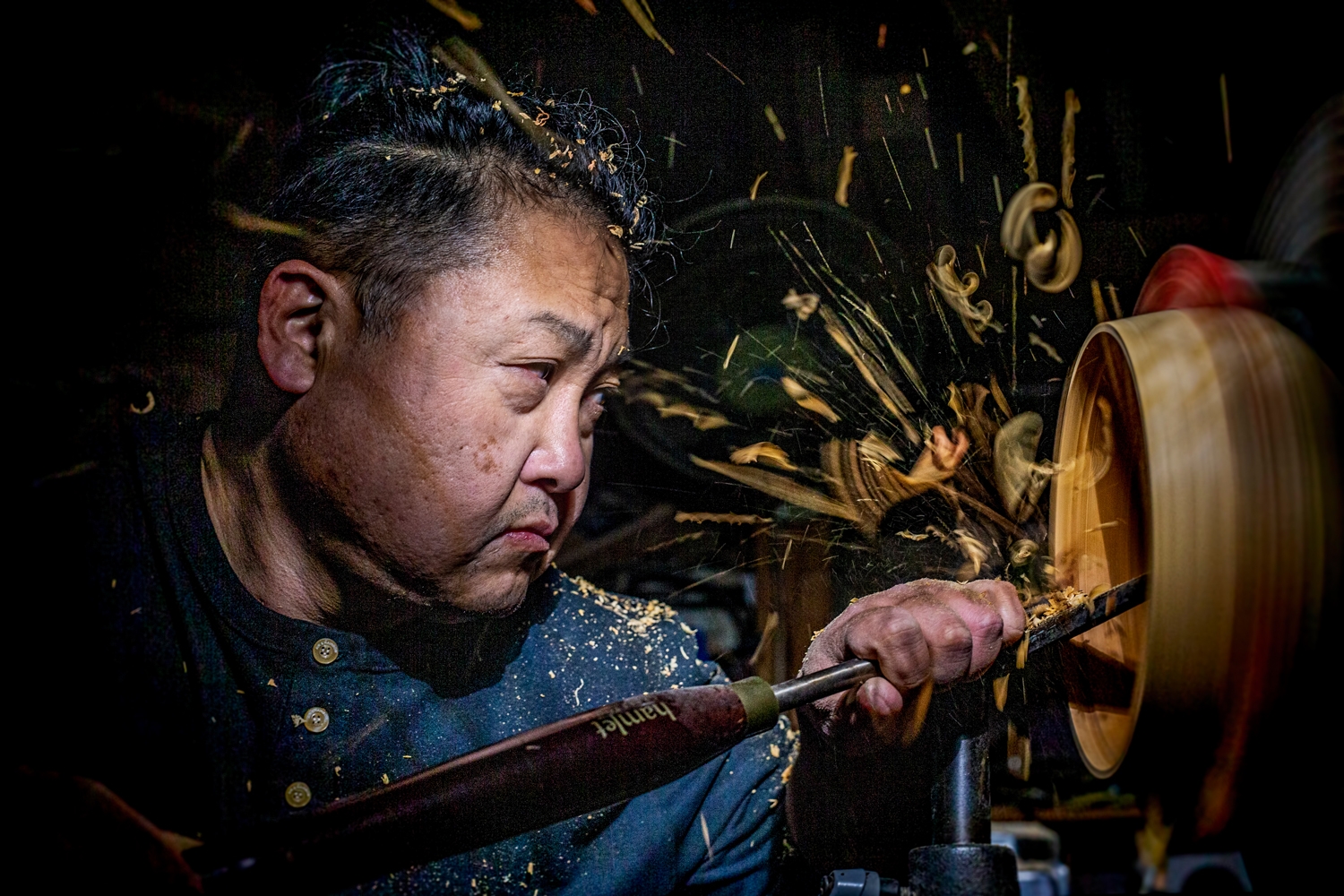
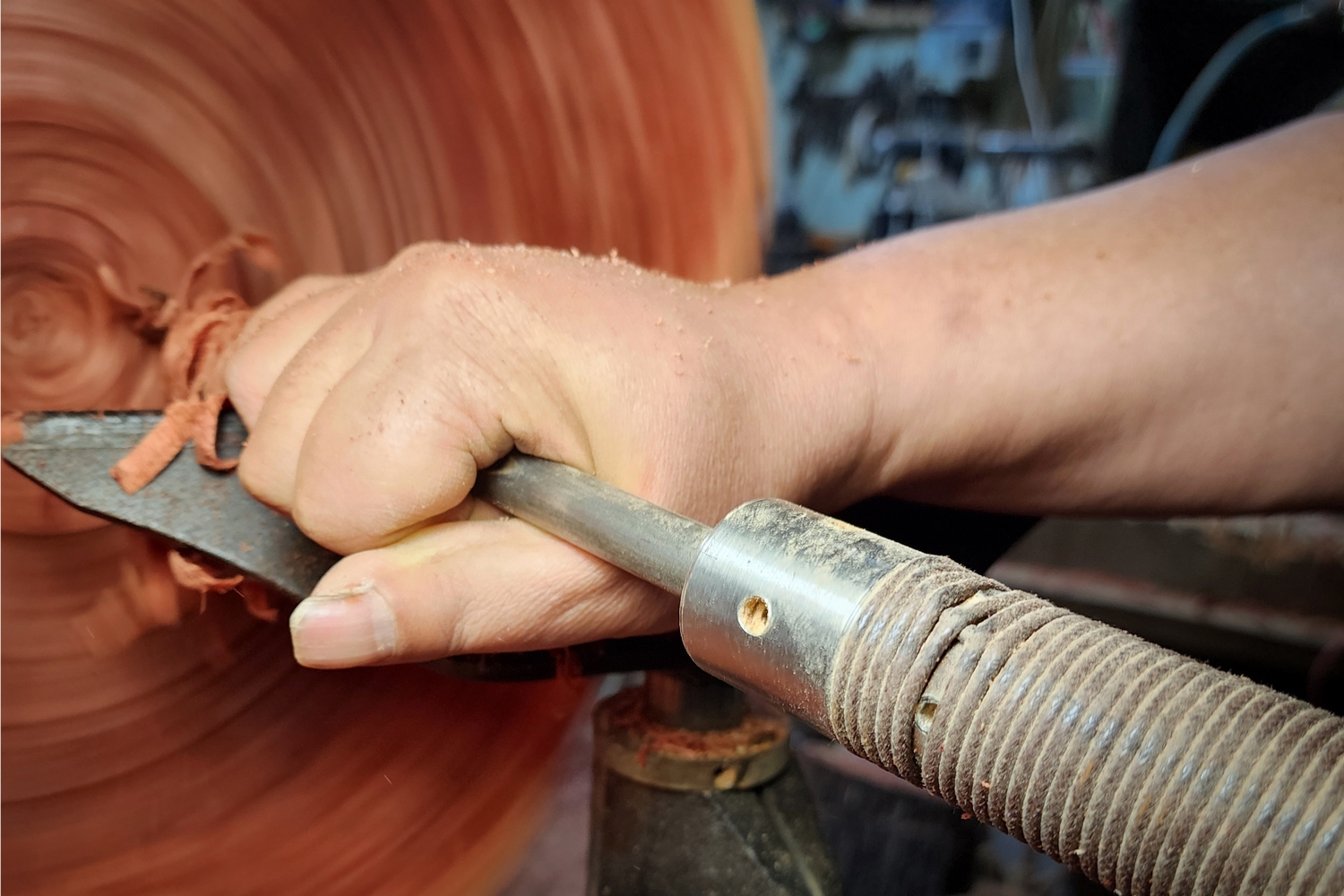
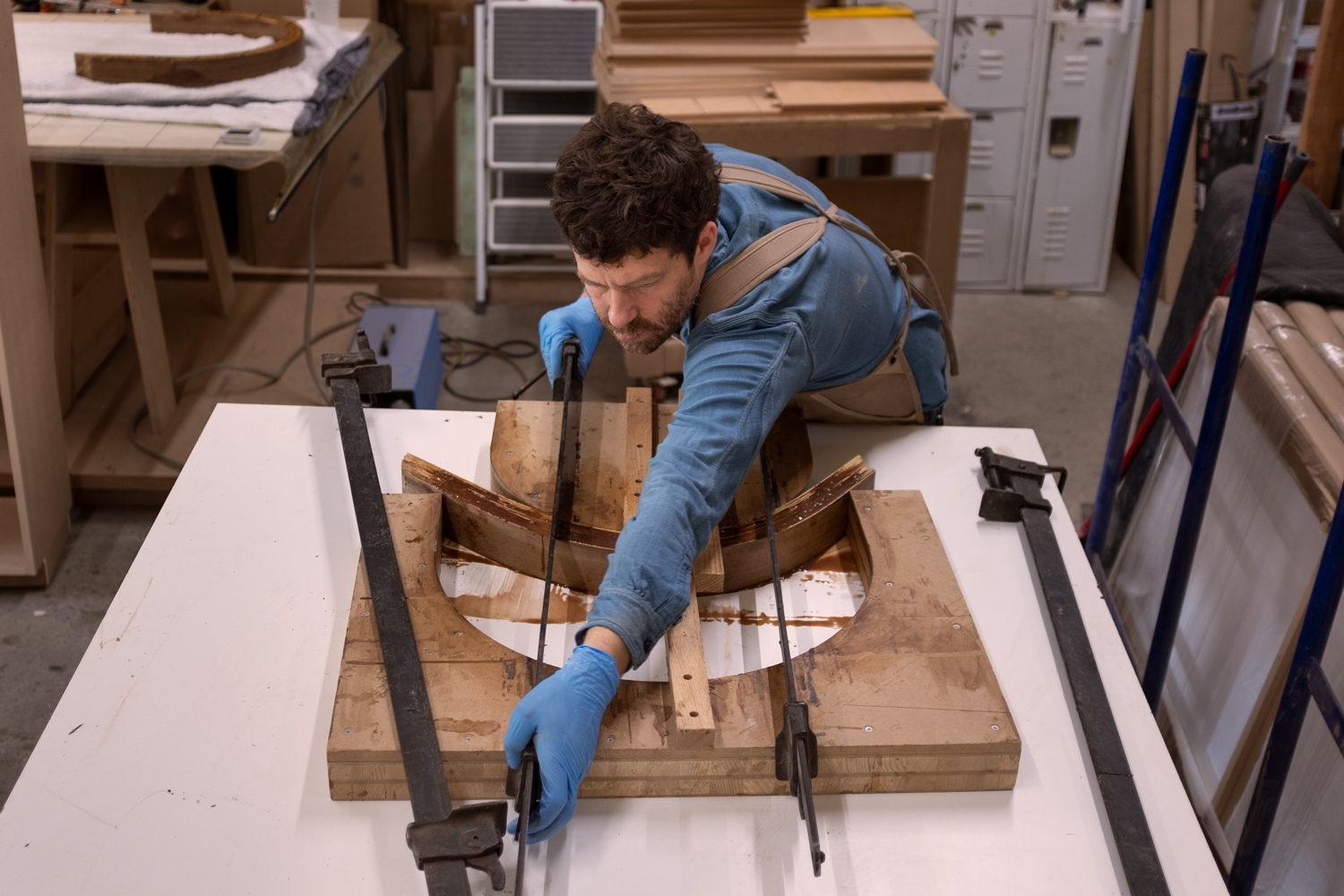
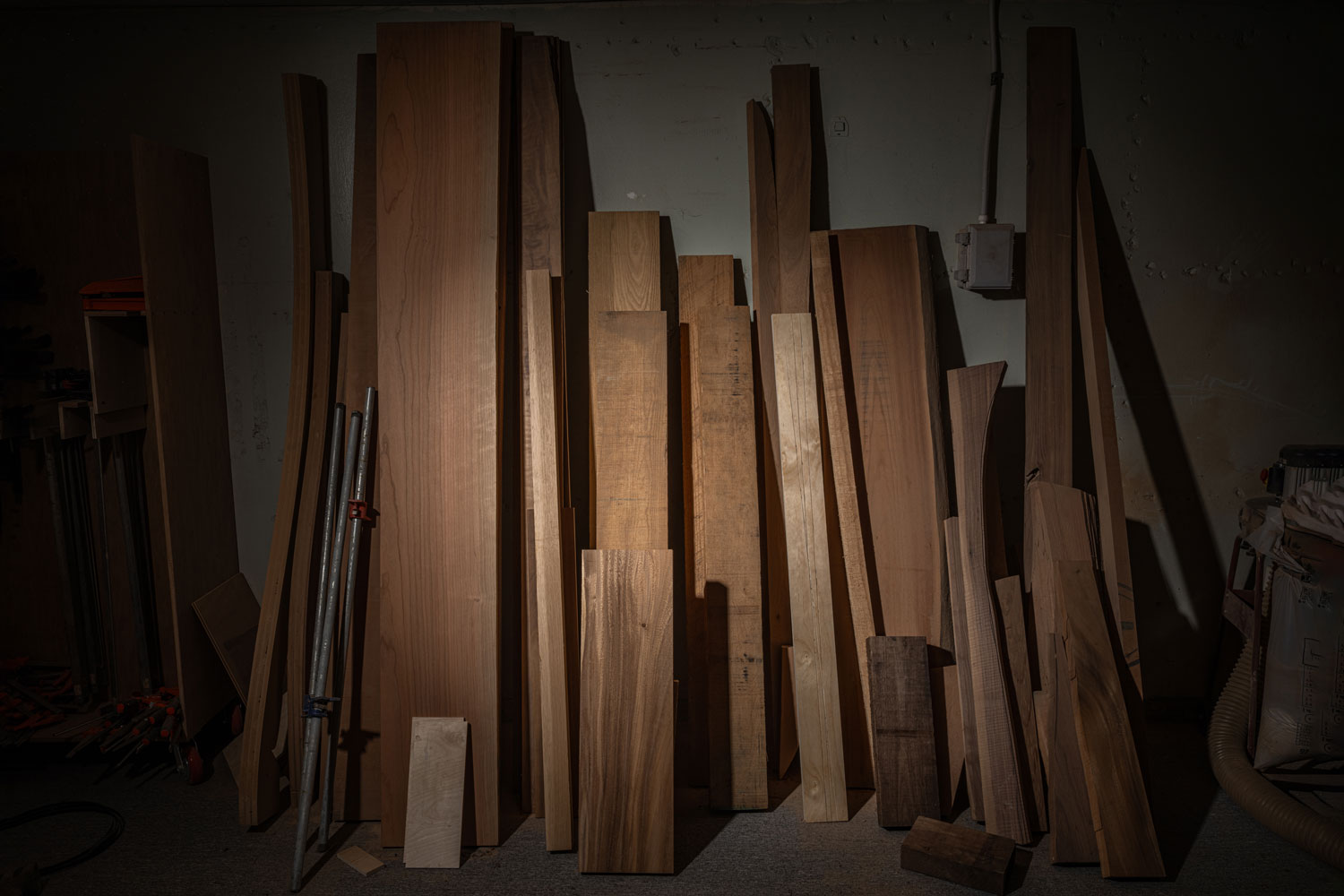
- Woorim builds furniture-scale objects by laminating timber into large blocks and carving back
- His work sits deliberately within the craft tradition of objects made to be used
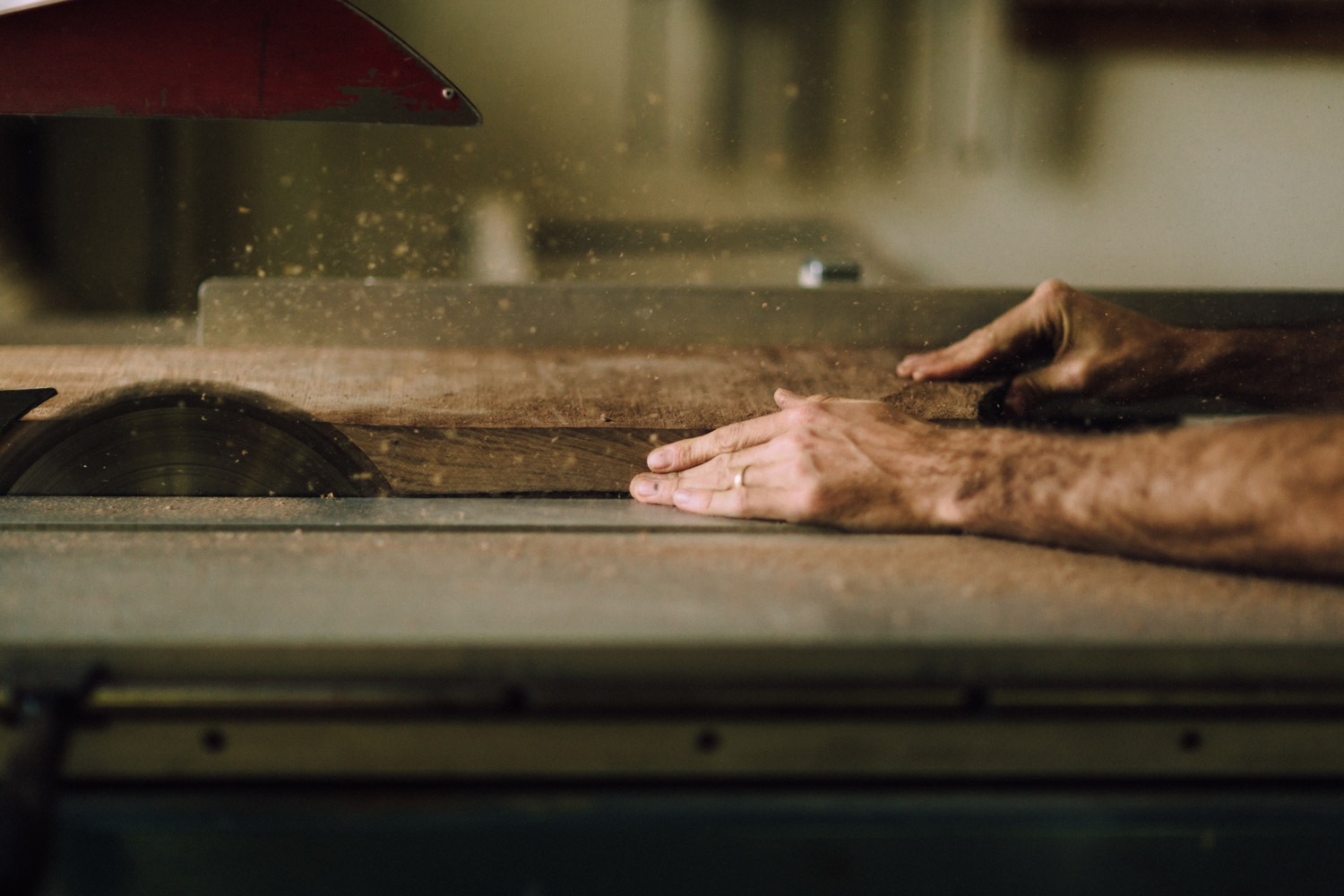
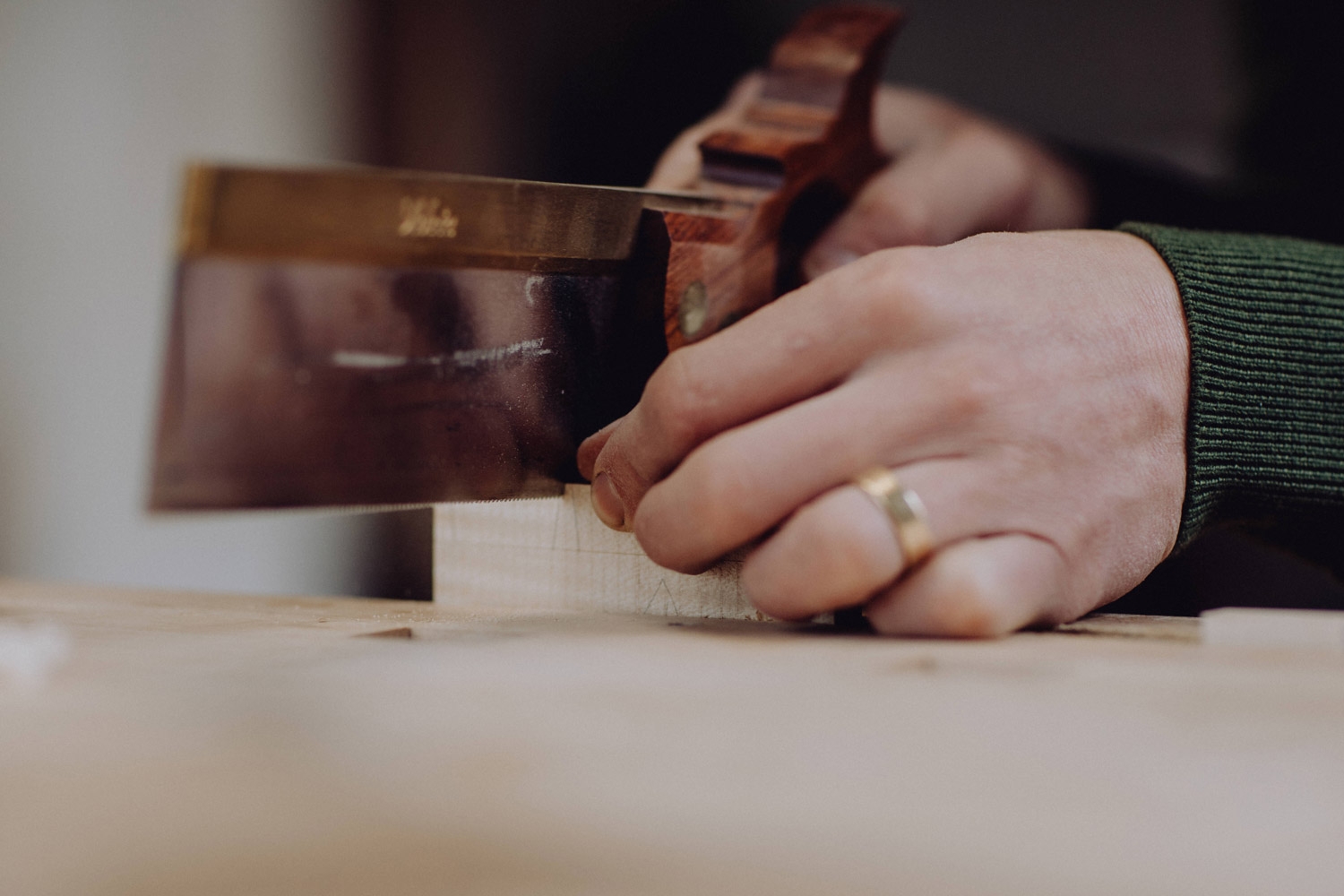
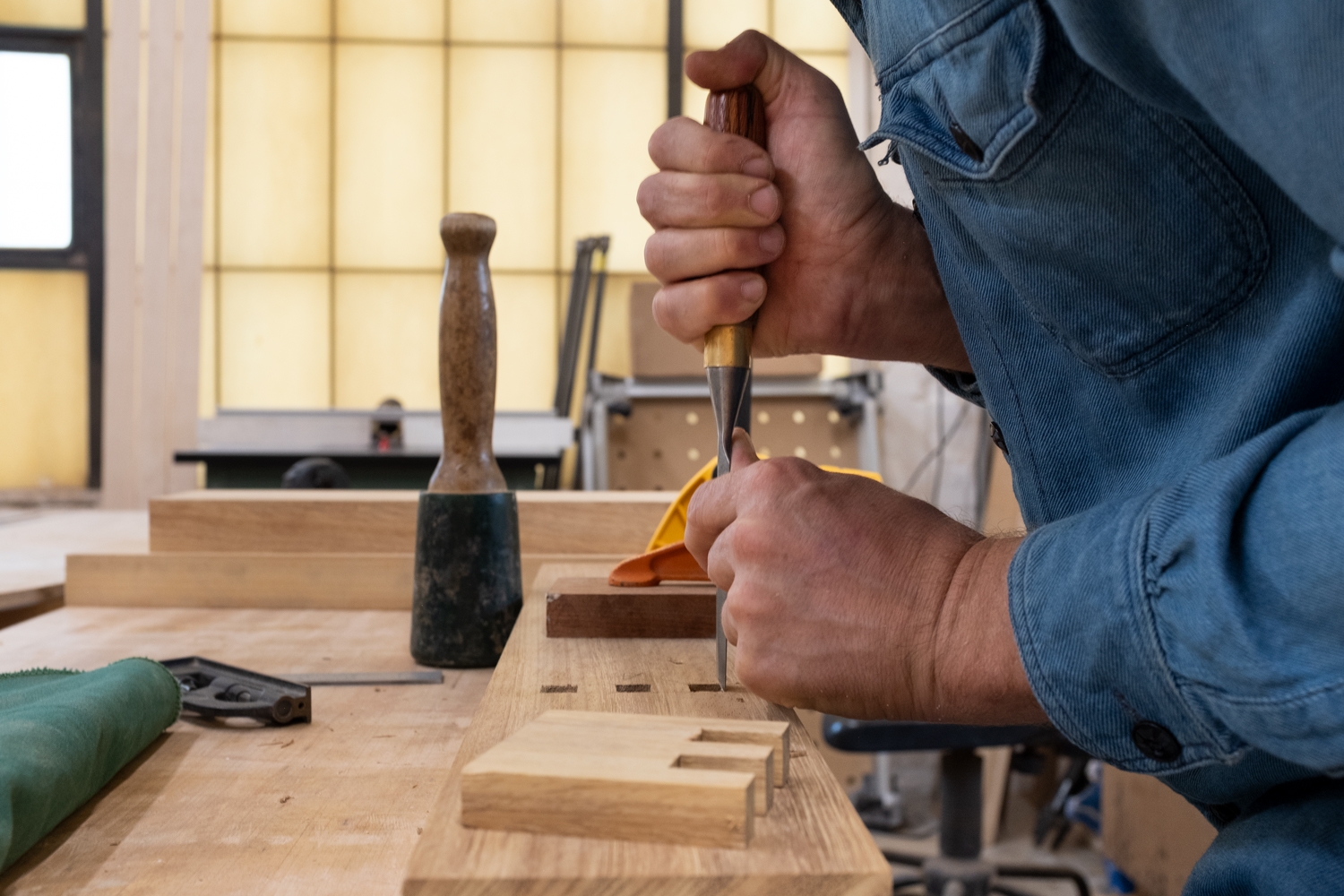
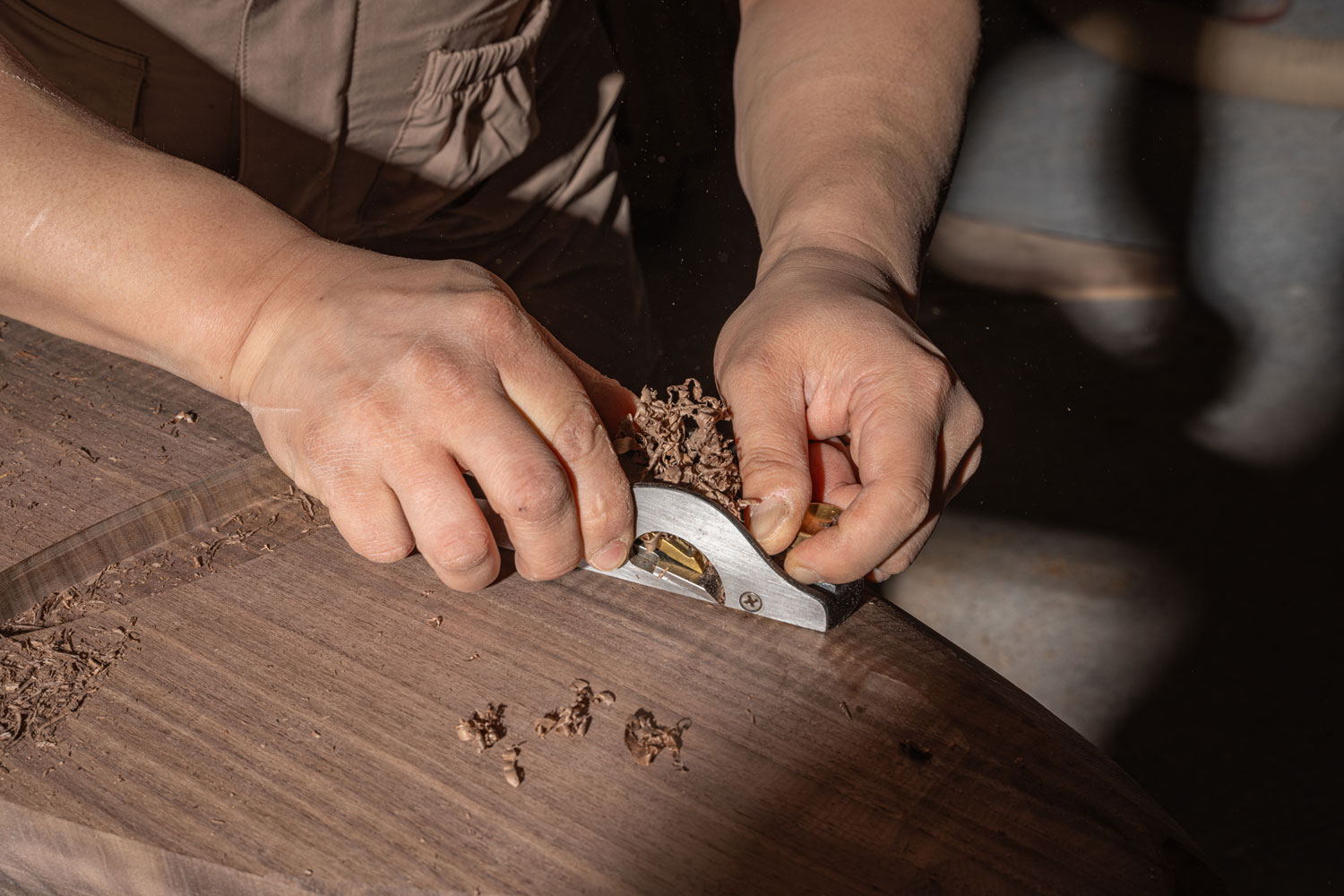
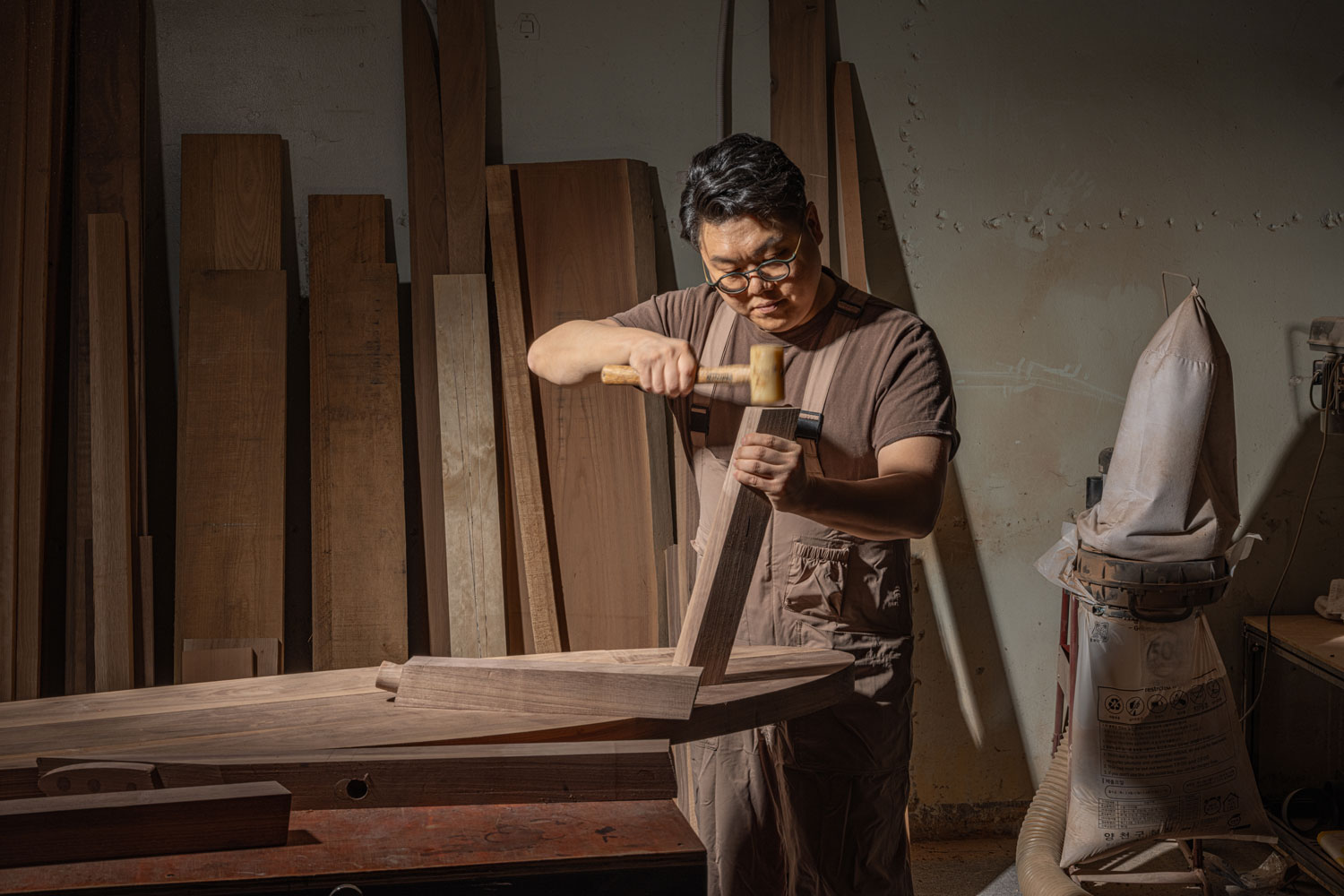
- He combines joinery, wood bending and traditional woodworking techniques to craft his pieces
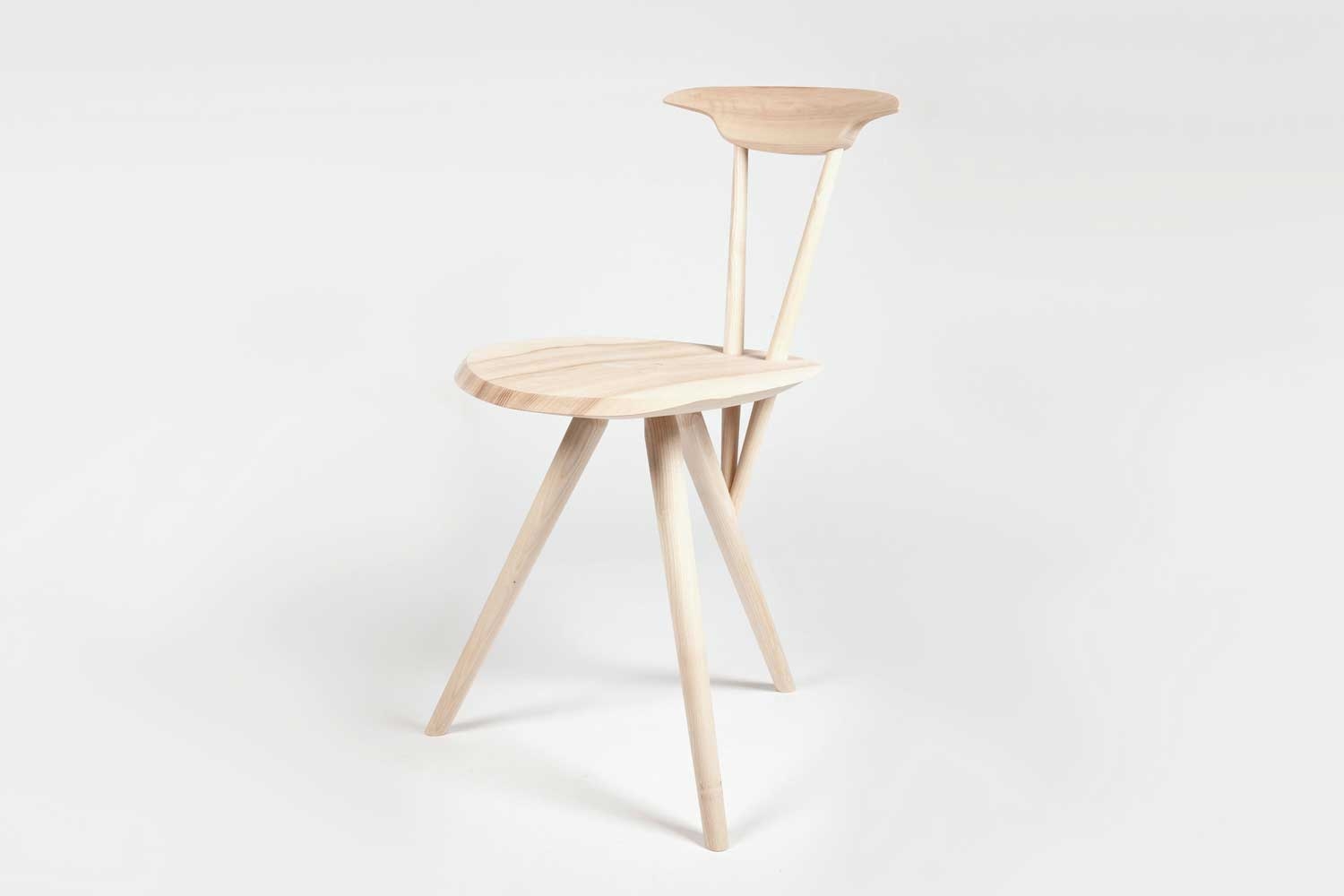
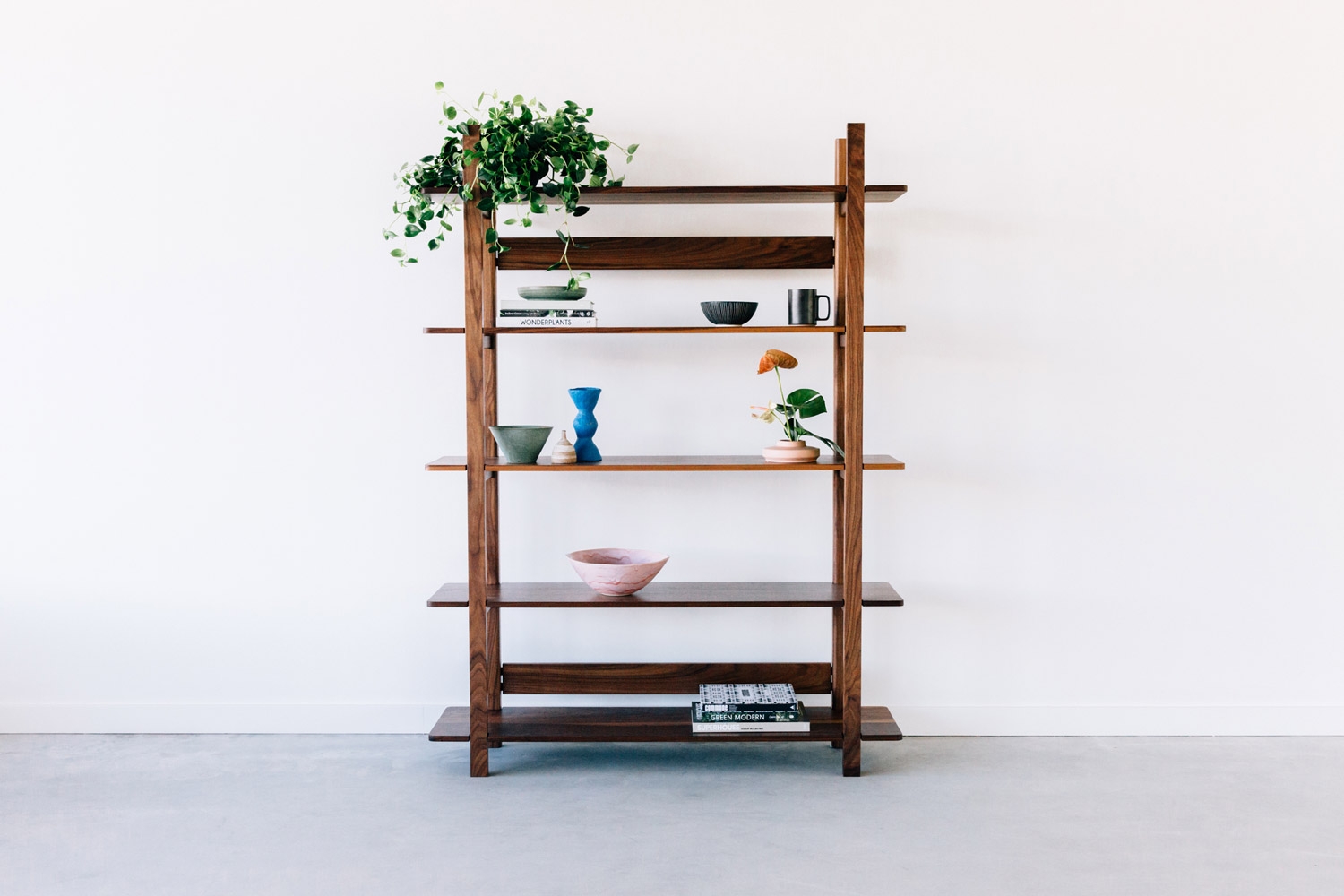
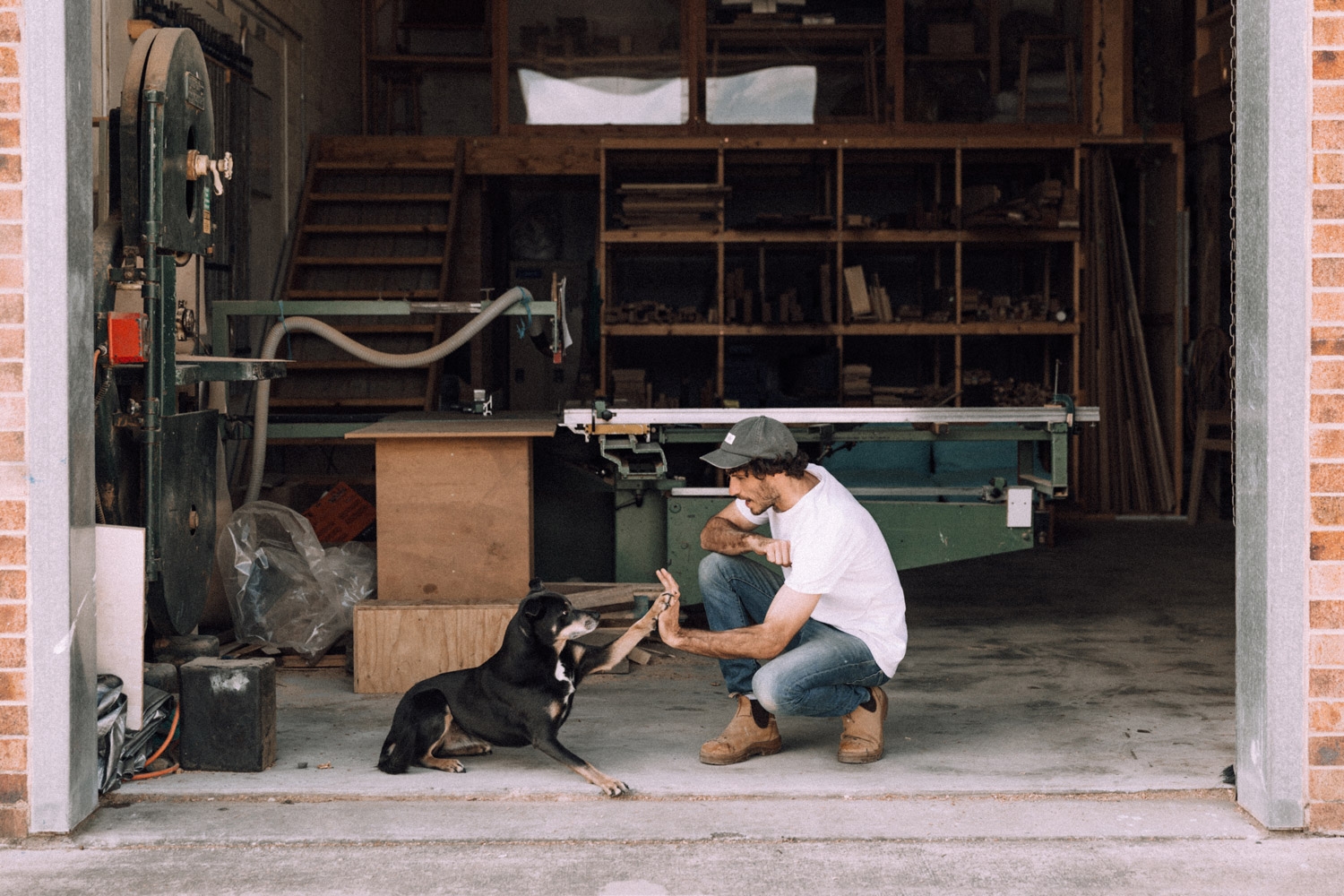
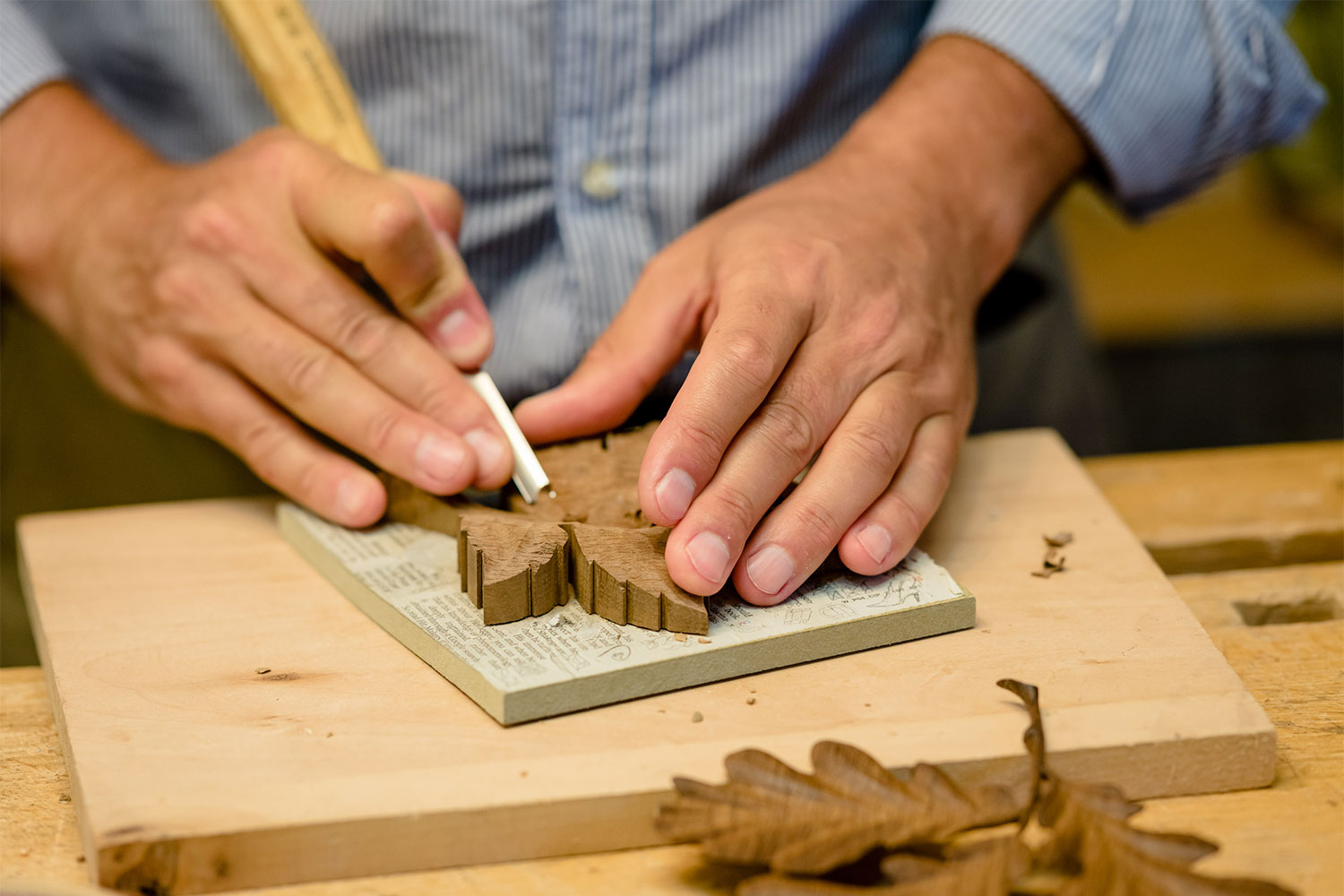
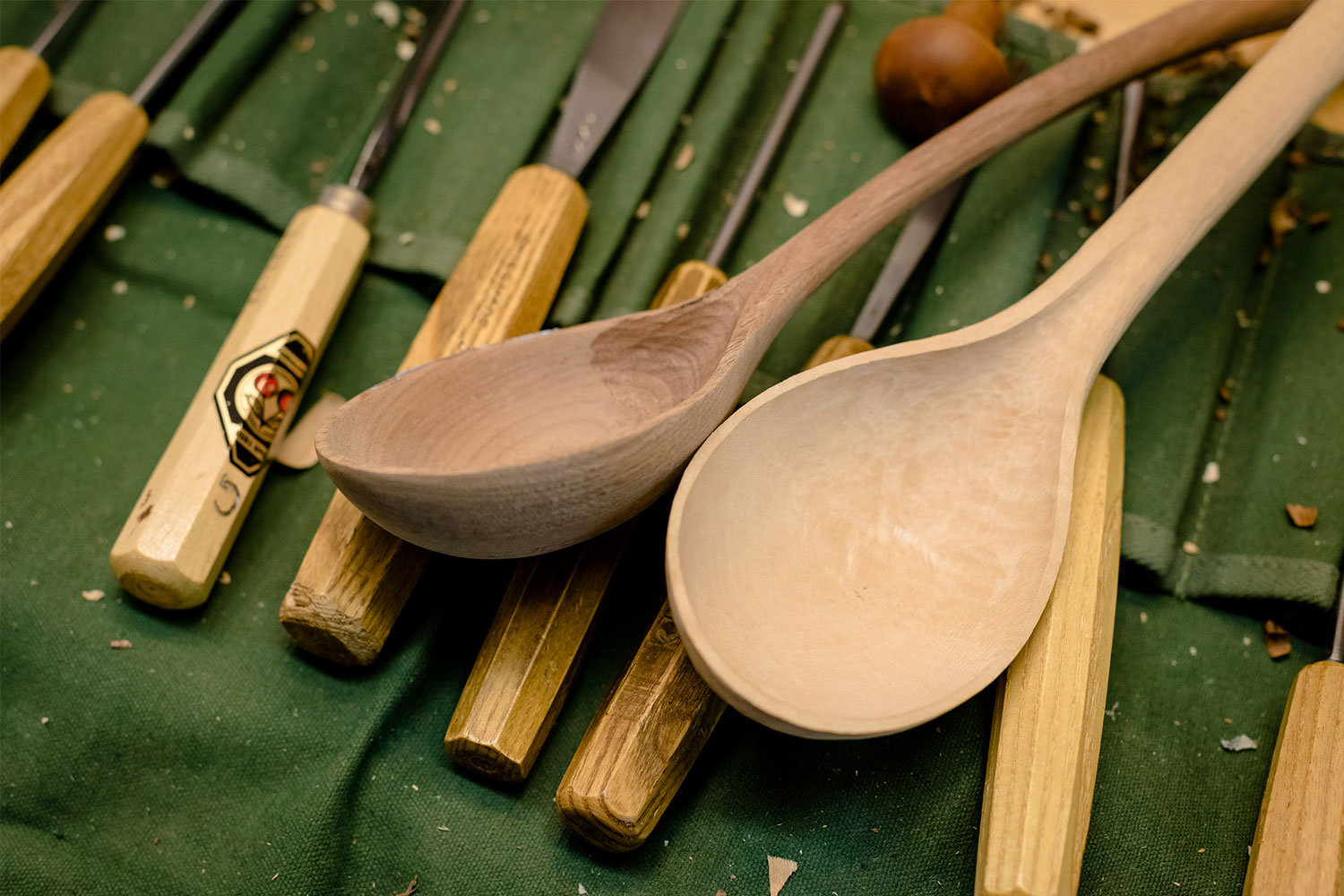
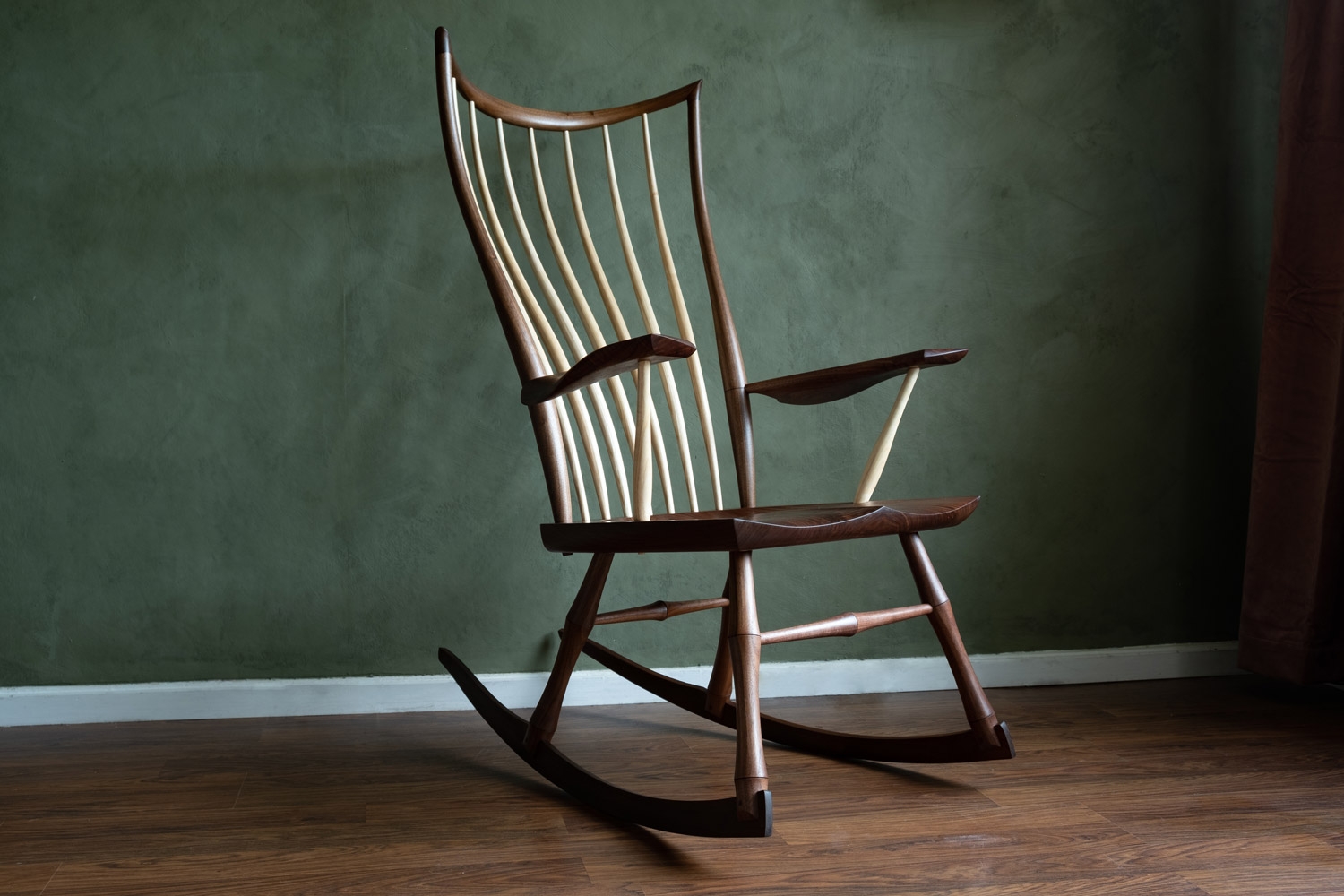
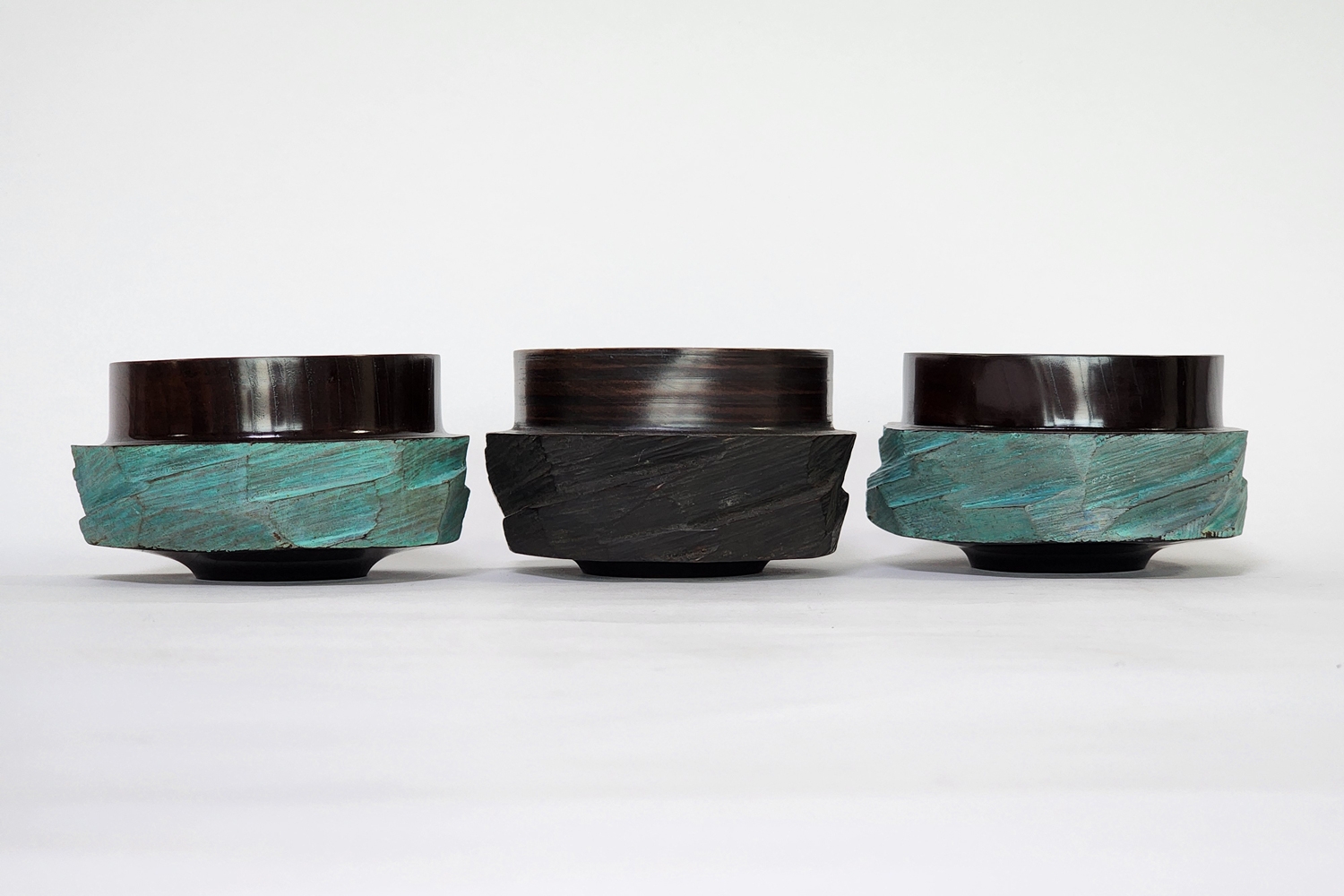
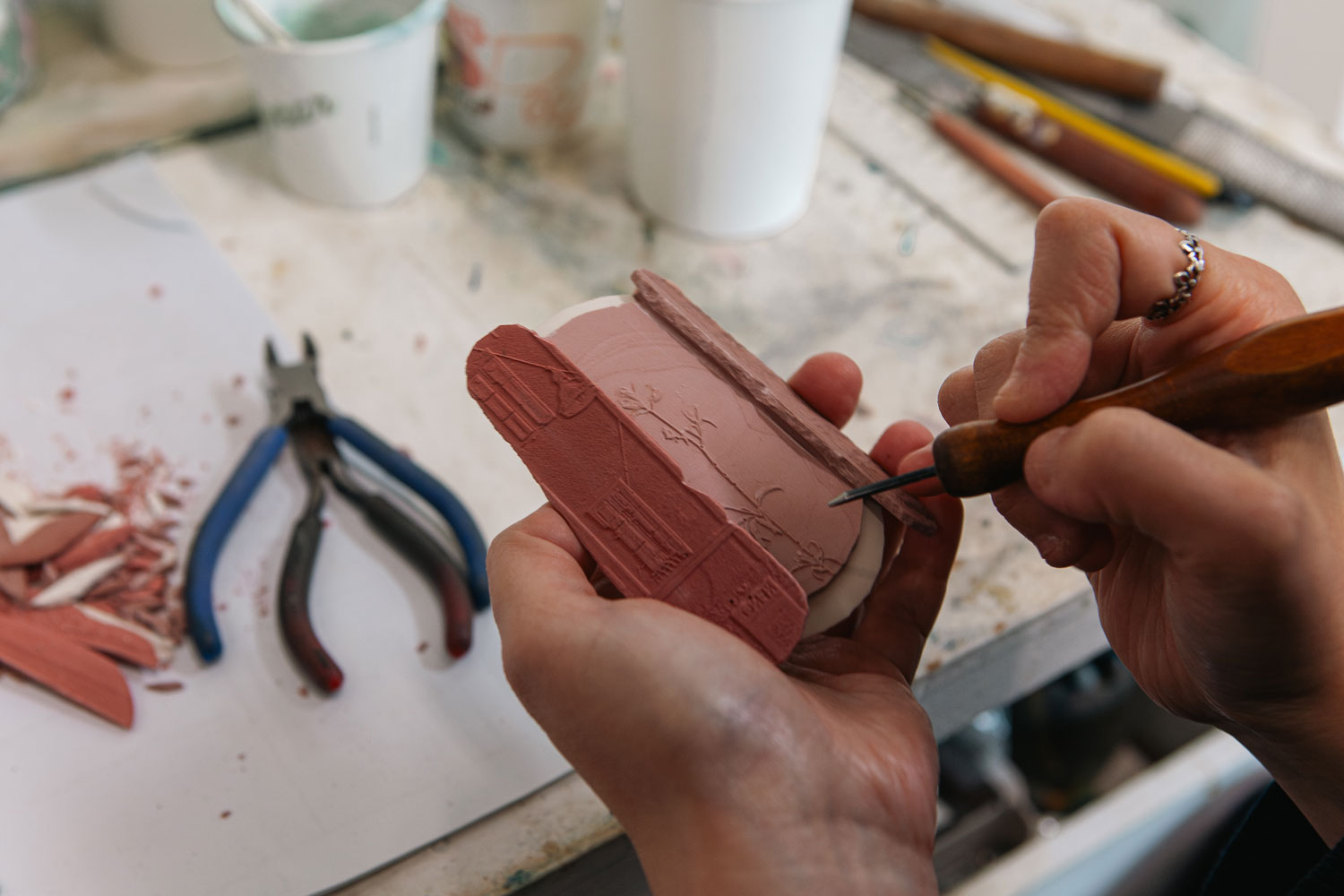
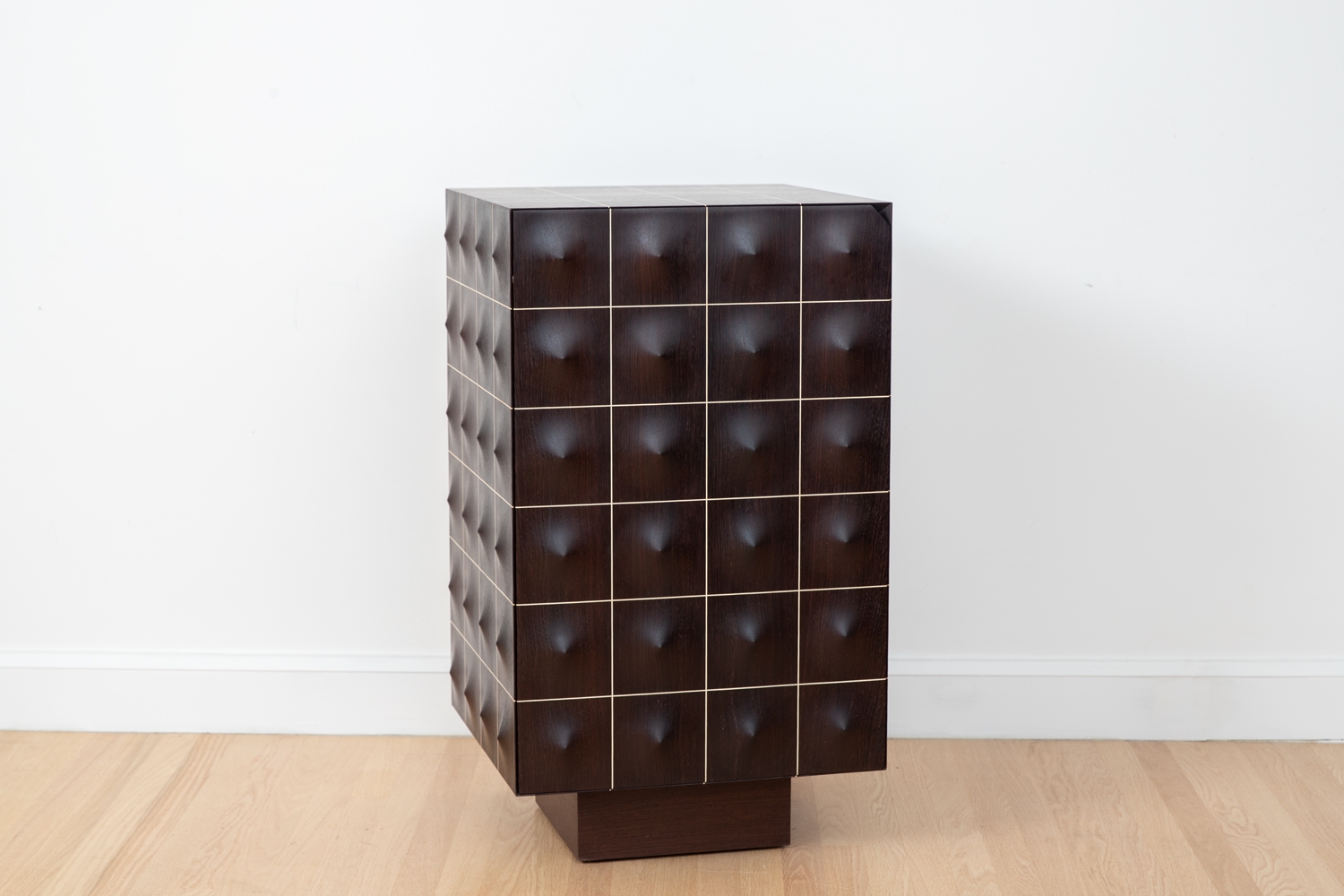
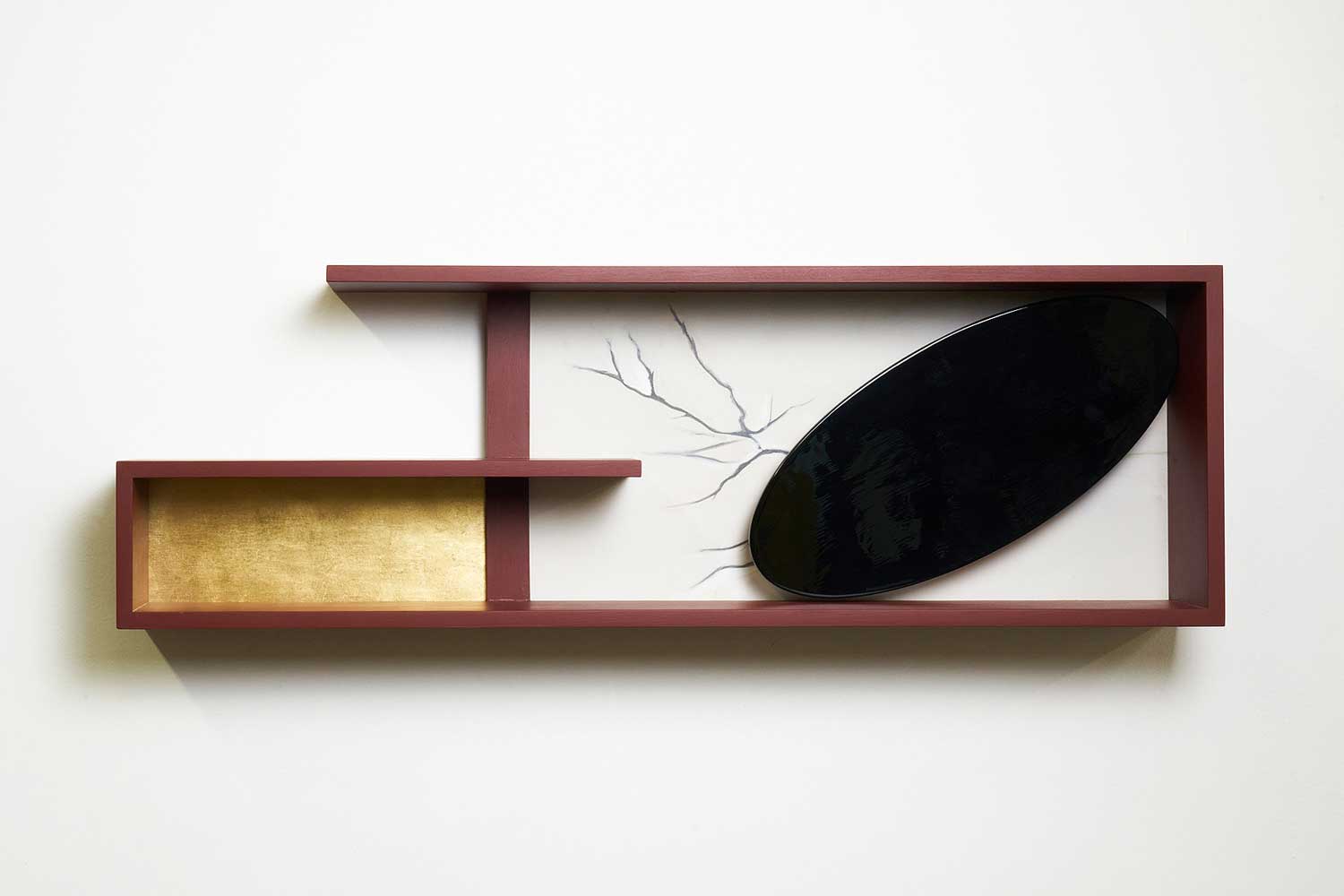
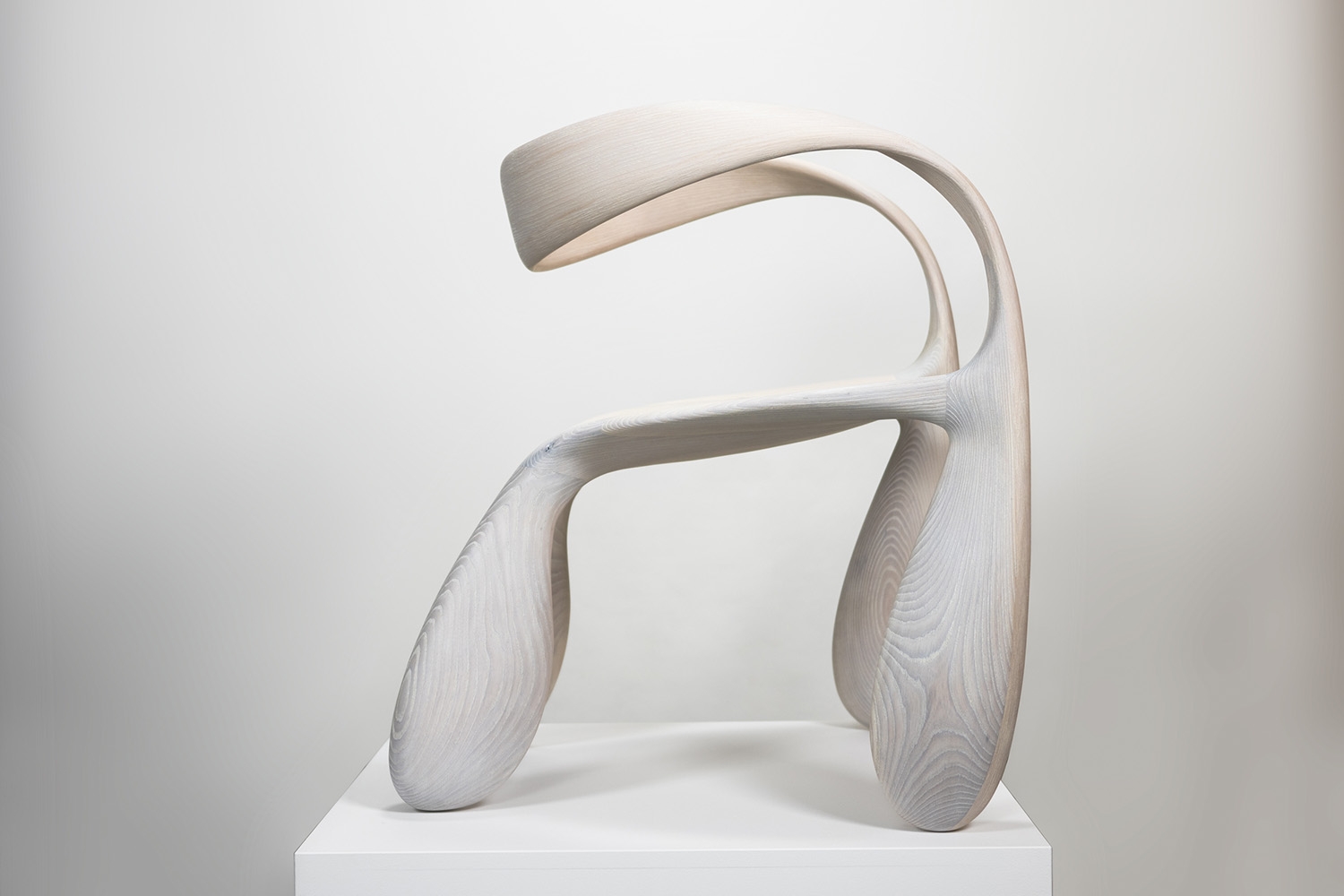
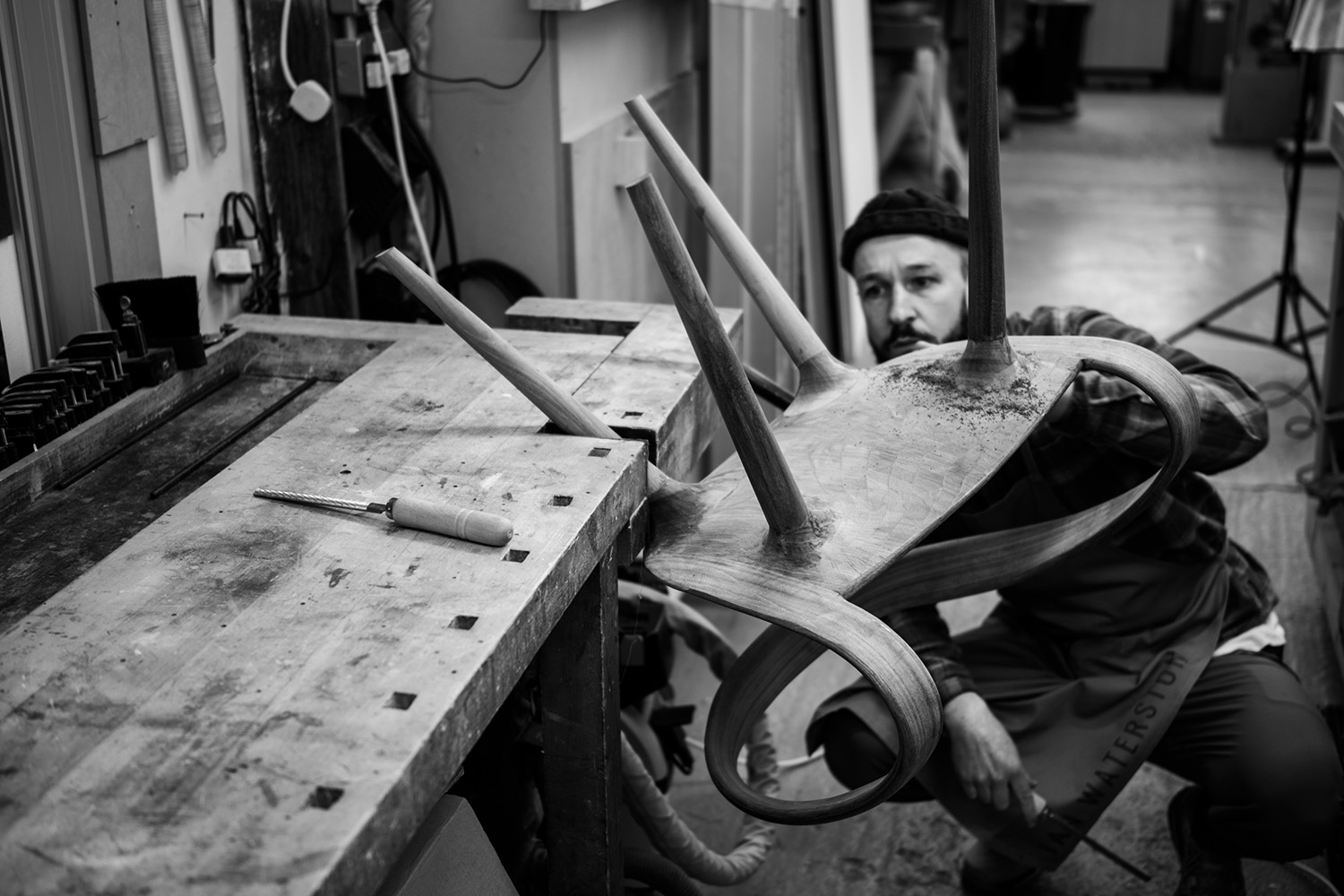
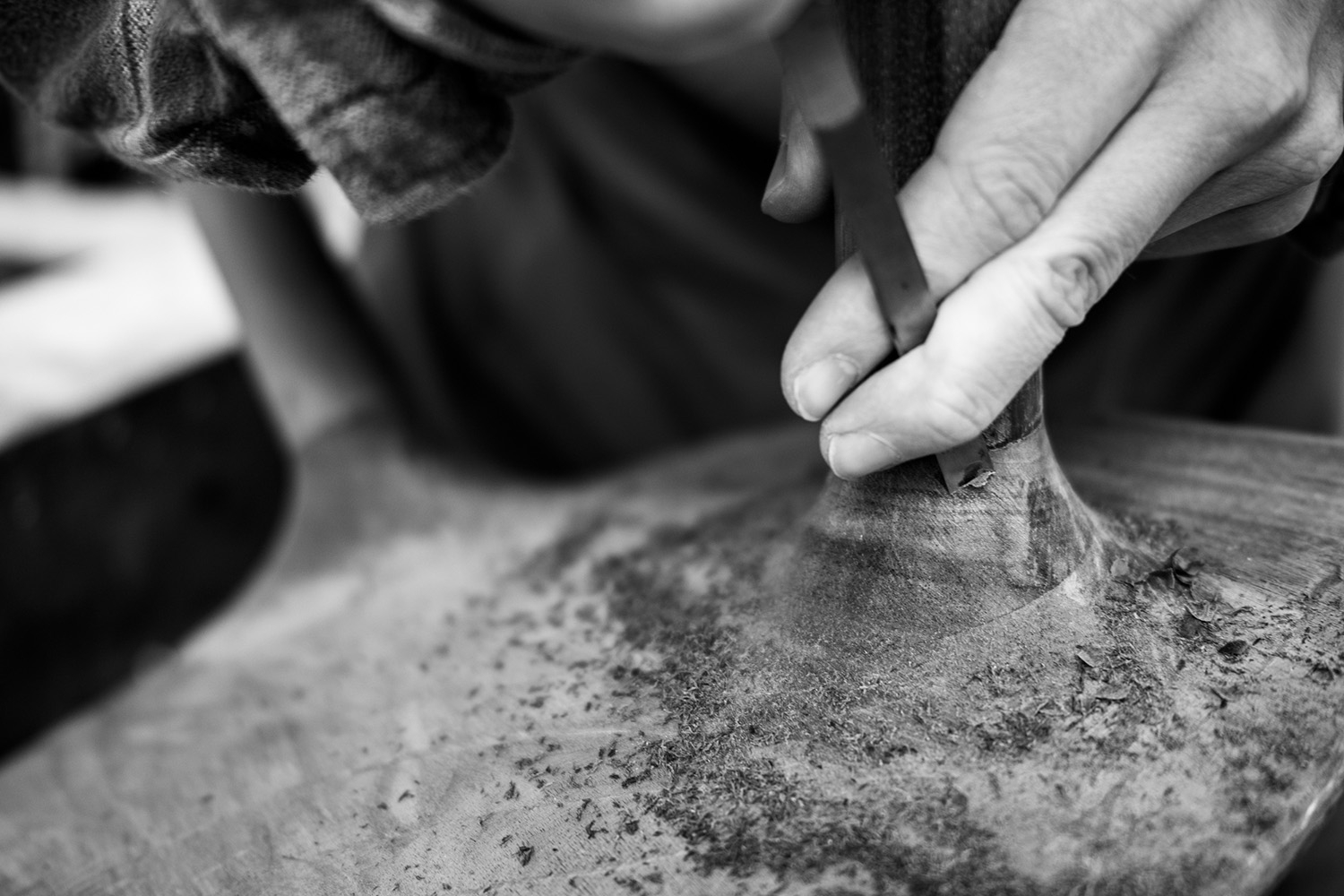
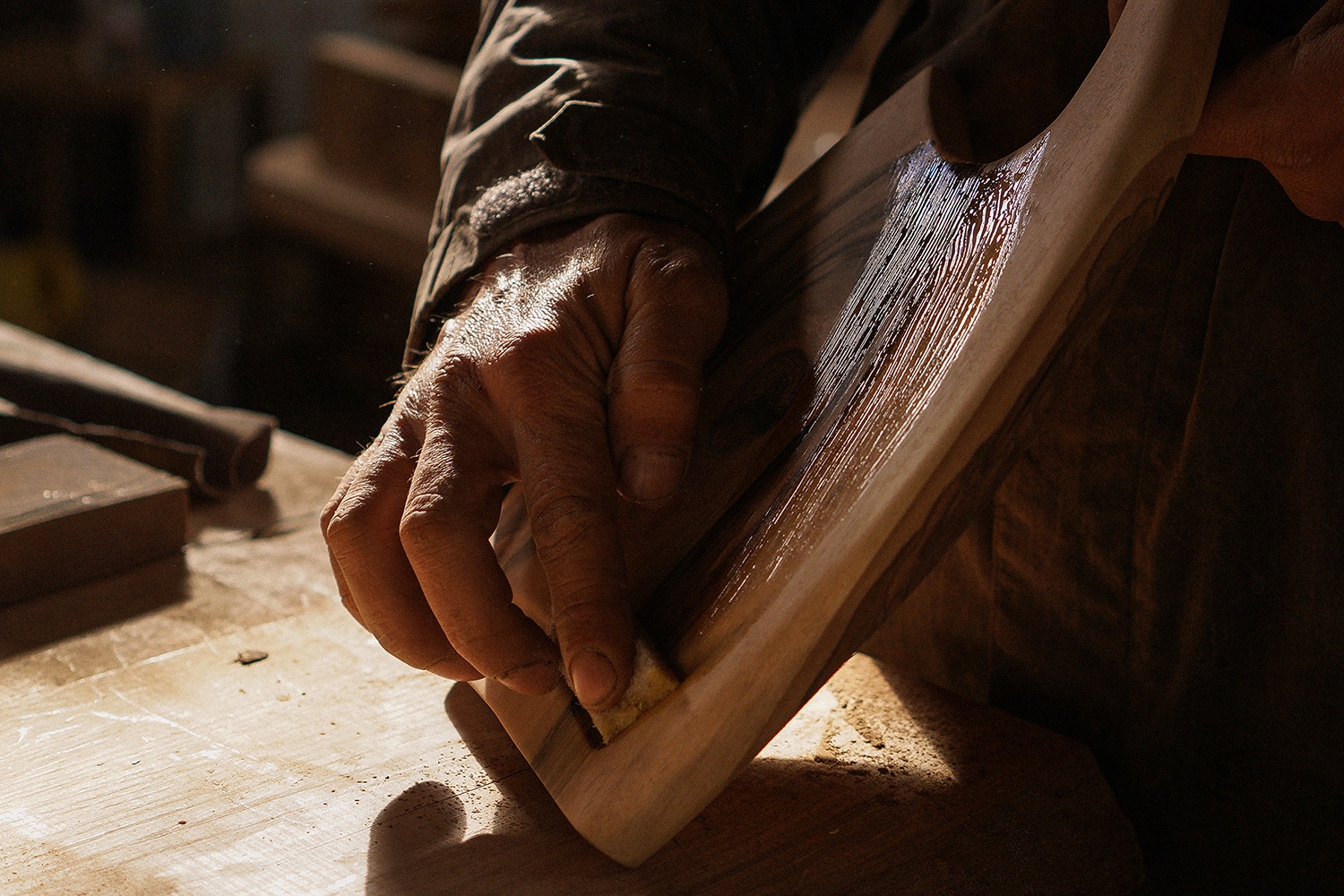
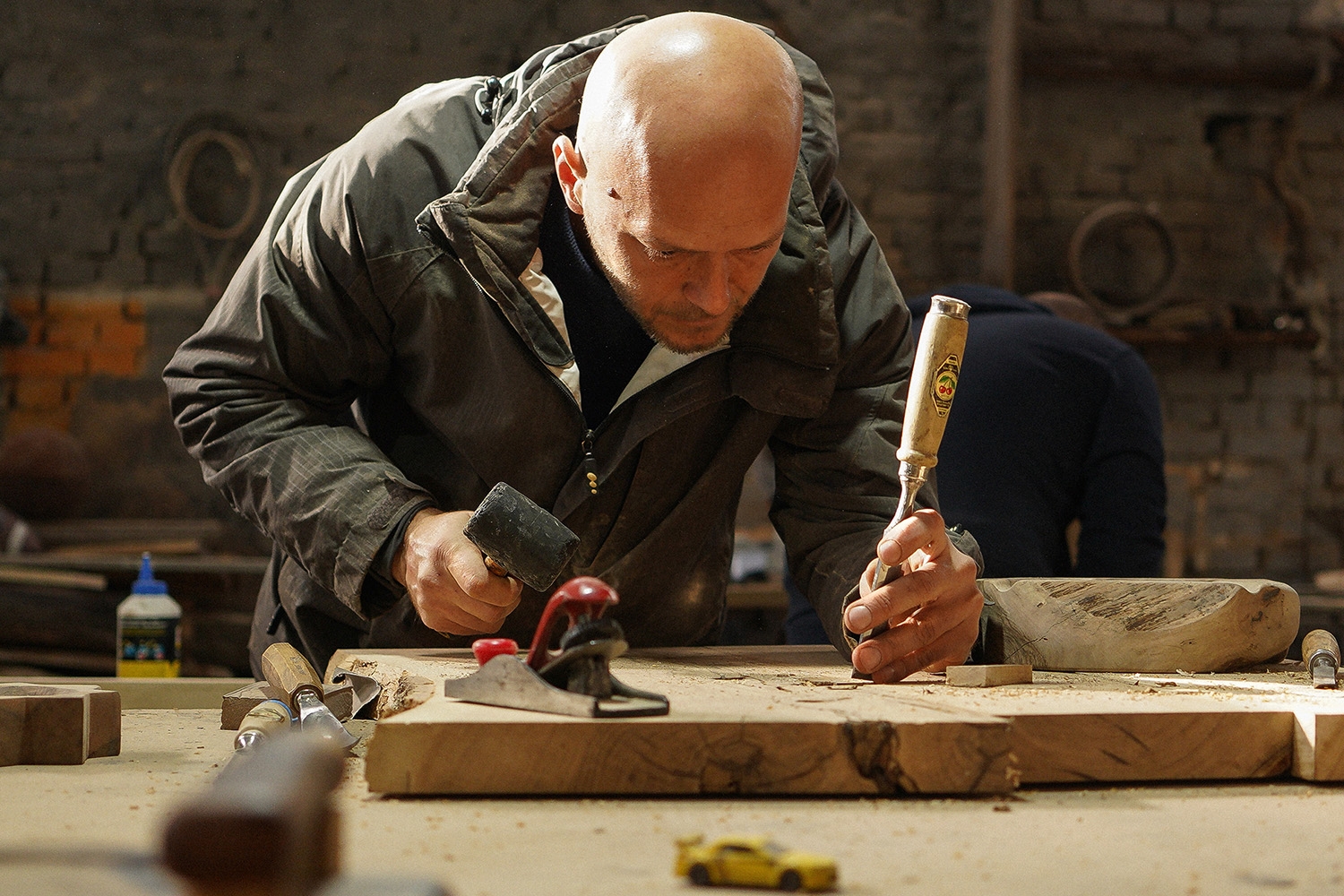
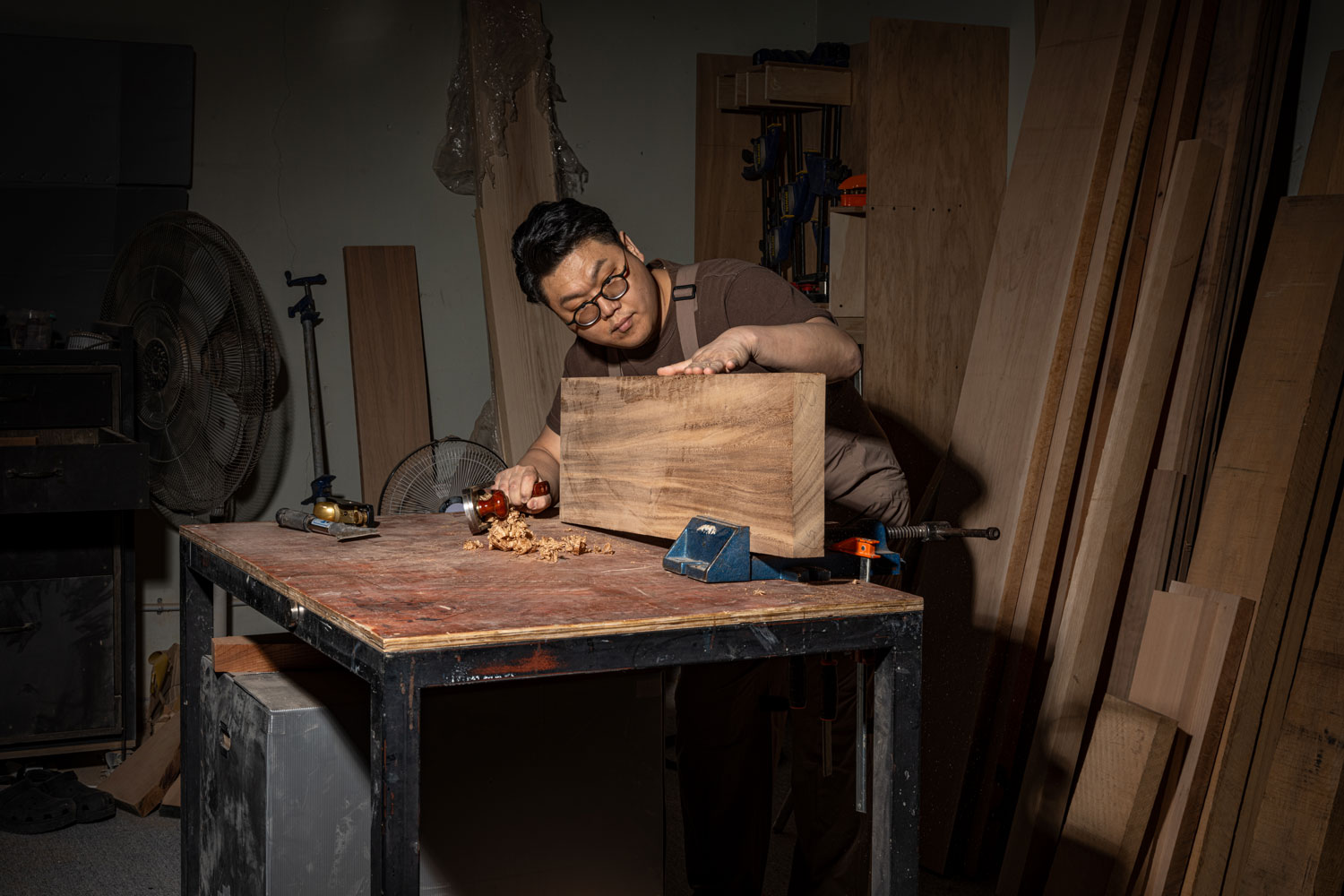
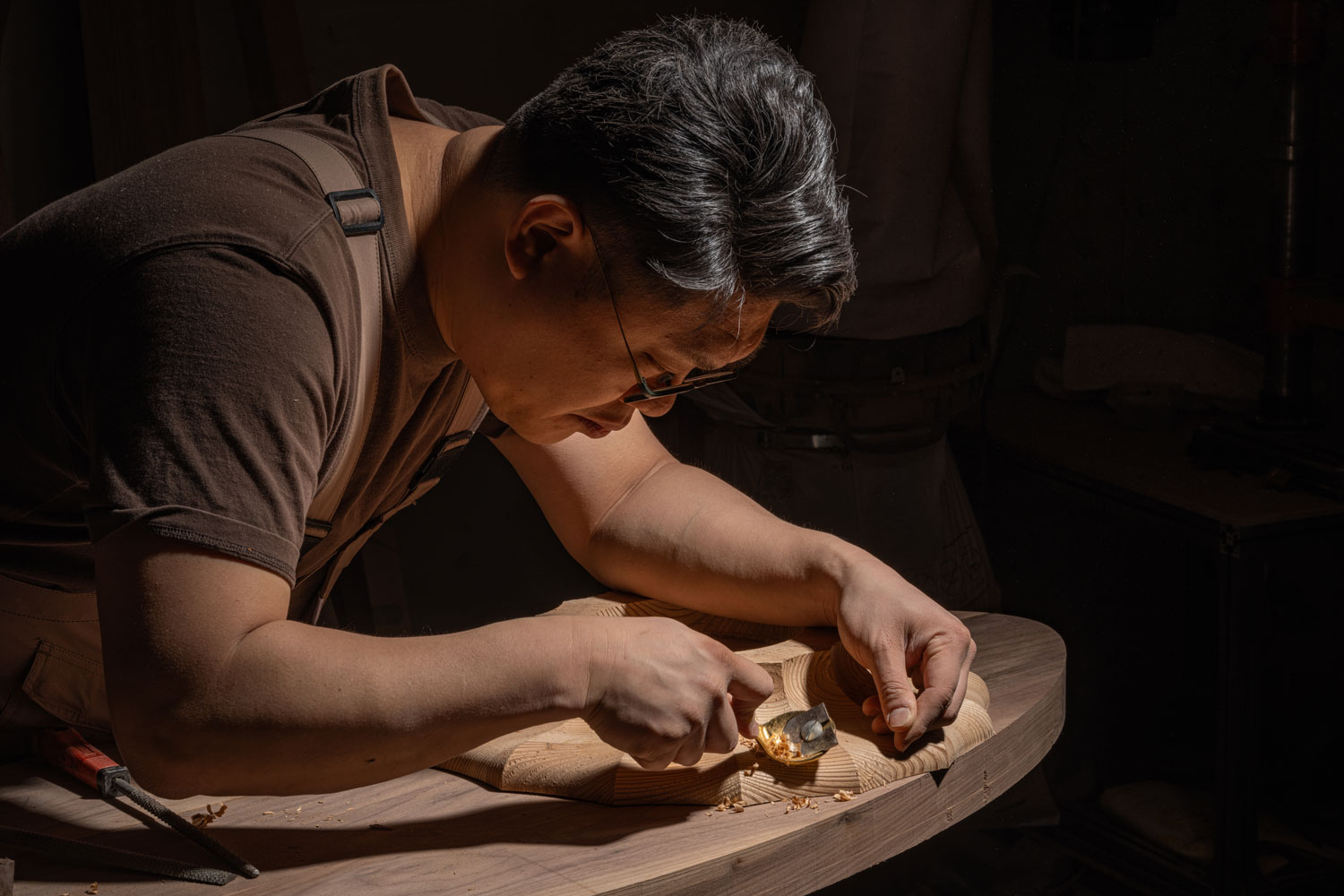
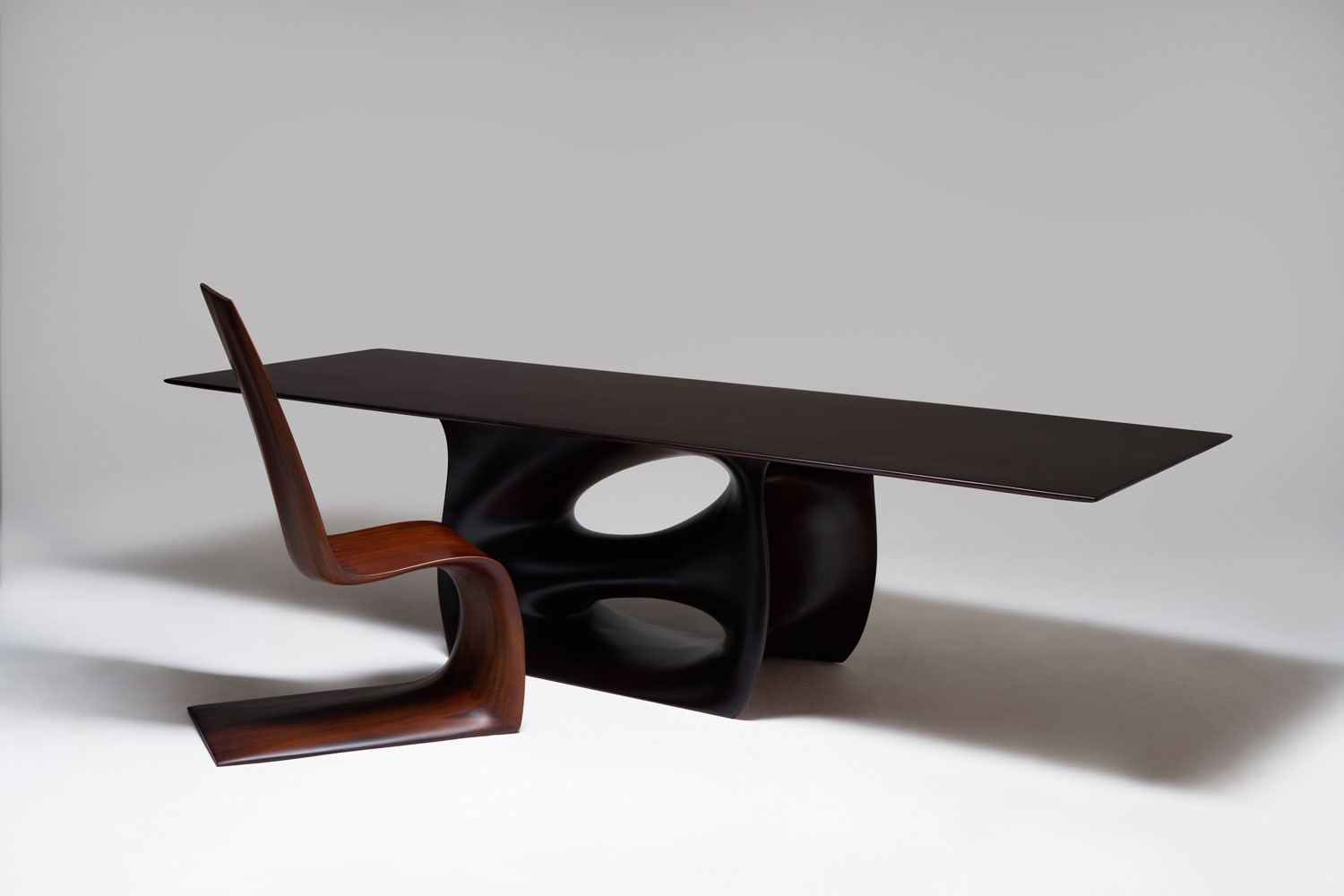
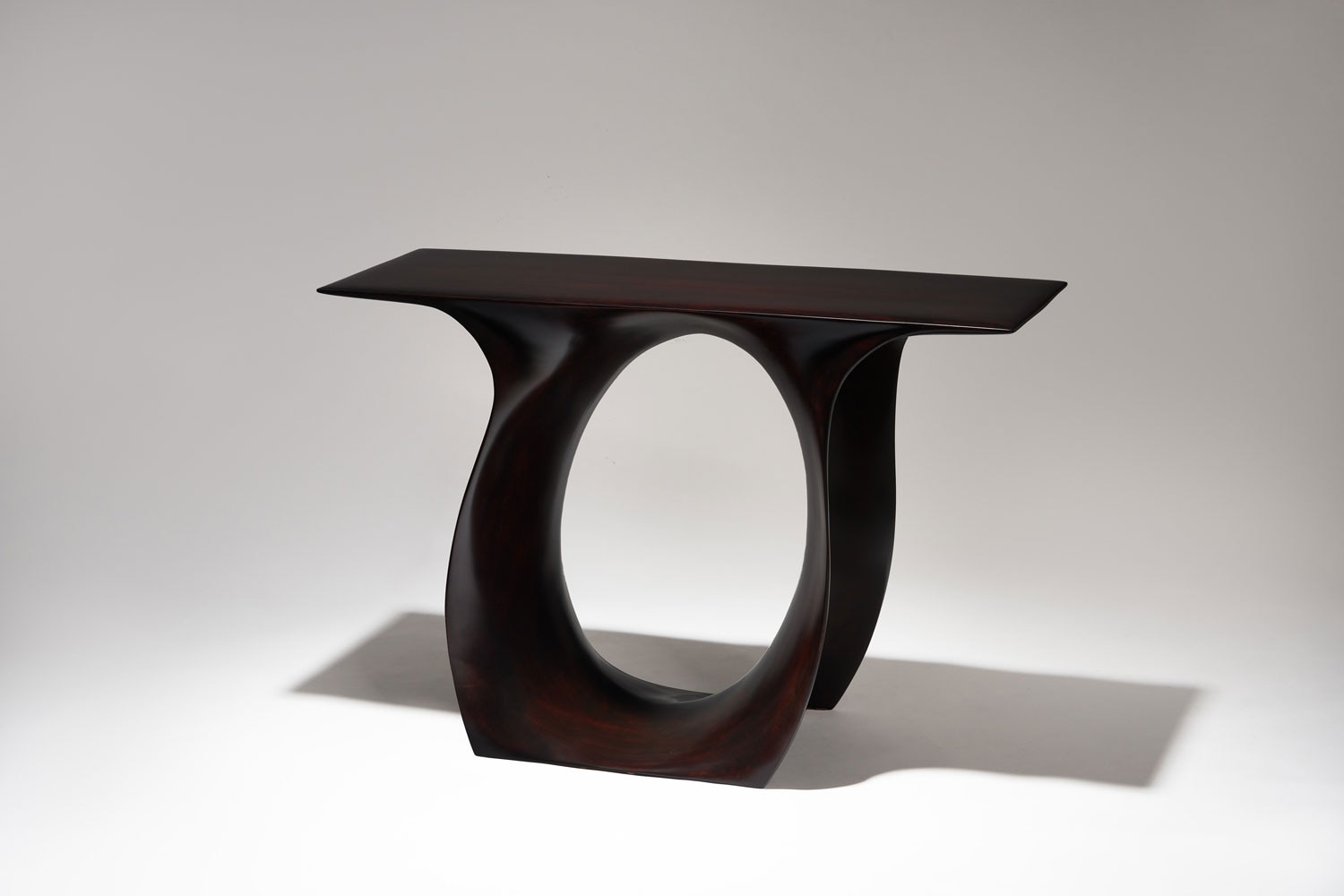
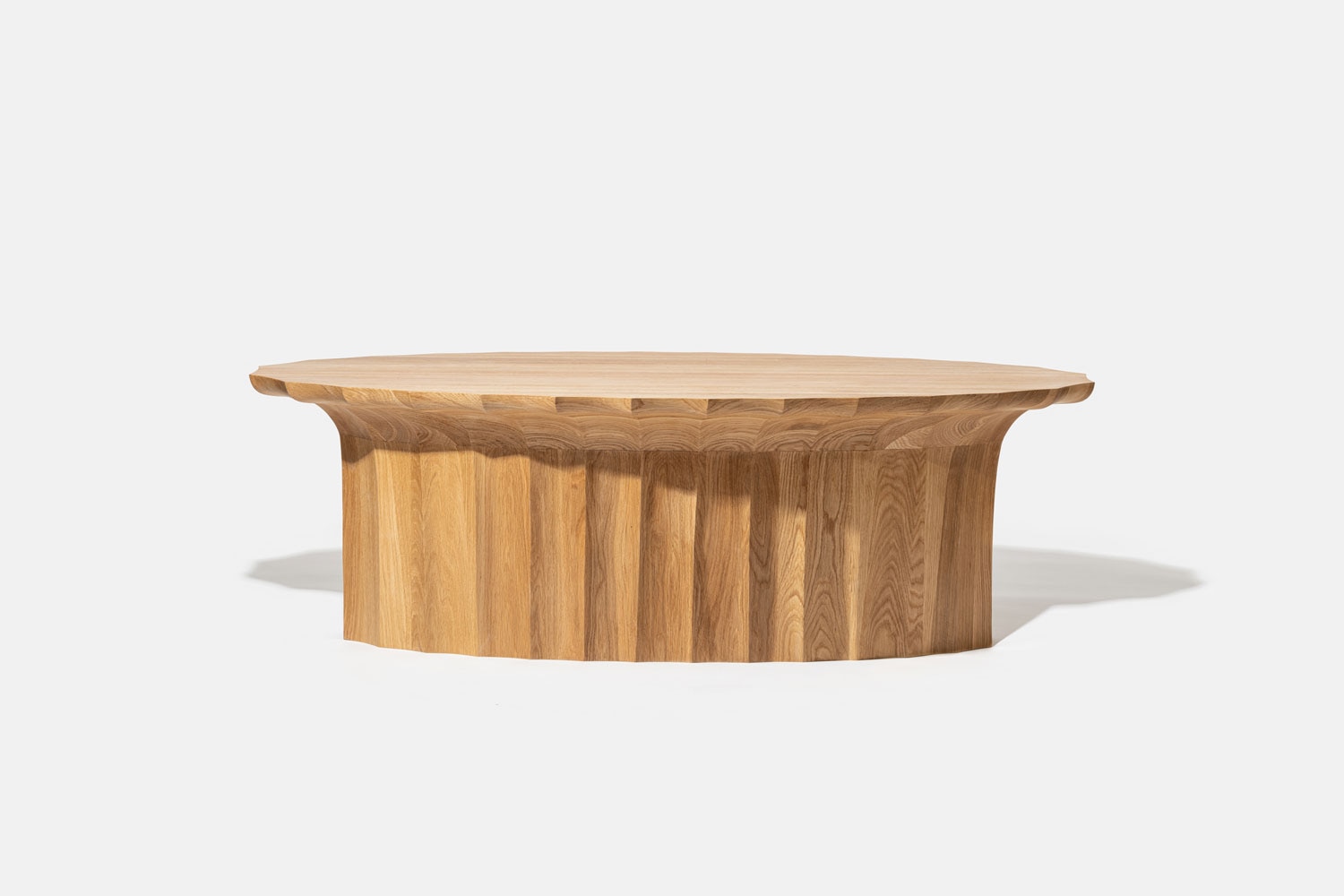
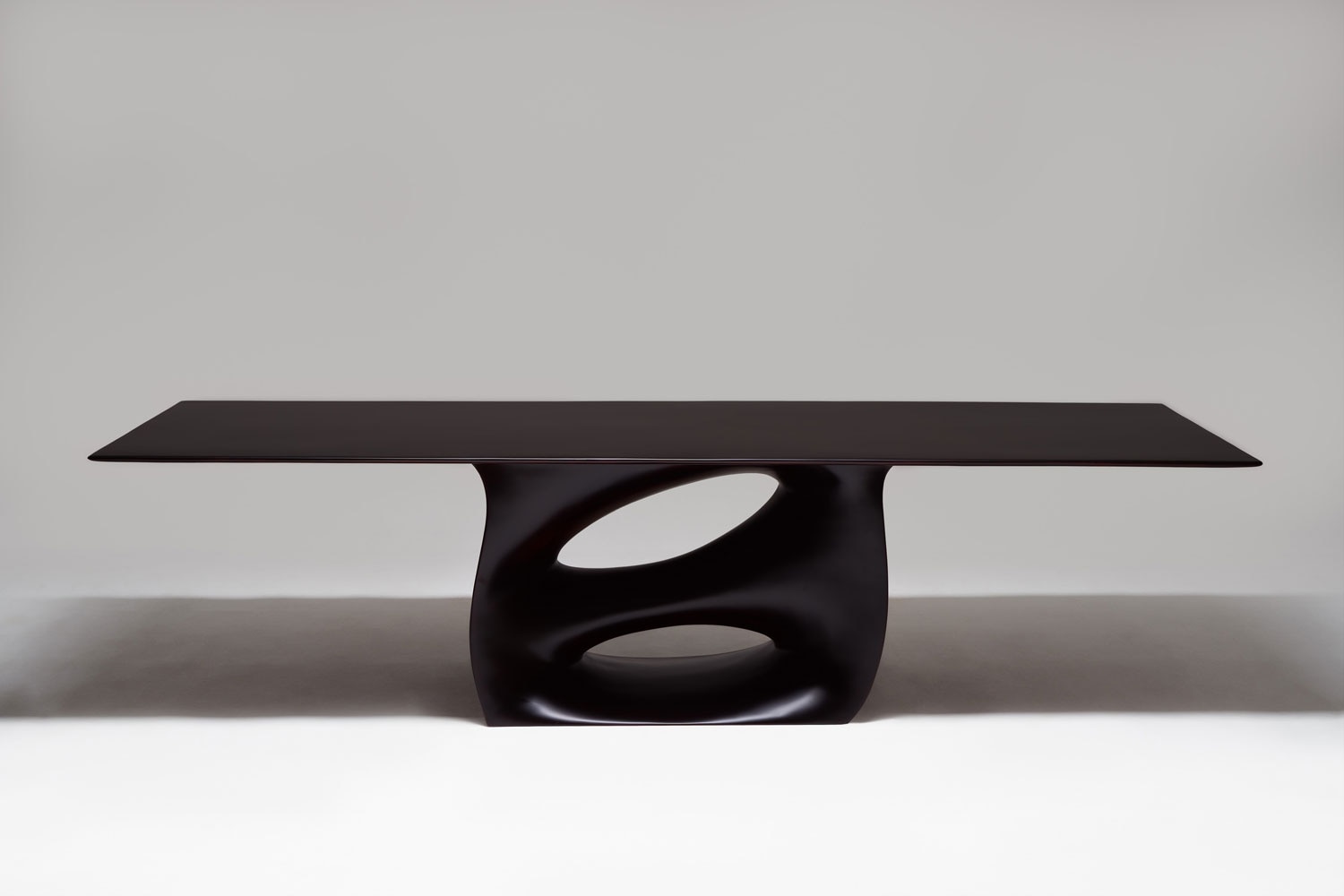
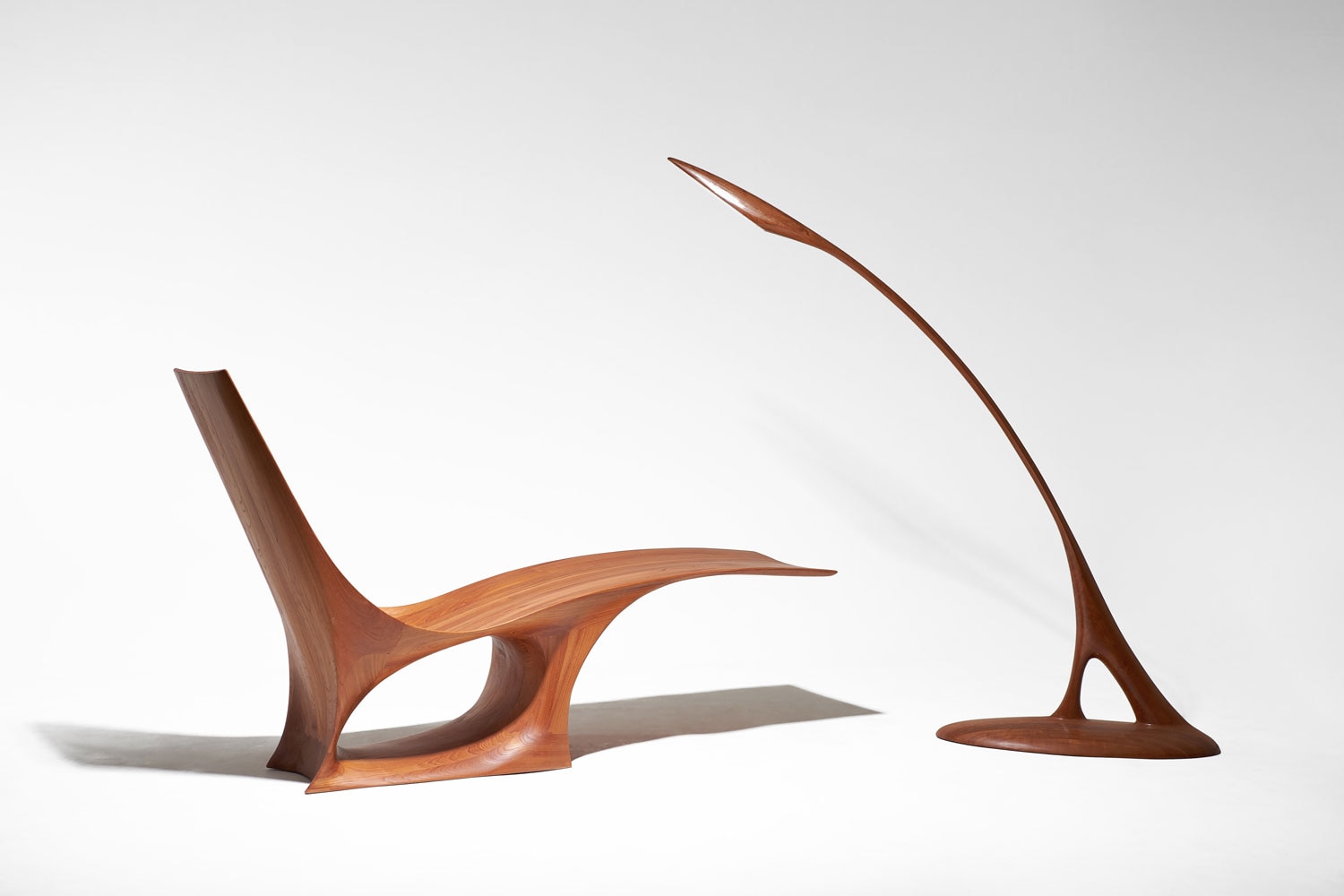
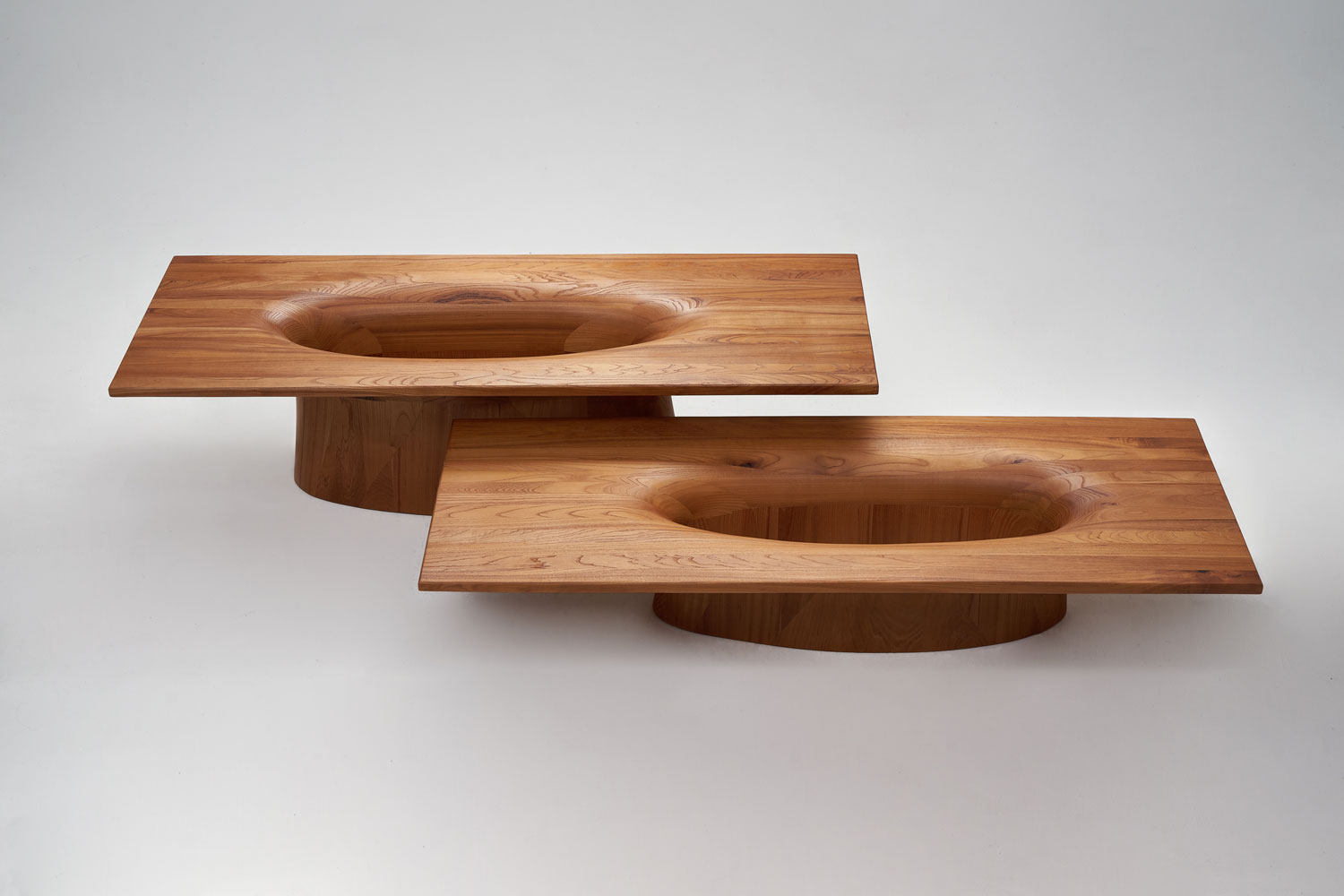
Woorim Kang is a Korean furniture artist whose practice is built around a single, labour-intensive method: laminating wood into solid blocks, then carving back to find the form inside. This process involves high levels of material waste and demands considerable physical effort, but remains the most direct route to the forms he imagines. The resulting pieces are large-scale tables, chairs, lamps and consoles with a quiet presence. "I finish my objects with lacquer, in a technique drawn from yacht-building," Woorim explains. "It is the best way to reveal the wood grain while preventing distortion." His work is shaped by references that range from Korean roof tiles to literati painting. Woorim's approach is about treating the furniture form not as a constraint but as the condition that keeps his work close to how people actually live.
Discover his work
INTERVIEW
Craft sits closer to human life than almost any other discipline. It is not just something to look at; it gets used, and in that way becomes part of how someone actually lives. I wanted my work to reach people in that way, to have some kind of effect on those who use it and for them to find value in it.
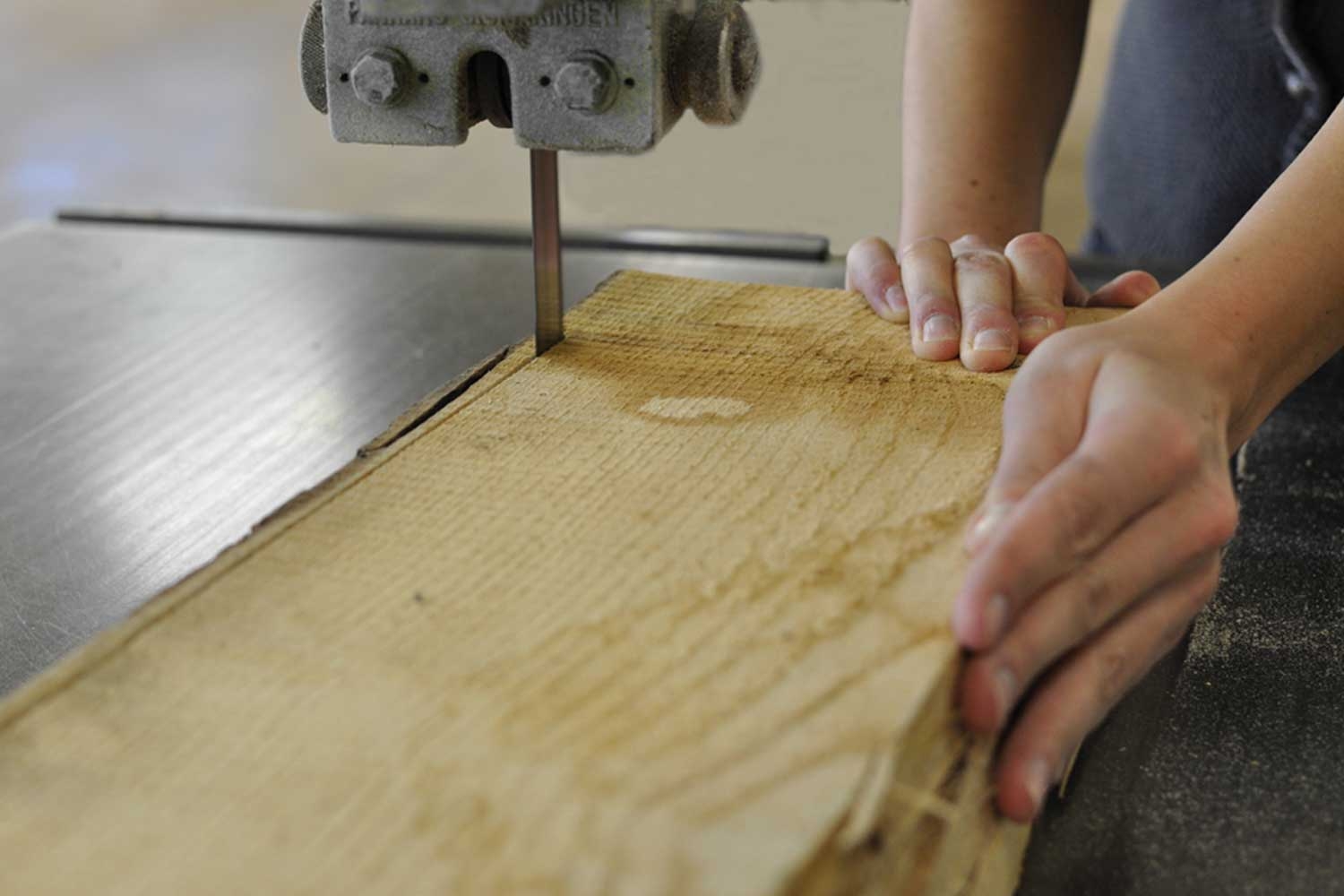
Before starting any piece I hold an image in my mind of what I want the finished object to be. The way I work comes from asking, over and over again, what the most efficient way to get there might be. I have tried other approaches and other materials along the way, and I try to keep the process open to new possibilities. Laminating and carving back wastes a lot of material and demands a great deal of physical effort, but it remains the method that gets me closest to the design I have imagined.
It starts with the question of what I want the work to hold, and how to express this. I sketch it out loosely, then go back and forth between drawings, technical plans and rendered models until the idea settles. Material choices and construction details get worked out alongside this, and then the actual making begins.
I would rather keep changing than fix myself in one place. As the work continues, I expect my thinking and methods to shift, and I want to stay open to this, letting the changes feed back into the work rather than resist them.
Woorim Kang
Furniture maker
Seoul, South Korea
ADDRESS
Address upon request, Seoul, South Korea
AVAILABILITY
By appointment only
LANGUAGES
Korean, English
Homo Faber Finds is a new service aiming to inspire admirers of craft to connect and collaborate with exceptional artisans.
We invite you to submit an enquiry here.