Shayna Leib
Glass sculptor
Madison, WI, USA
Glass, movement and flow
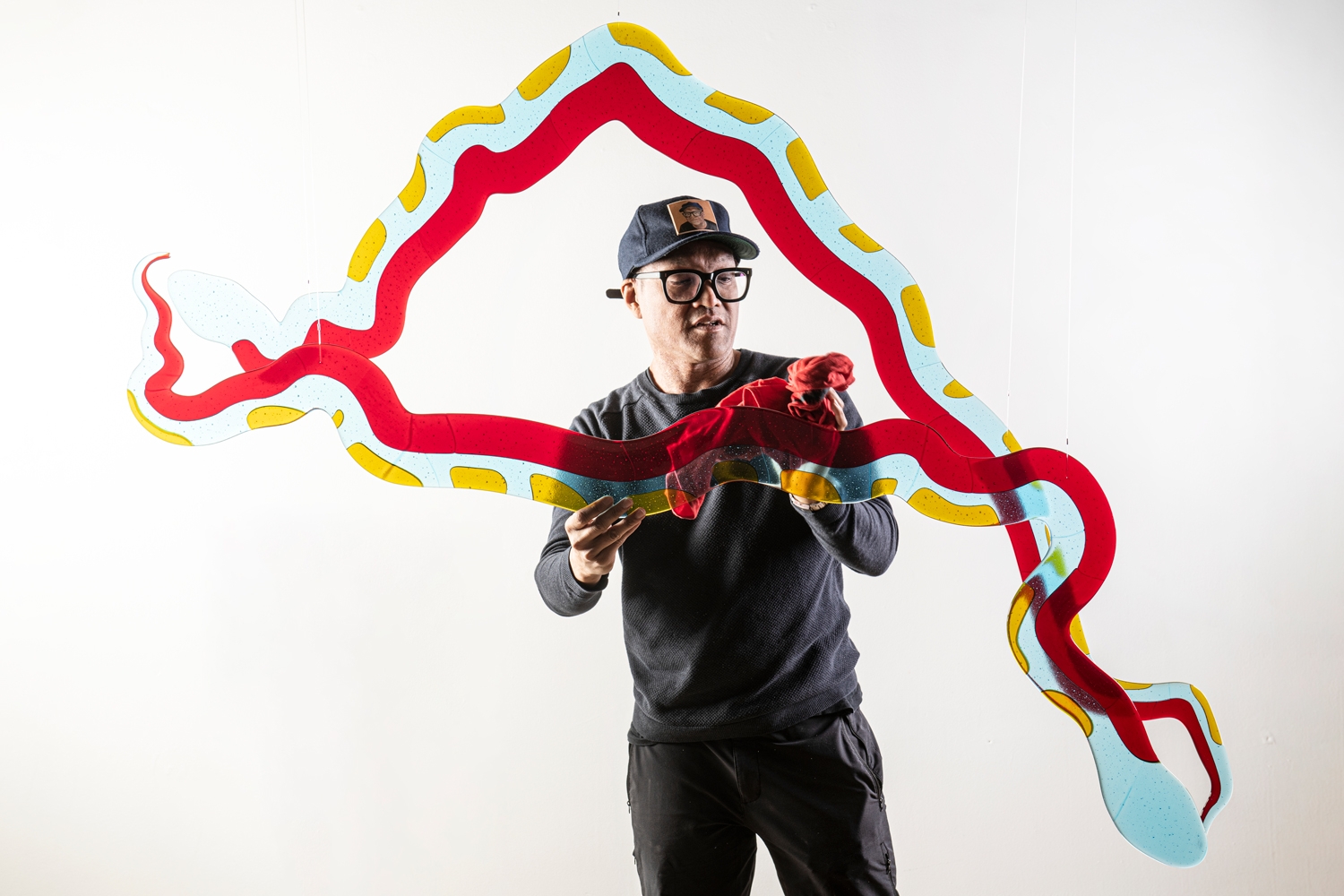
- Shayna makes glass sculptures that depict organic movement
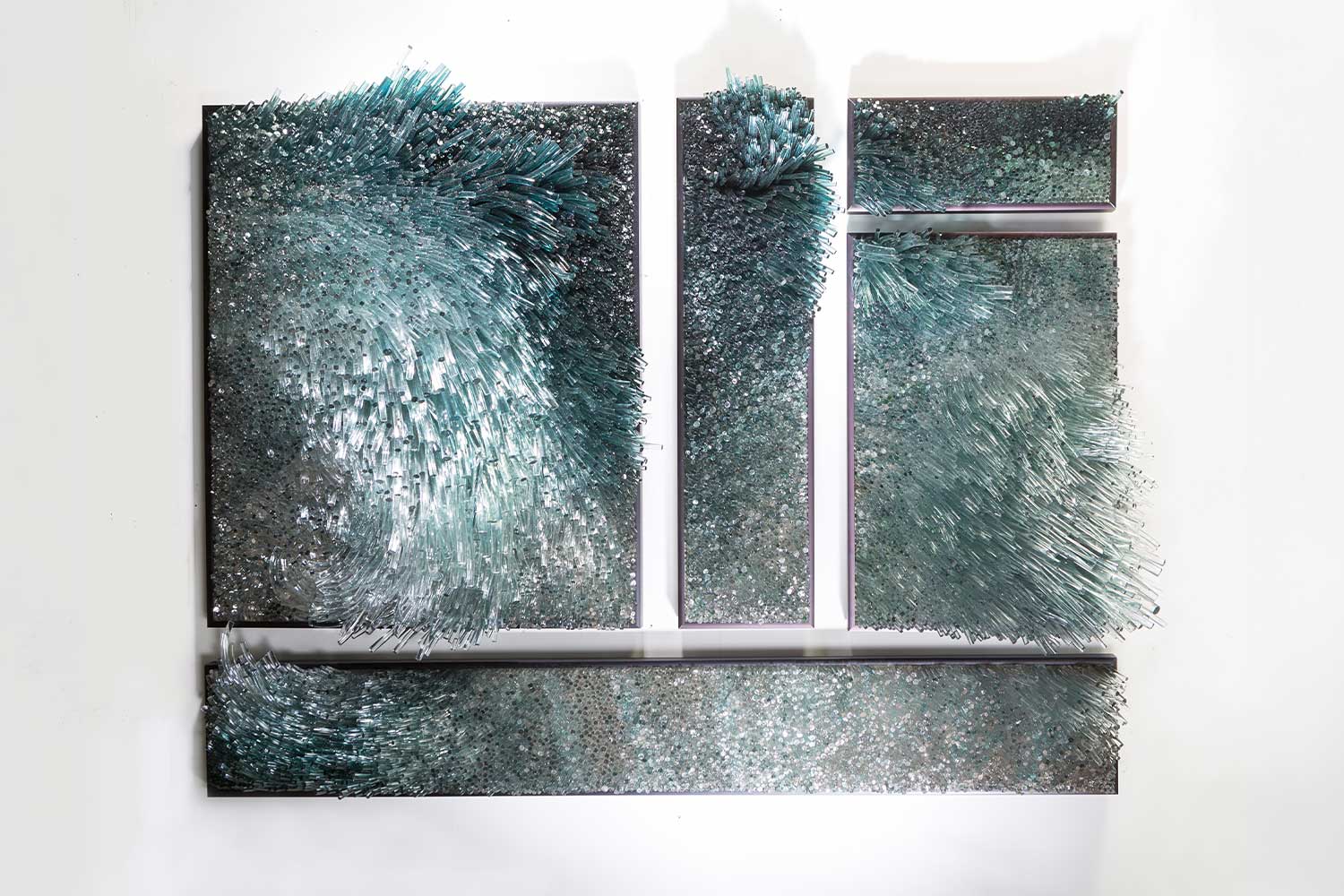
- Her practice is inspired by the natural world and how it flows
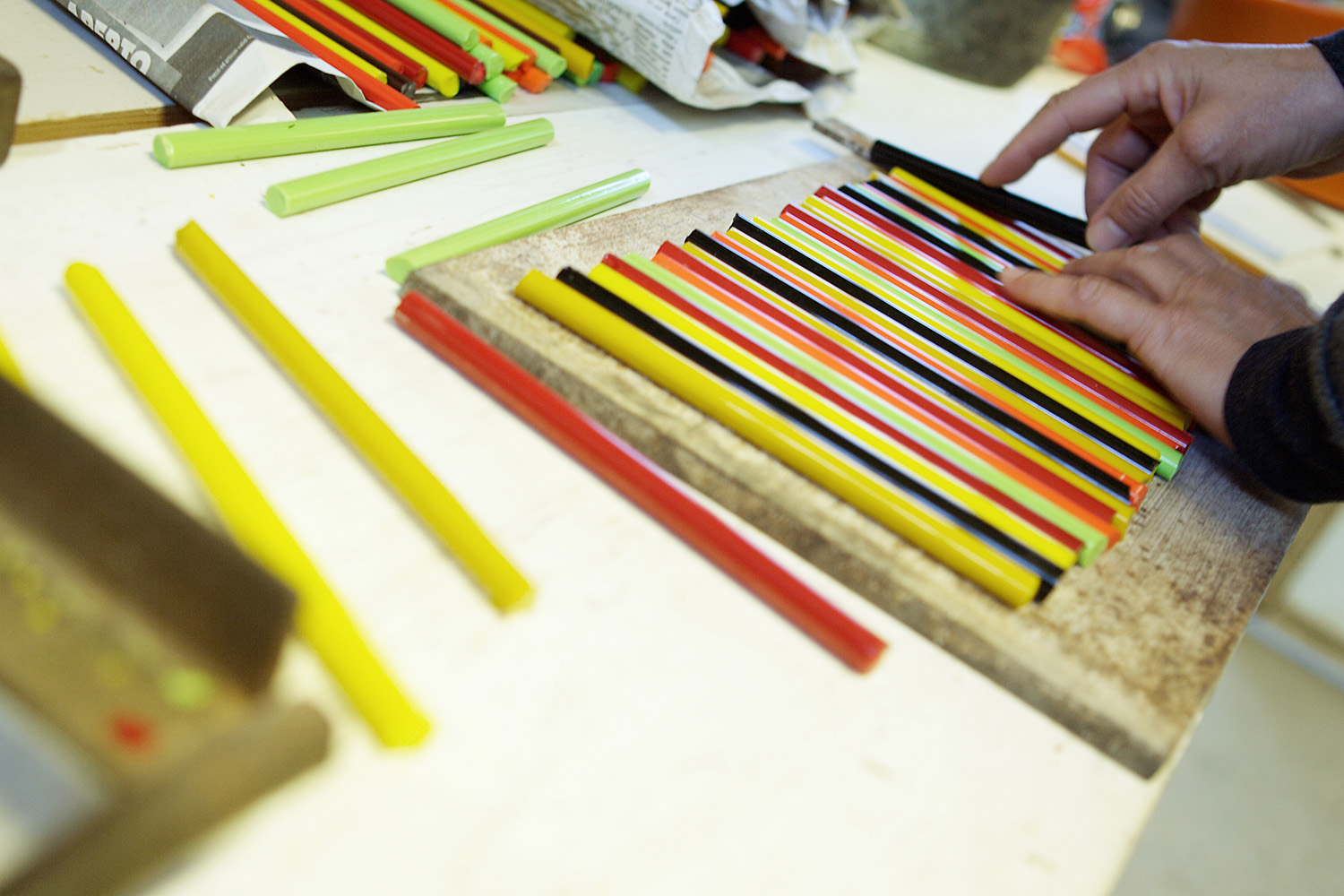
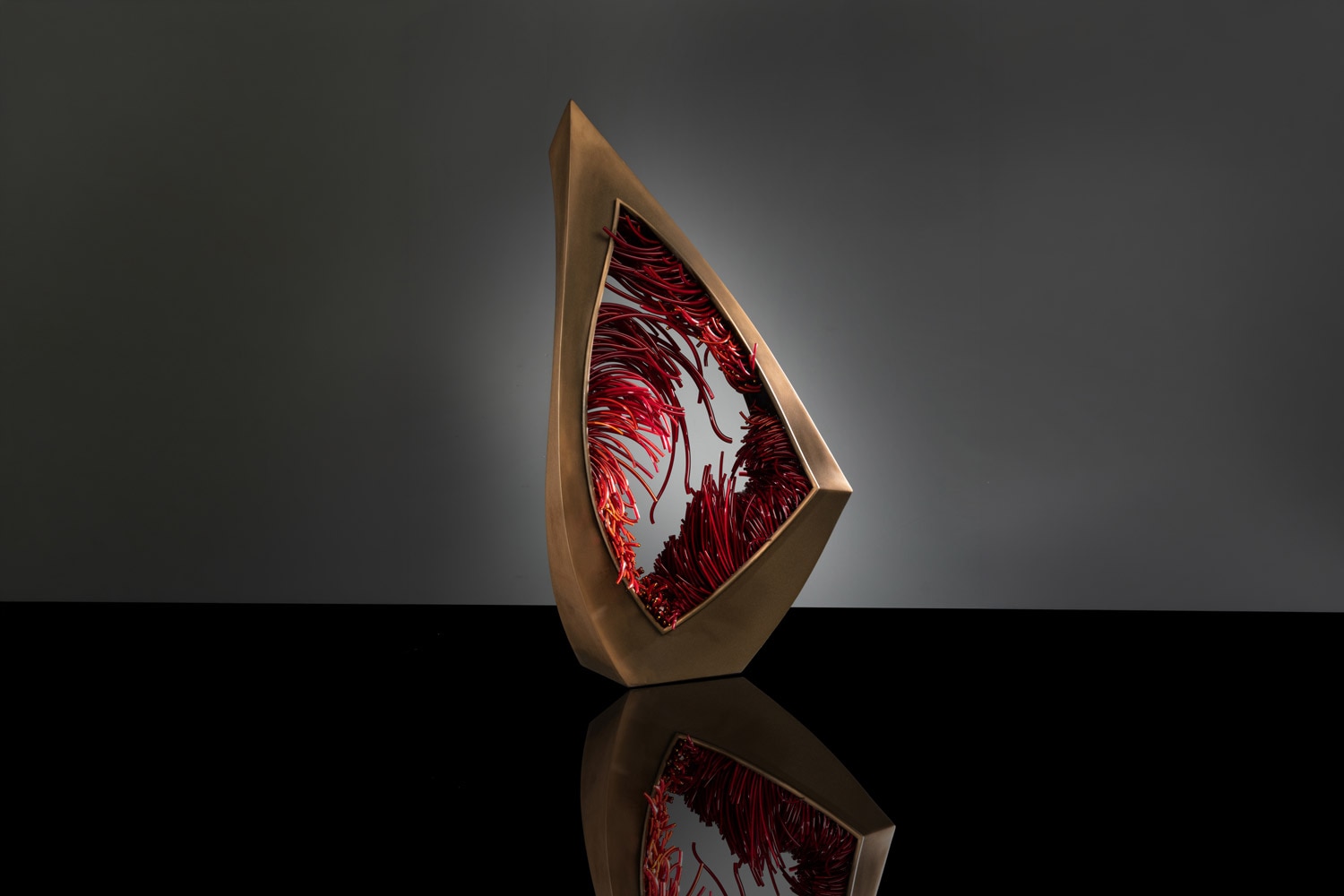
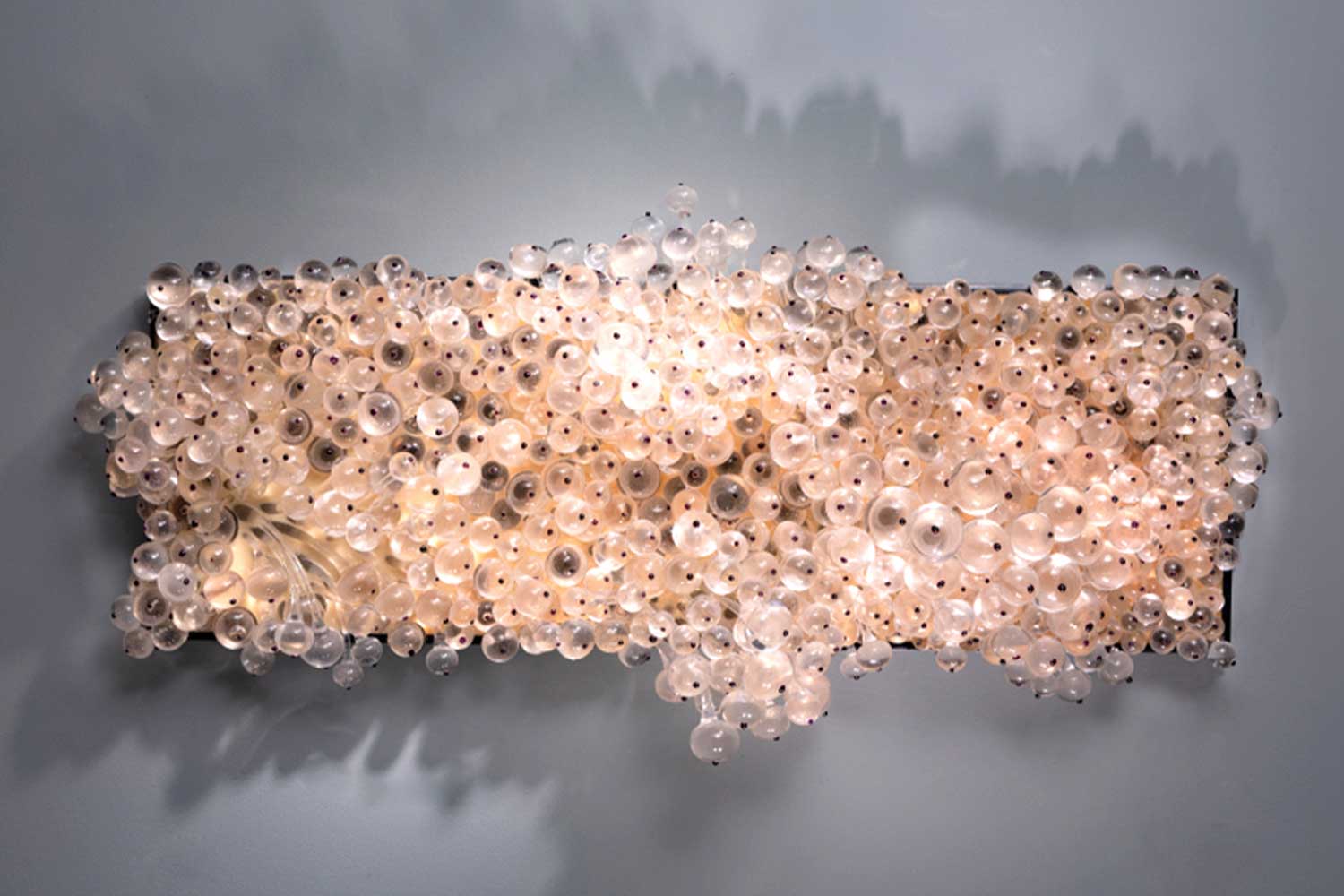
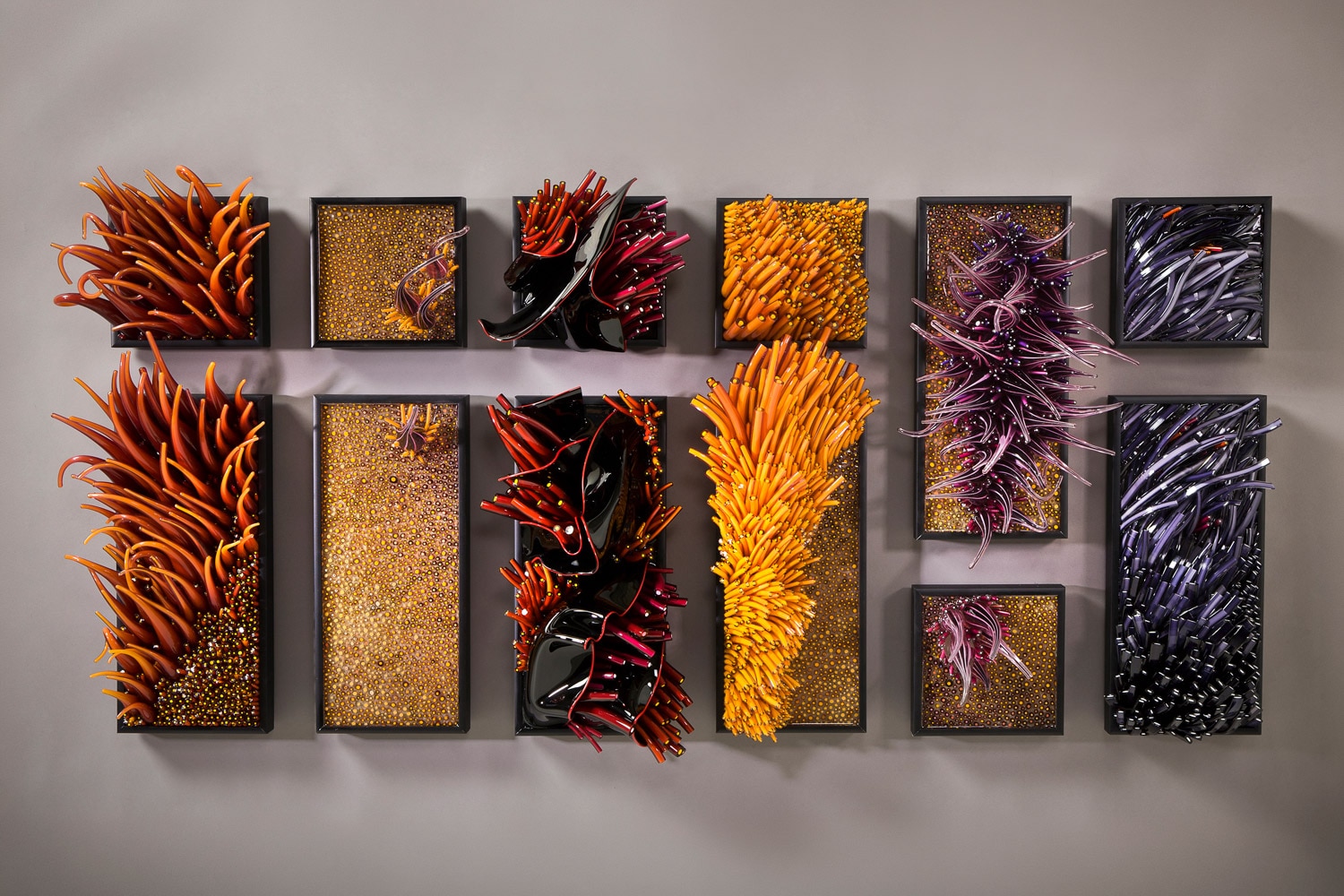
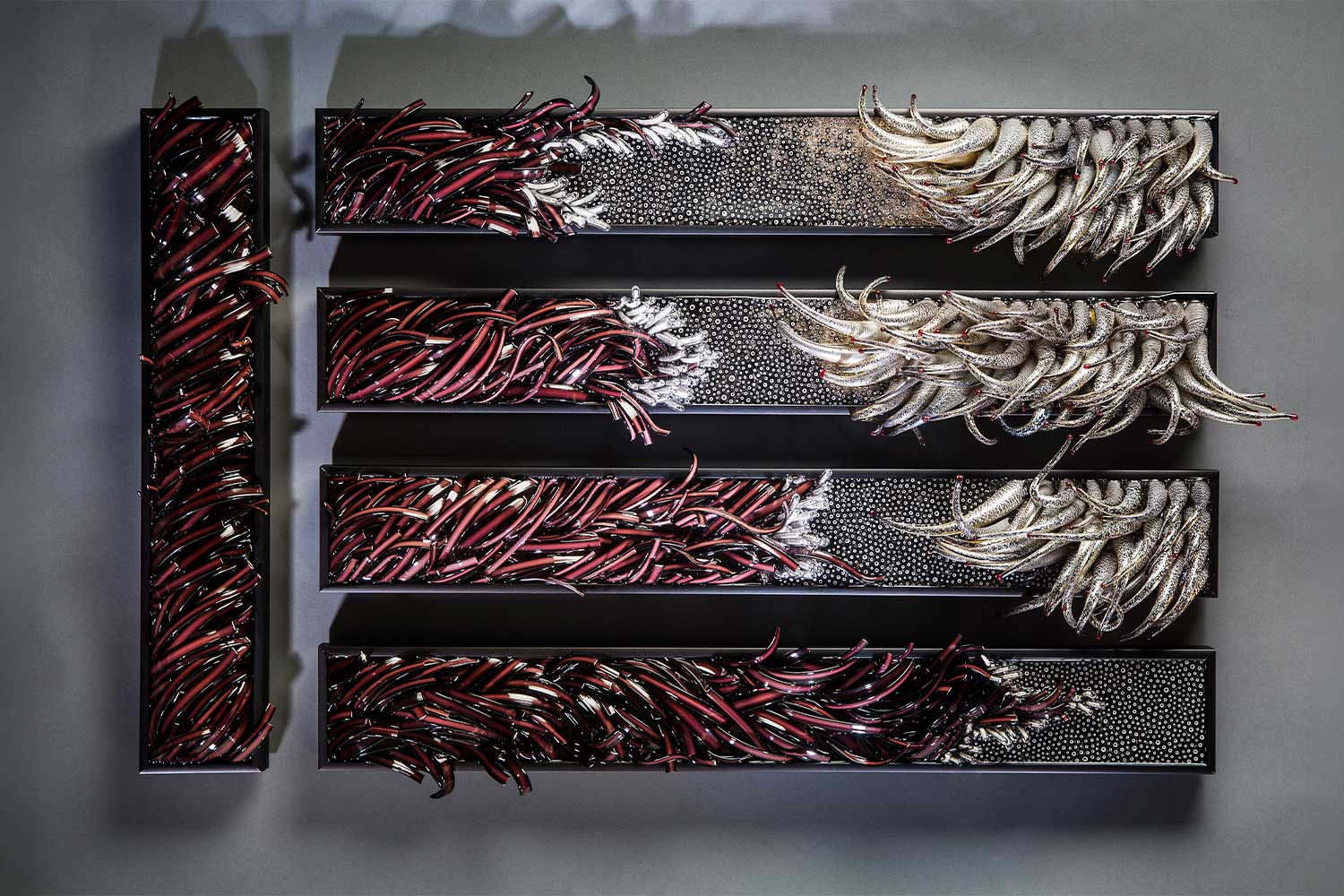
- She hand cuts thousands of glass canes to create her singular pieces
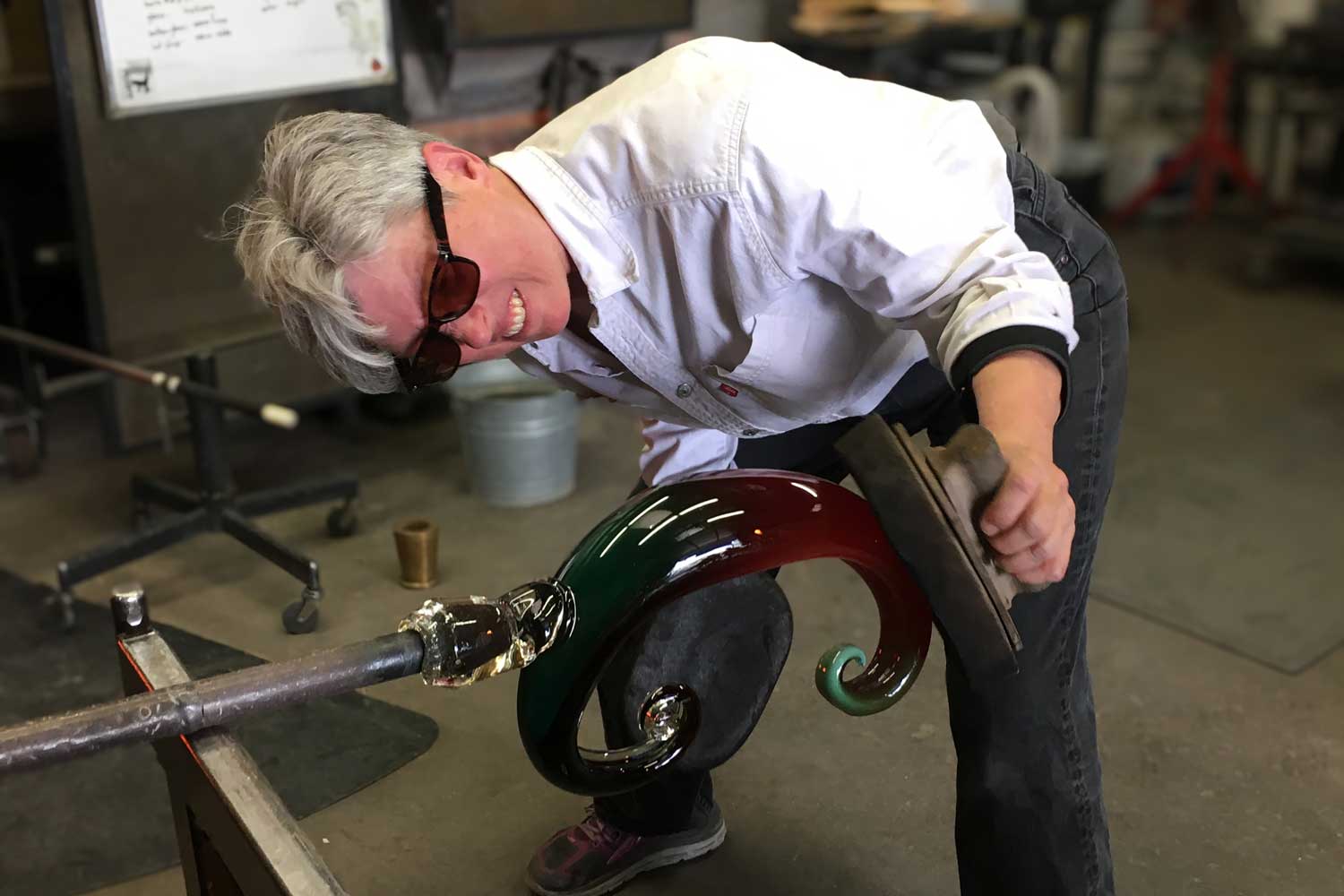
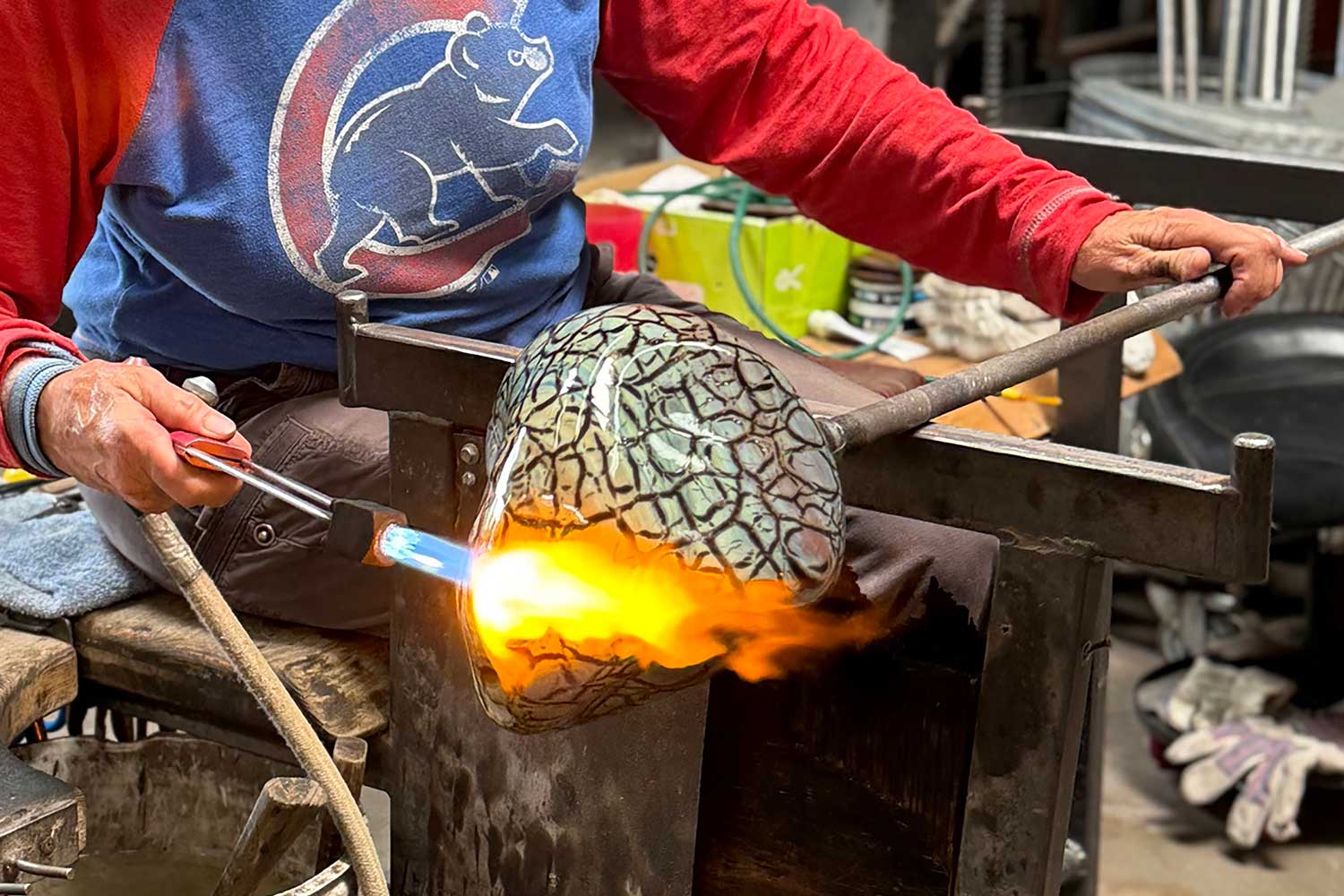
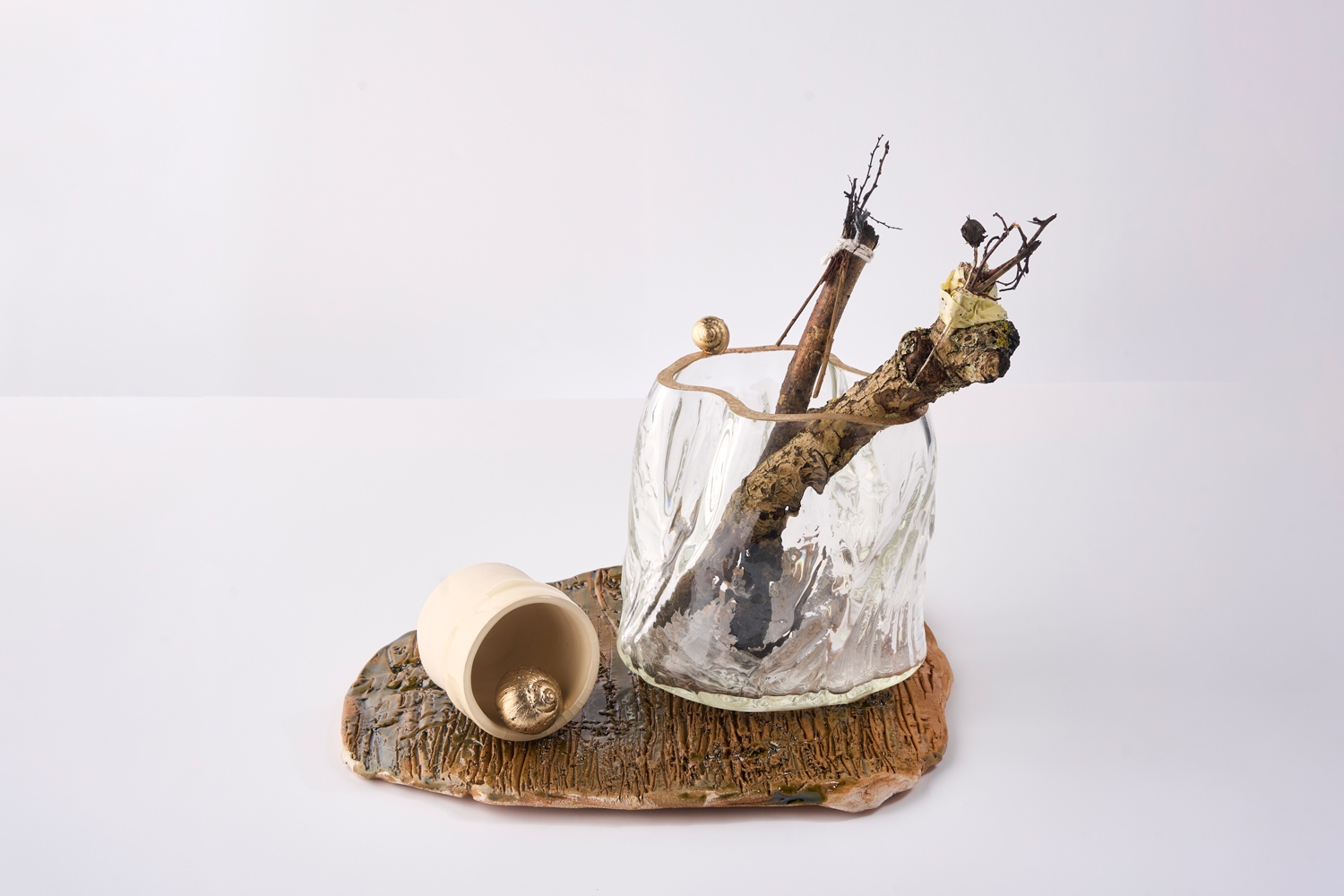
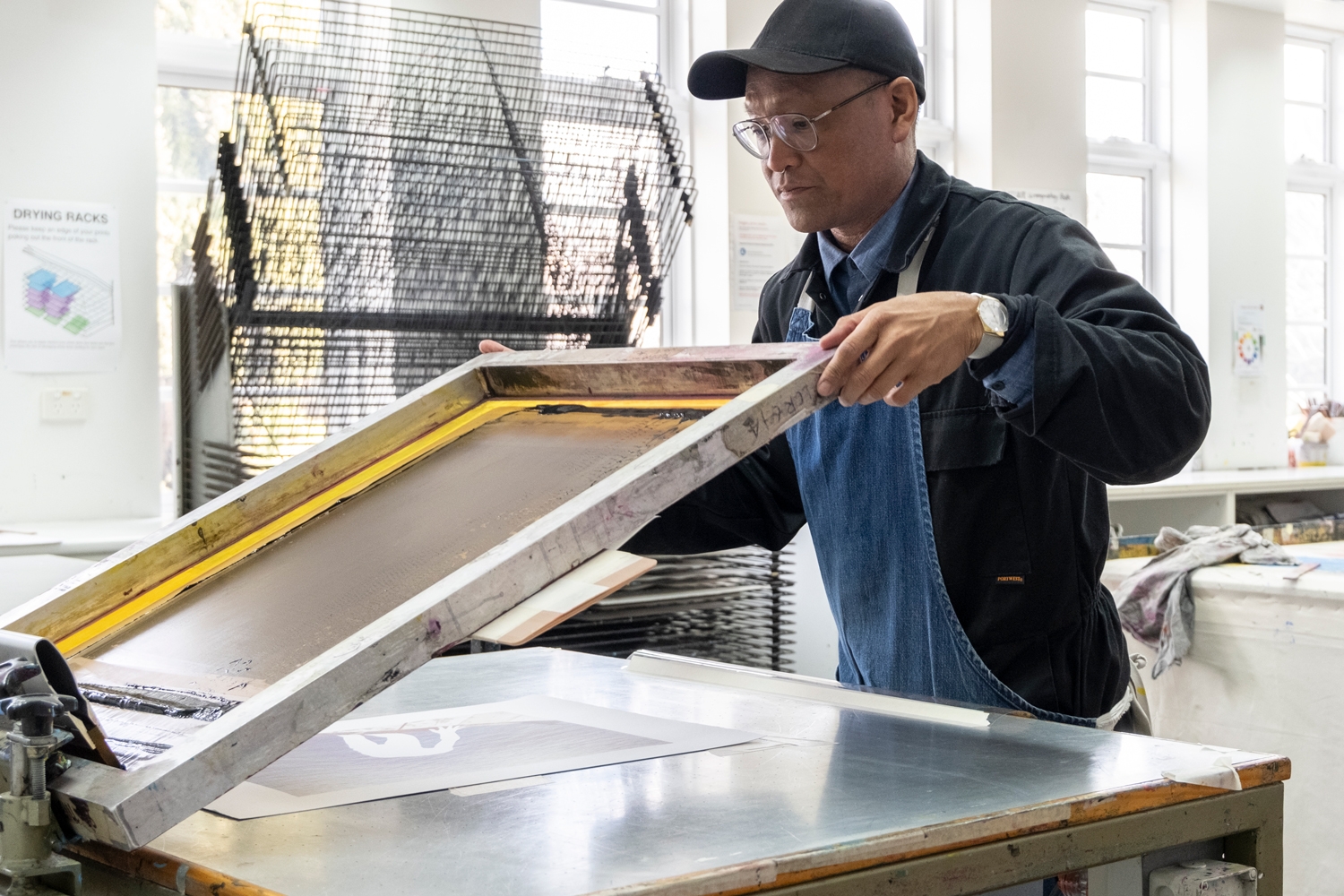
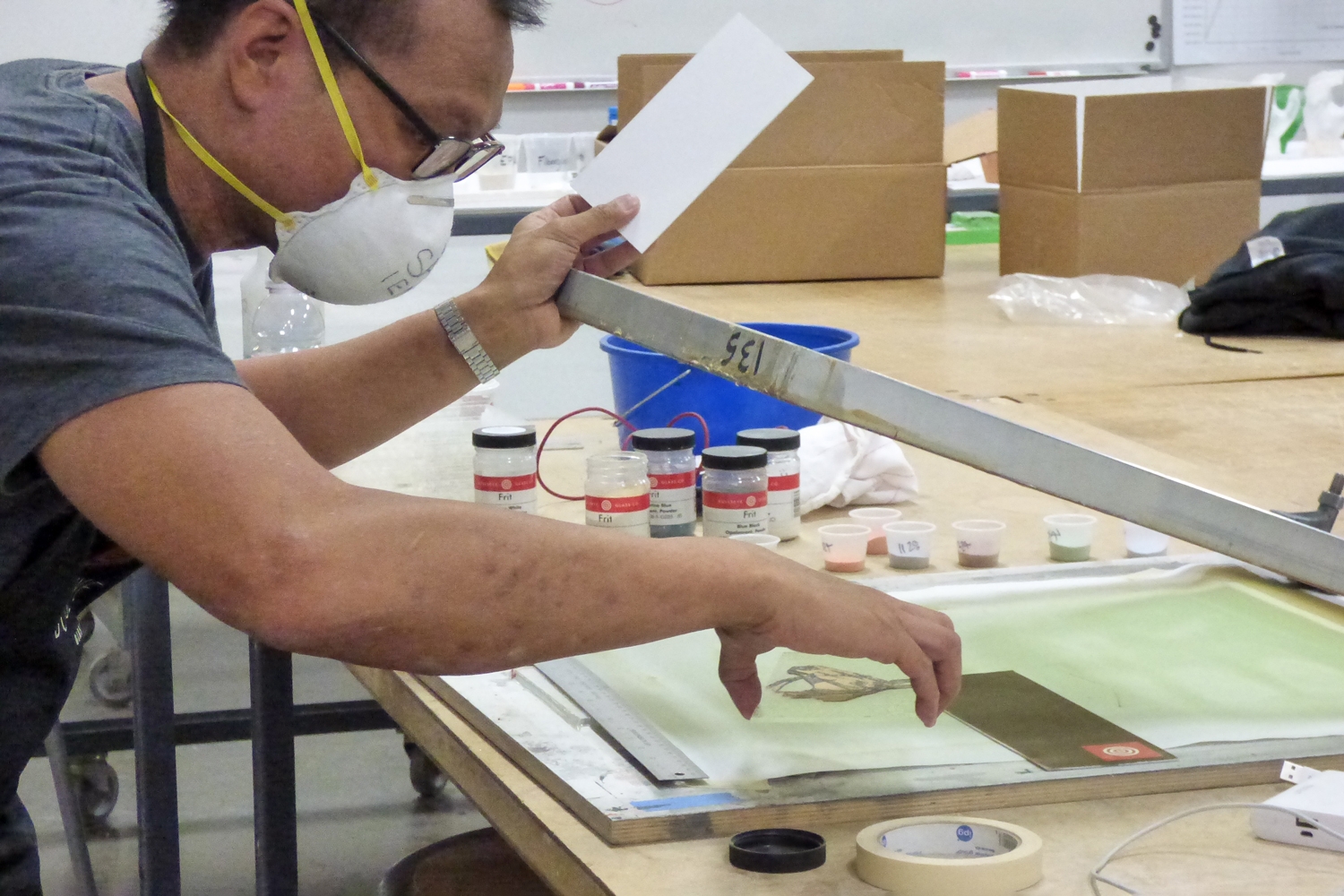
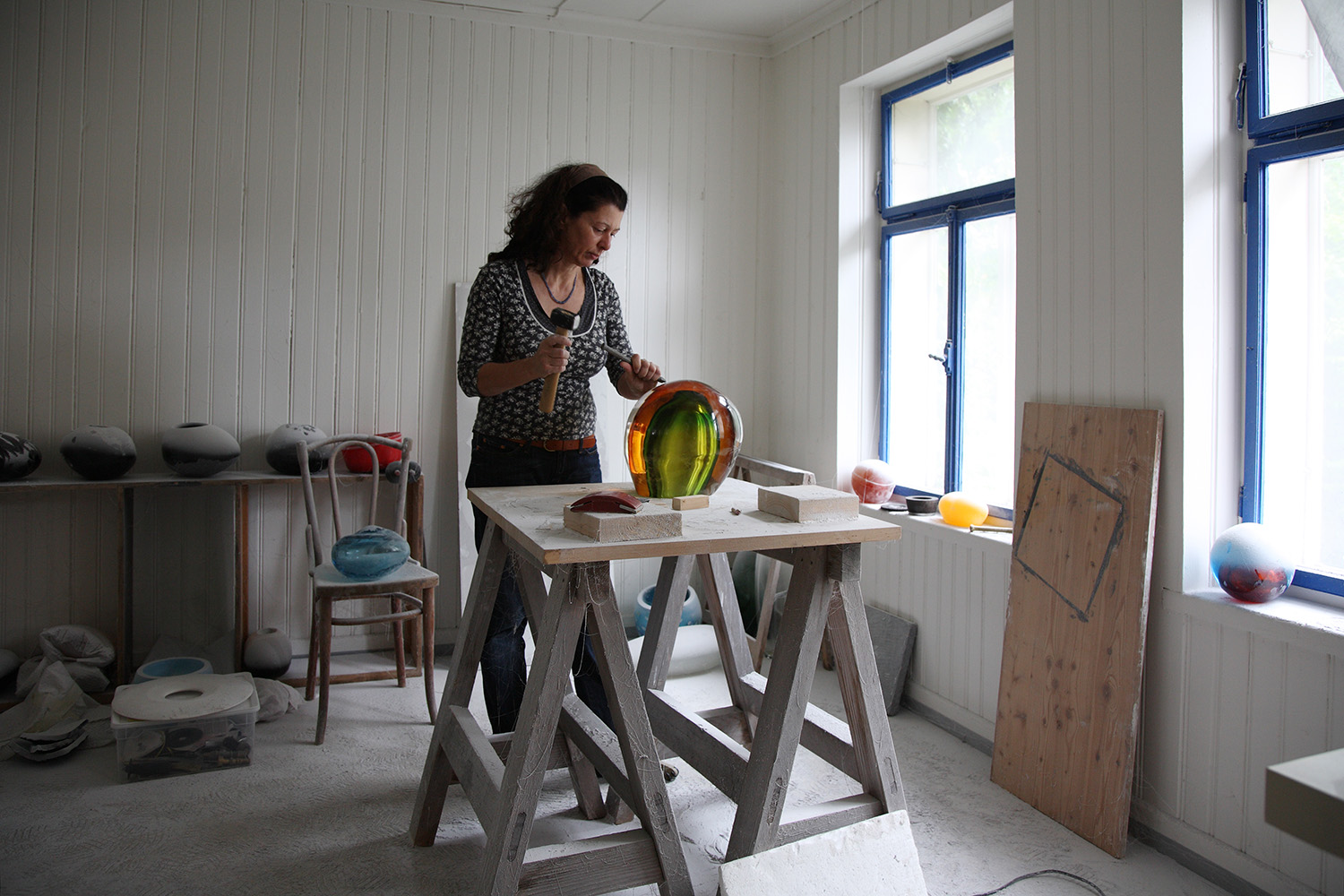
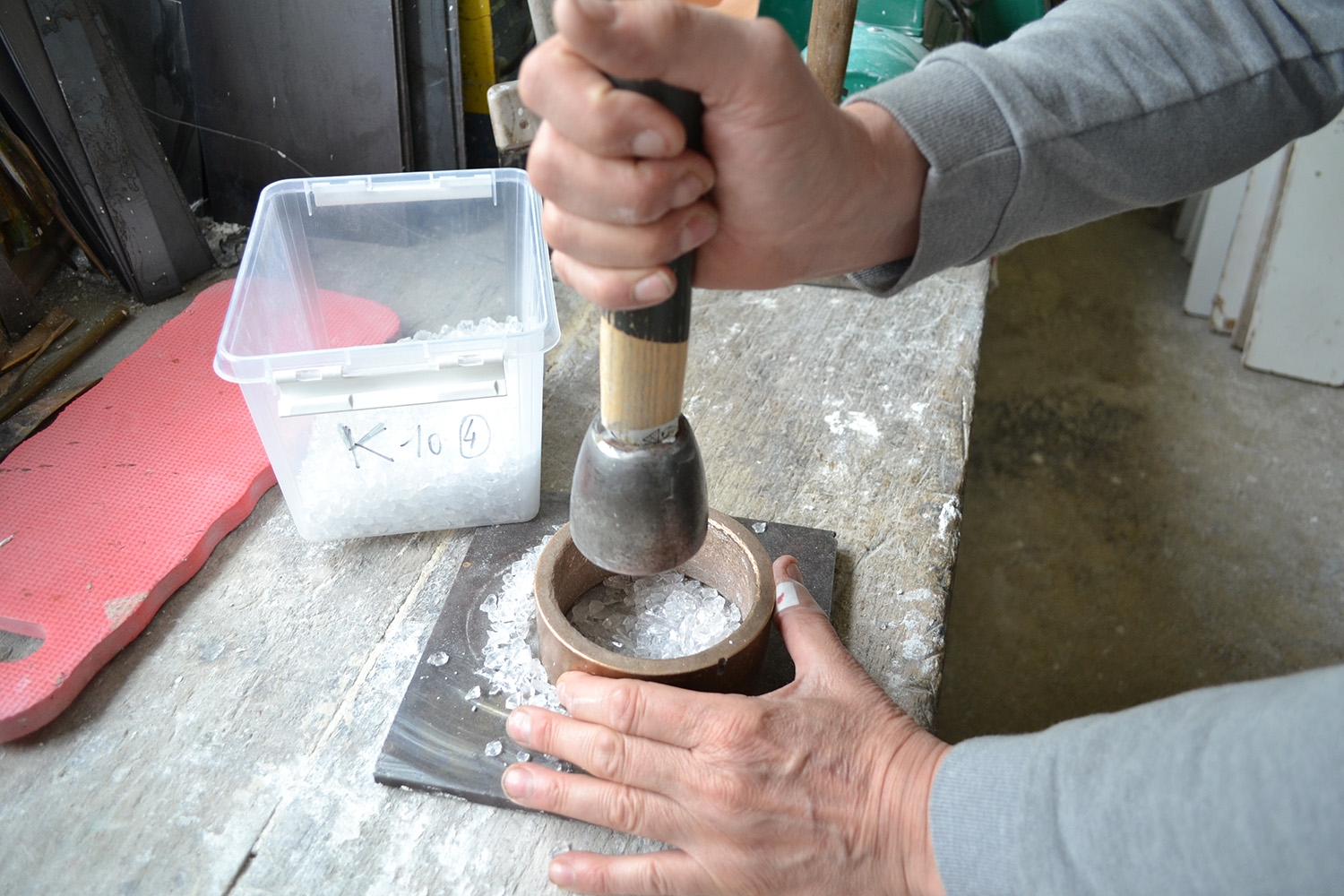
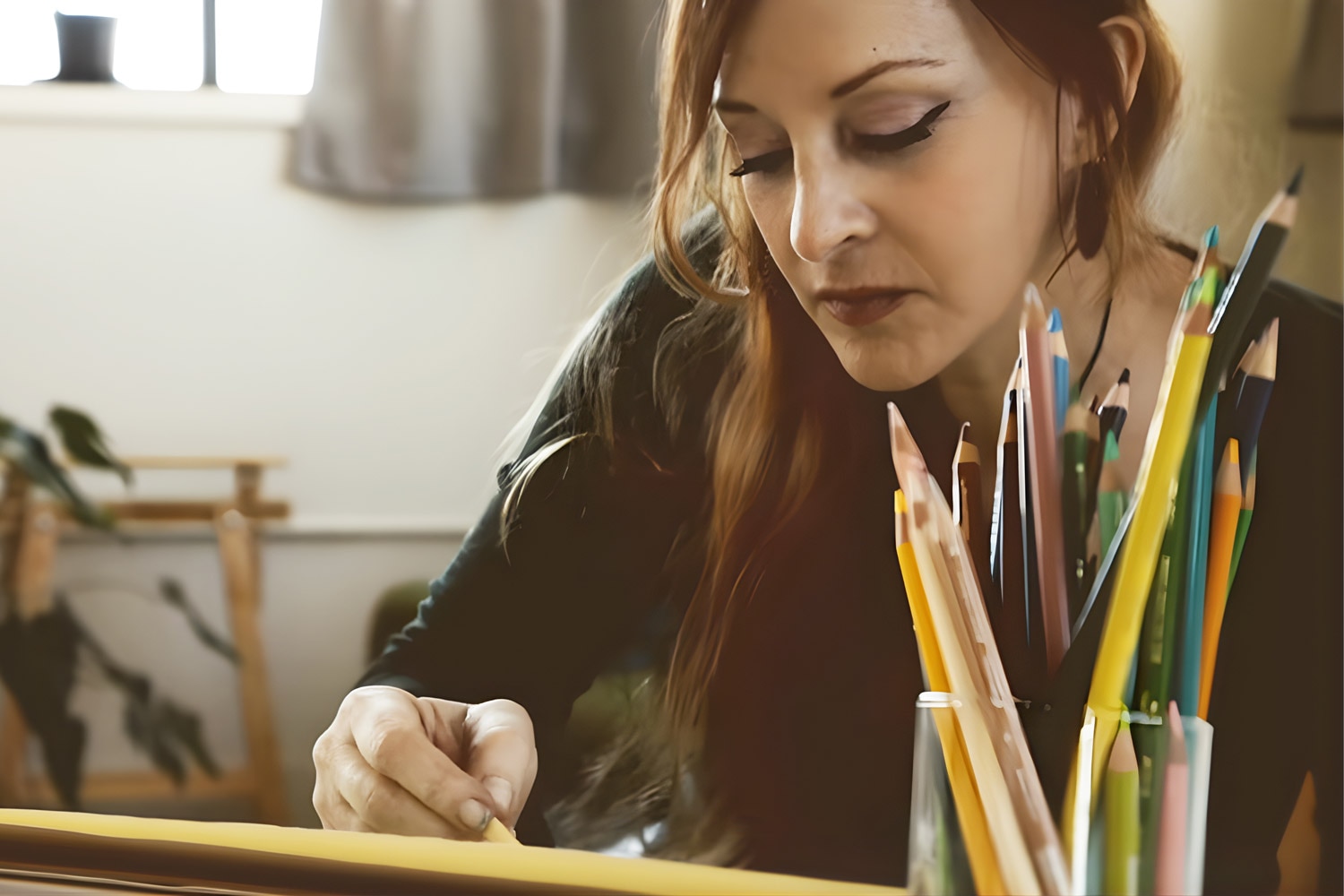
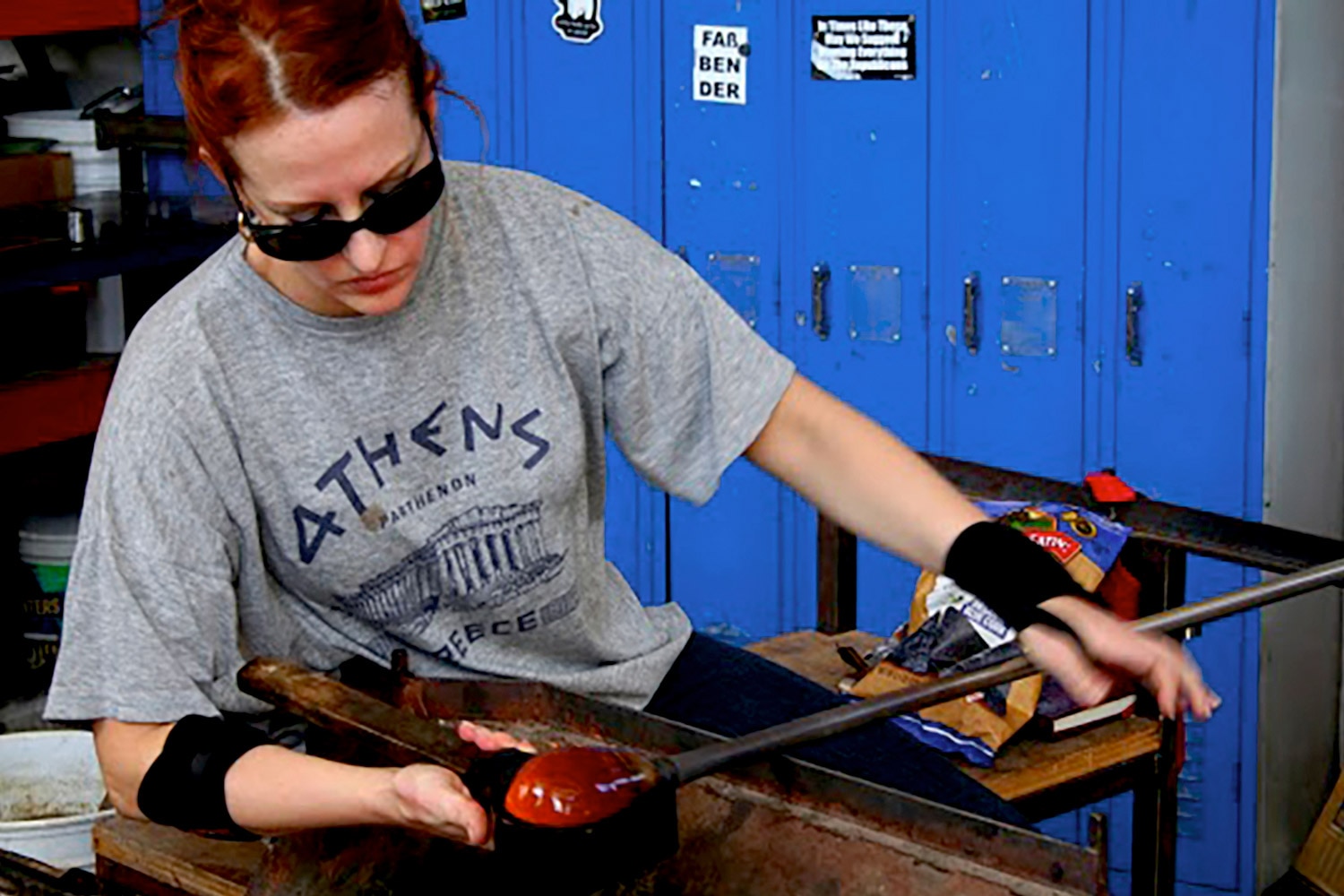
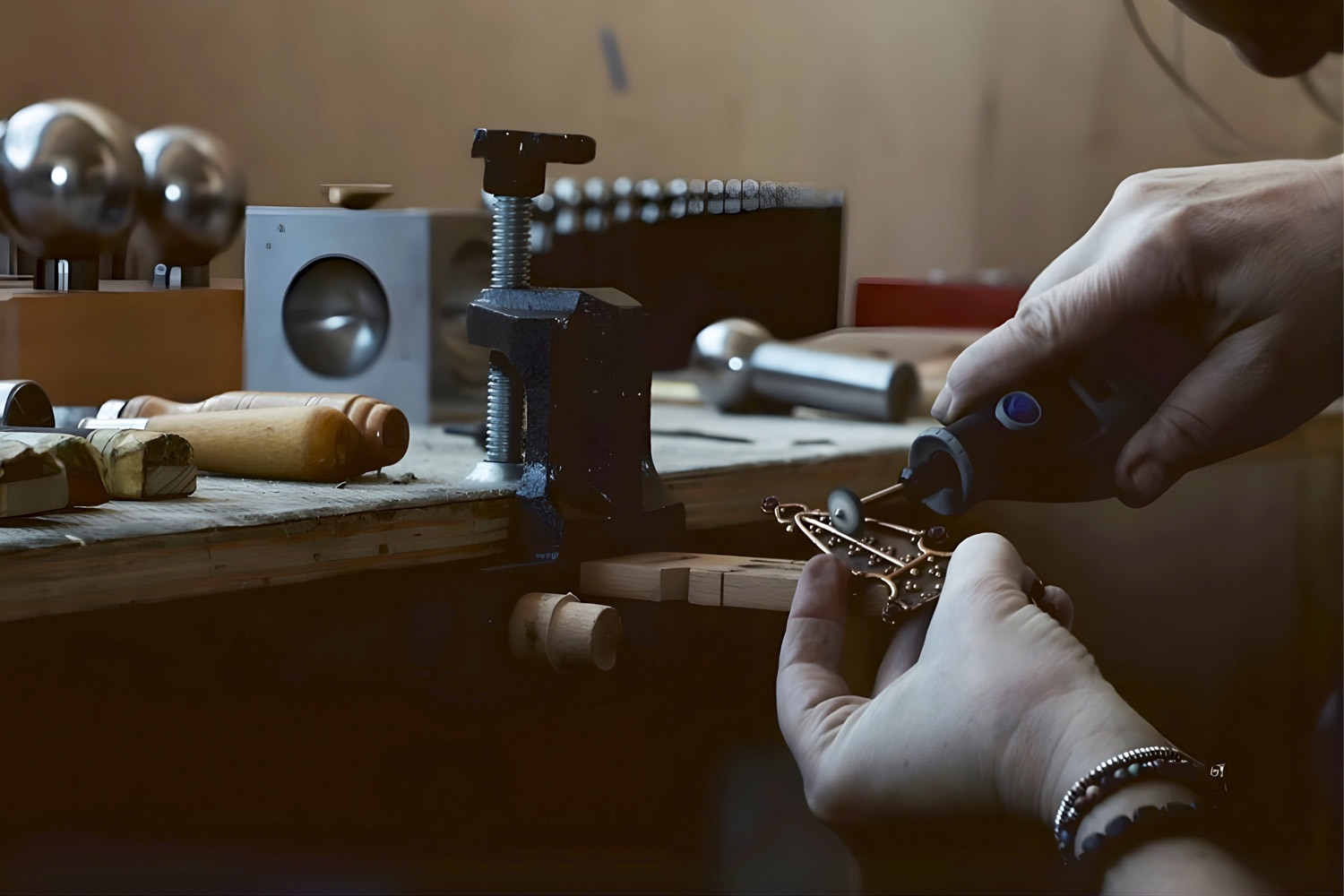
Shayna Leib calls herself an inefficient artist, in that nothing she makes happens quickly. She works through every stage of the creation process herself, from pulling cane to grinding and polishing glass, embracing the labour-intensive and complex processes that define her practice. Each piece begins with a clear vision, imagined long before it takes material form. Driven by ideas, Shayna works in ceramic, stone, metal and photography as well as glass, selecting her materials for their inherent properties and their fit with her concept. Glass, however, remains her primary medium. “I am drawn to its ability to express flow, freeze a moment in time and manipulate light,” she says. Originally trained in philosophy, Russian literature and classical piano, Shayna came to art through an MFA in glass and metal work.
INTERVIEW
After graduate school, I placed an advertisement in the Glass Art Society newsletter looking for work. While interviewing in Louisville, a gallery in the same building invited me to participate in an emerging artist exhibition. When one piece sold, another gallery noticed, and momentum began to build. I realised I could build a life as a studio artist.
I am inspired by the natural world and how it flows. Growing up on California’s Central Coast shaped my connection to the sea. When I began diving in 2009, my Wind and Water series took on a more personal angle. I created pieces reflecting my encounters with certain species and phenomena. As I evolve, so does my work, moving from marine life exploration to more personal narratives.
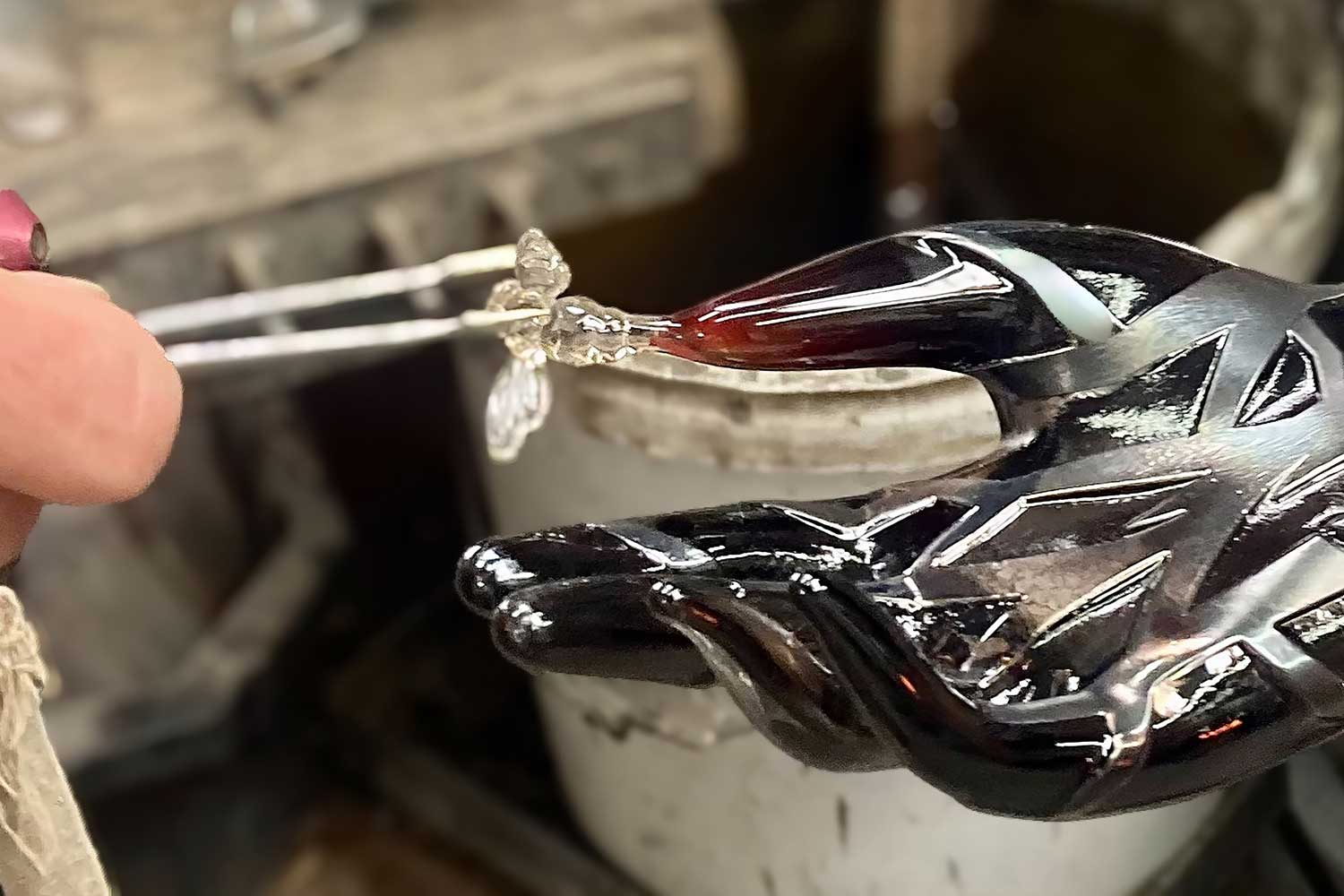
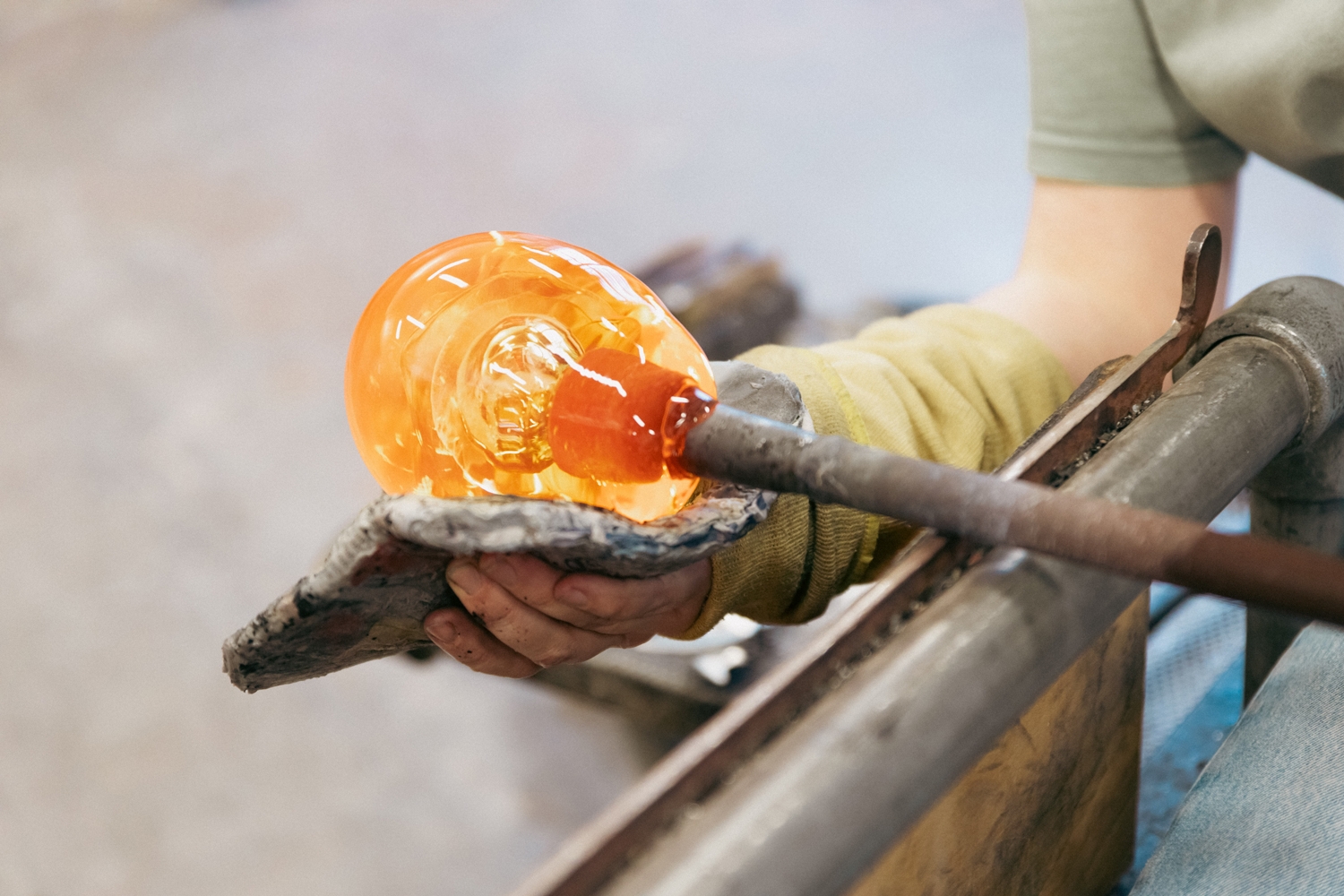
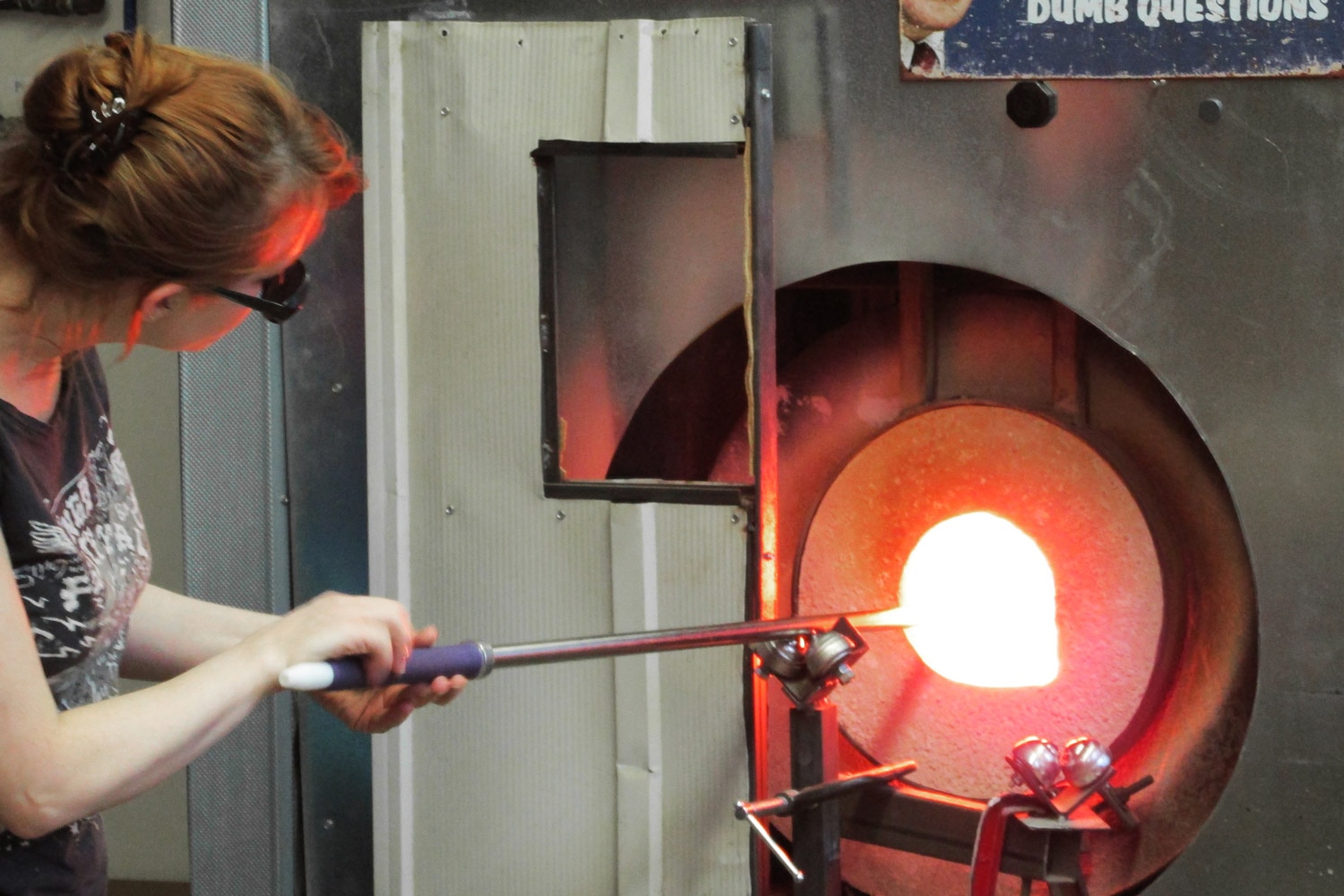
My process moves through three stages, hot, warm and assembly. At 1149°C I melt clear glass and add mineral colourants, pulling handmade cane that can stretch for miles in large pieces. Reheated to 1149°C, the glass slumps over moulds and is cut into tens of thousands of individuals elements. These components are then assembled one by one to create flow.
Glass has a long history tied to the decorative arts which makes its status as a pretty object difficult to transcend. For me, innovation lies in moving beyond the beauty into meaning and metaphor to put it on an equal footing with traditional sculptural mediums.
Shayna Leib
Glass sculptor
Madison, WI, USA
ADDRESS
Address upon request, Madison, WI, USA
AVAILABILITY
By appointment only
LANGUAGES
English, Spanish
Homo Faber Finds is a new service aiming to inspire admirers of craft to connect and collaborate with exceptional artisans.
We invite you to submit an enquiry here.