Image 1 of 2
Jiyong Lee
Glass sculptor
Carbondale, IL, USA
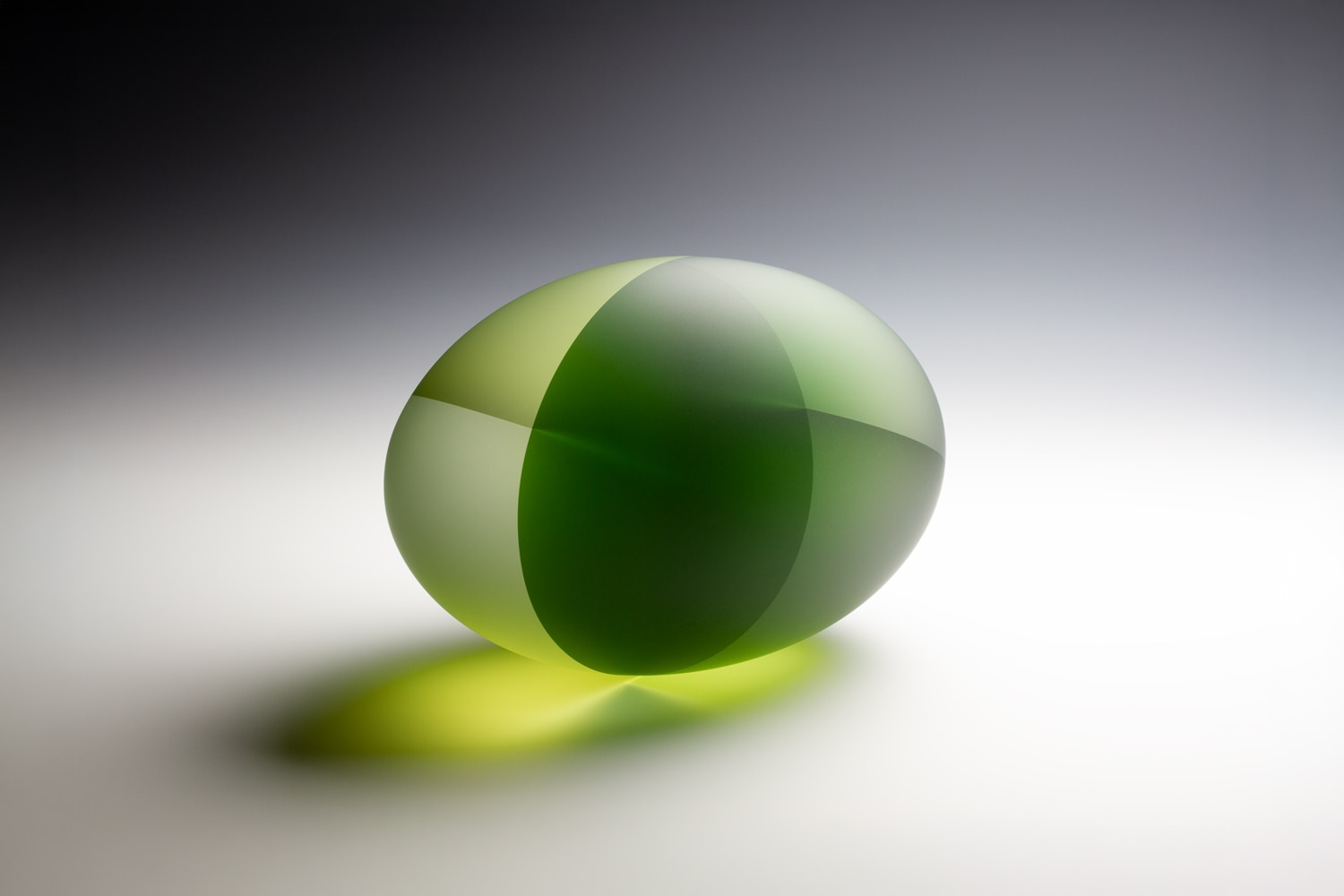
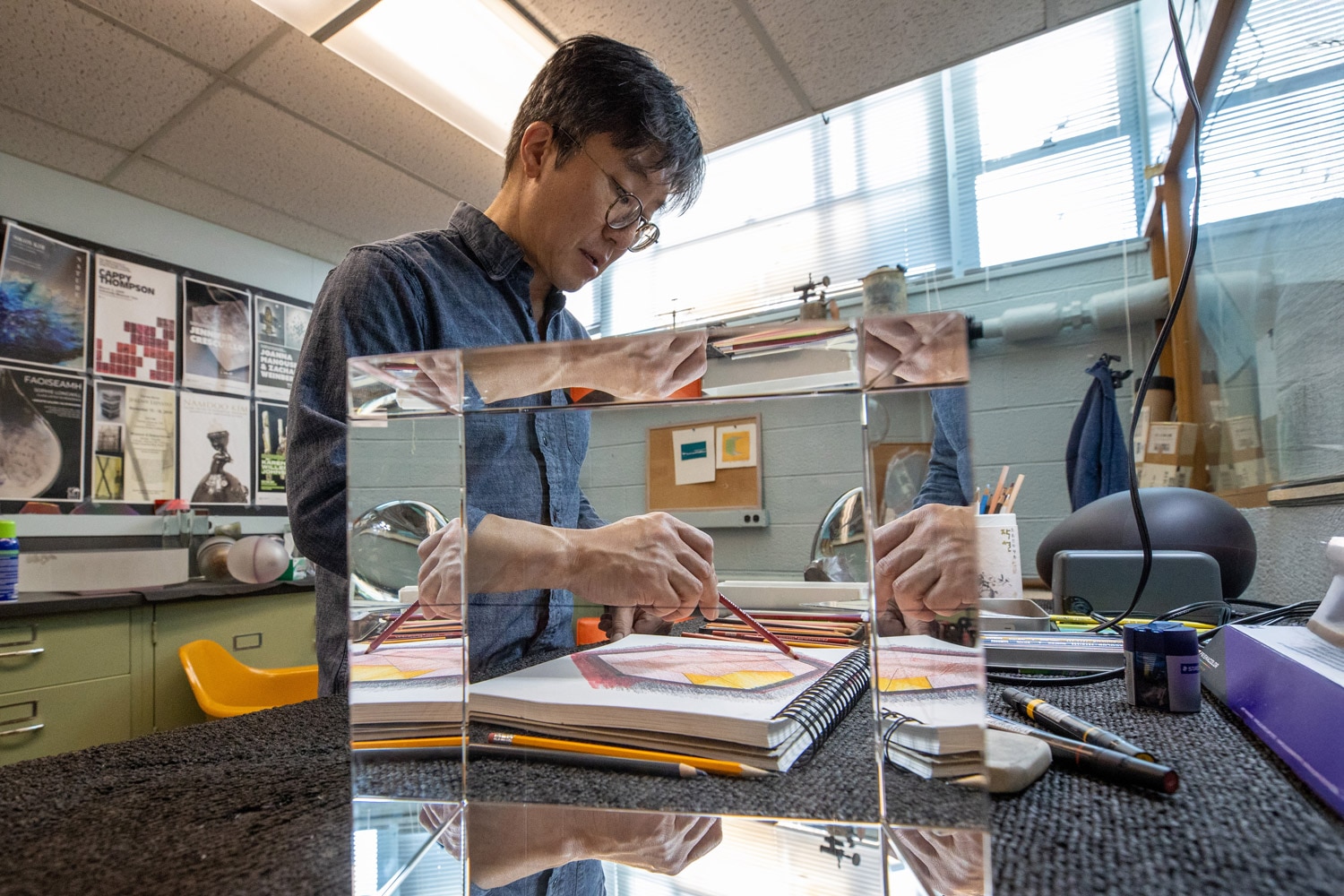
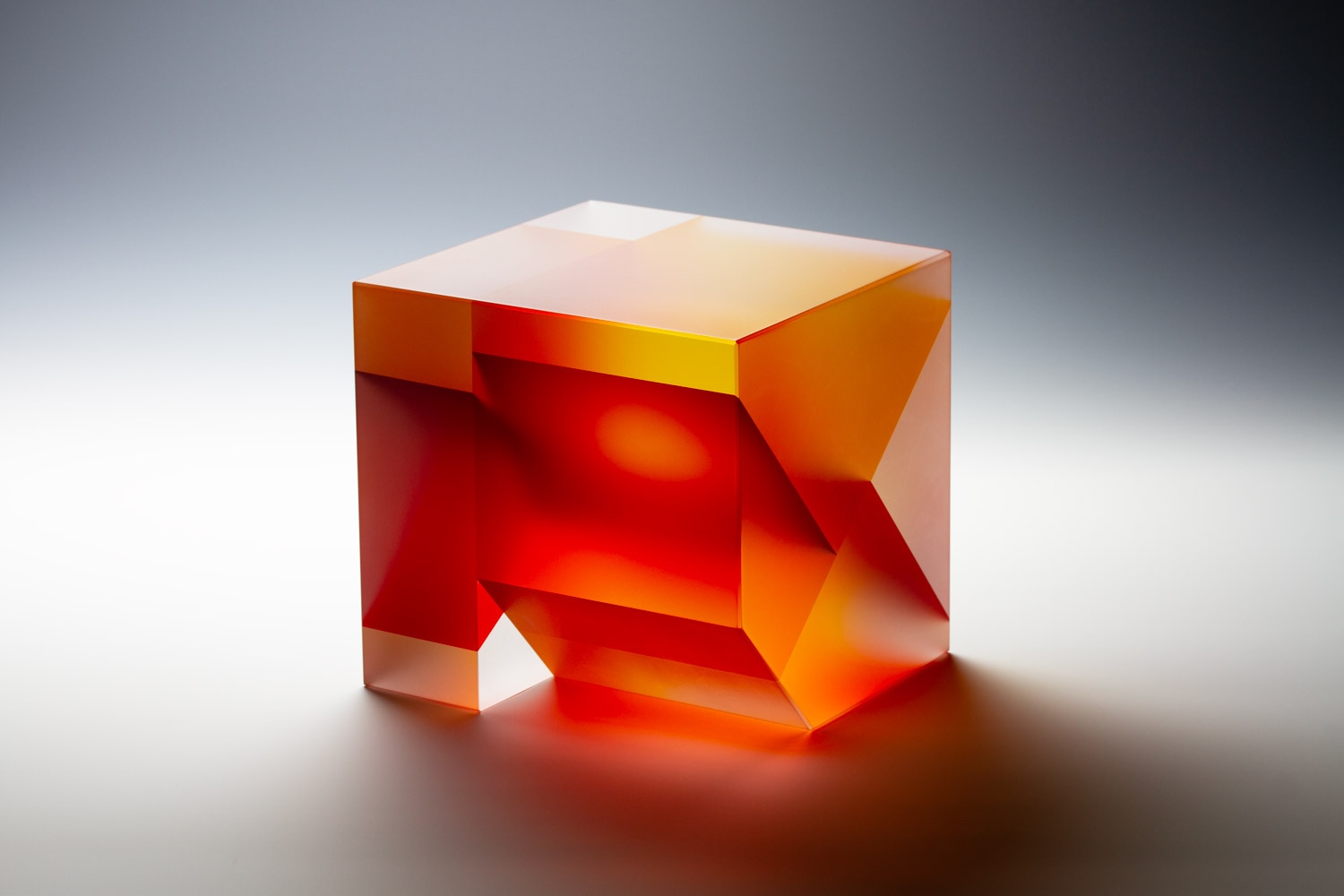
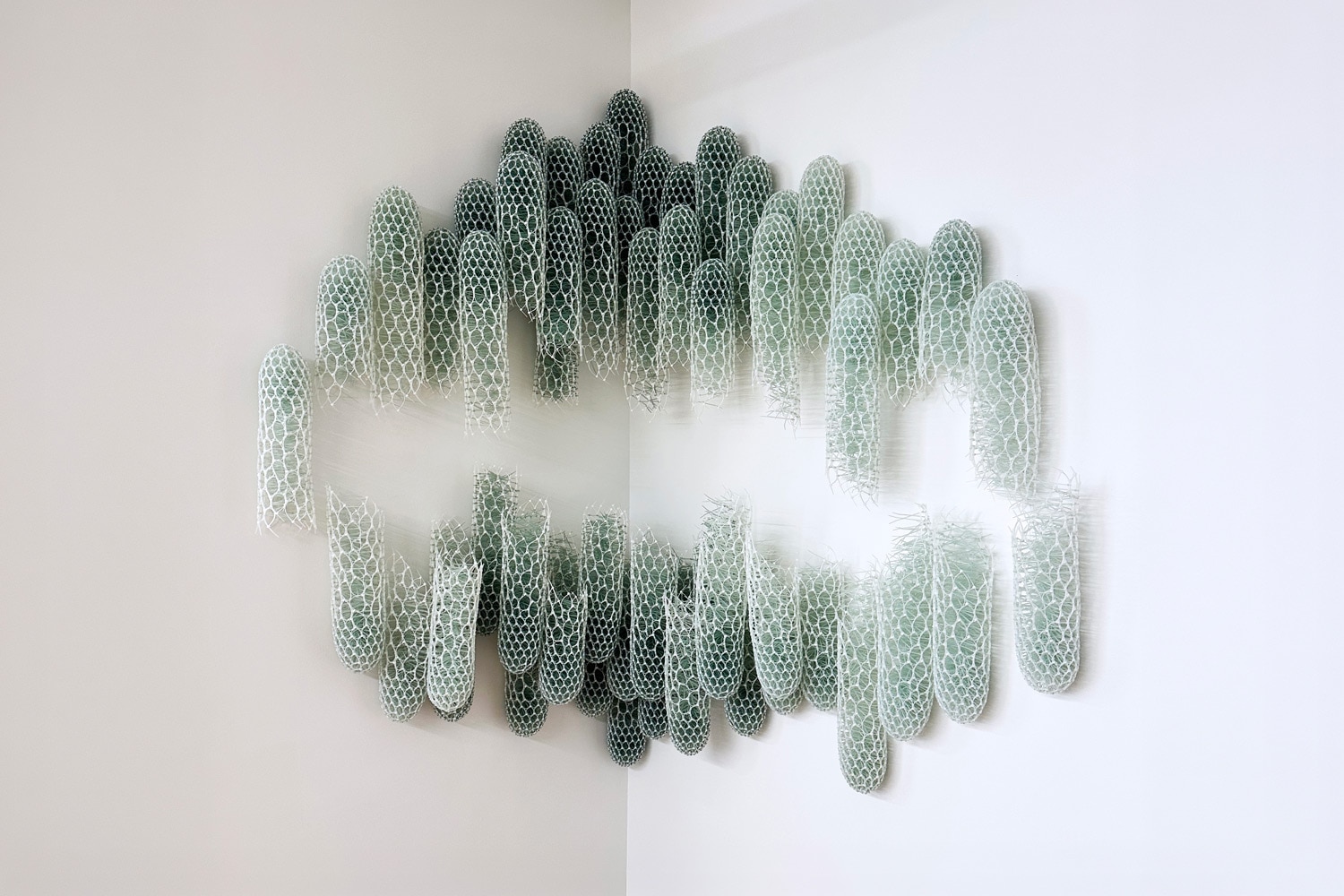
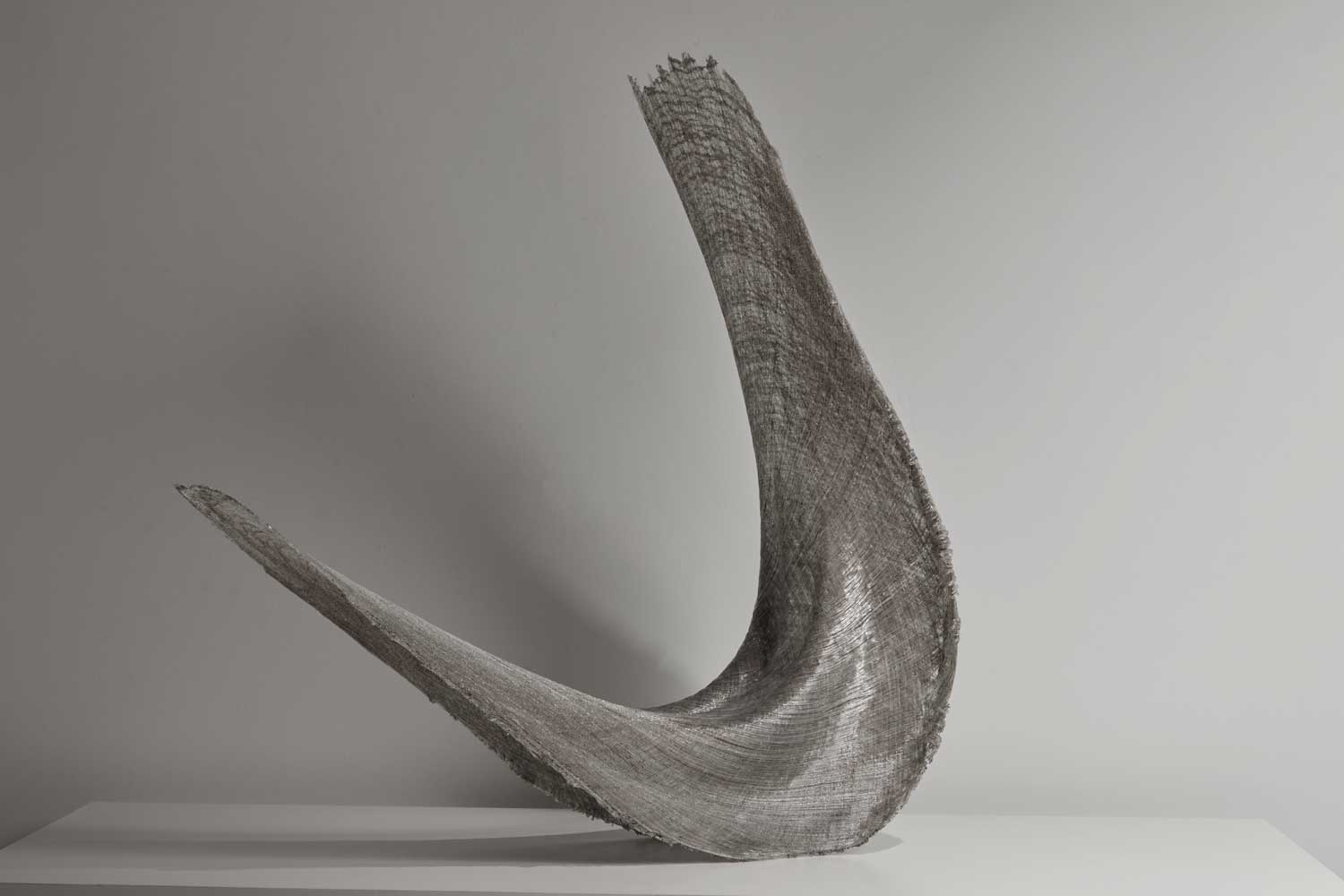
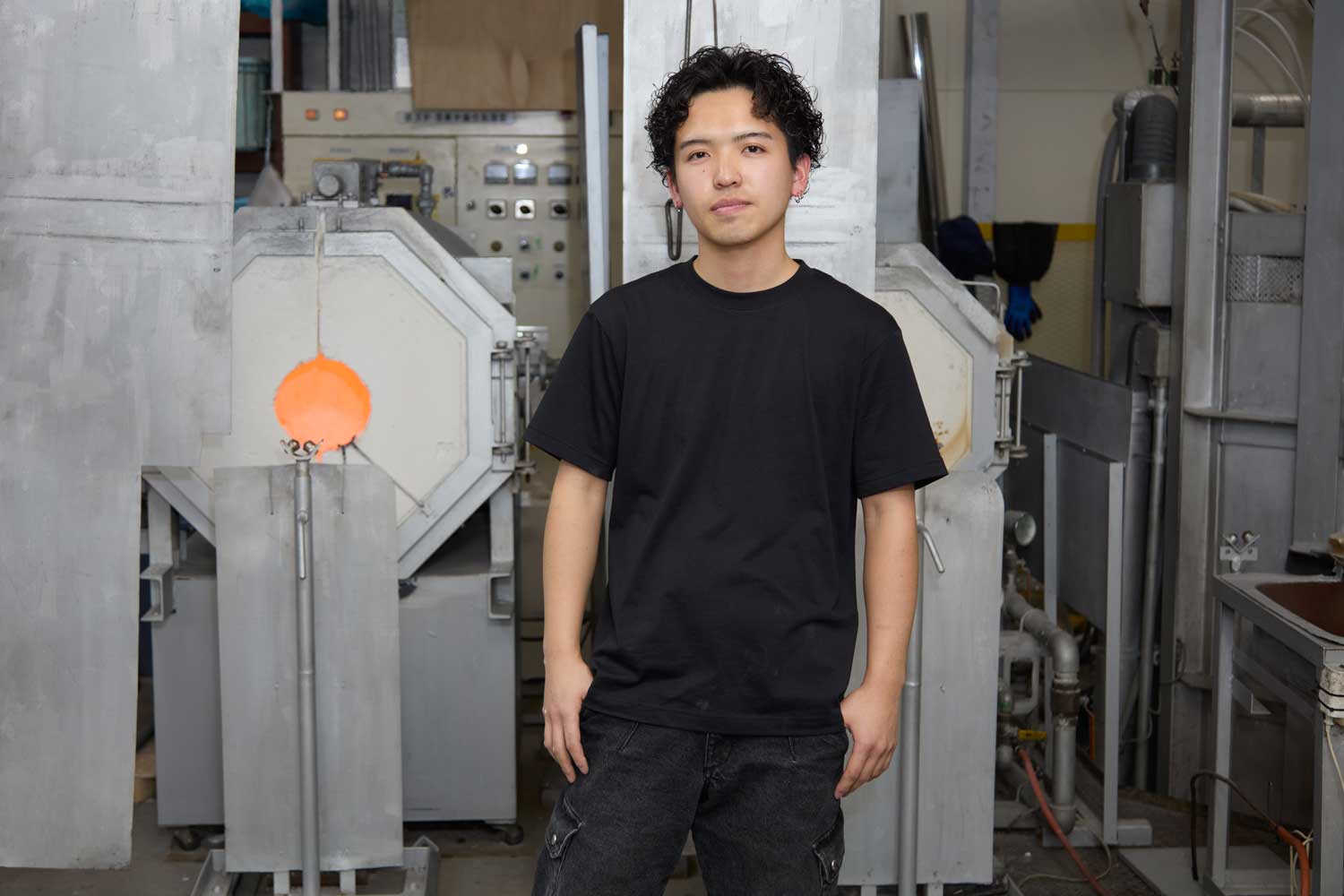
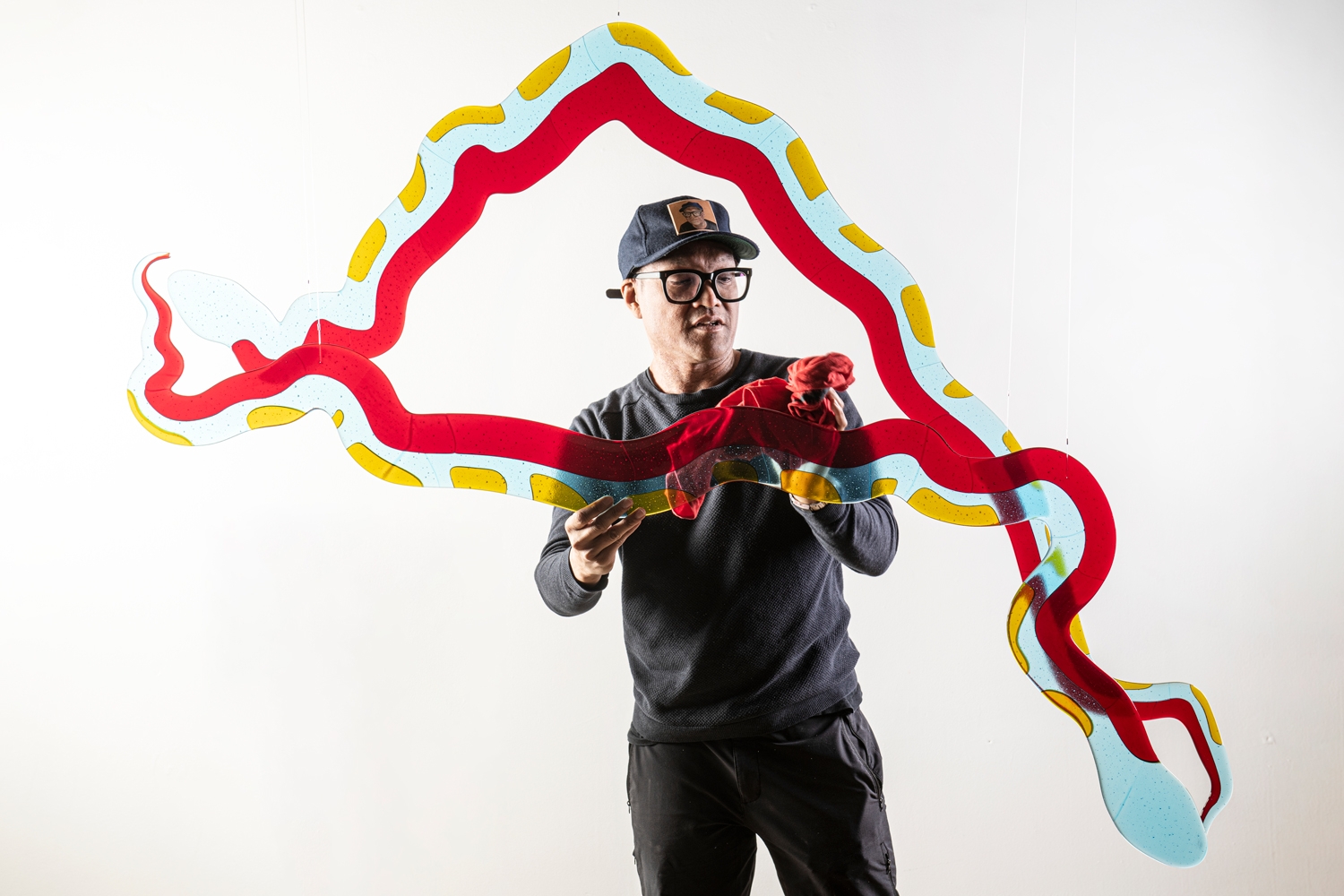
Raised in a family connected to medicine, Jiyong Lee developed an early fascination with biology and the hidden structures of life. Growing up in South Korea, glass as an art medium simply did not exist, so he studied ceramics instead, switching to glass when he came to the USA for graduate school in 1998. Jiyong worked for several years as a studio assistant to his professor, glass artist Michael Taylor, and now is a professor himself at Southern Illinois University Carbondale. Jiyong’s Segmentation series, which works with segmented and reassembled glass, began when his wife was pregnant. “I found myself poring over biology textbooks, and became interested in what lies beneath surfaces,” he says. Jiyong’s delicate glasswork continues to live in the space between opacity and transparency, where the viewer’s position and perspective affect what they can see. “I work with cut and laminated glass to explore what we can sense, but not quite see,” he says.
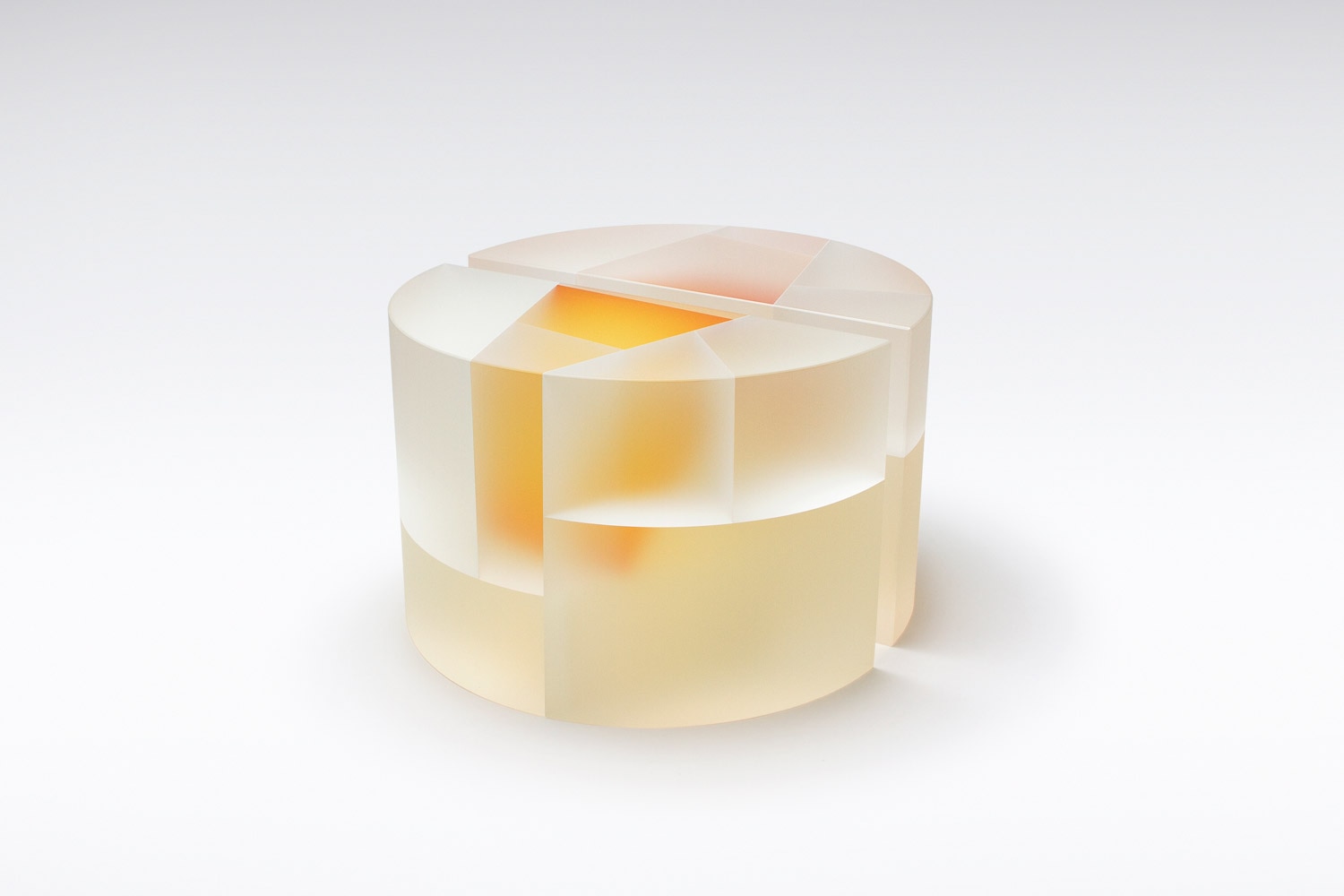
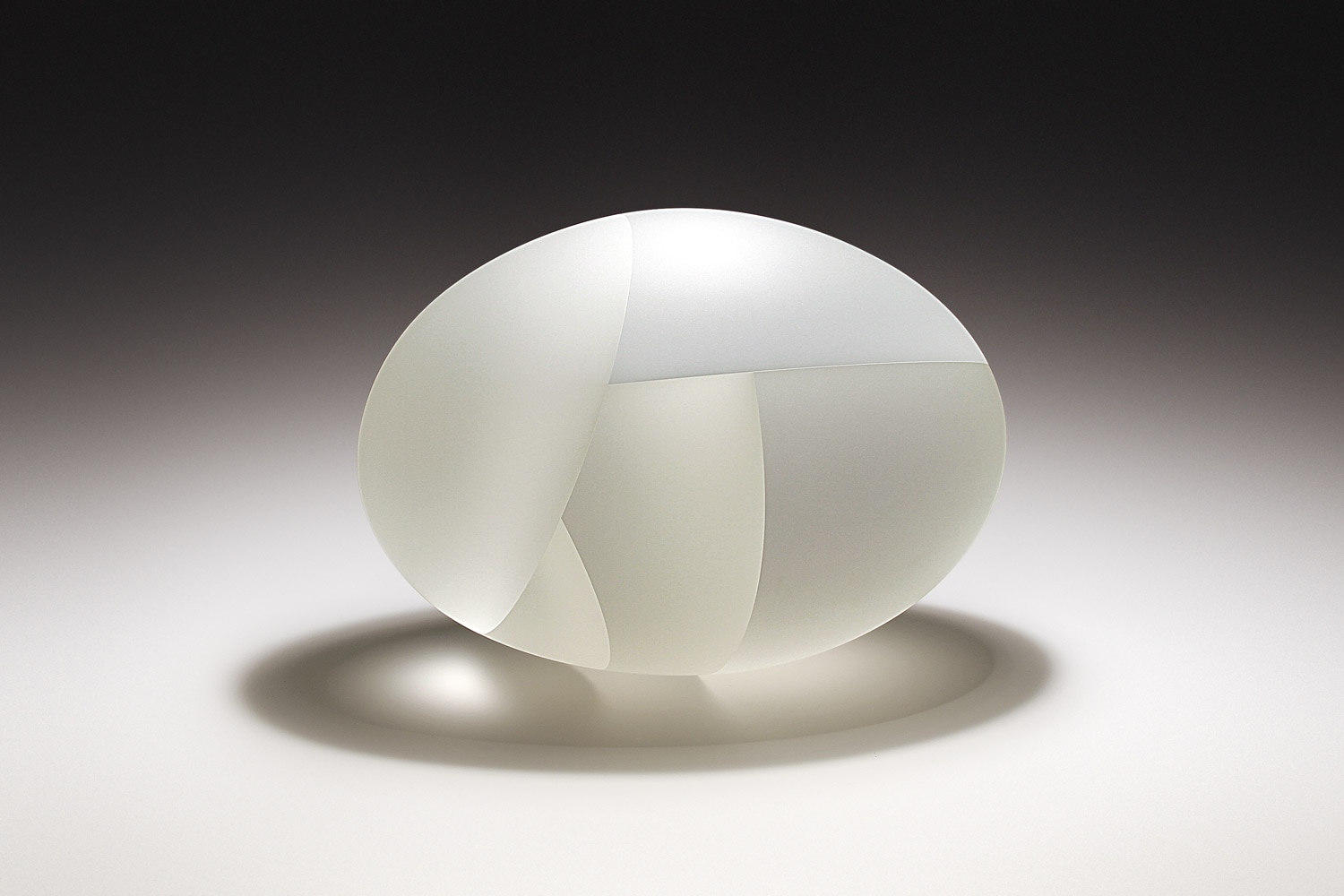
There was no glass programme in any South Korean art school. When I saw it in craft magazines, it seemed mysterious and I could not figure out what it was. It took time to learn, but that sense of mystery never left me.
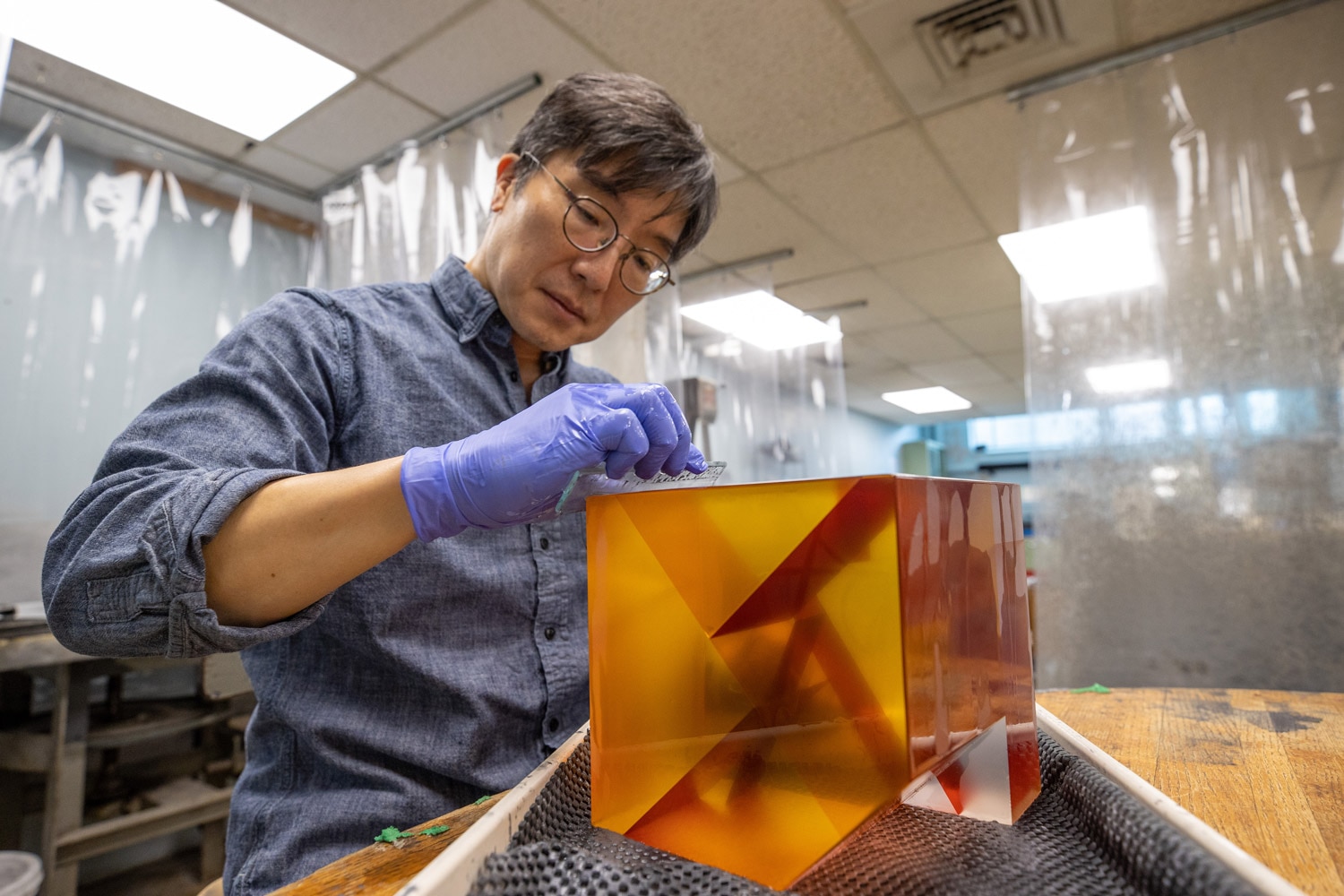
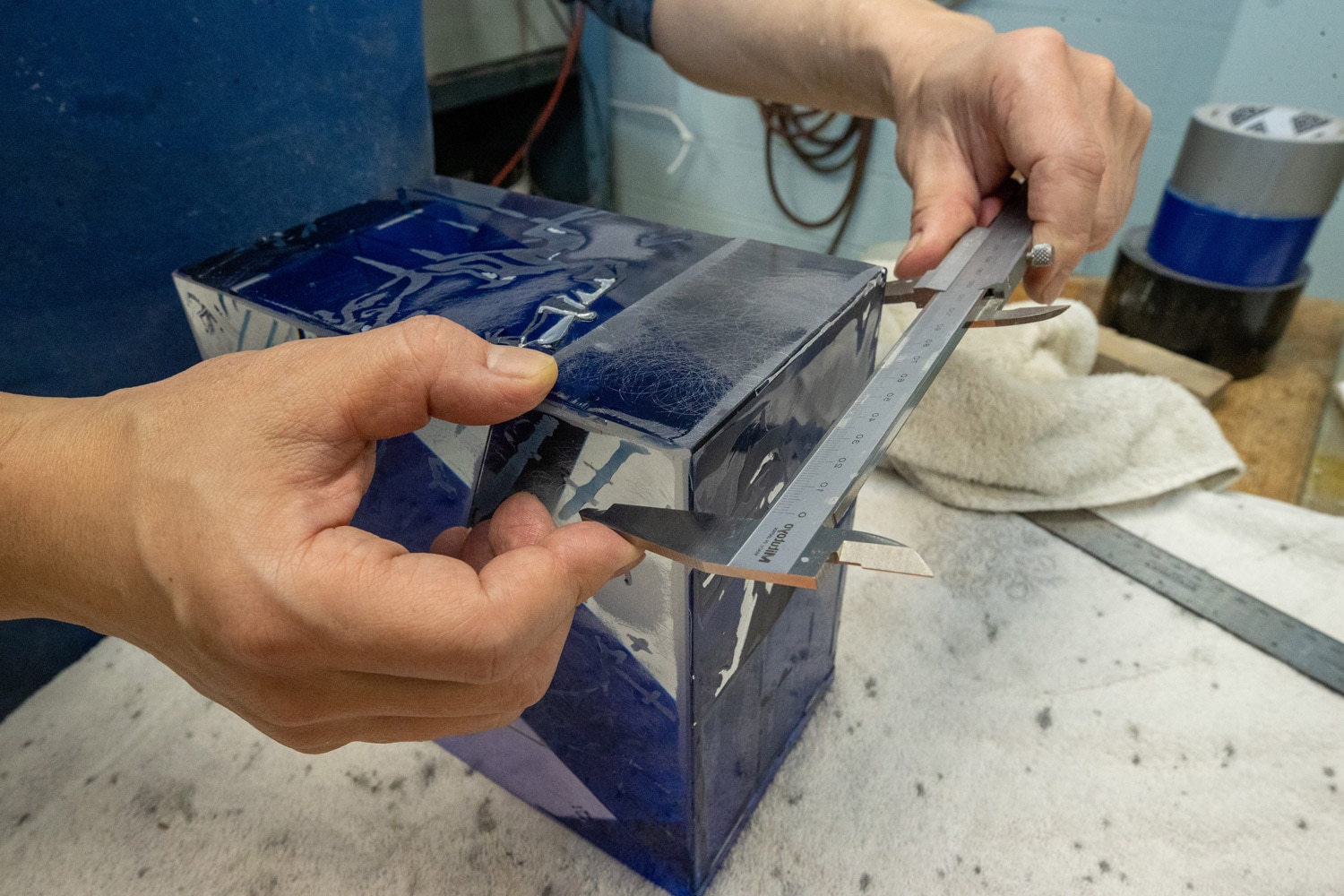
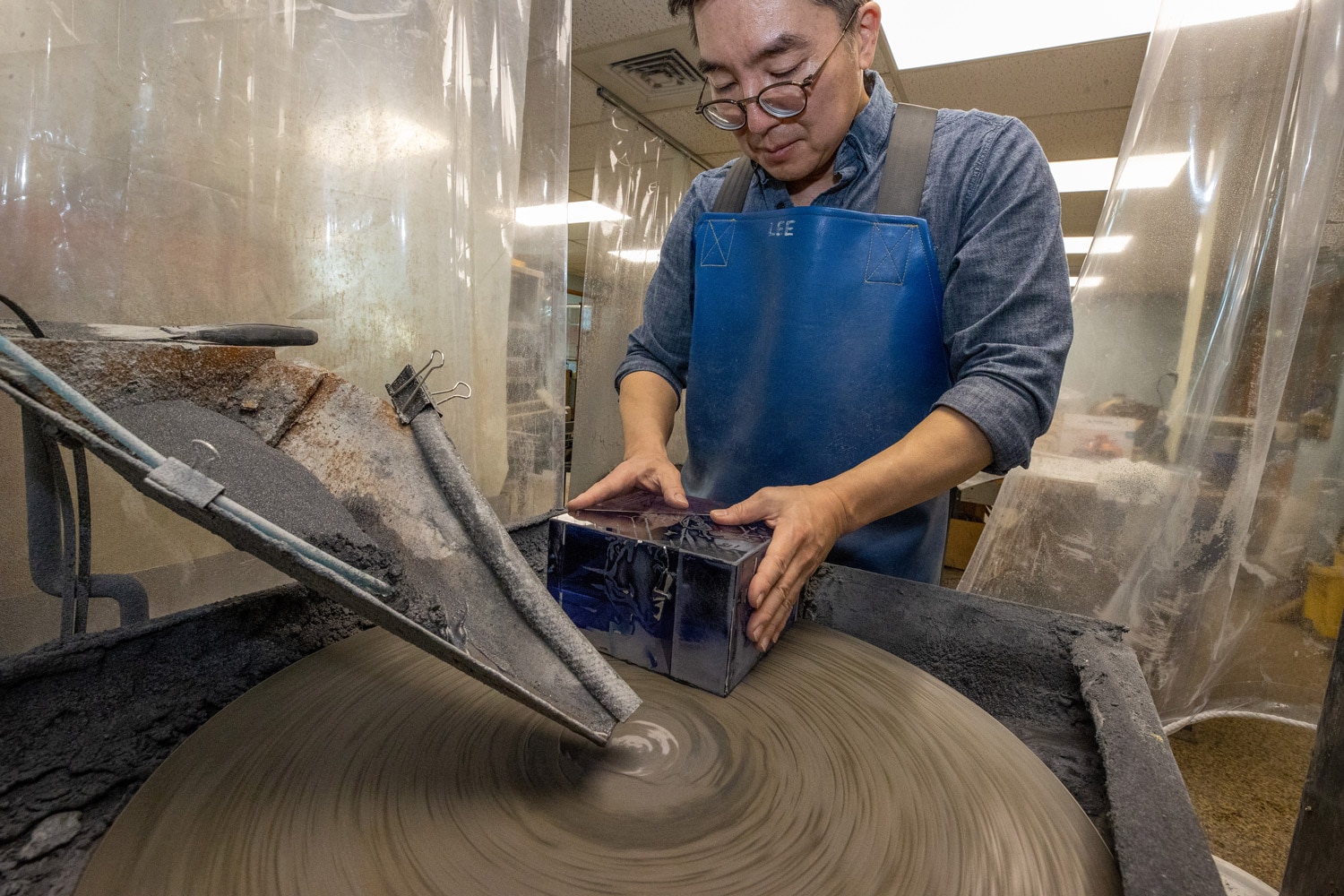
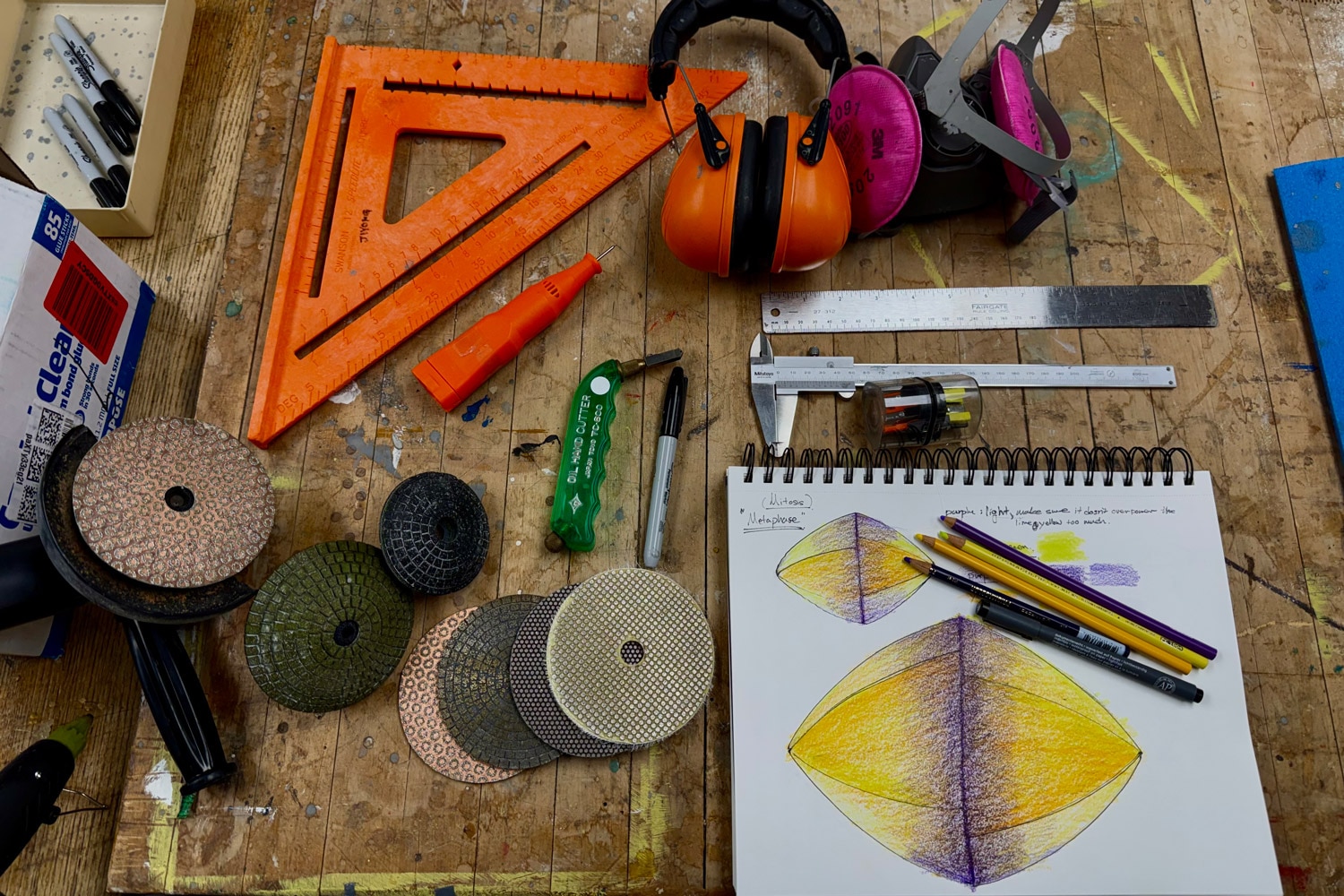
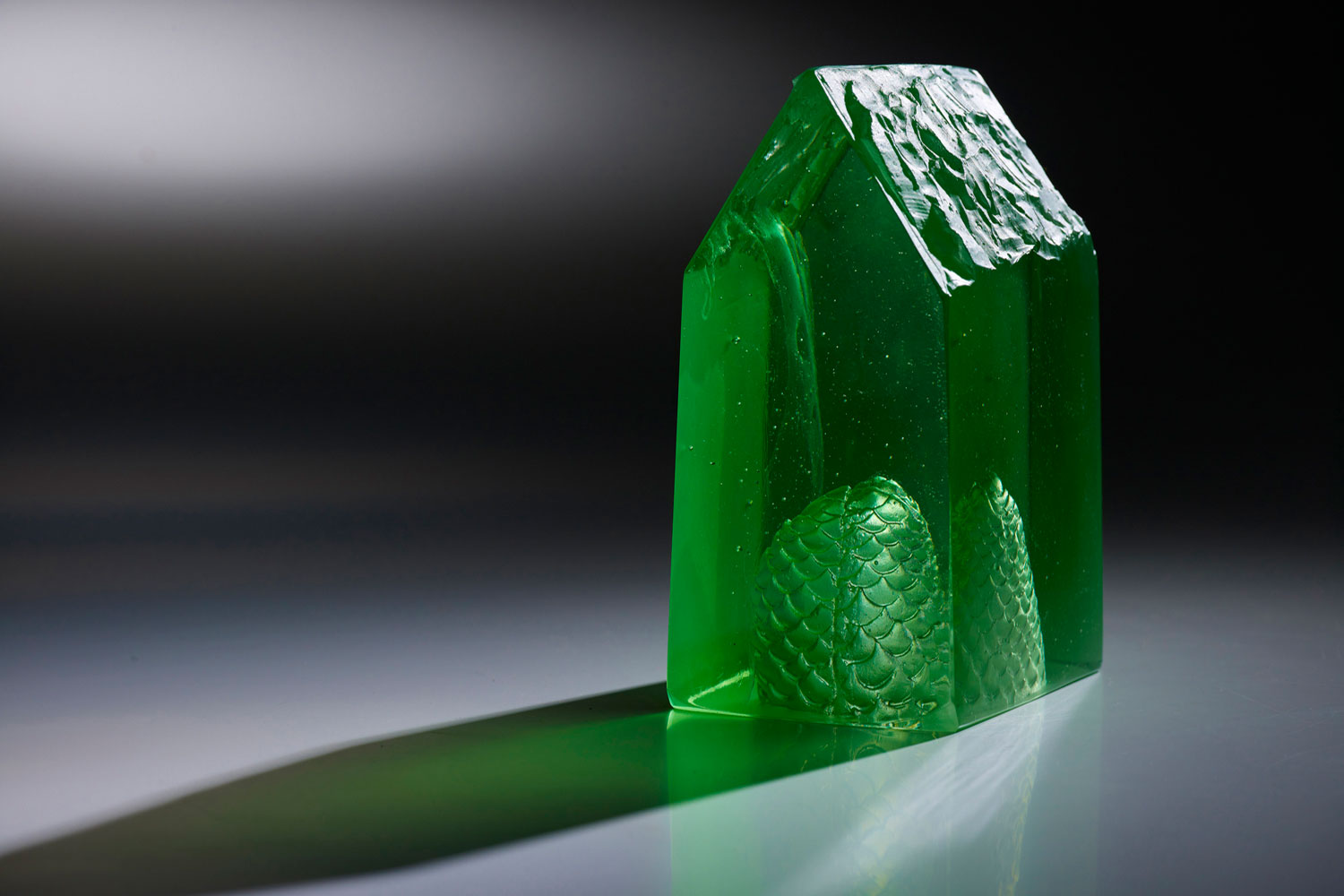
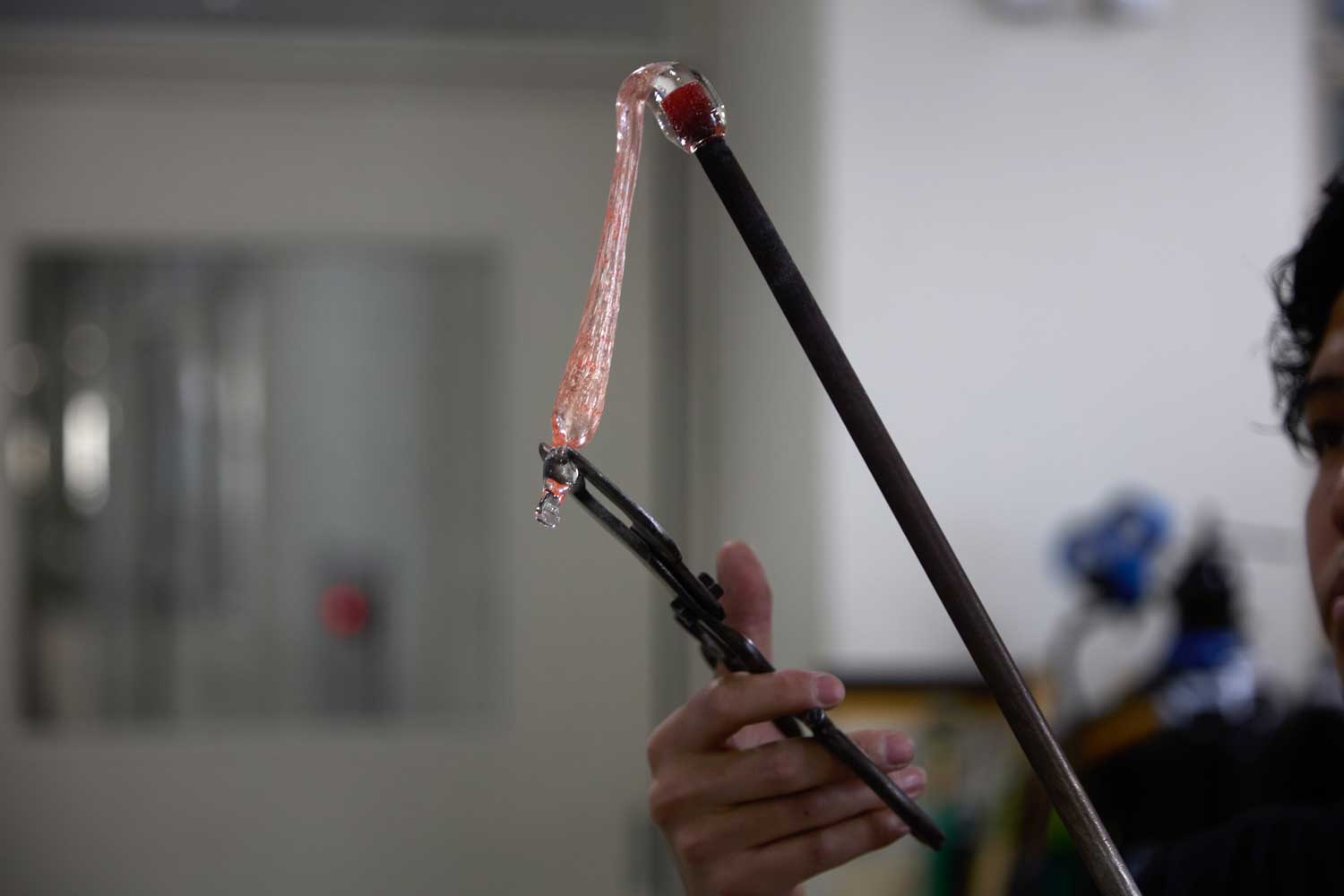
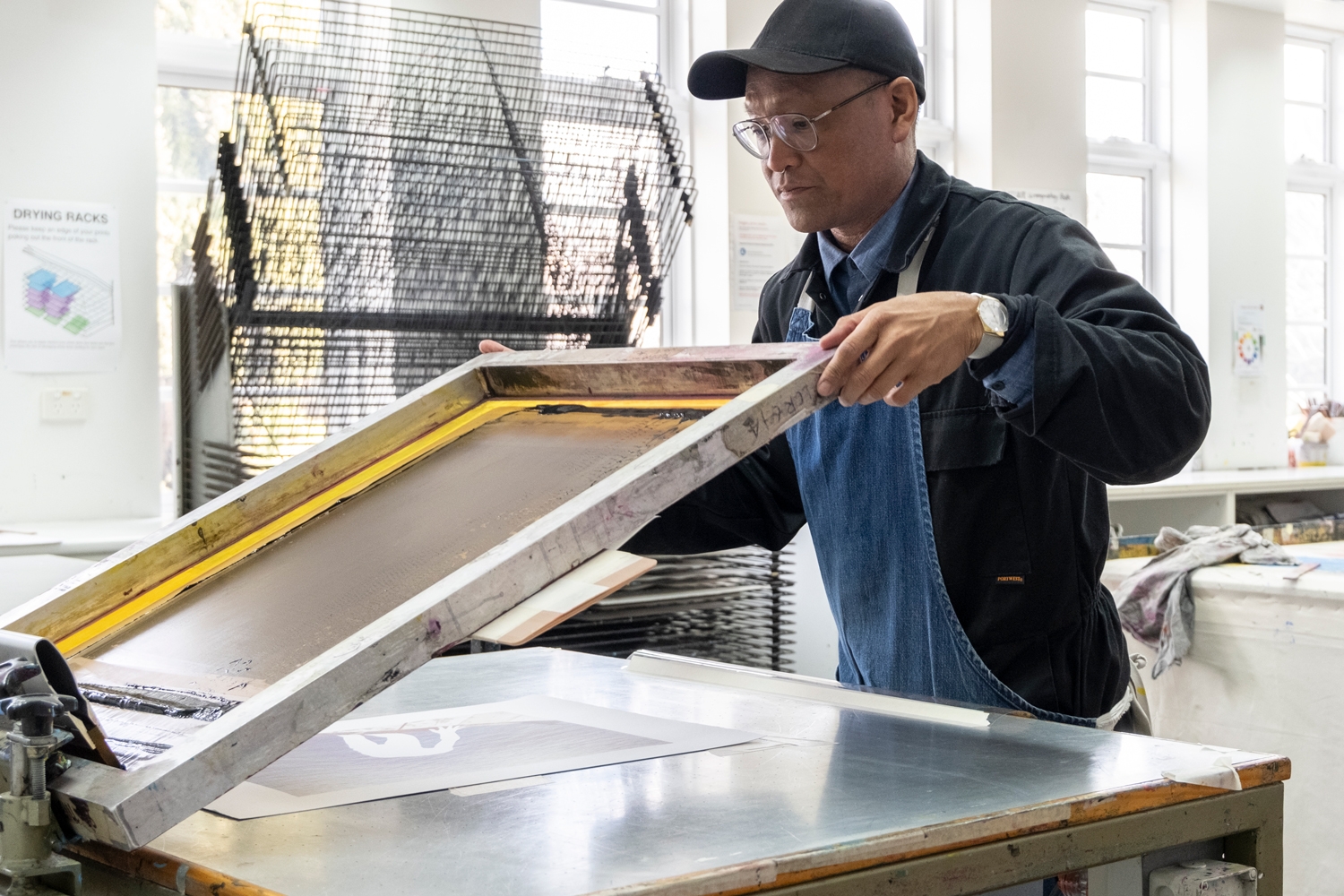
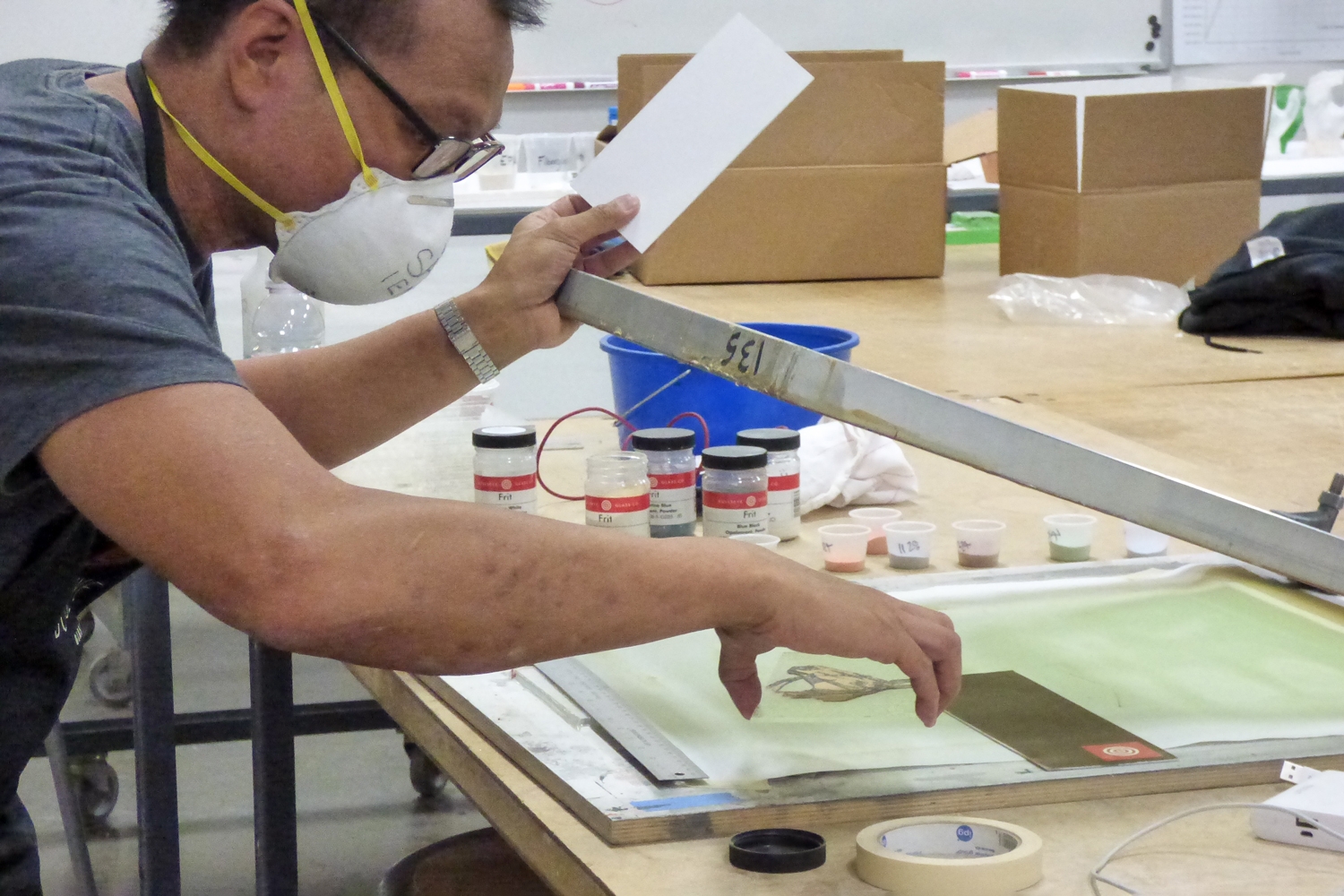
It is entirely reductive. I start with one large block, cut and grind the segments, then laminate them together with tinted adhesive. After gluing, it looks like a Frankenstein. About 80% of my making is dedicated to hand grinding the whole exterior smooth, as if nothing happened.
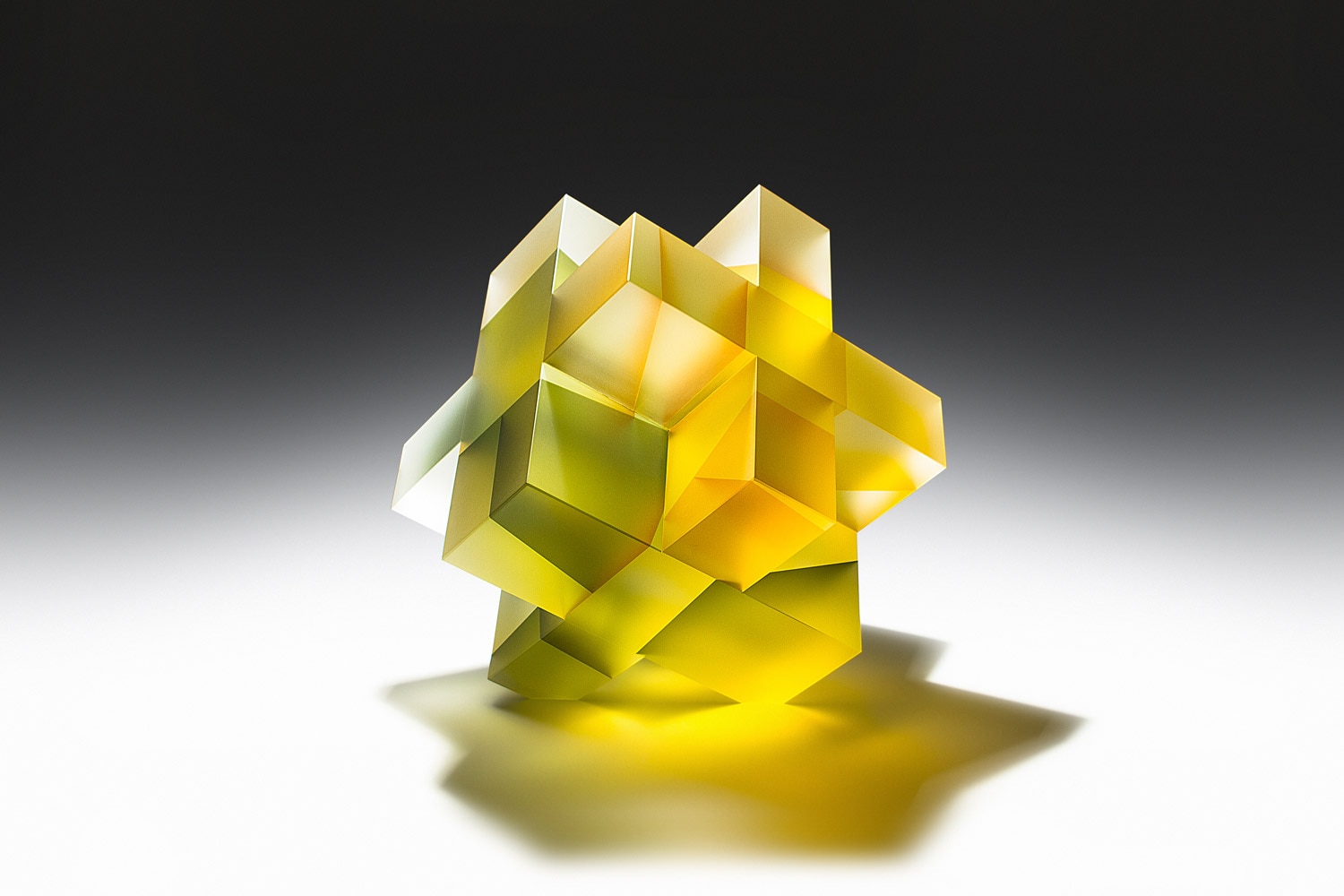
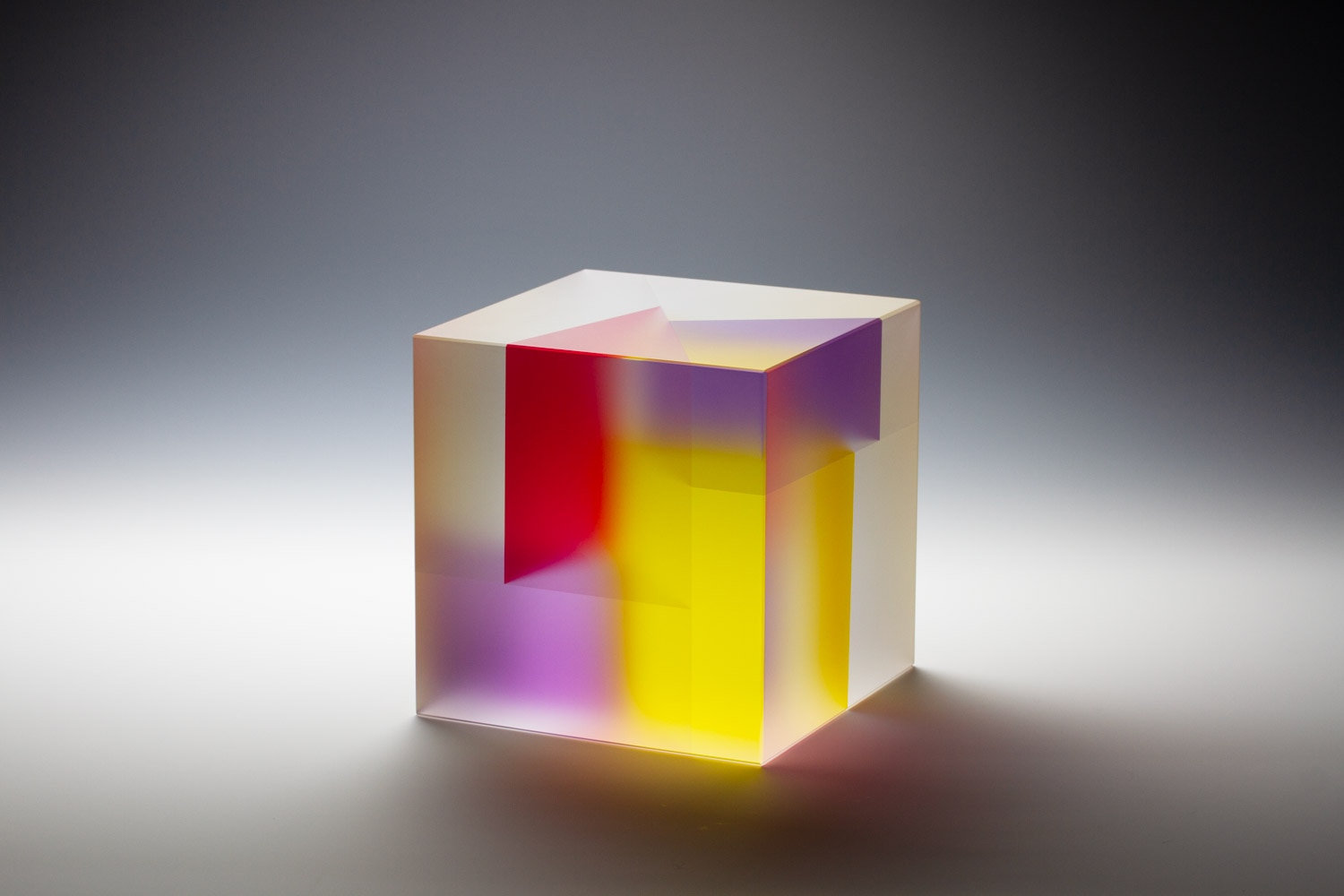
In my works, colour is never fixed. From the front you see very little, but move to the side, and colour appears. Where layers of adhesive overlap, it deepens or transforms. Full transparency feels God-like, something we humans do not have. What you see depends entirely on where you stand, and that is how we are. On the outside we all look the same, but internally we are all different.
I am exploring the concept of perfection. In my Missing Block series, I remove segments from a cubic form to introduce a sense of imperfection and tension. All of us miss something from our past, from our parents, but by missing something we become more like ourselves.
Glass sculptor
Carbondale, IL, USA
By appointment only
English, Korean
Homo Faber Finds is a new service aiming to inspire admirers of craft to connect and collaborate with exceptional artisans.
We invite you to submit an enquiry here.

Suzanne-O-Sullivan-,-Daydreaming-.-12-x-12-inch--IMG_6446.jpg)
IMG_20210526_104951~2-copy.jpg)
IMG_20250718_181155-copy.jpg)