Liam Lee
Felt maker
New York, NY, USA
Fantastical felt furniture
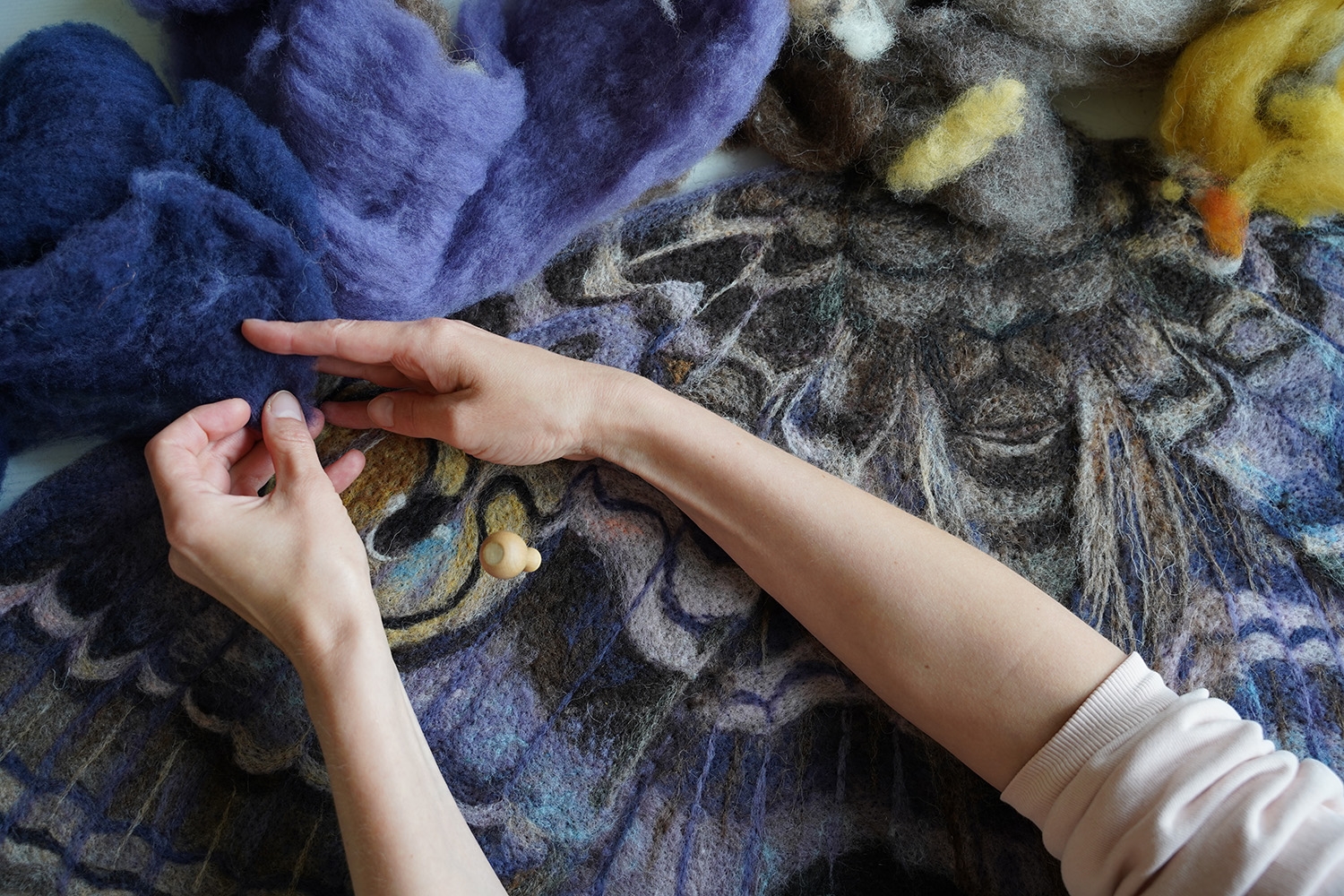
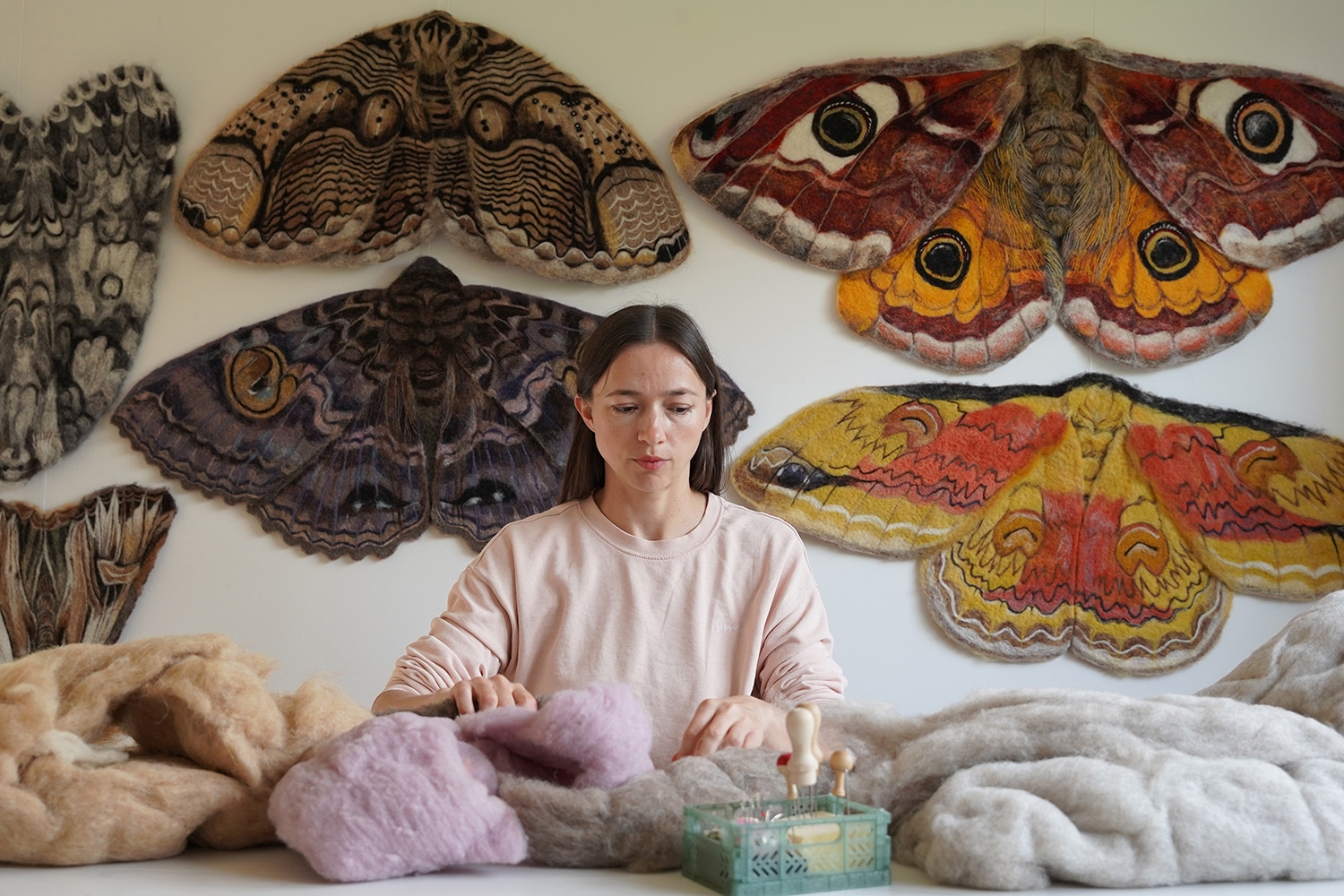
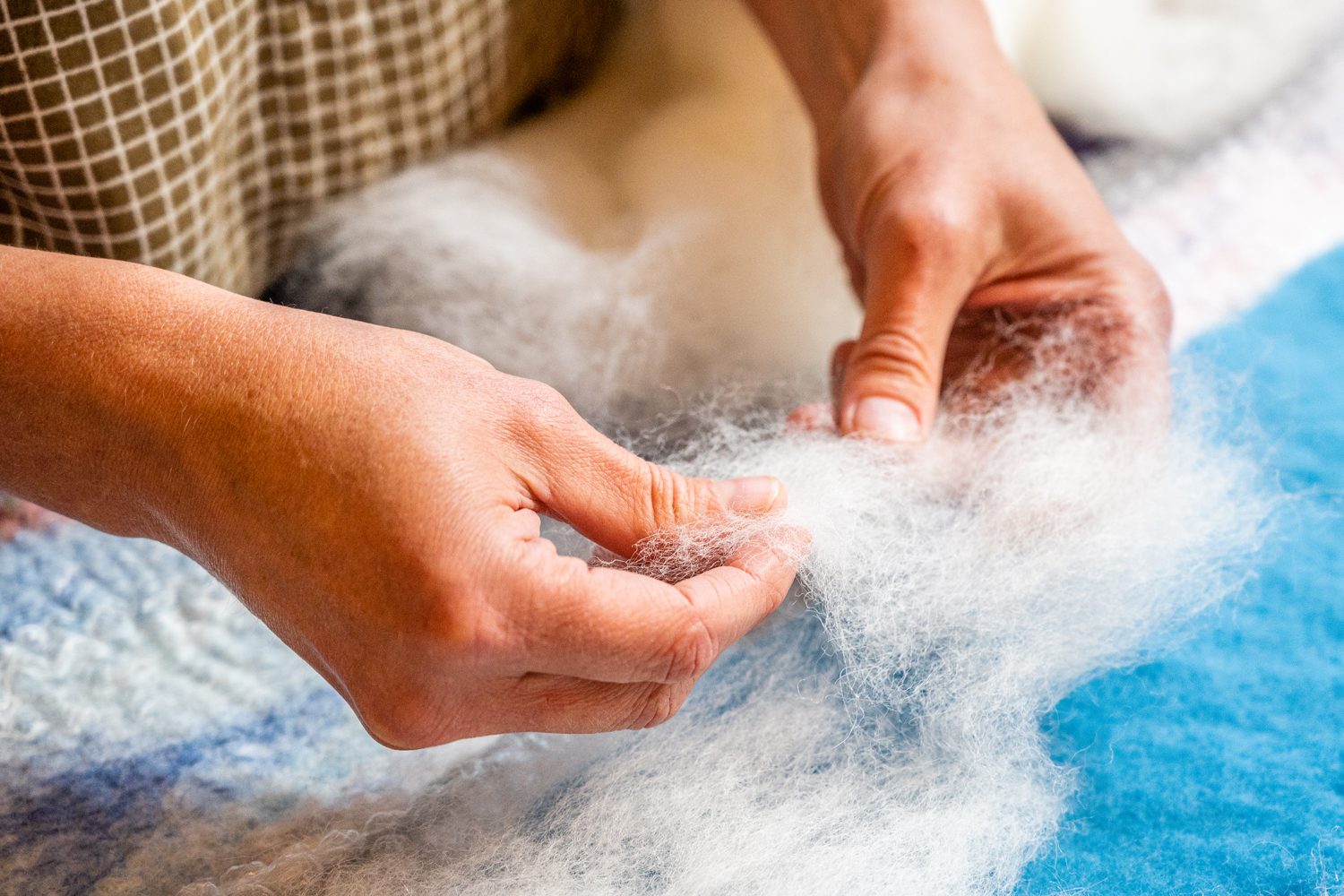
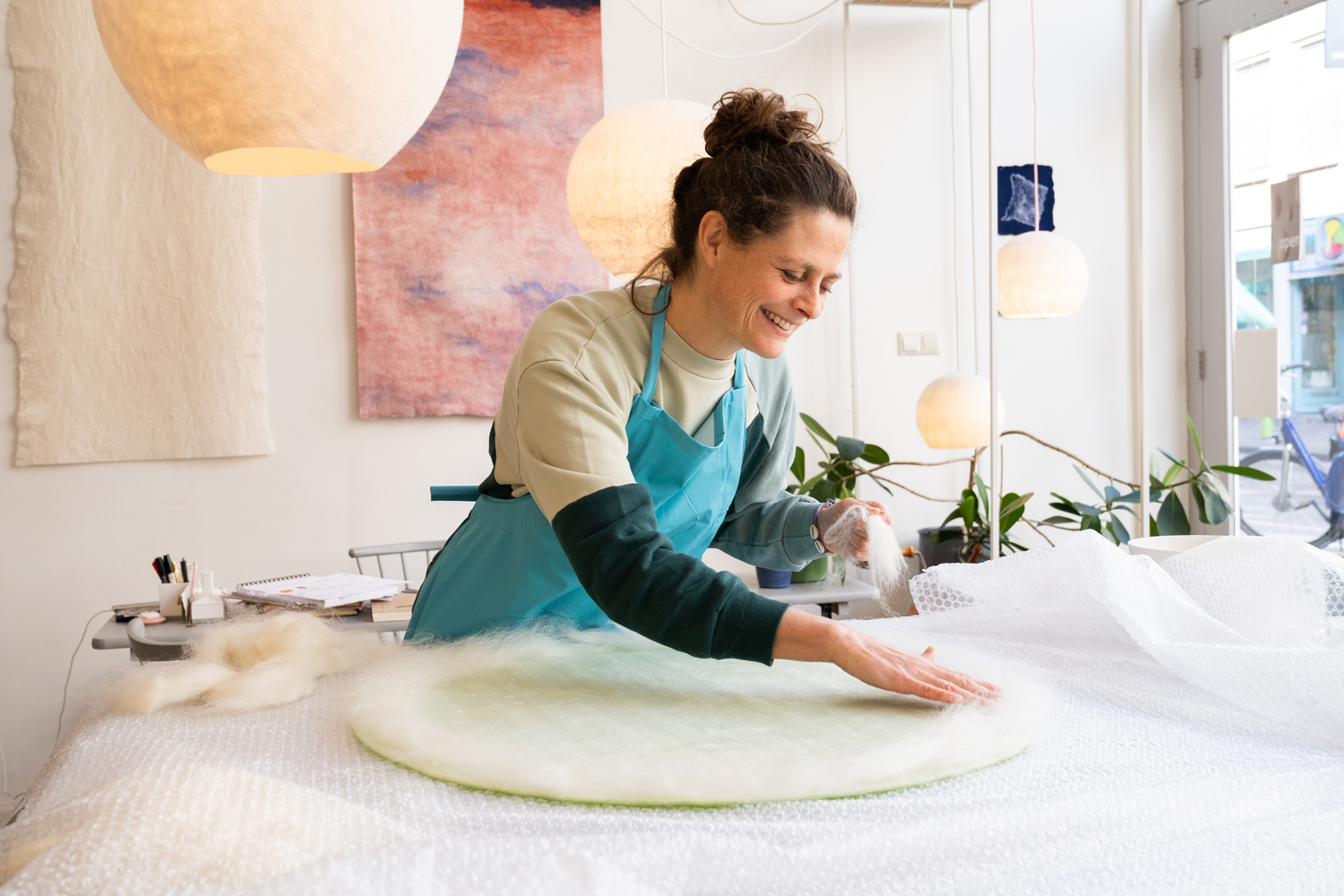
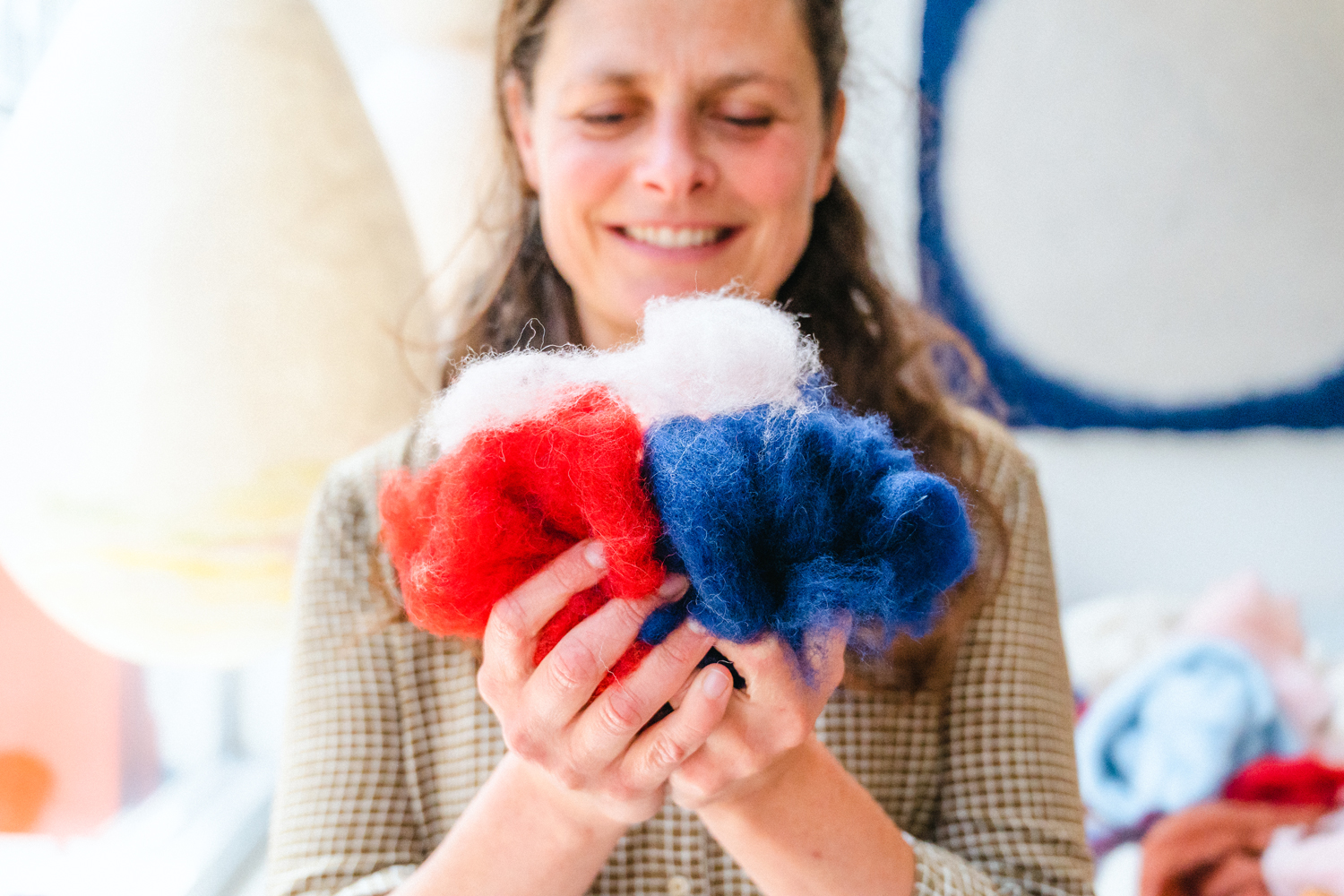
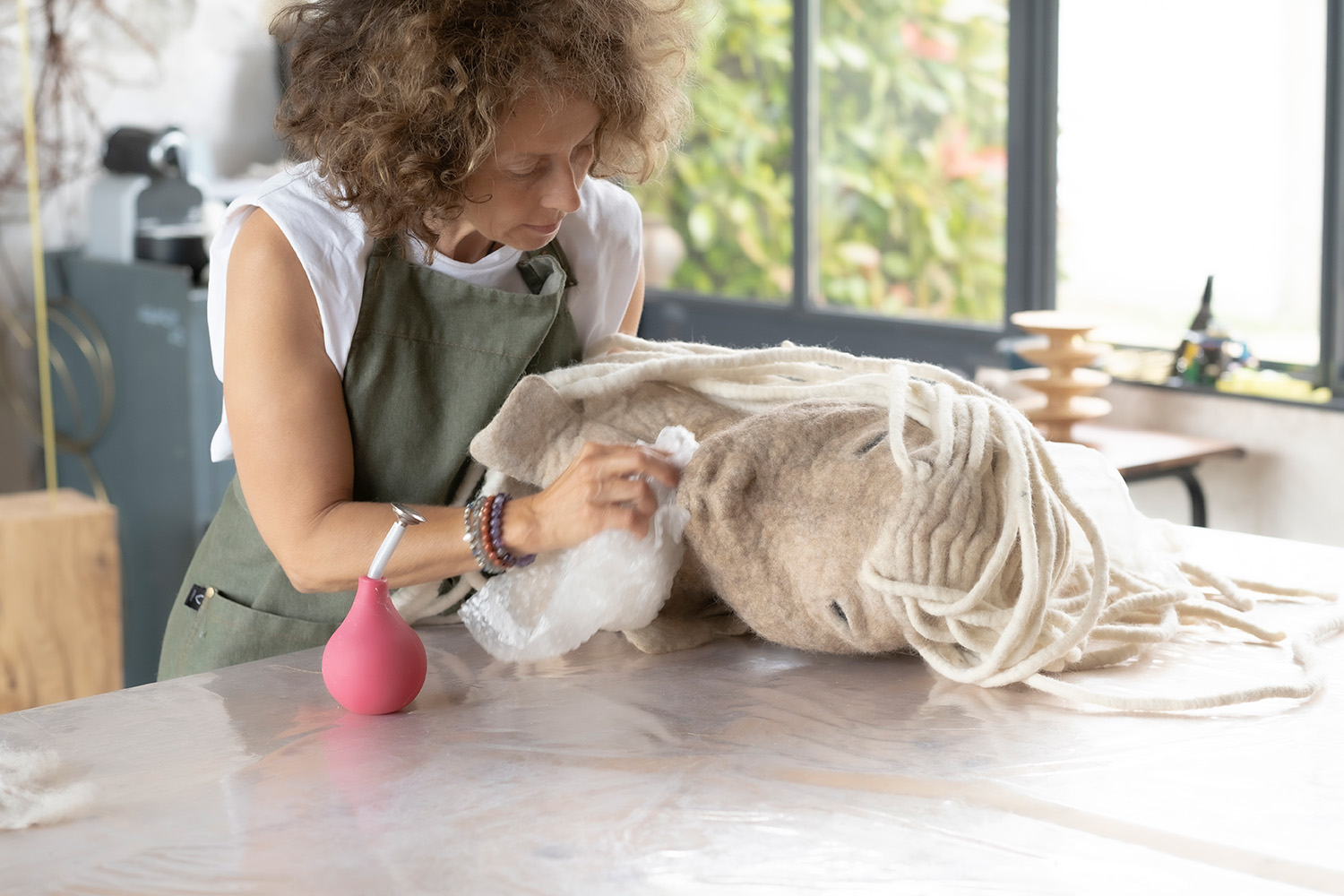
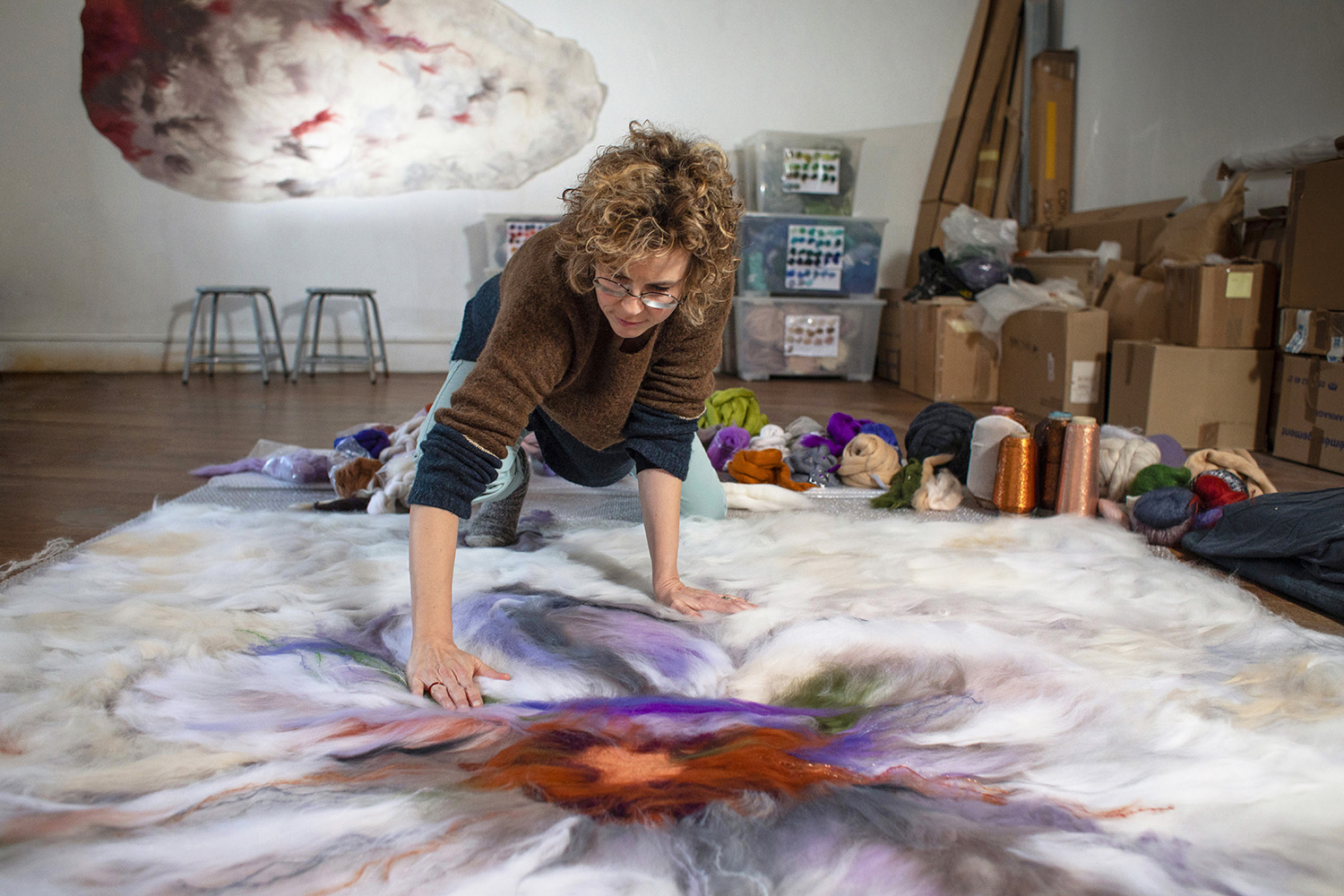
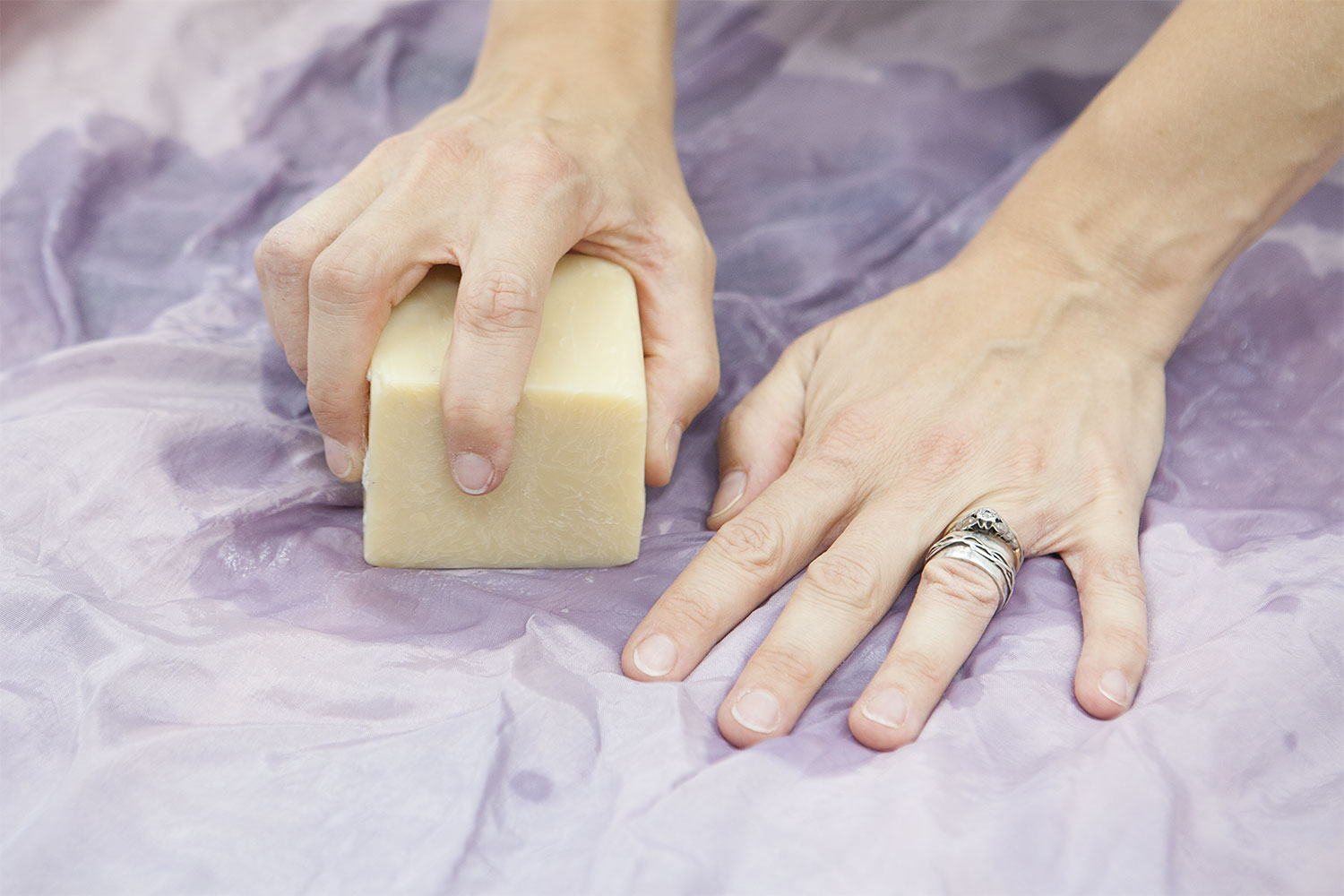
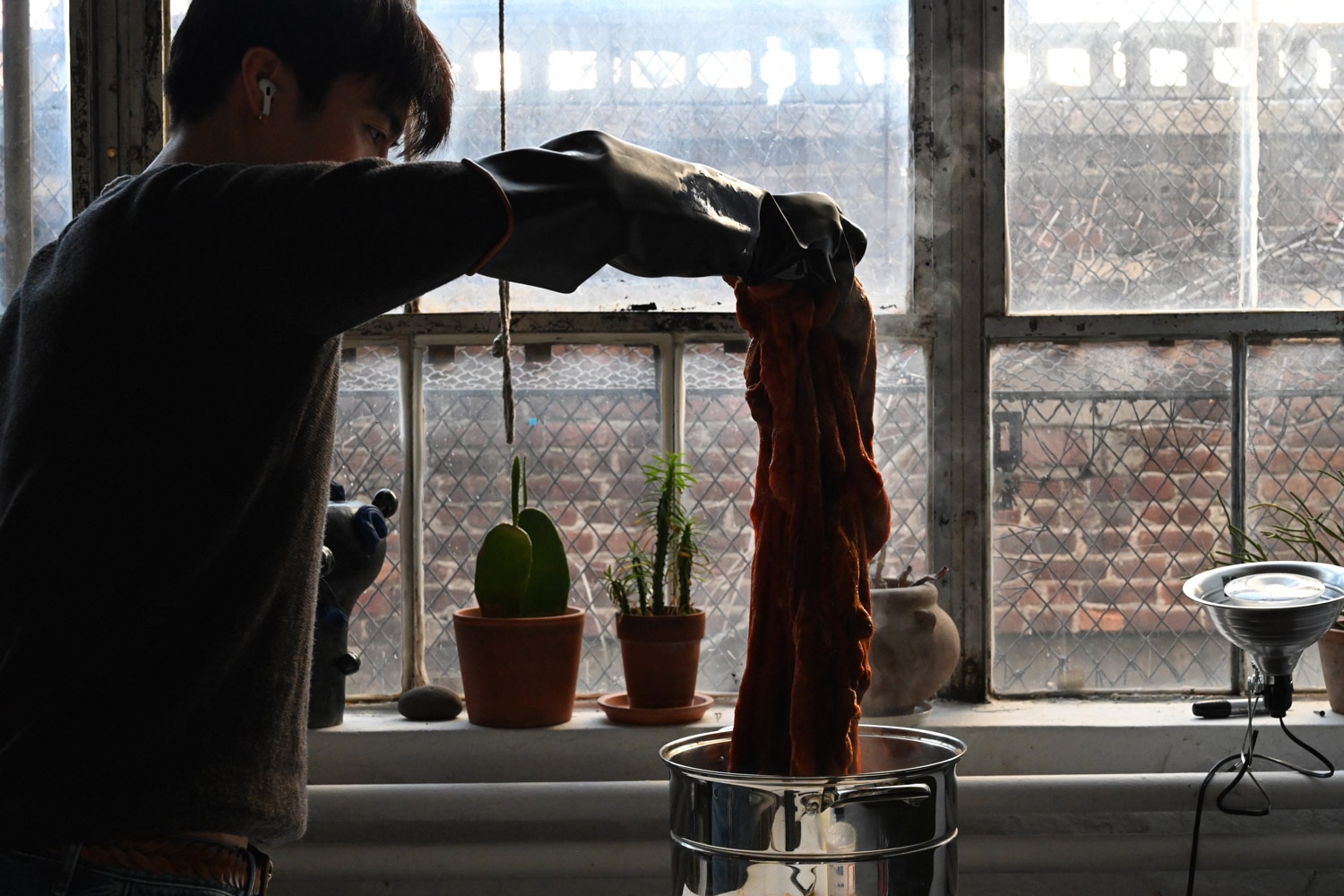
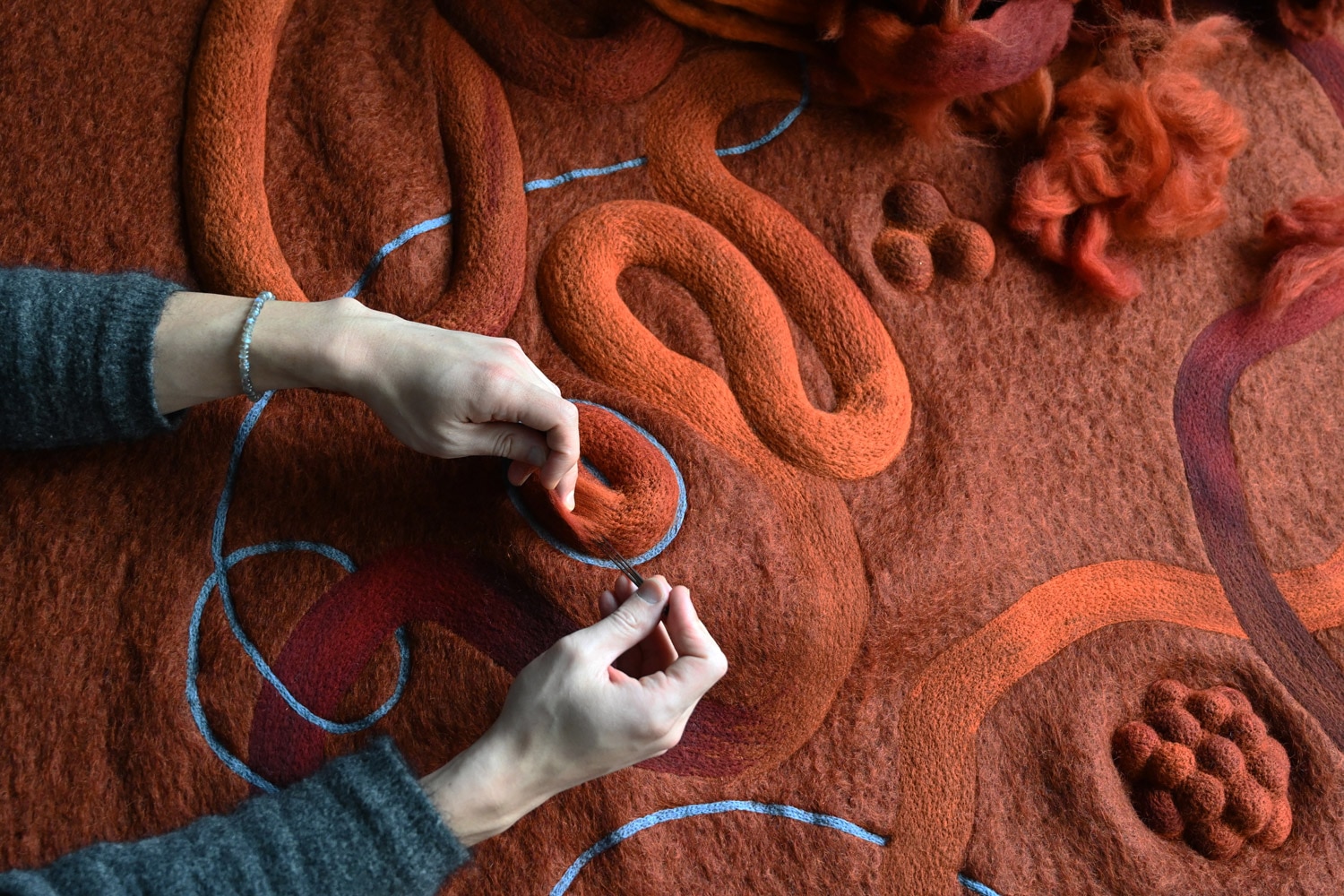
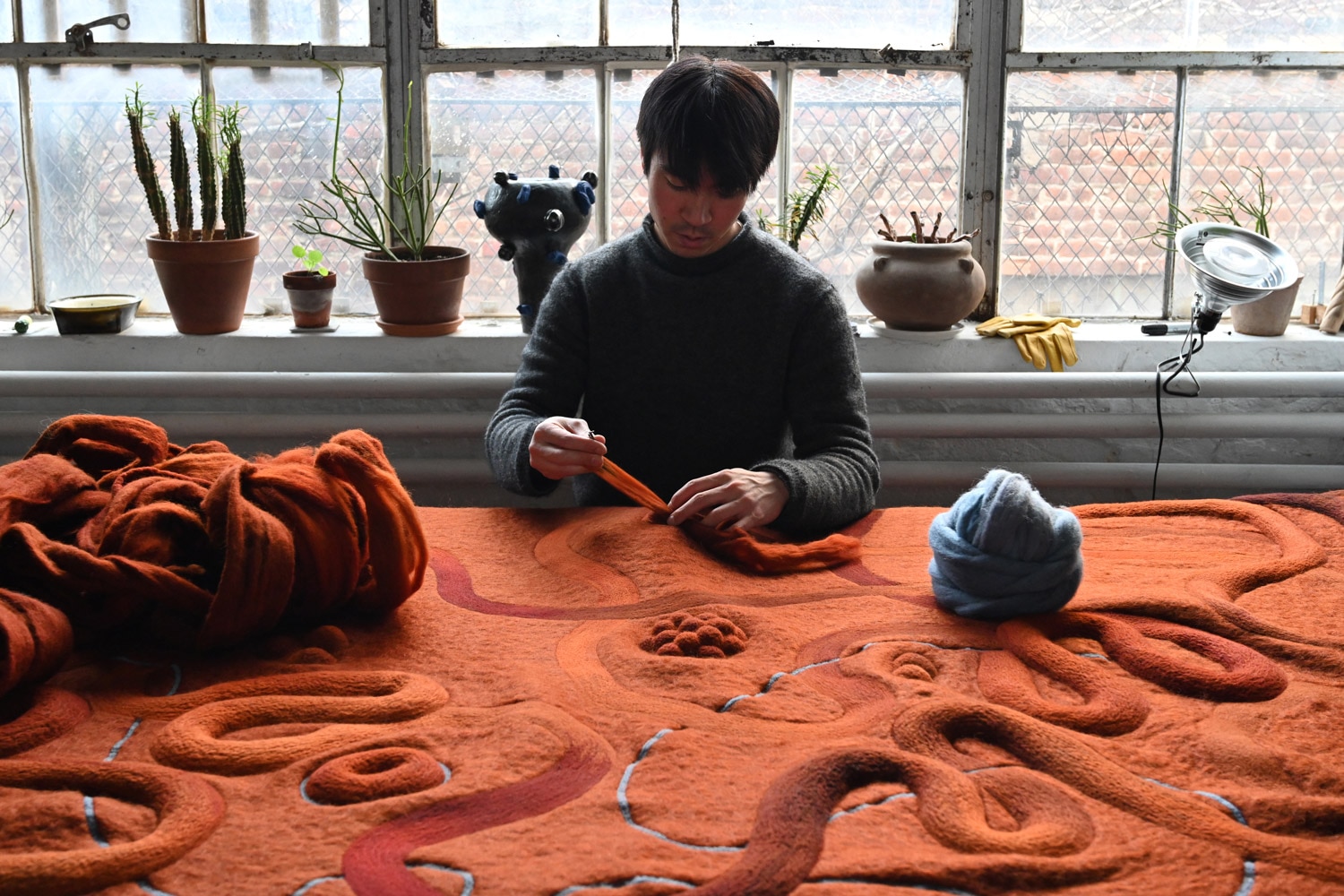
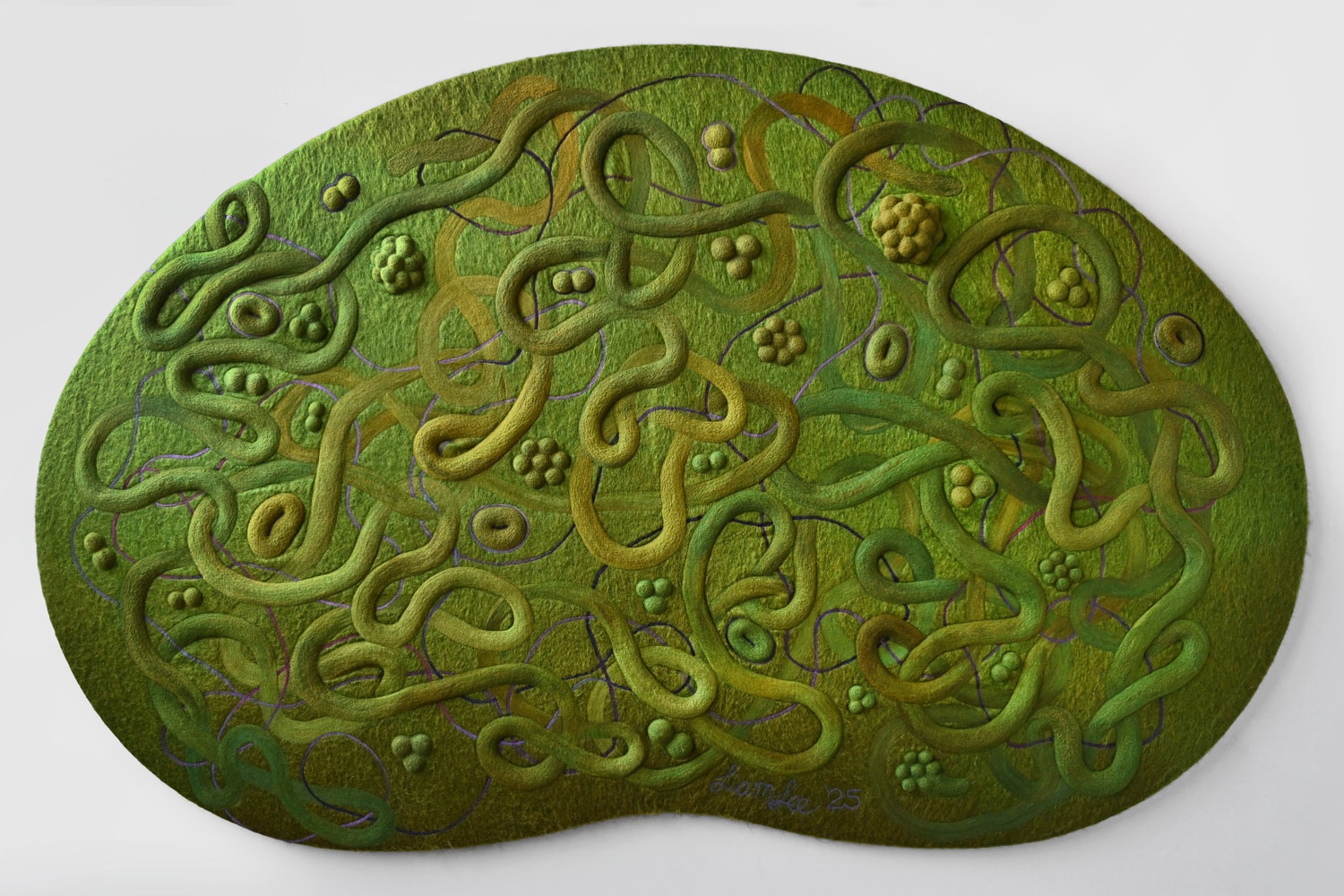
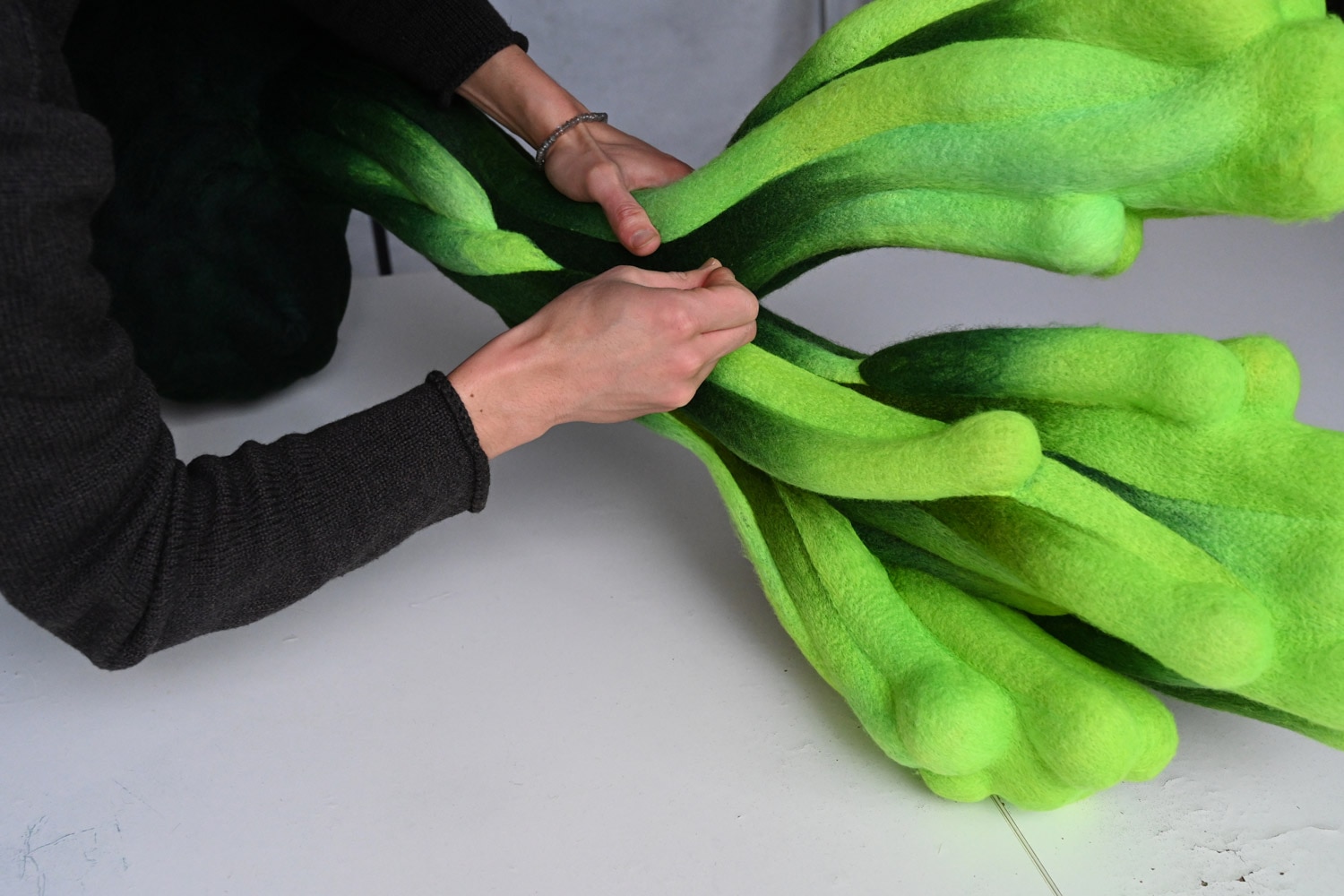
- Liam hand dyes and needle felts merino and mohair wool
- His biomorphic interiors pieces explore inhabited and natural spaces
- He was shortlisted for the 2023 Loewe Foundation Craft Prize
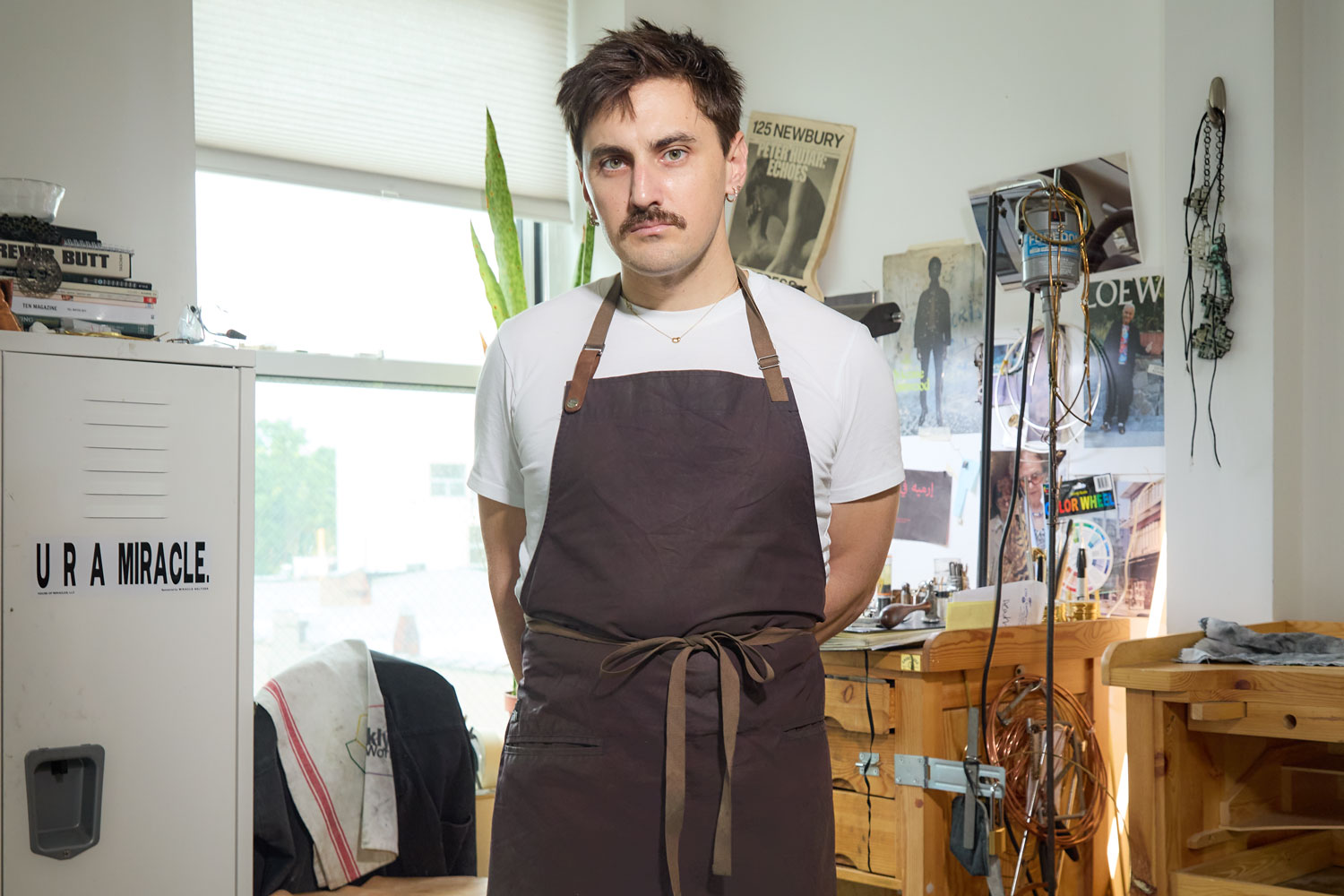
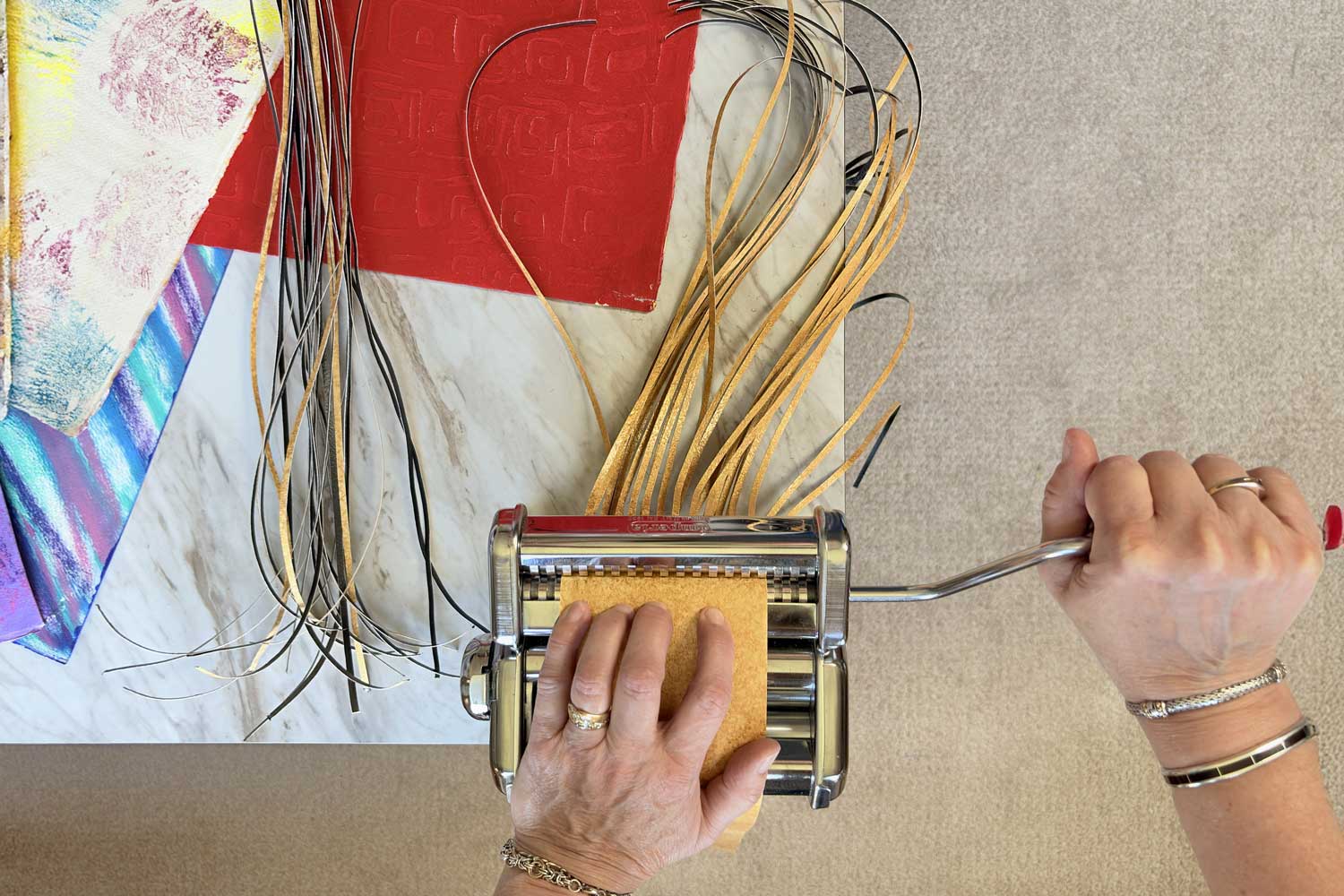
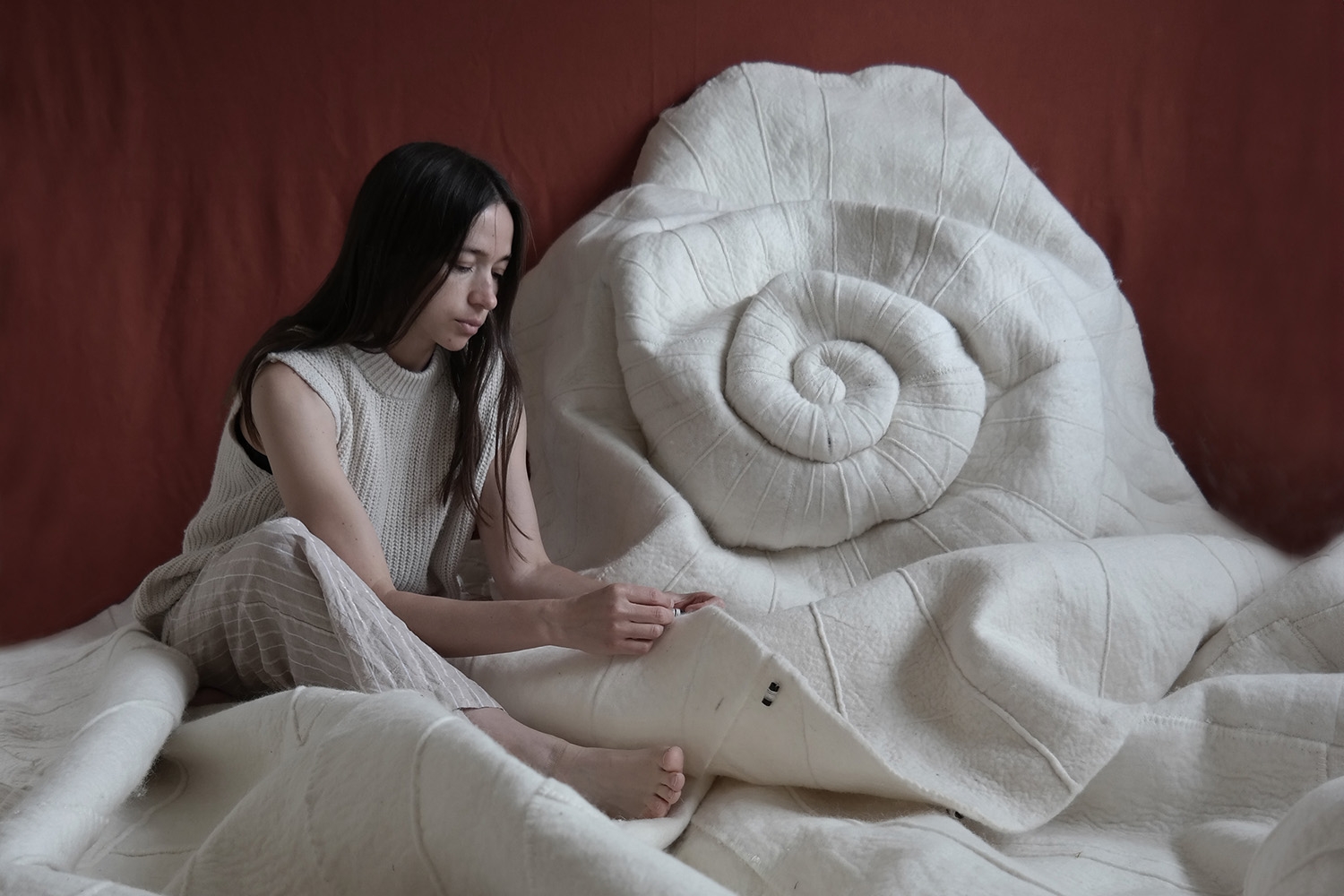
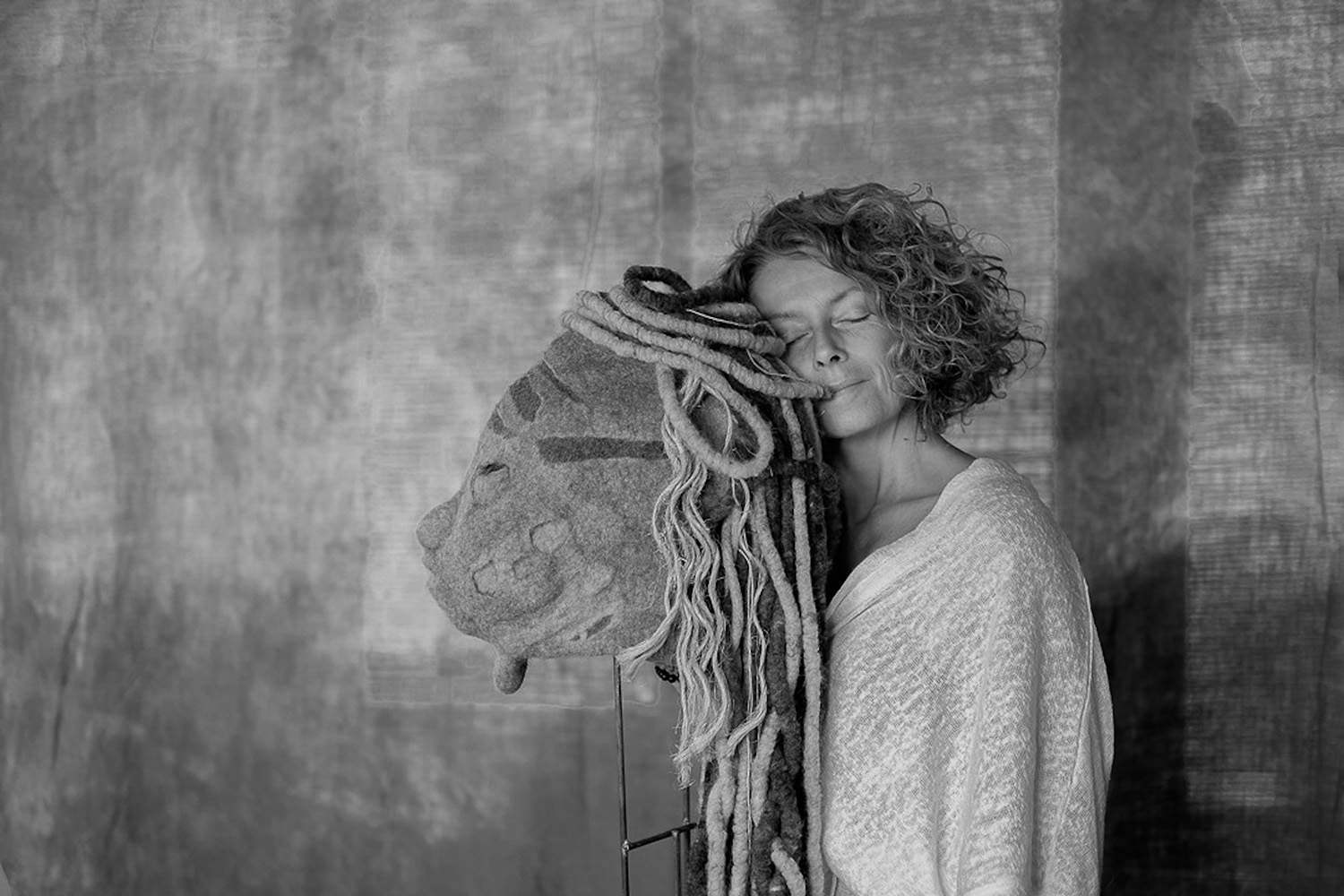
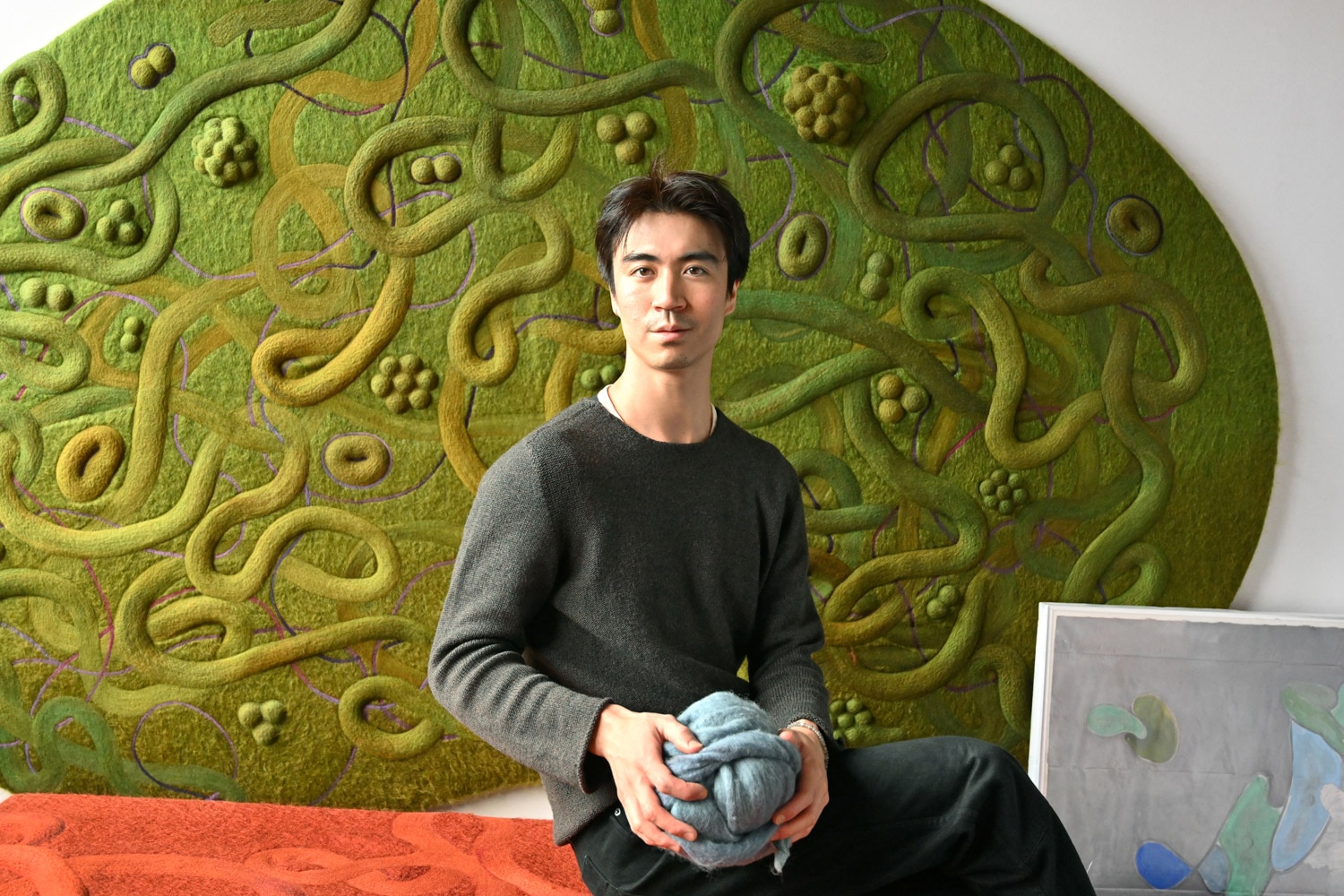
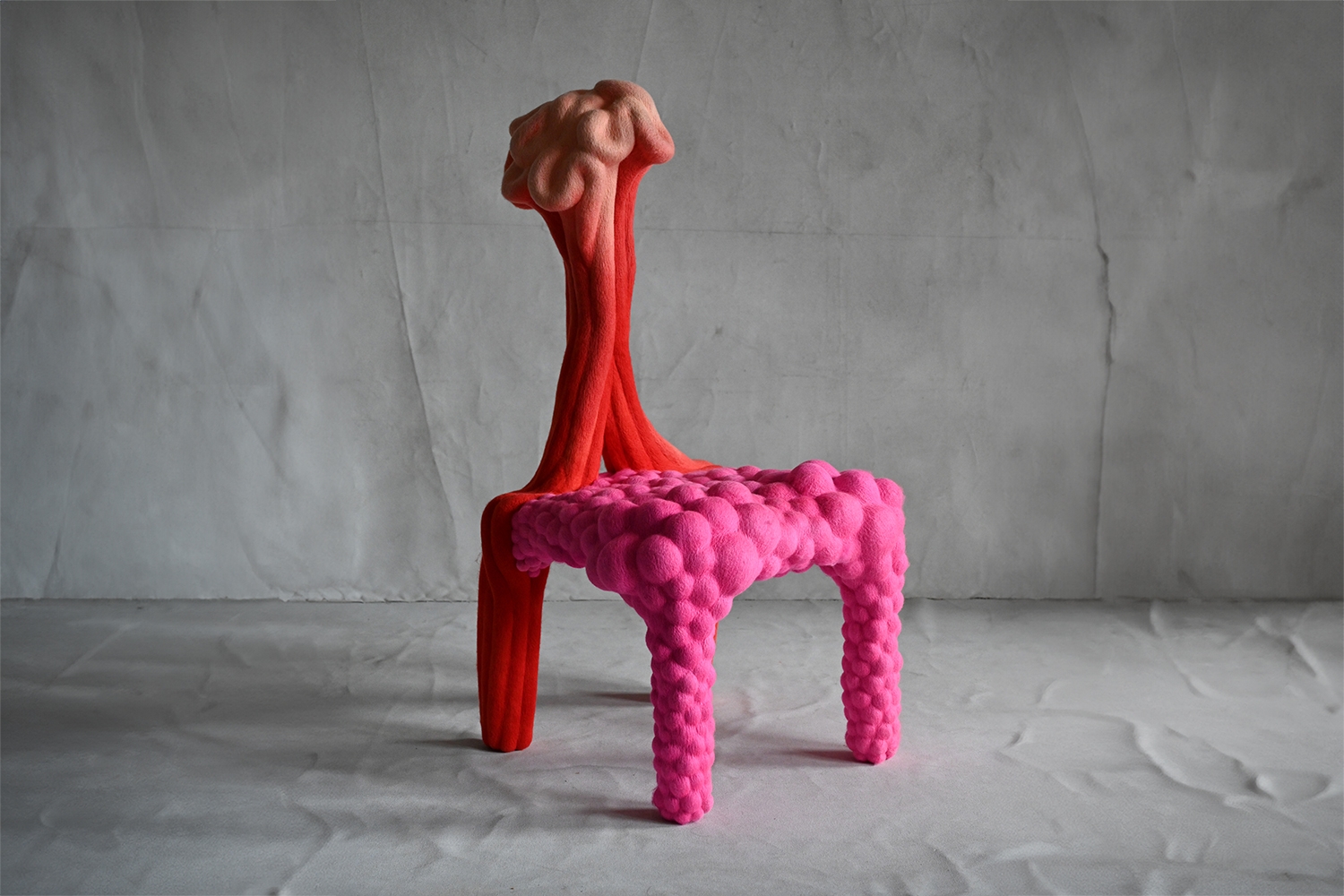
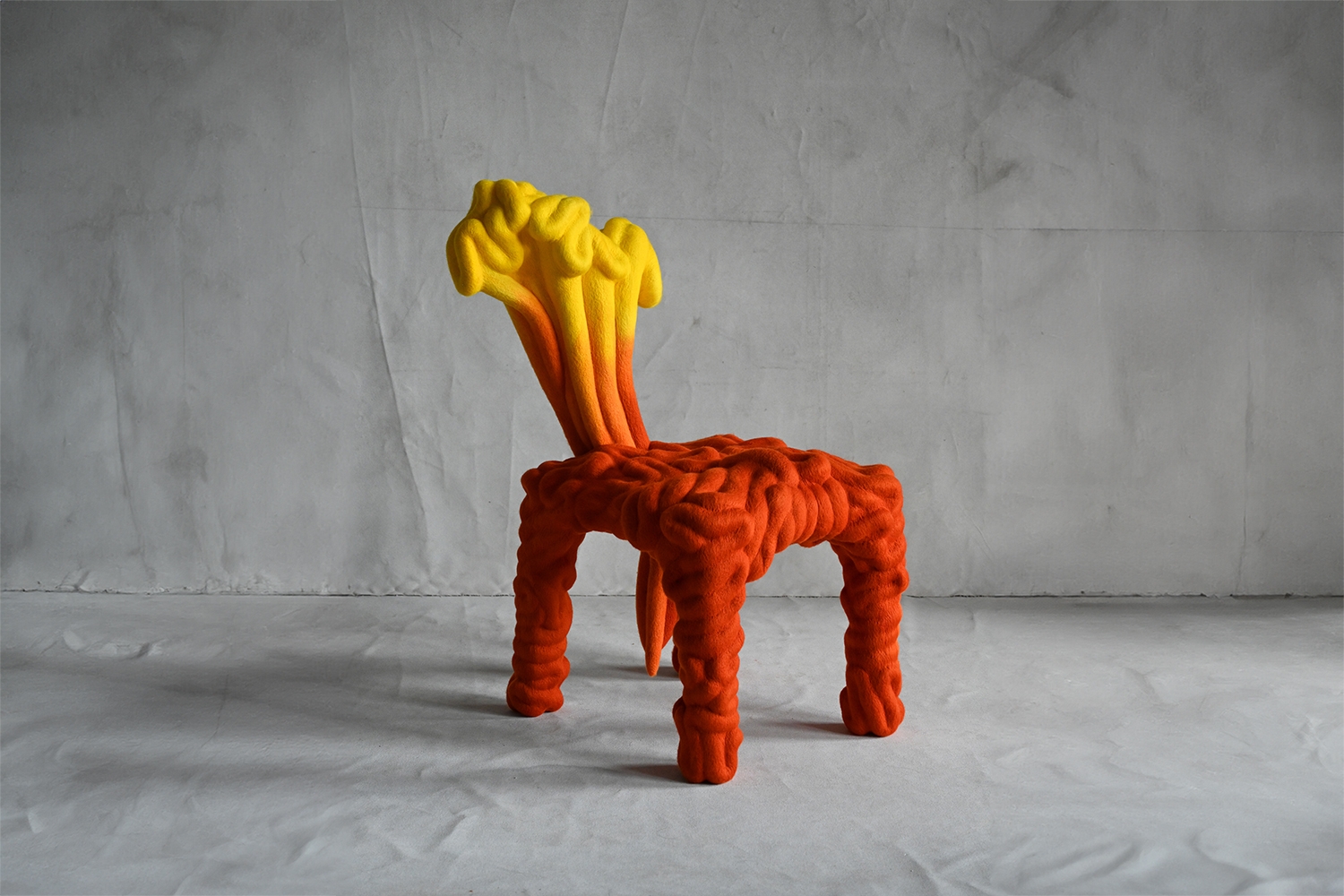
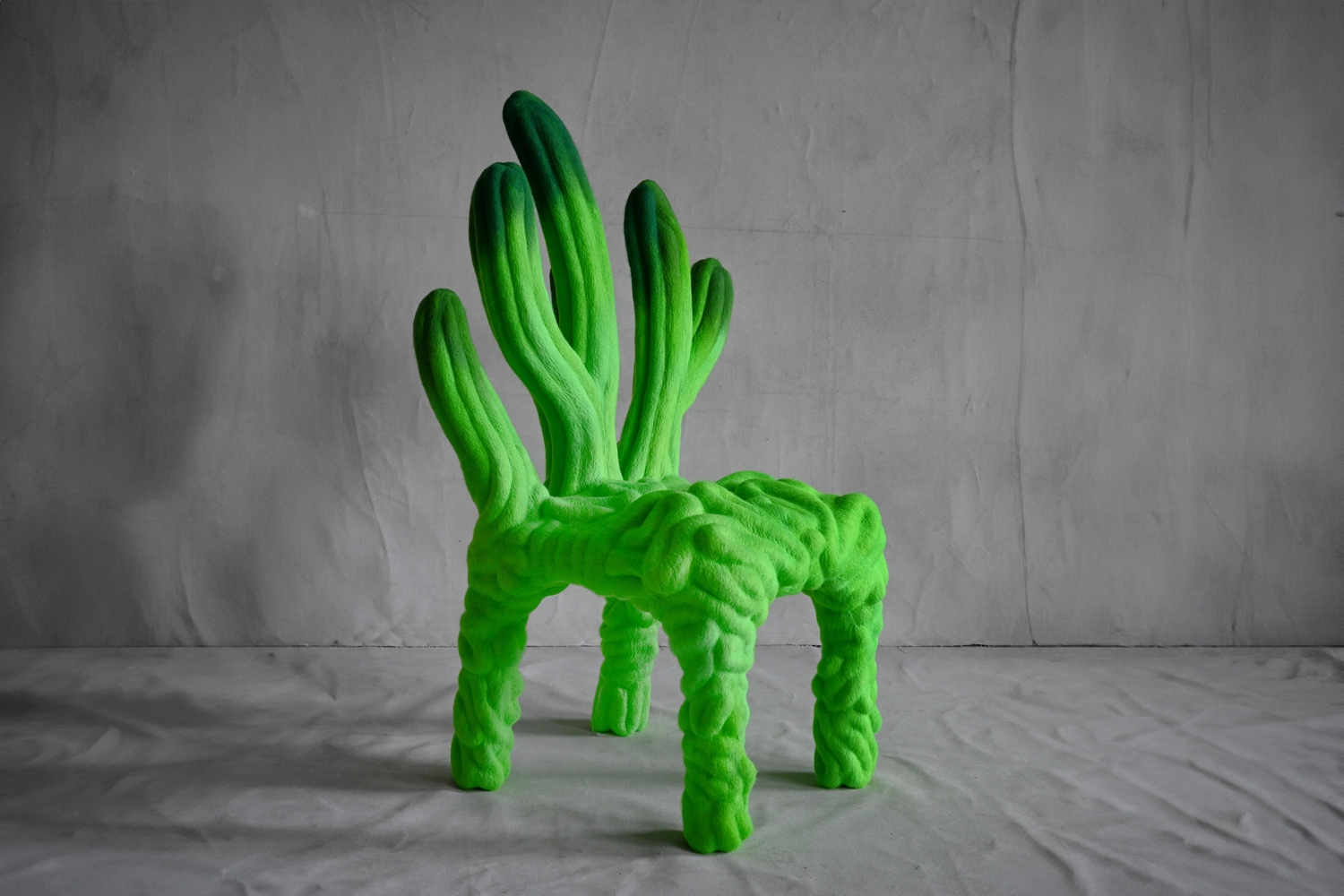
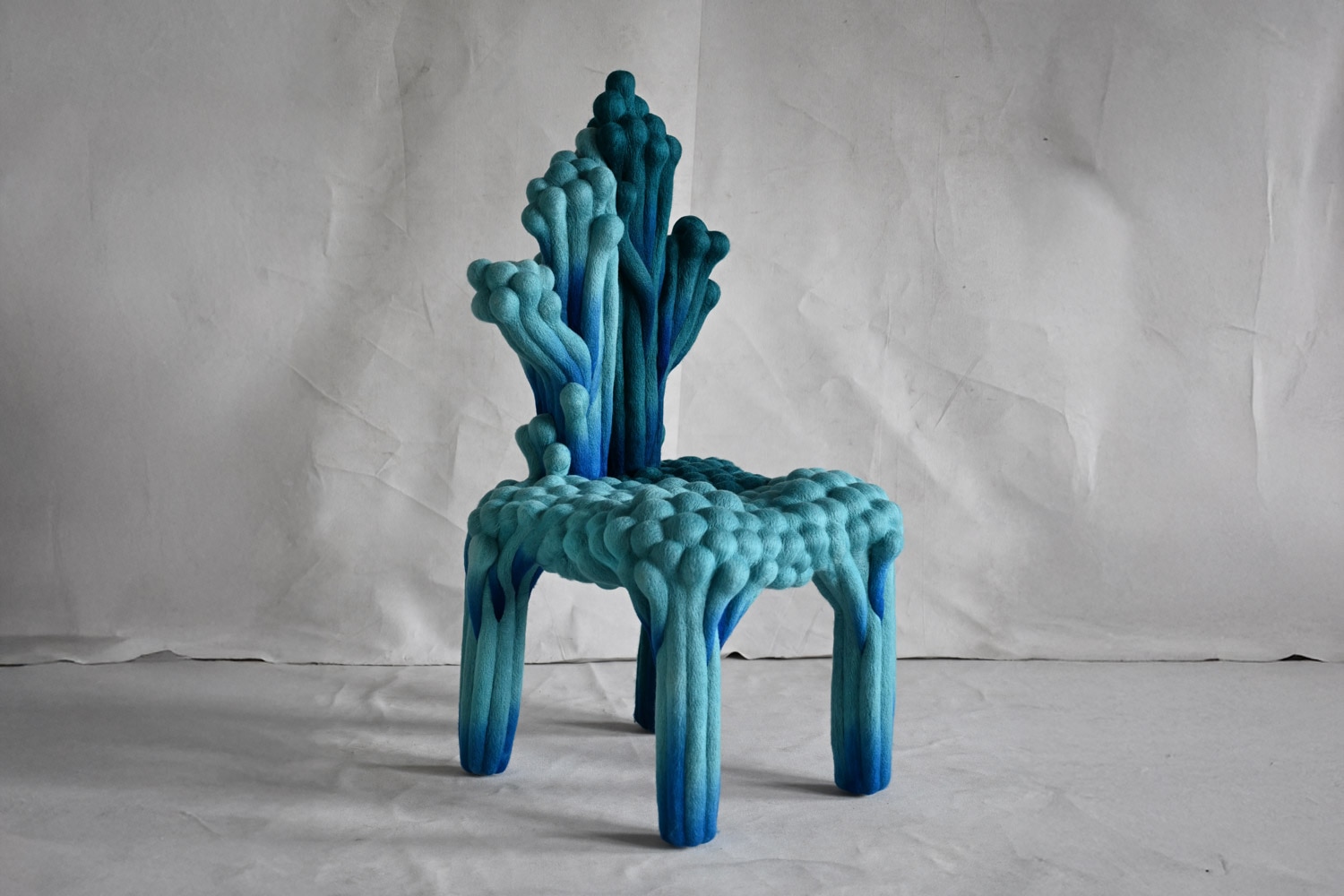
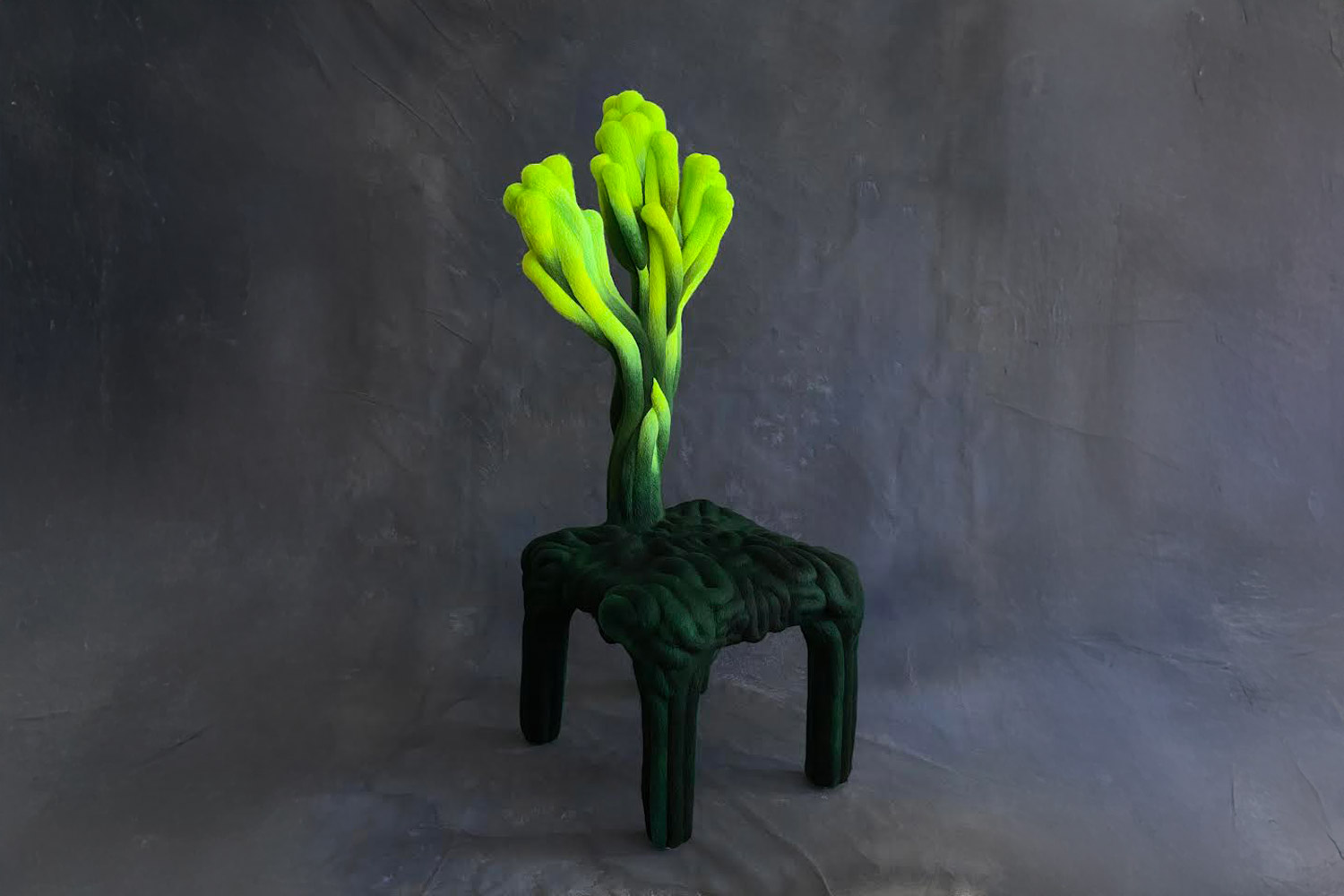
Liam Lee’s experience working in architecture and in set design for luxury fashion houses paved his way to creating felt furniture pieces with a fantastical sense of place. His pieces include vividly hued nature-inspired objects and installations that feel lifted from a technicolour dream. Liam began dyeing and felting wool in his small kitchen at a time when he was seeking a personal creative outlet that required no specialised space or equipment. “I wanted to push the possibilities by building more and more volume on my surfaces, and found myself creating sculptural forms, and eventually my first chair,” he says. Liam’s pieces suggest microscopic and topographic shapes as he skilfully employs wool’s additive nature to parallel the uninhibited, morphing growth of living organisms.
INTERVIEW
I was actively involved in the arts early on as my father is a painter and my grandfather was a modernist architect. However, I pursued a degree in English literature as I felt a holistic education would serve me better at a time when I did not yet have a clear direction in mind.
I am interested in how humans relate to and attempt to understand the external and material world through objects, built spaces and the natural world. It is an exploratory relationship that gives form and function to inanimate matter.
Wool is incredibly malleable. It is exciting to see how a piece deviates from its inception. I try to maintain a sense of discovery, challenging myself to work with different materials, such as ceramics, wood and metal, and to learn without preconceived notions.
The handmade and tactile nature of craft makes it one of the few art forms that remains somewhat insulated from a rampant move towards automation. While craft is first and foremost functional, it also exists as a record of the skill, labour and history of its maker.
Liam Lee
Felt maker
New York, NY, USA
ADDRESS
Address upon request, New York, NY, USA
AVAILABILITY
By appointment only
LANGUAGES
English
Homo Faber Finds is a new service aiming to inspire admirers of craft to connect and collaborate with exceptional artisans.
We invite you to submit an enquiry here.