Ben Venom
Quilter
San Francisco, CA, USA
A quilt of radical ideas
- Ben interrogates counterculture ideas through the medium of quilting
- He is inspired by skateboarding, rock music and DIY culture
- Reclaimed and repurposed materials form his patchwork pieces
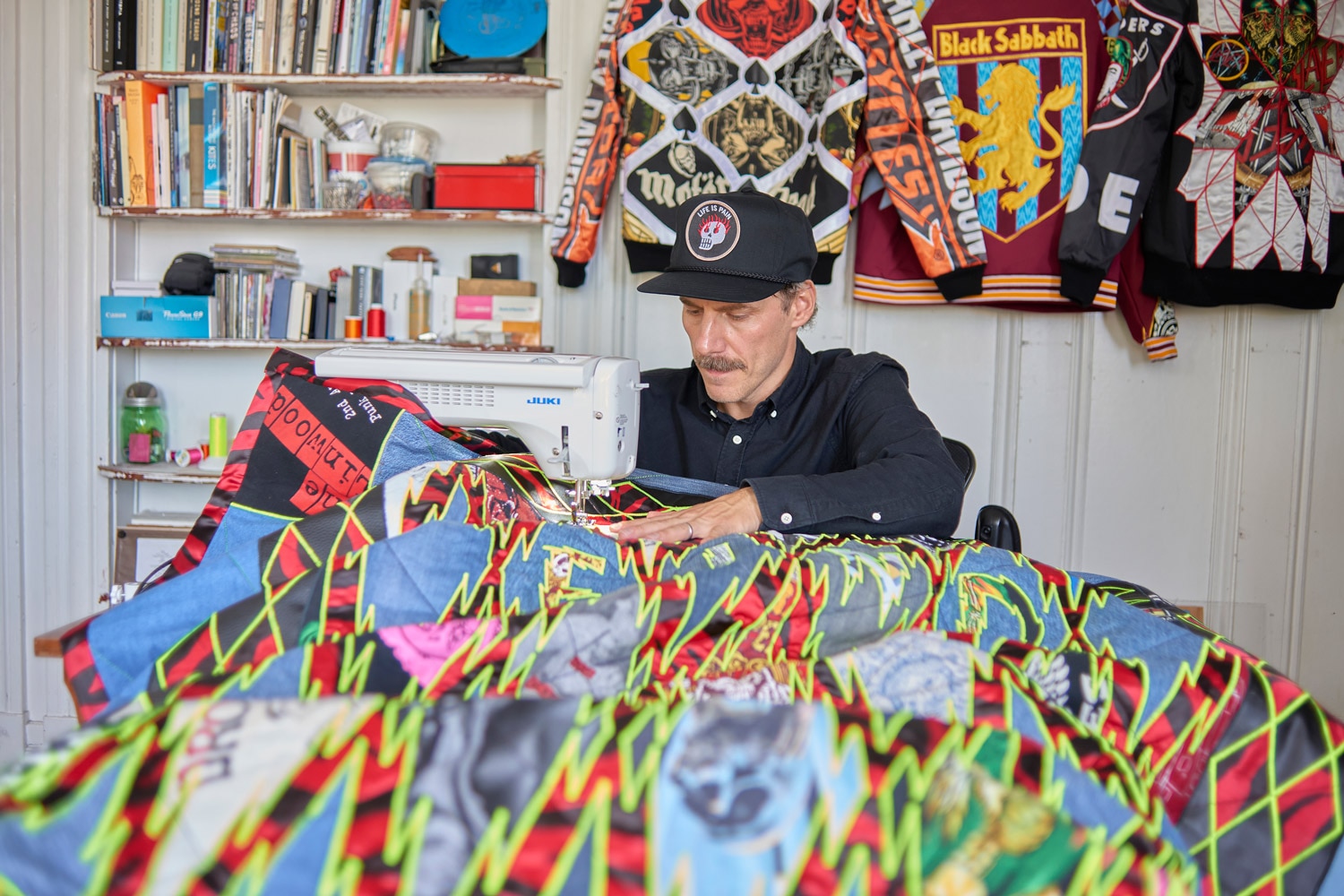
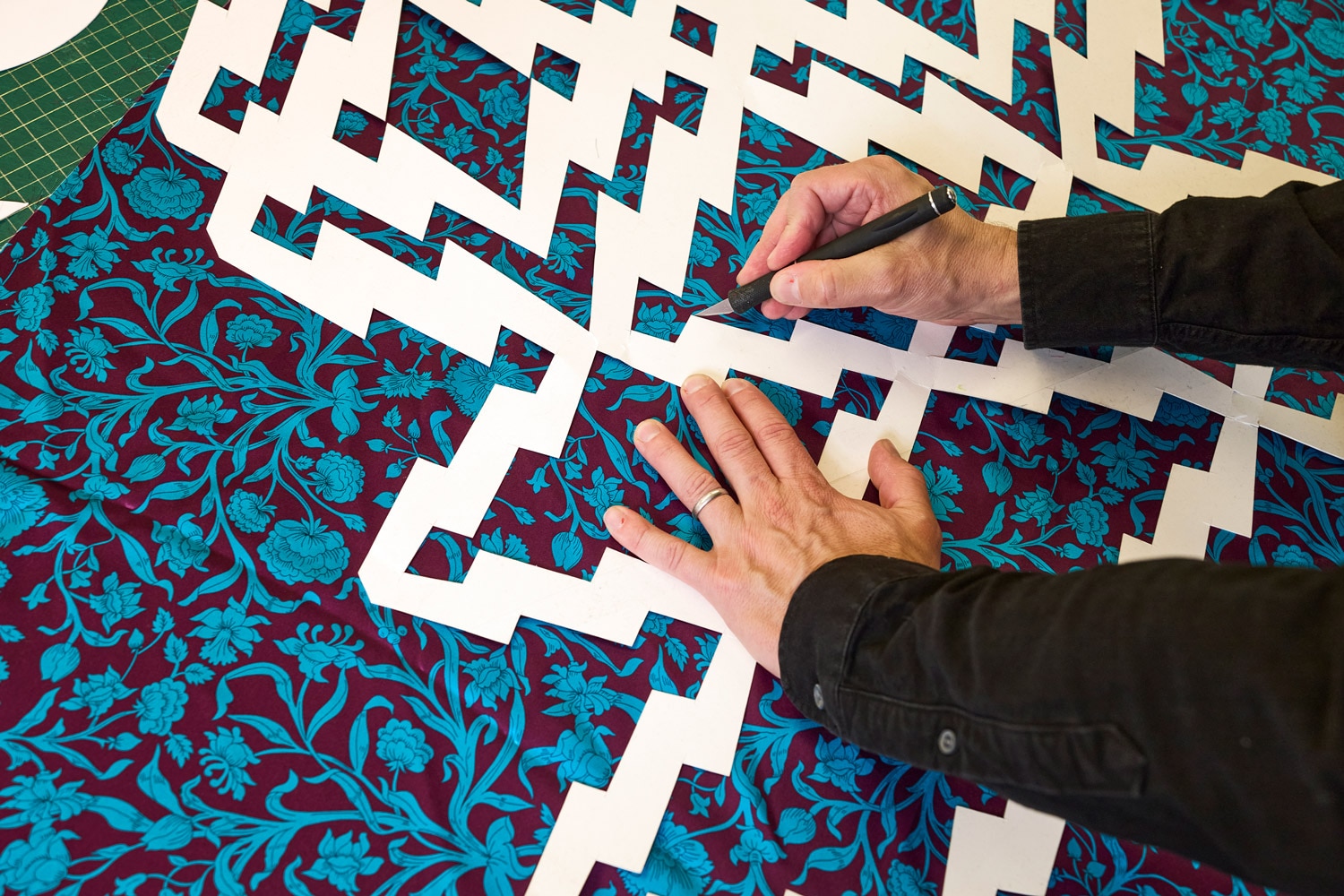
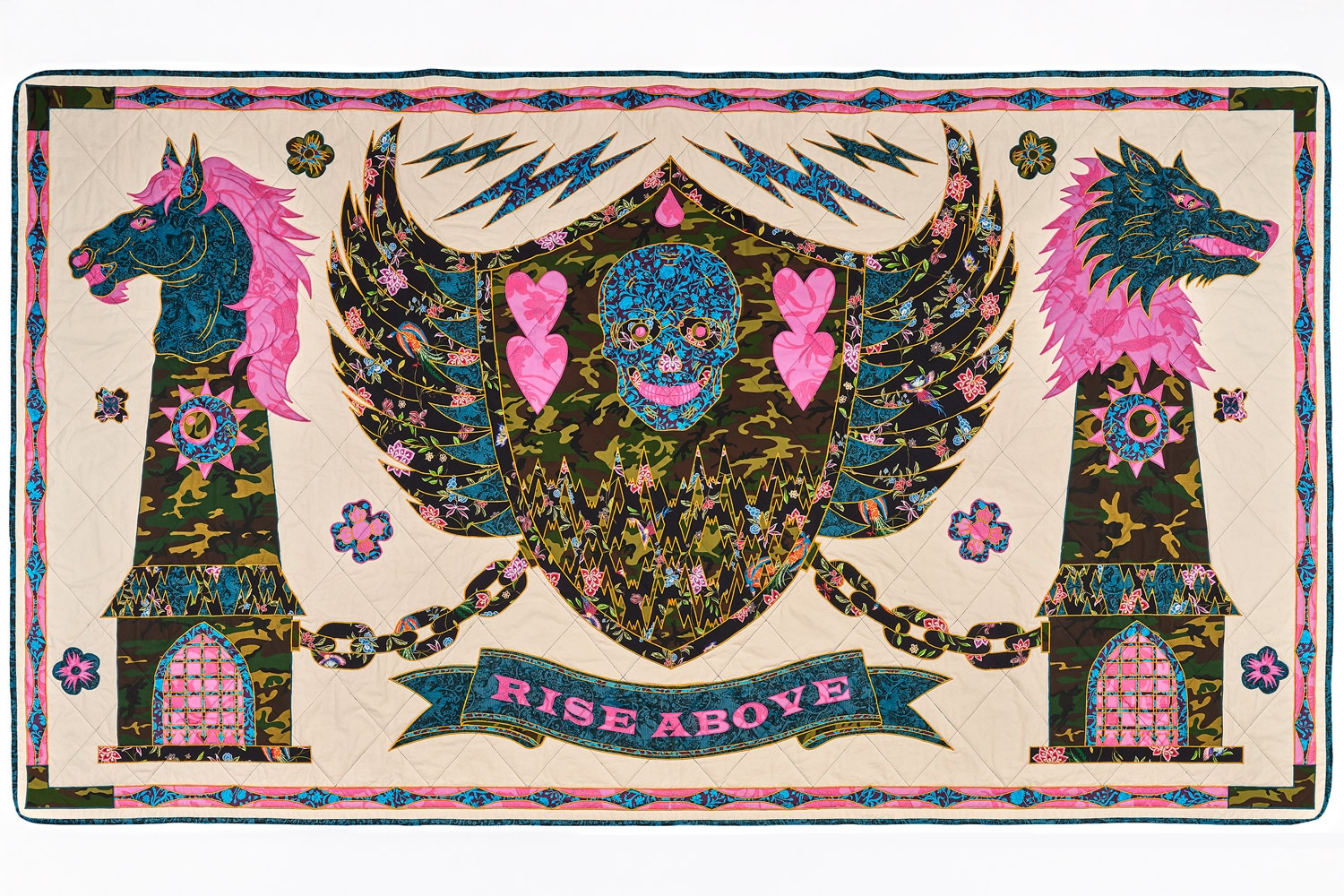
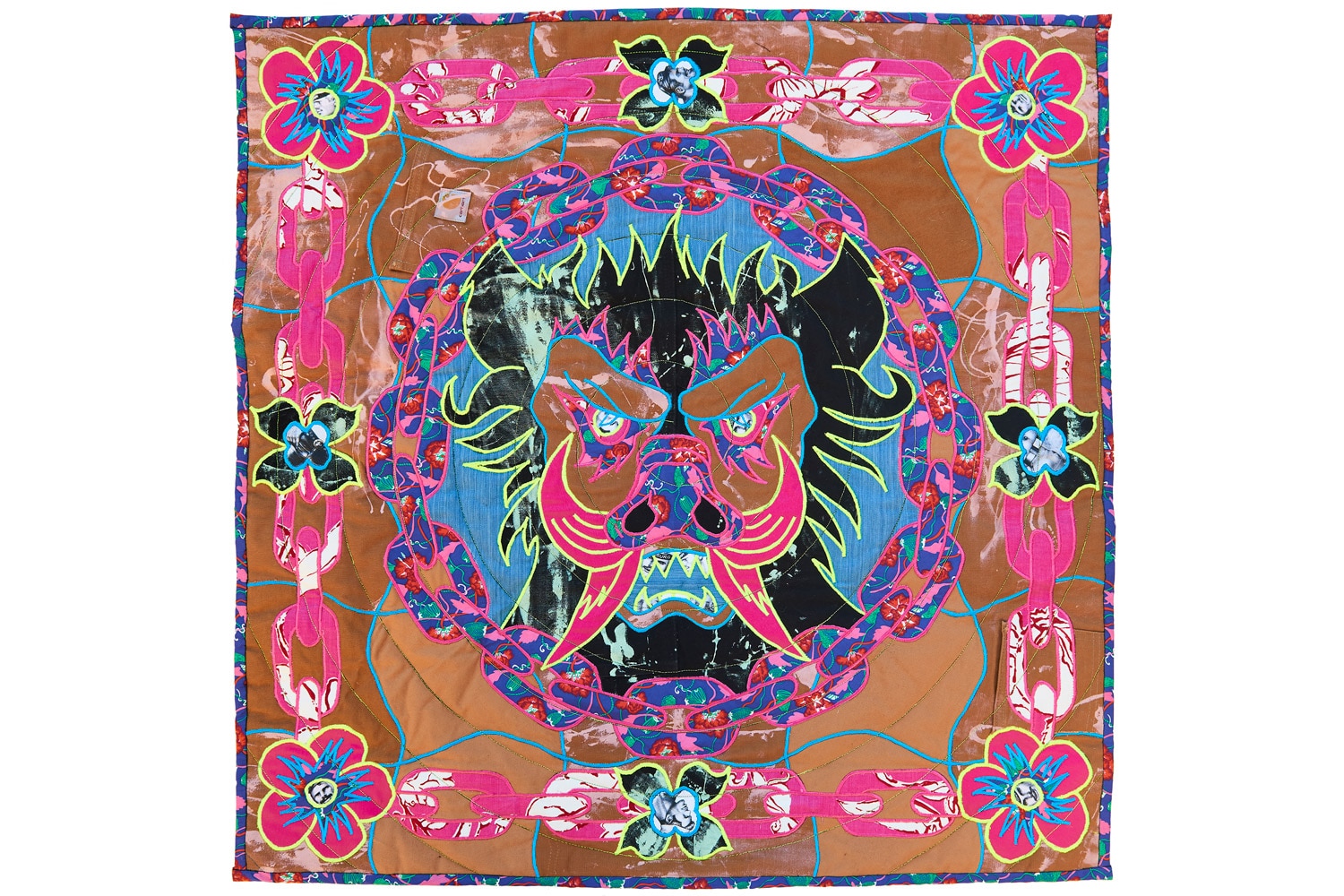
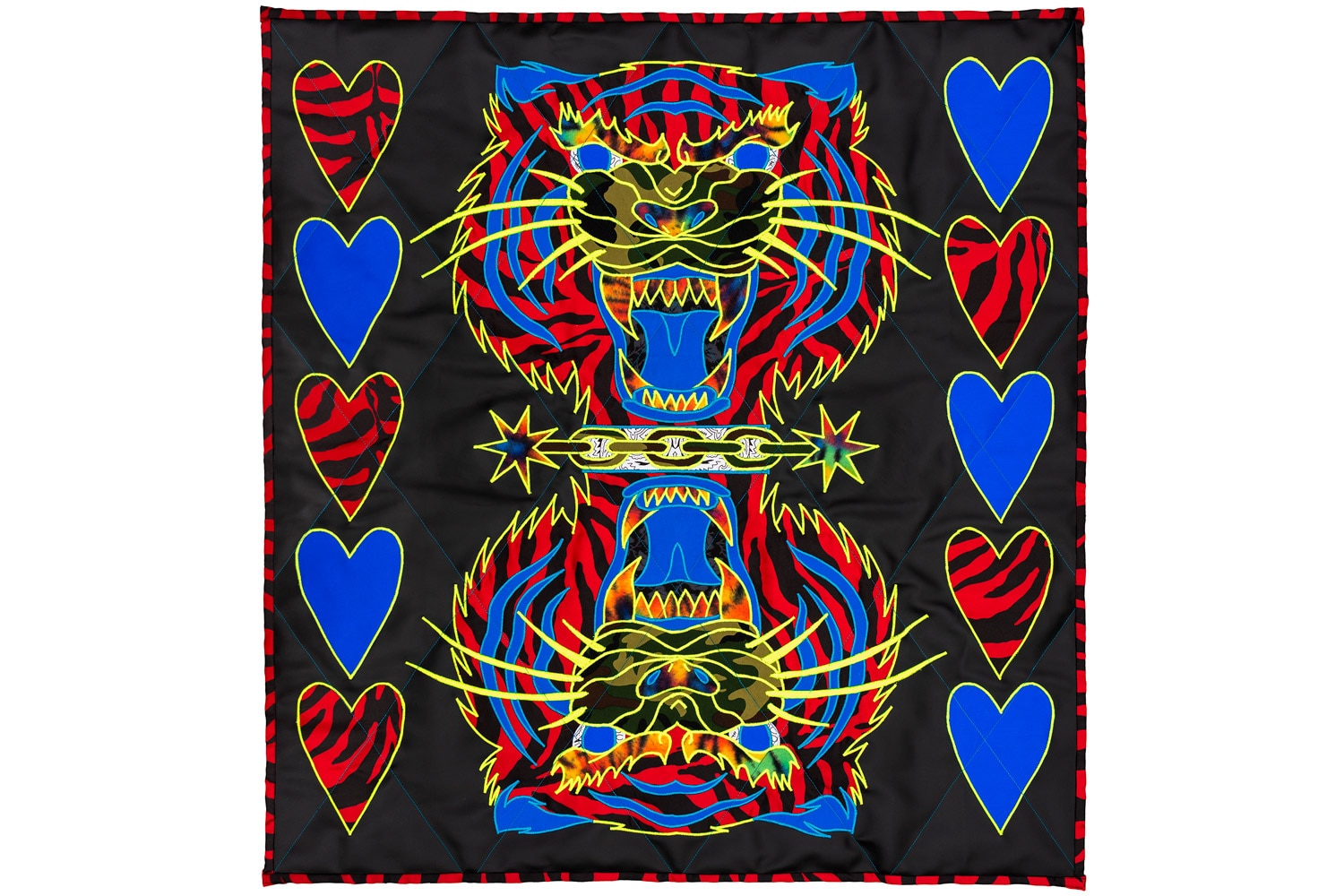
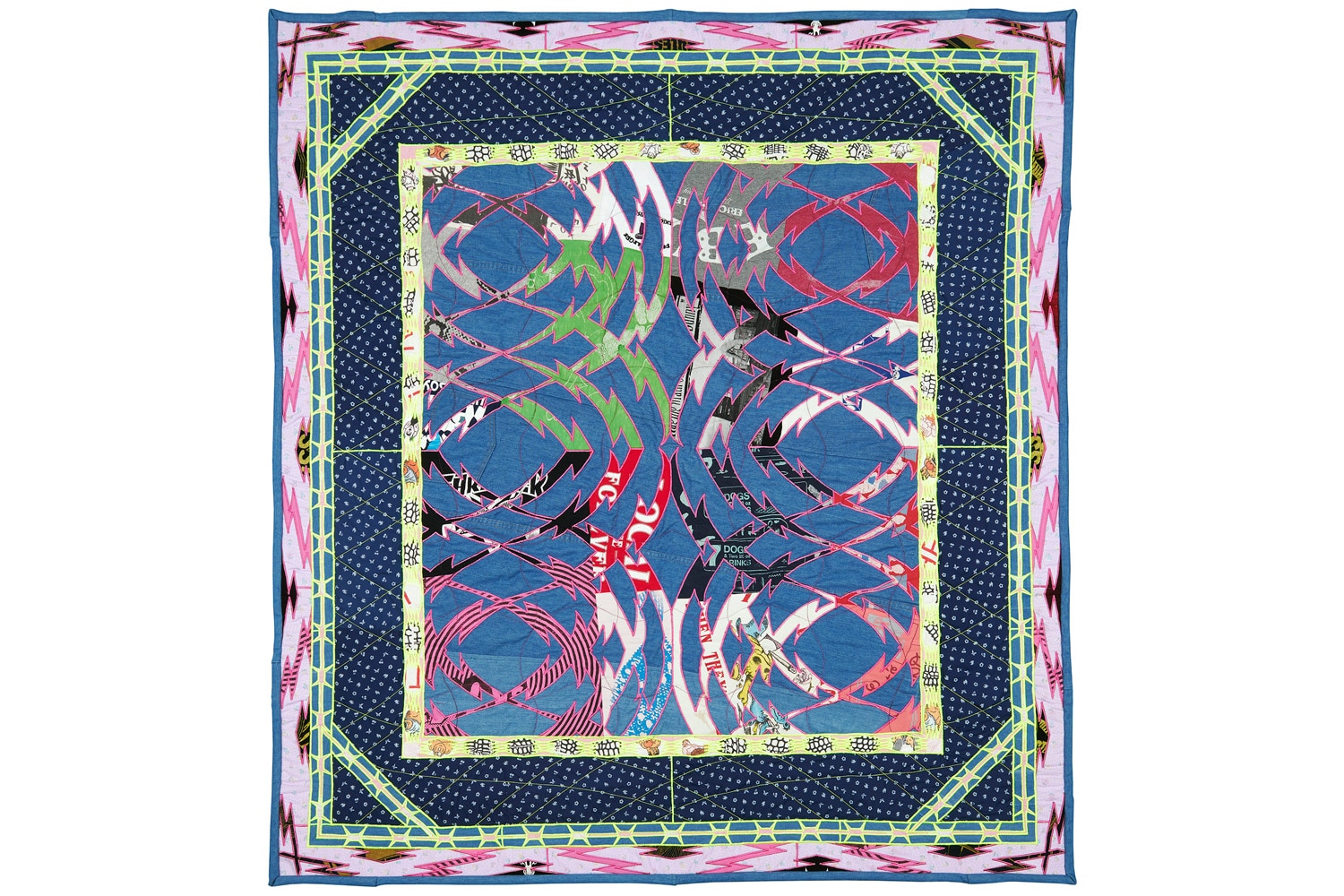
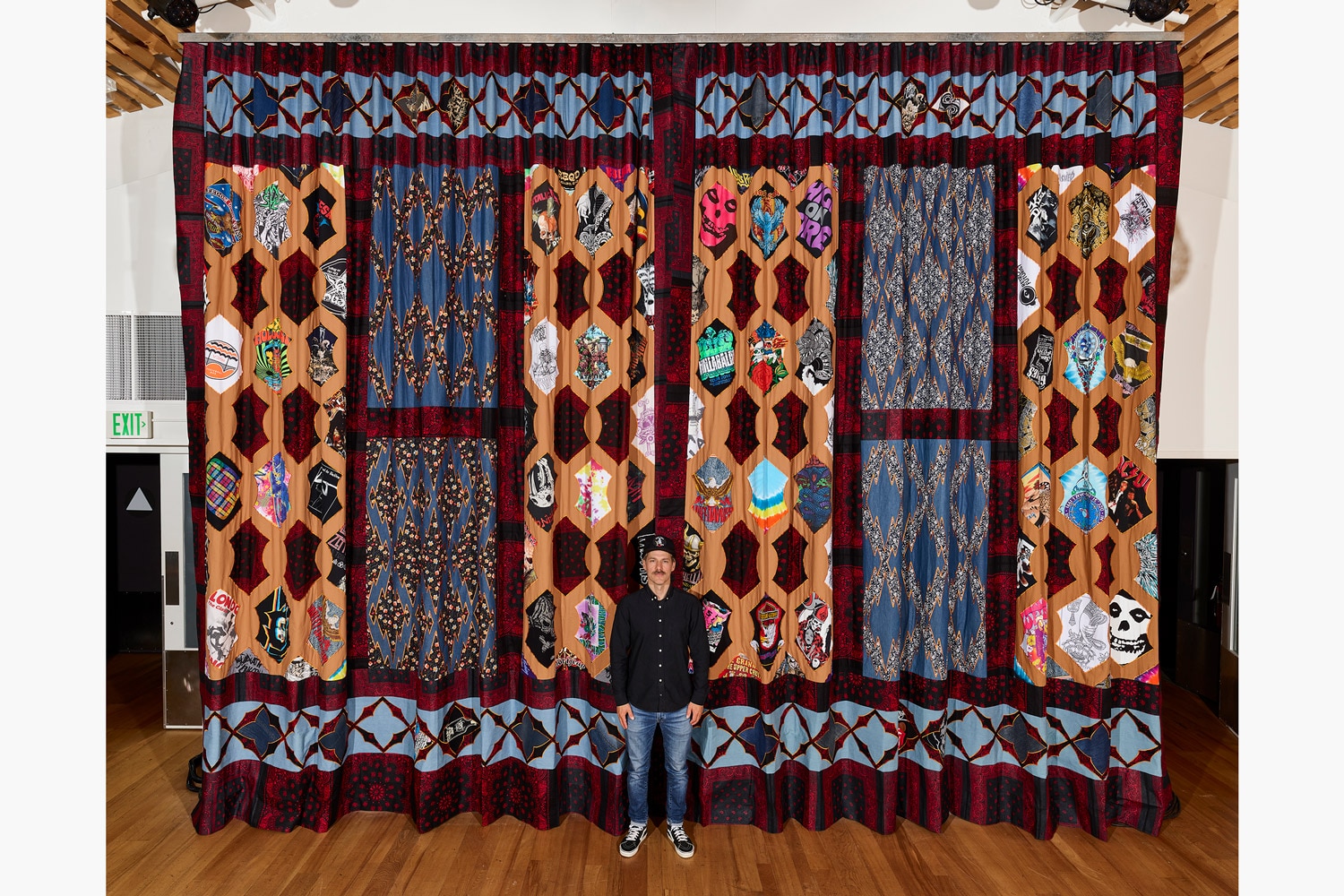
Ben Venom was primarily a painter and printmaker before a crisis of conscience brought him to prioritise functional over decorative artworks. In 2008, an invitation to a Berlin-based group show served as a catalyst to create his first quilt, pieced together from heavy metal and punk rock band t-shirts. Ben went on to teach himself the basics of quilting. His practice uses reclaimed and repurposed materials to create striking textile works with appliquéd images, daring colour and print combinations, typography and contemporary graphics in a deliberate clash of ideas. “I contrast the often menacing and aggressive counterculture components of punk and metal music and skateboarding with the comforts of domesticity,” he says.

INTERVIEW
I bought a book called Quilting Basics 101 and a Brother sewing machine in pink, because it was the least expensive option, and covered it with stickers. I made mistakes, asked questions and figured out which fabrics and needles to use. I am still learning.
I grew up in the Atlanta, Georgia punk rock scene and was introduced early on to the concept of DIY. This mentality followed me through my teenage years and into adulthood: it is all about seeing my ideas through to the end. When I began sewing, I had no formal skills but I have always had a vision of what I wanted to make.
Repurposed materials offer meaning. Donated or found materials with unexplained stains, tears or rips convey personal histories. Stitched into a unified piece, they can become a collection of experiences. I also have a concern for textile waste and carbon footprints that directly affects my practice.
I believe that craft provides respite from our technology driven society. Aspects of life are increasingly automated and devoid of human interaction, but craft continues to show the individual’s hand and the imperfections that make us human.
Ben Venom
Quilter
San Francisco, CA, USA
ADDRESS
Address upon request, San Francisco, CA, USA
AVAILABILITY
By appointment only
LANGUAGES
English
Homo Faber Finds is a new service aiming to inspire admirers of craft to connect and collaborate with exceptional artisans.
We invite you to submit an enquiry here.
DSC02402_©Meg-Lovell.jpg)
DSC01379_©Meg-Lovell.jpg)
DSC01458_©Meg-Lovell.jpg)