Tina Vlassopulos
Ceramicist
London, United Kingdom
The ceramics that dance
- Tina is an internationally known ceramic artist
- She creates her pieces with hand building techniques
- Her inspiration comes from movement and dance
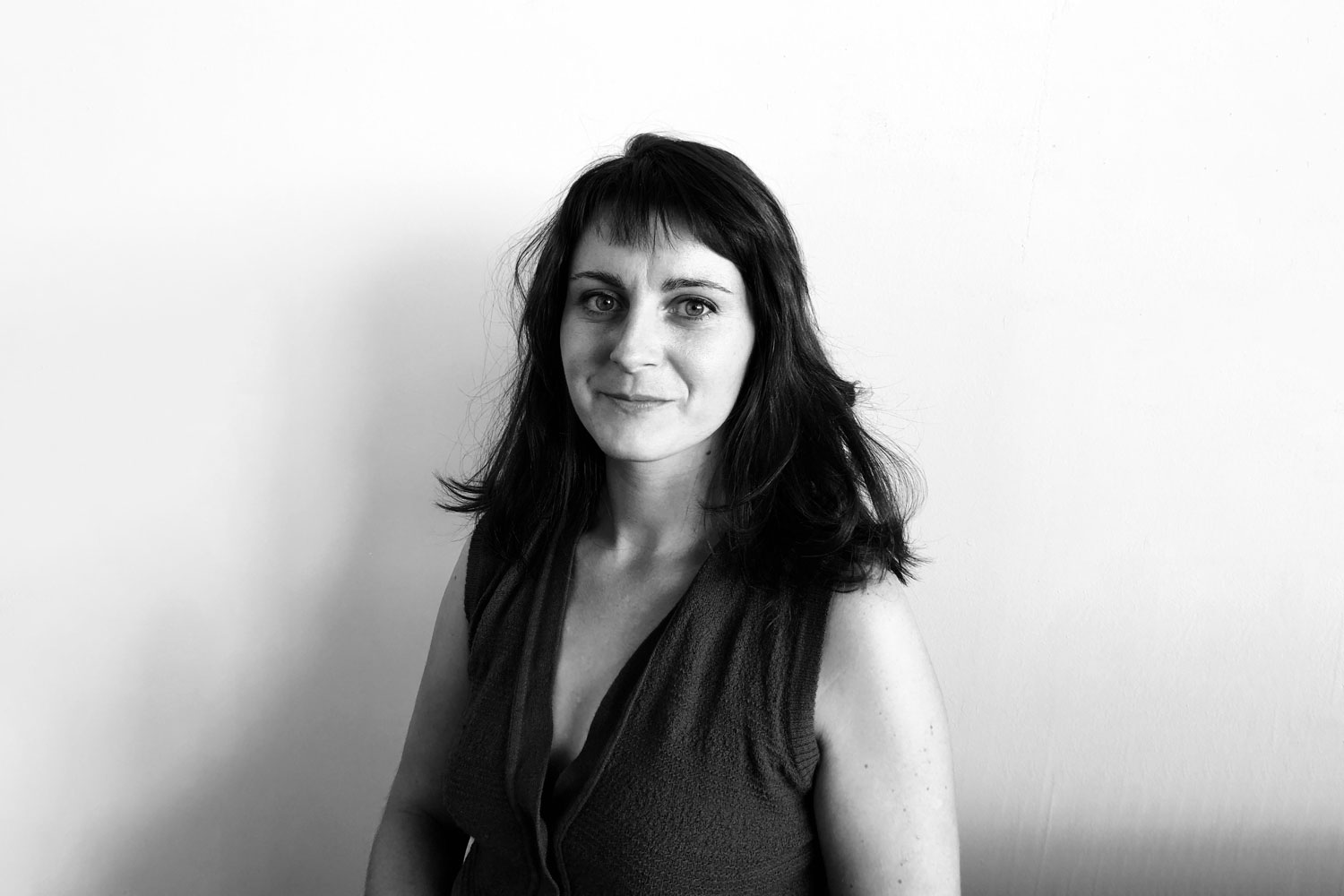
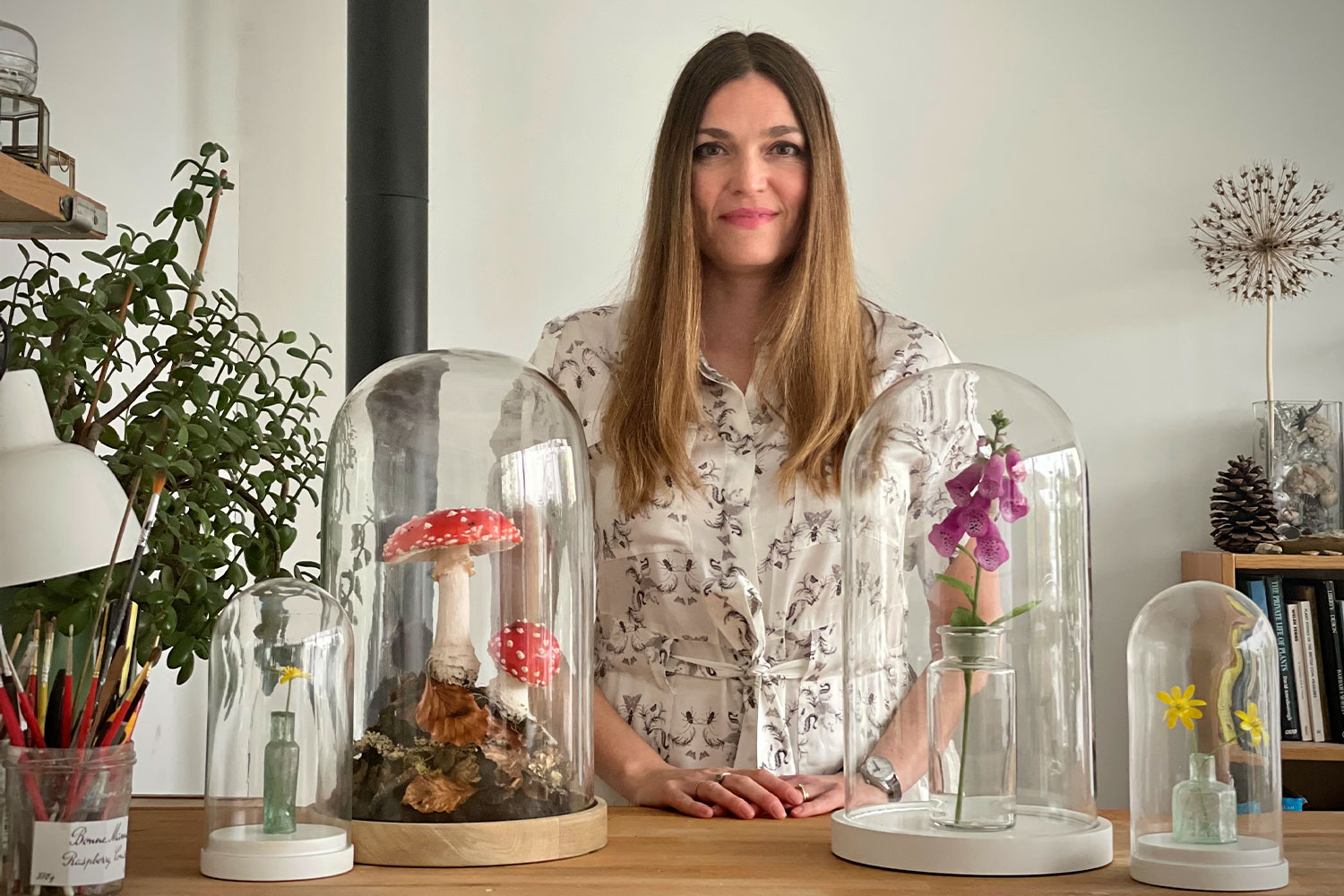
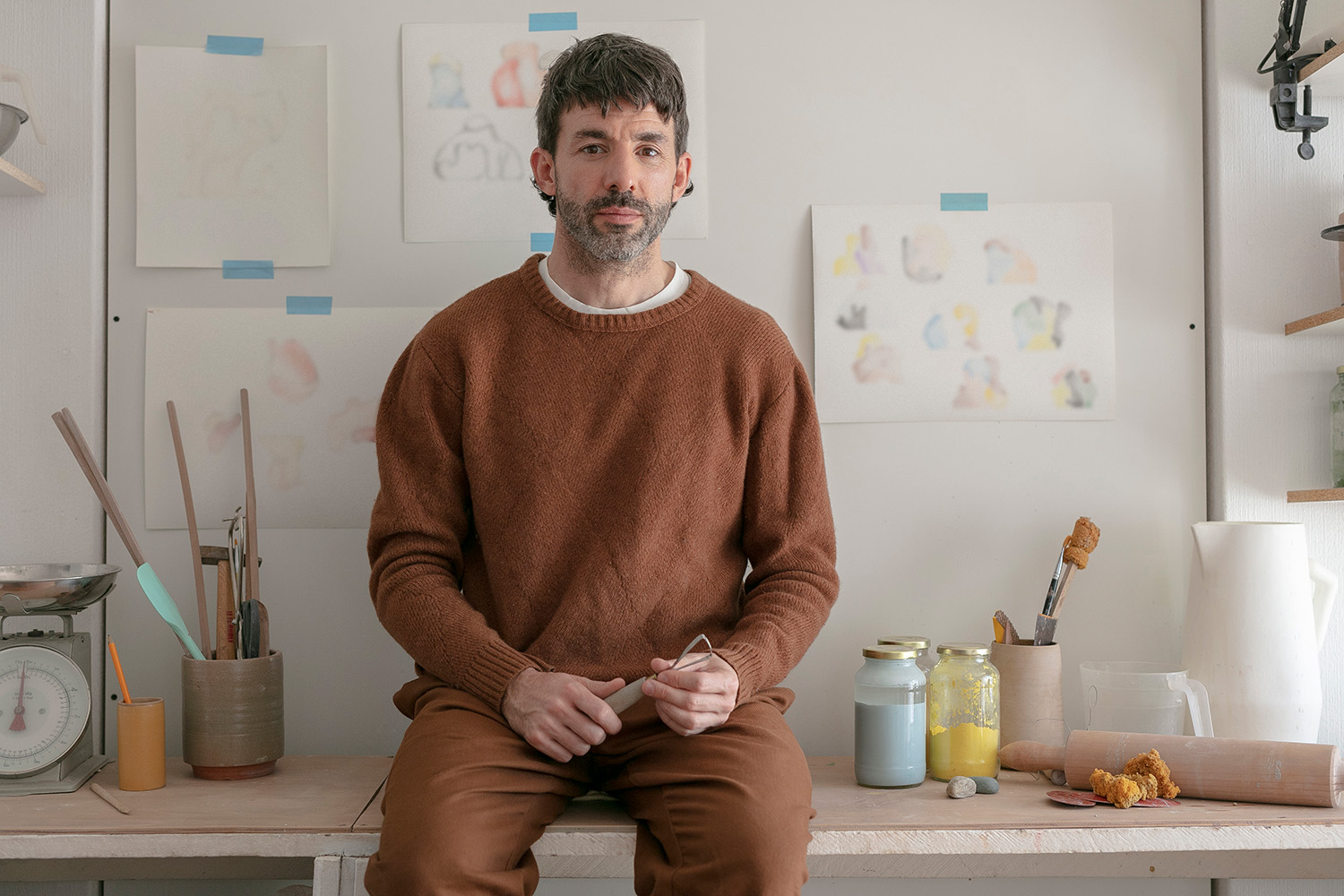
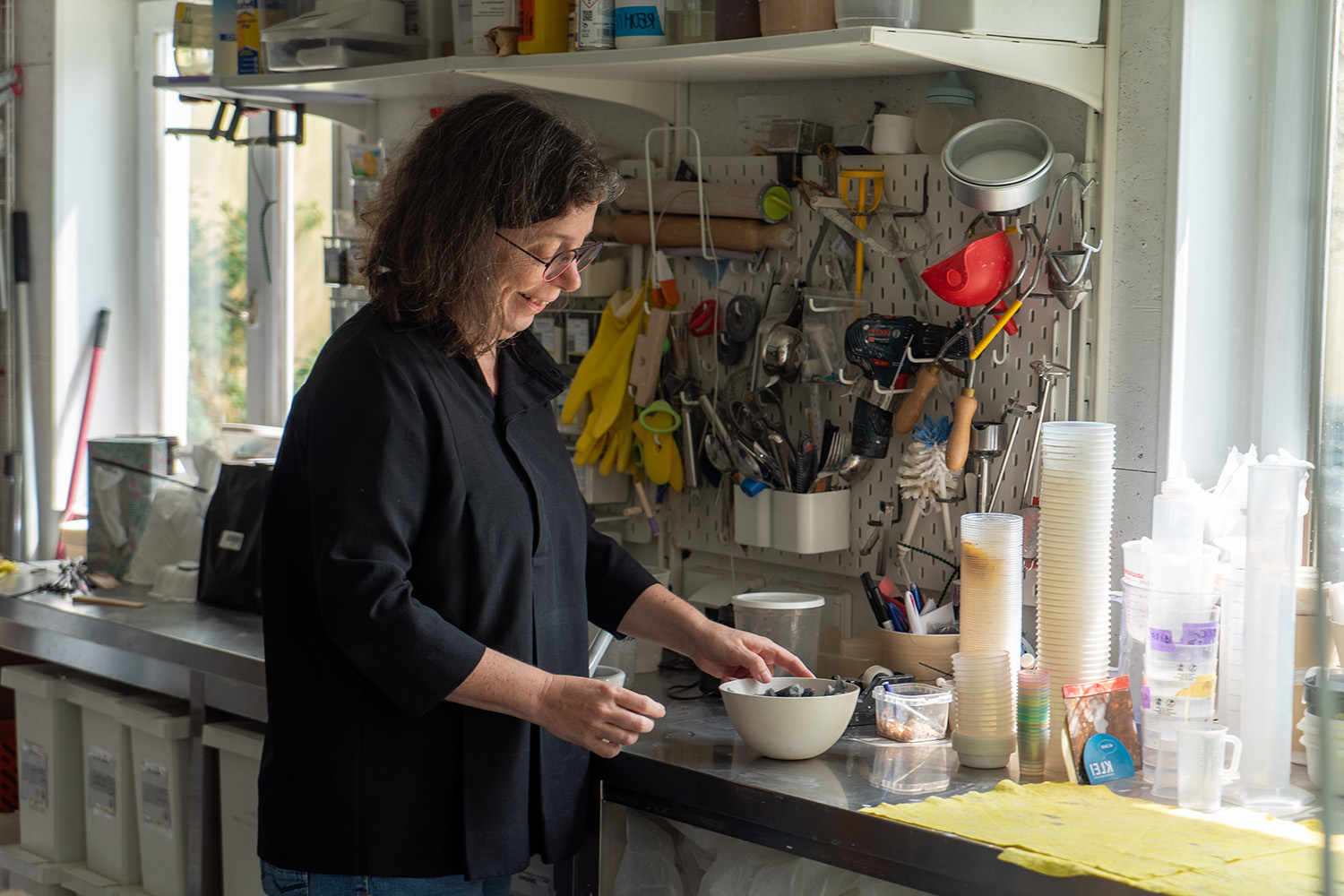
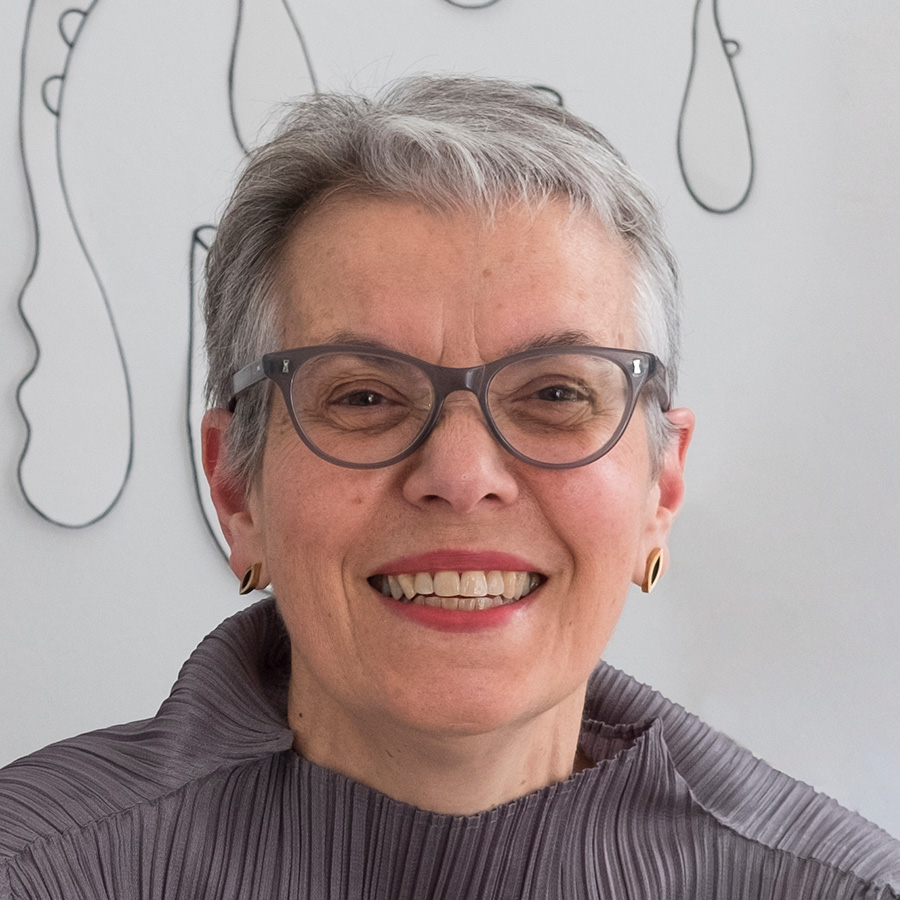
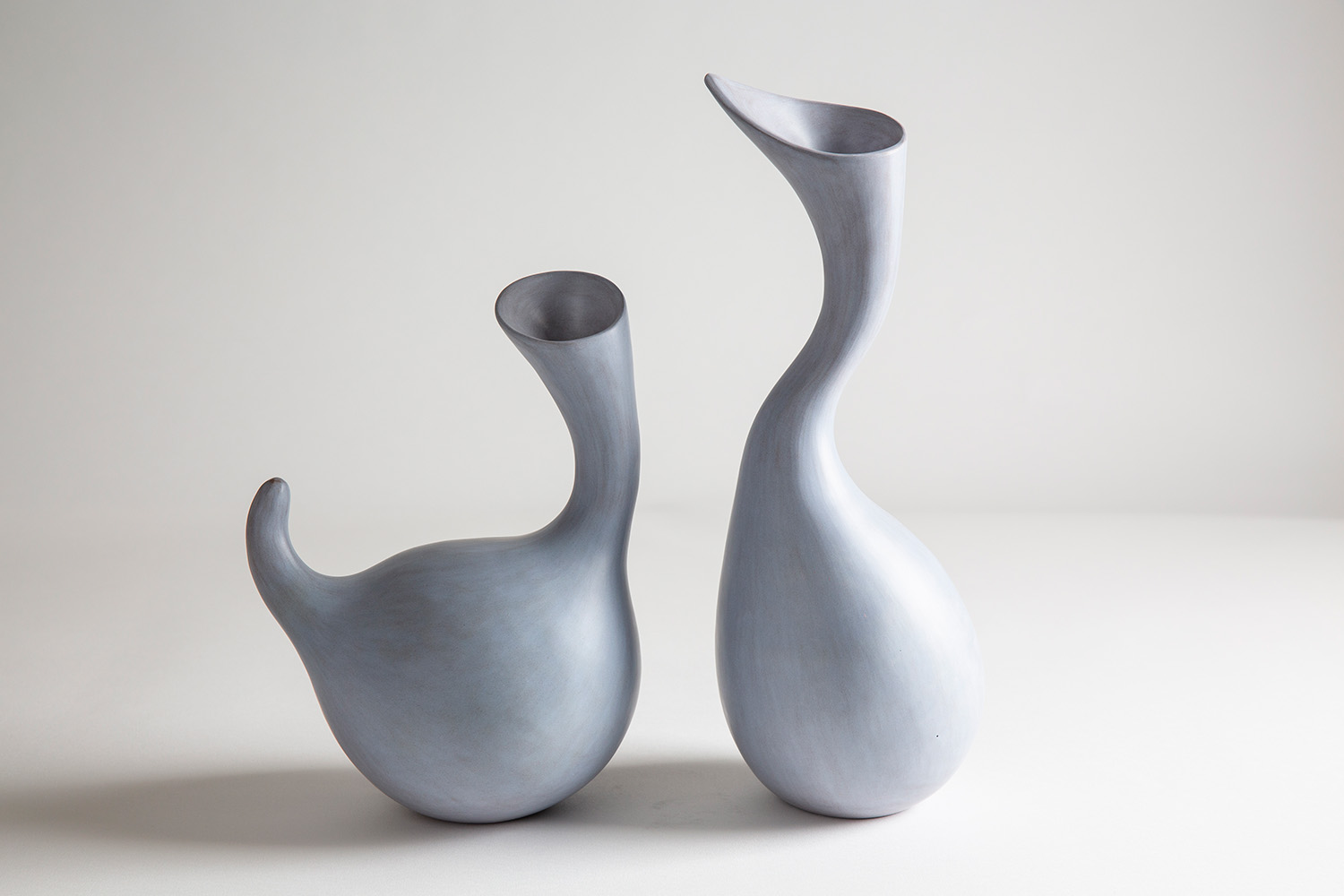
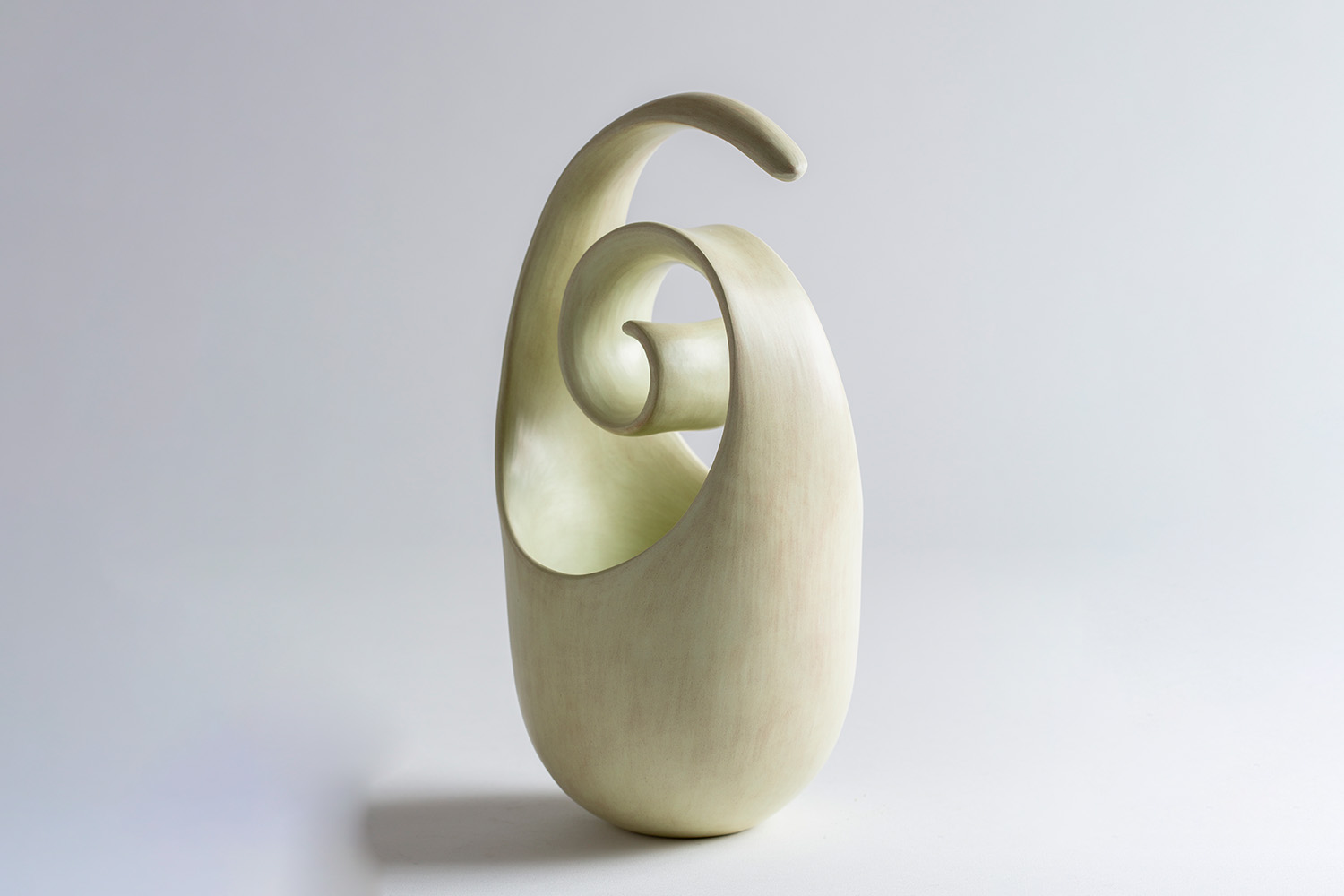
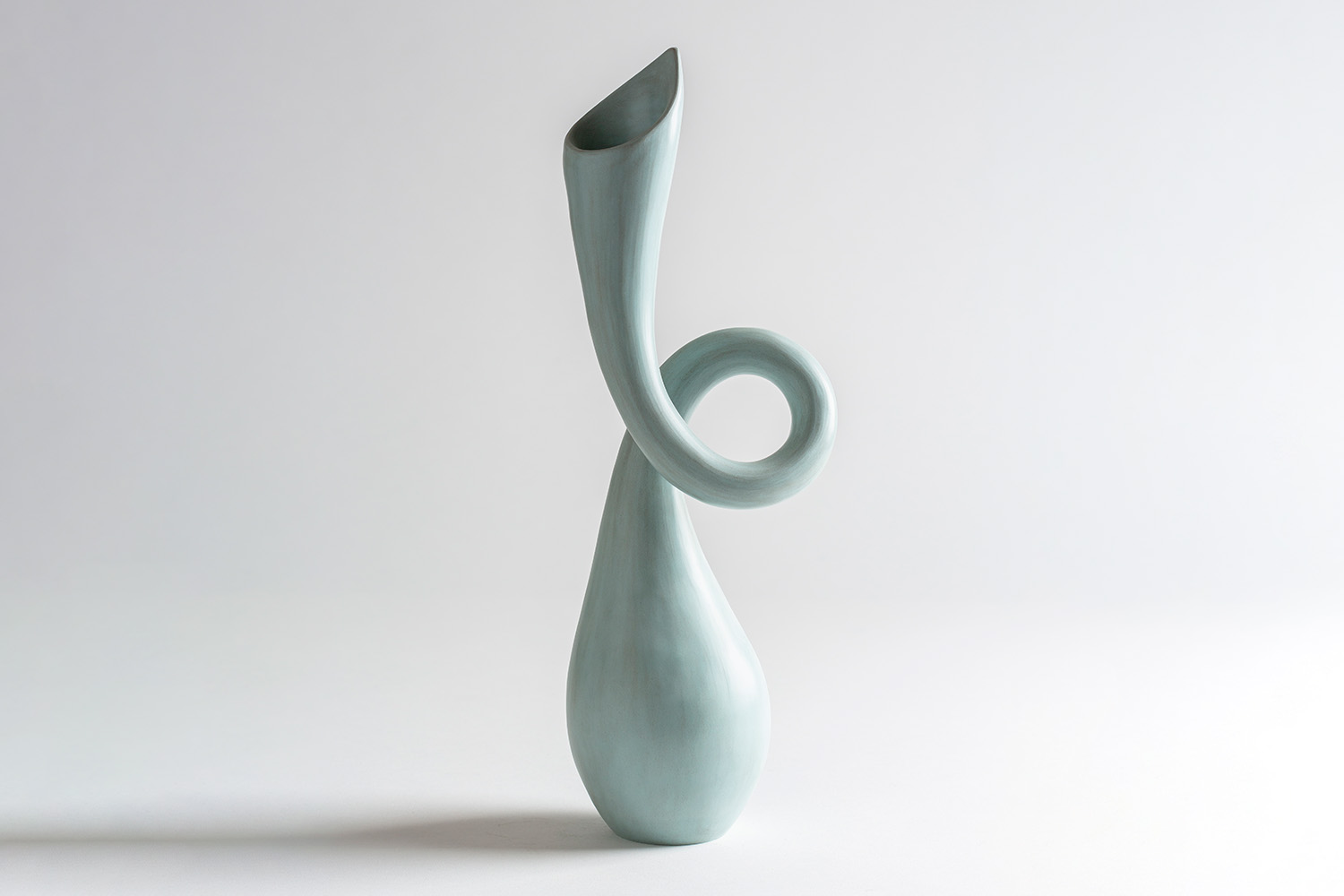
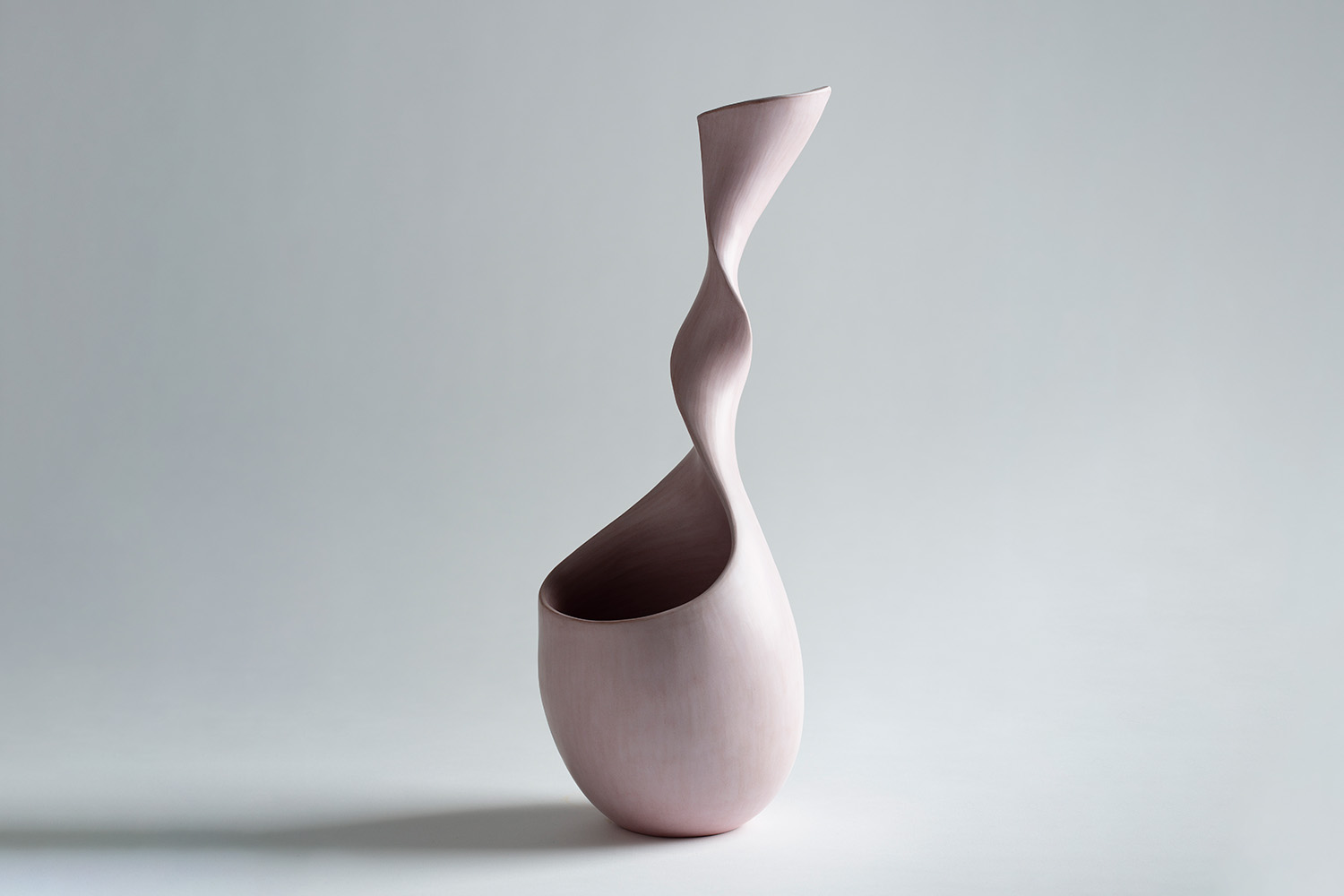
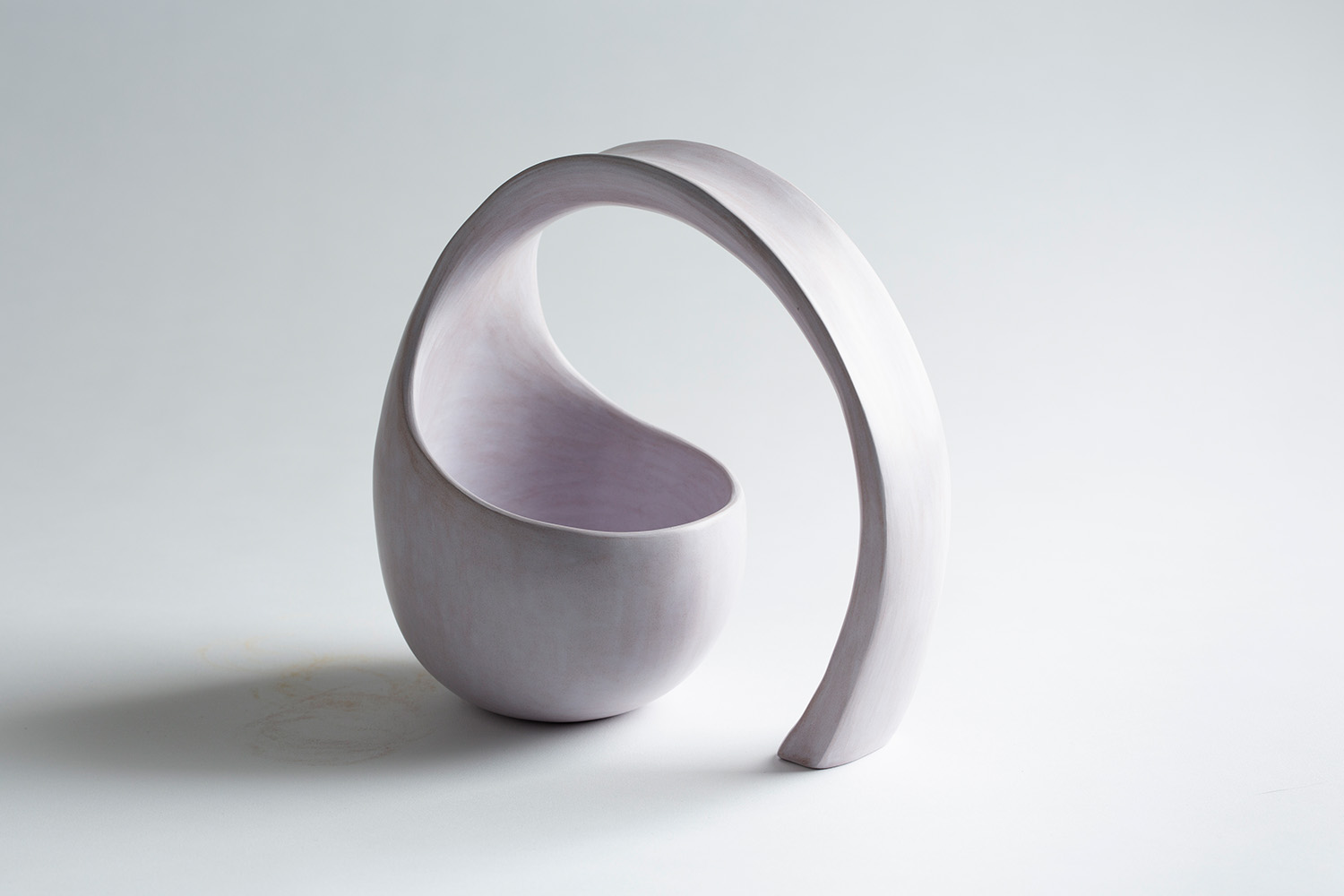
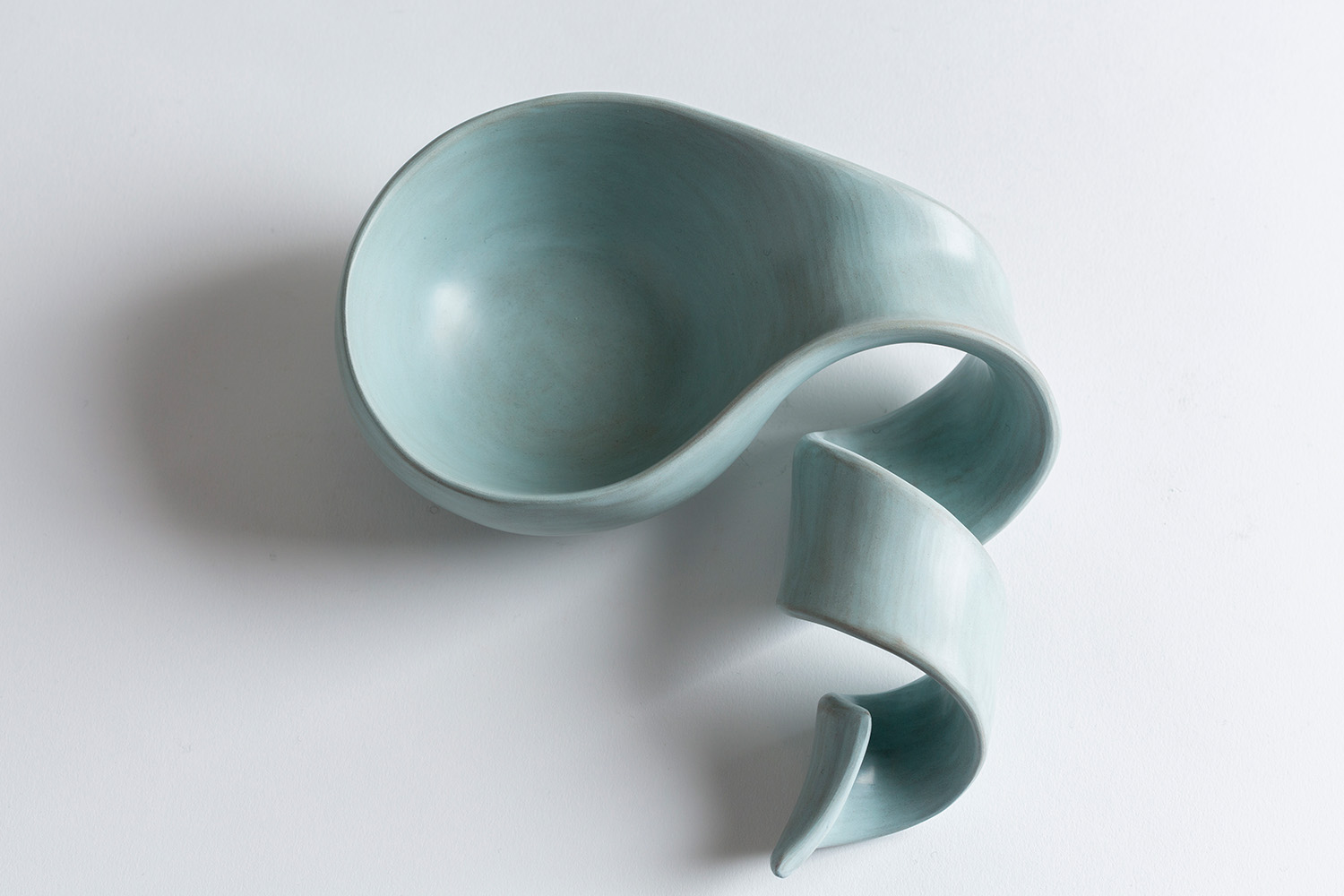
There was a time, at the very beginning of her professional journey in the late 1970s, when Tina Vlassopulos was not so sure whether she should continue with ceramics or not. But then she took part in an exhibition in London, and Jean Muir, the fashion designer, bought three of her pieces. “I knew then, that I should not give up,” Tina says. She was right. Nowadays, she has become an internationally acclaimed artist, well known for her hand built ceramic sculptures. Her creations are distinctive and unique, characterised by sinuous and elegant lines. Tina says her inspiration comes from city life, from the performing arts especially, contemporary dance, ballet and opera. “Attending a live performance unlocks my creativity and allows me the time to freely roam around in my imagination,” she explains.
INTERVIEW
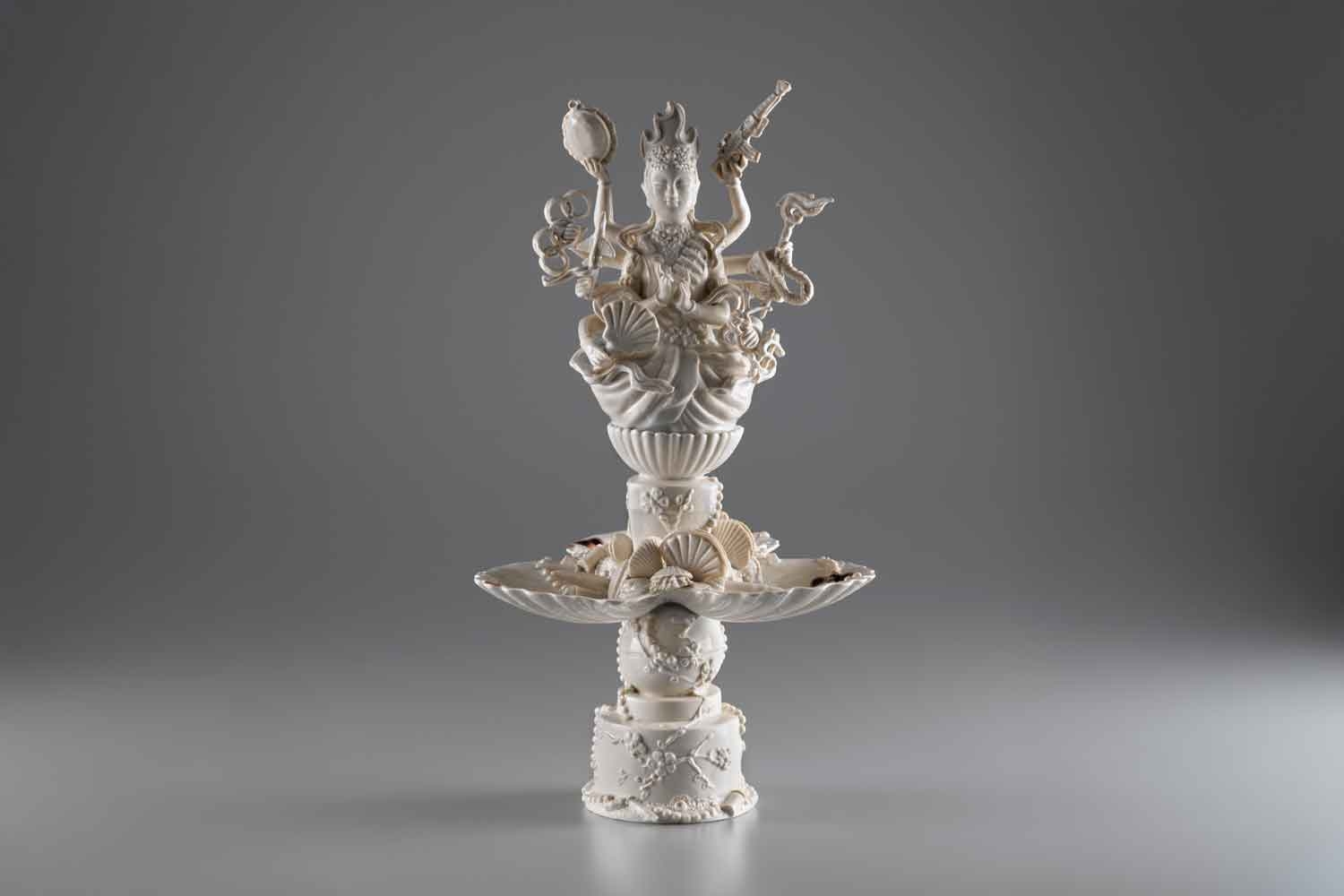
I never know what to call them. They are not functional, so I suppose you could call them sculptures, but because they are made out of clay, which is a humble material, I hope they are unassuming. It is such a privilege to make things and hopefully what I produce gives other people pleasure.
It is very difficult to define it, as it does not seem to fit into any genre. I am more interested in form rather than function and I am not particularly keen on the technical side of things. The technique I use simplifies the making process, so I can concentrate on the ideas.
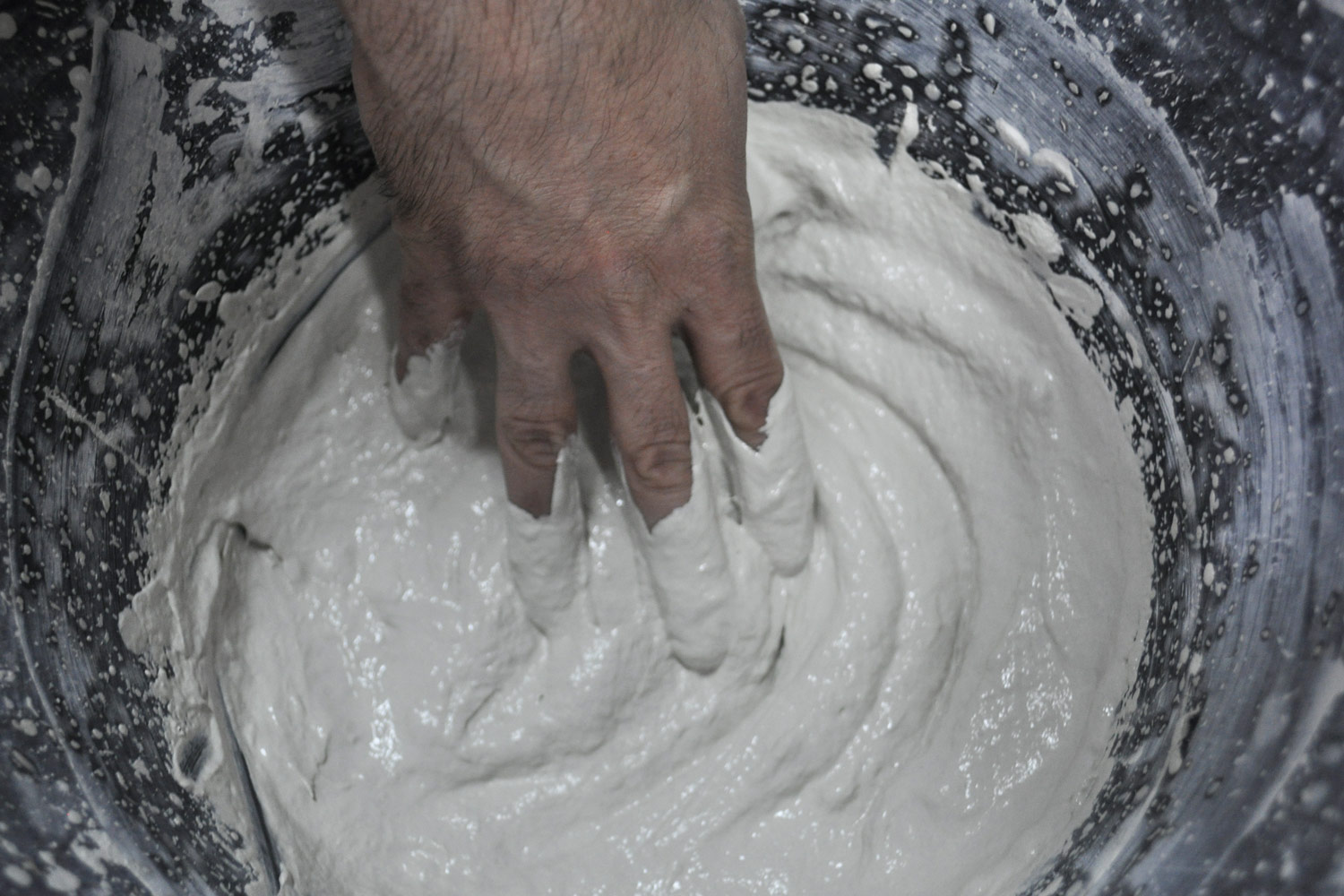
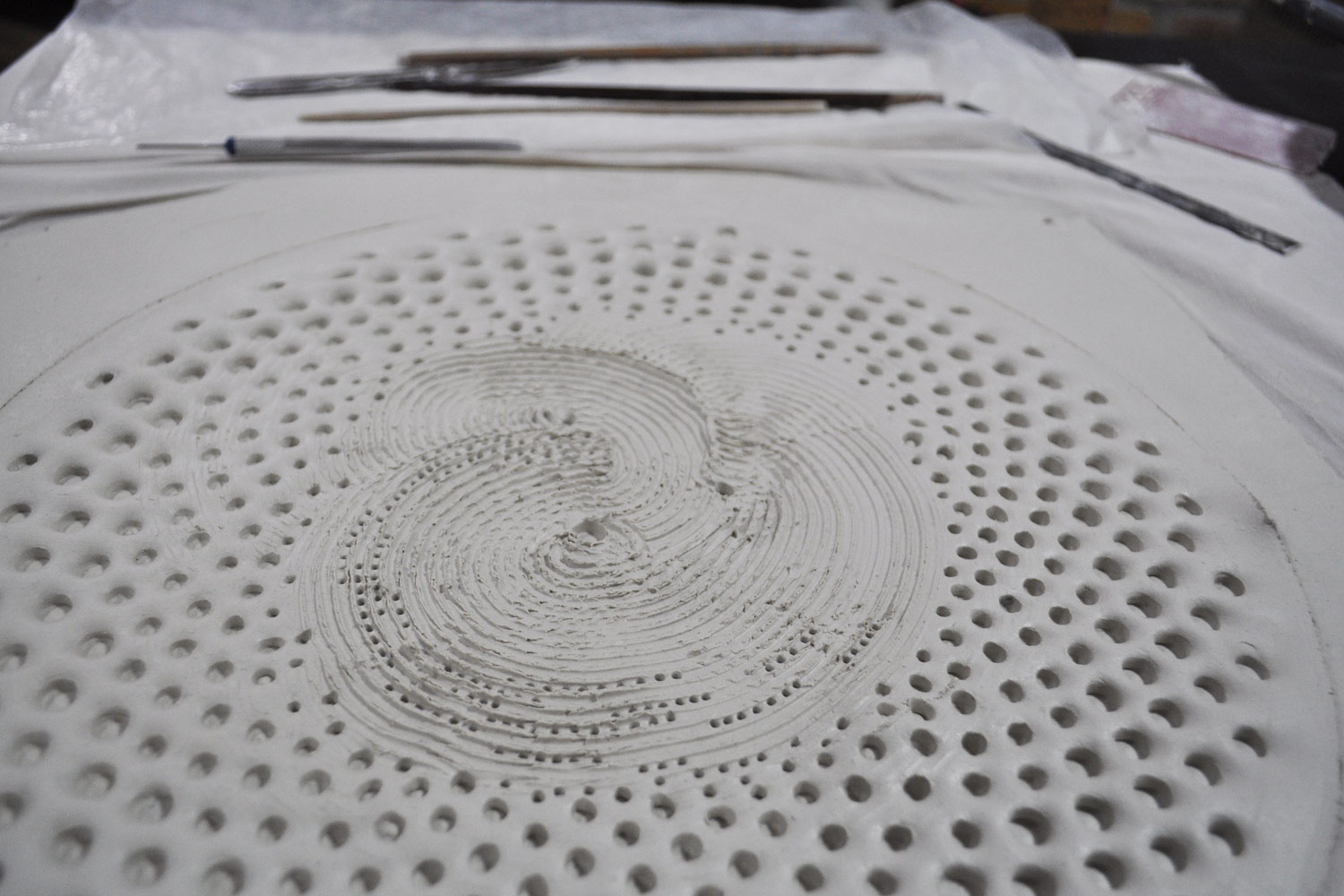
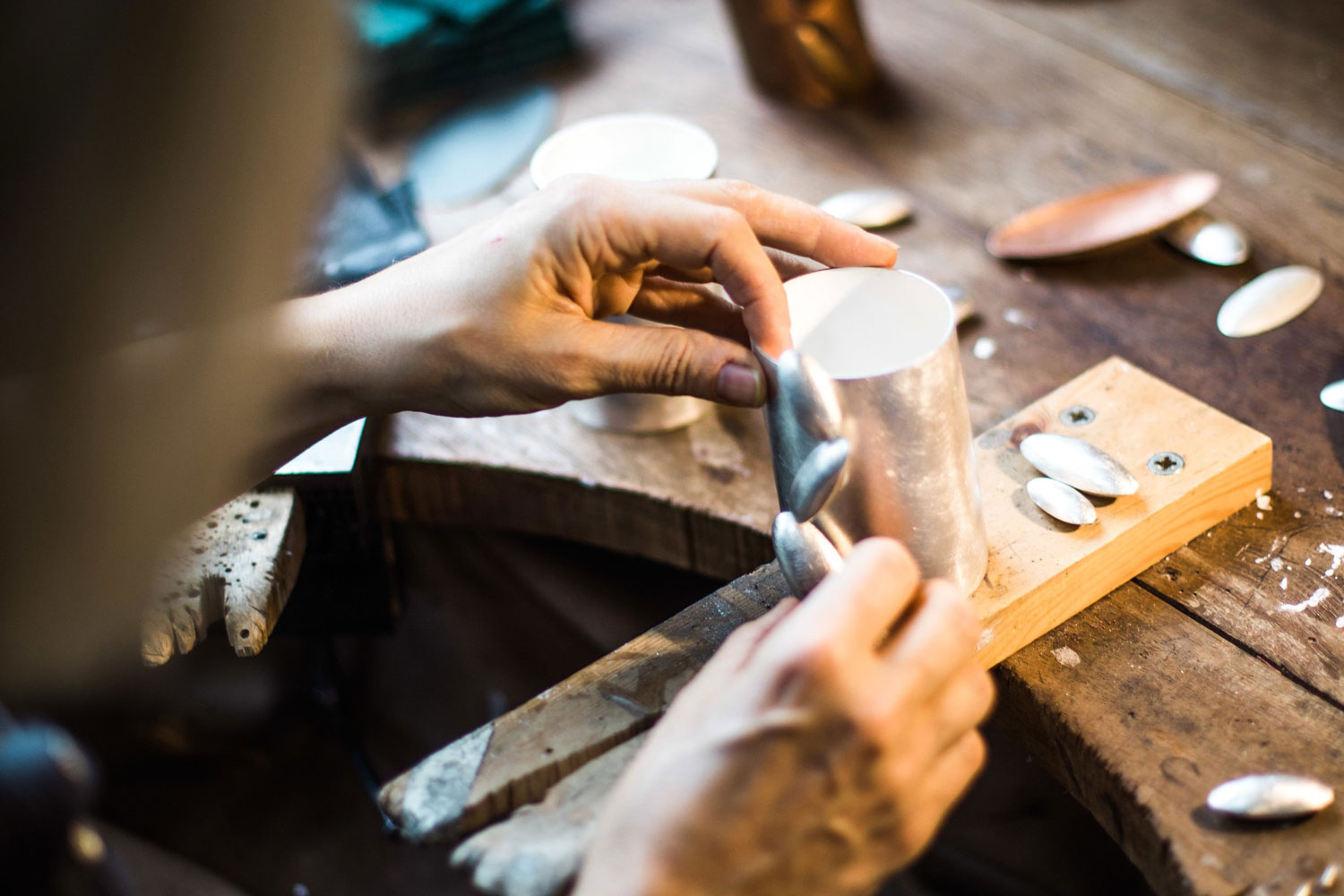
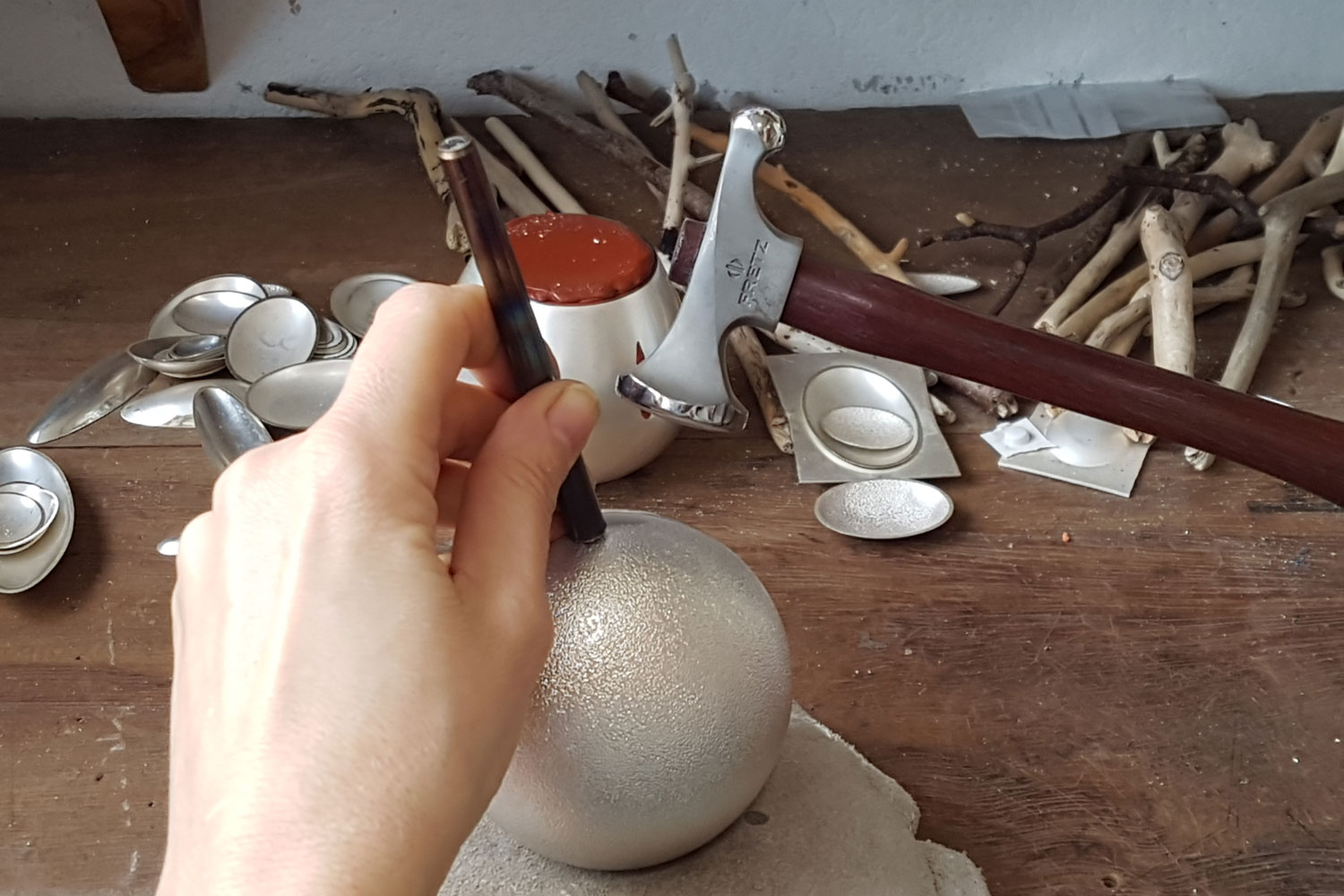
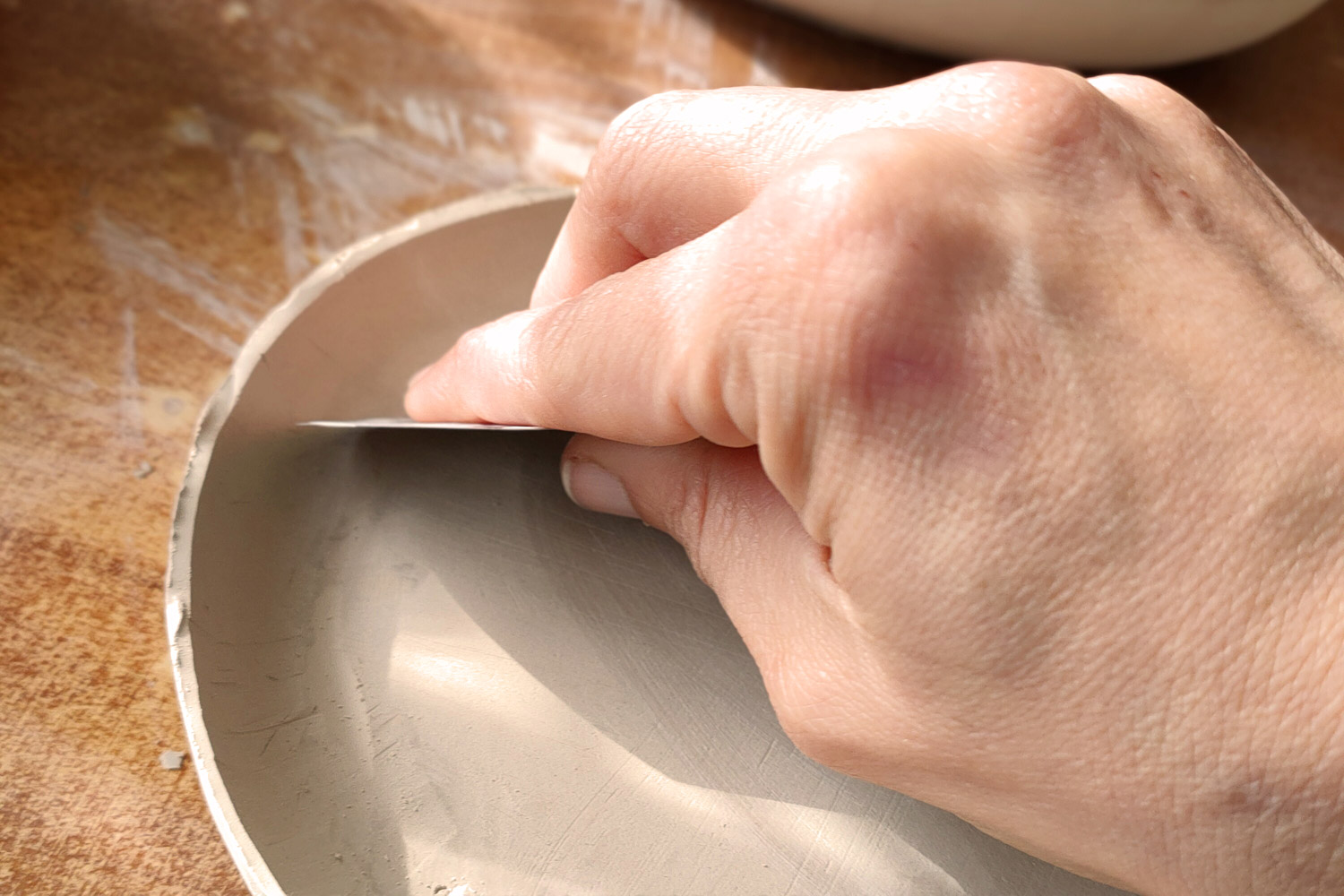
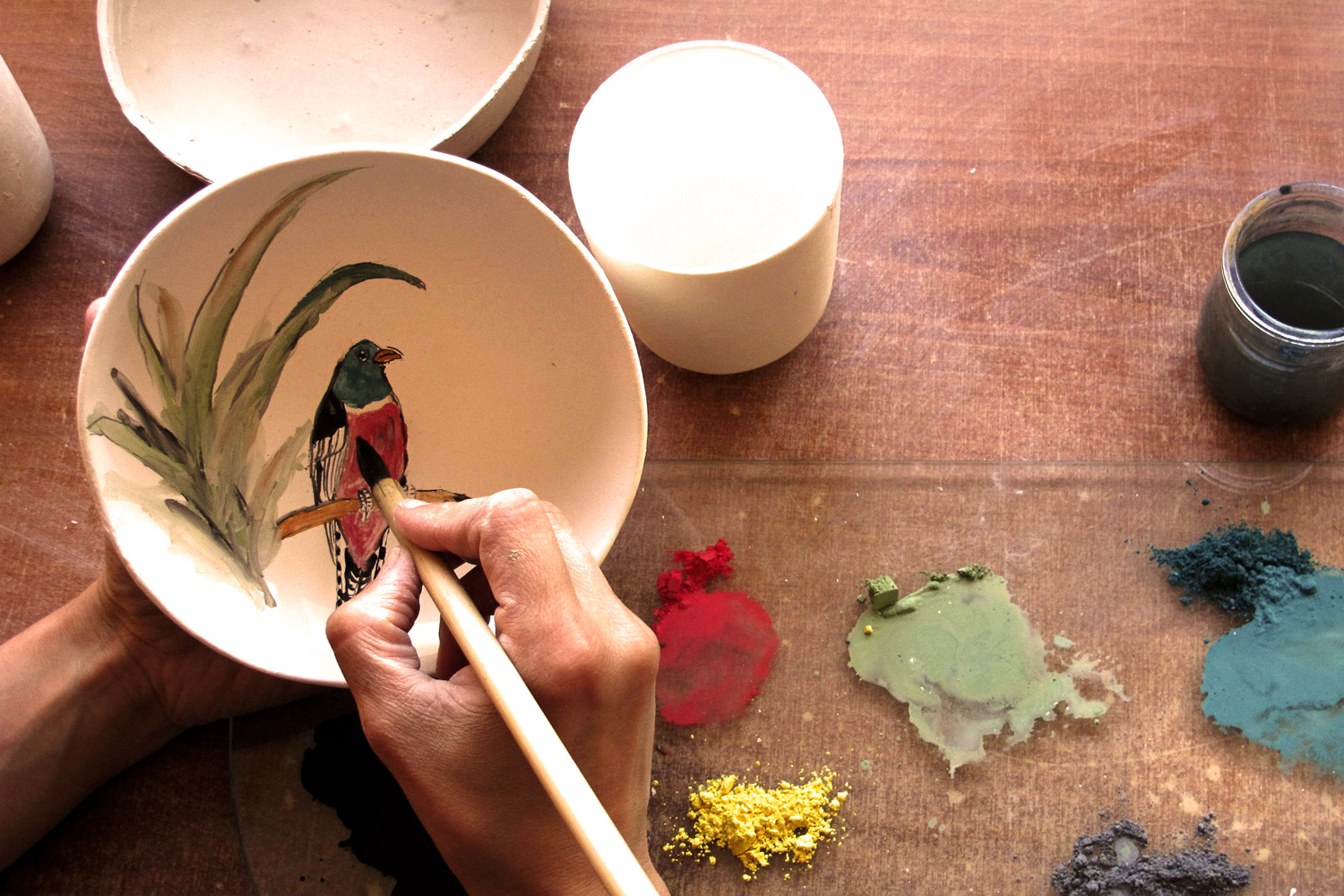
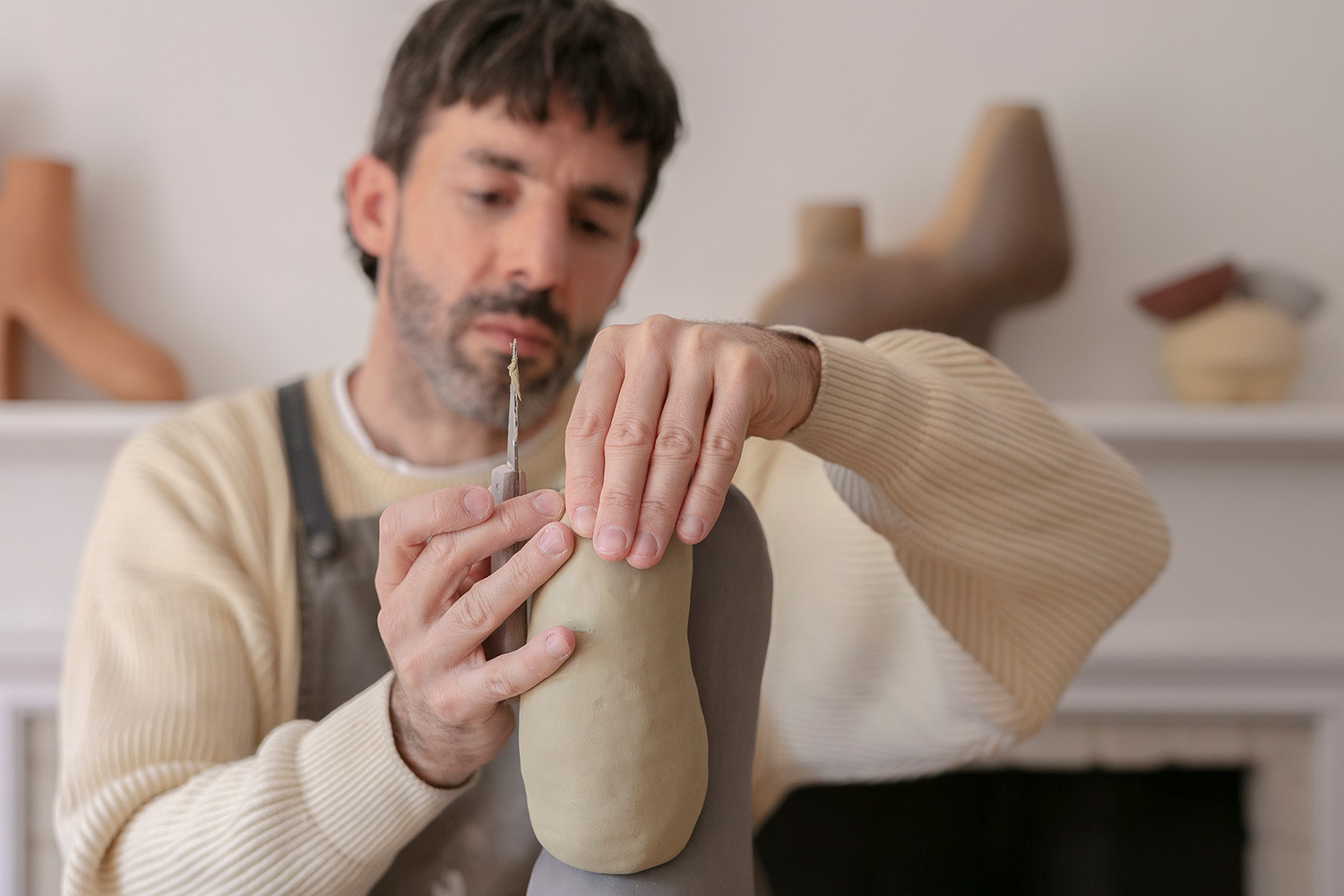
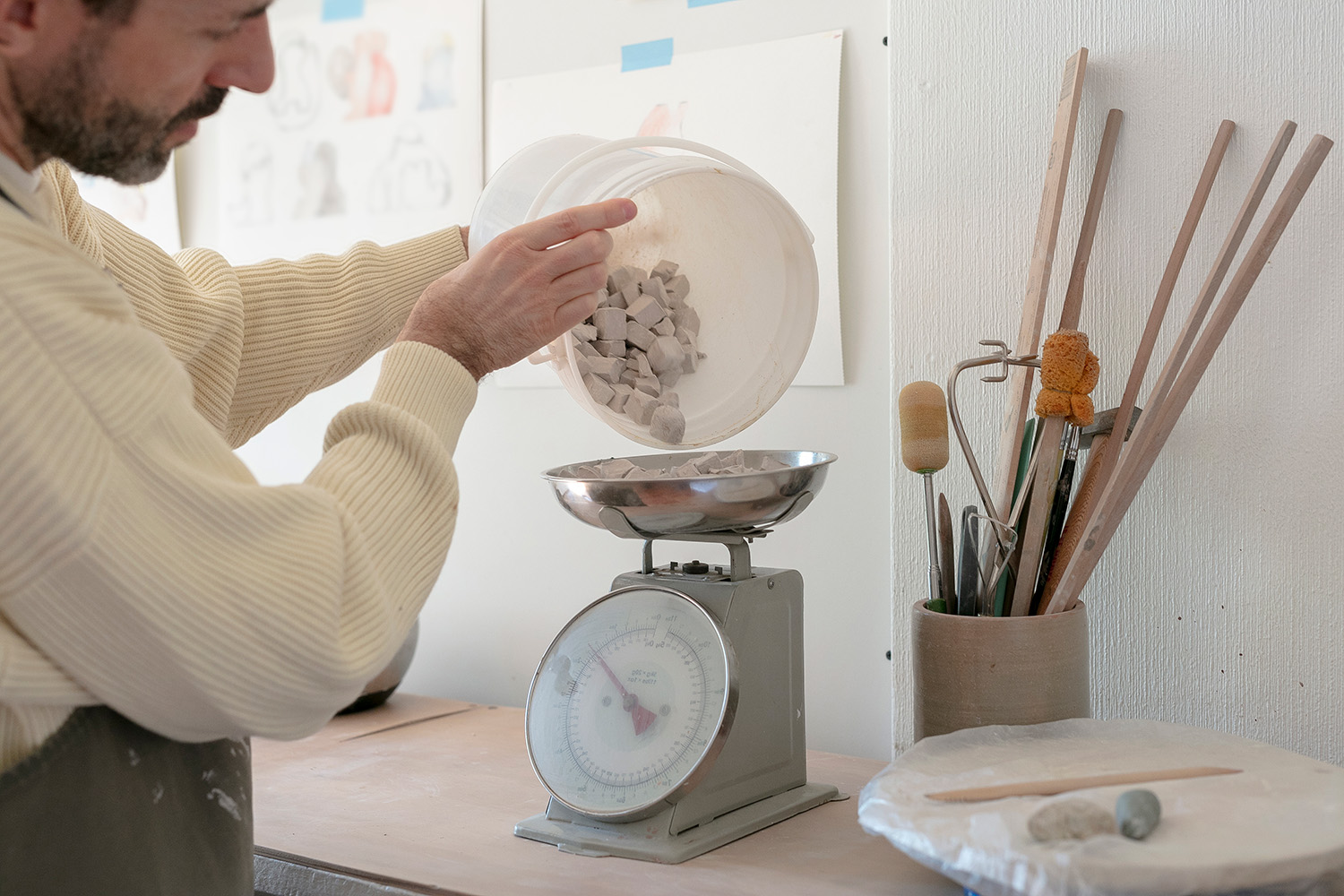
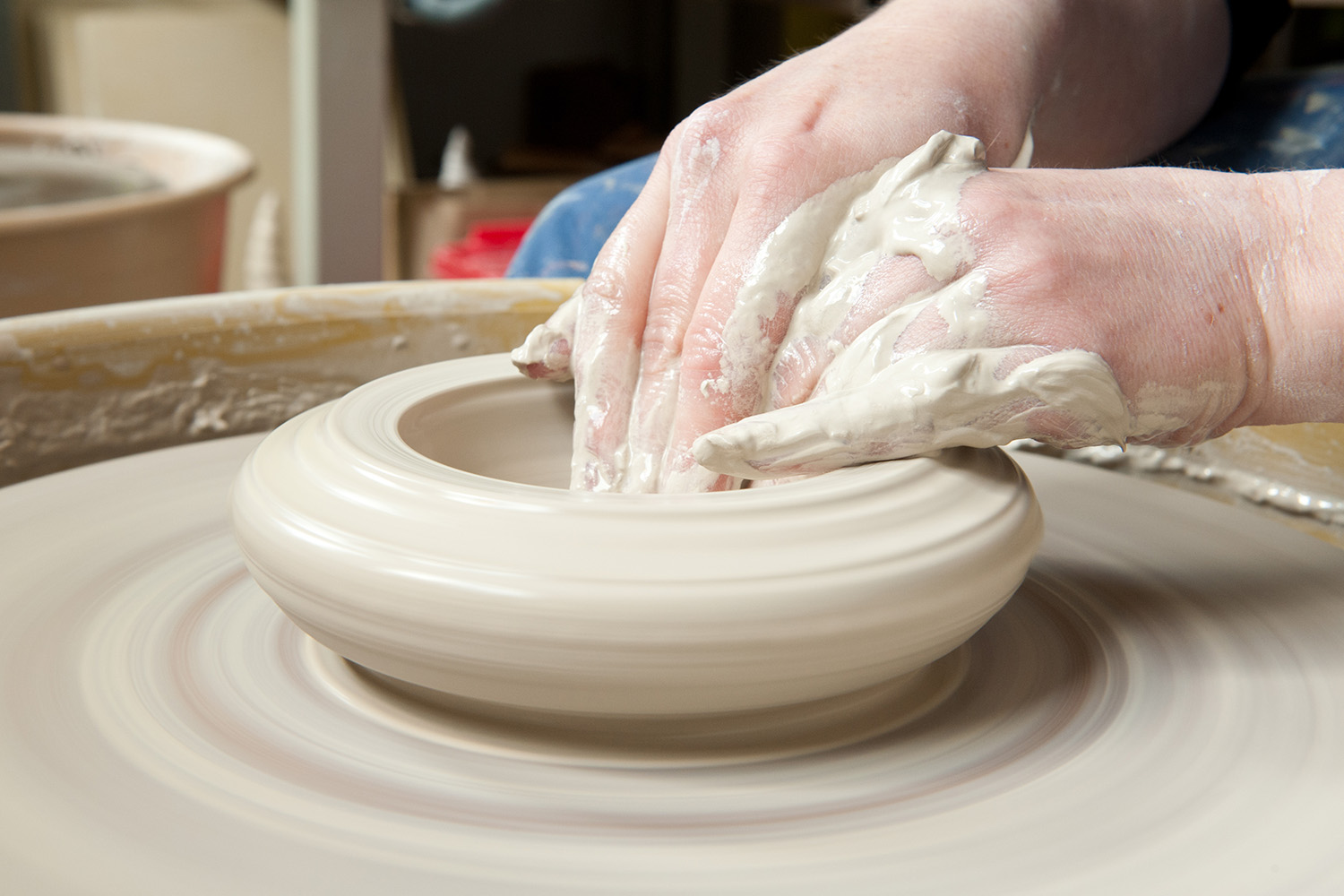
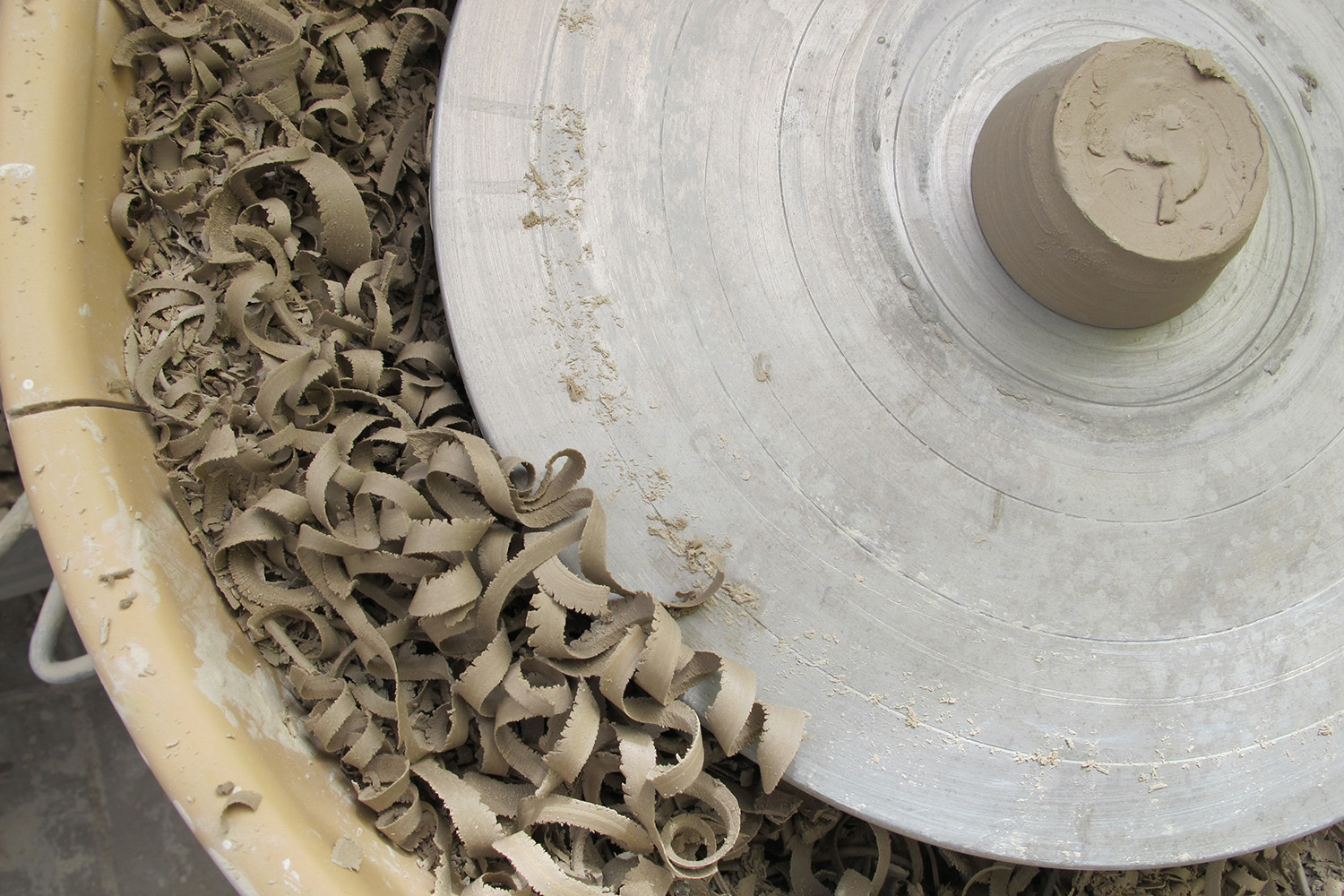
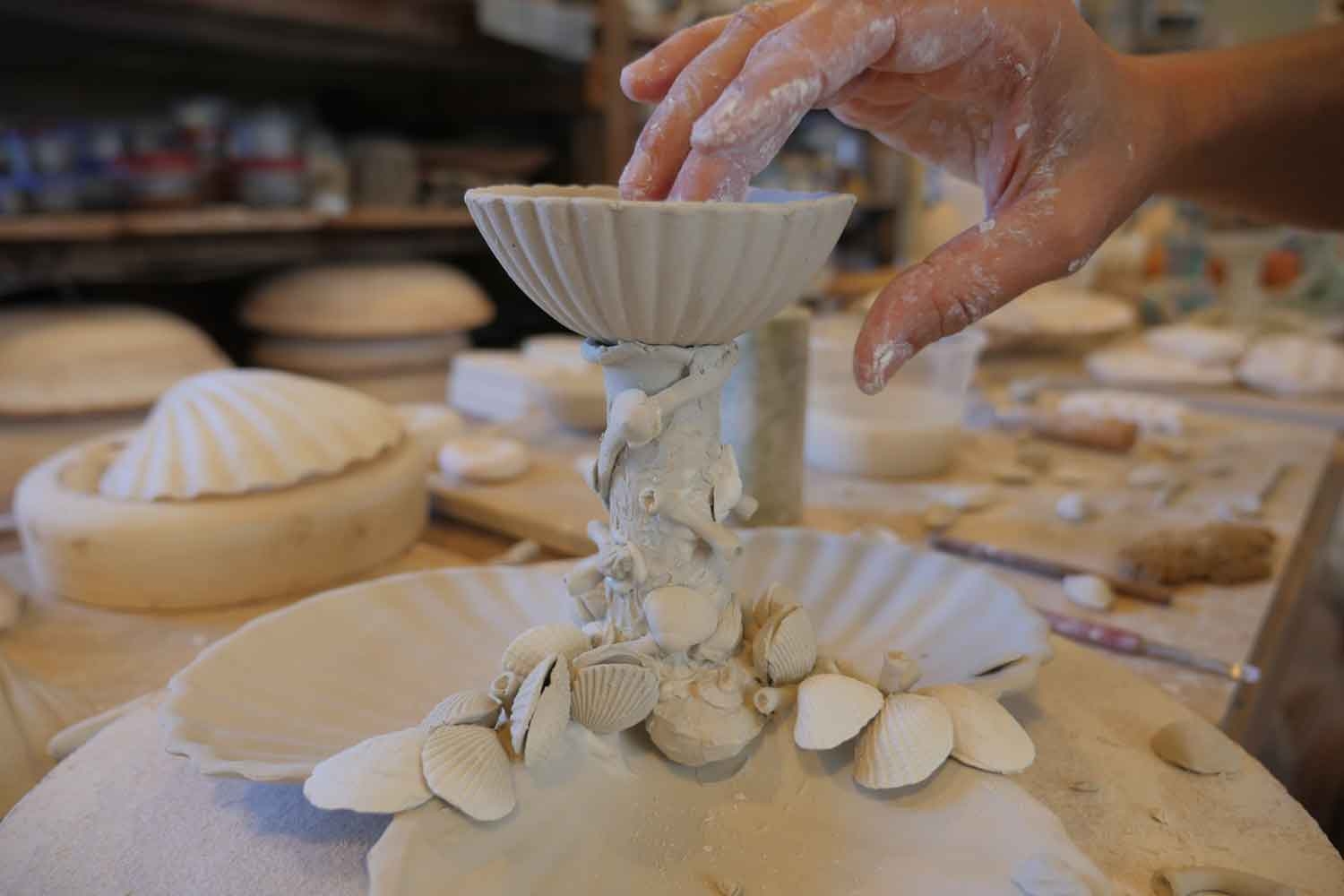
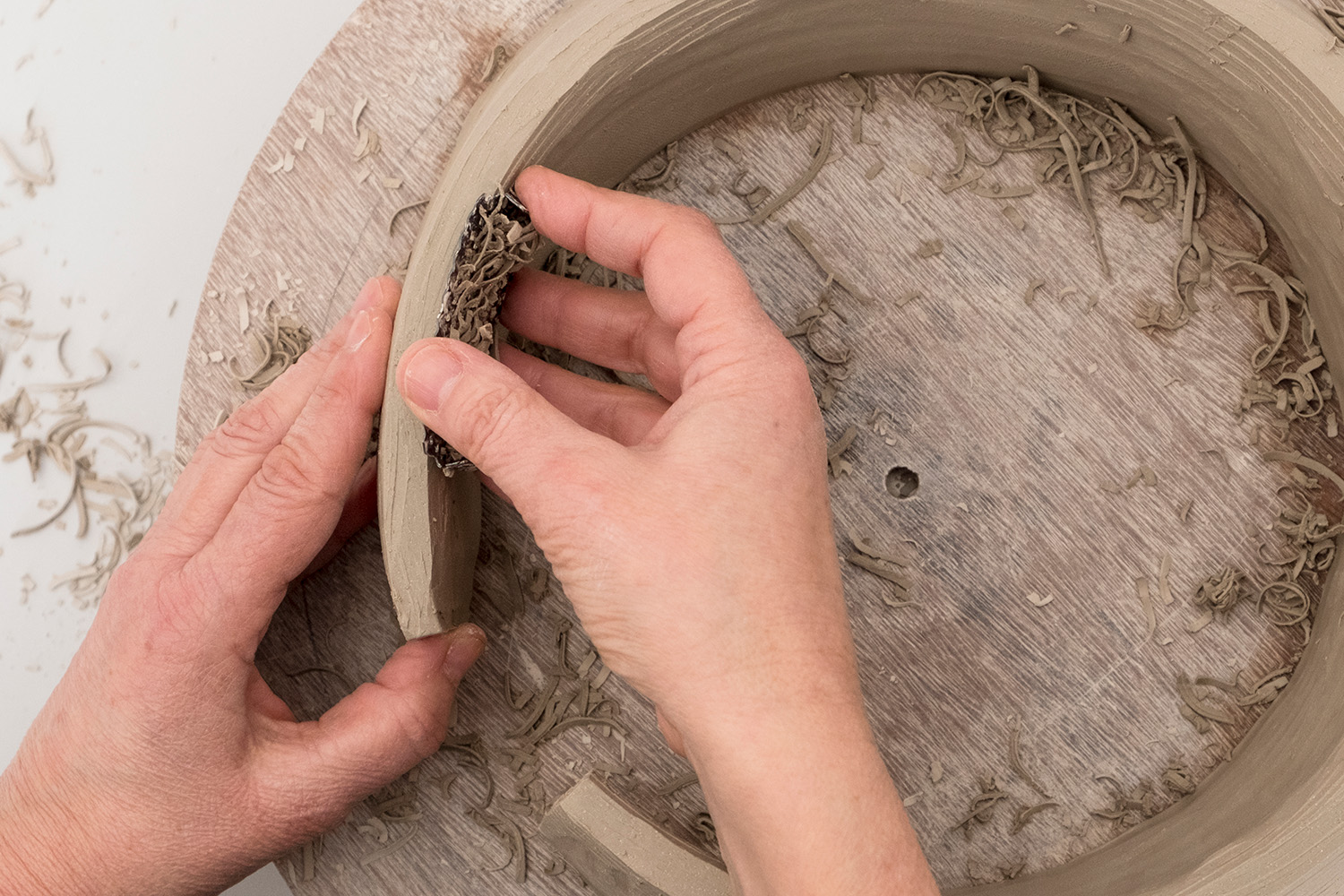
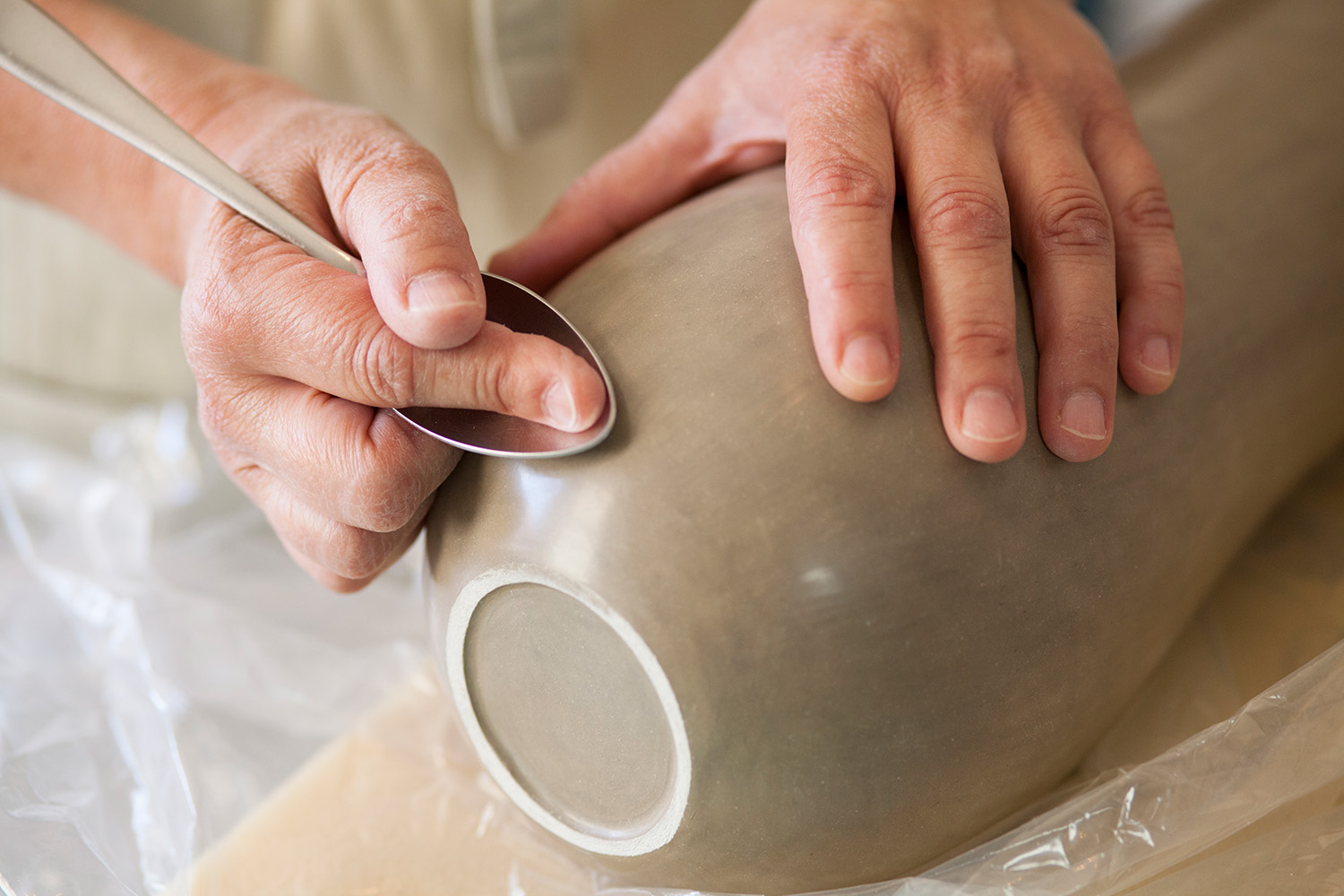
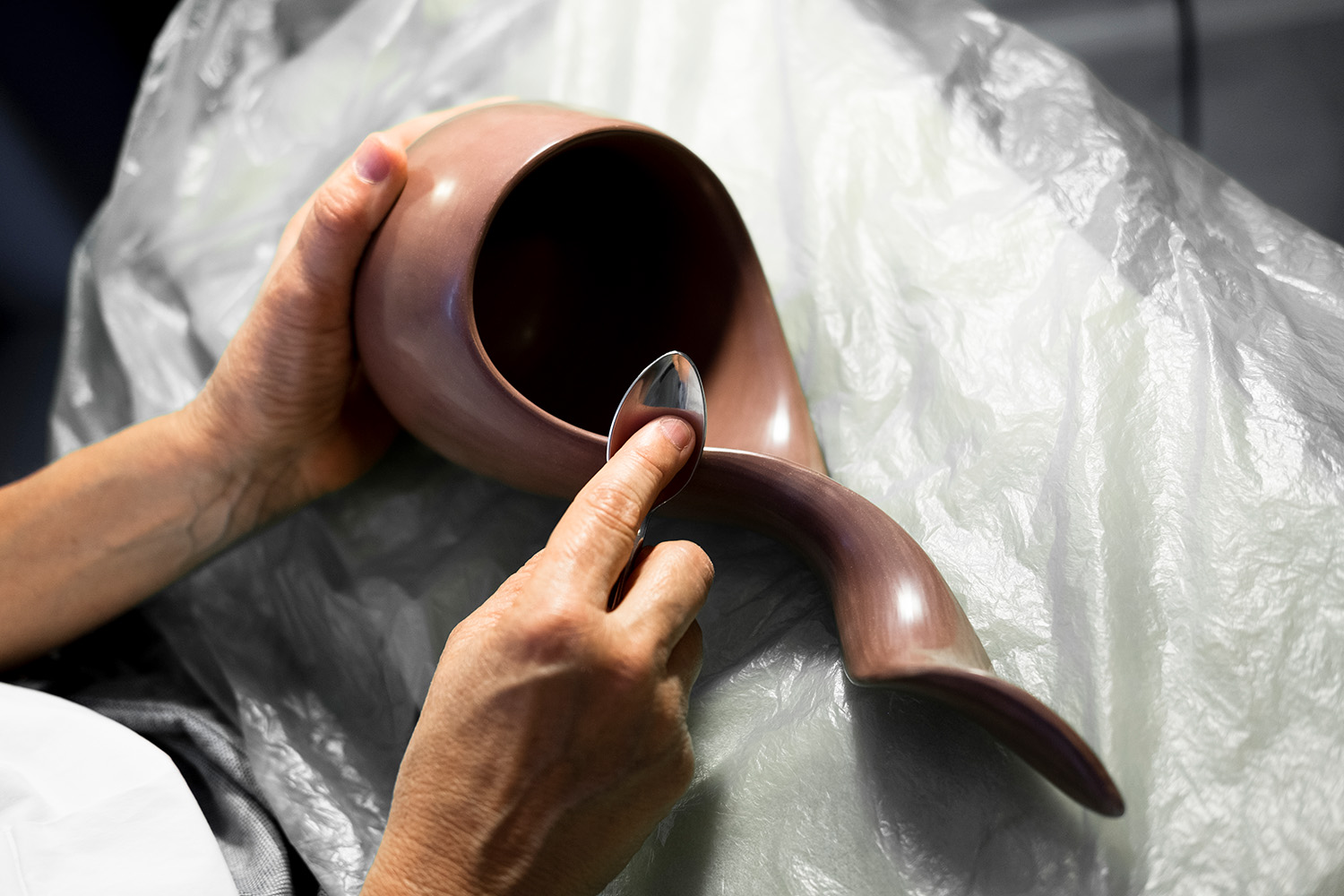
I use clay straight out of the bag or mix a pigment into it, and start creating. It is all made by hand building using coils, soft-slabbing and pinching. I refine the pieces by scraping the surface with a surform blade, metal kidneys and wooden ribs, then I burnish them with metal spoons. Finally I fire to 680ºC in an electric kiln.
I usually construct my pieces very quickly: that is the exciting part and what gives them movement. Burnishing, on the other hand, needs a lot of concentration, as the piece is quite fragile at this point and can easily crack or break.
Tina Vlassopulos
Ceramicist
London, United Kingdom
AVAILABILITY
By appointment only
PHONE
+44 7817396016
LANGUAGES
English, French, German, Greek
Homo Faber Finds is a new service aiming to inspire admirers of craft to connect and collaborate with exceptional artisans.
We invite you to submit an enquiry here.