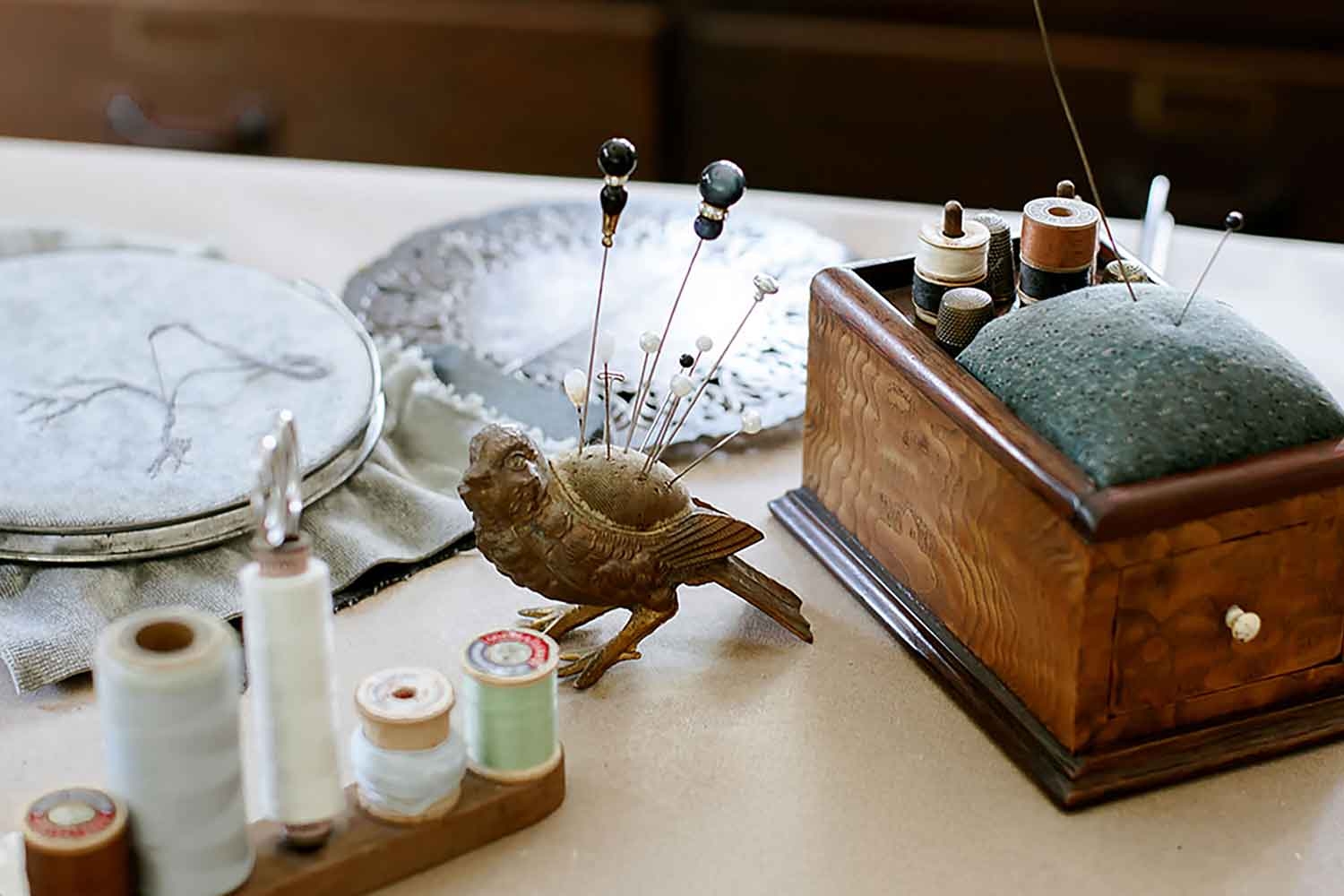
Larysa Bernhardt
Textile sculptor
De Soto, MO, USA
Myths and moths from vintage fabrics
- Larysa has been collecting antique textiles for as long as she can remember
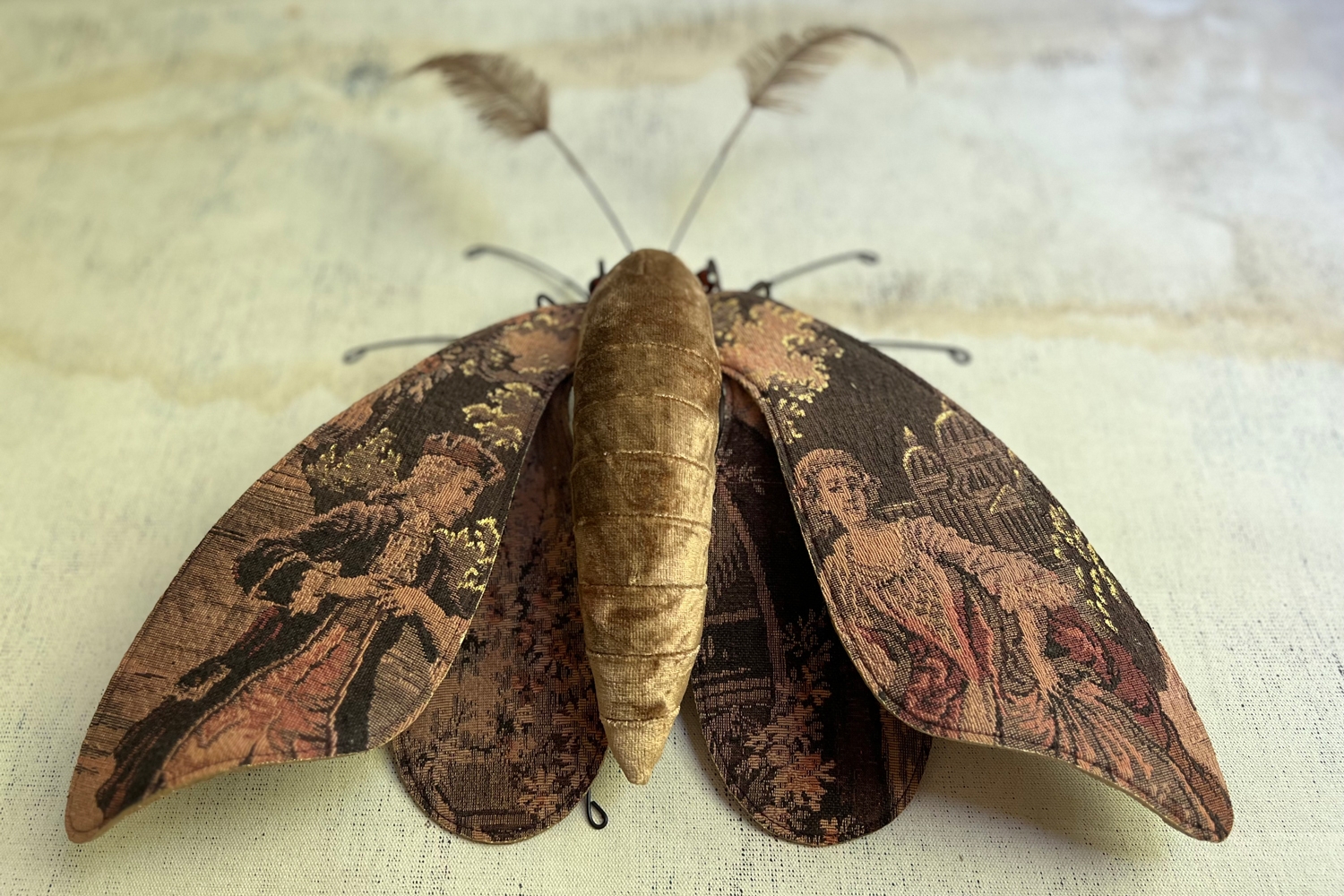
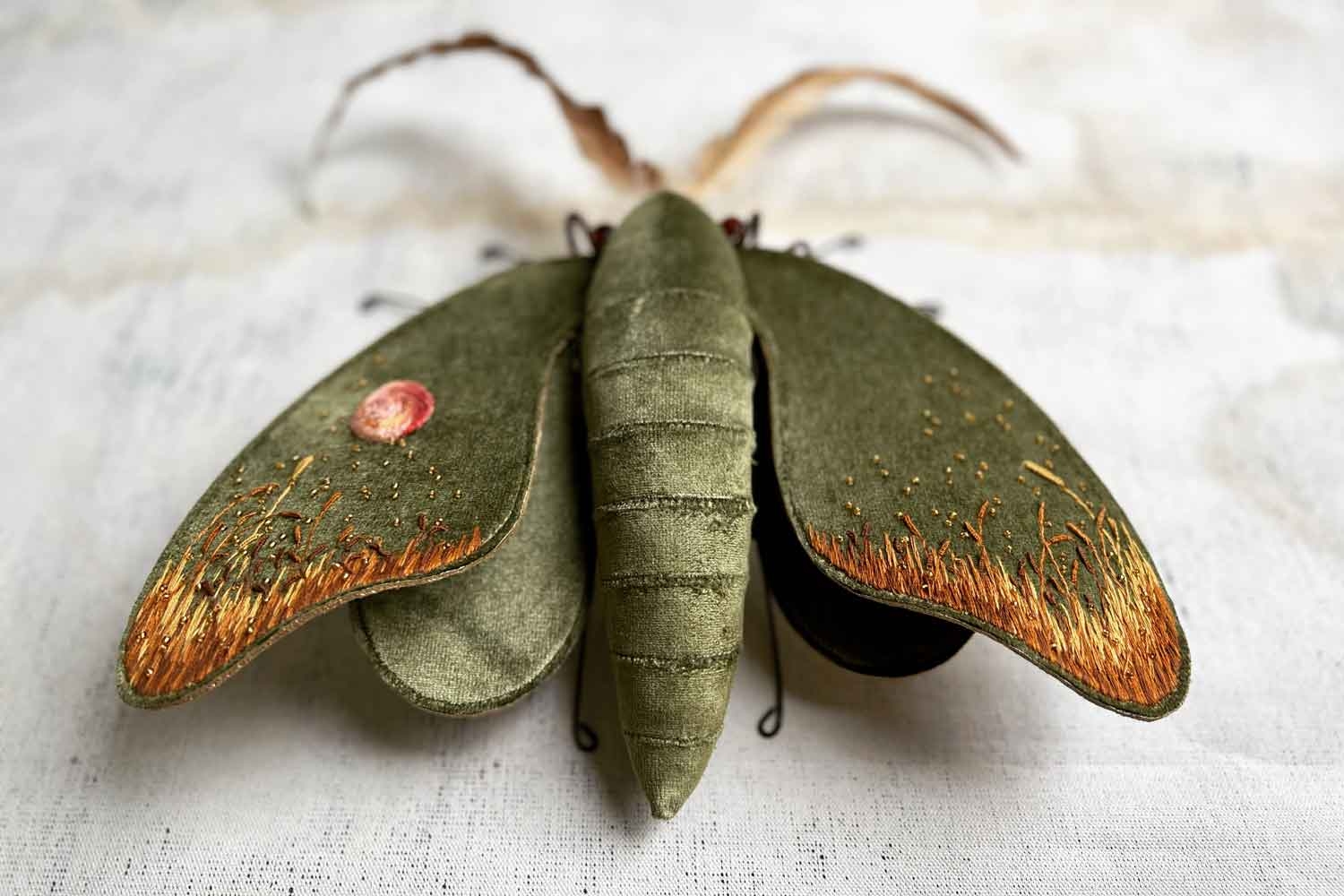
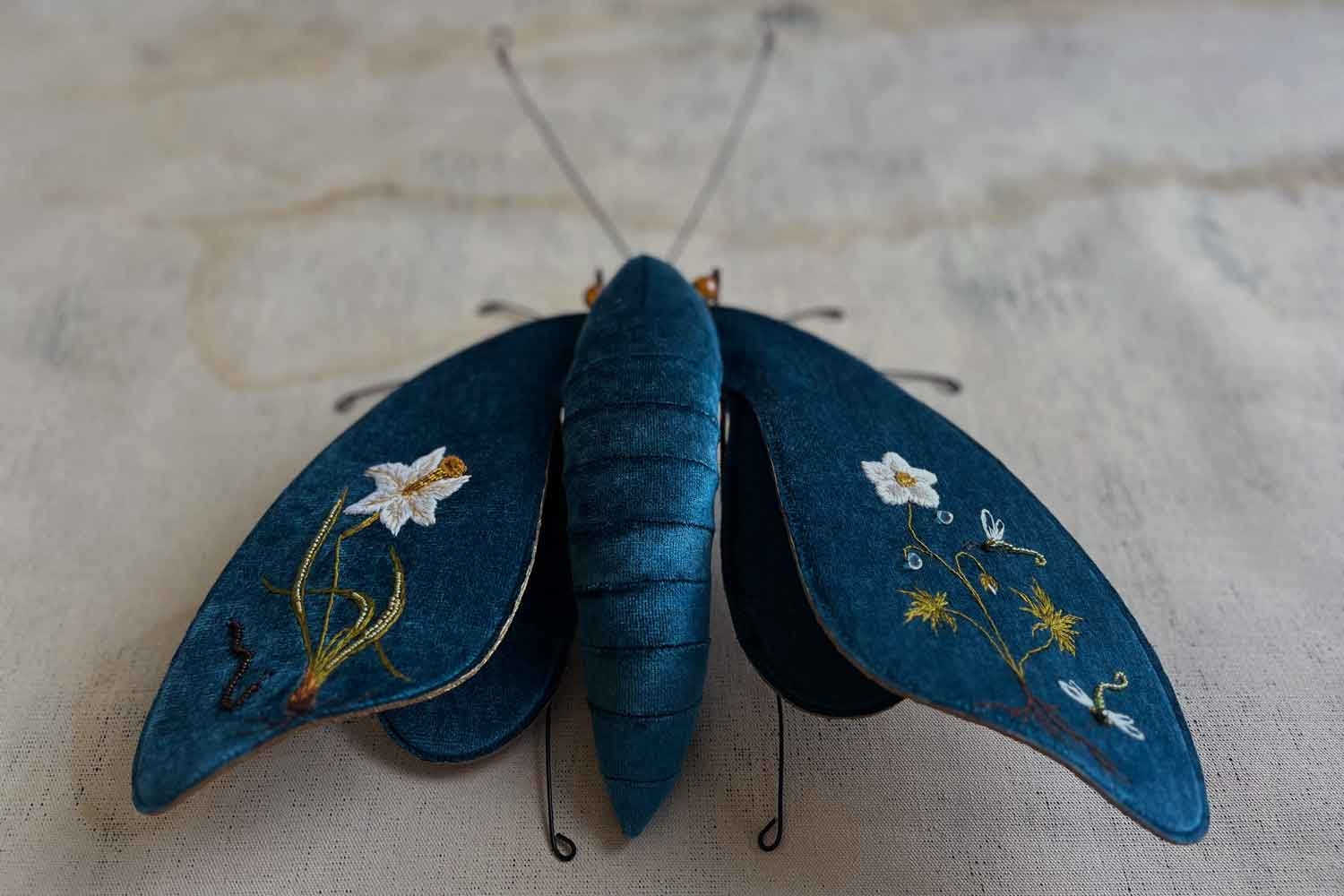
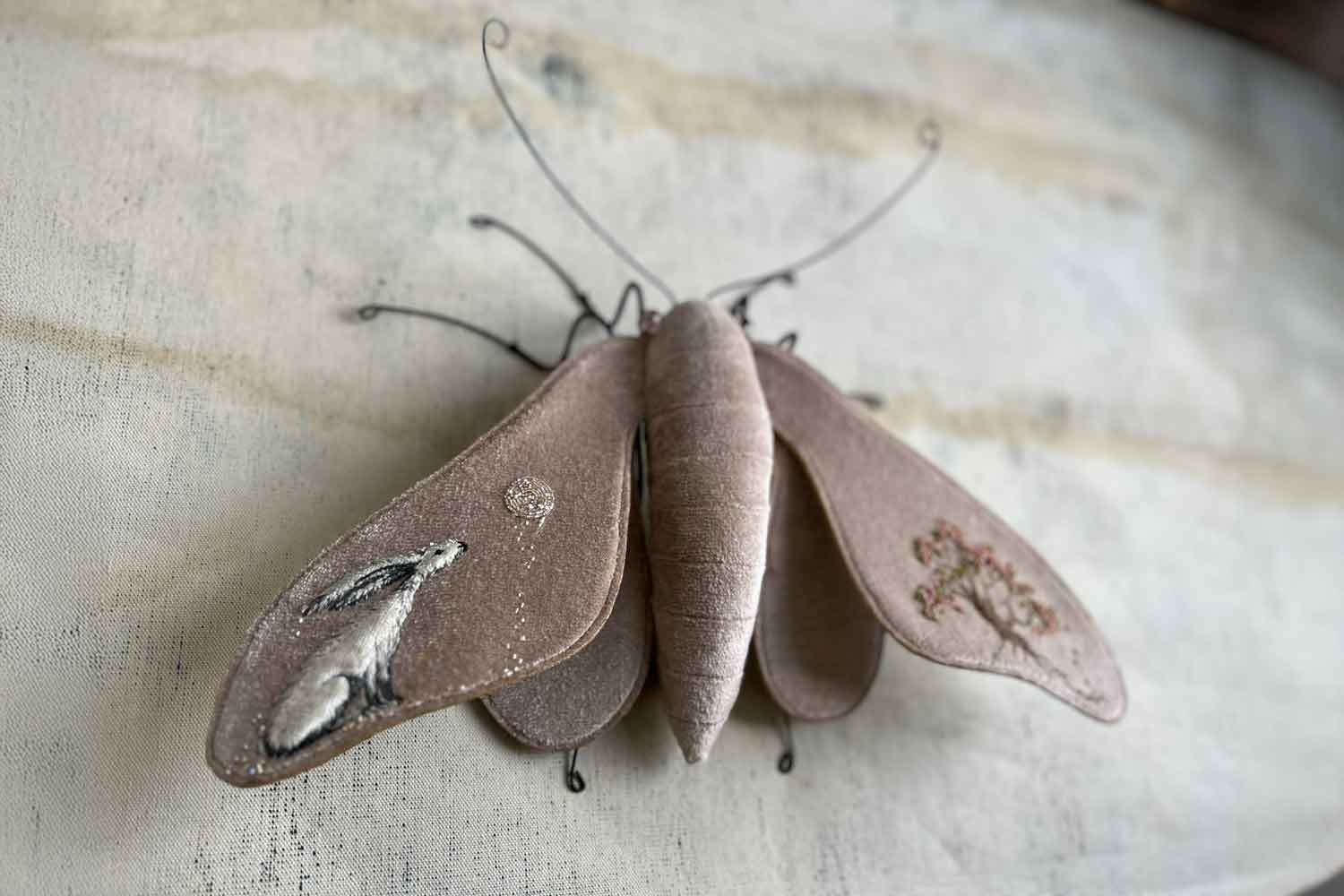
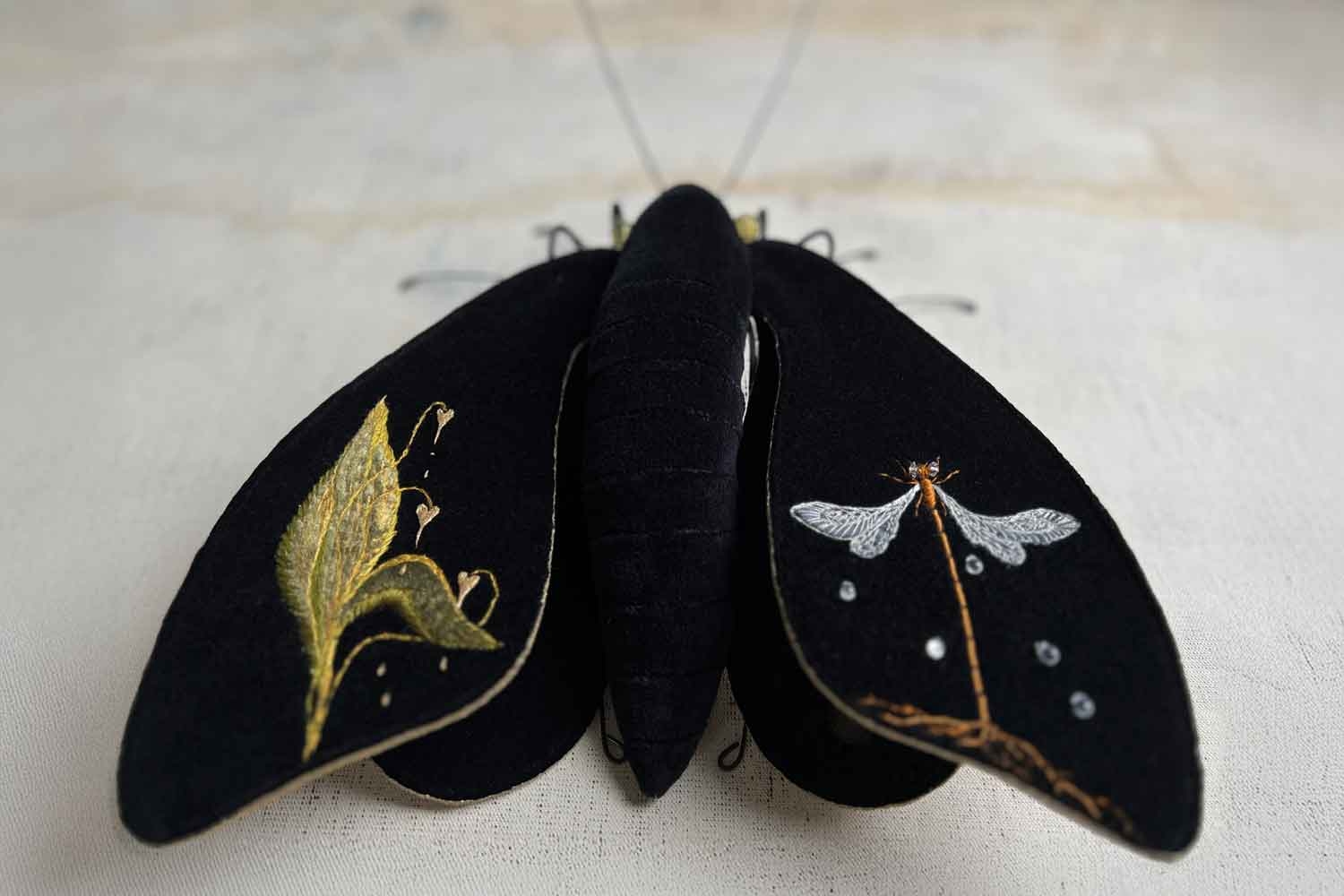
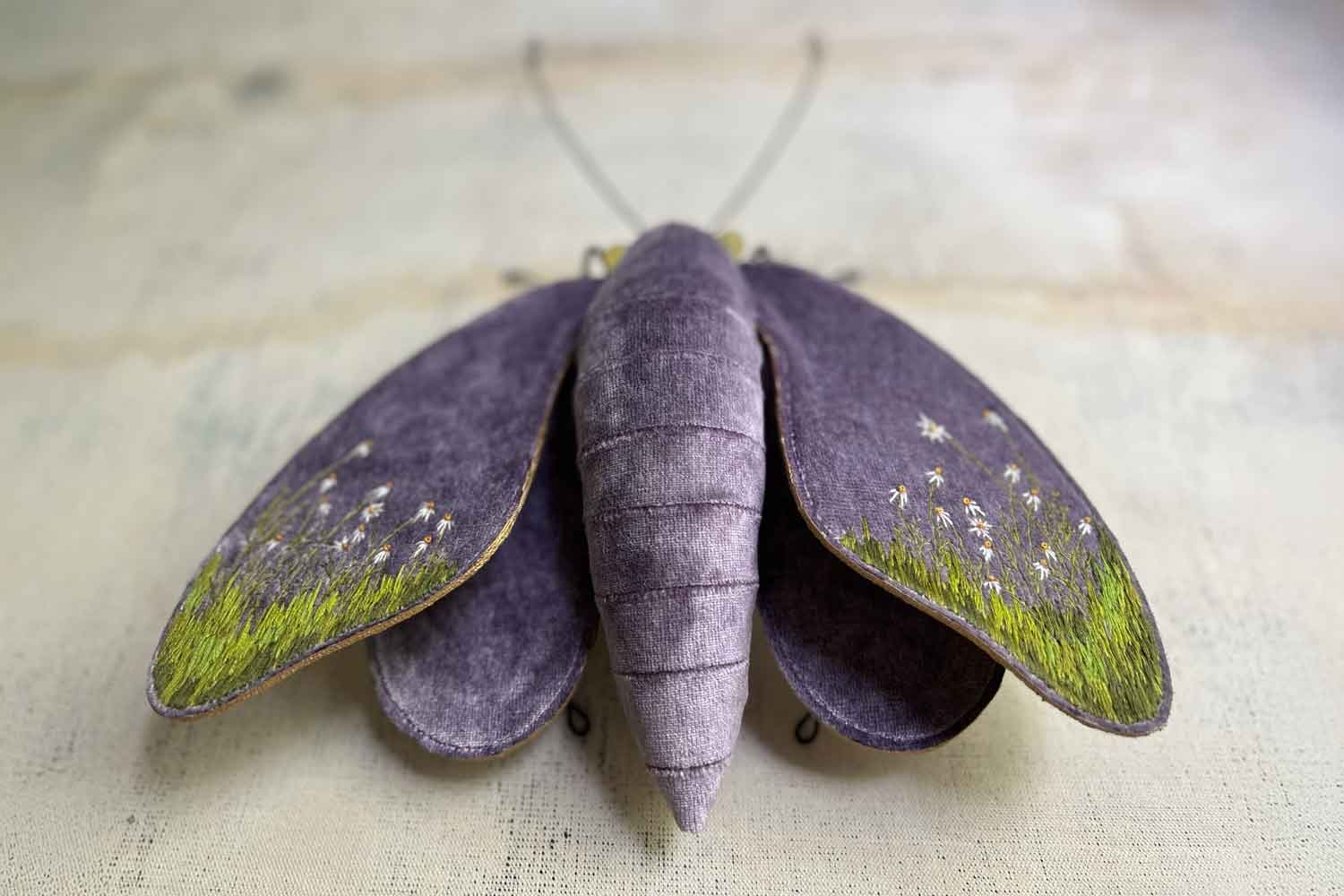
- She creates whimsical creatures and wall hangings from rich, layered fabrics
- Her embroidered pieces have featured in publications including The World of Interiors
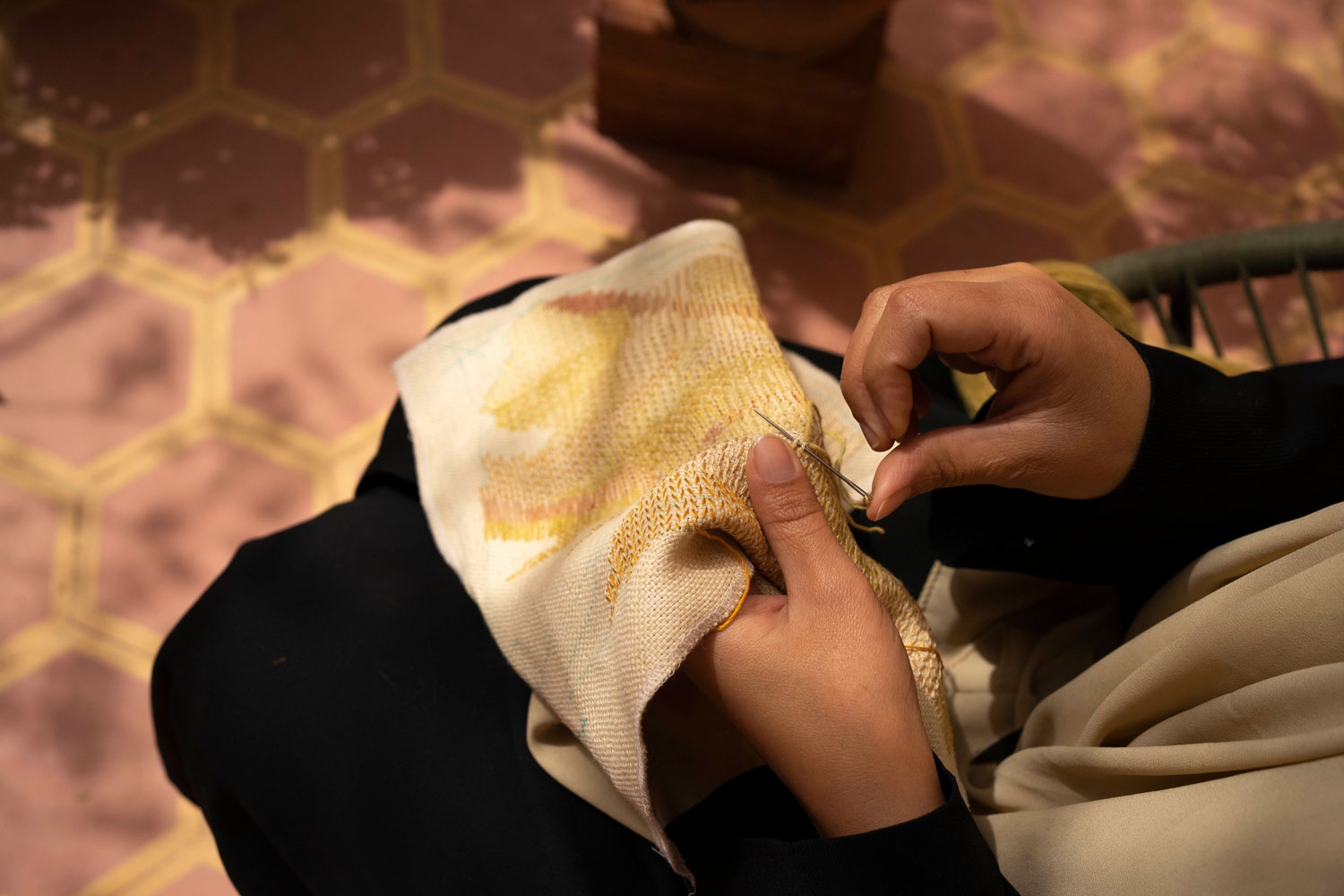
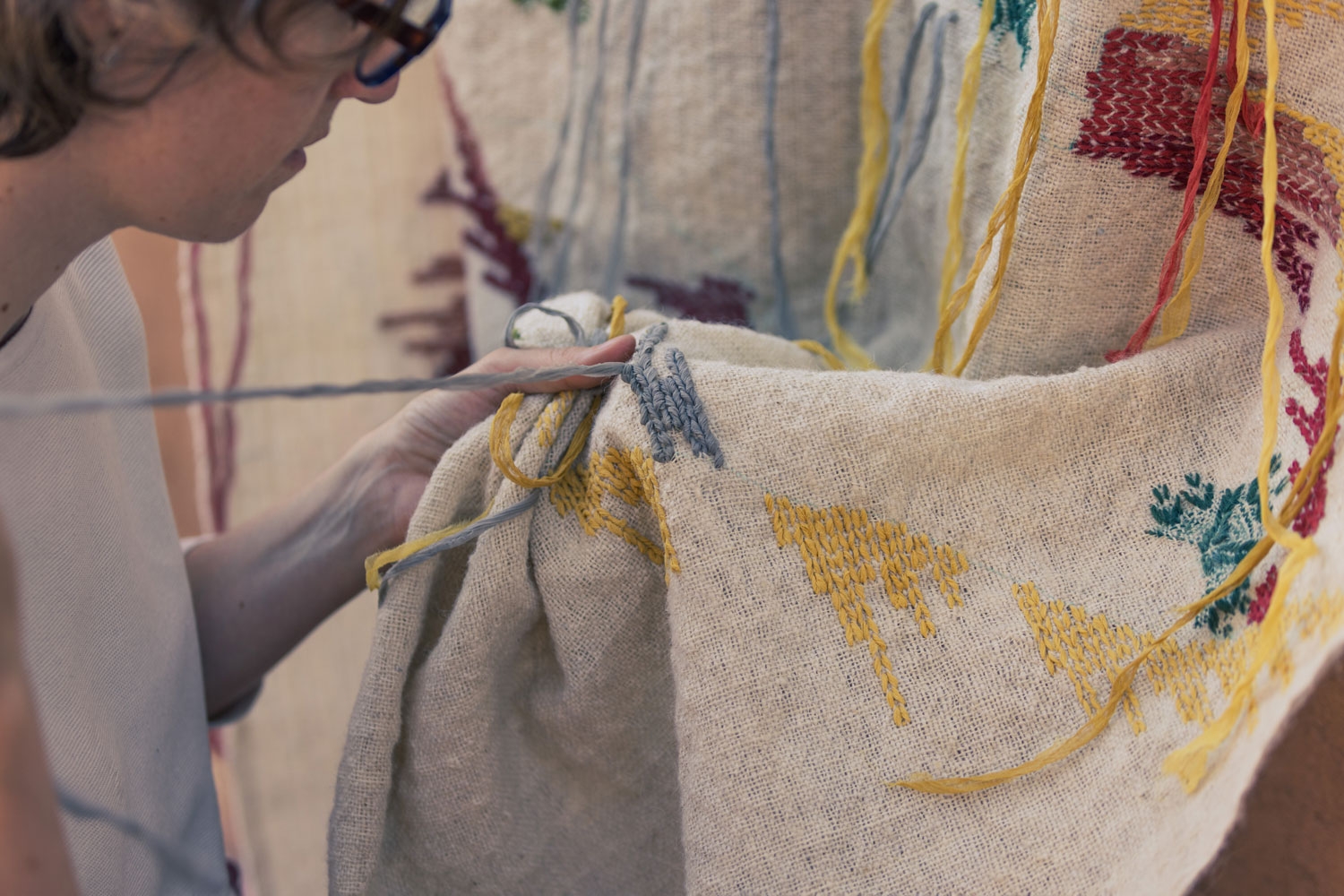
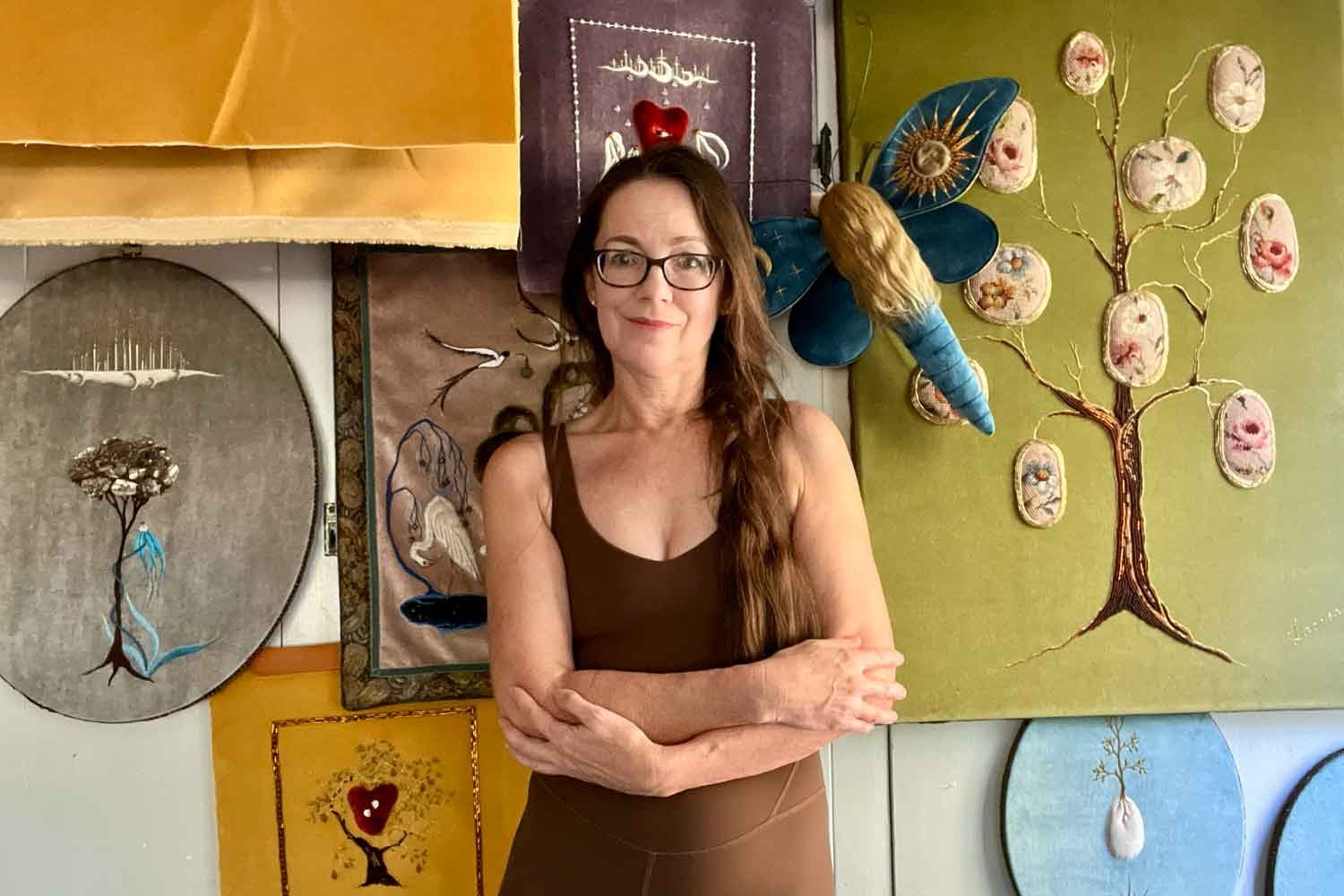
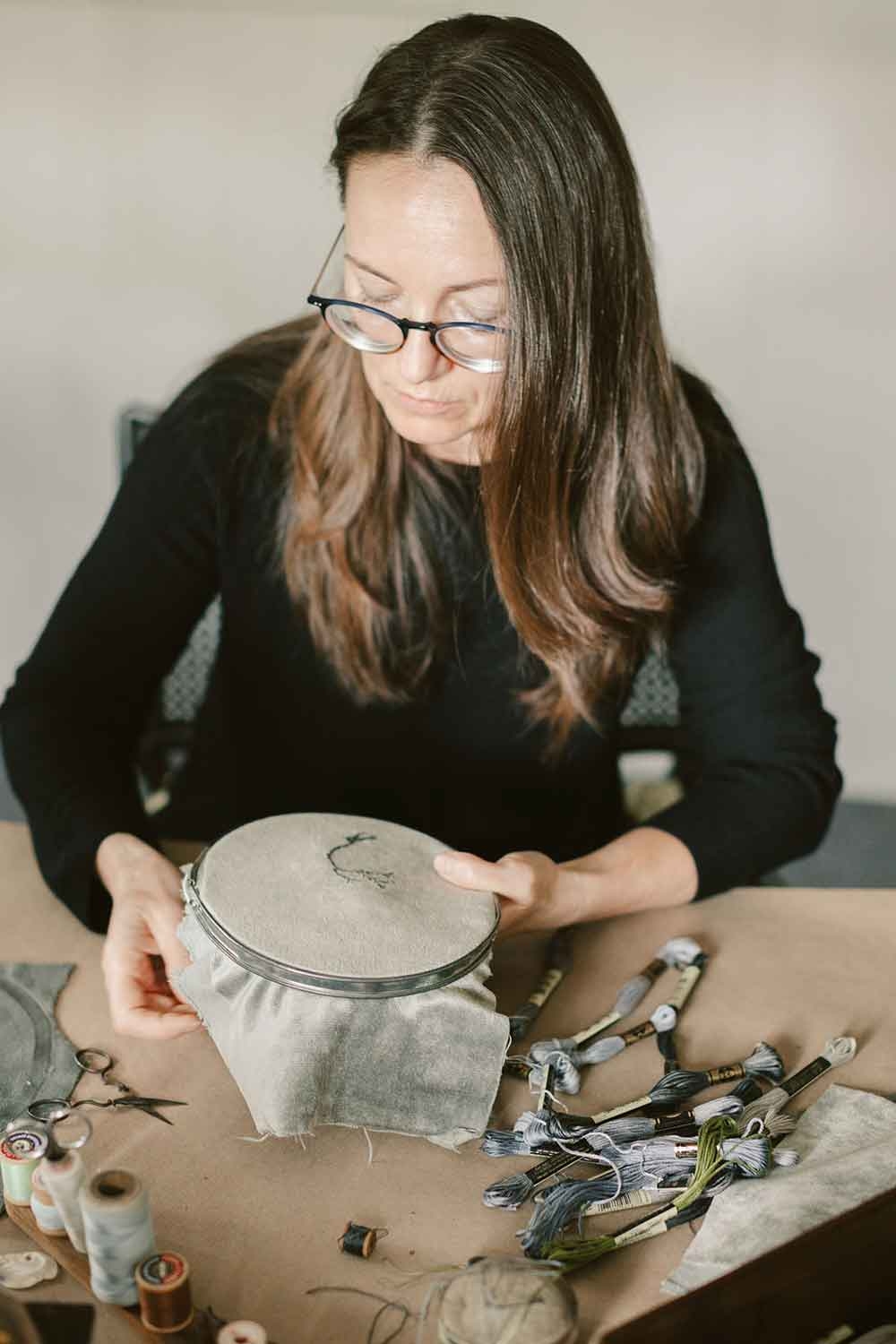
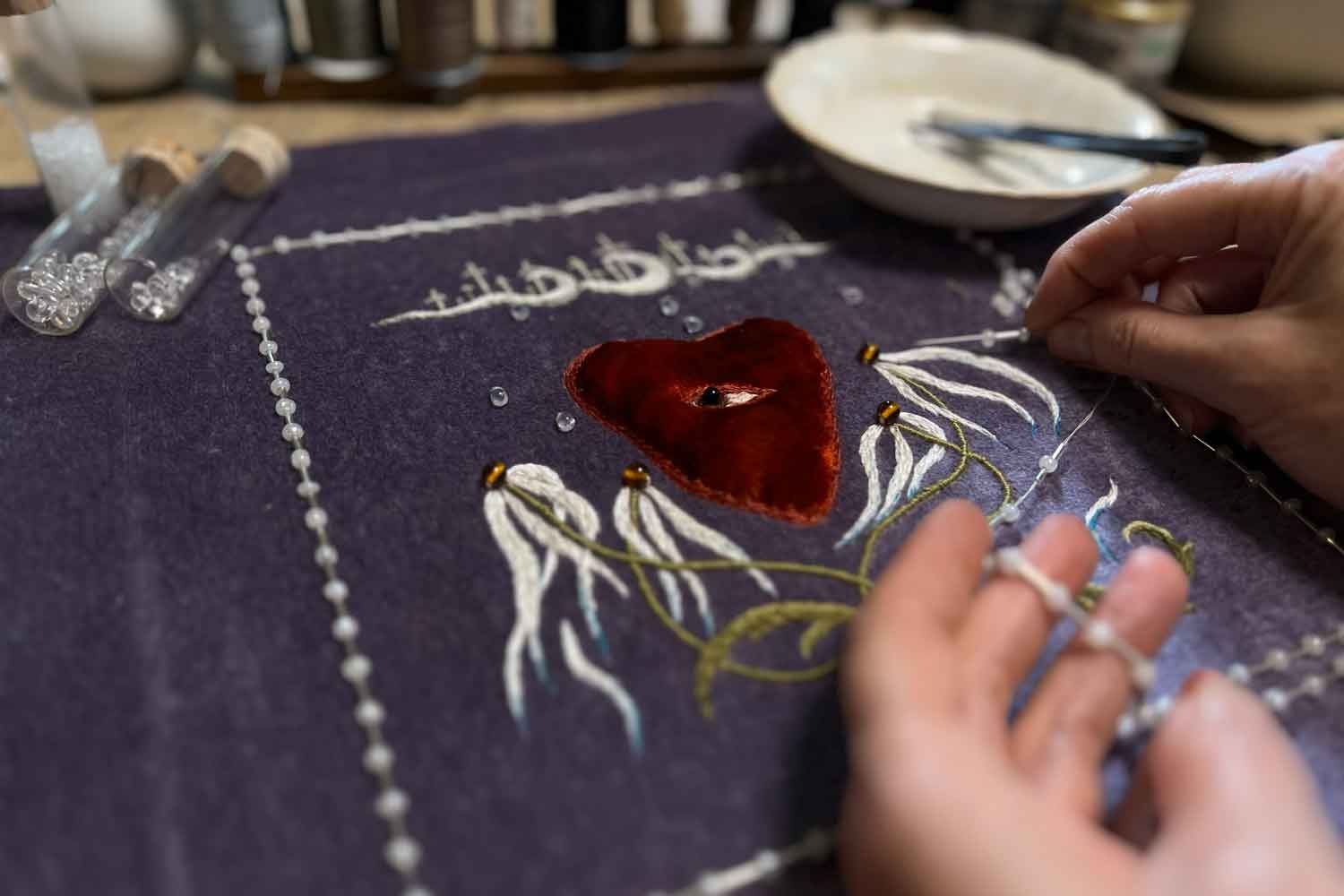
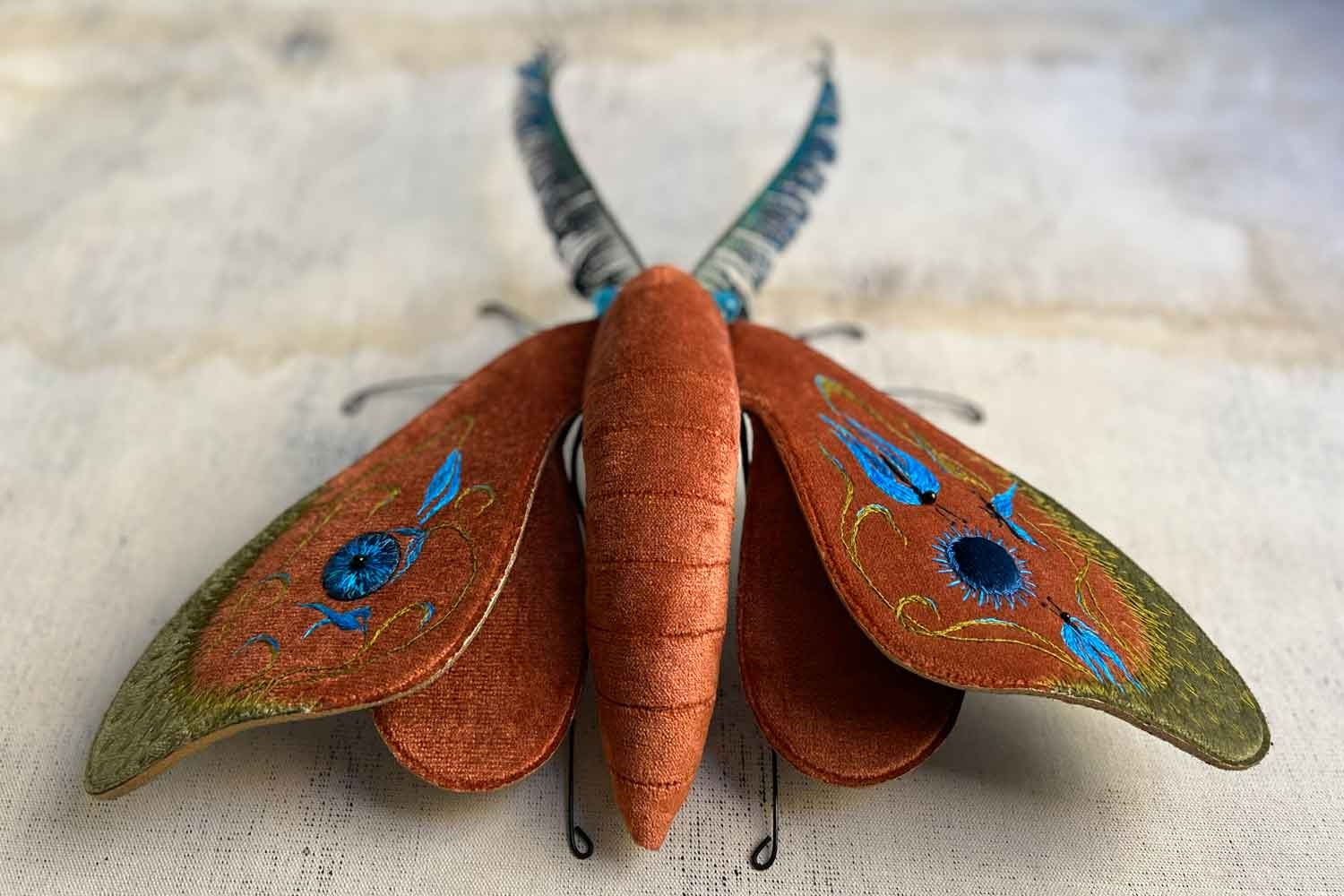
While Larysa Bernhardt has worn many professional hats, textiles have been an important source of cultural identity and self-expression for her. Memories of summer trips to her grandma’s house in the Ukrainian settlement of Pokrovsk, fuel her work. “The walls were covered with old tapestries and liturgical banners, and the beds were stacked with dozens of embroidered pillows and heavy blankets. It was magical, with so much texture and layering,” she says. In 2017, Larysa discovered a moth in a pile of vintage fabrics and had a breakthrough. “Moths were on my mind all the time and I decided to make a moth sculpture out of fabric as a way to face my fears,” she says. Larysa uses needlepoint, appliqué, beading and vintage textiles to craft her intricate creations.
Discover her work
INTERVIEW
The objects I was exposed to as a young kid were made from modest materials like scraps of clothing, faux gold paint, even candy wrappers. It made me think about the beauty of art and craft made by and for ordinary people. 'Take what you have, make what you need' are words I live by.
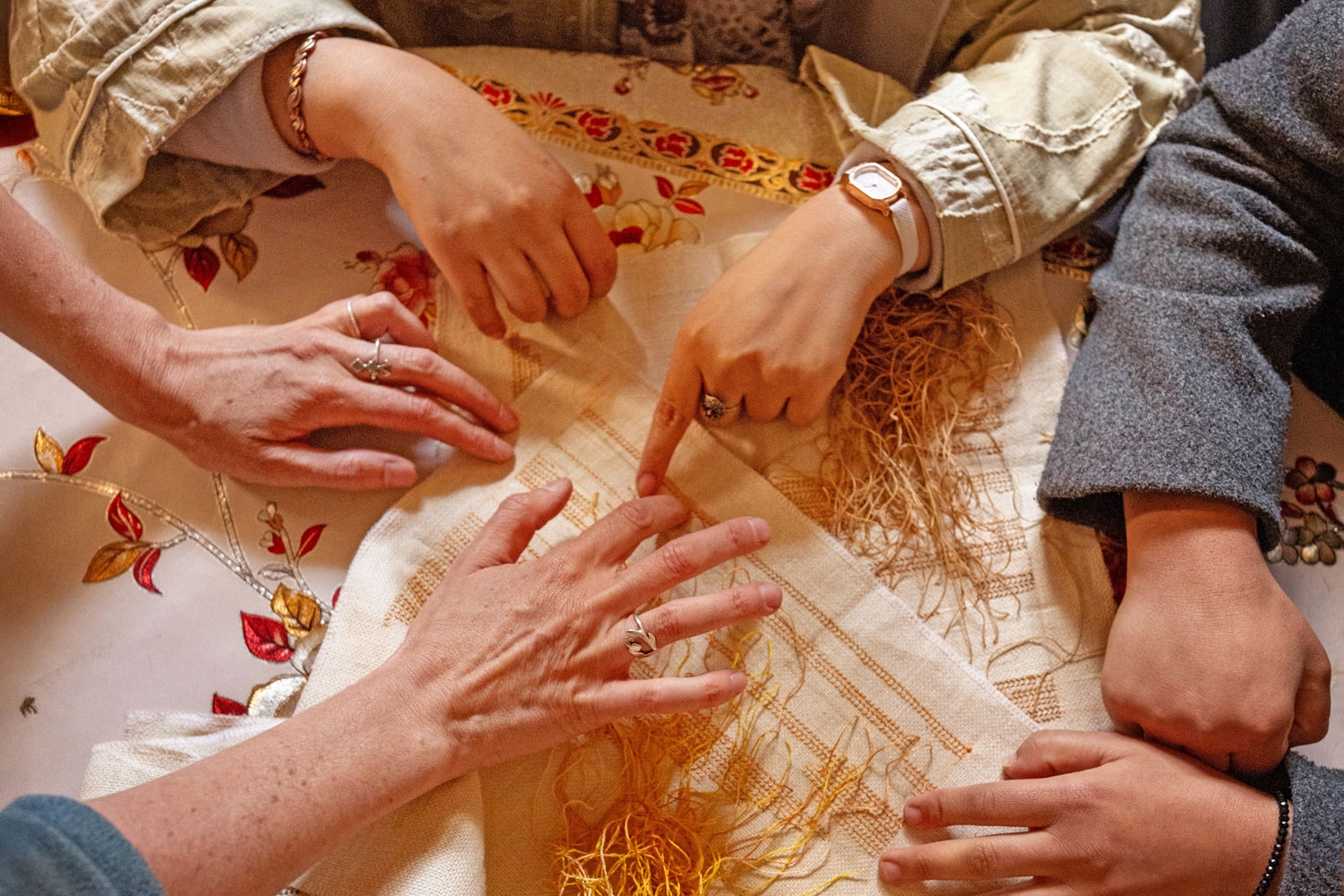
I search for a feeling. I look at a small cross stitch and my mind starts wandering. I think about the time it took to produce that stitch and the conditions under which it was created. Was it made under the glow of candlelight? What stories were exchanged by the makers during long hours of stitching? I am interested in simple, human stories.
My search has taken me to second-hand stores, antique shops and estate sales across the USA. I have come across scraps of hand dyed cotton velvet and tapestries that probably hung in a European castle. I also source online from faraway places. When the packages arrive, the textiles sometimes smell of coffee and exotic spices.
I thought that I would eventually figure out how to do things faster, but the opposite is true. I have figured out how to do them slower. I am always adding steps. When I do something like embroidery on wings, it could take 10 days to two weeks, even three weeks. And I change things constantly!
Larysa Bernhardt
Textile sculptor
De Soto, MO, USA
ADDRESS
Address upon request, De Soto, MO, USA
AVAILABILITY
By appointment only
LANGUAGES
English, Russian, Ukrainian
Homo Faber Finds is a new service aiming to inspire admirers of craft to connect and collaborate with exceptional artisans.
We invite you to submit an enquiry here.