Lara De Sio
Ceramicist
Venice, Italy
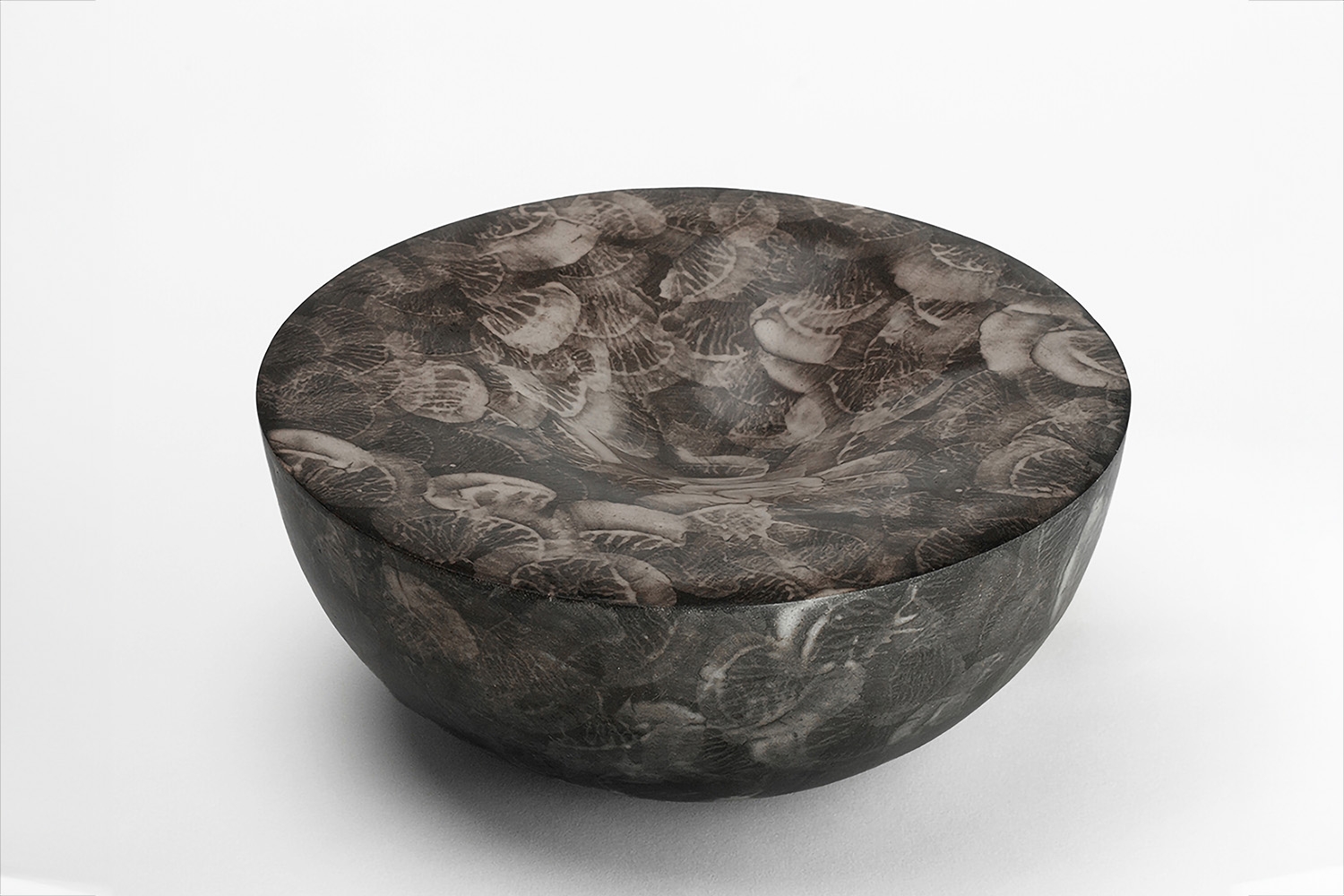
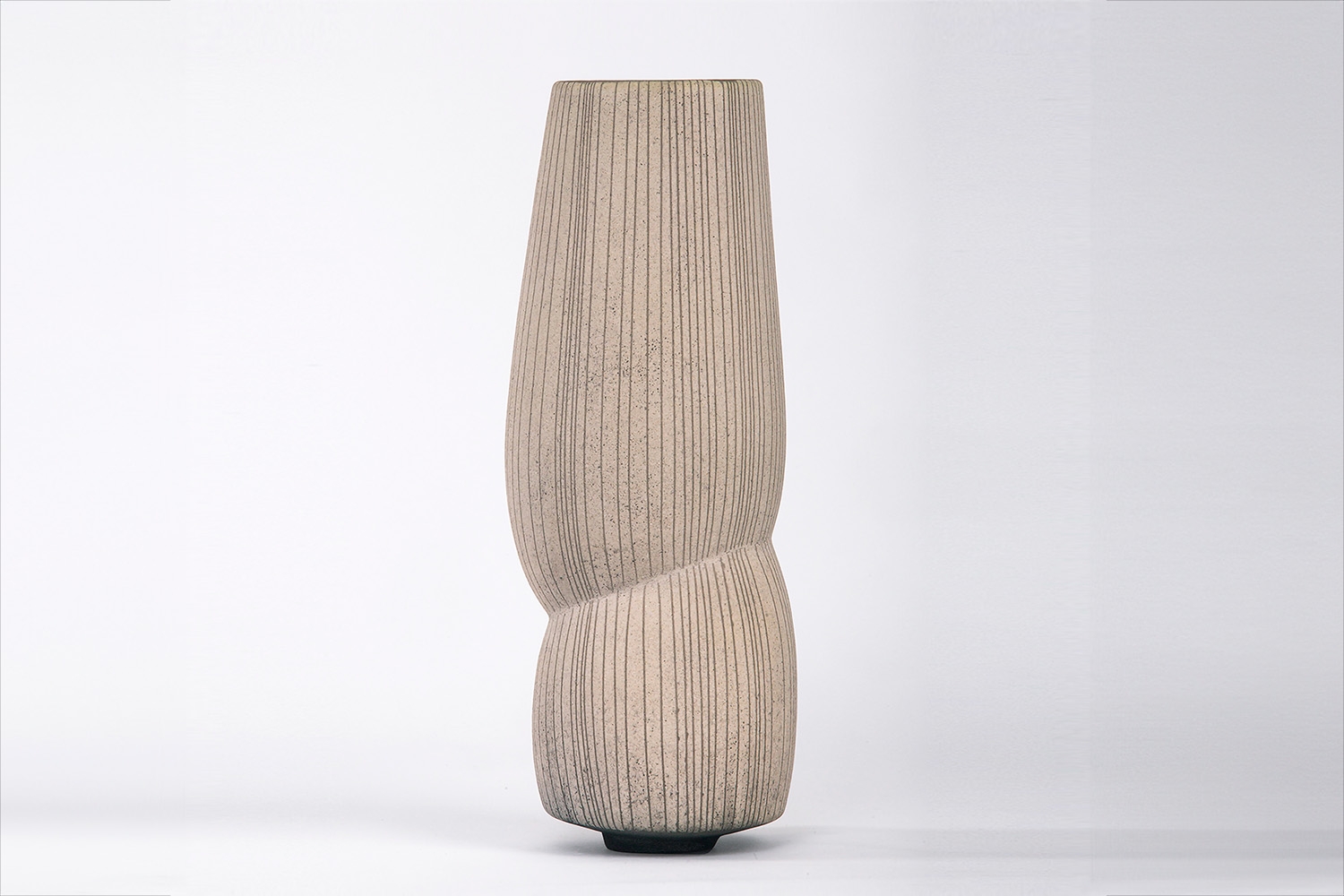
The imprints of smoke
- Lara studies the effect of time on natural surfaces
- Her works are exhibited in museums, galleries and international exhibitions
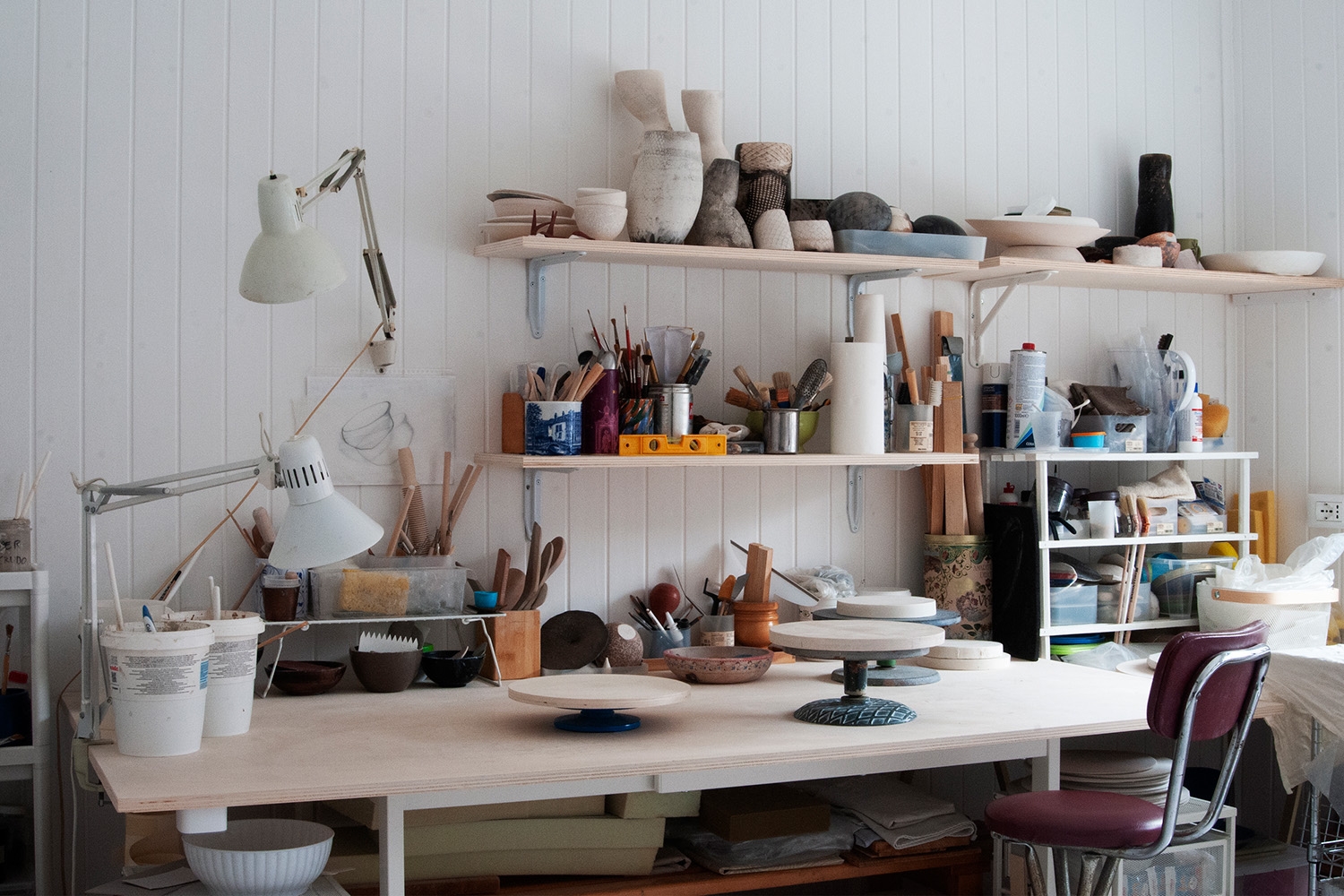
- The workshop is her microcosm
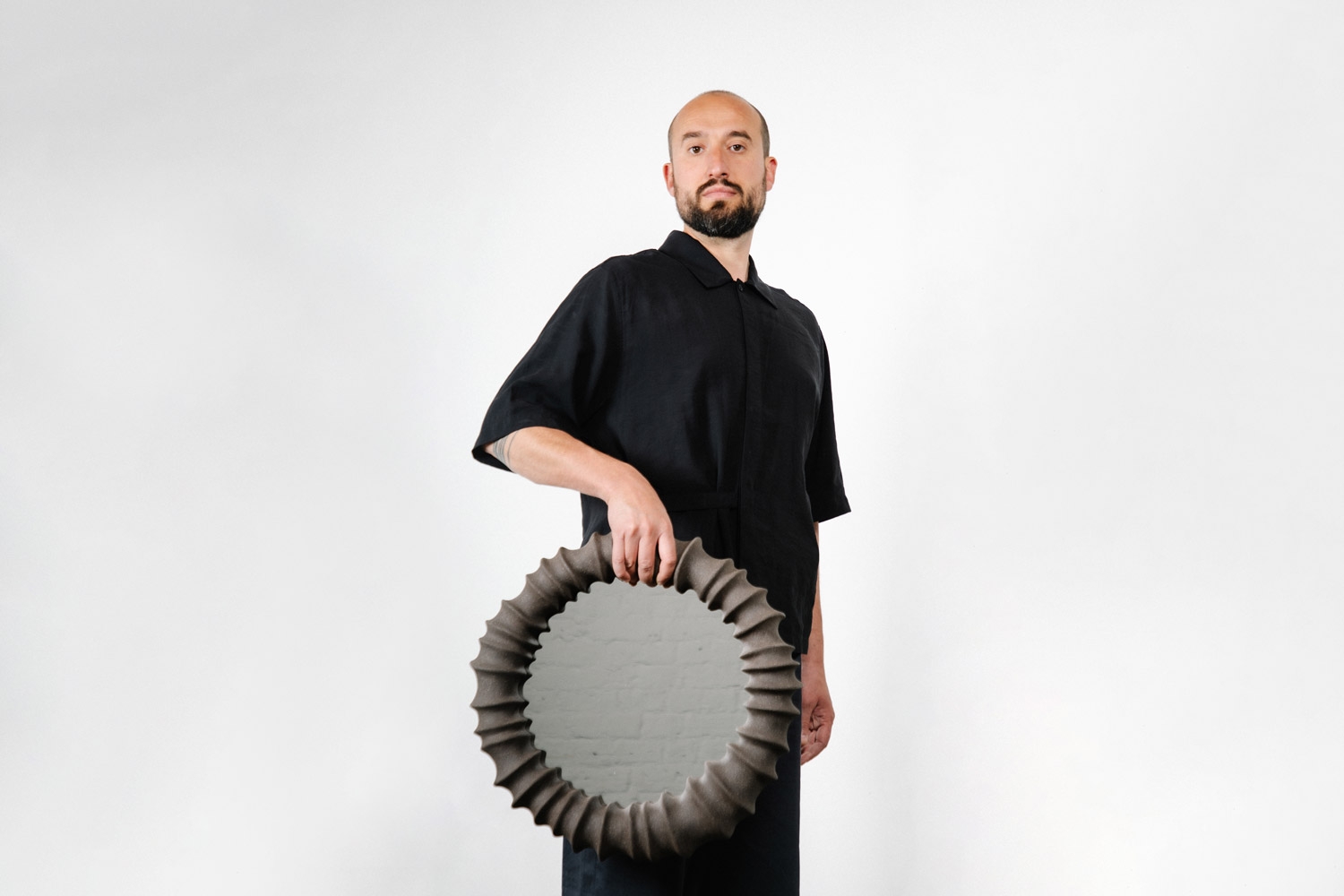
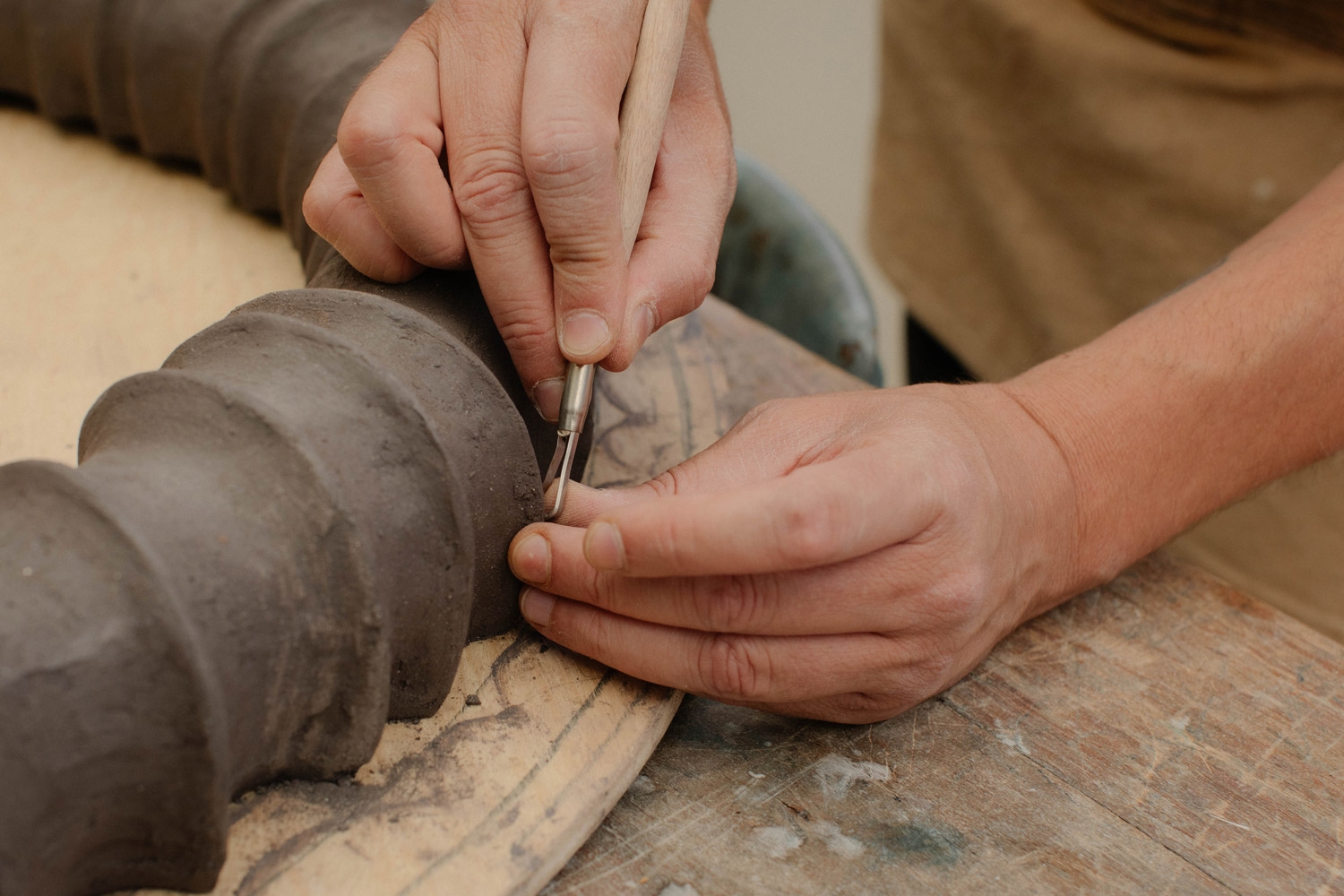
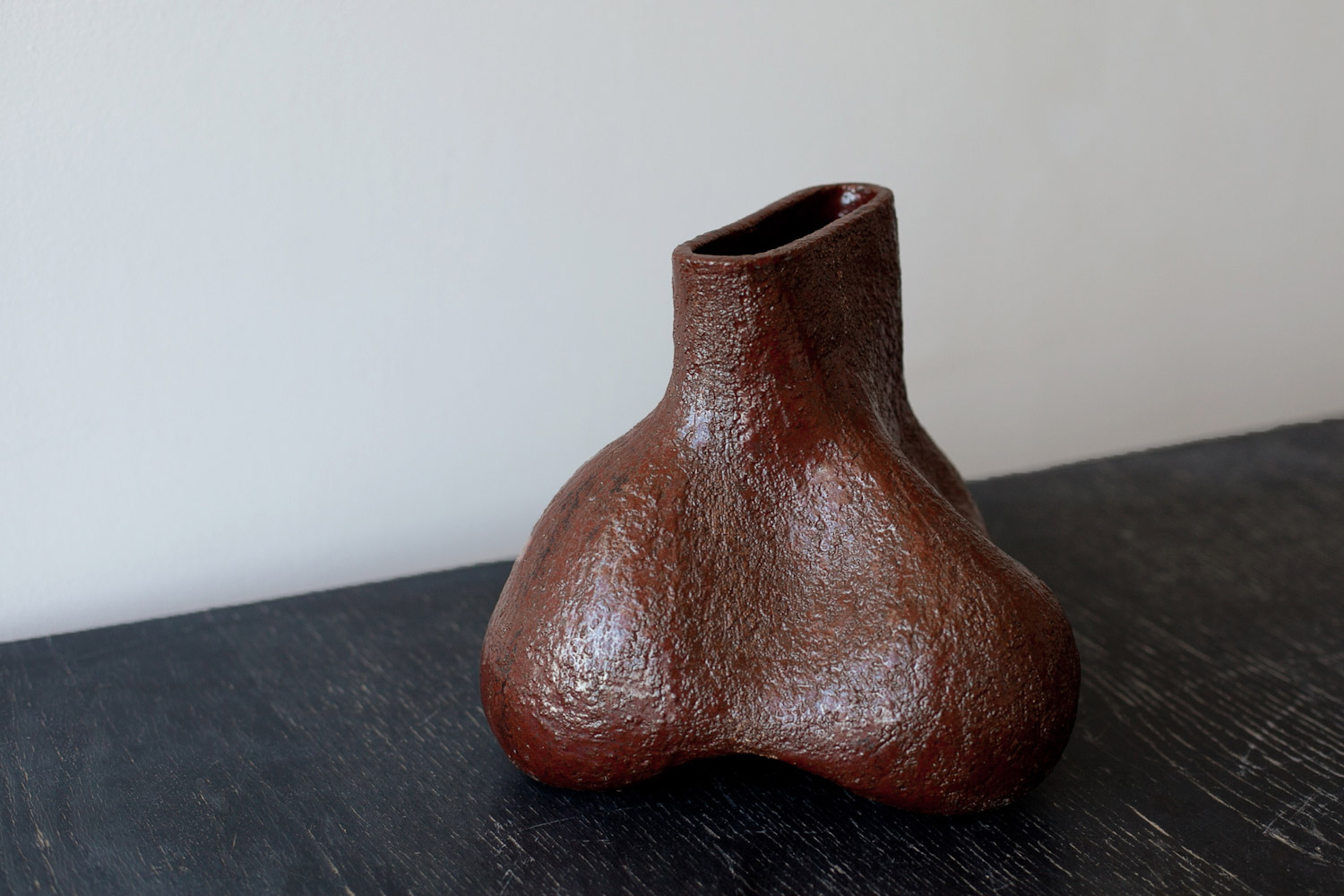
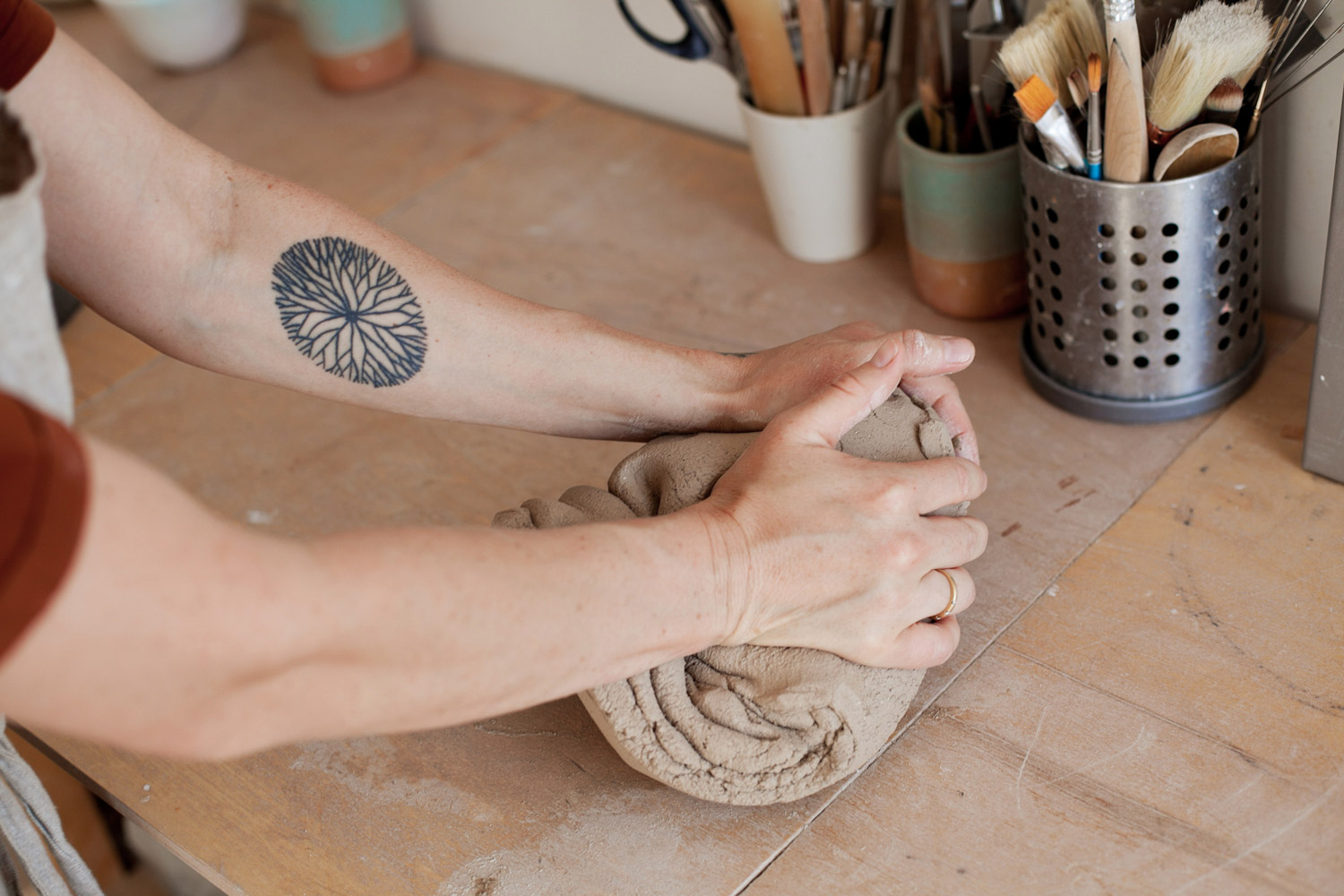
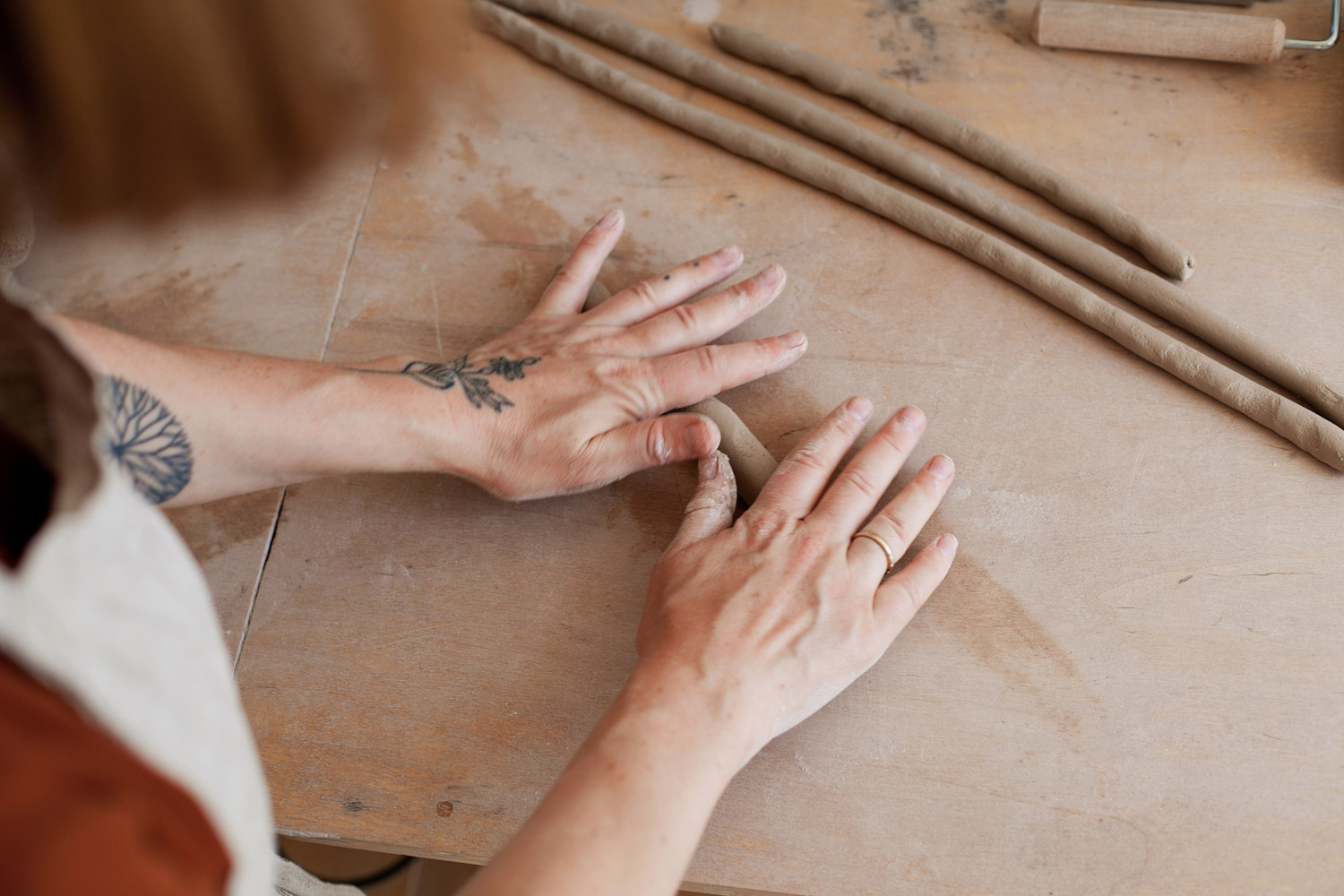
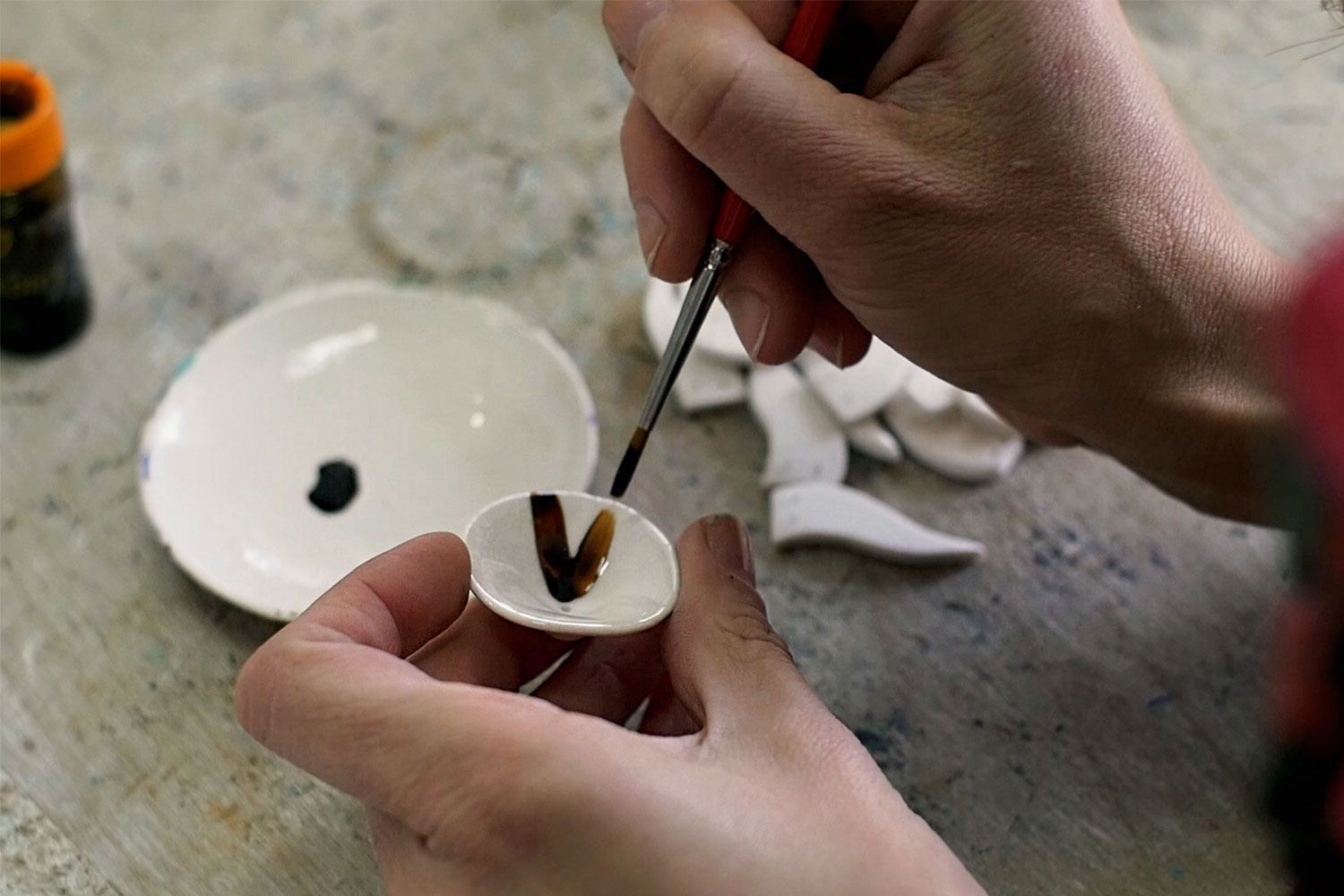
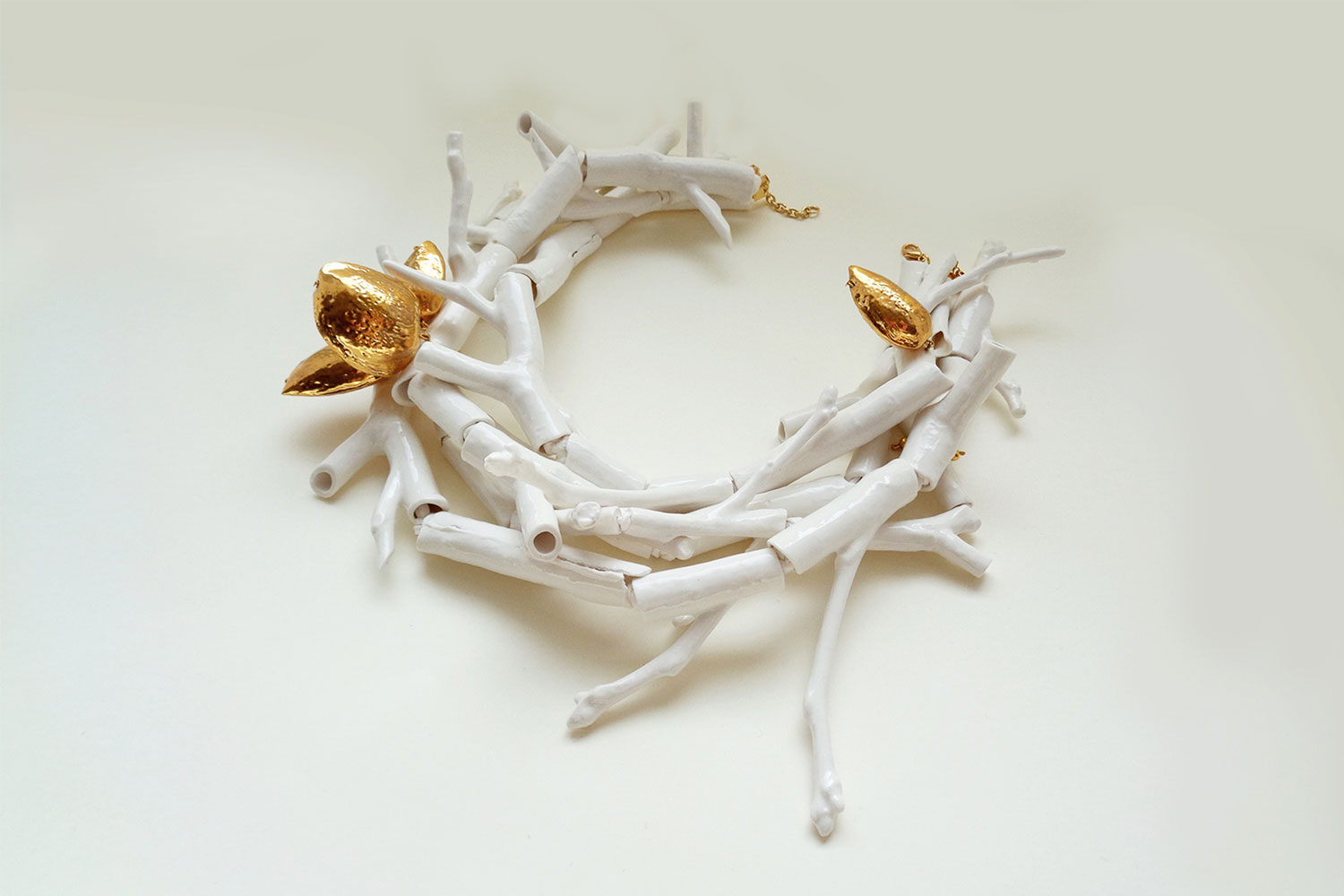
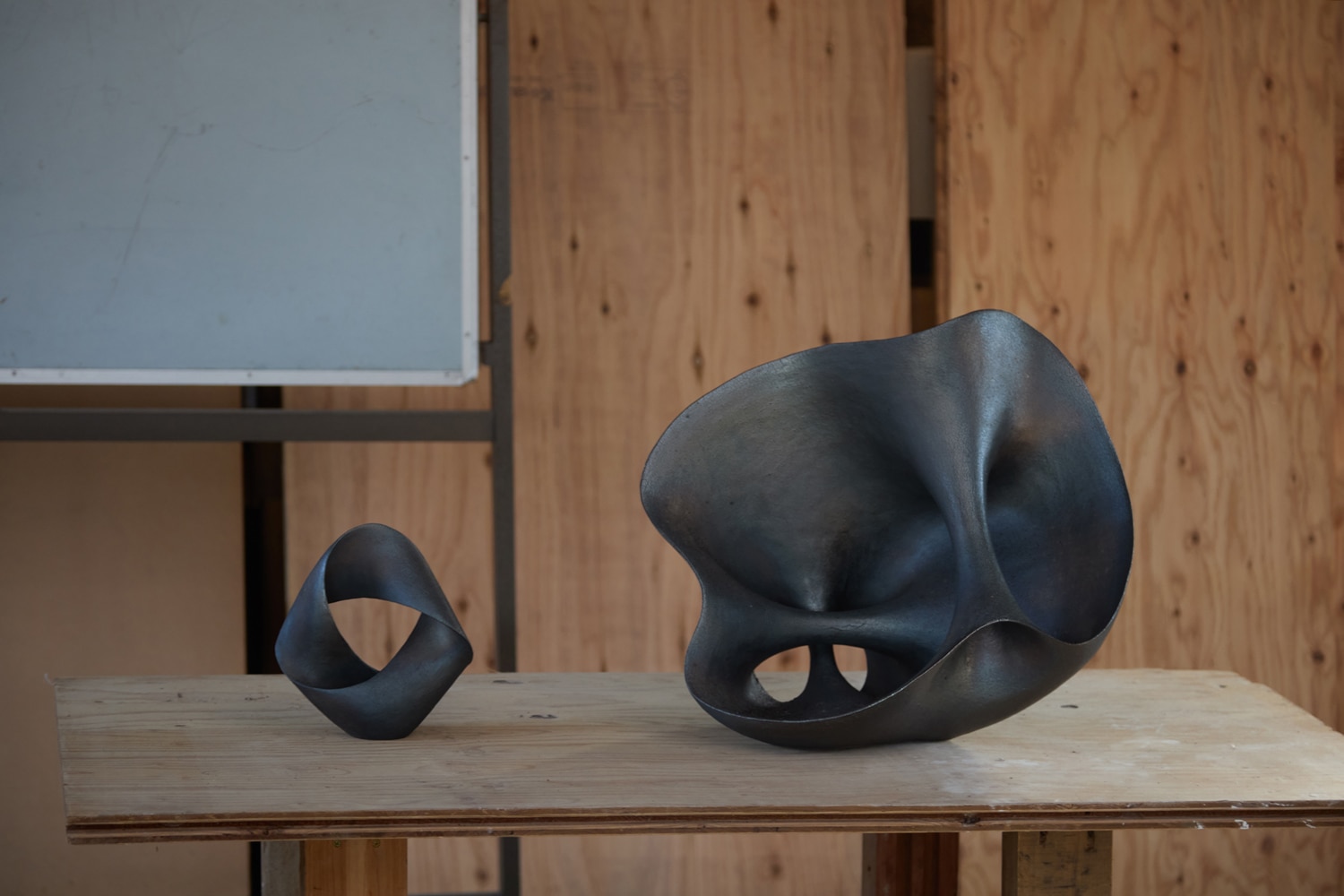
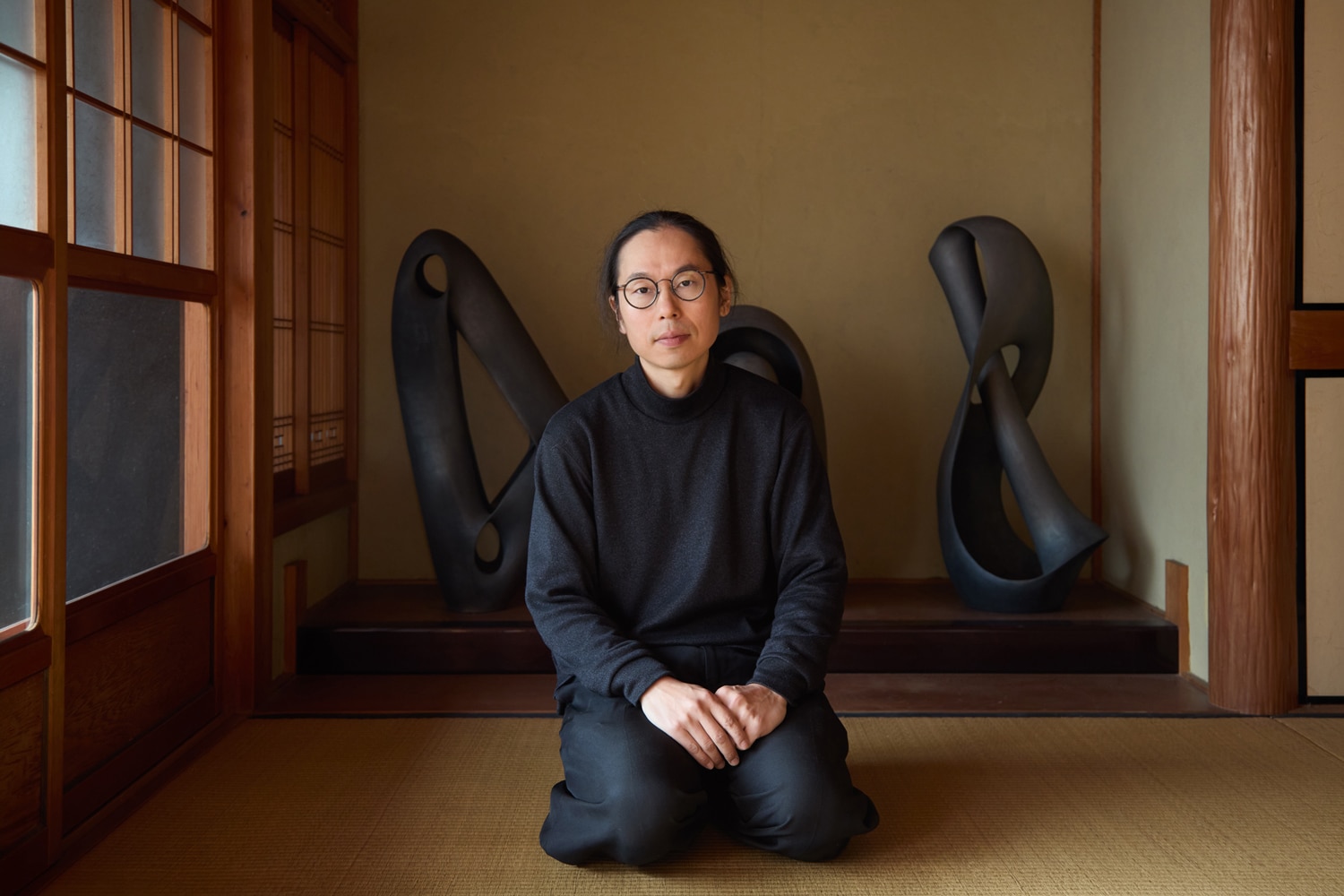
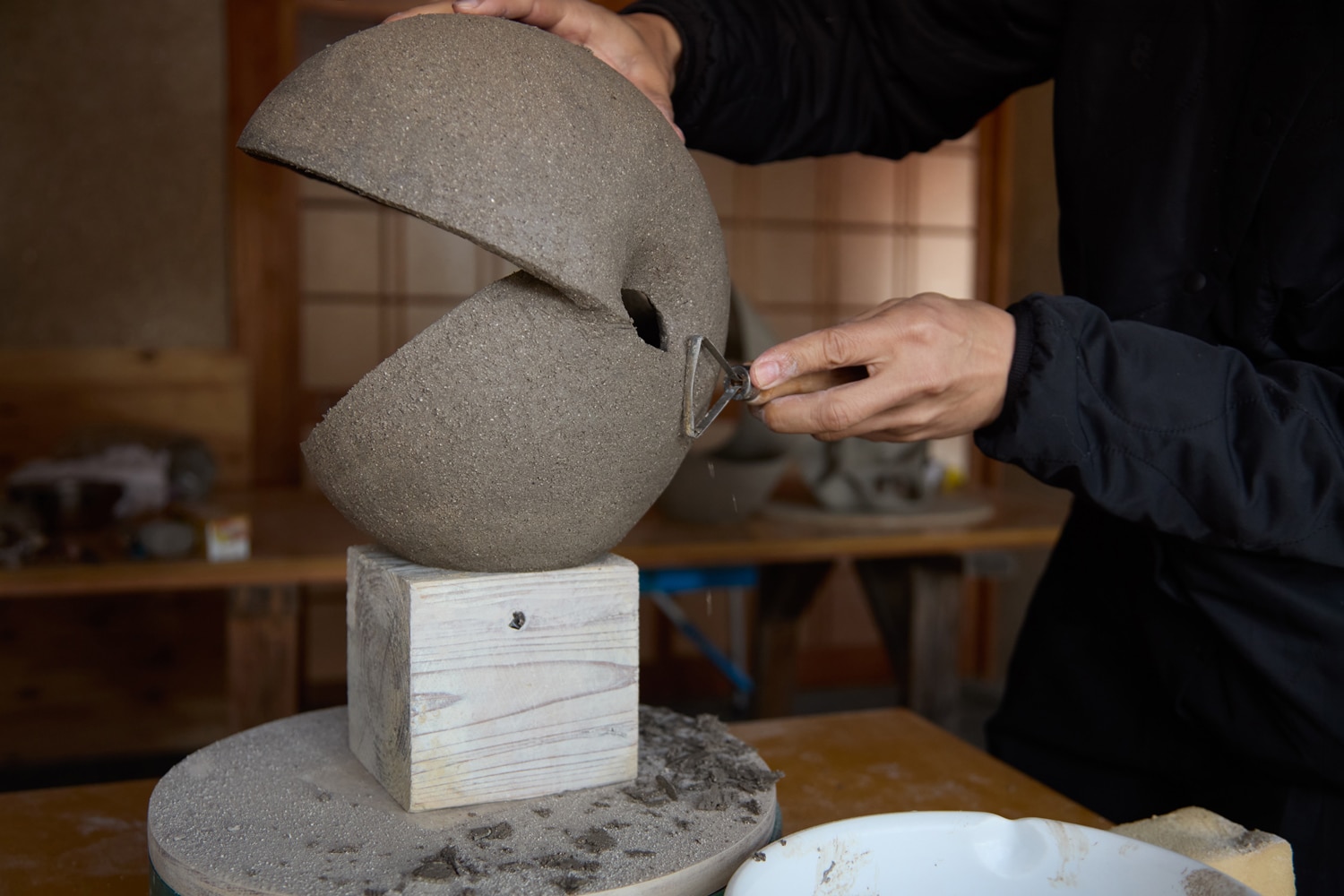
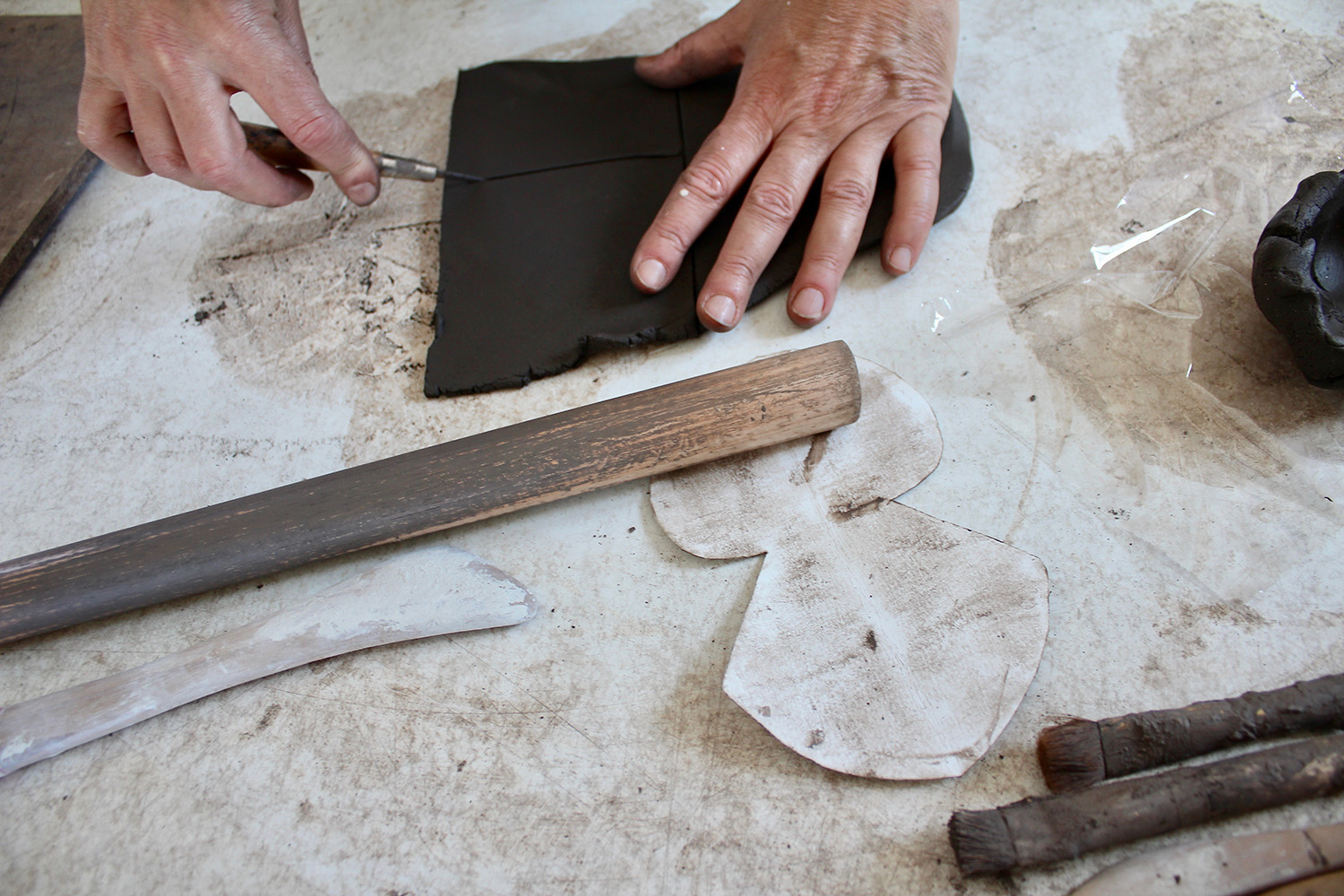
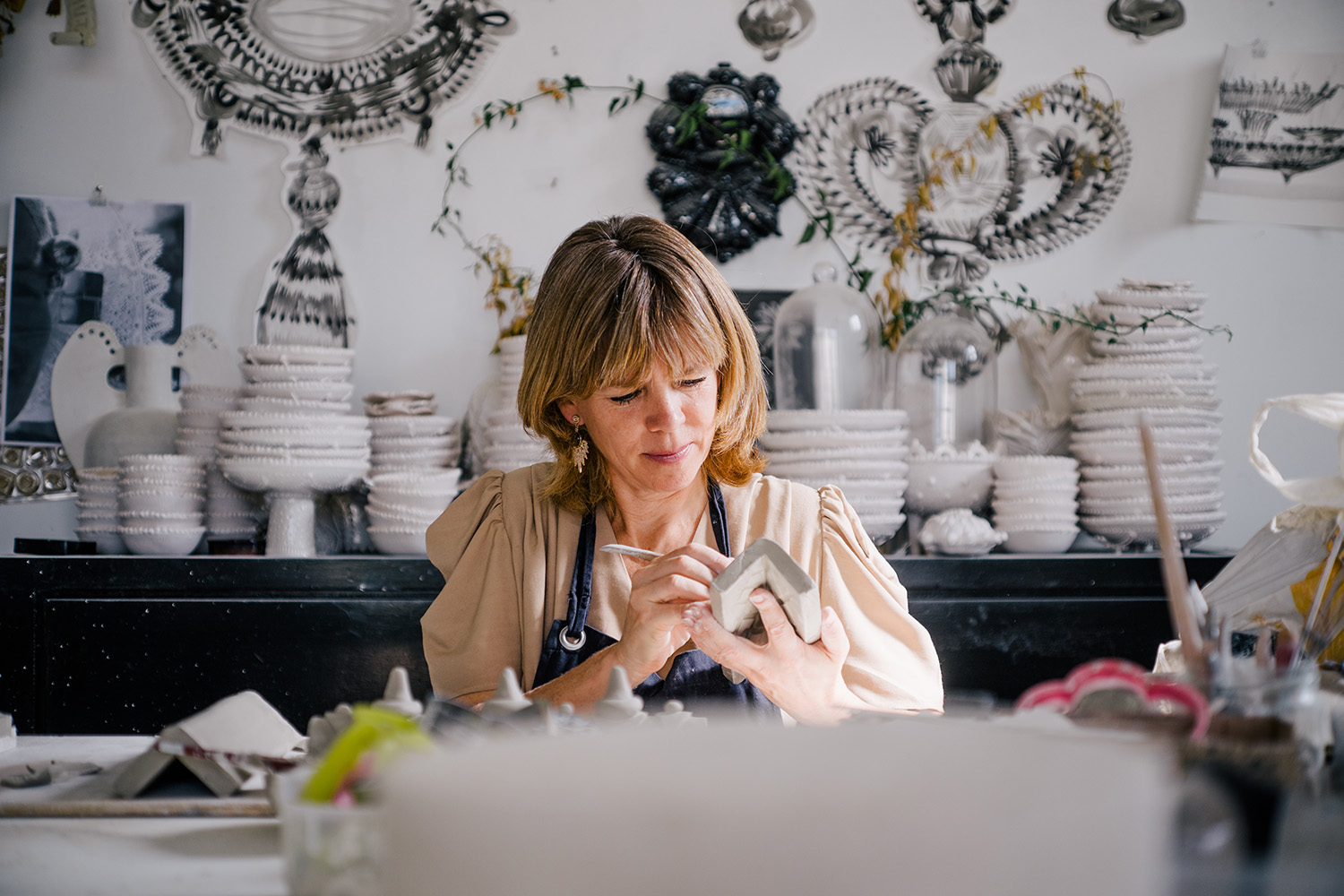
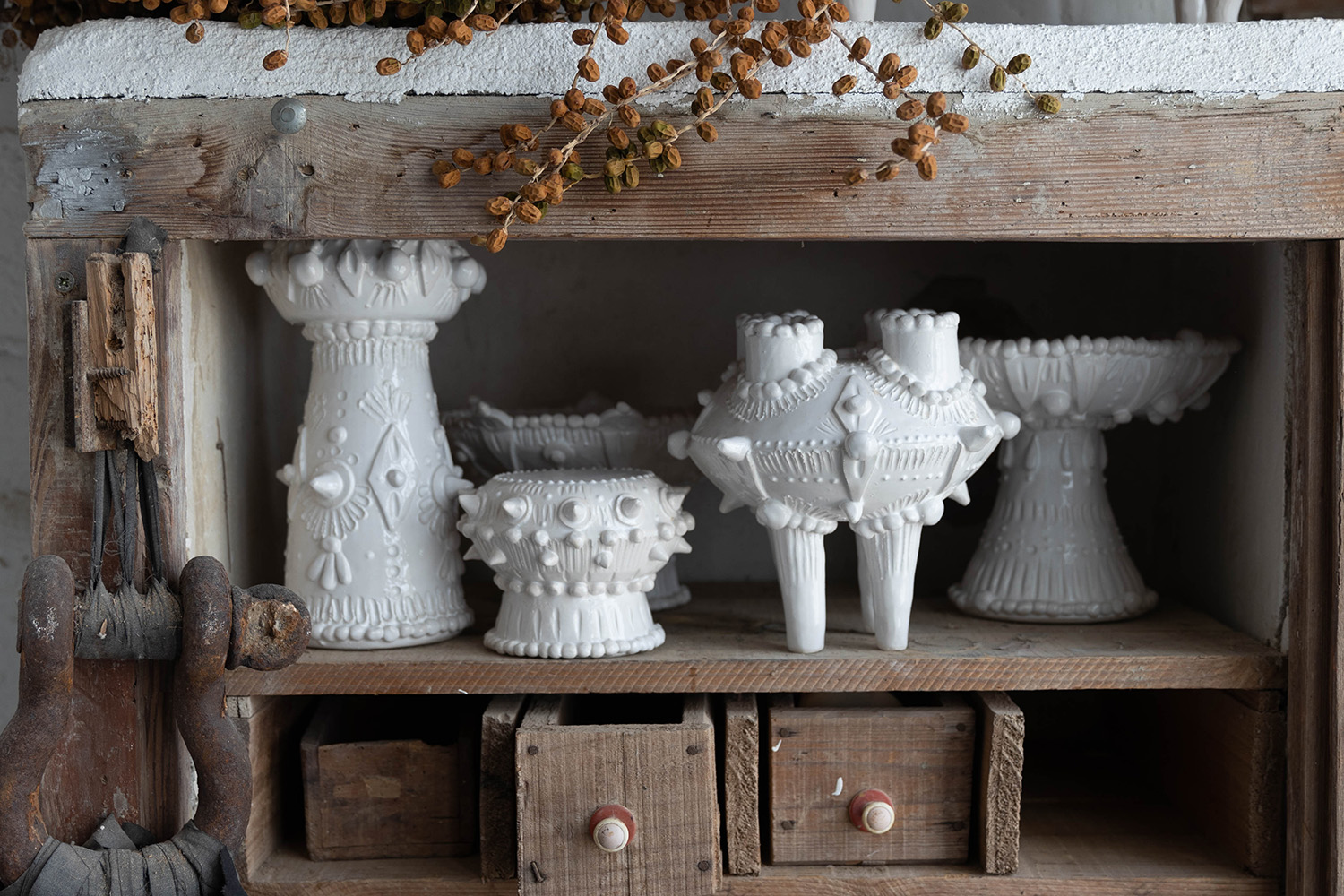
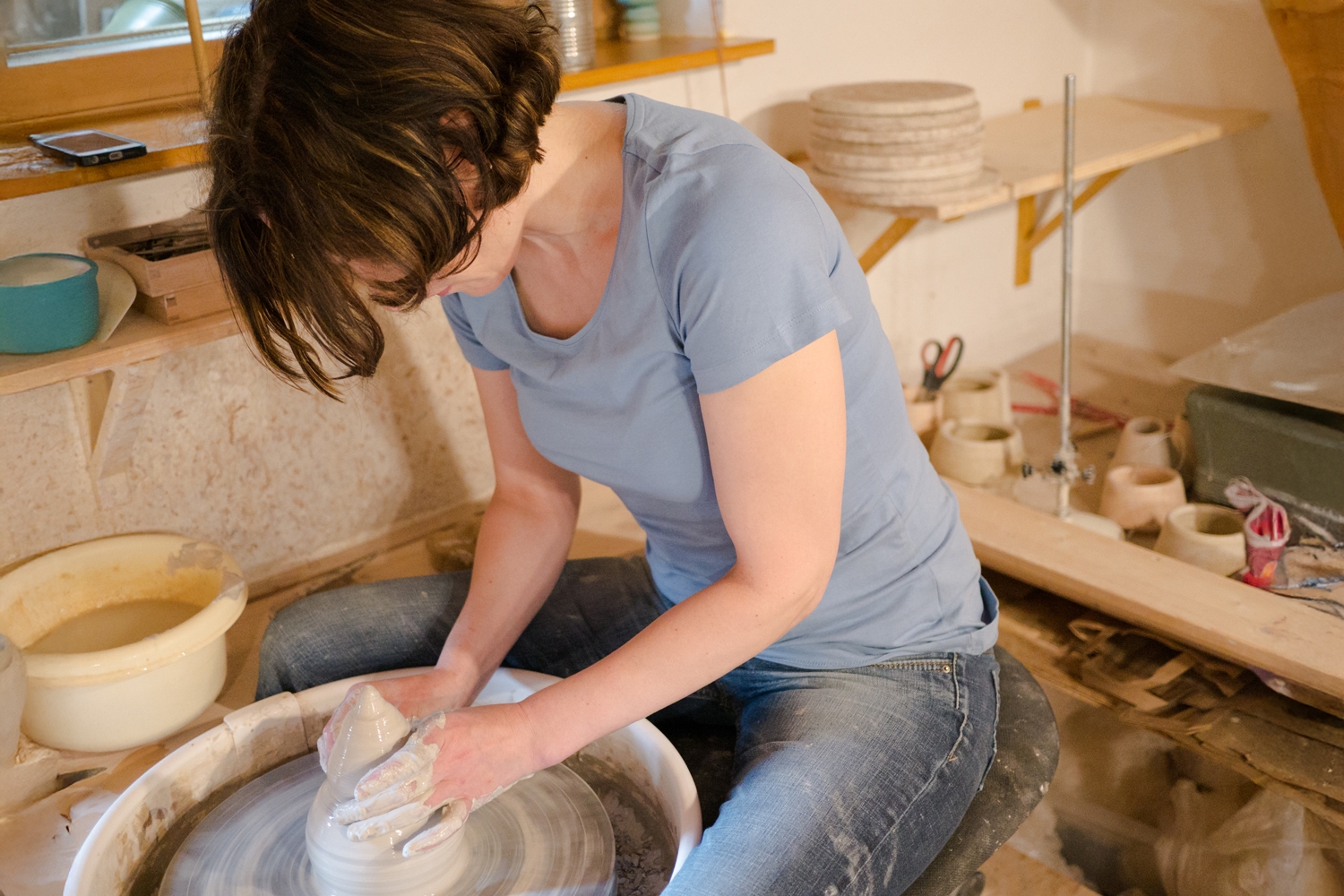
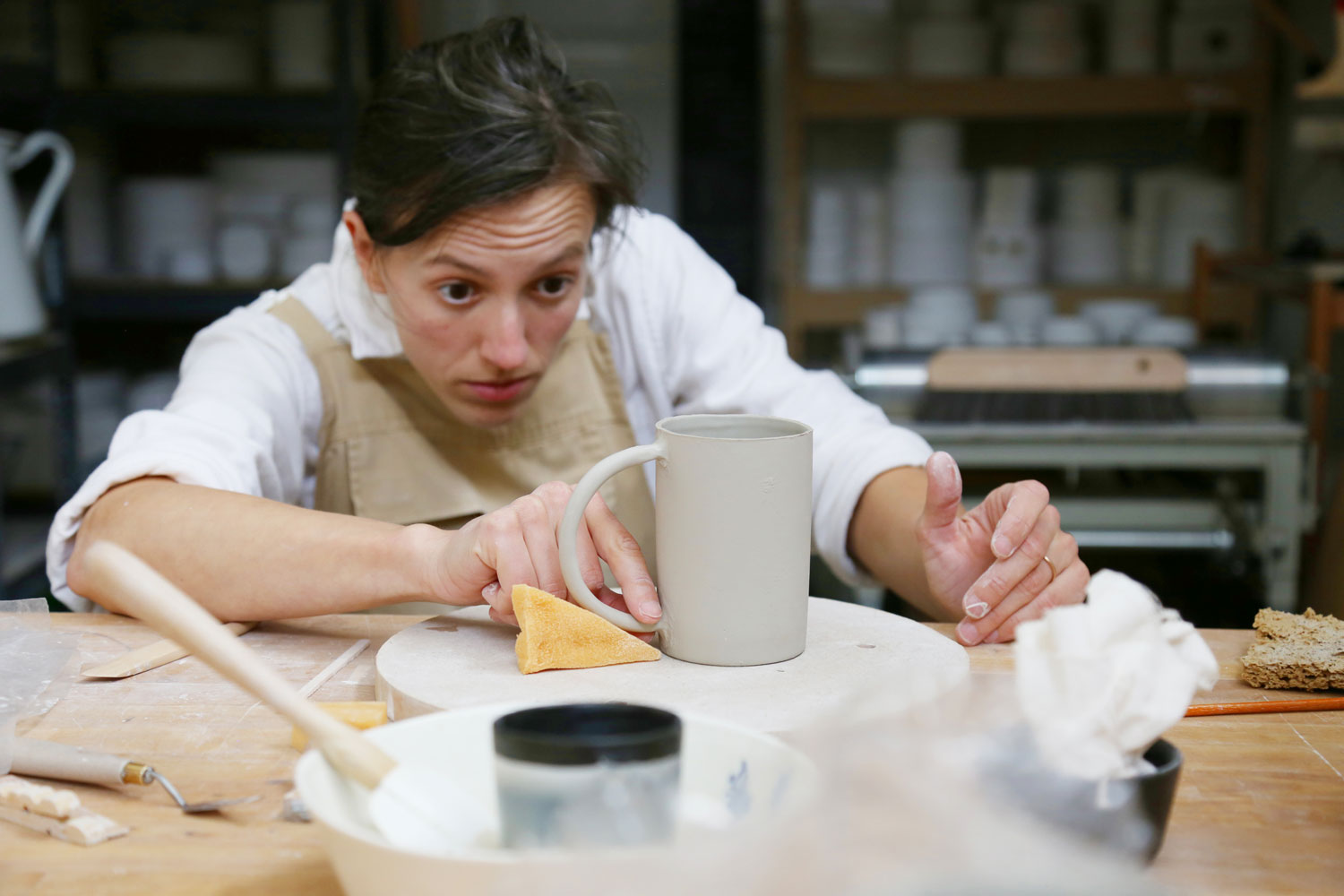
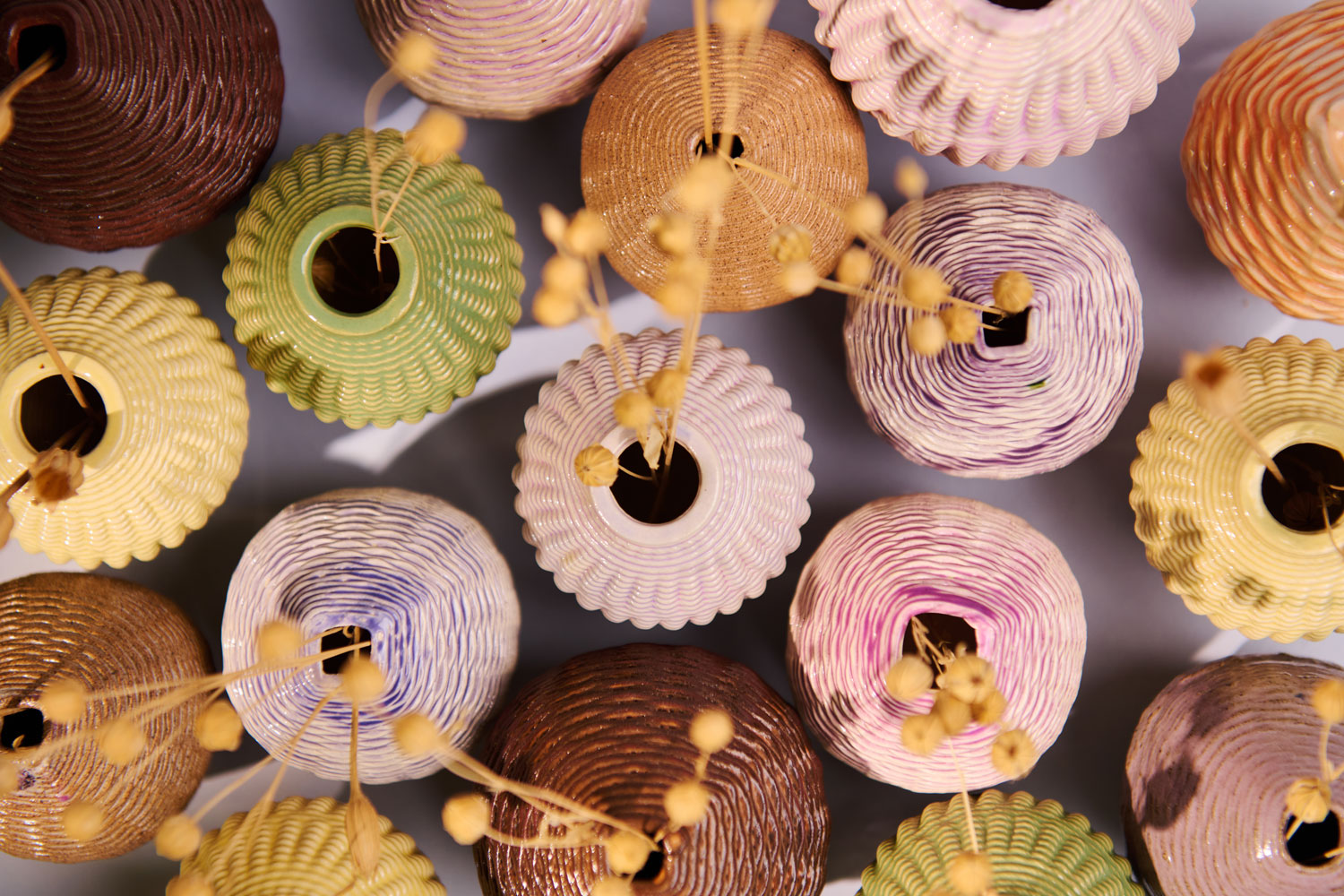
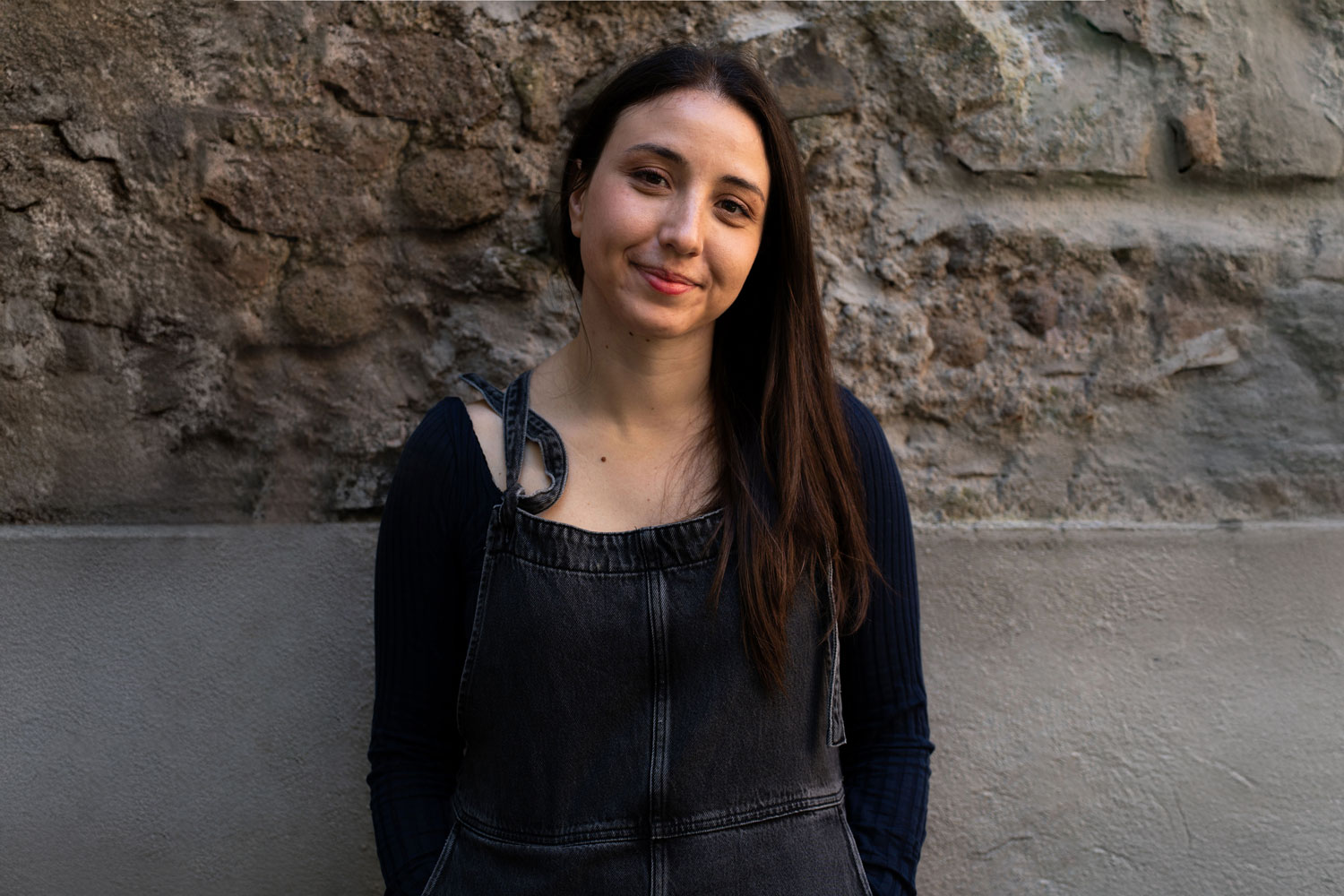
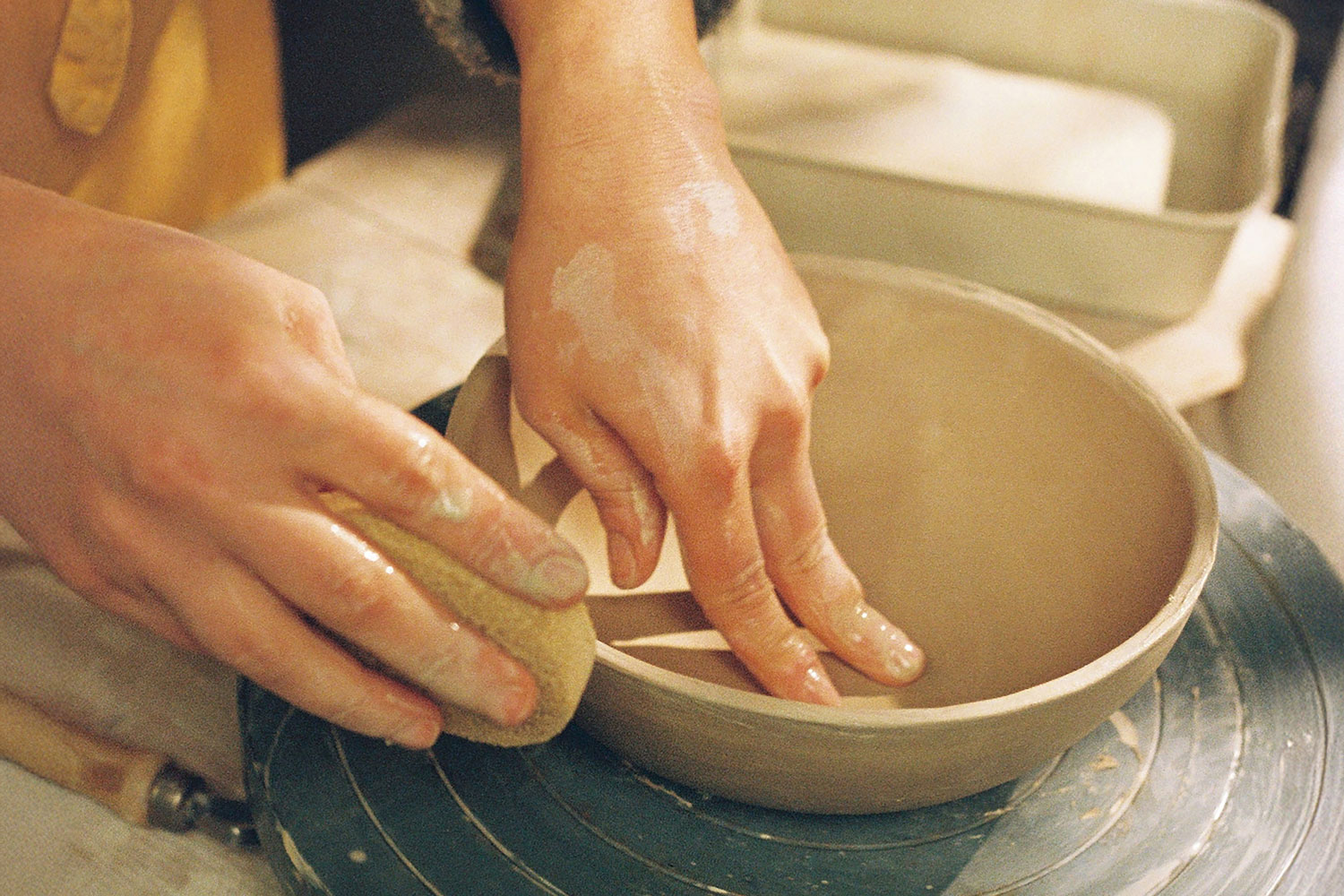
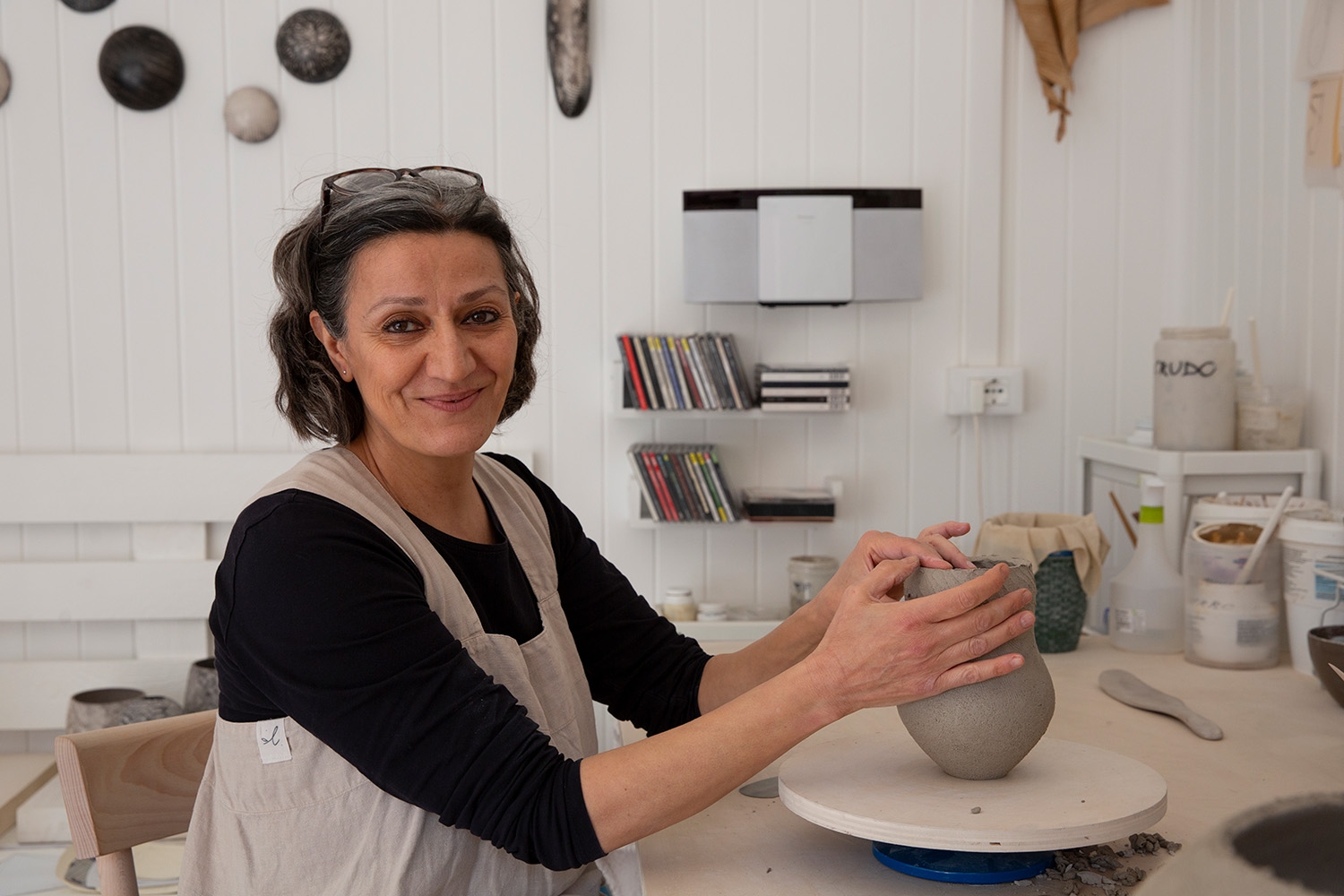
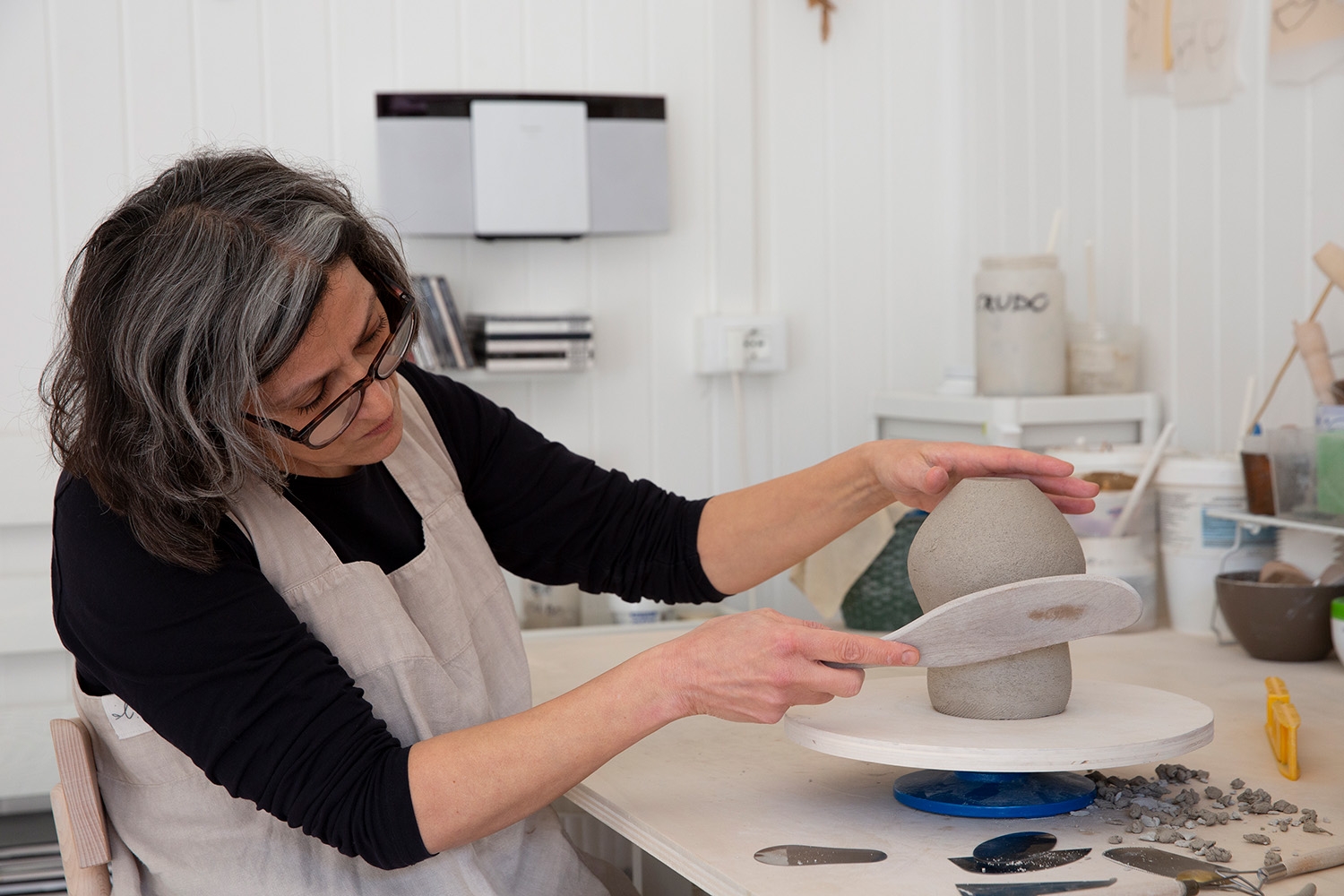
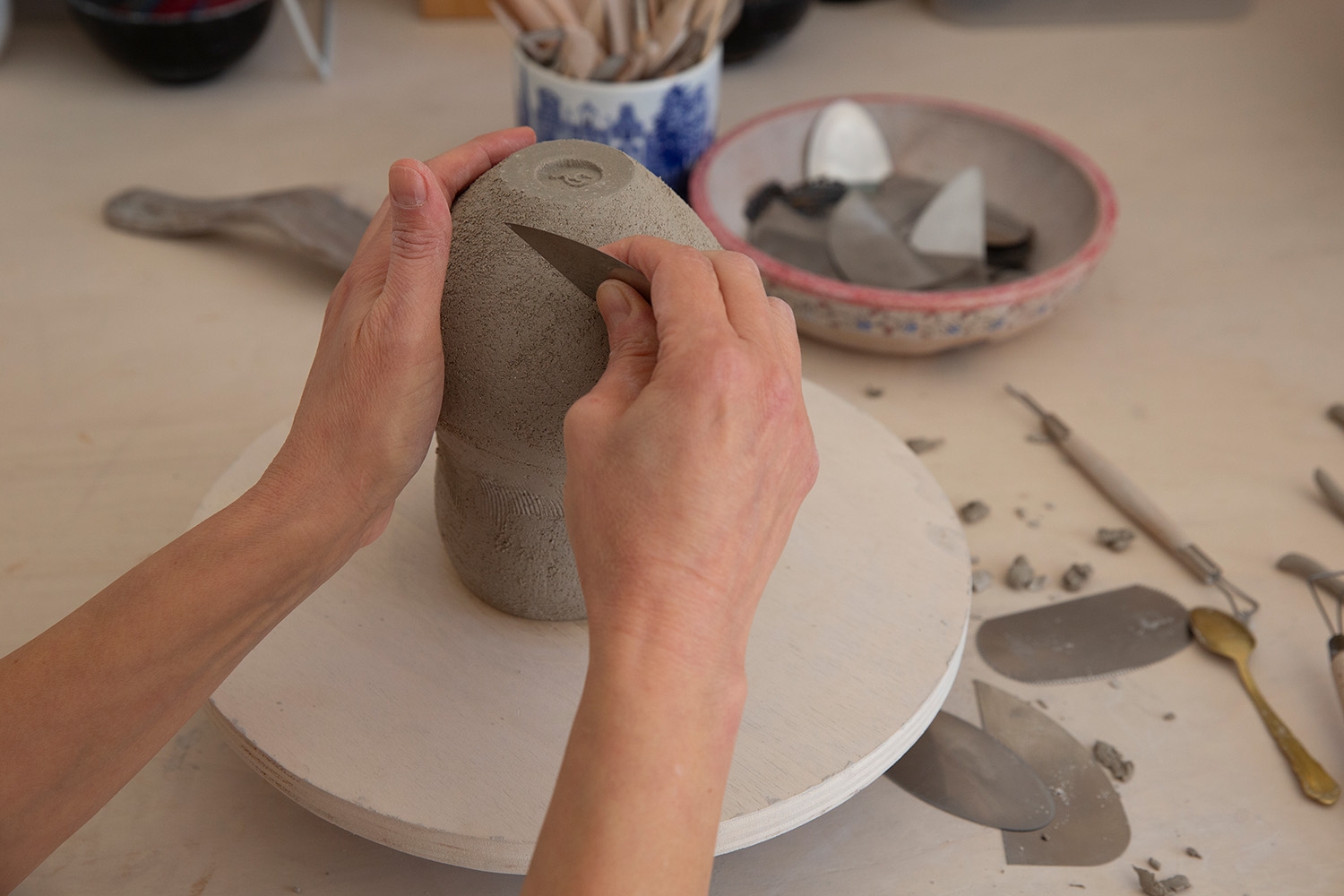
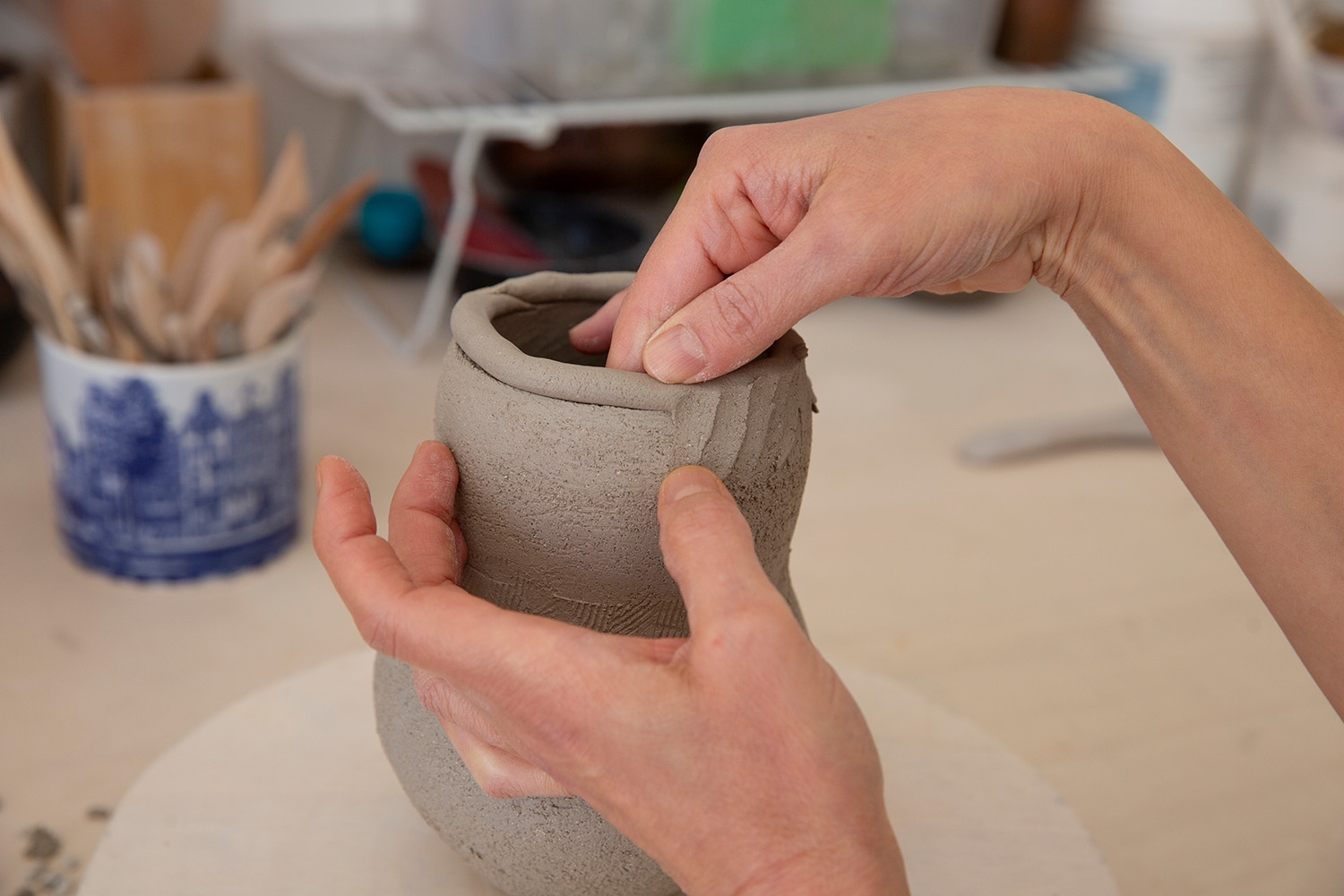
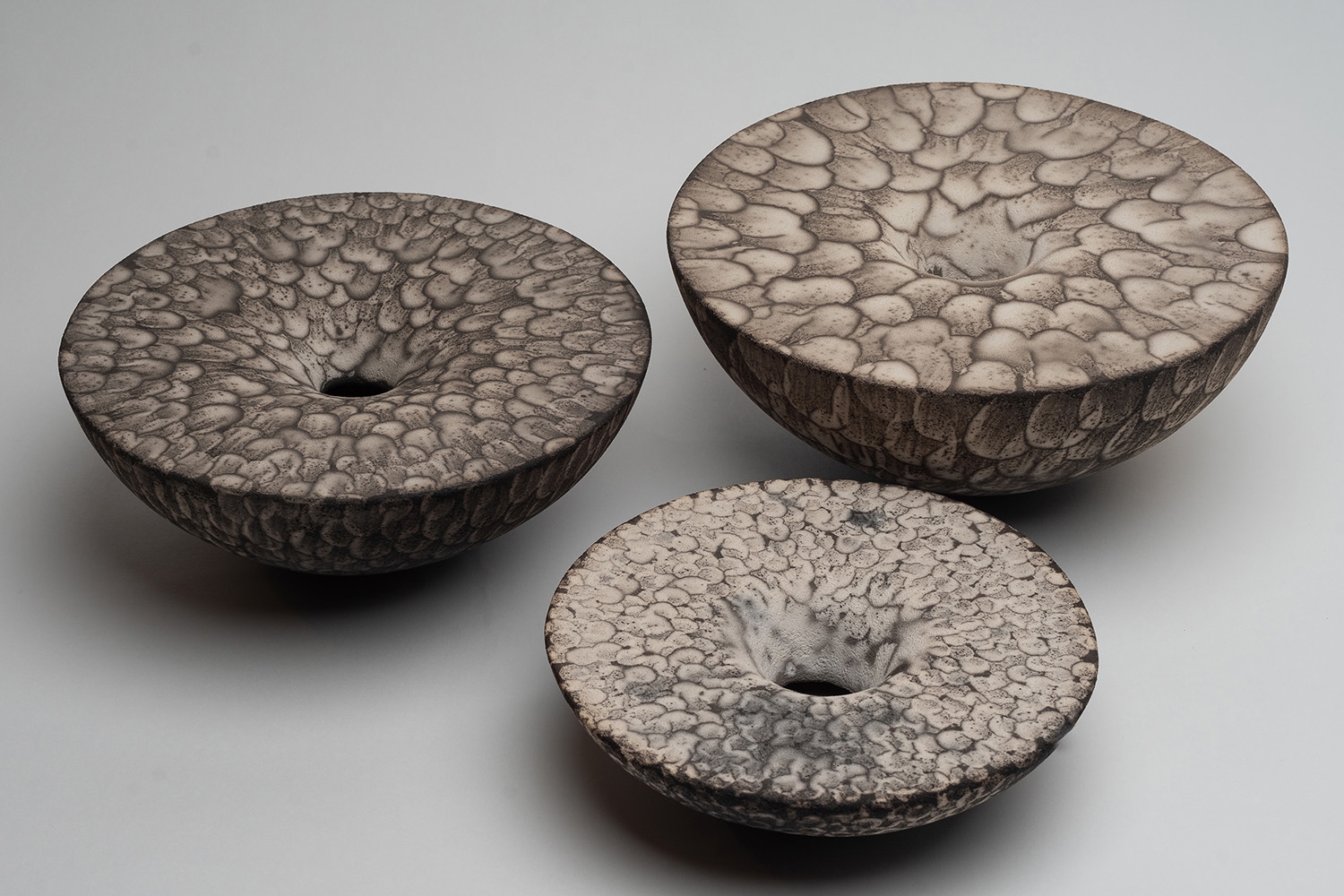
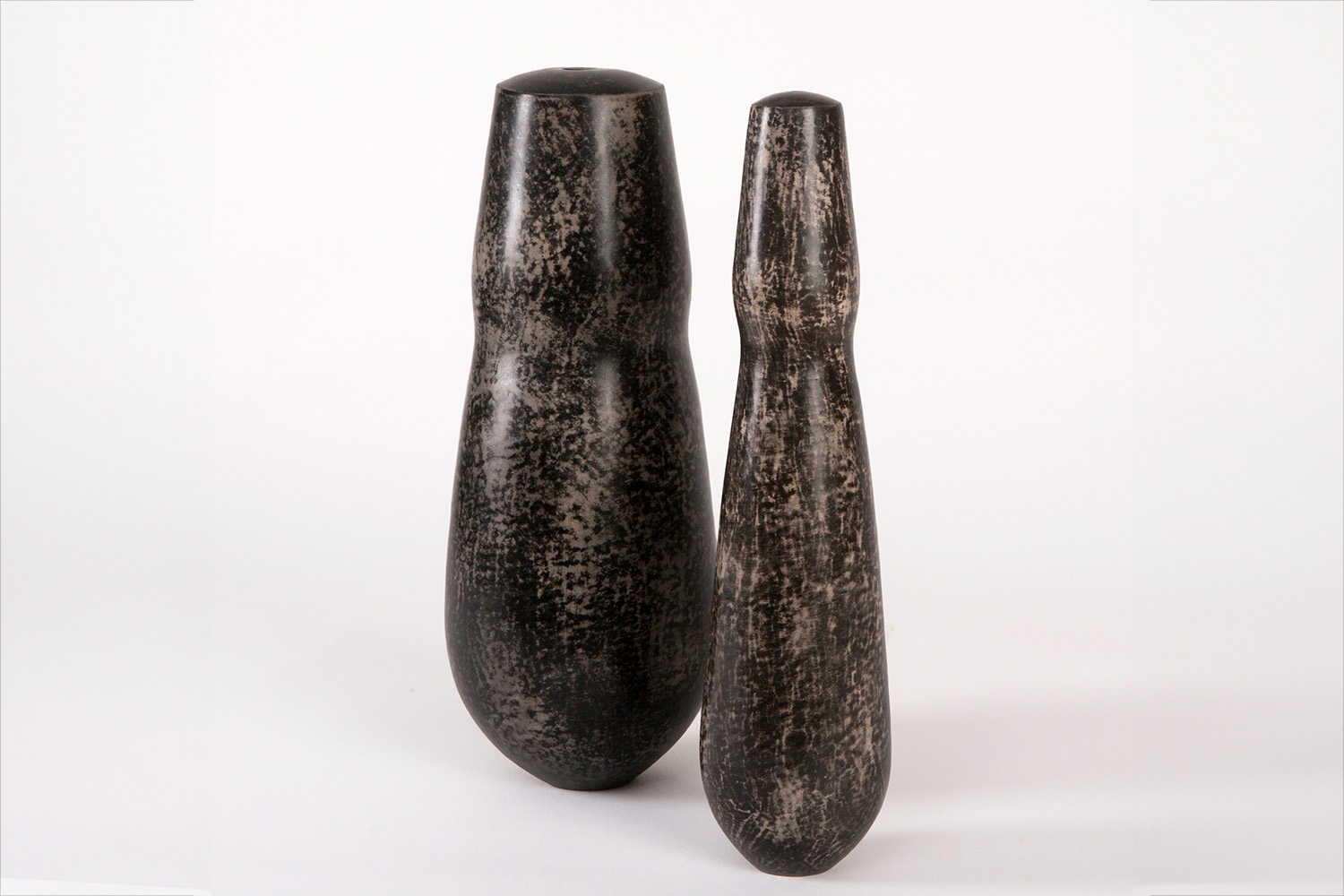
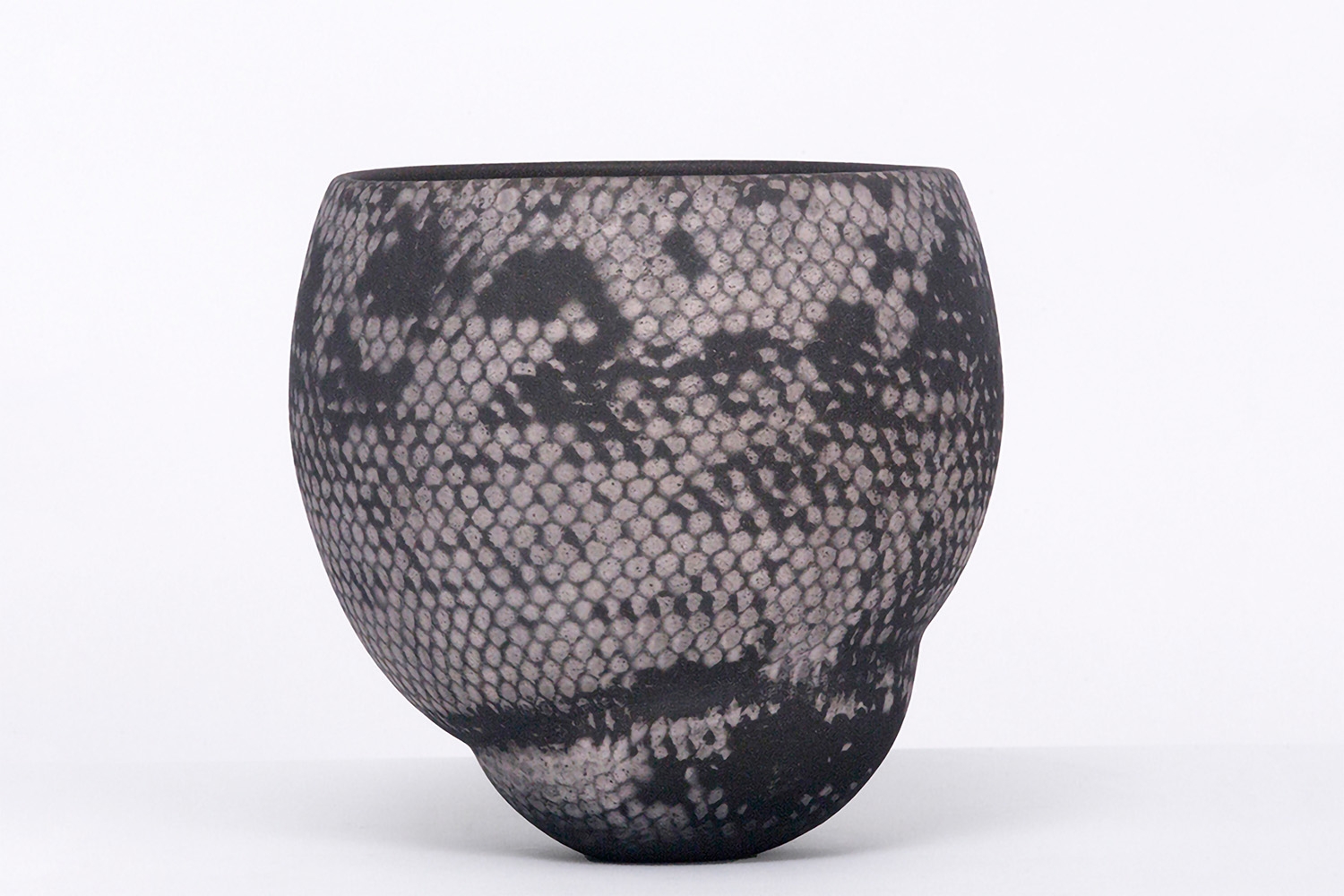
Lara De Sio, who was born in Bolzano, studied in Venice, where she discovered art, beauty and a limitless source of inspiration. An architect by training and now a ceramicist by trade, she uses the coiling technique to create sculptures and vases in white semi-refractory clay. Lara makes use of metal tools and agate stones to achieve different effects with painstaking attention to finishing the surfaces of her sculptural pieces. After the bisque firing, she prepares the pieces for raku firing, applying different types of masking. She includes smoking stages to finish her pieces as they are what defines the design and tones of the objects. The decorations of the surfaces often reference the organic world, while the forms are inspired by a primitive, ancestral, archaic world.
INTERVIEW
I am an architect. I worked in various studios between Italy and Holland for a number of years, then as a designer of glass objects in Murano. Architecture taught me the precision of geometry, which is what I base my forms on. Glassmaking honed my attention for surface textures.
I work directly with my hands so using a material that I find therapeutic was important. Clay soothes me. I was a child when I made my first small ceramic sculpture. I used to go with my mother to a workshop and can still remember it.
I enjoy achieving an almost infinite range of results by working with just two elements: clay and smoke. It gives me the idea of enormous possibilities that are possible even within these strict constraints. Plus, it gives the objects a quietness that I identify with.
The often unpredictable results. Its sensitivity to variables, such as temperature, thickness of the object, size of the reduction chamber and quantity and type of sawdust stimulate me to experiment continuously.
Lara De Sio
Ceramicist
Venice, Italy
AVAILABILITY
By appointment only
PHONE
+39 3495273472
LANGUAGES
Italian, French, German, English
Homo Faber Finds is a new service aiming to inspire admirers of craft to connect and collaborate with exceptional artisans.
We invite you to submit an enquiry here.