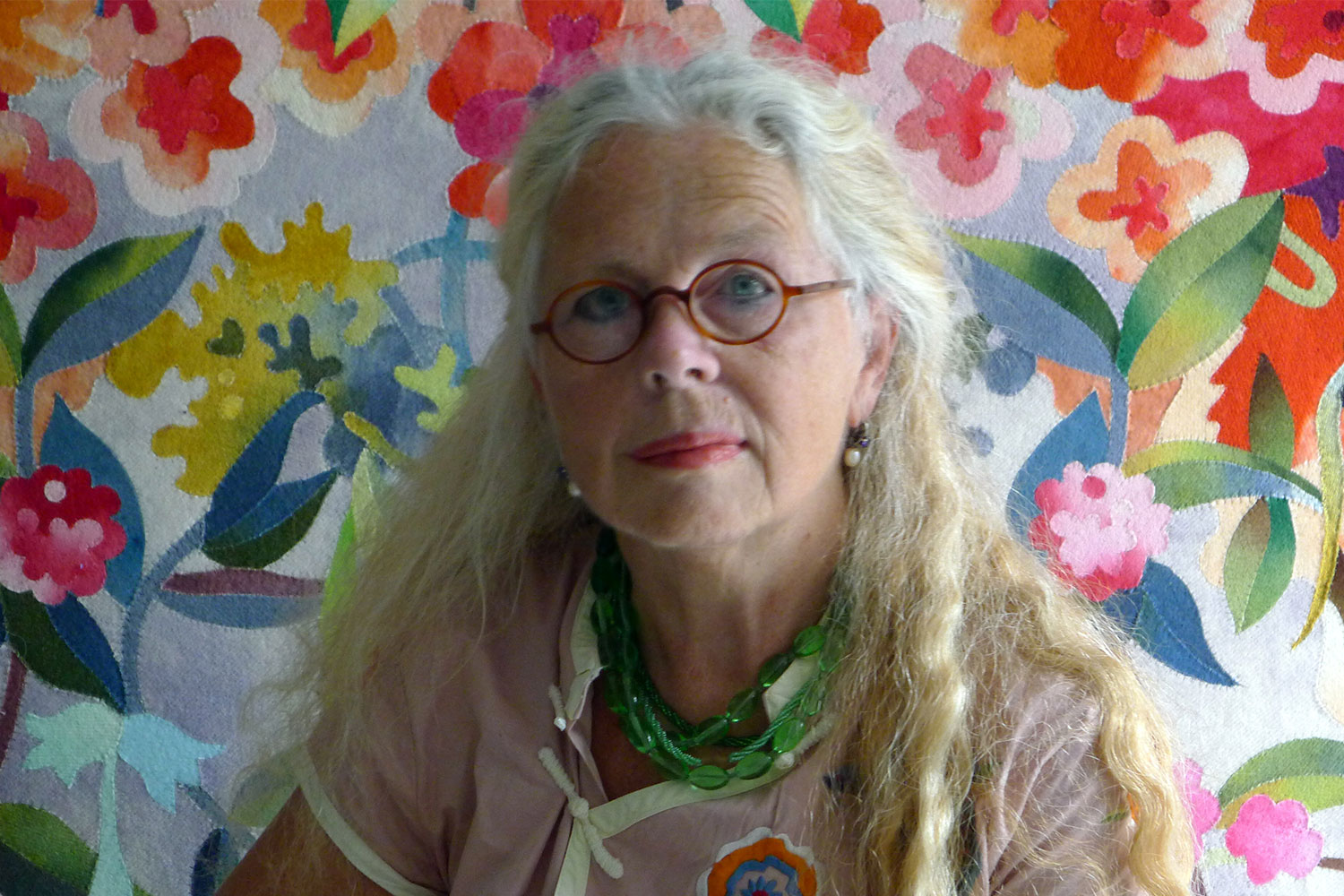
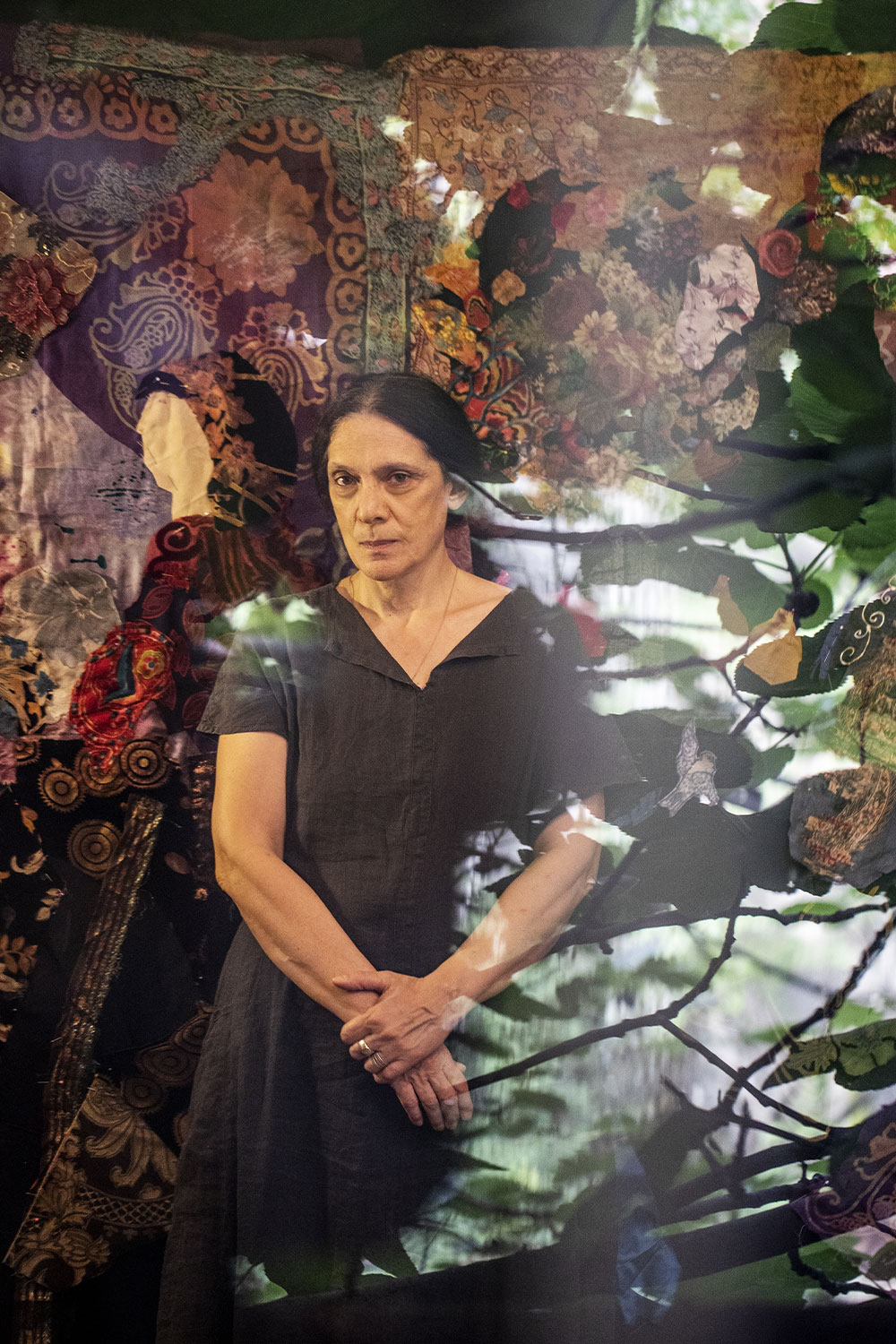
Nino Kipshidze
Patchworker
Tbilisi, Georgia
Recommended by Georgian Heritage Crafts Association
Creating paintings out of textiles
- Nino's background is as an Art Historian
- Her work is inspired by Georgian folk crafts and textiles
- She works on large textile pieces – still life, landscape and figurative compositions
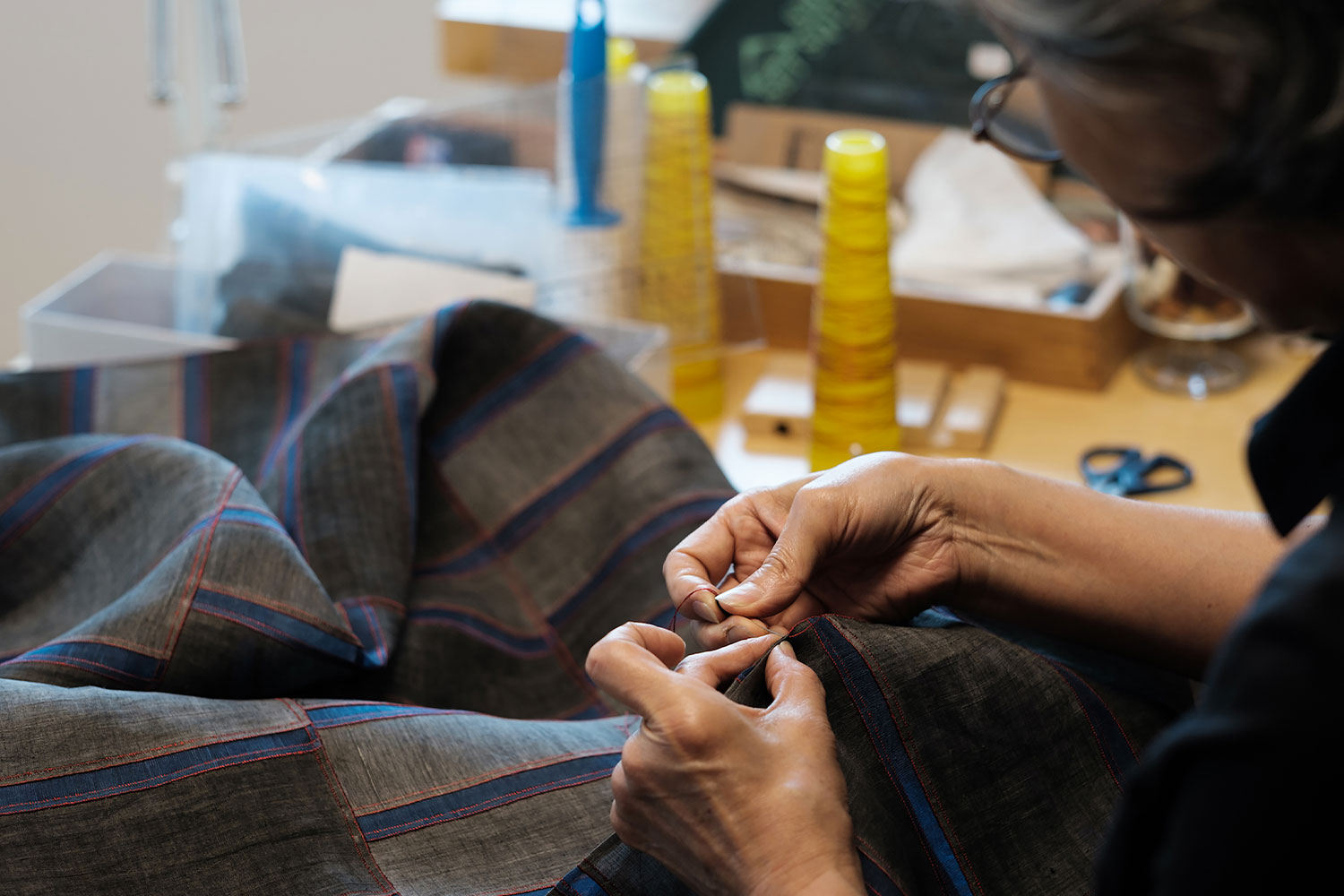
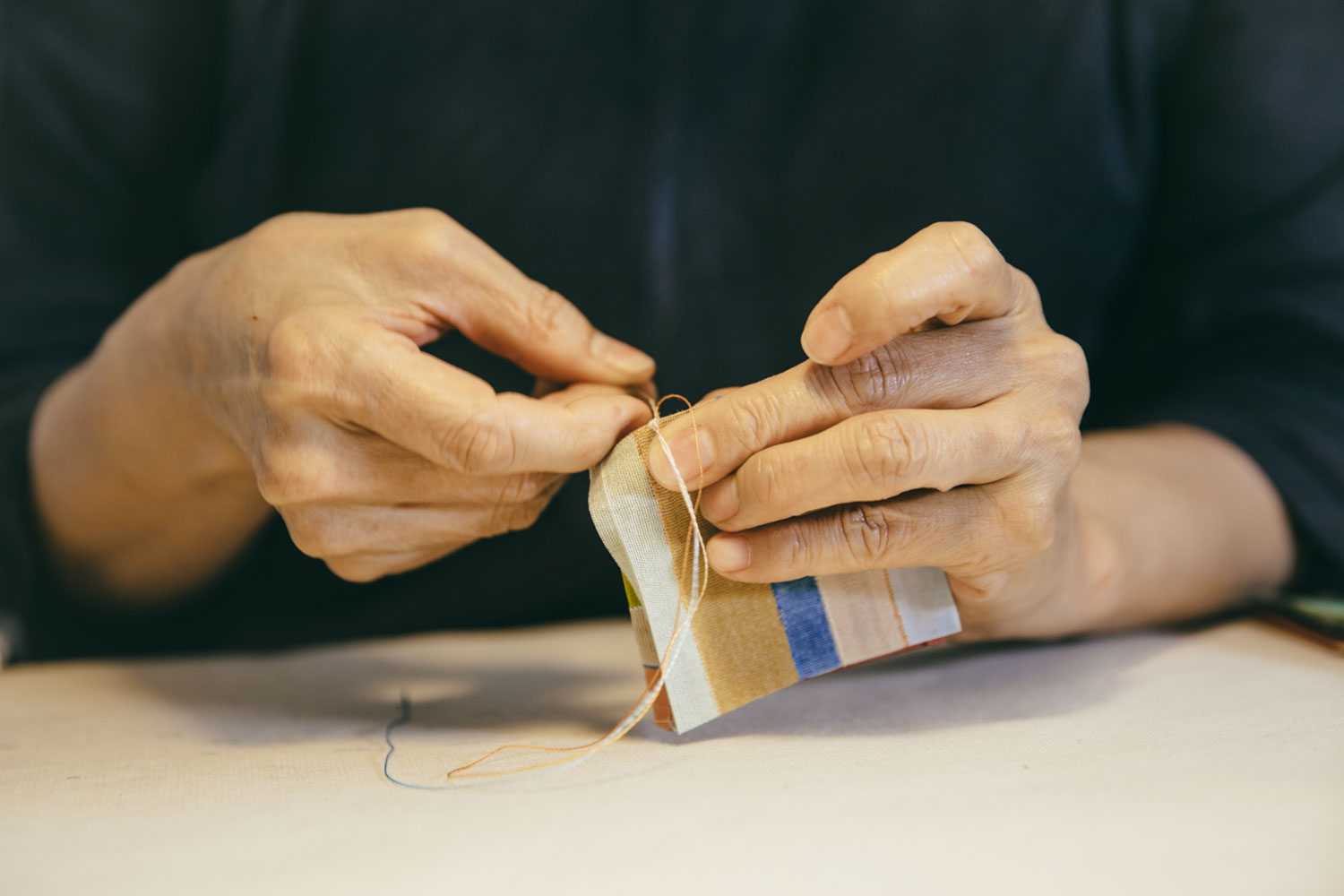
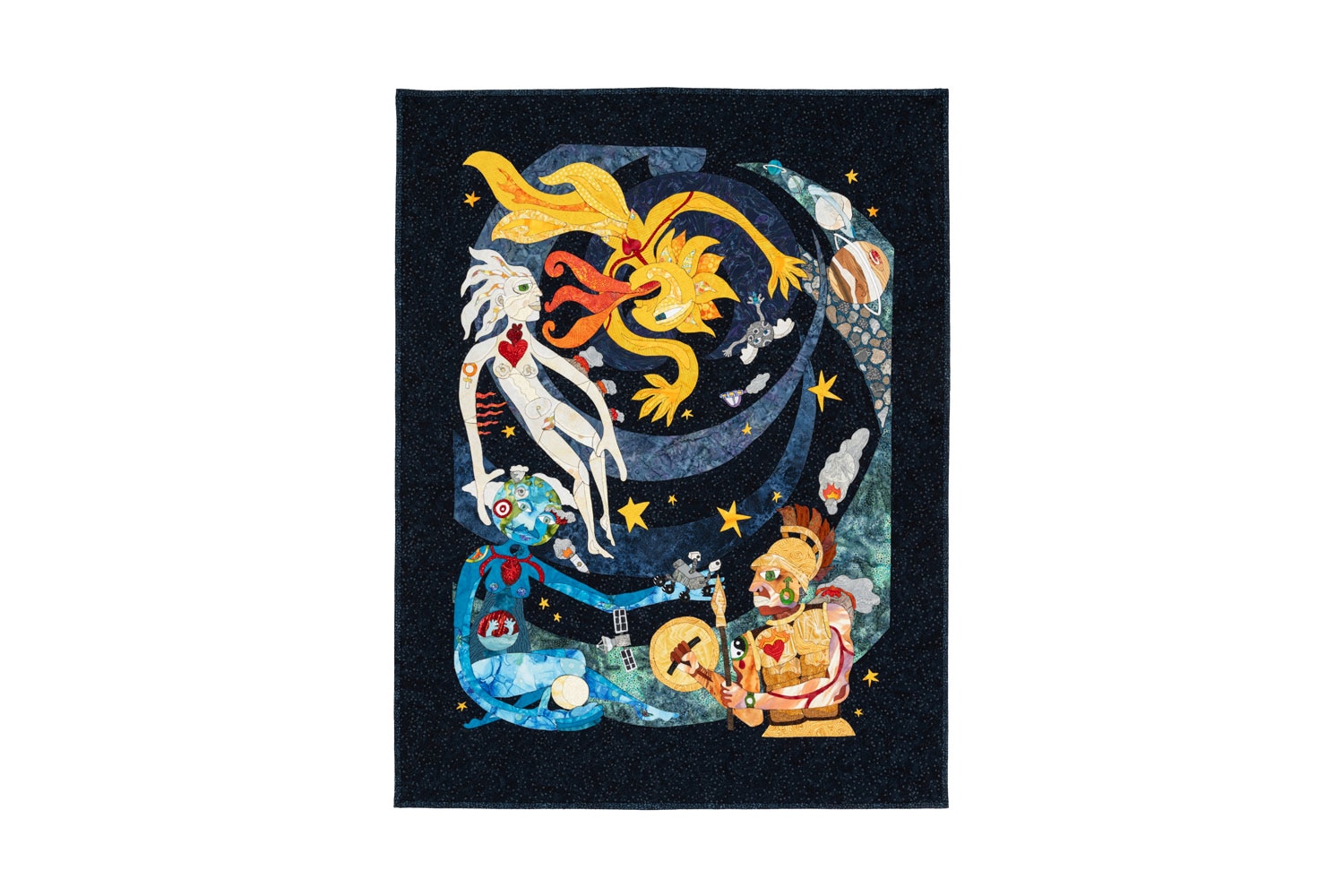
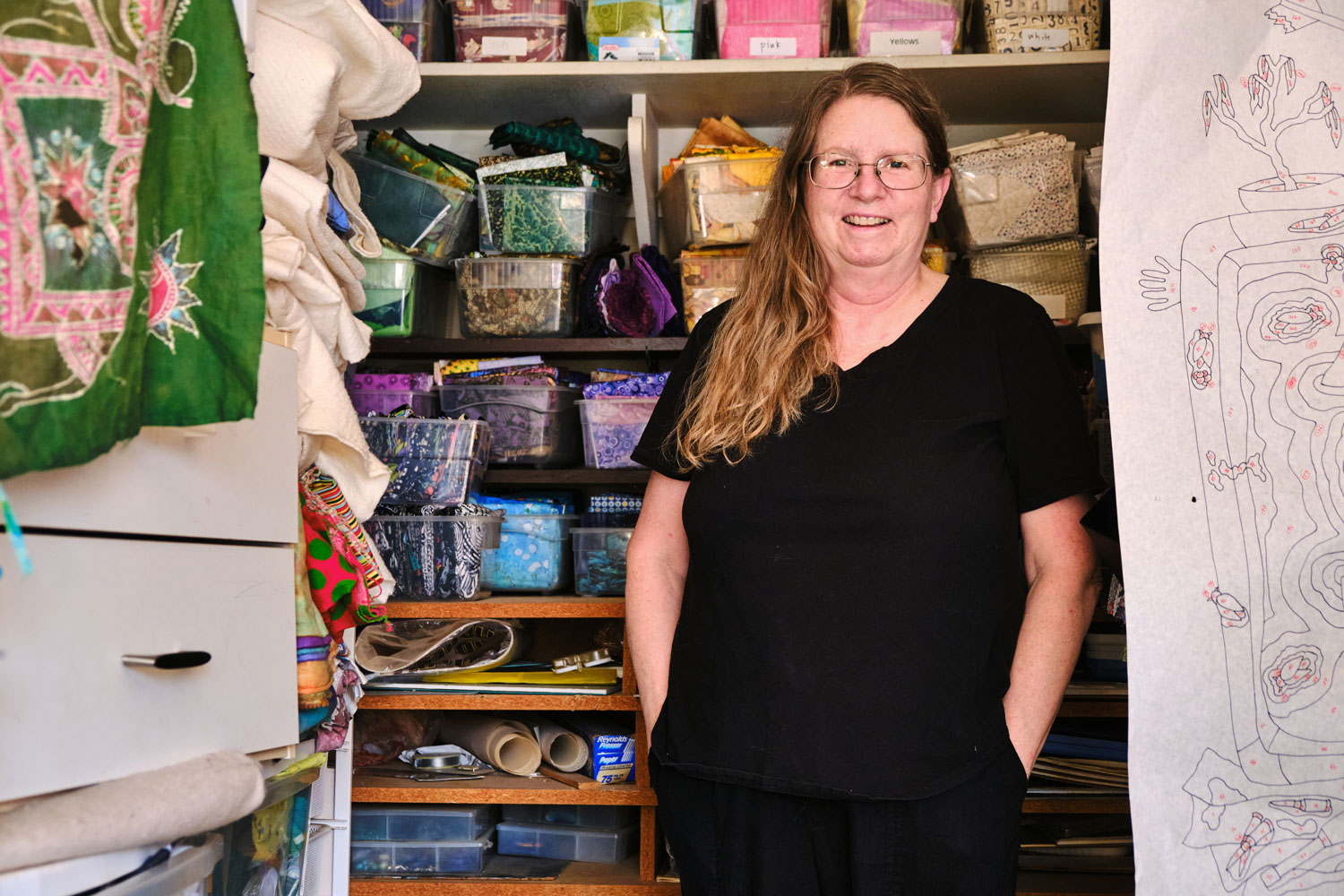
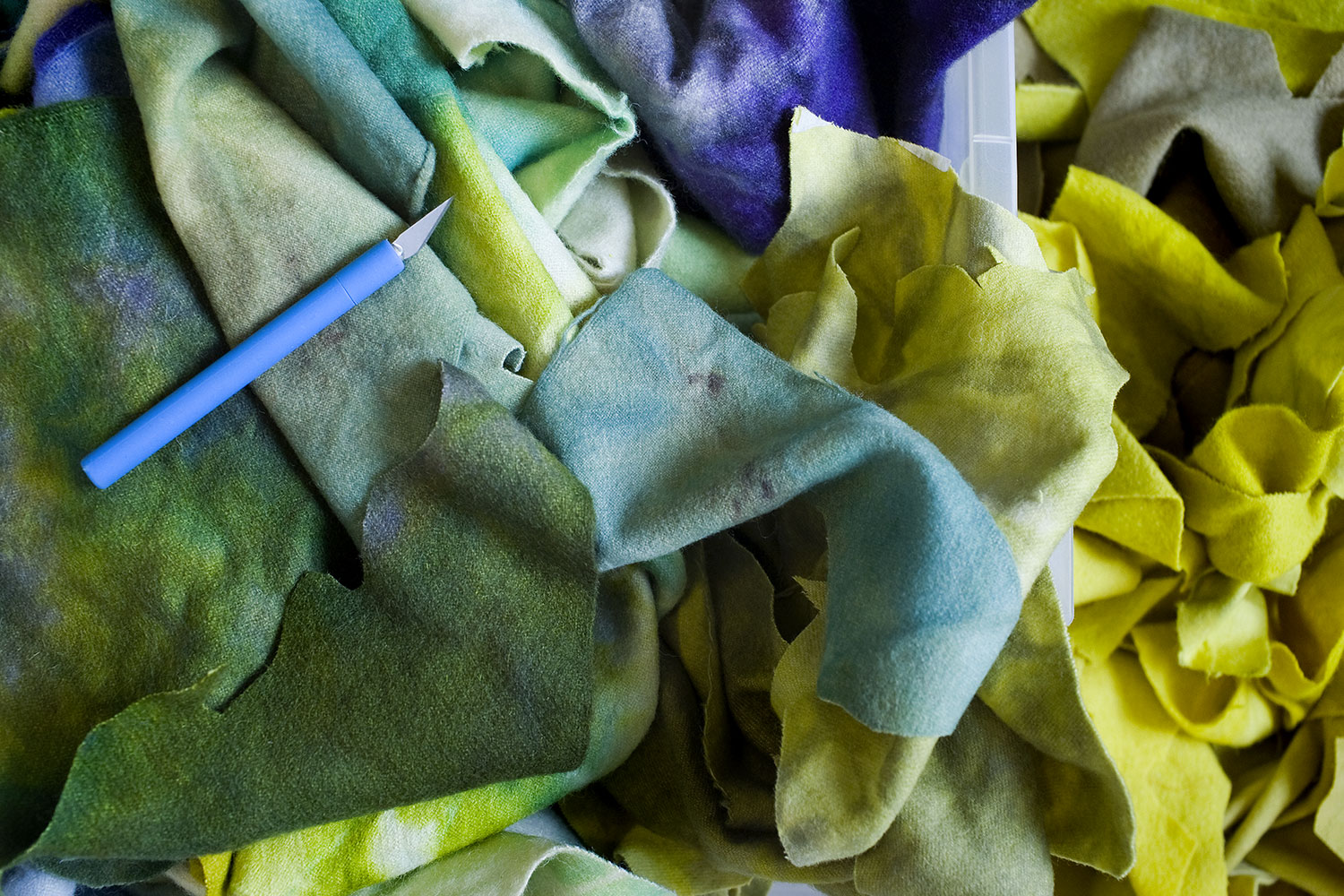
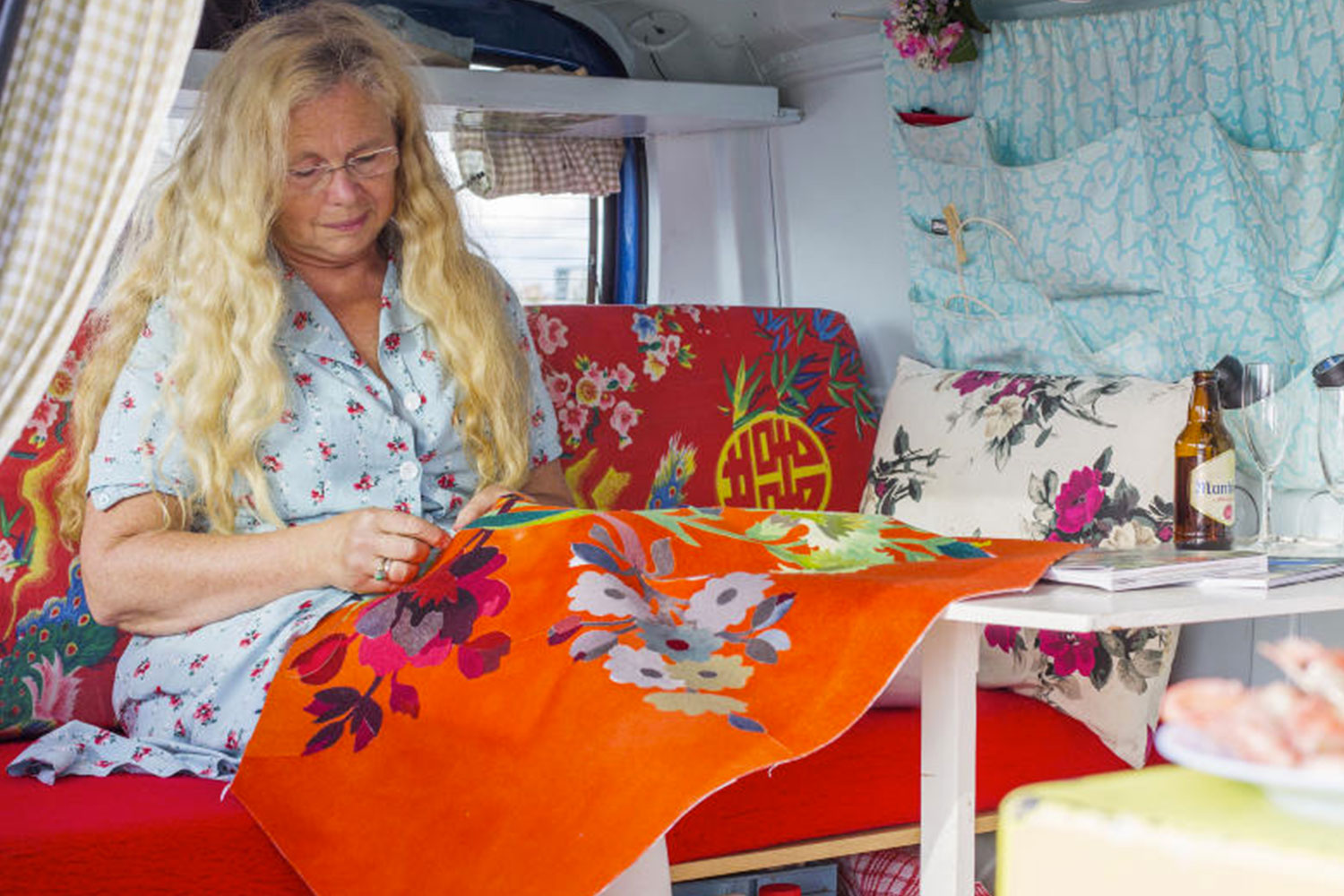
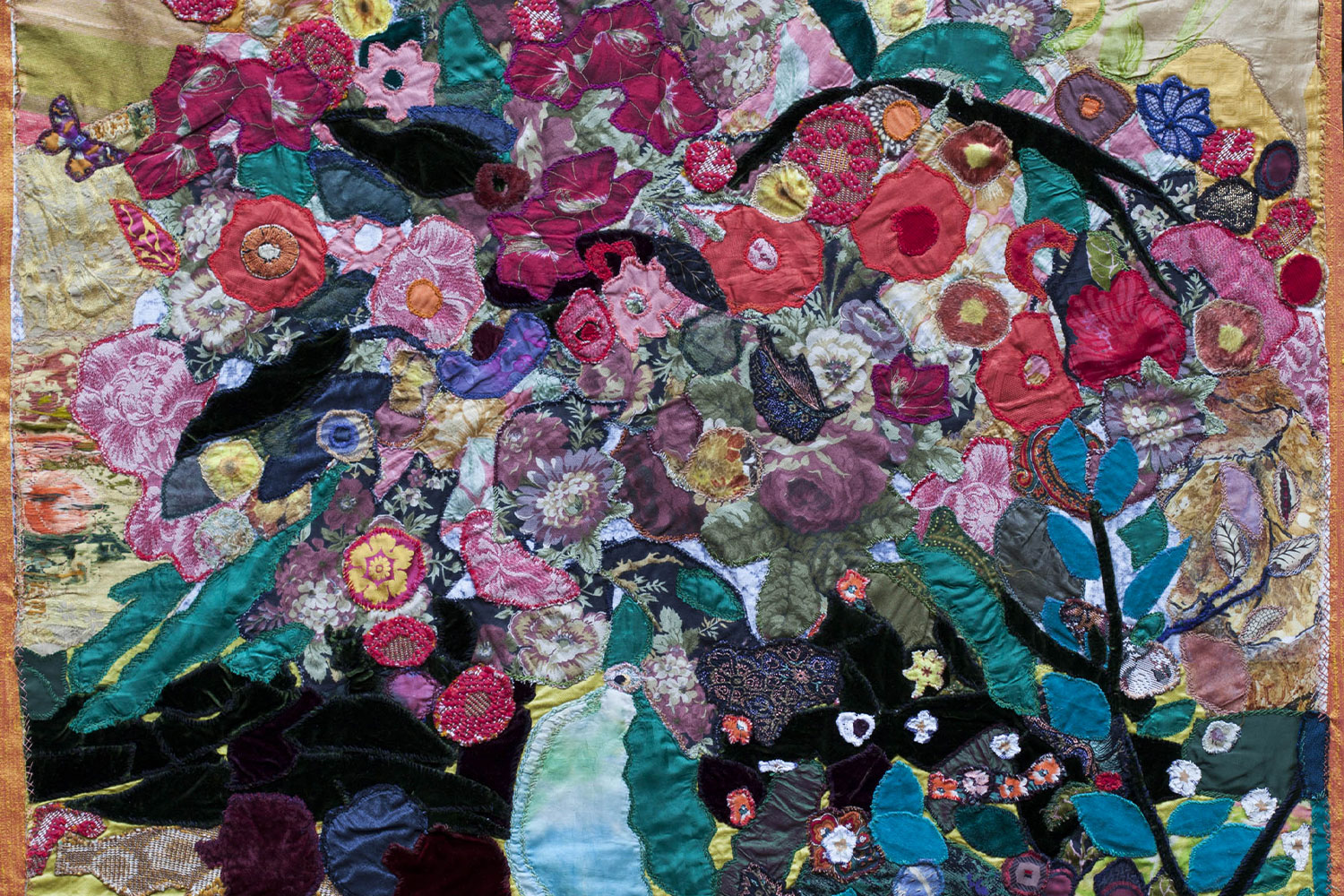
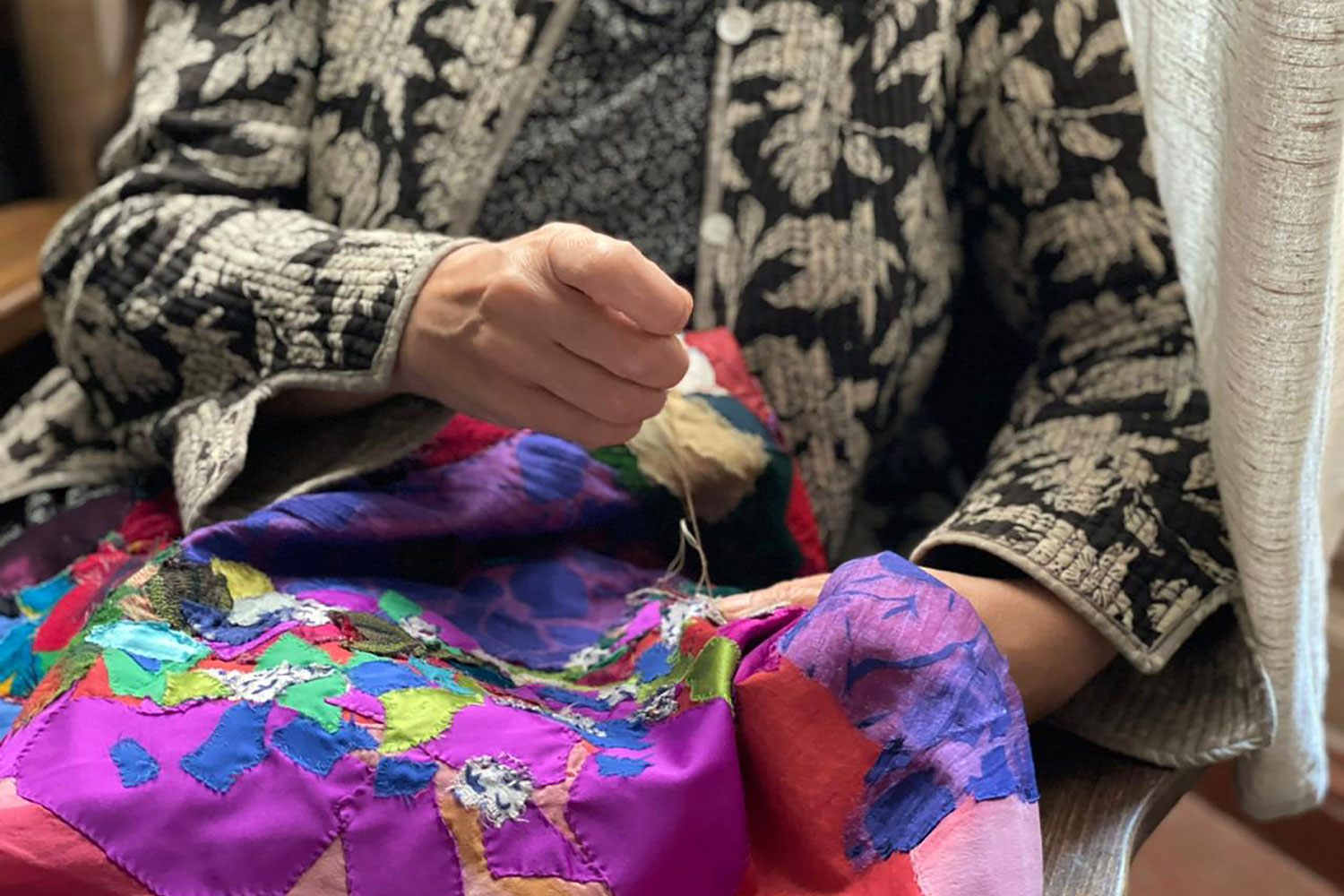
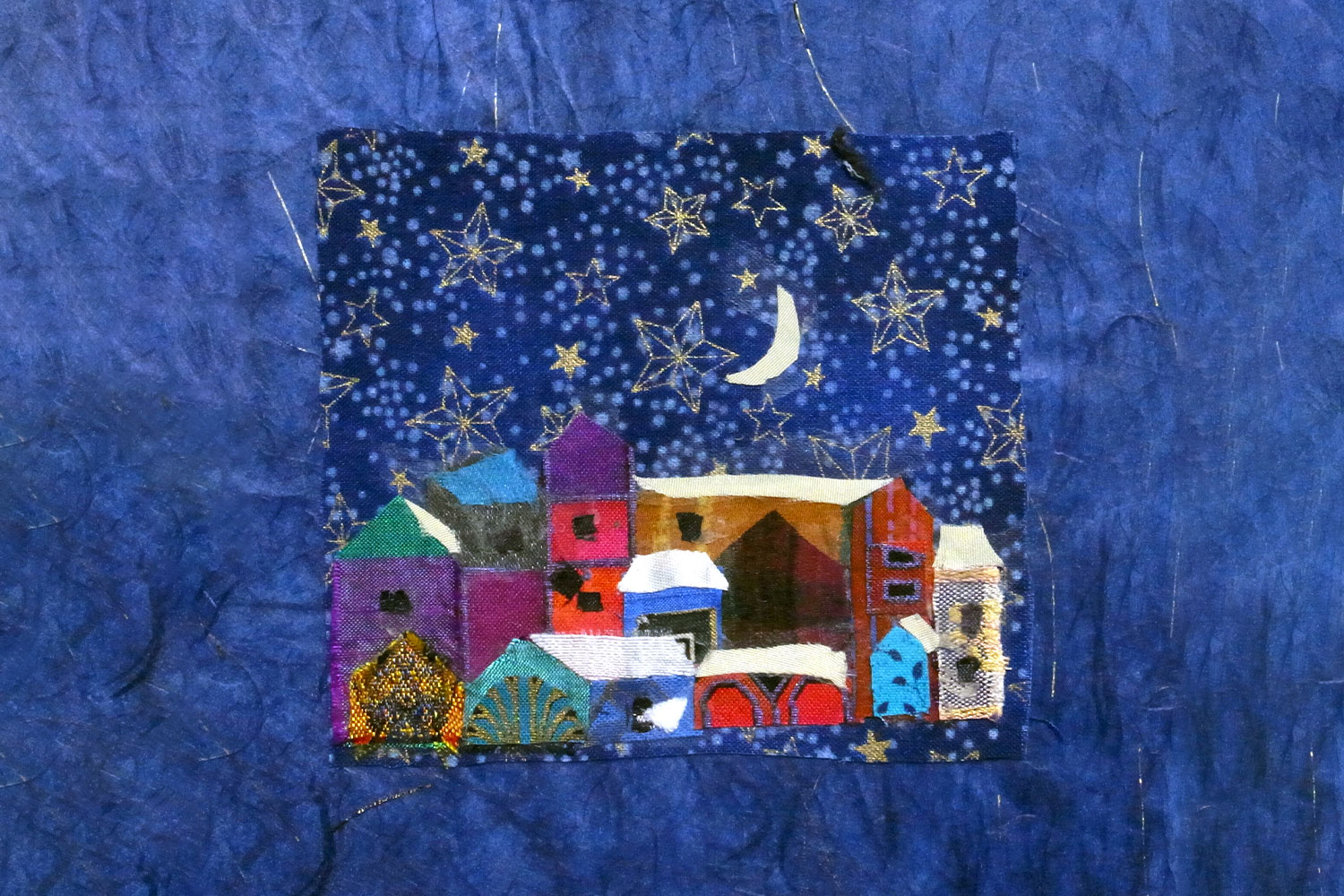
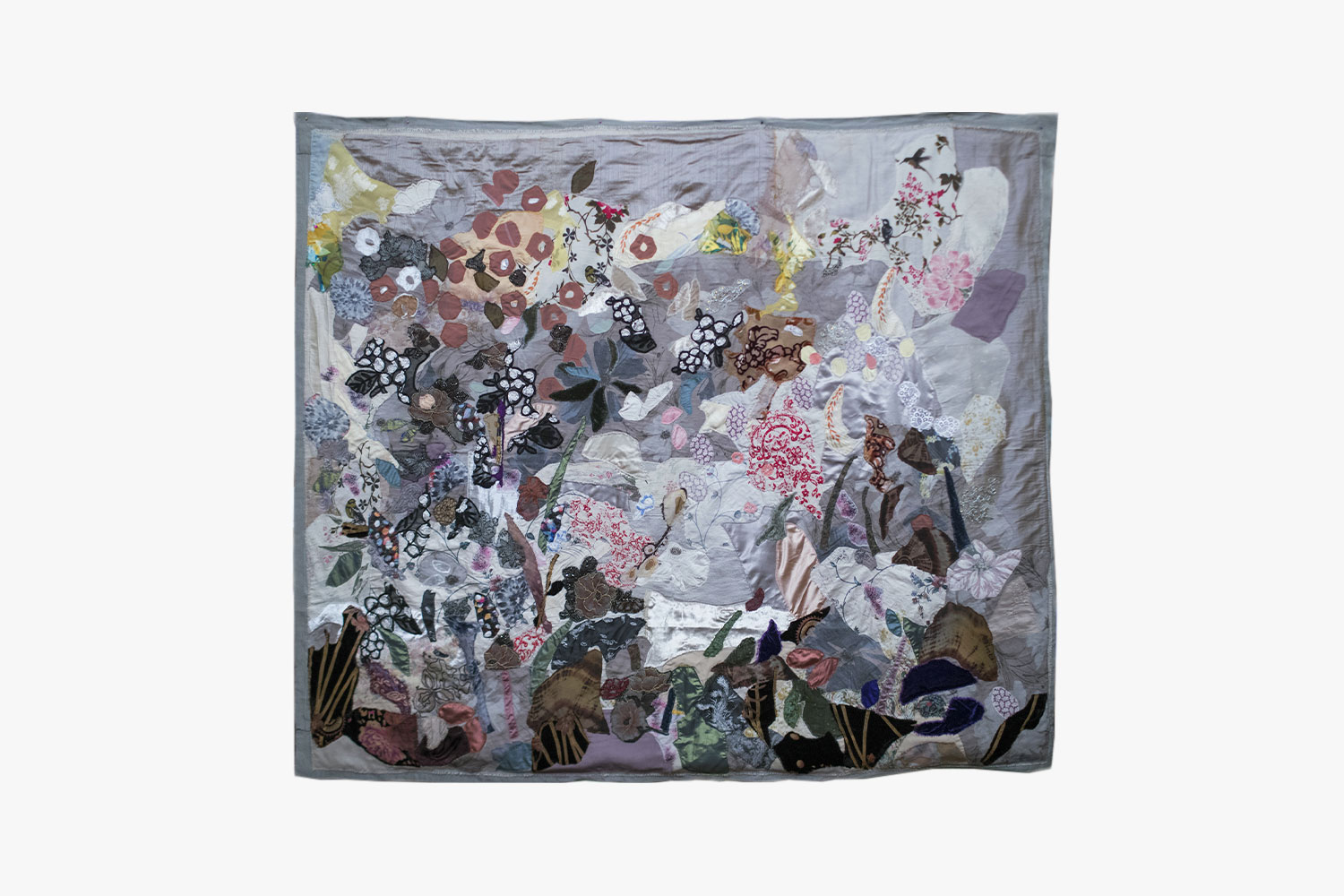
Having a background in art history, Nino Kipshidze has developed a special interest in textiles based on her admiration of Georgian folk crafts and textile pieces in particular. After experimenting with easel paintings, handmade paper, bookbinding, etc. she turned to patchwork and felt as the most suitable techniques to express her artistic identity. Combining small pieces of cloth of different colours and texture, including those from old vintage embroideries and fabrics, Nino’s works explore different genres of Still life, landscape and figurative compositions. Despite the largely decorative flavour of multi-layered patches, the distinctive themes and shapes of the objects, the use of perspective, as well as the overall monumental size of the pieces, seem to break the limits of decorative art and enter the realm of painting.
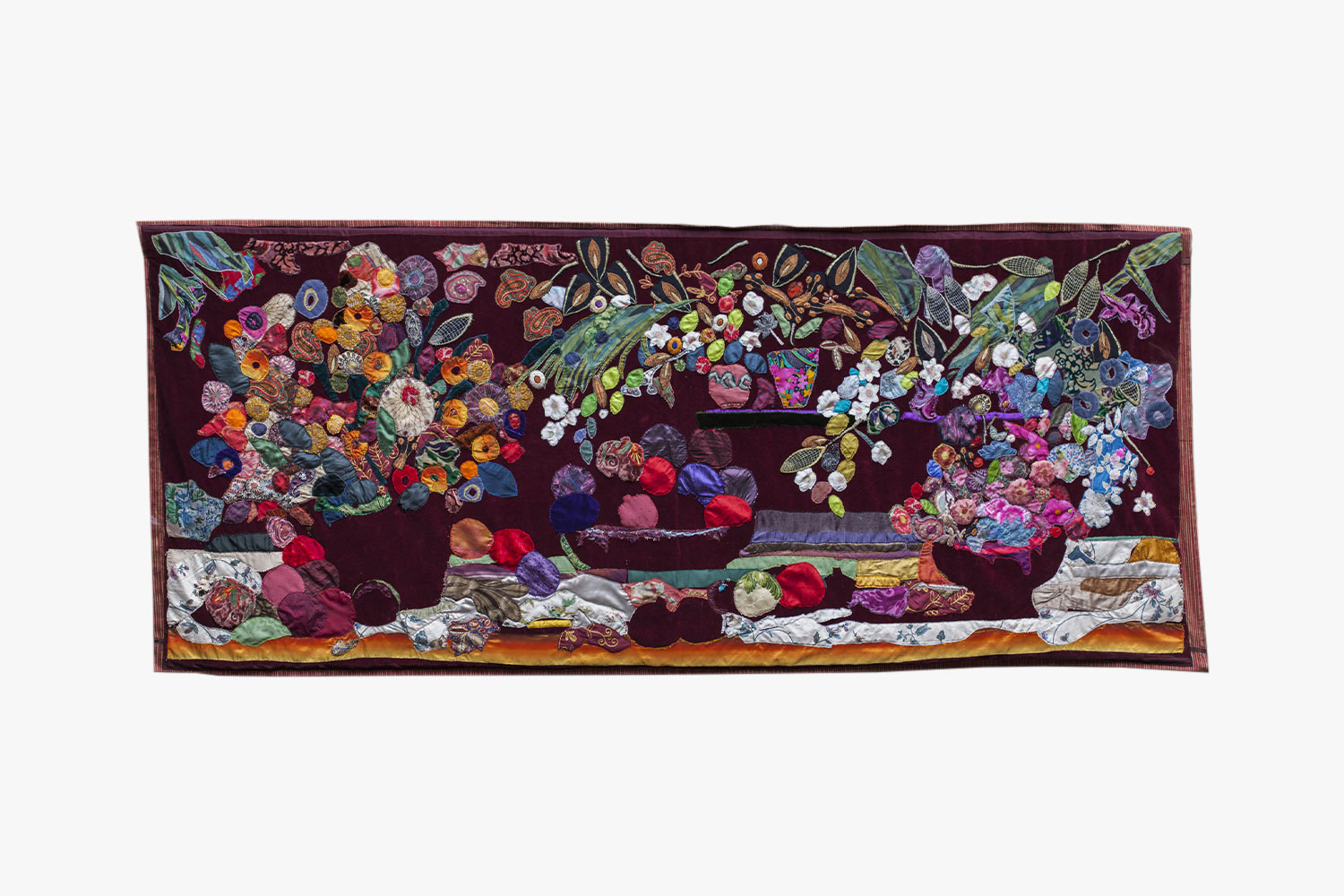
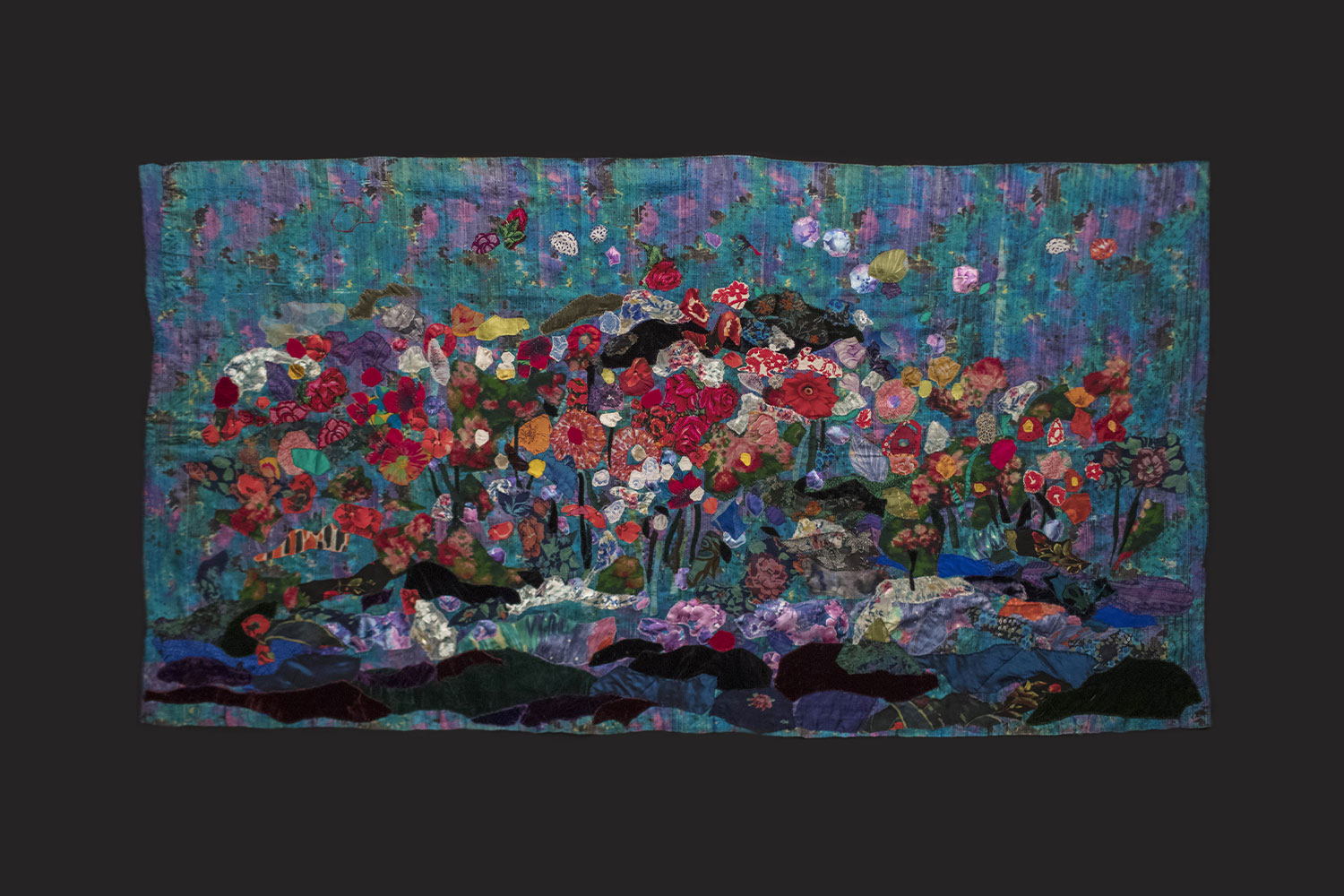
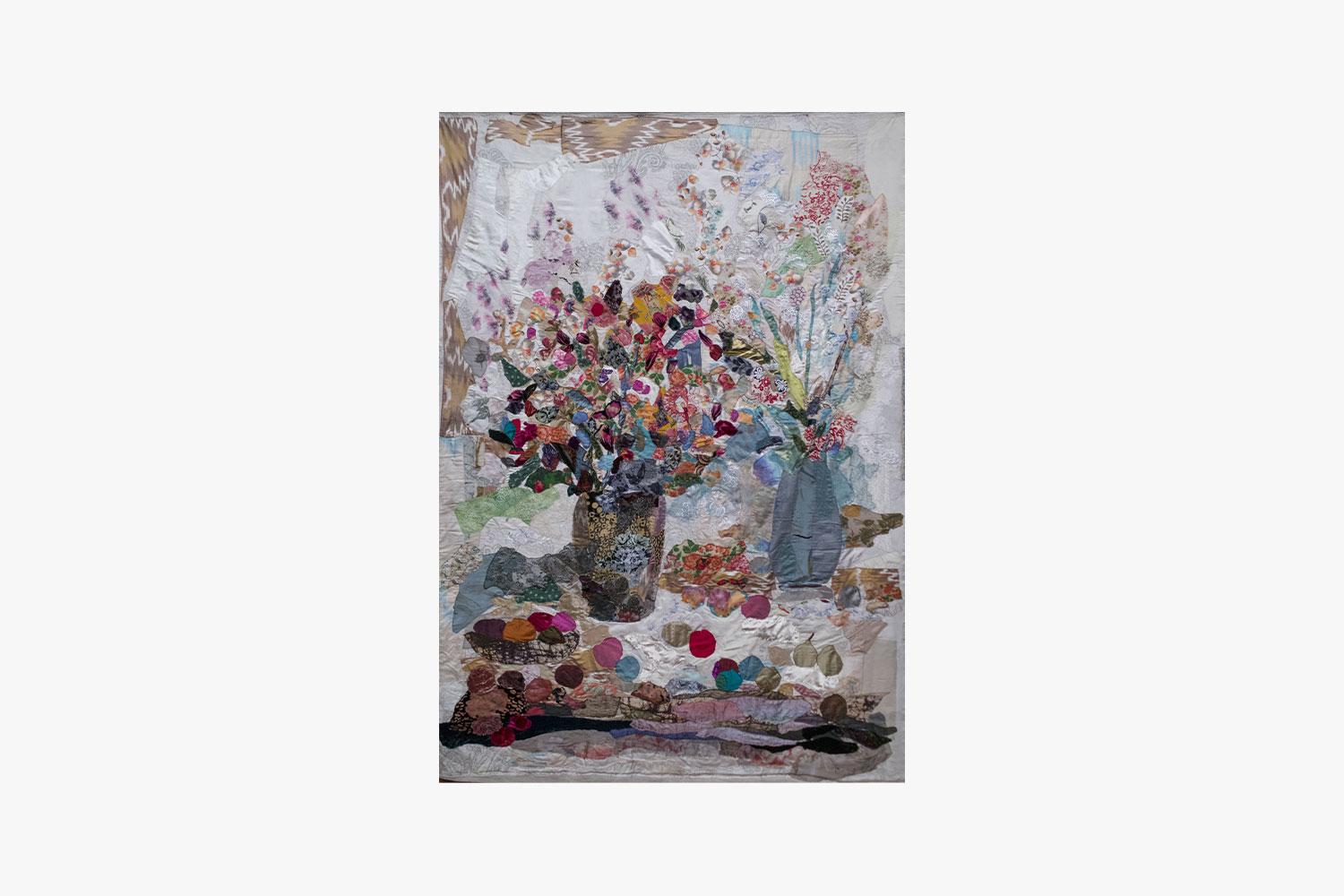
INTERVIEW
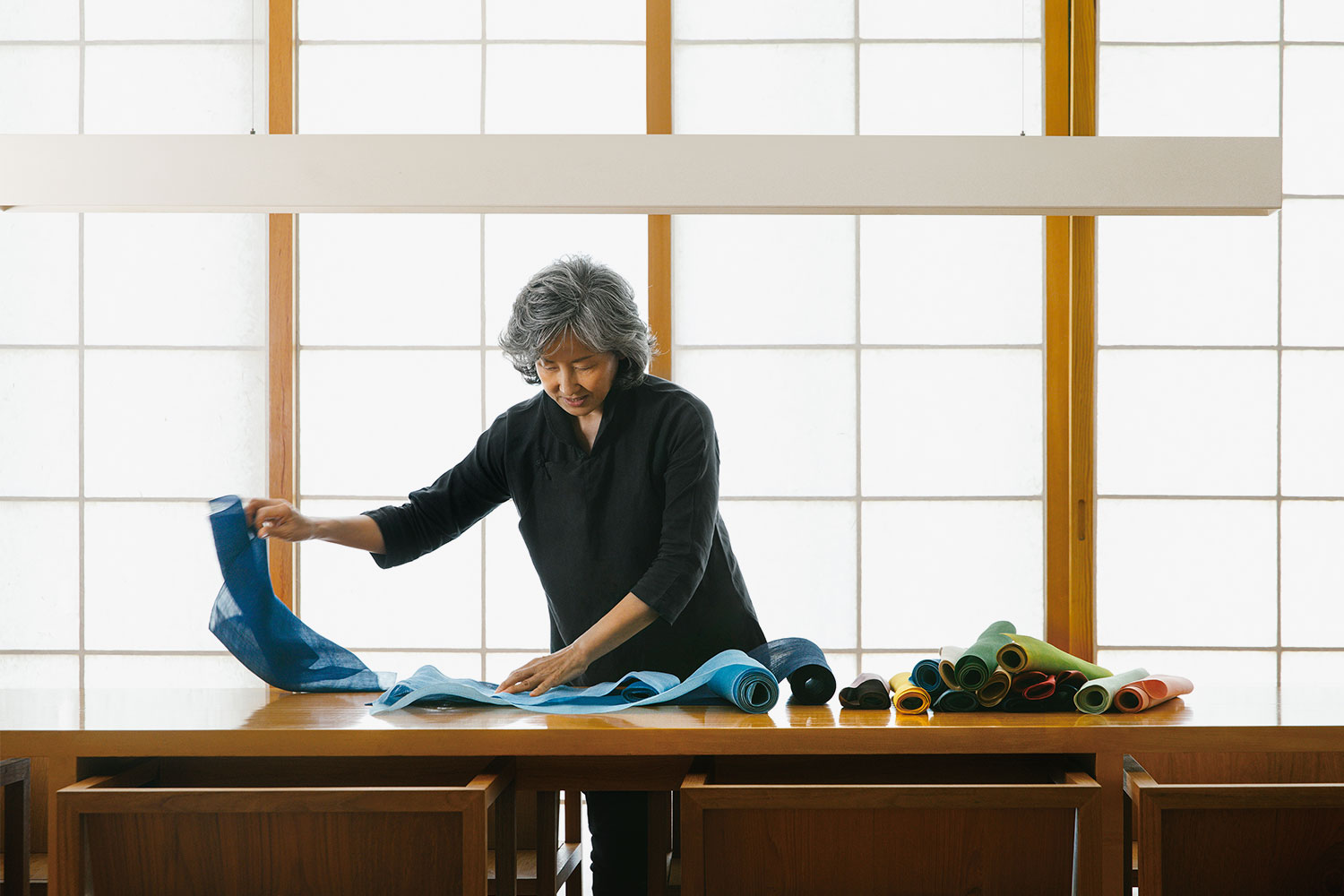
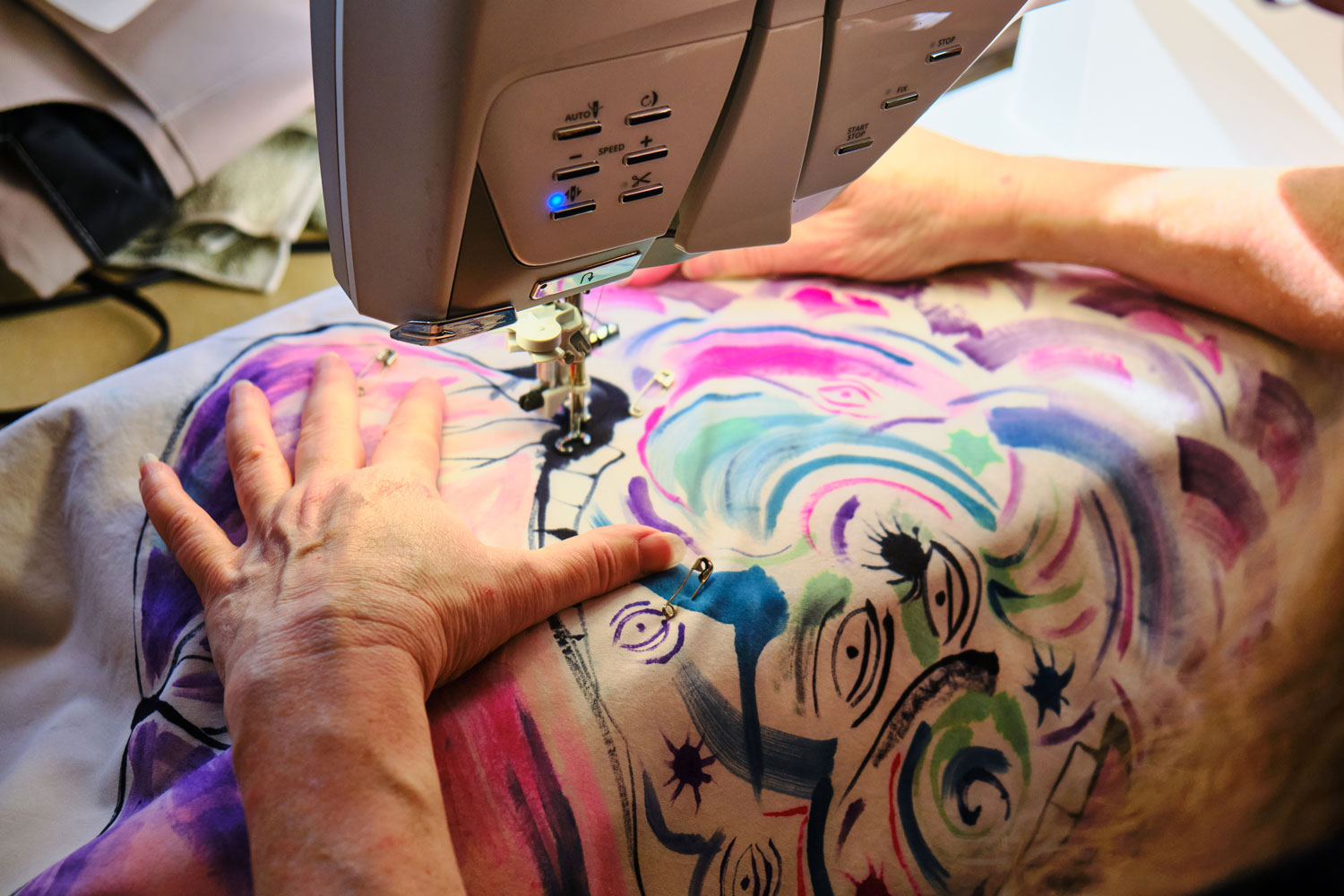
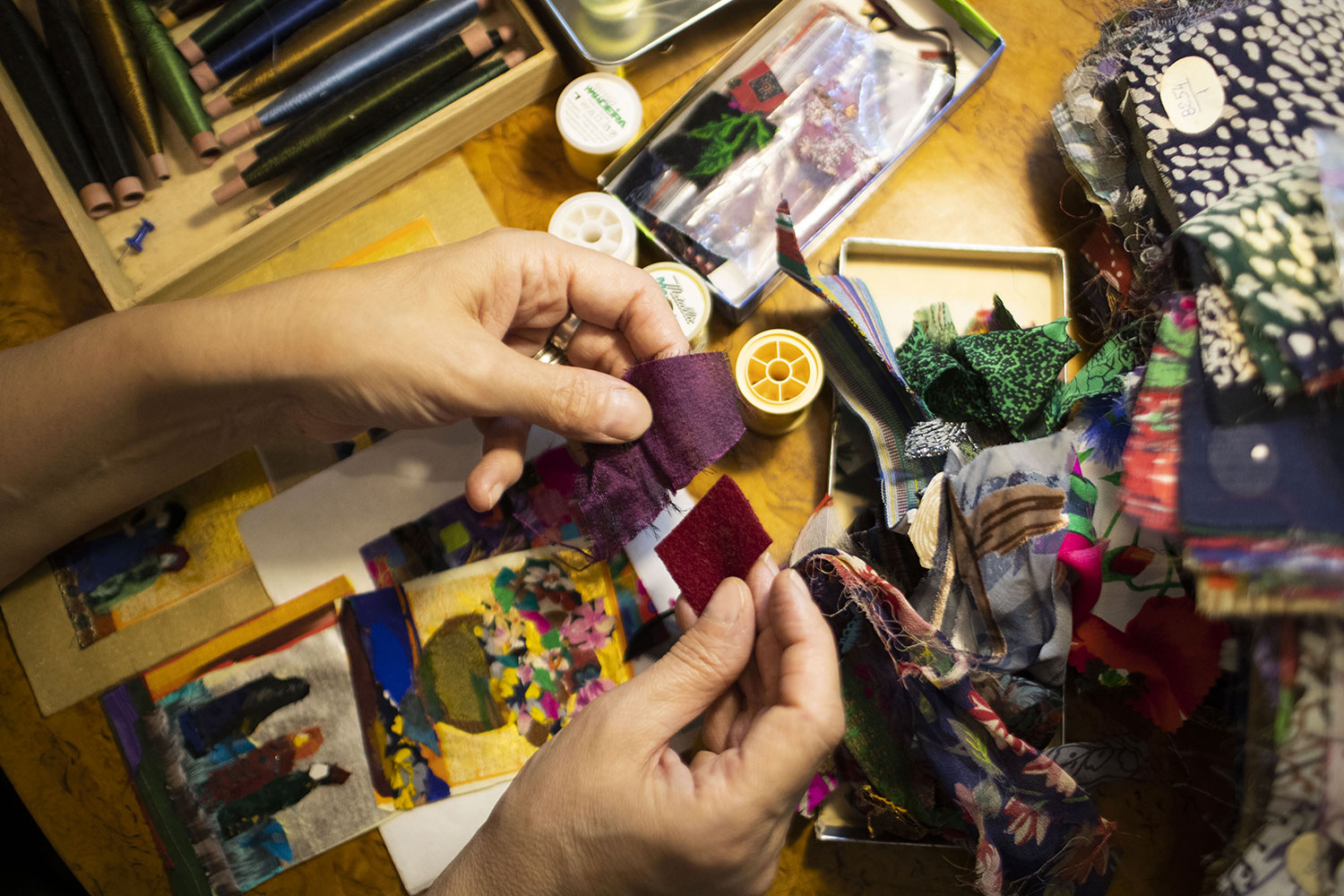
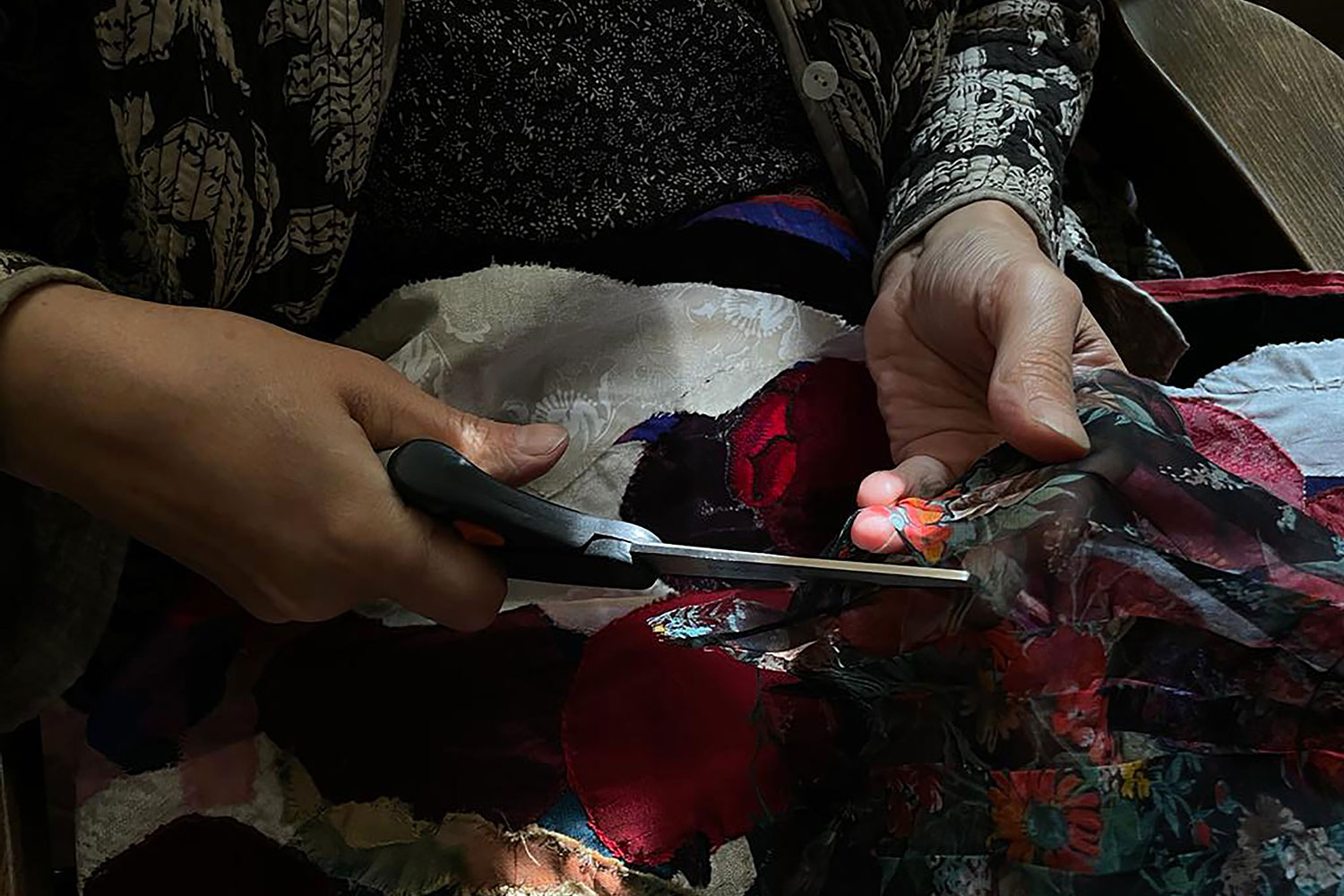
I usually work on large textile pieces, which are vertically attached to the wall. After this, I start to fix the cloth patches with pins to the large piece and try to step back to observe how the entire work looks from the distance. I use both new and old fabrics.
My first encounter with the international art scene was attending the International Tapestry Triennial “The Other Europe” held in Tournai, Belgium, in 1993. Everyone seemed to be fascinated with art from behind the Iron Curtain, and this was the beginning of my cooperation with the European Textile Network. As a result, I founded the Georgian Textile Group and, amongst other exhibitions, organised international biannual textile symposiums at the Silk Museum in Tbilisi.
The patchwork was a traditional technique for Georgian folk textiles. I remember some pieces of naïve patchwork in several private collections with figurative and archetypal zoomorphic images, which made a strong impression and inspired my work as an artist.
I never work with preliminary sketches. I like improvising with colours and patches as they are, sometimes without even cutting them. This creative process of finding the place for specific shapes is a really fascinating and enjoyable element of my work.
Nino Kipshidze
Patchworker
Tbilisi, Georgia
Recommended by Georgian Heritage Crafts Association
AVAILABILITY
By appointment only
PHONE
+995 599552999
LANGUAGES
Georgian, English
Homo Faber Finds is a new service aiming to inspire admirers of craft to connect and collaborate with exceptional artisans.
We invite you to submit an enquiry here.
DSC02402_©Meg-Lovell.jpg)
DSC01379_©Meg-Lovell.jpg)
DSC01458_©Meg-Lovell.jpg)