
Zuleika Melluish
Porcelain maker
London, United Kingdom
The paradox of porcelain plants
- Zuleika taught herself ceramics after attending a workshop
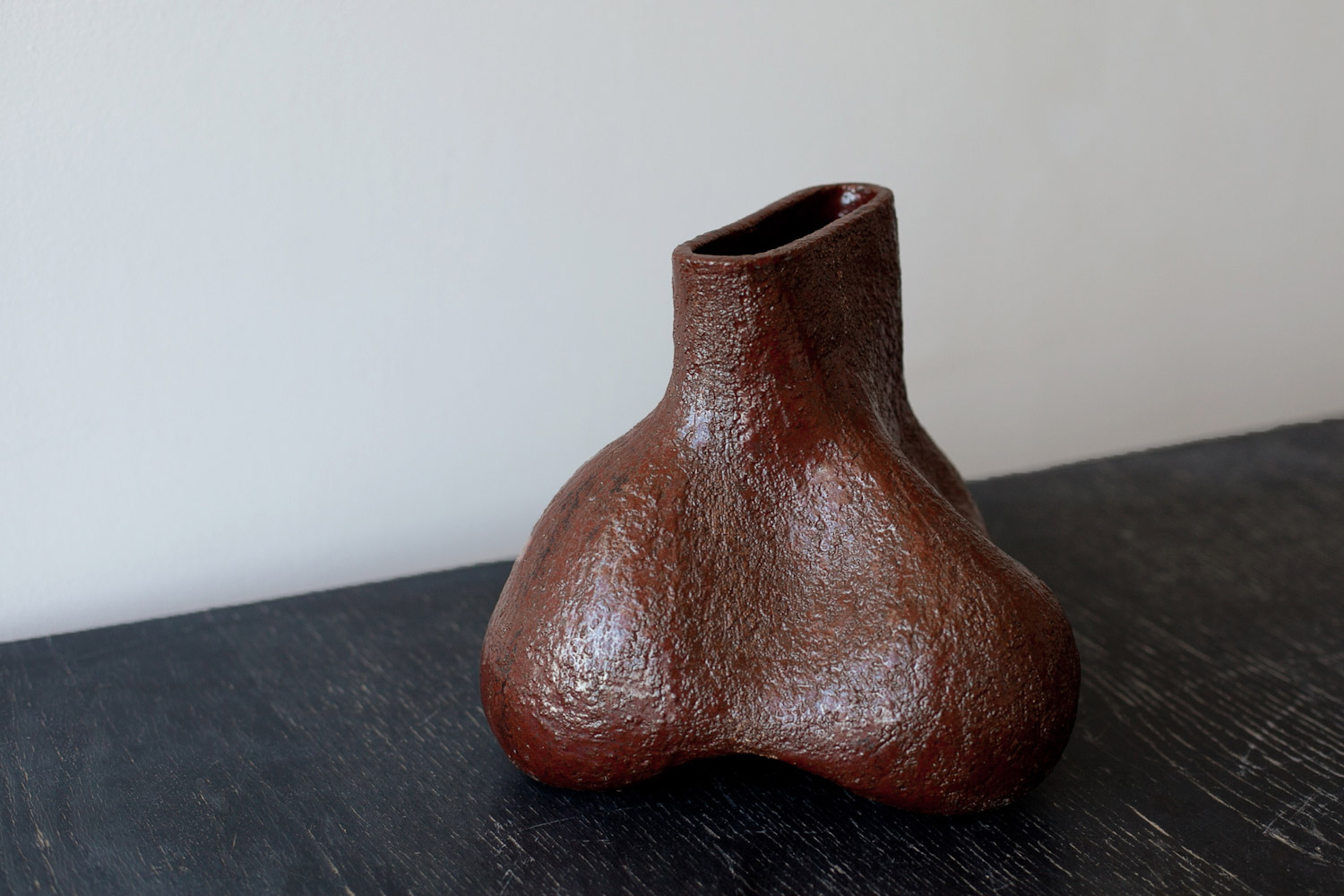
- Her work is monochromatic like photographic negatives
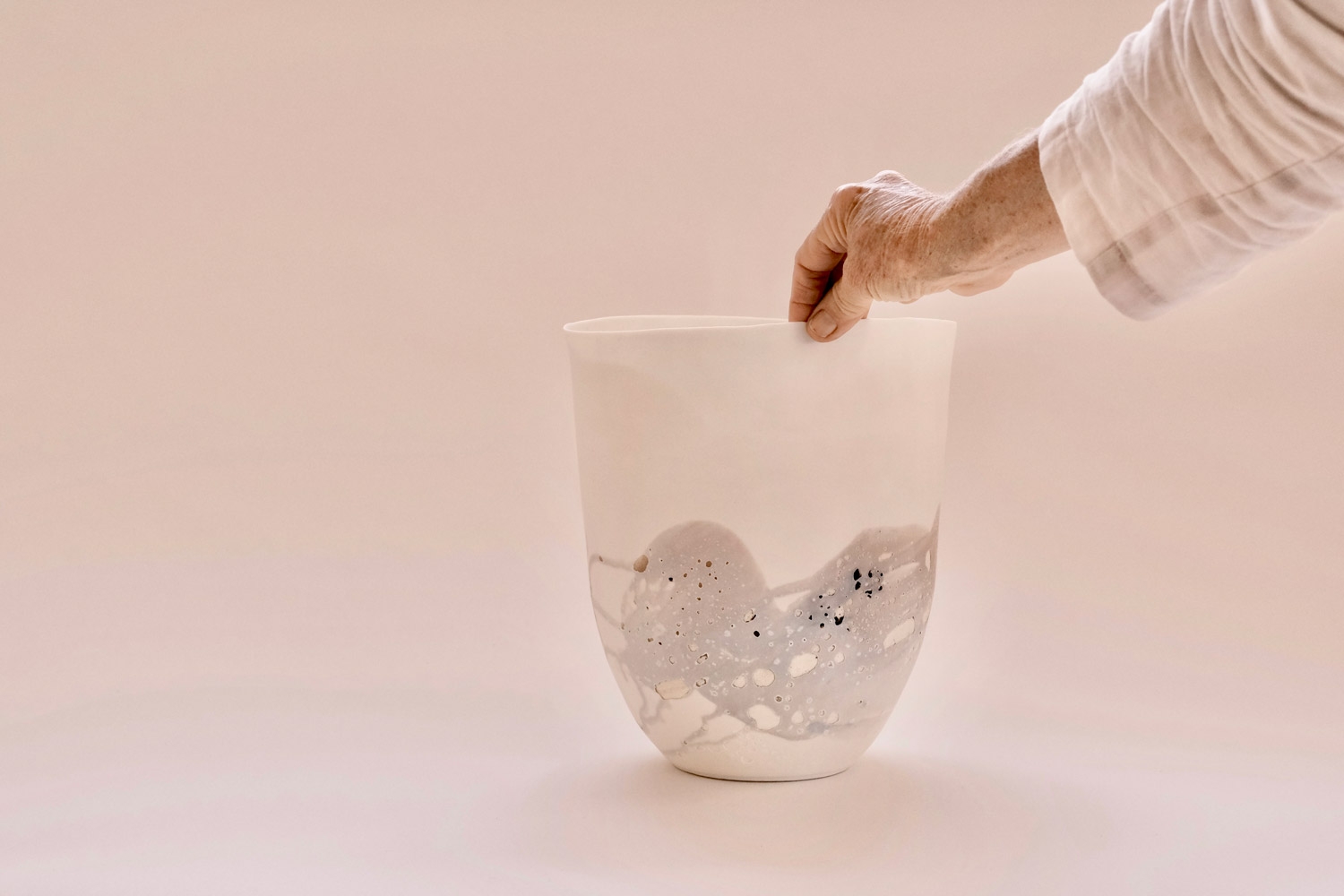
- She loves the purity of unglazed ceramics
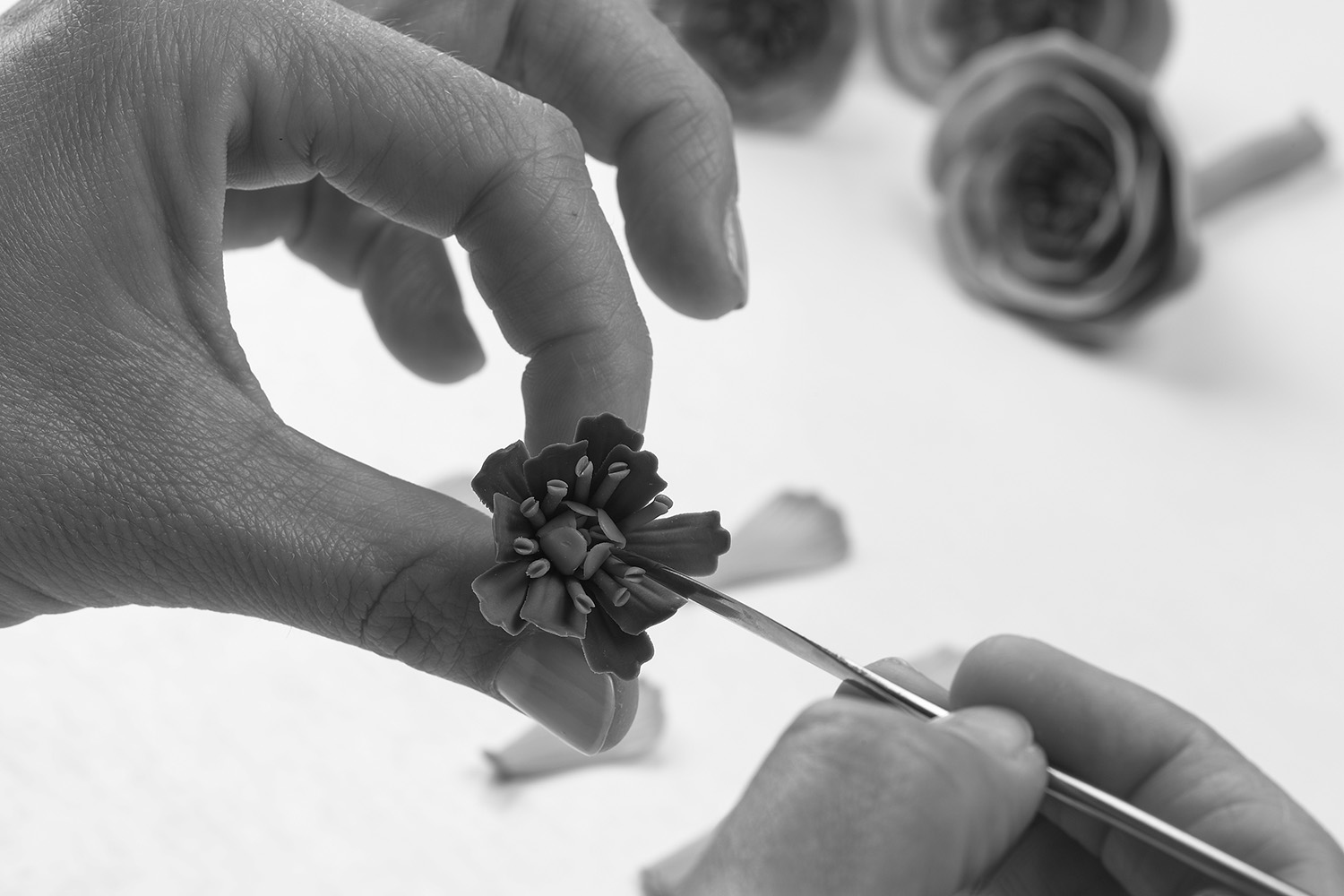
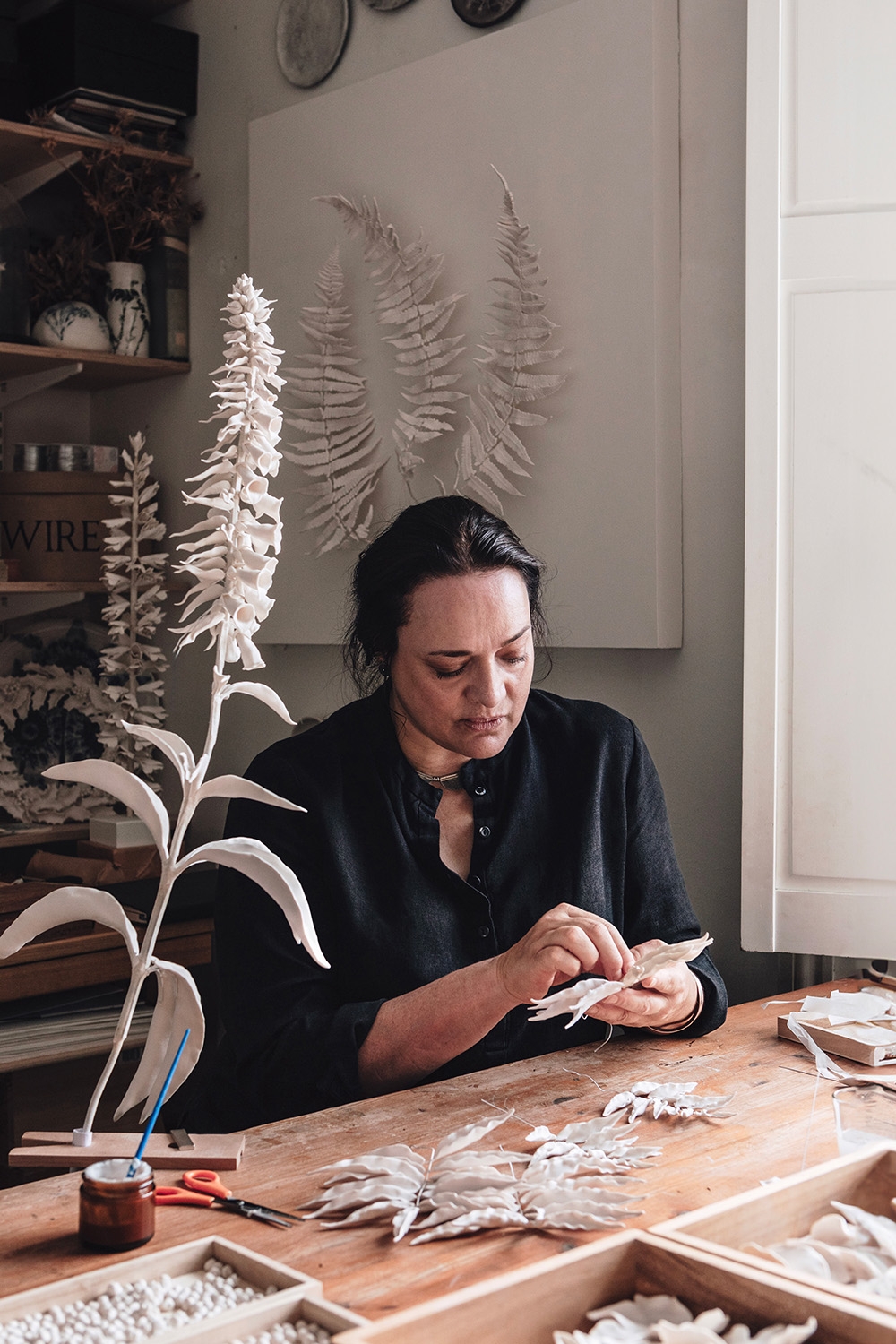
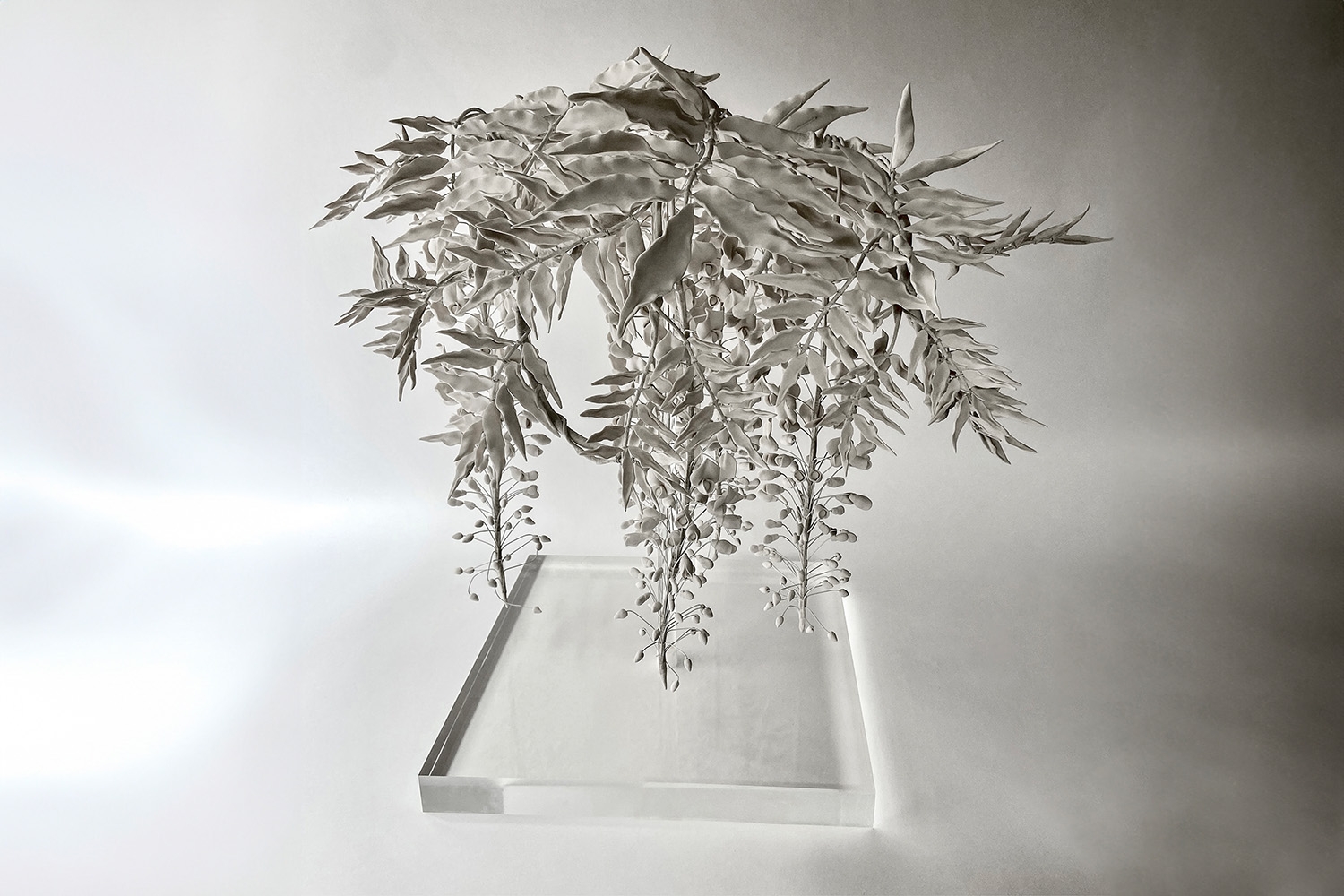
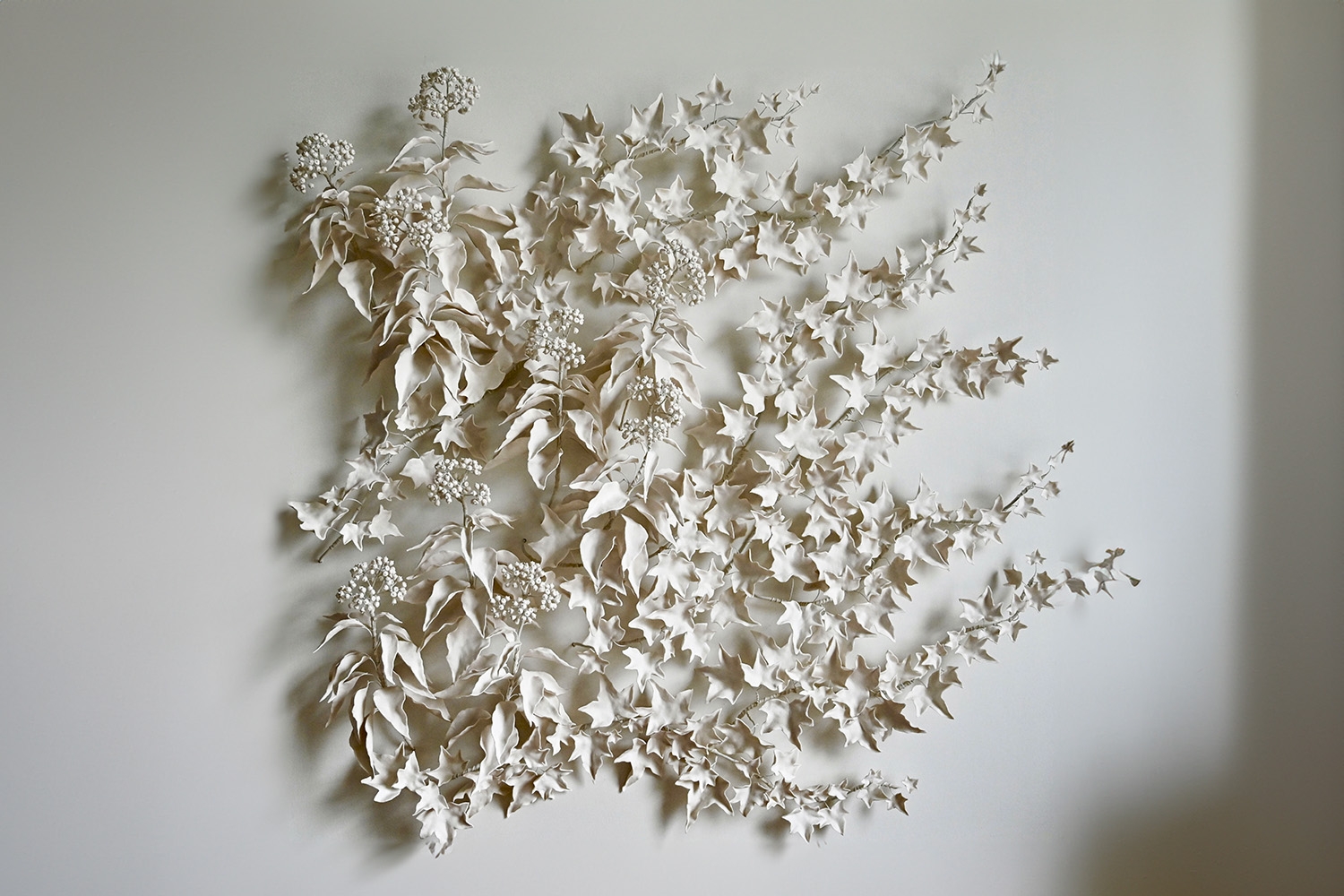
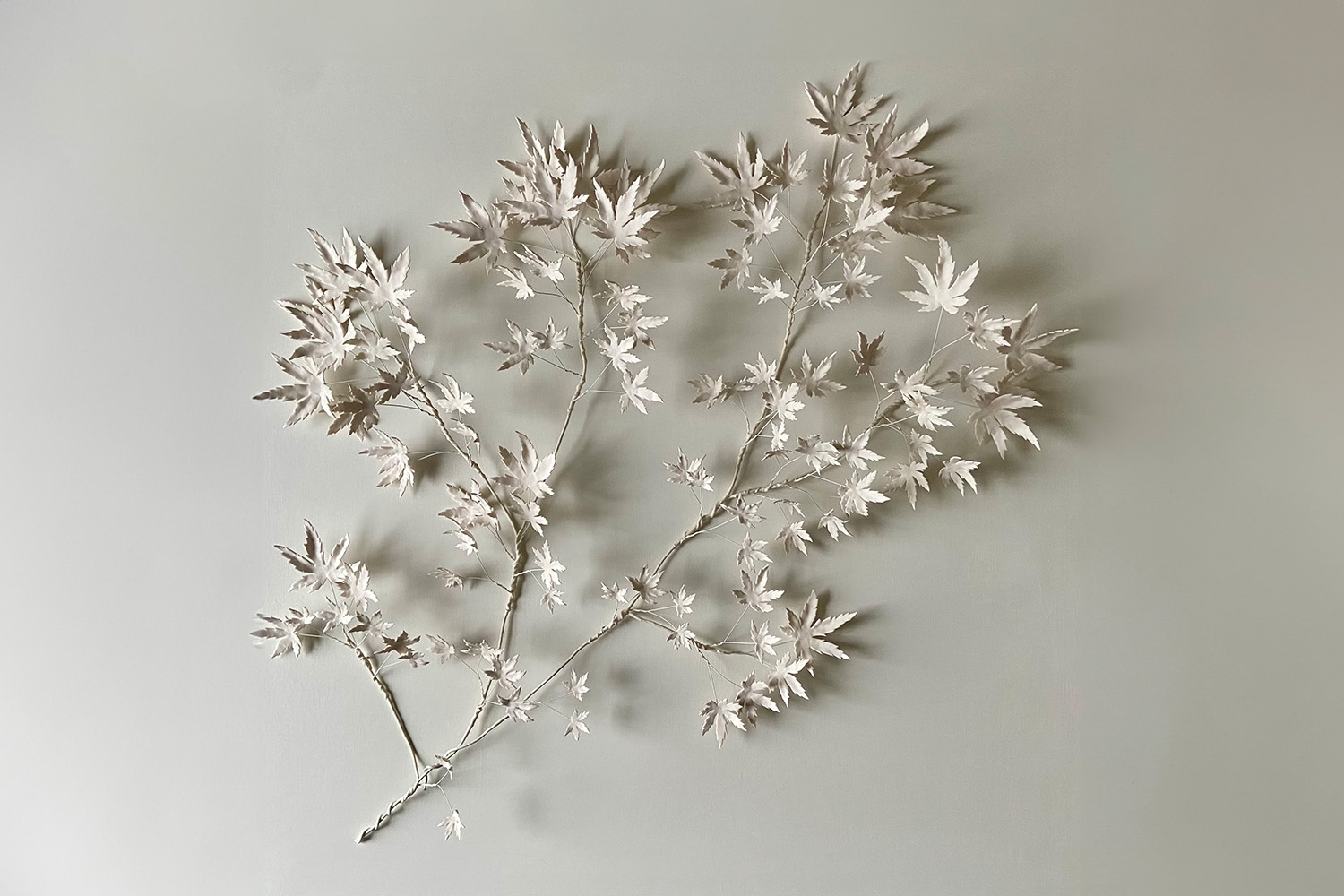
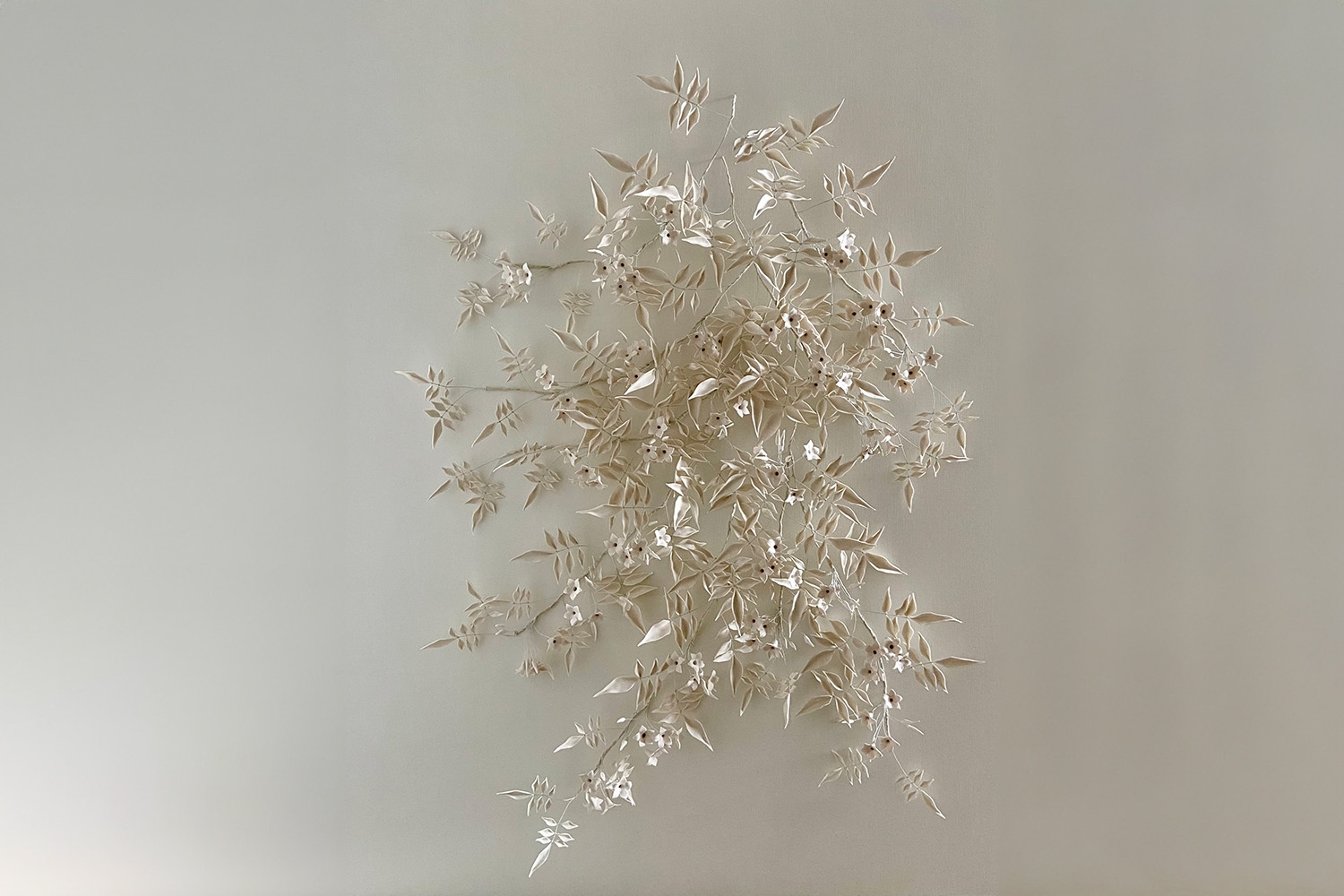
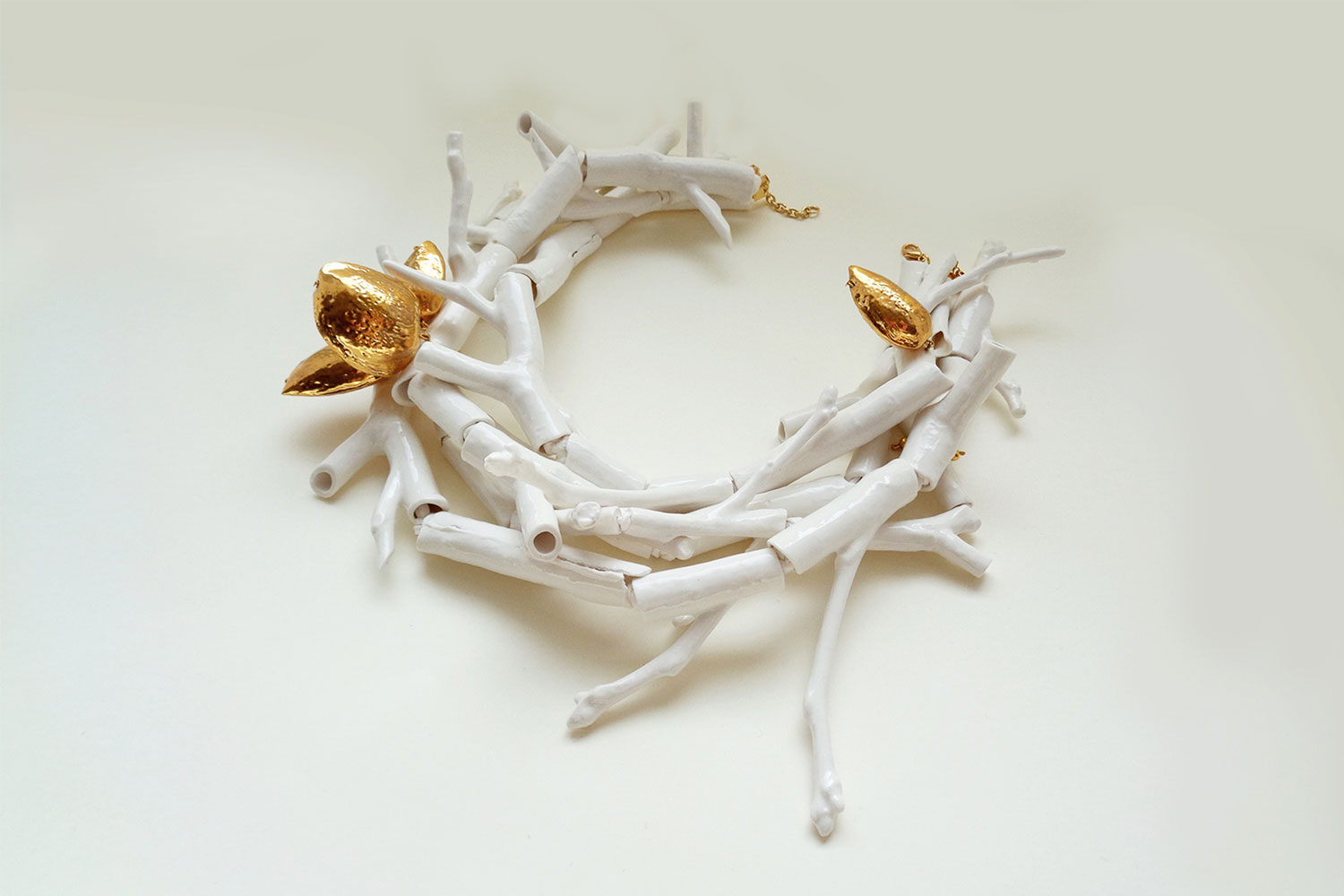
Zuleika Melluish has observed and painted plants for a long time. She is now an established ceramicist who continues to draw her inspiration from nature, especially that found around her home in London and in her perennial garden in the Welsh countryside. She takes plants such as jasmine and wisteria or wild flowers like foxglove and dog rose and impresses them into clay to create enchanting pieces. Zuleika's approach is much like a botanist’s: meticulously studying and thoroughly dissecting the patterns and textures of flowers, petals, leaves and stems. Her latest works focus on representing these plants as 3D sculptures using porcelain, tissue paper and wire. She painstakingly models each element of leaf, bud or petal by hand, mimicking the patterns and intricate detail she observes in nature.

INTERVIEW
I have painted, drawn and printed with plants for many years. Around 2012, I created a garden from scratch in the Cambrian mountains in Wales. The plants that grow in this wild garden are an ever-evolving source of inspiration for my sculpture work today.
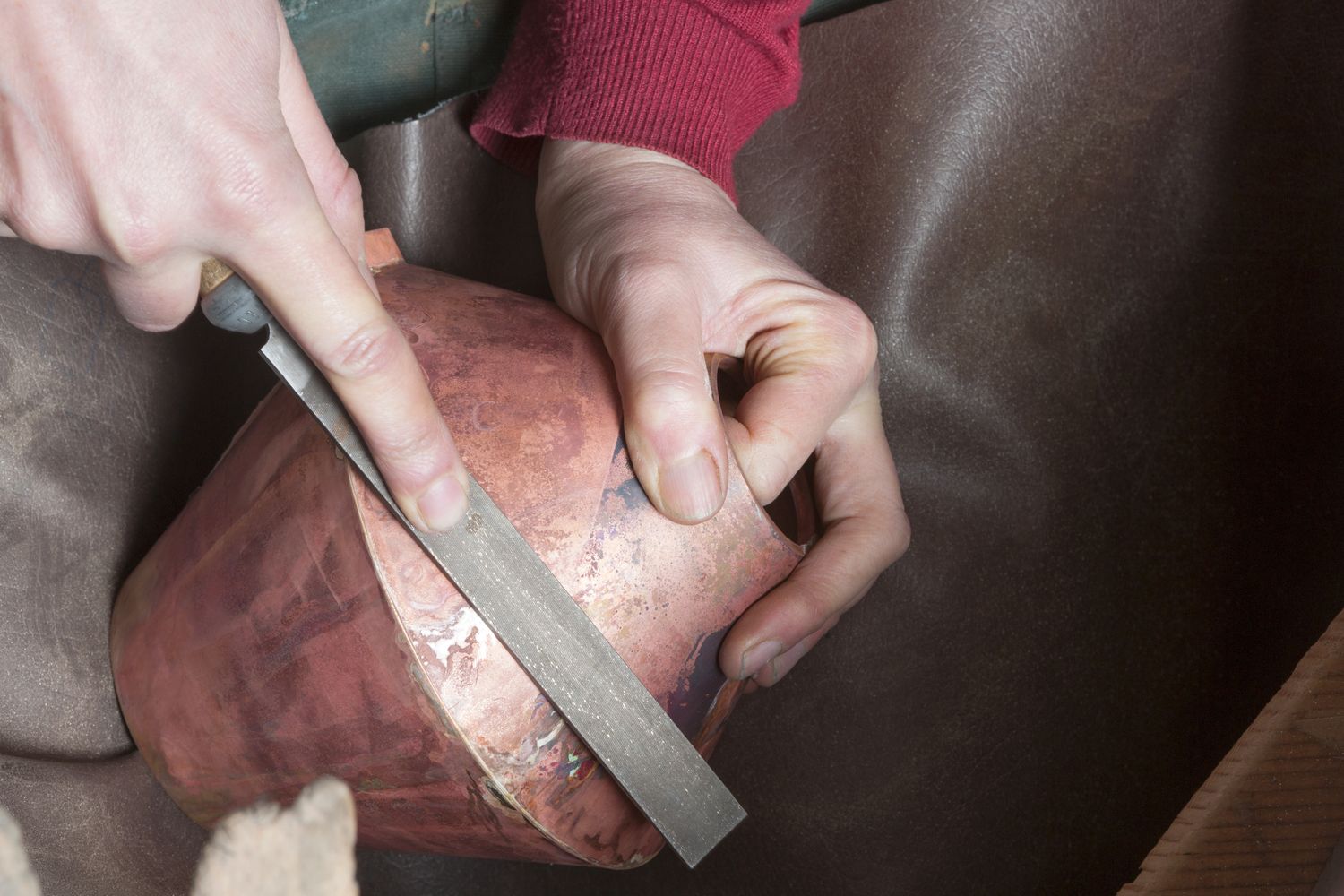
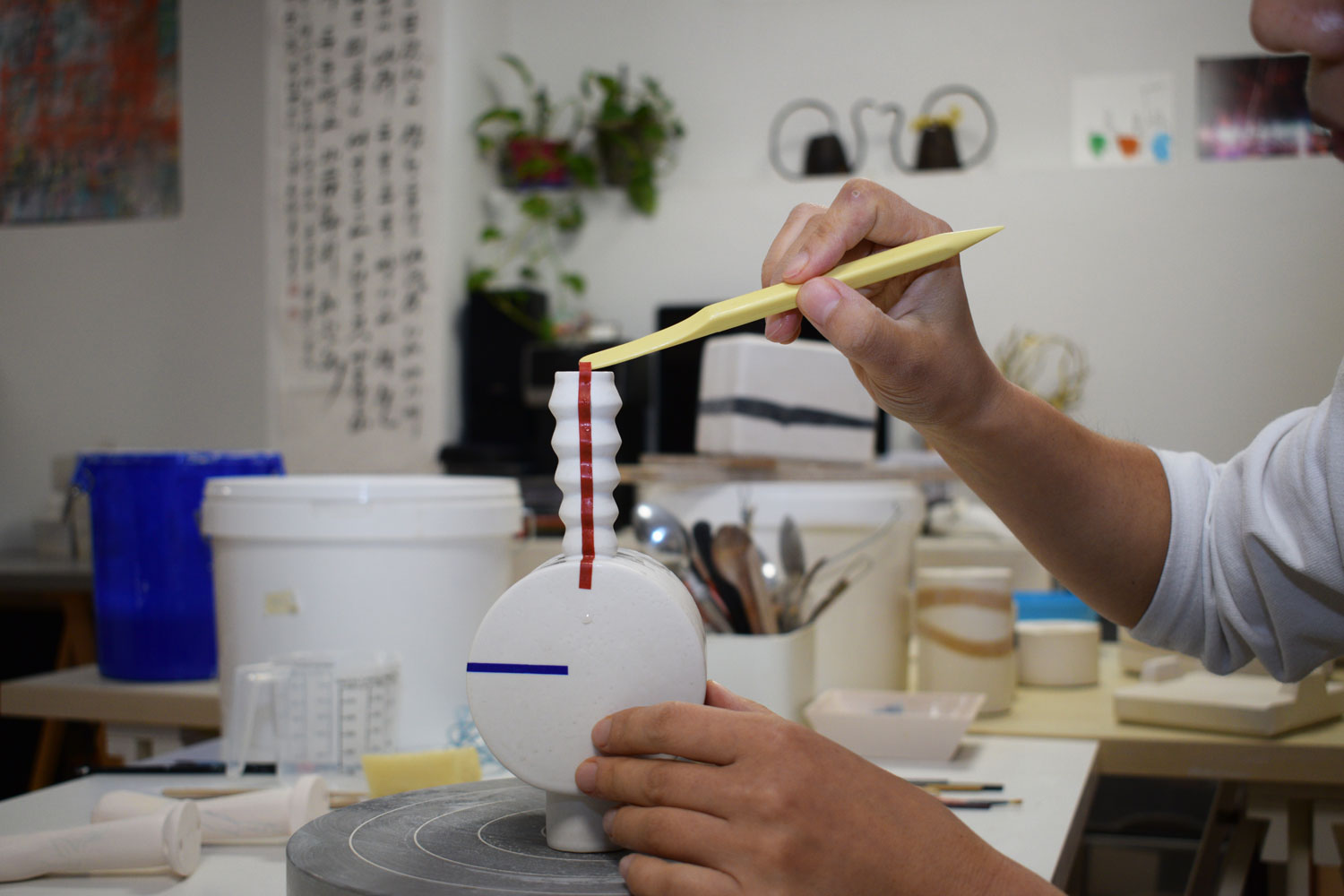
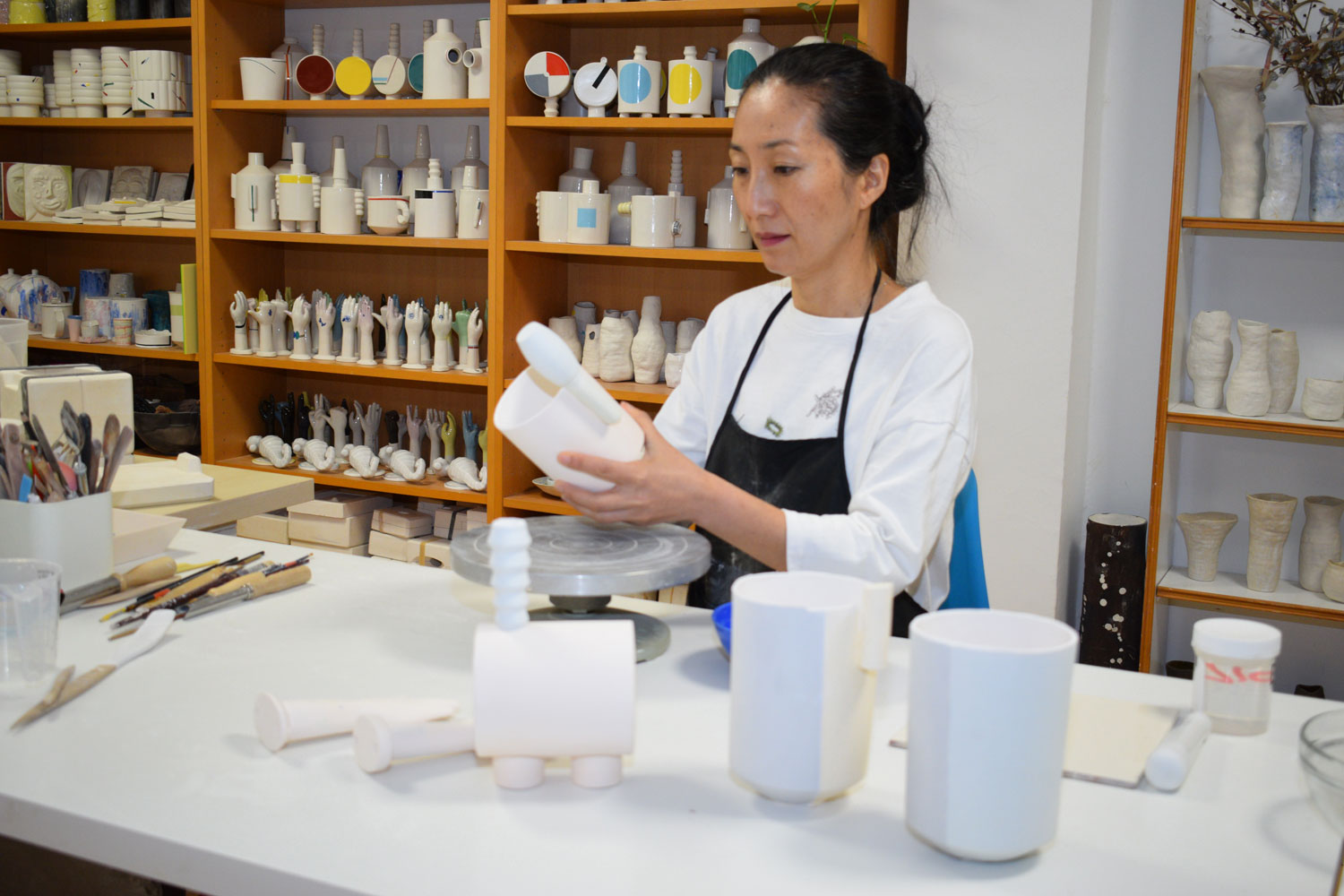
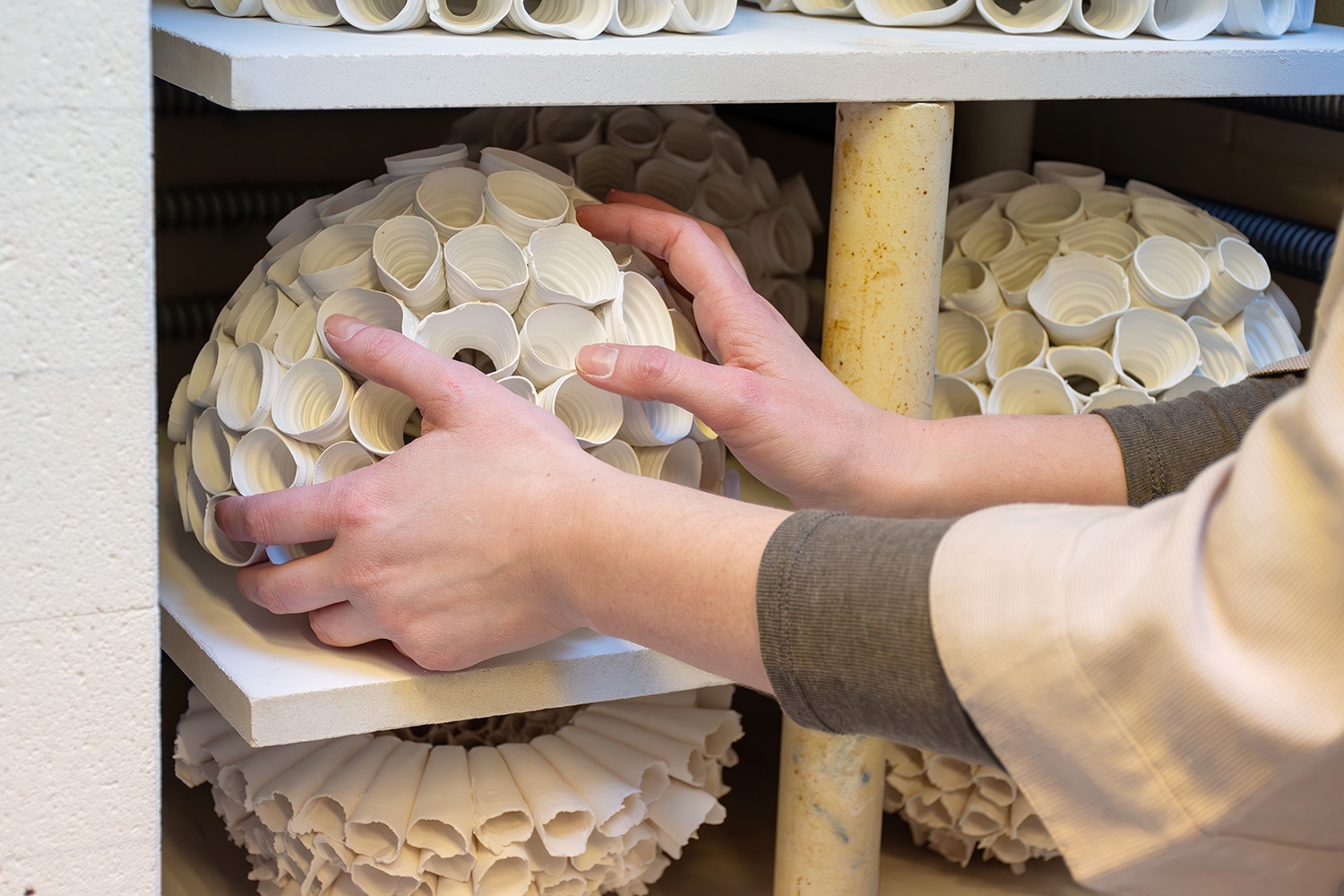
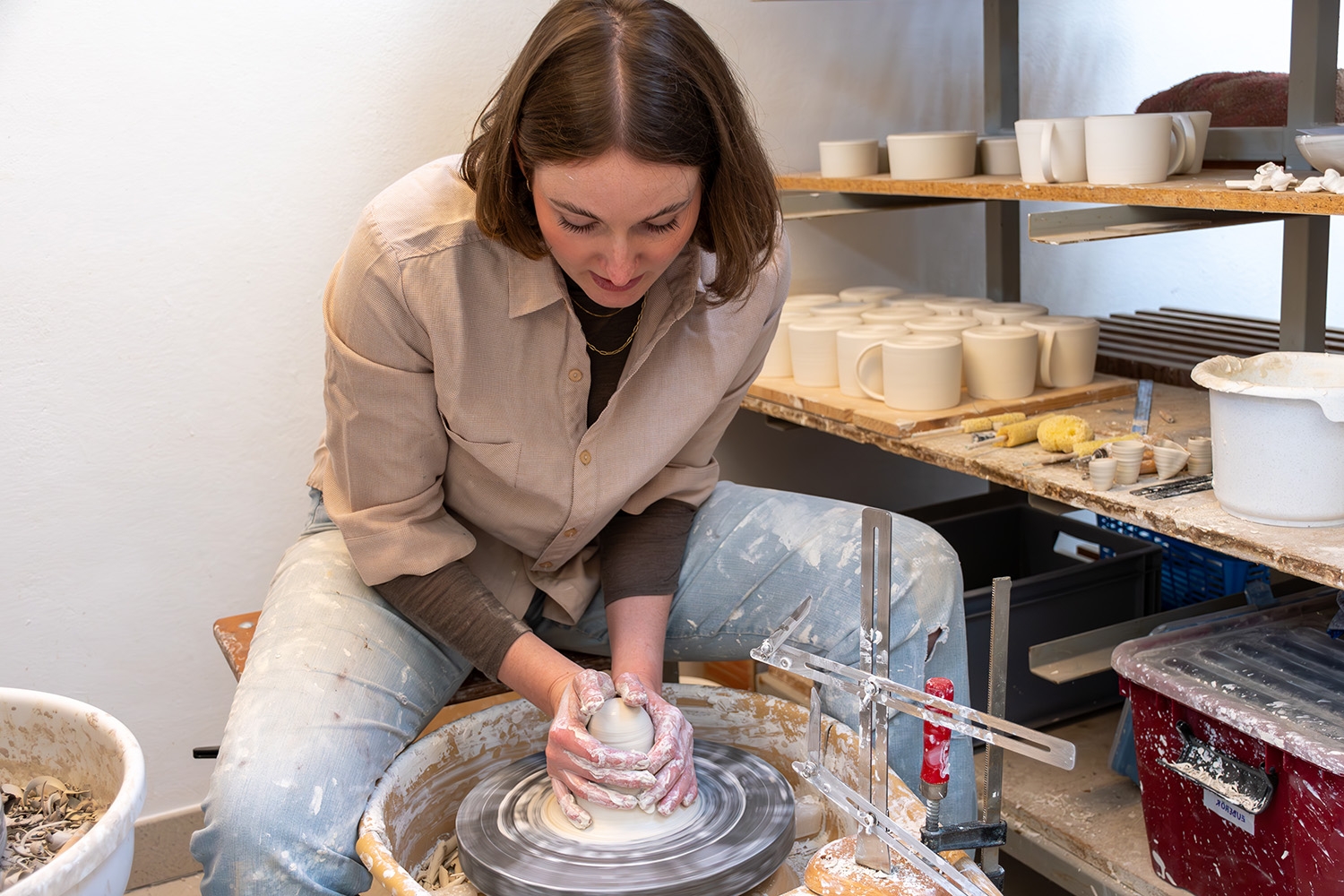
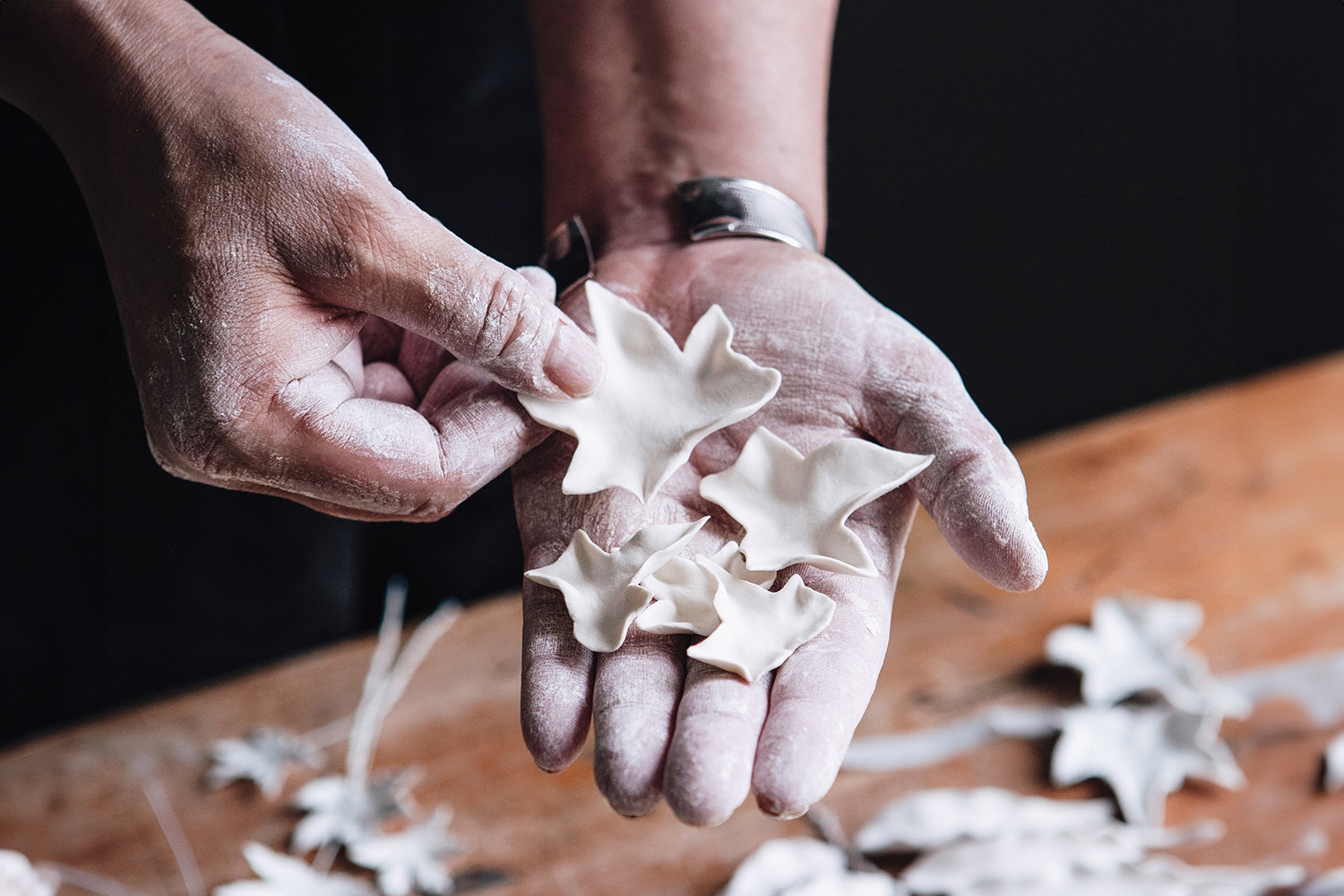
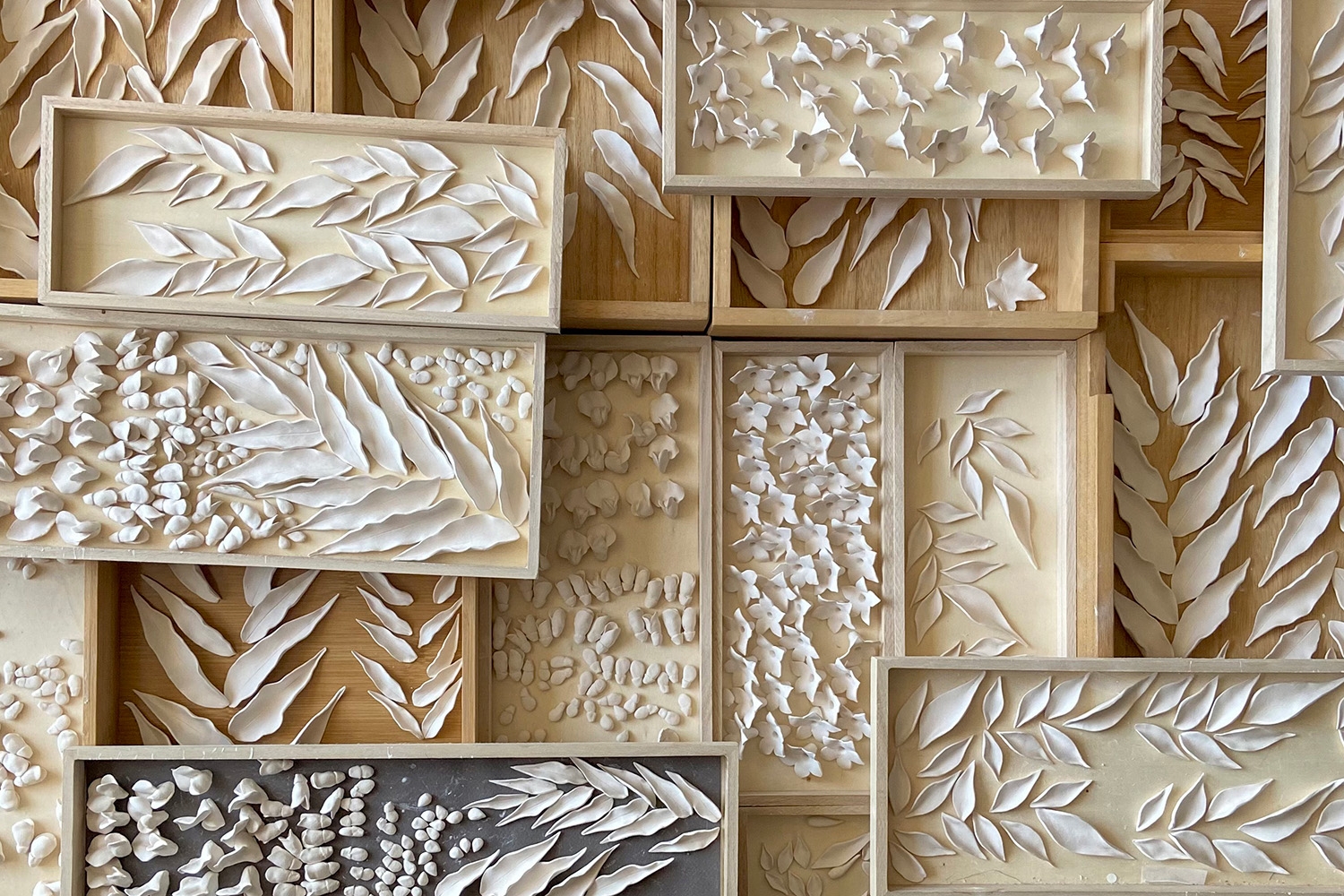
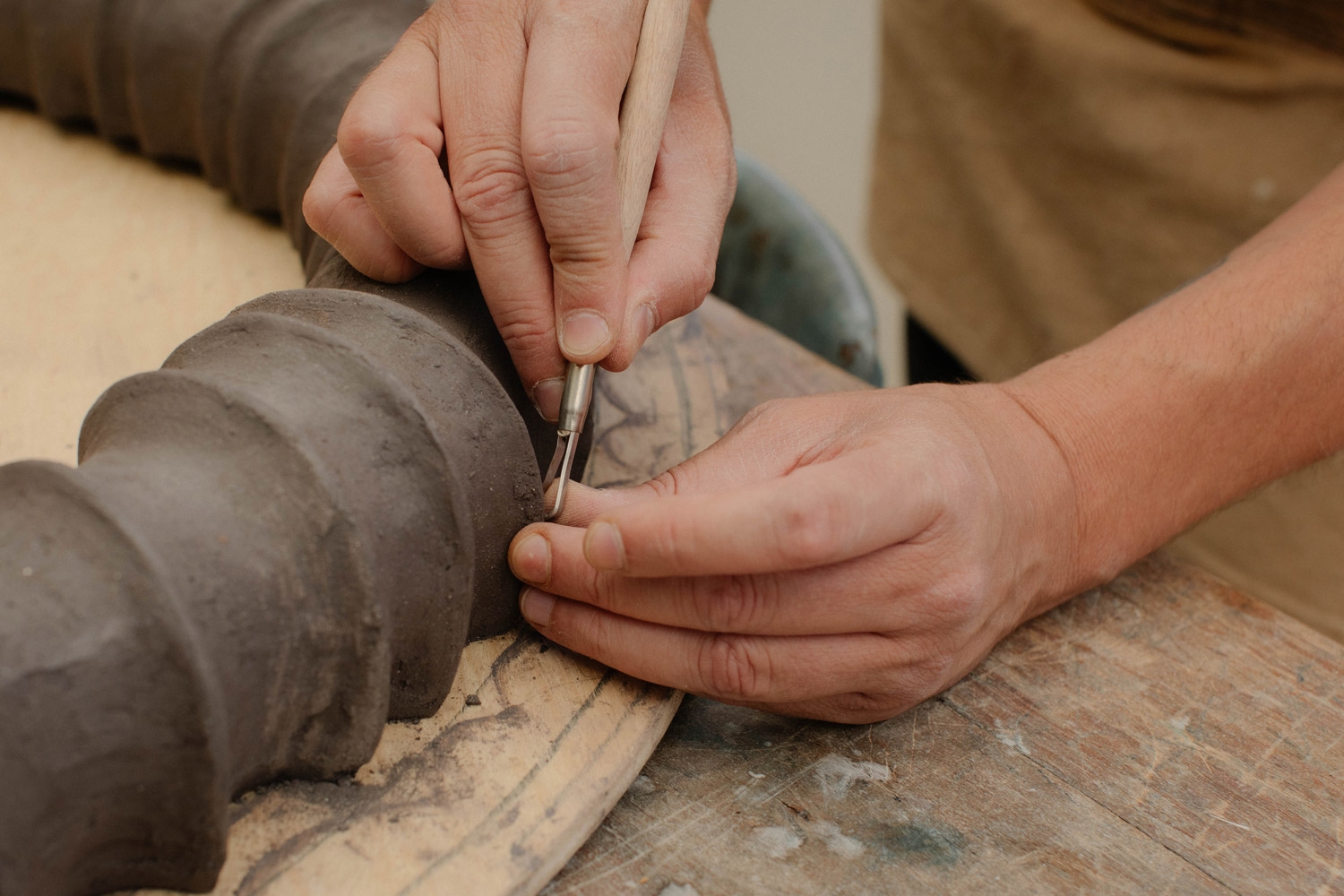
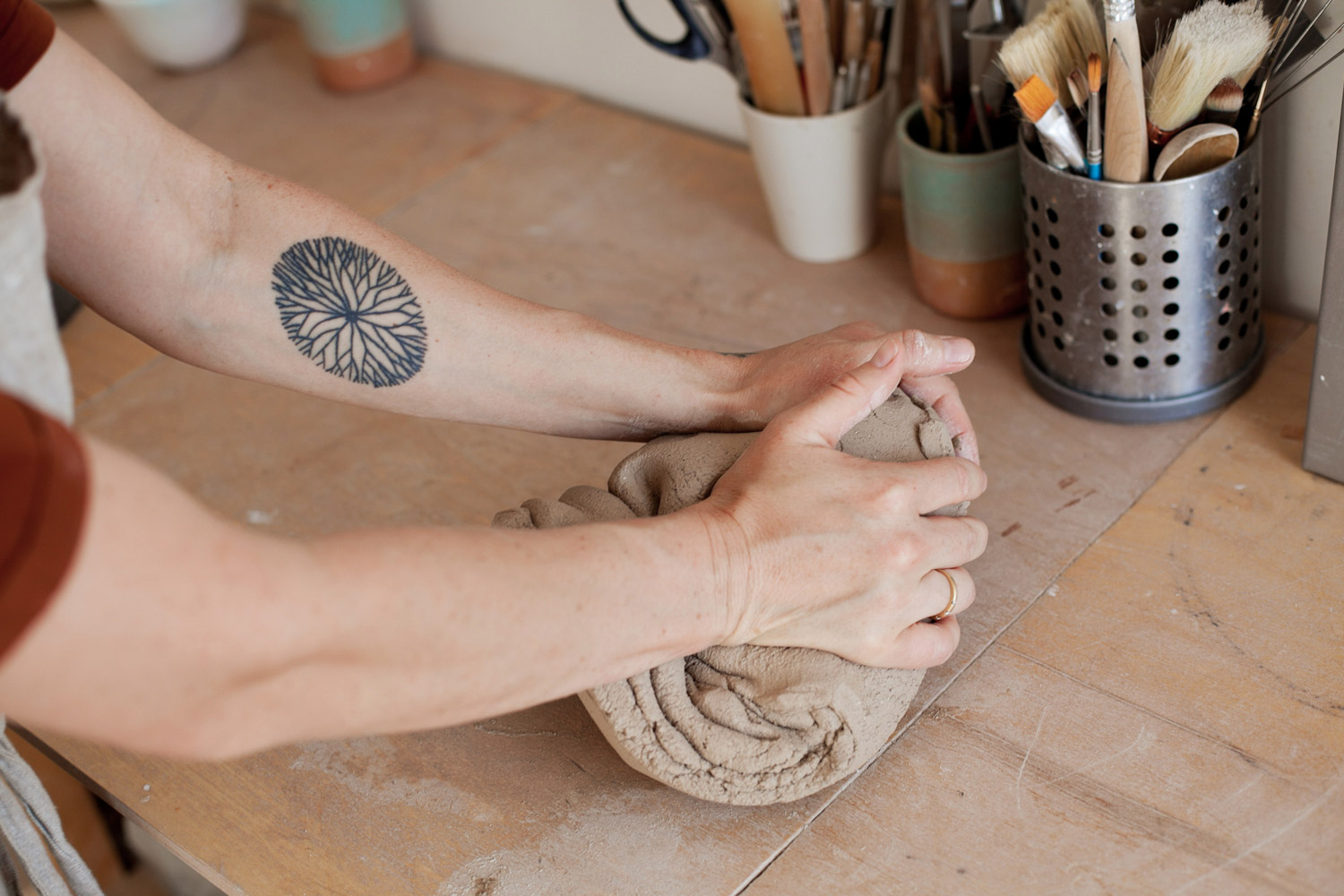
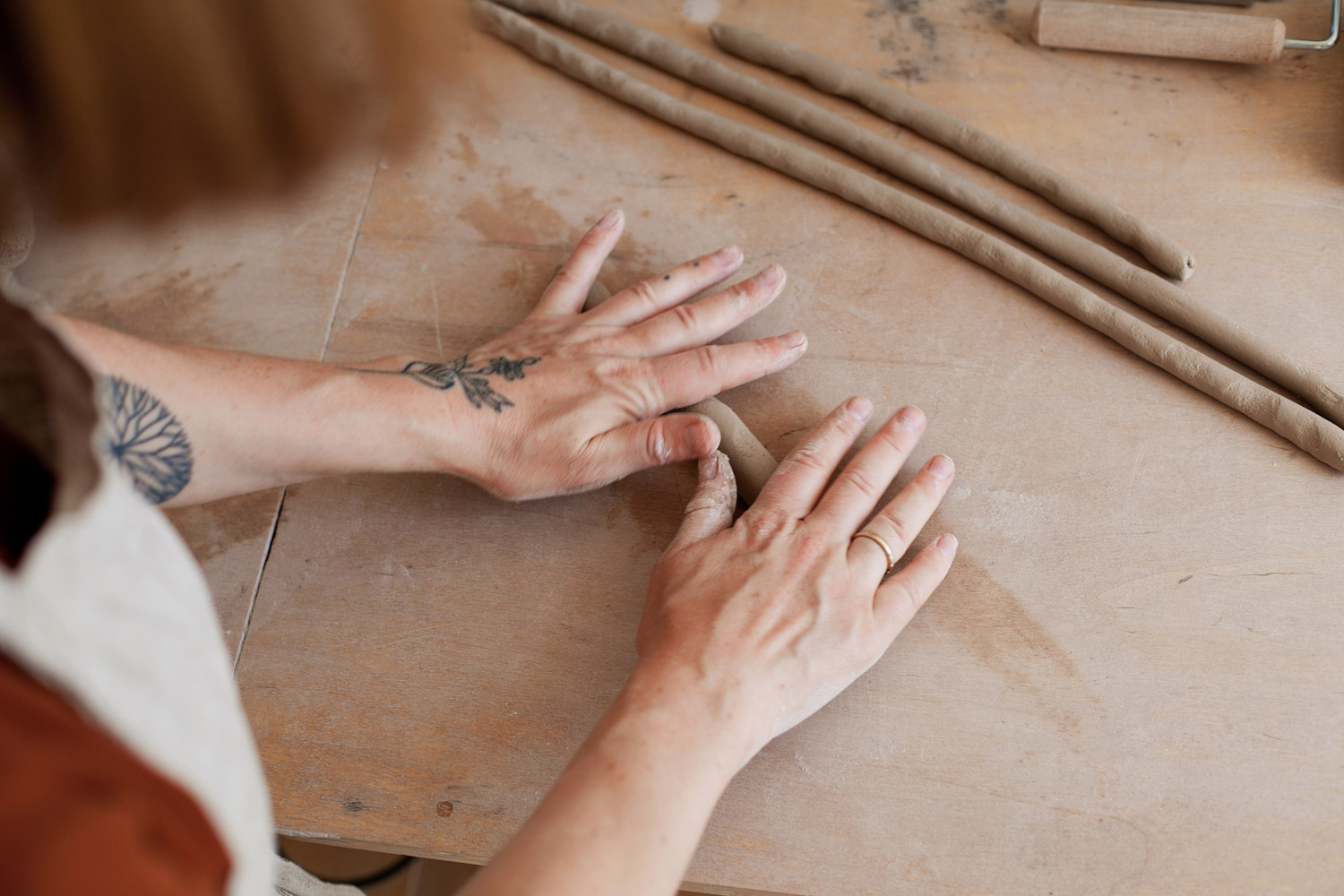
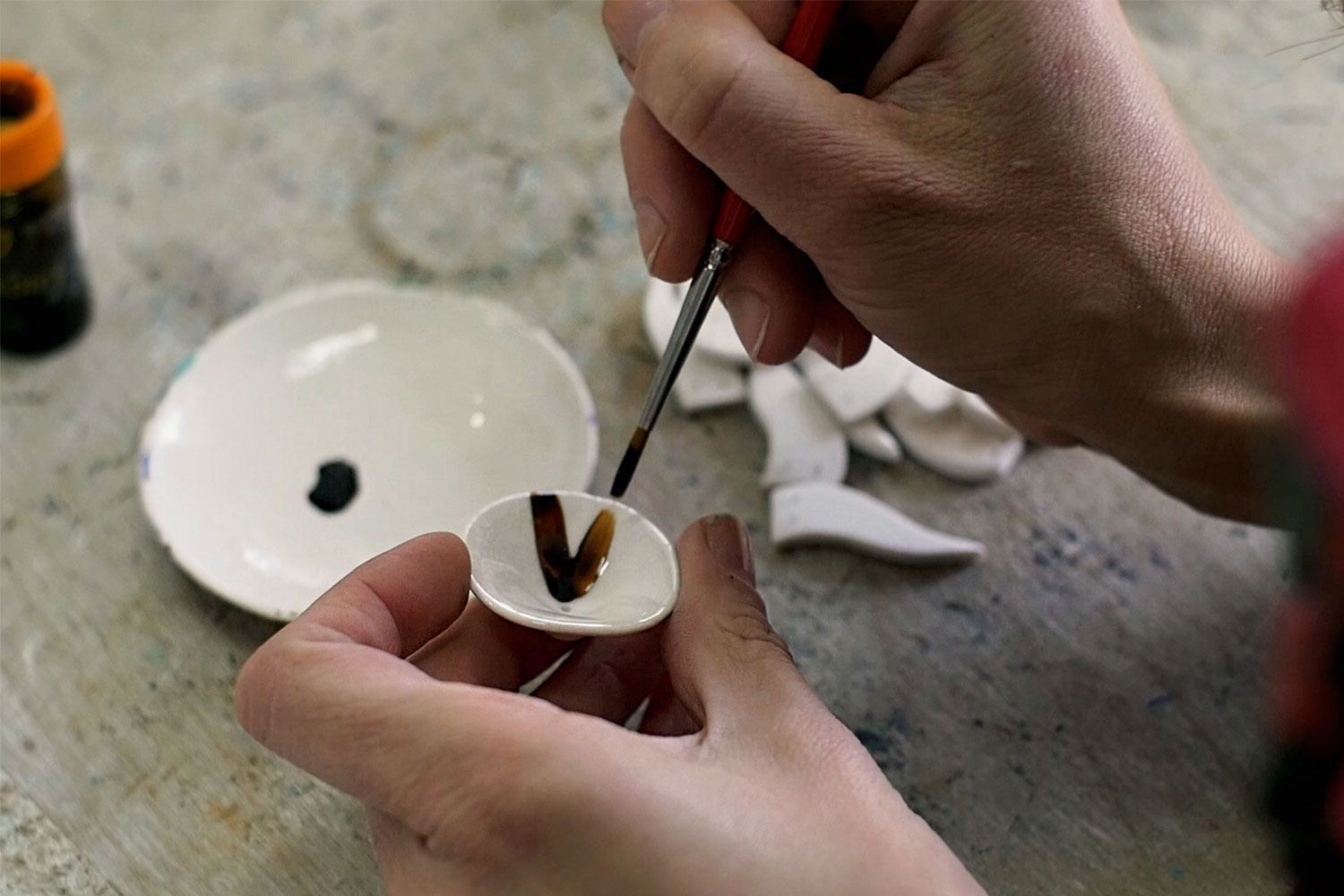
My hands and eyes are the main tools used to create my sculptures. I model each component out of clay by hand after making sketches of the plants that are my inspiration. Once fired, I use my hands, brushes and wire cutters to assemble the sculptures.
I love the repetitive process of making hundreds of leaves, buds or petals. As in nature, each piece seems superficially similar but each bears its own unique character in the curl of a leaf or the fold of a petal.
I have long been interested in Indian miniature painting which I have practised in the past. The observational details in these paintings mirror the textural patterns I find in botanics which are a part of my British heritage.
Zuleika Melluish
Porcelain maker
London, United Kingdom
ADDRESS
Address upon request, London, United Kingdom
AVAILABILITY
By appointment only
LANGUAGES
English
Homo Faber Finds is a new service aiming to inspire admirers of craft to connect and collaborate with exceptional artisans.
We invite you to submit an enquiry here.

DSC02402_©Meg-Lovell.jpg)
DSC01379_©Meg-Lovell.jpg)
DSC01458_©Meg-Lovell.jpg)