Janny Baek
Ceramicist
New York, NY, USA
A practice of pixelated patterns
- Janny applies patterned, coloured clay to coil built forms
- She combines natural imagery with digital influences
- Her sculptural forms feature distorted, glitch-like surfaces
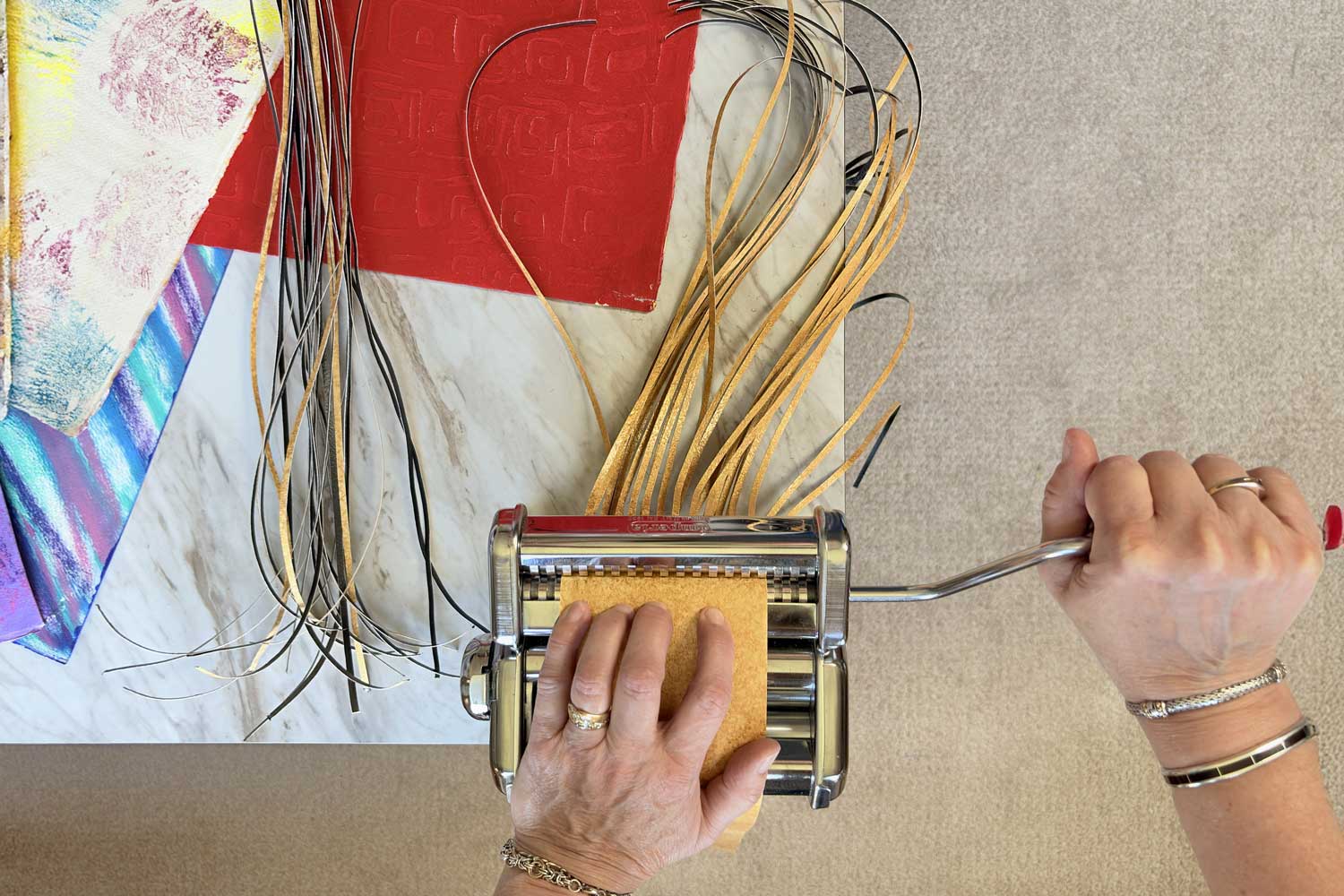
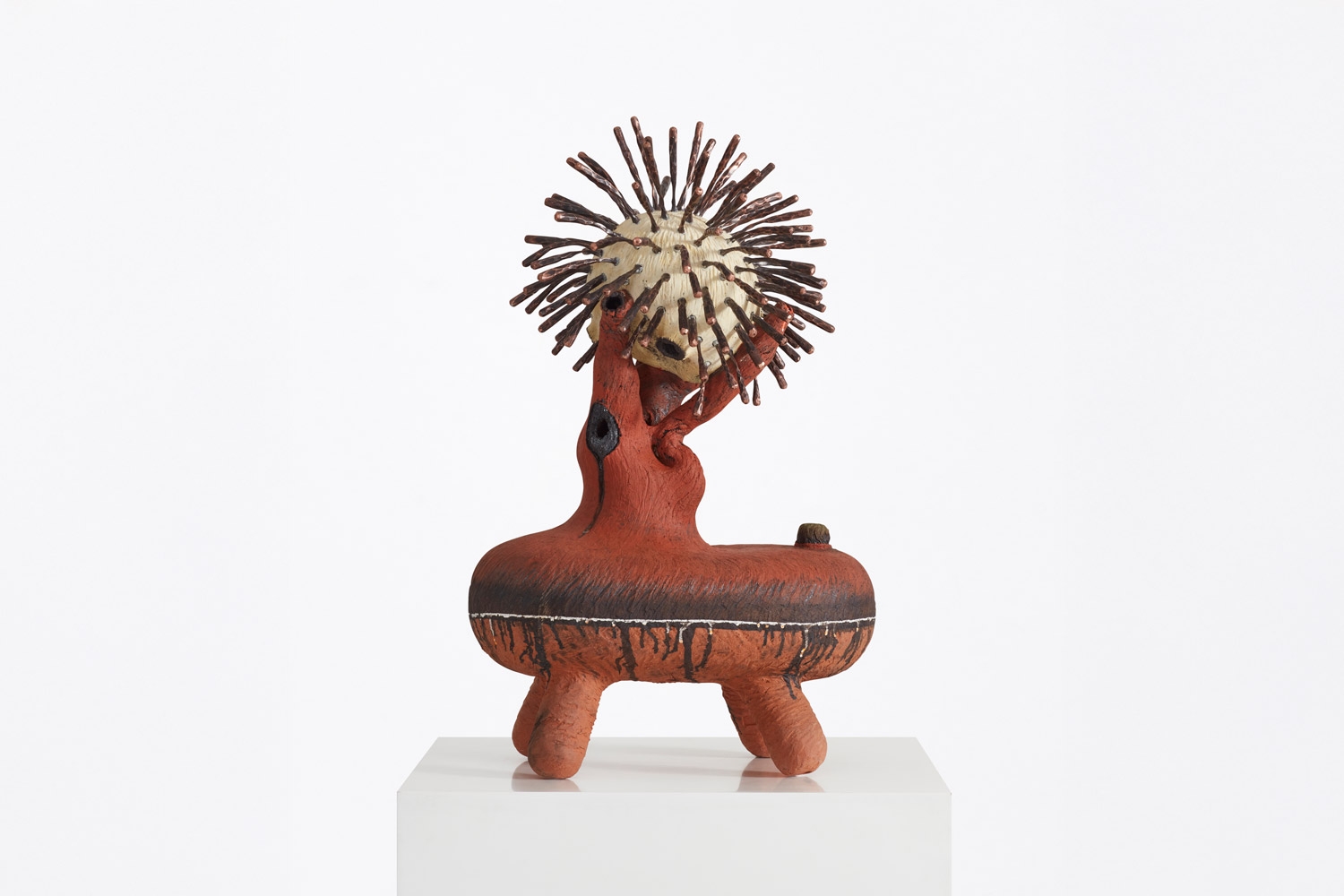
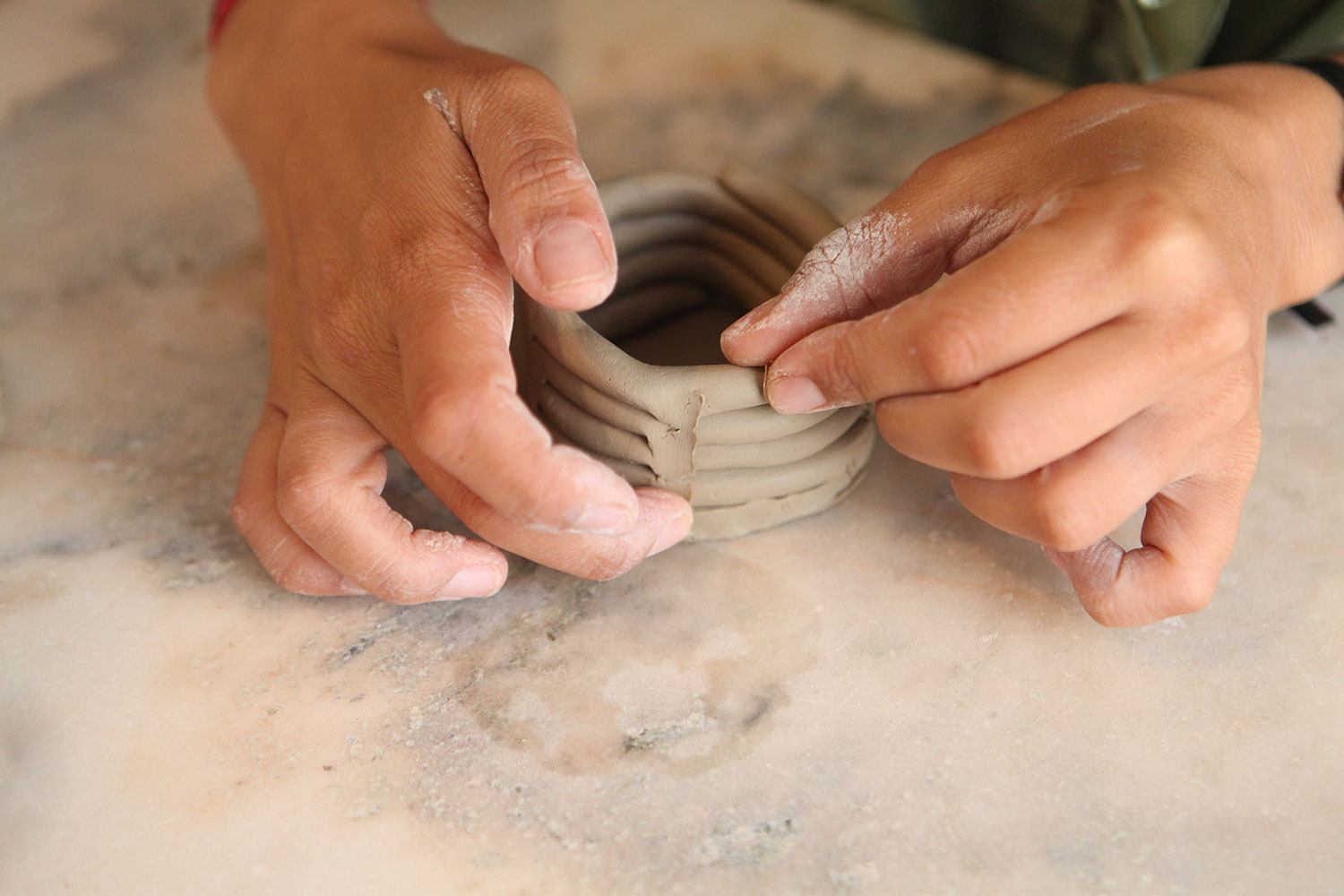
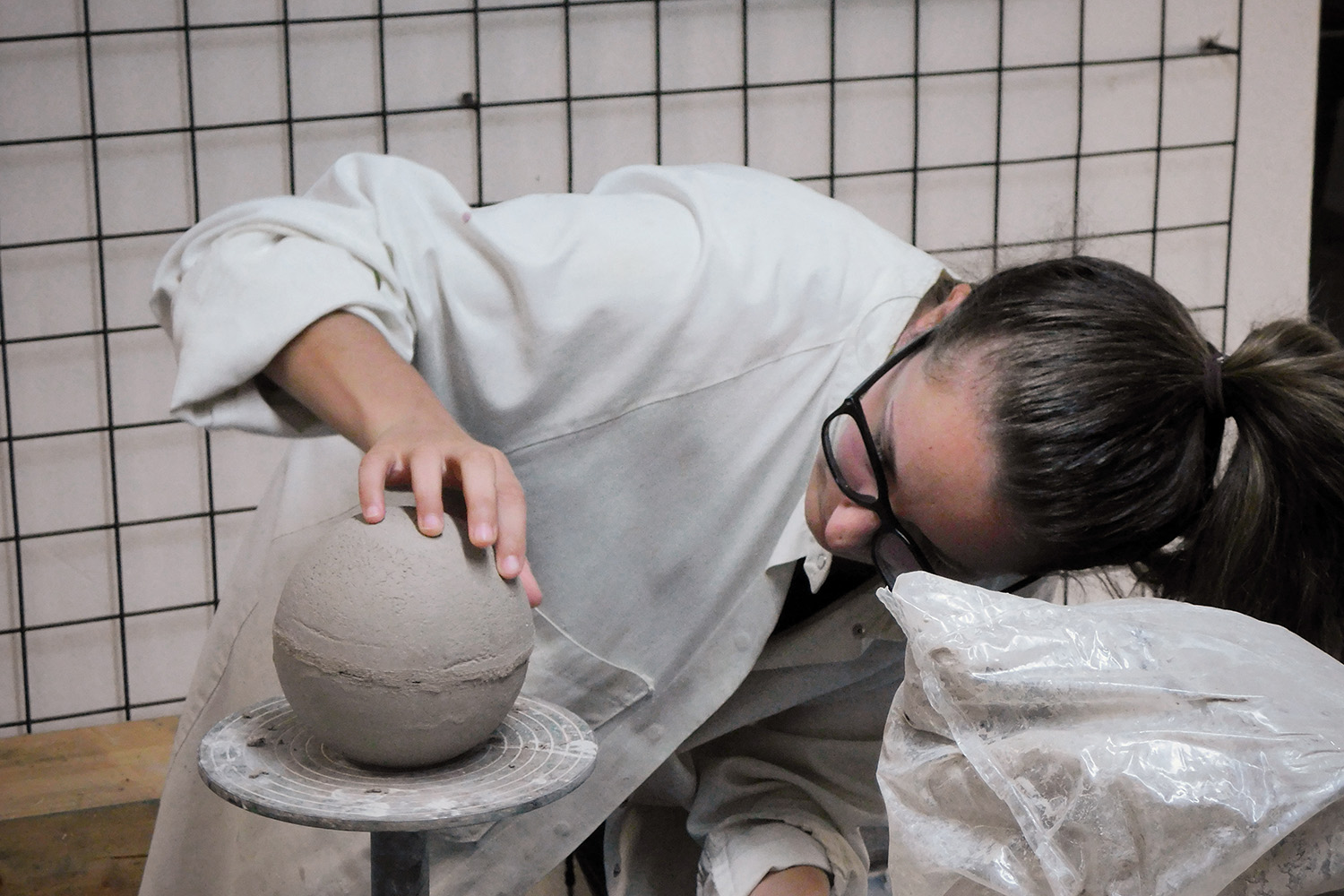
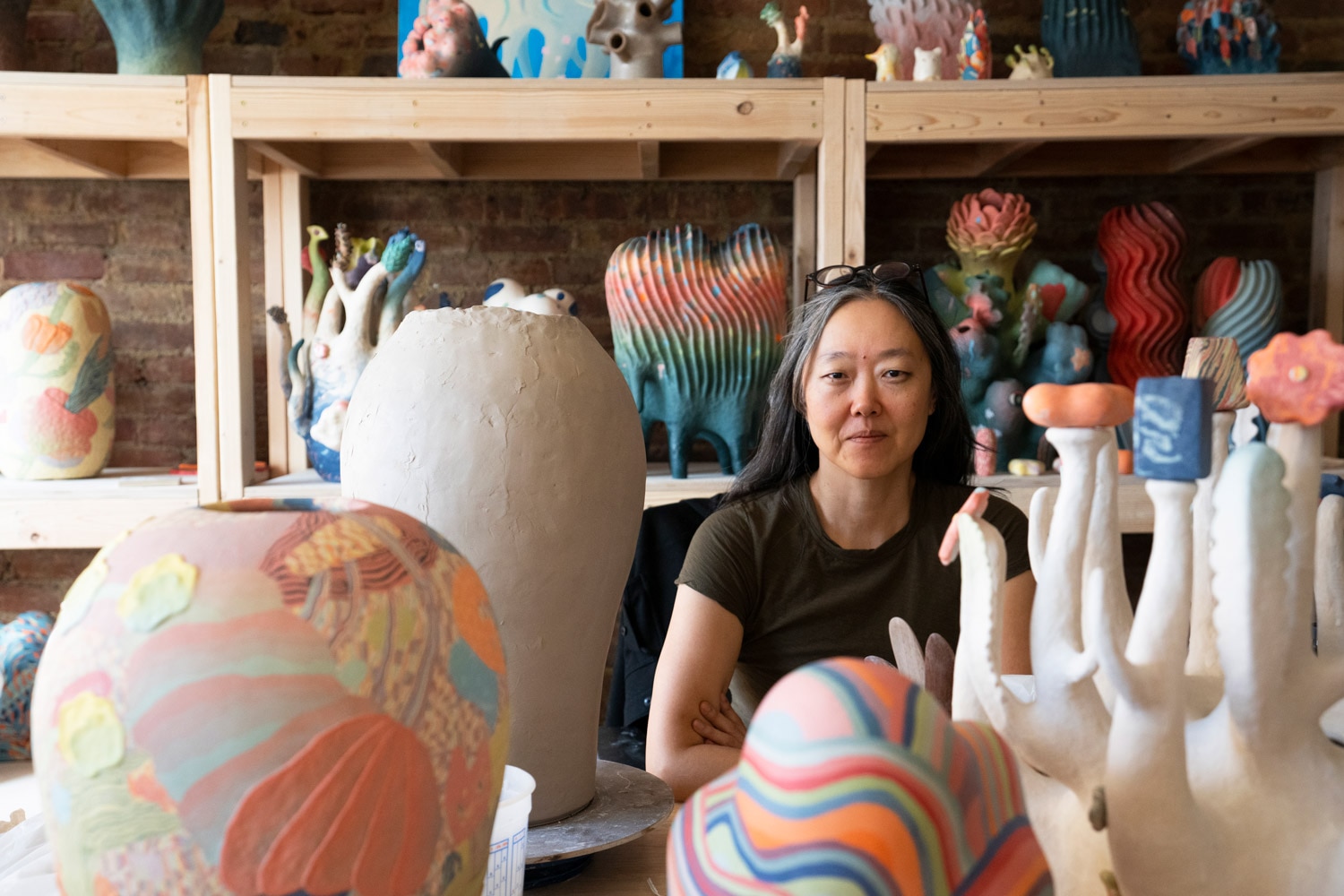
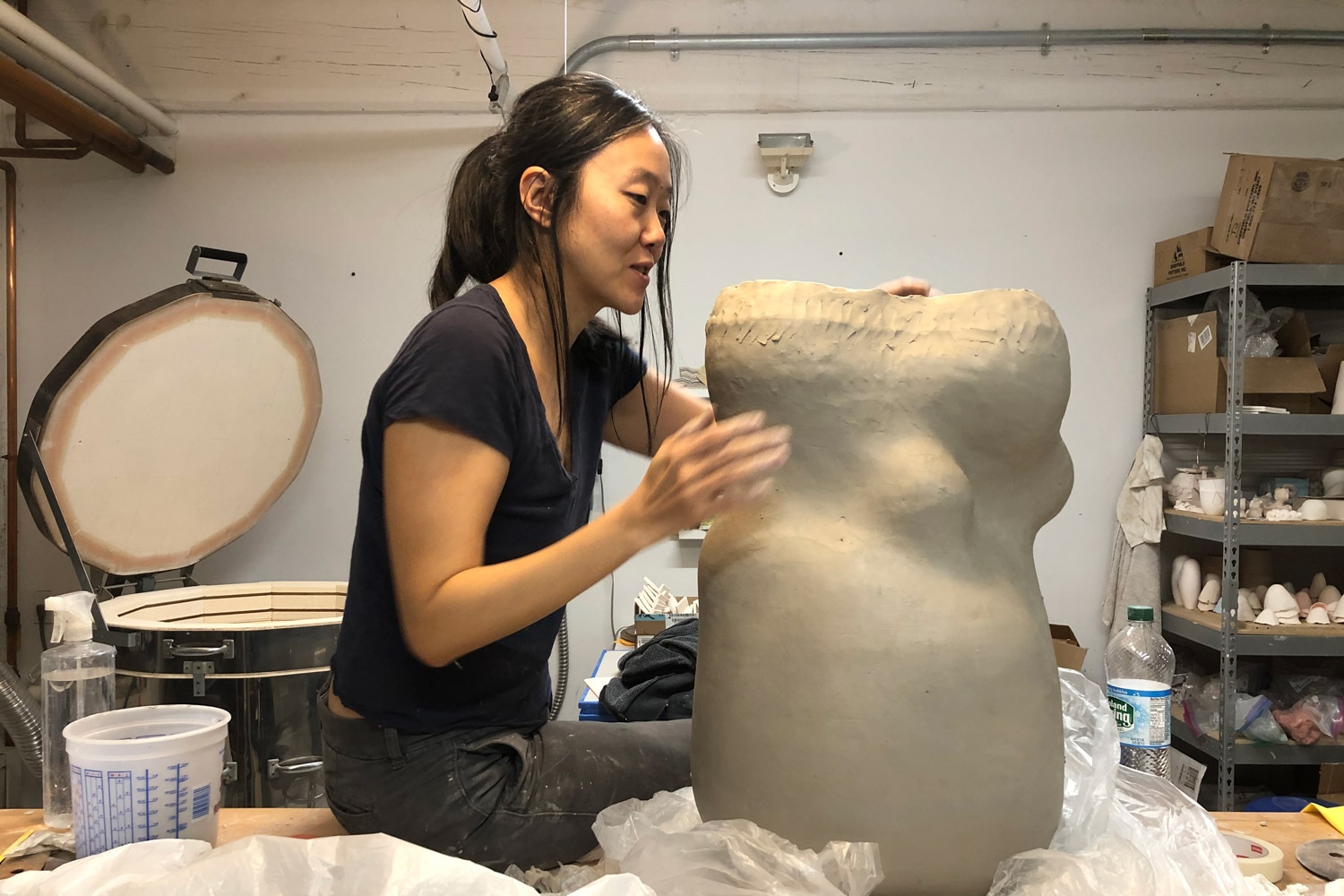
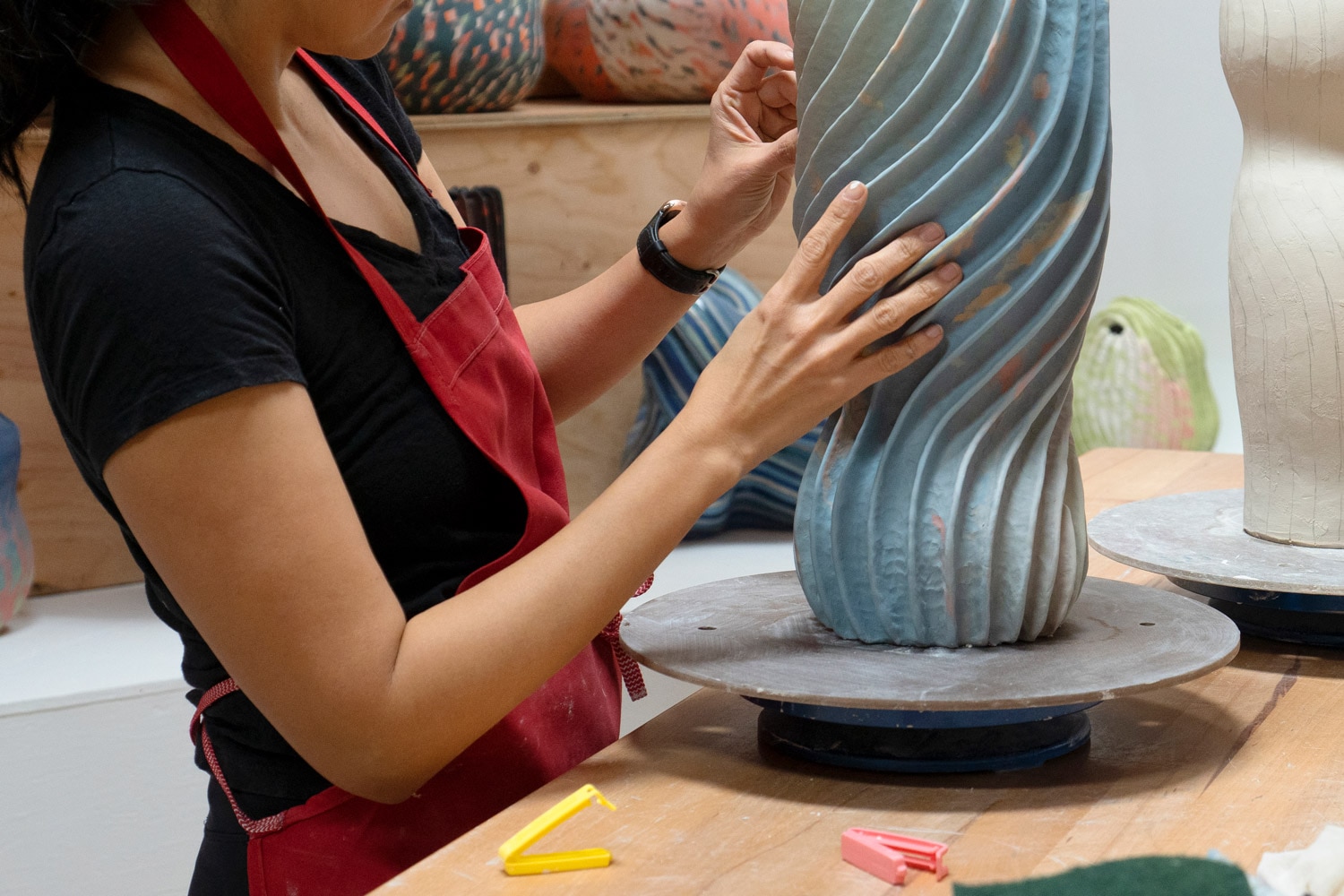
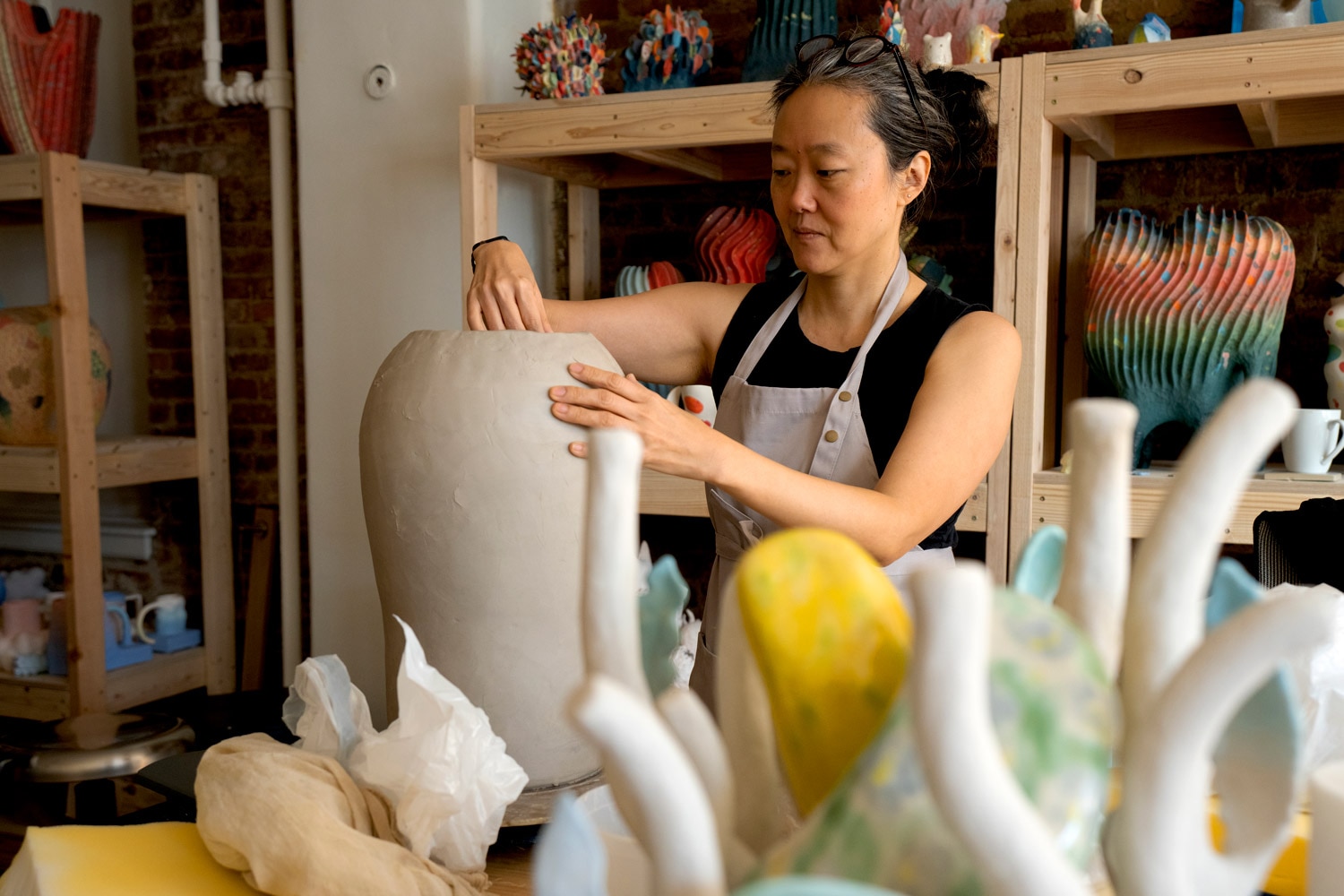
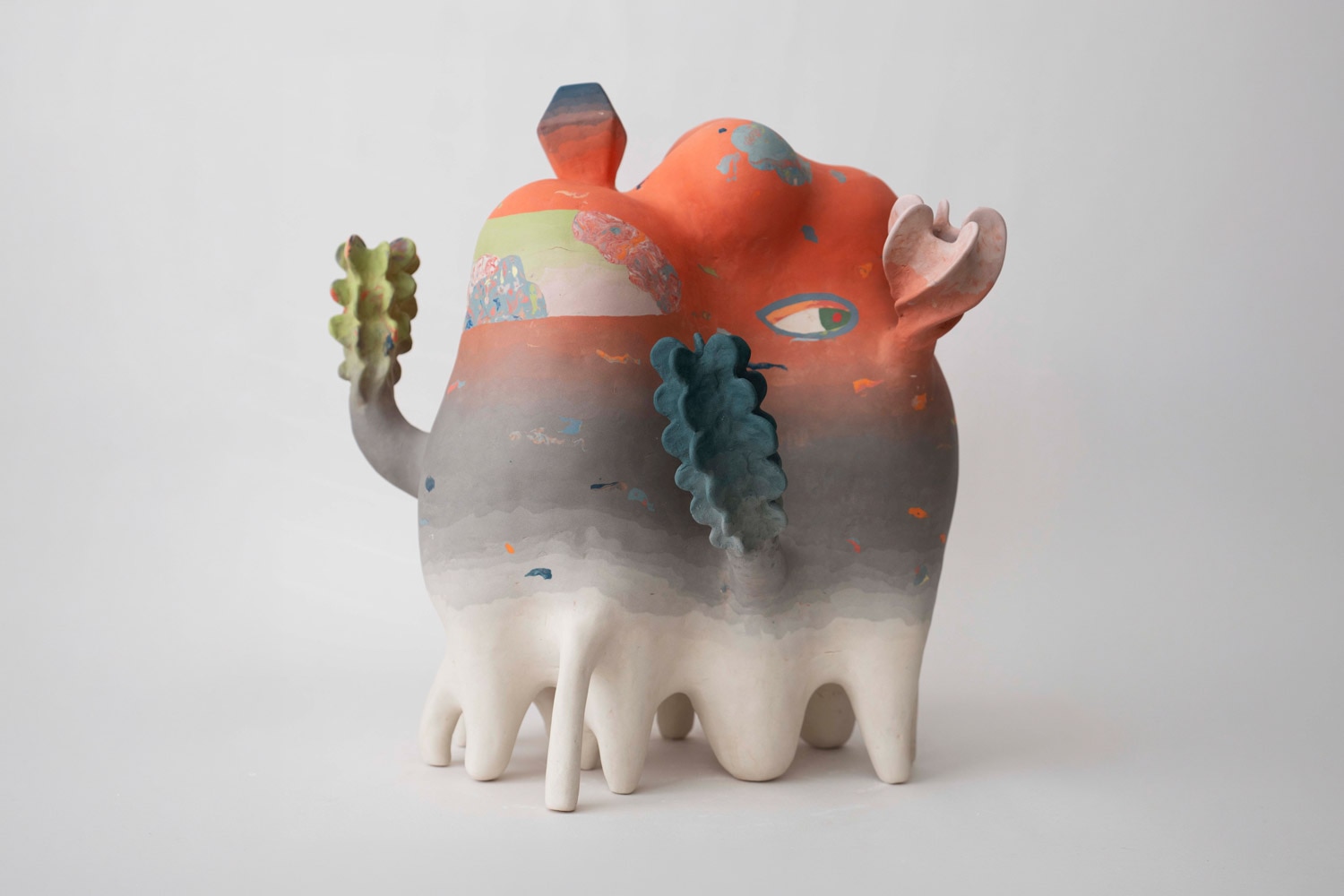
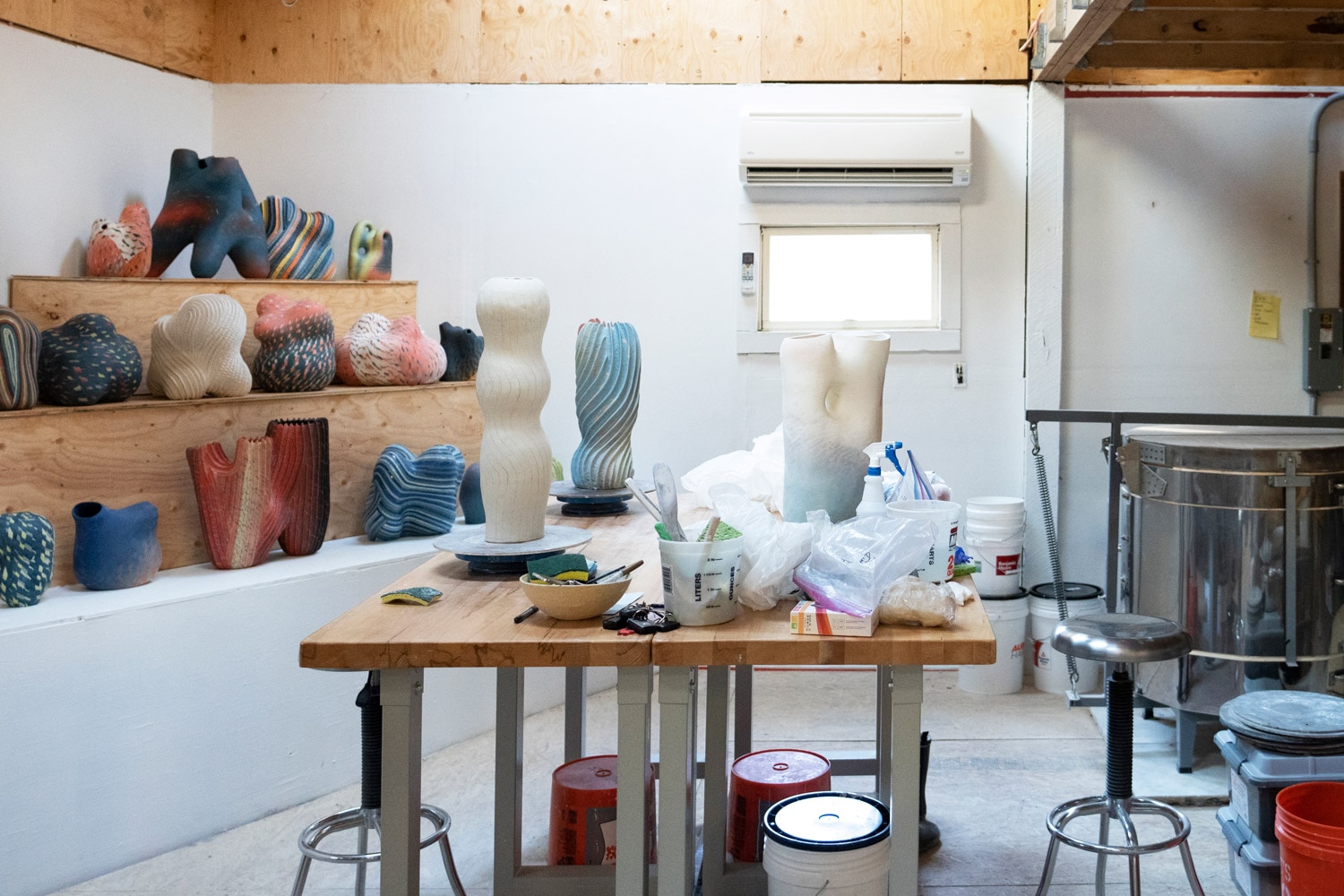
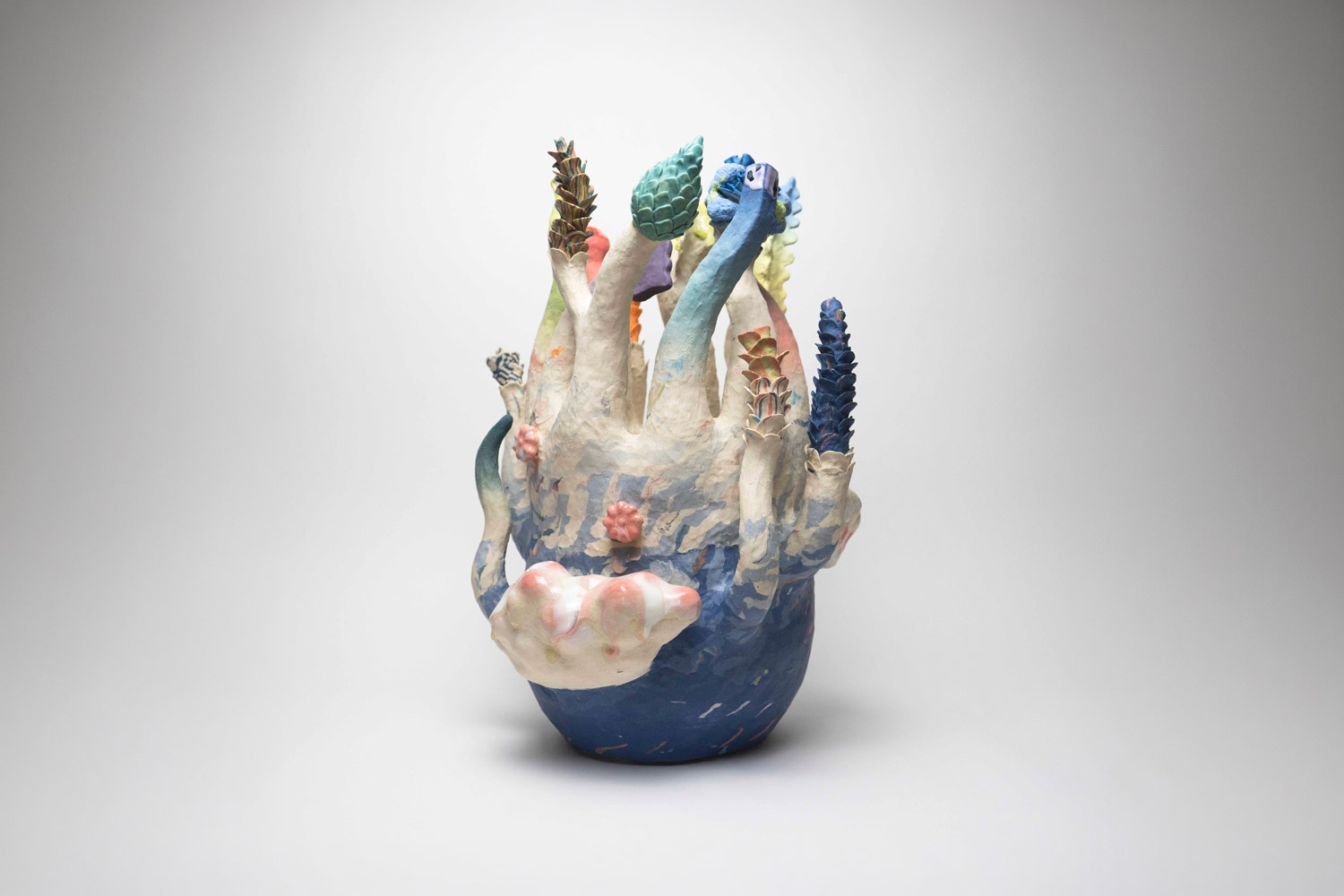
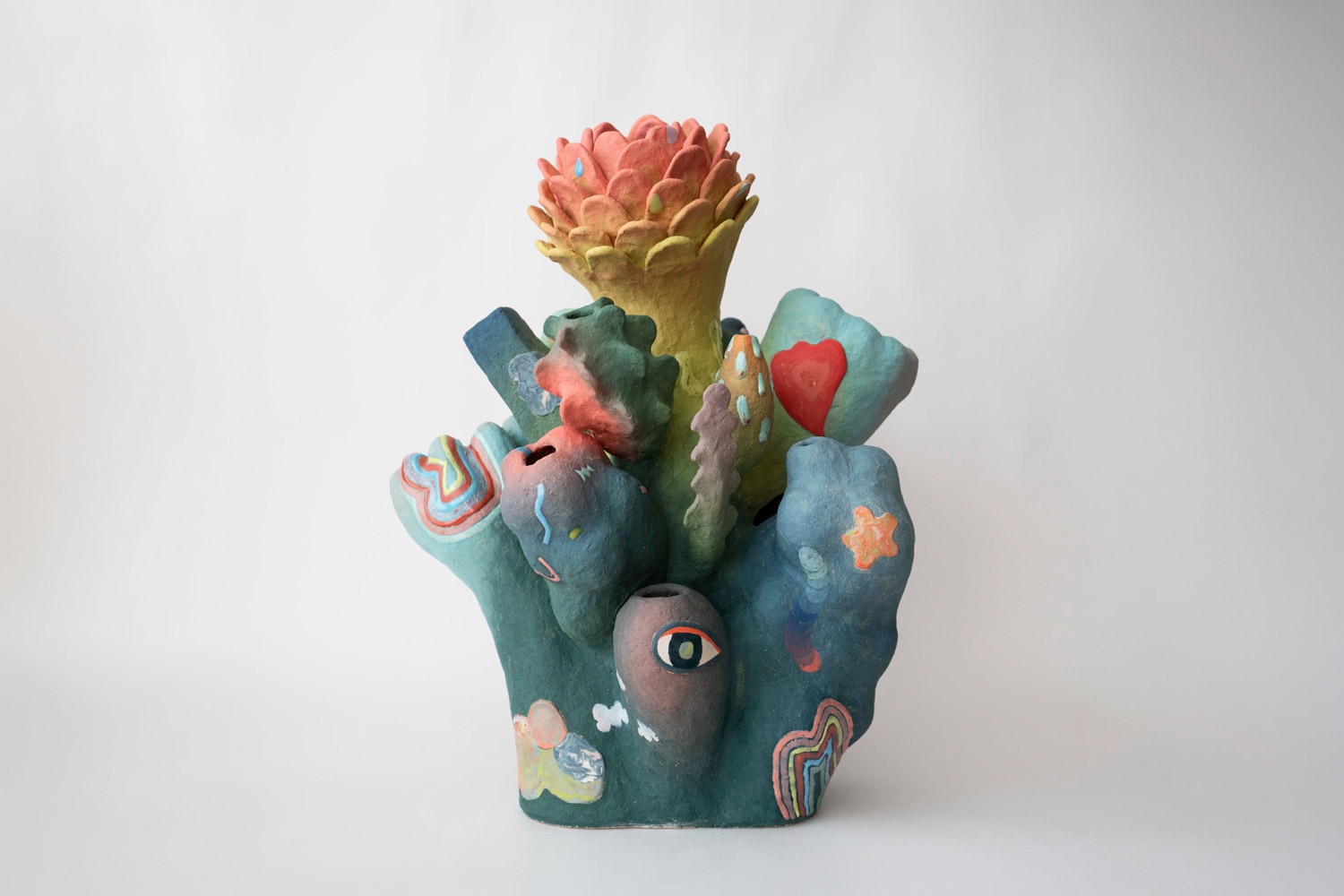
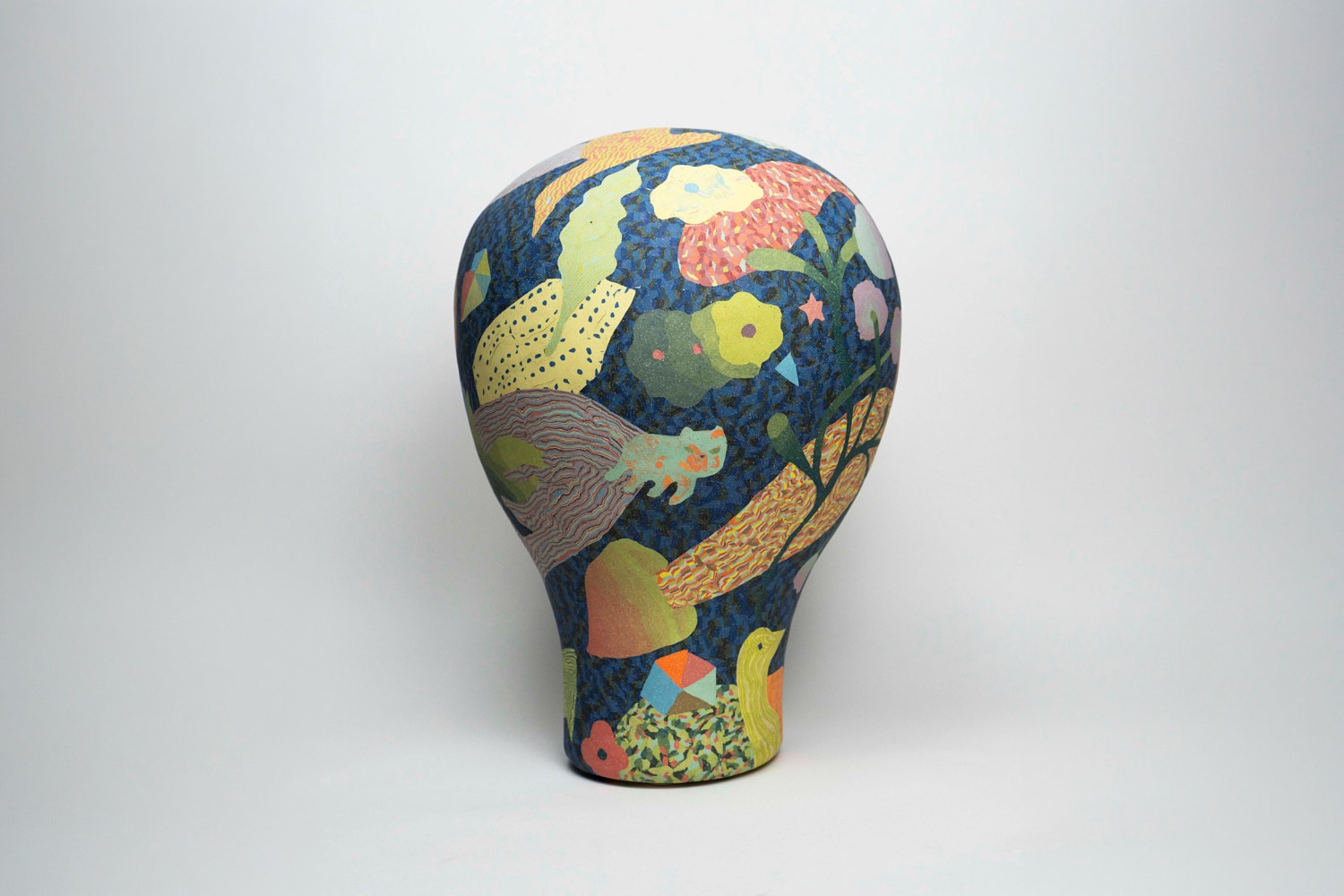
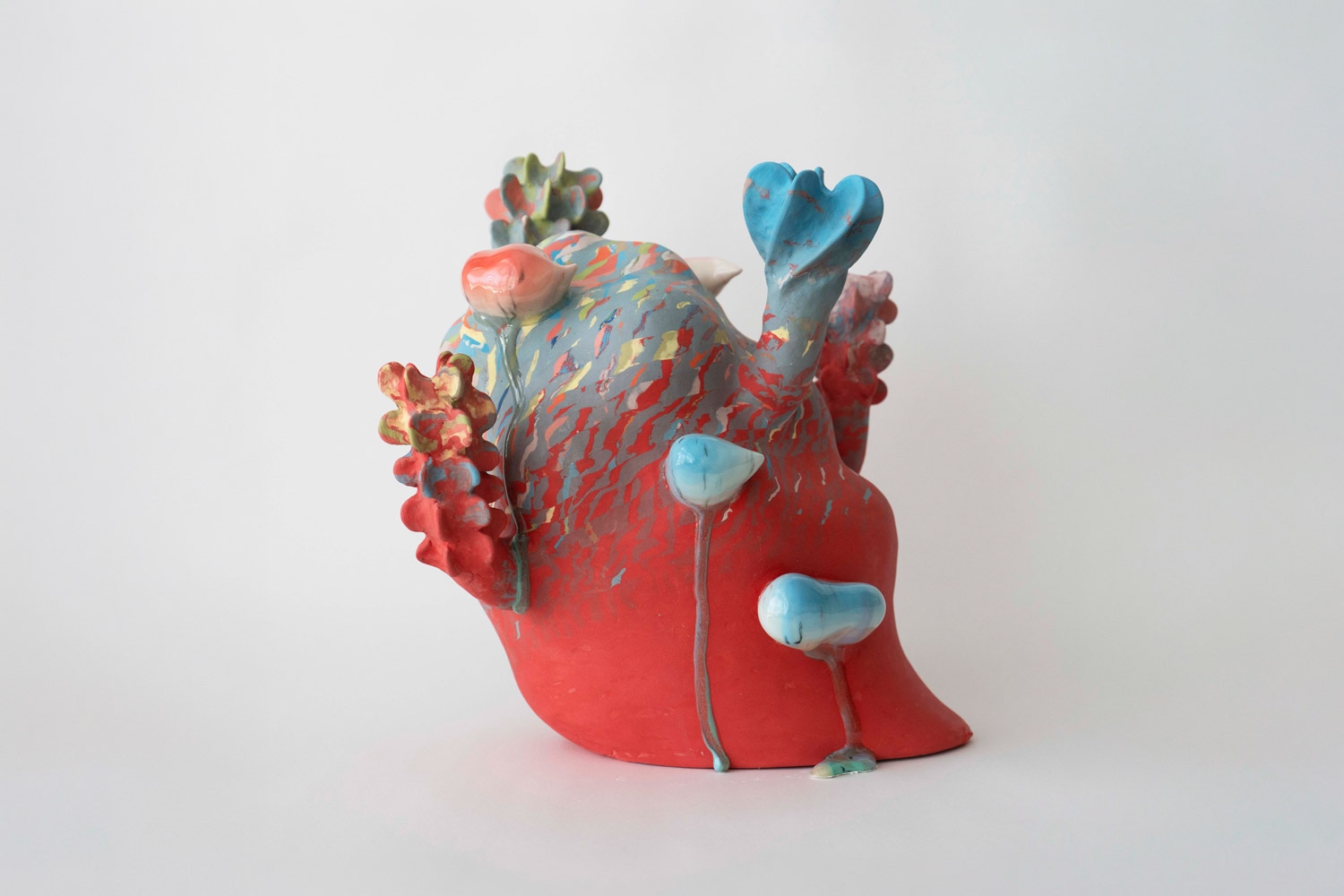
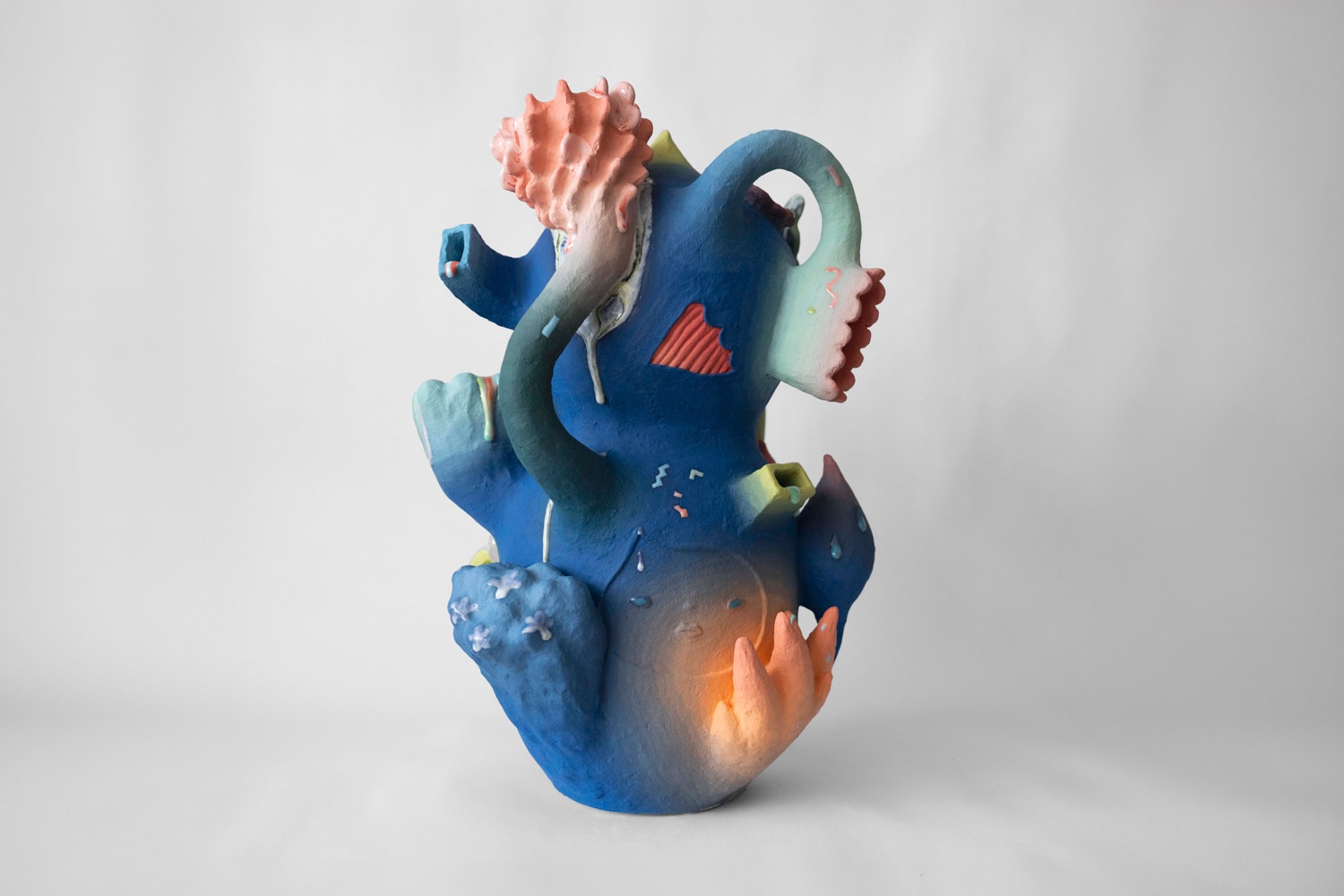
Janny Baek first fell in love with sculpting at the Rhode Island School of Design. After working in animation, advertising and later architecture, she put clay aside for over 20 years. It was not until Covid hit in 2019 that she returned to ceramics with a renewed focus. Janny explored nerikomi, a technique for layering coloured clay to create patterned veneers on vessels built with coiling. Her patterns shift and distort across 3D surfaces, blending imagined natural scenes with pixelated, digital influences. Janny's work is playful yet thoughtful, calling for reflection through colour, texture and form. "The pieces feature a glitch effect that invites the viewer to explore them up close," she says.
INTERVIEW
I discovered my love for sculpting in a college figure sculpting class. Clay felt like a natural extension of my ideas, so I switched my major to ceramics, and carried that approach into animation and architecture work later.
By 2019, the architecture firm my husband and I founded had grown enough that I could think about making art again. Clay had always been the main medium through which I explored ideas, and the timing felt right to return with curiosity and freedom.
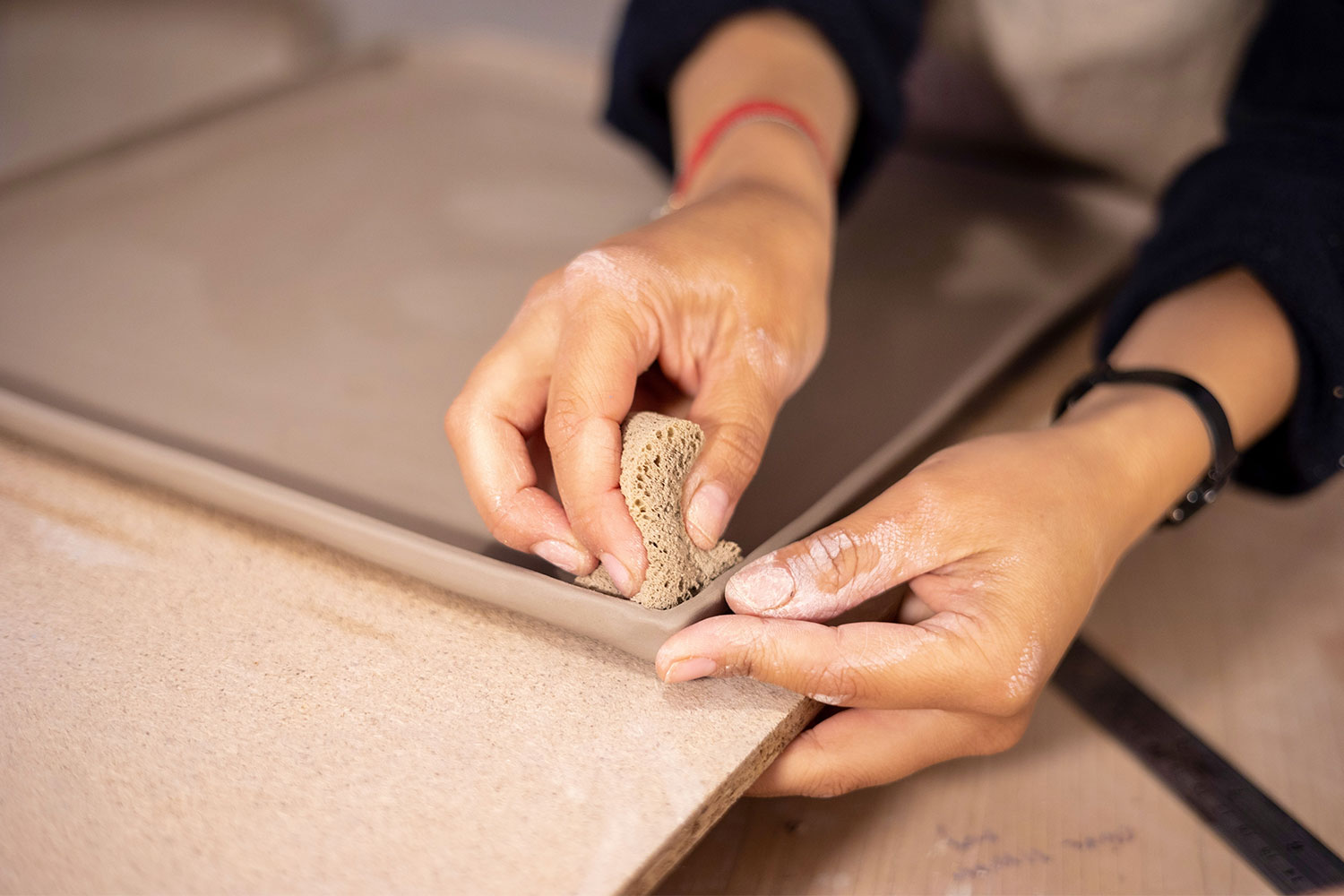
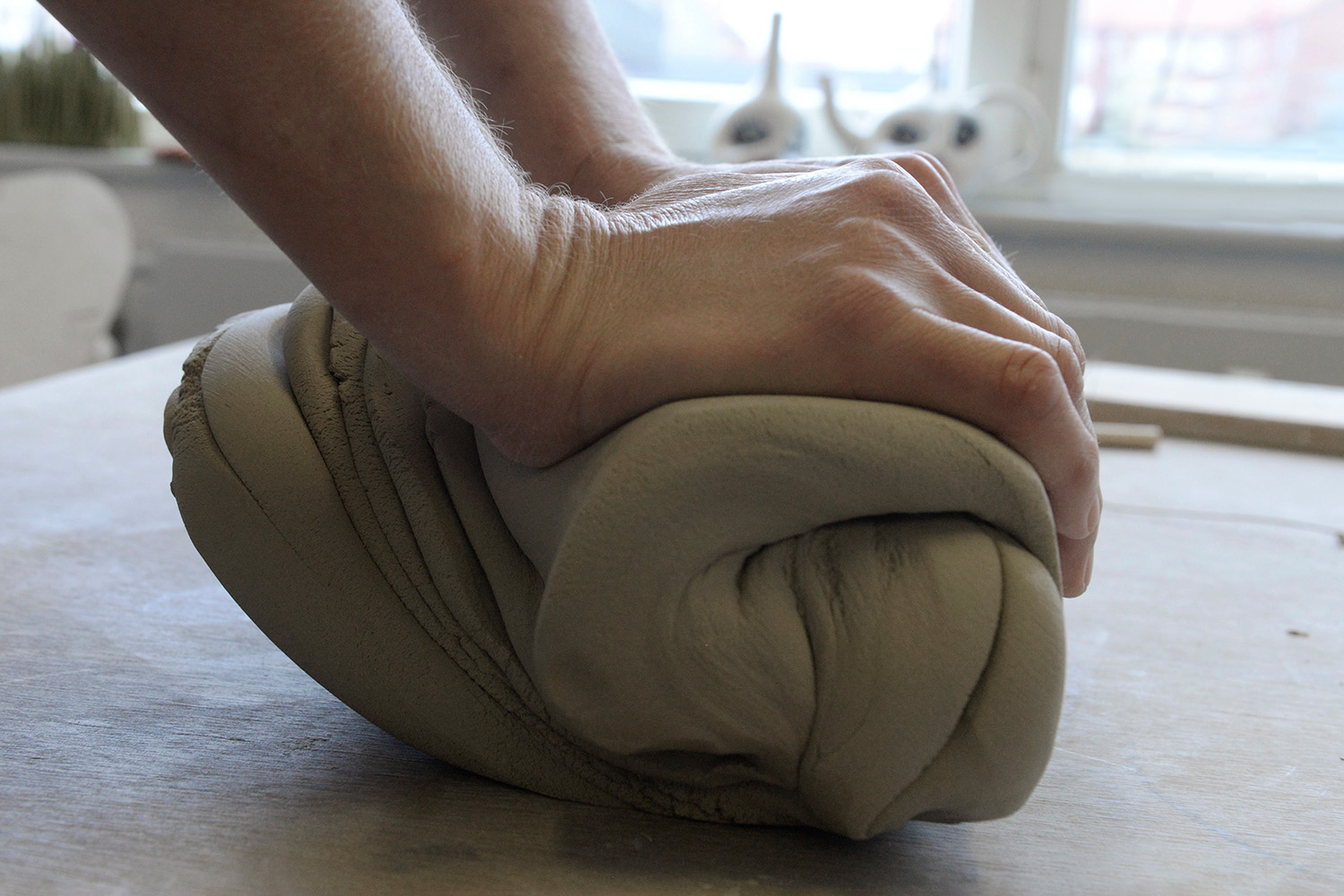
I use the nerikomi technique to create coloured clay patterns, which distort as they move across 3D, coil built forms. Layering multiple patterns gives a sense of depth, tension and play between two and three dimensions.
I combine imagined natural scenes with the visual language of our digital world. Pixelated and graphic elements interact with organic forms, creating a space for curiosity and reflection. Colour and variation become a prompt for imagination rather than decoration.
Janny Baek
Ceramicist
New York, NY, USA
ADDRESS
Address upon request, New York, NY, USA
AVAILABILITY
By appointment only
LANGUAGES
English, Korean
Homo Faber Finds is a new service aiming to inspire admirers of craft to connect and collaborate with exceptional artisans.
We invite you to submit an enquiry here.