
Alexandria Carmona
Finespun Cakes
Sugar sculptor
Toronto, Canada
A sweet botanical symphony
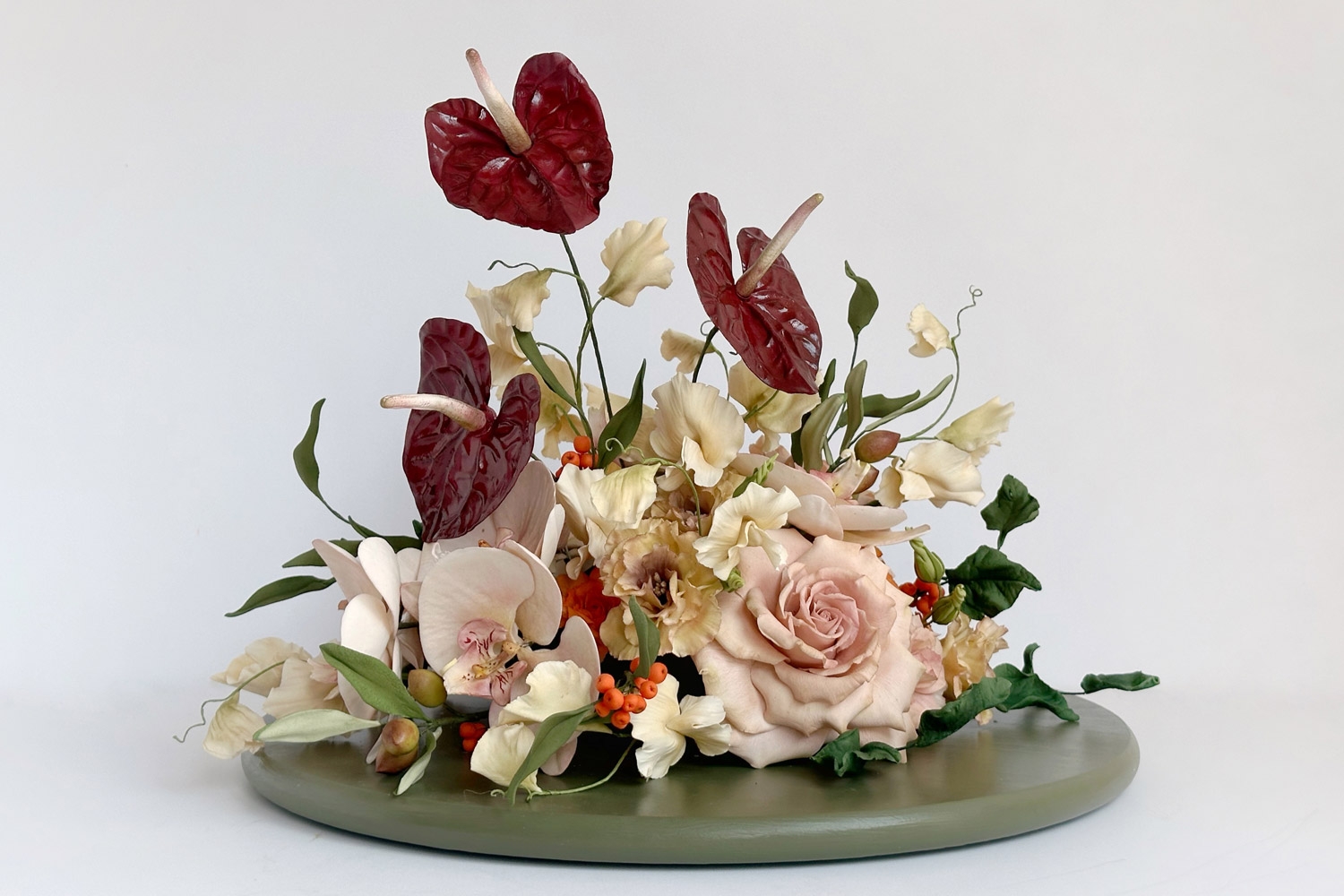
- Alexandria makes naturalistic flowers with sugar
- She creates her own sugar paste and works it like clay
- Her pieces last indefinitely when kept dry and out of the sun
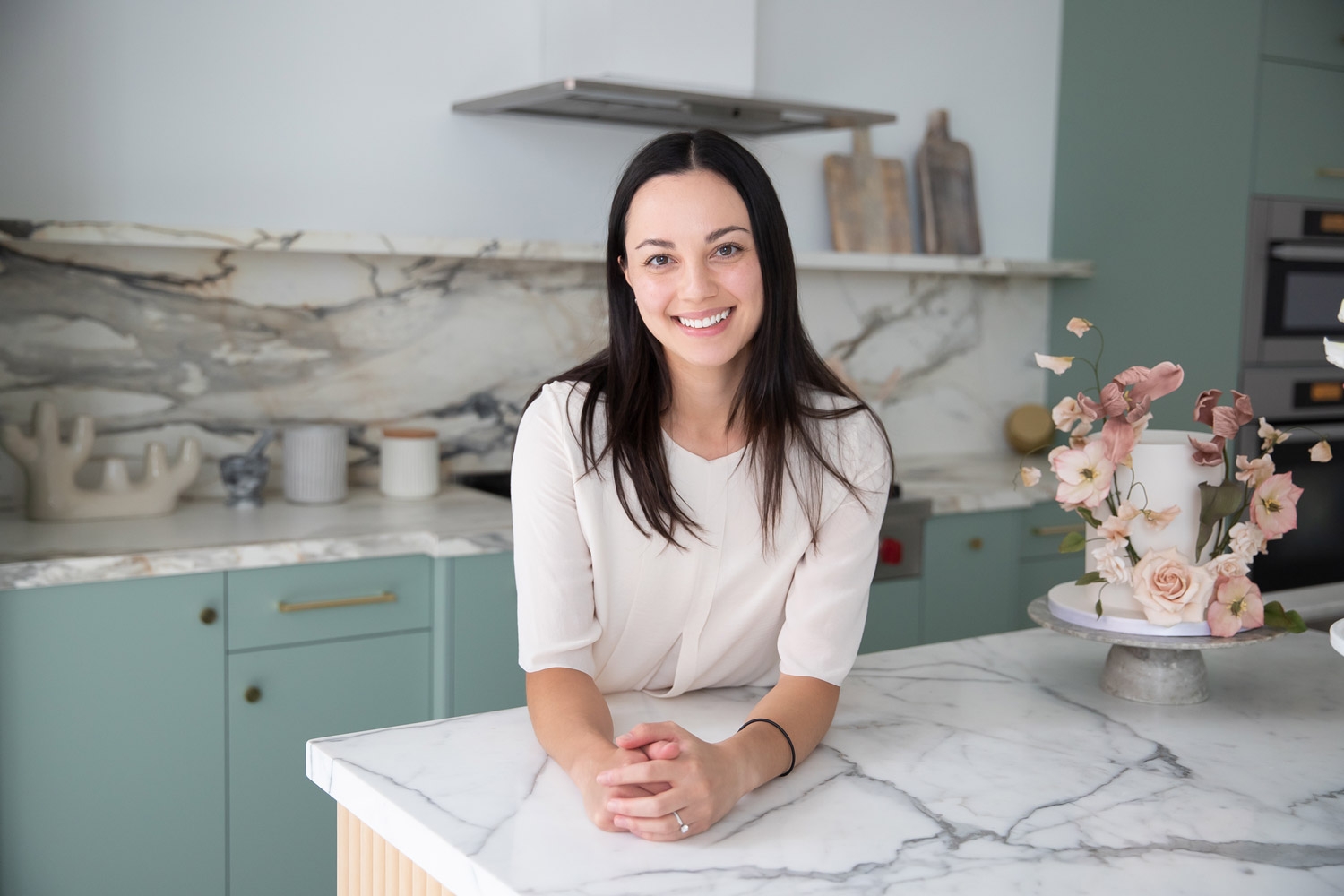
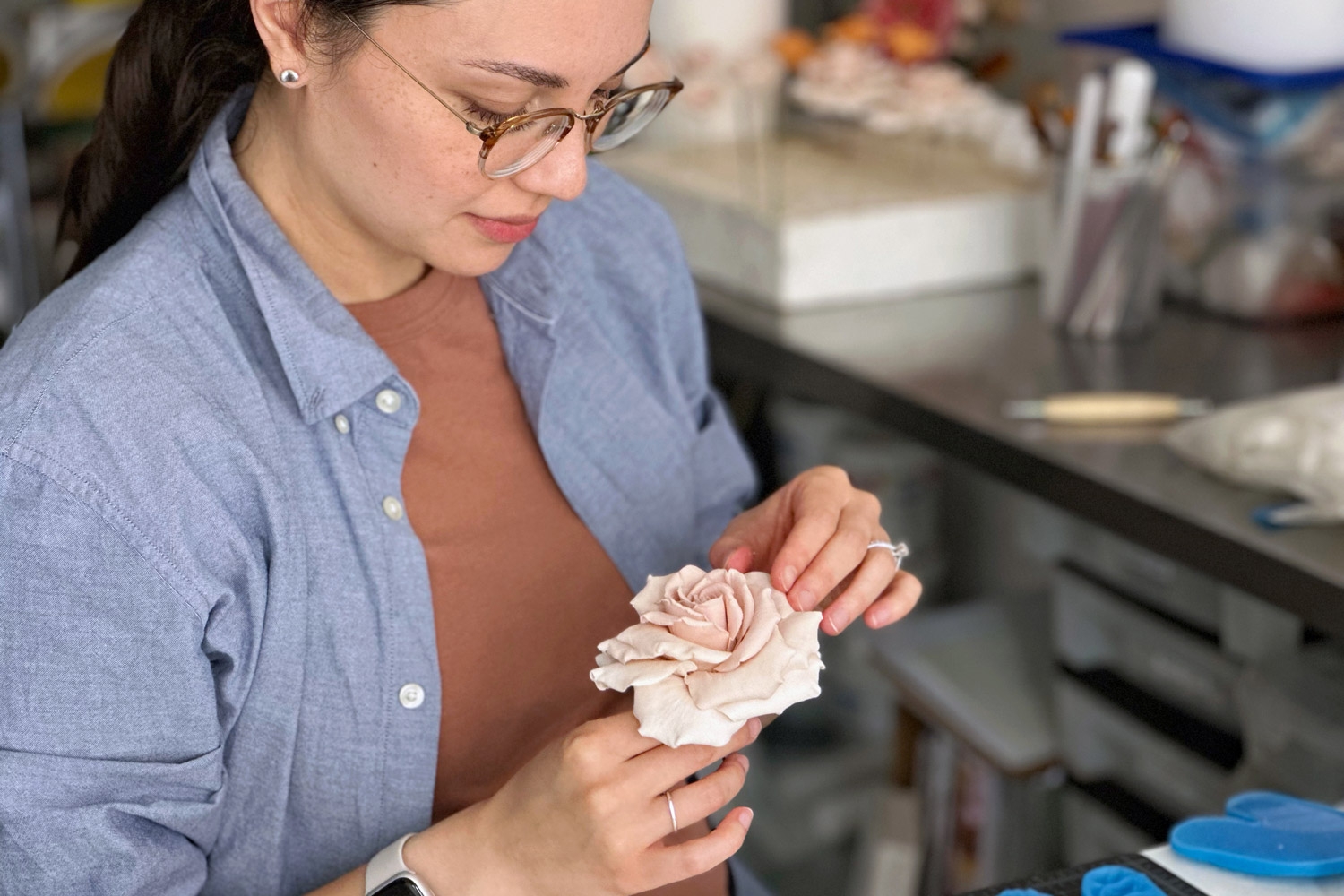
Toronto-based Alexandria Carmona creates botanically faithful sugar flowers and handcrafted wedding cakes. A former fashion student, she moved into sugar work after training as a pastry chef and teaching herself via books and videos. Alexandria’s process includes working with a gum paste she makes on her own to achieve a fine, pliable material that dries cleanly, and creating life-like sugar flowers coloured with a pale tint. Edible dust pigments supply depth, highlights and the slight bruising or fade found in real flora. Alexandria works with a deep respect for the practice of sugar craft and admires early 20th-century British traditions, especially the Lambeth style. “I advocate for handmade sugar work and the continuity of craft skills in my teaching, in a field crowded by shortcuts and moulds,” she says.


INTERVIEW
I studied fashion design in New York after high school. A year in, I paused, started baking and saw Ron Ben-Israel’s show Sweet Genius. That was the moment when everything changed. I returned to Ottawa for pastry training and I taught myself with books and videos – formal apprenticeships in this niche are rare.
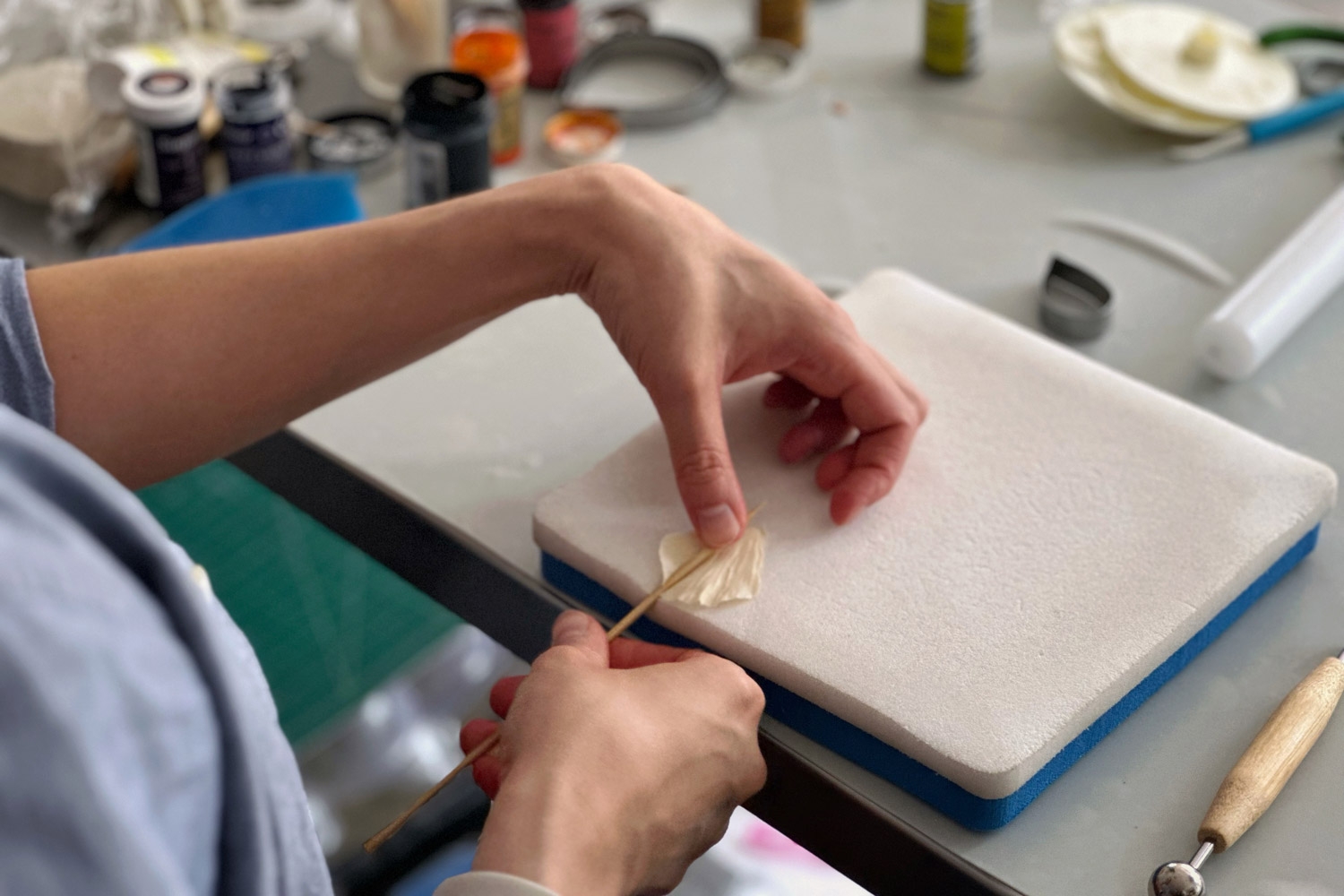
I make my own gum paste which behaves like a flexible clay: it hardens as it dries and holds form. I cut the petals with metal cutters and then press them between silicone veiners to create the natural ribbing. I shape them in foam or crumpled foil to set a curve, then I assemble them on a wire centre.
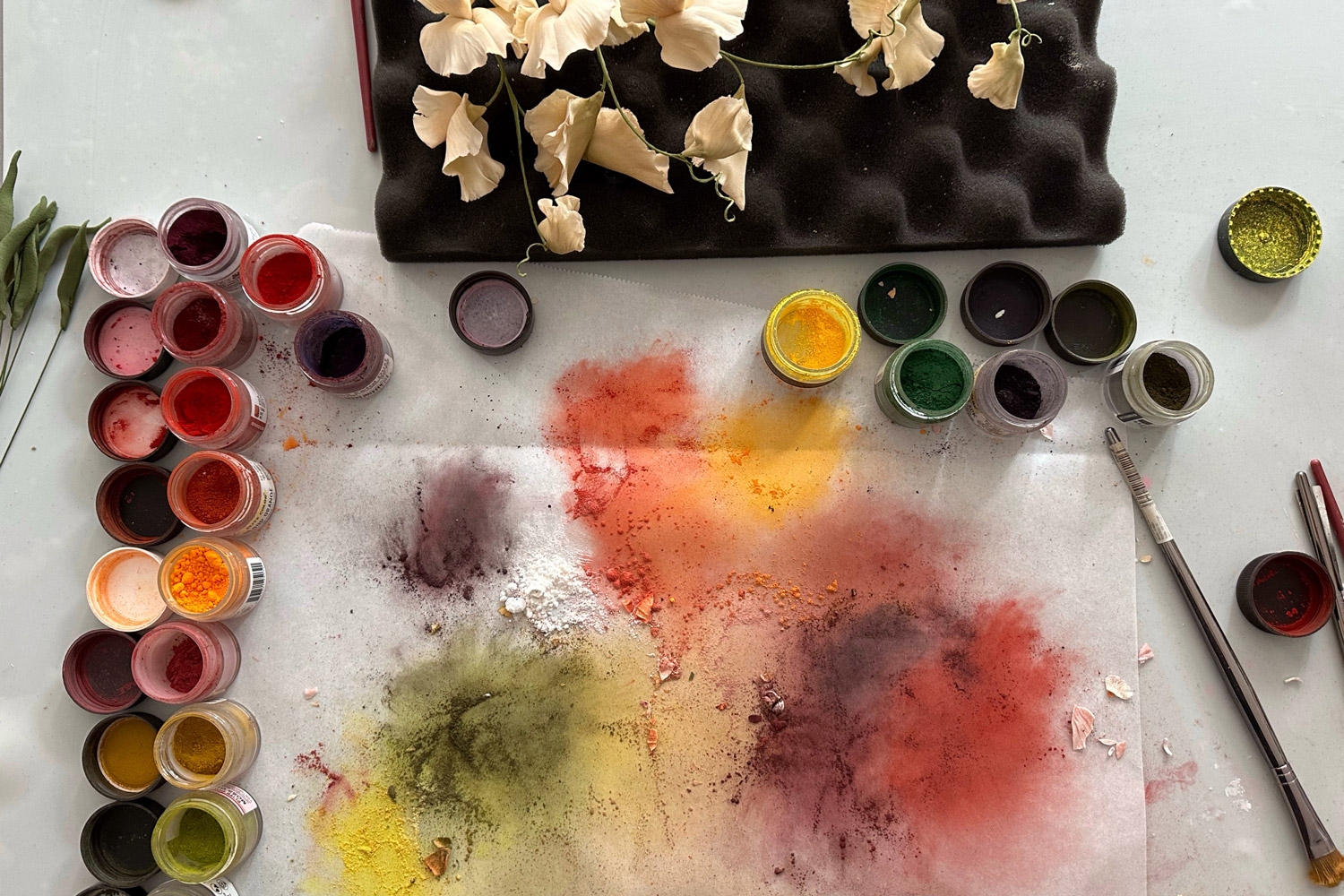
Dahlias and chrysanthemums can be challenging as they have so many fine petals. I use a very pale tint on the paste then build the colour story with edible dusts, applying mid-tones, highlights, greens and even brown to suggest age. The difficulty lies in dusting a finished bloom without knocking the petals loose.
I want the handmade side of sugar art to endure in a world of moulds and mass-produced elements. Two people can follow the same tutorial and still produce distinct, personal results: that is the point. To me, this is unequivocally craft, with skills honed by hand, one petal at a time.
Alexandria Carmona
Finespun Cakes
Sugar sculptor
Toronto, Canada
ADDRESS
Address upon request, Toronto, Canada
AVAILABILITY
By appointment only
LANGUAGES
English
Homo Faber Finds is a new service aiming to inspire admirers of craft to connect and collaborate with exceptional artisans.
We invite you to submit an enquiry here.
DSC02402_©Meg-Lovell.jpg)
DSC01379_©Meg-Lovell.jpg)
DSC01458_©Meg-Lovell.jpg)