Emma Rosa
Textile sculptor
Devon, United Kingdom
Sculptural blooms from overlooked flowers
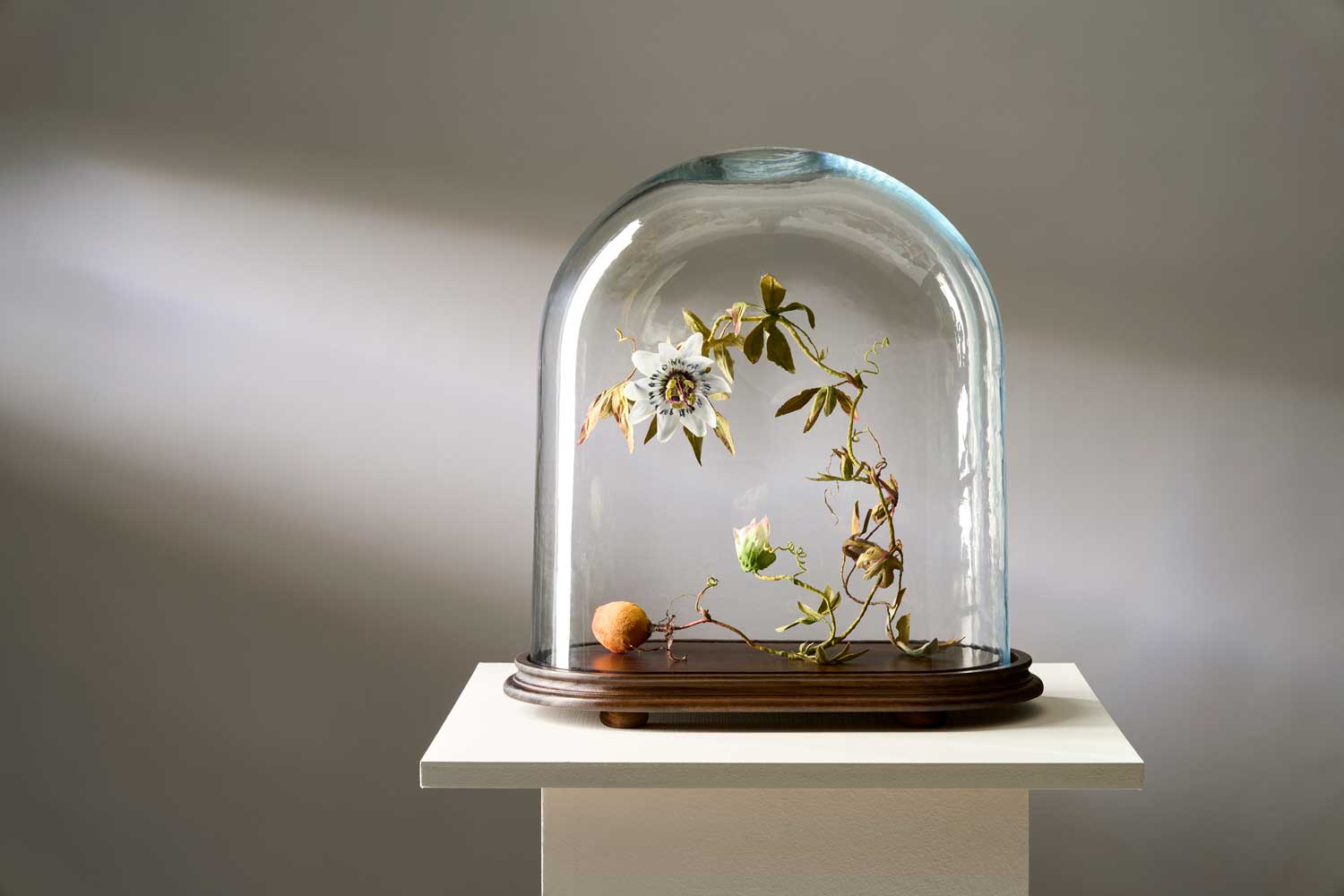
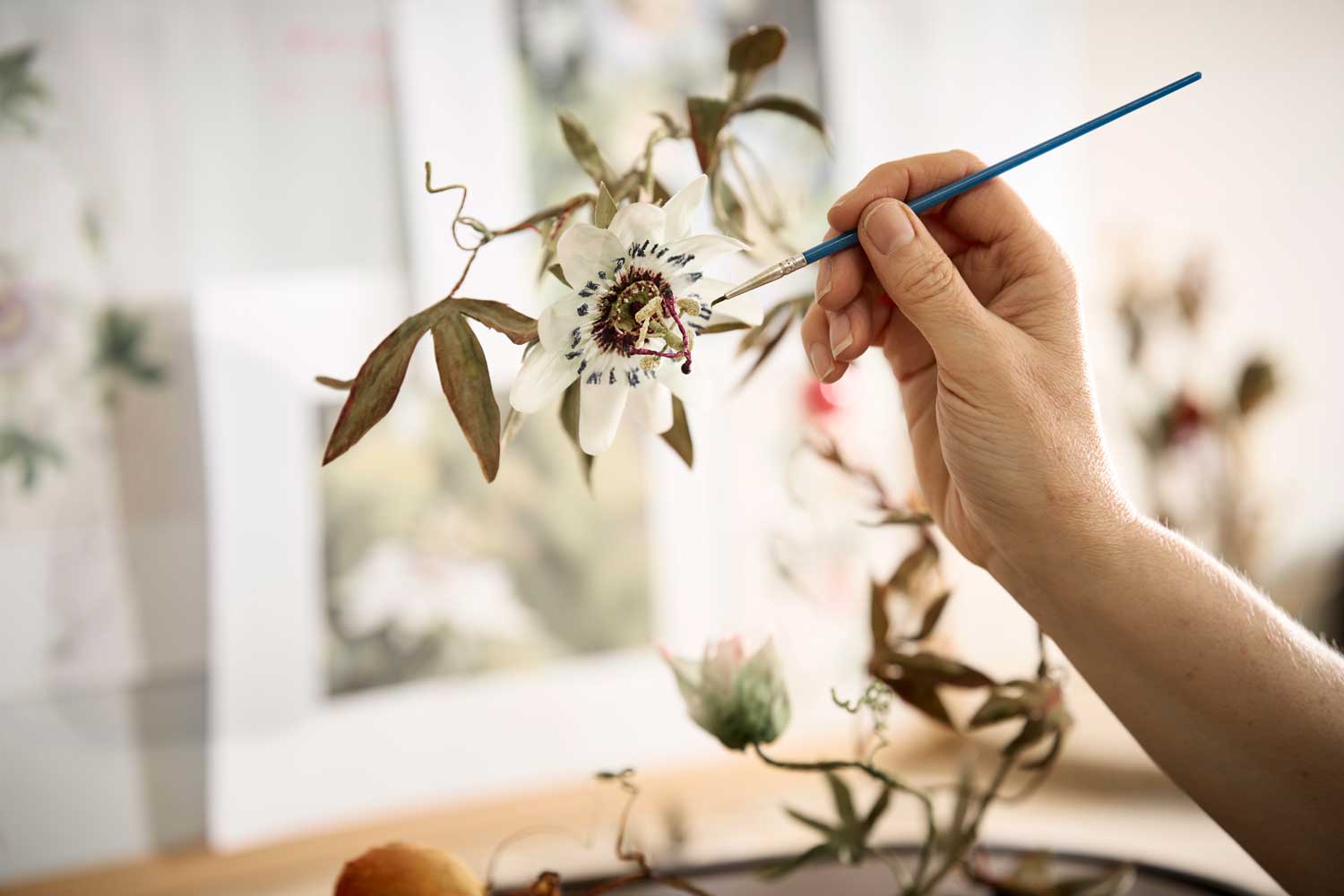
- Emma's hyperreal botanical sculptures are made with silk and thread
- She works with deadstock fabric from fashion houses
- She is currently experimenting with Japanese Somebana powdered dyes
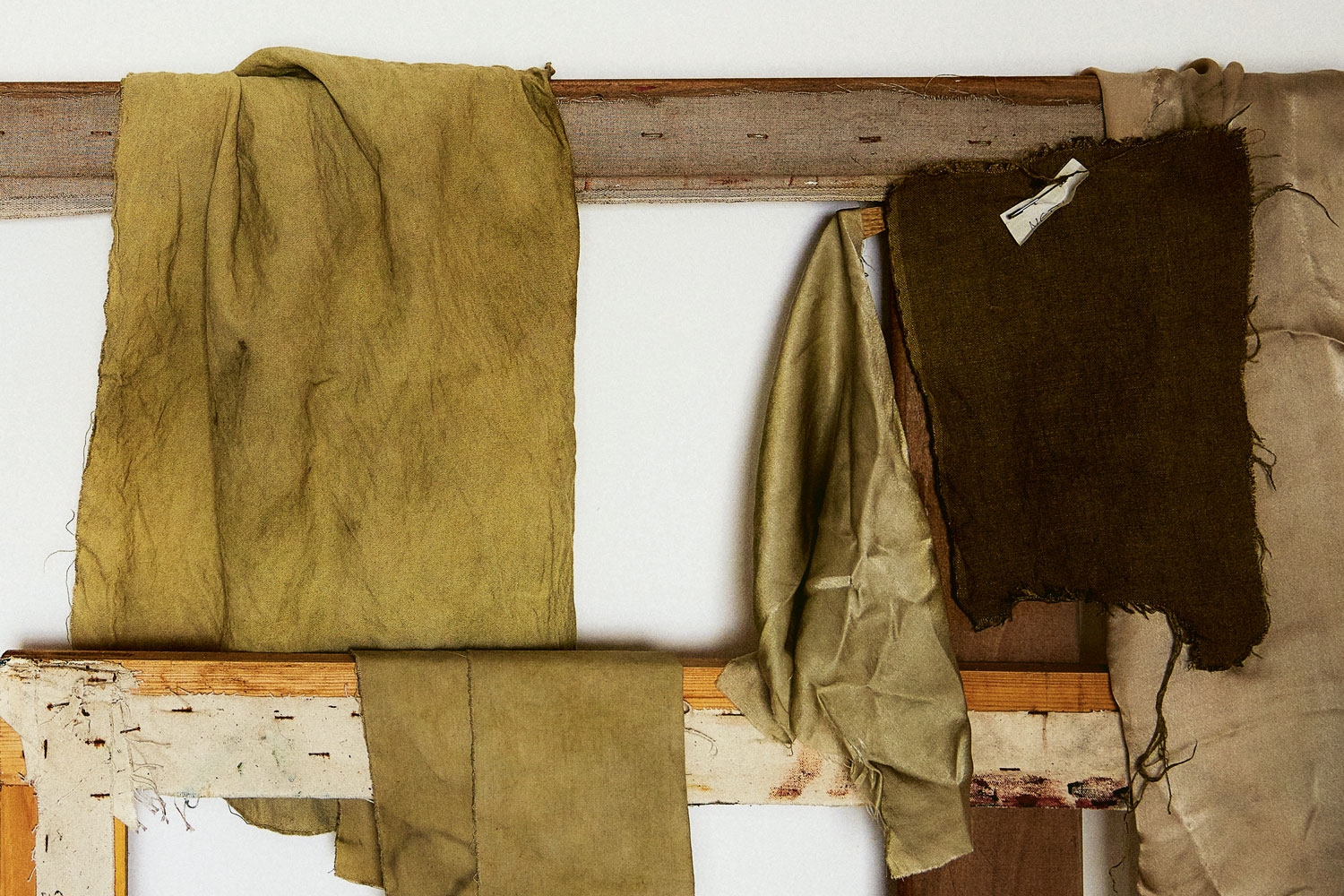
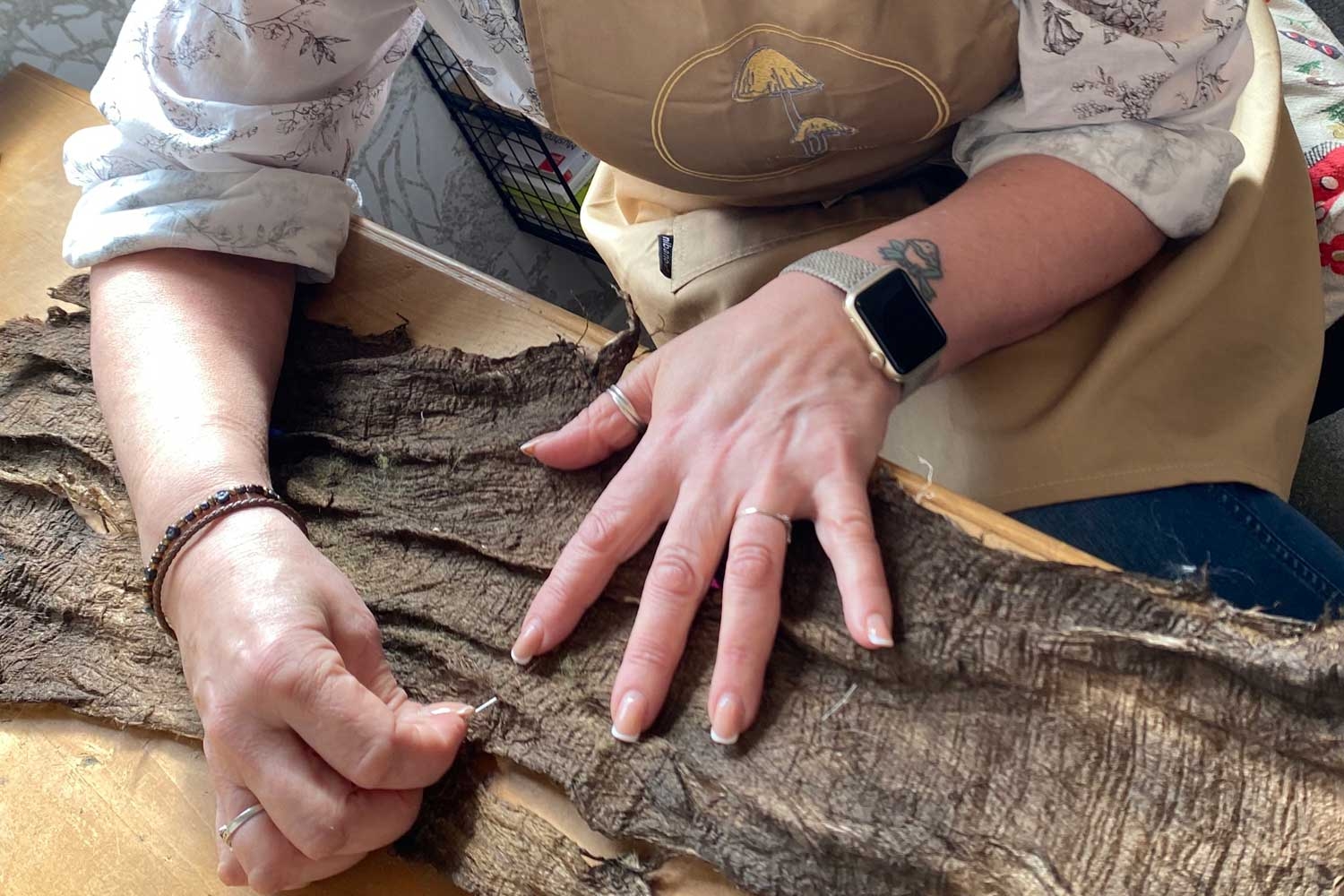
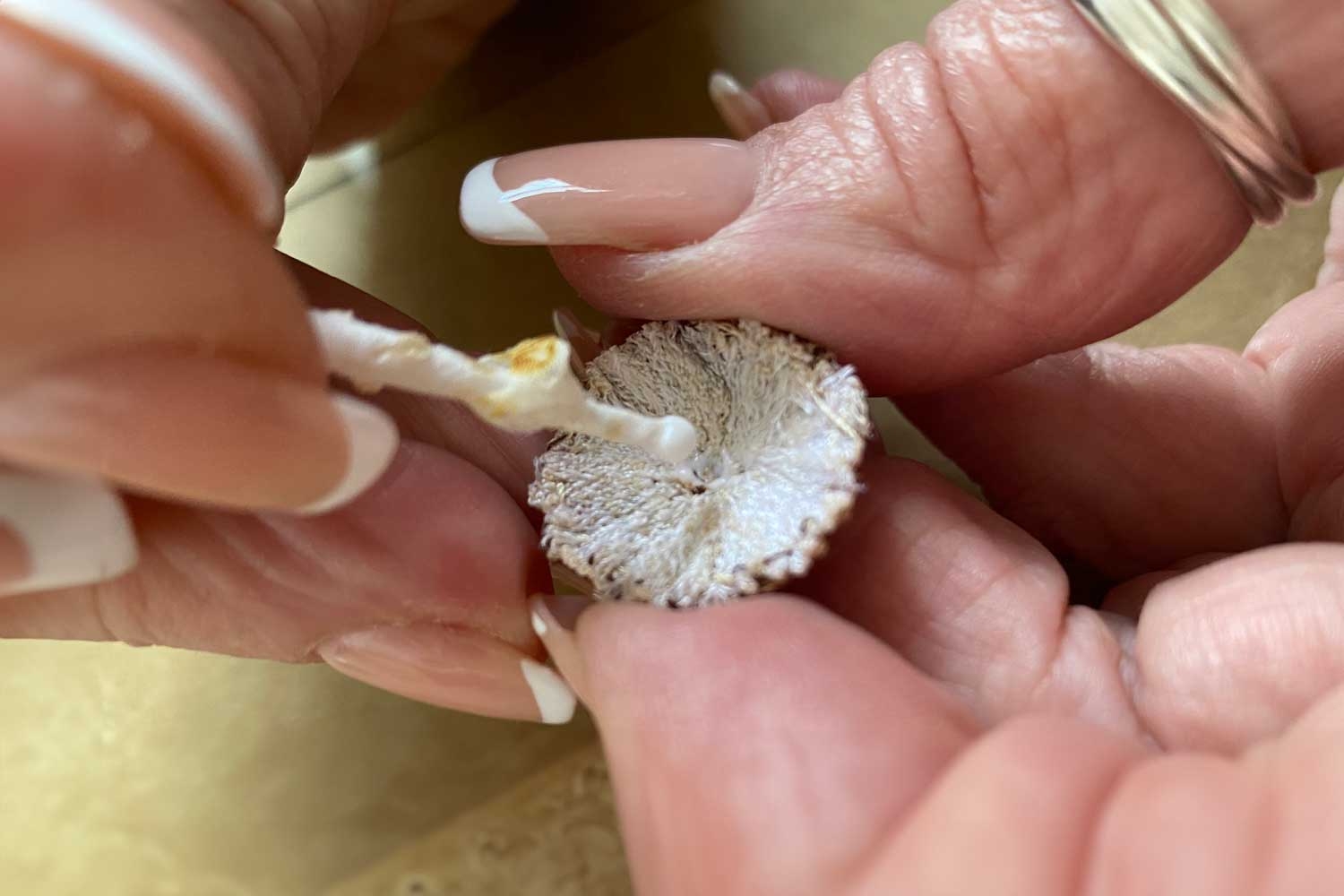
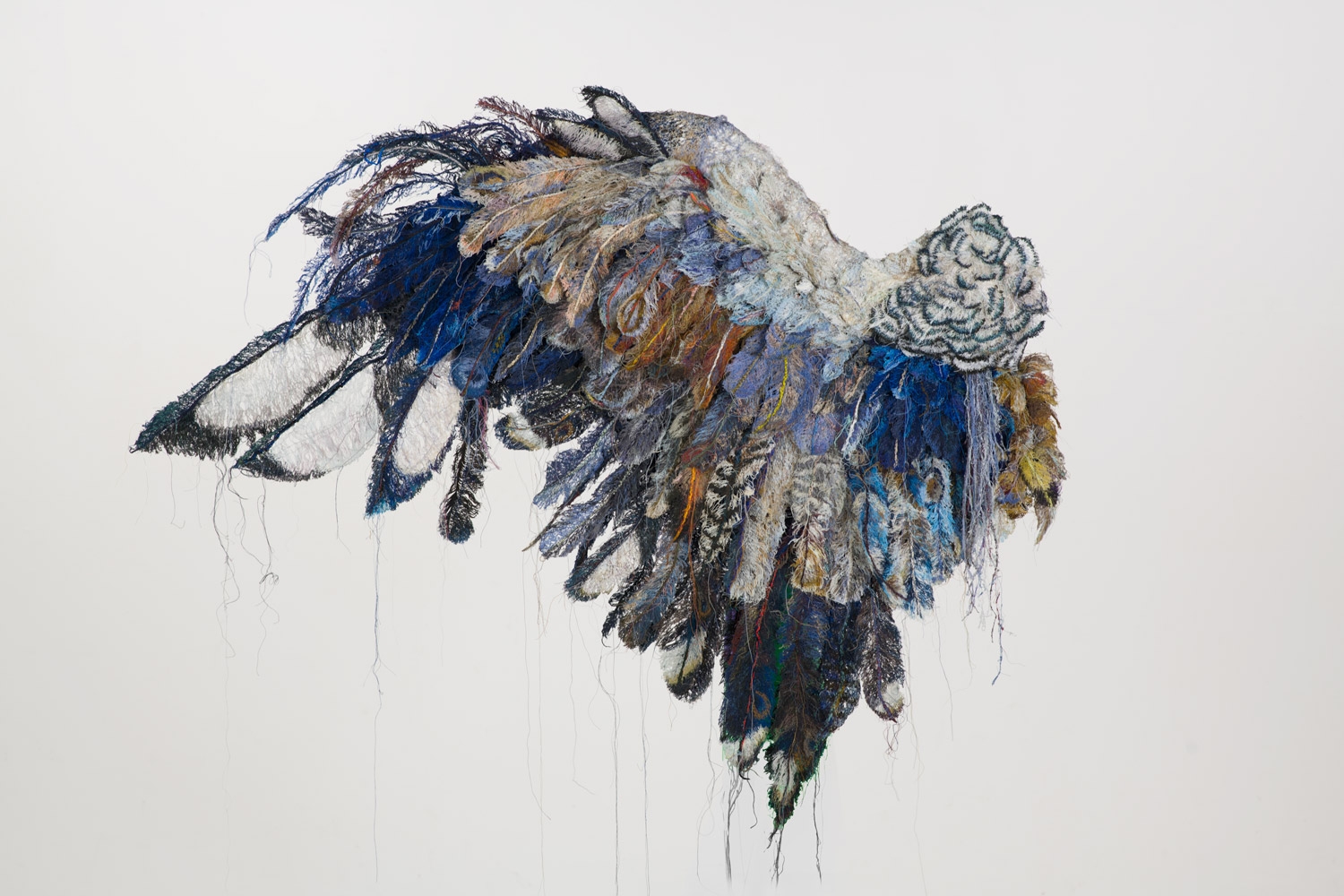
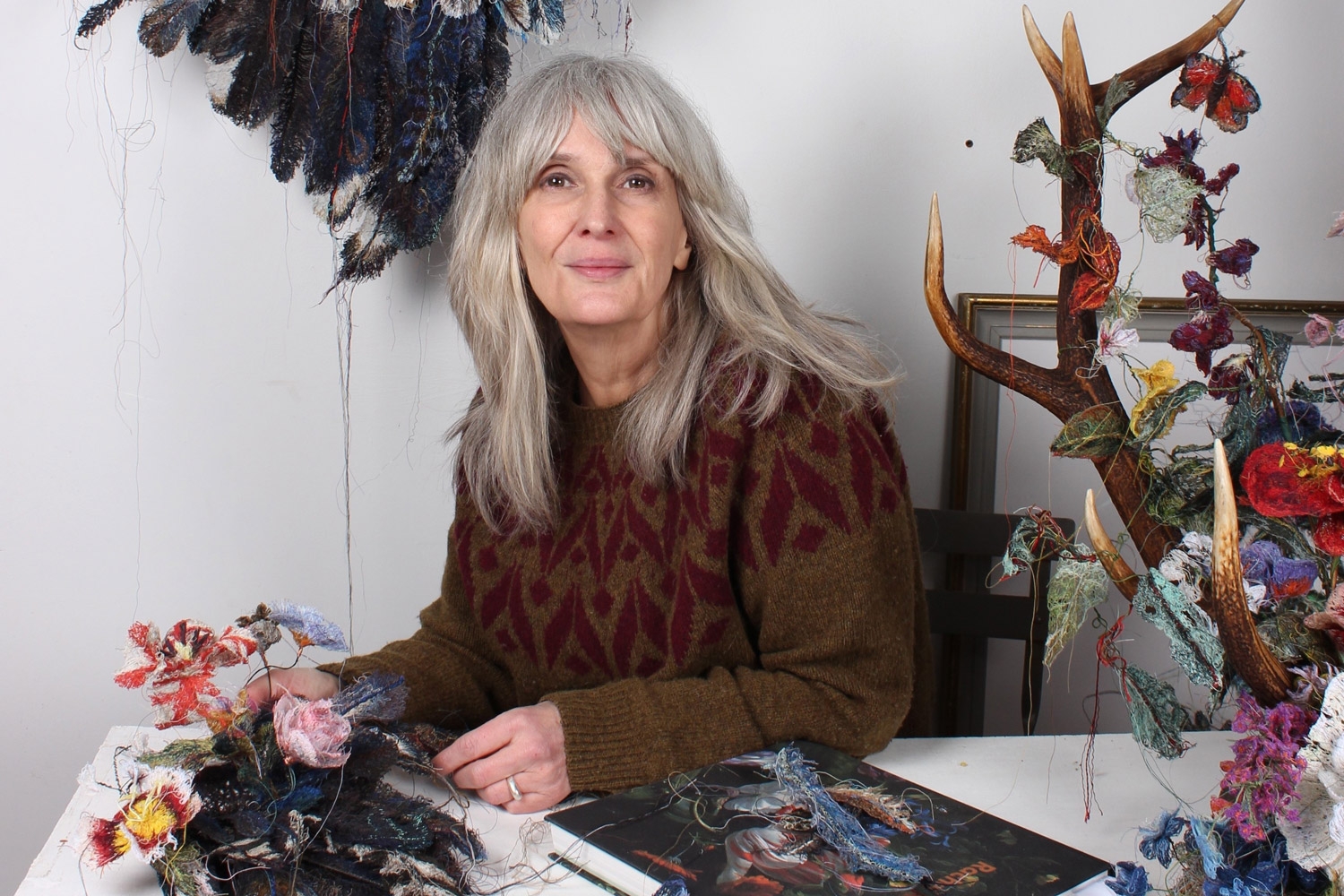
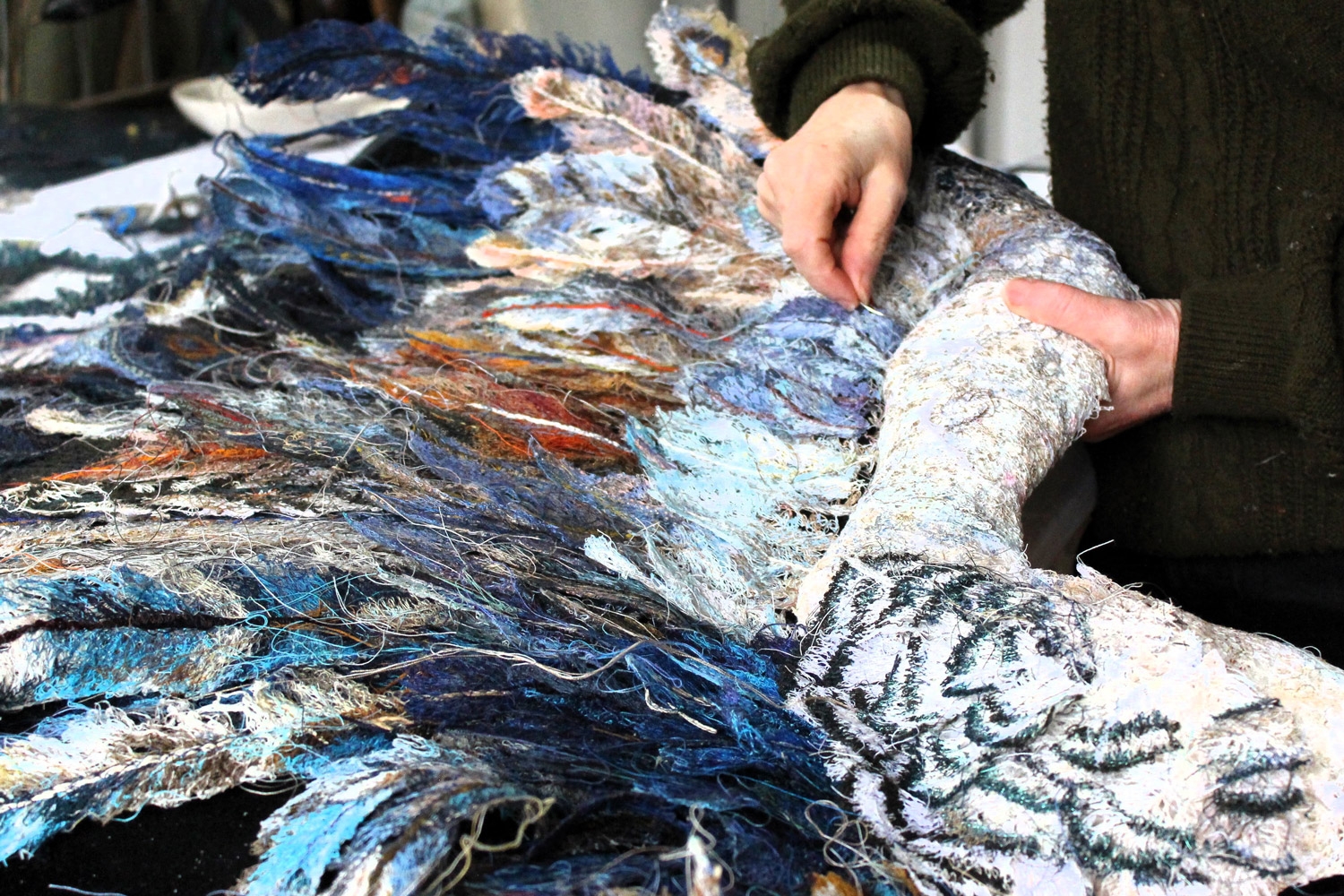
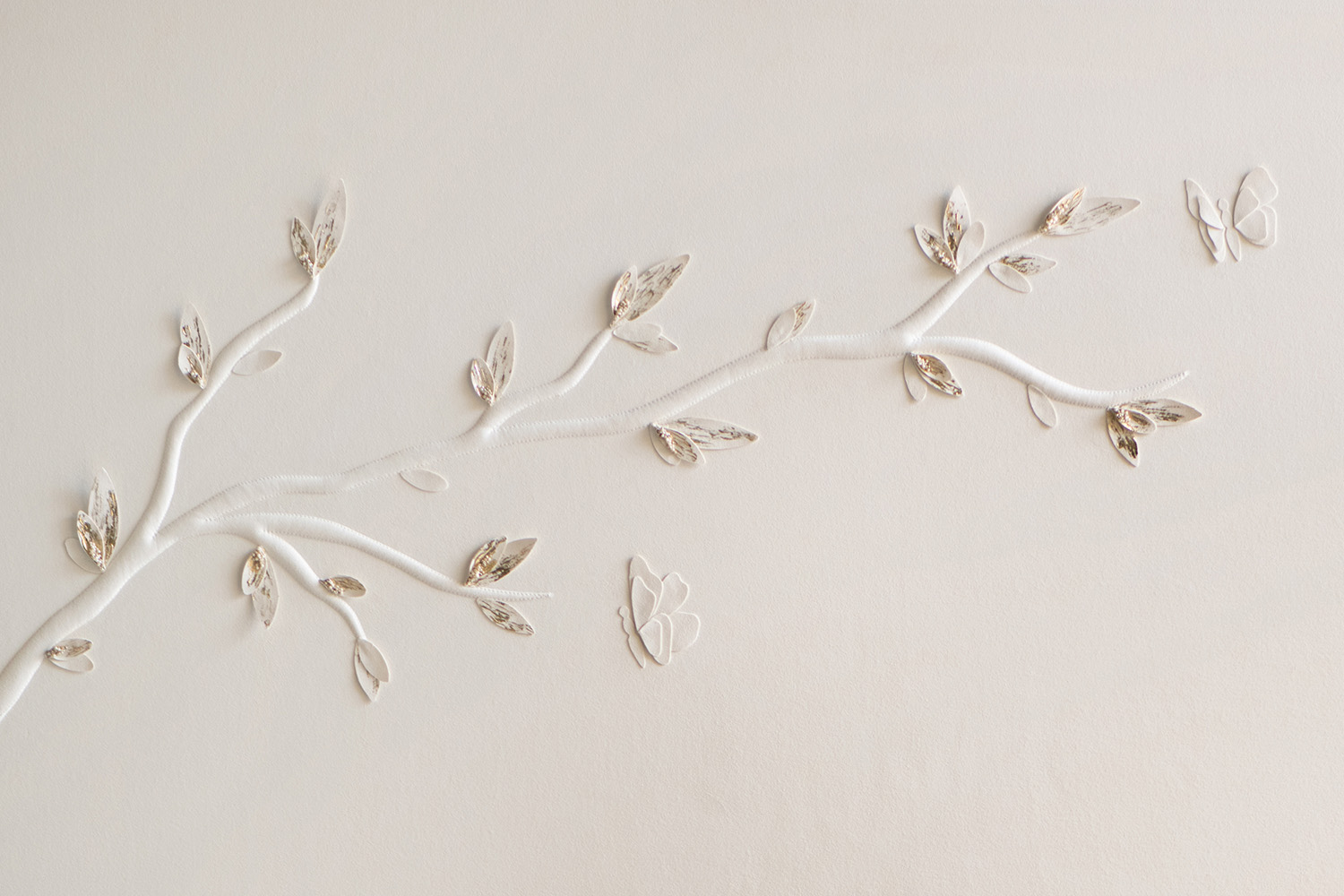
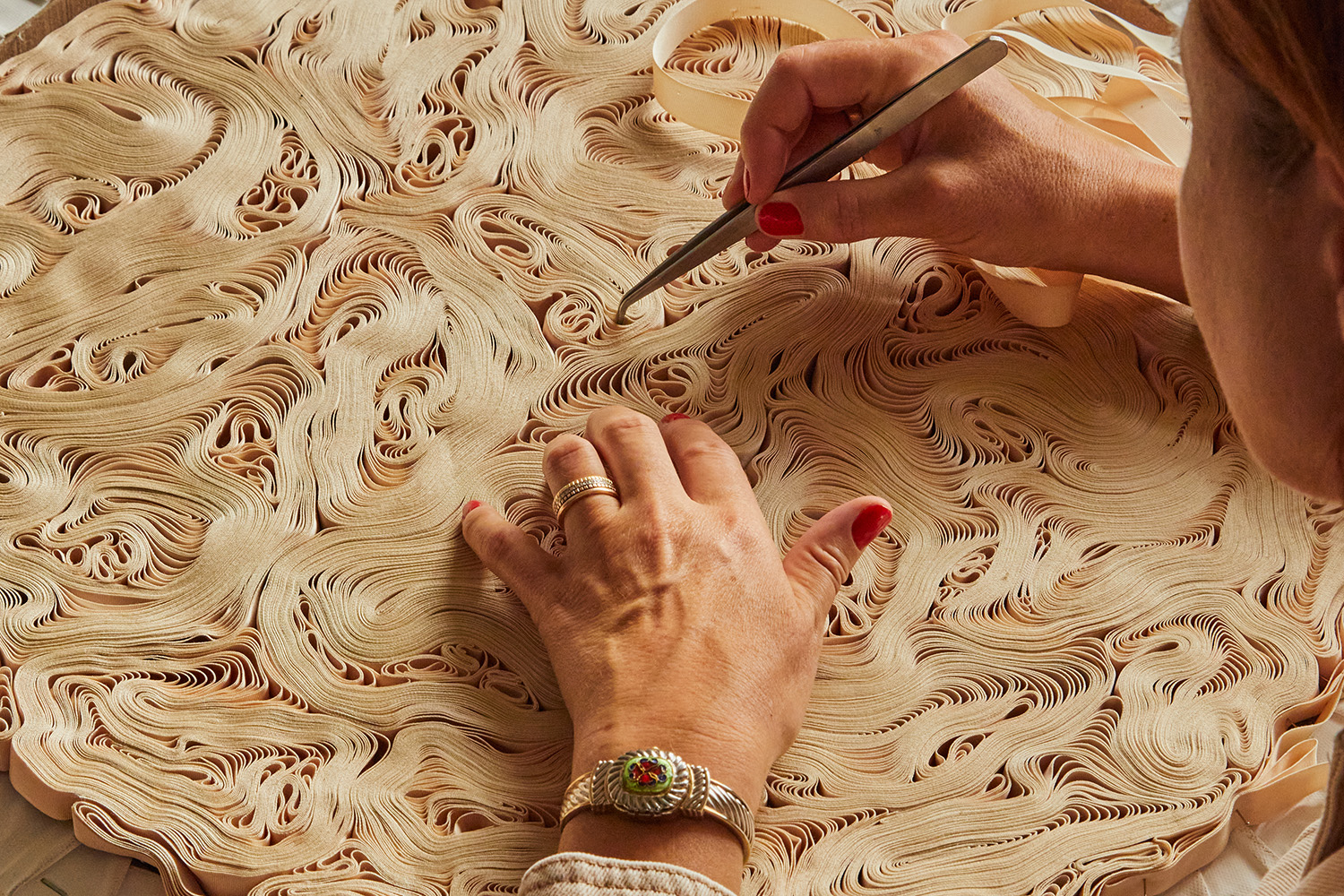
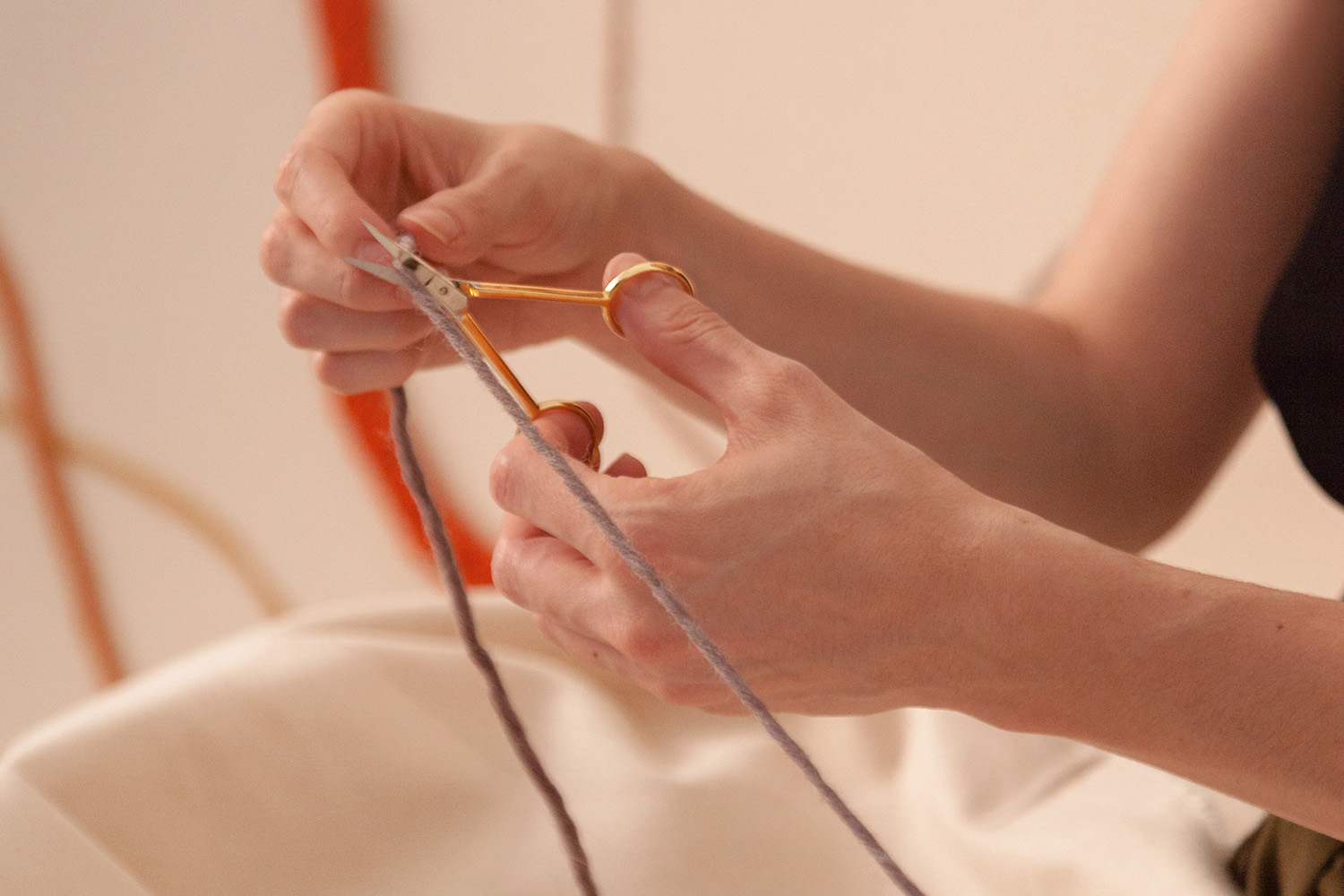
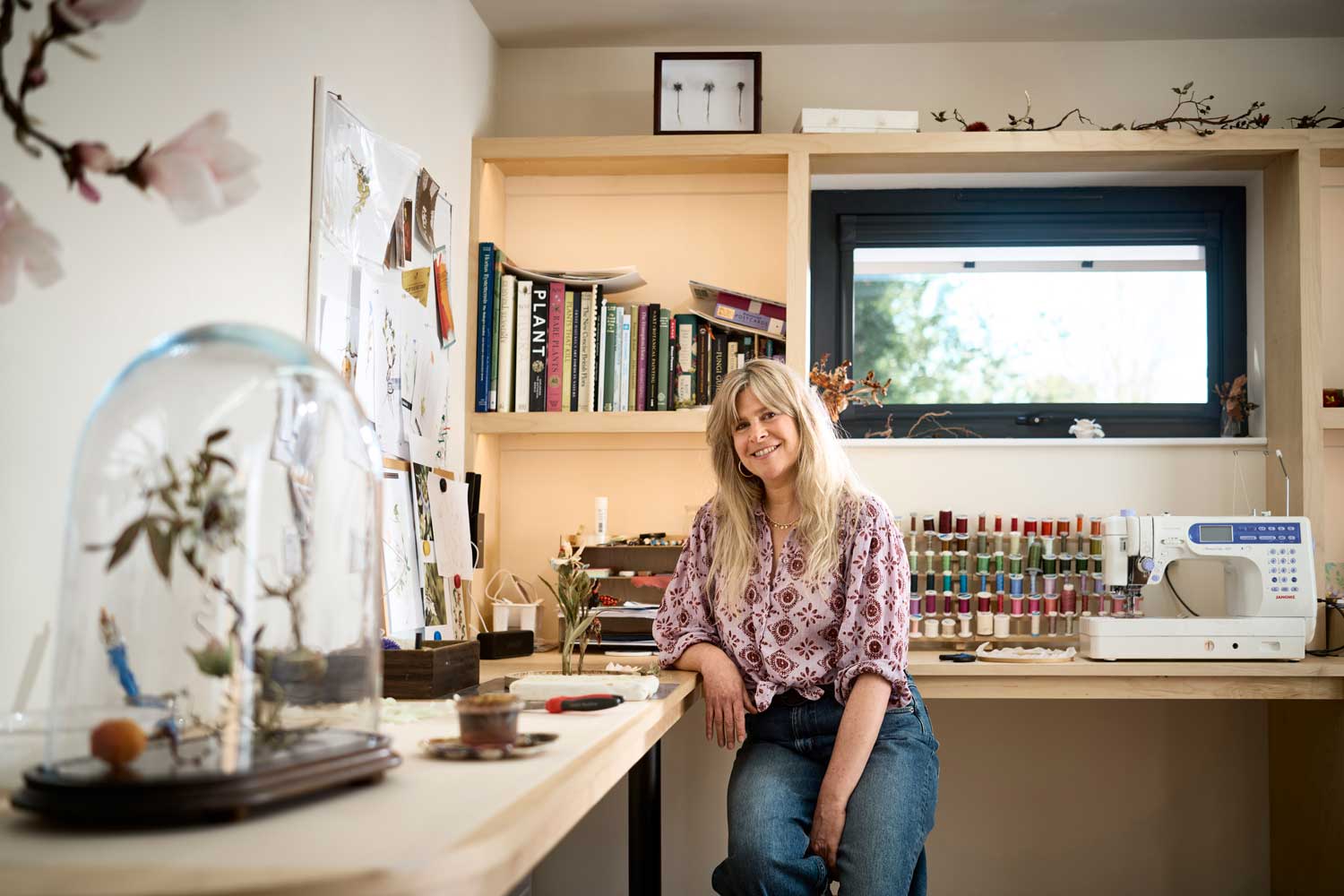
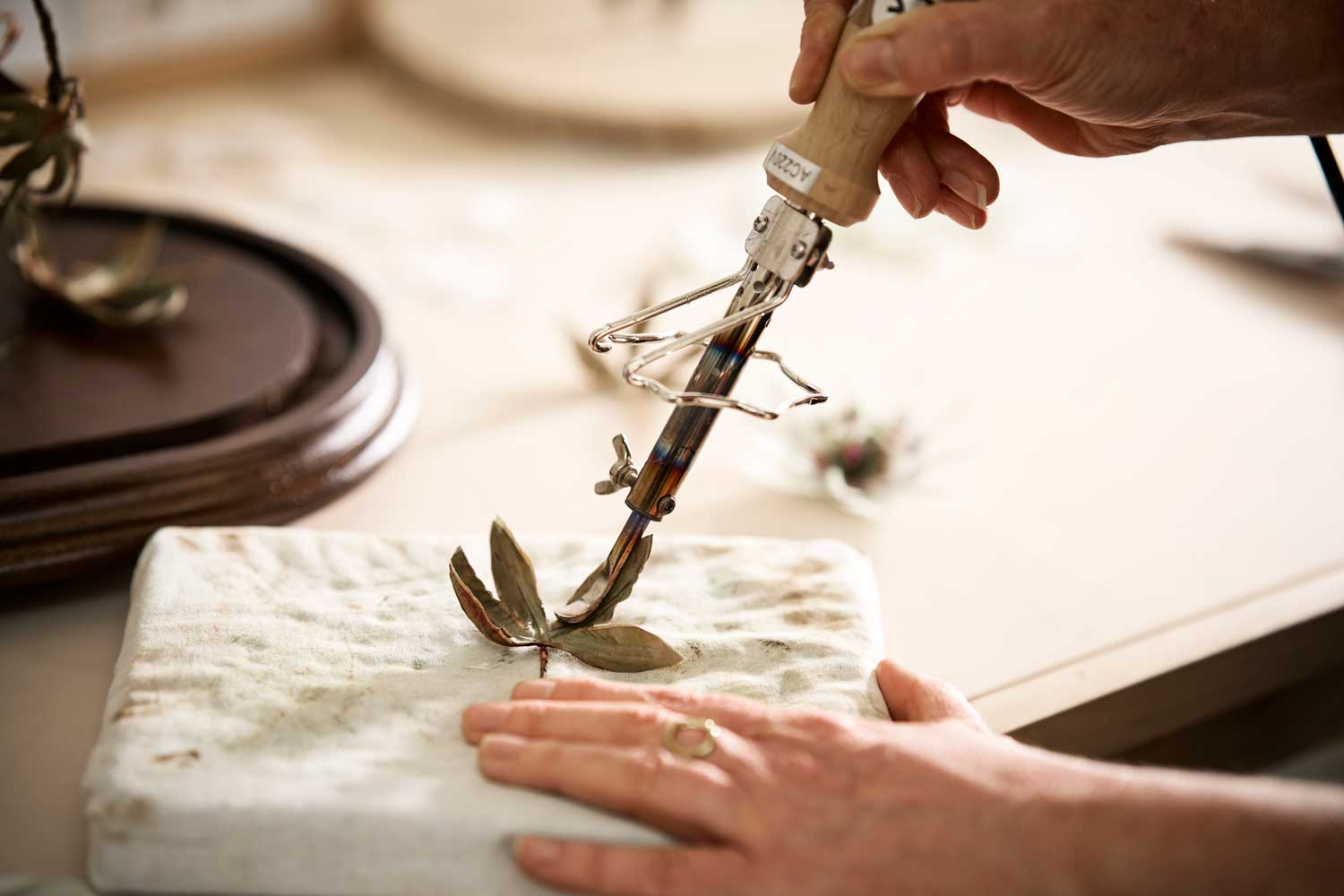
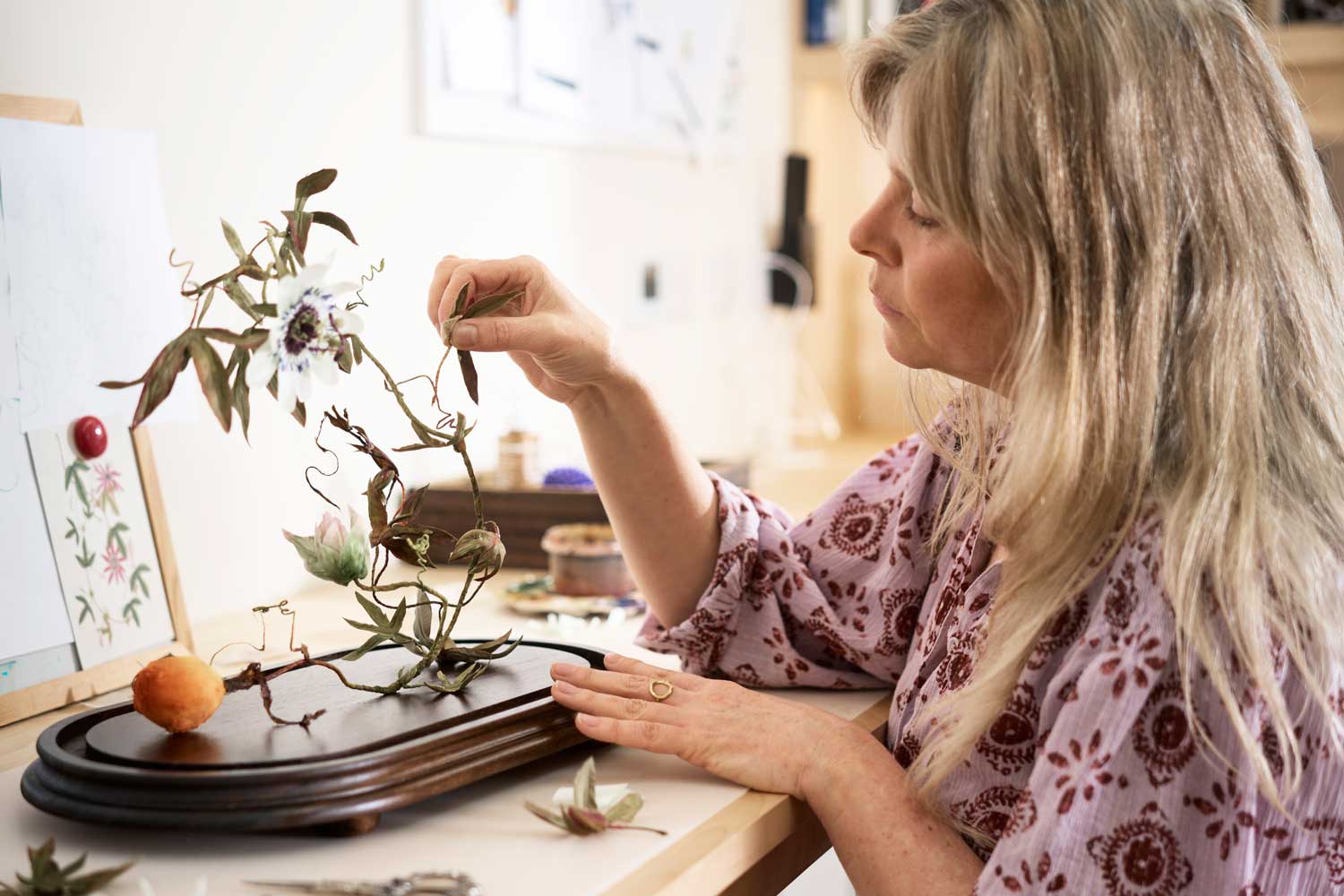
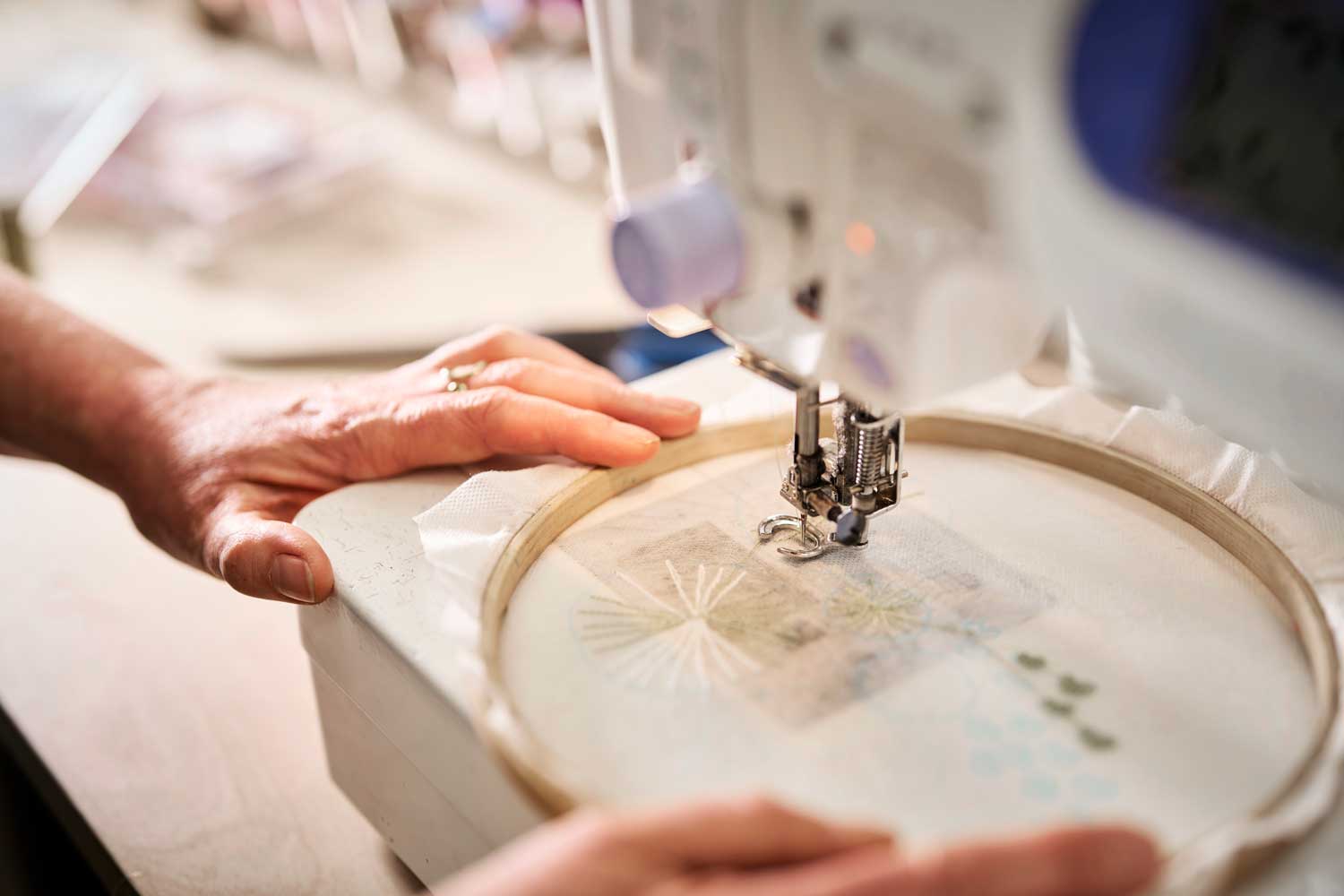
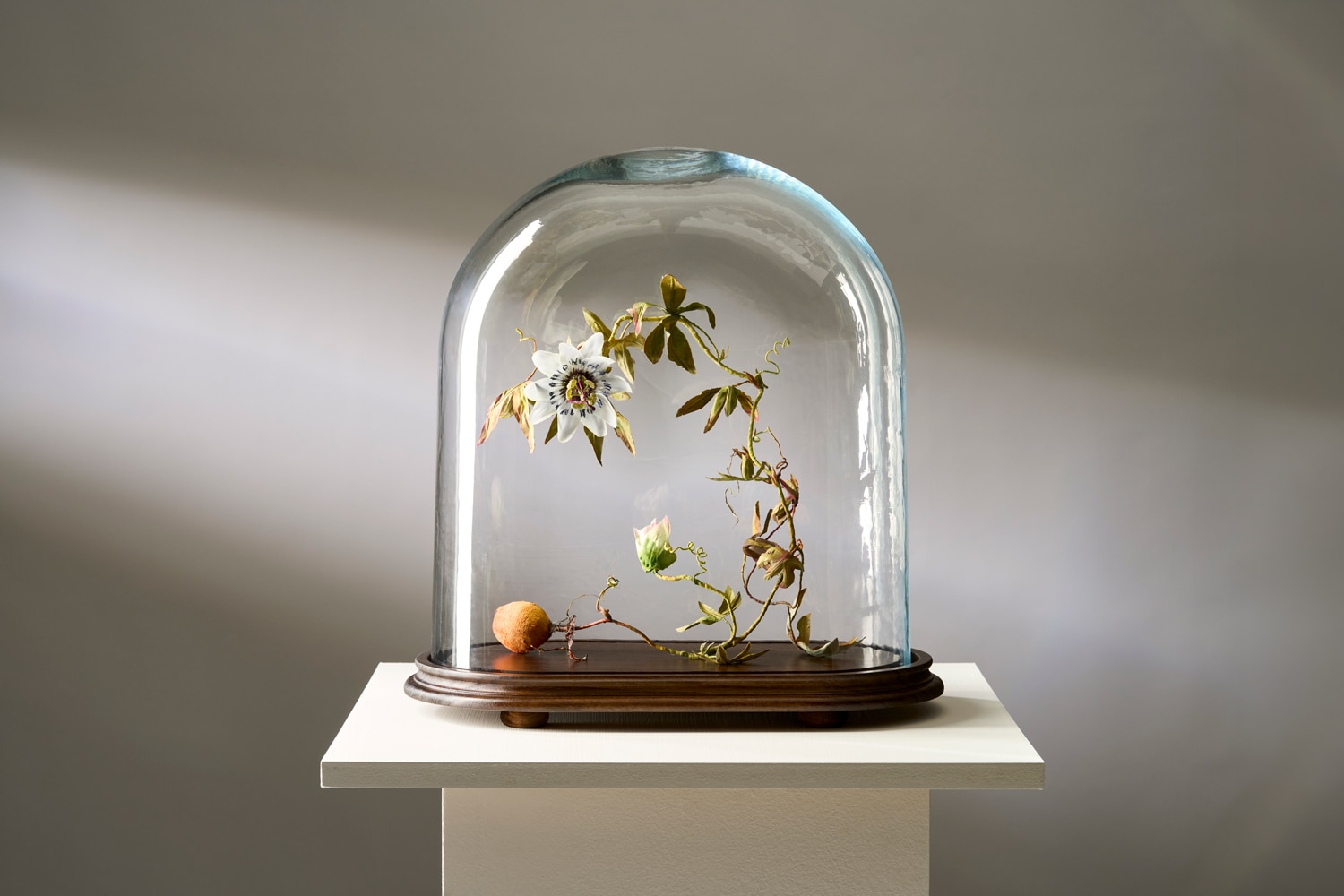
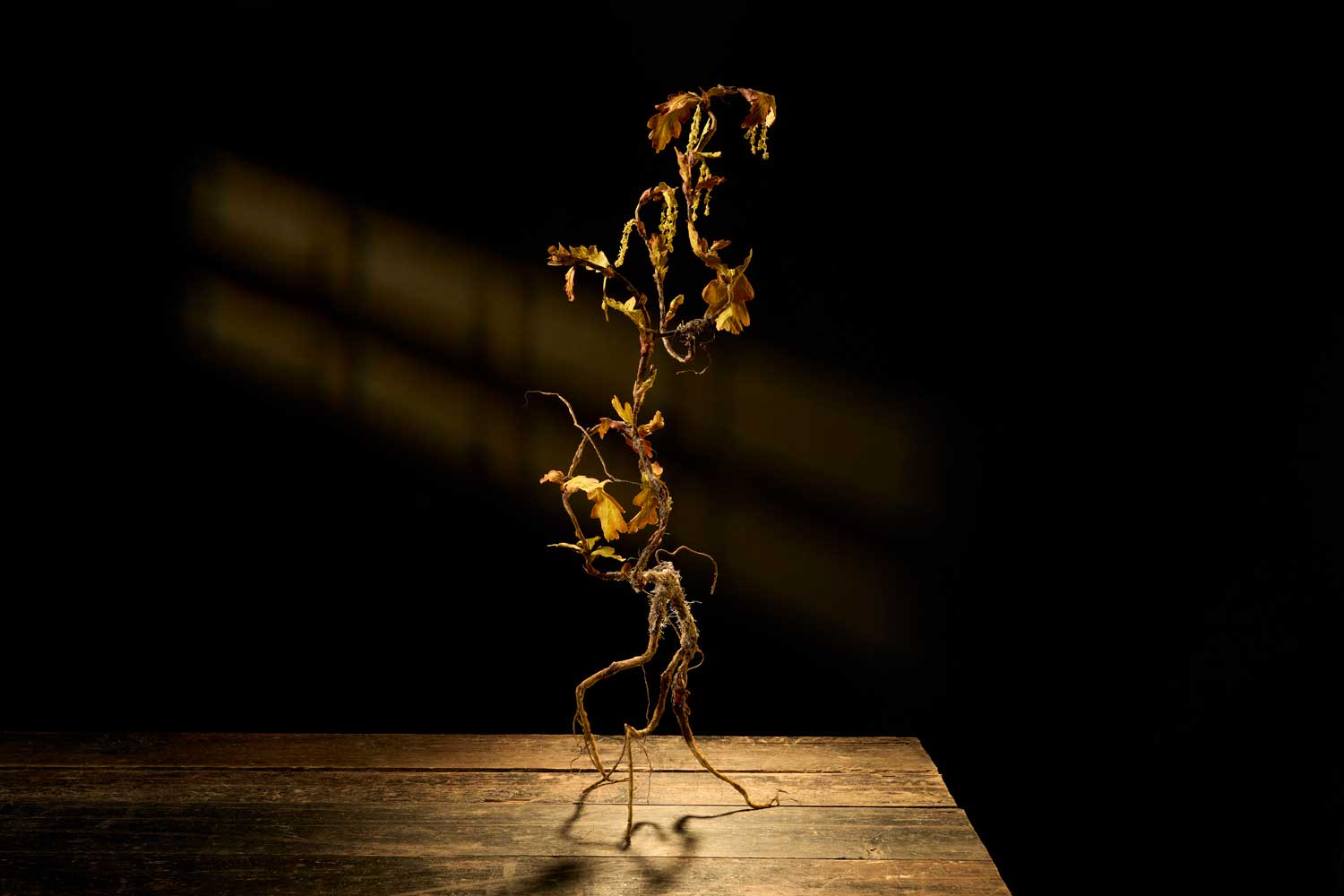
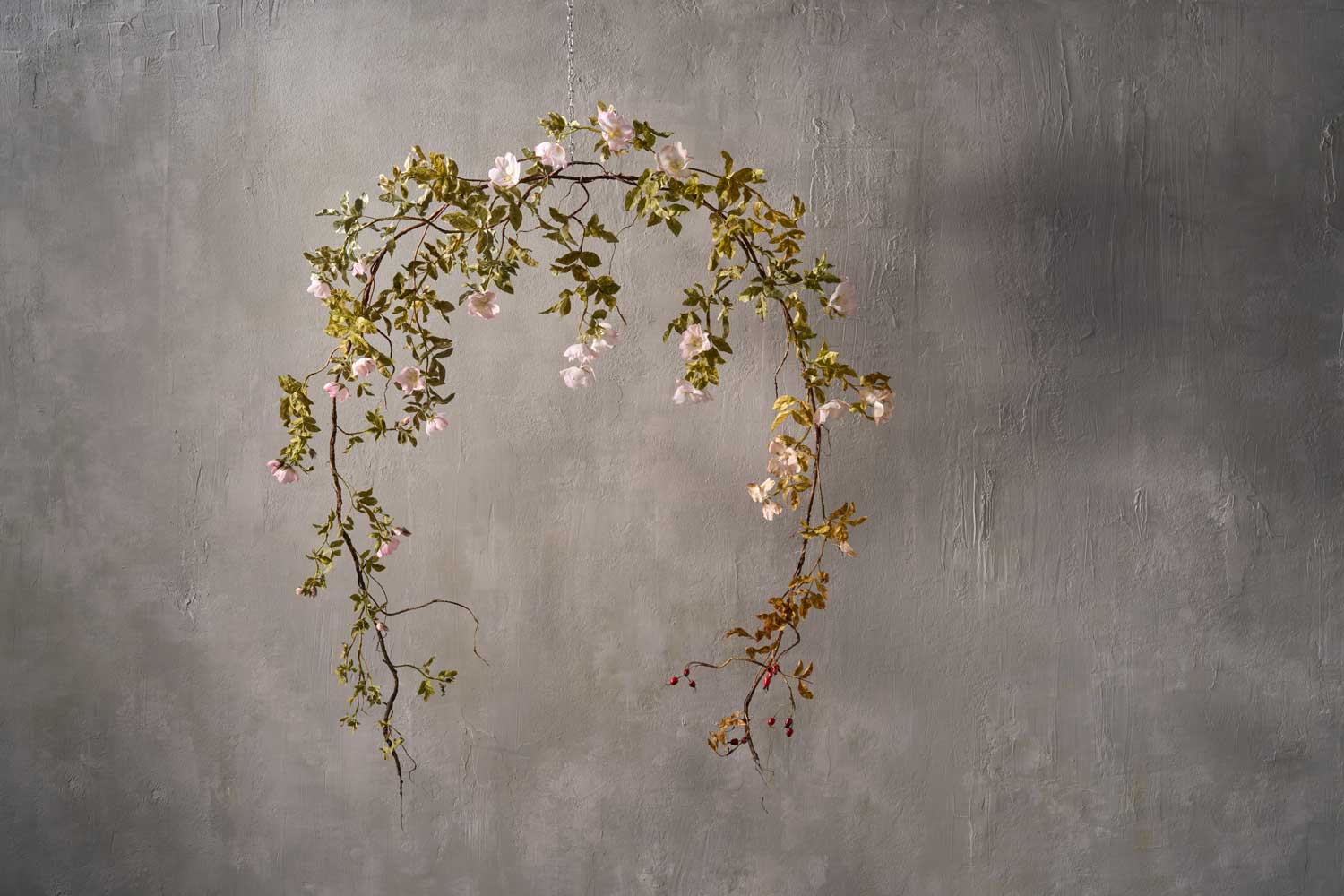
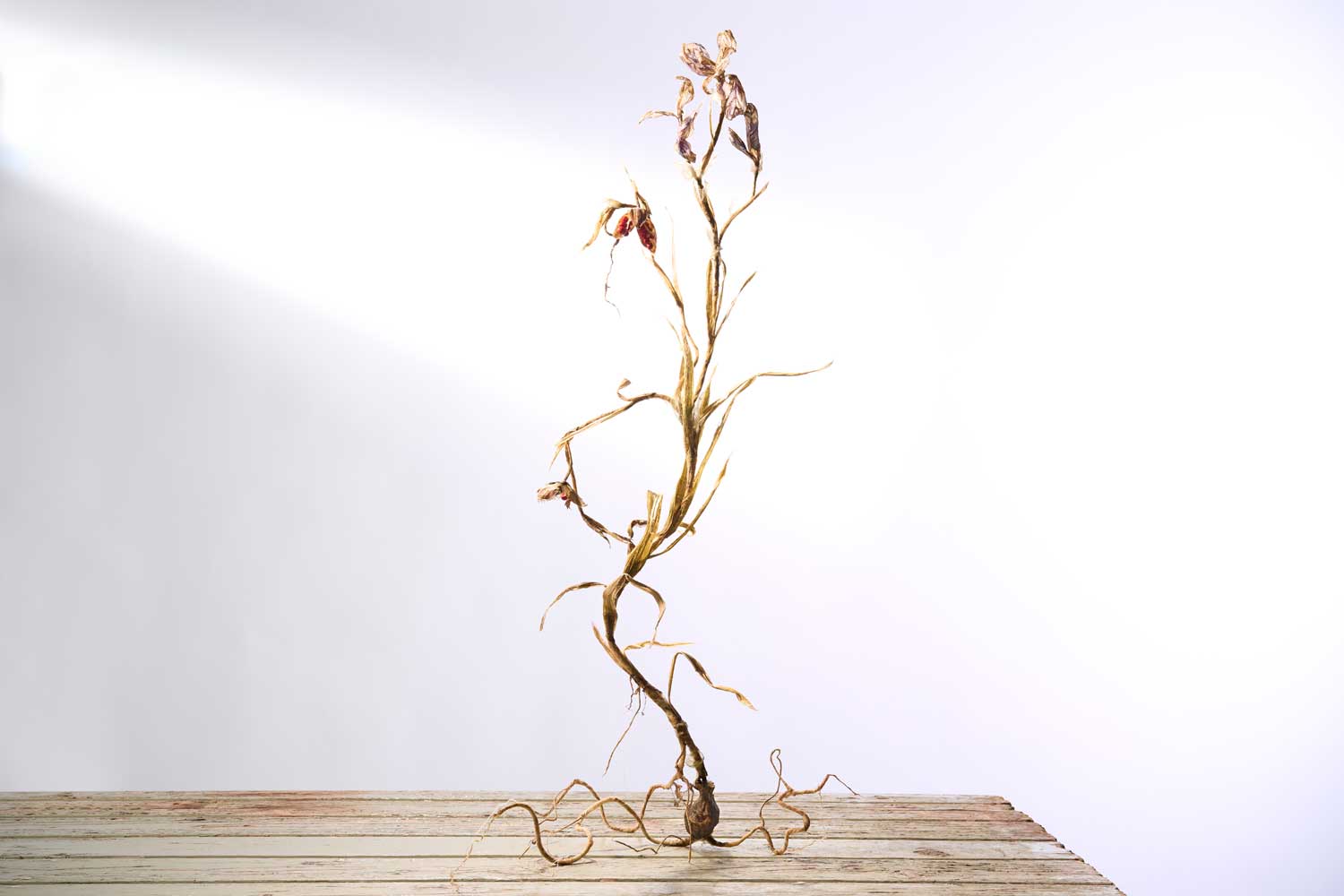
Emma Rosa's journey into floral sculptures began with a book about 19th-century glassmakers Leopold and Rudolf Blaschka, whose glass flowers are now held at Harvard. “I simply could not believe anyone could make something so intricate and beautiful out of a base material,” she says. Emma was inspired to create something from what was in front of her: a vase of lilies on the table, a sewing machine and stacks of fabric from the vintage clothing label she had run for years. After moving to Devon, her experiences walking lanes and fields stoked a deepening obsession with native, overlooked and endangered plants. Today, Emma’s developing practice recreates them in sculptural form. She uses starched raw silk slivers to build branches, manipulates silk dupion with heat and then dissolves the embroidery backing, leaving nothing but thread built upon itself to create 3D botanical pieces.
INTERVIEW
I am very inspired by the native flowers of Devon. My lawn is full of dandelions and I wondered if I could make them in fabric. I found a way to starch individual silk threads up to a halfway point, then fray the ends and paint the tip. The seed head itself is free hand embroidery on water soluble fabric. I made tens of thousands of them.
I want people to look at plants that are usually overlooked or dismissed. Bindweed chokes everything in the garden, but in a hedgerow, it shelters bees and wasps. It is about changing our perspective.
I have no boundaries of what I should and should not do, and that is precisely why it works. My fine art degree was the opposite. I was told not to mix or approach photography, textiles or other disciplines. But I do not let that limit me in my practice today. I do not look at a plant and think that fabric cannot replicate it. I simply find a way.
I have recently completed a nine foot magnolia. I worked in a very different way than for my smaller pieces, but the project challenged me to push the boundaries of what I could do. I now want to experiment with some new techniques to fully indulge in this practice and build other works on a larger scale.
Emma Rosa
Textile sculptor
Devon, United Kingdom
ADDRESS
Address upon request, Devon, United Kingdom
AVAILABILITY
By appointment only
LANGUAGES
English
Homo Faber Finds is a new service aiming to inspire admirers of craft to connect and collaborate with exceptional artisans.
We invite you to submit an enquiry here.