The master of kitchen utensils
- Ricardo taught himself how to turn, carve and sculpt wood
- What started as a hobby turned into an unexpected profession
- His wooden utensils are used by the best chefs in Portugal
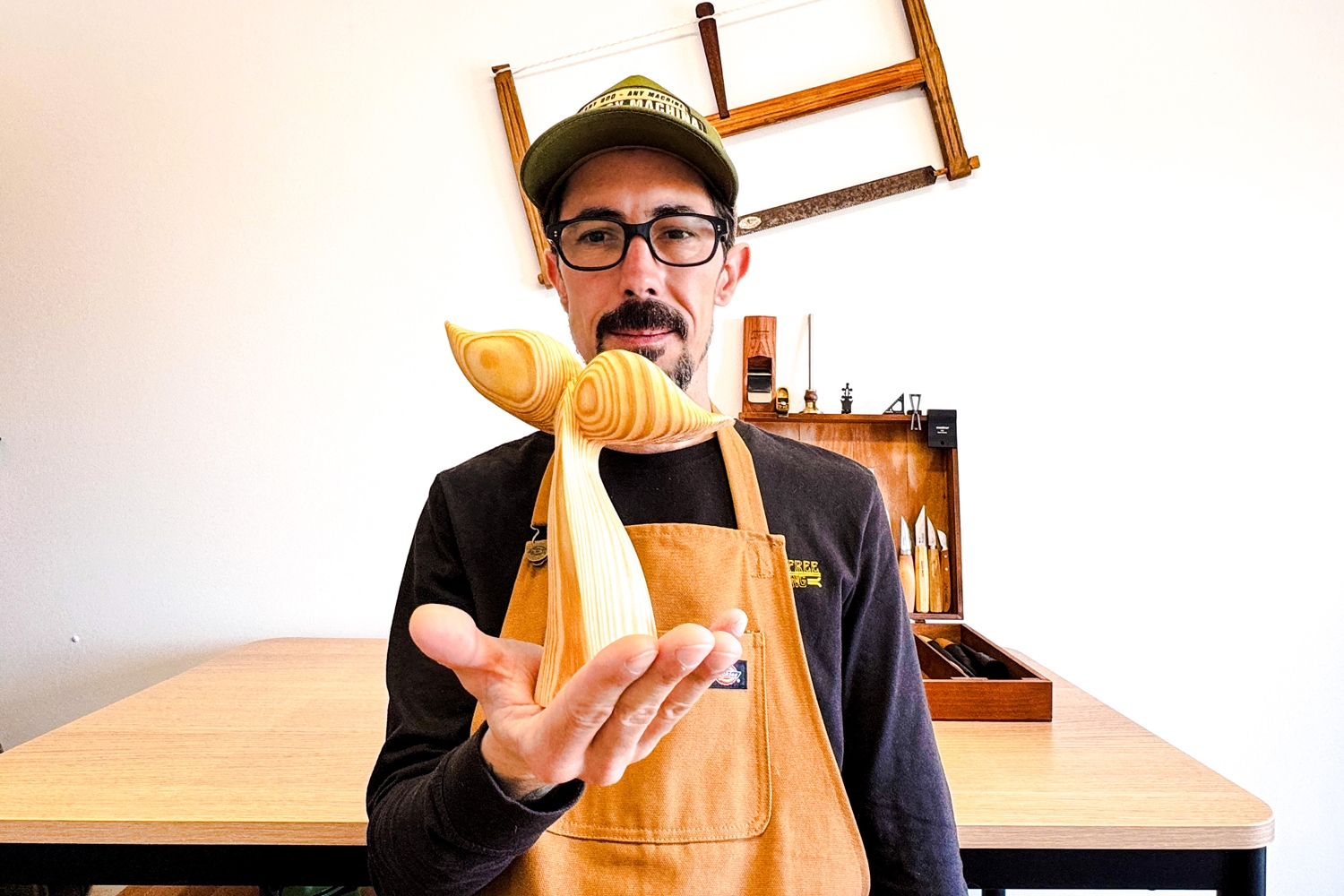
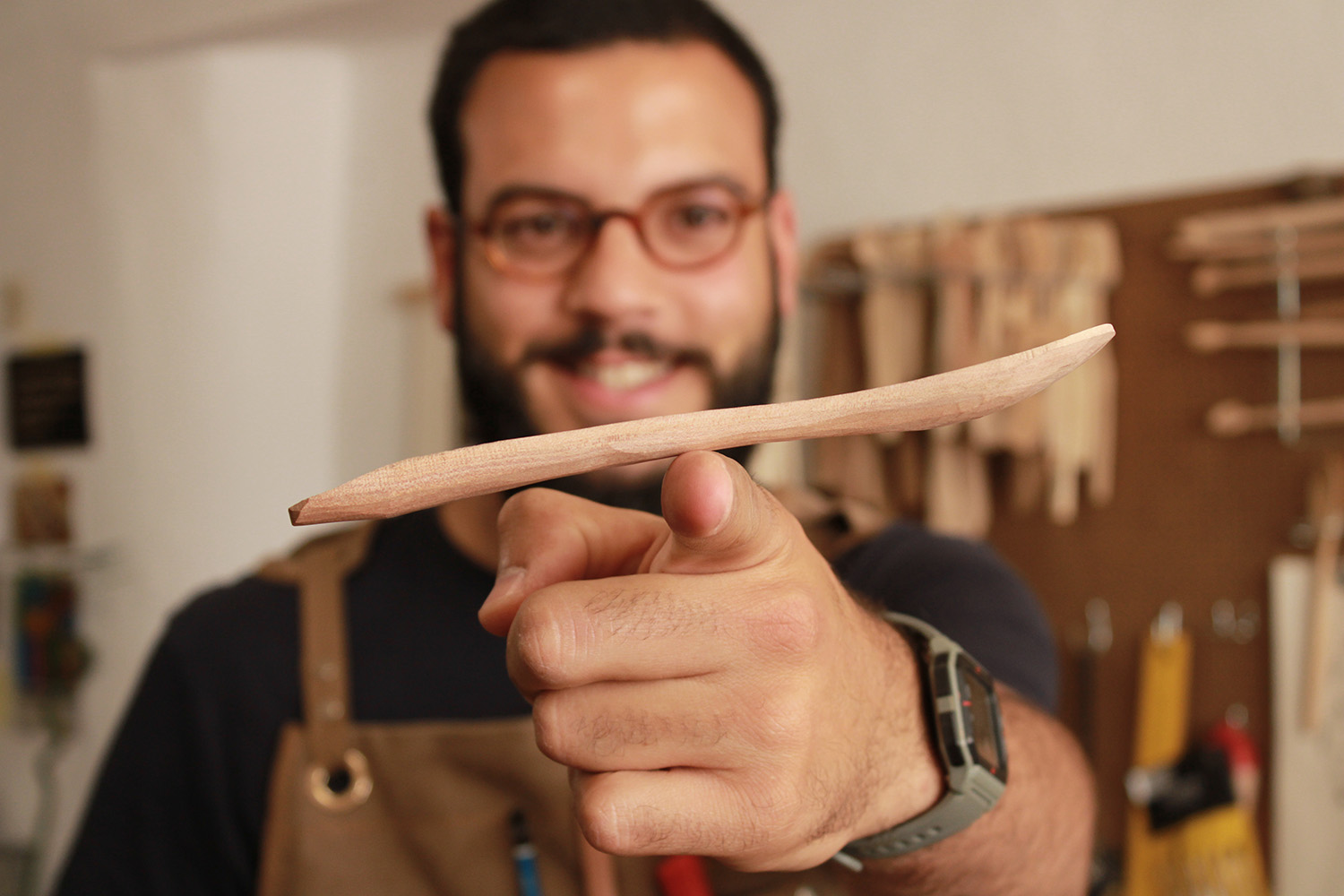
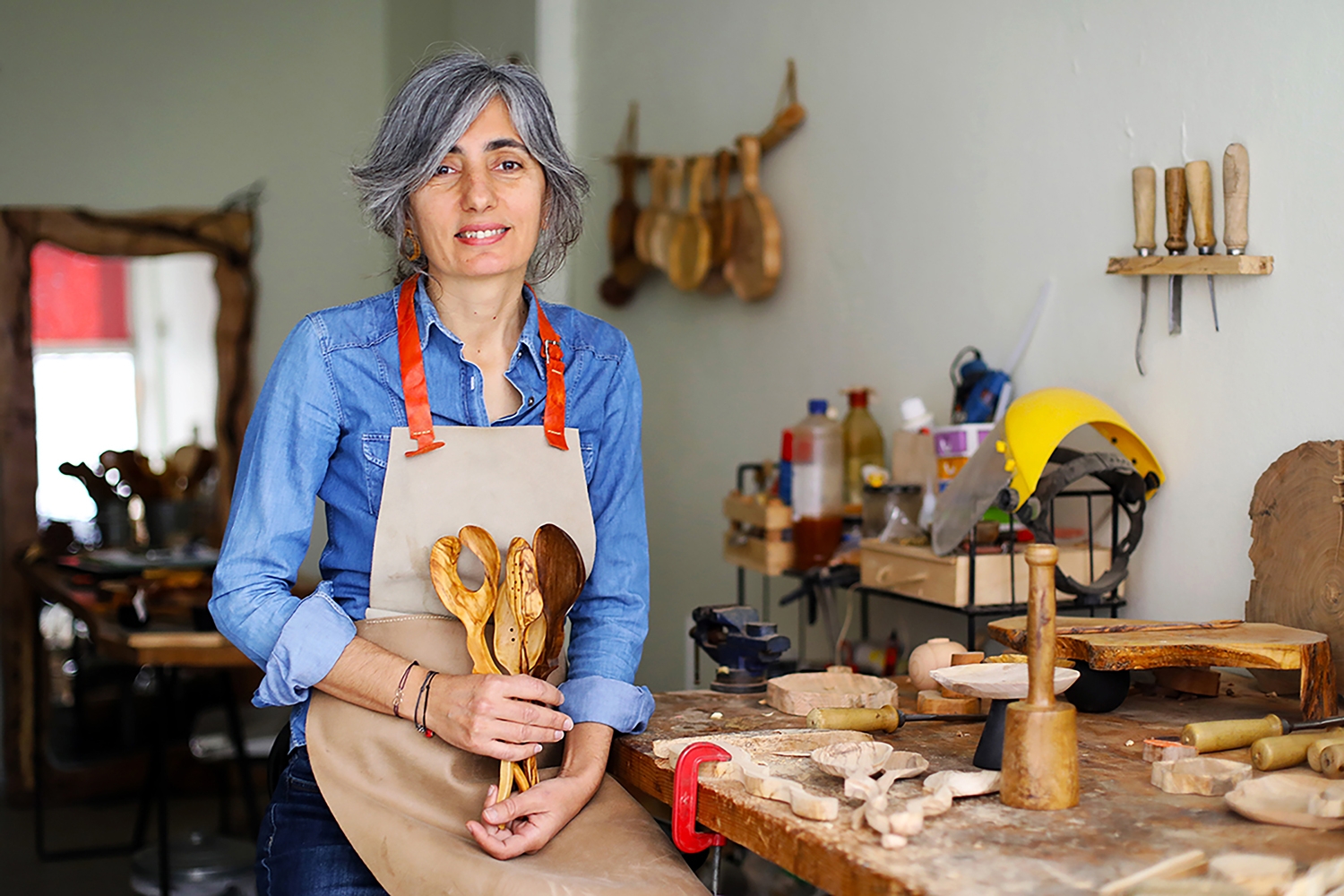
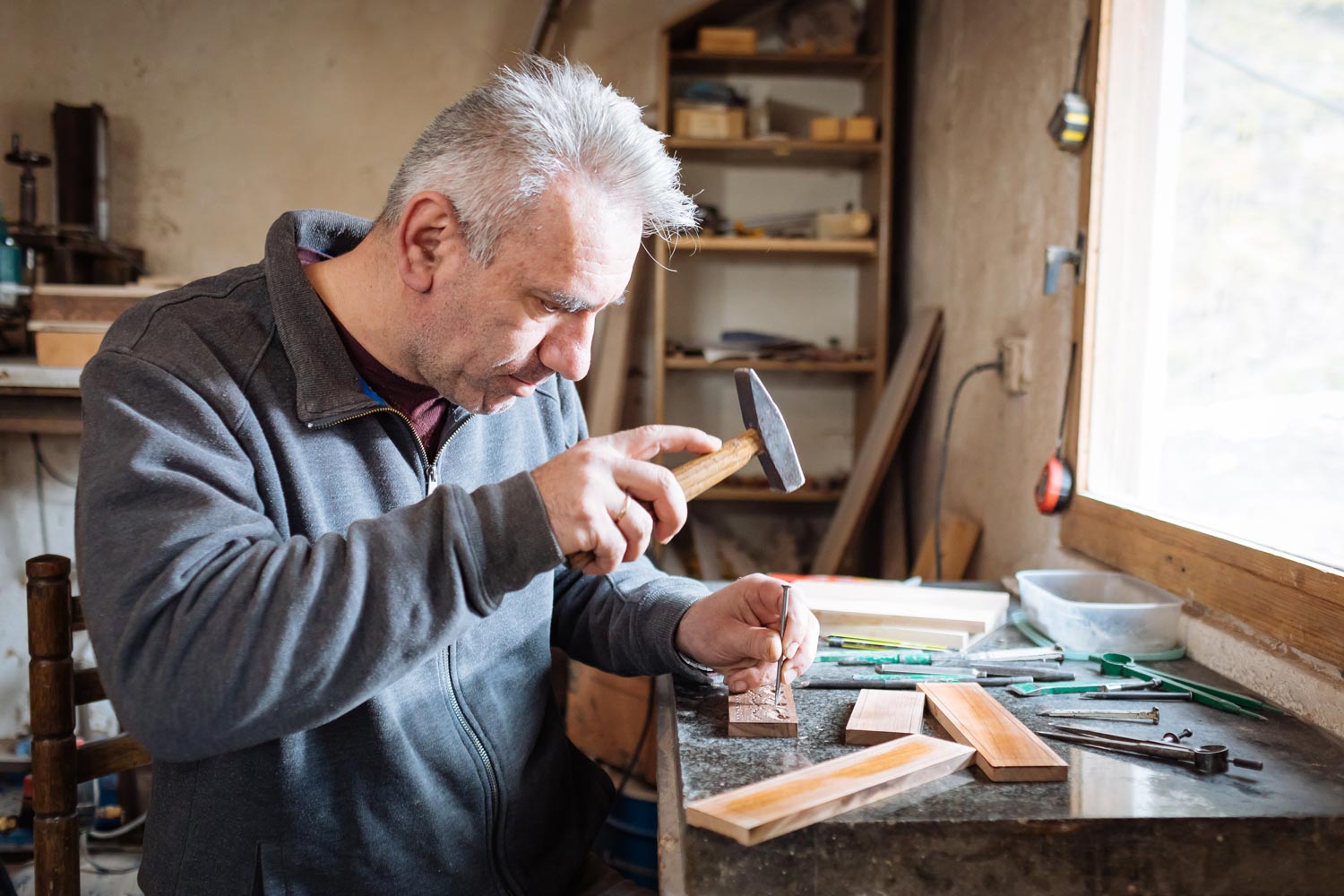
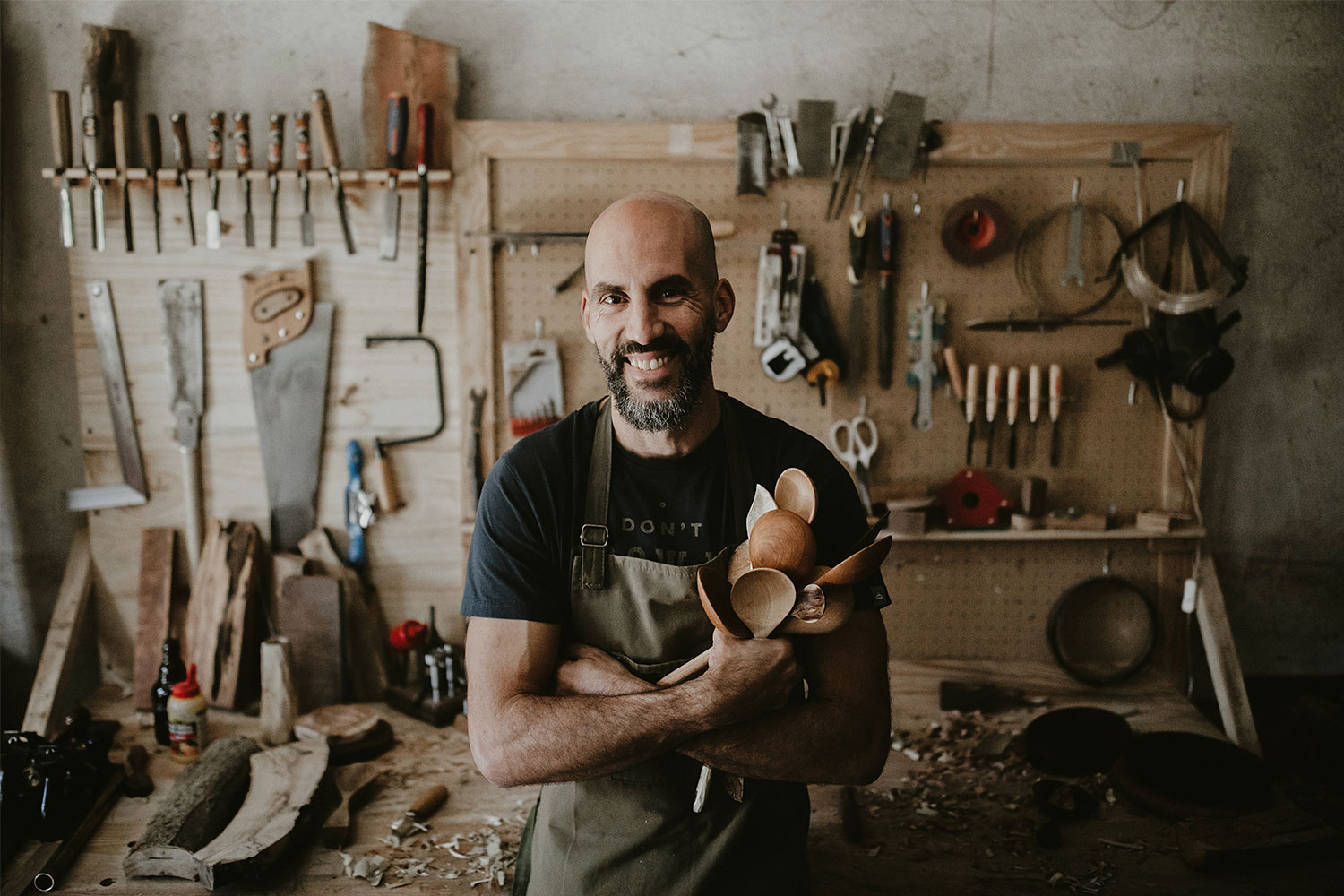
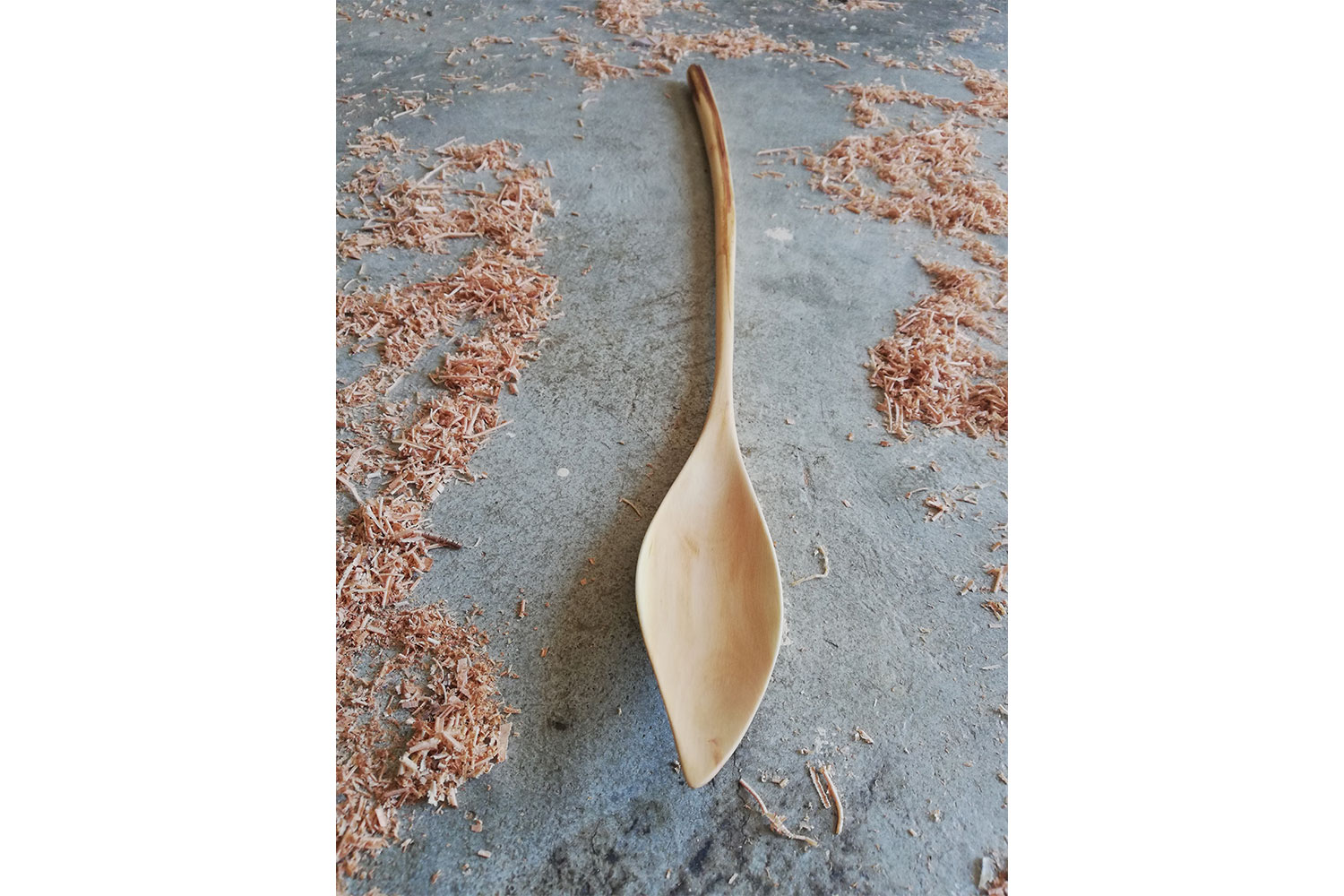
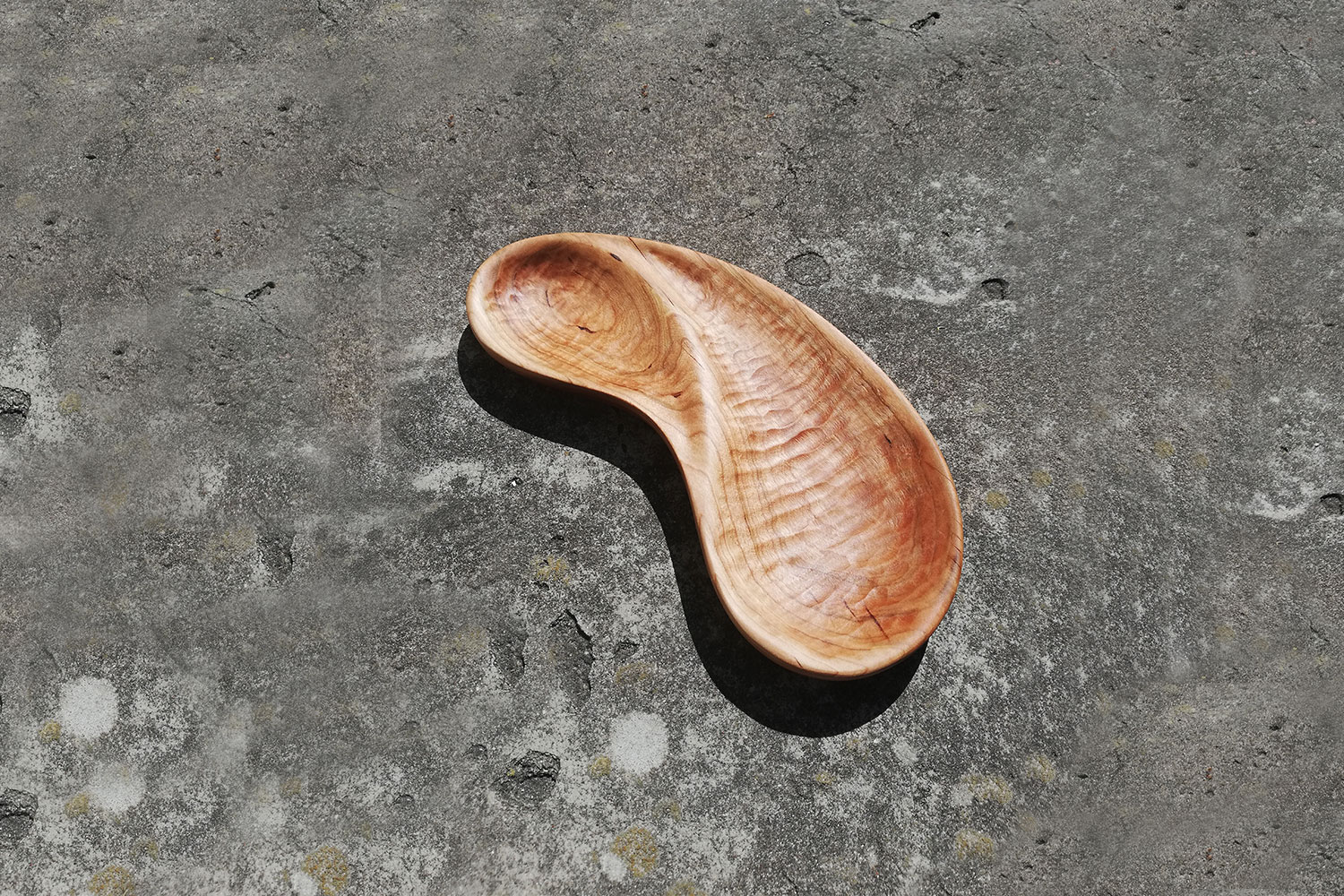
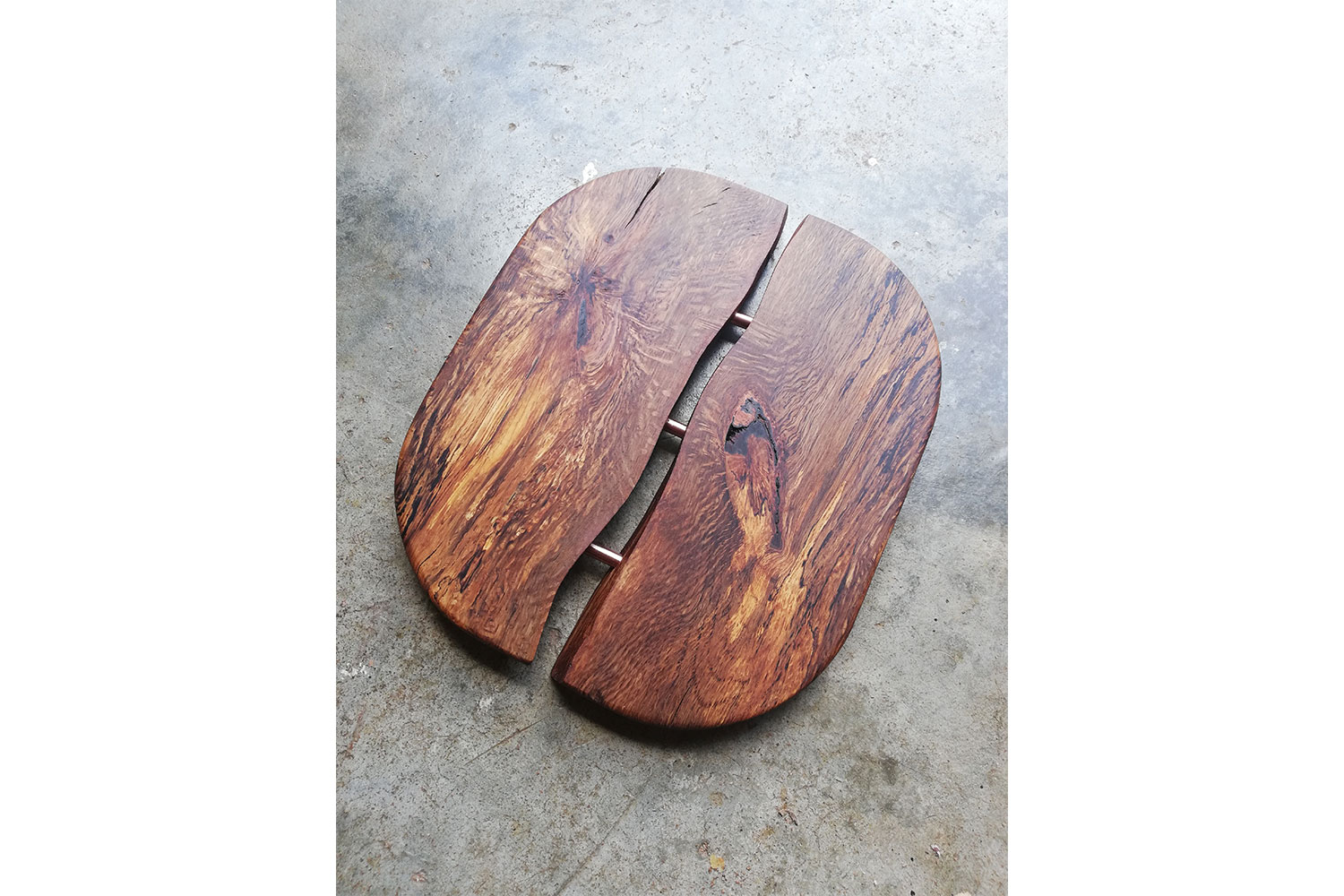
Ricardo Jerónimo’s story tells of an industrial designer, a graduate of Lisbon’s Fine Arts Faculty, who followed his passion and discovered his talent for carving, turning and sculpting wood. He remembers, as a child, watching his grandfather making wooden toys and small furniture for his grandchildren. Playing outside in a small forest near his parents’ house also contributed to his connection with this natural material. He started creating small wooden spoons and toys as a hobby, mostly for his son. Then some friends asked him to make some kitchen utensils and slowly his hobby turned into a profession, alongside teaching project design and 3D modelling at the university where he studied.
INTERVIEW
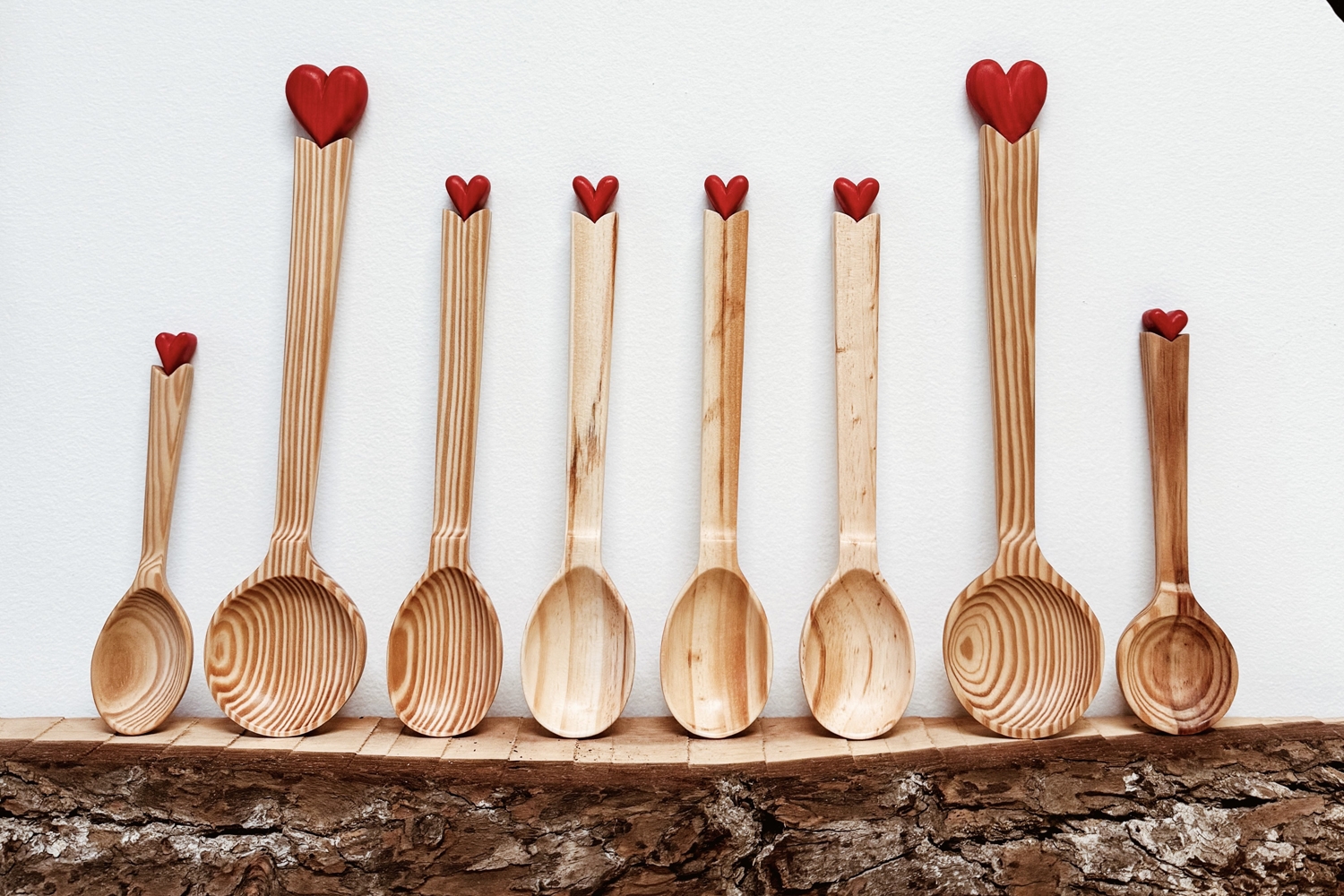
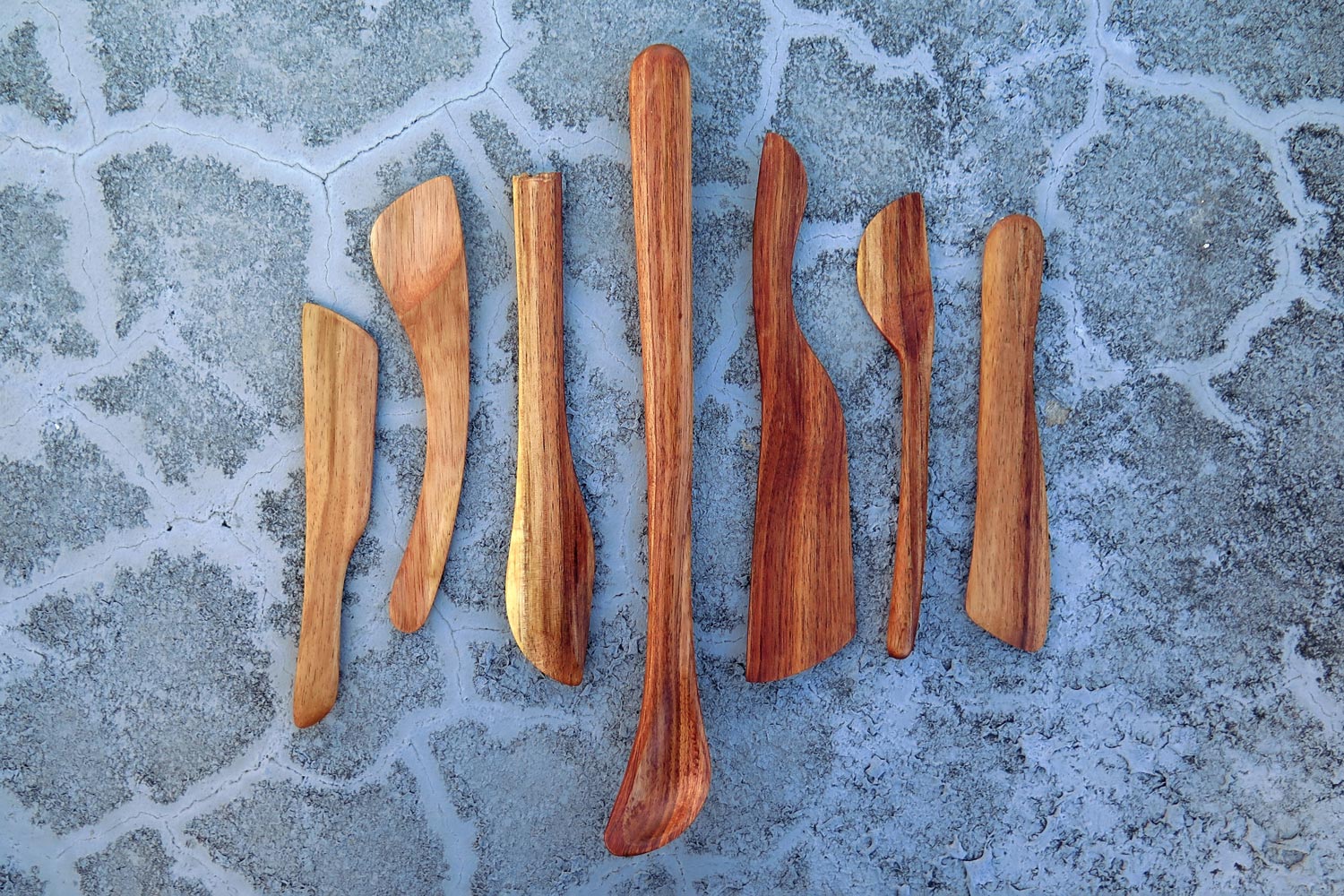
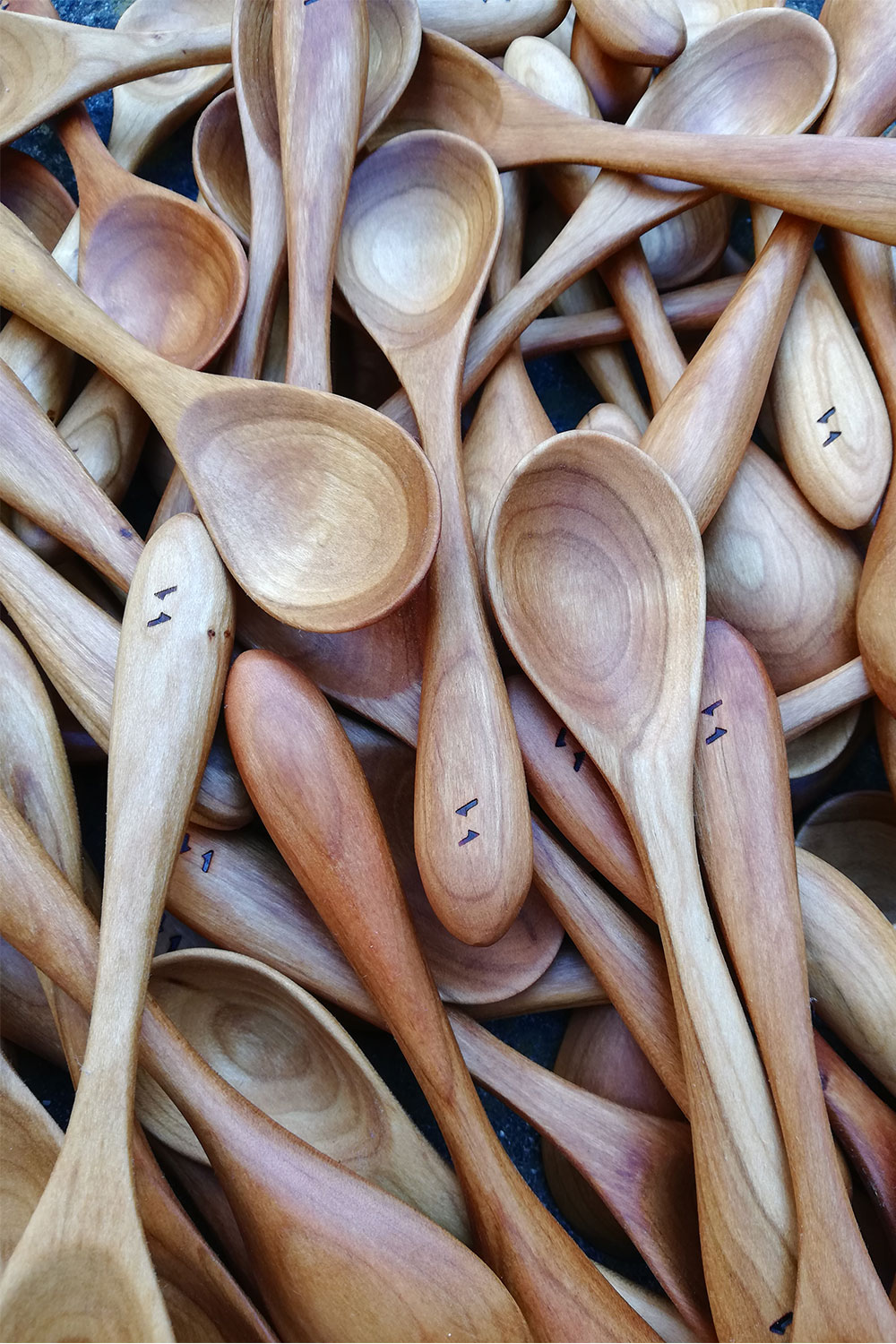
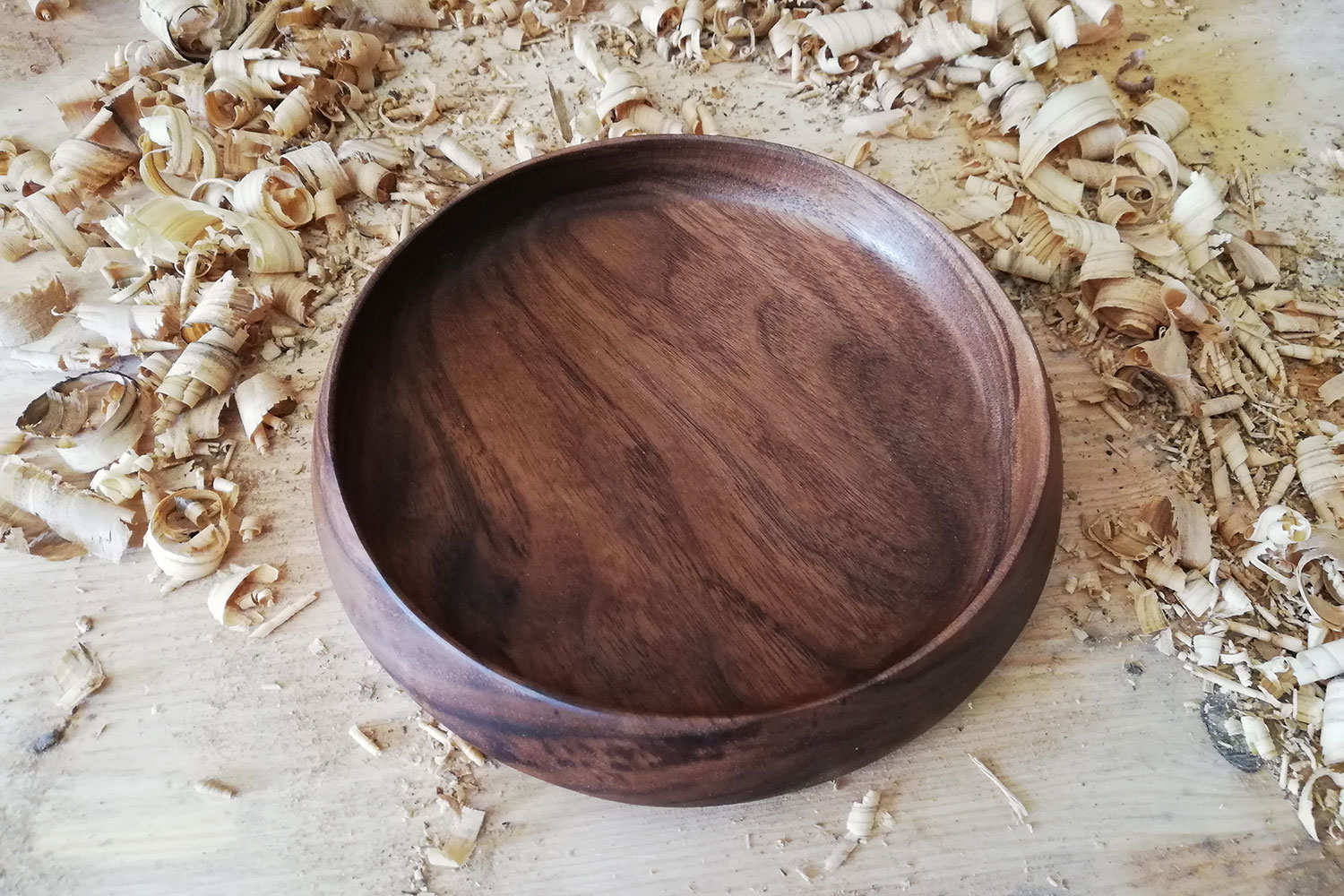
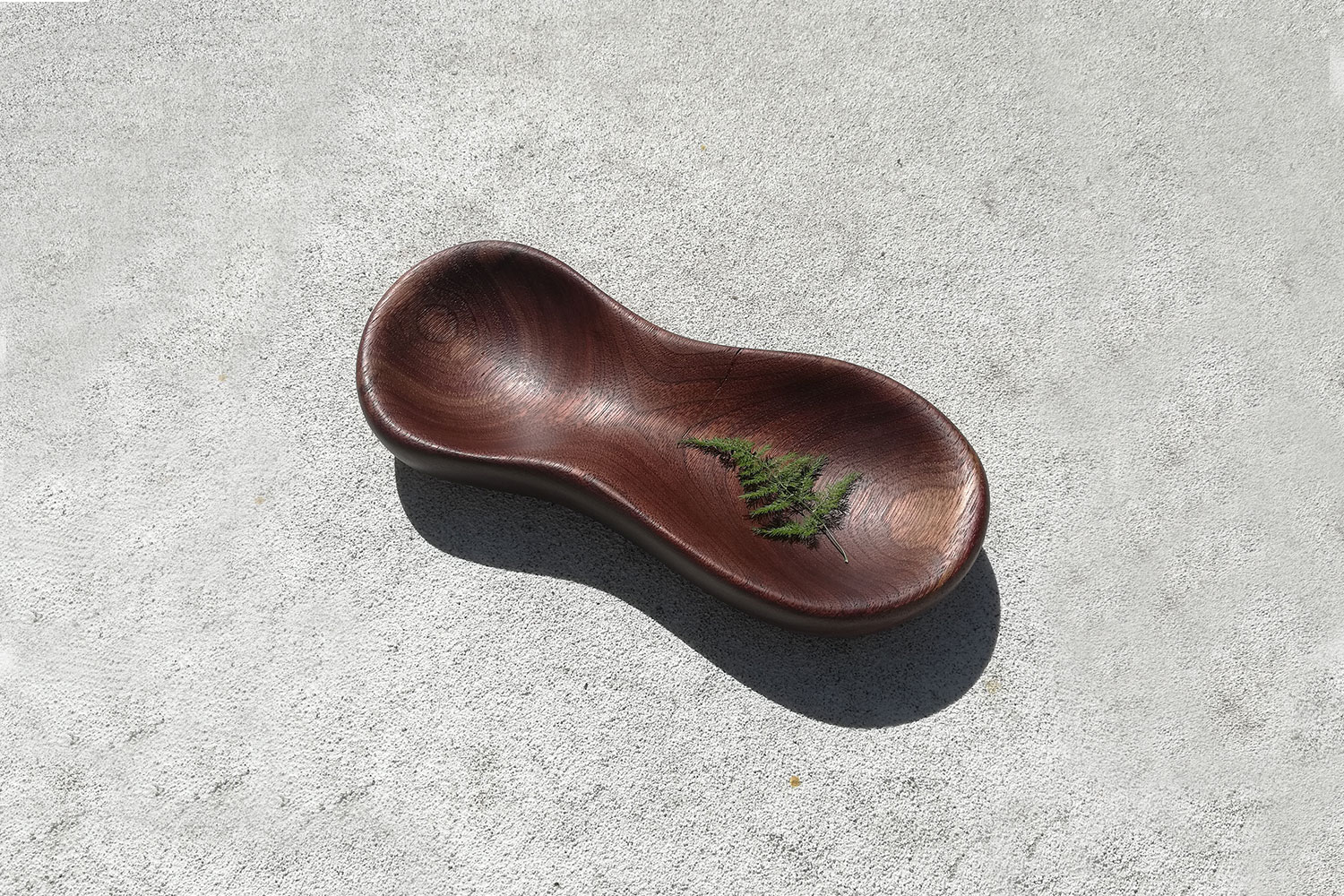
Portugal has a big tradition of wooden kitchen utensils. I guess people like the fact that I create objects that are primarily functional but also beautiful, as I try to combine design with tools and techniques of the past, while respecting the characteristics of the wood.
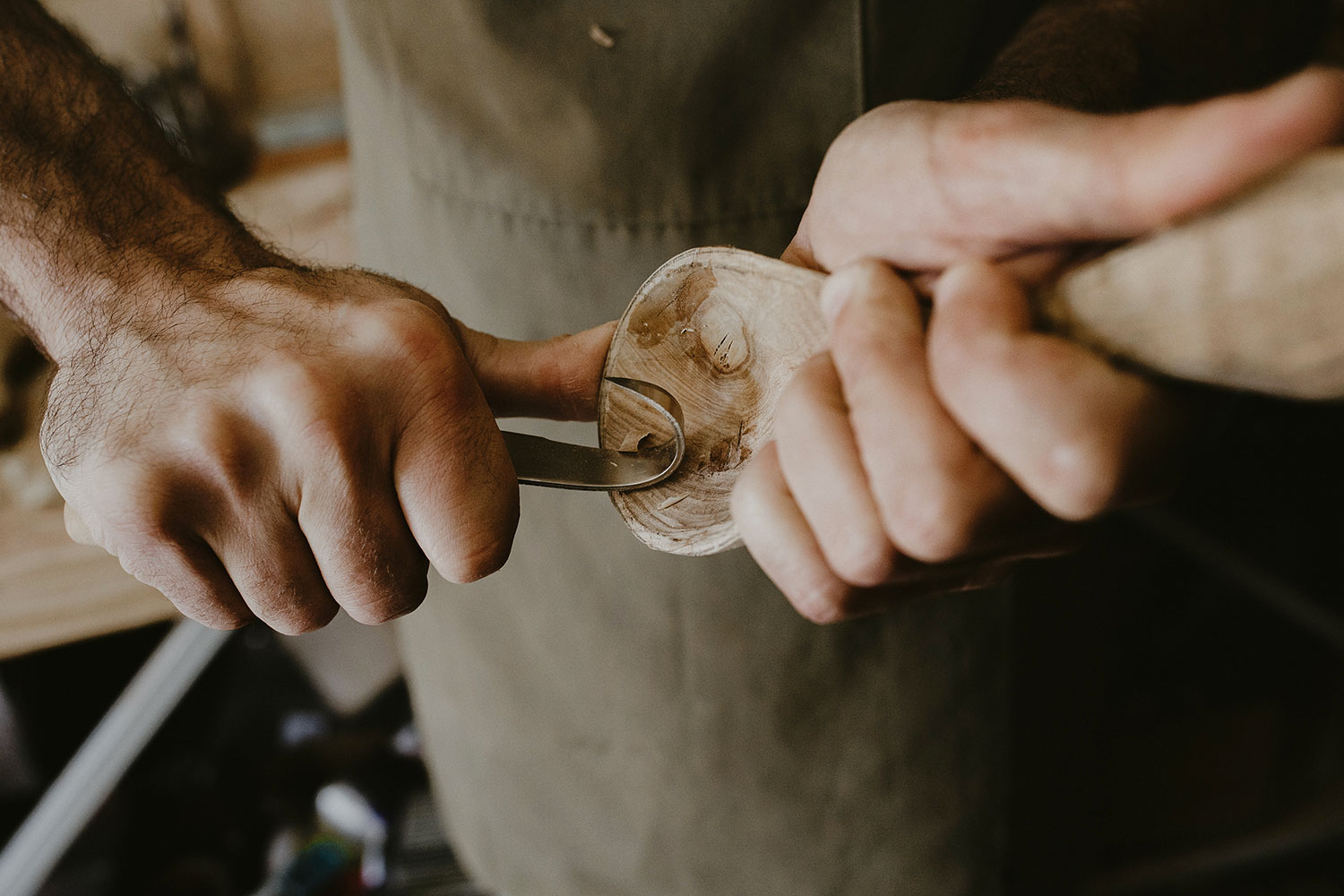
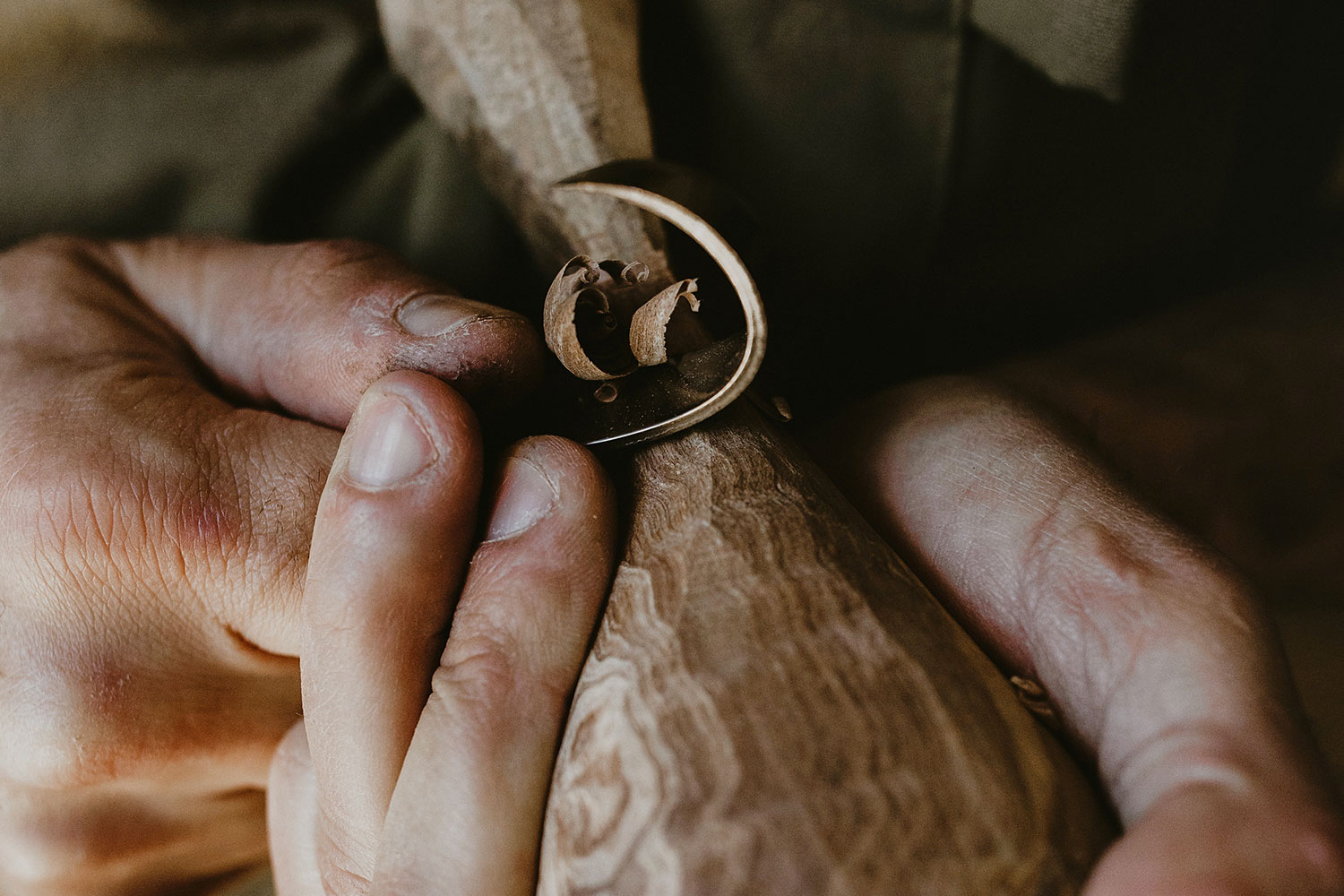
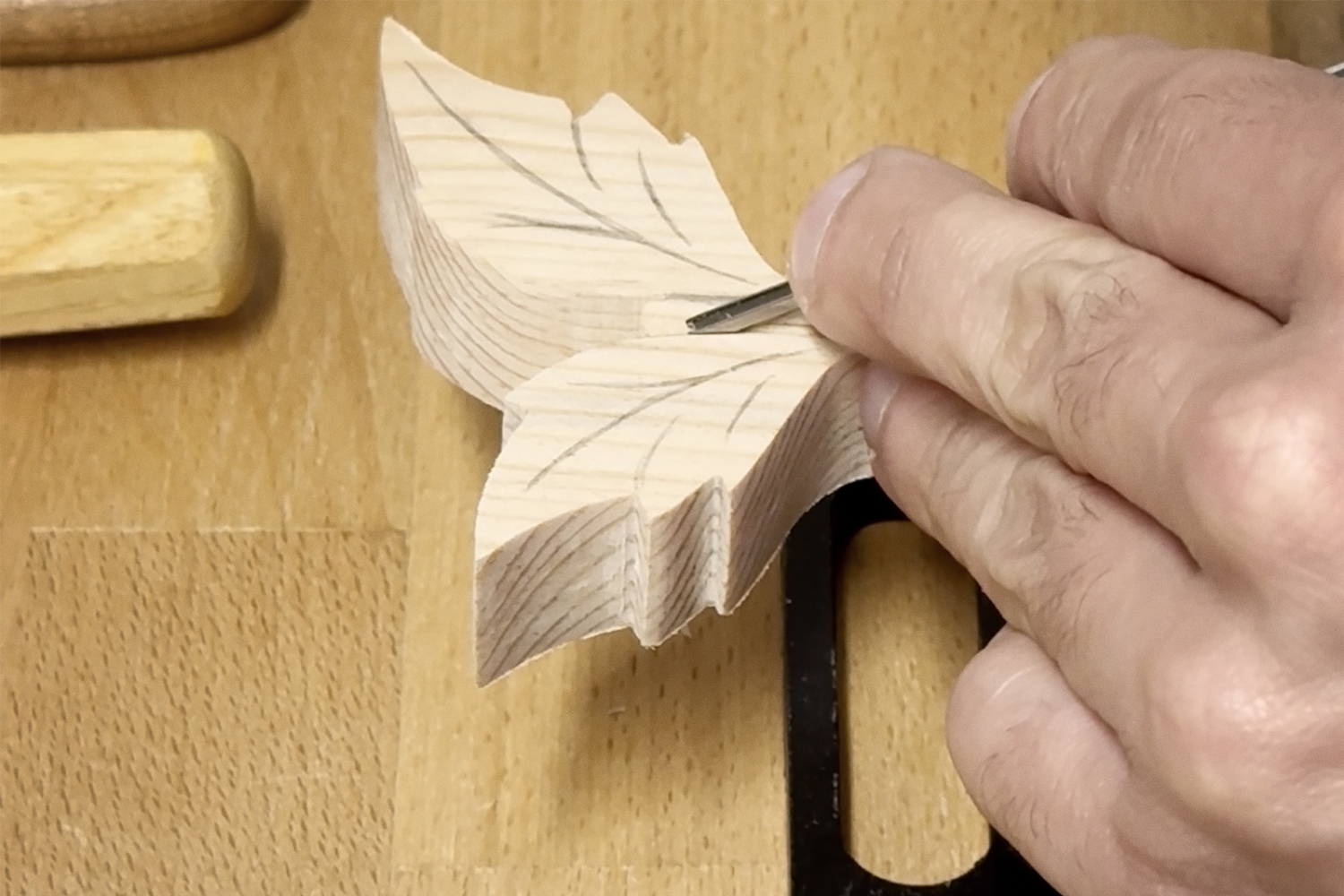
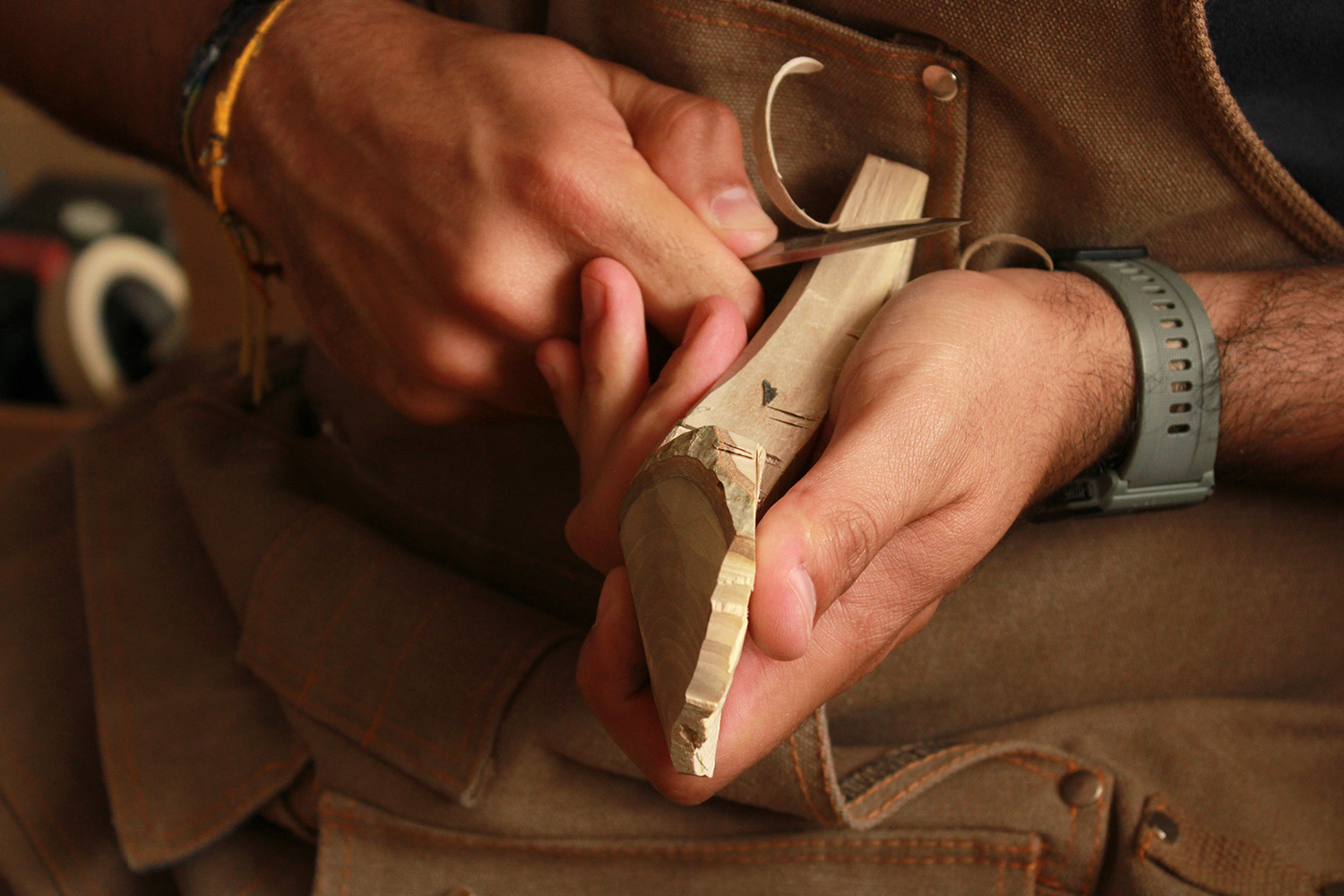
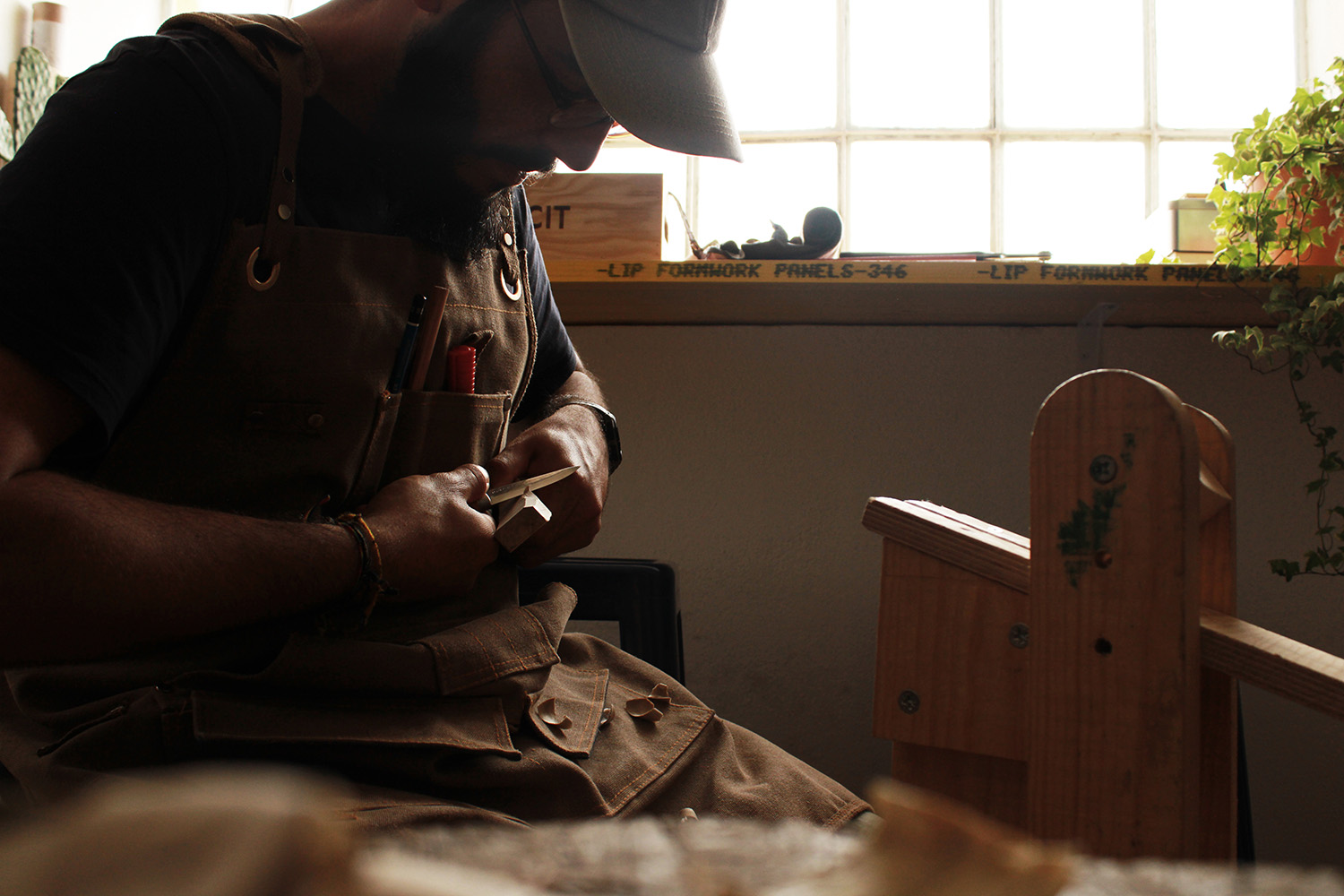
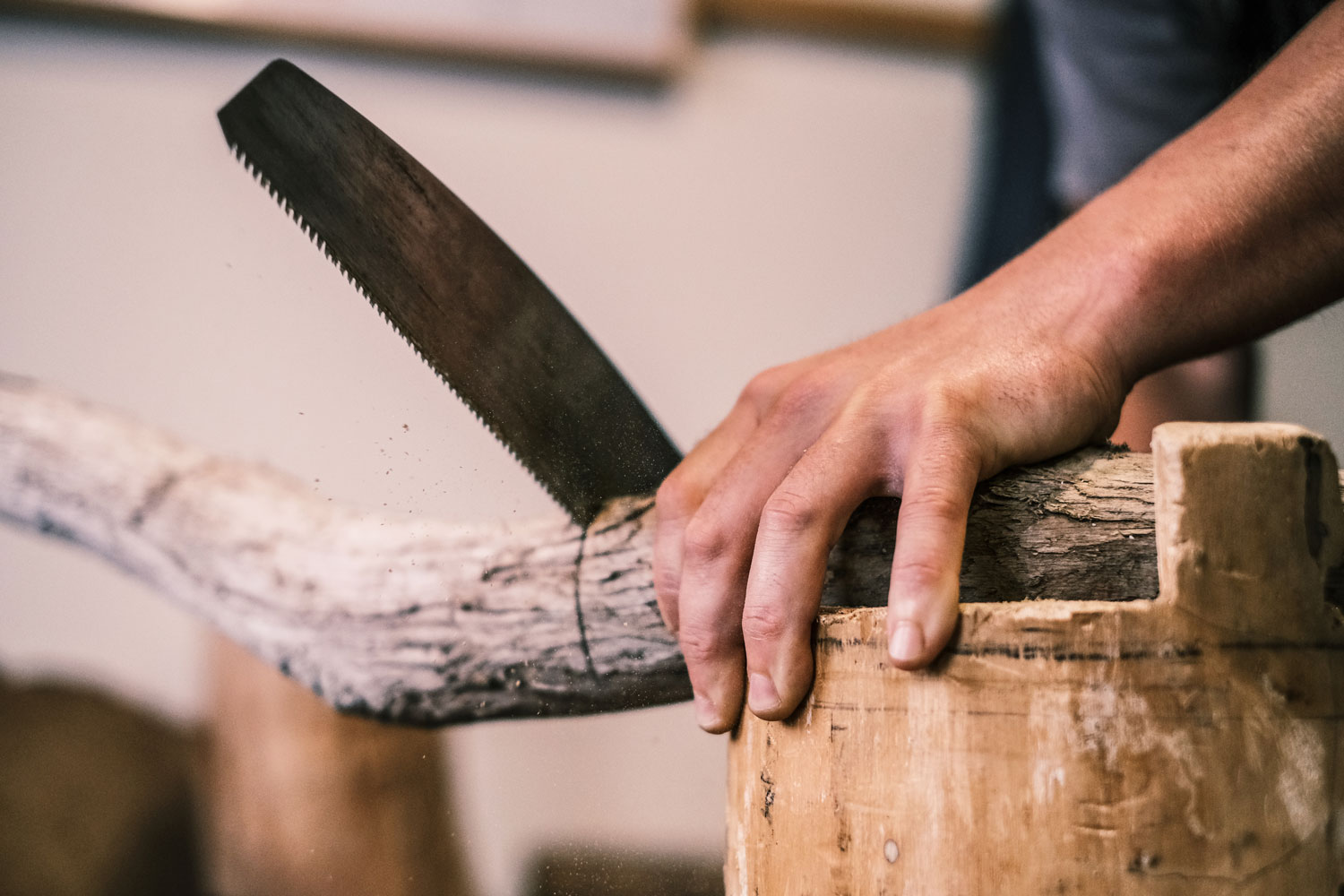
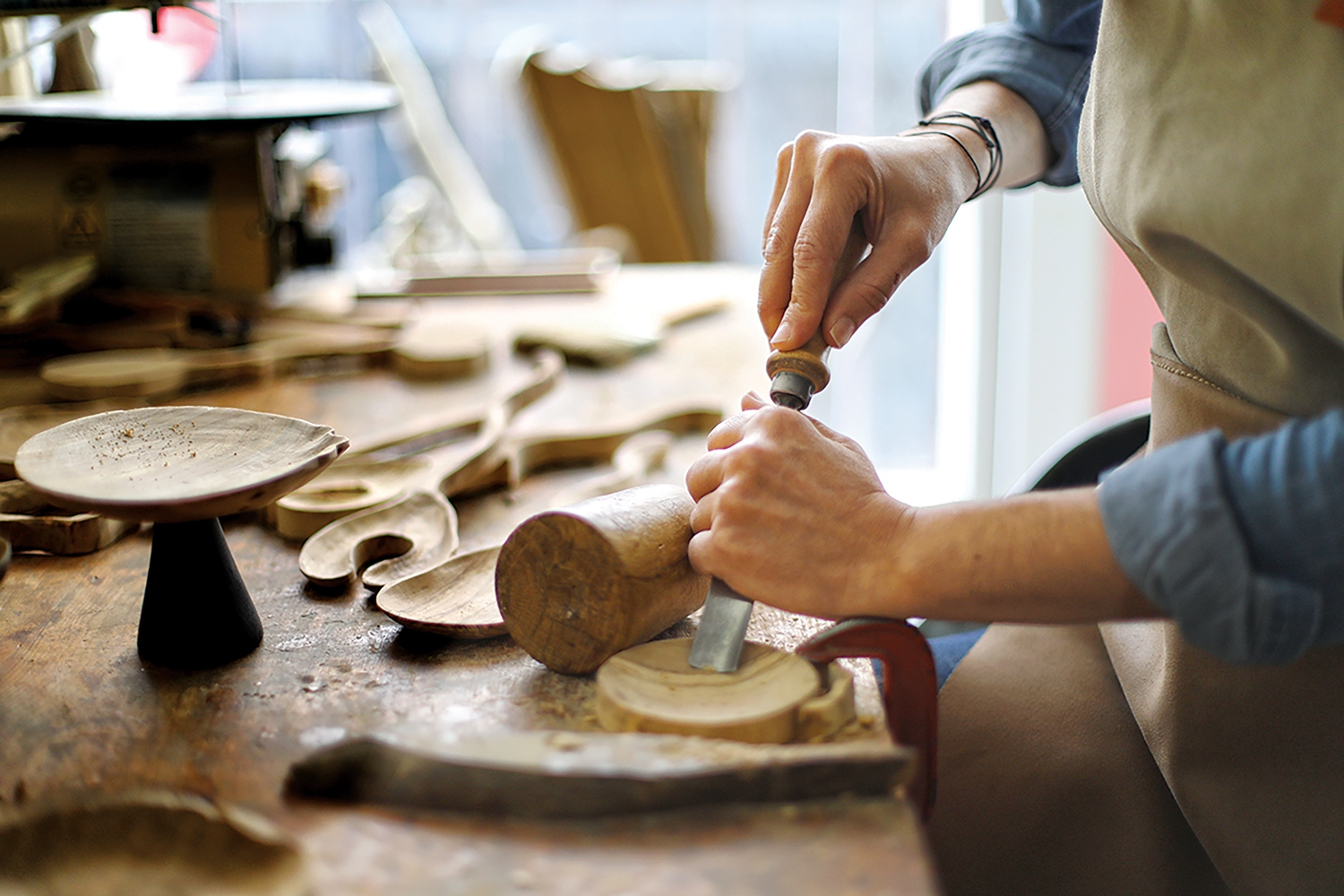
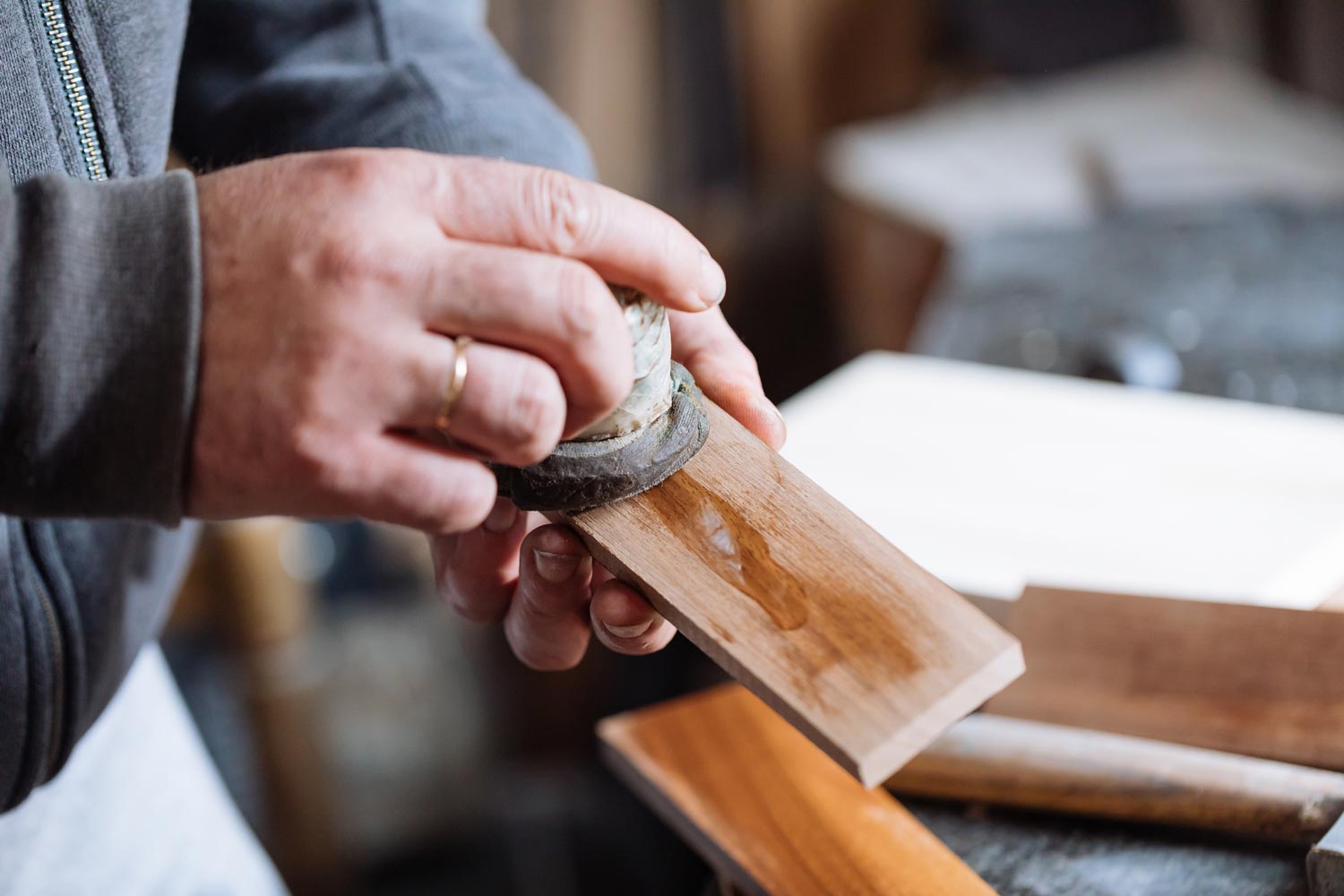
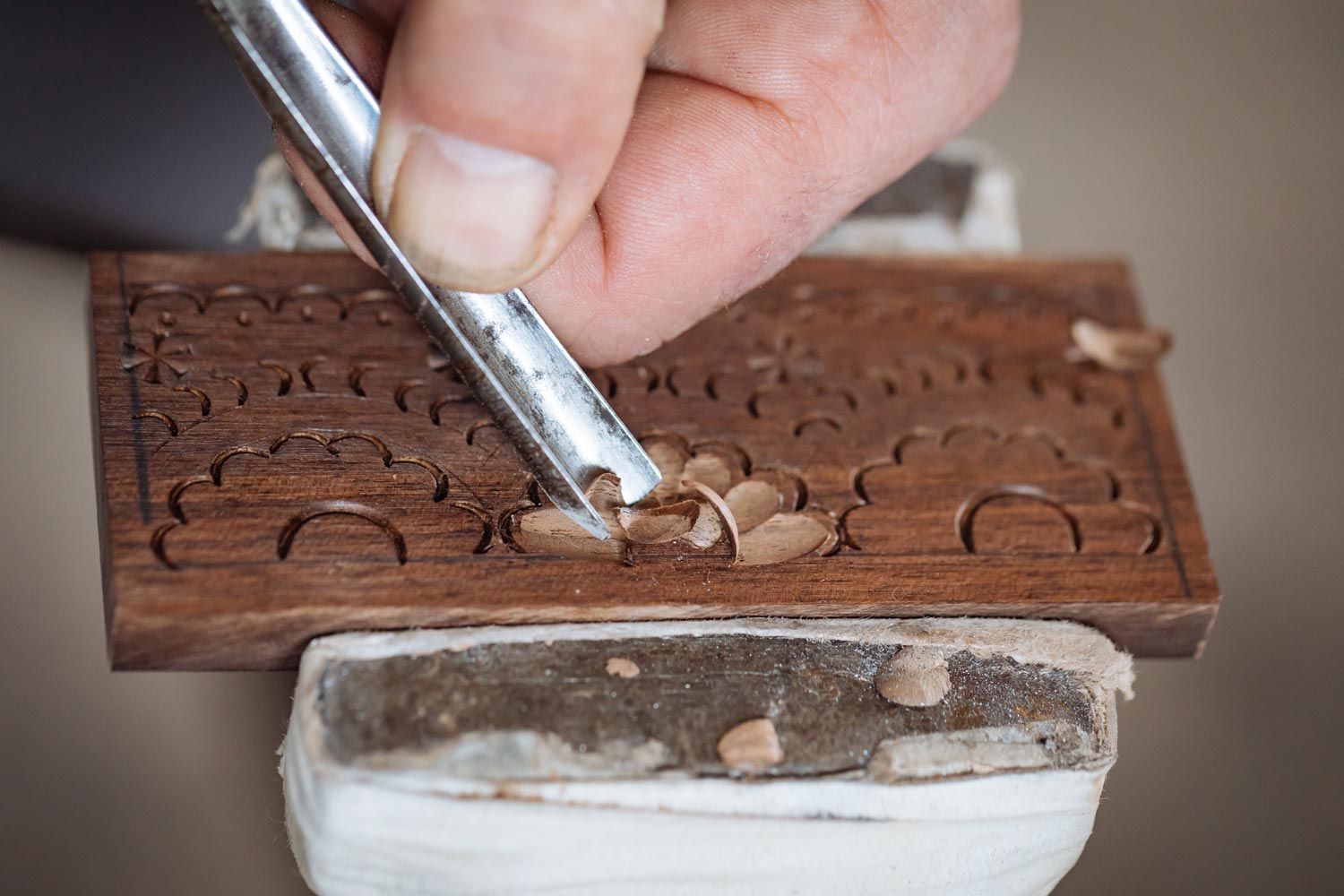
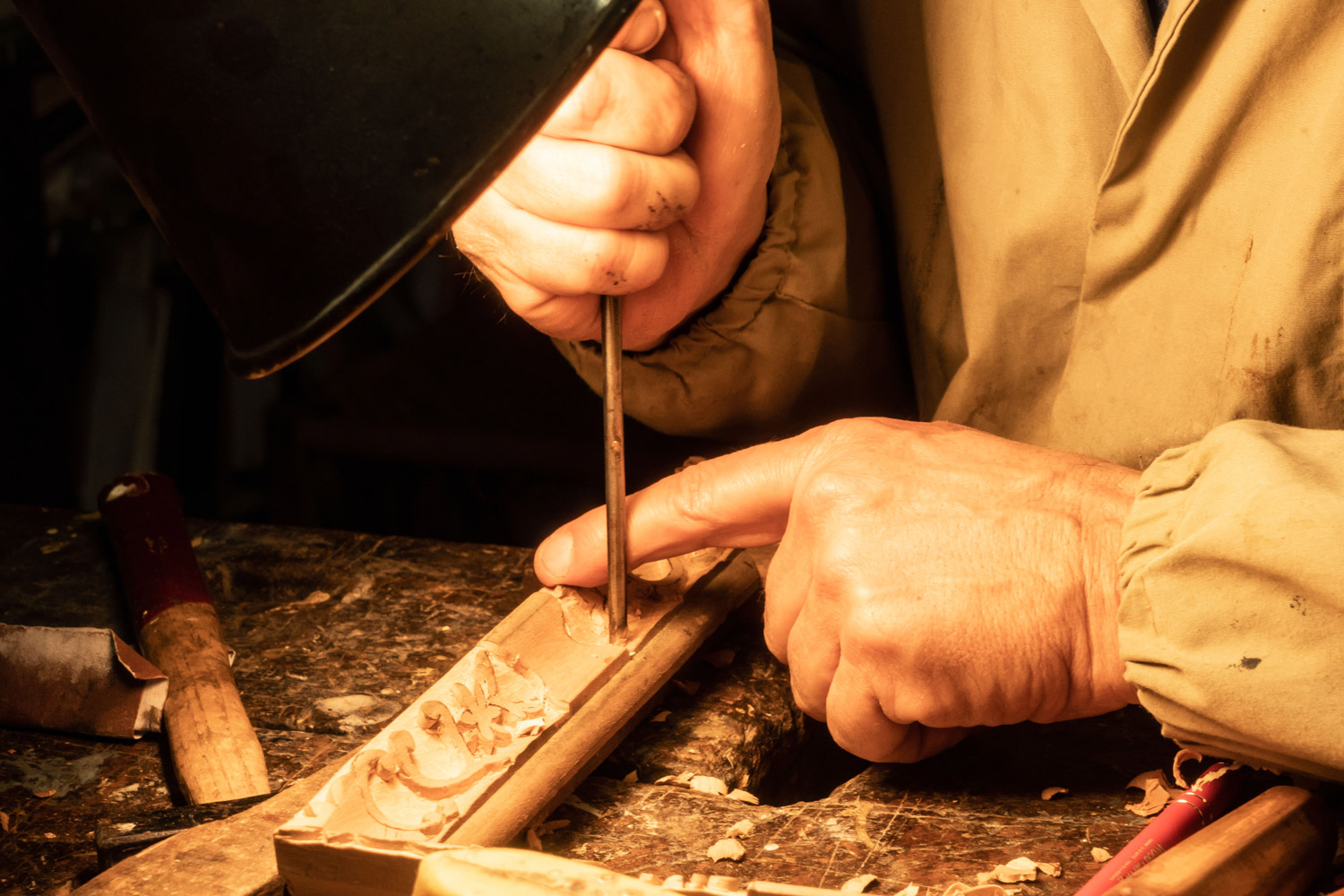
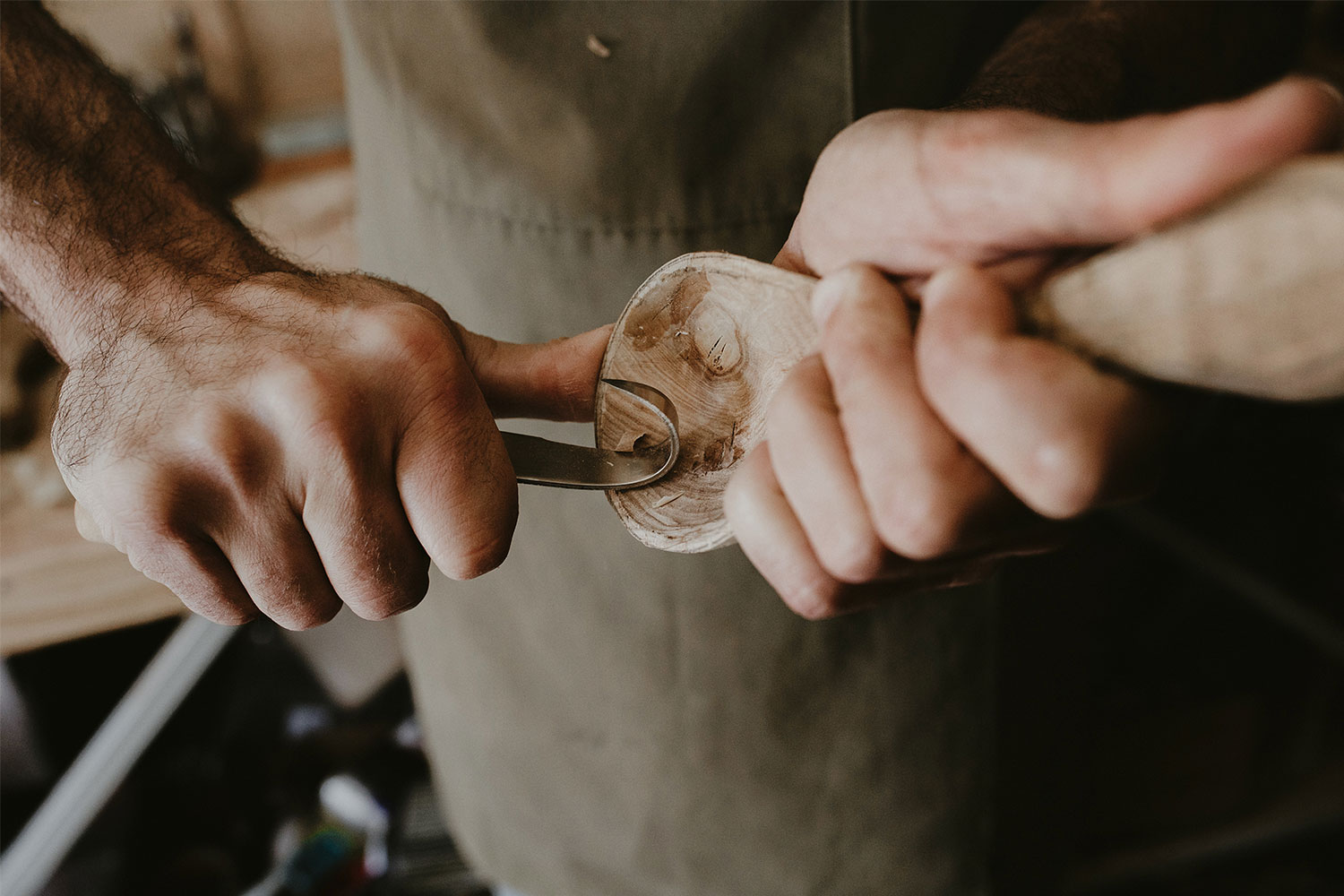
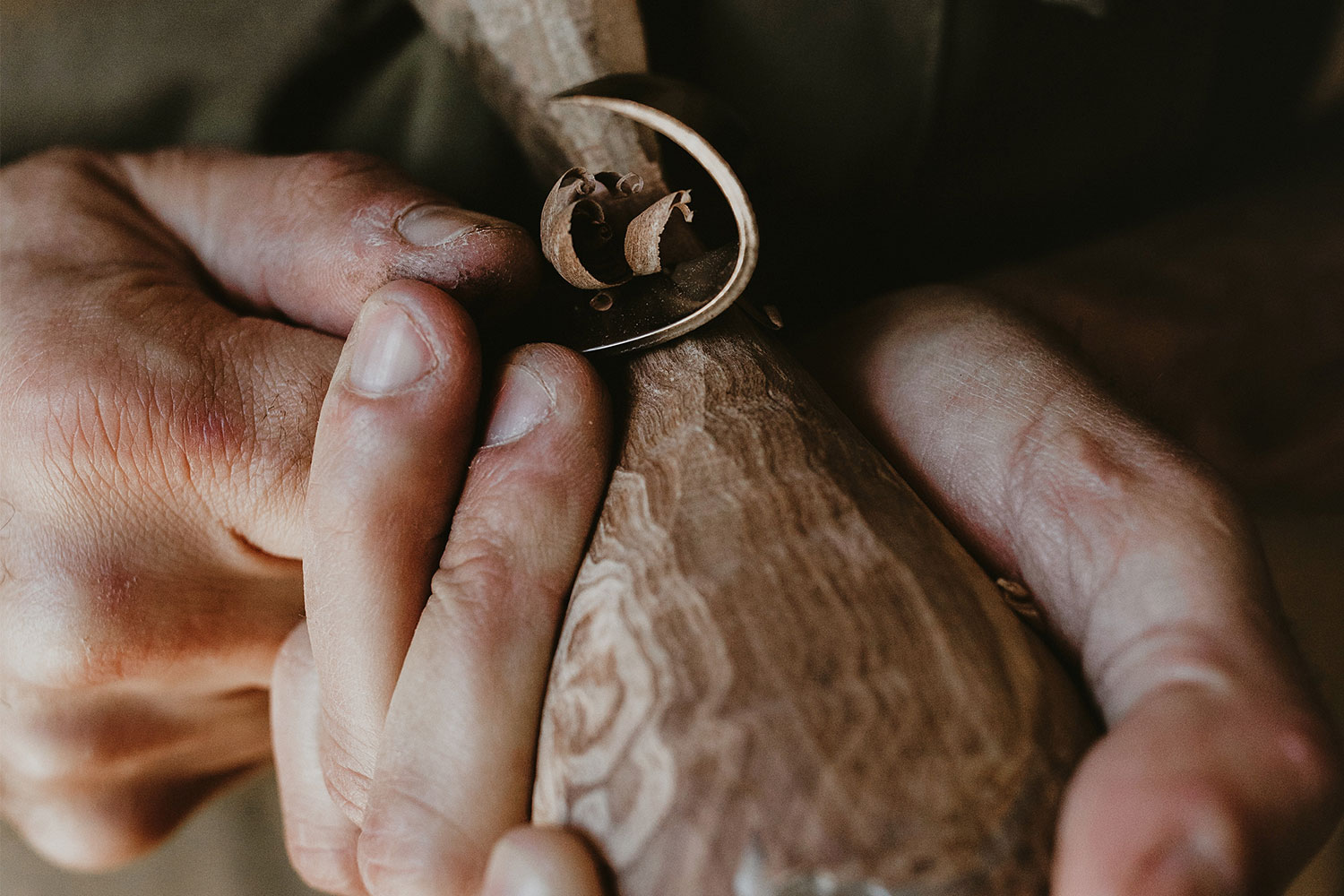
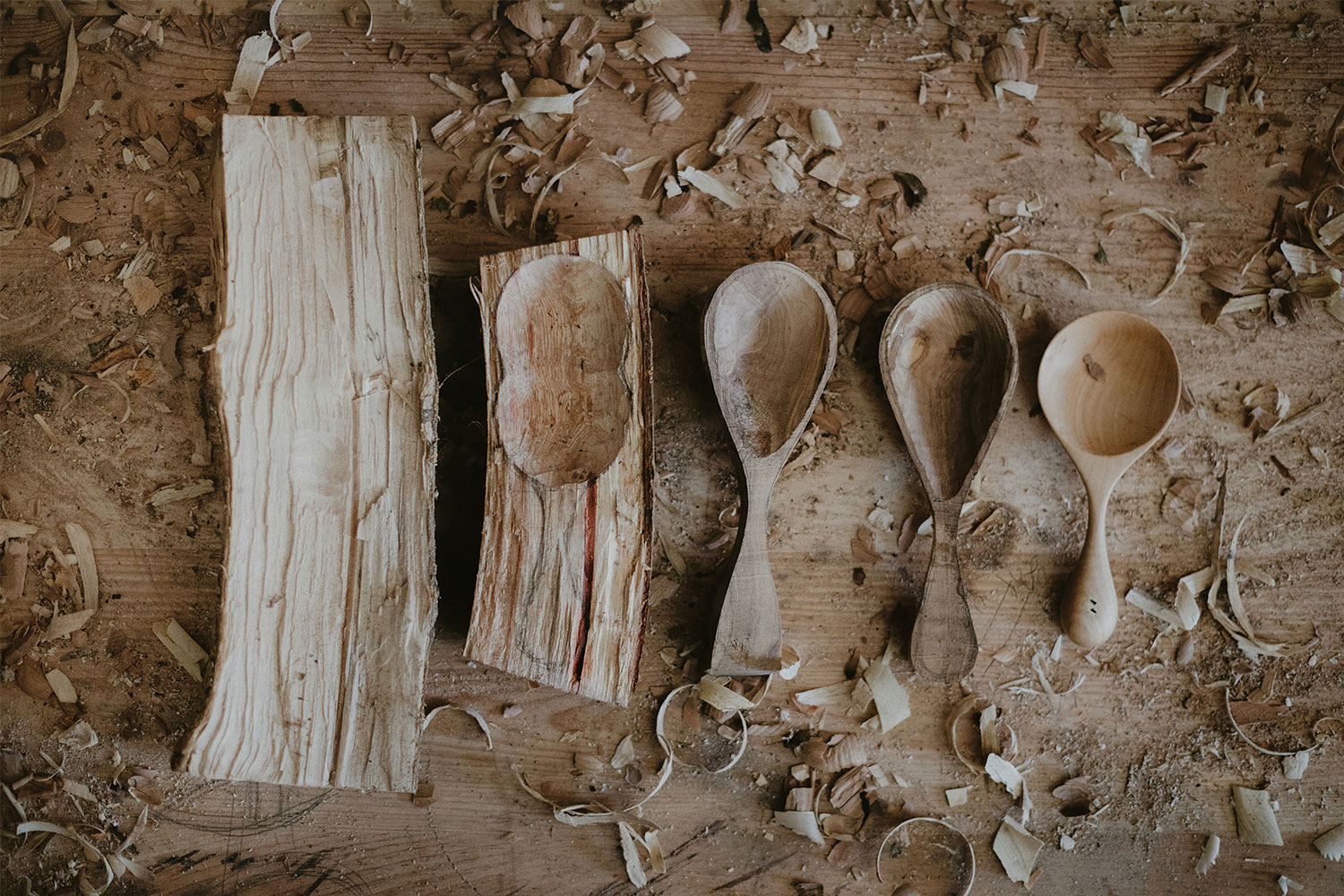
My grandfather was my master; I picked up a lot just by observing him. I started with very few tools and gradually learned carving techniques with Swedish tools (axe, Sloyd knife and hook knife) and woodturning on a lathe.
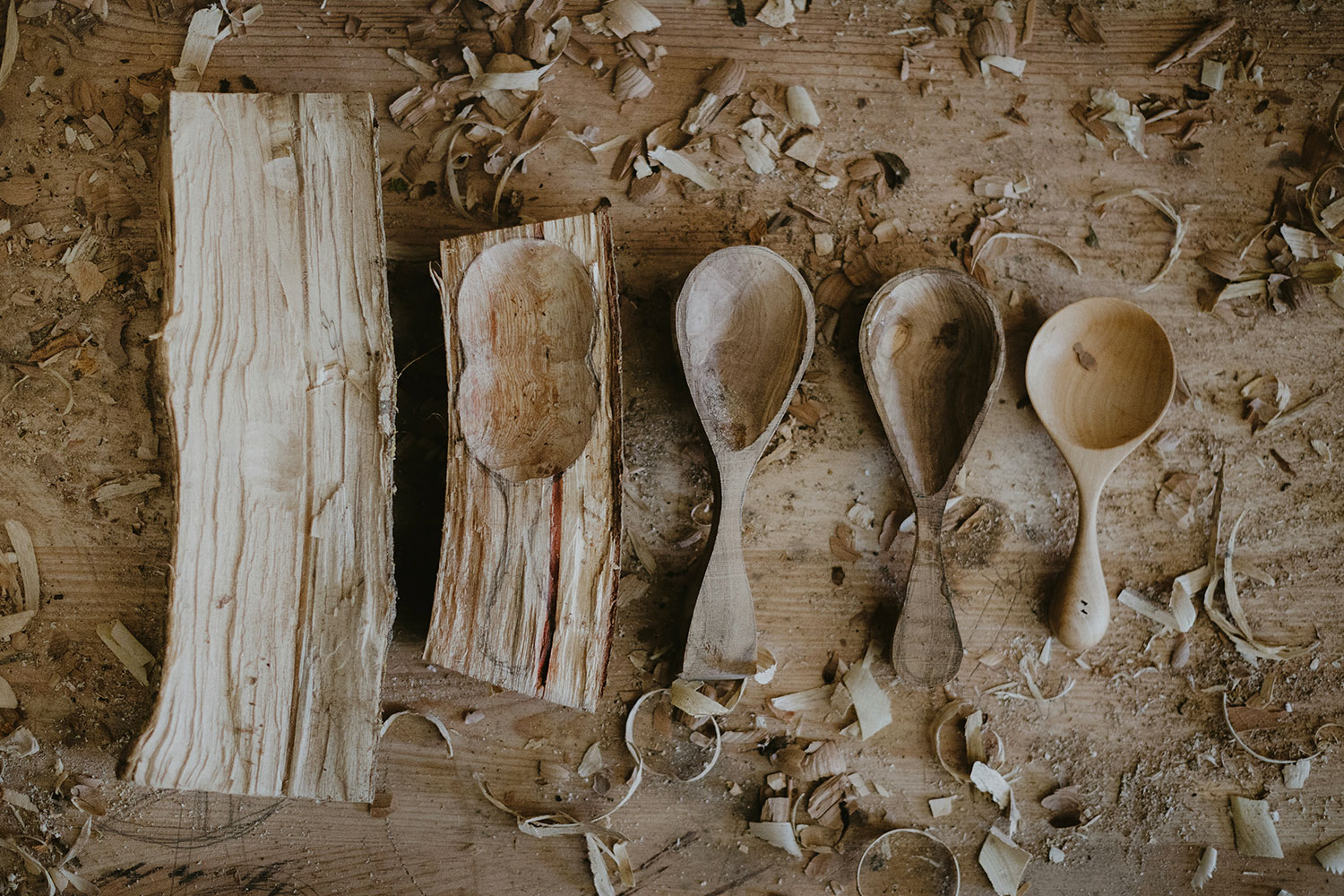
A small wooden spoon for my baby son. I fondly remember the wooden toys and furniture my grandfather made for us so it meant a lot to be able to do the same for my son.
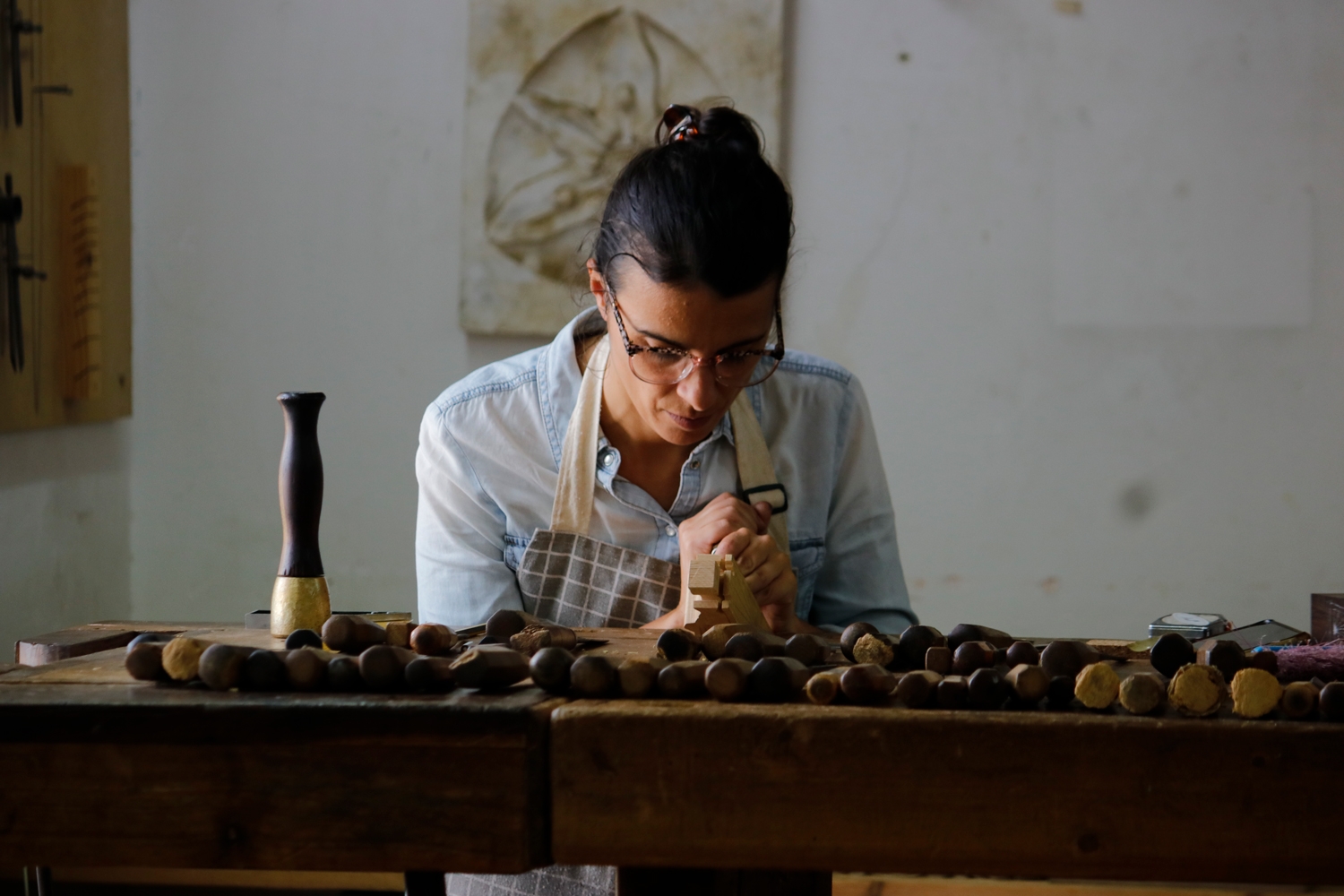
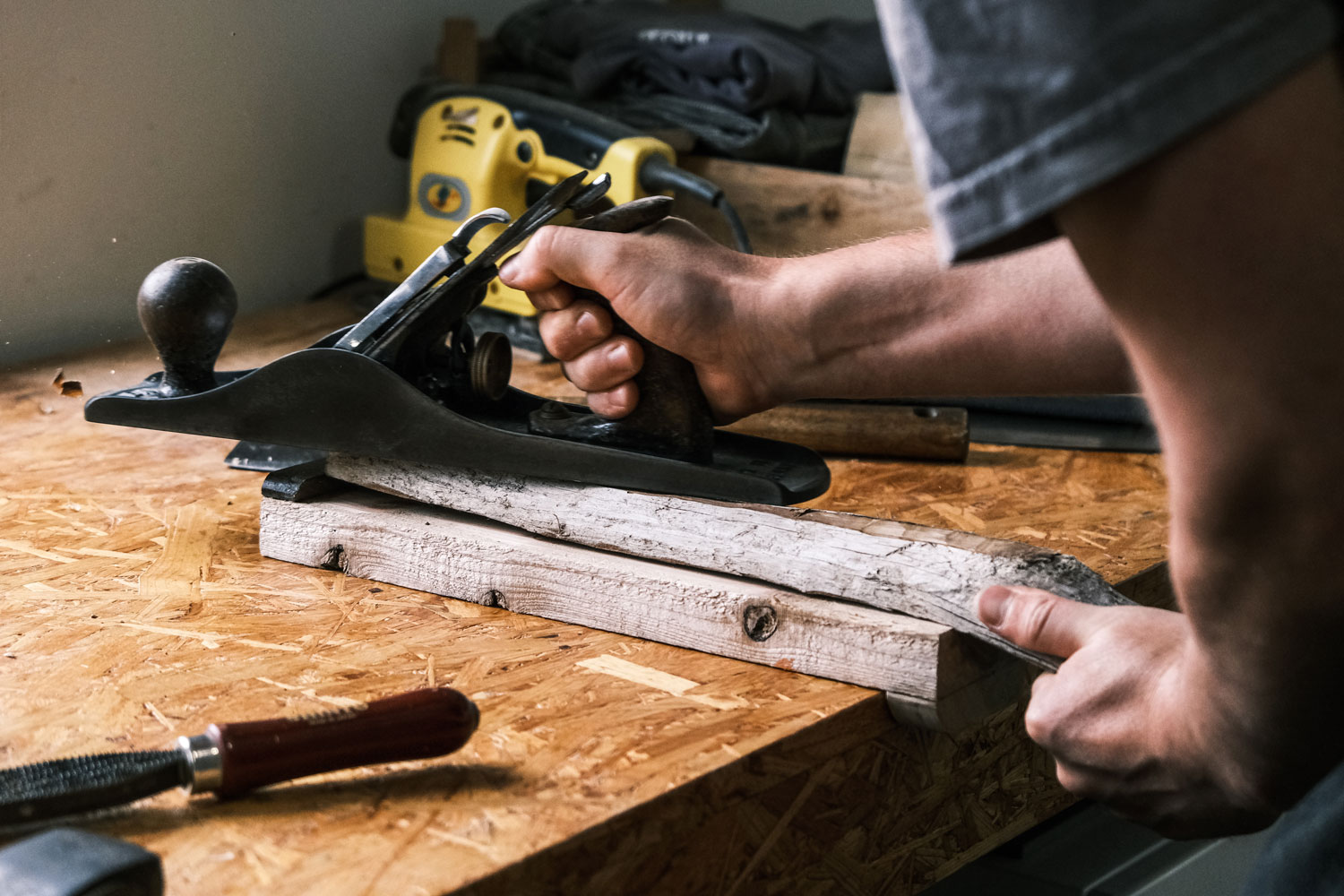
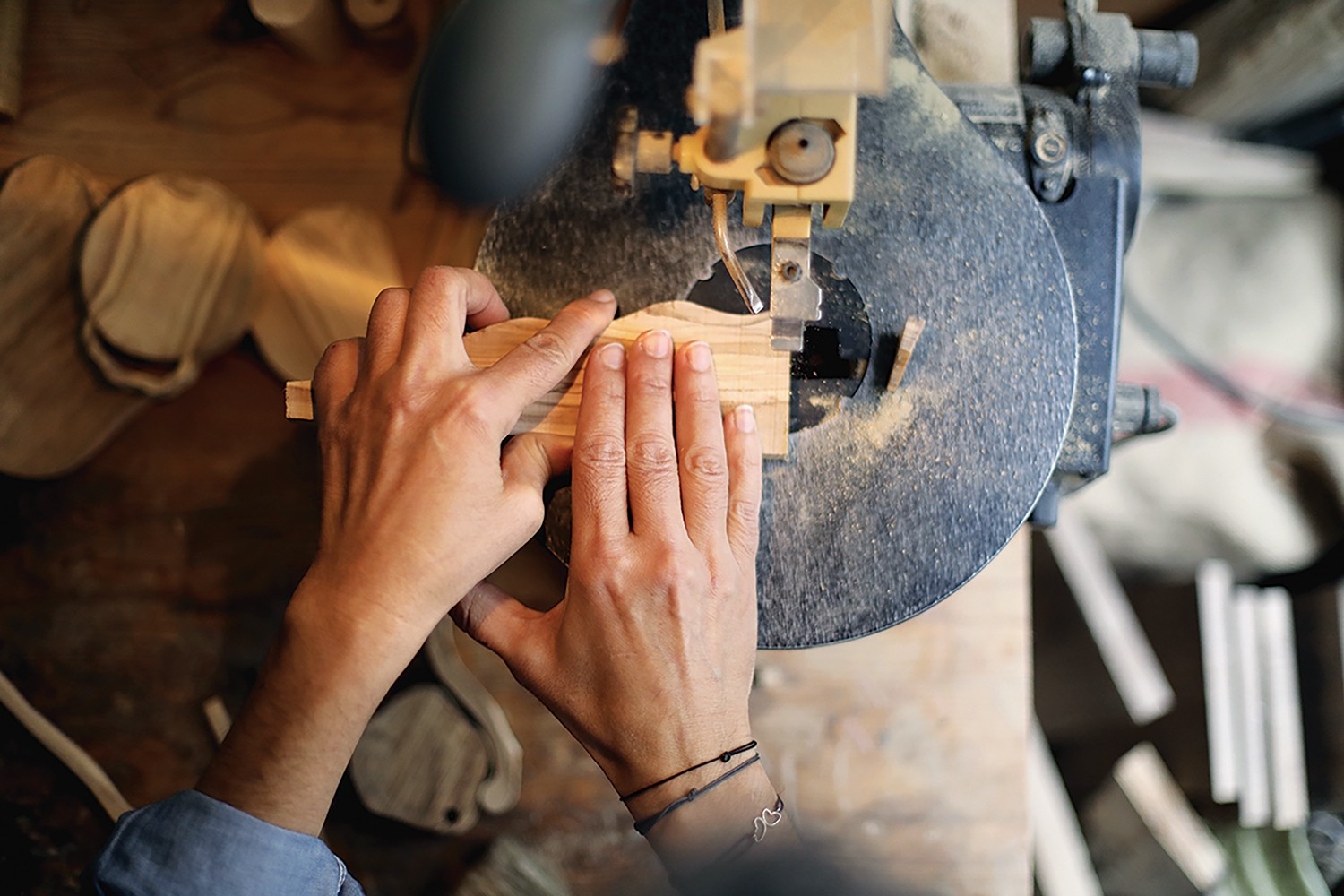
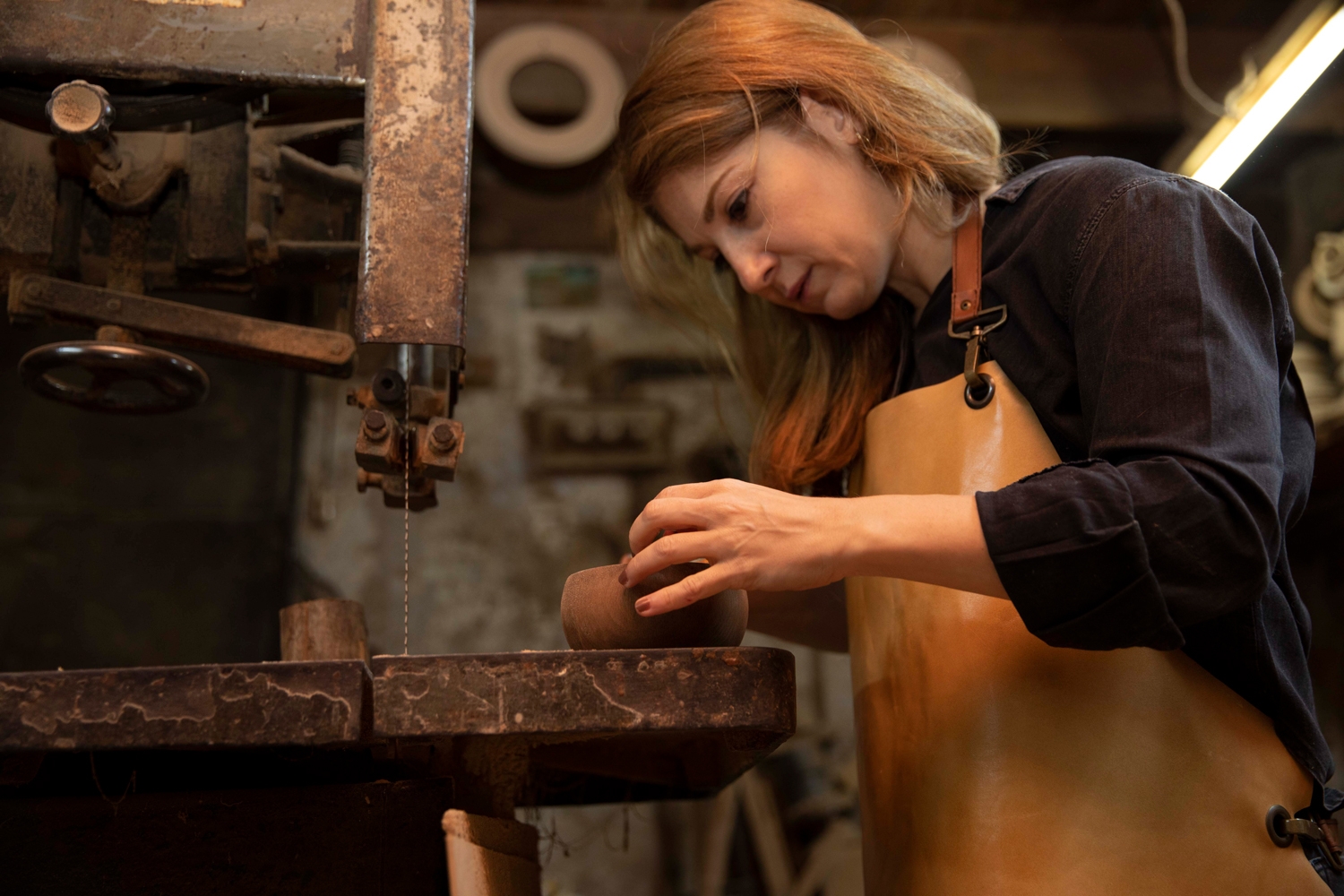
I don’t think people realise the physical part of the job, that it involves a lot of sweat, dust, noise and sometimes cutting yourself. I always say that however hard, it is important to persist, research, be curious and that repetition is the key to improvement.
1 EXPERIENCE