Margarita Raouna Charalambous
M.M Lace & Silver
Embroiderer
Pano Lefkara, Cyprus
Recommended by Phivos Stavrides Foundation – Larnaka Archives
For the love of Lefkara lace
- Margarita practises an embroidery found only in Lefkara
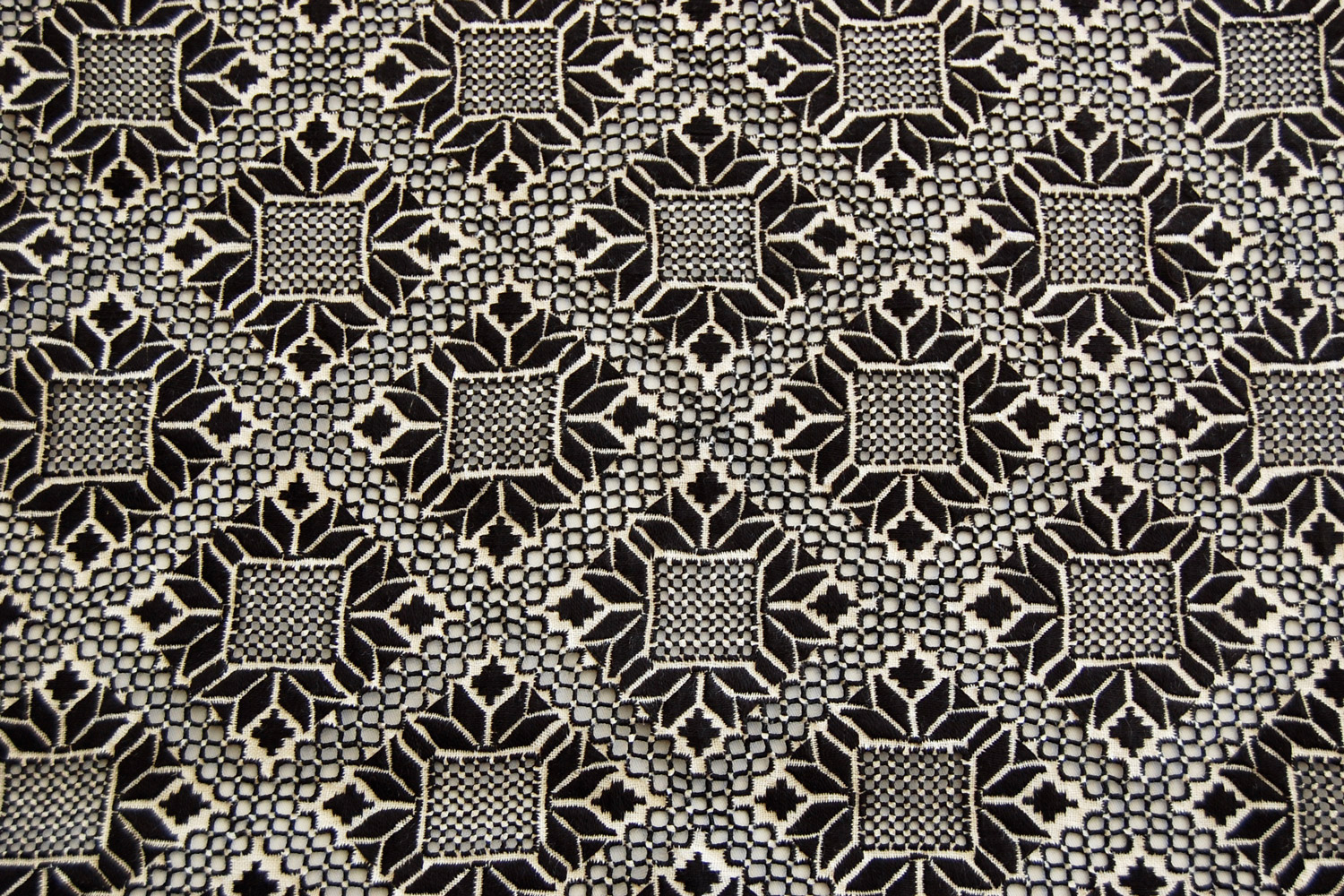
- She is inspired by Lefkara tradition and architecture
- She learned her techniques from her grandmother
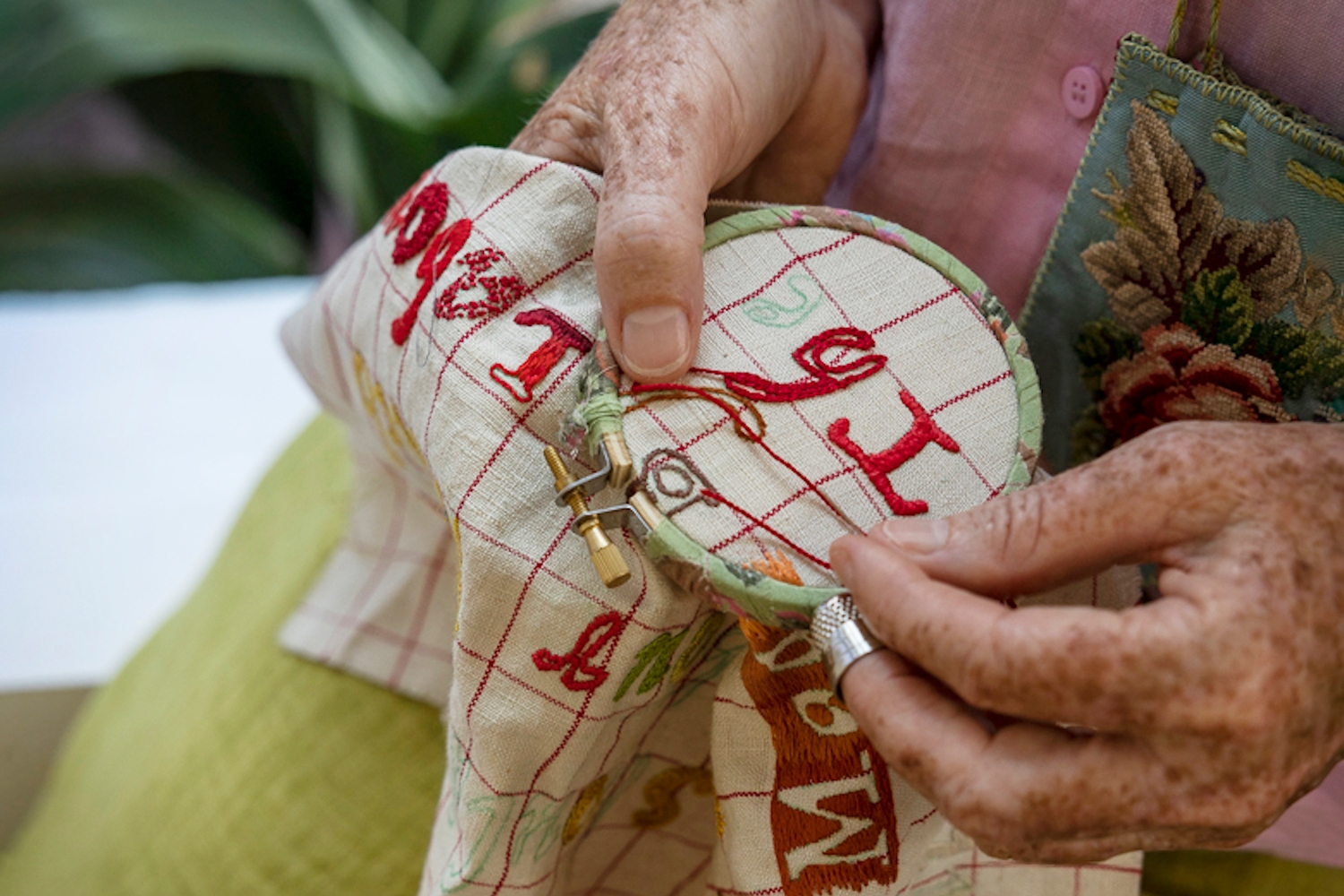
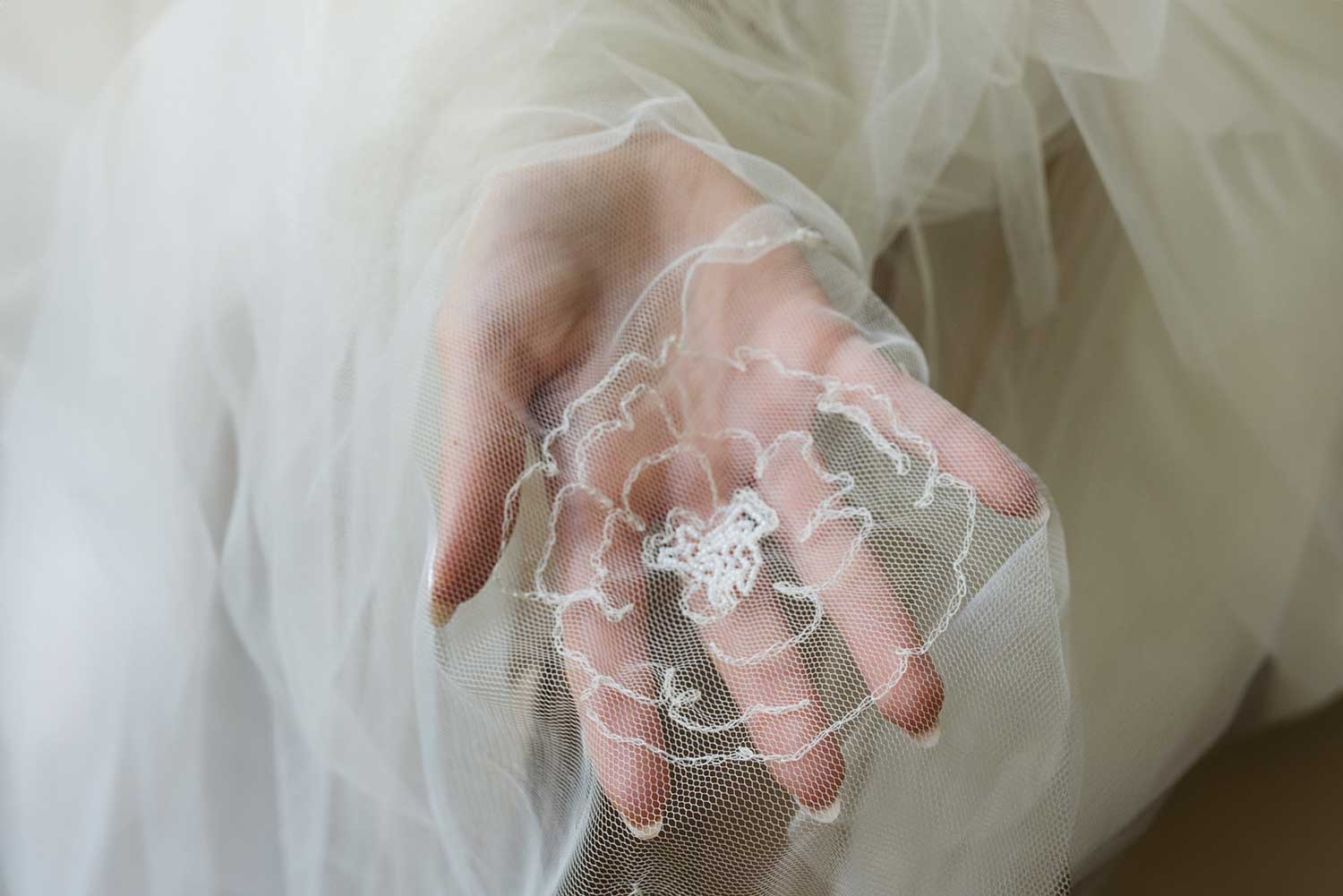
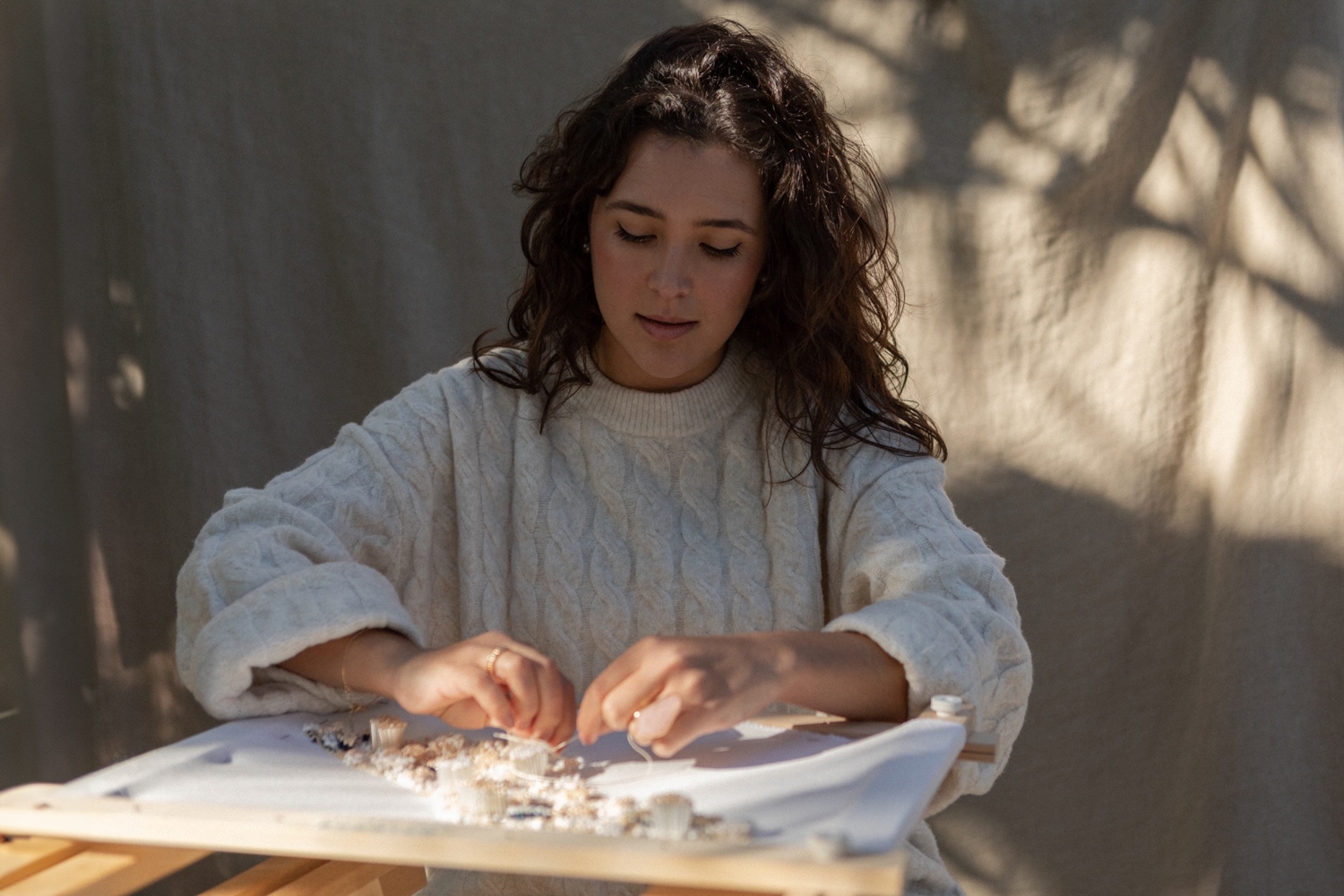
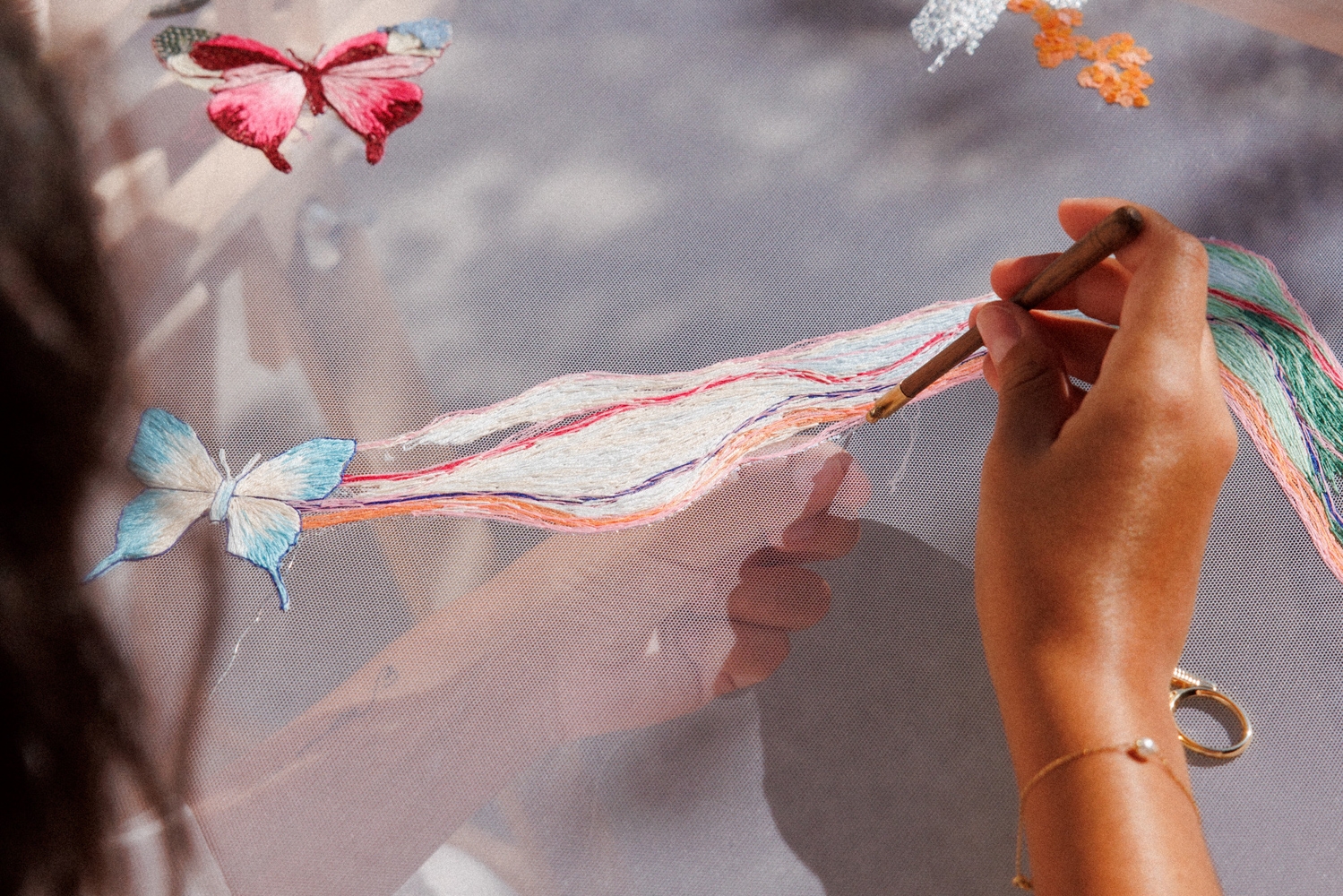
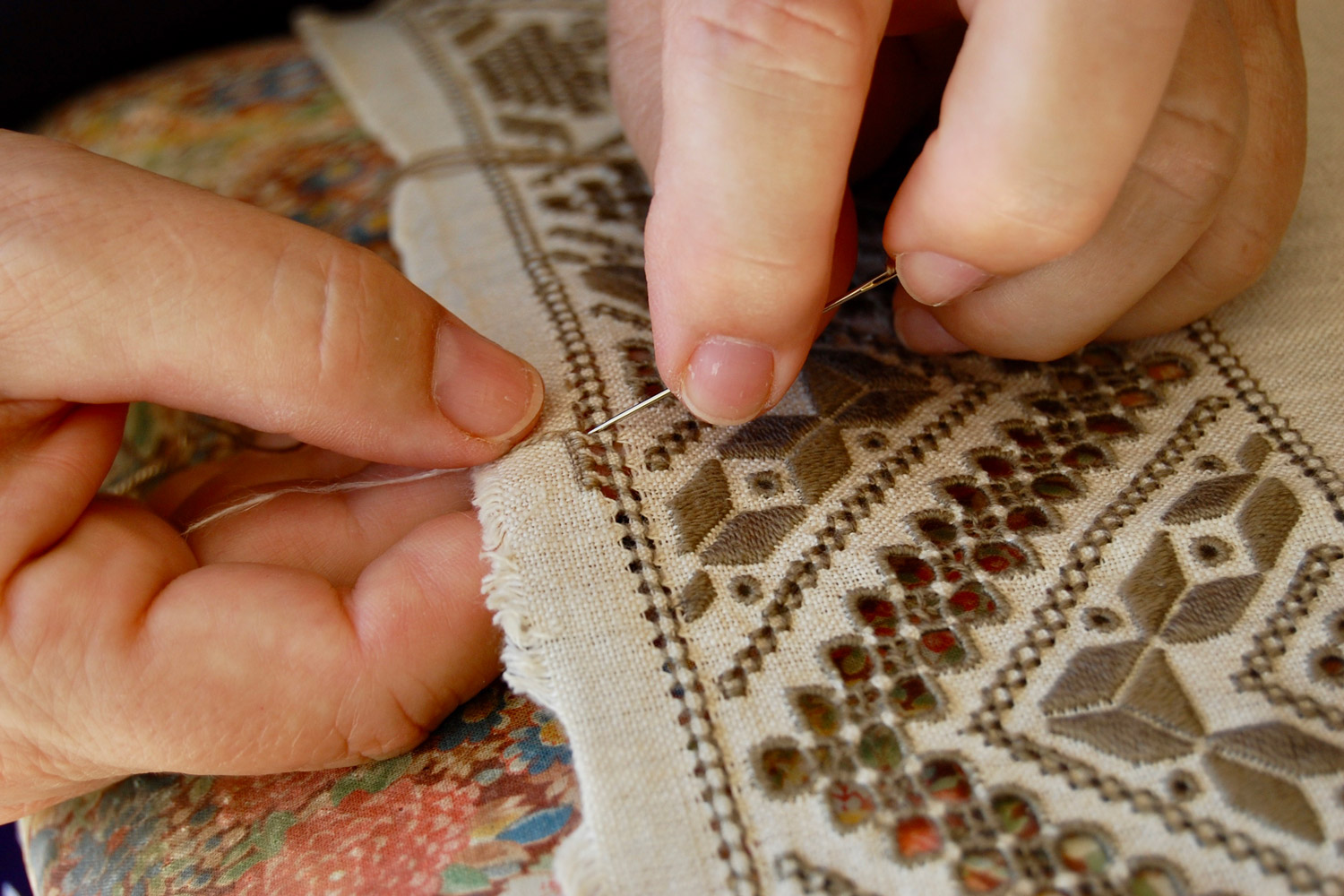
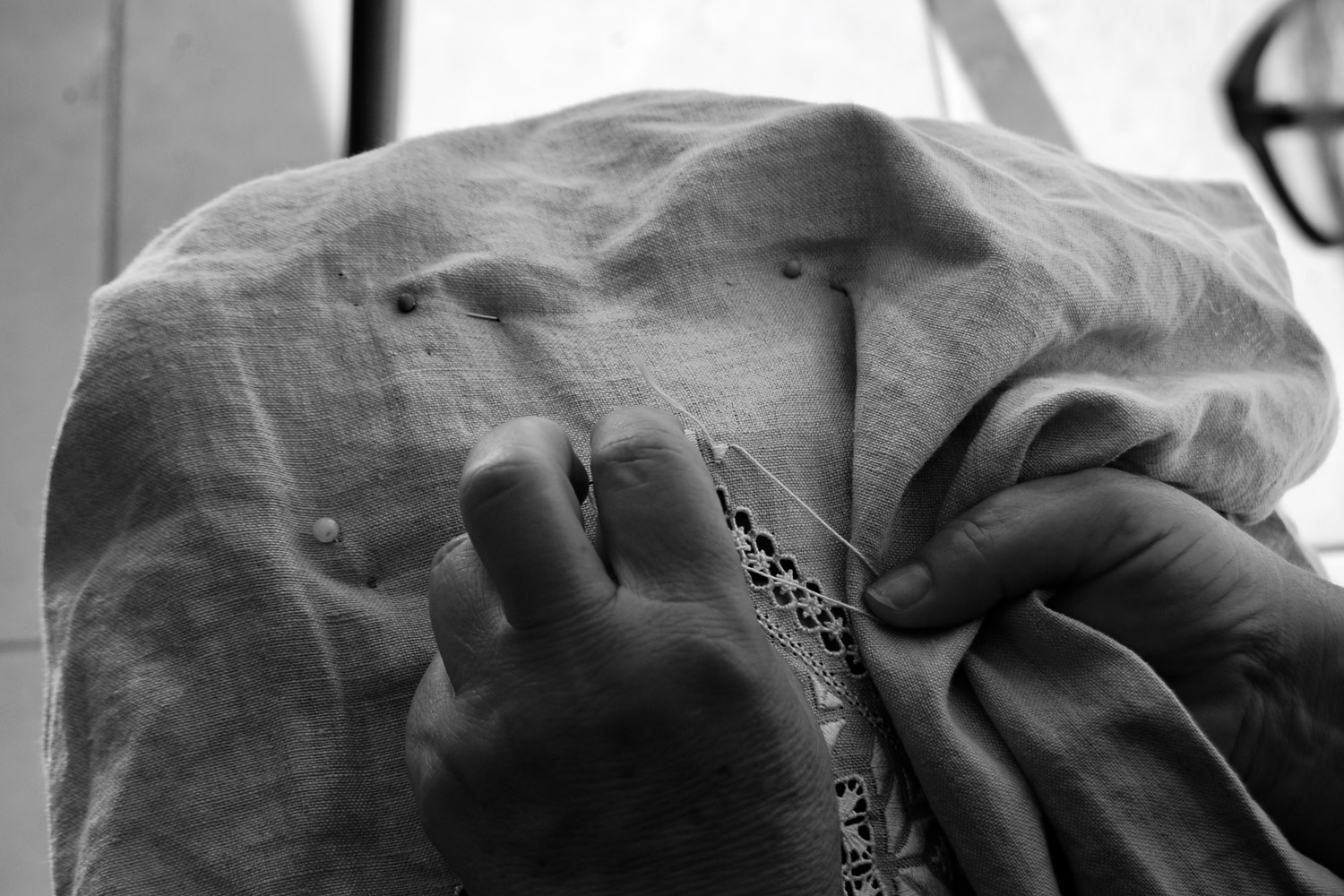
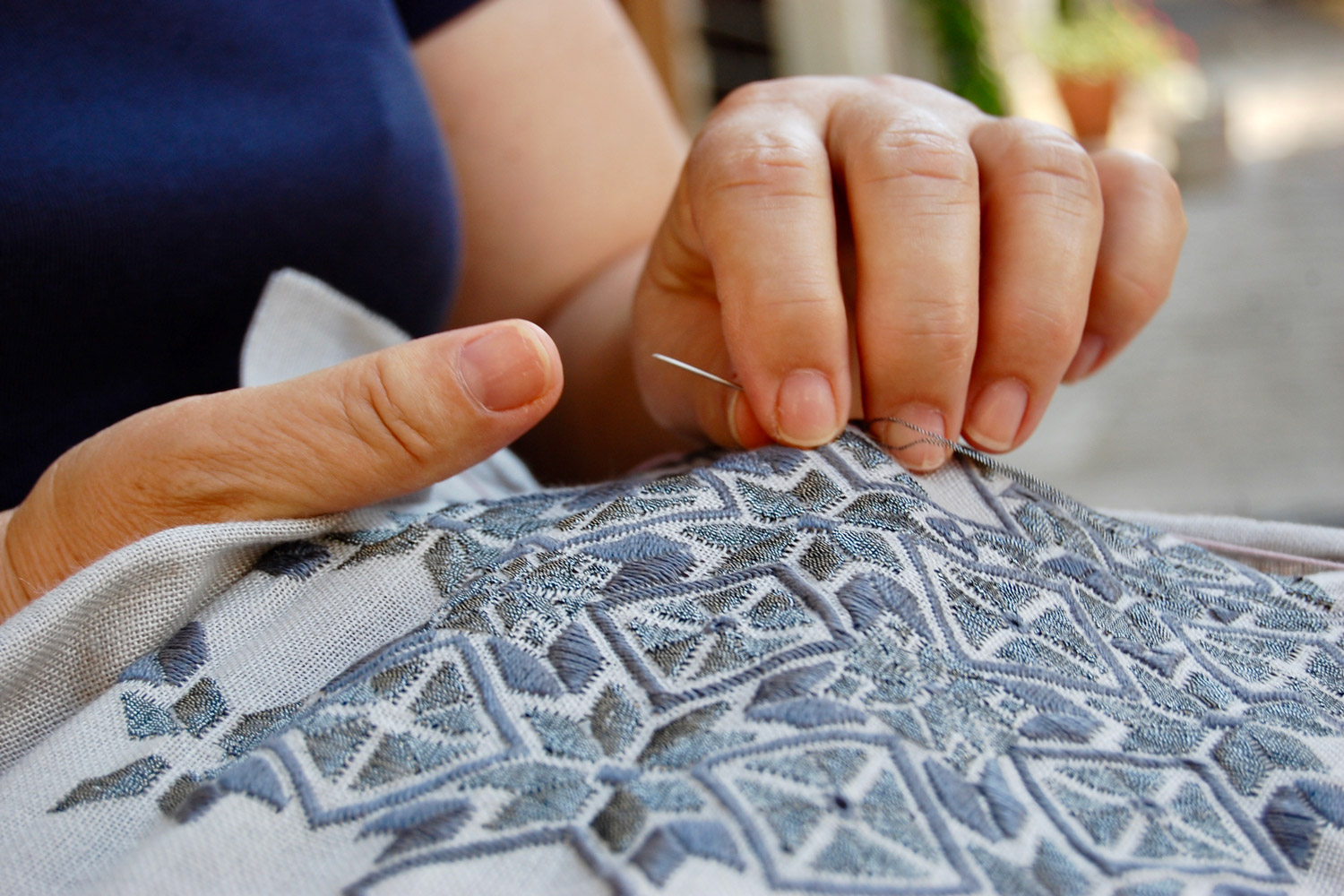
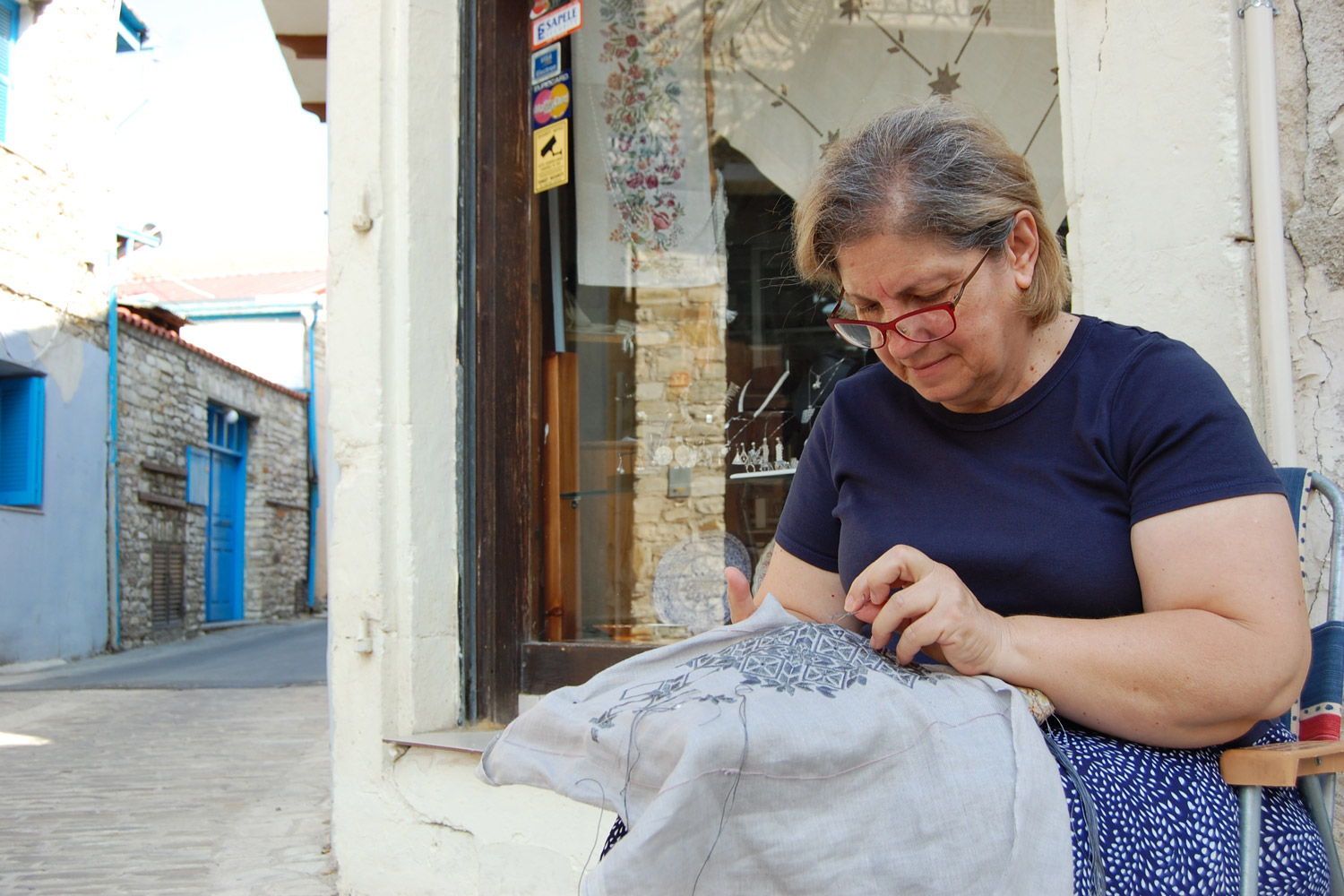
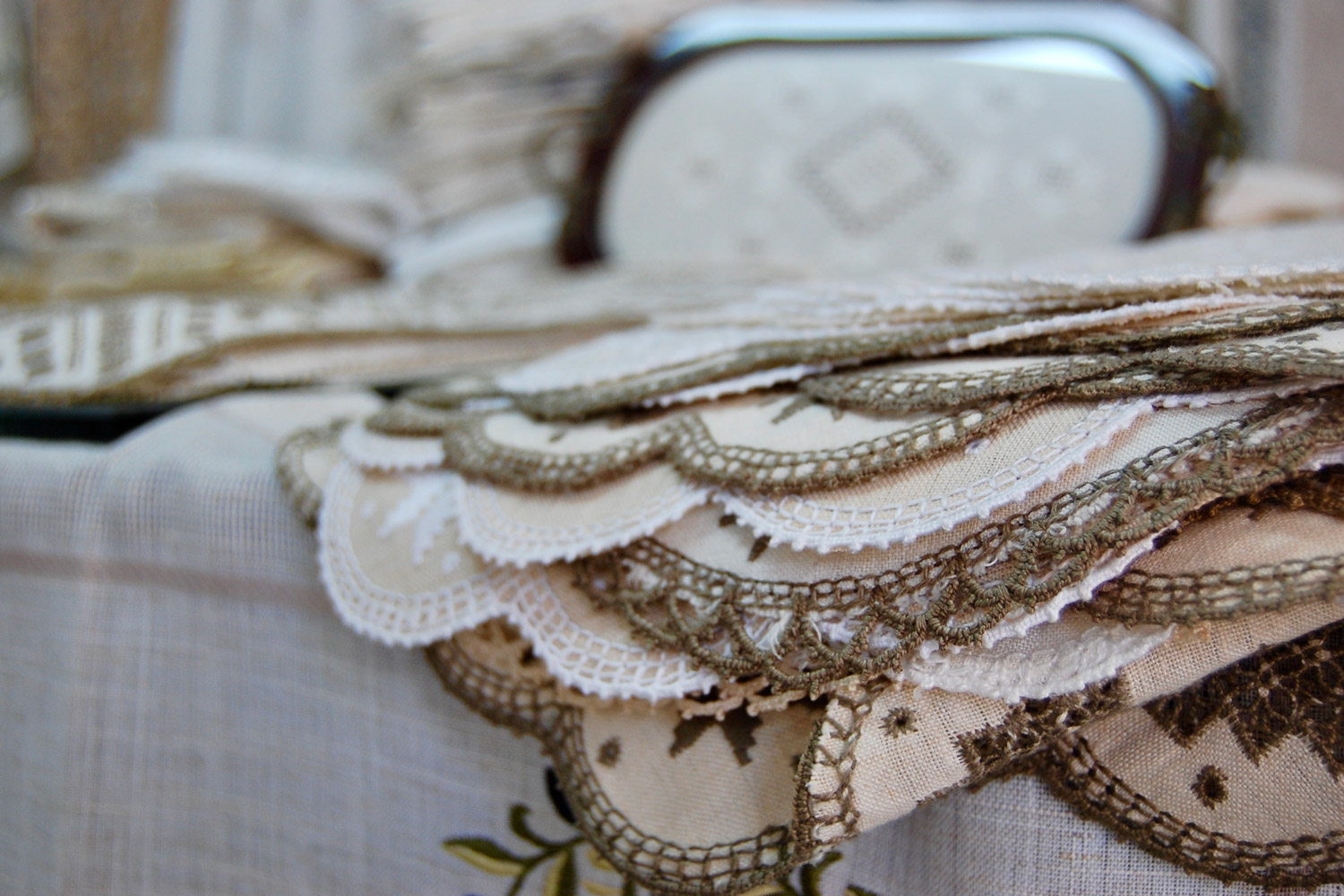
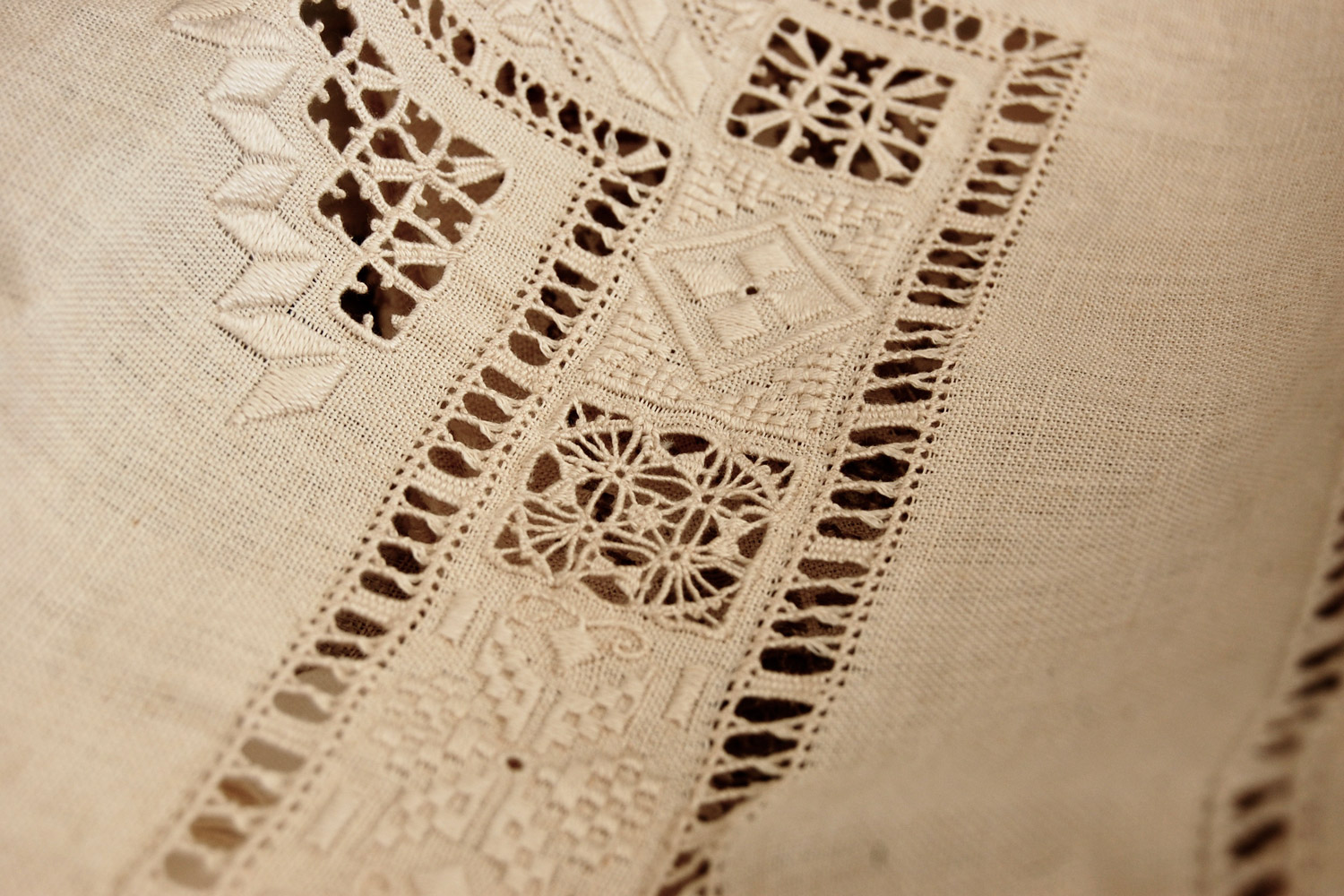
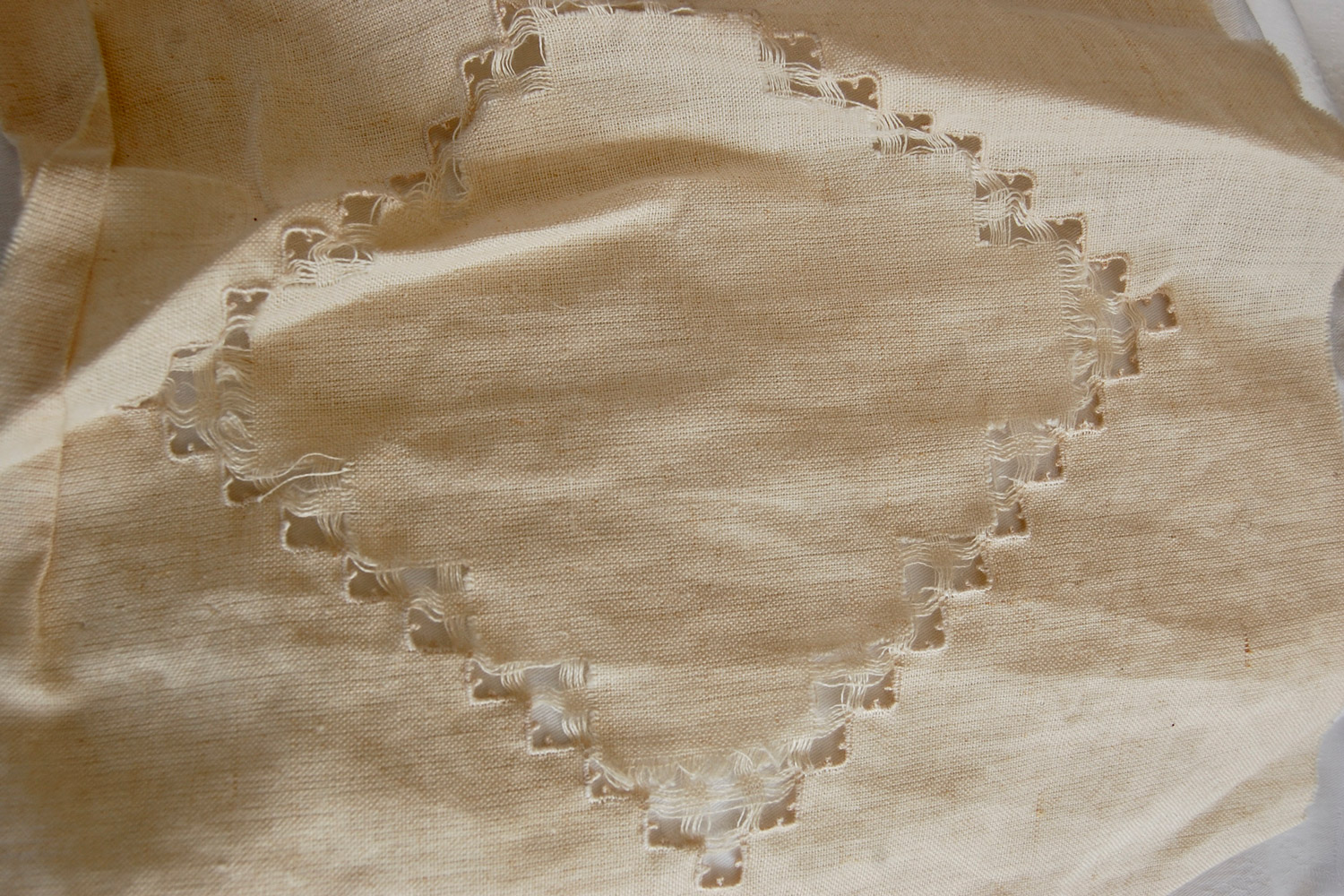
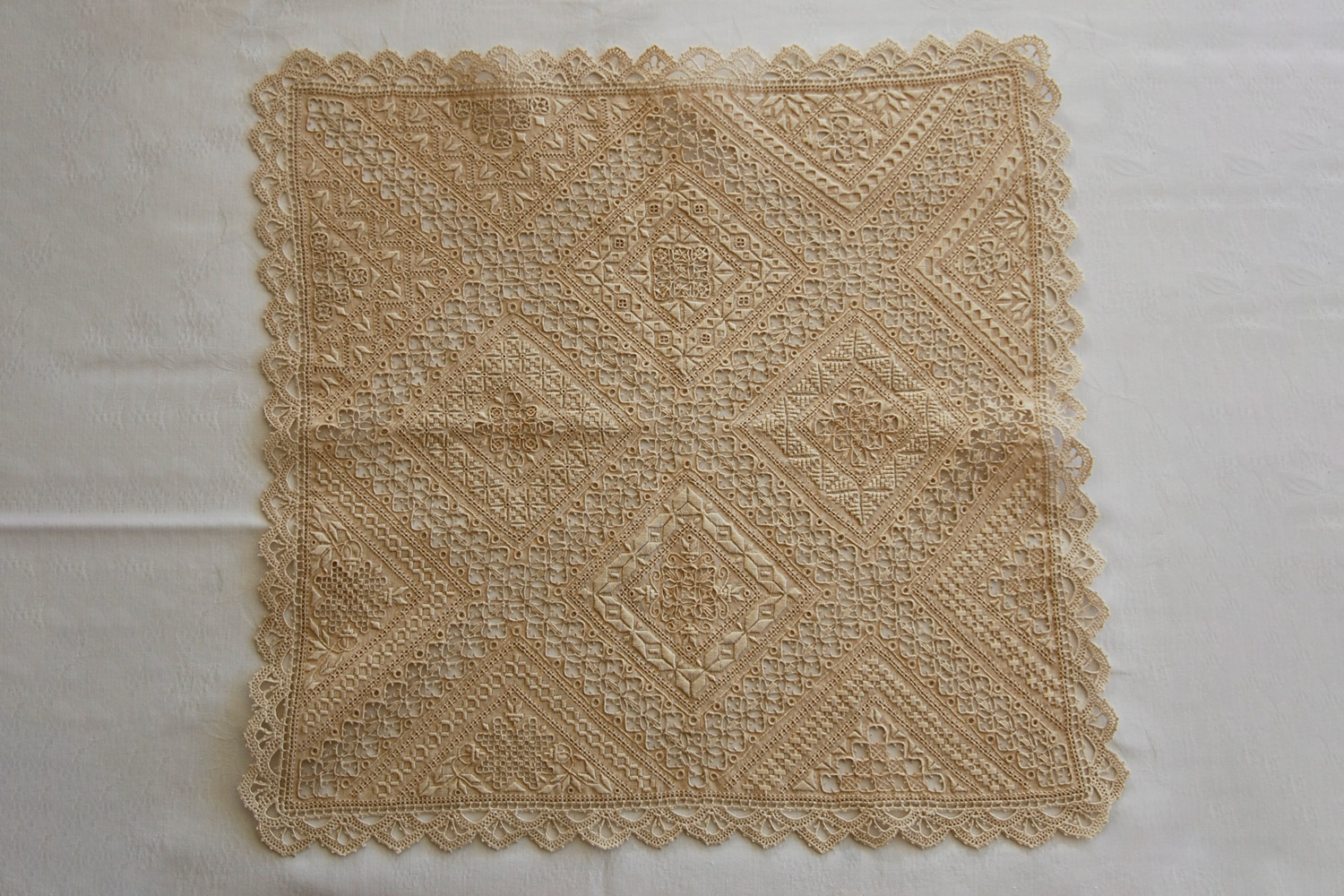
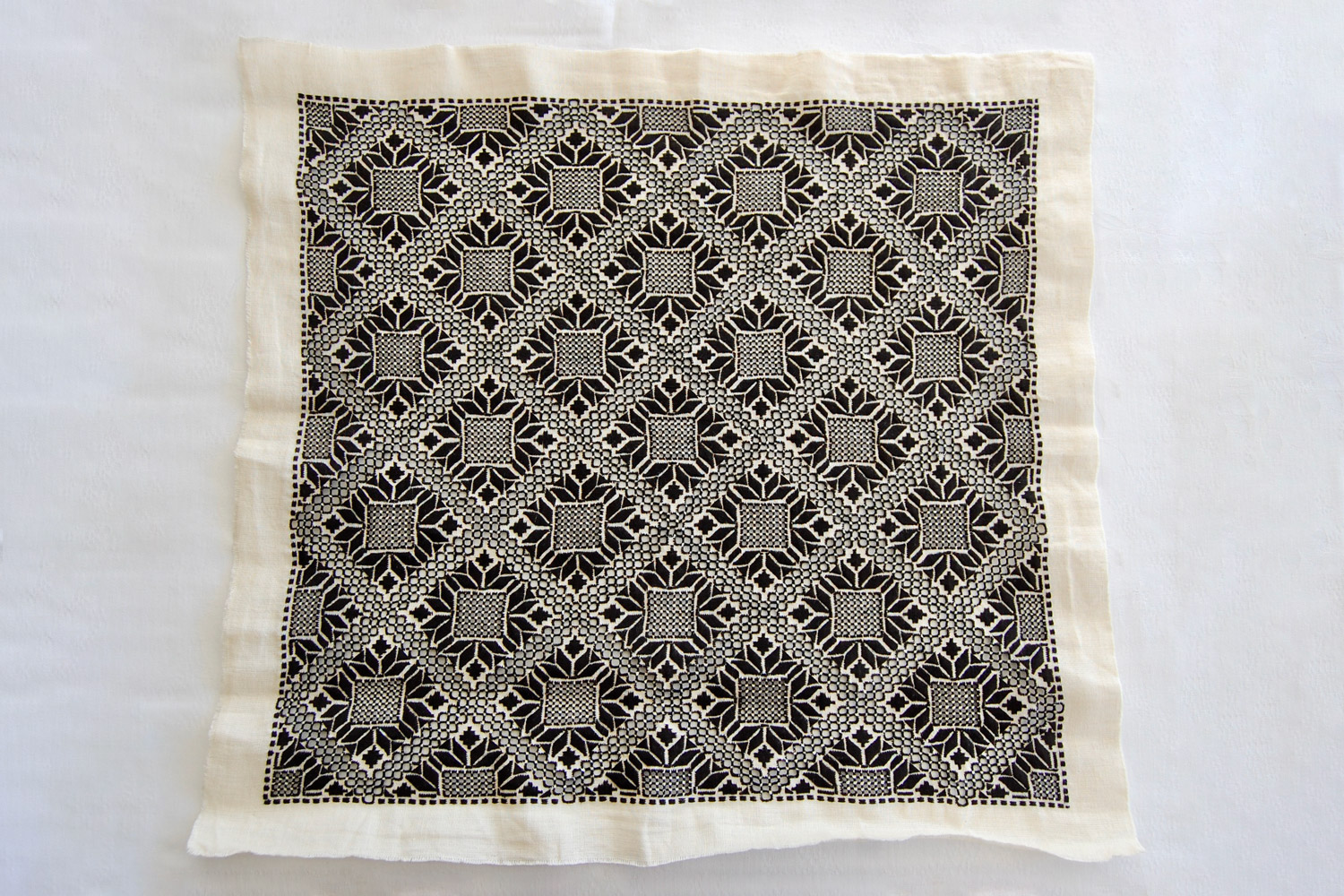
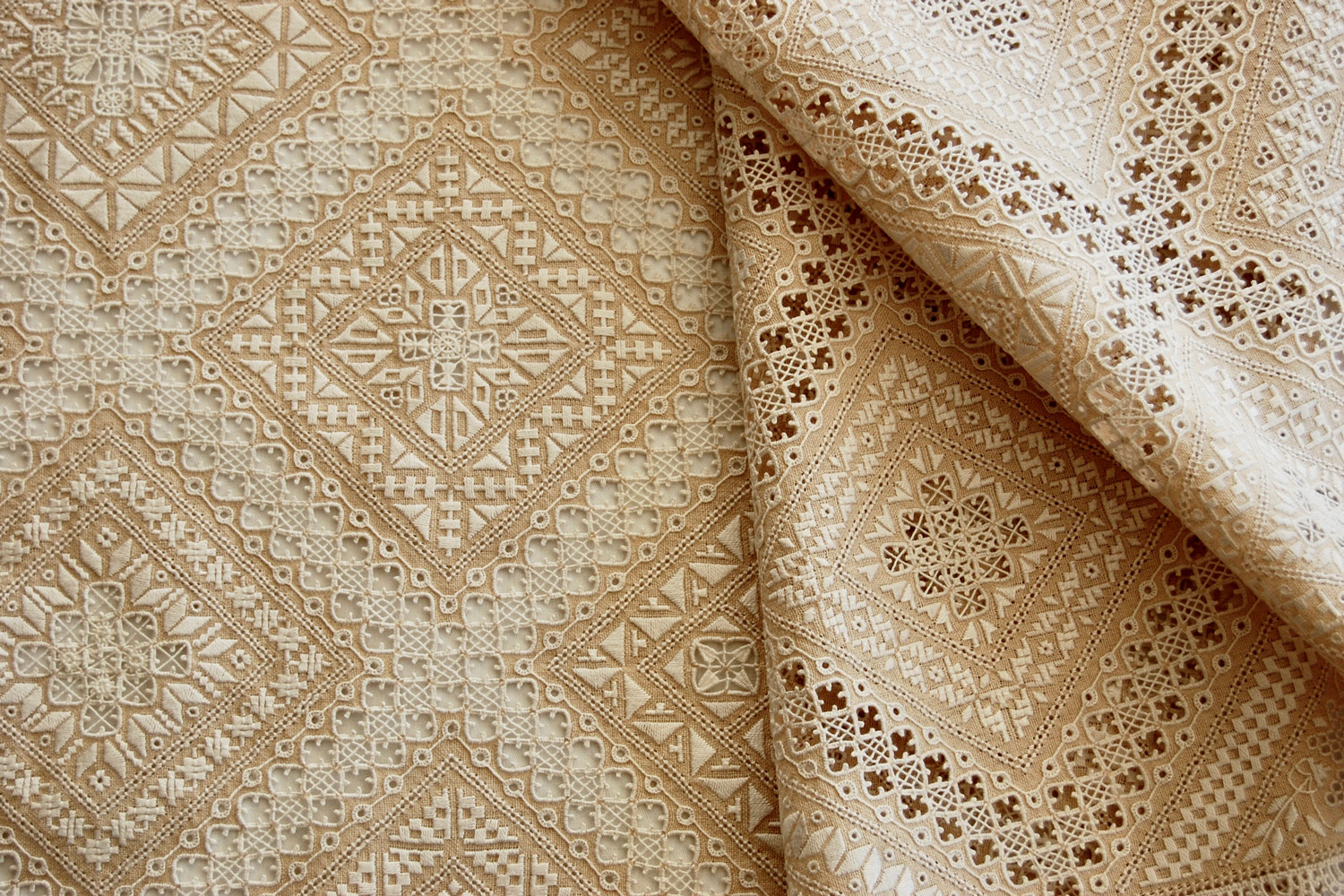
Margarita Raouna has been embroidering the unique patterns and using the techniques of Lefkara lace since she was 8, learning from her grandmother. Her first piece of embroidery was a long runner with the Da Vinci design. She is a dedicated embroider, who does not spare time when embroidering fine, perfectly made lace with patterns inspired by the village tradition and enriched with her own creativity and imagination. She would like to see young people taking up the craft and keeping it alive, however the enormous amount of time required to finish a piece is a deterrent factor for local youth. Her embroidery was exhibited at the Homo Faber exhibition in Venice.
INTERVIEW
I actually started learning at the age of 8. I learned how to embroider and cut the linen from my grandmother. After I finished college, I opened my first workshop at the age of 22 as I wanted to stay in my village and continue the Lefkara lace tradition.
I use traditional designs and materials, but I can actually cut and embroider without looking at a pattern. I also enjoy creating my own unique designs. Each piece I embroider is the same on both sides, a feature that defines perfect embroidery.
Yes, I believe we are the last generation of Lefkara lace embroiders. Young girls do not have the patience to learn how to embroider, and most importantly to work on a piece until they finish it. Our work is time-consuming, it takes a long time to finish a piece.
I would actually, because Lefkara lace is unique in the world. I would warn them that it requires patience and dedication that do not always pay off. However, it offers a great joy to see your tradition come alive in your hands.
Margarita Raouna Charalambous
M.M Lace & Silver
Embroiderer
Pano Lefkara, Cyprus
Recommended by Phivos Stavrides Foundation – Larnaka Archives
AVAILABILITY
Daily 09:30-18:00
PHONE
+357 96398029
LANGUAGES
Greek, English
Homo Faber Finds is a new service aiming to inspire admirers of craft to connect and collaborate with exceptional artisans.
We invite you to submit an enquiry here.