Everywhere ceramics
- Giampaolo and Ilaria create stateless ceramics
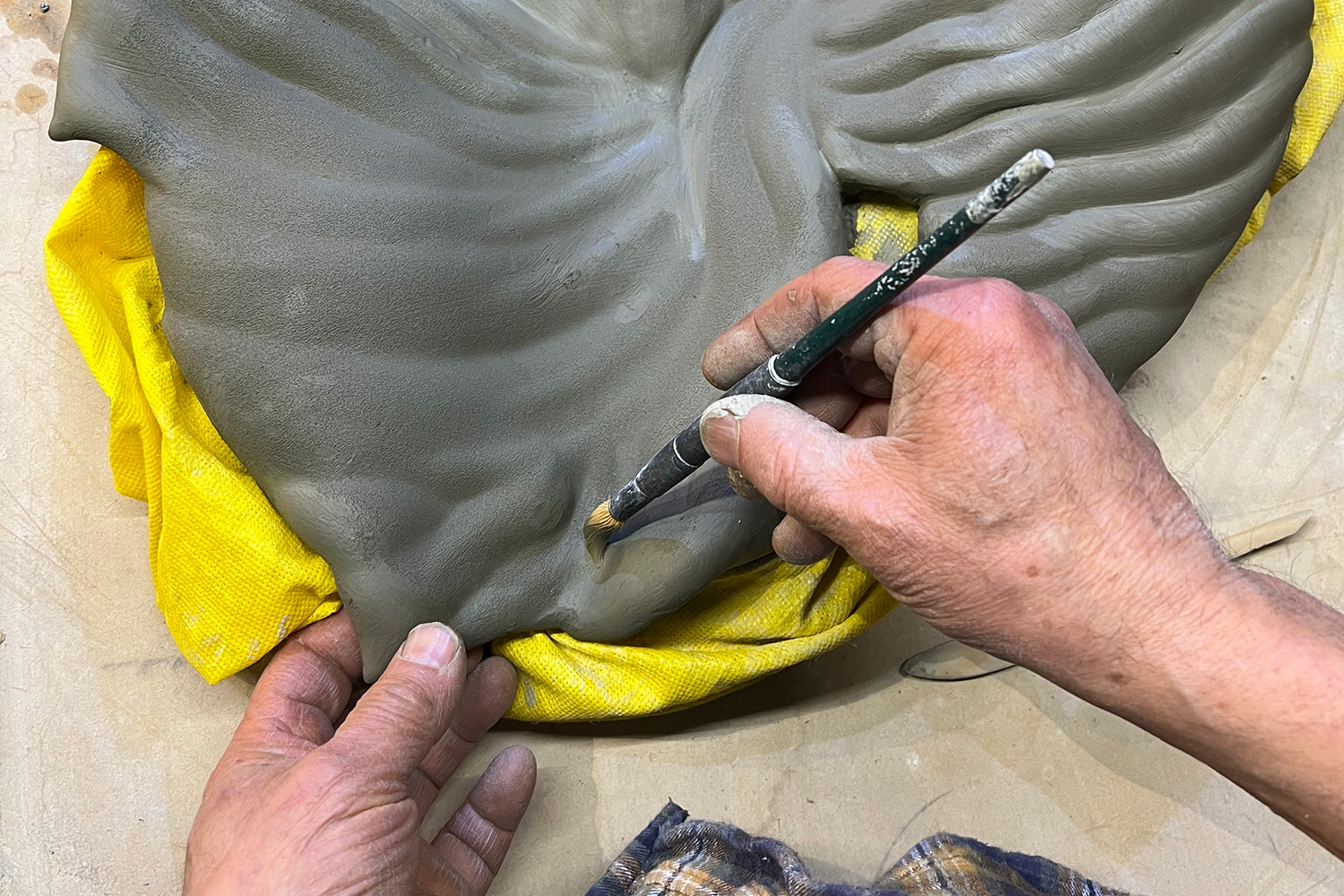
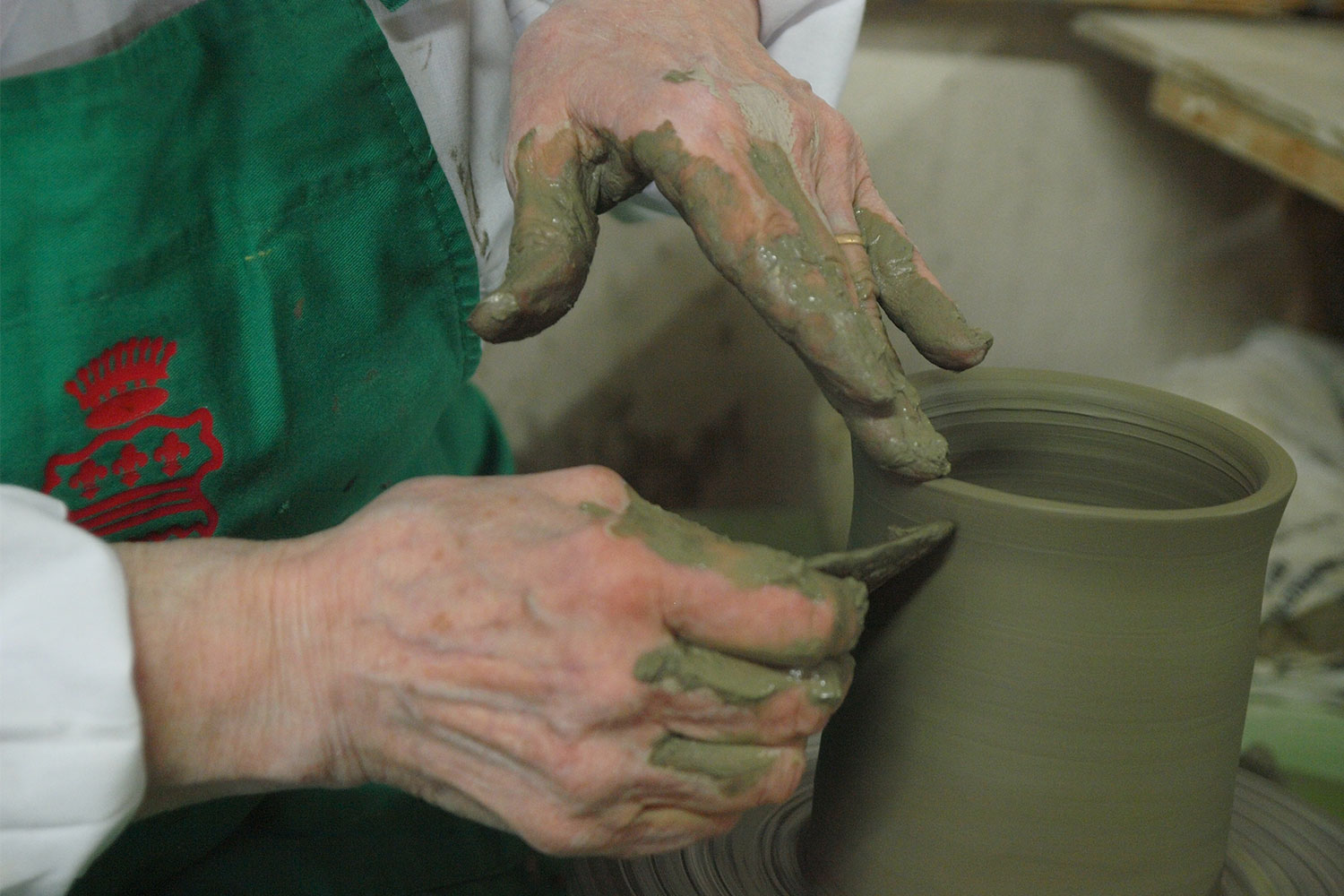
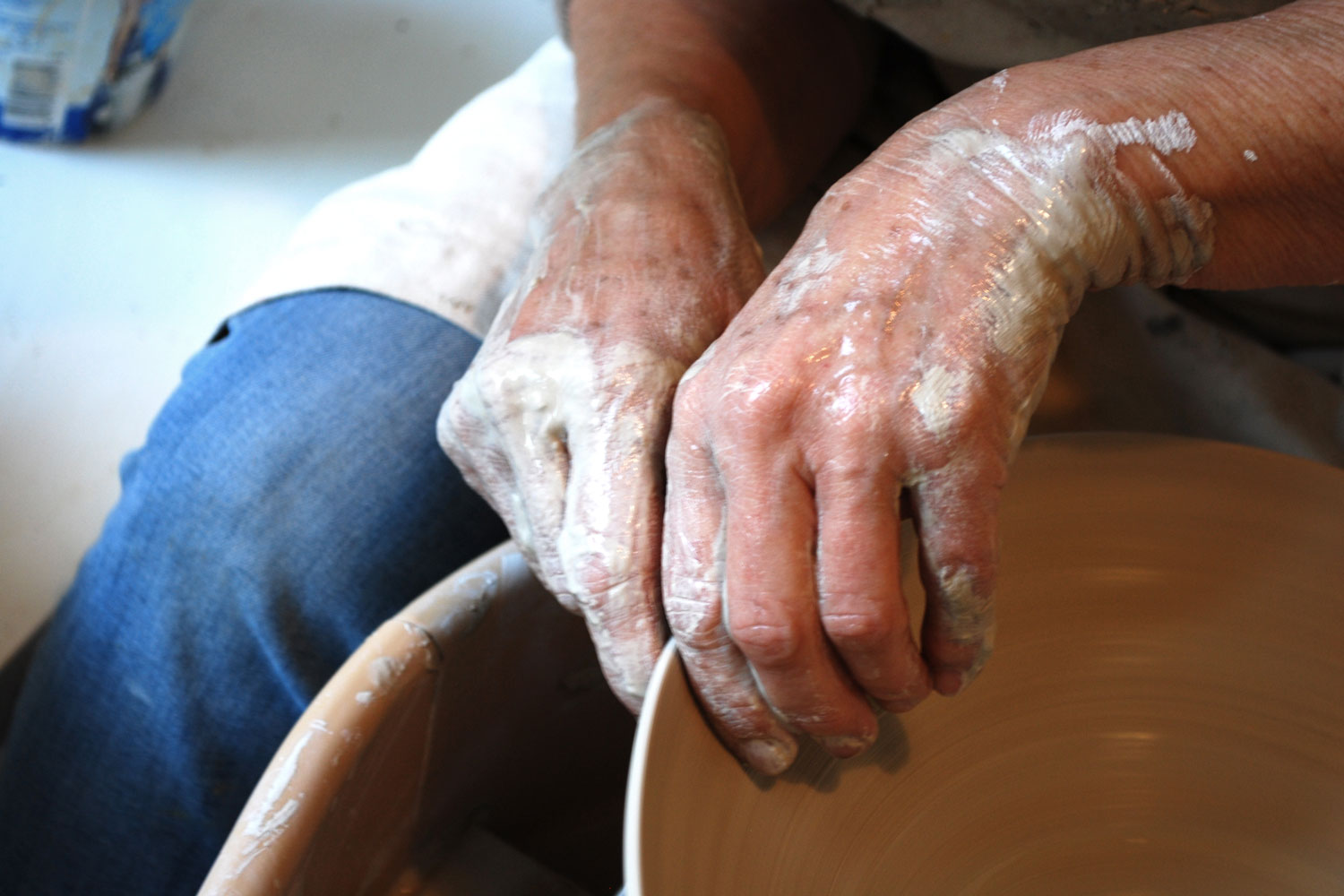
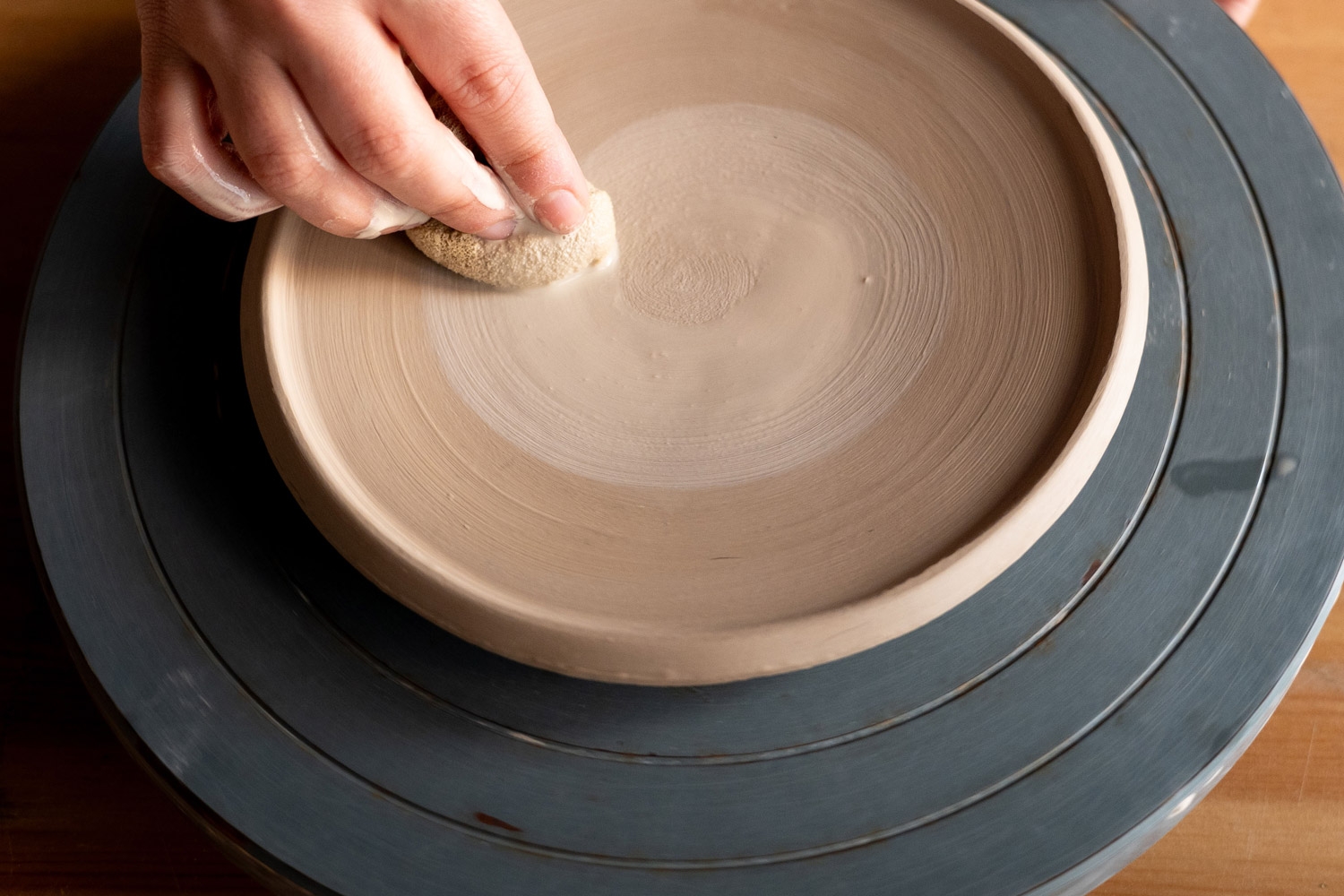
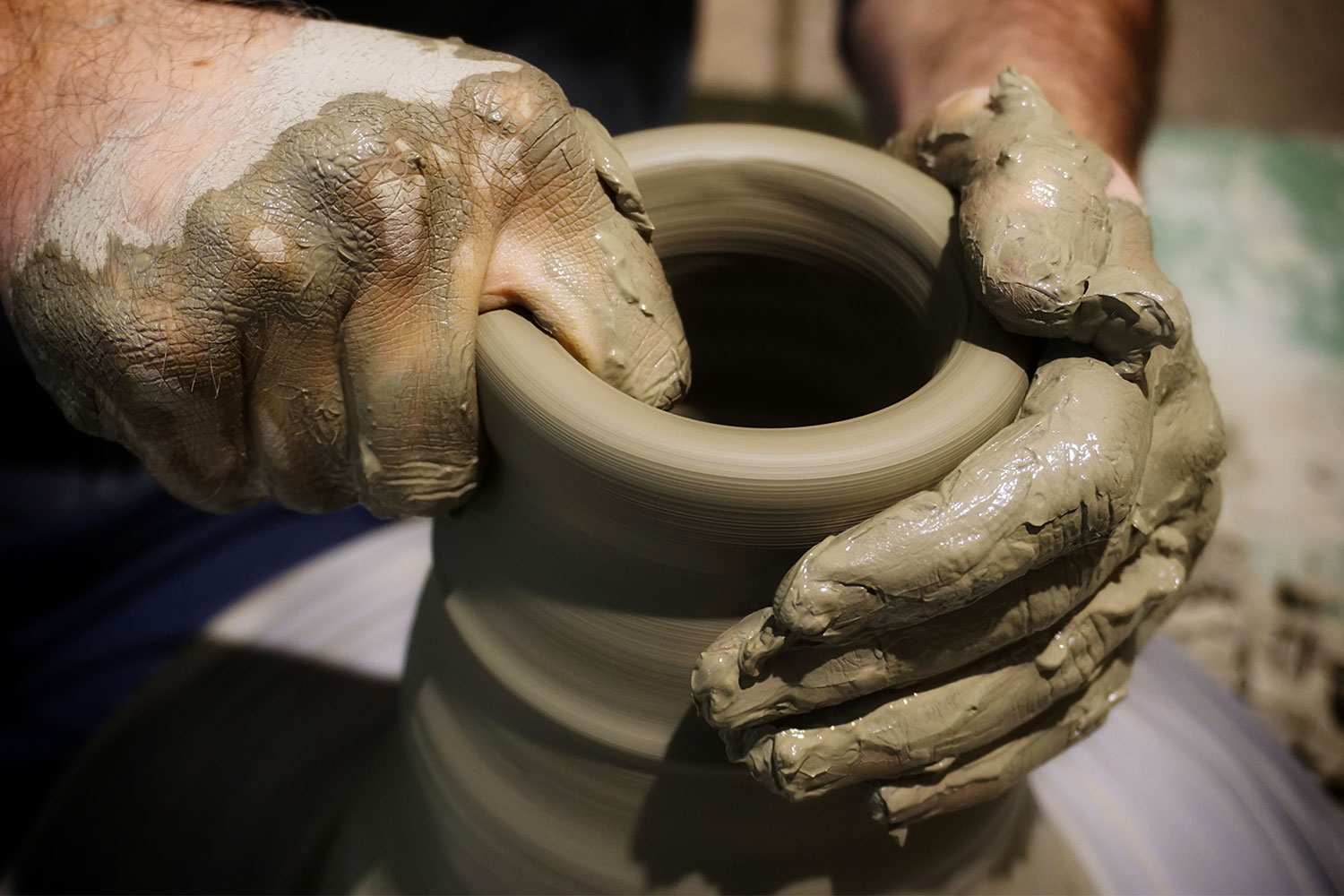
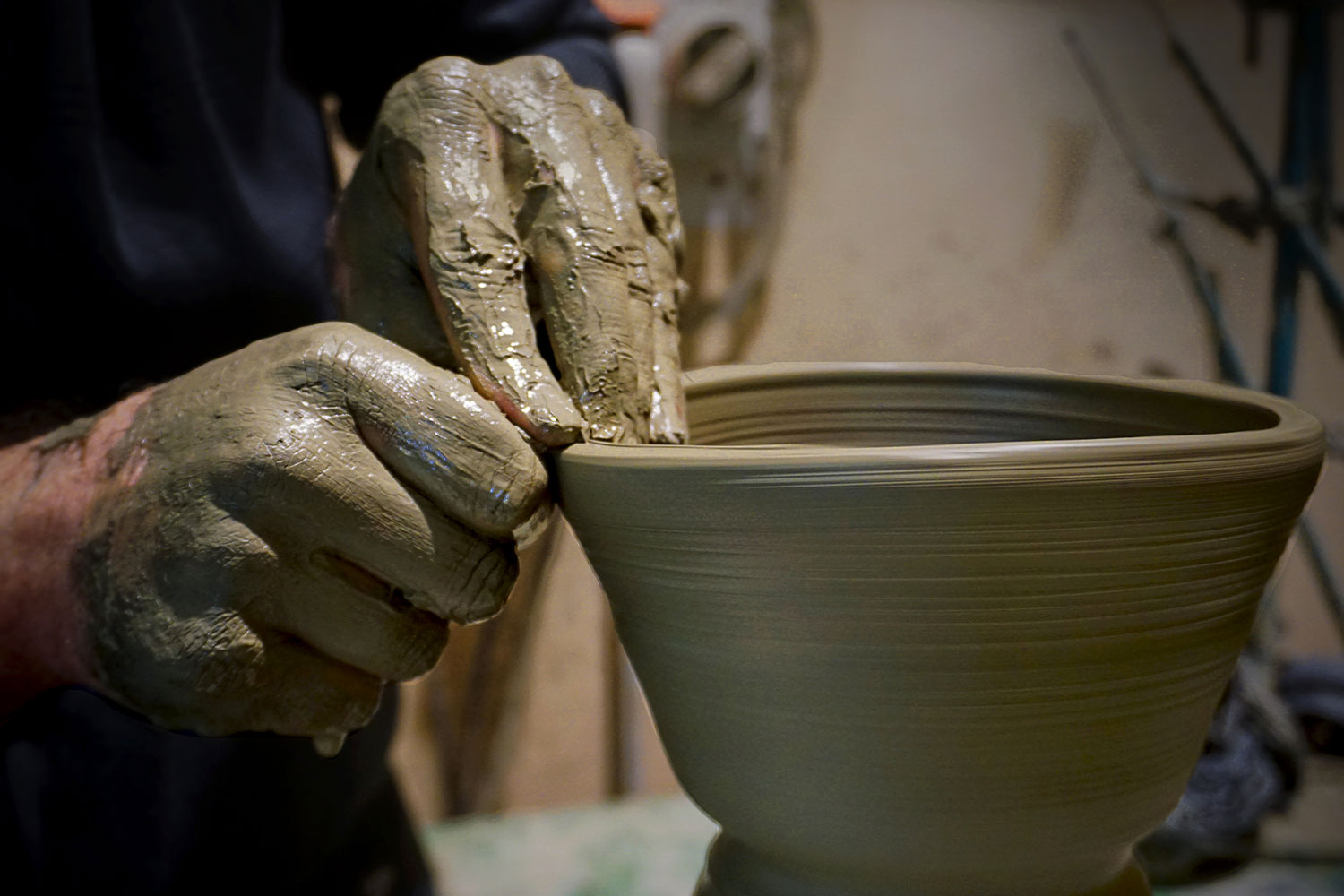
- They do everything by hand on the lathe
- They are inspired by nature and archaic forms
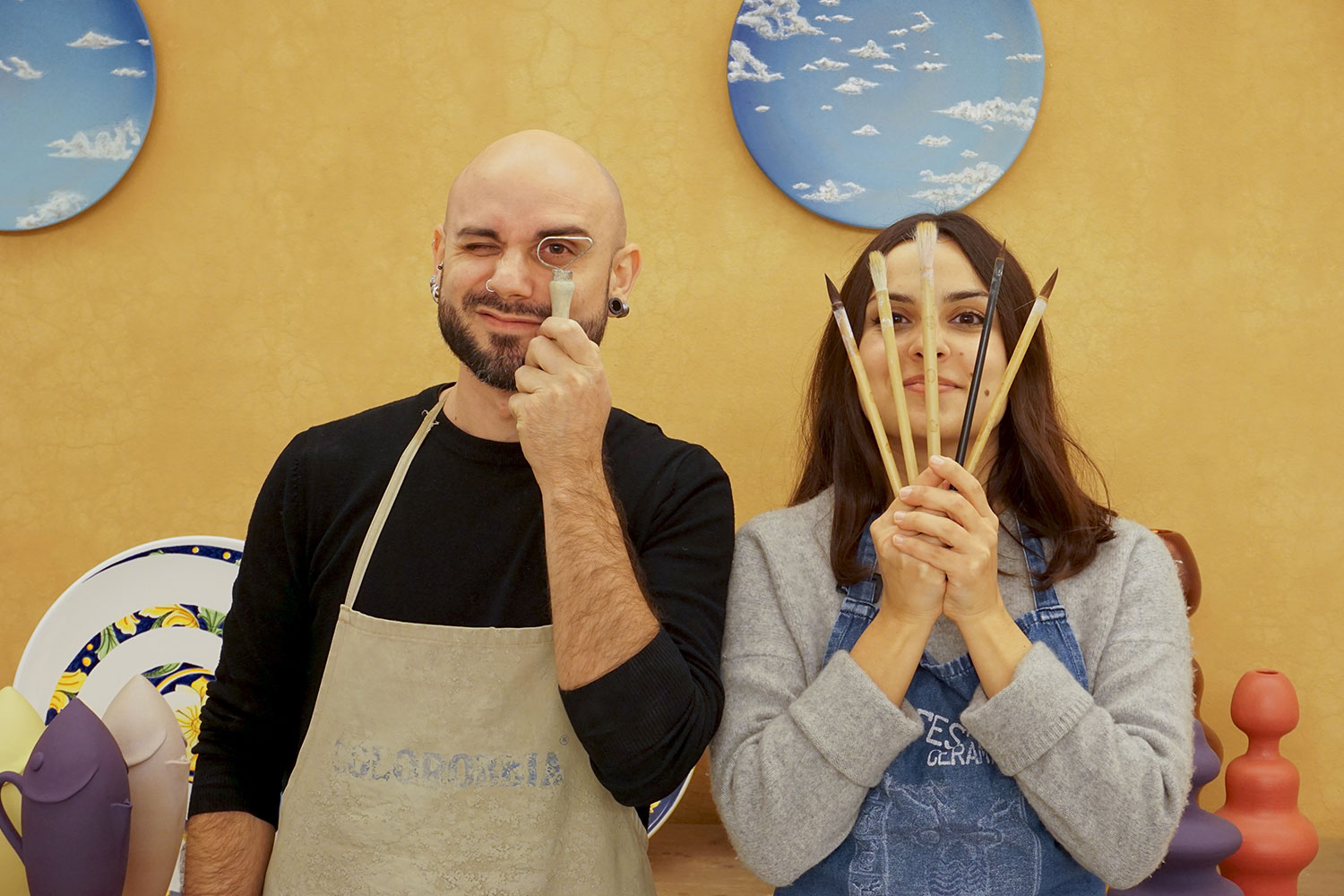
Pantoú Ceramics was established by Giampaolo Santoddì and Ilaria Biffara, who are originally from Caltagirone, a city in inland Sicily with an ancient ceramics and pottery tradition. They both grew up there, playing with soil and clay and hanging around old artisan workshops. After studying at the Ceramics Art High School – founded by Luigi Sturzo in 1918 – and specialising in this field, they decided to leave Caltagirone for Faenza. Pantoú is a Greek word meaning “everywhere” and when they named their atelier in 2015, they decided on the name as a way to describe and pay tribute to the stateless origins of their work. Ceramics are made out of substances which can be found on 90 percent of the surface of the Earth, so in many ways they are at home everywhere and nowhere.
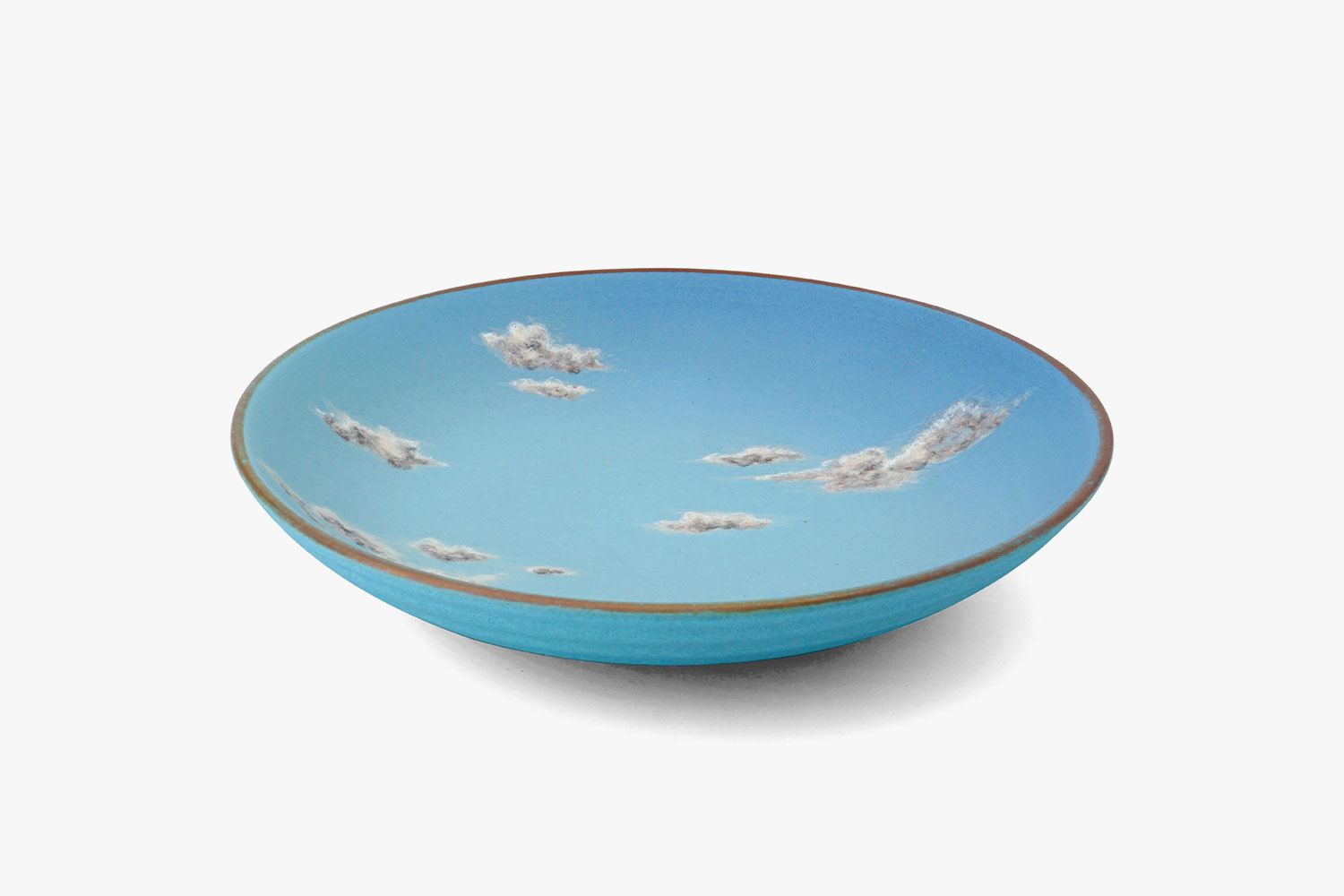
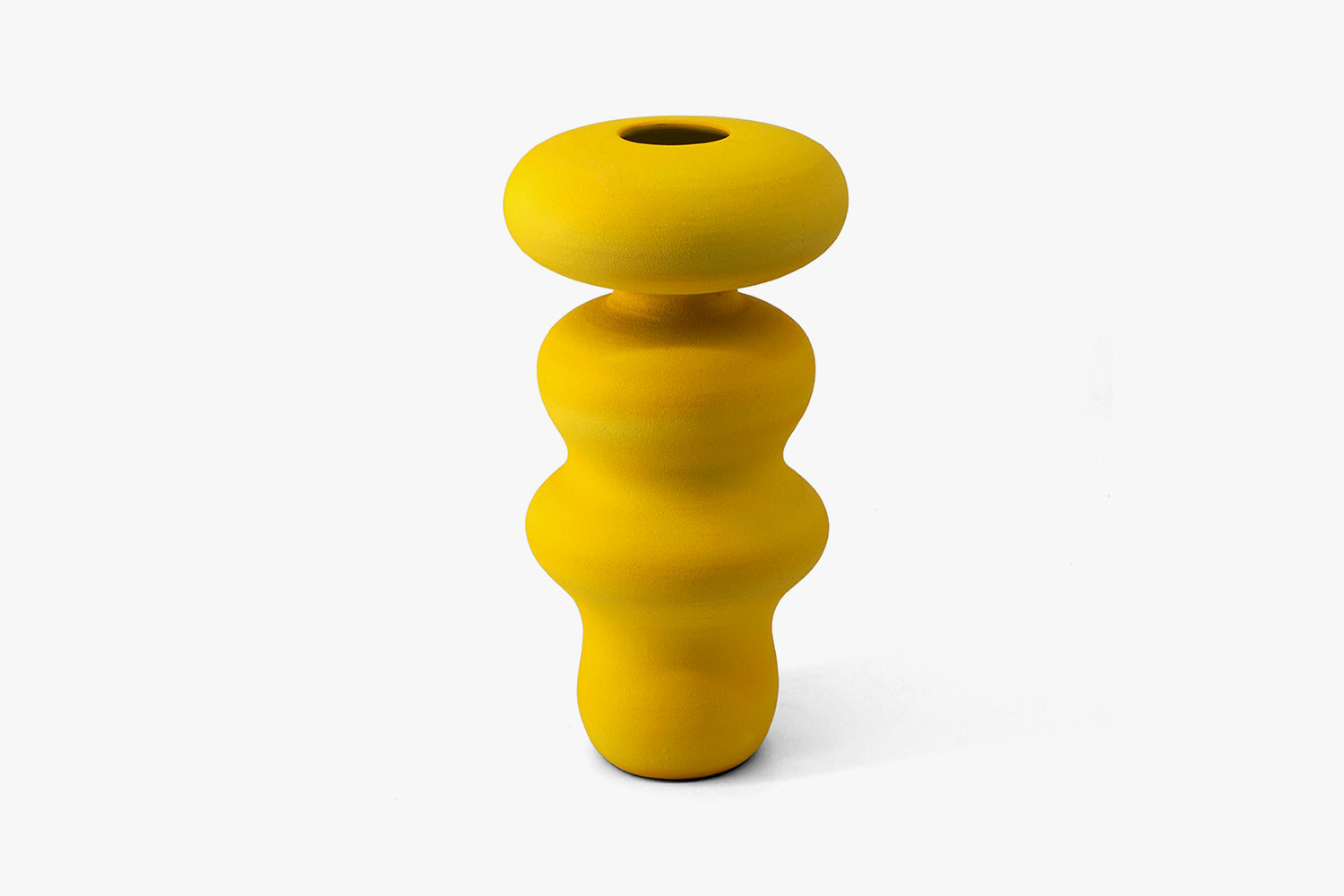
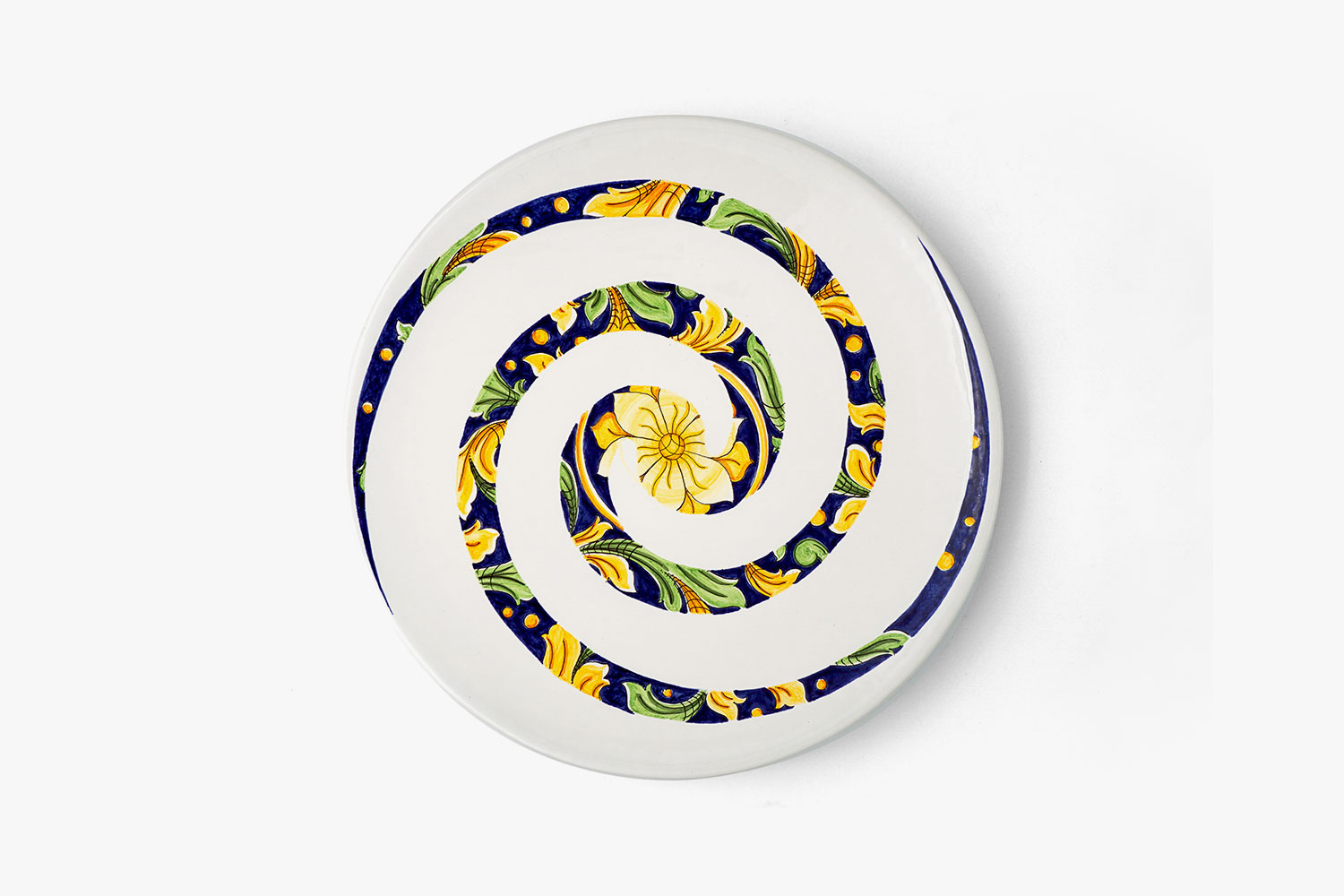
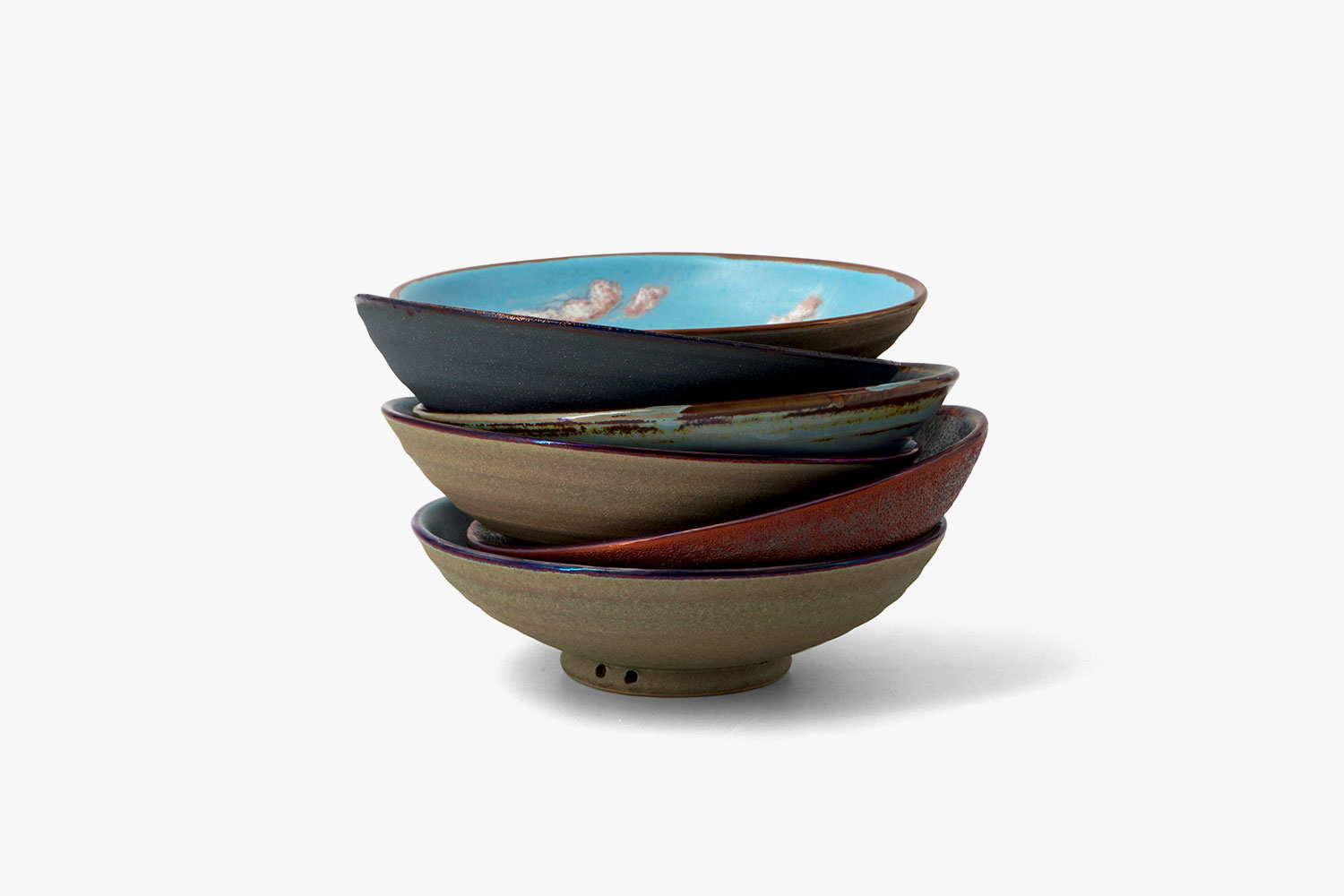
INTERVIEW
Ilaria: Caltigirone is famed for its traditional style of ceramics, we wanted to explore contemporary designs. I had done a workshop in Faenza years ago, and remembered well the modern approach, so I travelled there to study product development. We didn't look back.
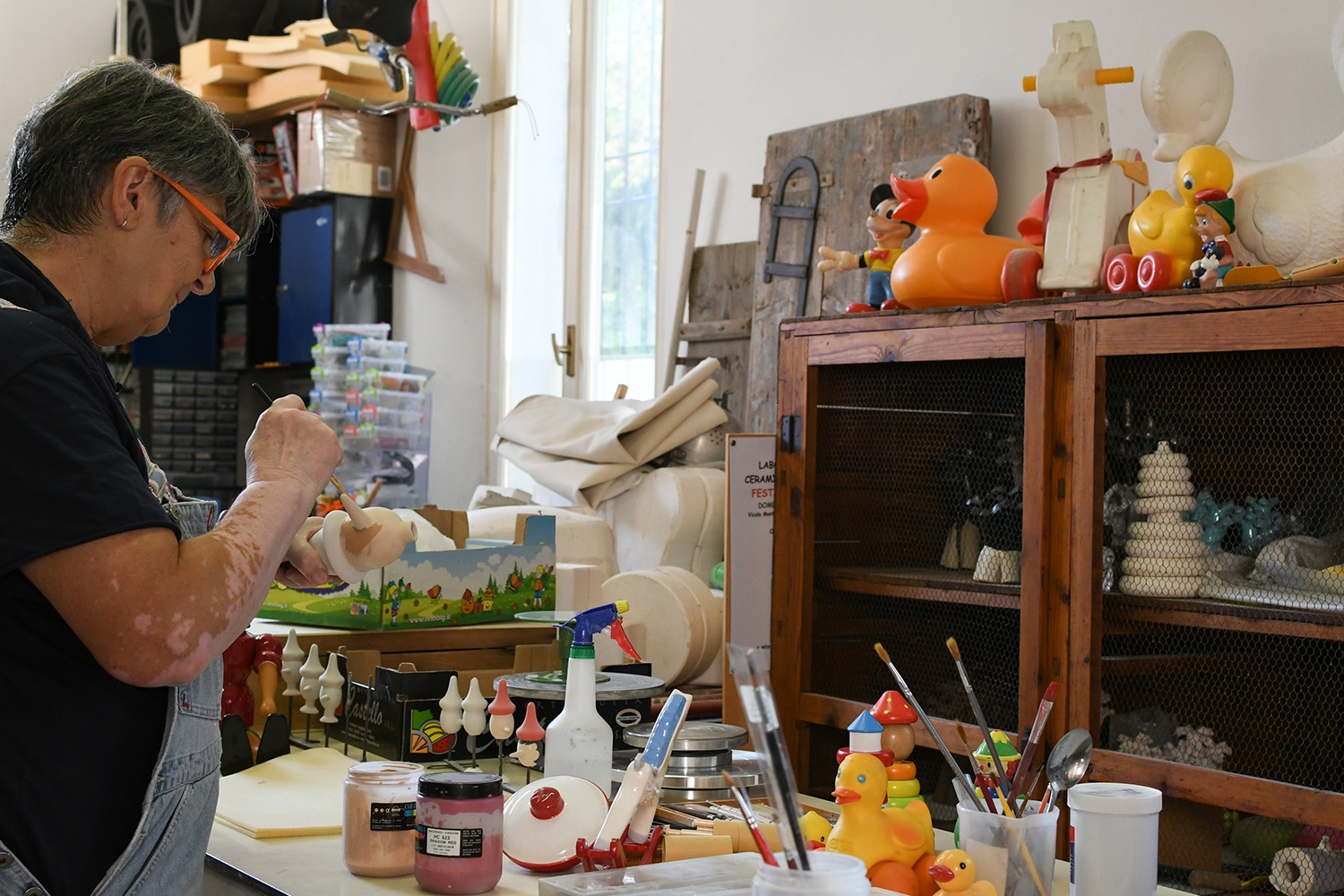
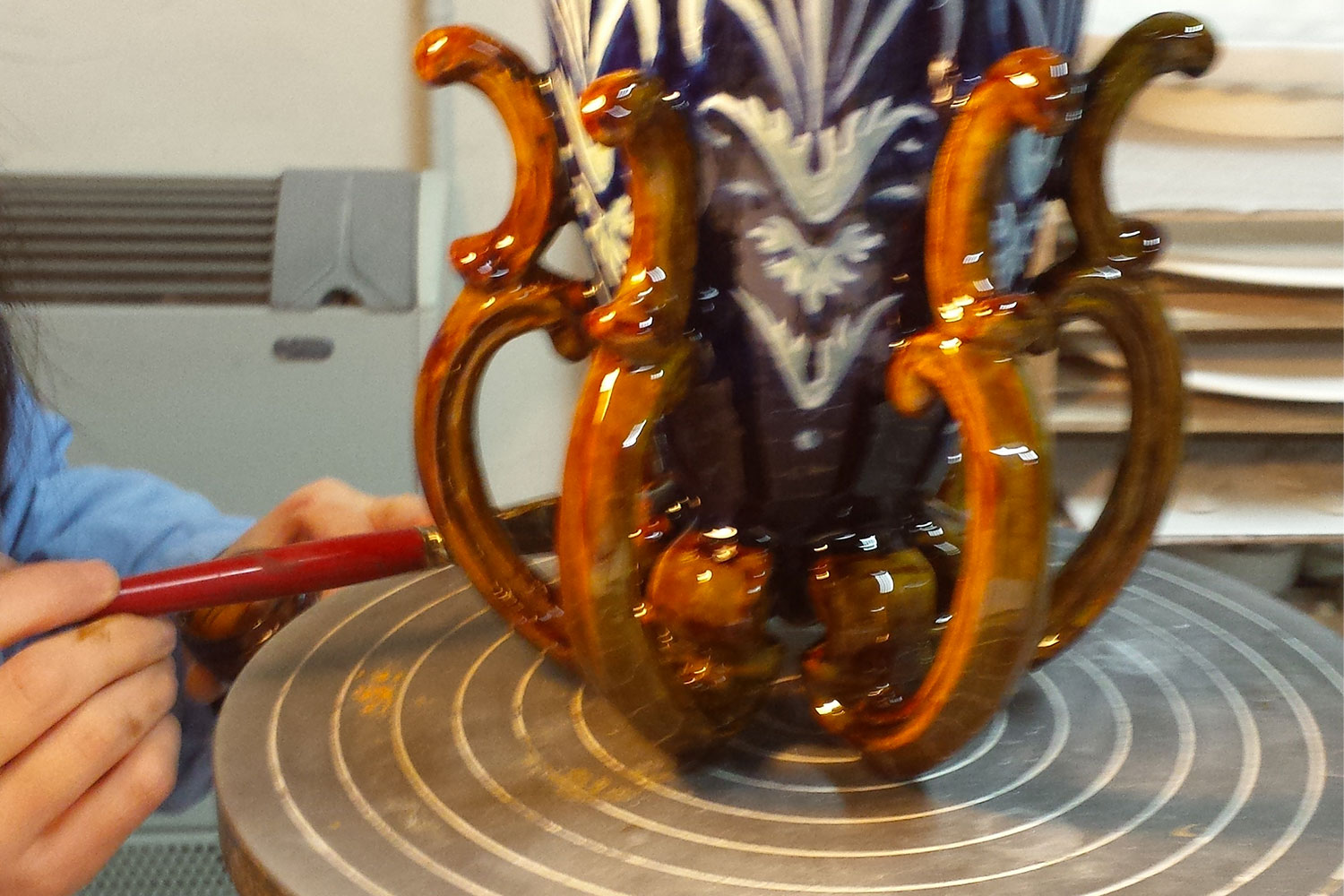
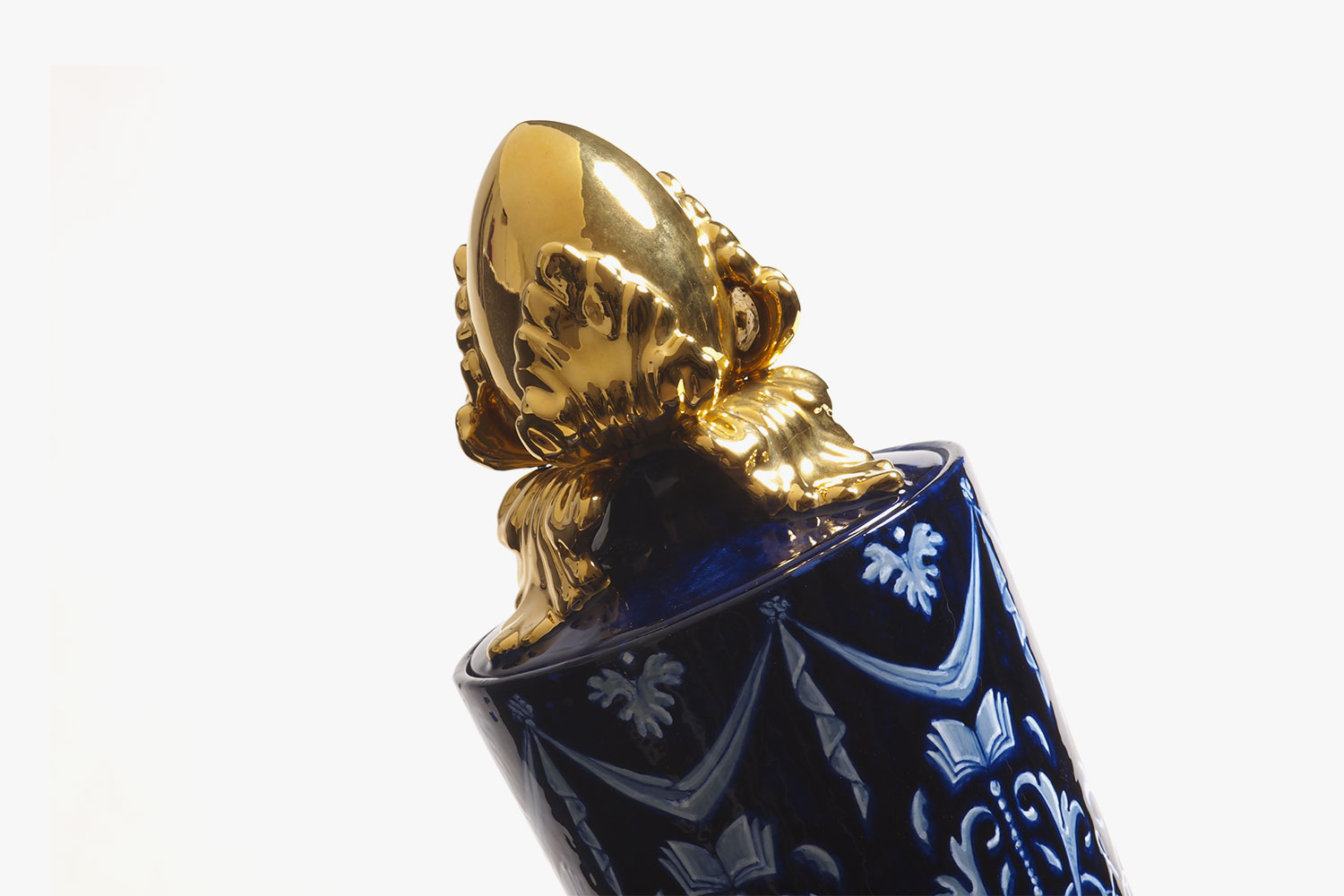
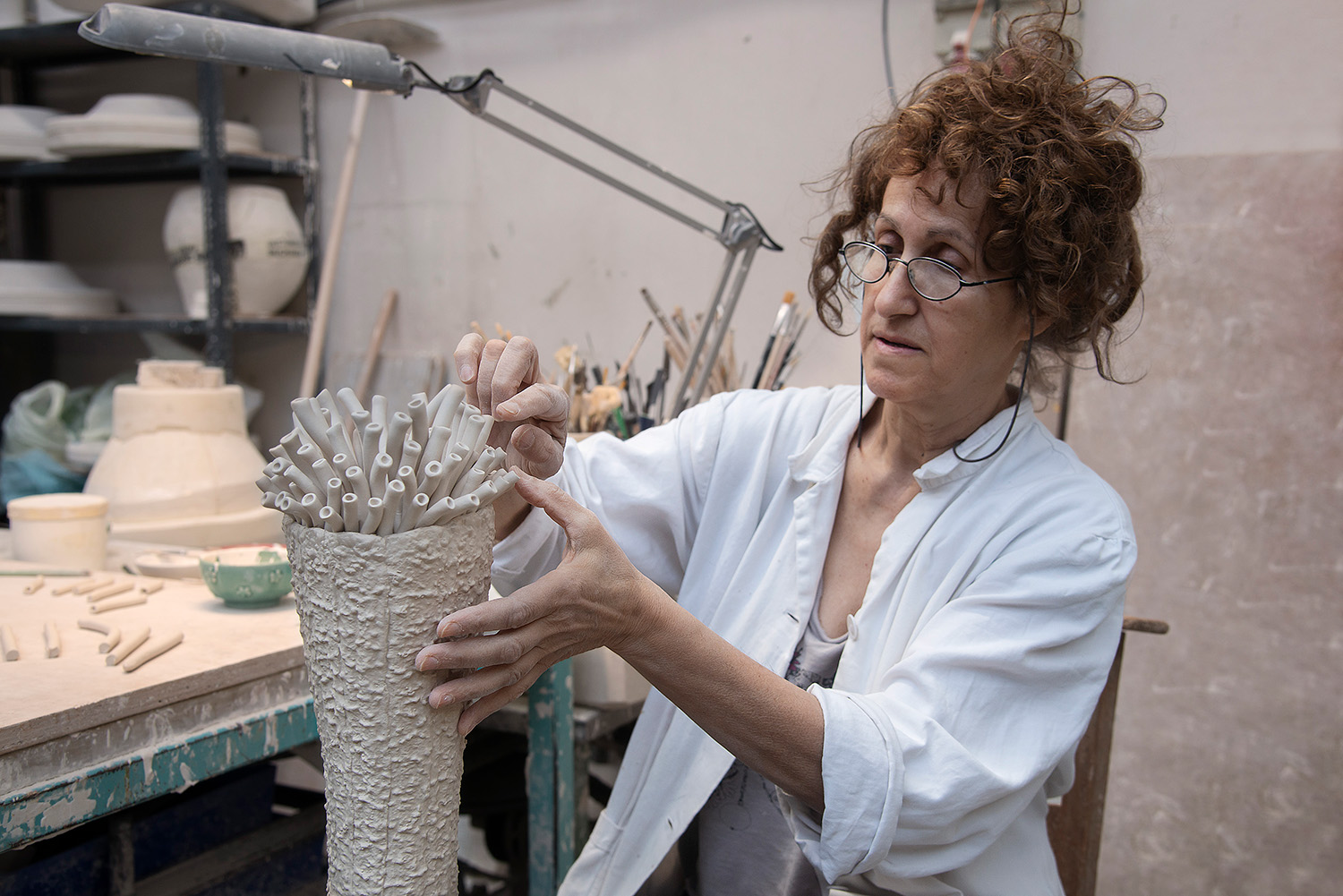
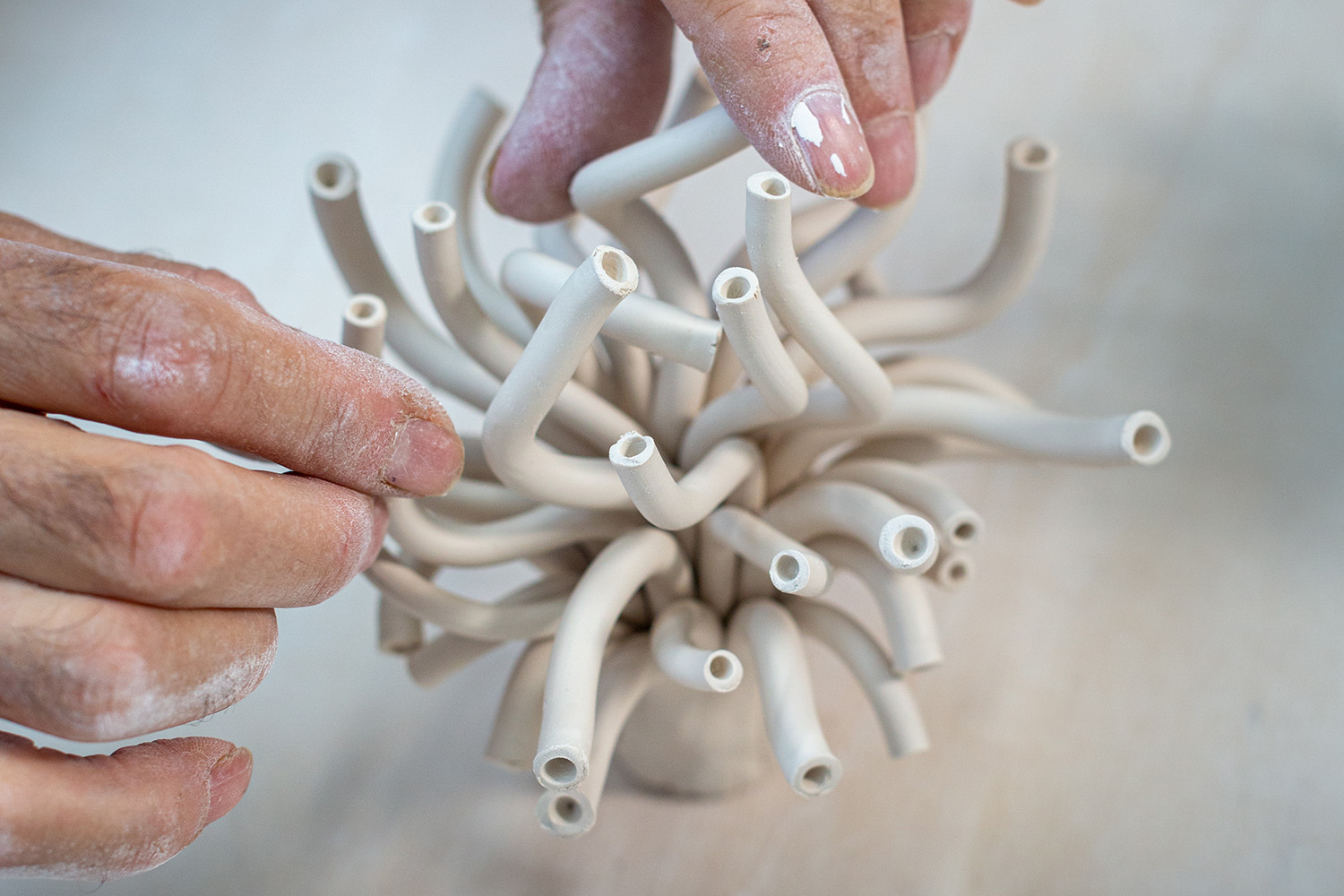
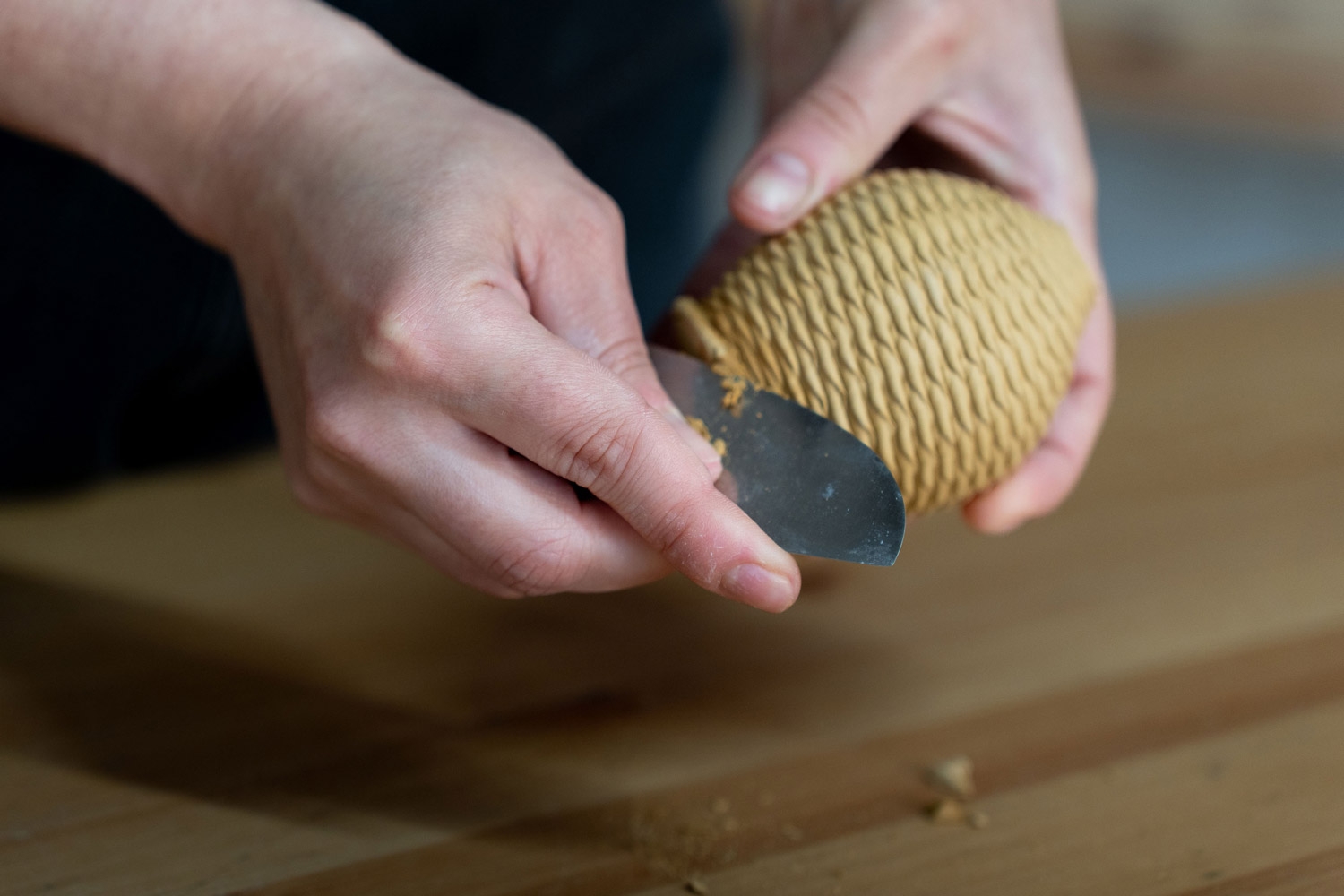
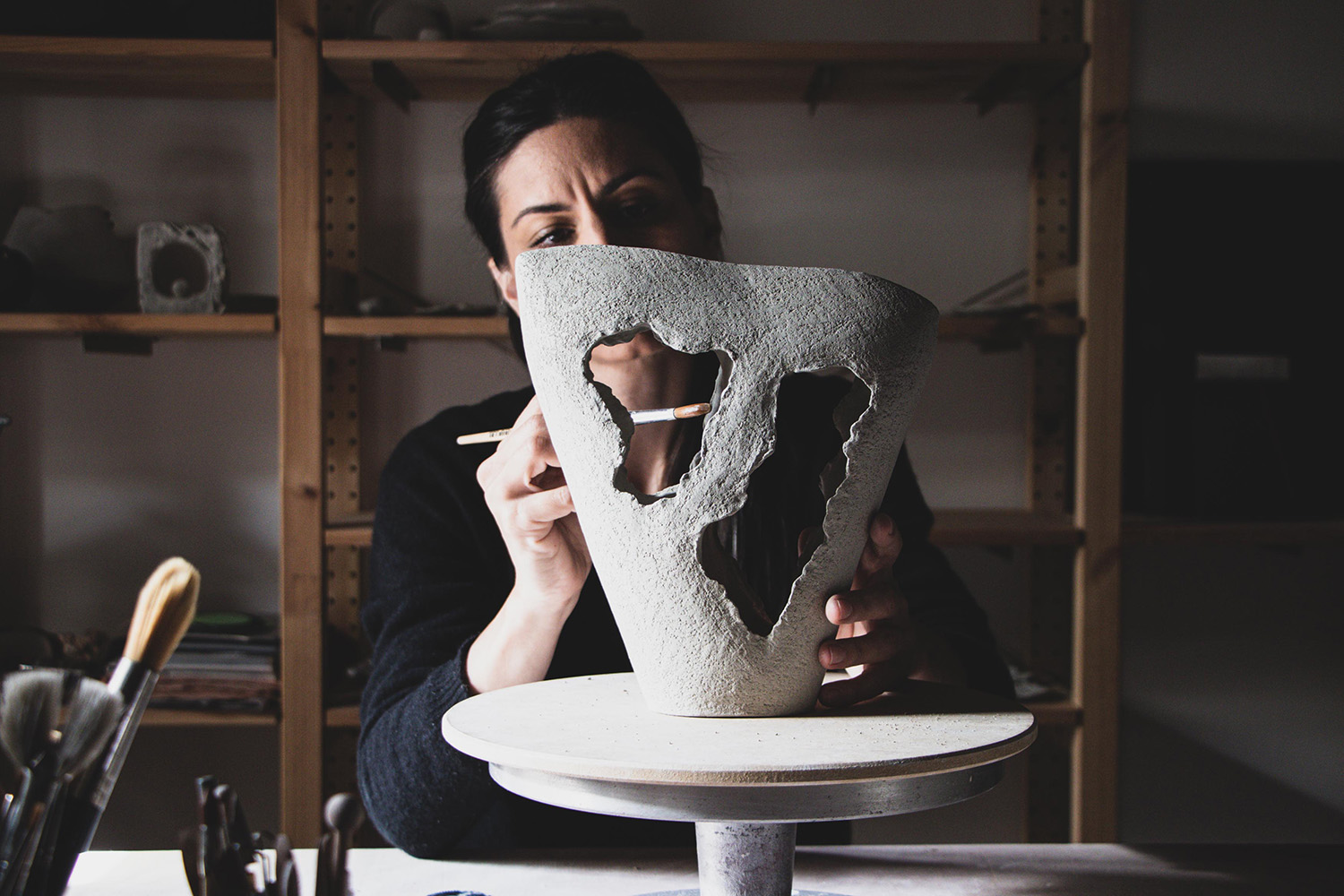
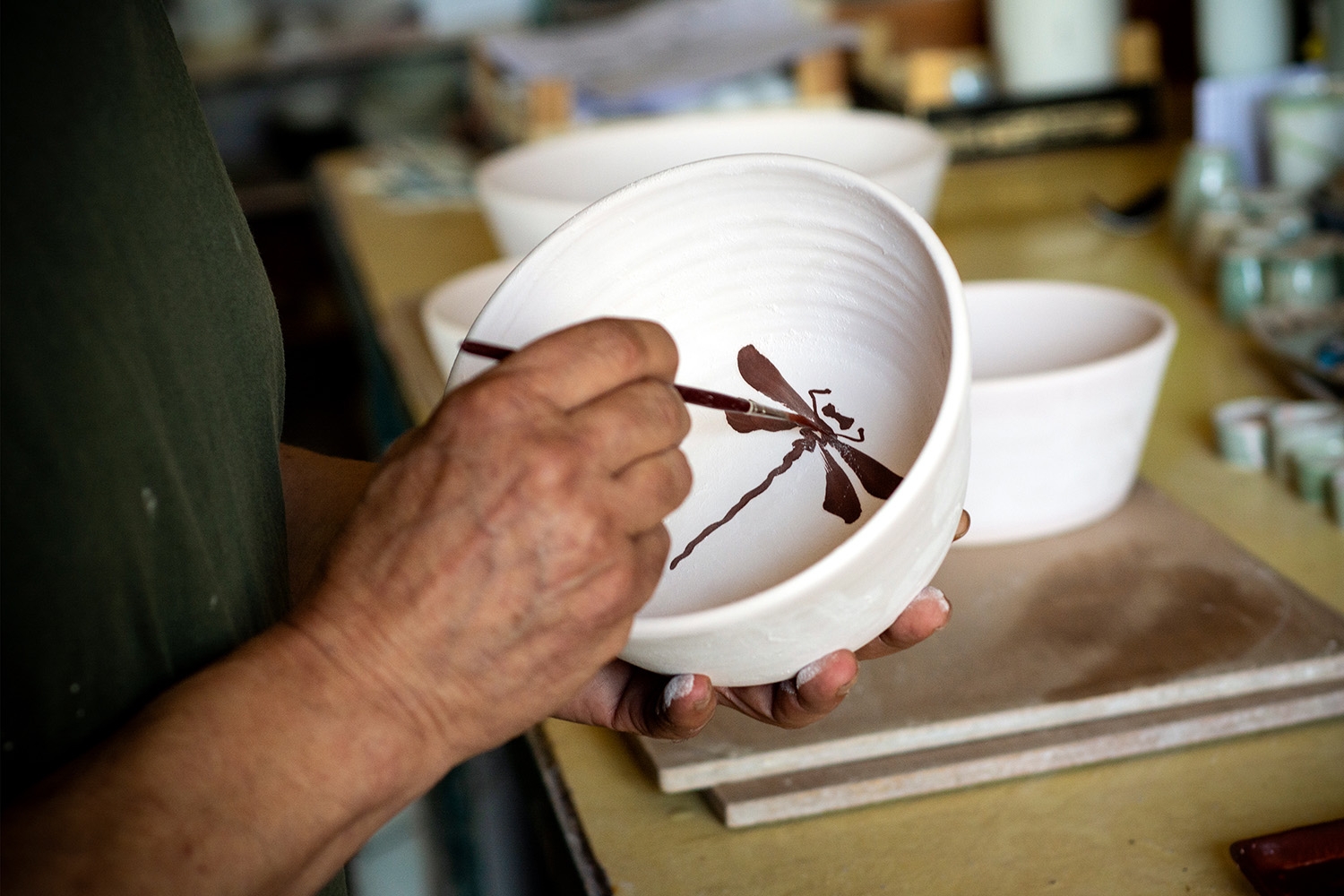
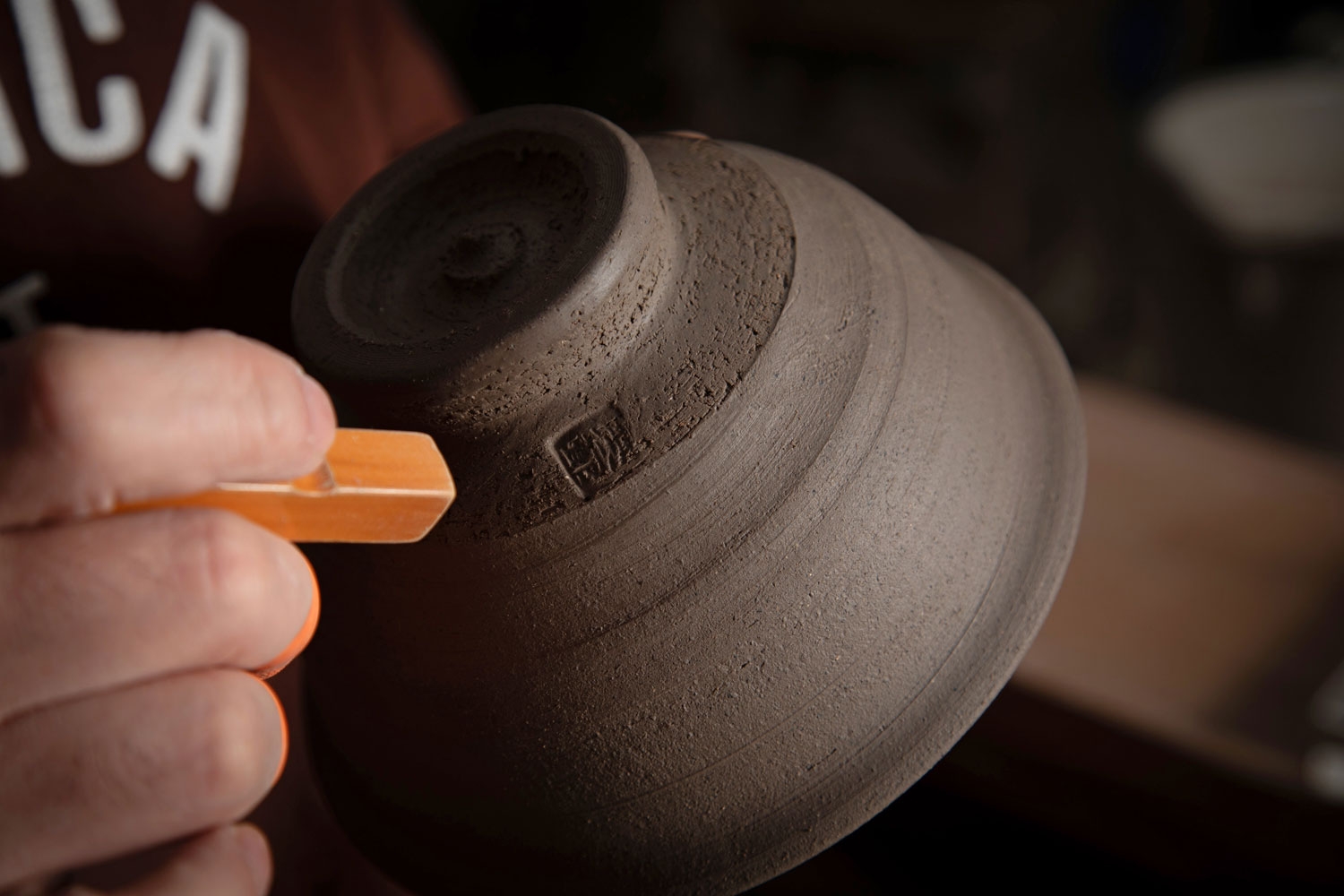
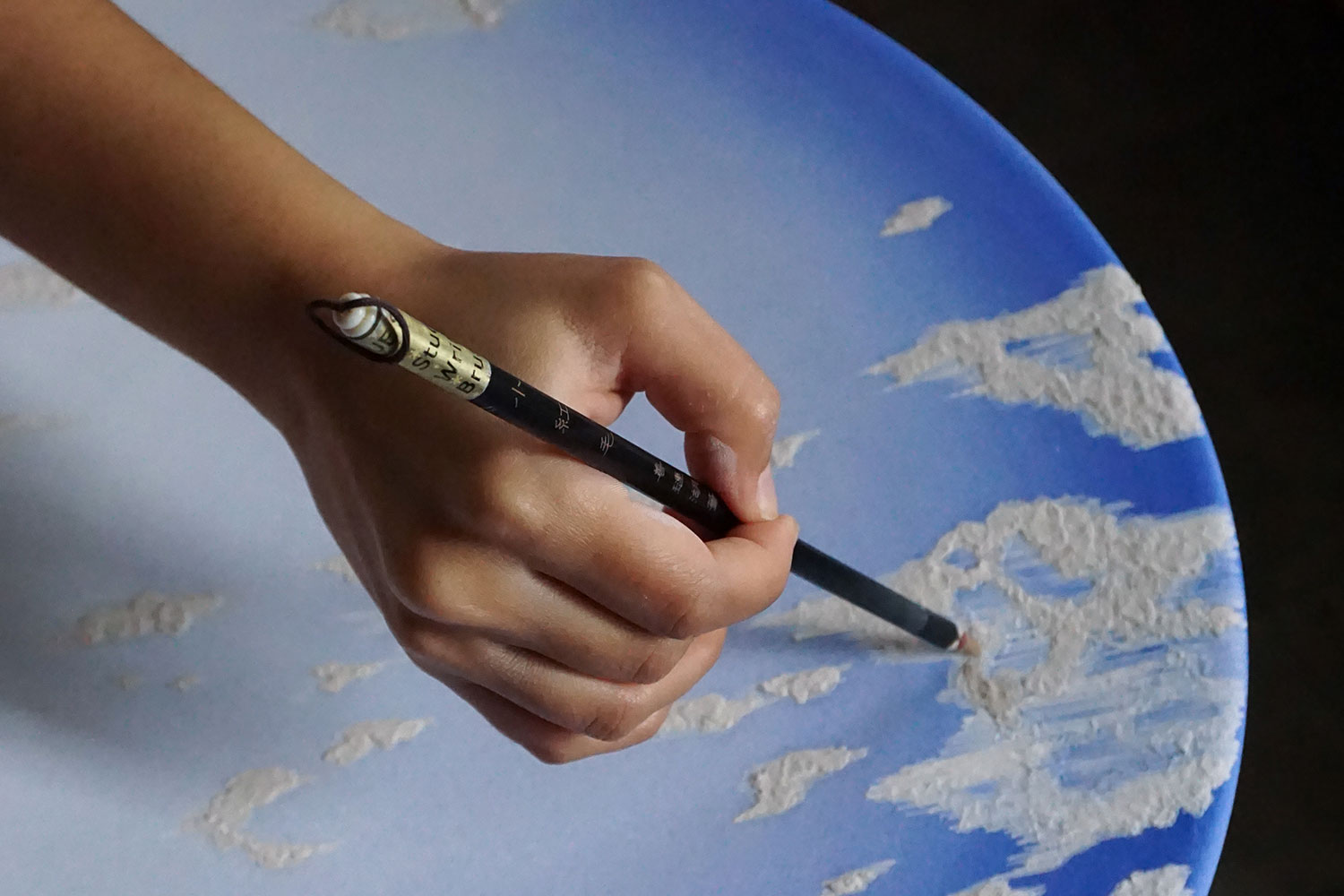
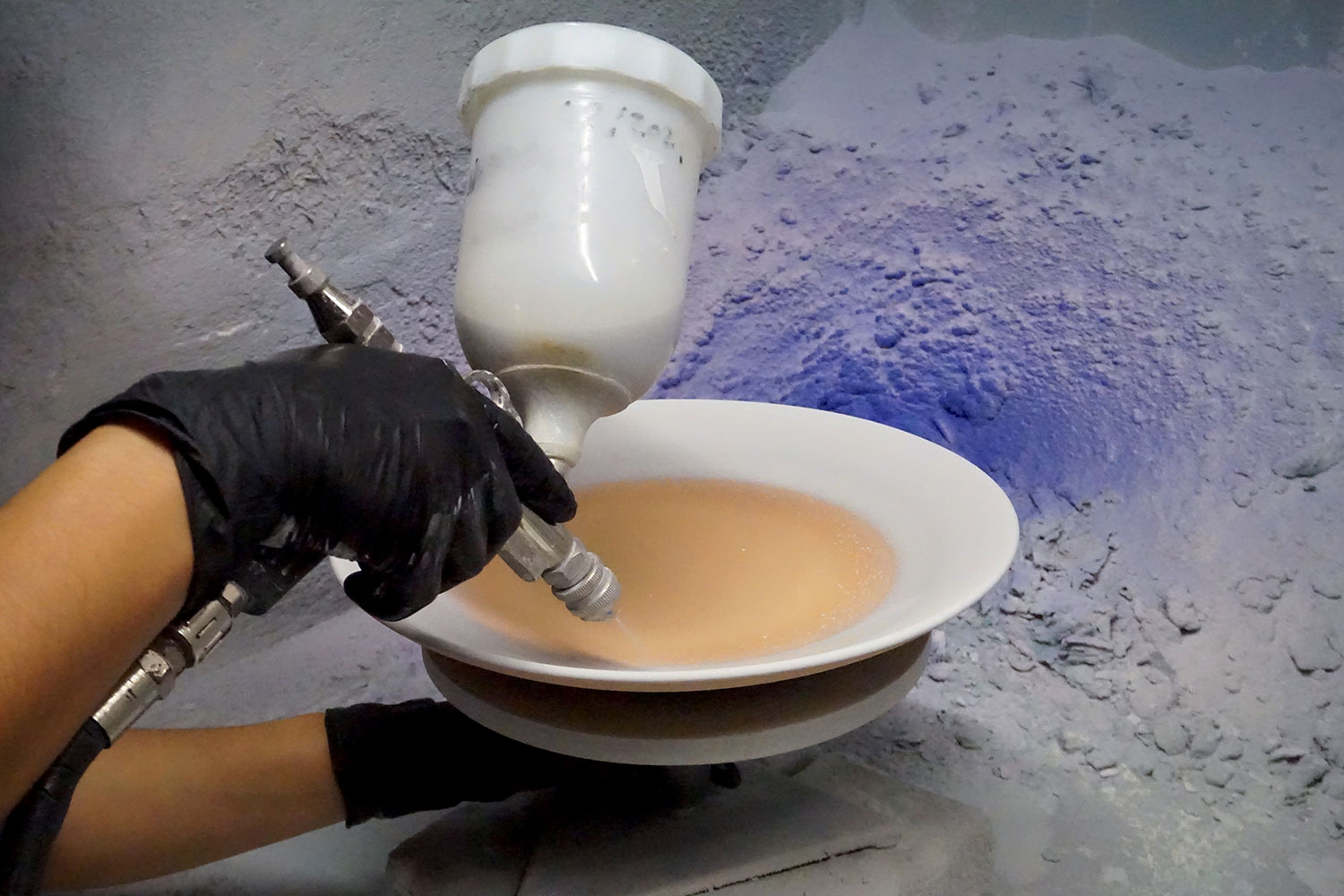
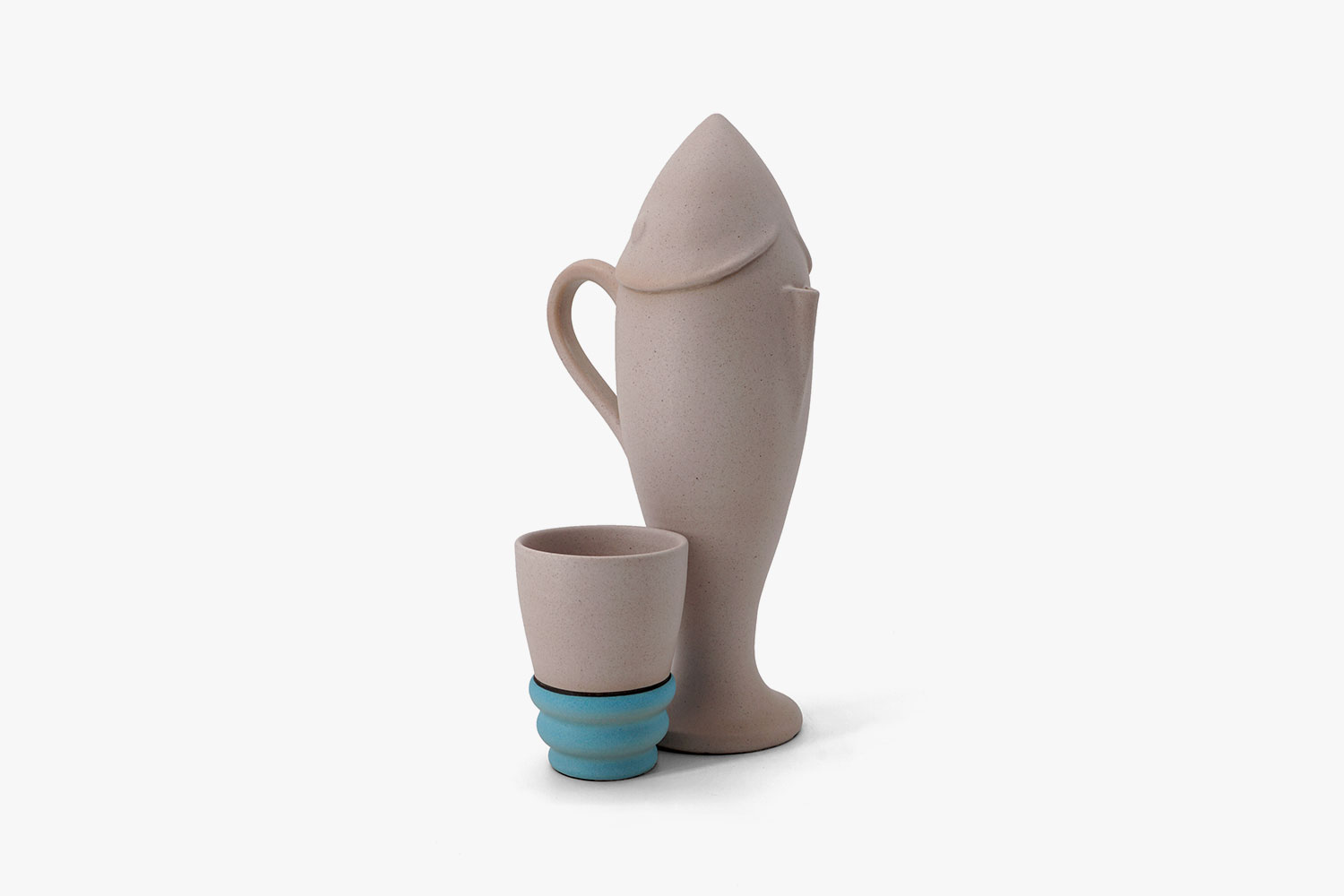
Giampaolo: Our purpose is to keep the old craft alive while translating it into a contemporary language. We do everything on the lathe, no moulds, and all pieces are absolutely unique. In Caltagirone it’s all about 17th and 18th centuries decorations, Moor’s Heads and such, we like to explore beyond that.
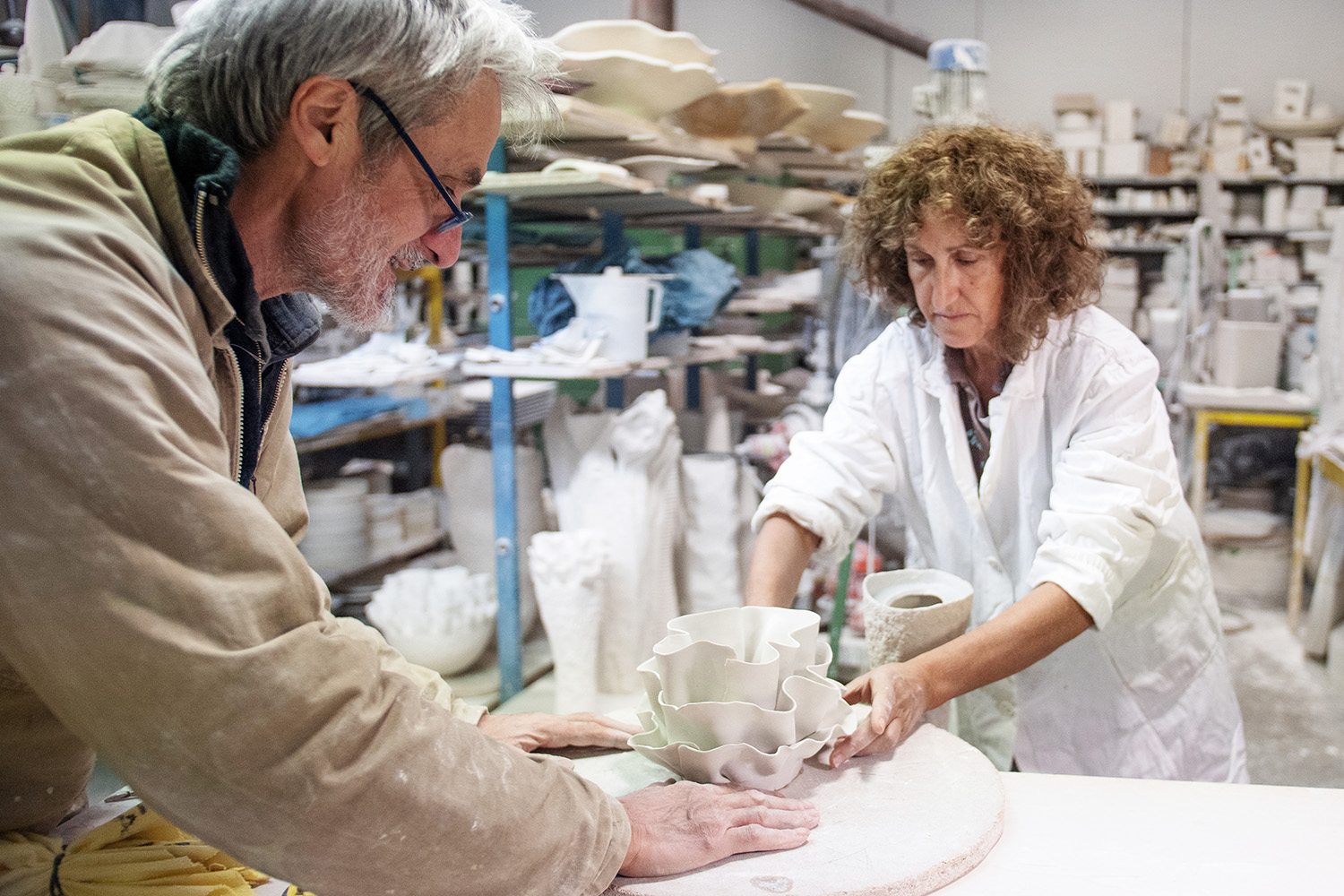
Ilaria: It is an important crossroad: you can easily get here and there are many exhibitions and artists all the time. At first we collaborated with other ceramicists and worked with them in a co-working space. In 2022 we opened our workshop in the historic centre of Faenza. We enjoy interacting with artists from other disciplines, too.
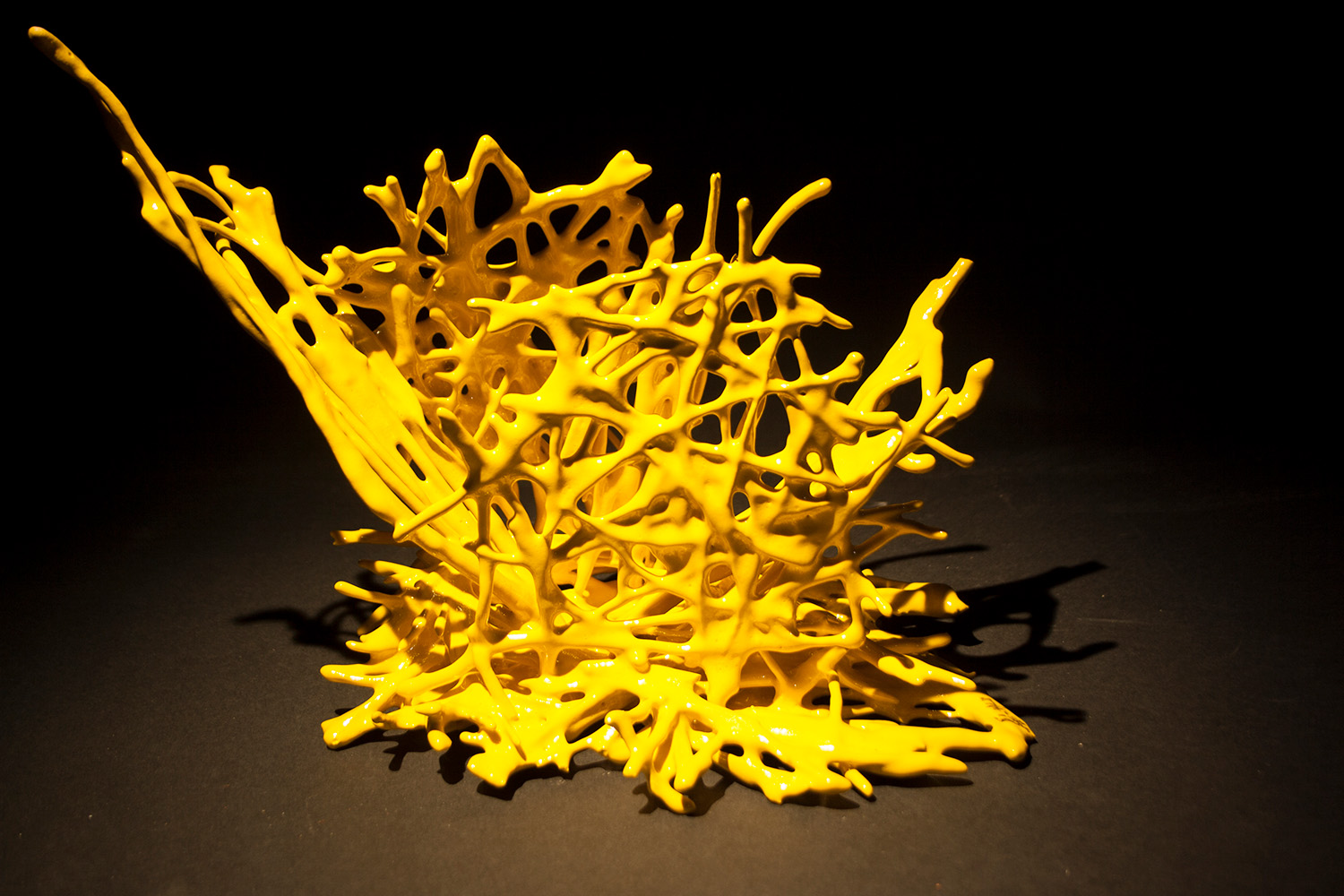
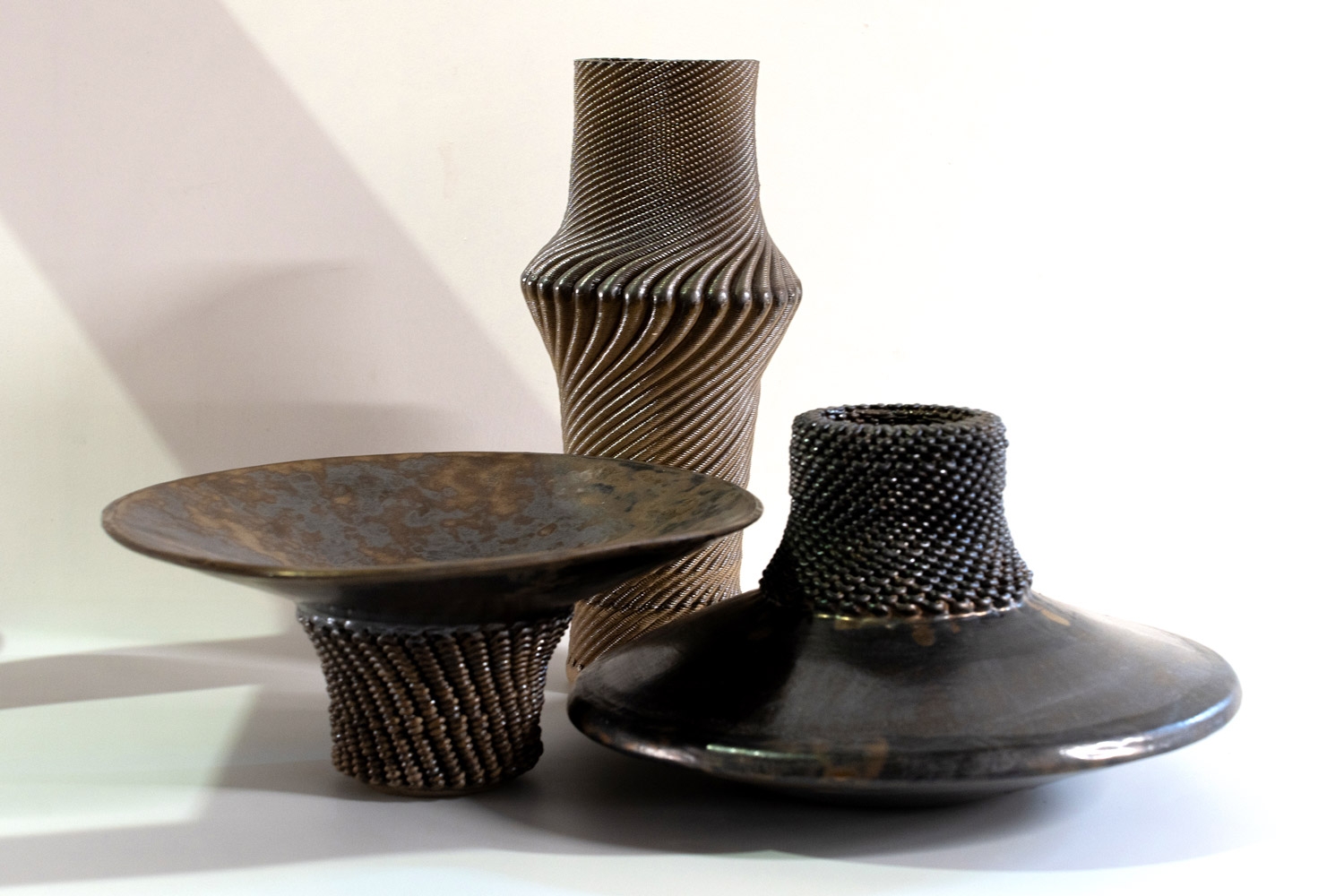
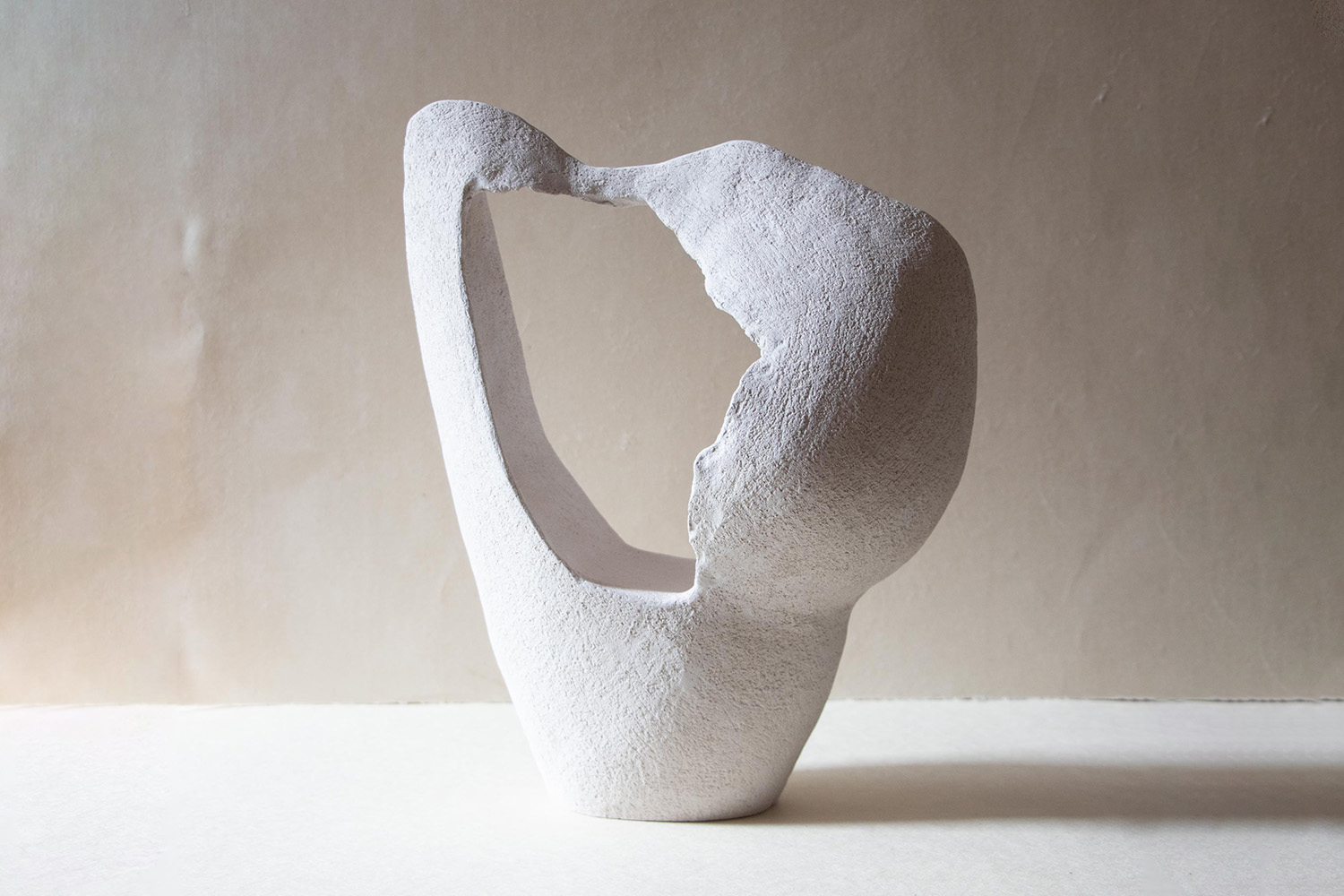
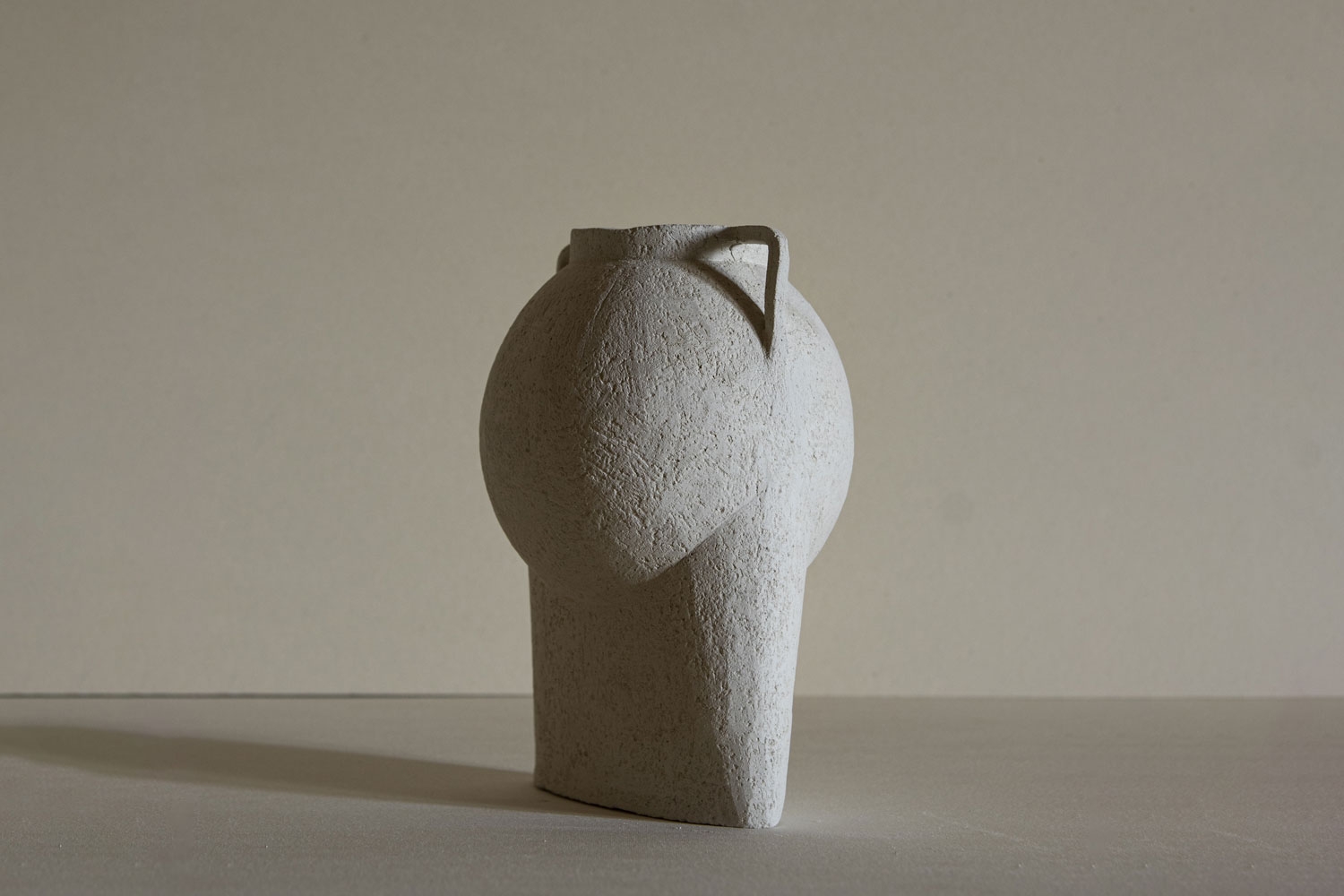
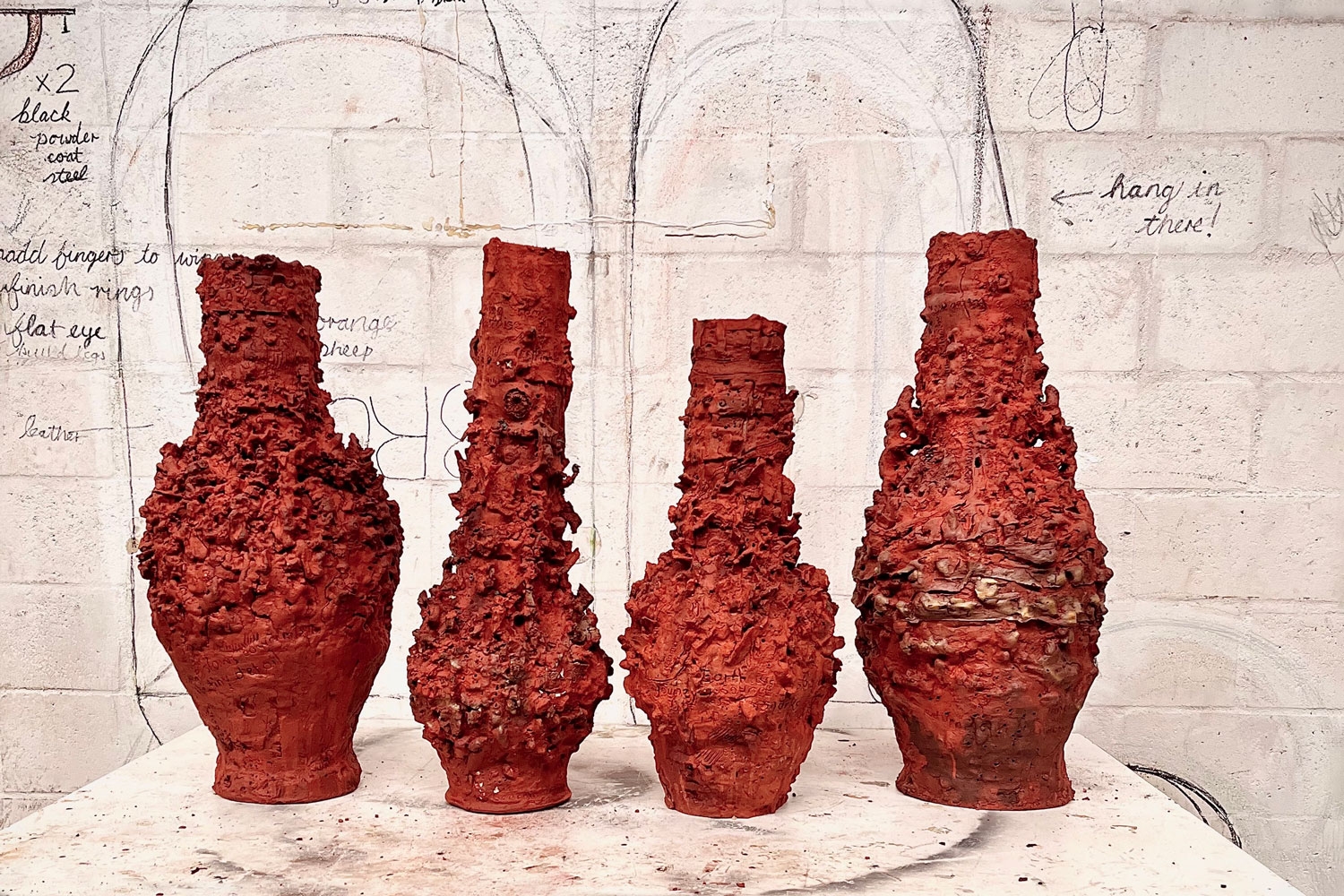
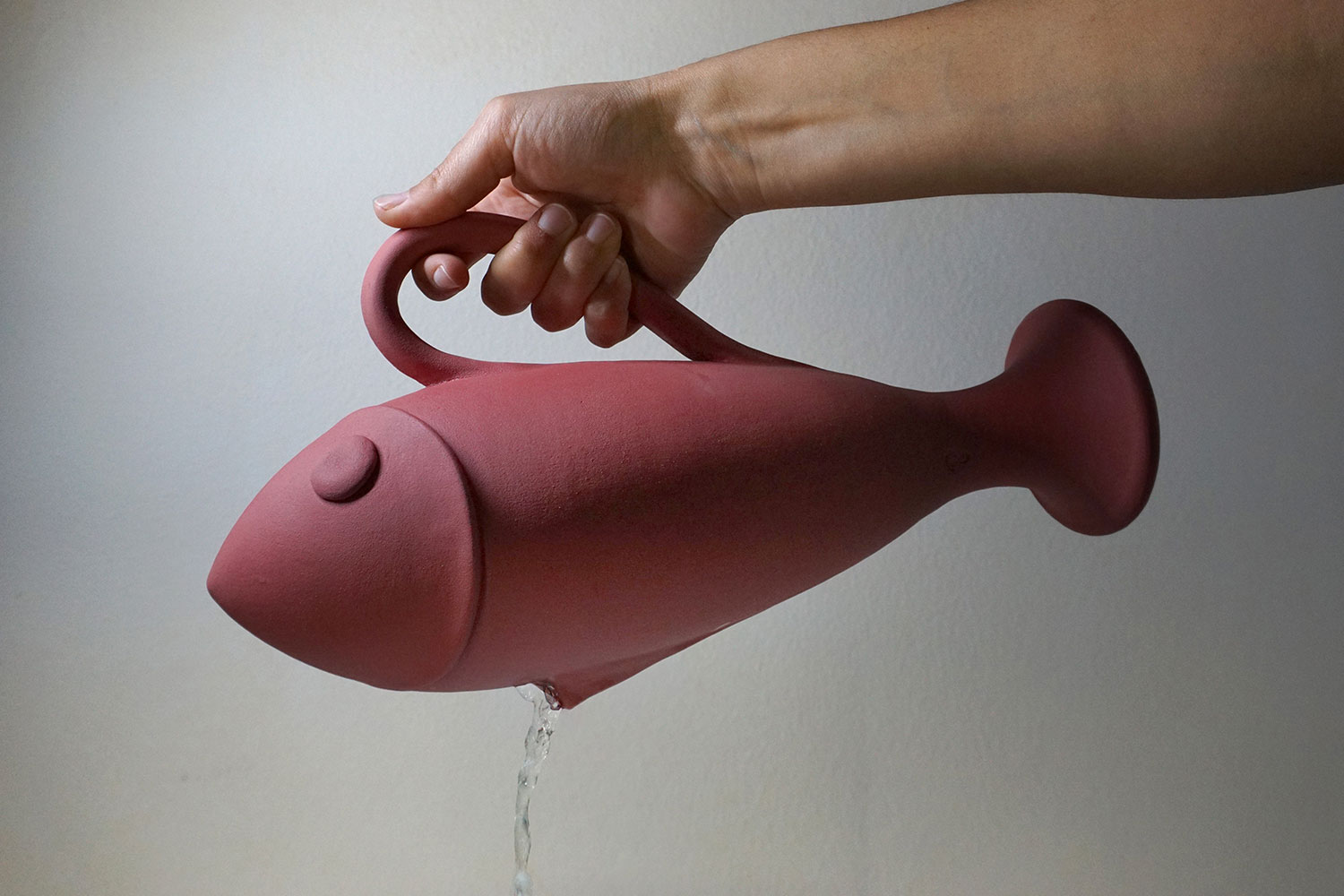
Giampaolo: There’s something primordial in our designs, something from the Bronze Age, or more simply from the nature that surrounds us. During the Covid-19 lockdown we came up with the Chrysalis collection: this represents our seclusion but at the same time, our evolution.