Michelle Erickson
Ceramicist
Hampton, VA, USA
History in the making
- Michelle’s work is based on a study of ceramics from the 17th and 18th centuries
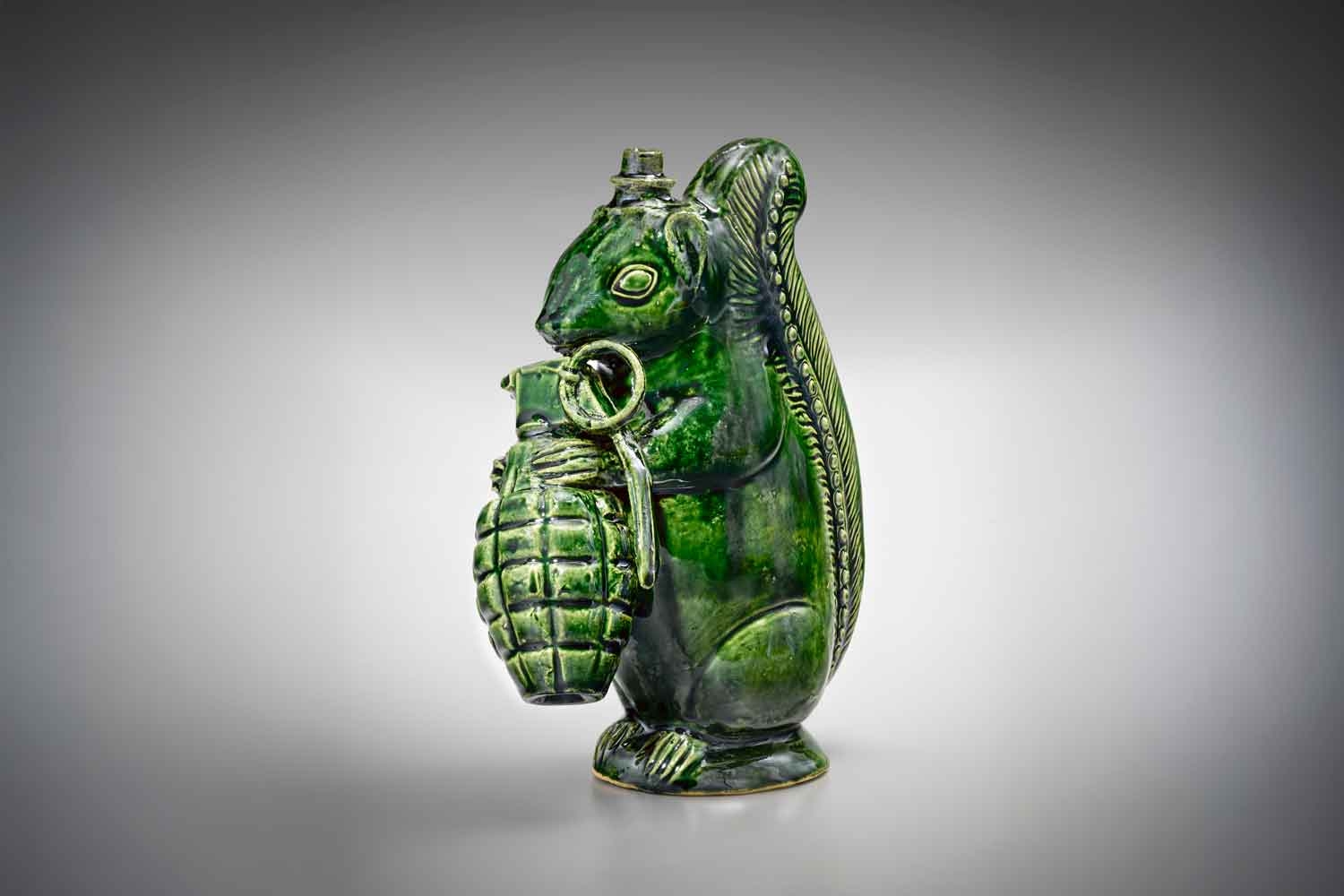
- Her practice blends historical forms with imagery reflecting current social issues
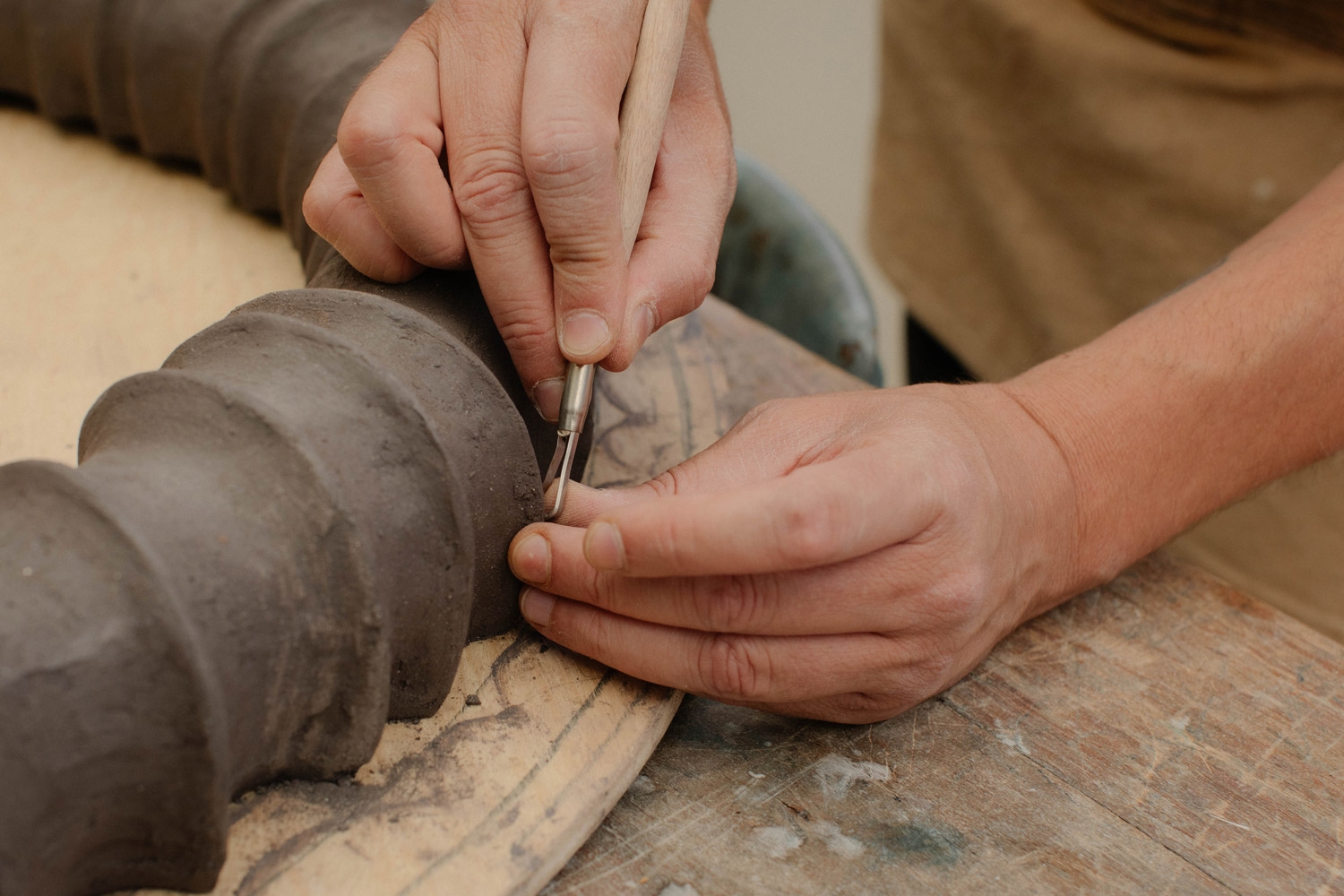
- She has reconstructed forgotten techniques through a process of trial and error
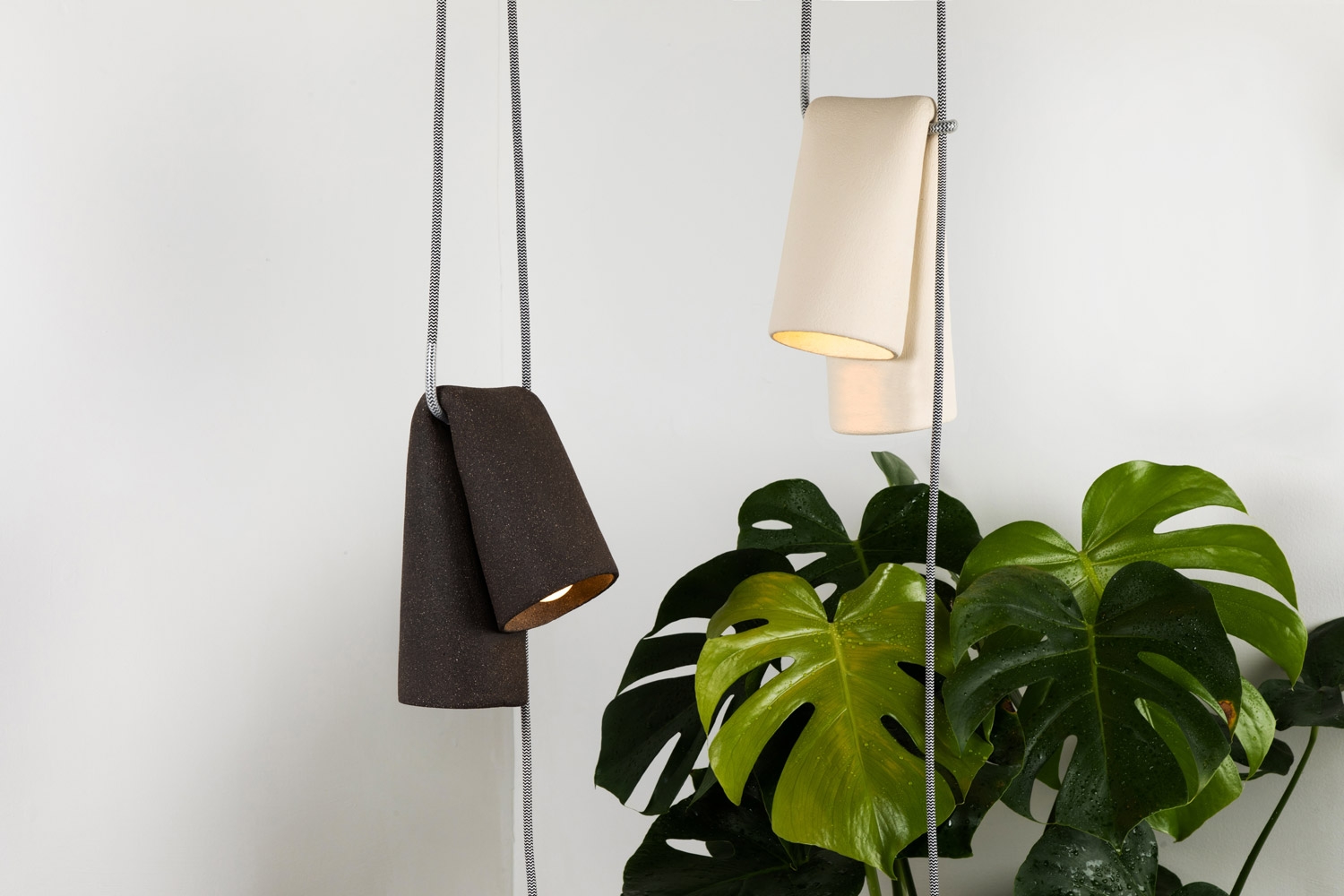
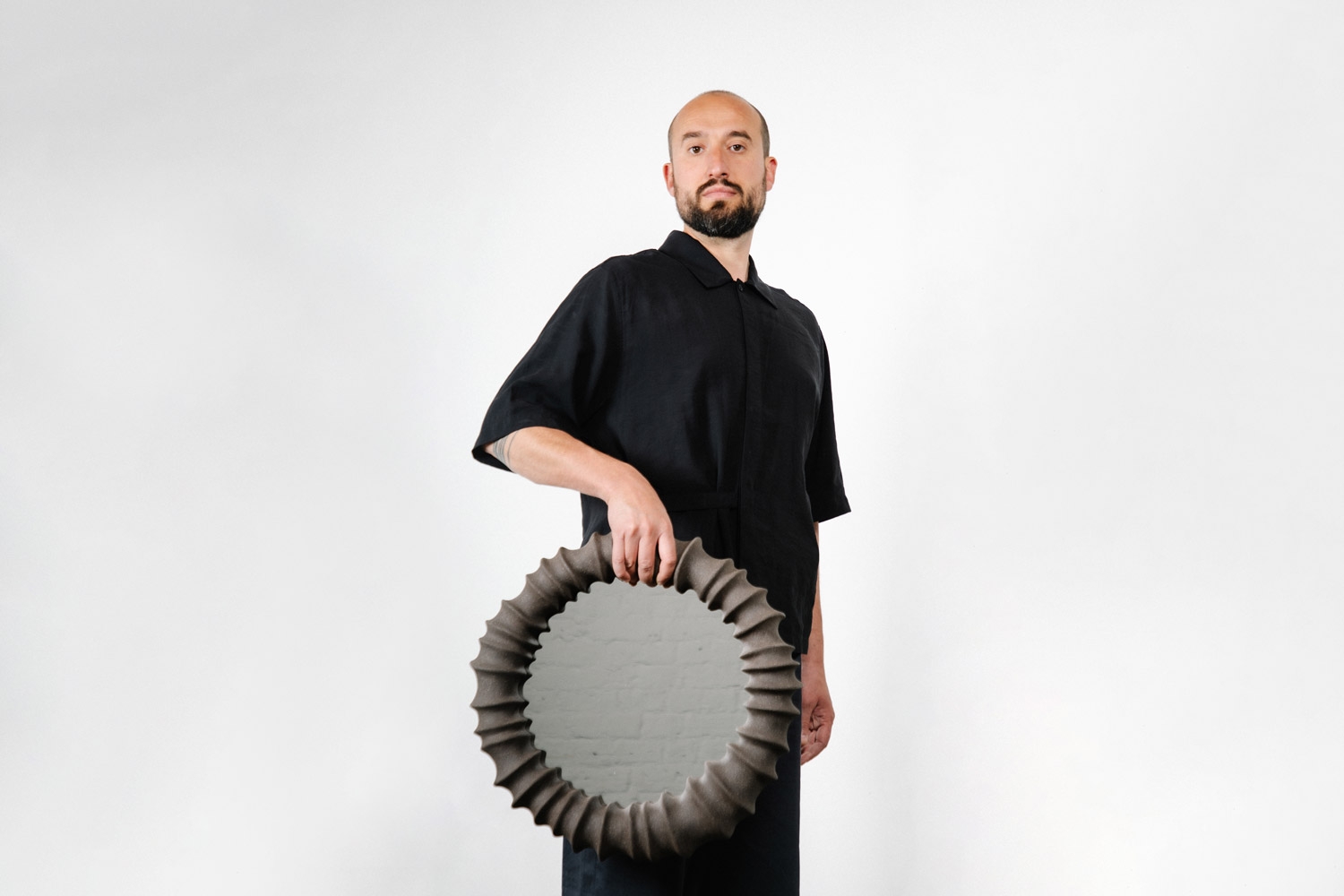
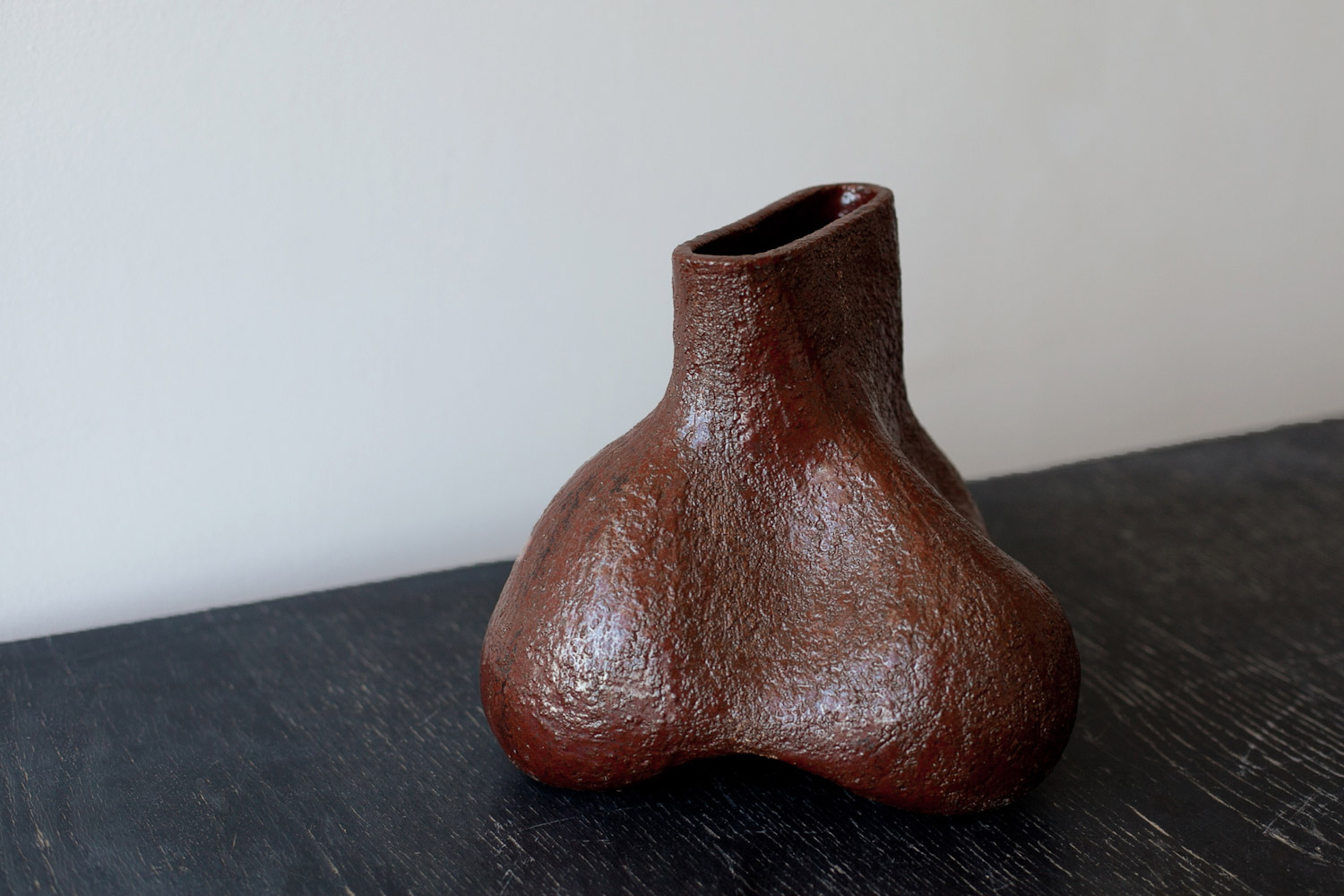
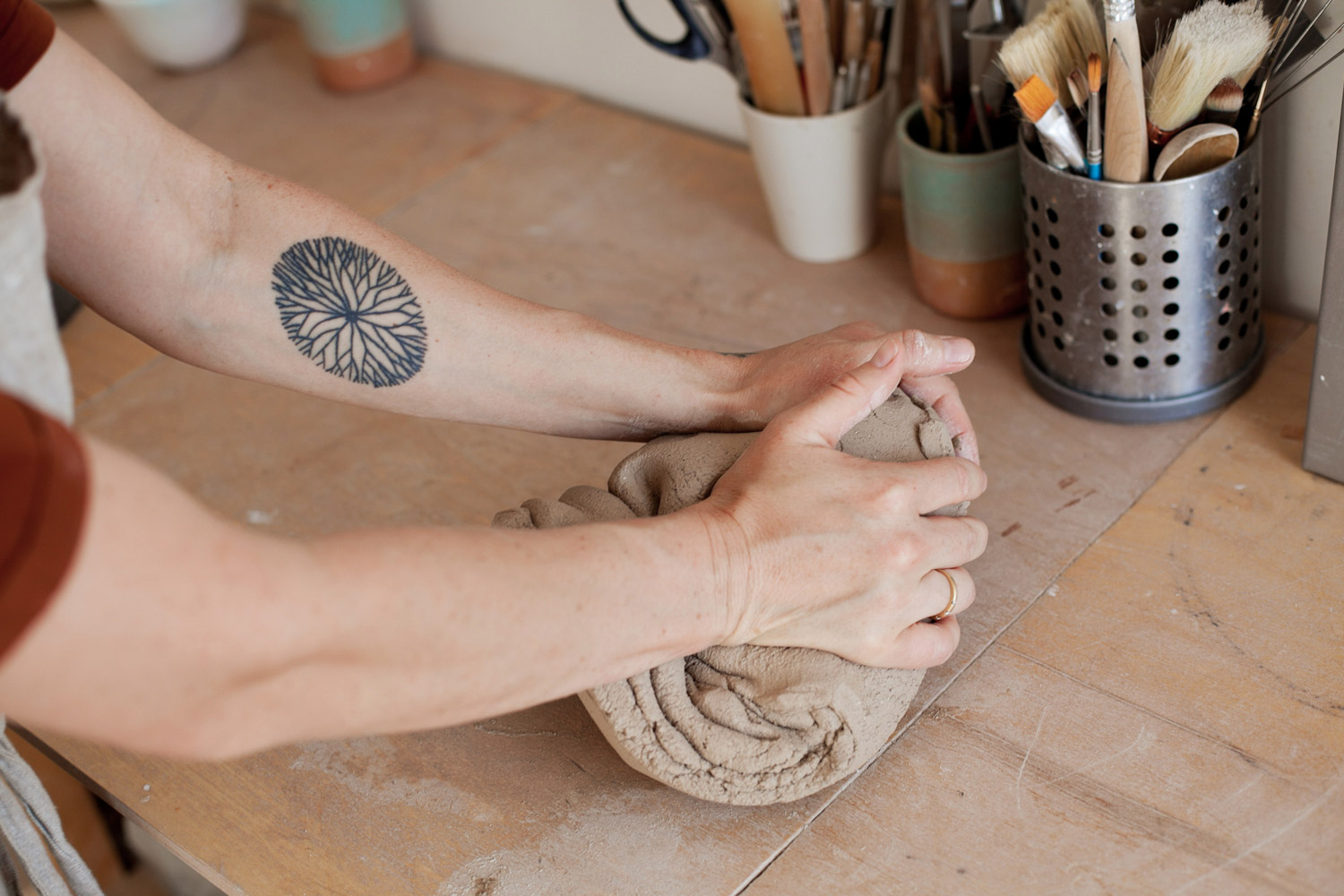
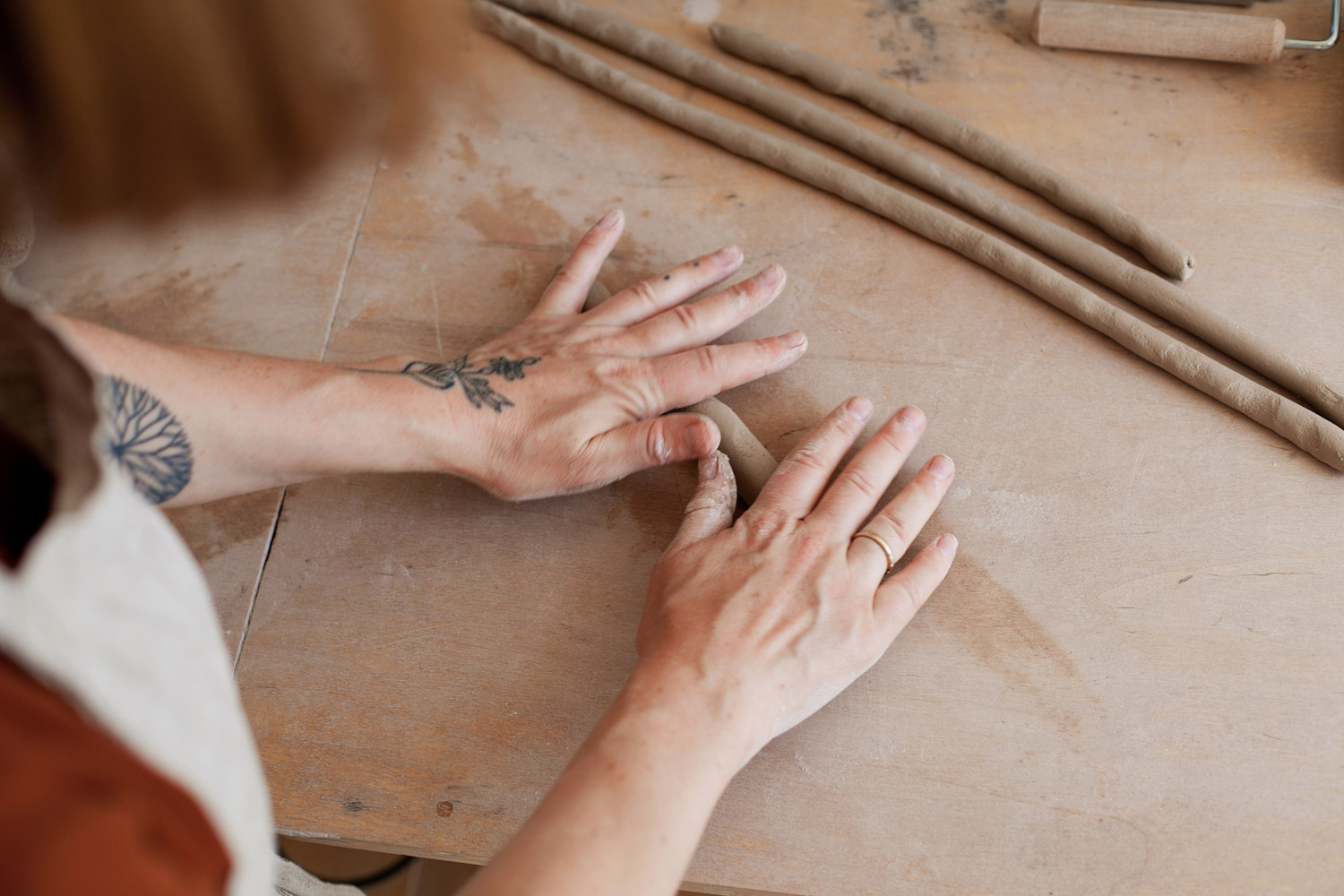
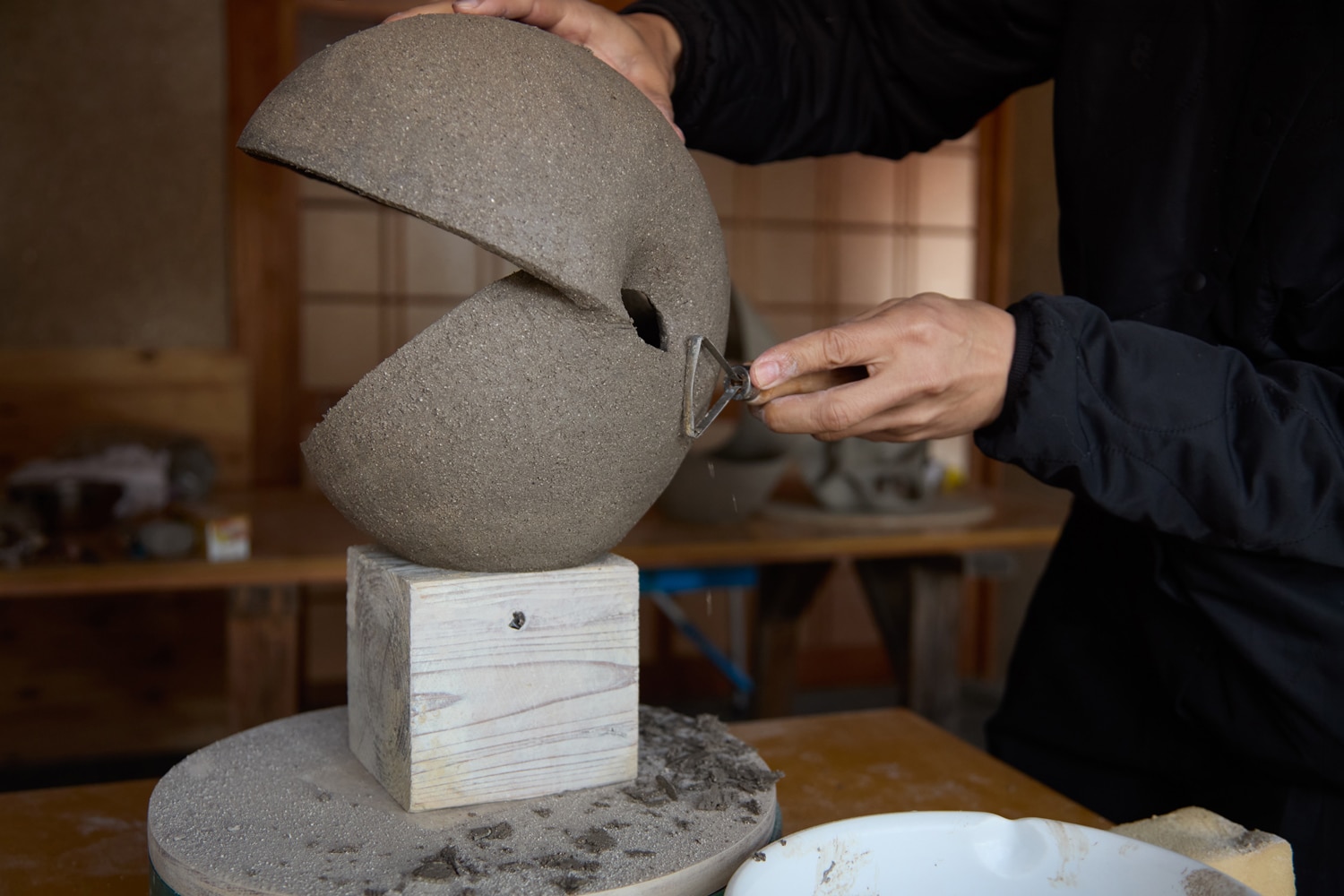
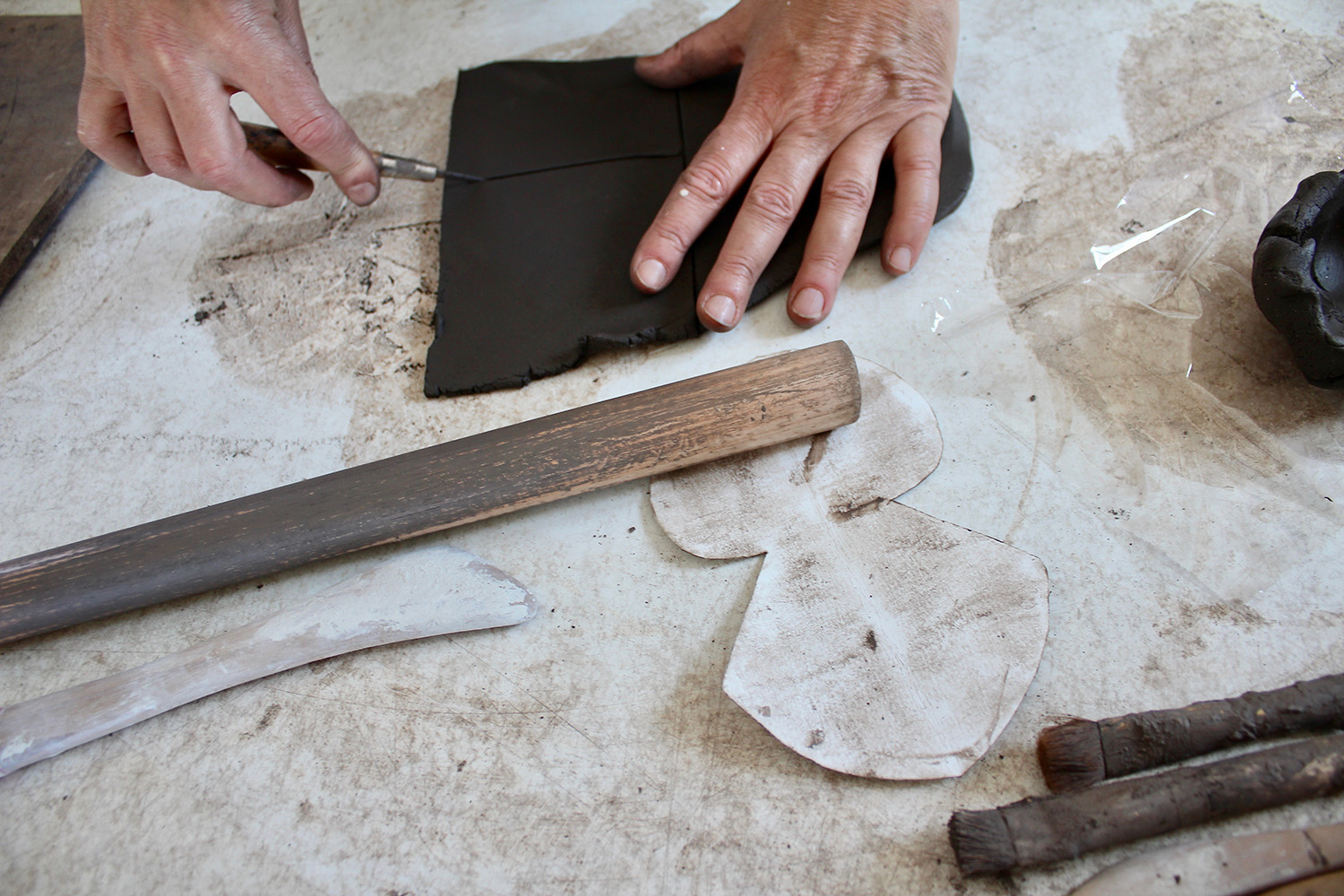
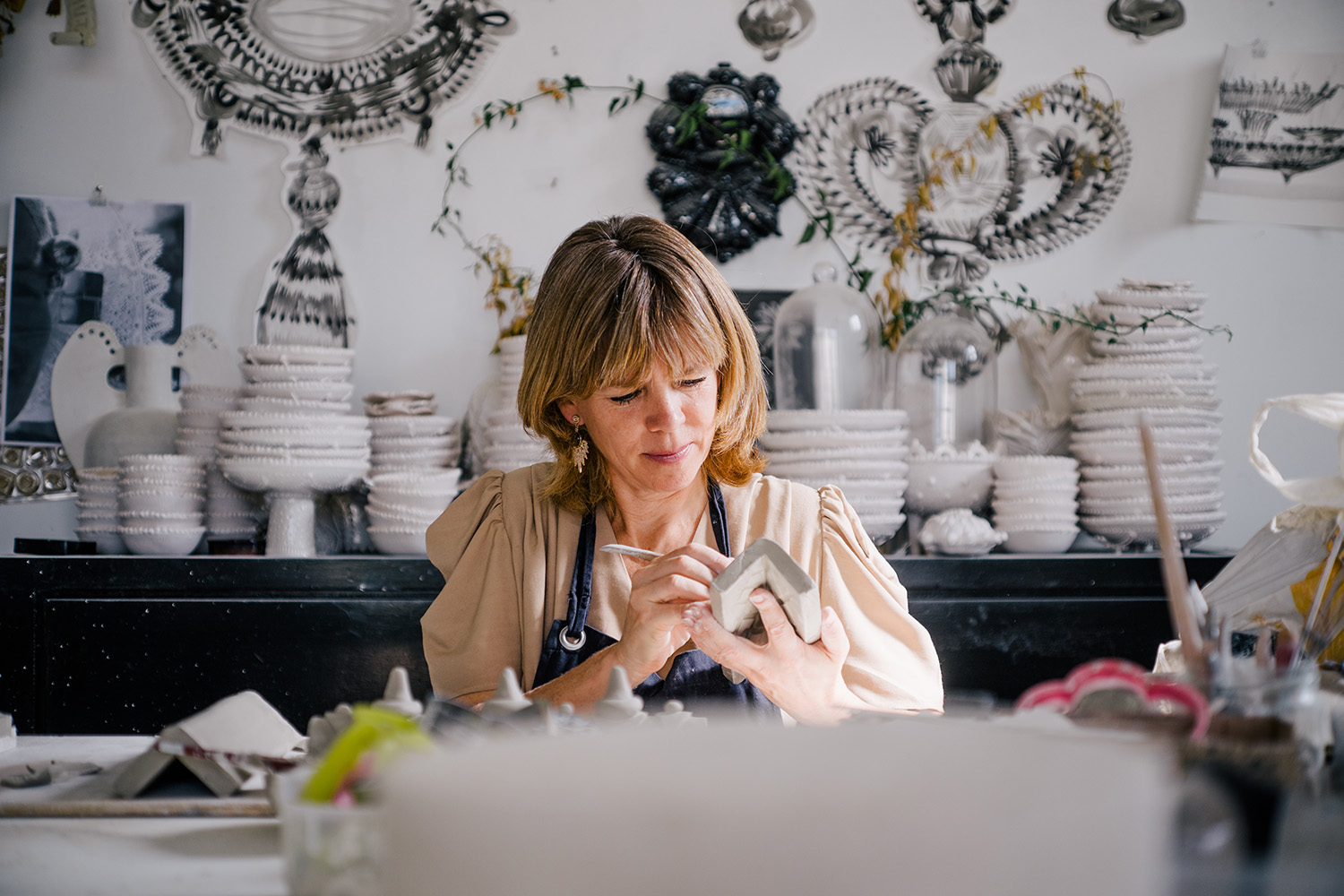
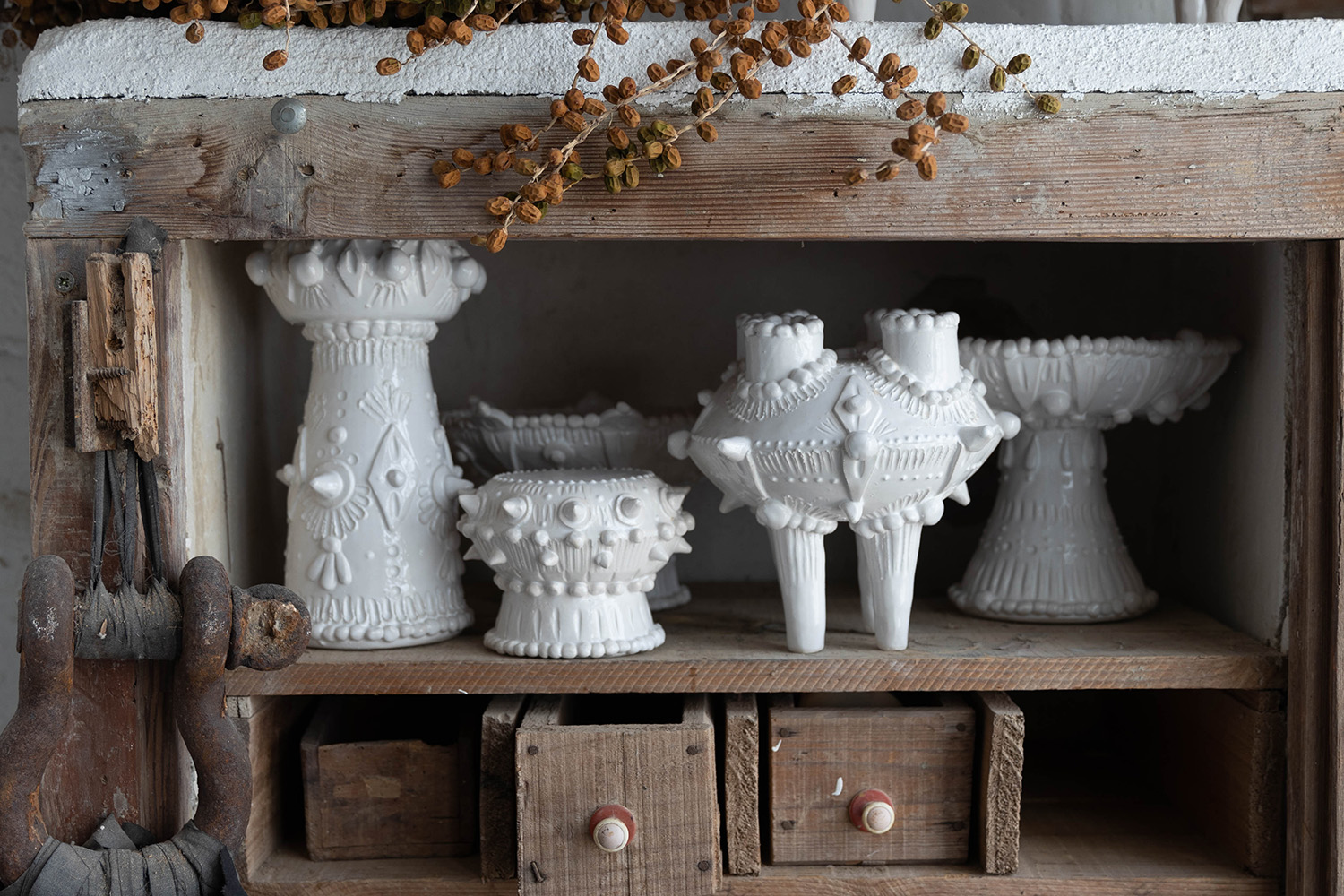
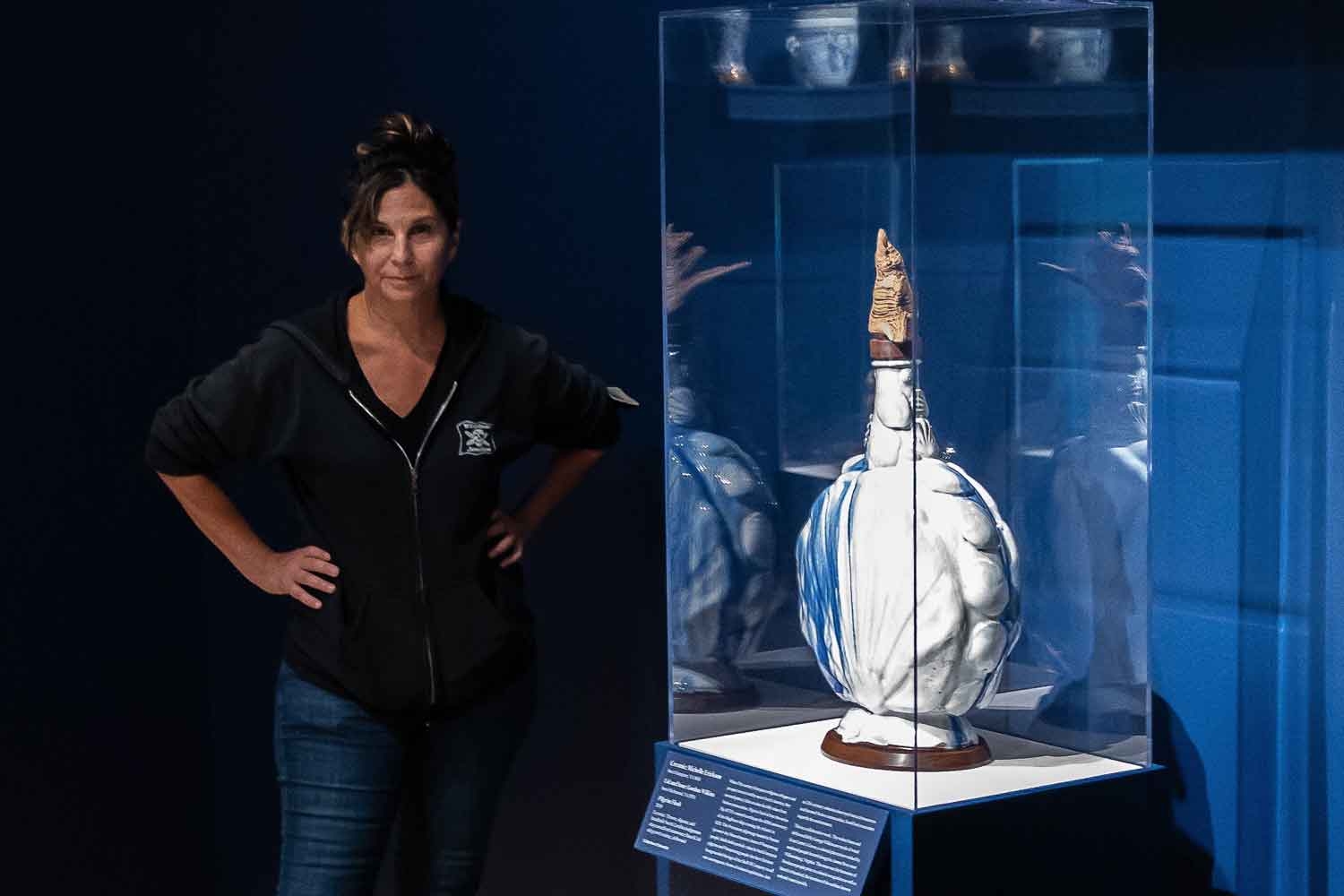
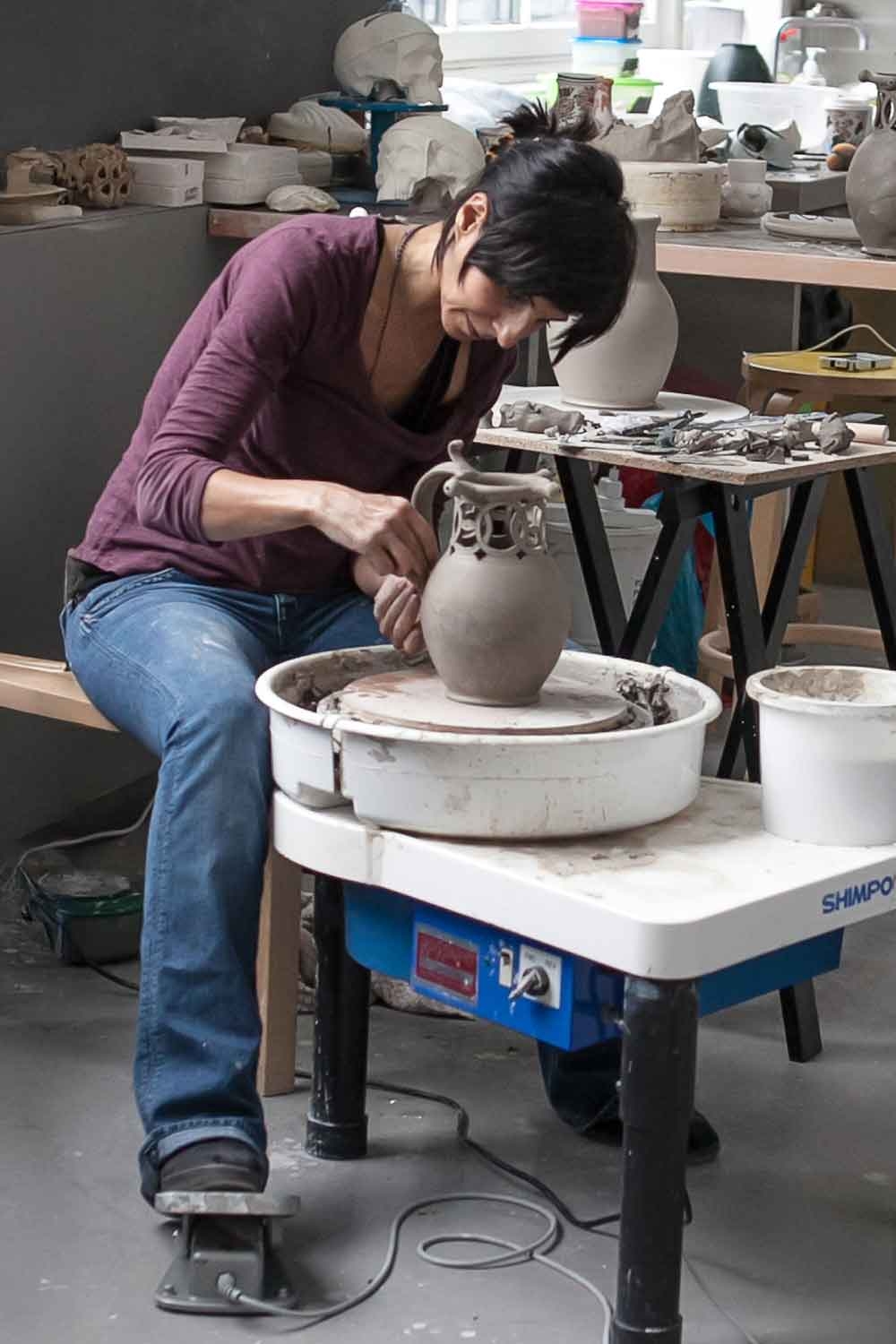
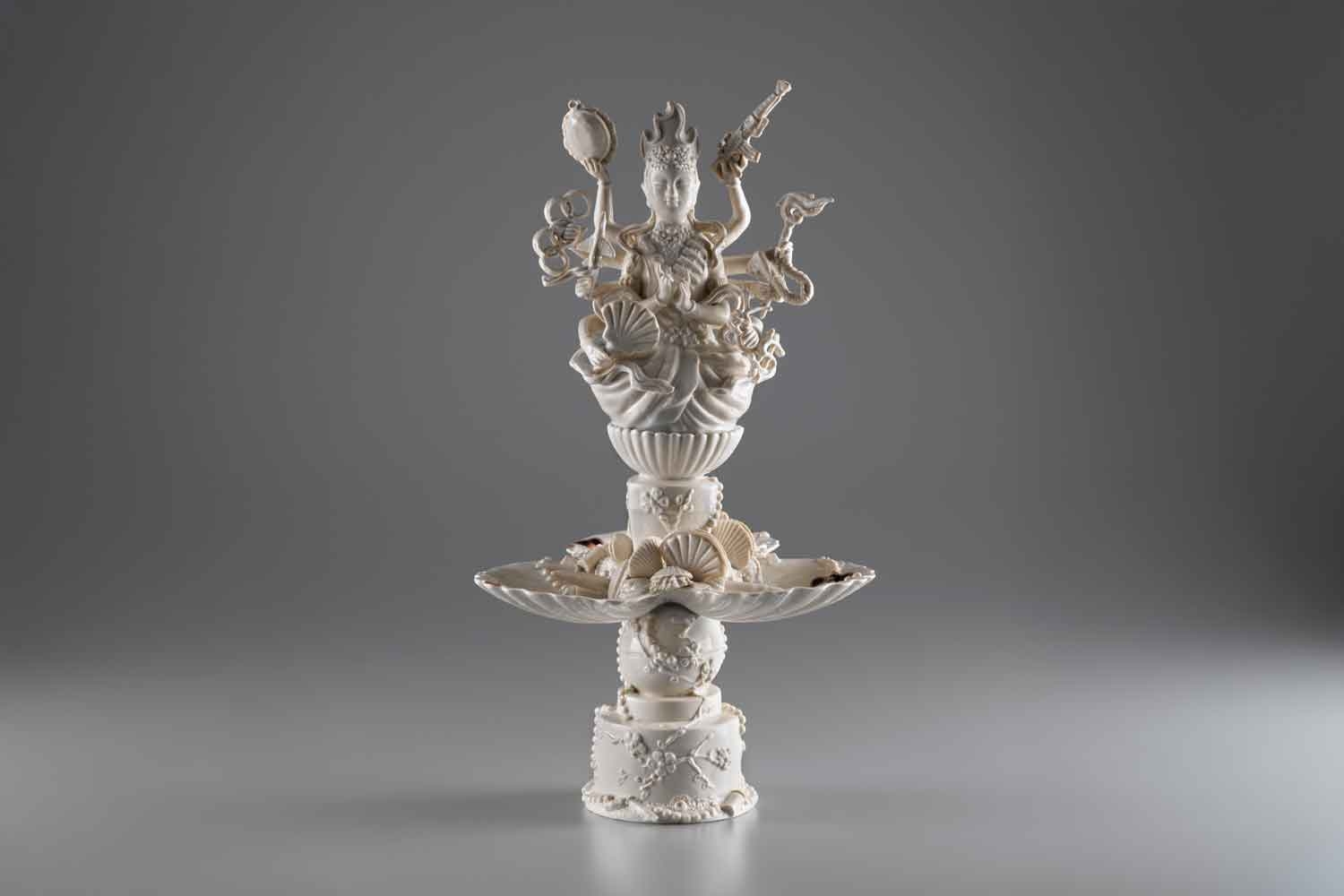
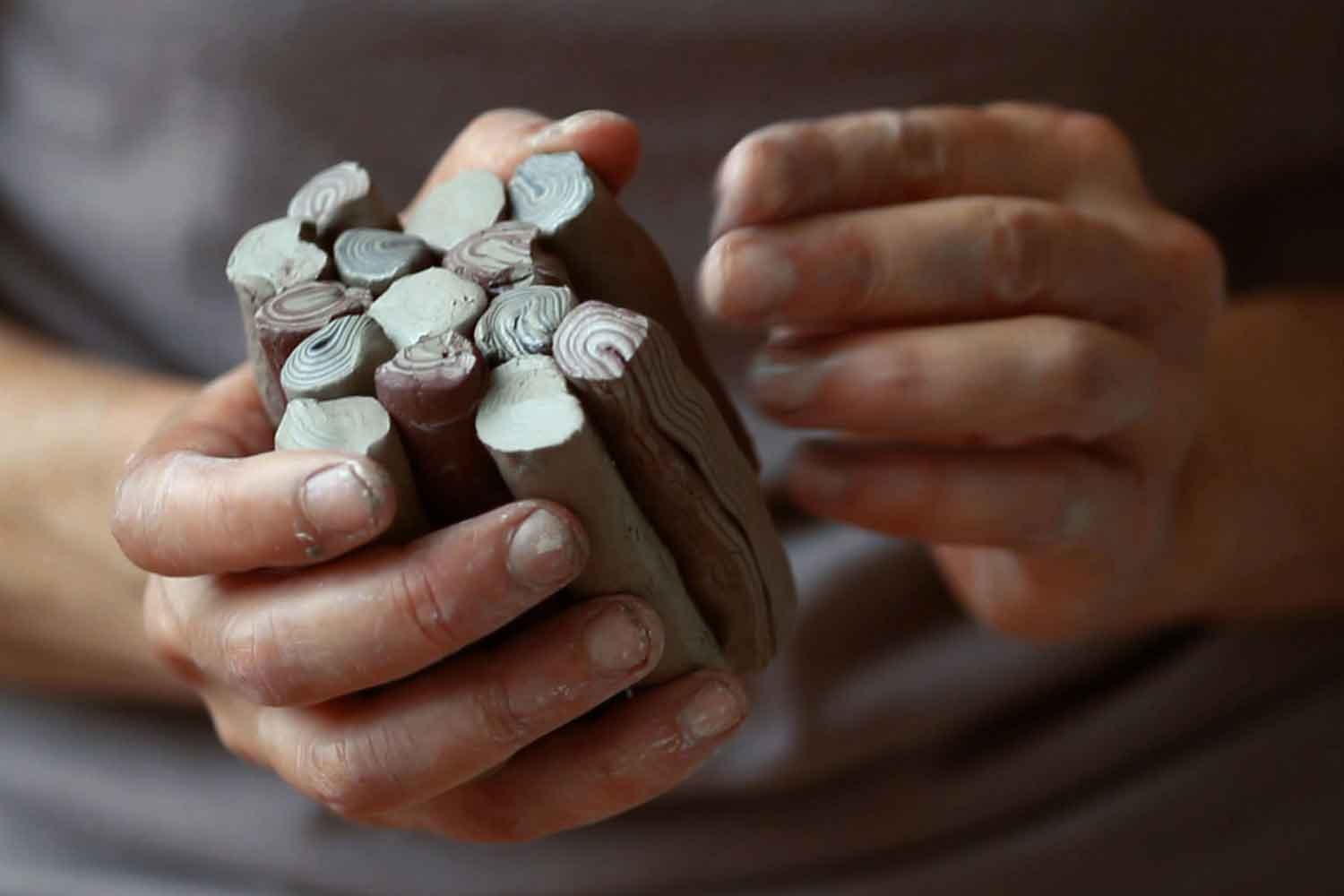
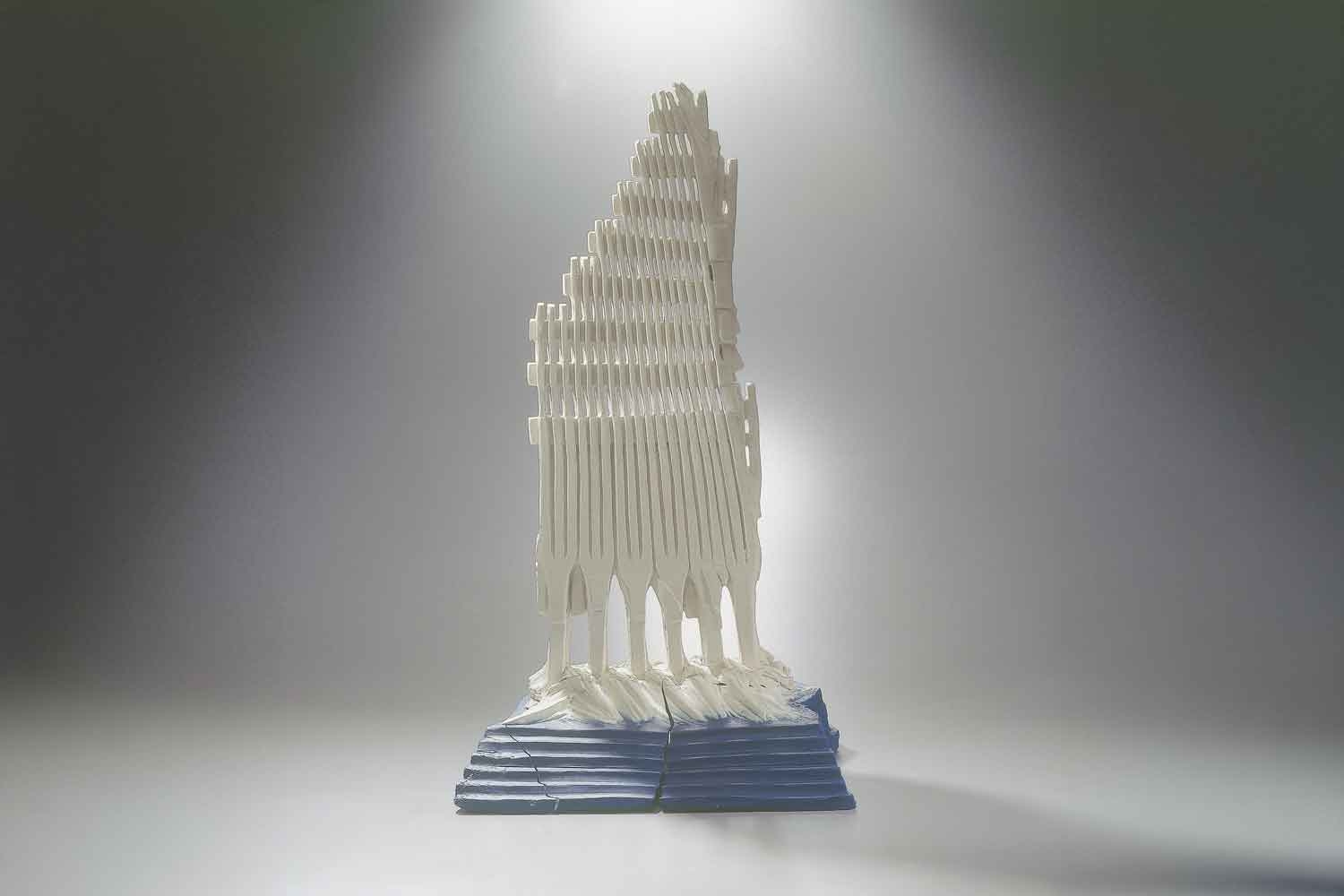
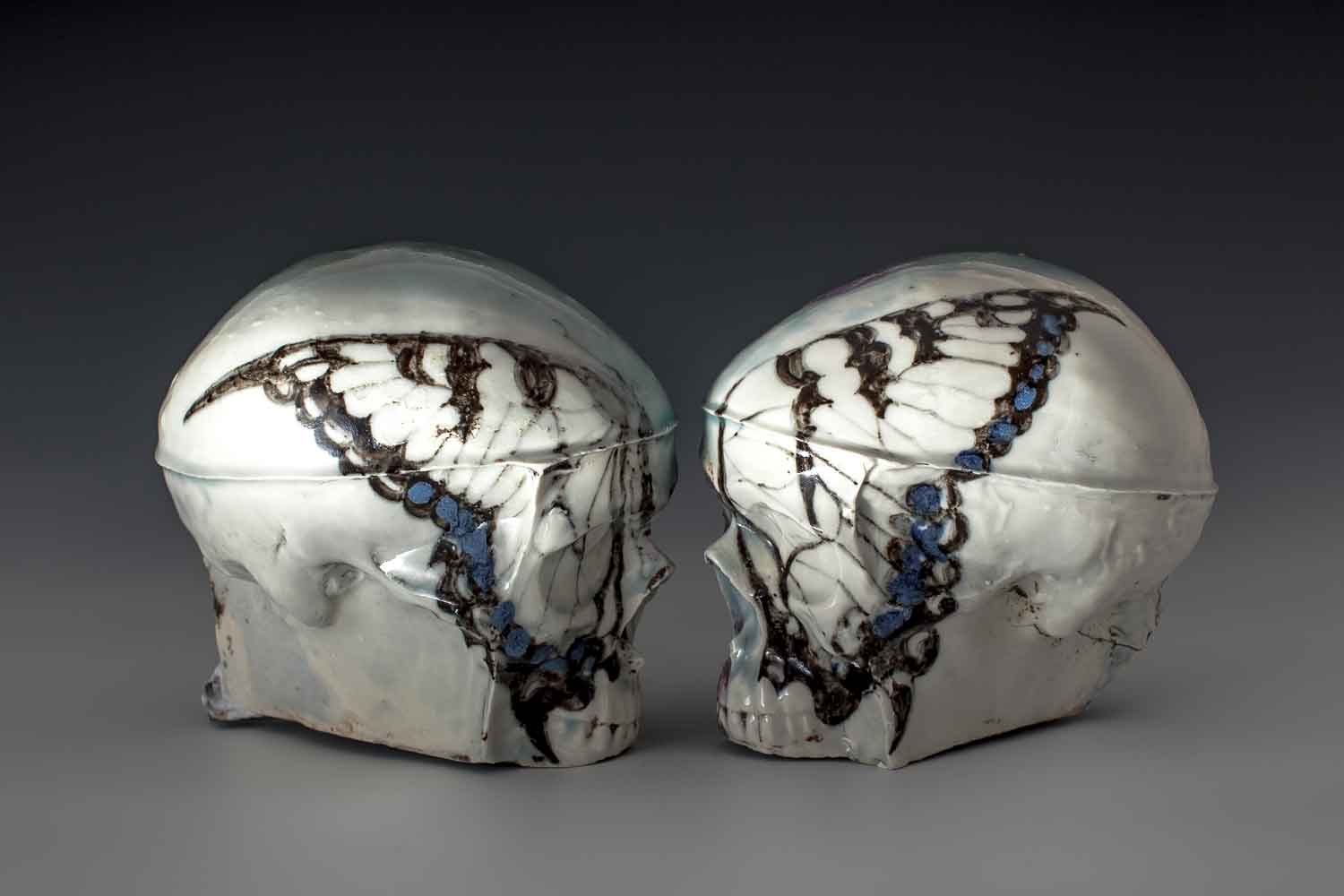
Michelle Erickson’s ceramic pieces take historical techniques and forms into a modern space. She is inspired by the history of her native Virginia and by the history of her chosen medium. Michelle incorporates echoes of the past with pressing issues challenging American society today. “My first exposure to ceramics was in college, where I got hooked on clay,” she says. While still a student, Michelle visited the archaeological collection housed at Colonial Williamsburg in Virginia, a historical tourist destination where visitors explore life in early colonial America. She went on to research the collection, sometimes rediscovering 17th and 18th century ceramic making techniques as she went. Michelle brings them together with modern technology to create works that take satirical bites out of collective colonial pasts and make critical statements on current social issues.
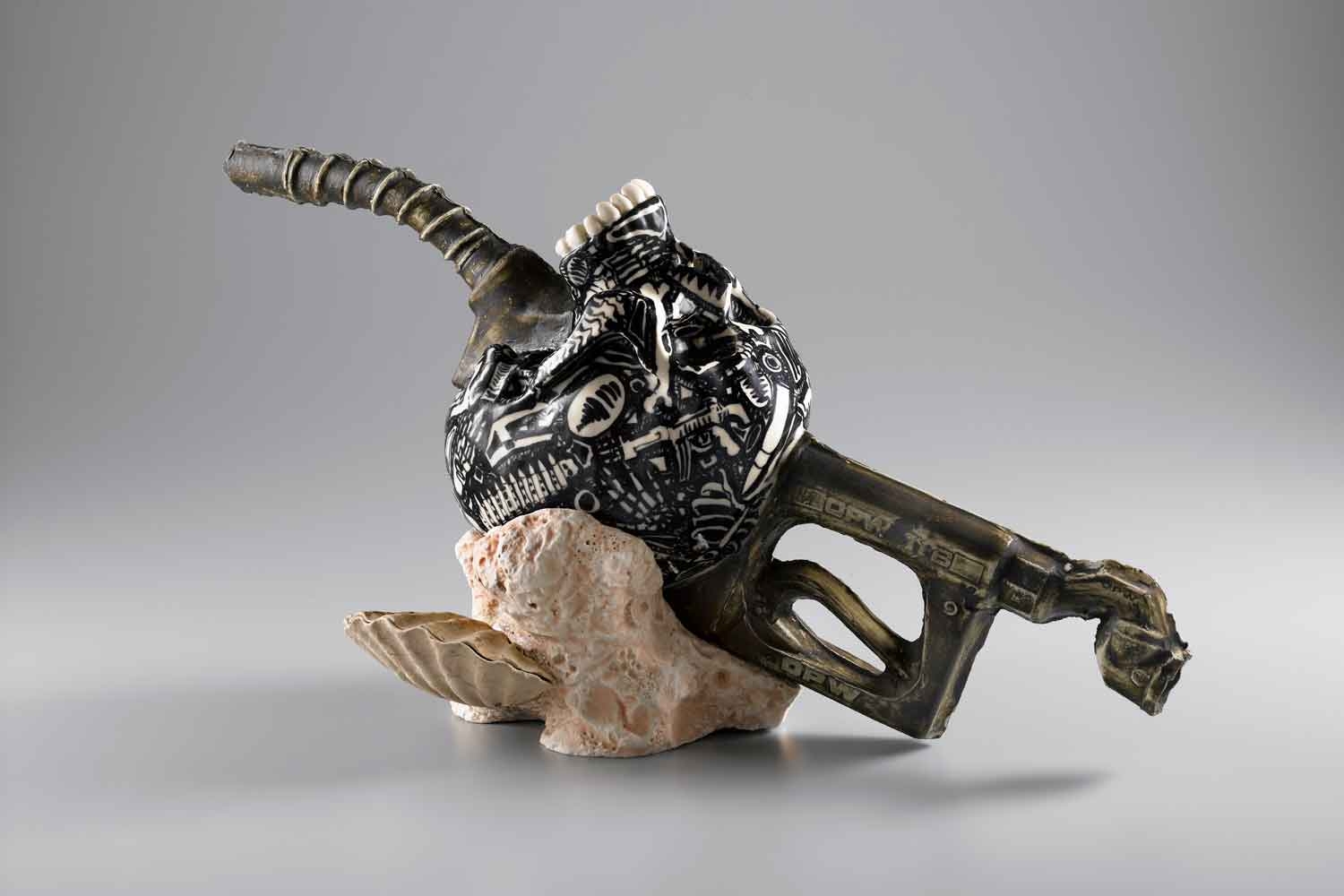
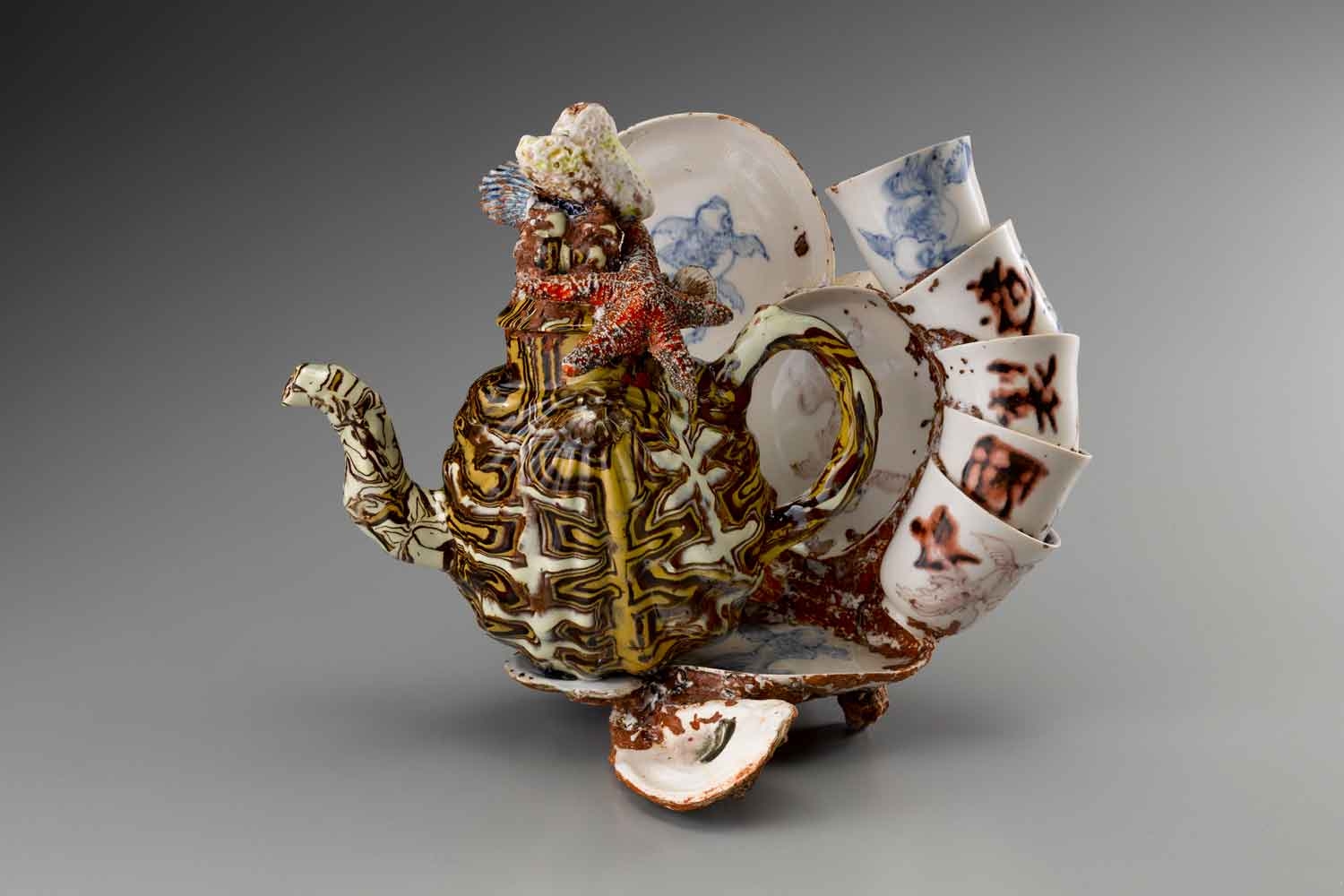
INTERVIEW
After graduating from William & Mary University, I started to get interested in the history of the place where I was born and grew up. At the Colonial Williamsburg museum, the curator showed me its collection of world class ceramics. It was mostly British with some European pieces. Even little benign non-descript objects were interesting to me as a piece of material culture.
I found them democratic and accessible everywhere. Every level of society has them. They are often imbued with arcane cultural practices, but the shared nature of those pieces are still part of how we use ceramics today.
Artefacts are mysterious: a fragment can reveal more than a whole. I am drawn to investigating and reverse-engineering objects. My post-graduation work in Virginia's colonial American archaeological collections focused on artefacts from Indigenous homesites and those linked to enslaved Africans. Their juxtaposition with global wares told a larger story that captured my imagination.
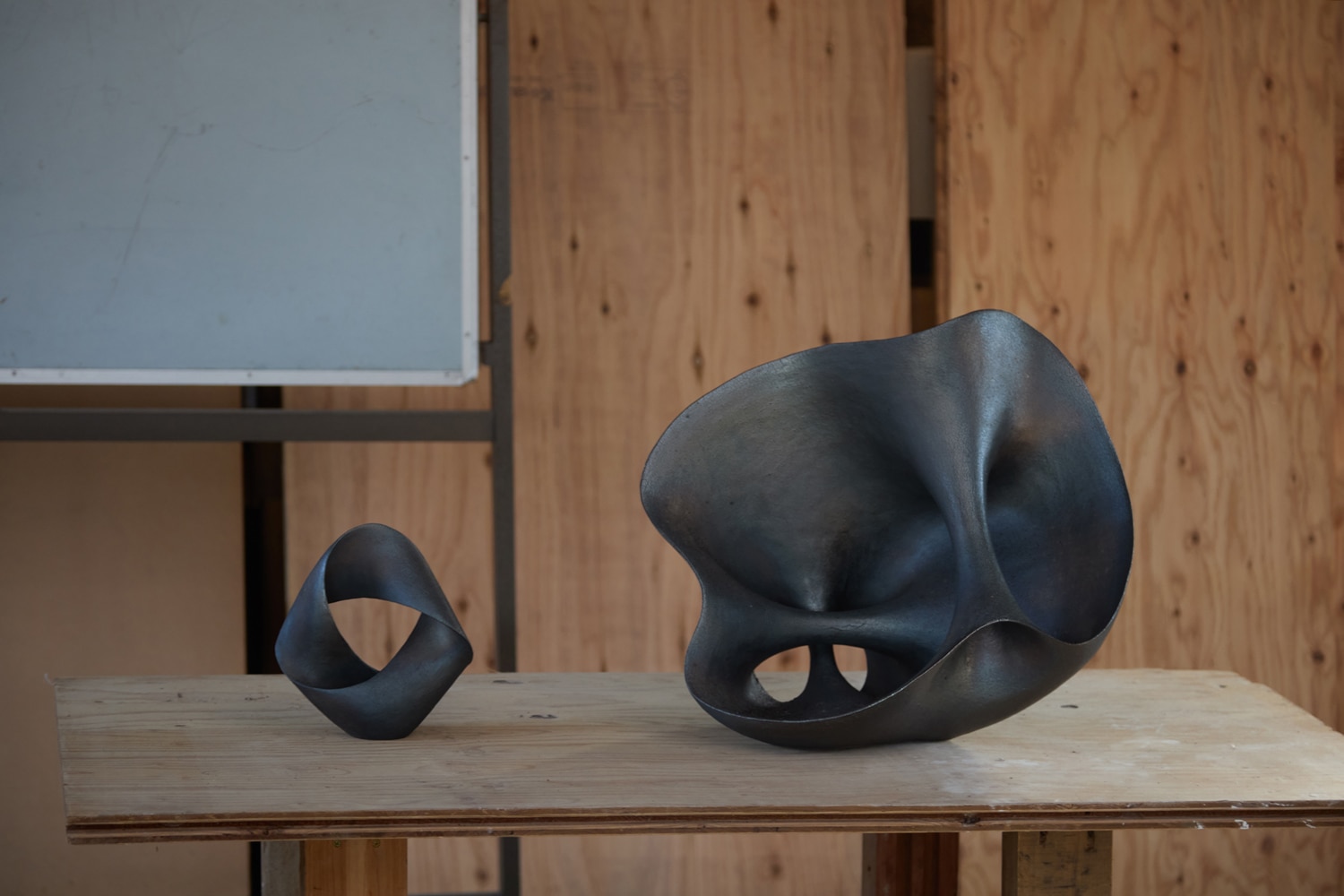
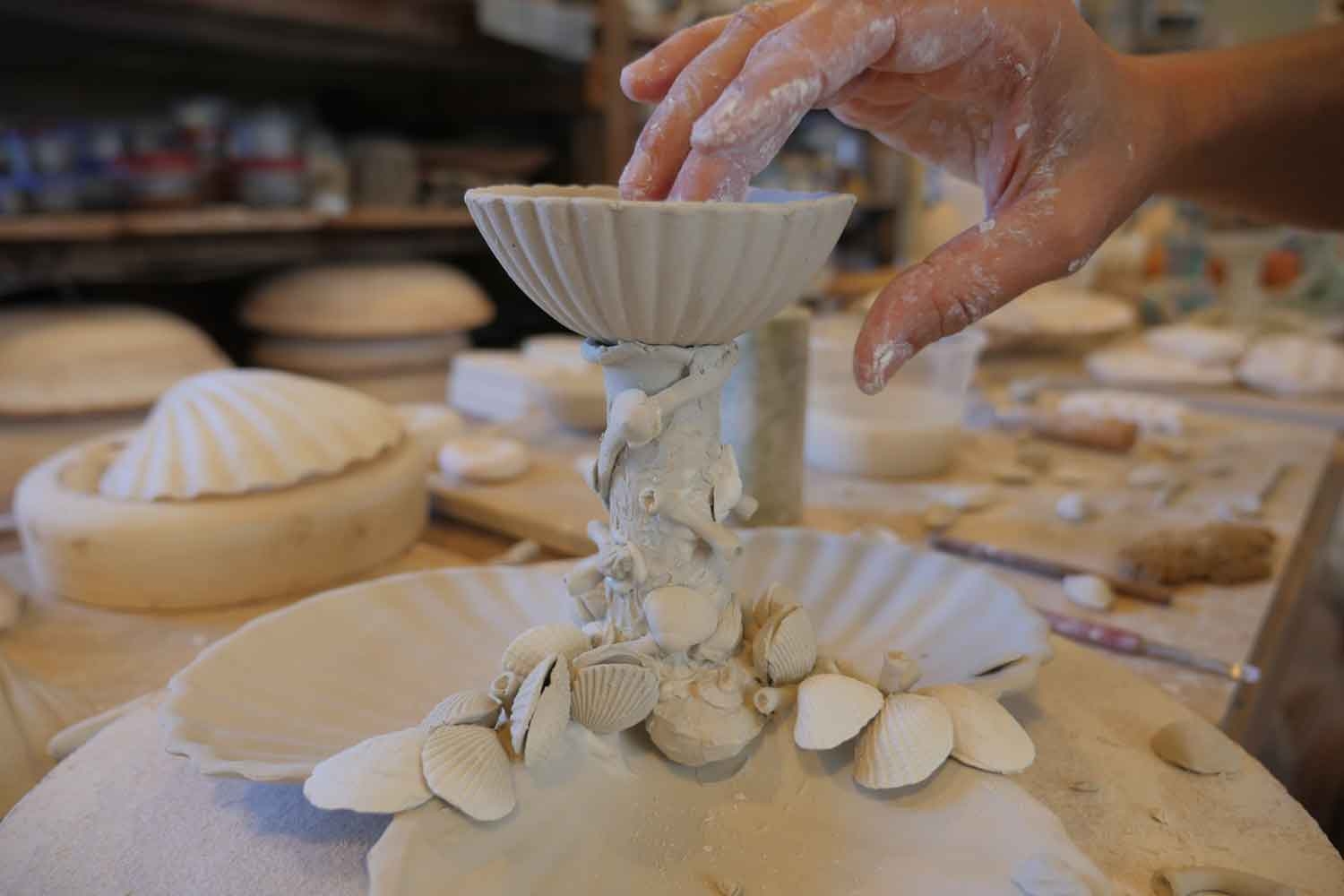
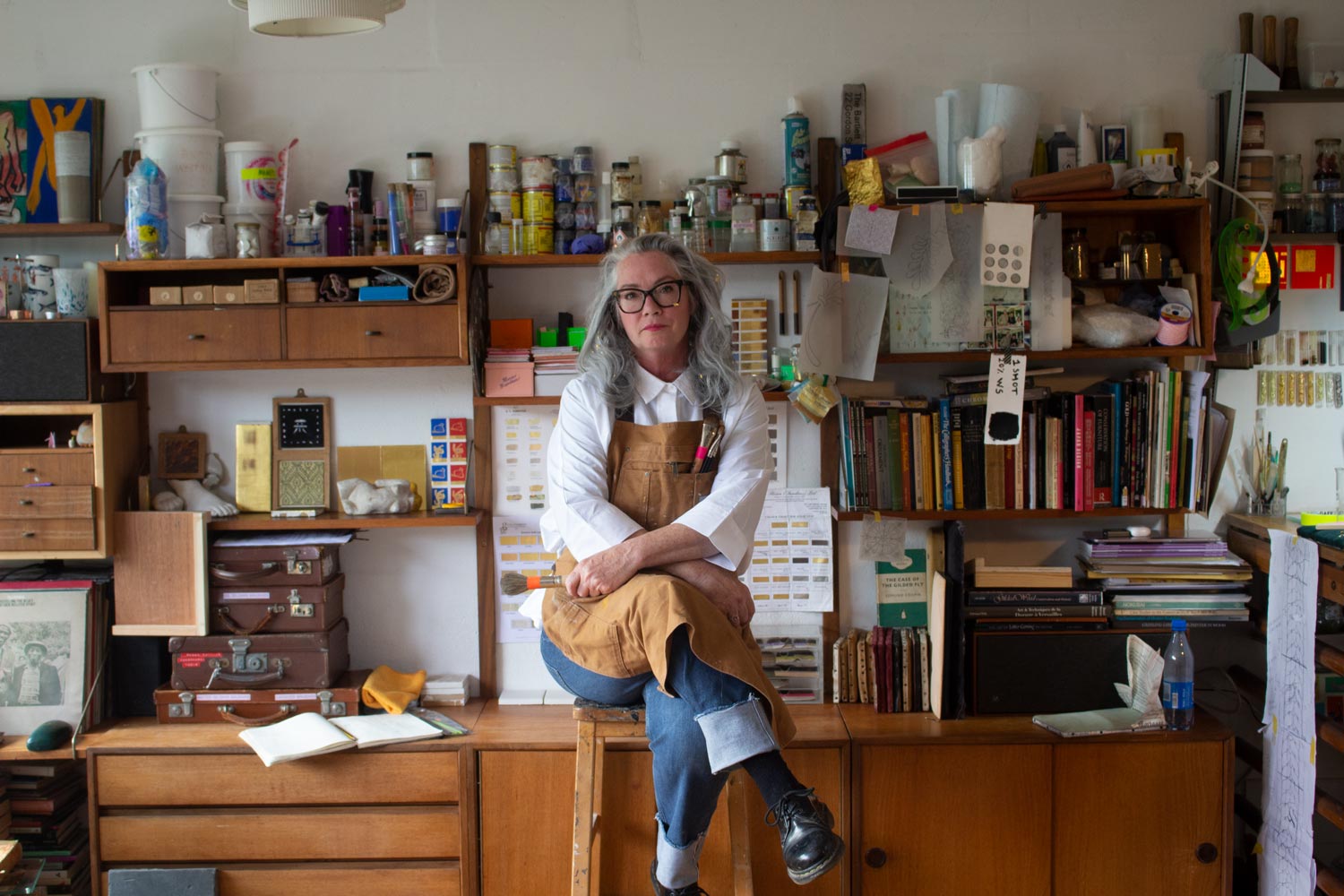
I sometimes start on the wheel before I start drawing, or I might make a maquette. I have life casts of things like shells, and sometimes it is a case of bringing different pieces together. The process goes back and forth. I find it challenging to create a piece that remains integrally connected to the historical idea that inspired it.
Michelle Erickson
Ceramicist
Hampton, VA, USA
AVAILABILITY
By appointment only
PHONE
+1 7577279139
LANGUAGES
English
Homo Faber Finds is a new service aiming to inspire admirers of craft to connect and collaborate with exceptional artisans.
We invite you to submit an enquiry here.
DSC02402_©Meg-Lovell.jpg)
DSC01379_©Meg-Lovell.jpg)
DSC01458_©Meg-Lovell.jpg)