Michael F. Rohde
Tapestry maker
Camarillo, CA, USA
Recommended by Craft in America
Bringing tapestry into focus
- First a rug weaver, Michael later shifted to create tapestries
- He creates abstract works with hints of narrative and representation
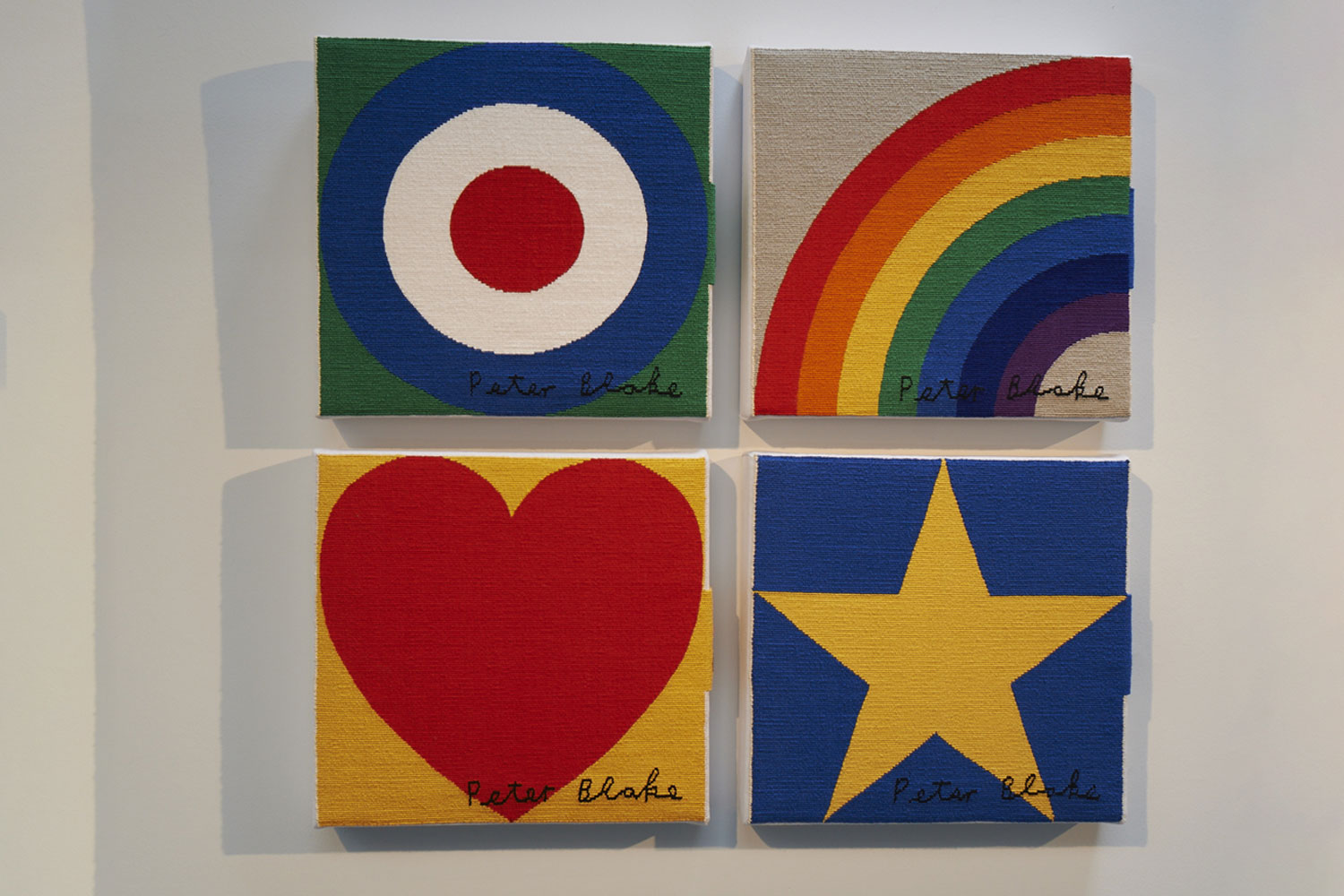
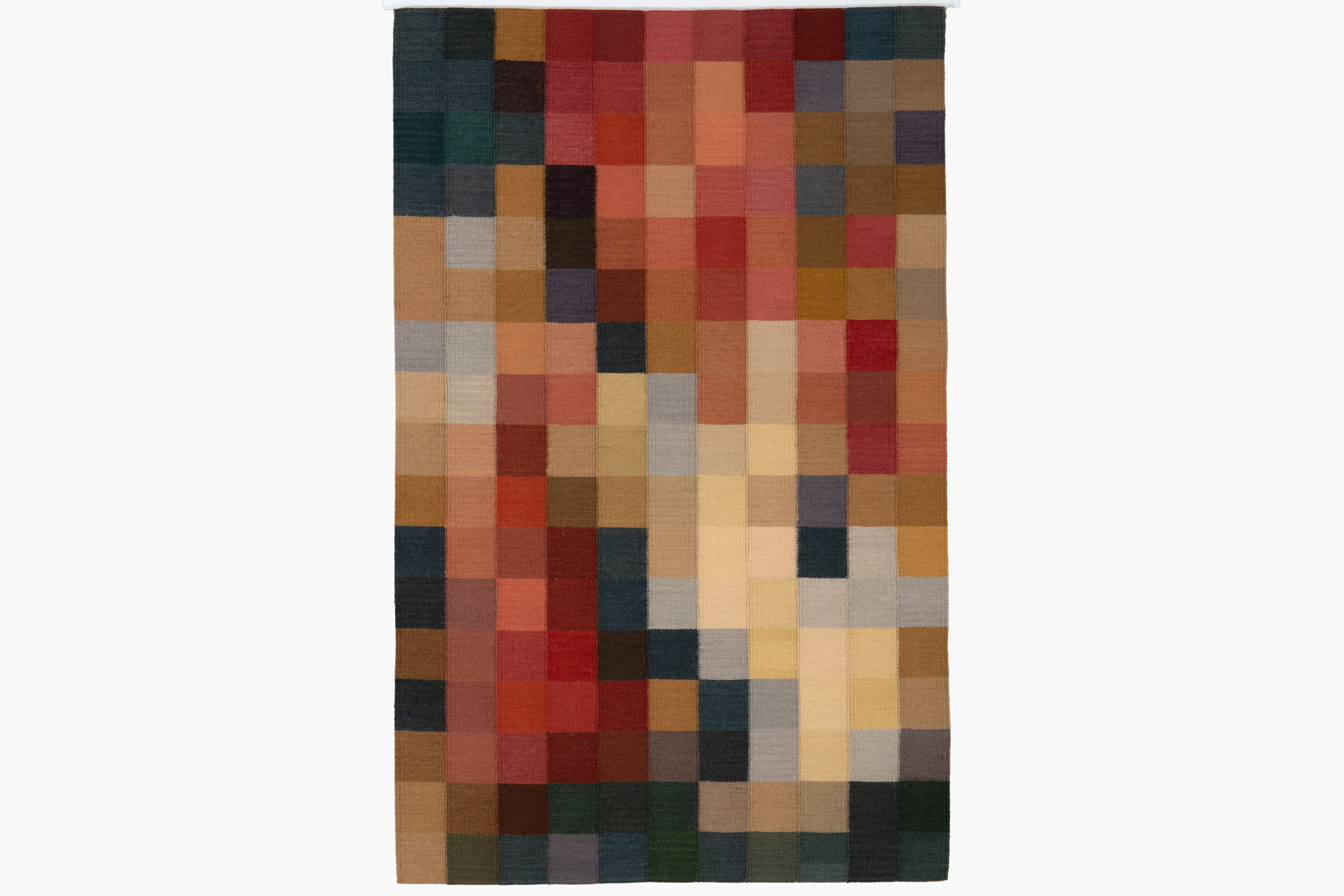
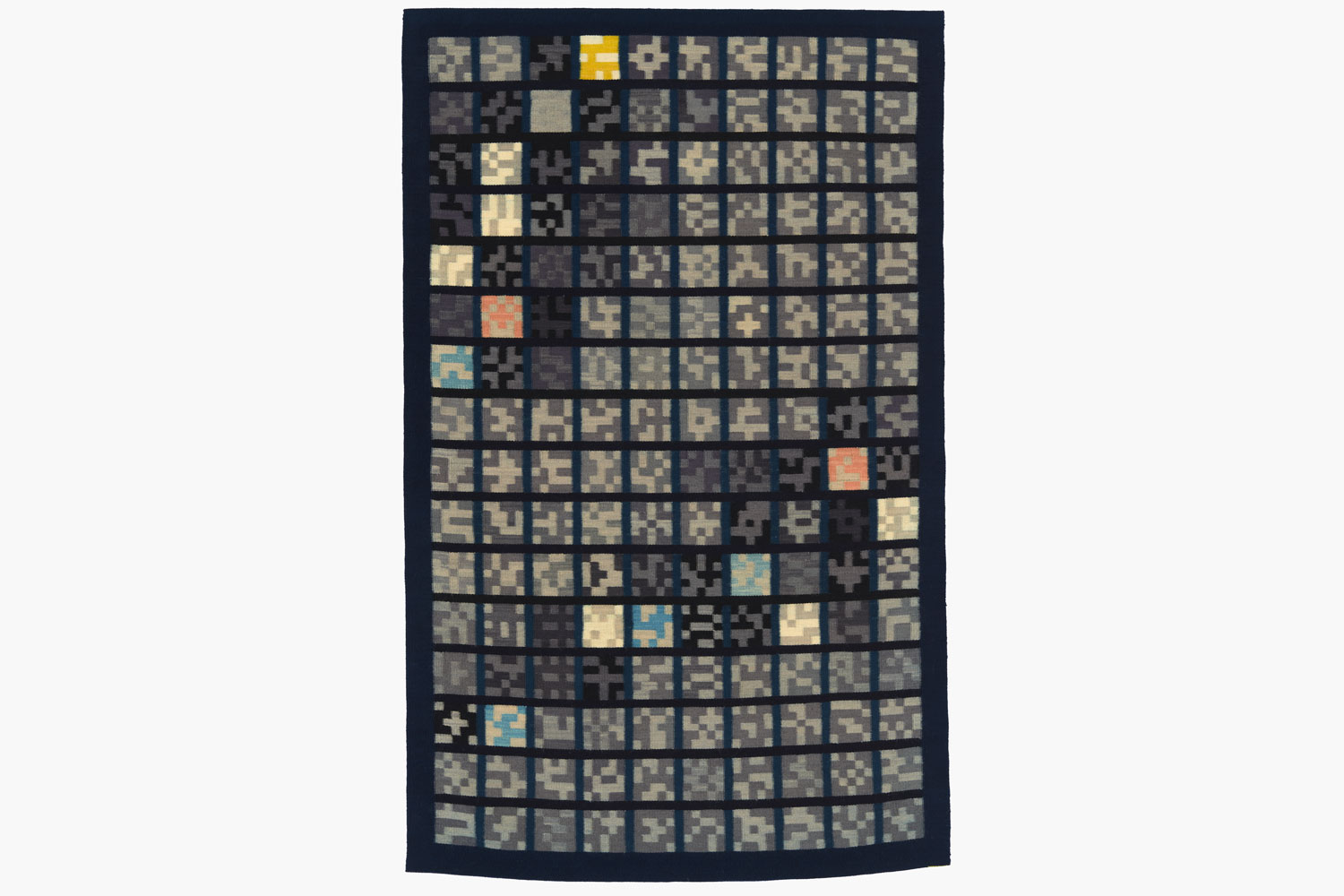
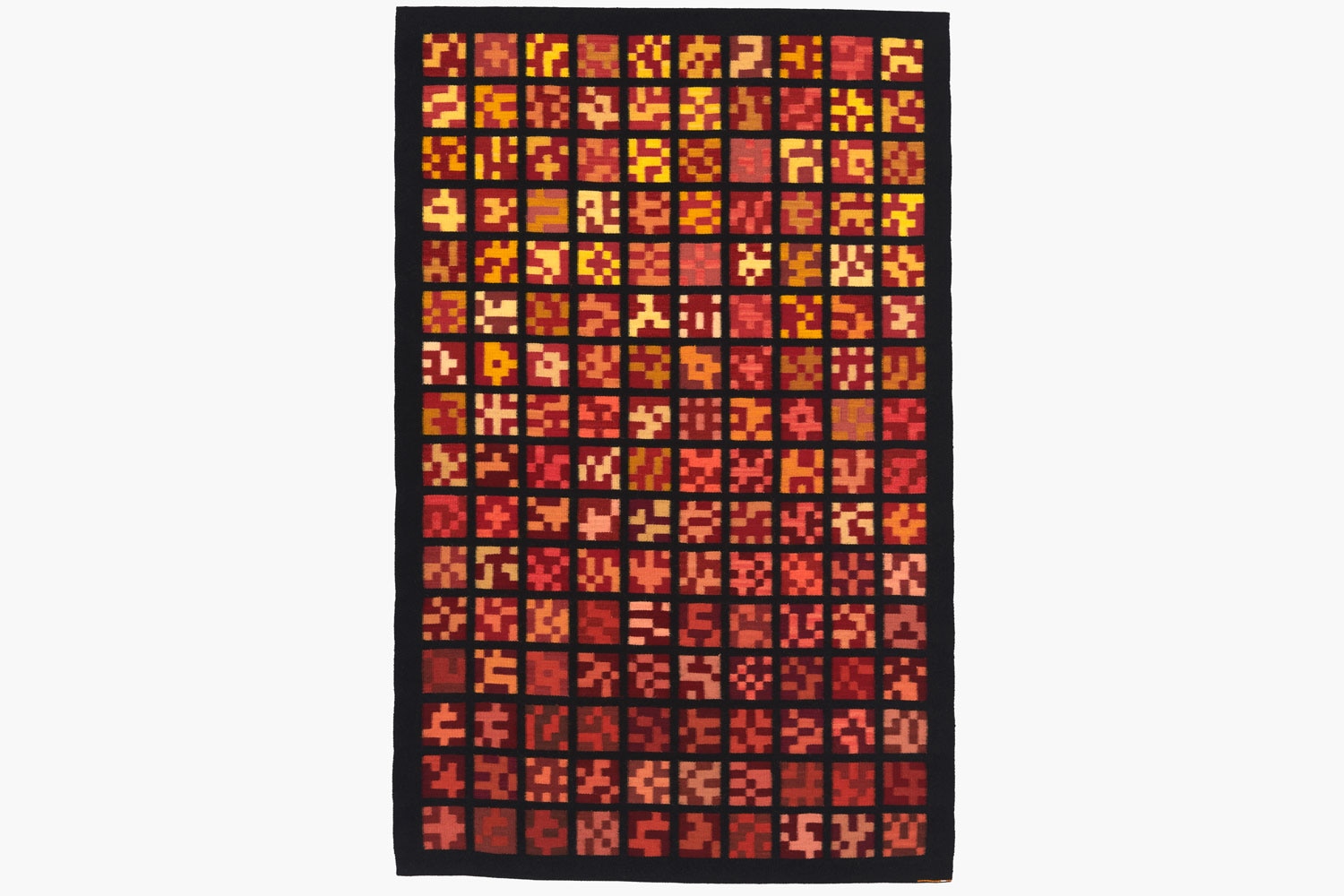
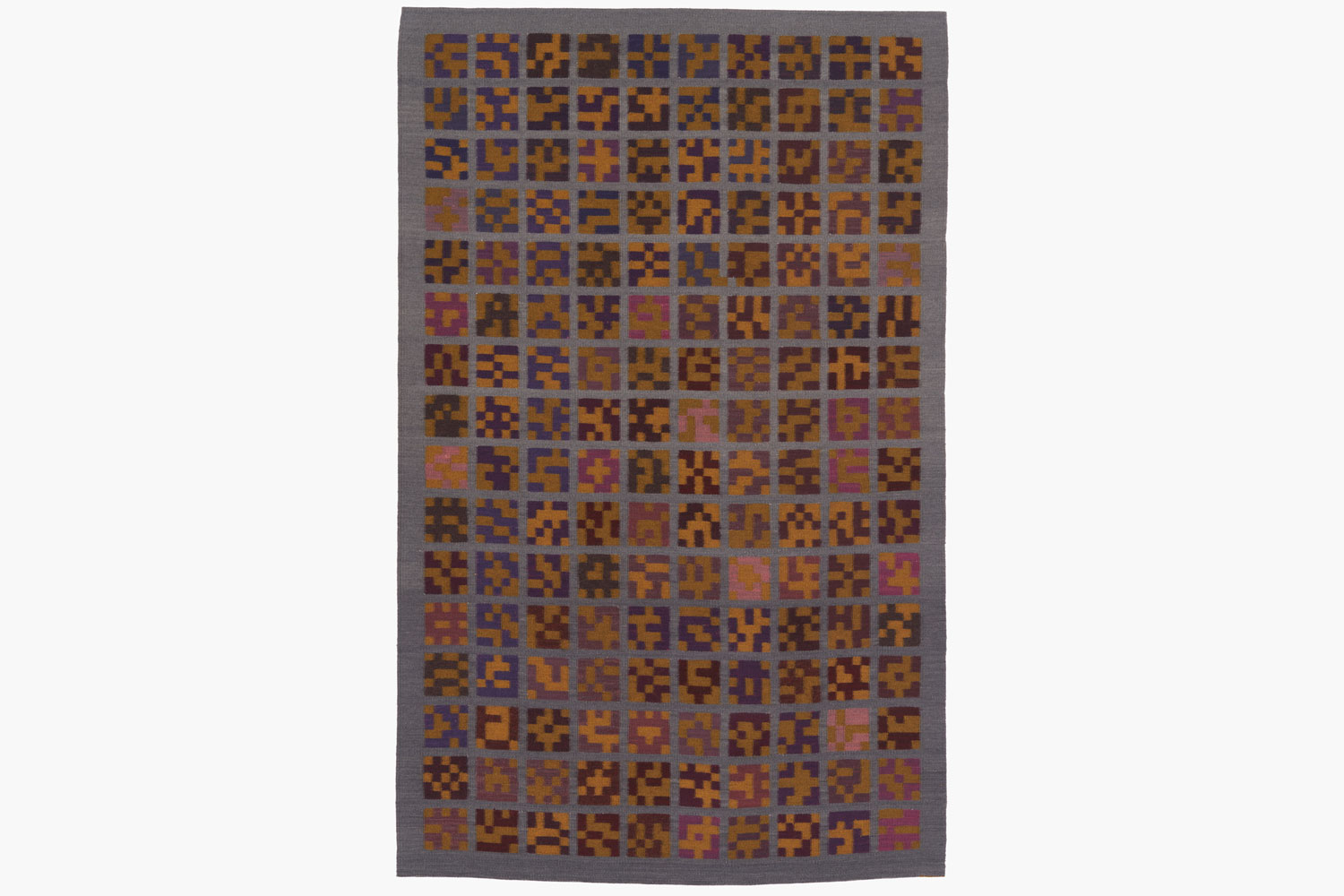
- Pieces reference pixellated art, graphic design and colour combinations
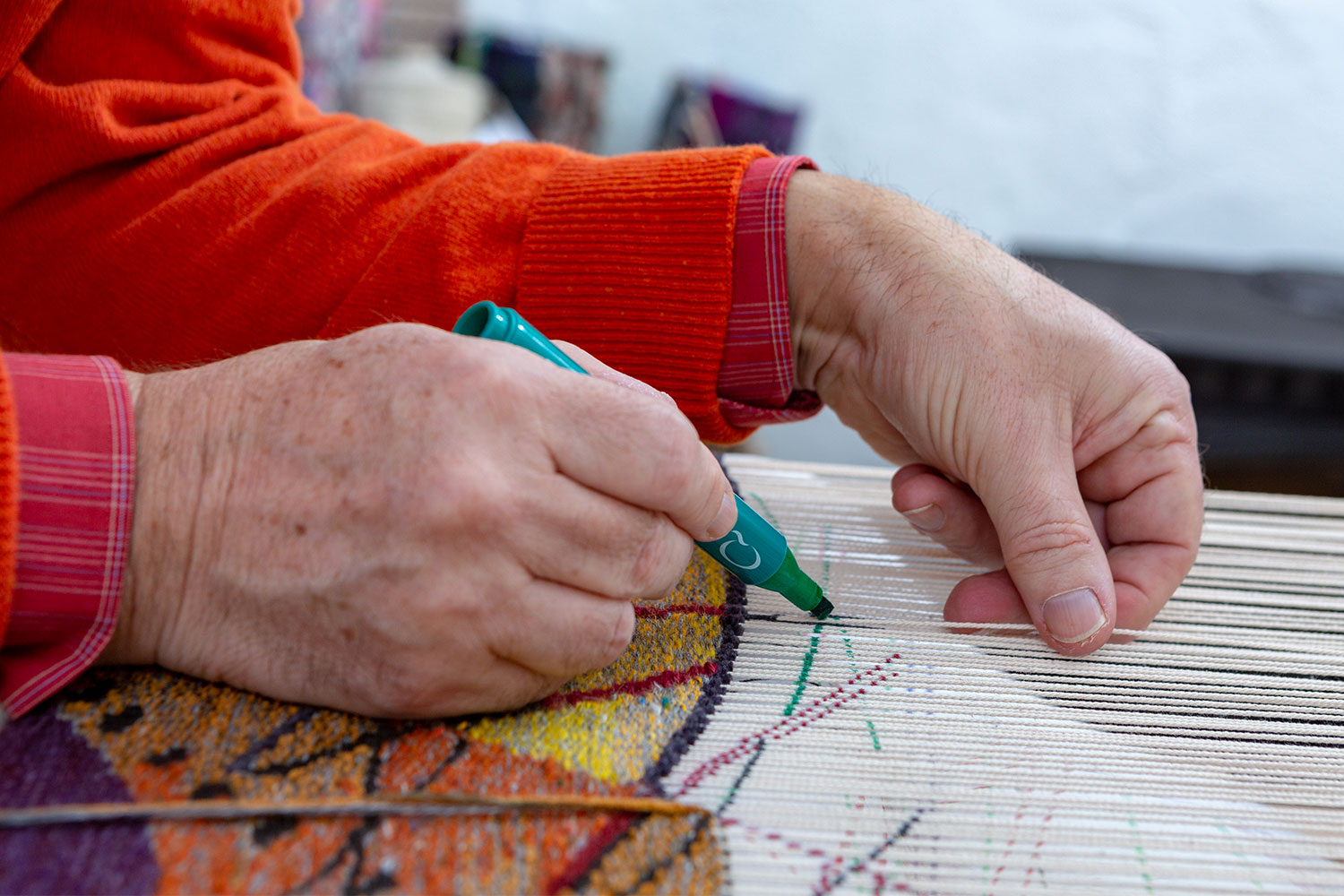
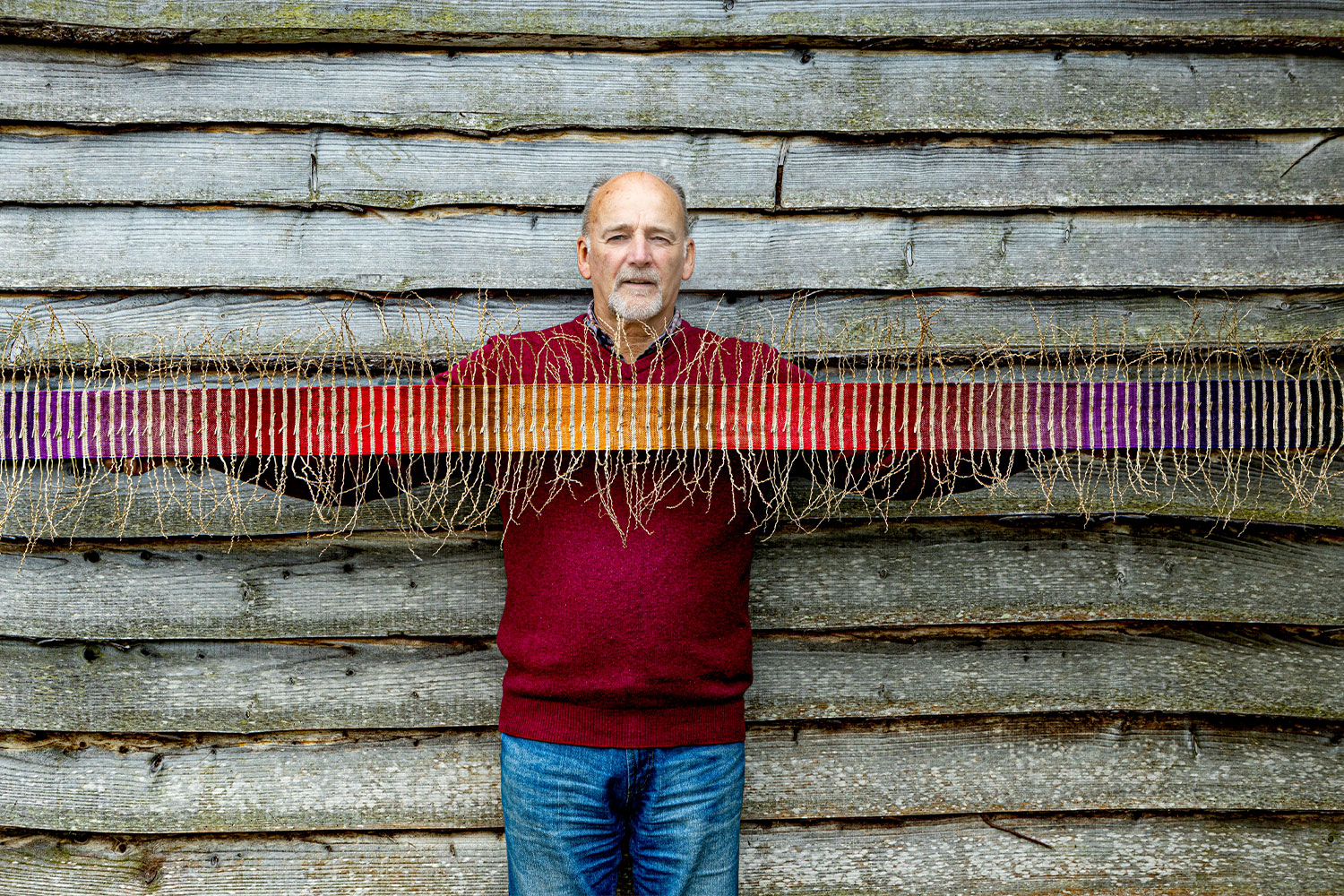
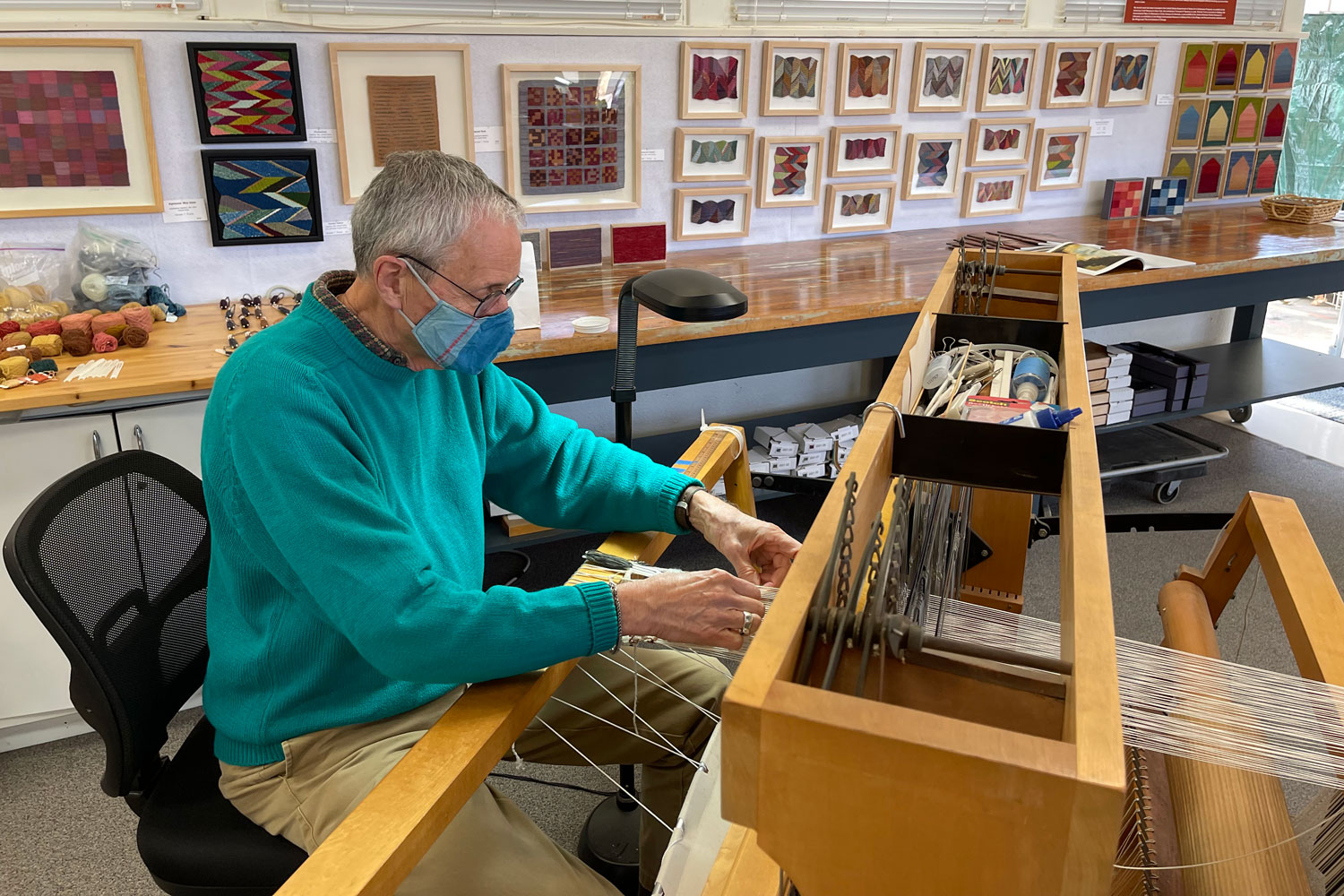
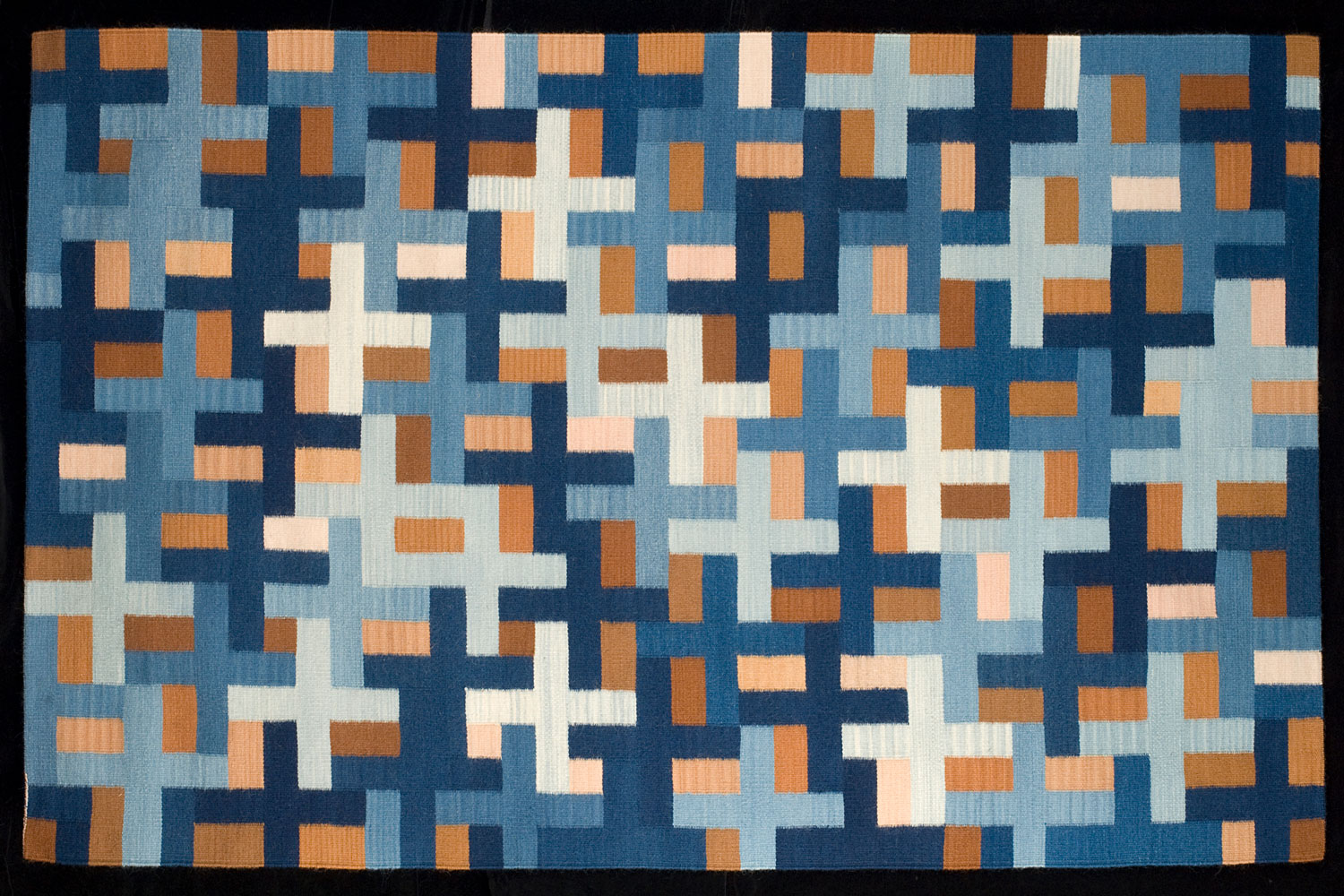
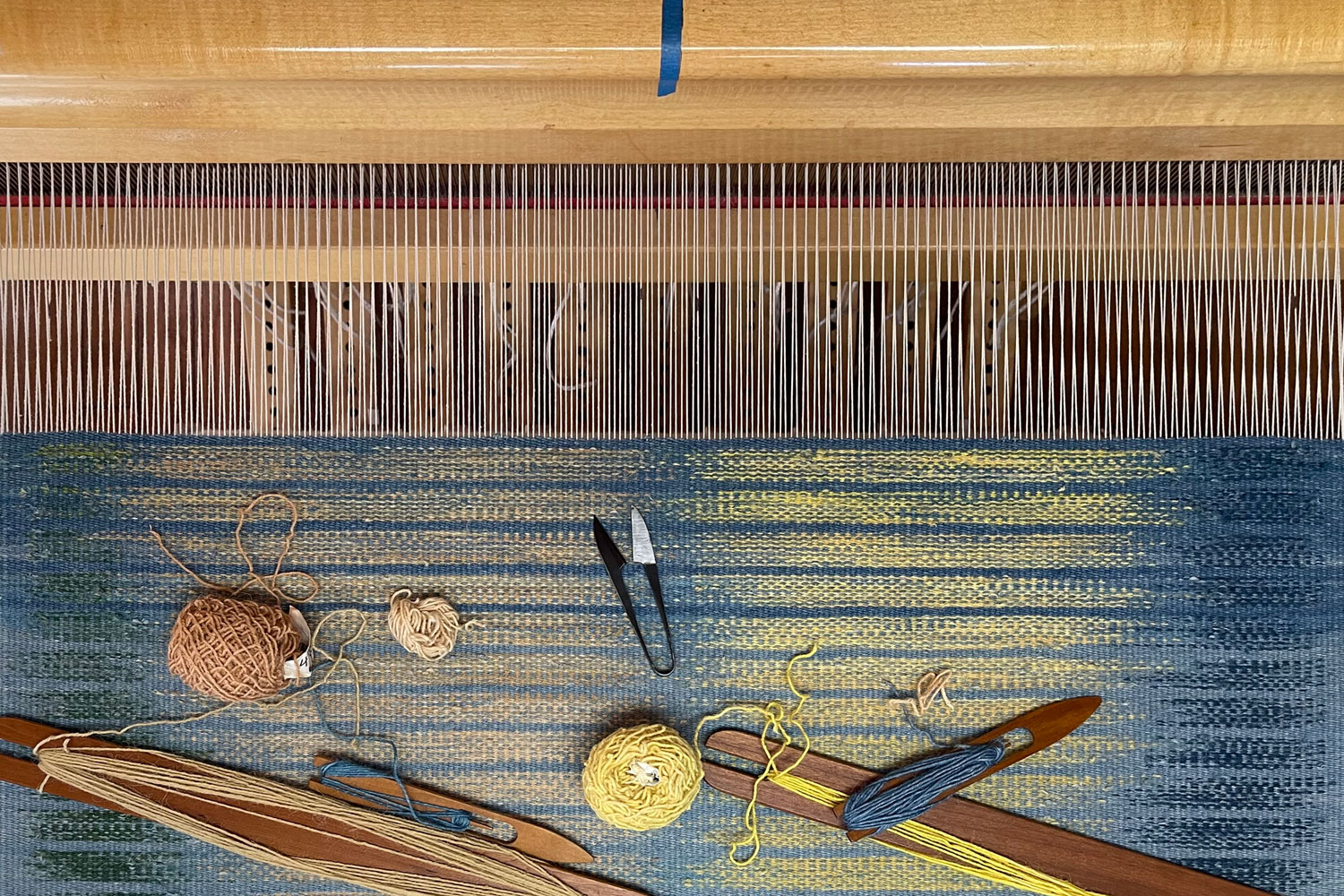
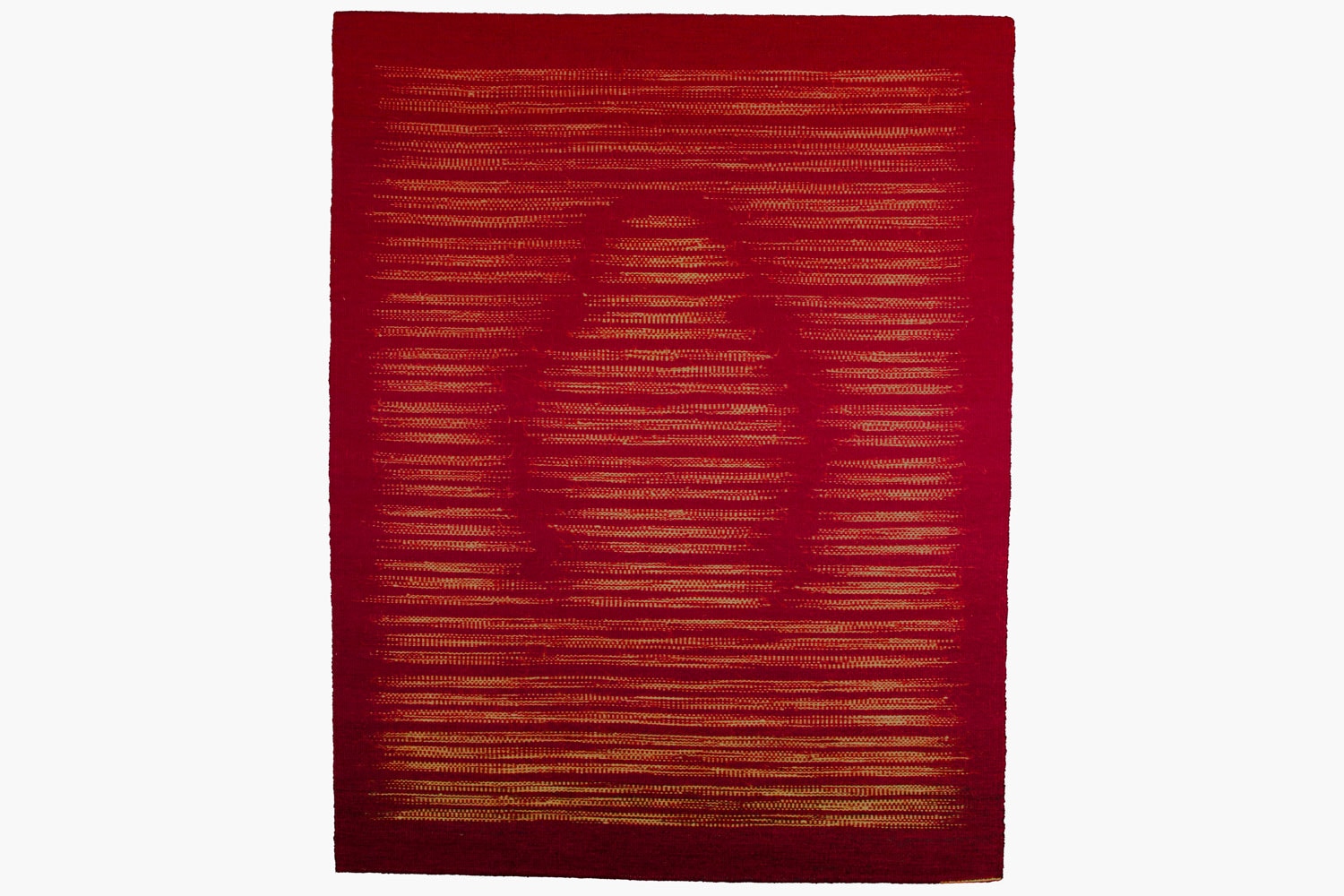
Michael F. Rohde’s hand woven tapestries often comprise squares within squares, grids within grids, or lines, strokes and crosses fitting together like puzzle pieces. The effect is to draw the attention to colour relationships in neighbouring shapes and how smaller pieces add together to make a larger, coherent whole. Michael’s training in biochemistry, in which he holds a PhD, underlies his interest in artistic complexity. His practice relies on the loom and his own experiments with colour, which demand precise harmonies. “From the very beginning I was dissatisfied by the commercially available colour in the yarn materials I would be using, so I learned how to dye my own yarns,” he says. Michael’s pieces are exhibited across the USA, Canada and internationally, and feature in many prominent textile journals.
INTERVIEW
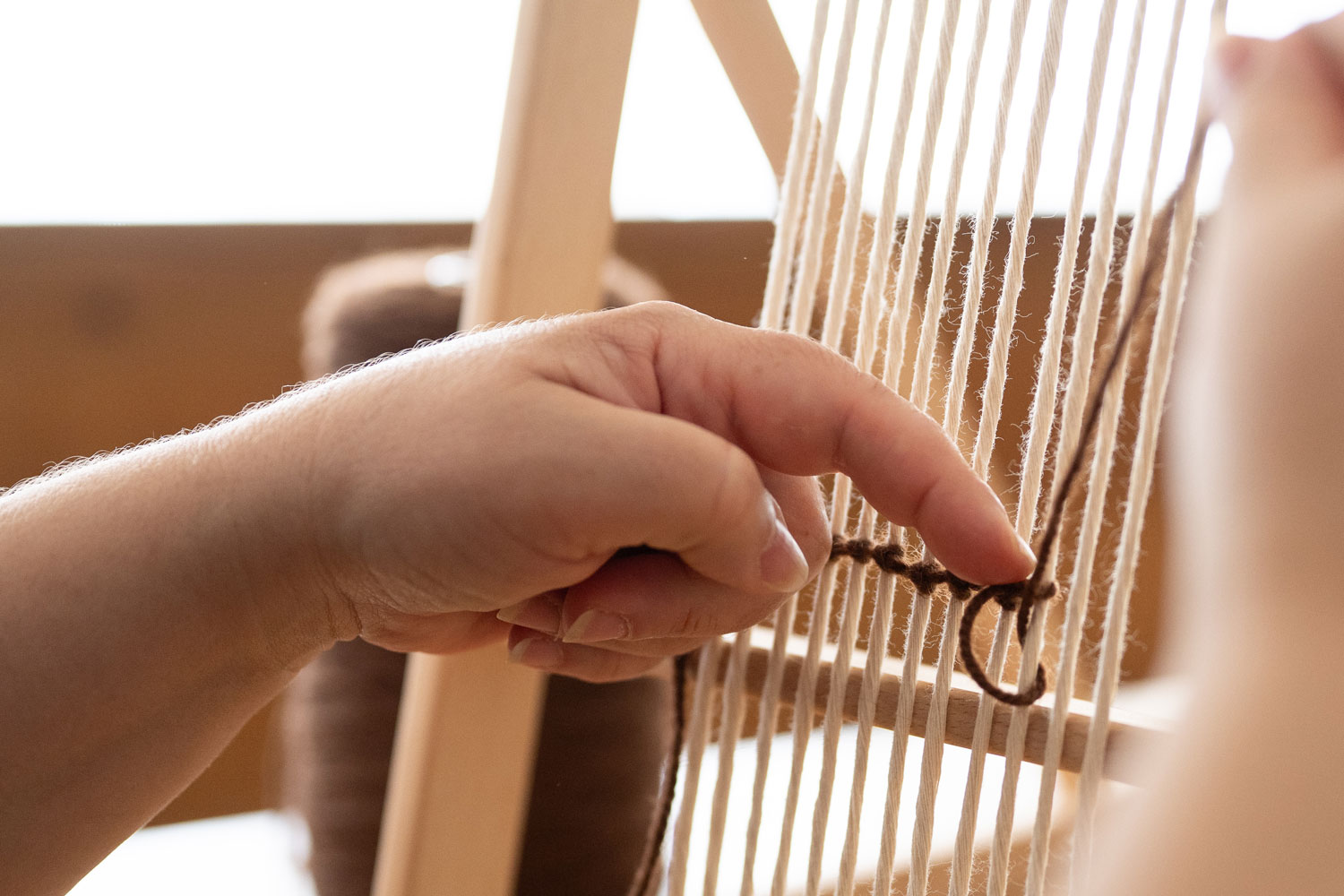
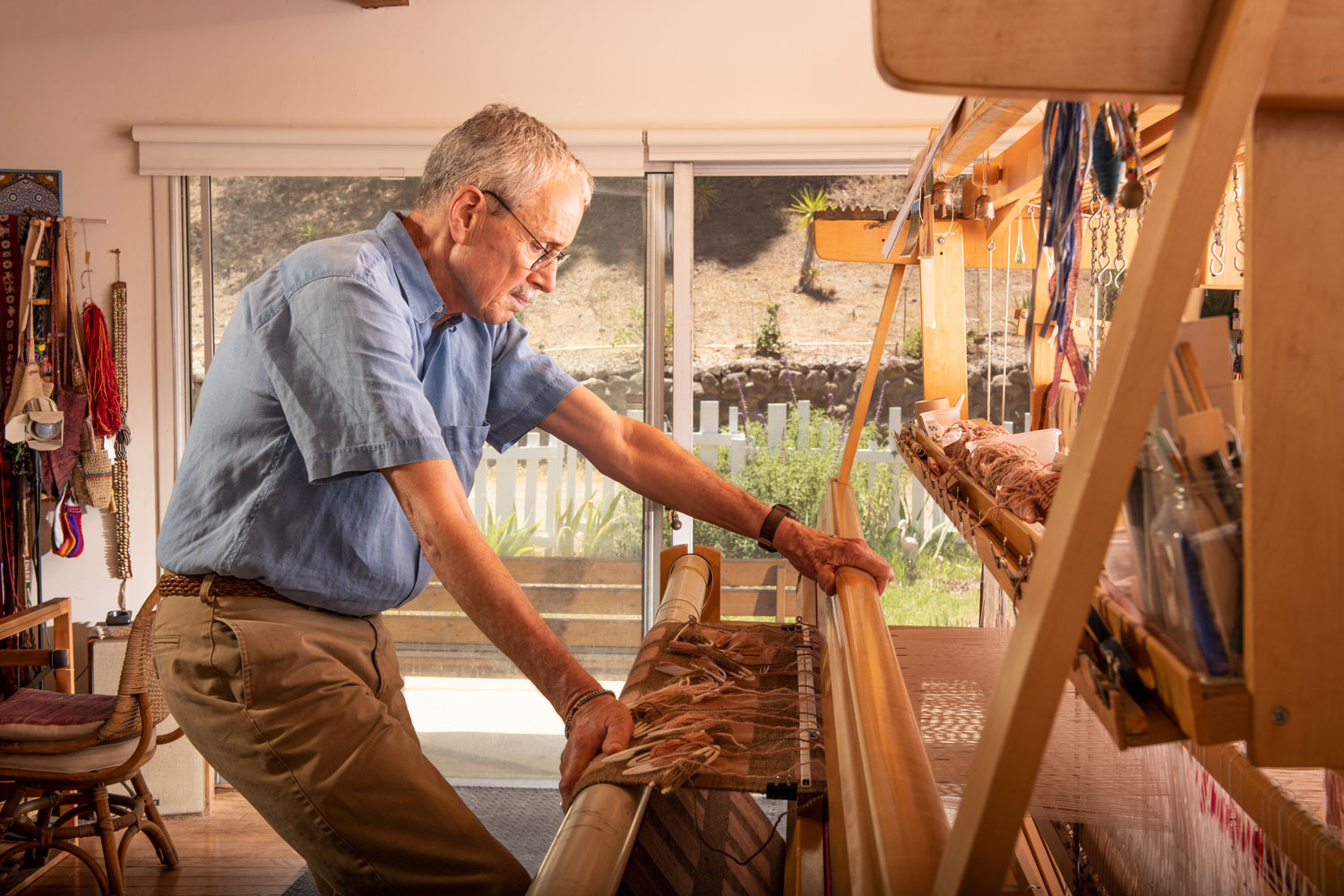
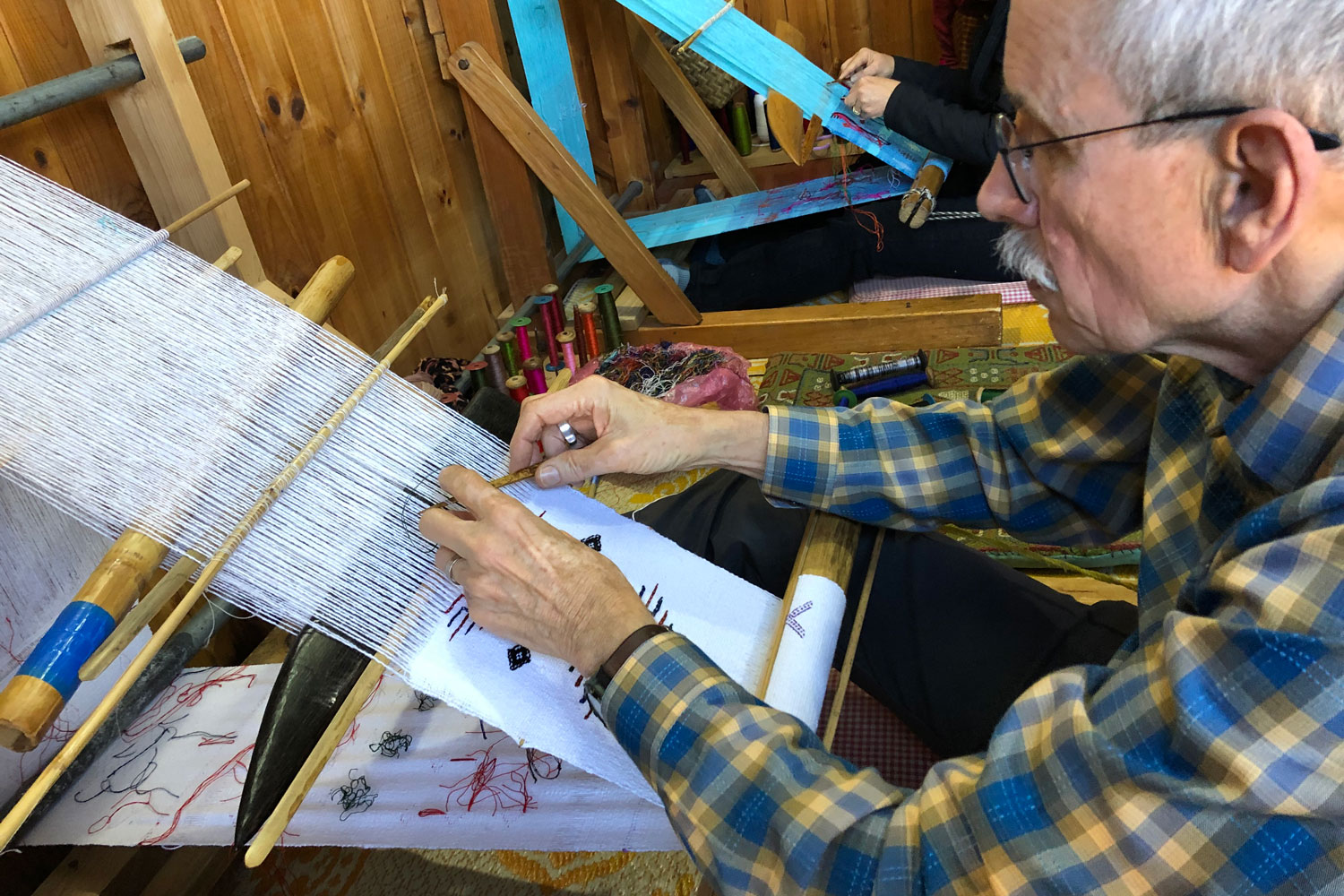
I saw some hand woven garments, rugs and wall mounted tapestries, and became curious about how they were made. I wove rugs for many years, from the late 1970s until 2003, when I shifted to tapestries. With rugs, I focused on pure design while with my tapestries, I focus on the concepts behind them.
I am always observing objects and buildings and thinking how they might be rendered in my medium. Travel is often a source of ideas and visuals, and sparks concepts for my pieces.
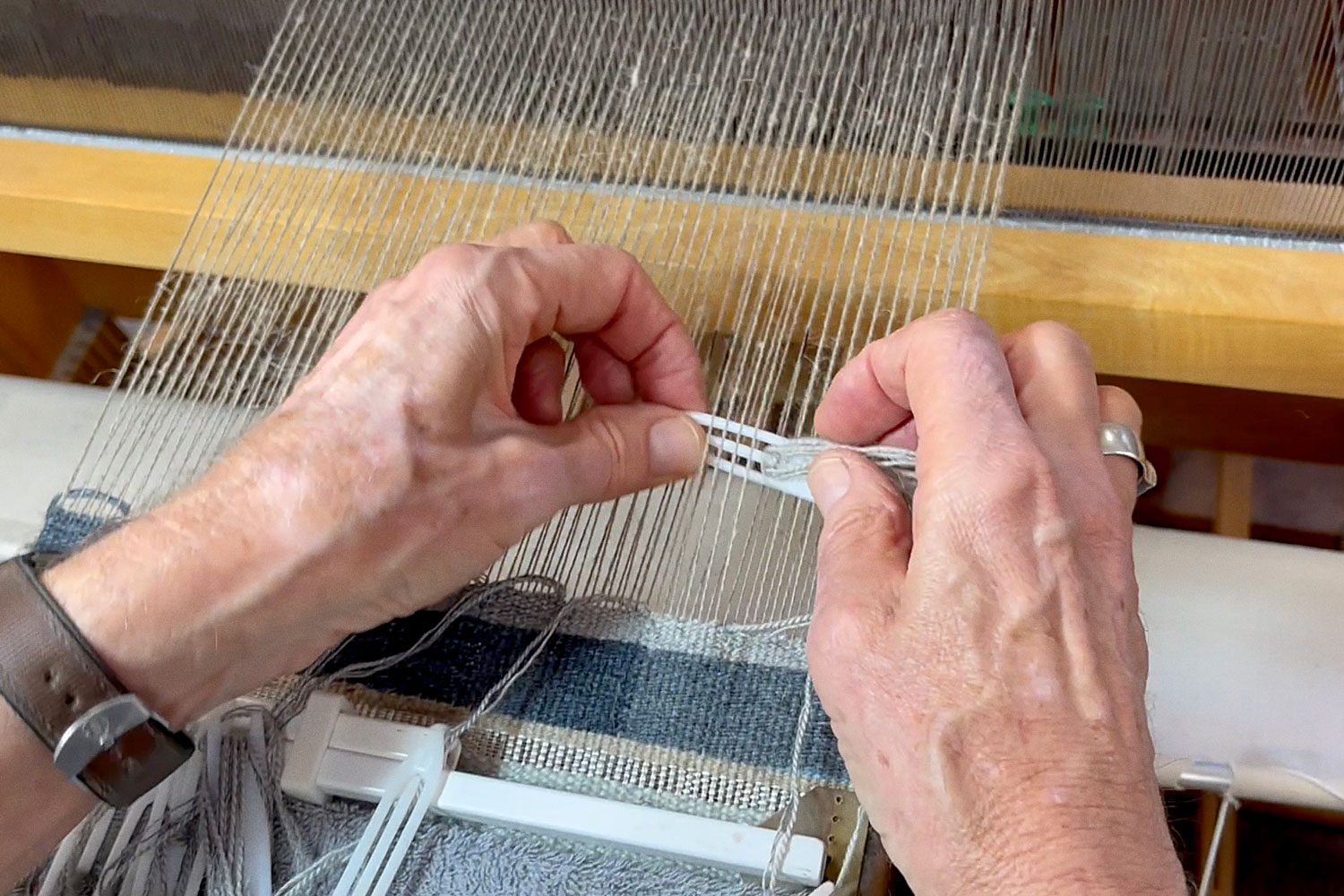
I start with a sketch on a sheet of paper, which becomes the guide for shape and colour during the construction. I only work on one piece at a time, since the execution is about building up linear elements. However, in the process of creating one piece, ideas come for what may be next.
I hope those who wind up with my artworks have them in a place where they can see them often and at different times of the day. The most gratifying comment from one couple was the amazement at how the visual perception of their art changed with the shift of ambient light through the day.
Michael F. Rohde
Tapestry maker
Camarillo, CA, USA
Recommended by Craft in America
ADDRESS
Address upon request, Camarillo, CA, USA
AVAILABILITY
By appointment only
LANGUAGES
English
Homo Faber Finds is a new service aiming to inspire admirers of craft to connect and collaborate with exceptional artisans.
We invite you to submit an enquiry here.
DSC02402_©Meg-Lovell.jpg)
DSC01379_©Meg-Lovell.jpg)
DSC01458_©Meg-Lovell.jpg)