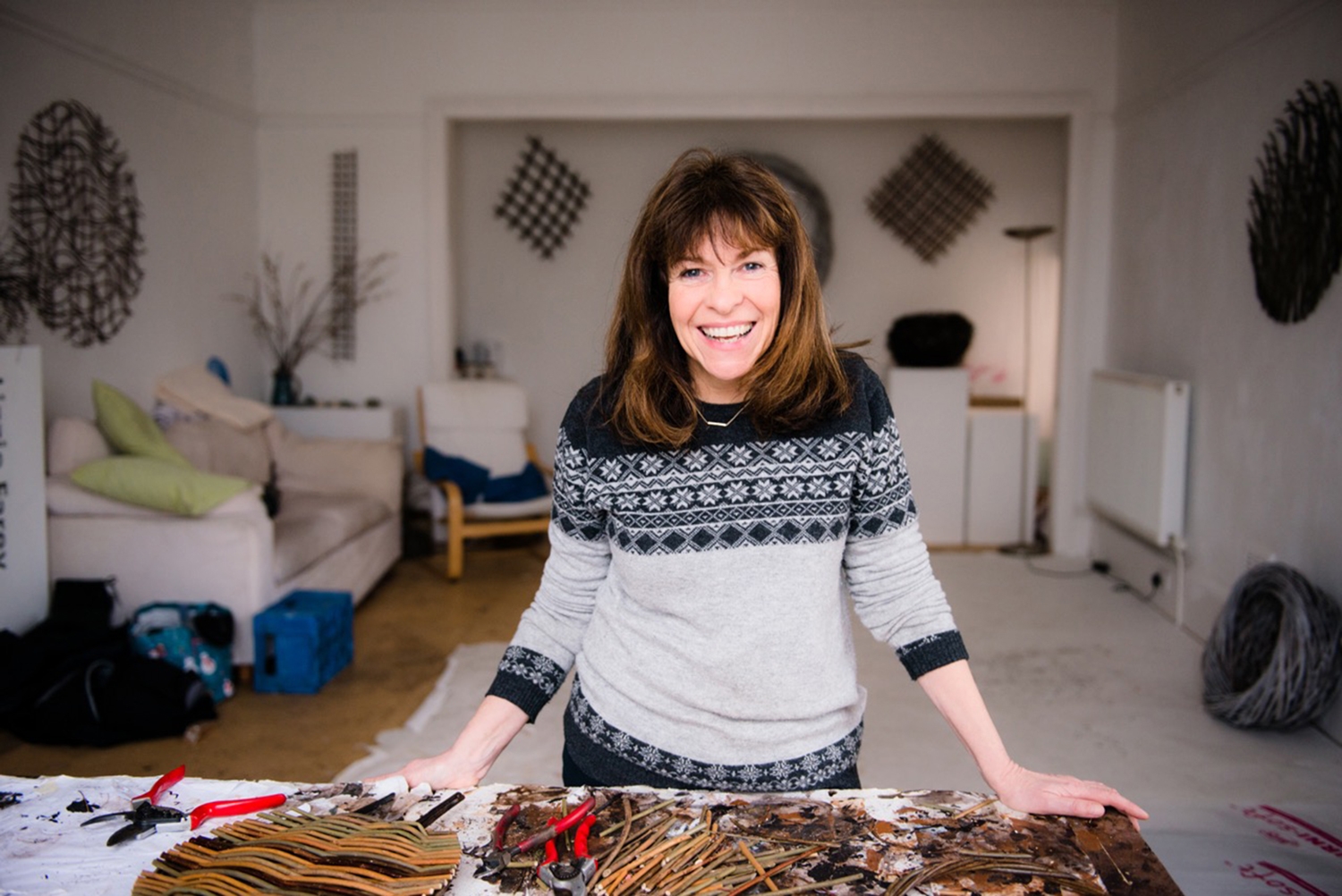
Lizzie Farey
Wicker sculptor
Kirkcudbright, United Kingdom
The all-round connection of willow sculpting
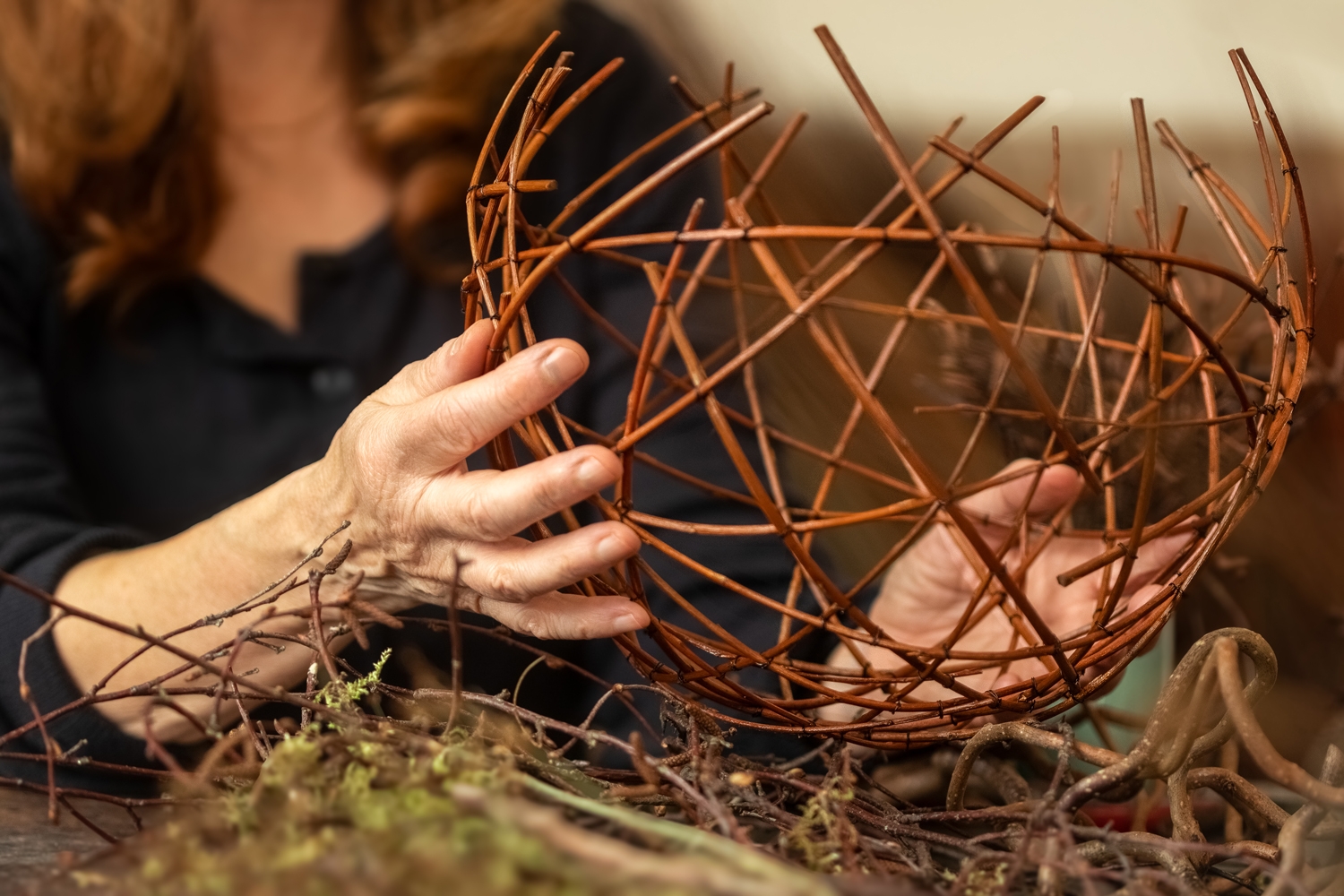
- Lizzie is a champion of the random weave technique
- Hisako Sekijima inspired her shift to contemporary basketry
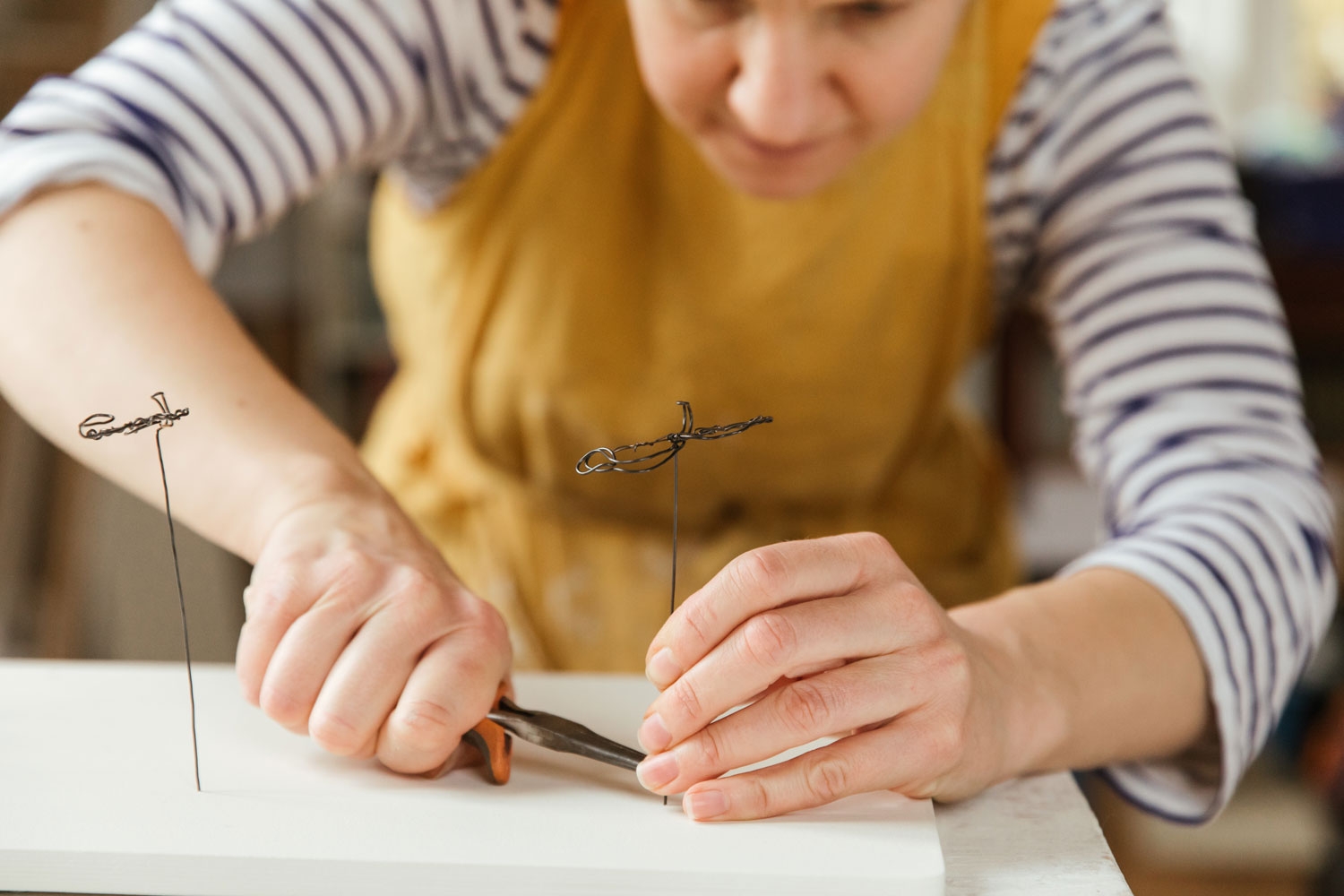
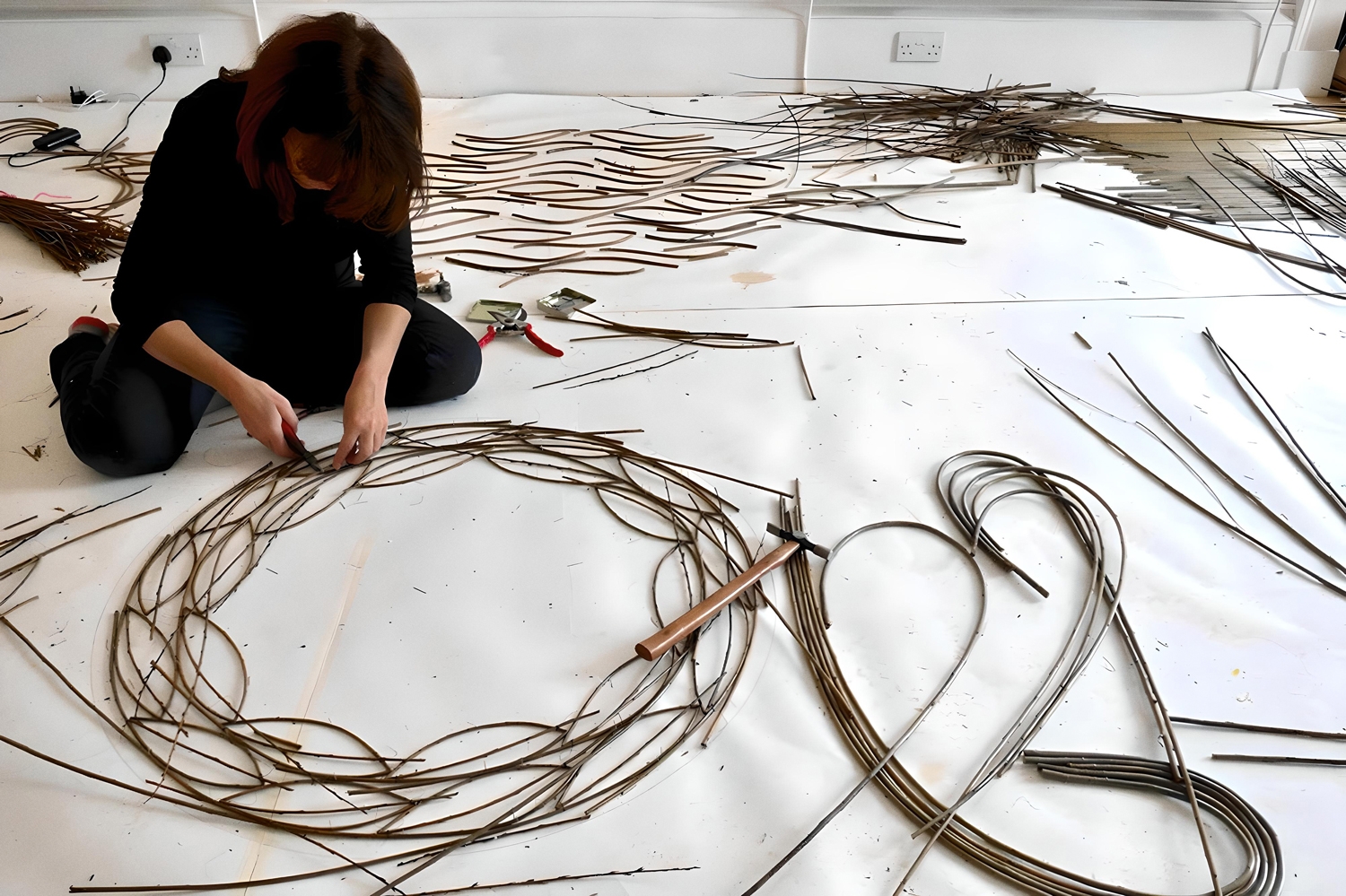
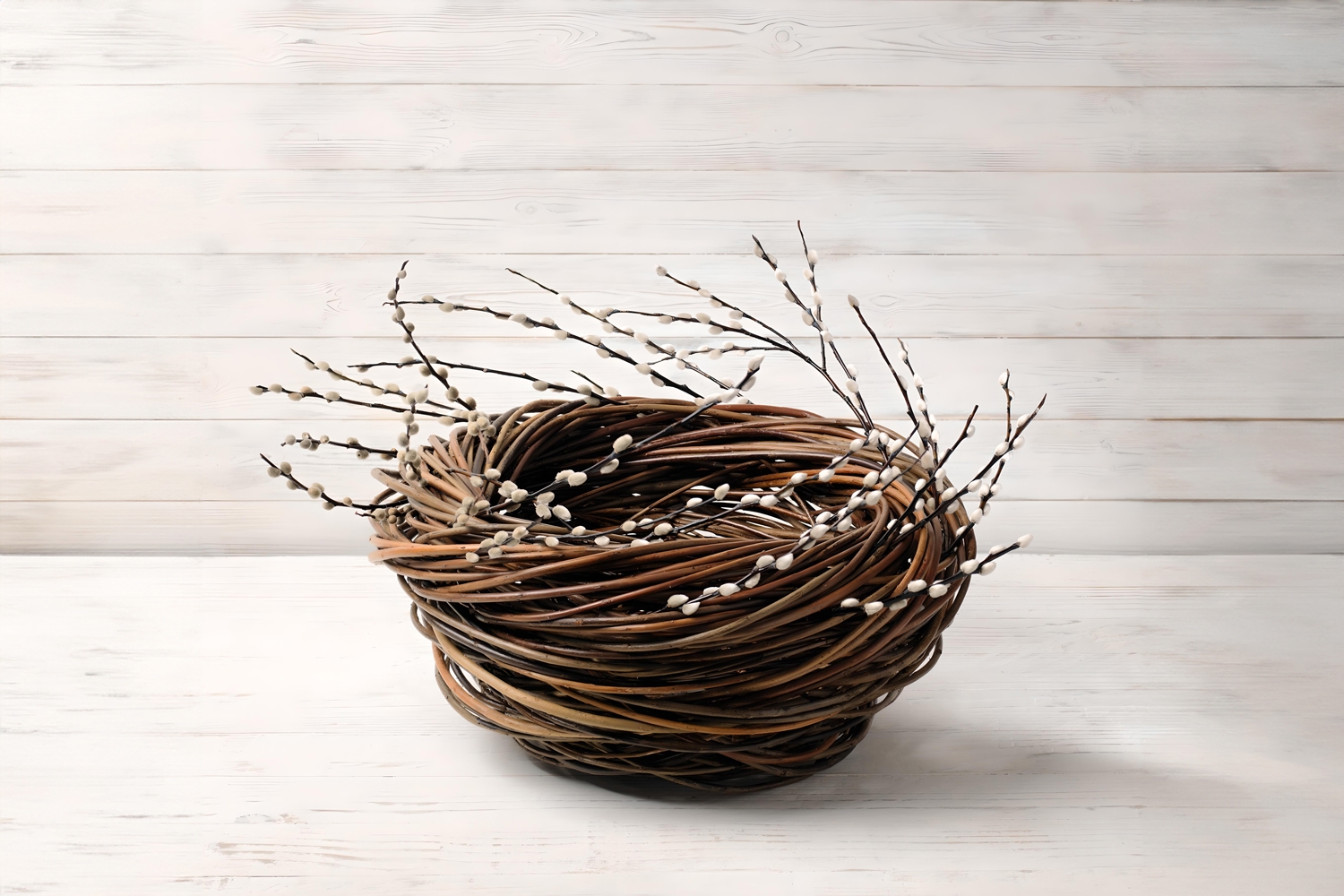
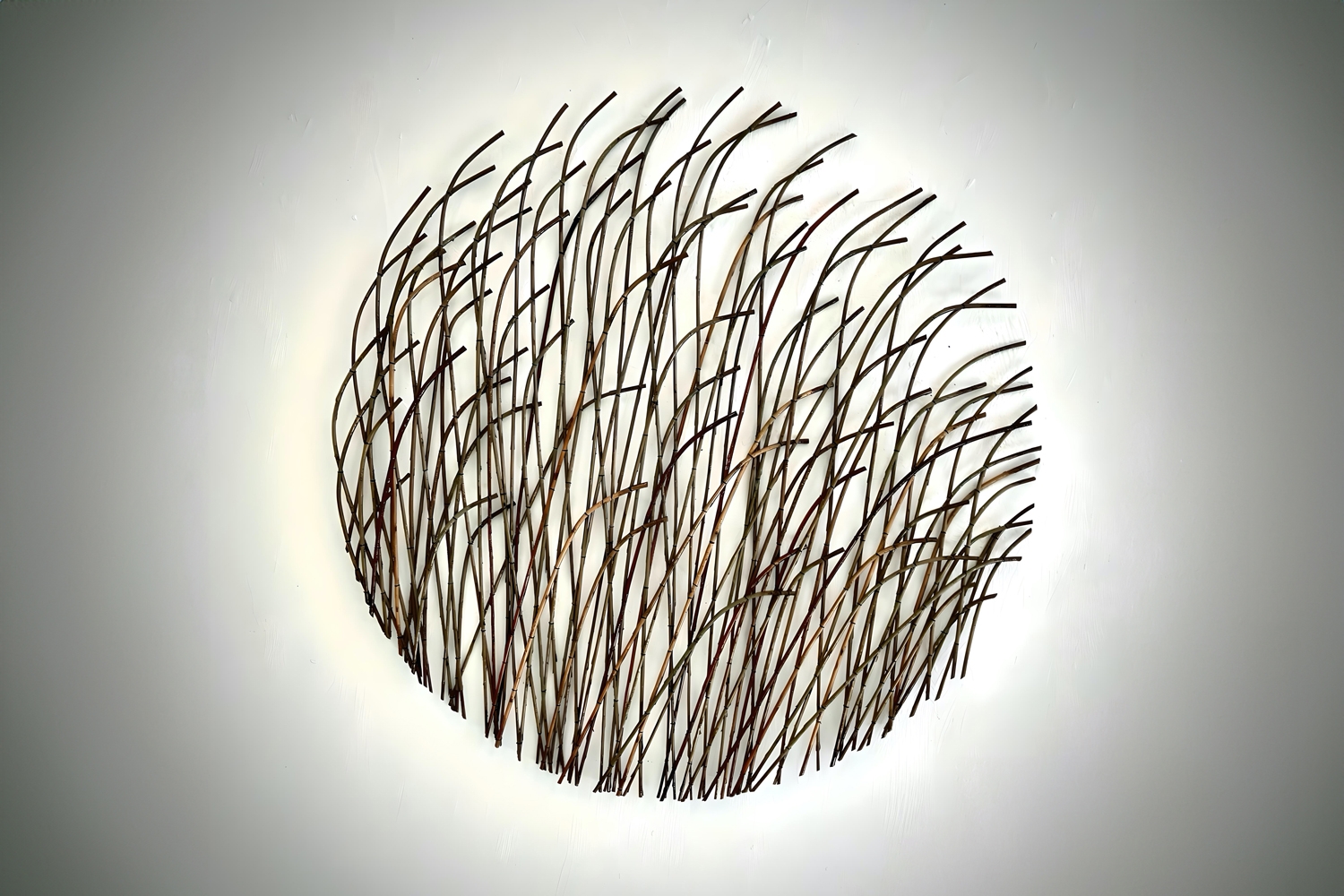
- Aerie, her installation at Edinburgh's City Art Centre, uses willow and 9,000 steel pins
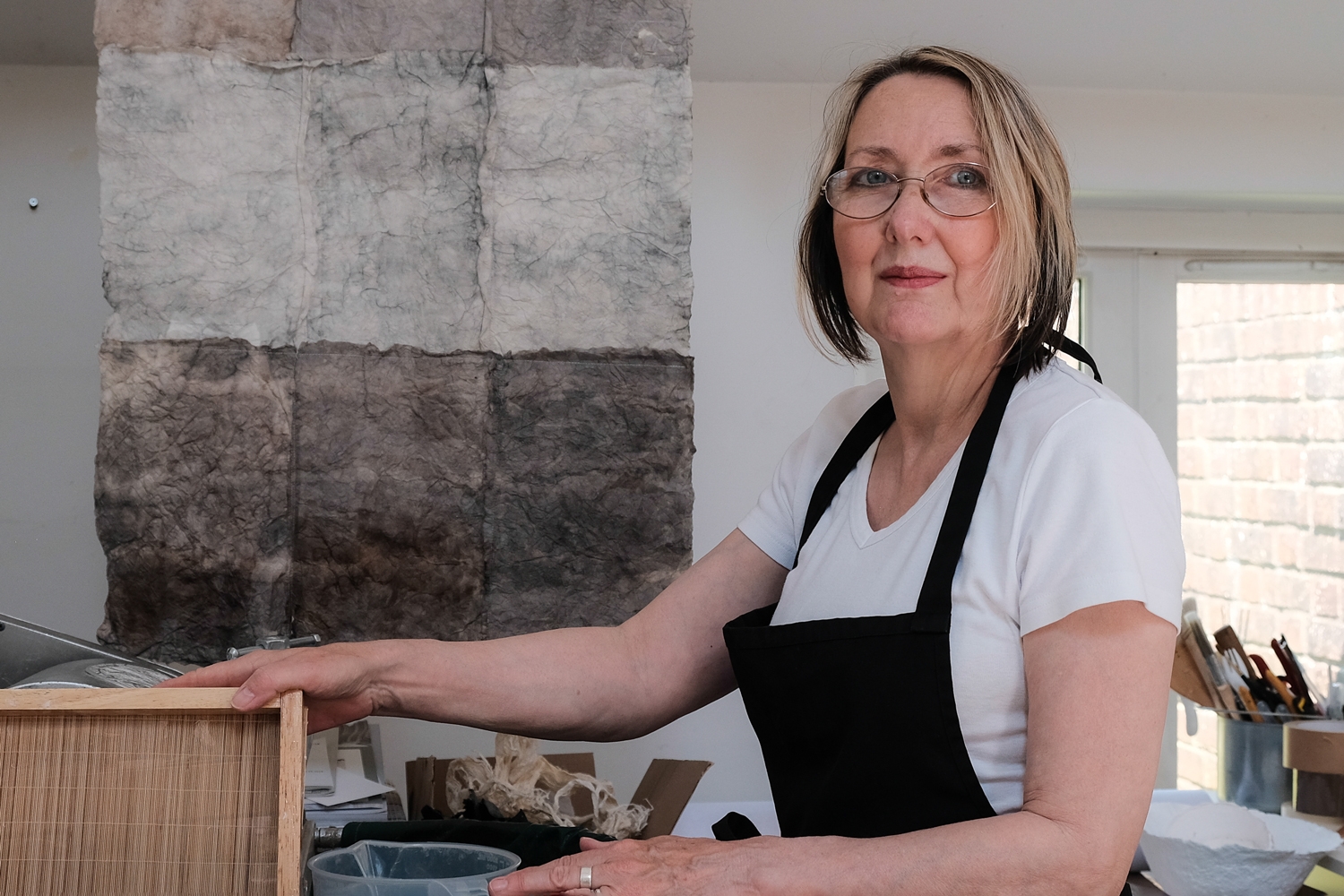
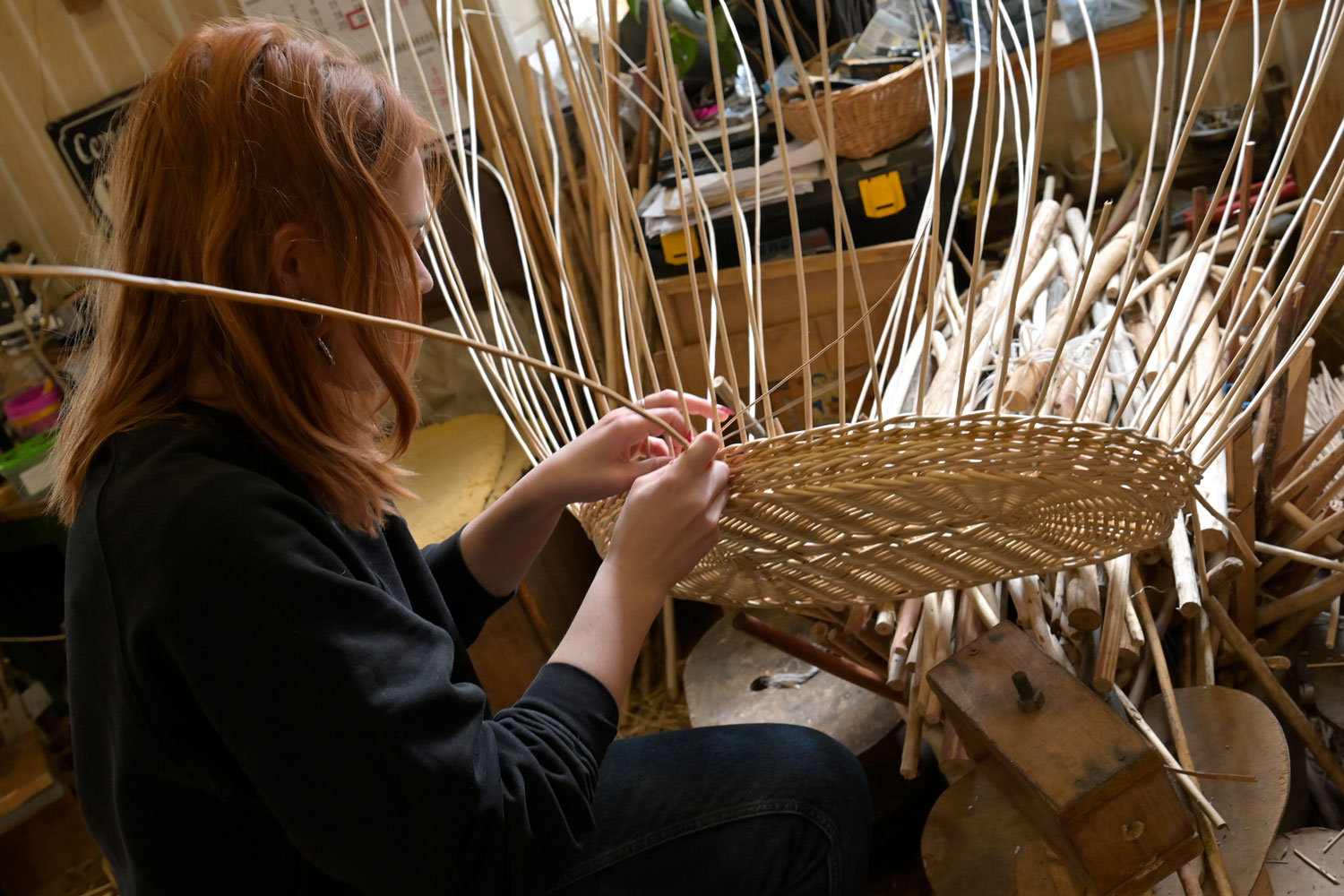
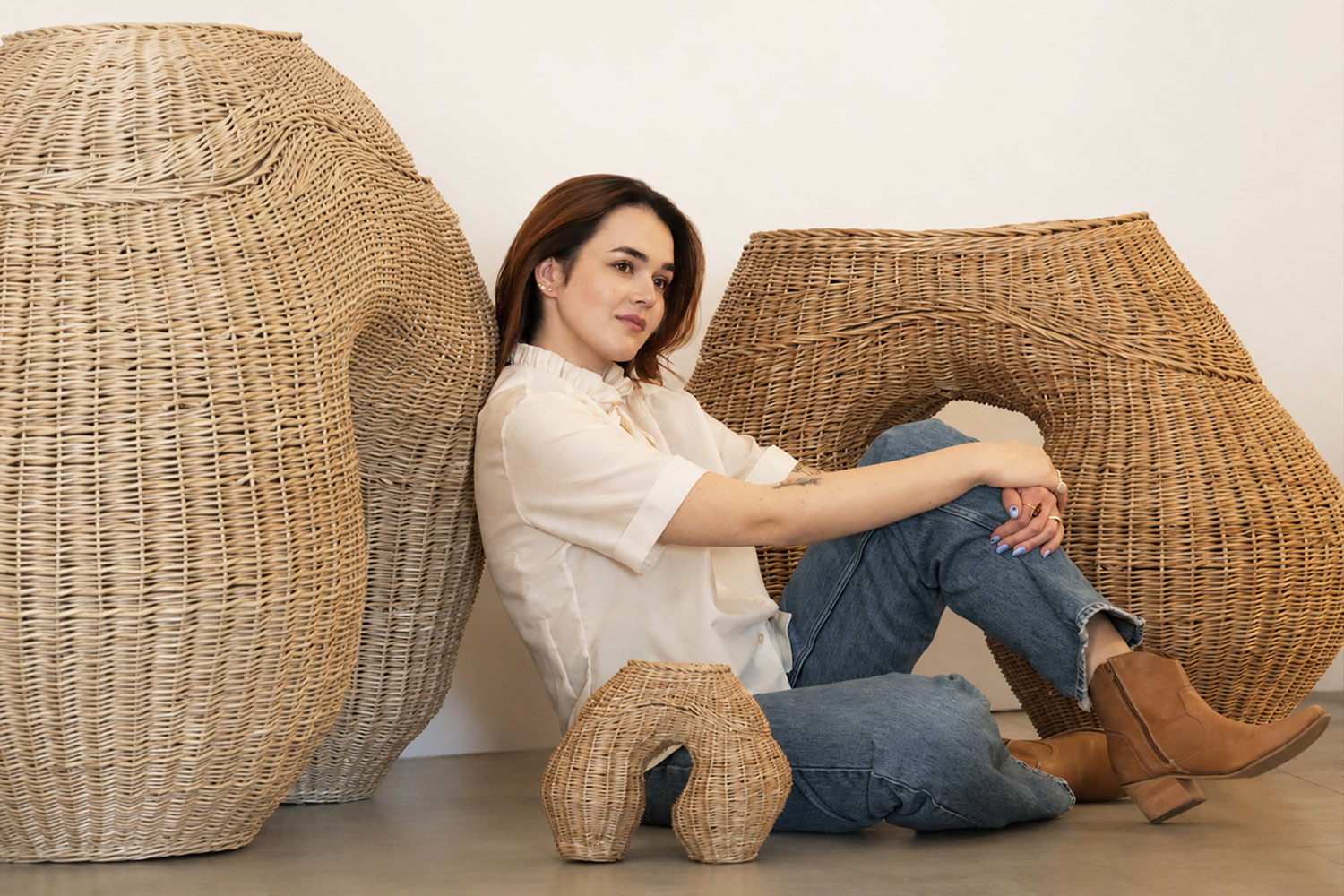
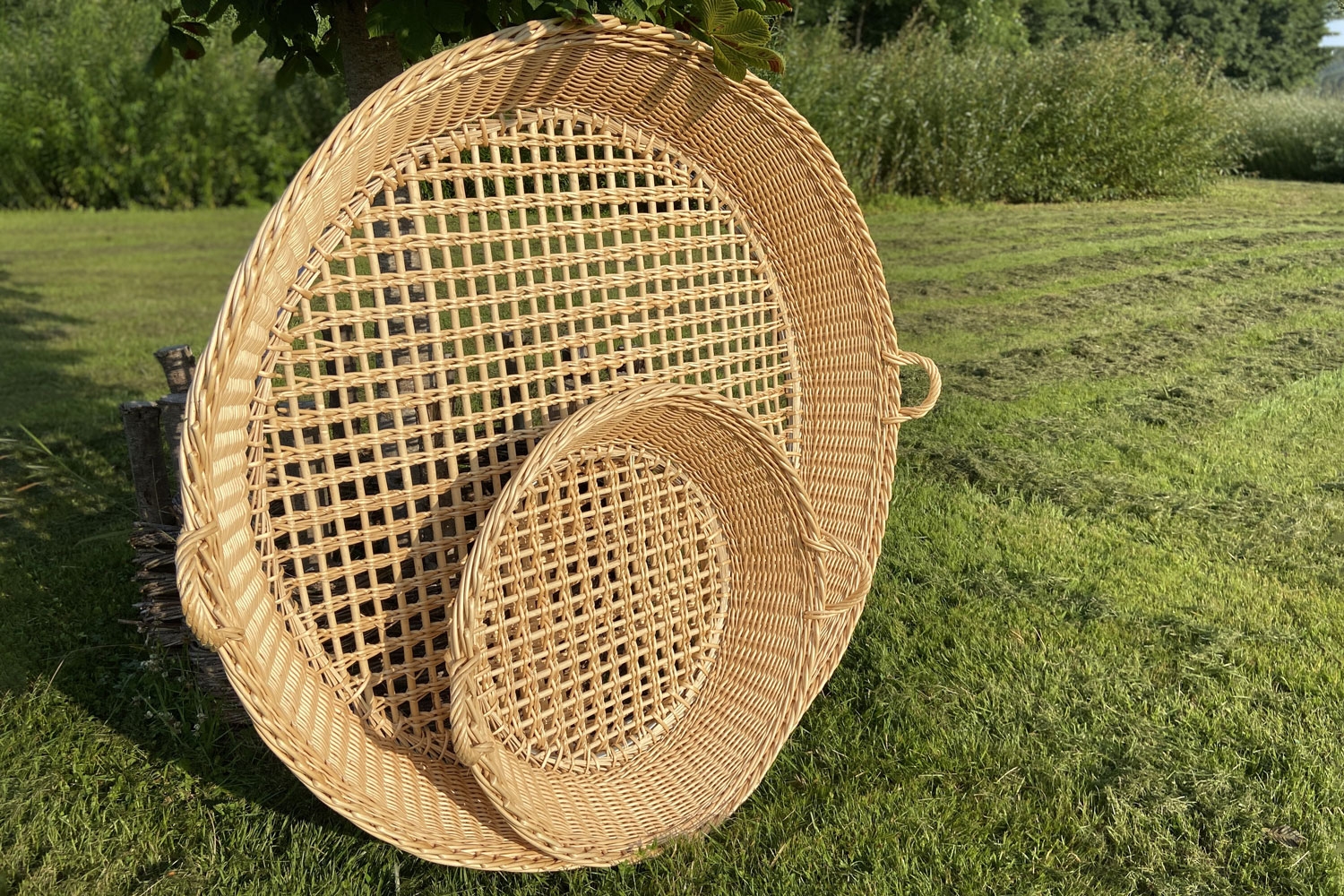
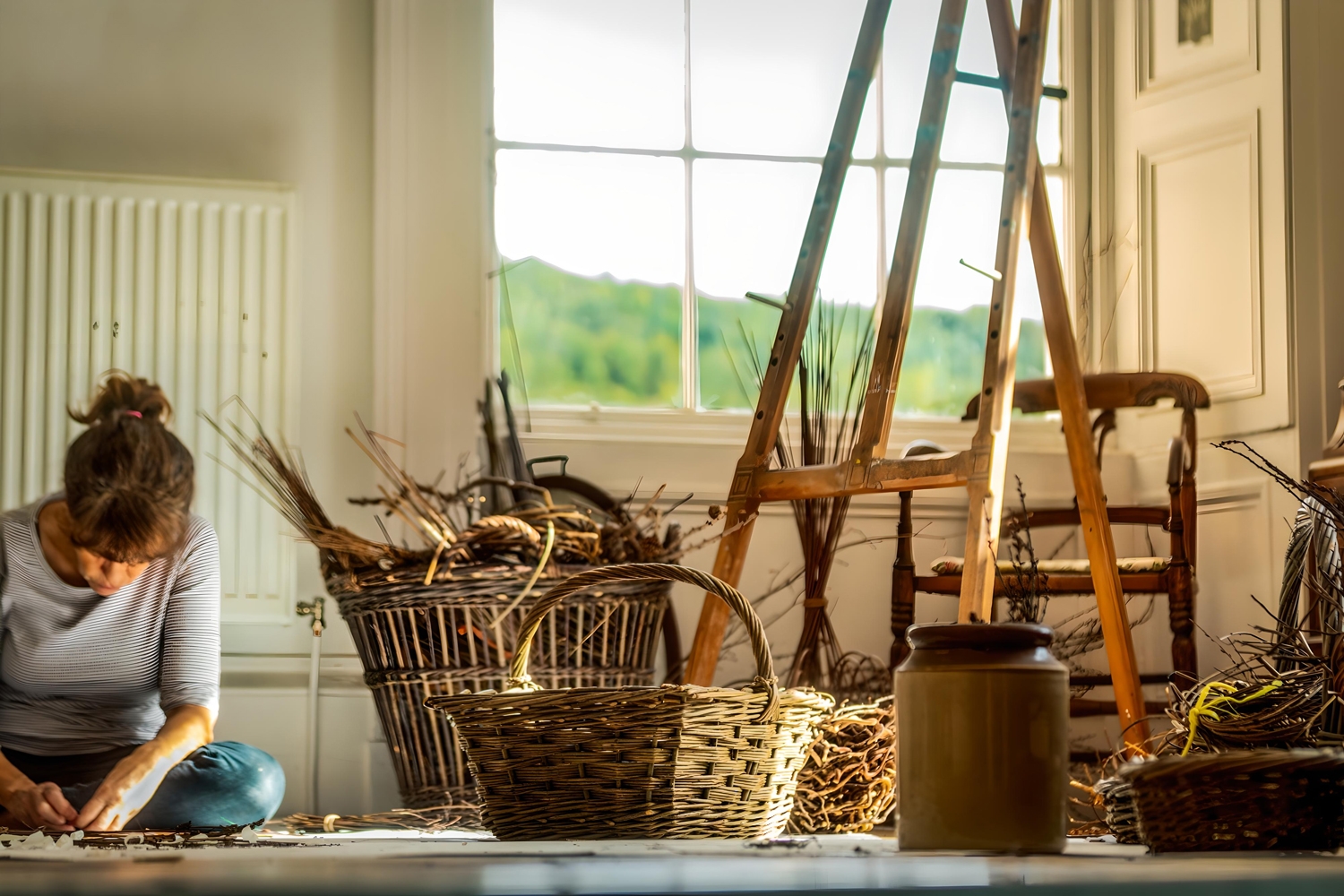
Lizzie Farey, a trained picture framer, stained glass artist, basketmaker, and wood sculptor, states, “Making is my curiosity.” She attended the Canterbury College of Art foundation course and Cardiff College of Art. She trained with stained glass artist Mark Angus and started her own business making stained glass windows for churches and private homes. A turning point came when Lizzie was commissioned to create a memorial window for the victims of the 1988 Pan Am Flight 103 bombing in Lockerbie. Beset with overwhelming emotions, she did not pursue the project. She then sought a new path and trained with basketmaker Mandy Coates. In 1991, after weaving her first basket of willow and plaited rush, Lizzie knew she had found her next creative path.
INTERVIEW
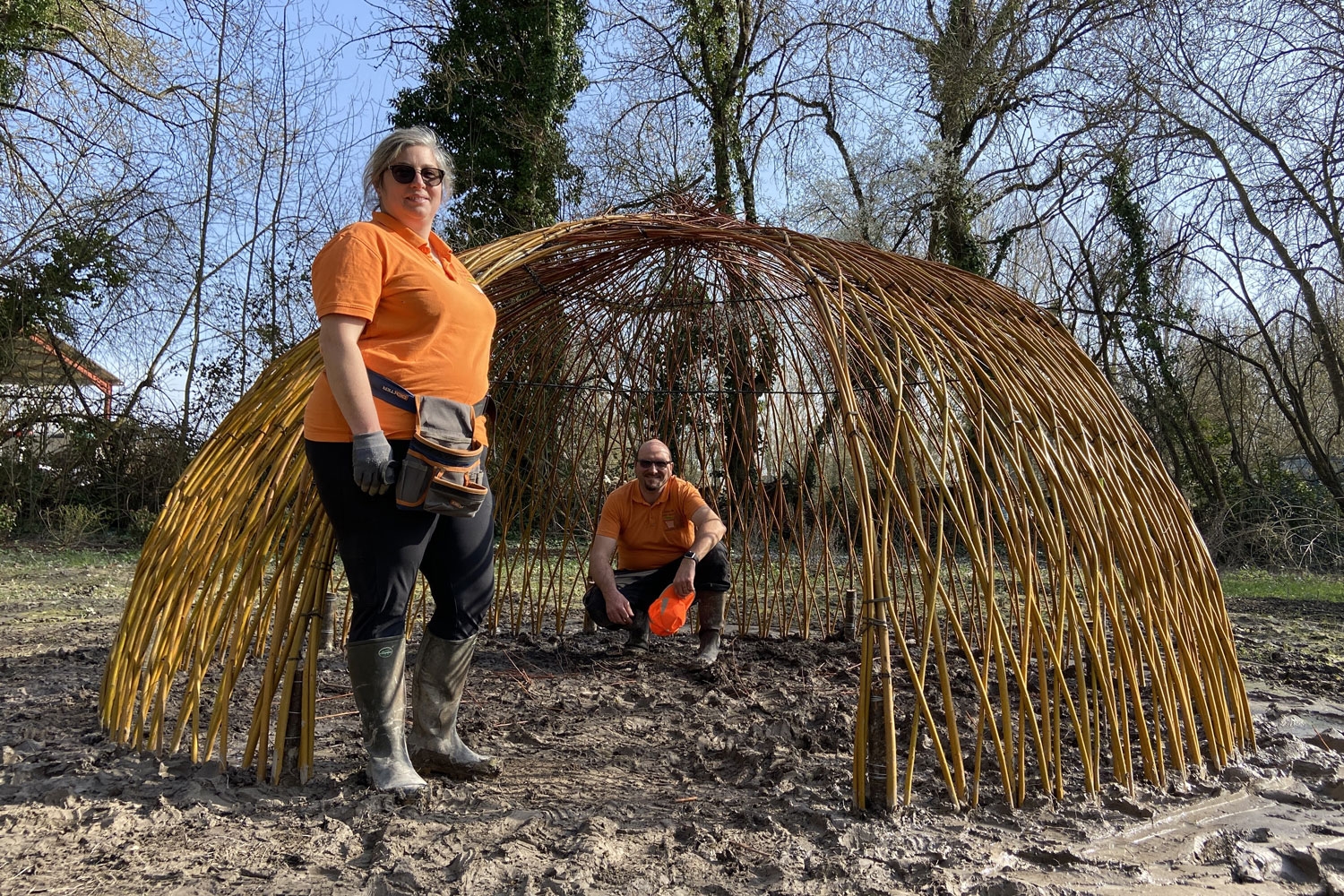
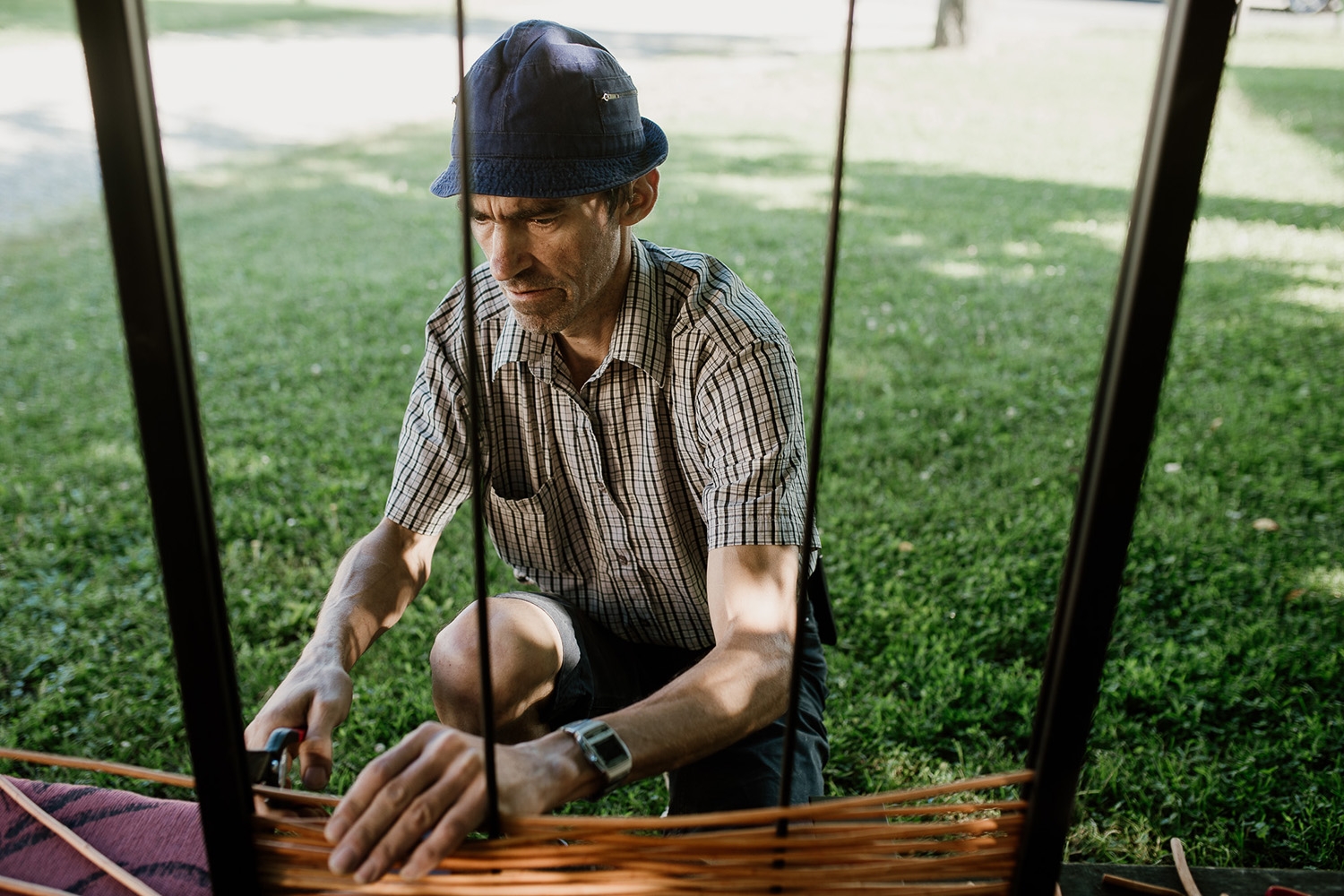
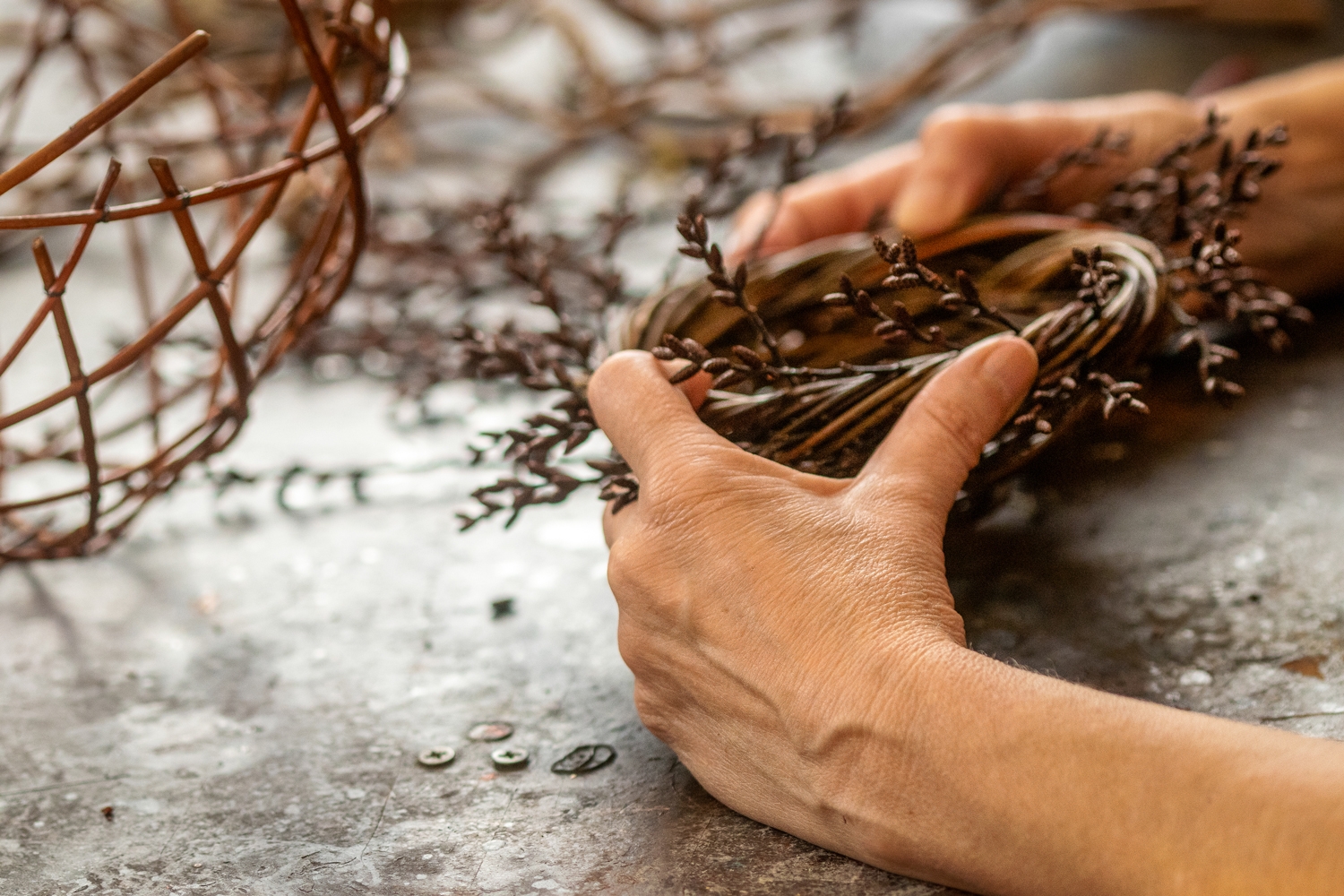
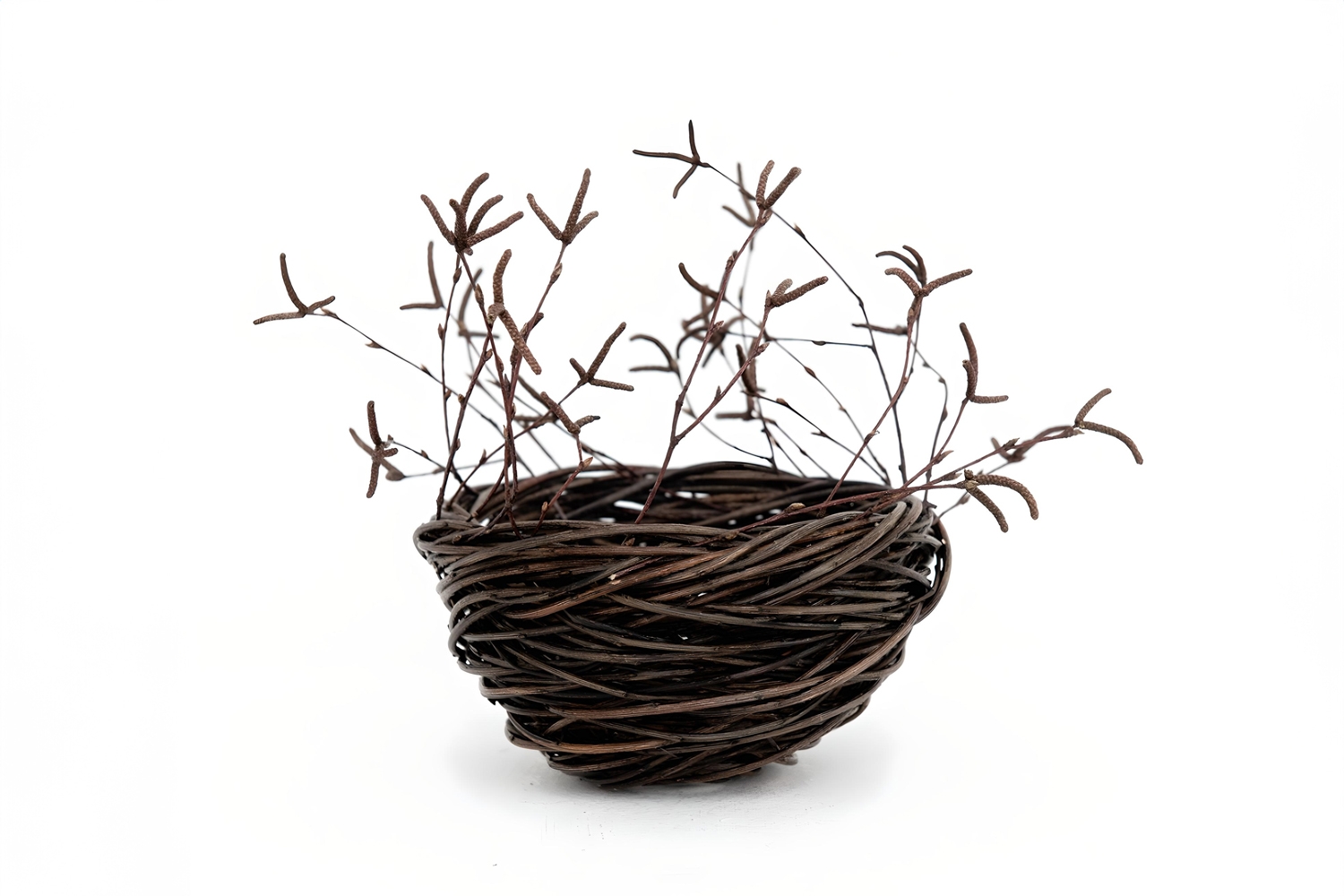
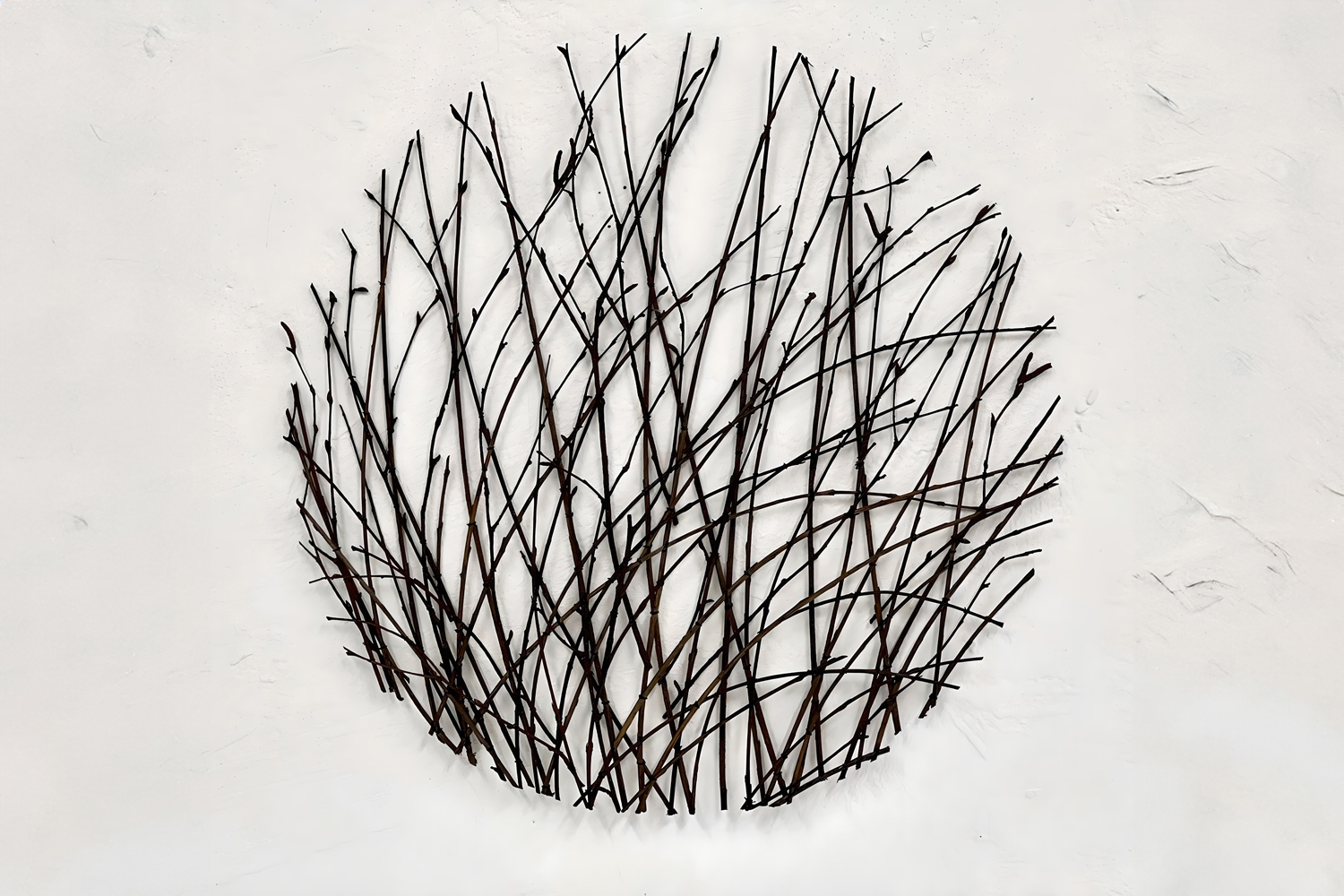
I grow my own willow, and using materials local to me is integral to my craft. Inspired by the birds drawn to my willow field for the diverse insects that thrive there, I aim to convey more about the broader decline of our natural world and of bird populations through my work.
My mother was very keen on us connecting with our environment. I draw inspiration from the biodiversity in my local moorlands and their abundant species to create artworks that evoke transcendent values like love, forgiveness, truth, and beauty.
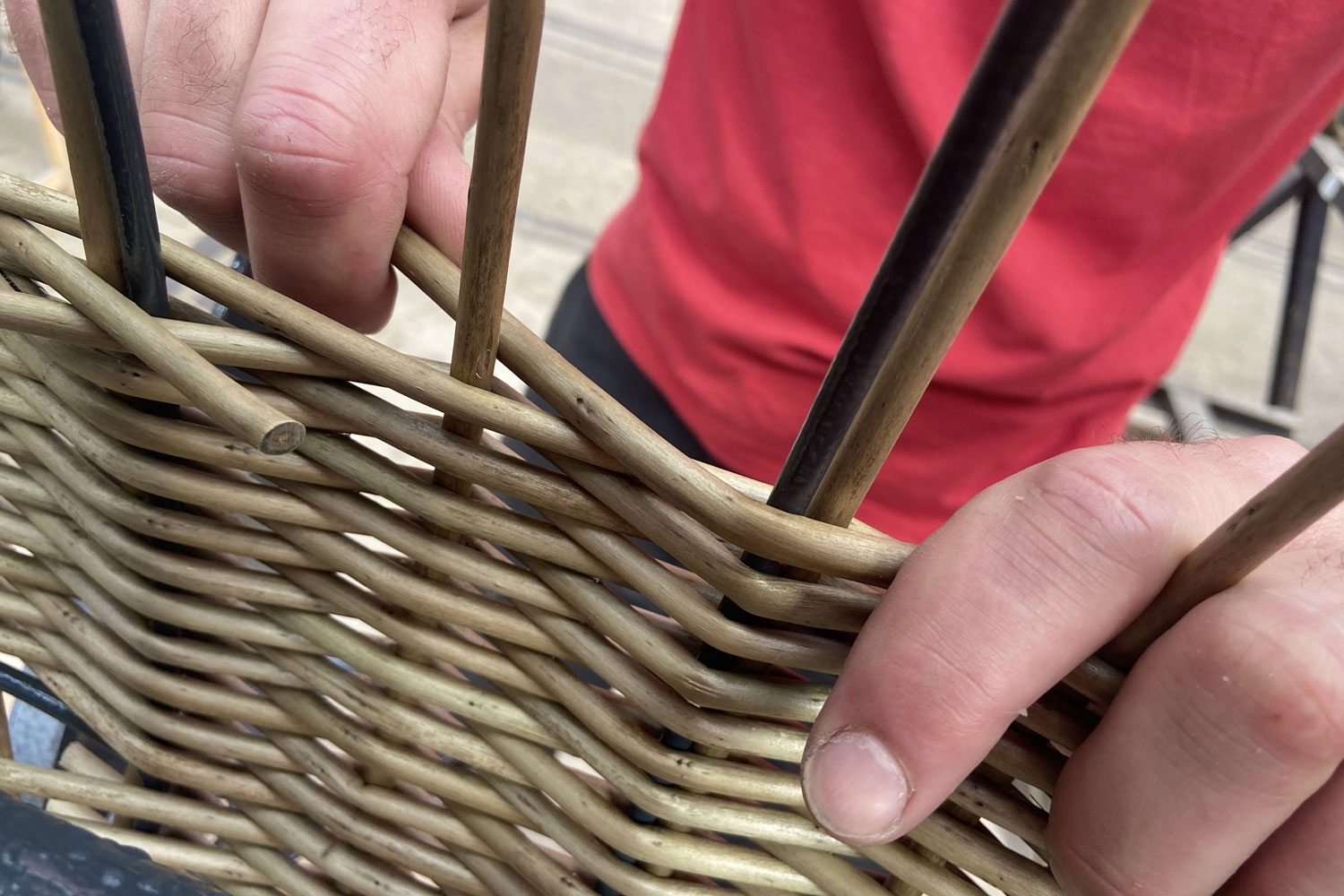
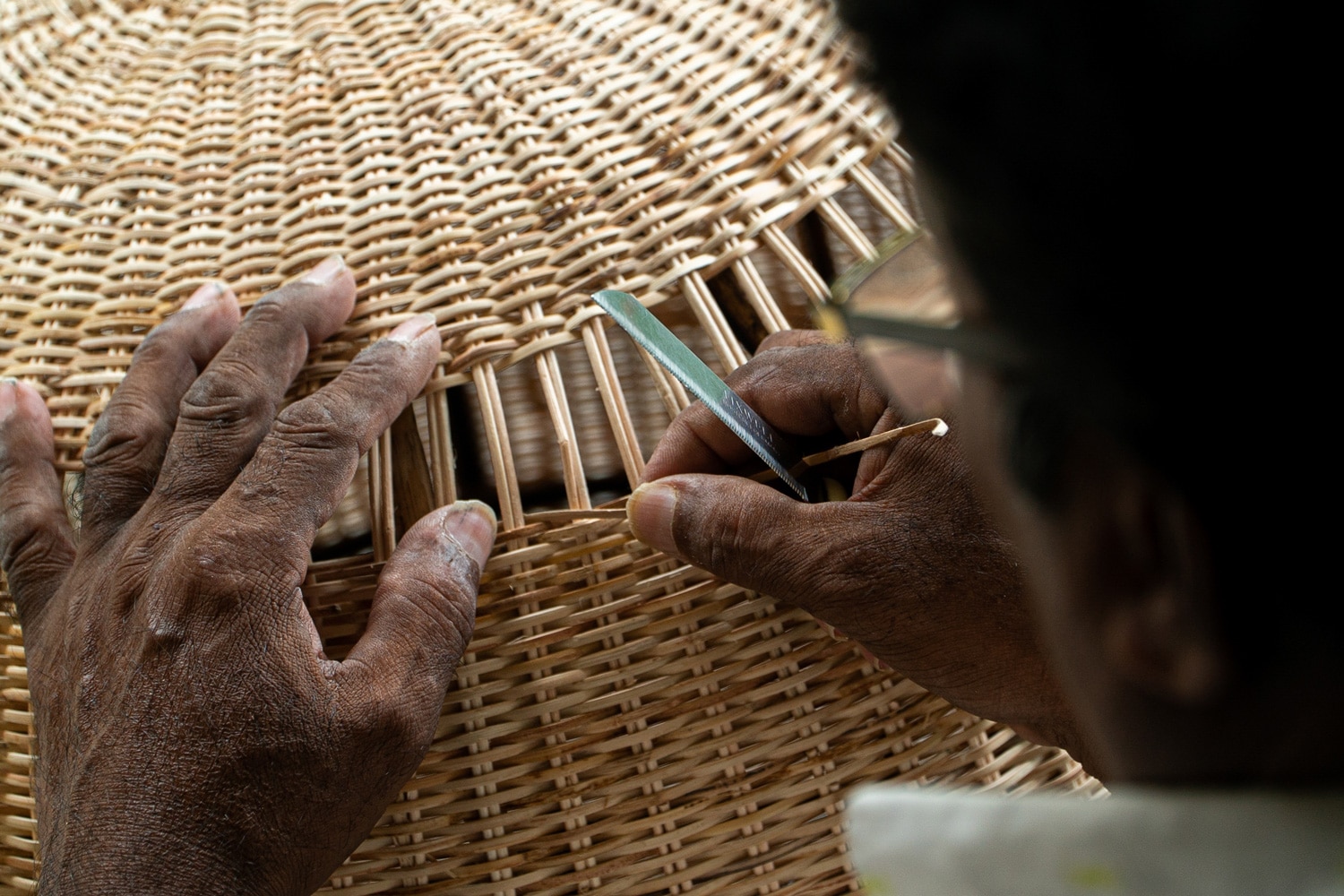
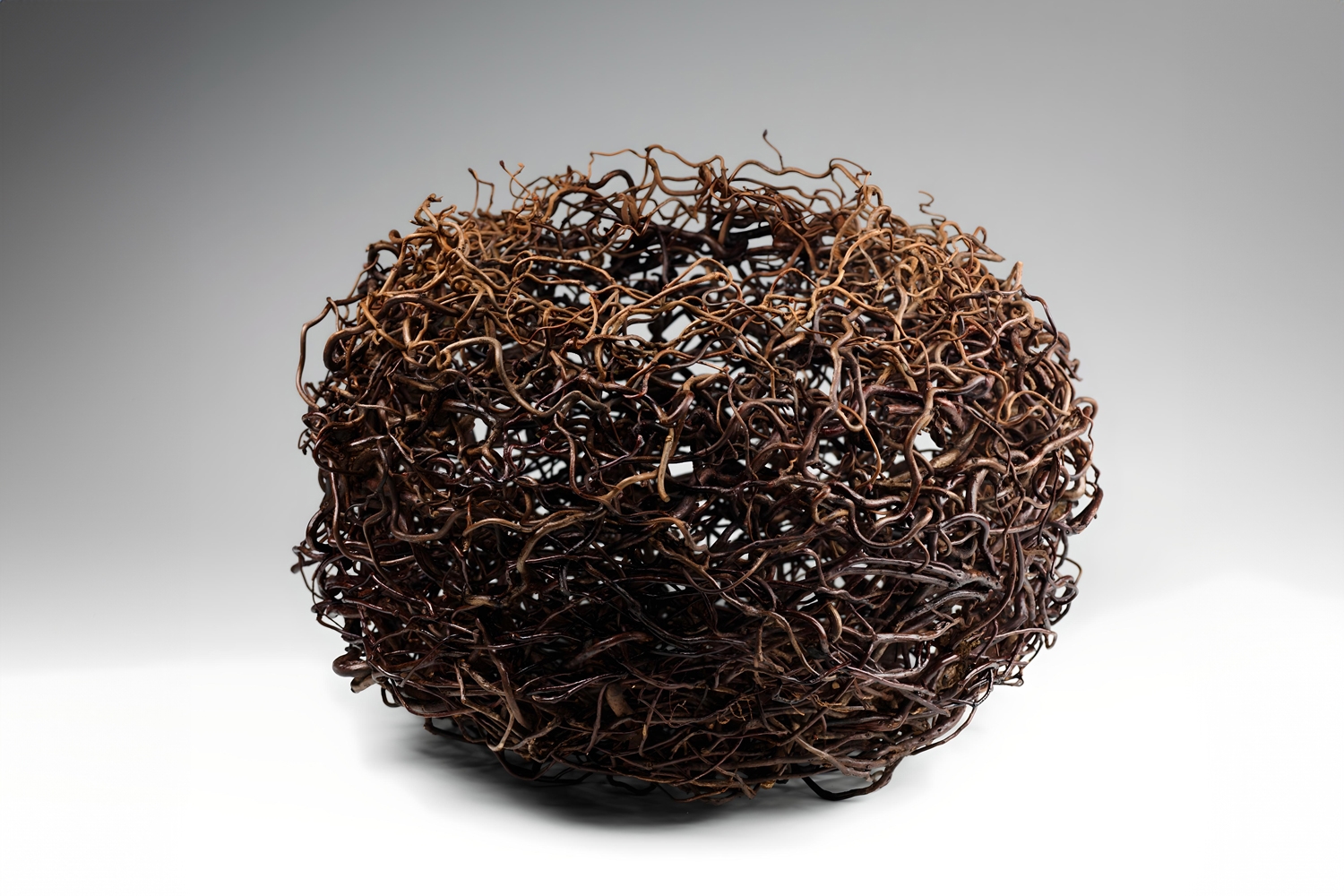
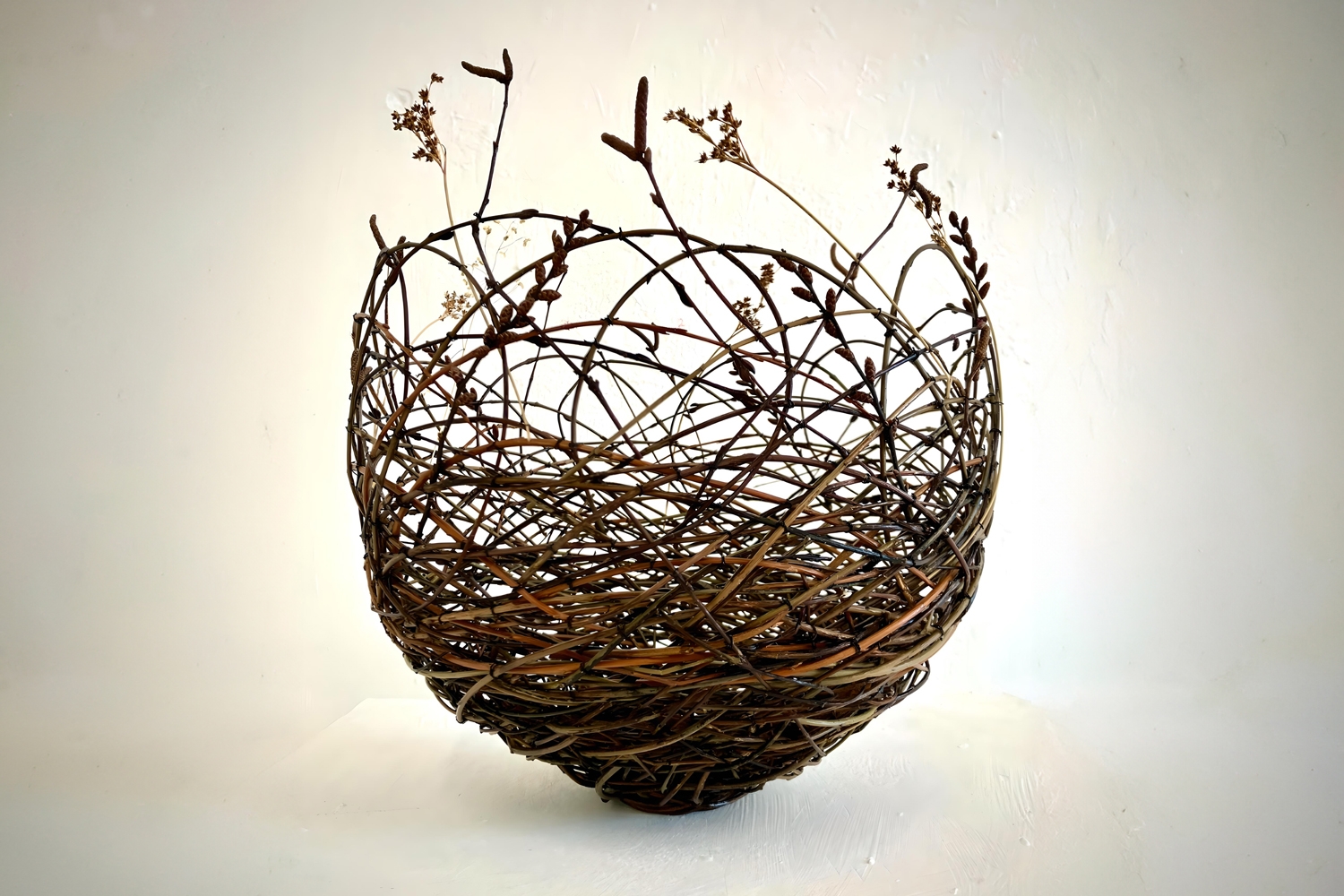
I explore new forms that turn functional objects into mediums of self-expression. When I work, I empty my mind, making the process meditative. This approach, combined with my curiosity to see what my material could do next, led to my creating a random weave technique, where my hand’s intimate familiarity with the material guides the creation.
The traditional crafters are becoming more accomplished, with some shifting towards more non-functional forms. My work used to be classified as “miscellaneous” because there was no term for it, but now it is often recognised as Fibre Art. This reflects how far the craft has evolved, and that it will continue to do so.
Lizzie Farey
Wicker sculptor
Kirkcudbright, United Kingdom
AVAILABILITY
By appointment only
PHONE
+44 7821629234
LANGUAGES
English
Homo Faber Finds is a new service aiming to inspire admirers of craft to connect and collaborate with exceptional artisans.
We invite you to submit an enquiry here.