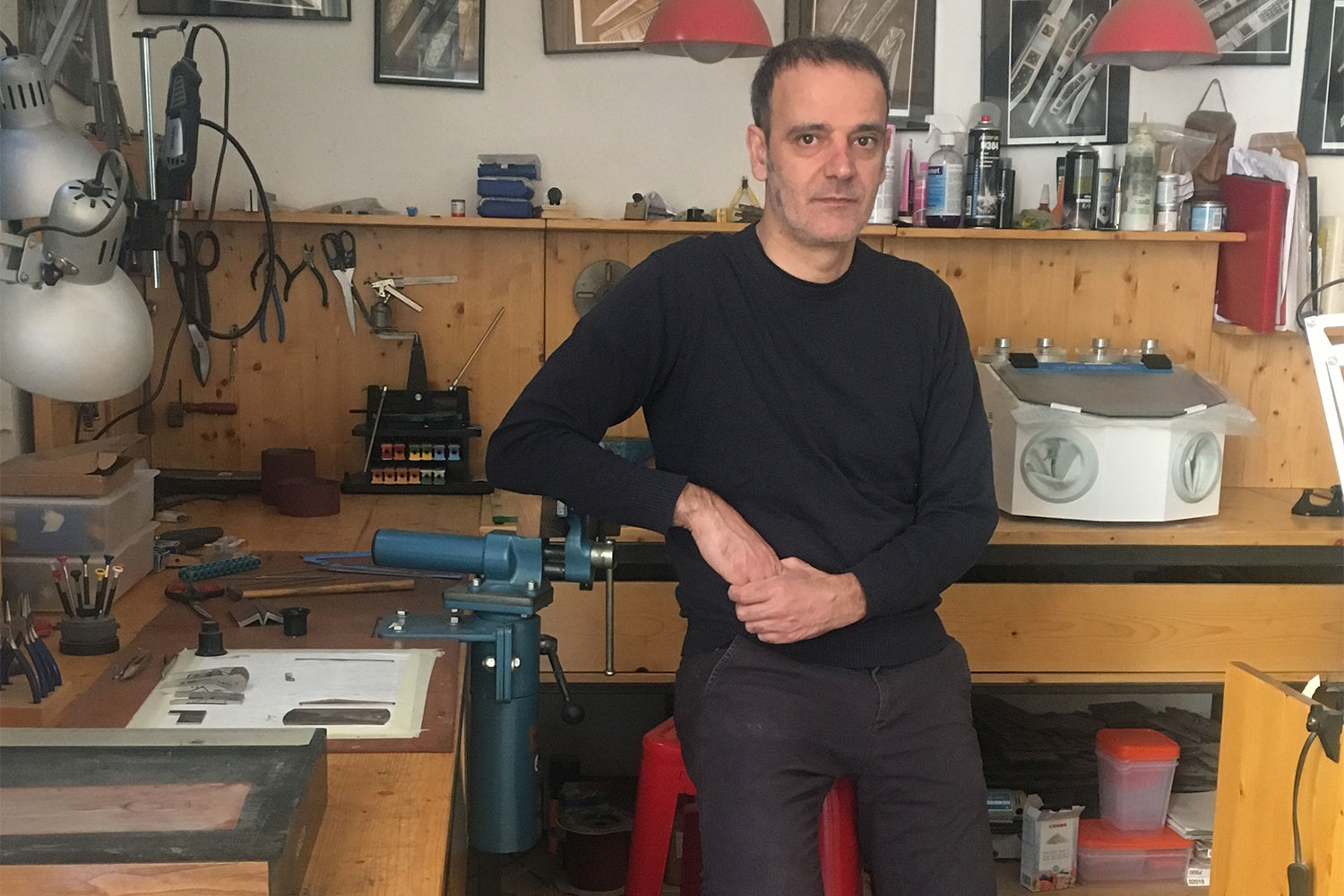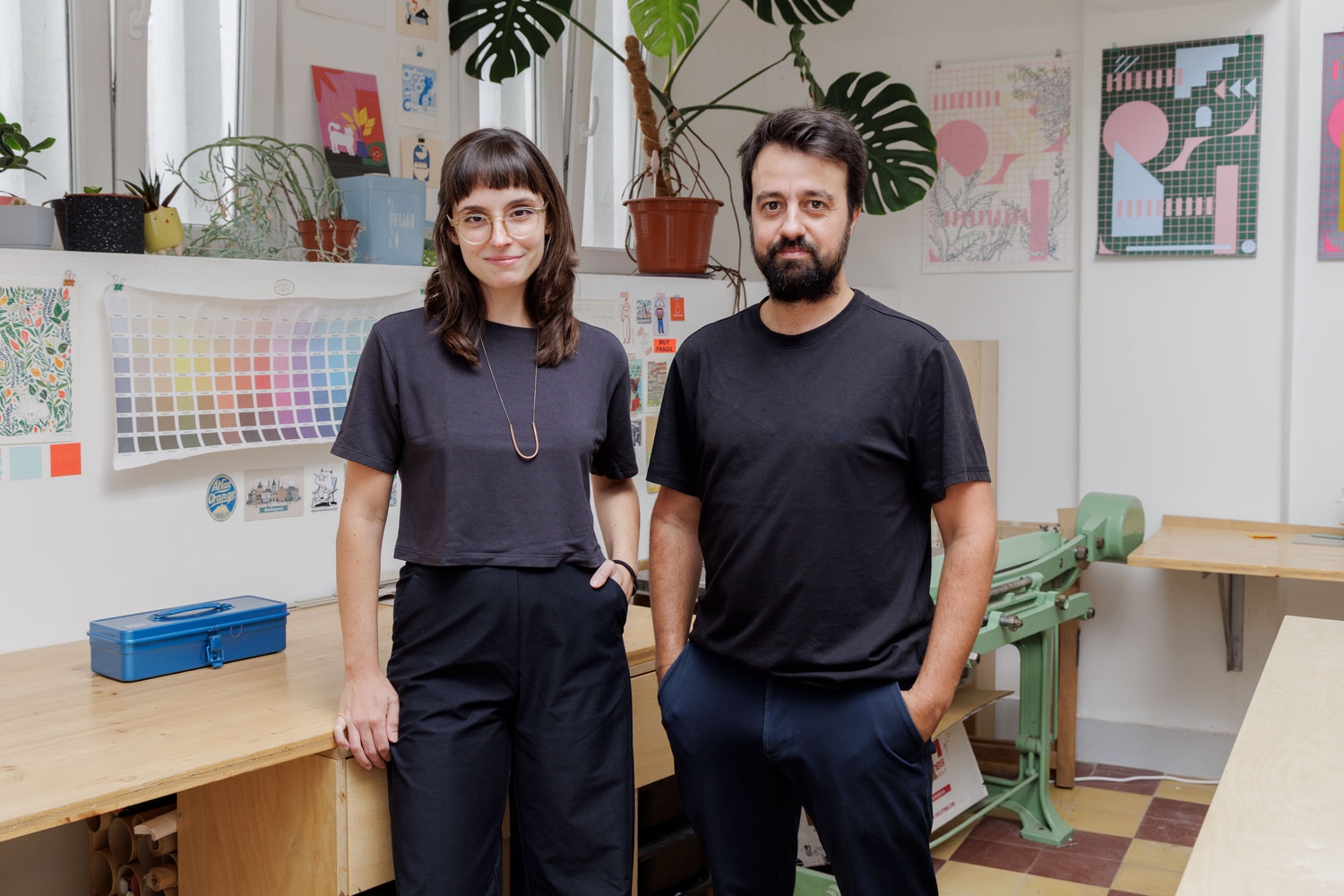
Letícia Burkardt and Tiago Casanova
Estúdio Bulhufas
Bookbinder
Lisbon, Portugal
Architecture at book scale
- Letícia and Tiago’s work is shaped by geometry and spatial thinking
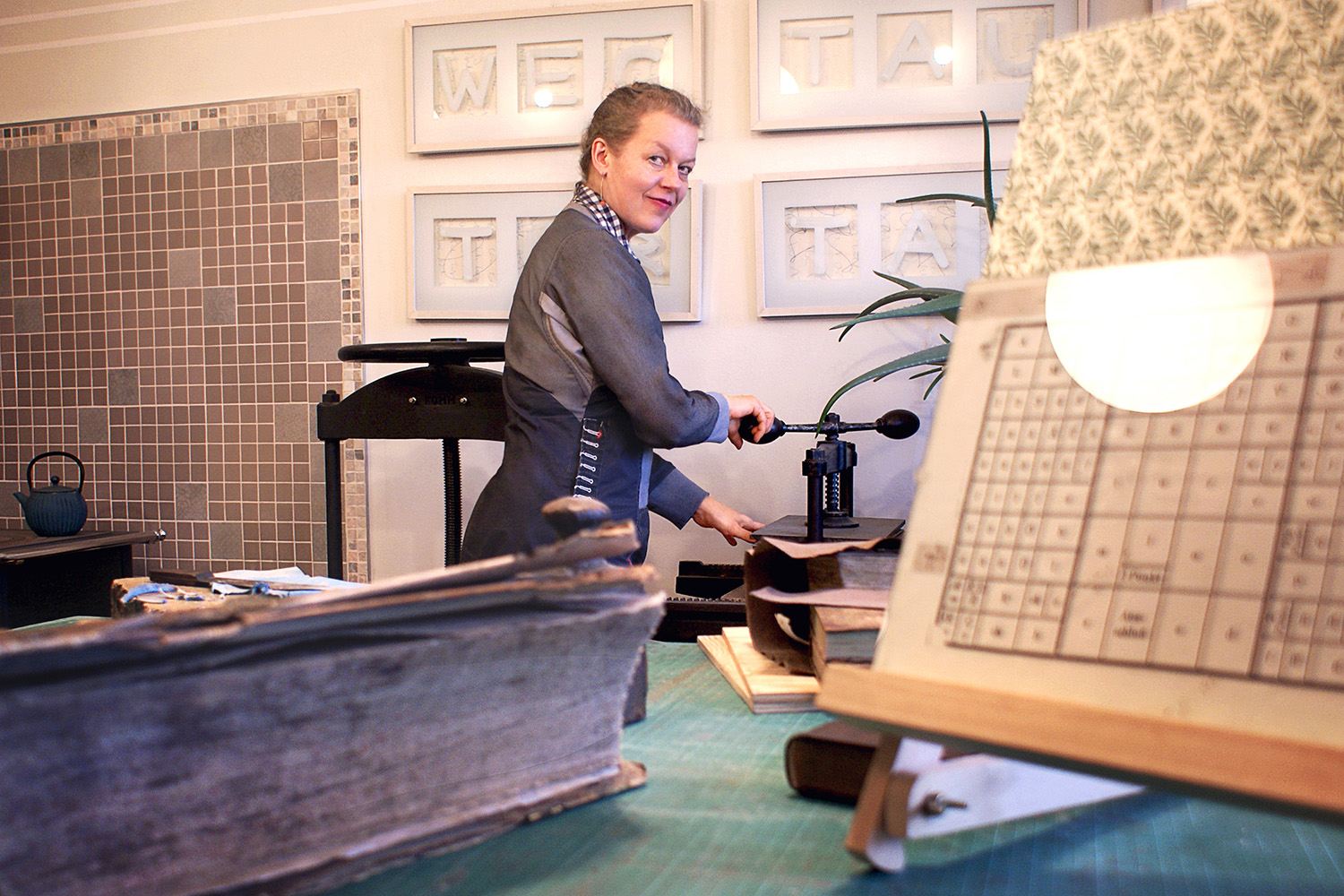
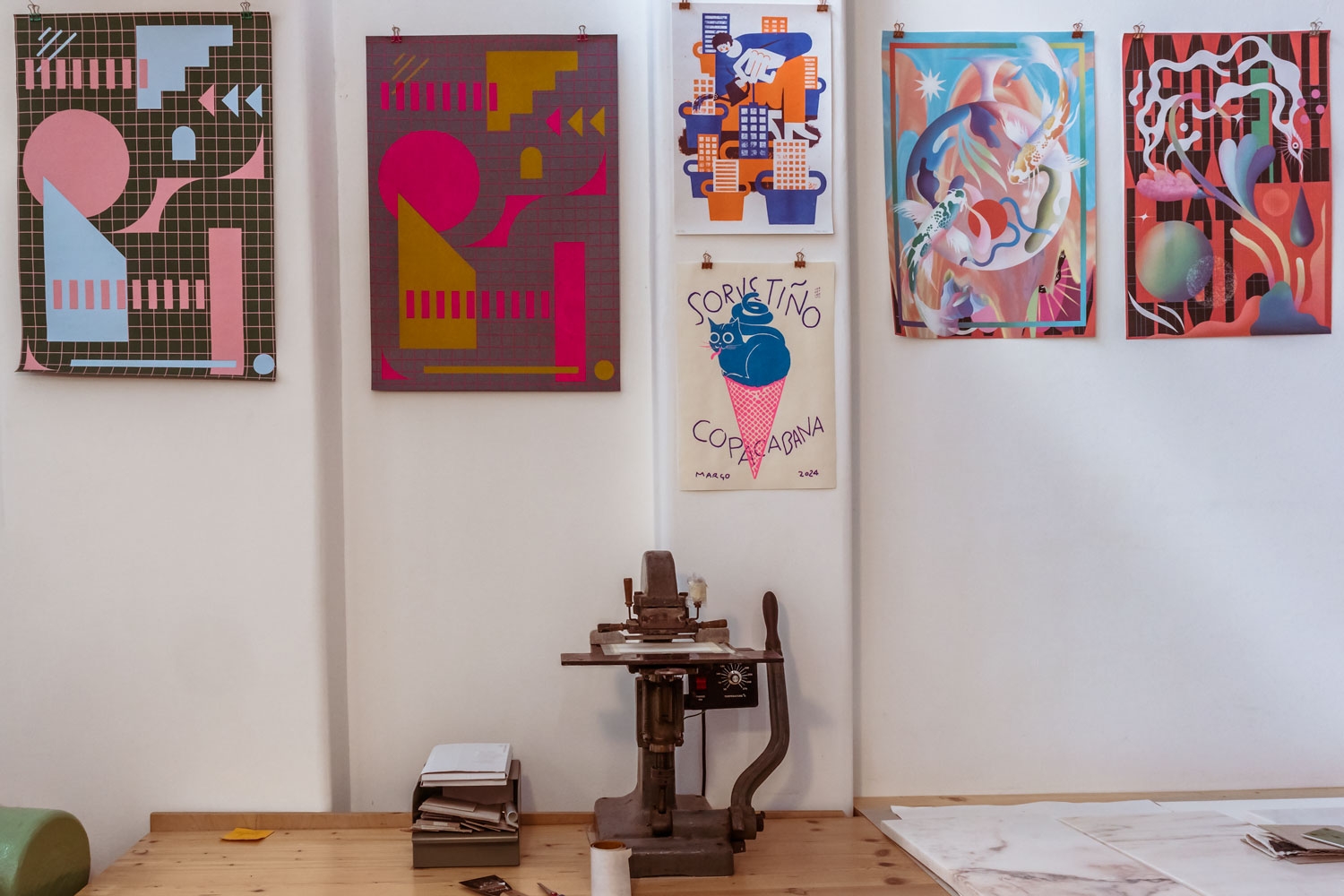
- Their studio has held workshops since its founding in 2017
- They created pieces for Portugal’s Prime Minister’s Office and the New Orleans Museum of Art
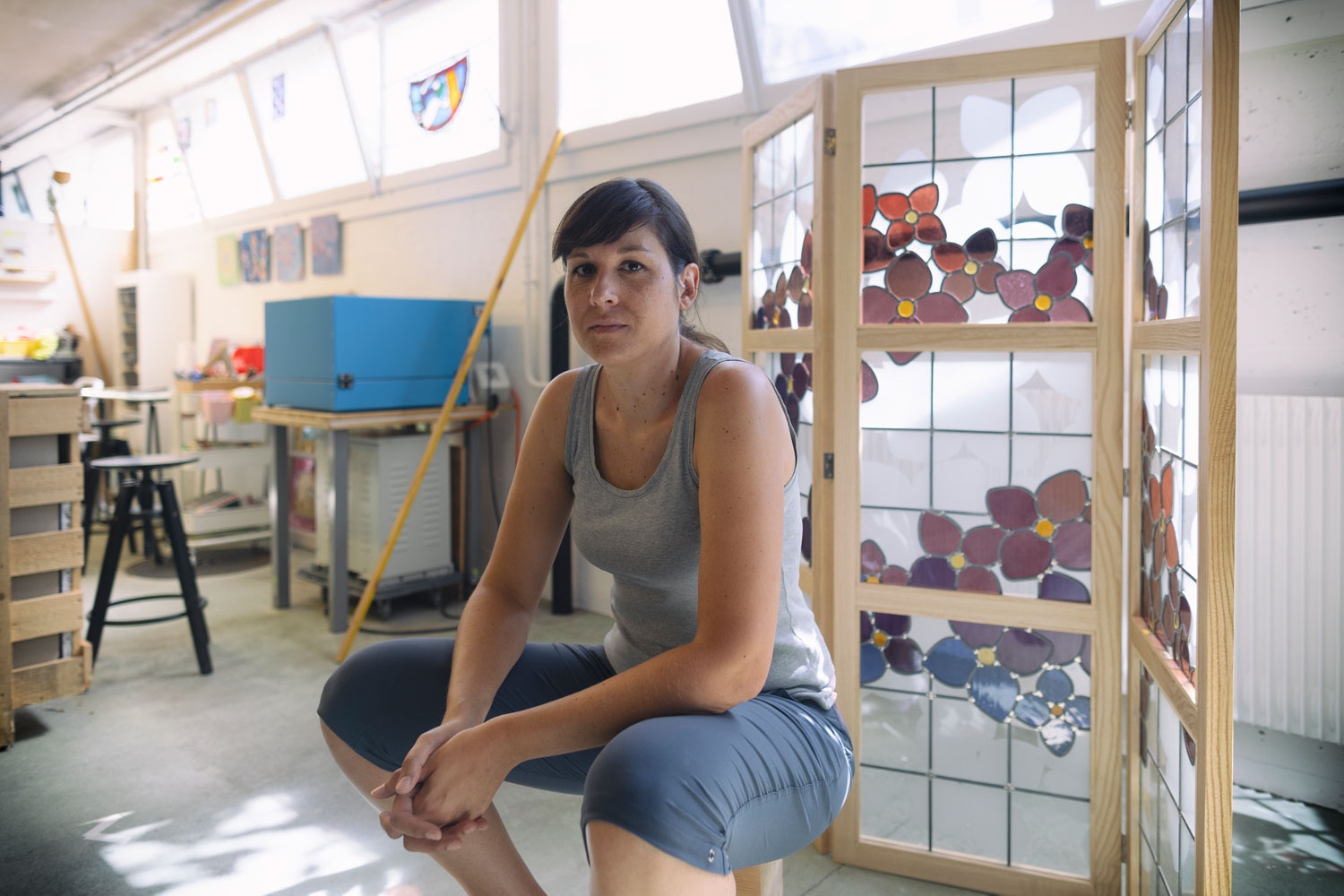
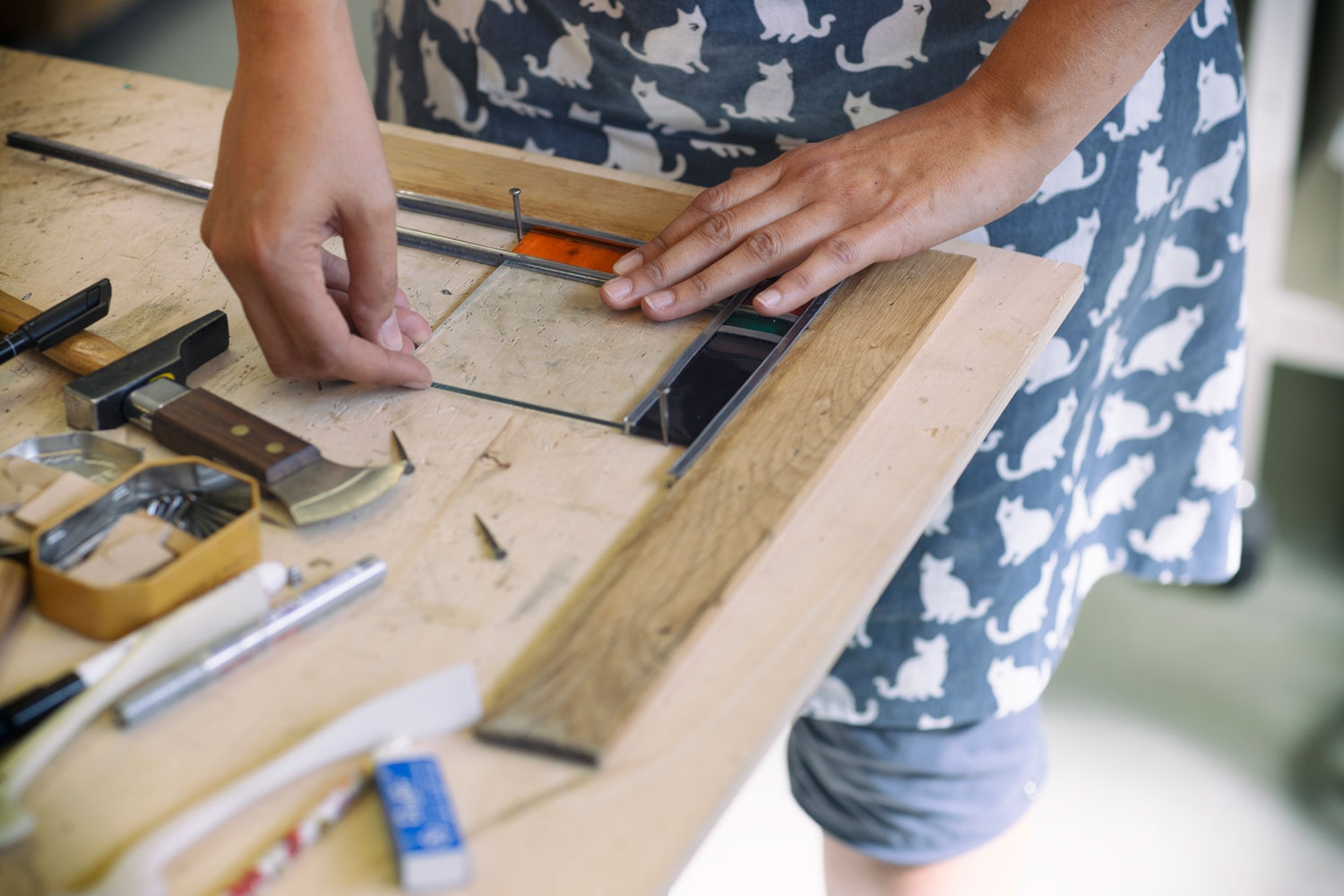
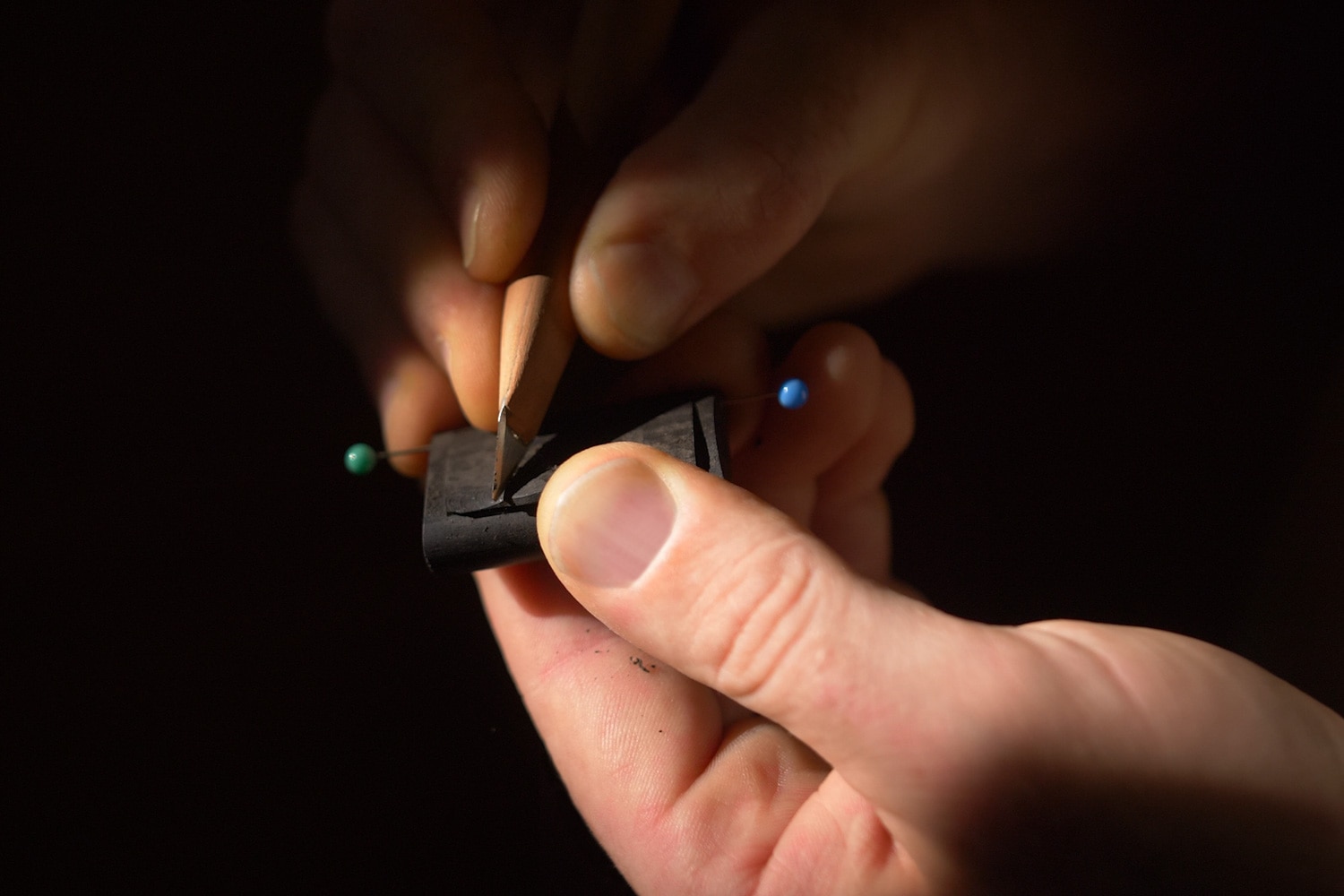
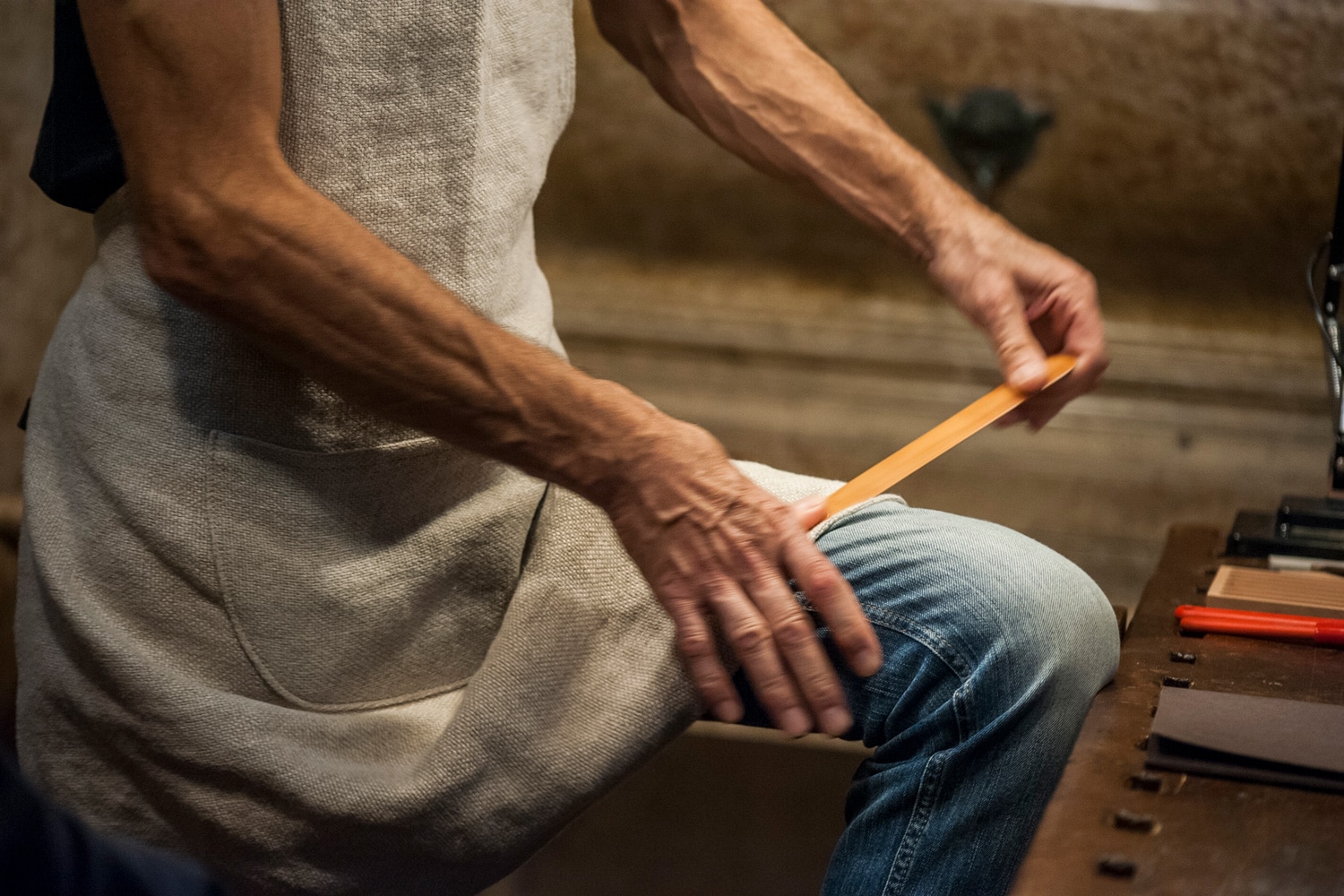
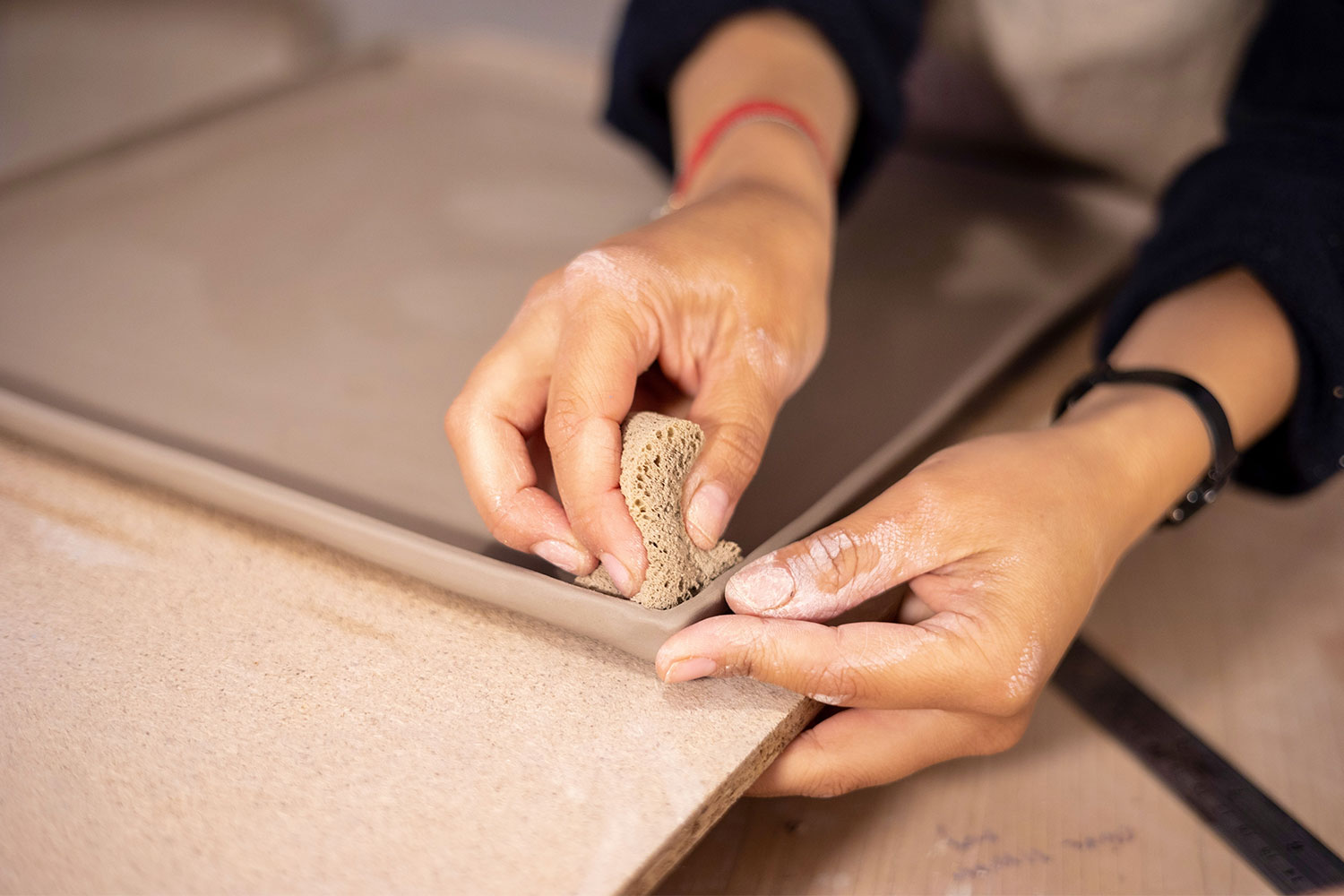
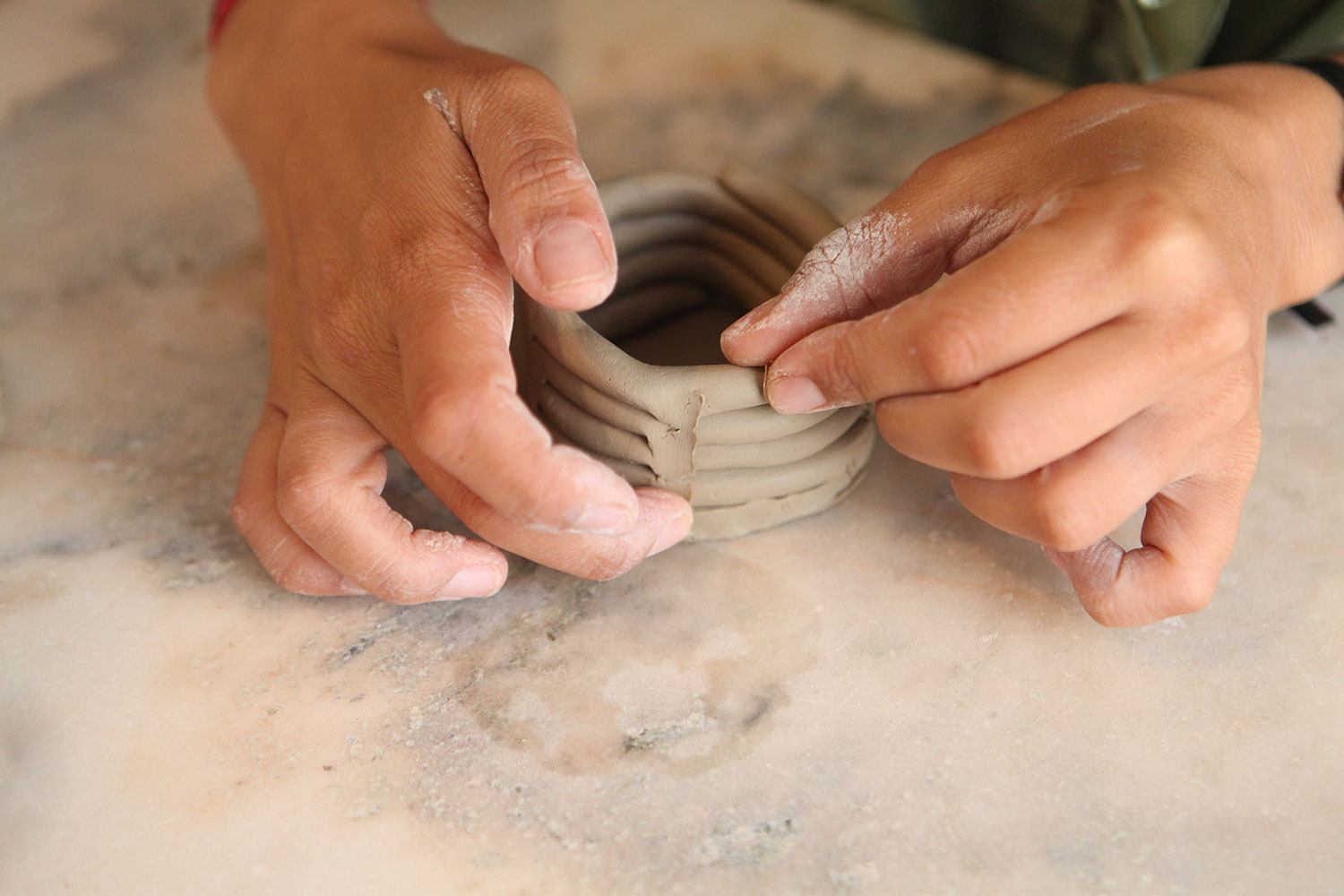
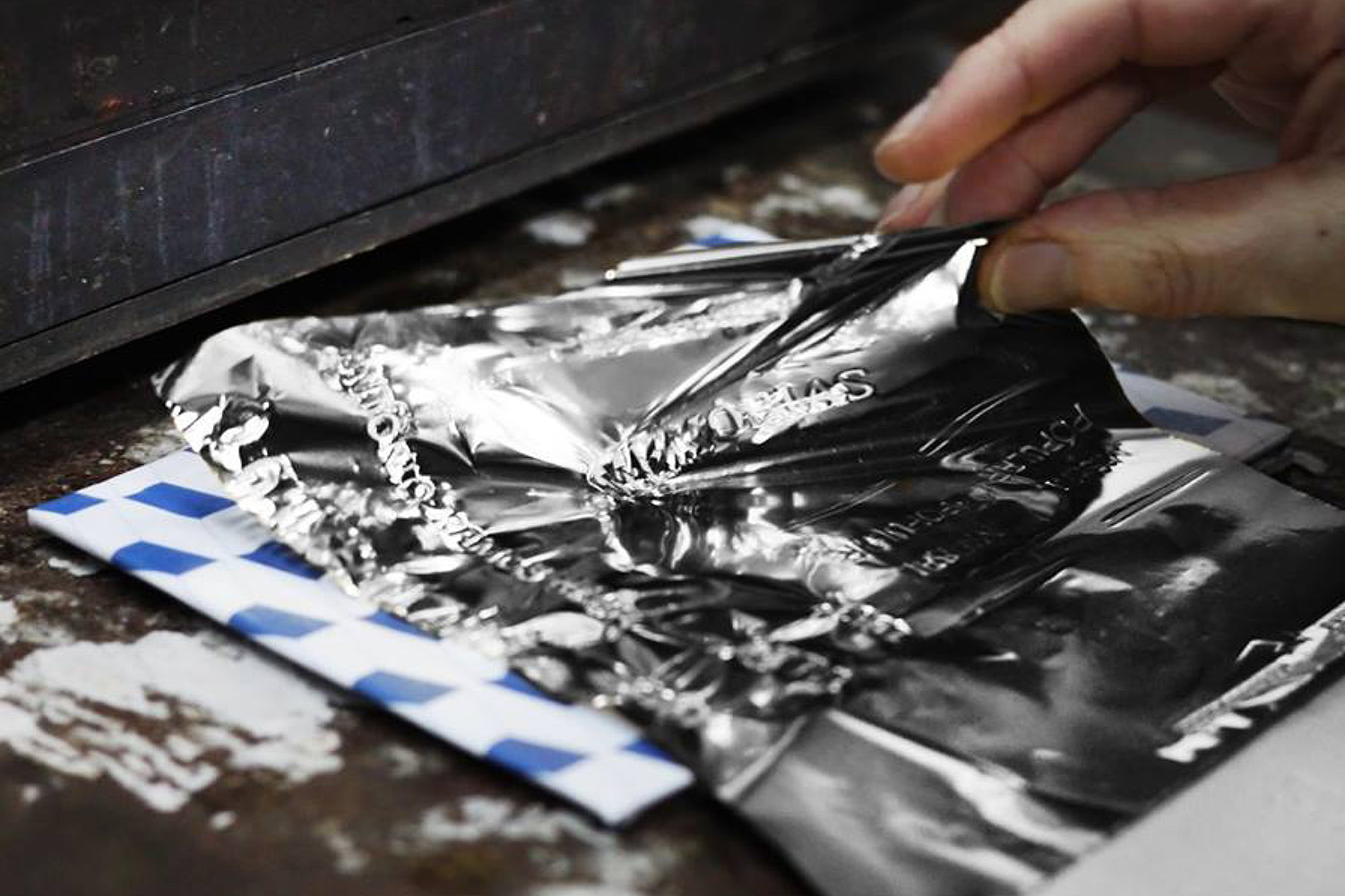
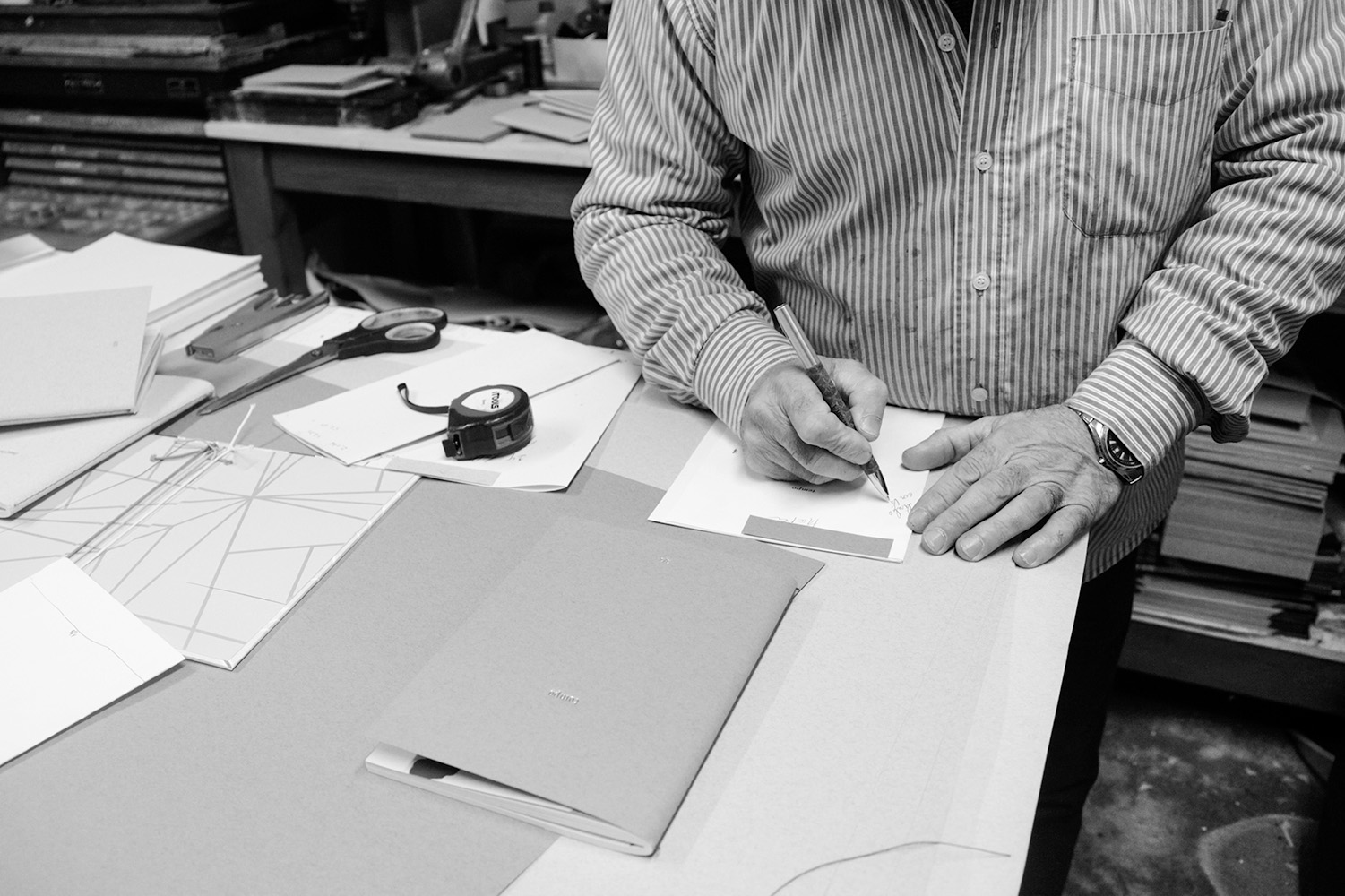
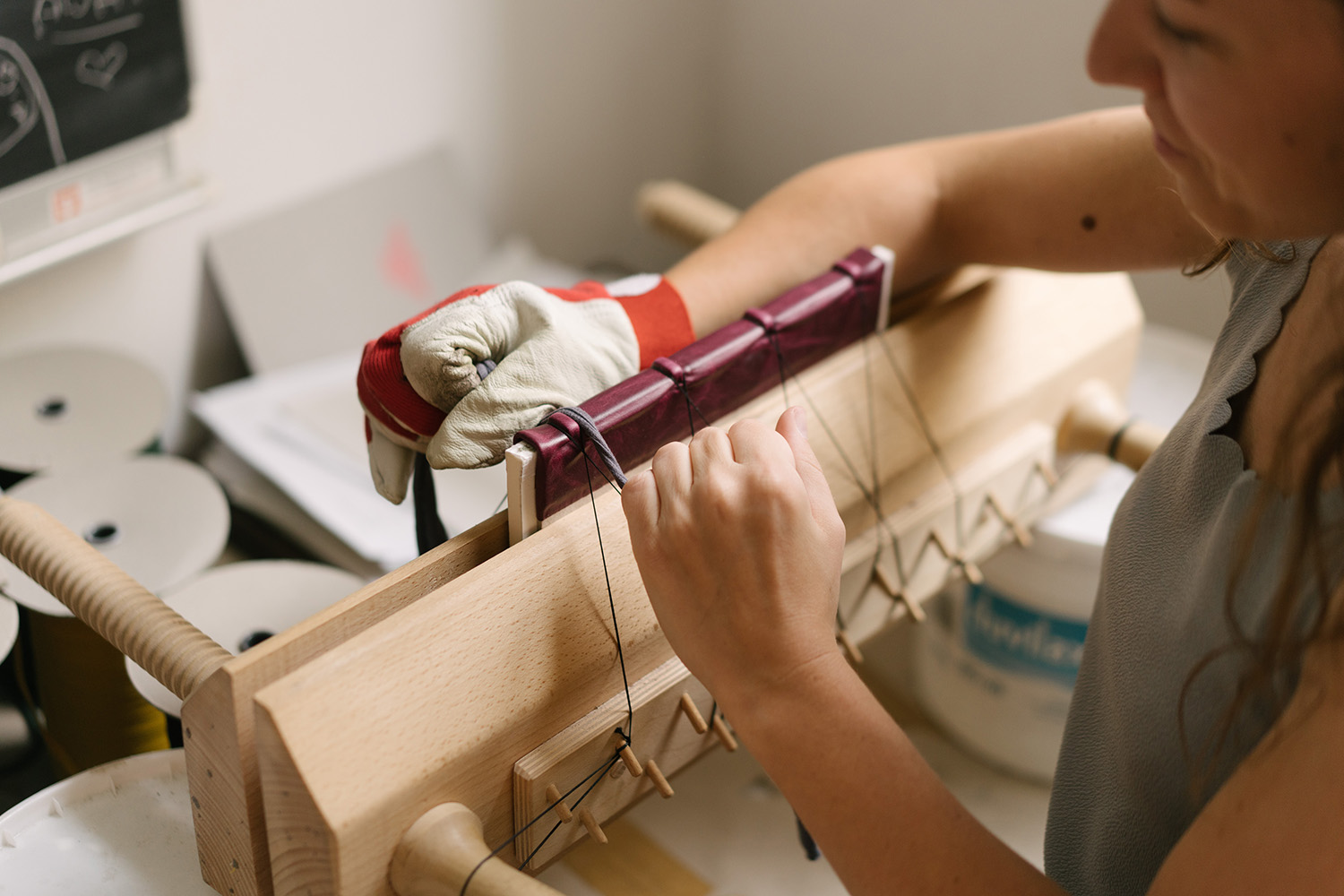
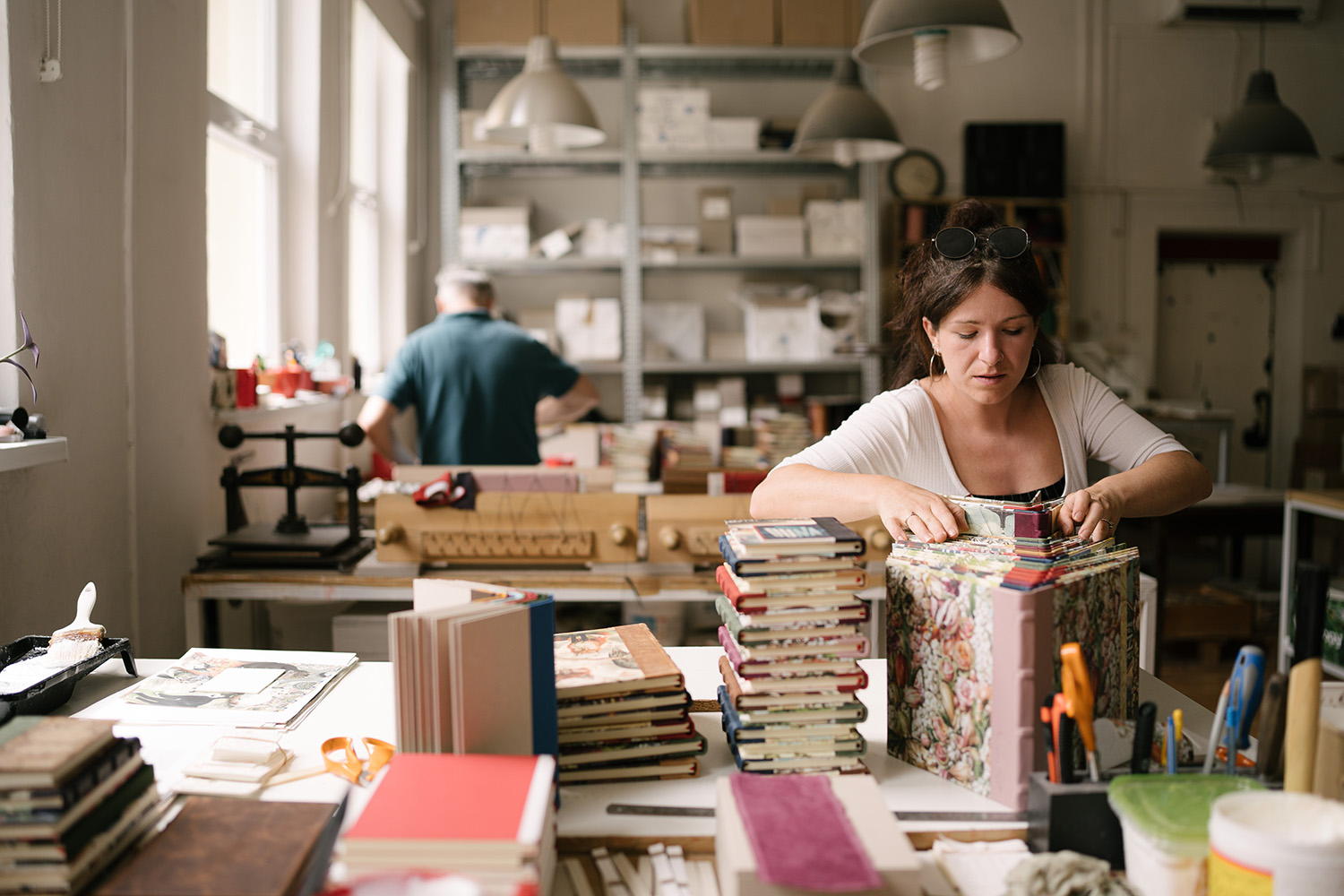
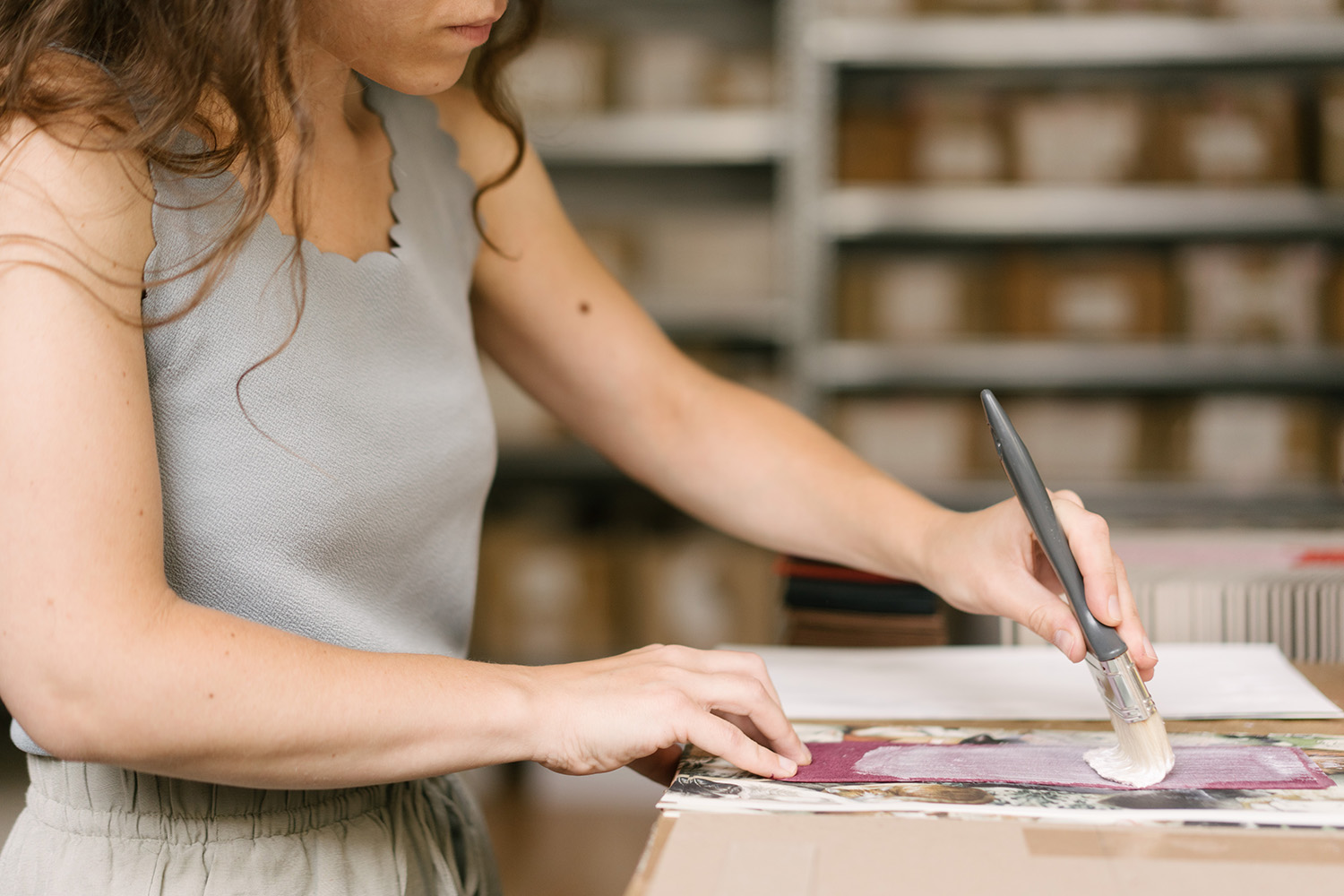
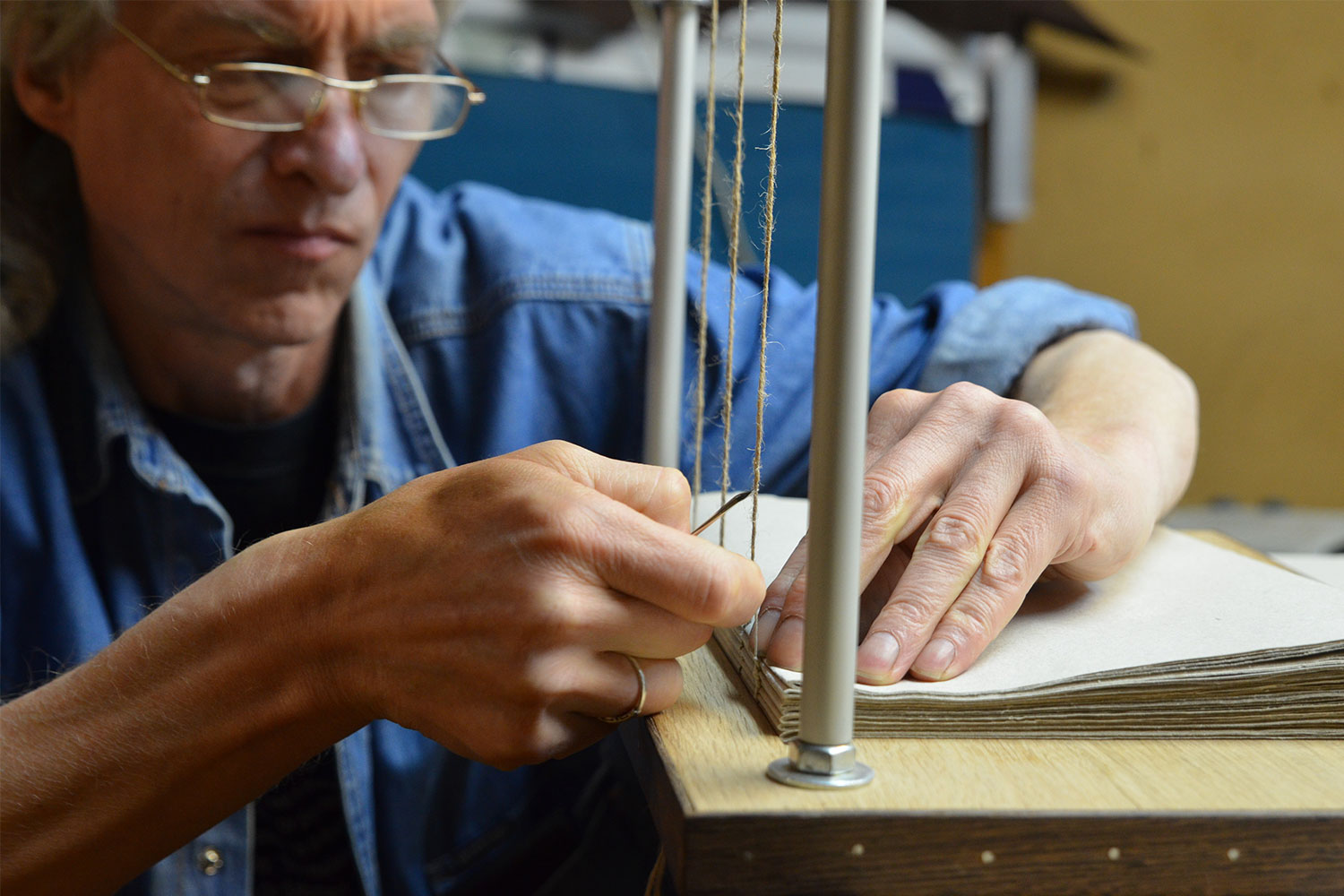
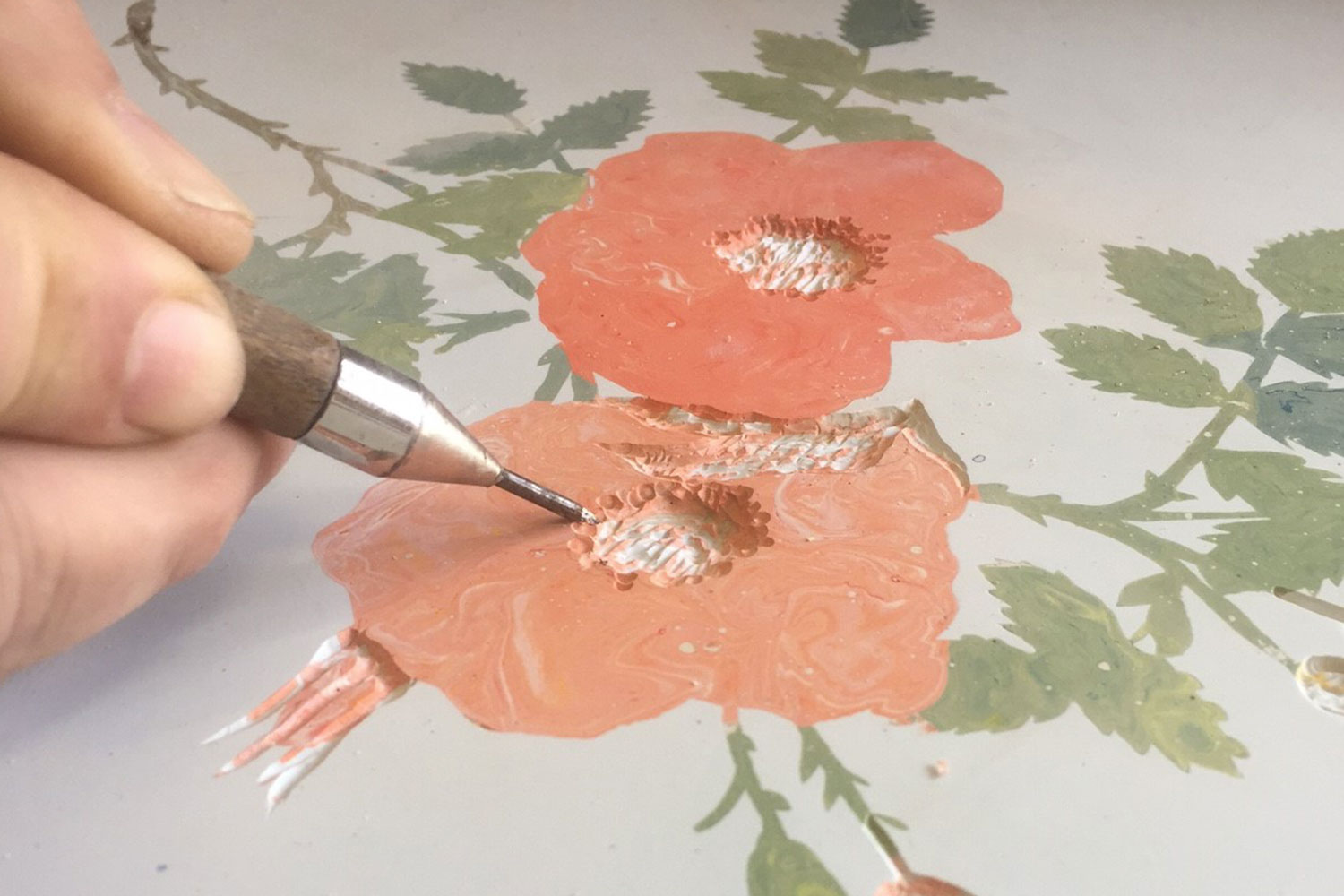
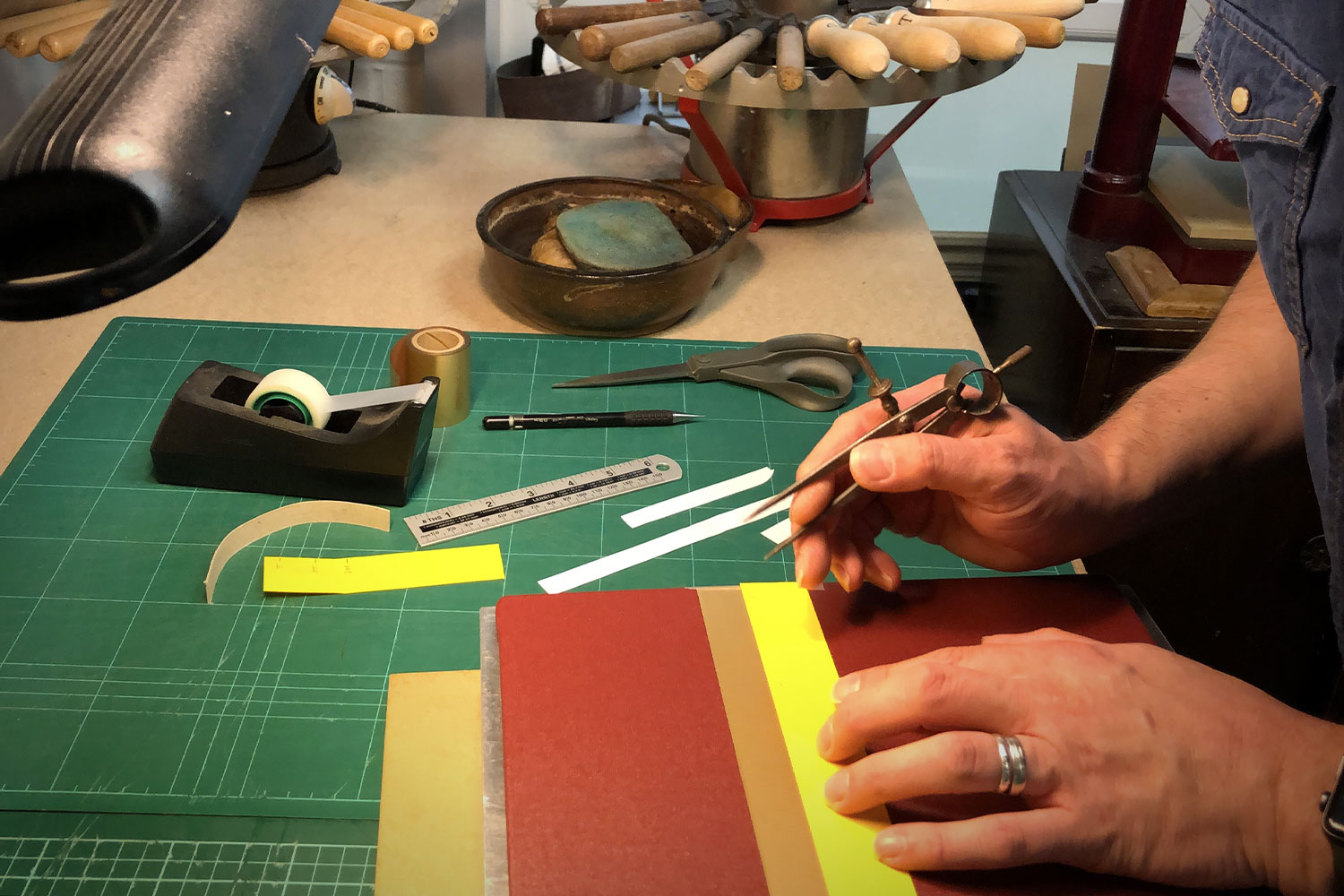
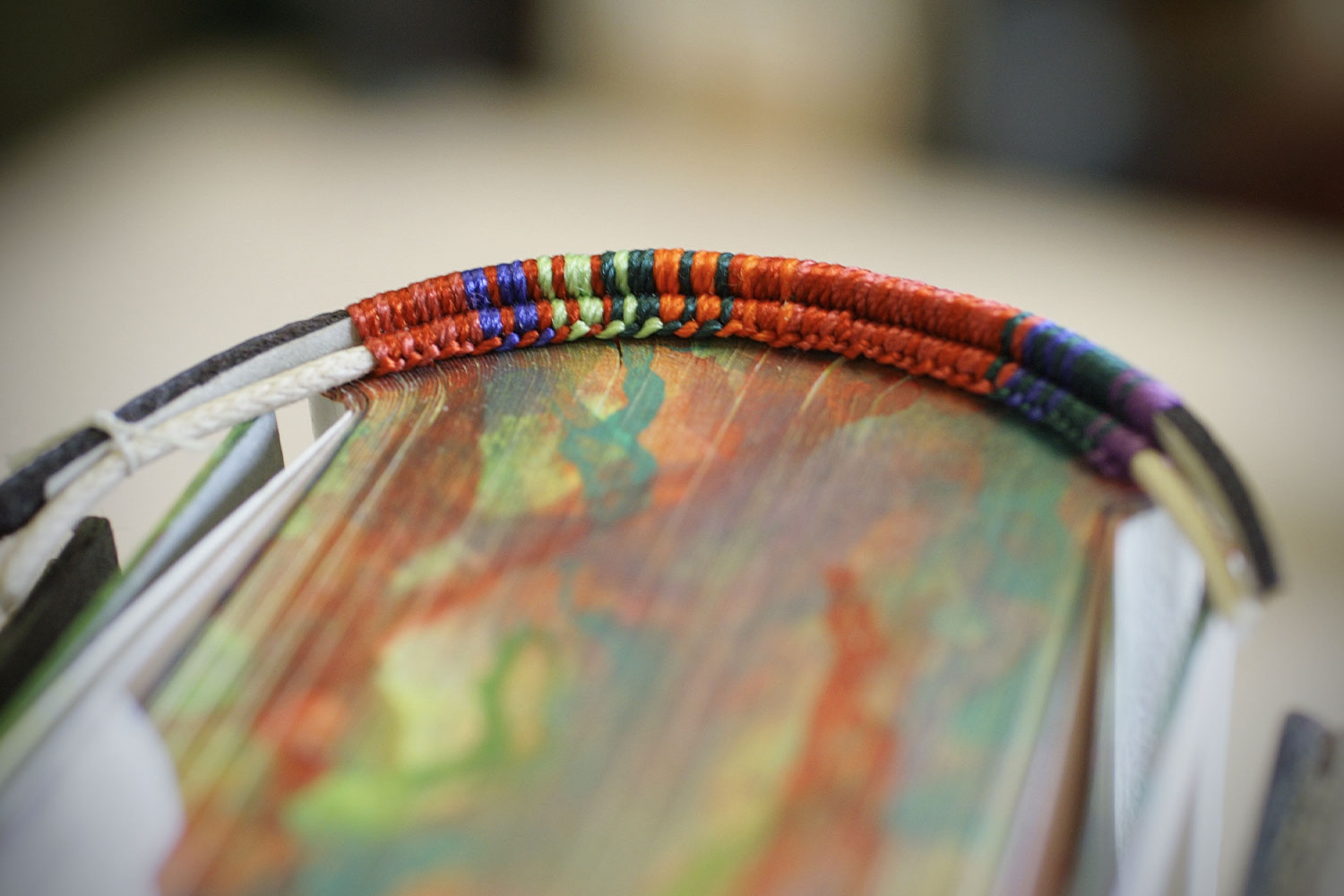
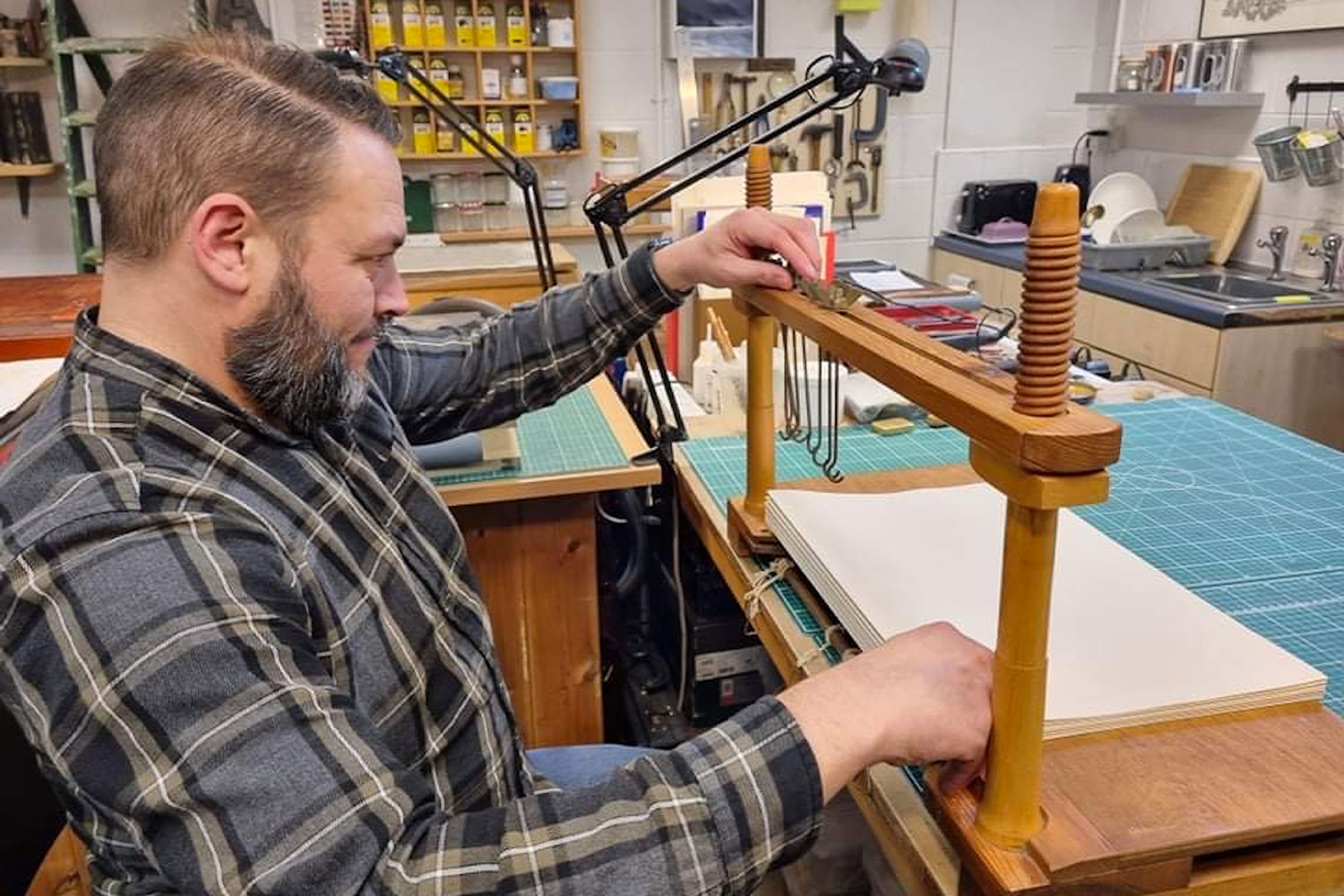
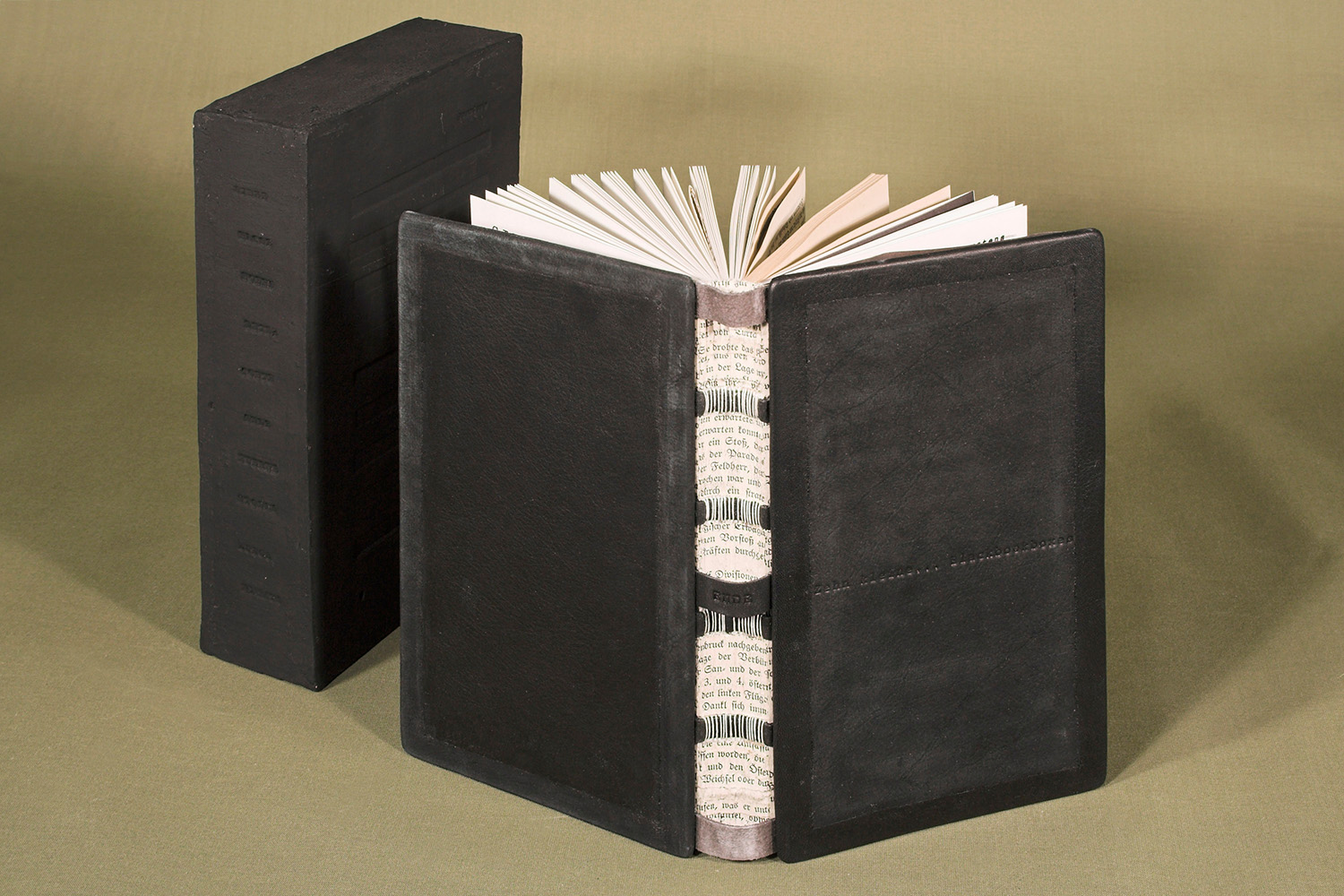
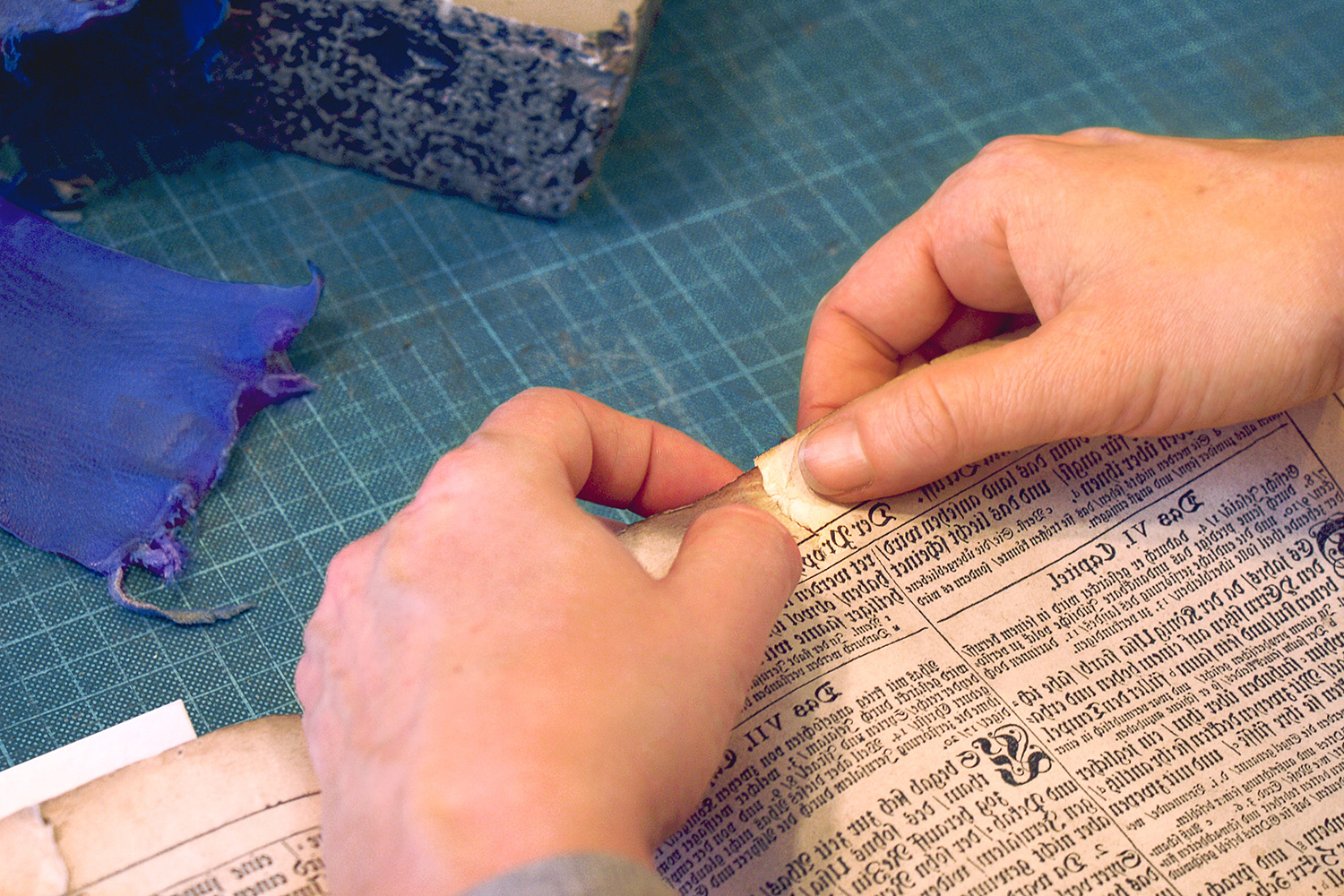
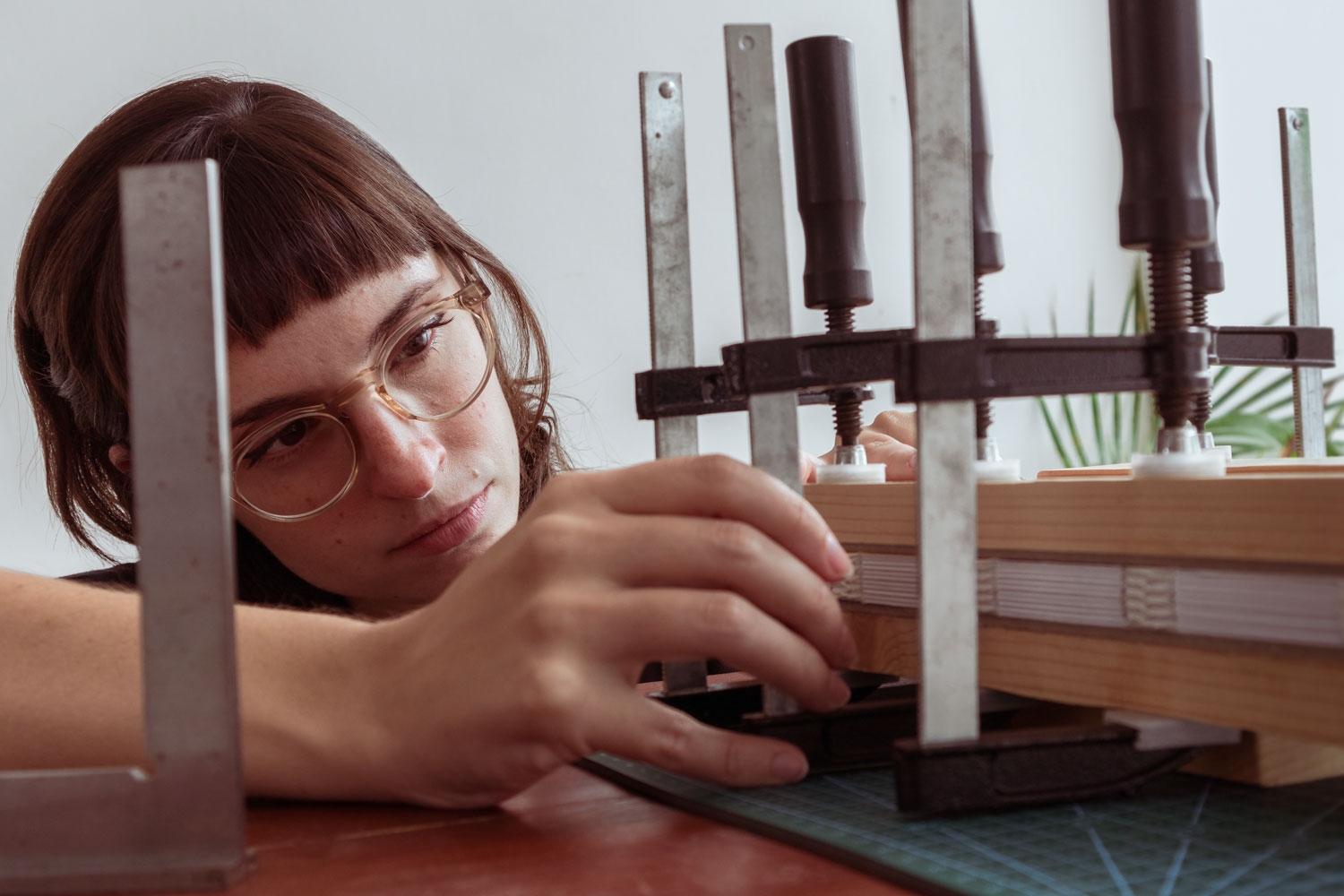
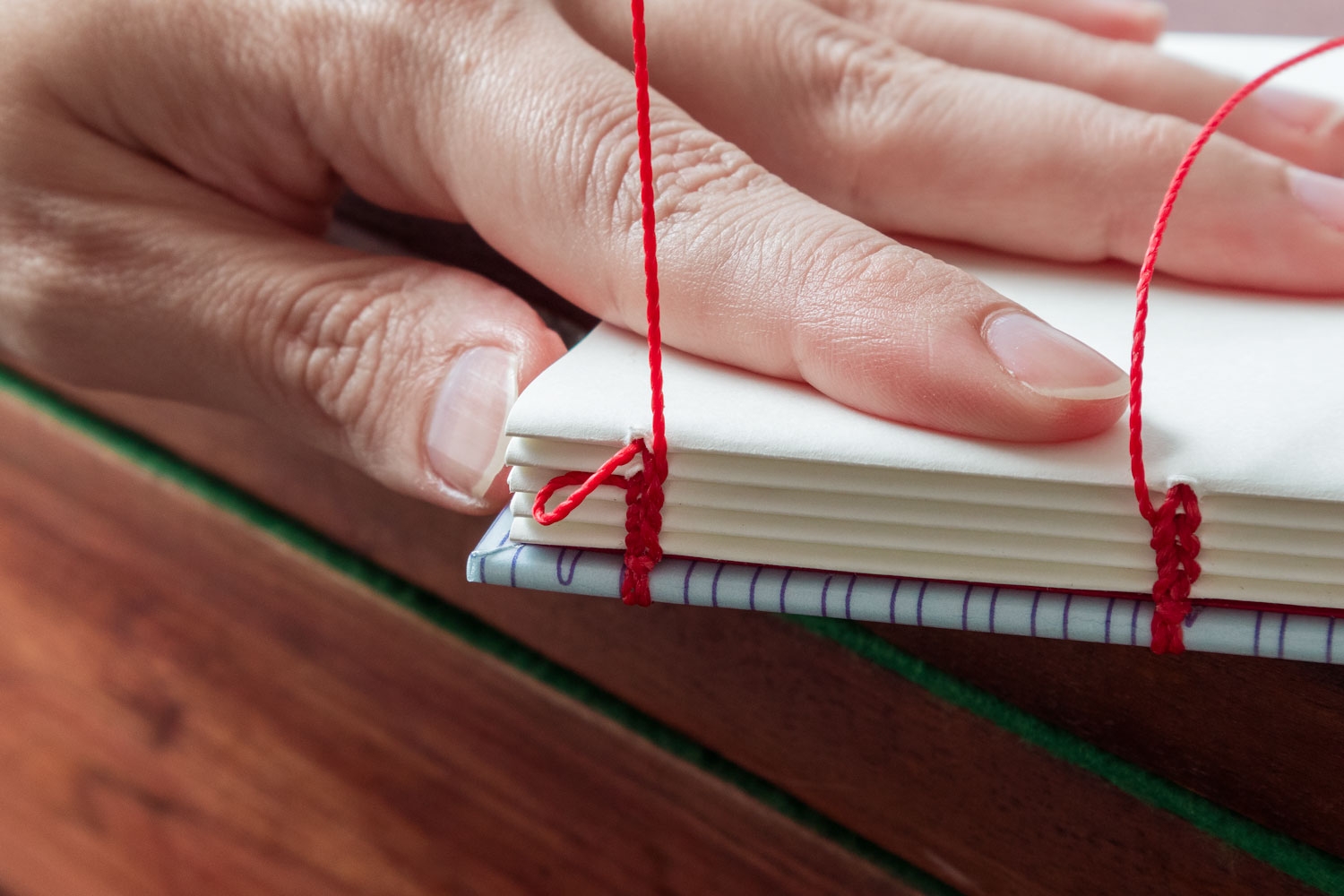
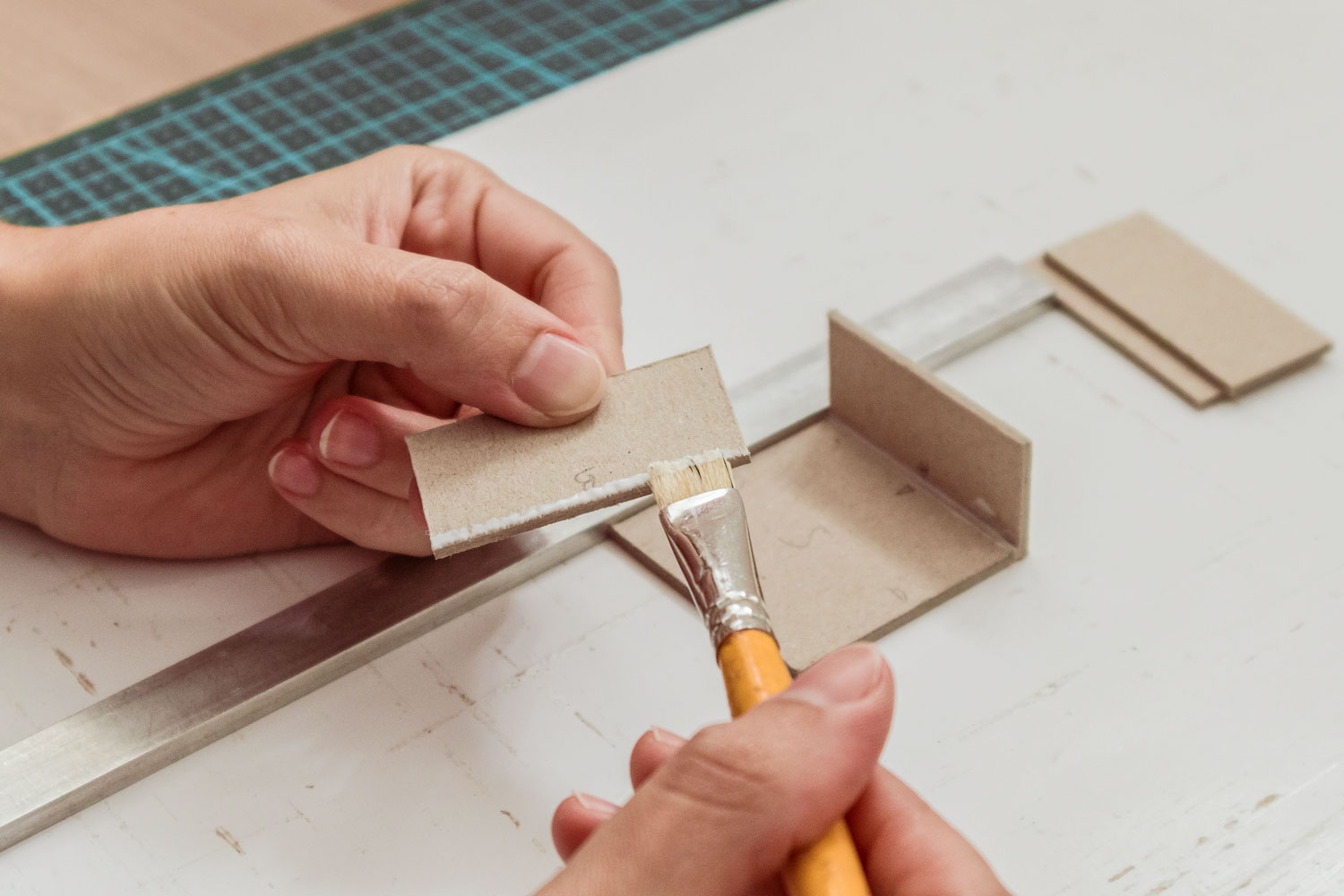
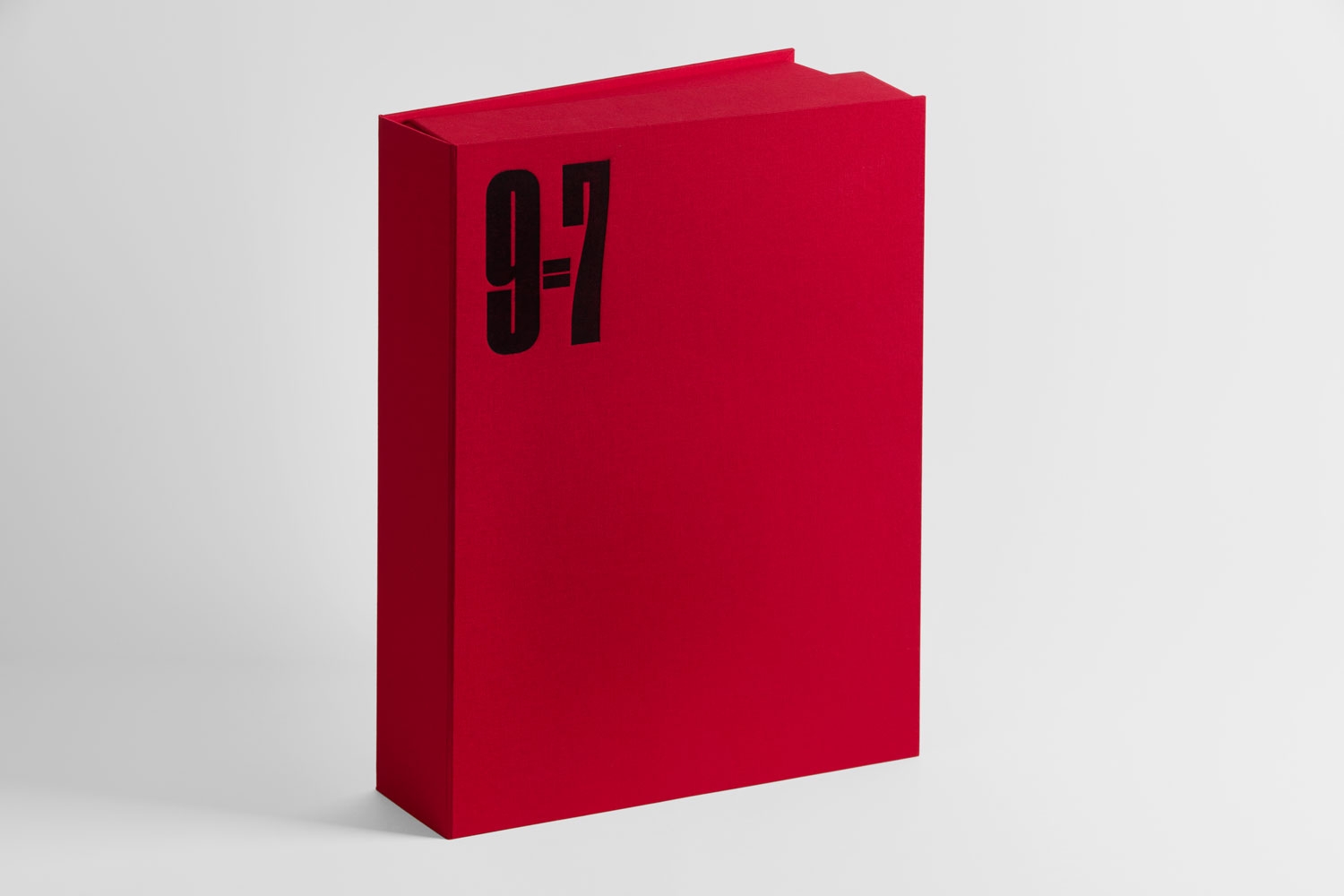
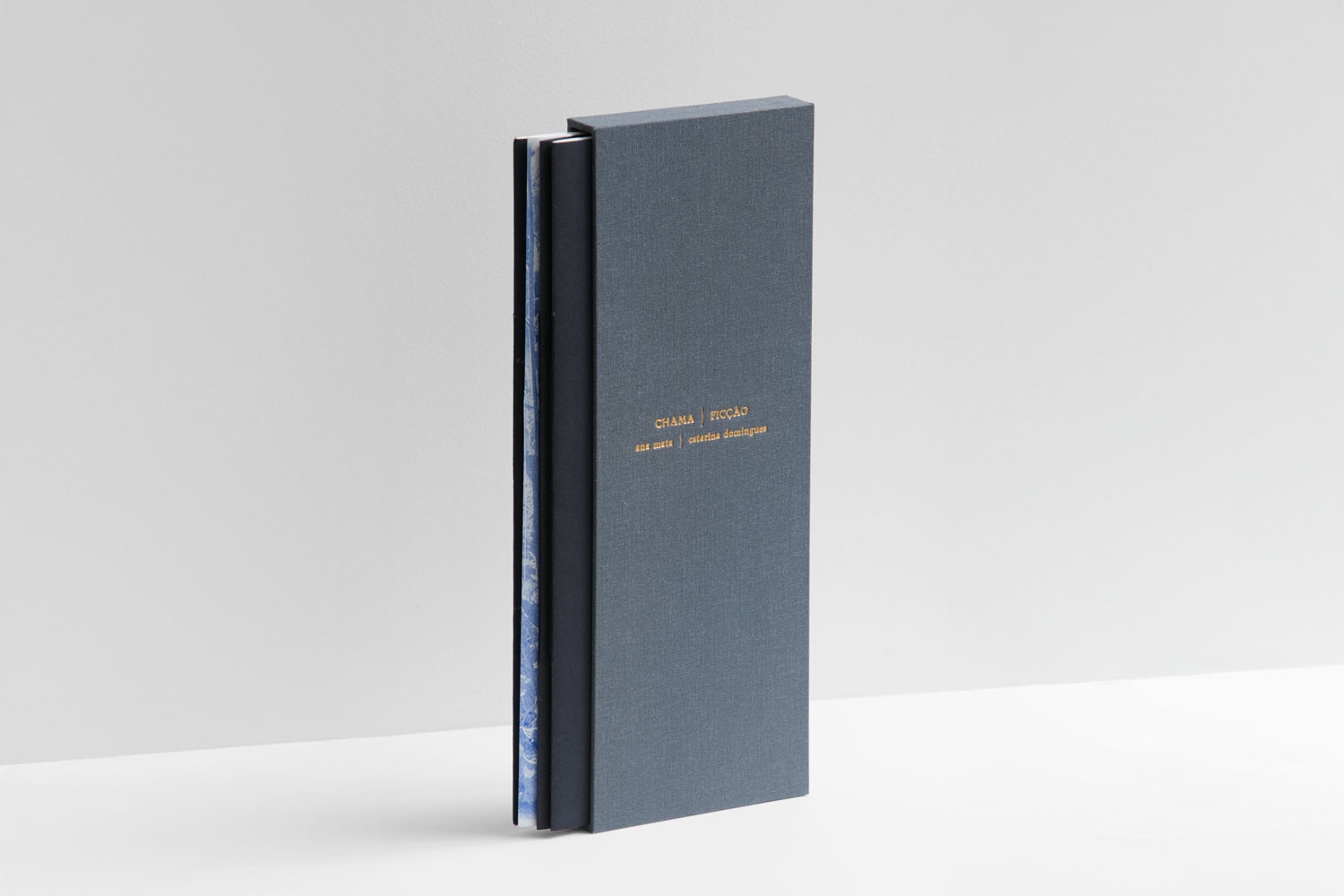
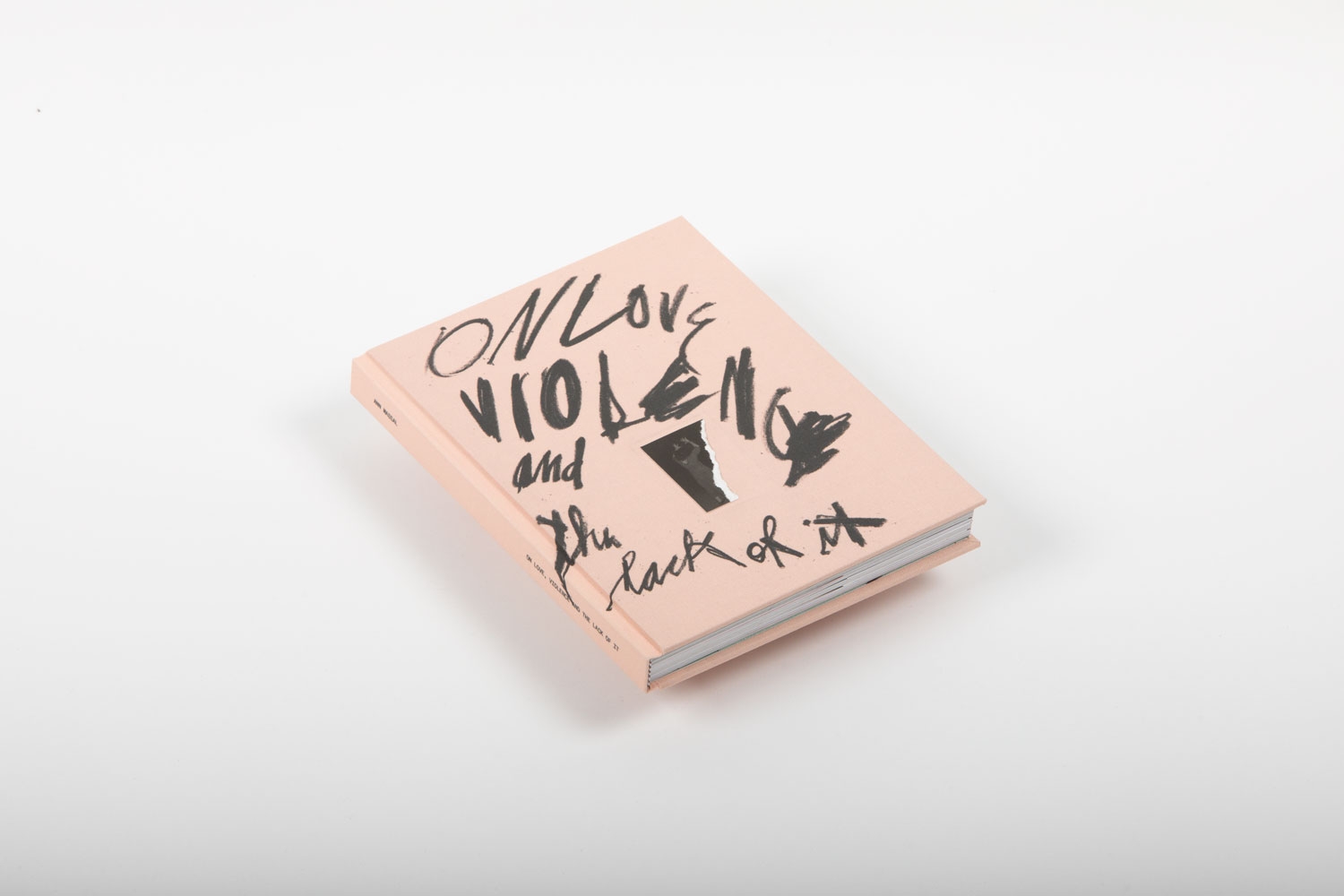
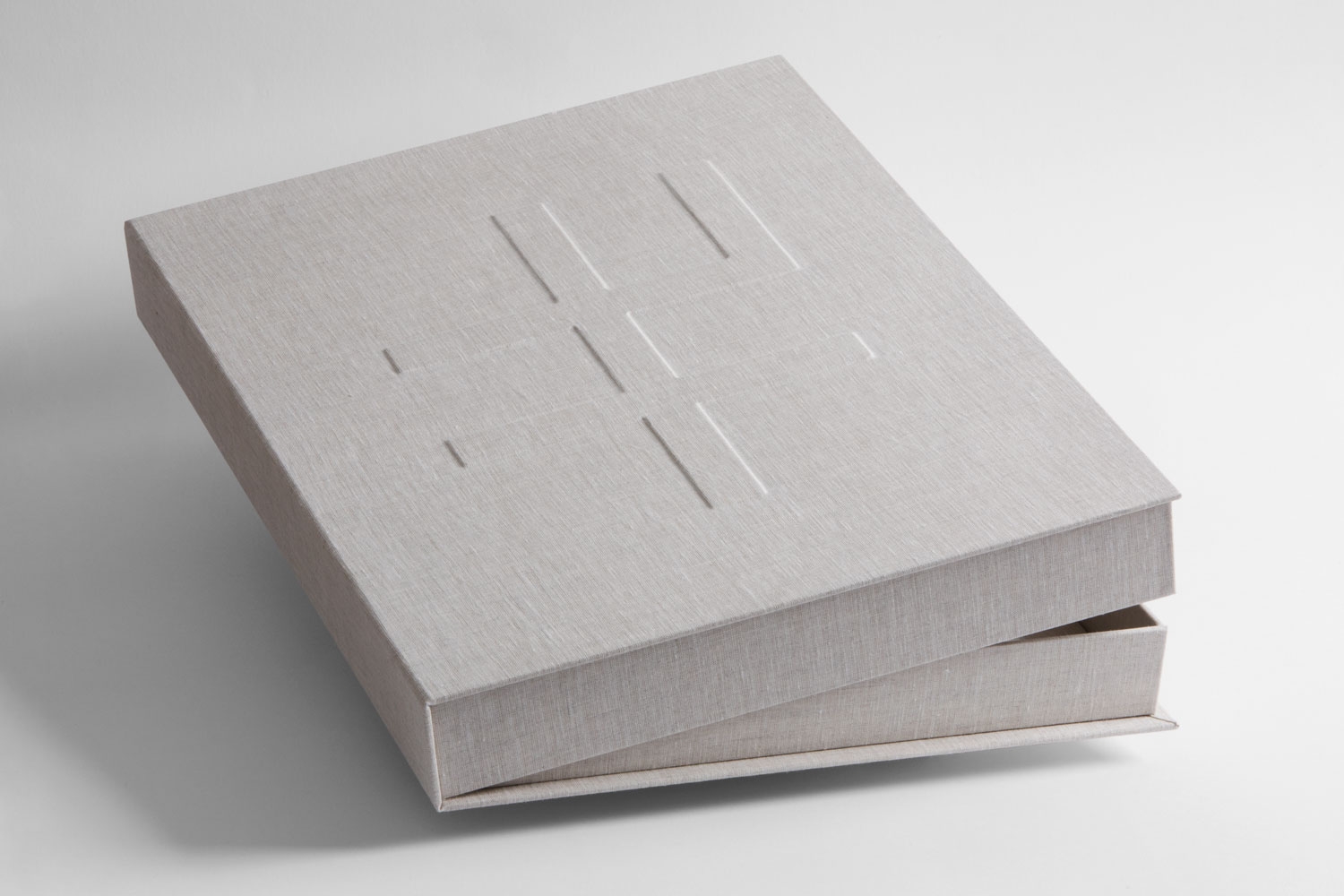
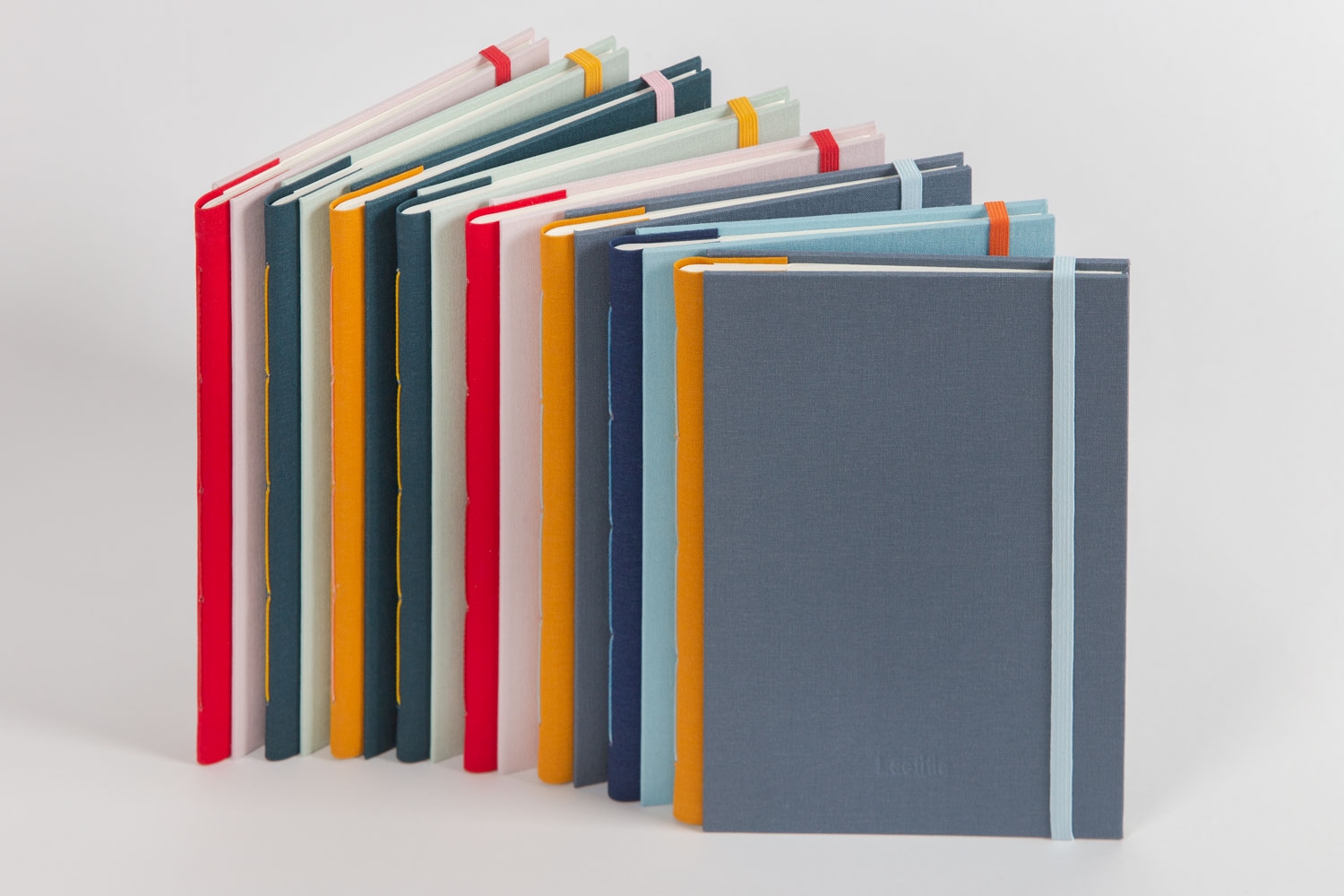
Both architects by training, Letícia Burkardt and Tiago Casanova carry an instinct for proportion and structure into their bookbinding projects. "A beautiful, functional object rests on a solid framework," they say. "For us, a book is architecture on a small scale." Their process begins with two questions: what is being bound, and how will it be used? This guides Letícia and Tiago's decisions on paper, colour and technique. Their work spans classical binding, for which they work with Bradel structures, and contemporary binding, for which they use exposed sewing, such as French cross-stitching. With so much now filtered through screens, Letícia and Tiago see their practice as a return to the singular and tangible. "Nothing replaces the physical and emotional presence of something that truly exists," the duo say.
INTERVIEW
Letícia: I am more involved in production and the day-to-day running of the studio, while Tiago focuses more on the project’s overarching decisions, such as strategy, design and communication. Everything happens through constant dialogue.
Letícia: While I did attend some courses in Brazil, my journey truly began during my architecture studies. I spent a semester focusing on design, which included bookbinding. From then on, it became the only thing I wanted to do in my free time. This enthusiasm led me to keep investing in further training, even without a formal education in bookbinding.
Tiago: Functionality is precisely the sum of all these aspects: reading, touch, handling and physical presence. Together, these form an object coherent with its purpose. Reading remains central, but the sensory and material experience carries equal weight.
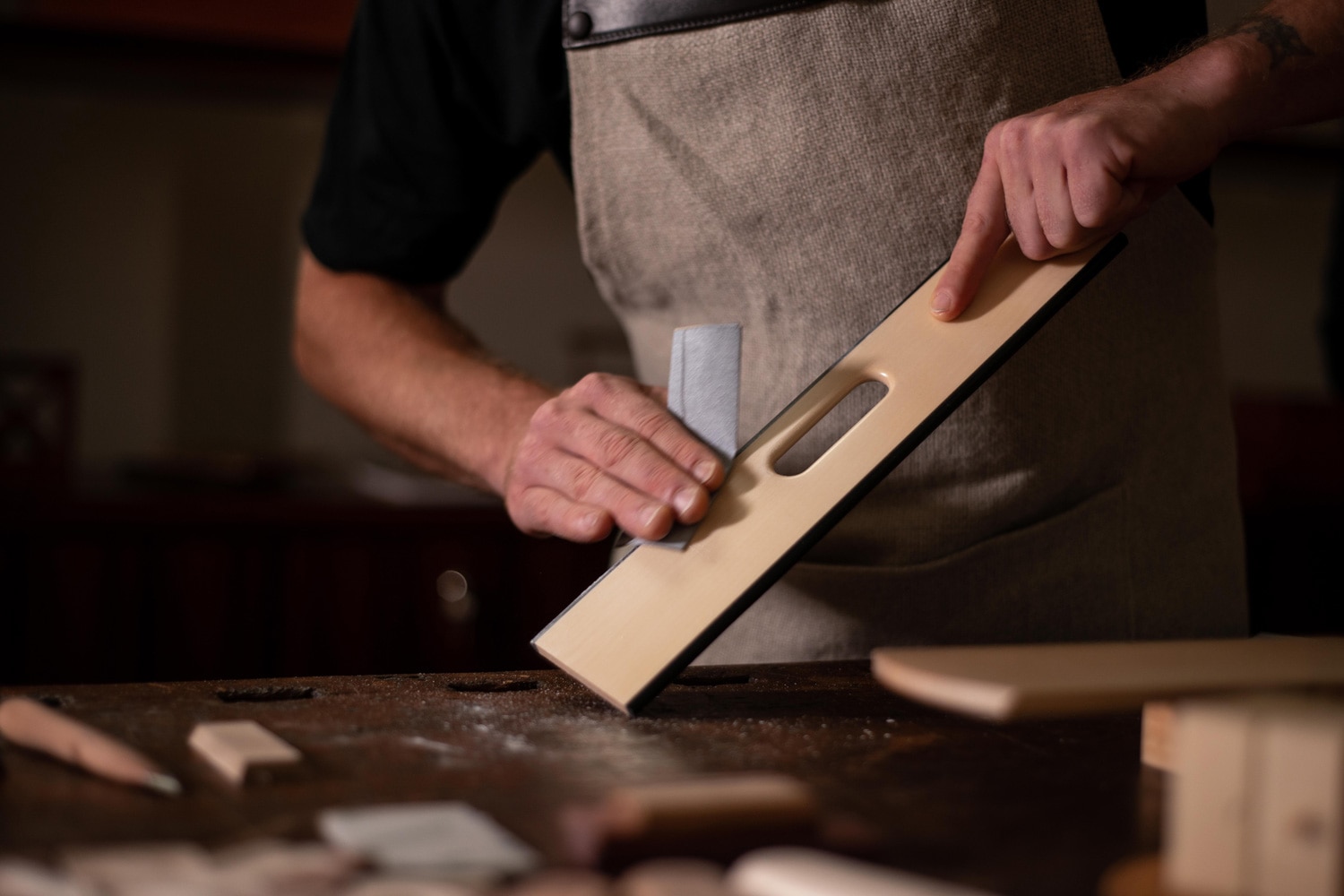
Tiago: We try to prioritise papers with certified provenances and materials with more environmentally friendly characteristics. We avoid plastic and leather whenever possible. While this is not always feasible, our production is still 100% manual, which significantly reduces the waste typical of mass production. Handmaking, in itself, is a green gesture.
Letícia Burkardt and Tiago Casanova
Estúdio Bulhufas
Bookbinder
Lisbon, Portugal
AVAILABILITY
By appointment only
PHONE
+351 913551776
LANGUAGES
Portuguese, English
Homo Faber Finds is a new service aiming to inspire admirers of craft to connect and collaborate with exceptional artisans.
We invite you to submit an enquiry here.