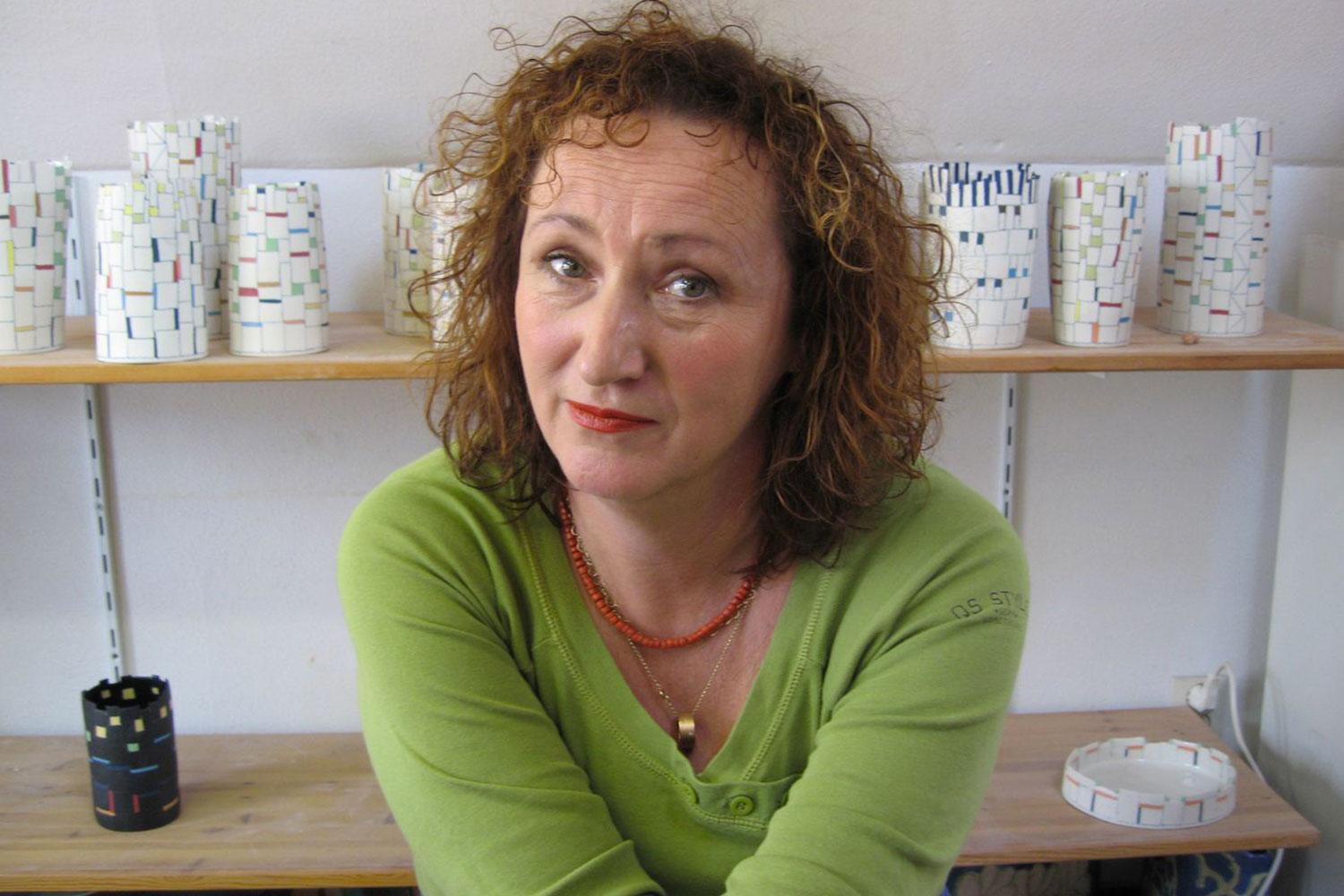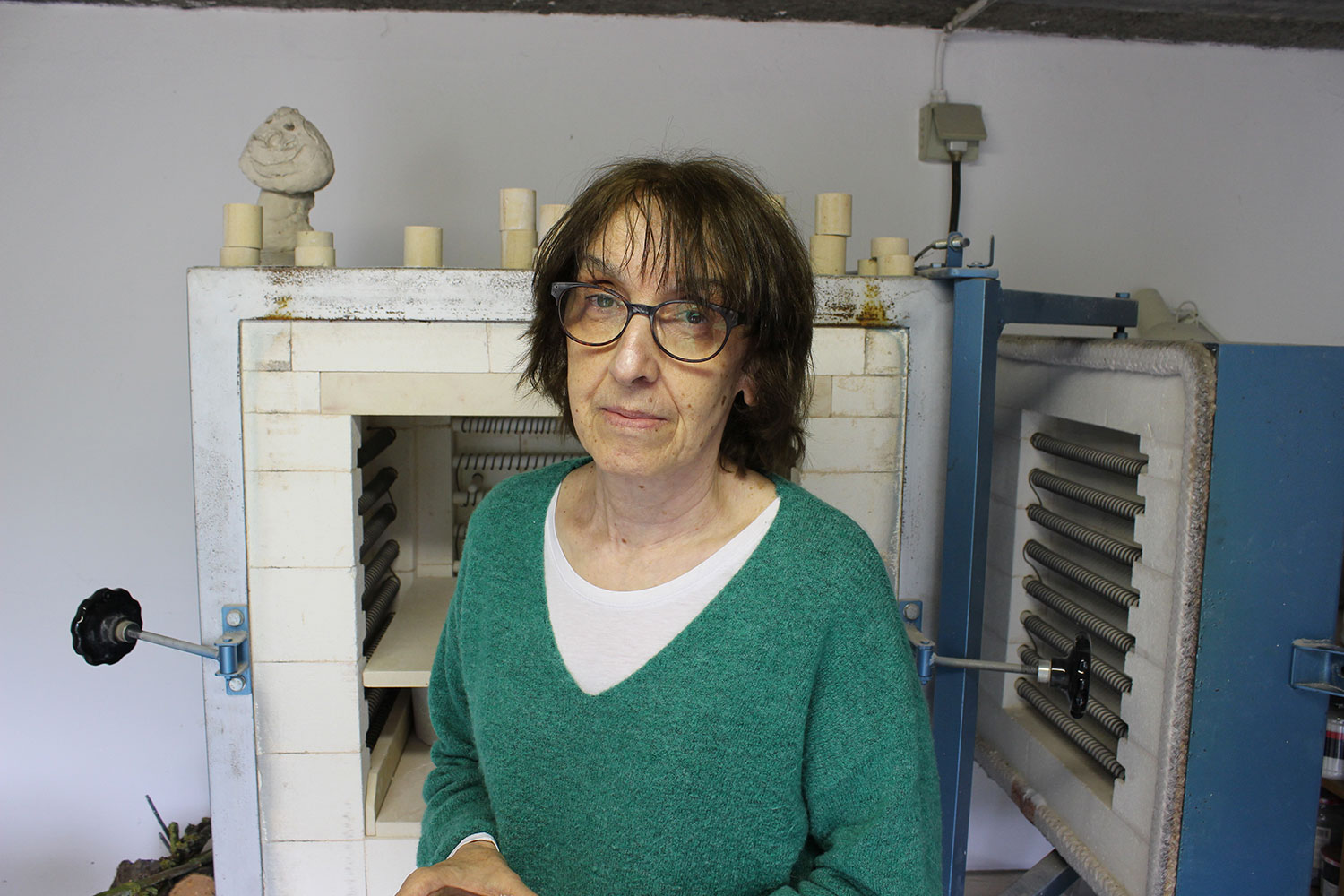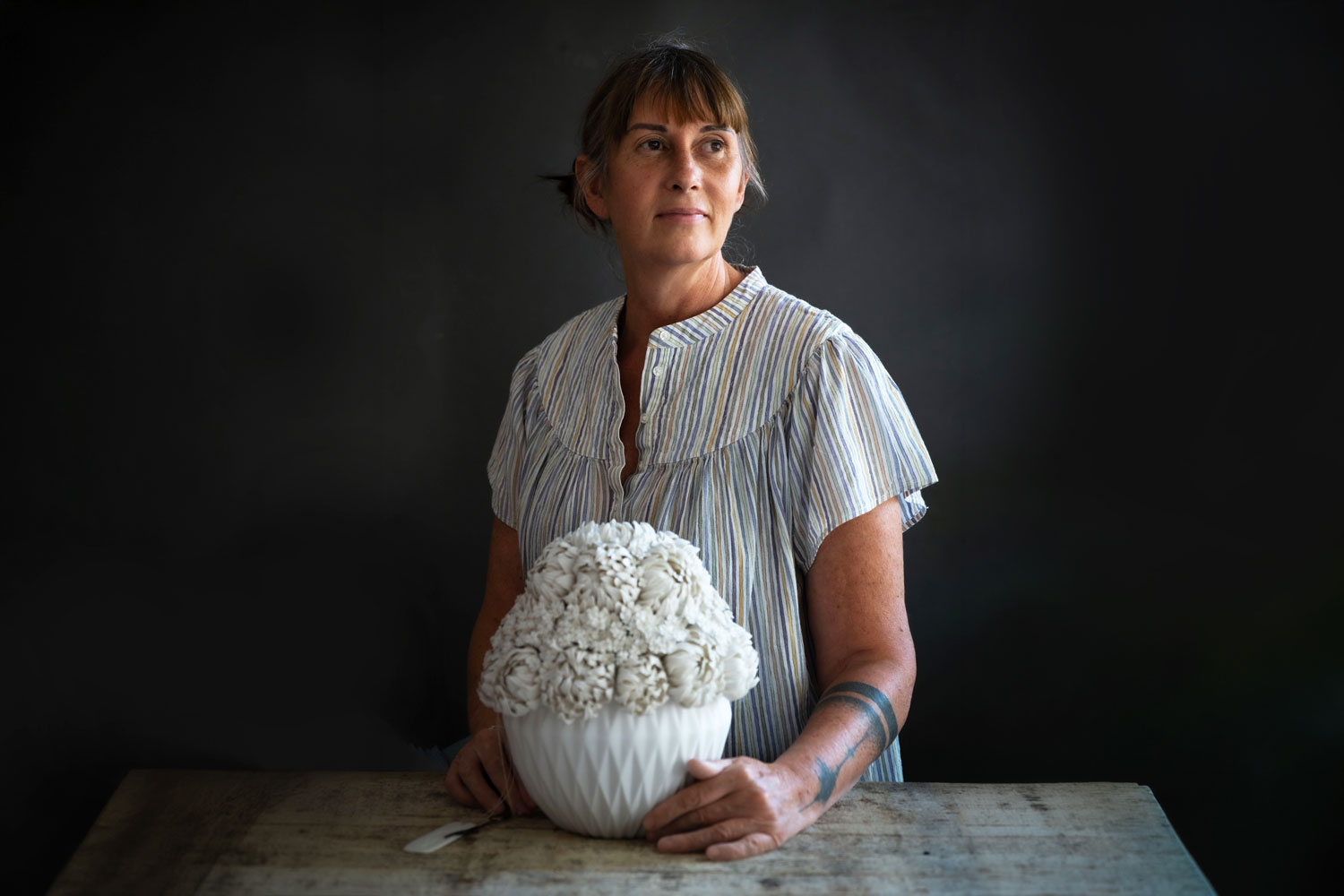
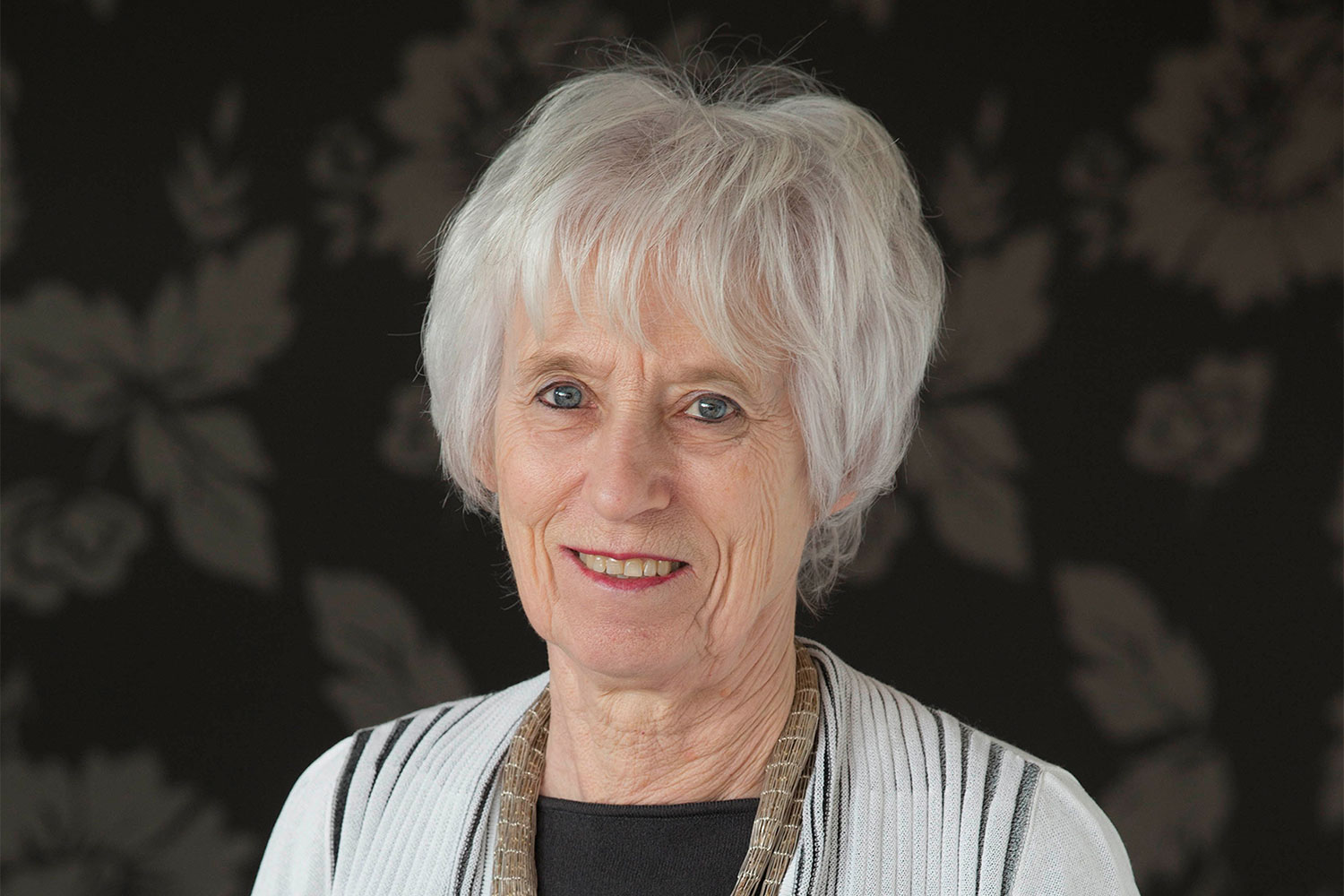
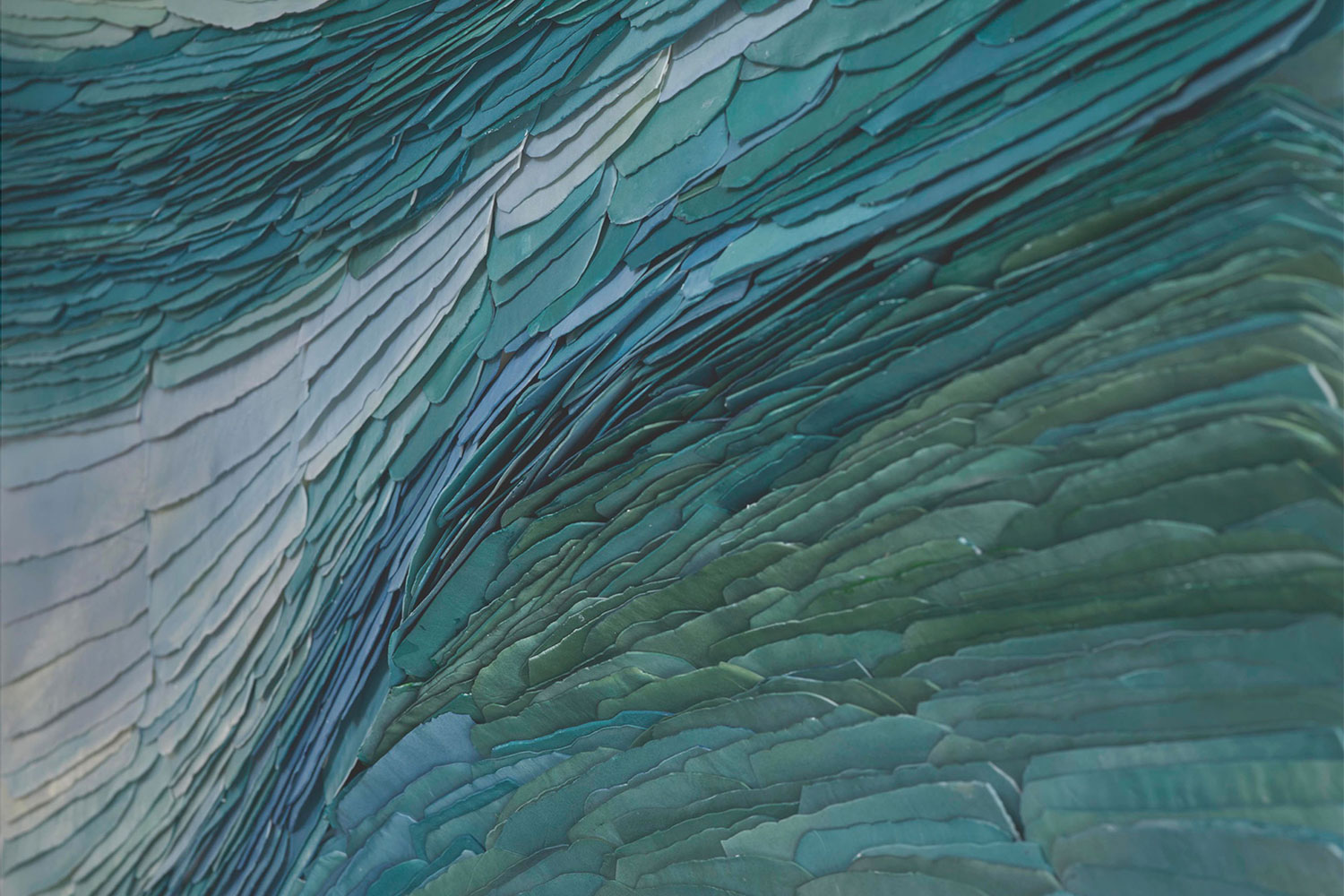
Jeanne Opgenhaffen
Porcelain maker
Kruibeke, Belgium
Recommended by Flanders District of Creativity
The rhythm of mural making
- Jeanne lives in a small village near the river Scheld
- She draws inspiration from the earth’s layers and landscapes
- Her rhythmic compositions suggest movement and space
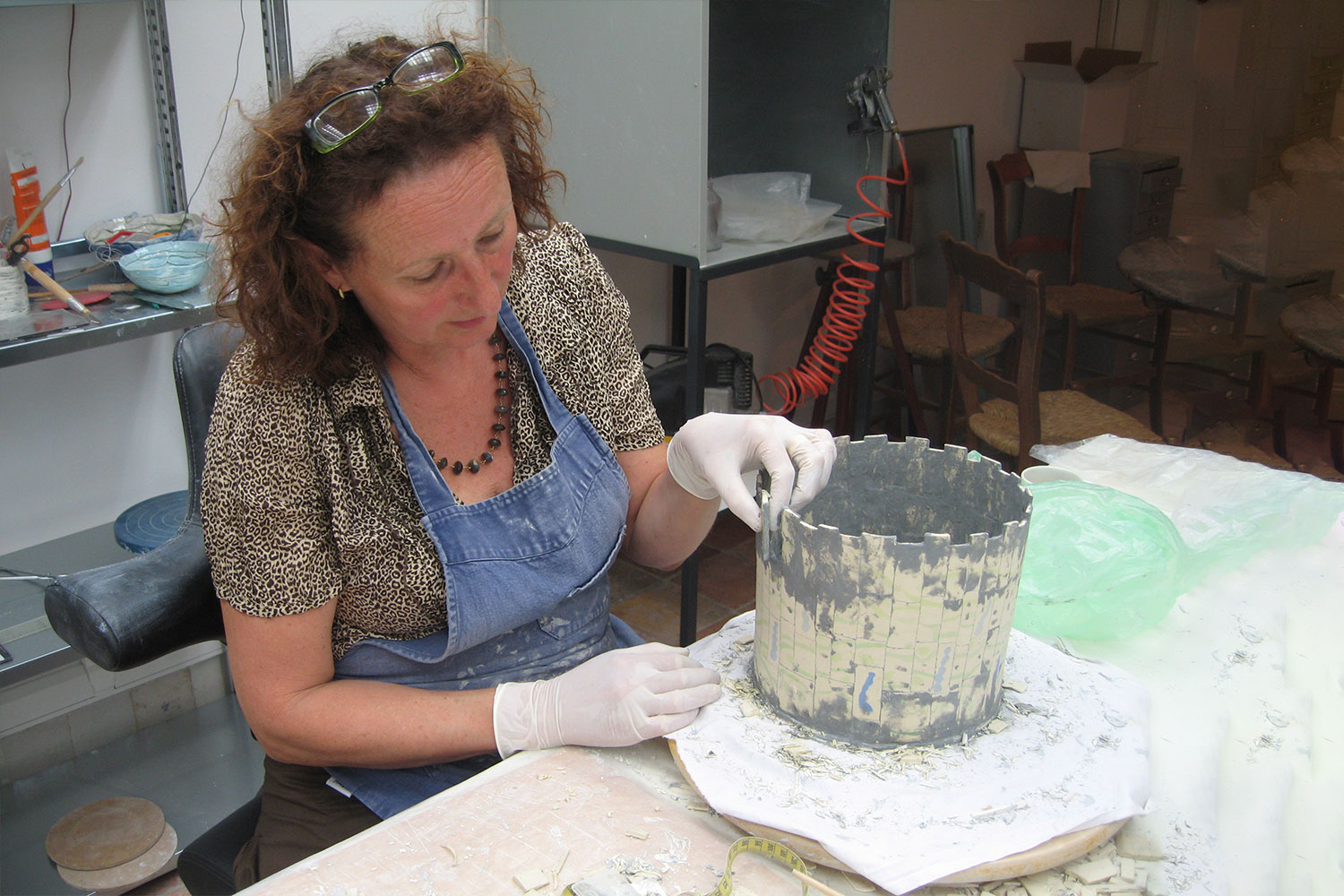
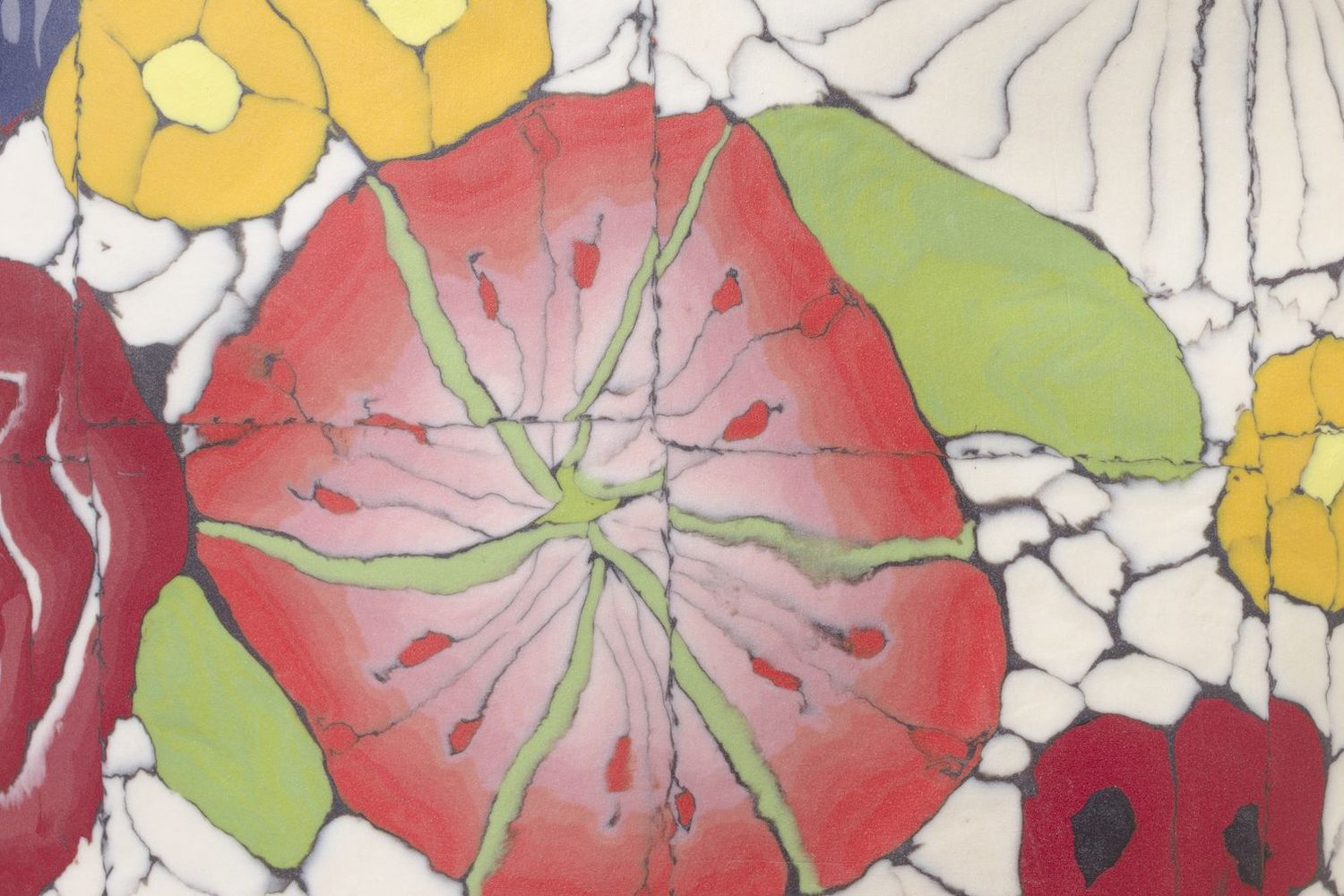
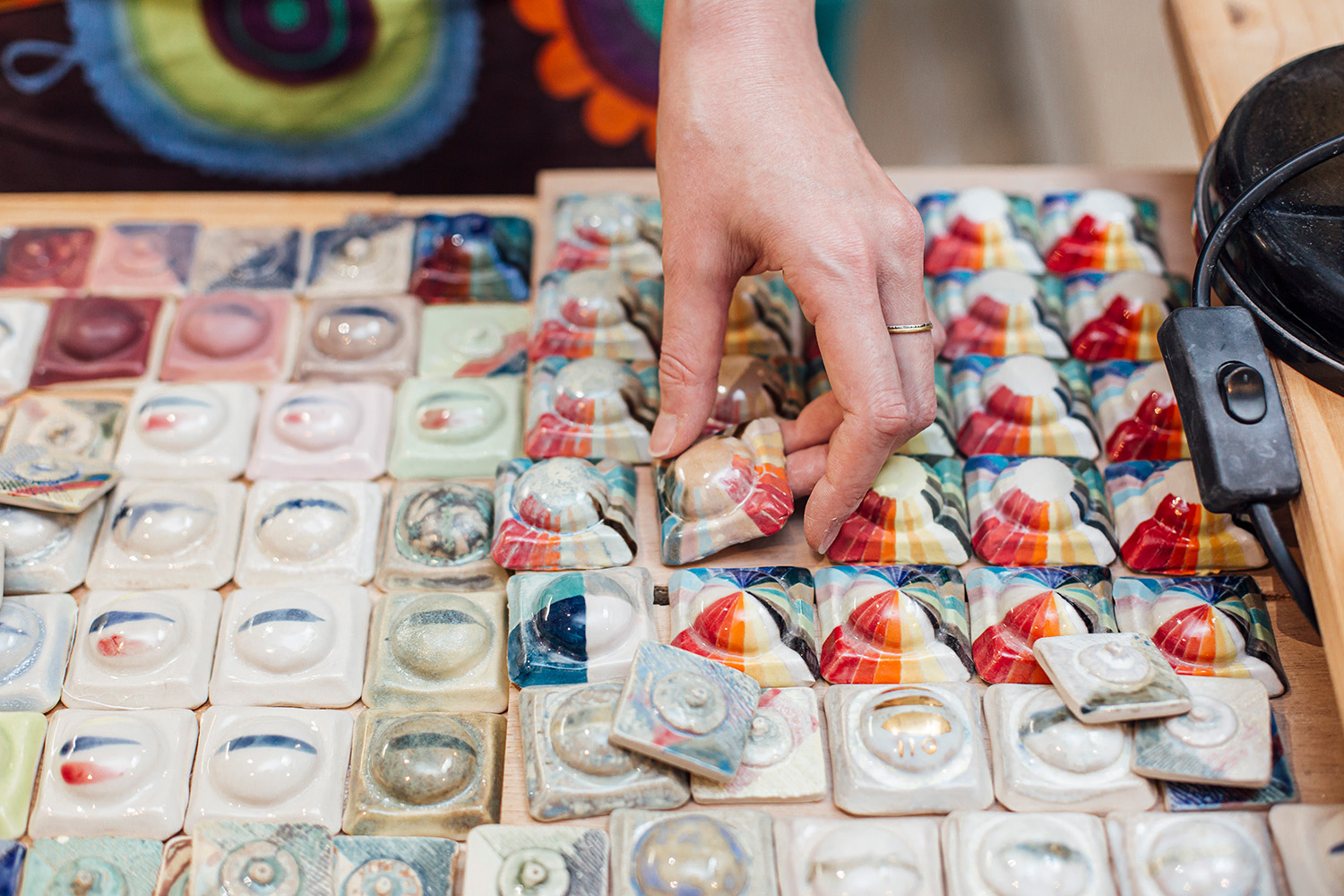
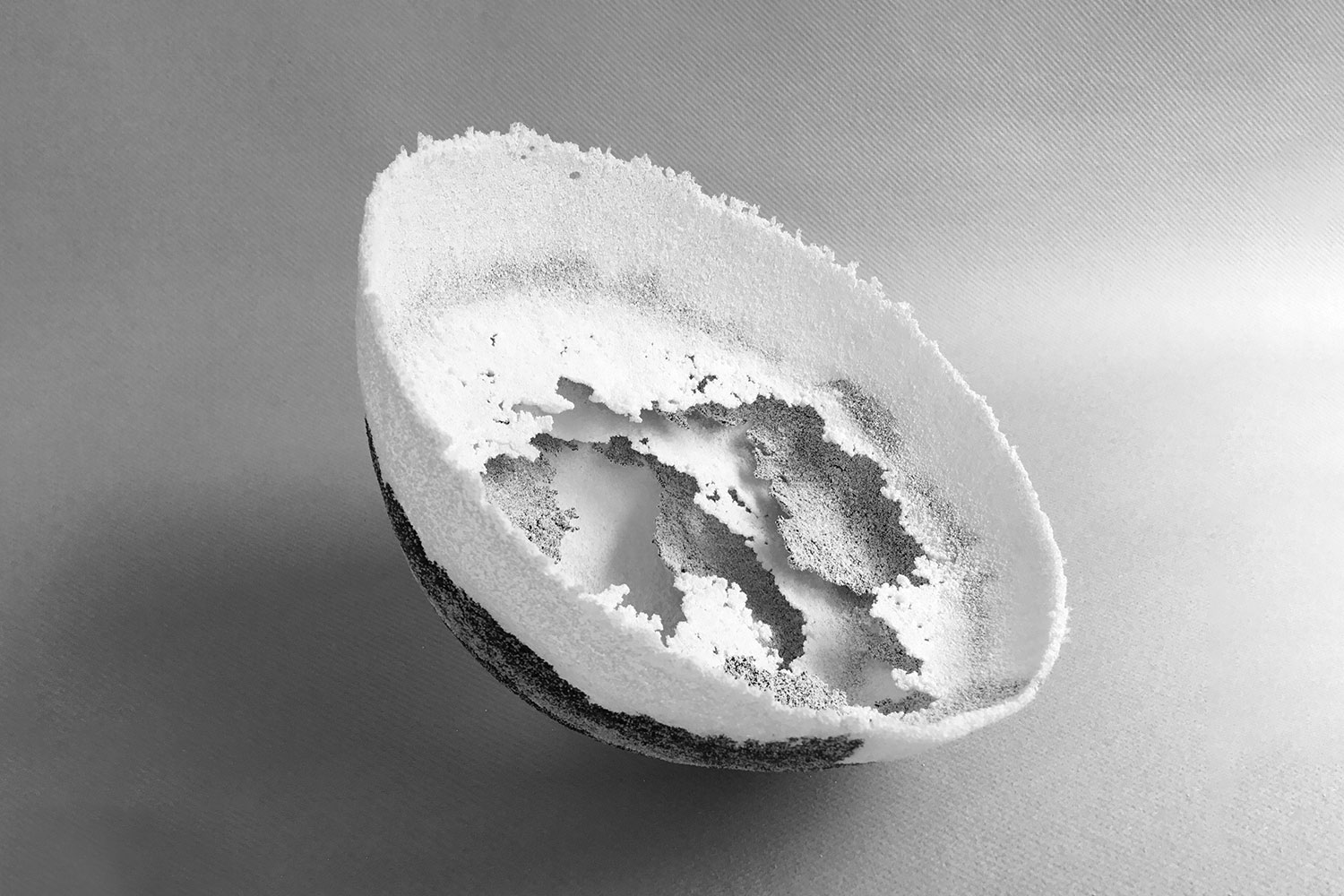
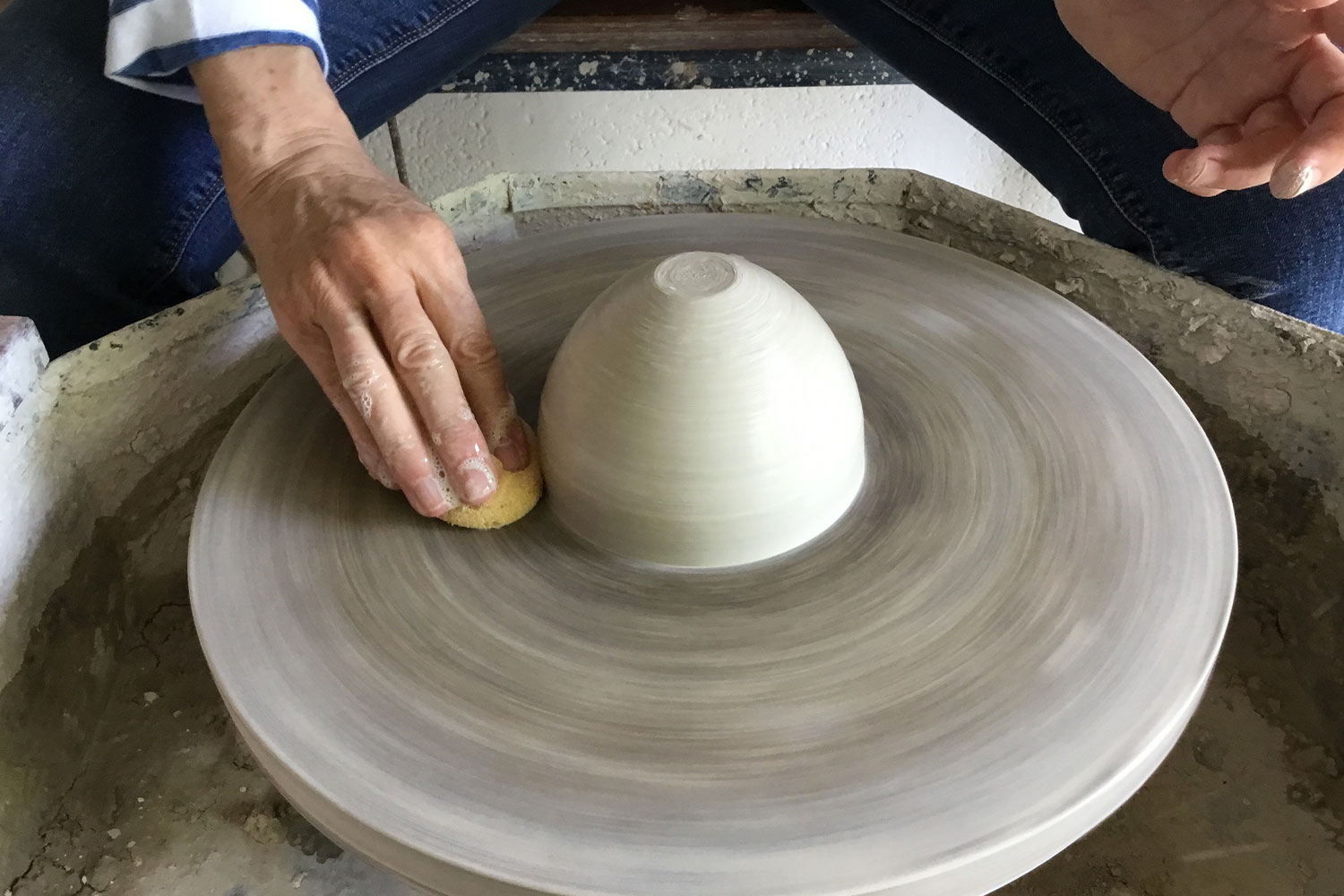
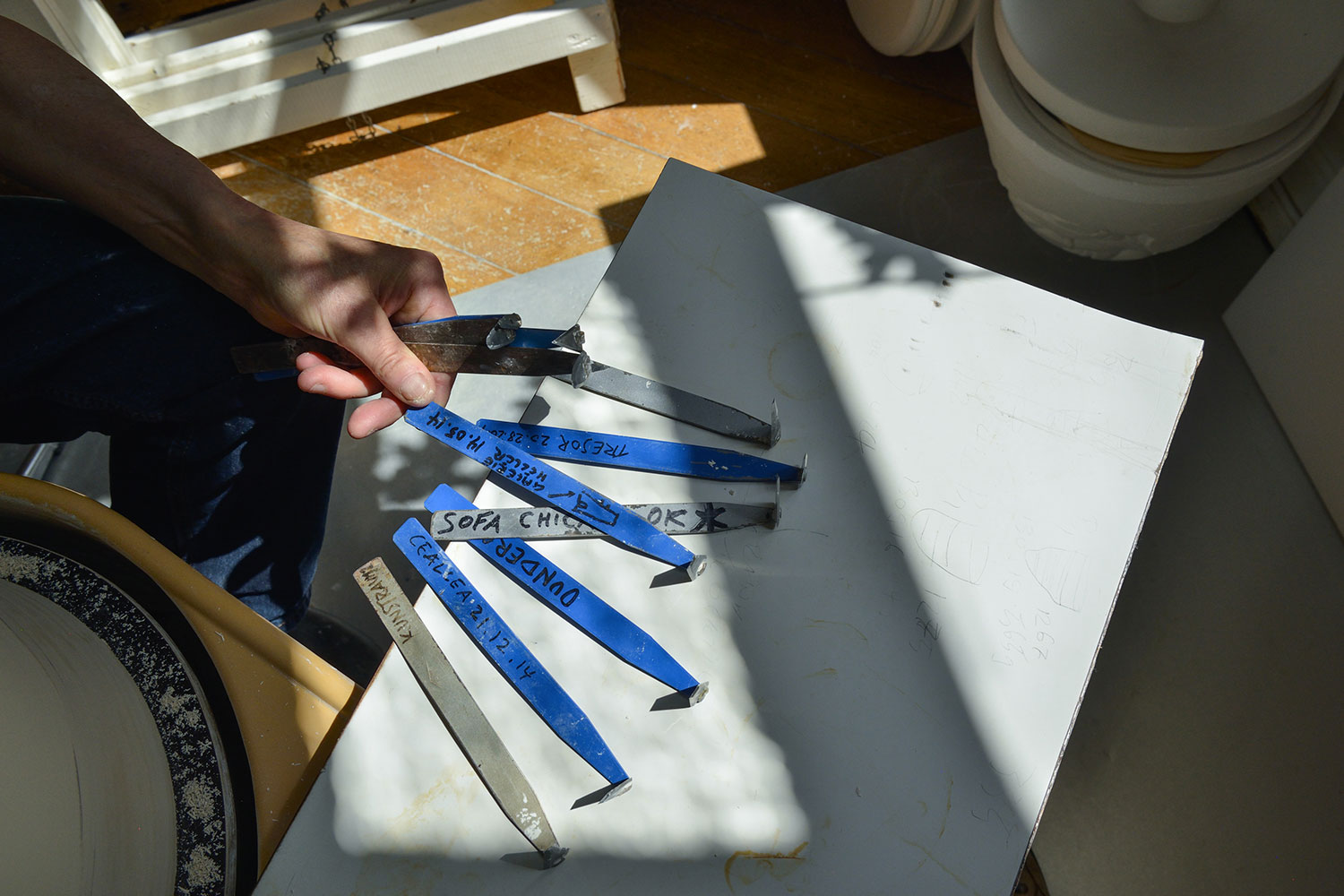
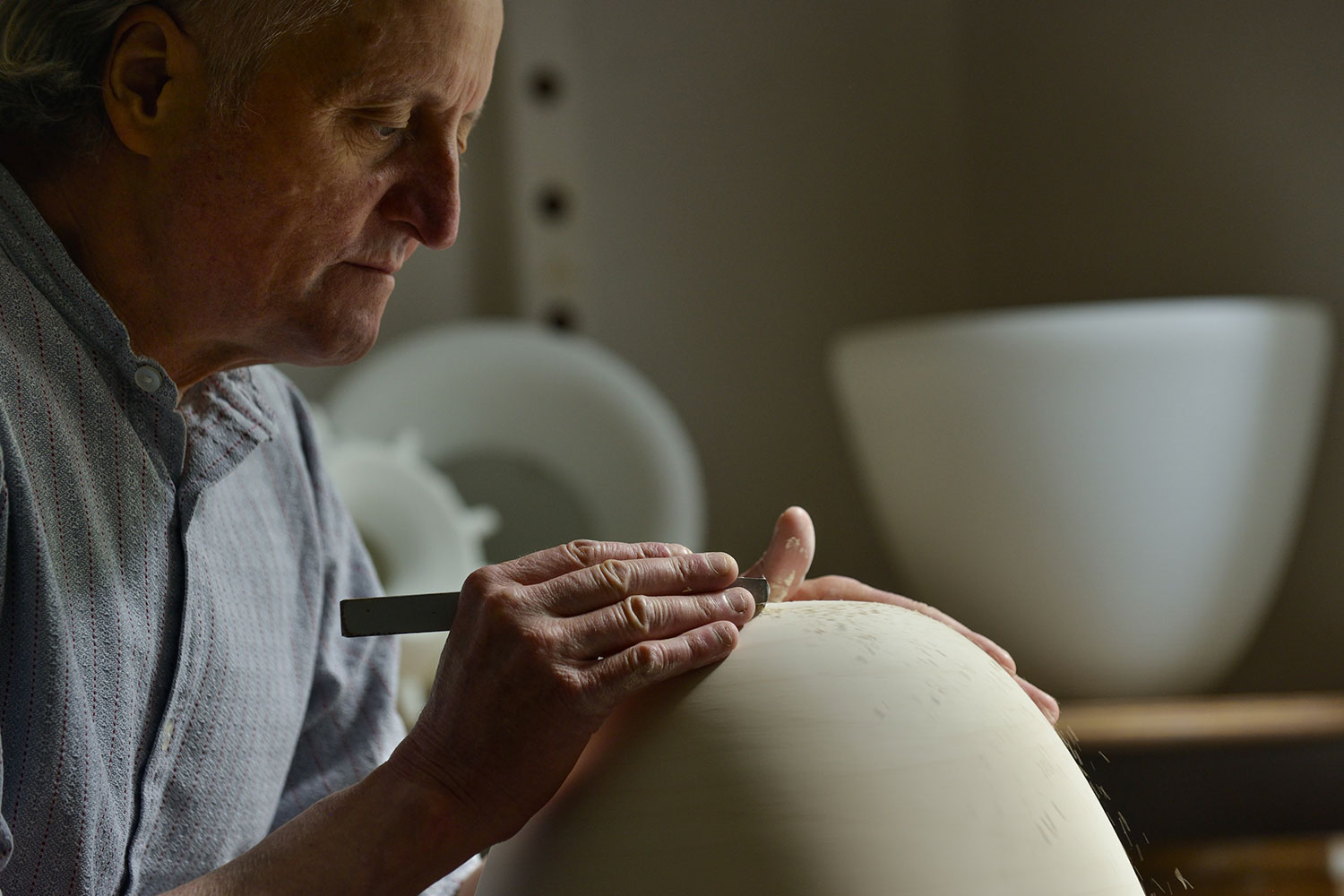
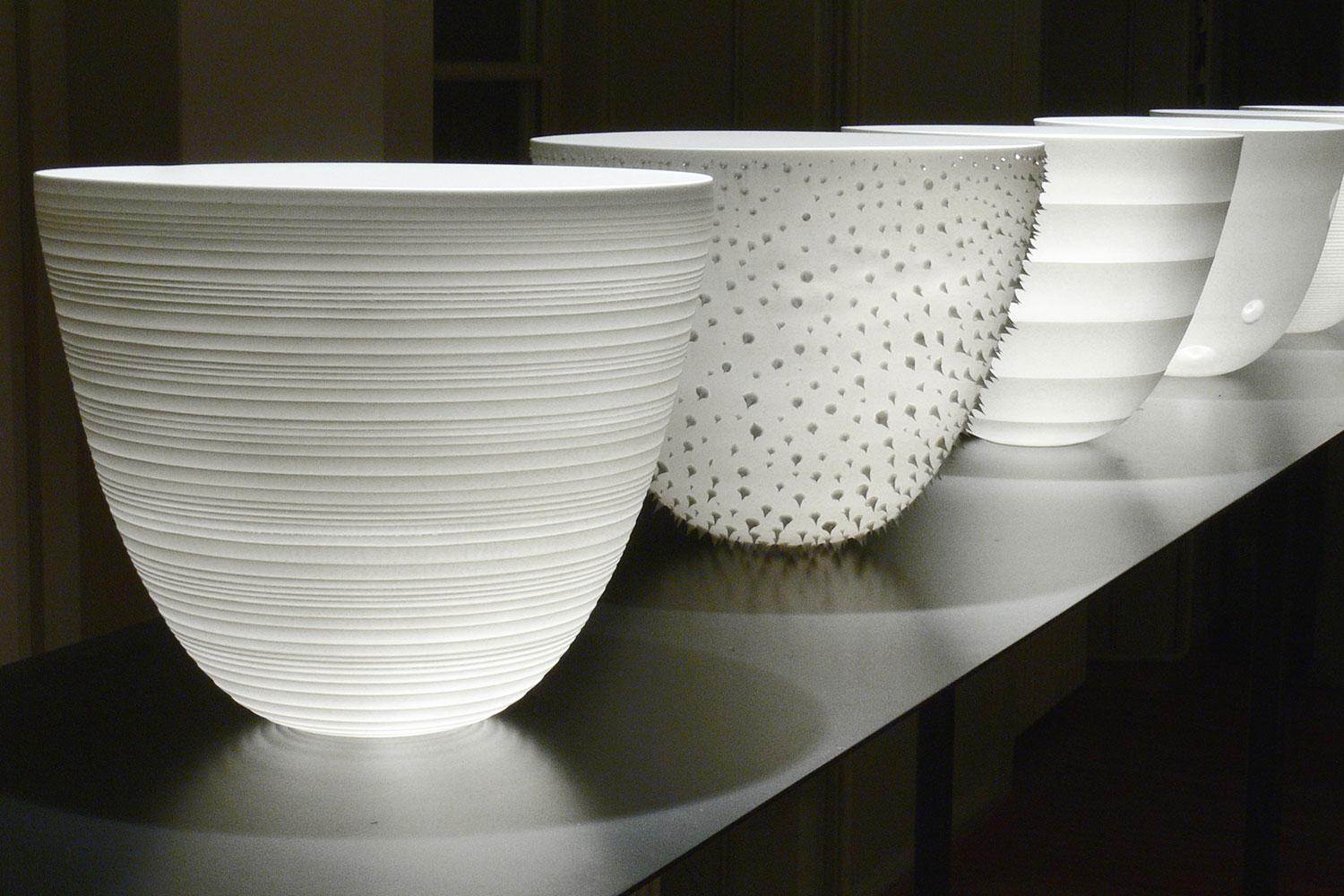
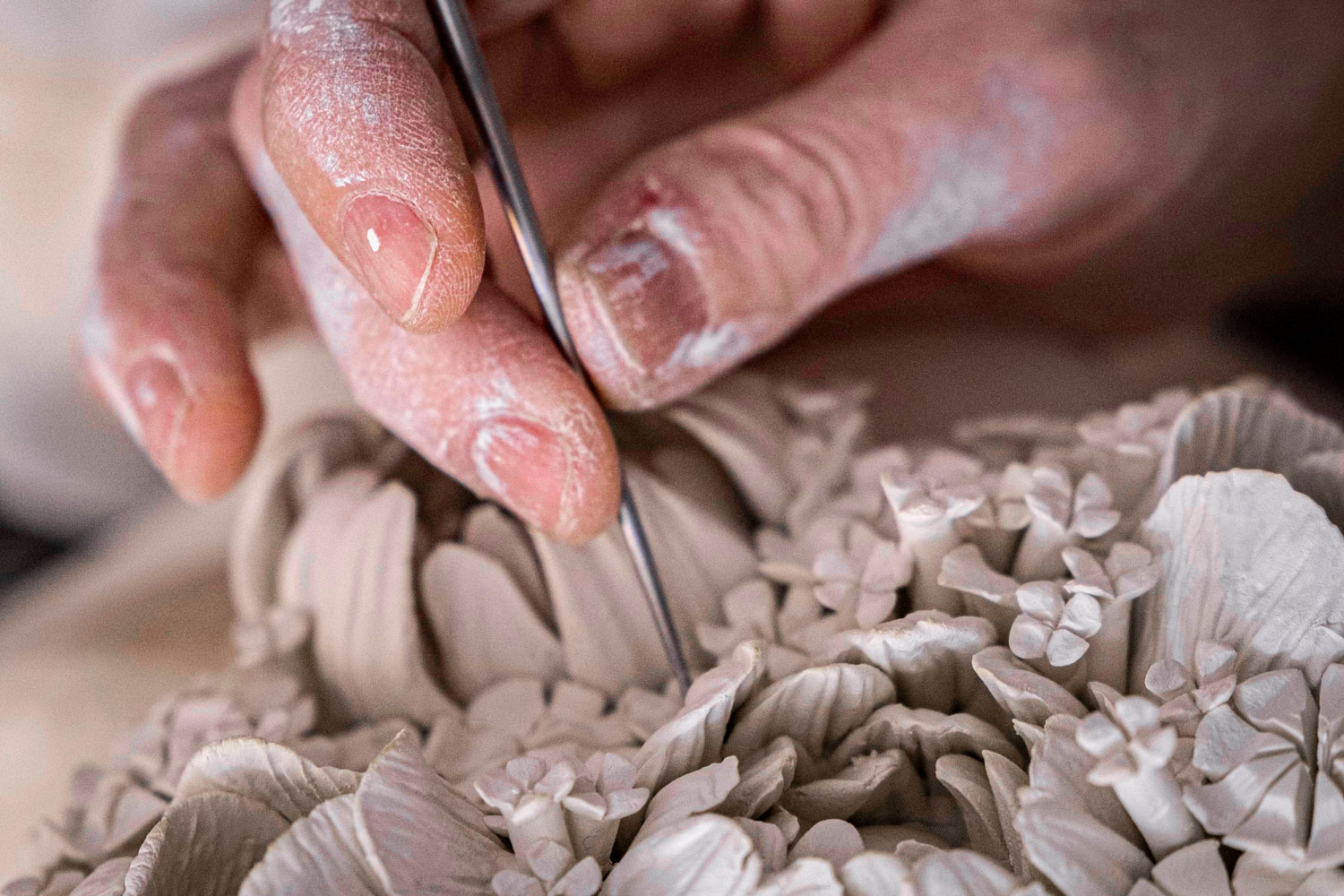
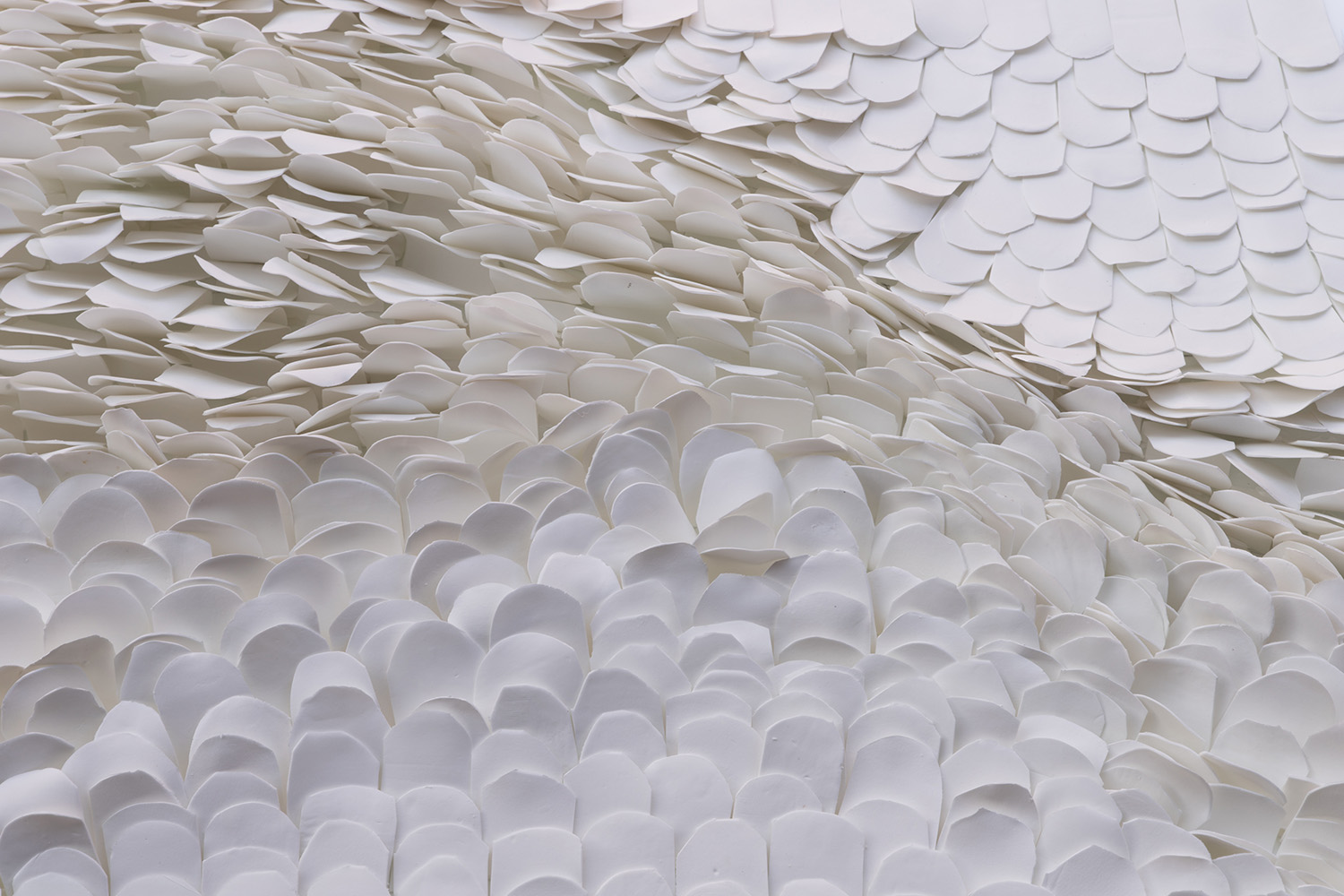
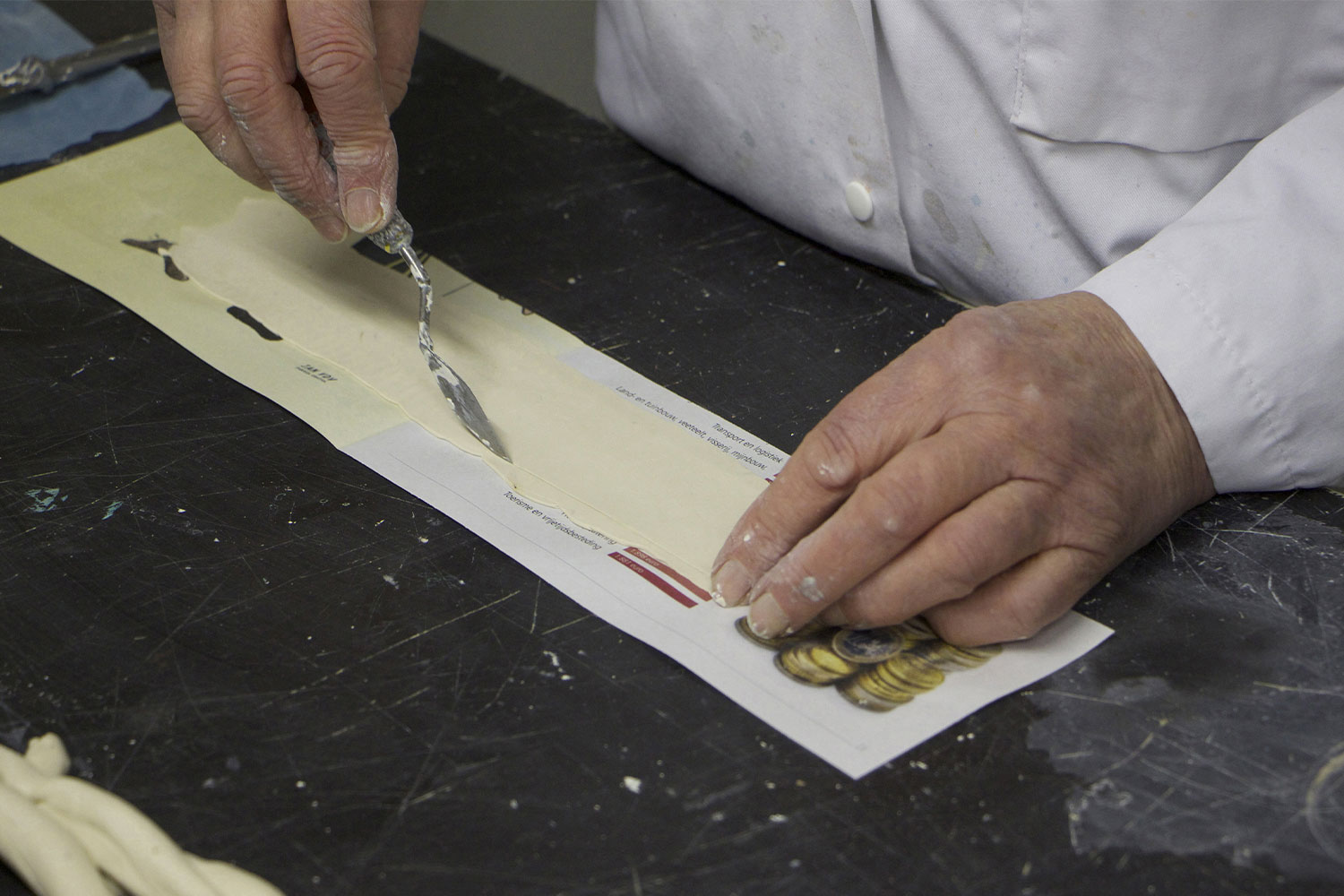
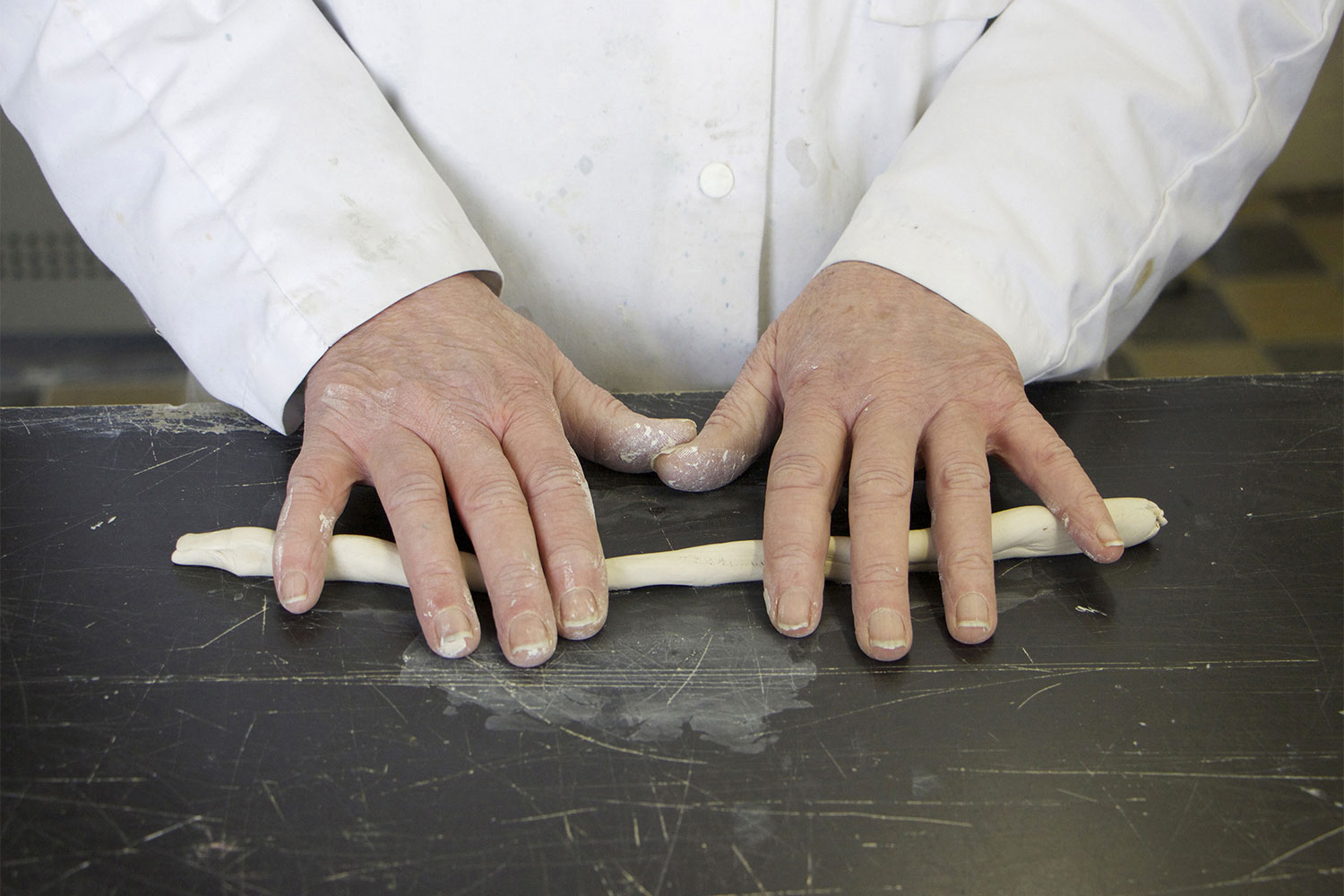
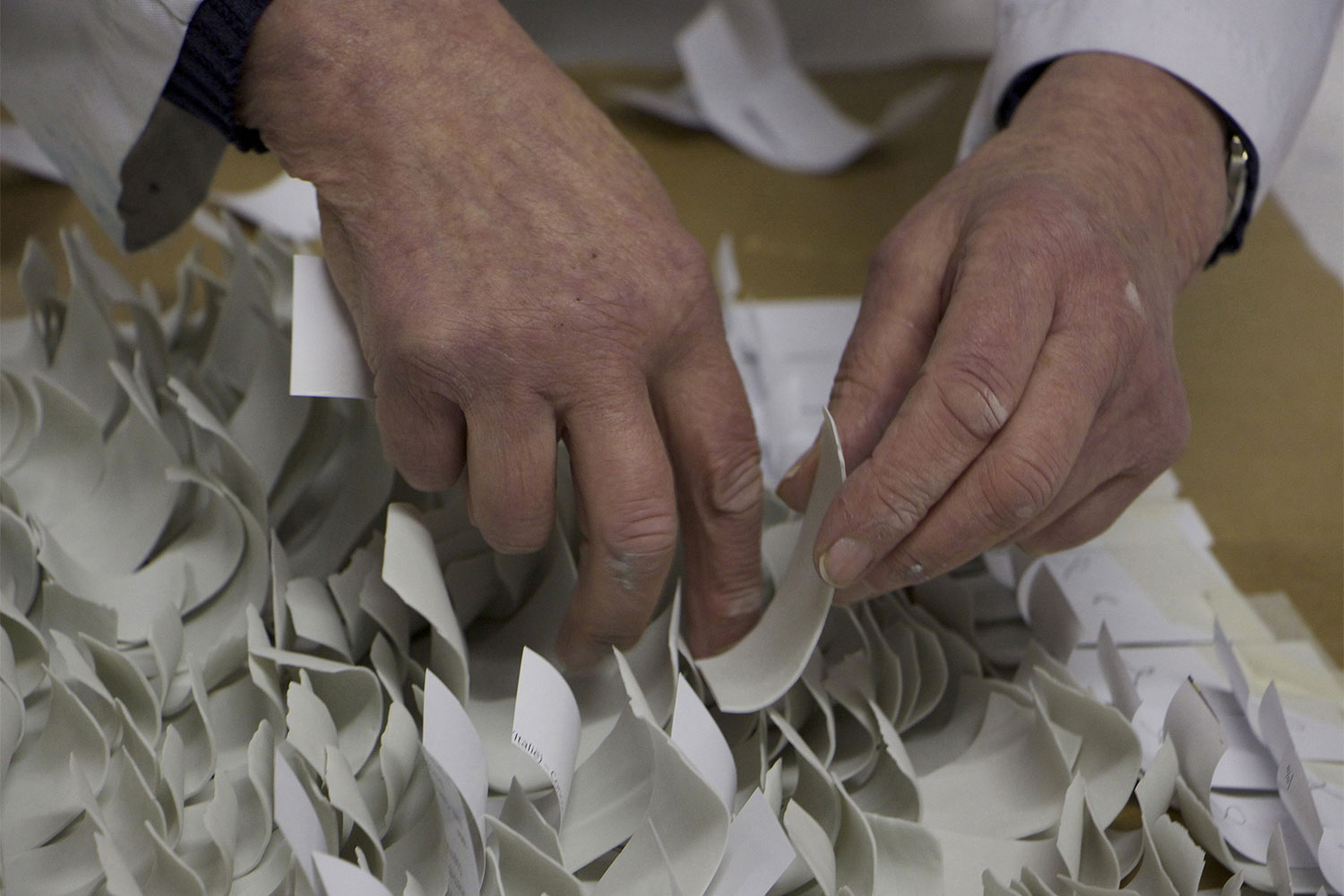
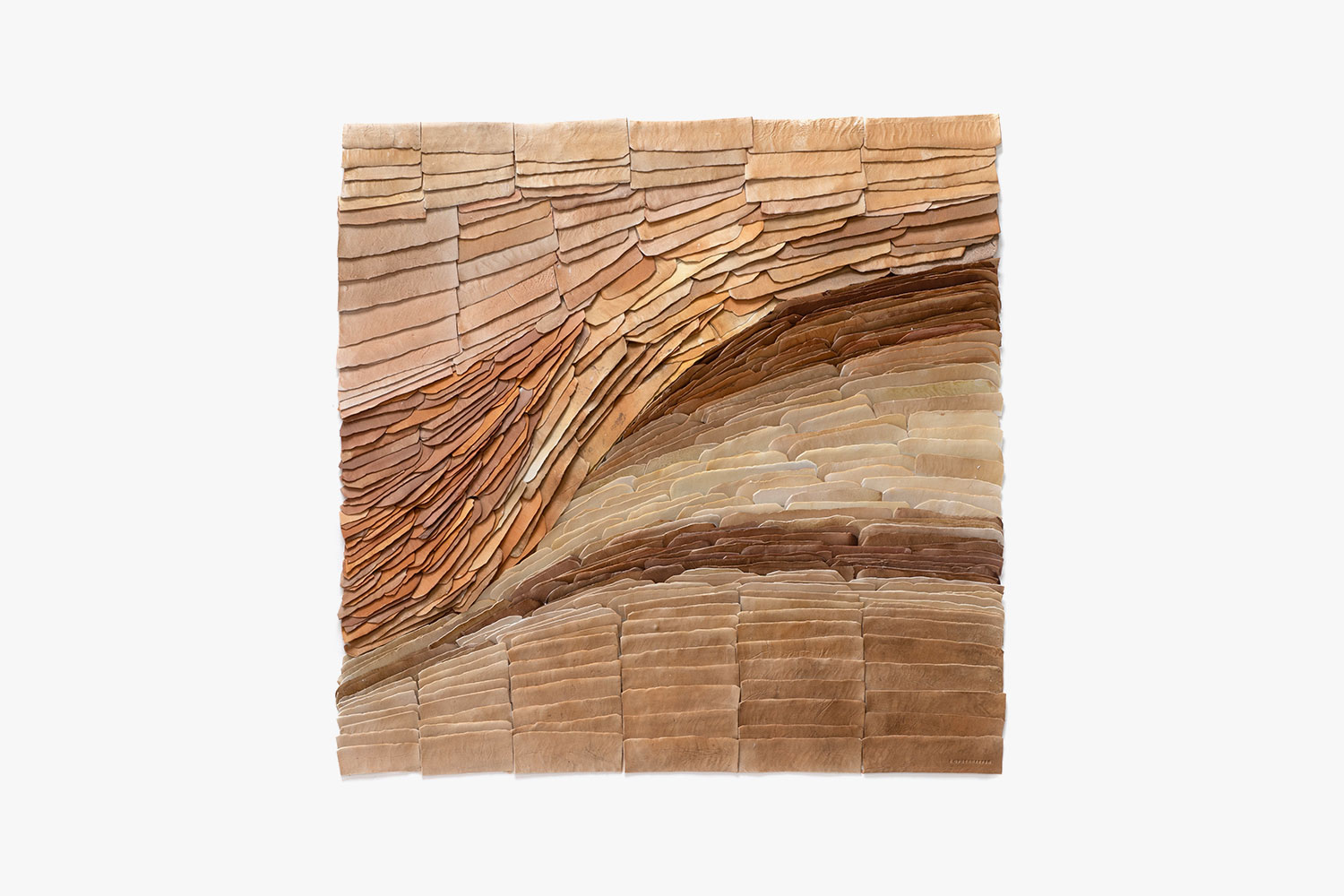
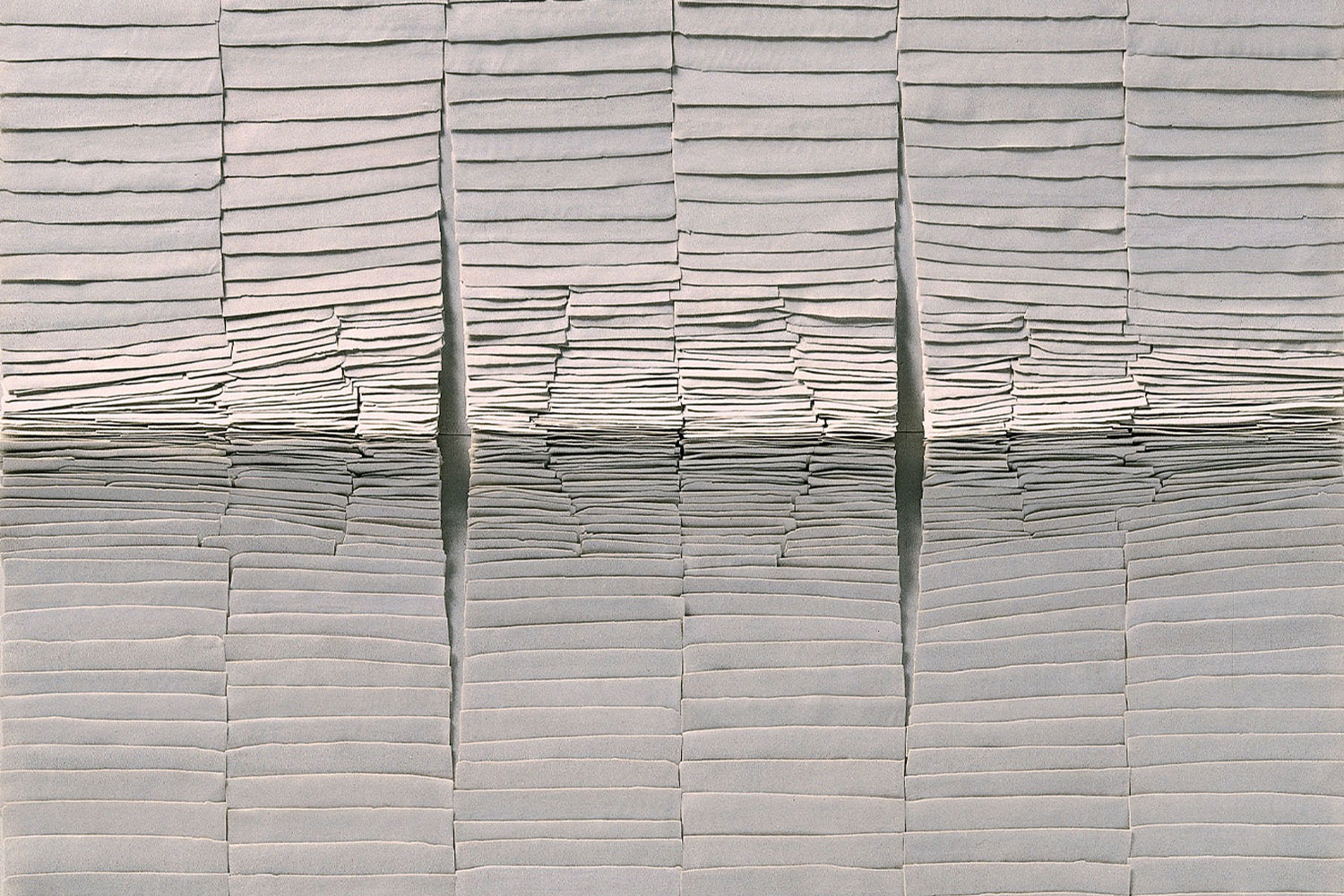
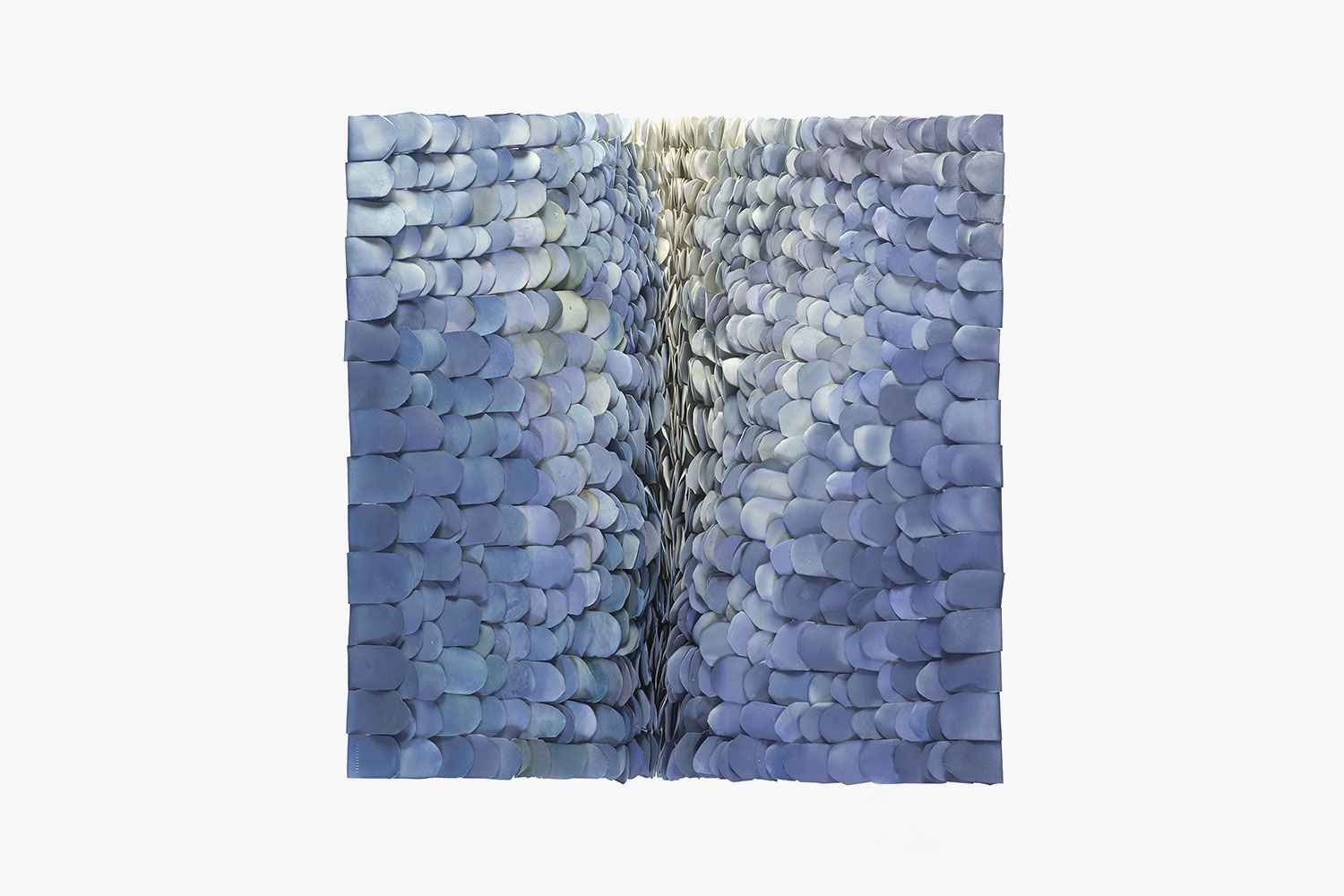
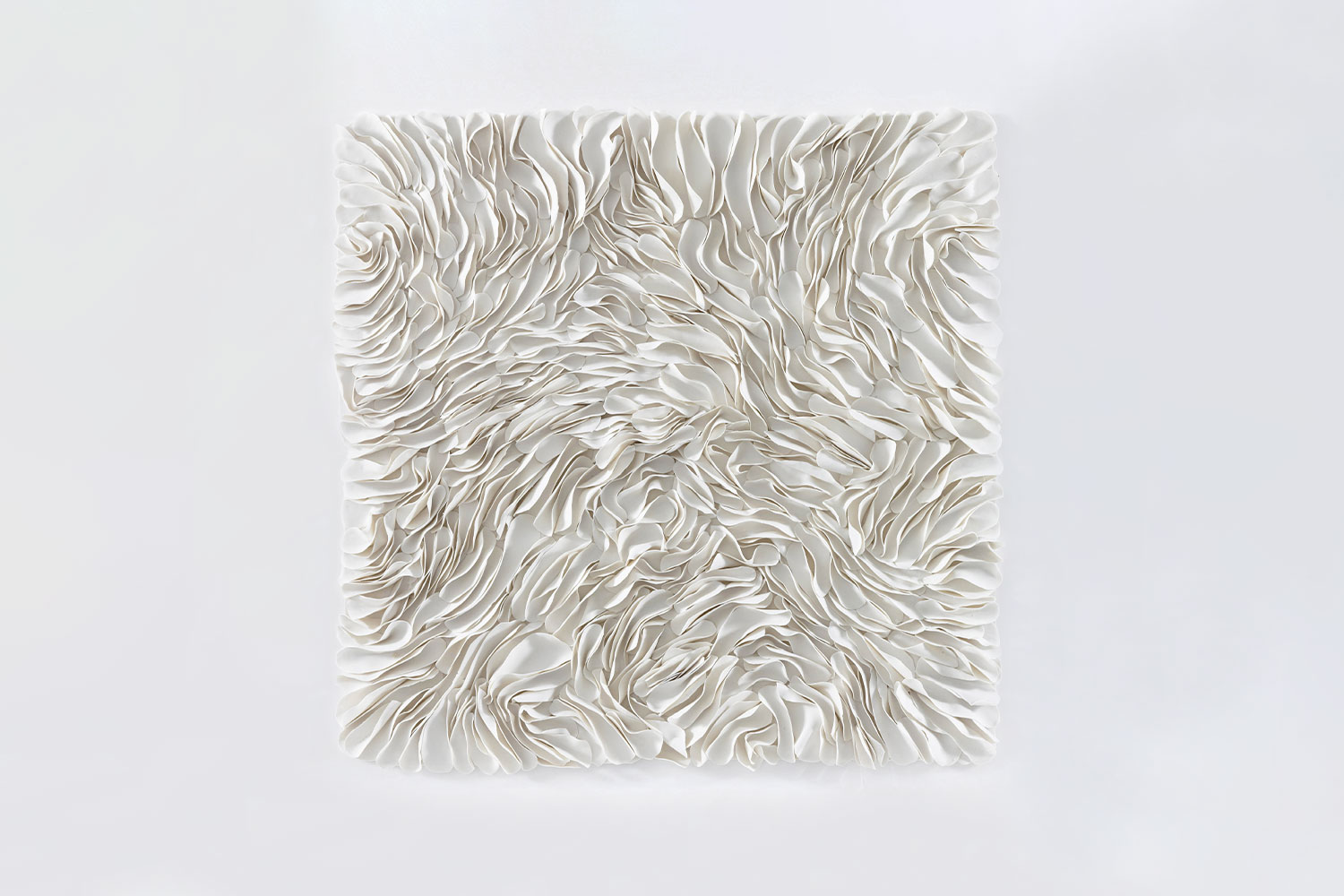
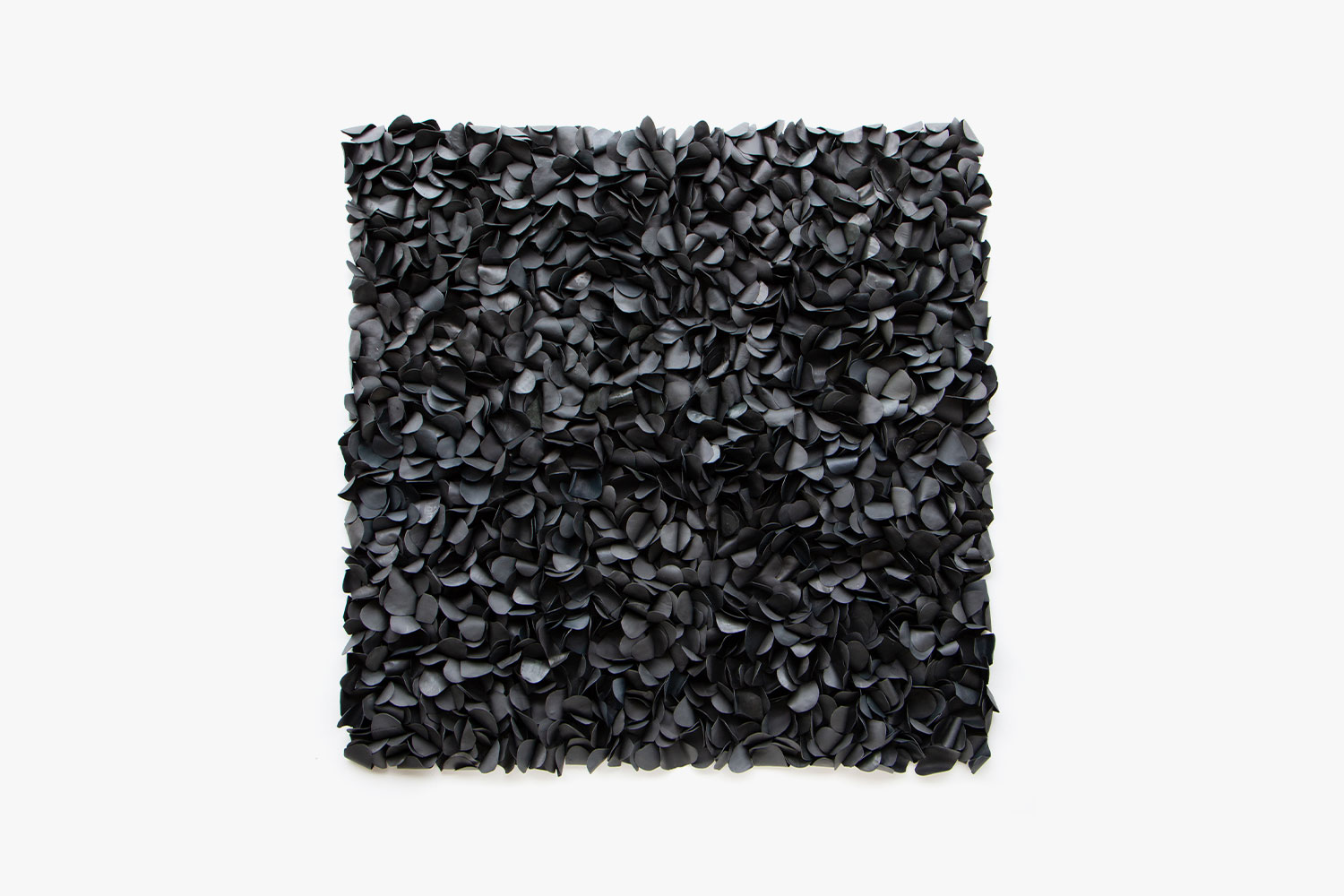
Jeanne Opgenhaffen’s creations reflect her aesthetic research in the field of porcelain, which she has been pursuing since her studies at the Royal Academy and National Institute of Fine Arts in Antwerp. She assembles hundreds of delicate, individually shaped pieces of porcelain into tiles, which she arranges in different shades and tones to create large murals. “I try to express my feelings within the boundary of a square,” she says. “A strong expression made in a simple way with individual basic elements, where rhythm and movement are always present.” Her award-winning work with natural and coloured porcelain is widely showcased in major museums and private collections around the world.
Discover her work
INTERVIEW
It happened during a journey through the Timna Valley, a desert in Israel, where I saw a landscape that fascinated me so much that I tried to hold it in my mind forever. Back at home, I started to capture the movement of the earth in my work.
I make panels with hundreds or even thousands of little porcelain slates arranged one over another with a variation in colour, which gives the impression of a surprising landscape. In some panels I use only shades of white to produce a strong sense of movement.
The desert, the earth's layers, waves, flowers, the movement in a landscape, broken lines from sand plates. I am fascinated by the sheer power of the rhythmic arrangements that are born from sheets of clay as thin as paper.
The earth’s layers are created through colour changes, a movement like a breeze blowing across a field which changes the colour of the vegetation. Light, reflected on so many different fields, changes the colours and creates a unique effect.
Jeanne Opgenhaffen
Porcelain maker
Kruibeke, Belgium
Recommended by Flanders District of Creativity
AVAILABILITY
By appointment only
PHONE
+32 472850905
LANGUAGES
Dutch, English
Homo Faber Finds is a new service aiming to inspire admirers of craft to connect and collaborate with exceptional artisans.
We invite you to submit an enquiry here.