
Andrea Ellis
Textile creator
Lahonce, France
Burning through fibres
- Andrea specialises in the devoré fabric technique
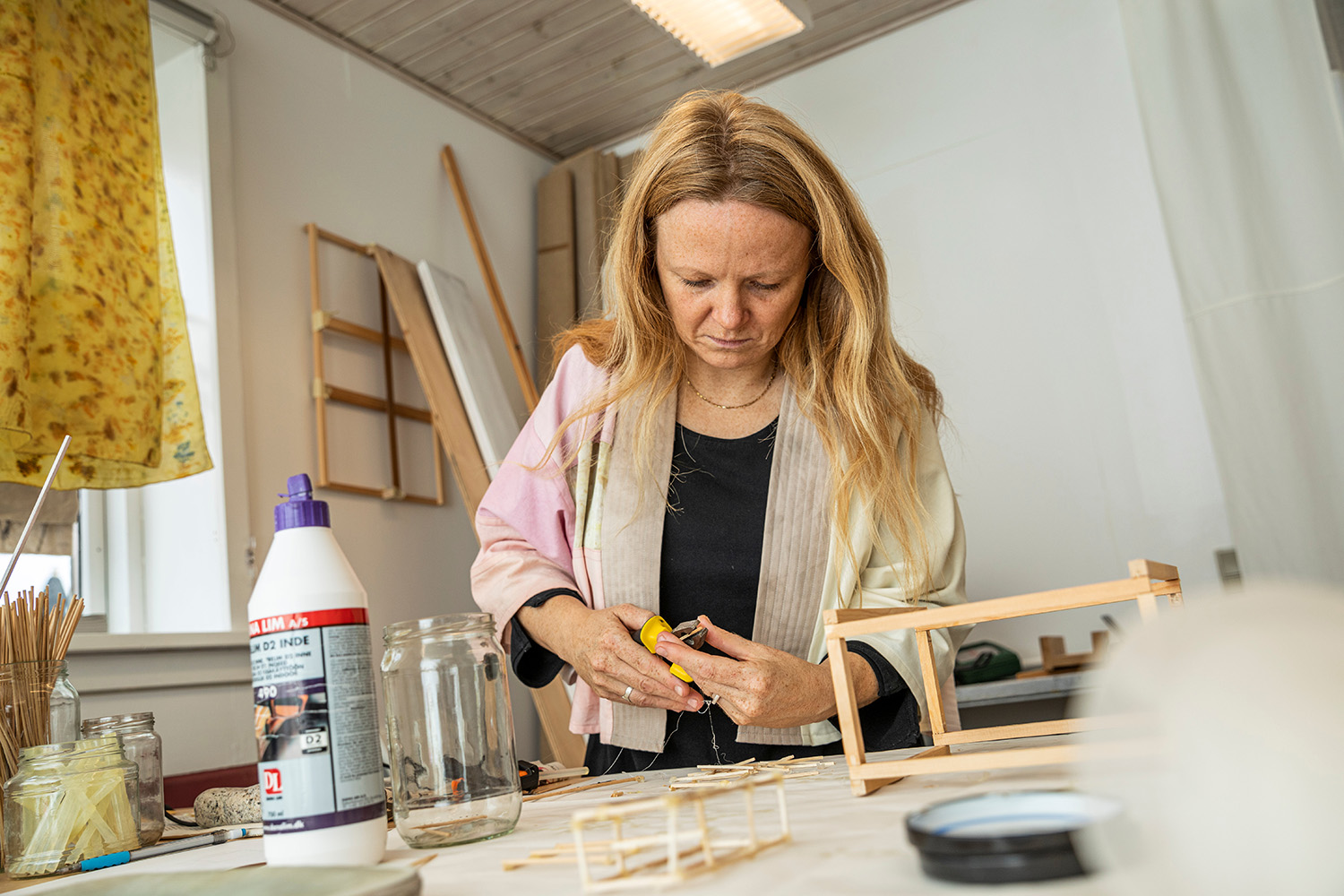
- She enjoys teaching her craft at her studio
- She often receives private commissions
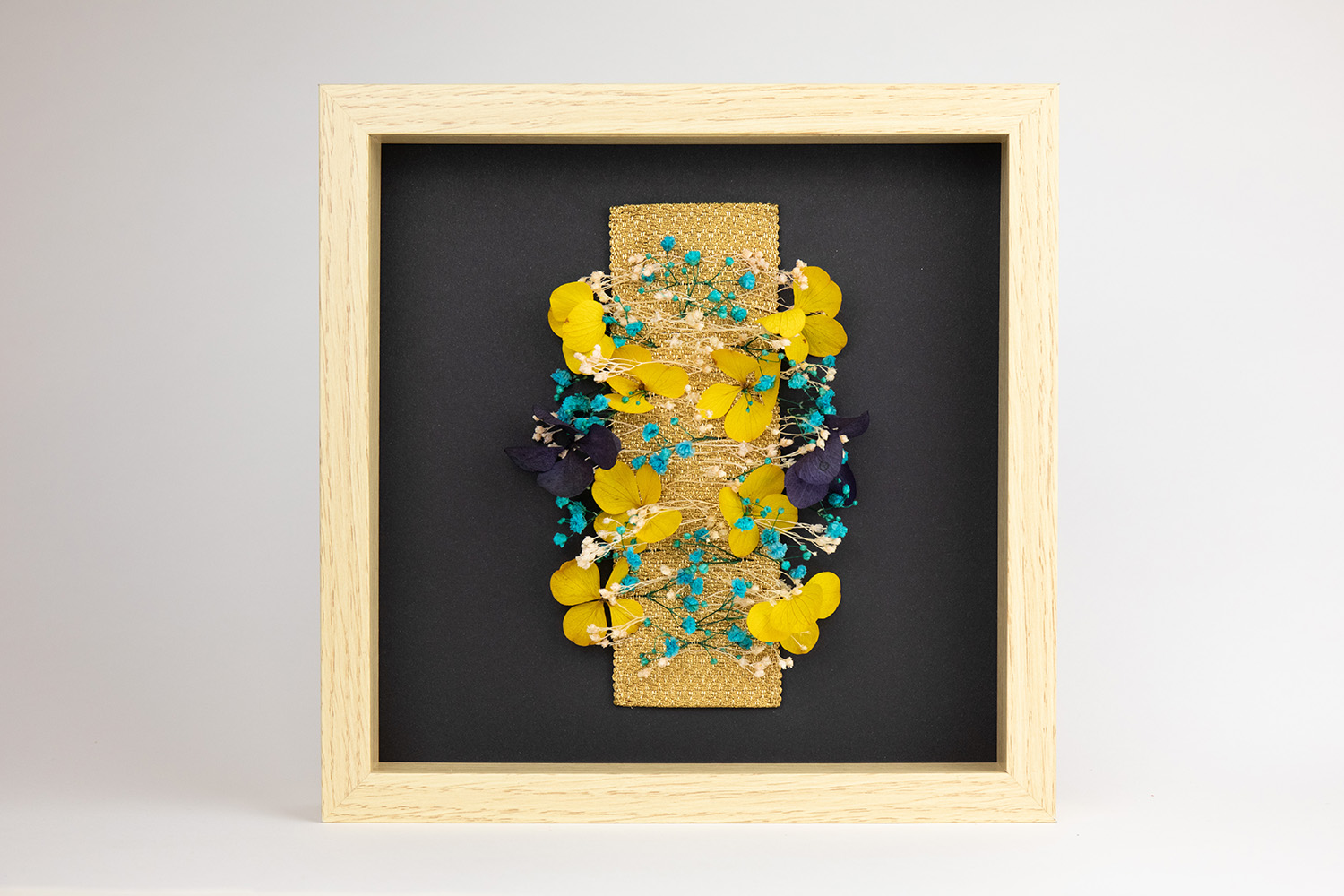
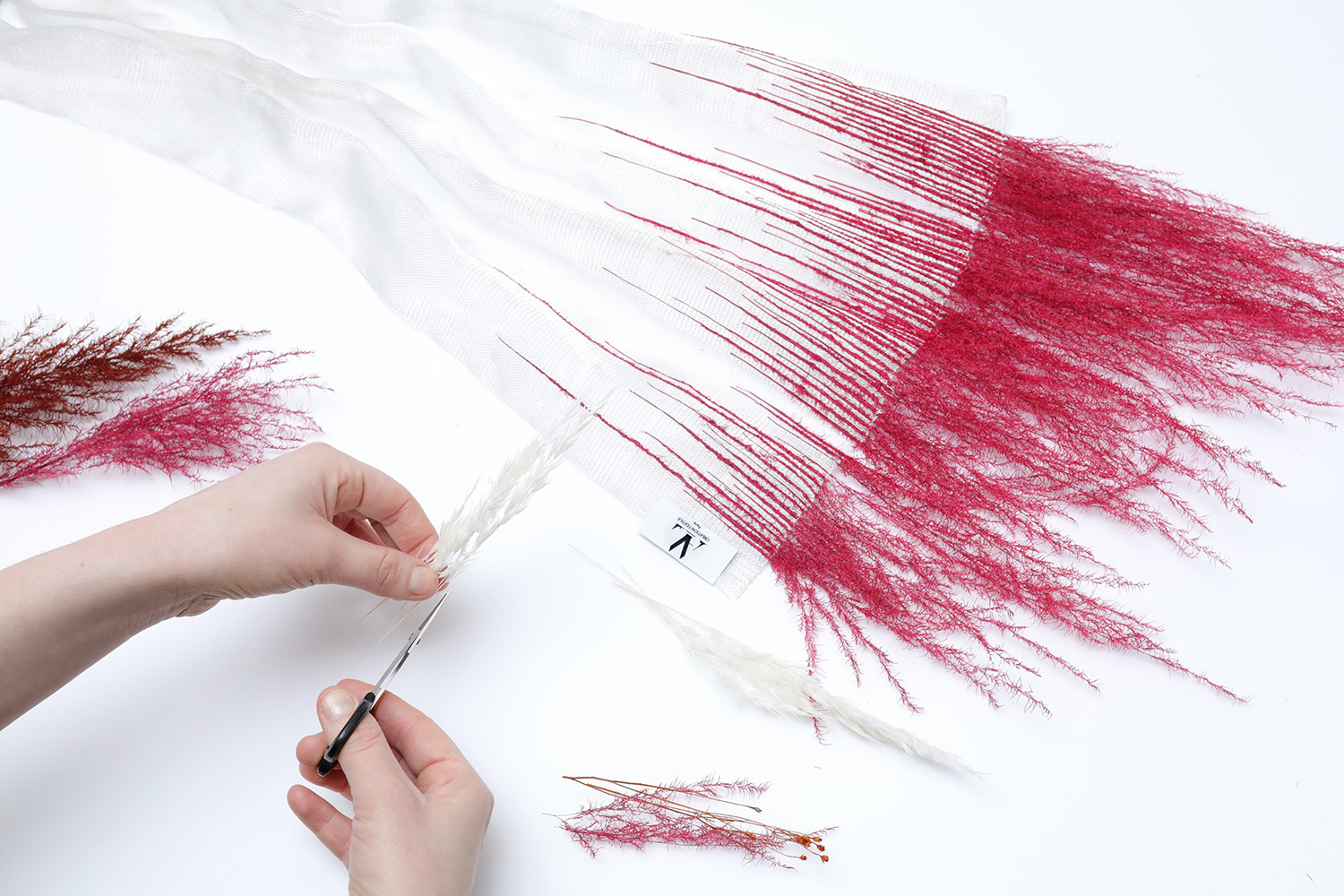
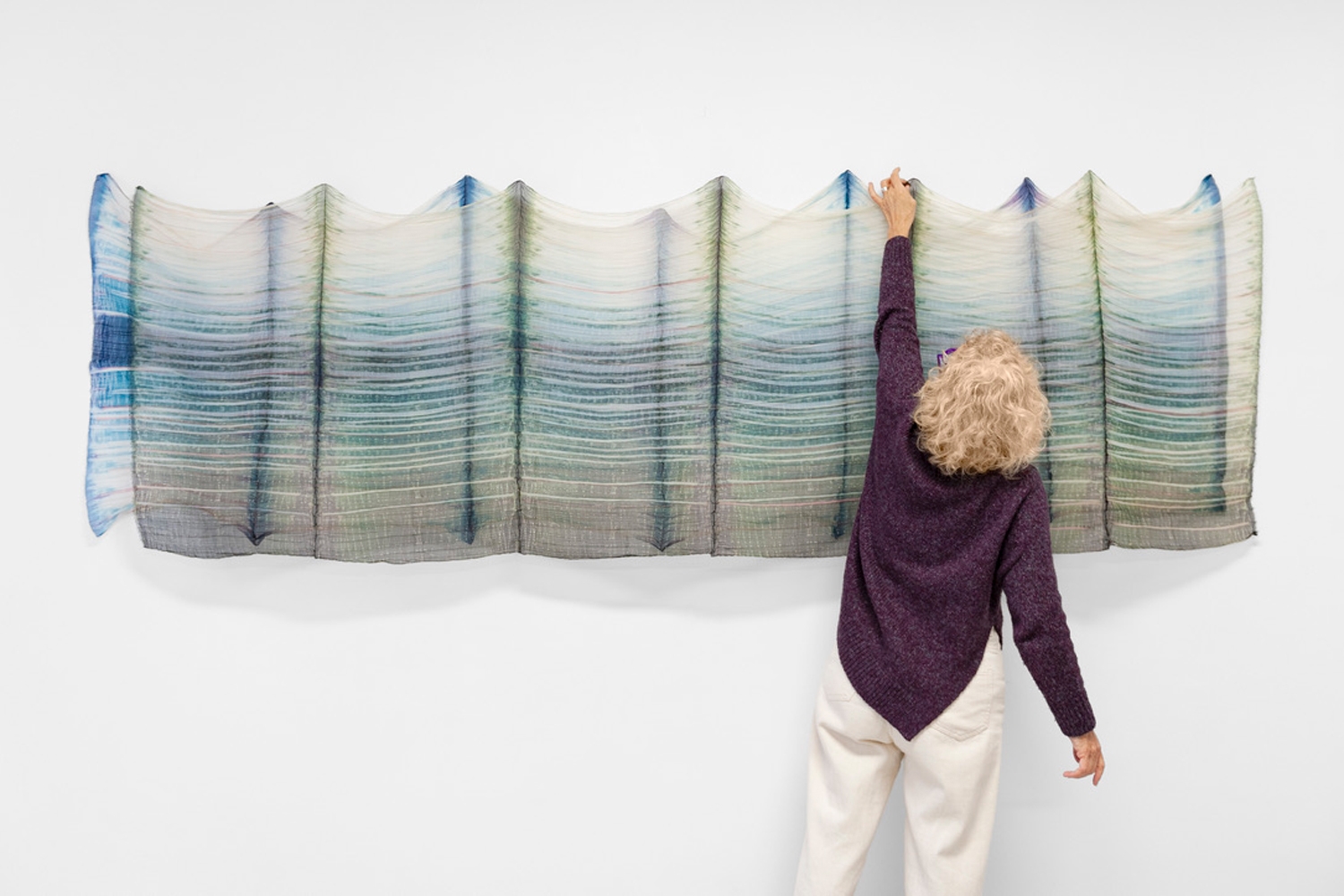
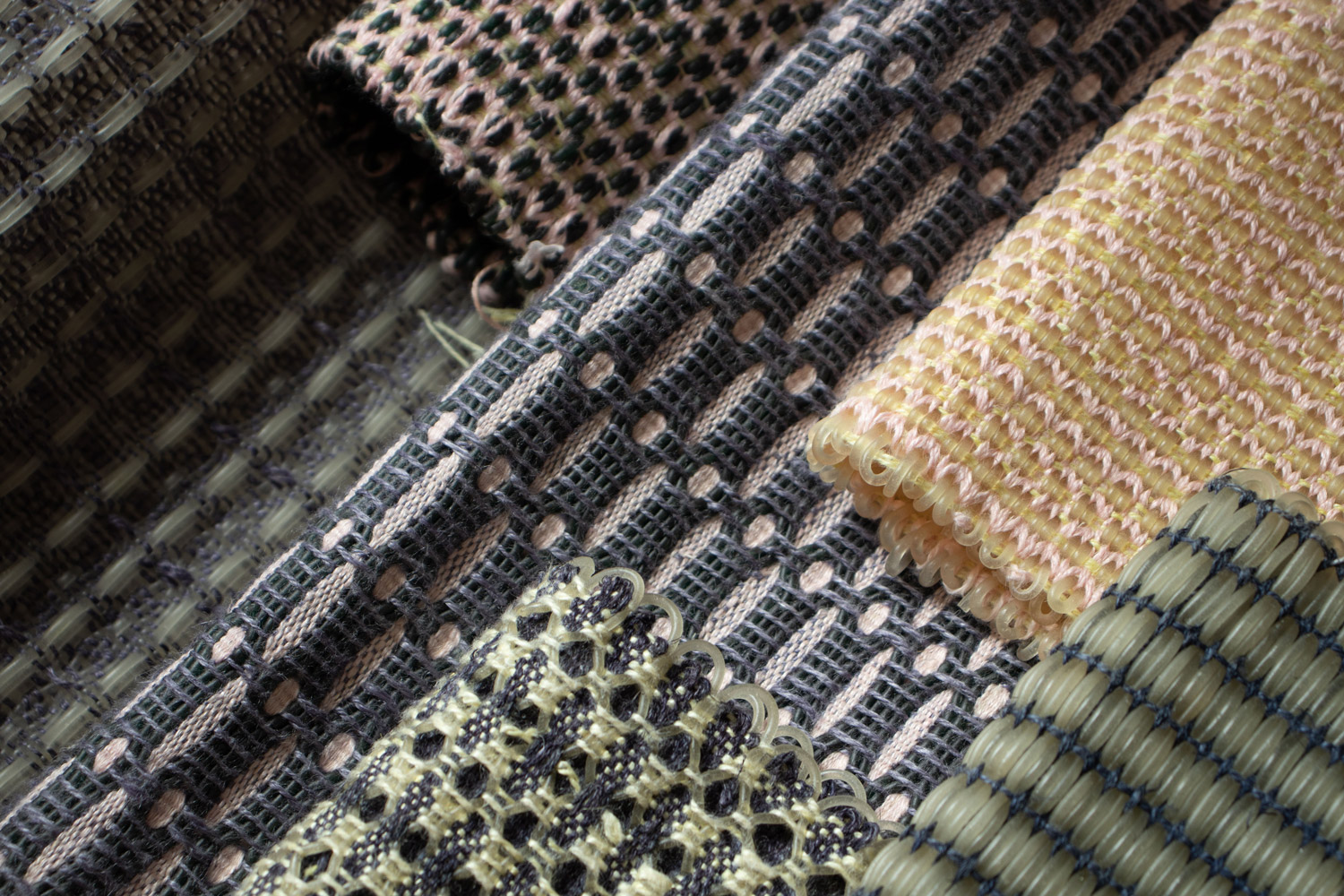
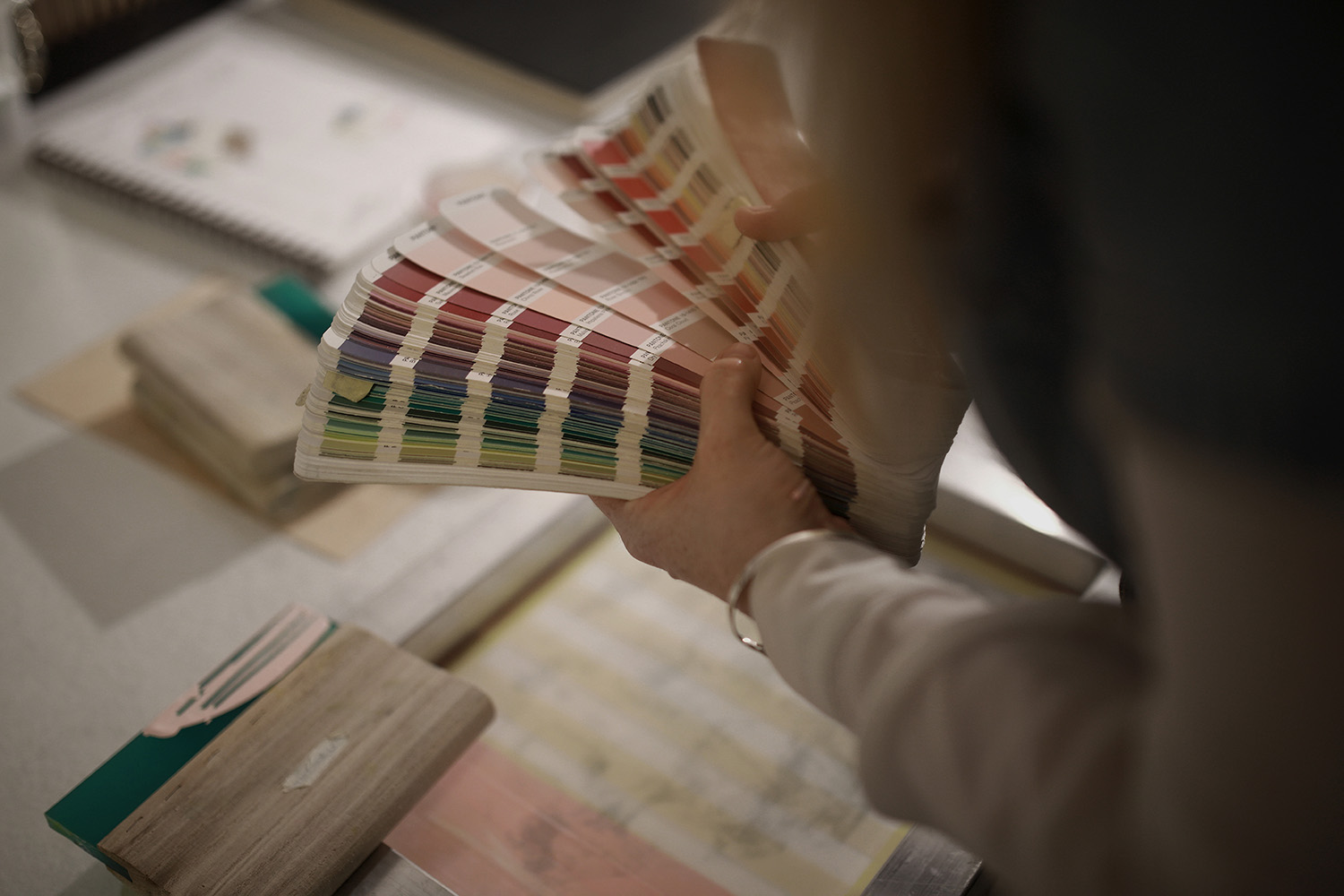
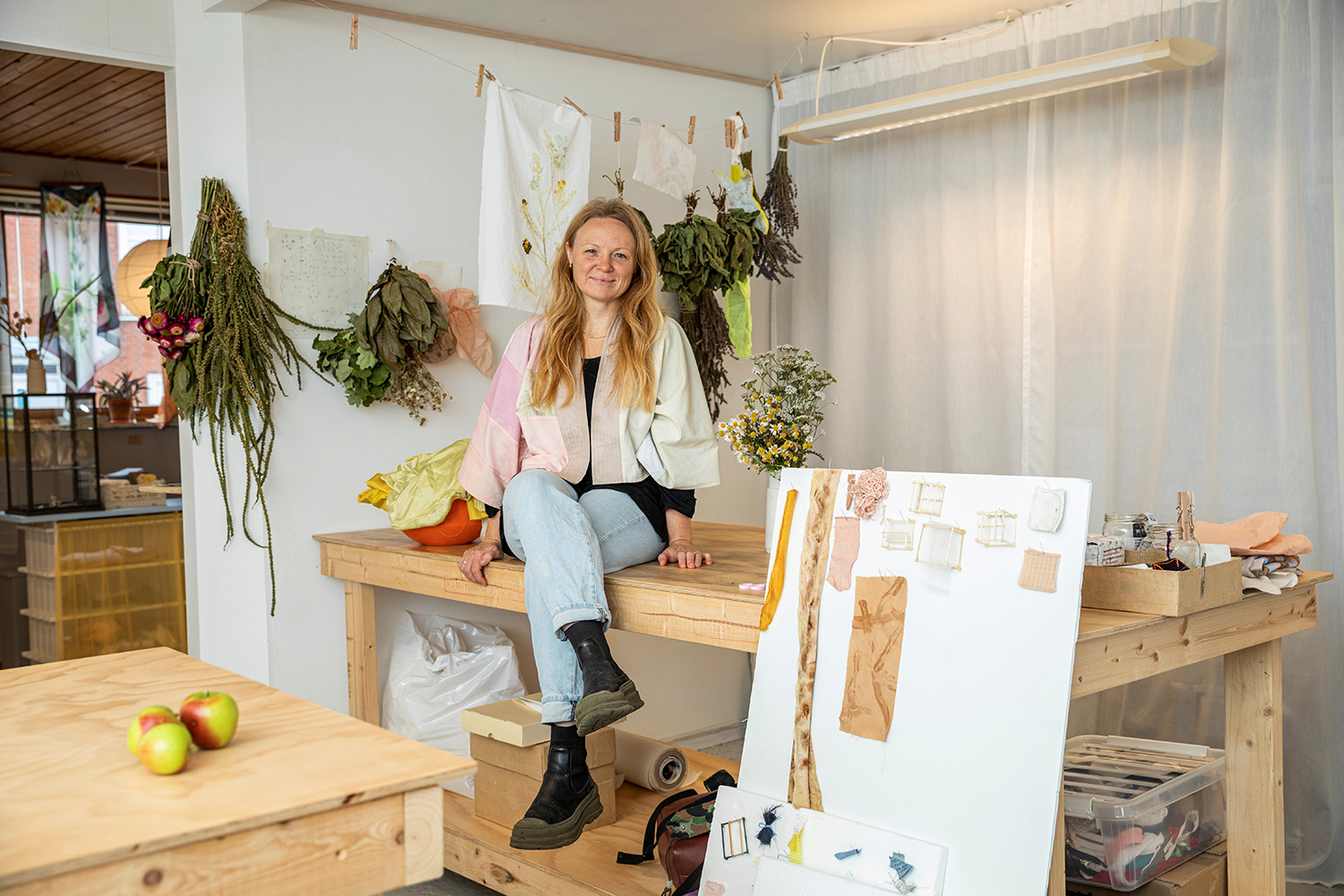
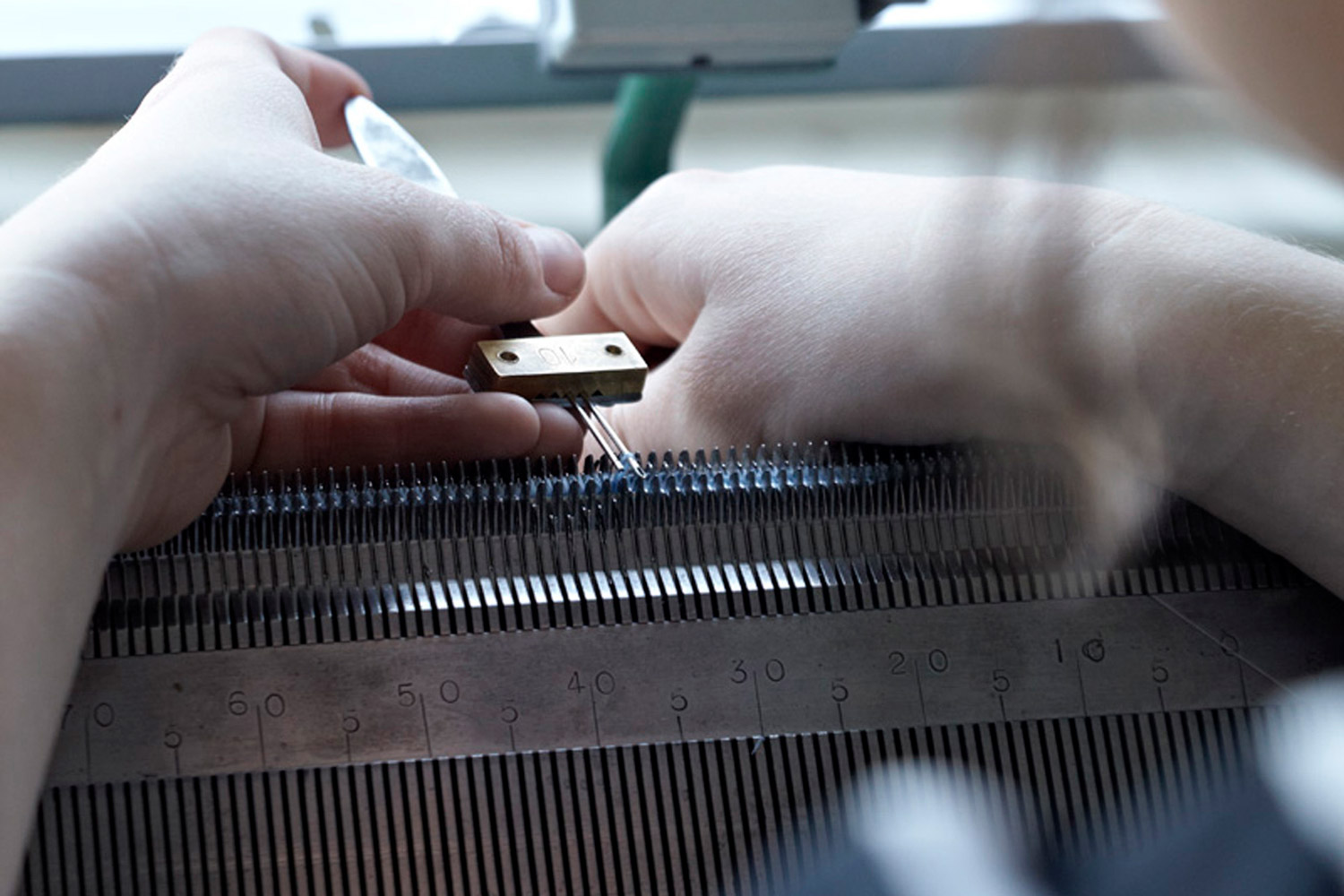
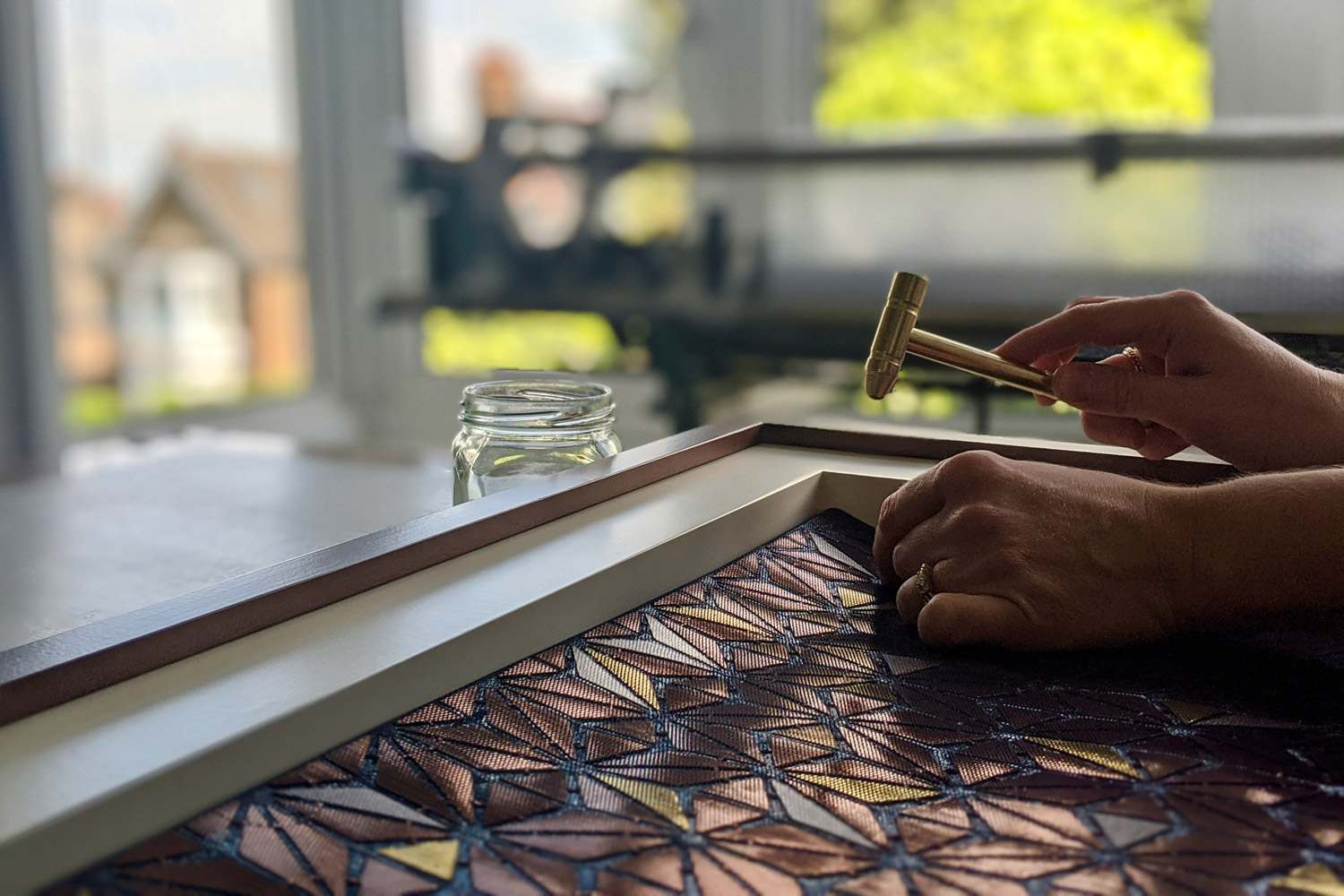
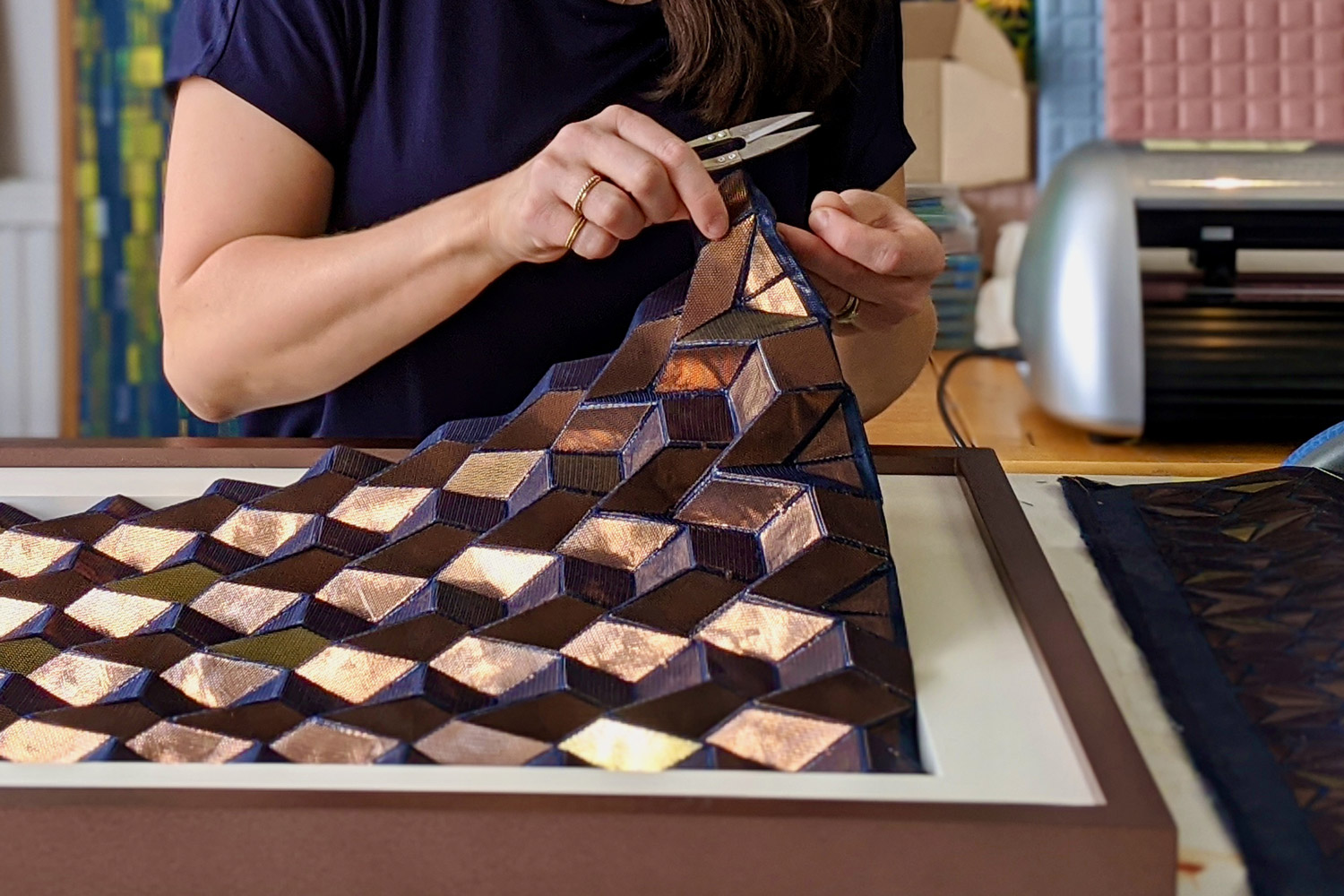
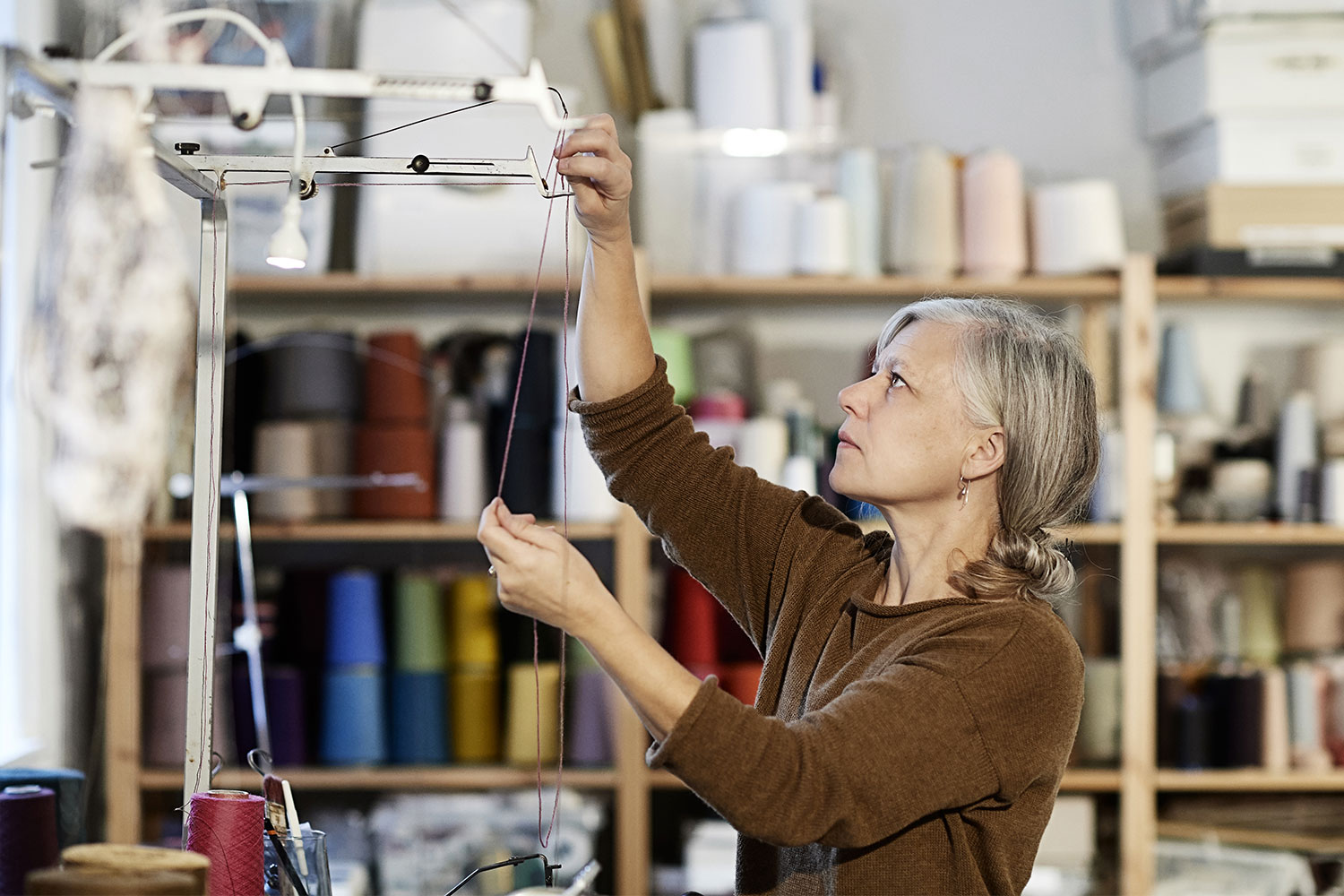
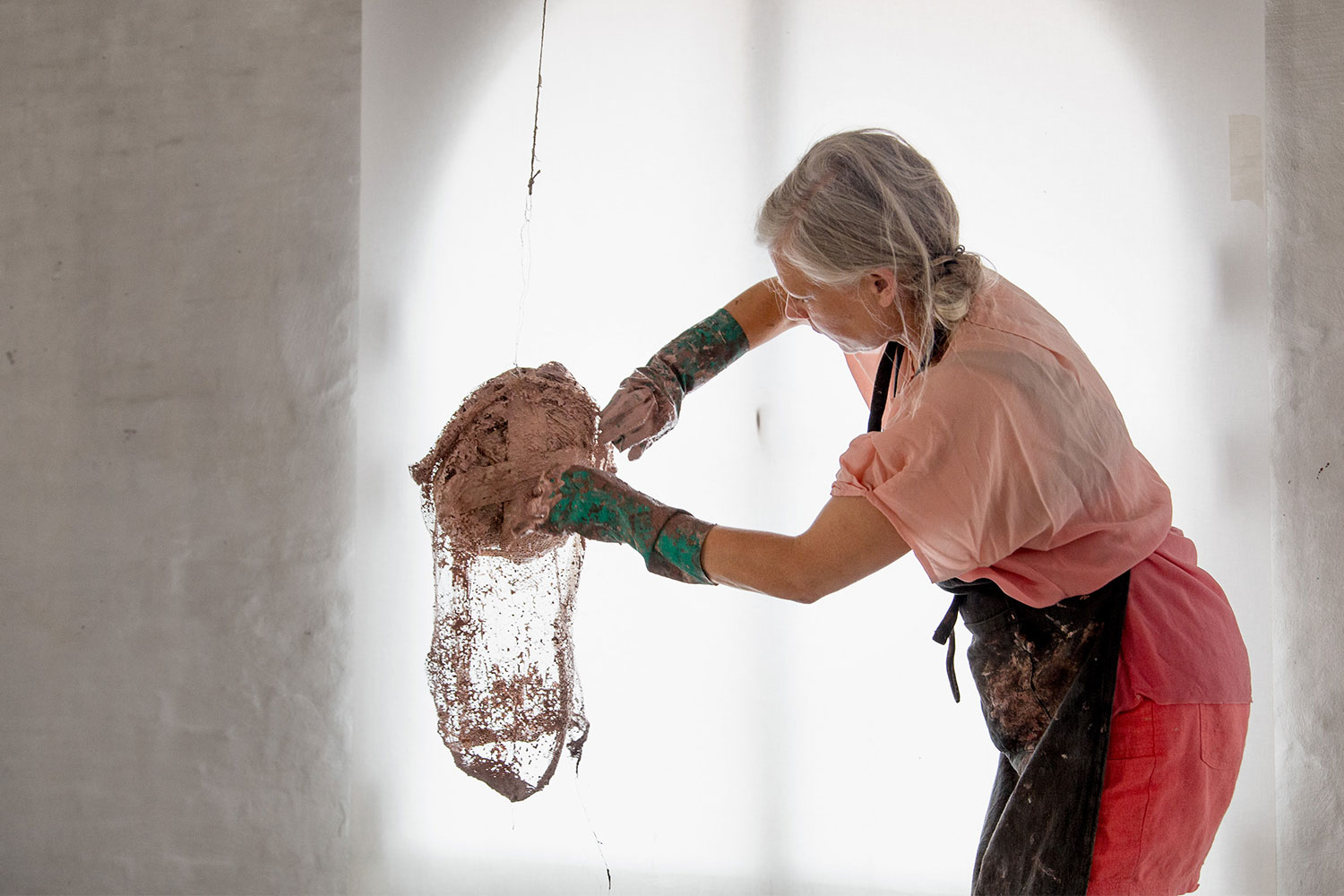
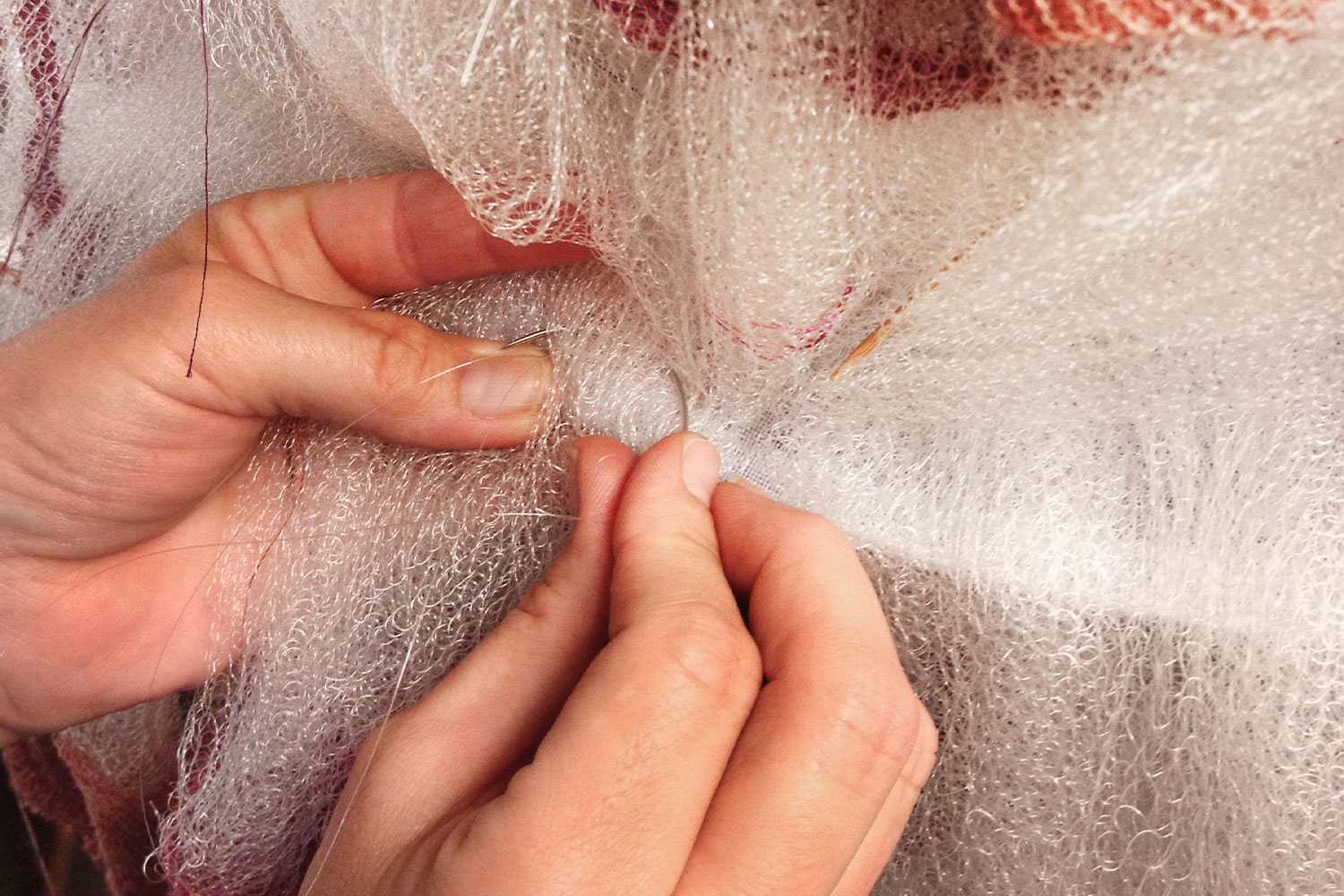
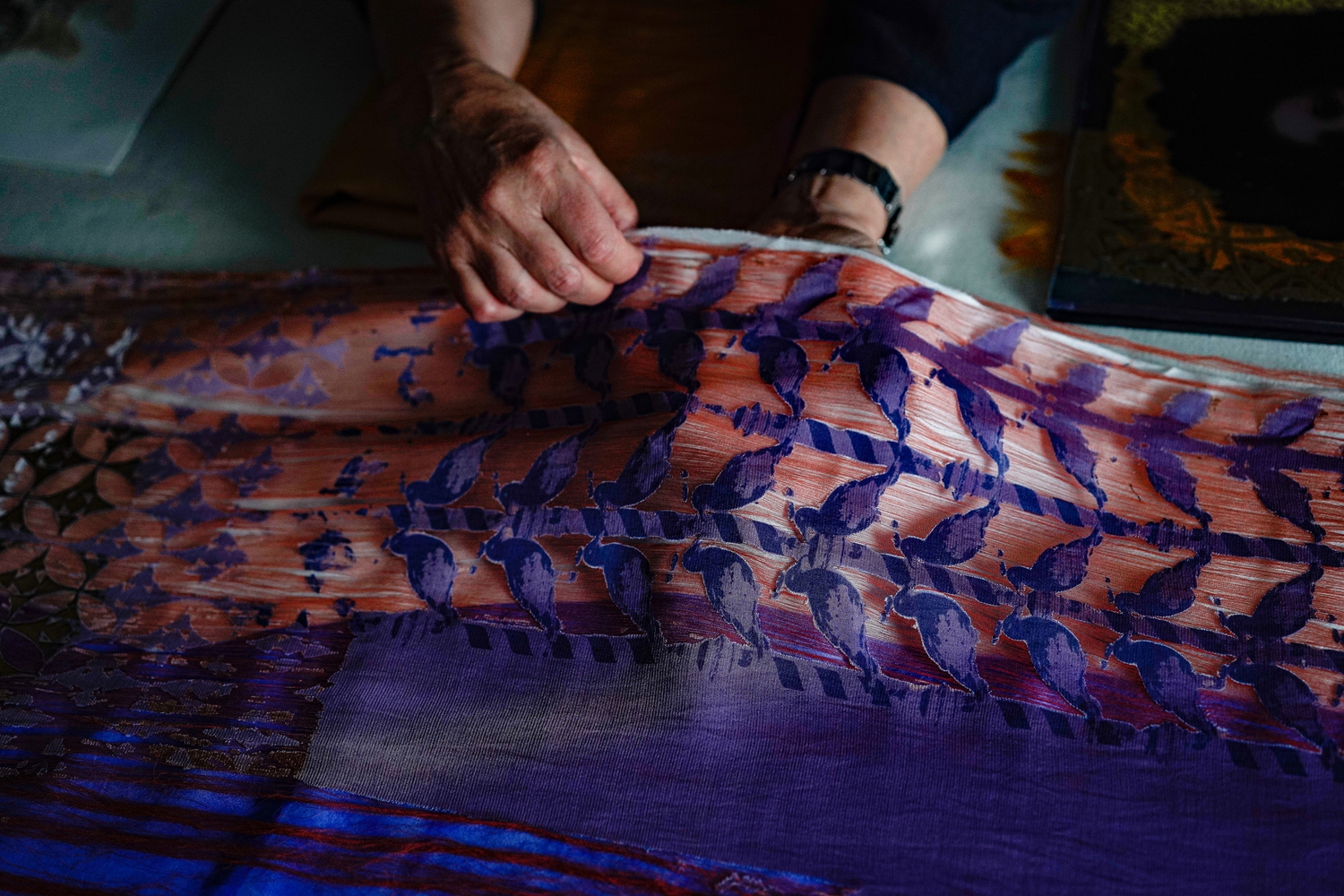
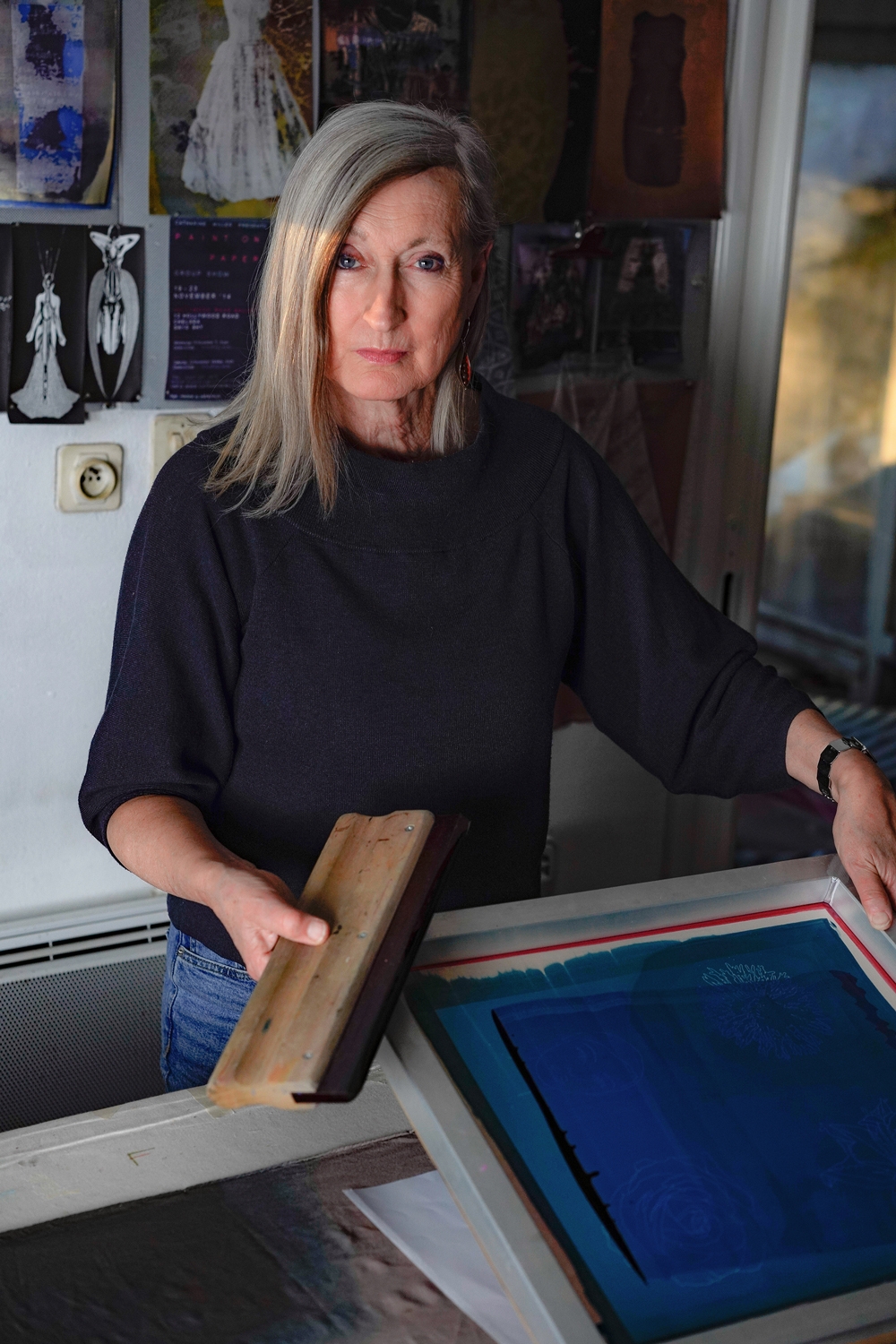
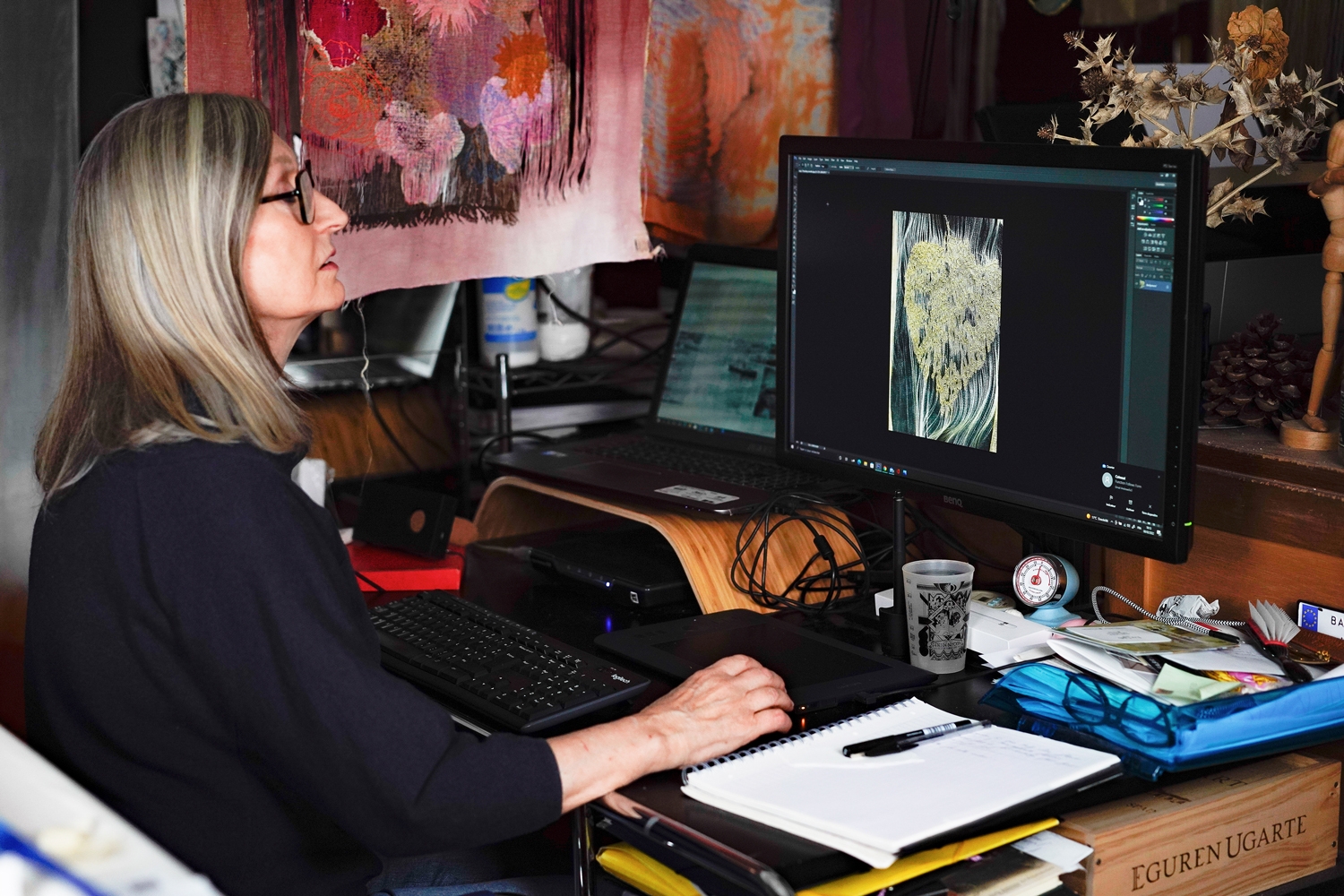
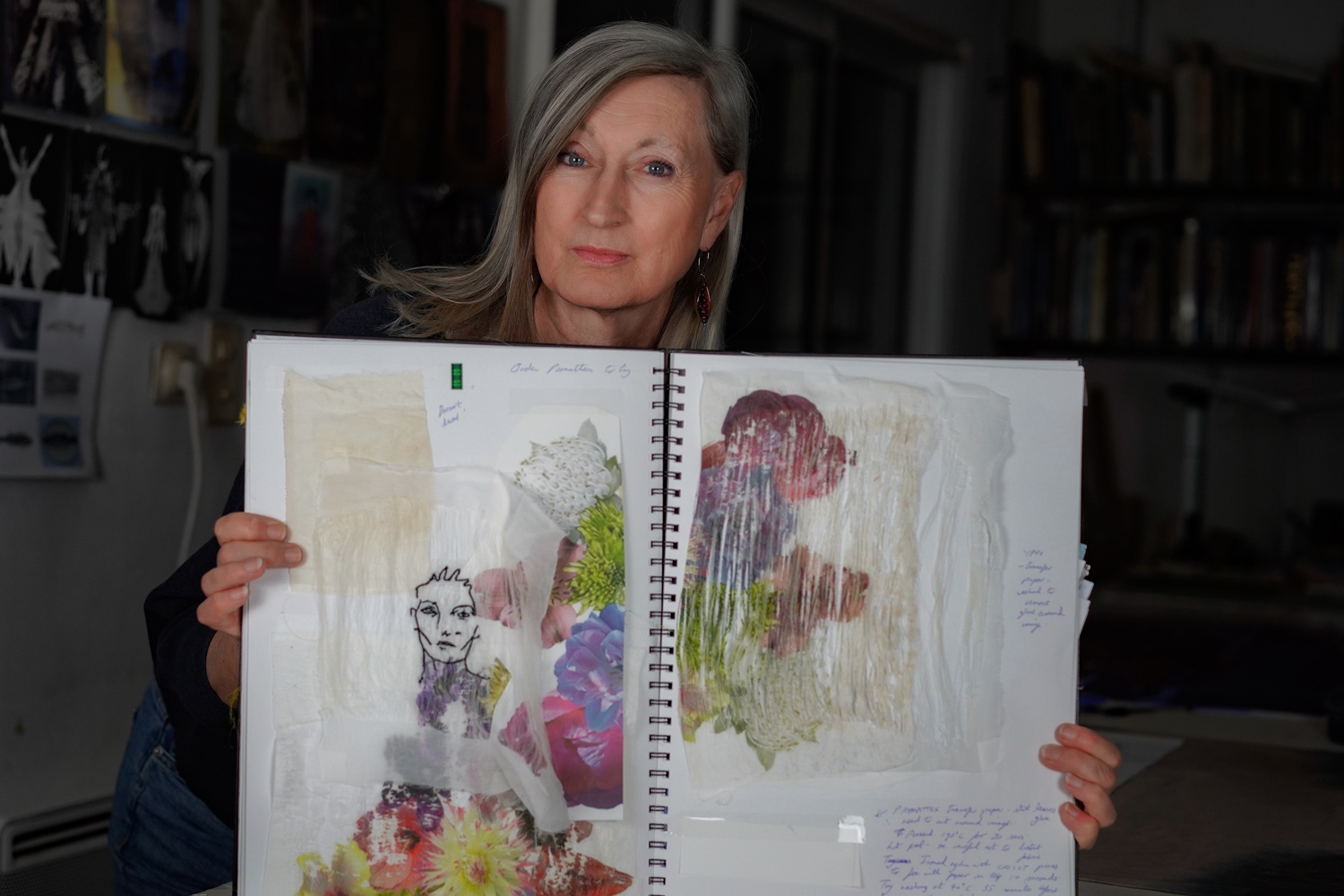
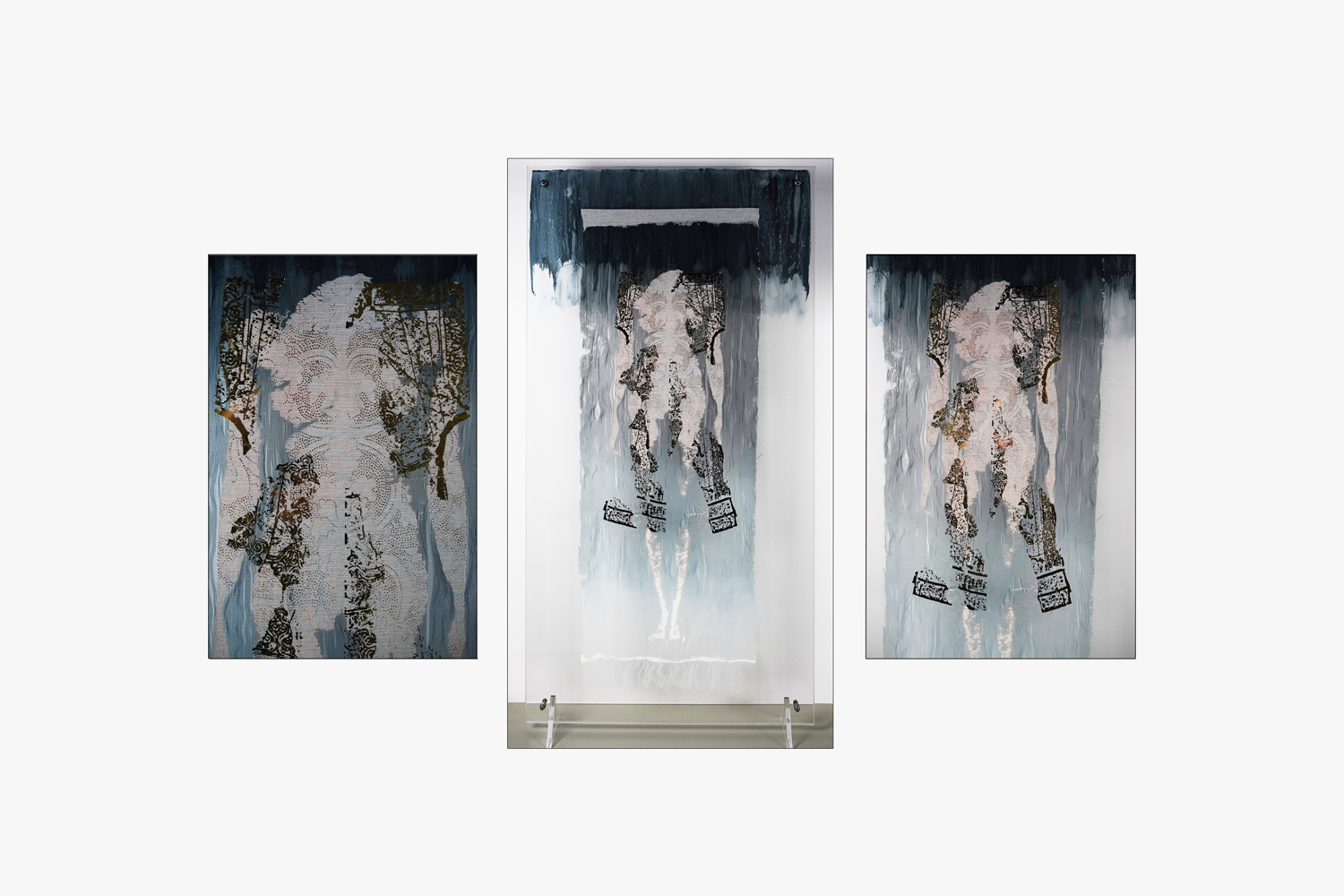
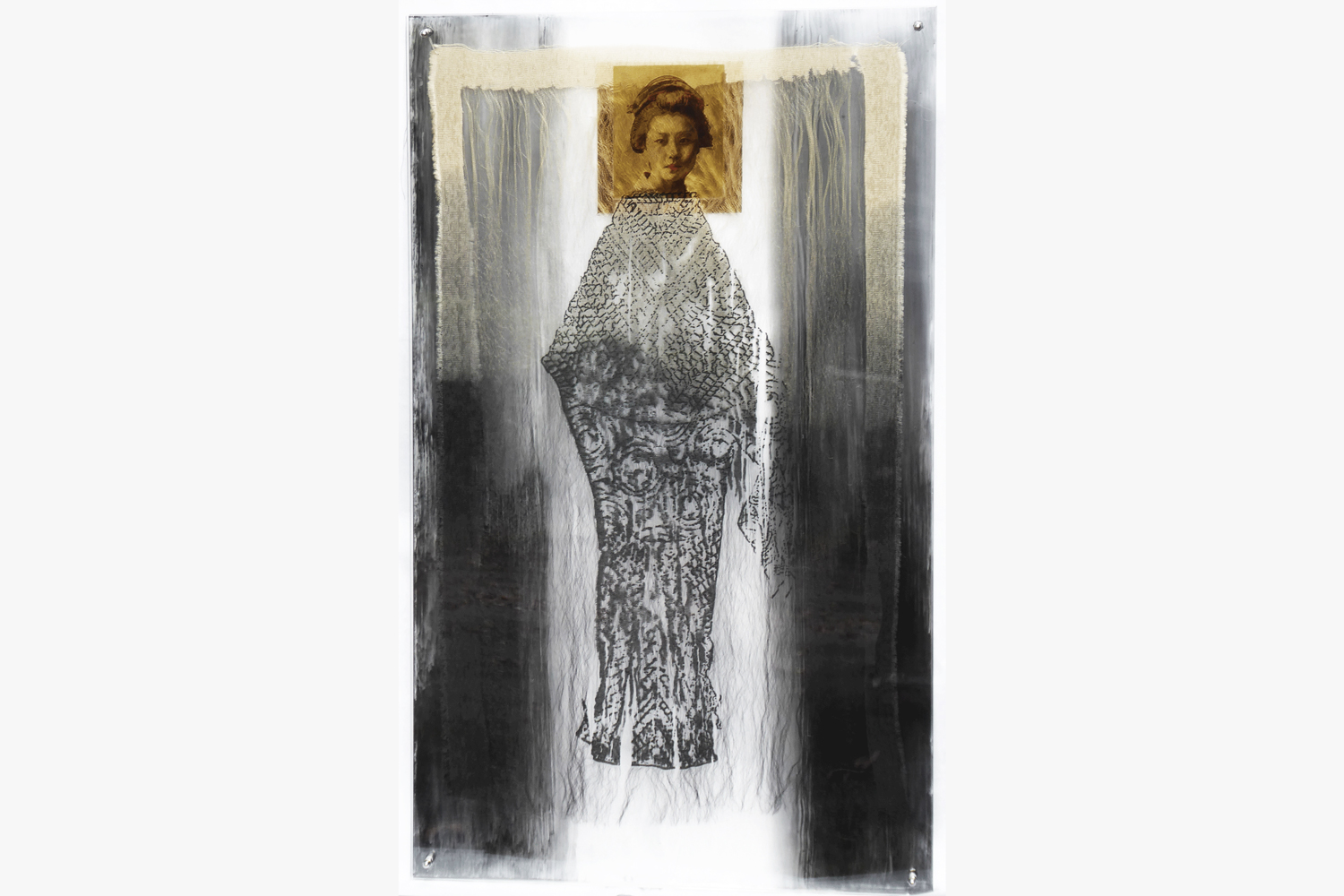
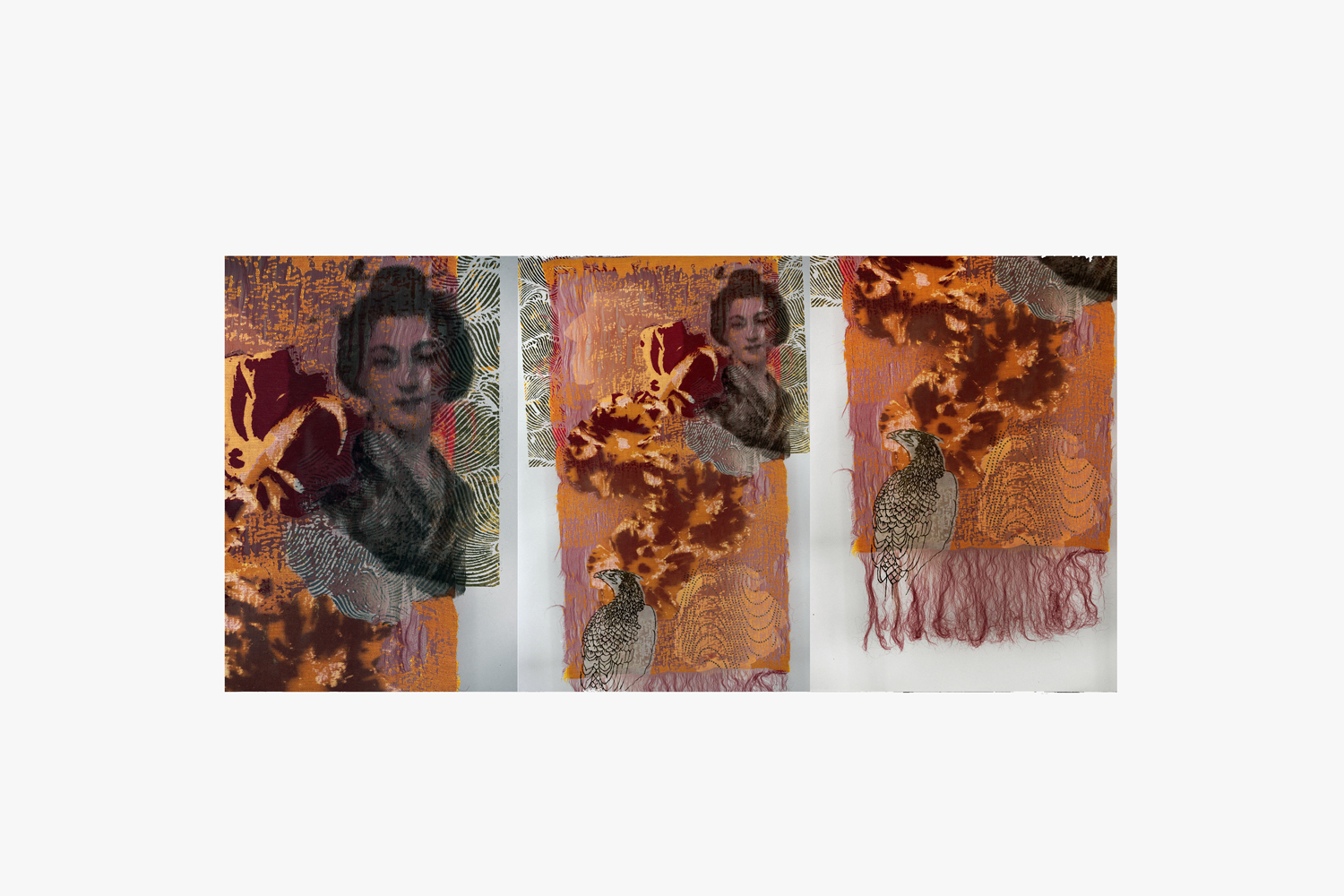
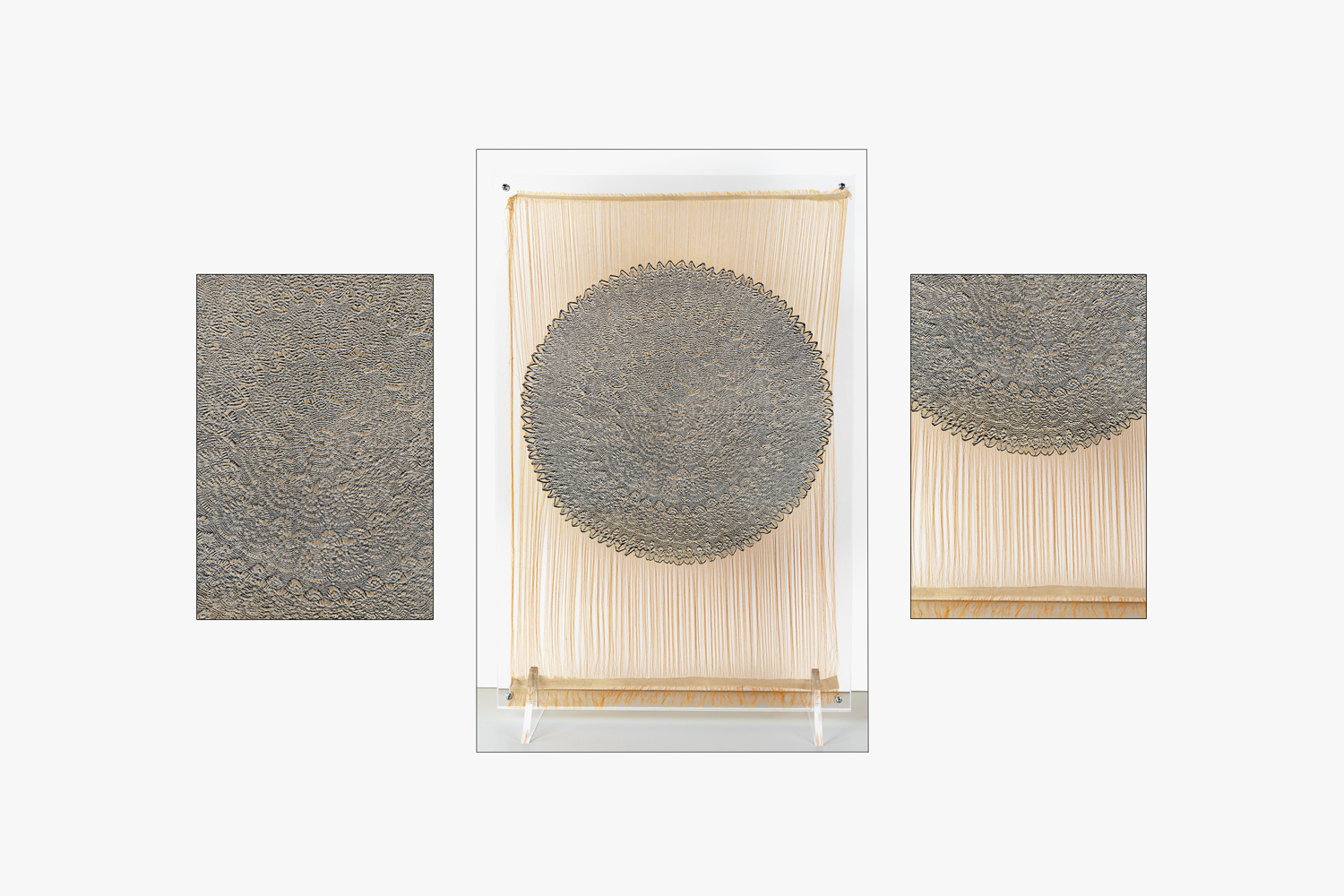
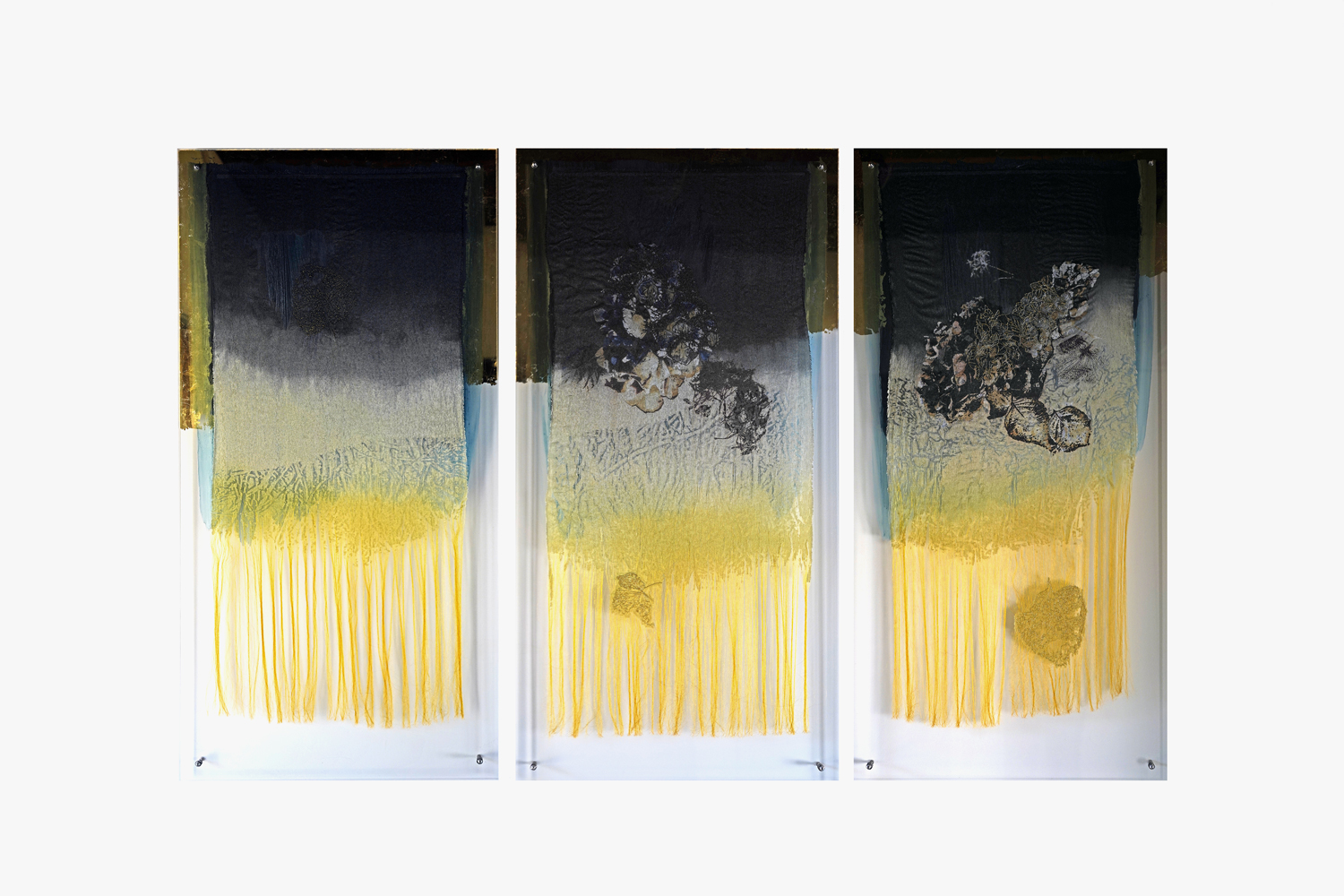
Andrea Ellis has been dyeing and printing textiles for over 30 years, working mainly with the devoré technique, where a chemical paste burns through the fabric to create areas of exposed fibres. Devoré often leads to unpredictable results, but Andrea embraces the irregularities in her pieces, preferring for them to retain their unique and often aged look. “I am constantly surprised by the colours and textures I manage to create,” she says. She draws inspiration from everything around her, be it an antique coin she spotted at the market, hydrangea flowers she picked on her walk, or most often Japan. By embracing Japanese textile savoir-faire and wabi-sabi concepts, in her textiles Andrea balances elegance and refinement with innovation and modernity.
INTERVIEW
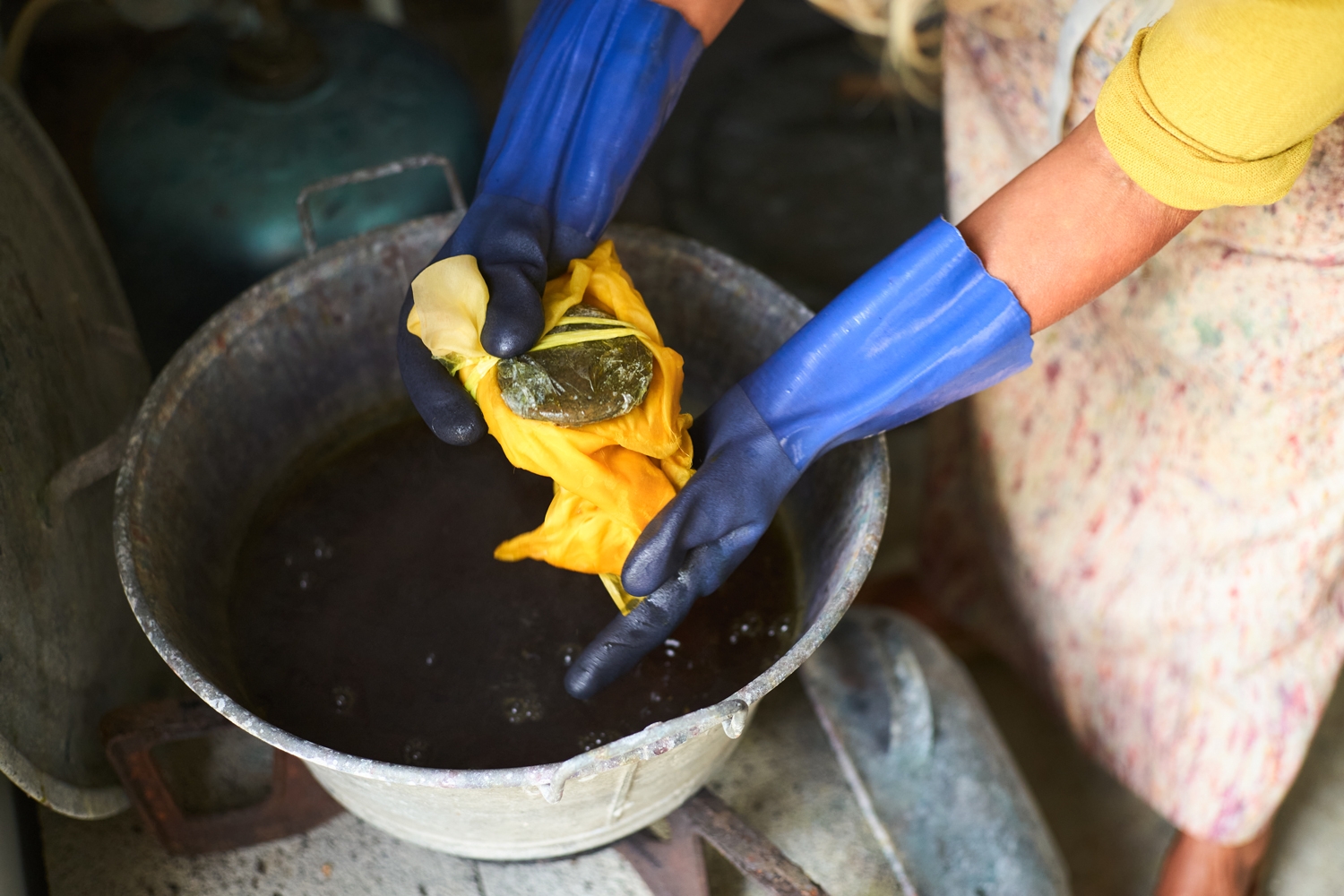
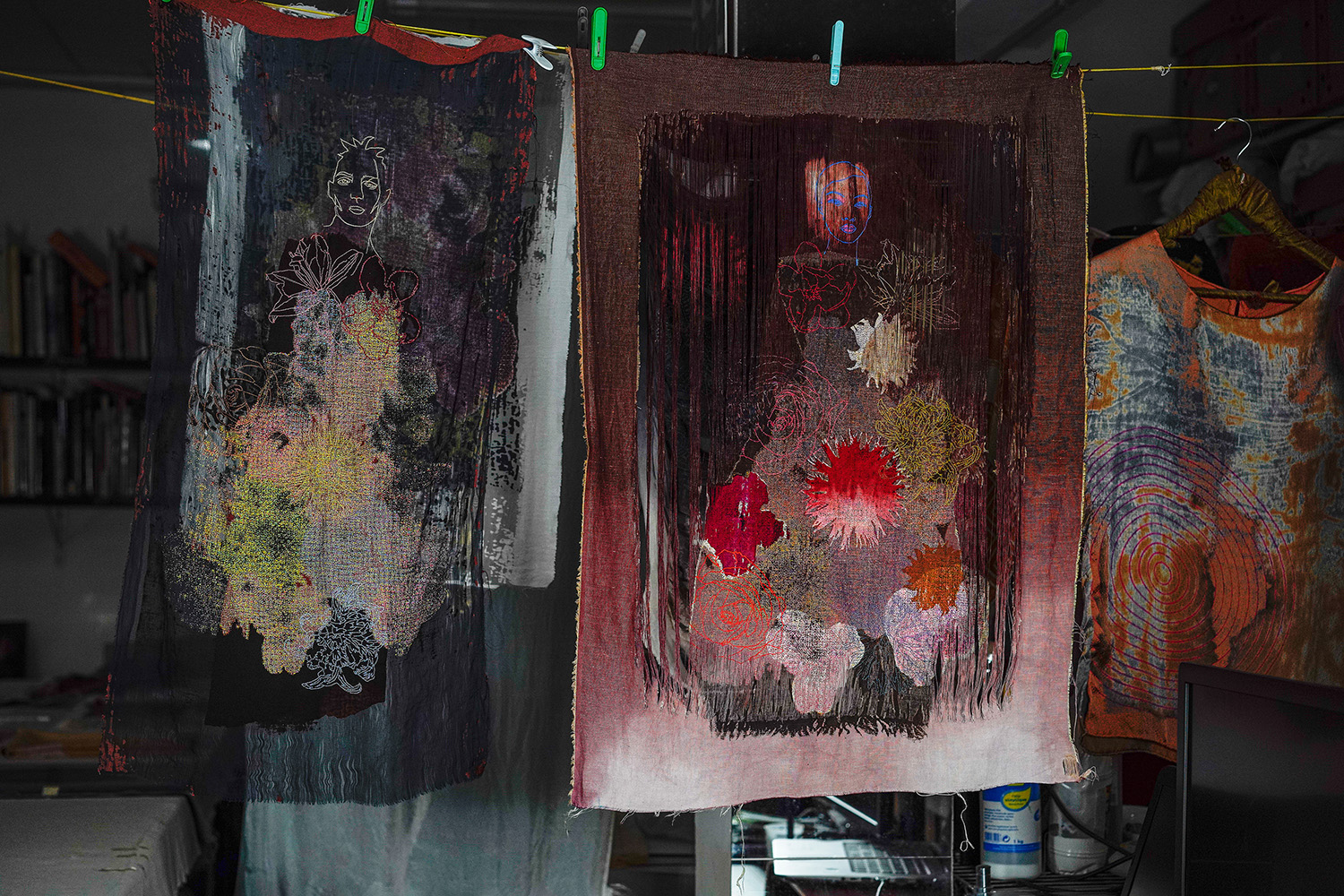
How physically demanding it is at times, especially when working over a hot dye bath, blasting silk screens with the power hose and removing burnt fibres after the devoré process. Each piece can take several weeks from conception to the finished product.
I use traditional techniques that result in my unconventional textiles. I use Photoshop to manipulate the images for my silk screens. My latest textiles appear aged and relic-like, but when encapsulated between acrylic glass, they look contemporary.
Primarily the highly sophisticated Japanese sense of aesthetics. On a contemporary level, I admire the works of textile artists like Rei Kawakubo, Jun i’chi Arai and Reiko Sudo, who combine experimental shibori techniques with modern technology.
From a practical point of view, it is something that lasts. My textiles are made in a way that they should still be around in years to come. Aesthetically, it means something well designed and that uses base materials in an innovative and creative way.
1 EXPERIENCE

Andrea Ellis
Textile creator
Lahonce, France
AVAILABILITY
By appointment only
PHONE
+33 646410846
LANGUAGES
French, English
Homo Faber Finds is a new service aiming to inspire admirers of craft to connect and collaborate with exceptional artisans.
We invite you to submit an enquiry here.