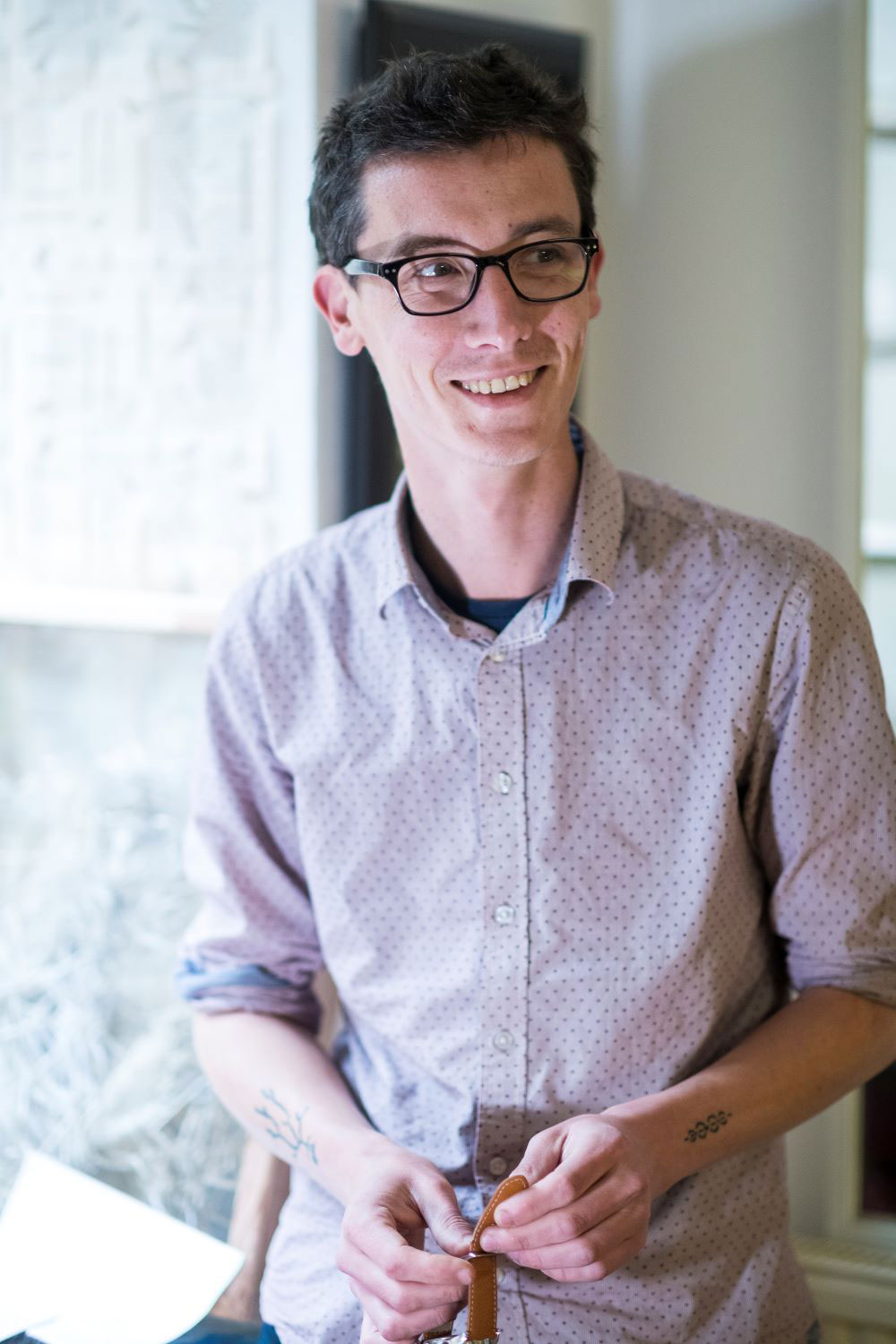
Ilann Vogt
Paper artist
Cancale, France
When texts become textiles
- Ilann explores the affinity between ‘textile’ and ‘text’
- His work fuses paper and textile arts, contemporary art and literature
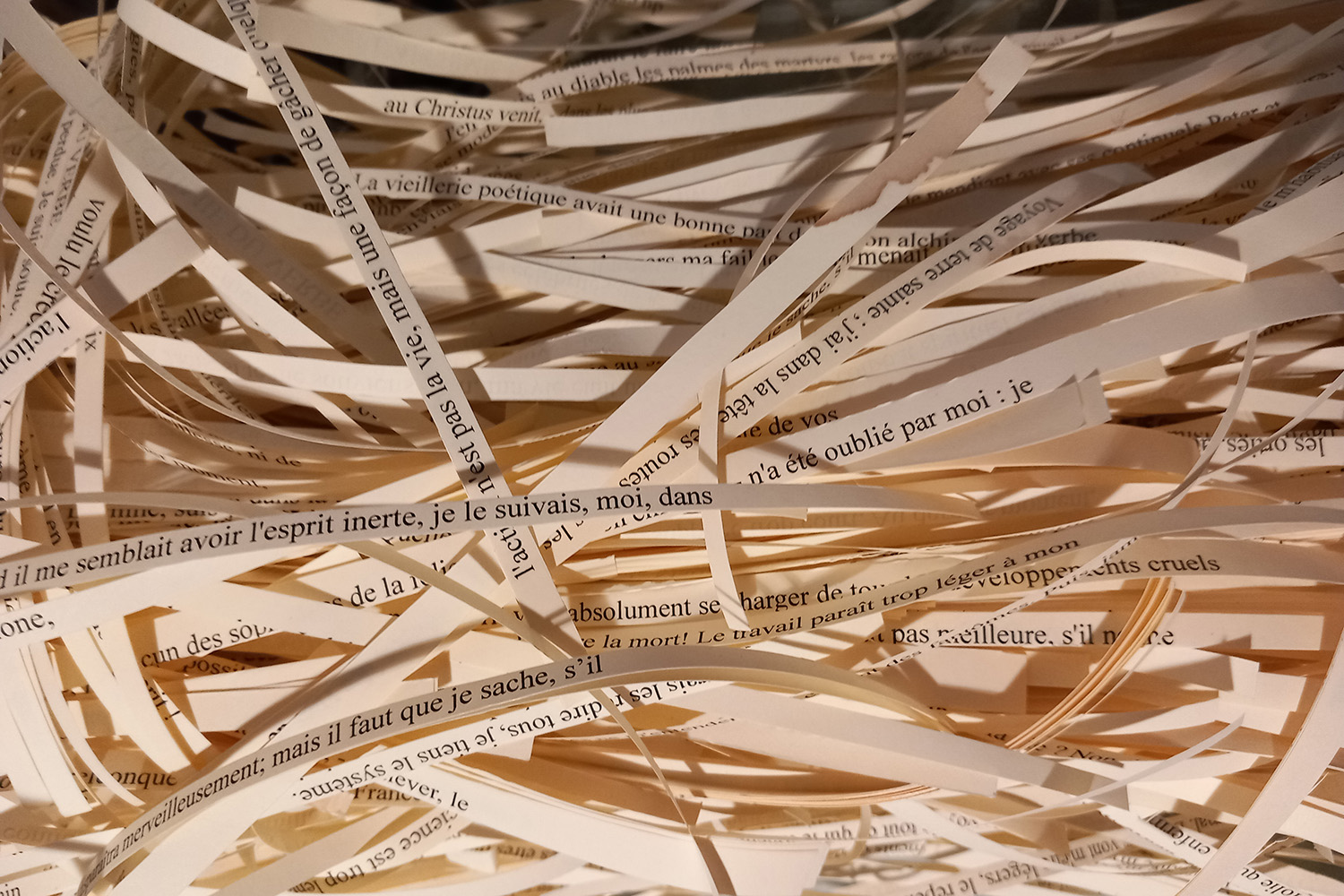
- He uses the pages of books that inspire him to create woven paper creations
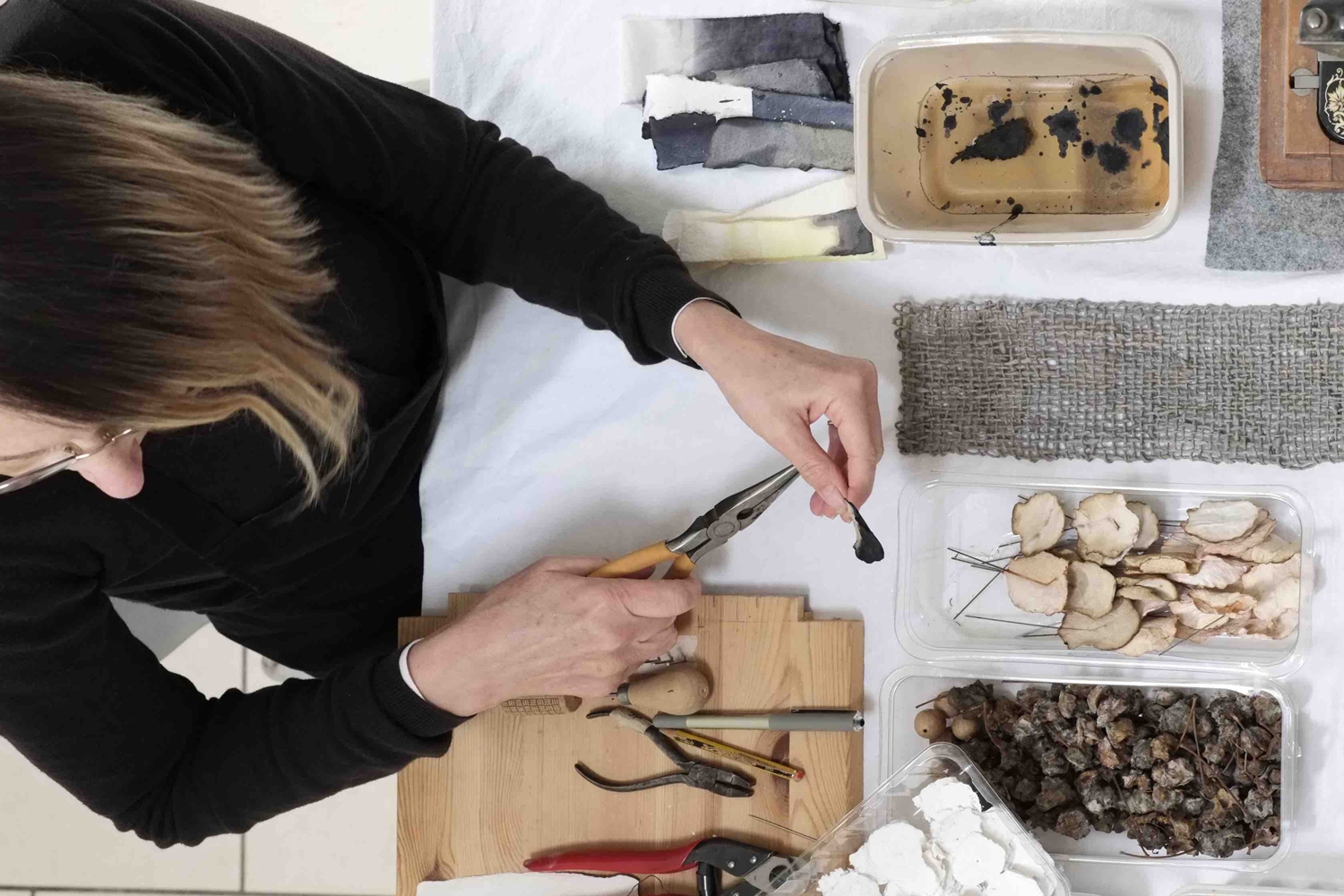
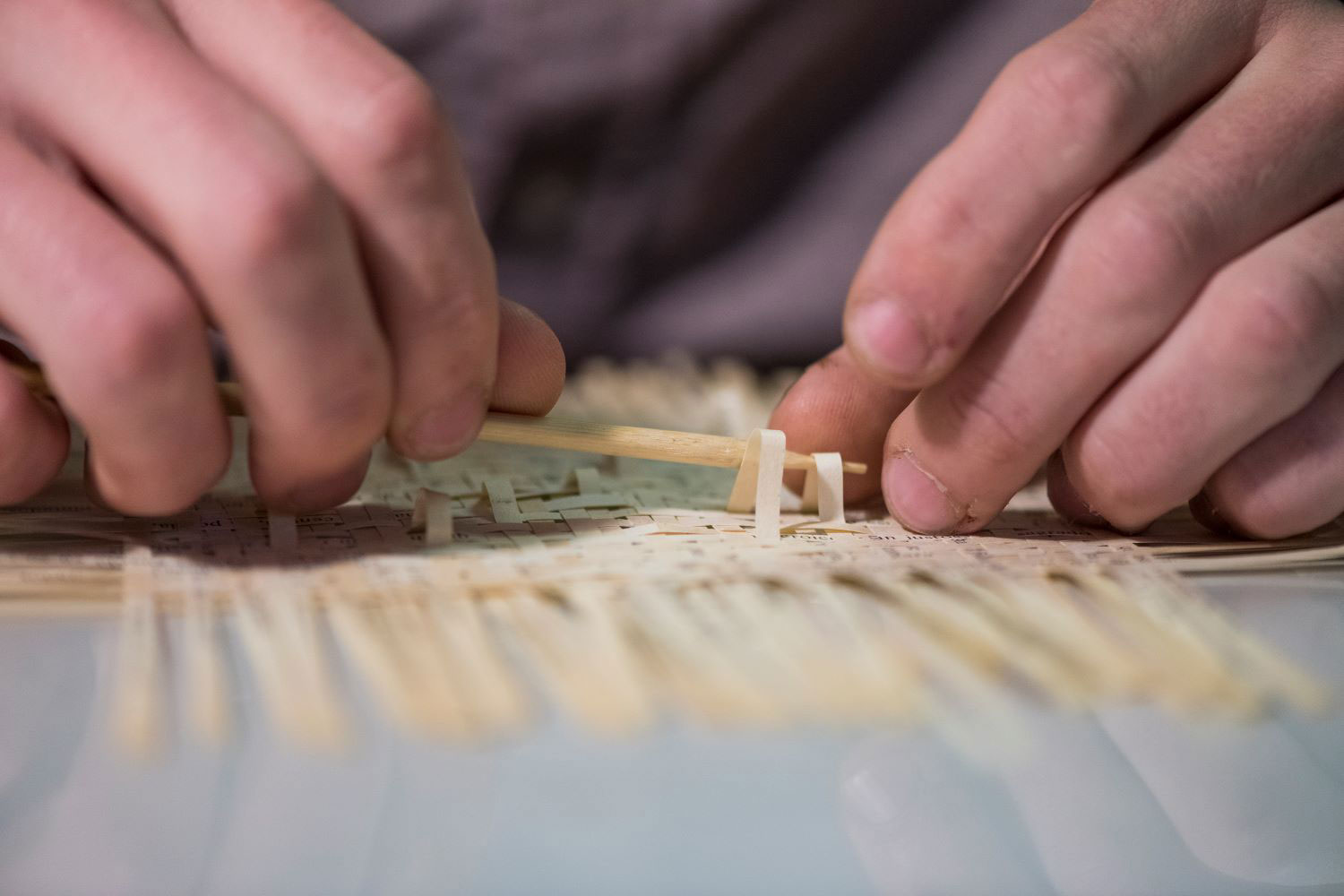
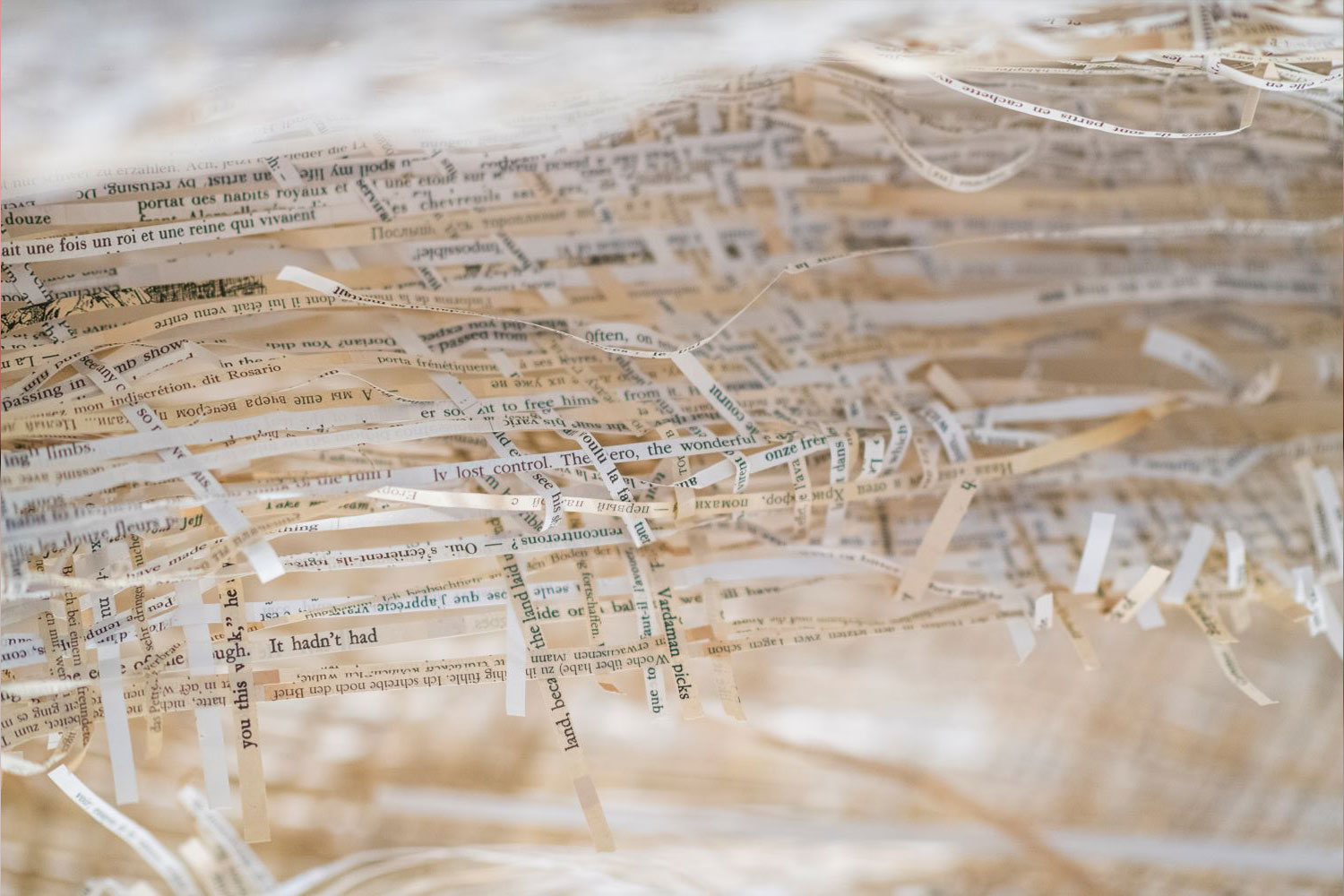
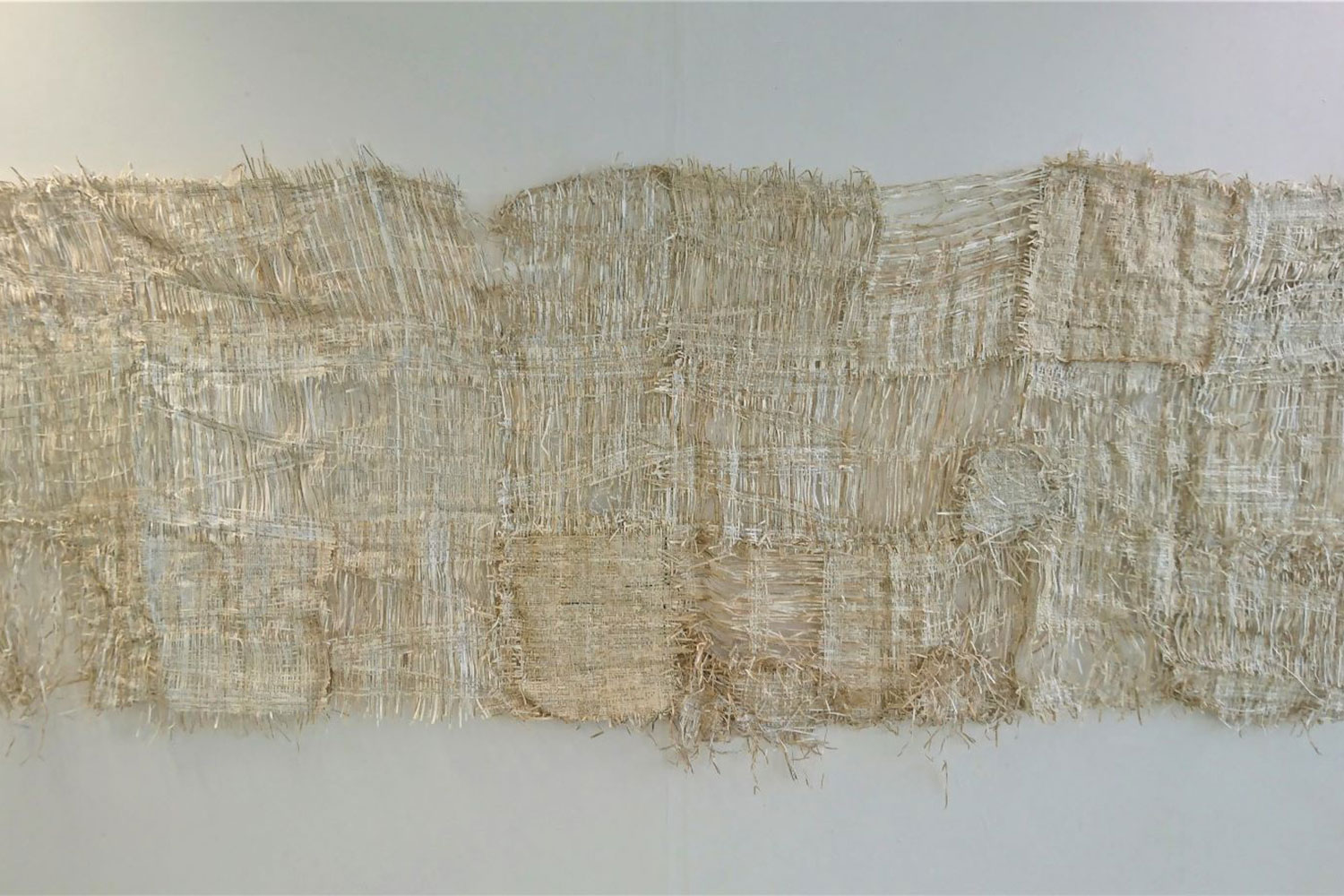
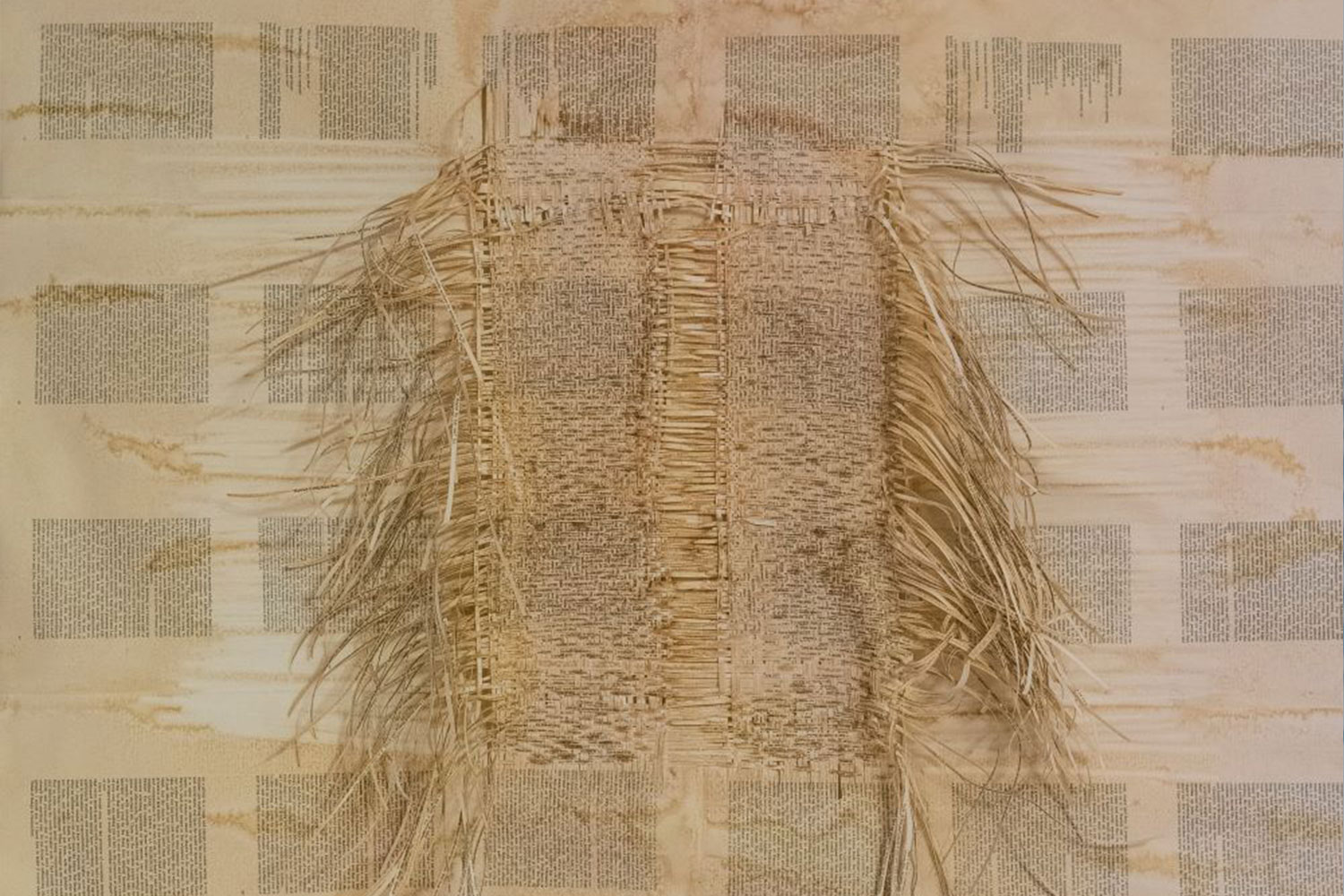
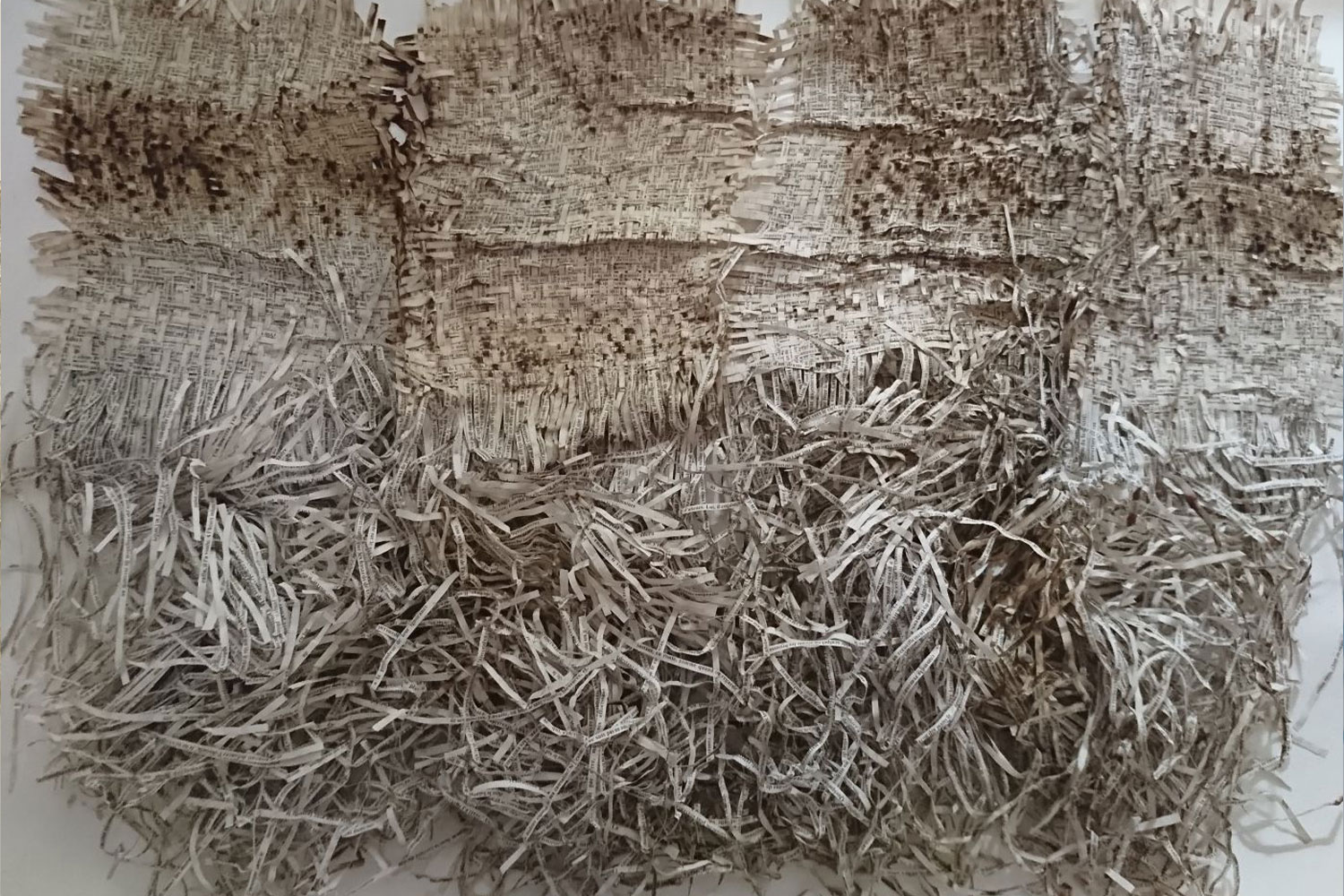
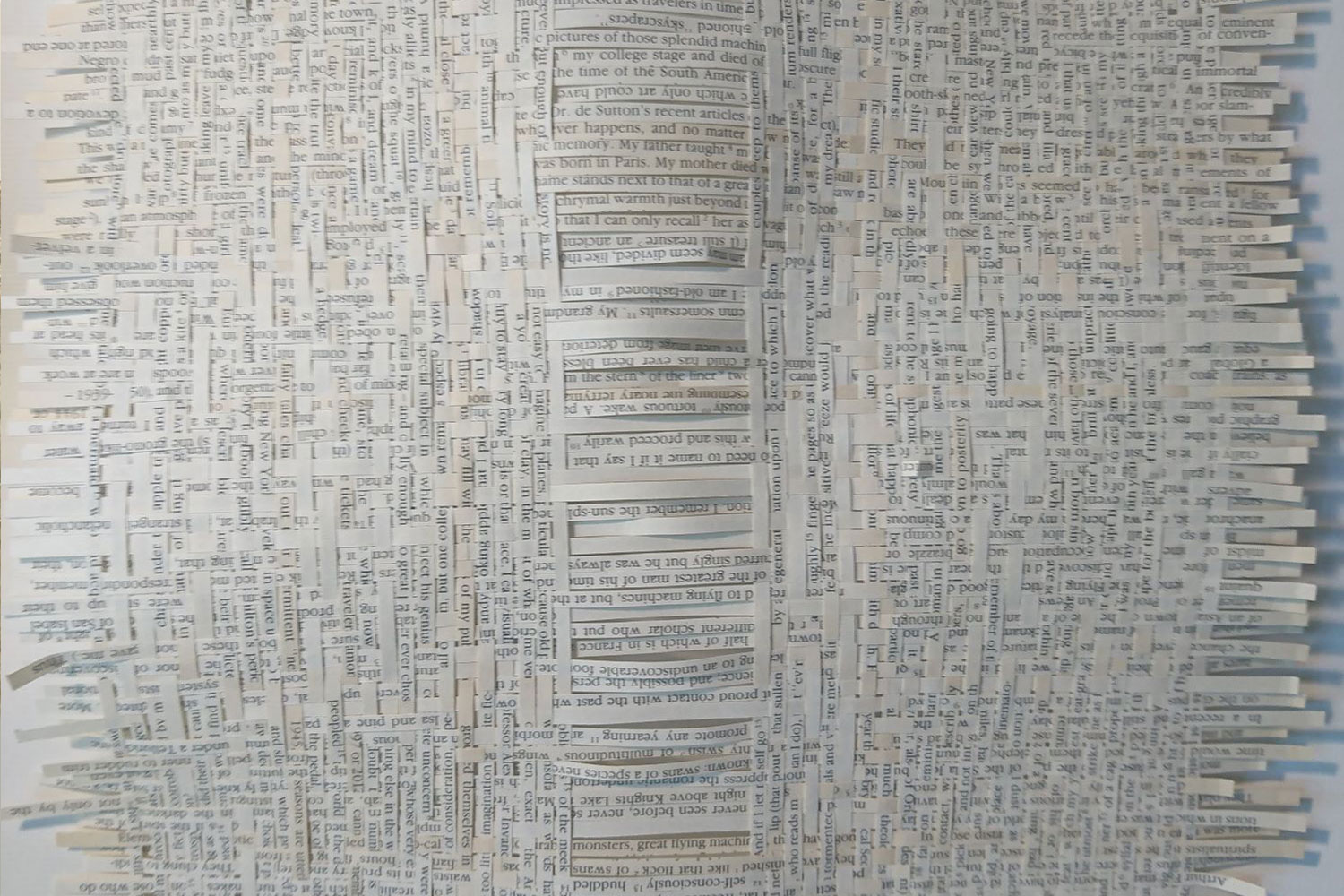
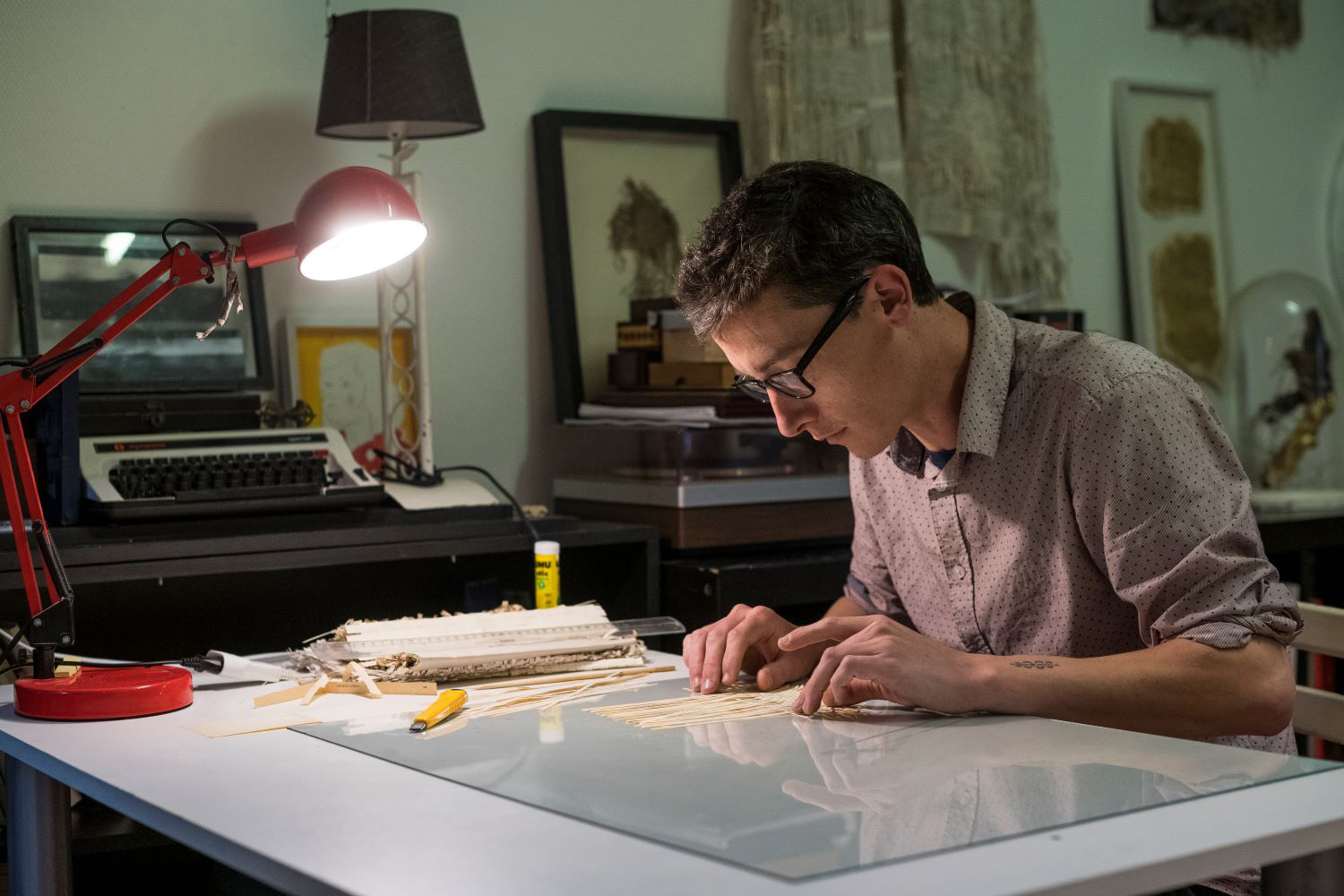
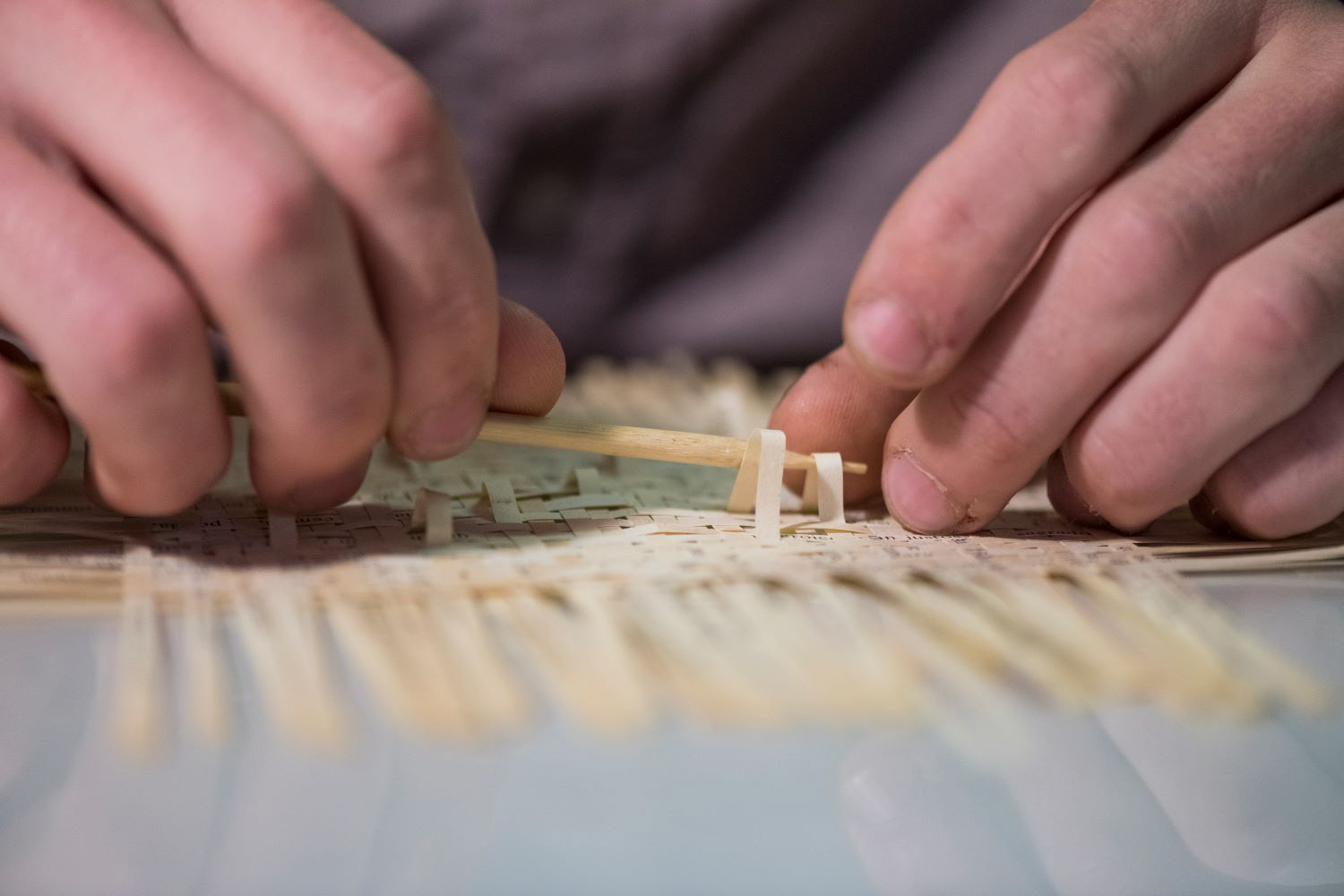
The work of Ilann Vogt is an intricate weaving of literature, craftsmanship and art. He was raised in a family with deep cultural awareness and appreciation of poetry, literature and the arts. In the context of his initial training in applied arts, he began to study different weaving techniques. “Soon after, I realised that a text could also be an object, a text could be a thread,” he says. Greatly influenced by the classical story of Penelope in The Odyssey, who weaves by day and unpicks her work by night, Ilann deconstructs the pages of the books and poems that inspire him and weaves these textual 'threads' together, creating innovative 'readings' of known works.
INTERVIEW
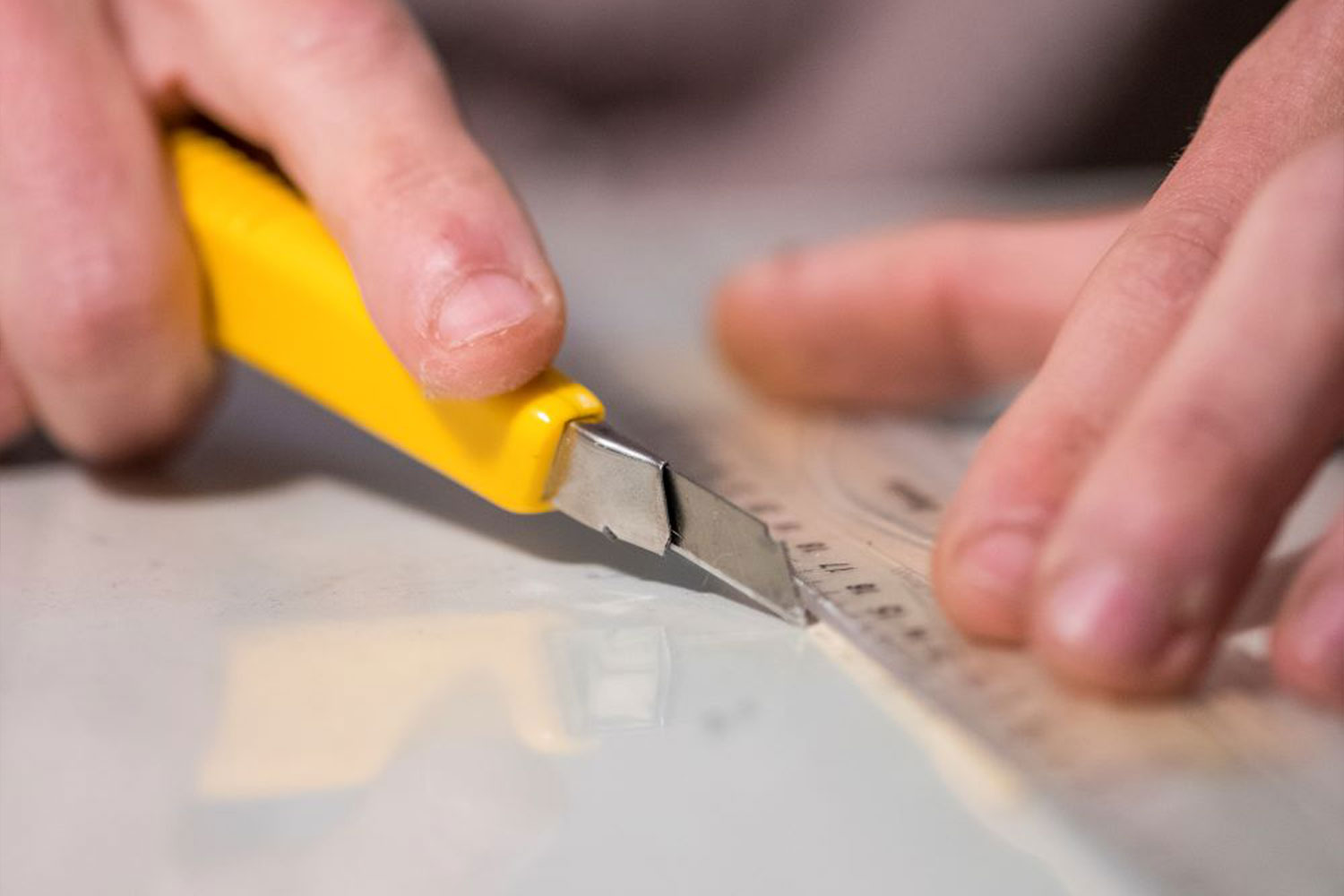
It’s a manifestation of a text, not an illustration. Weaving is a language of its own and depending on the text, I will select different techniques – weaving, embroidery, braiding – to create a visual translation of a text.
Some paper is easier than others. Bible paper is very difficult, for example; it’s too thin. Paper that was once damp is also a problem. I like starting with ordinary paperbacks, standard editions. I tend to avoid transforming rare books or art books.
I select without selecting. The art chooses me, out of a feeling for a specific text. And then I work under two constraints: one, I use a text in its original language; and two, I make use of the complete work, the text of an entire book or poem.
There is no conventional linear reading, but a visual reading. It’s a kind of pure gaze onto the text. My hope is that the viewer might read Proust, for example, in a single glance. The timescale is completely altered.
1 EXPERIENCE
Ilann Vogt
Paper artist
Cancale, France
AVAILABILITY
By appointment only
PHONE
+33 629659235
LANGUAGES
French, English
Homo Faber Finds is a new service aiming to inspire admirers of craft to connect and collaborate with exceptional artisans.
We invite you to submit an enquiry here.


chanel_goossens-savoir-faire-©alix-marnat_18-HD.jpg)
chanel_maison_goossens_©alix-marnat-11-HD.jpg)
chanel_goossens-©alix-marnat_17-HD.jpg)