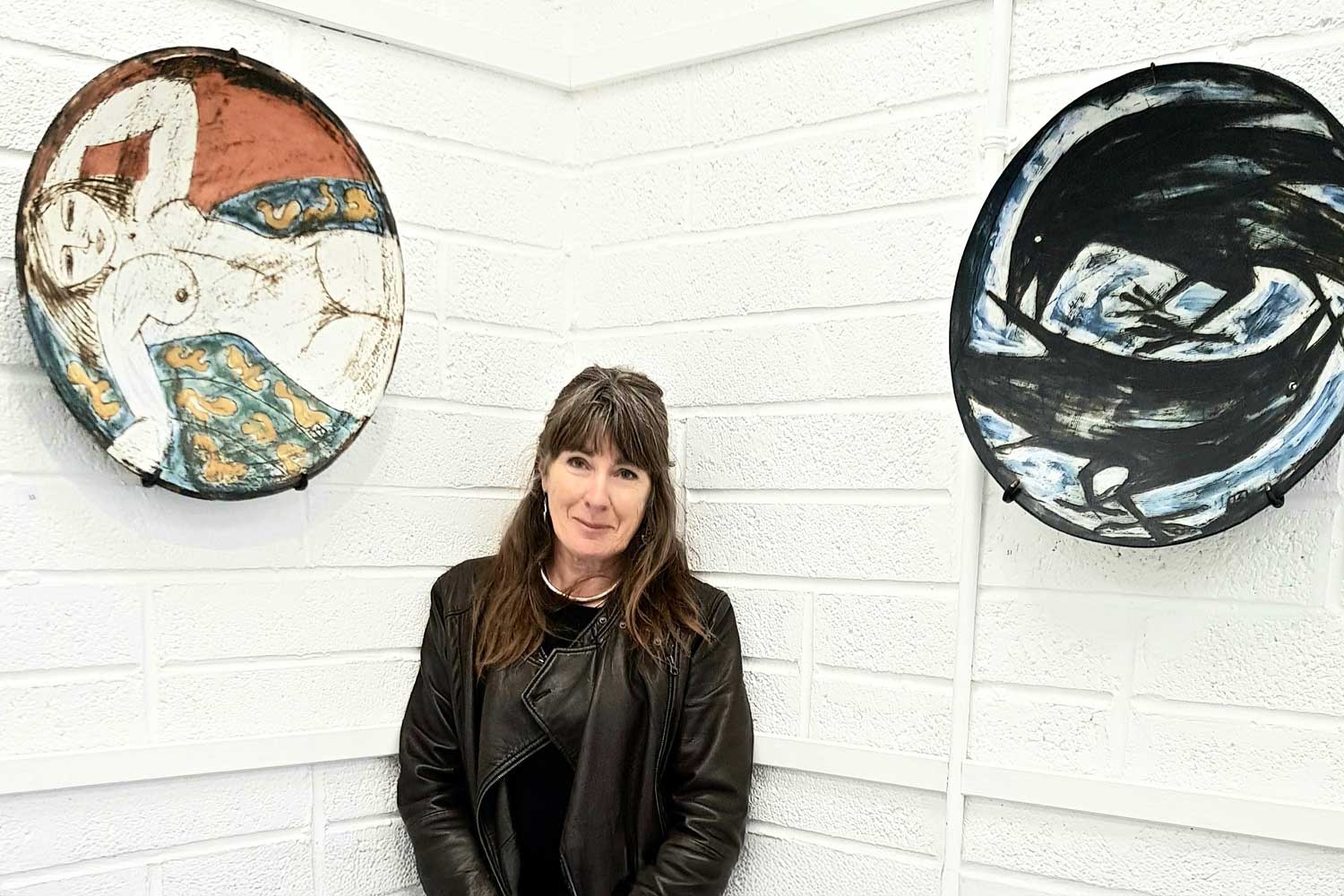
Sasha Wardell
Ceramicist
Bradford-on-Avon, United Kingdom
Shining a light through china
- Sasha creates luminous ceramic pieces from bone china
- Her process is informed by industrial making processes adapted to a studio environment
- She likes the quietness of subtle, pastel colours
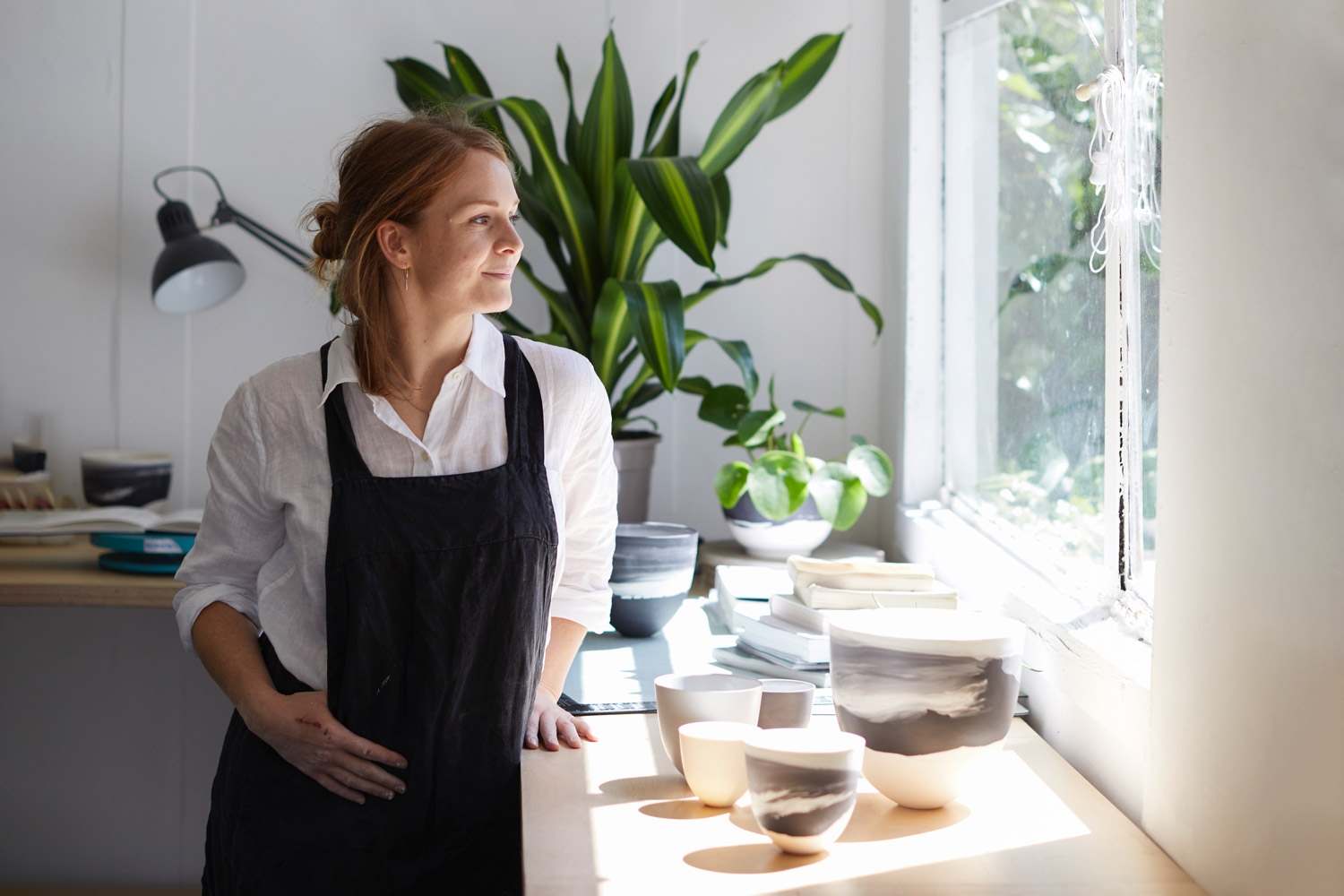
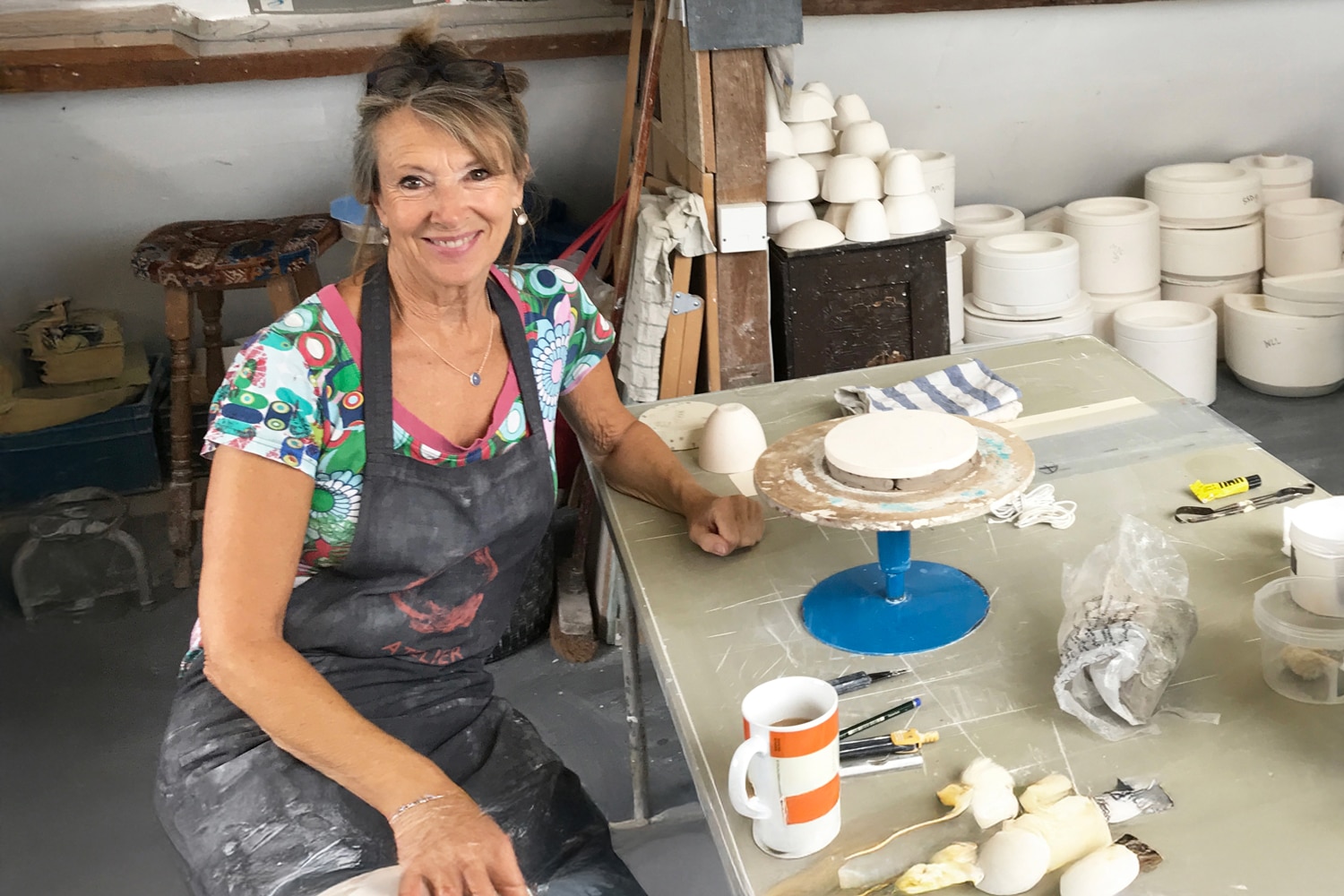
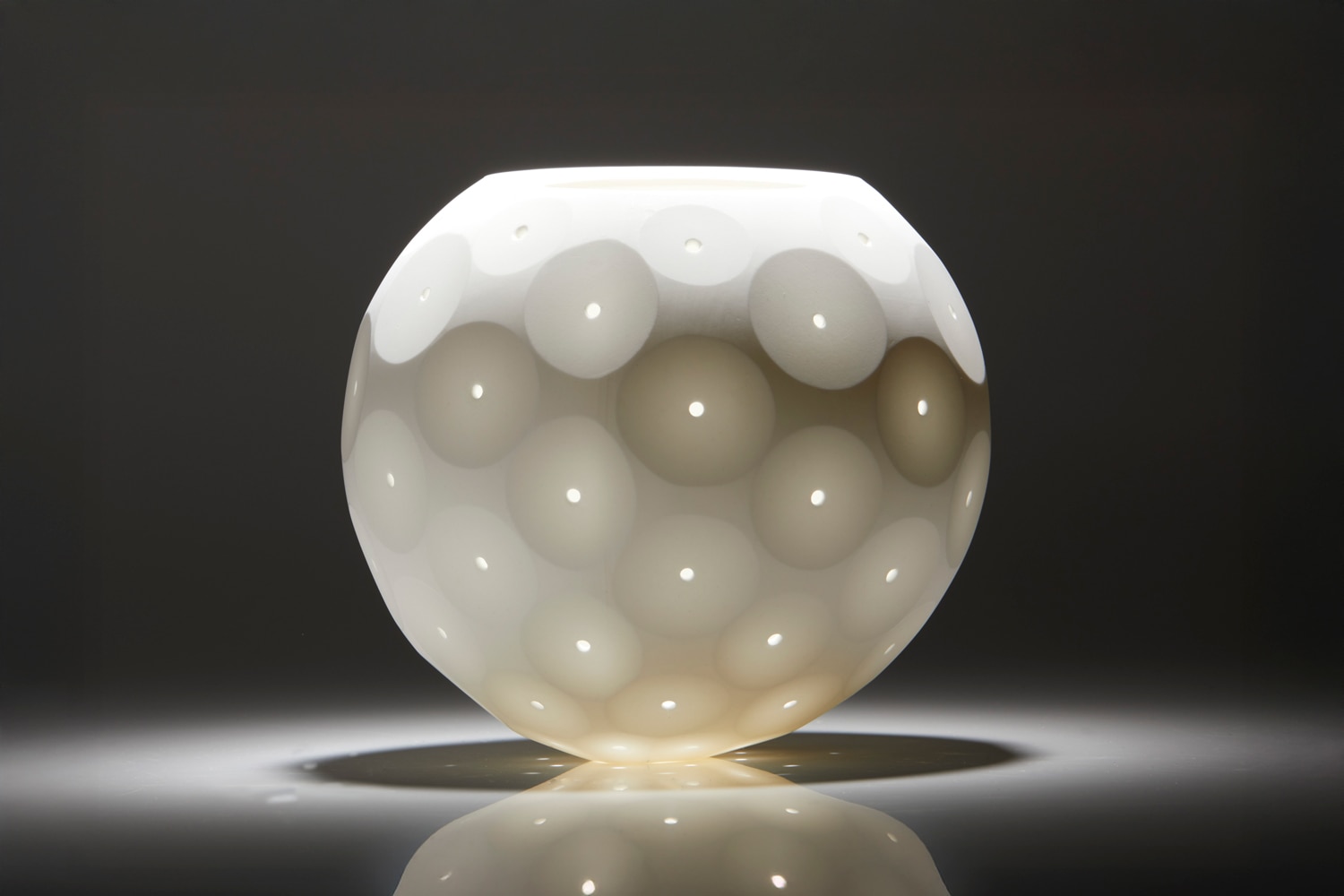
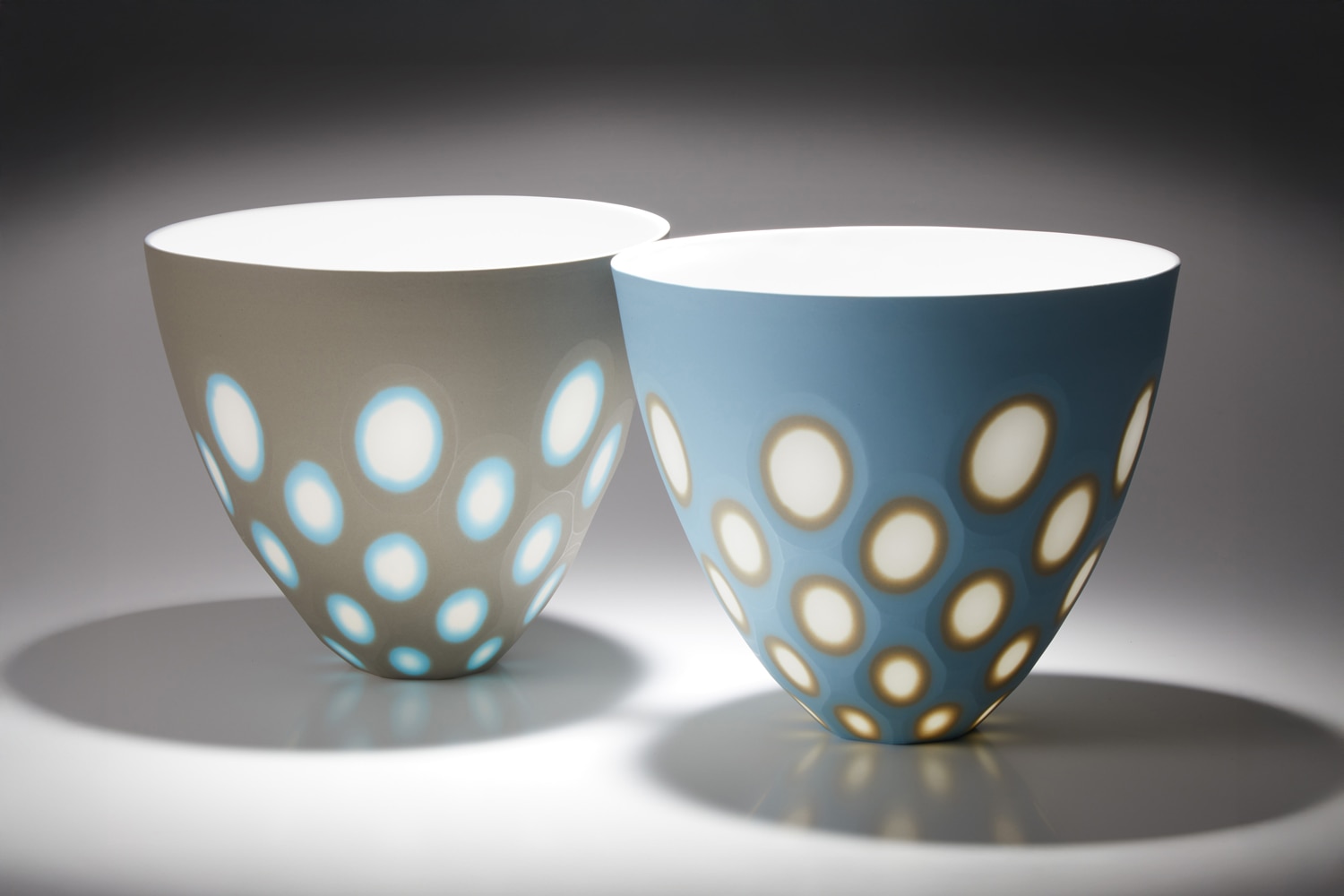
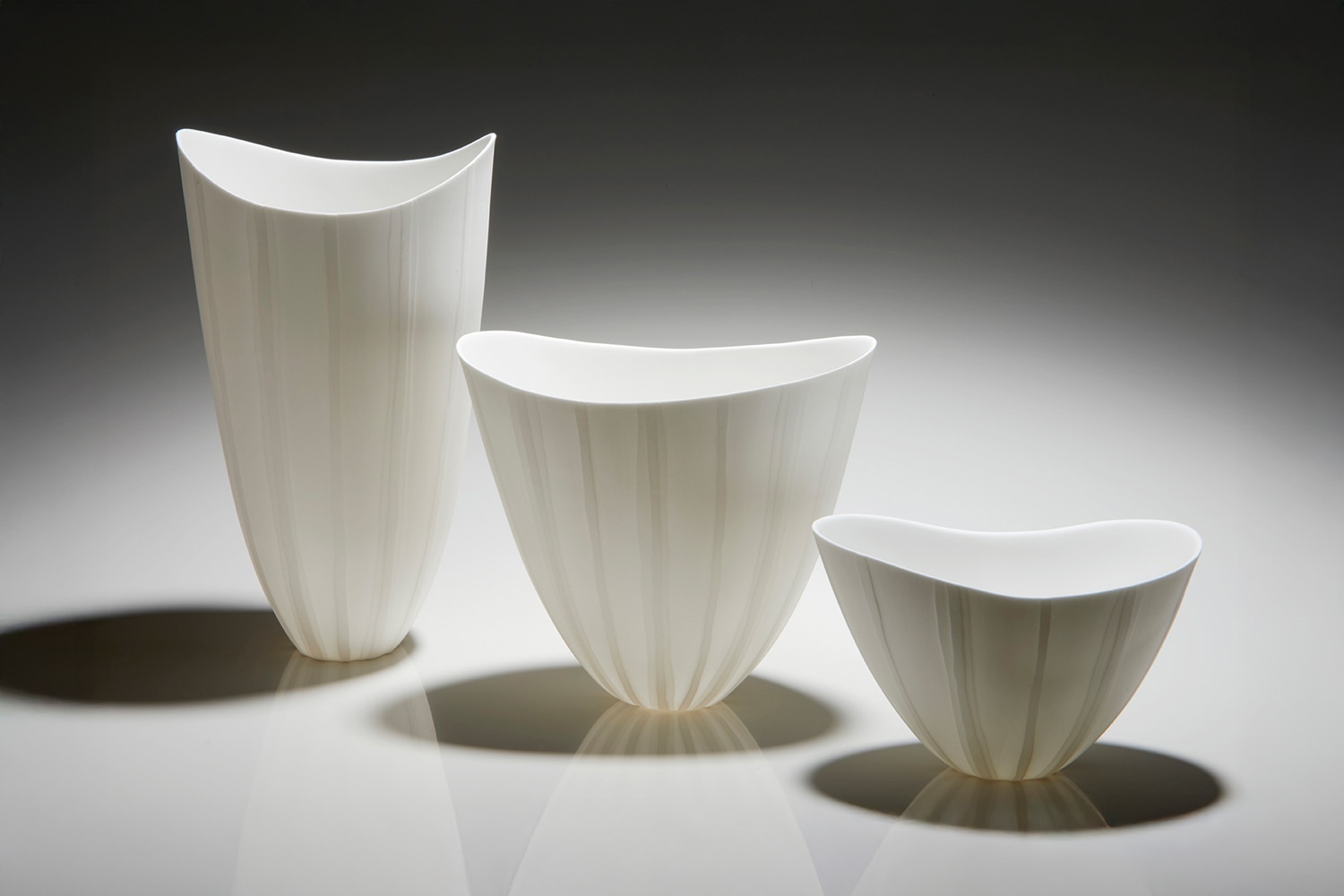
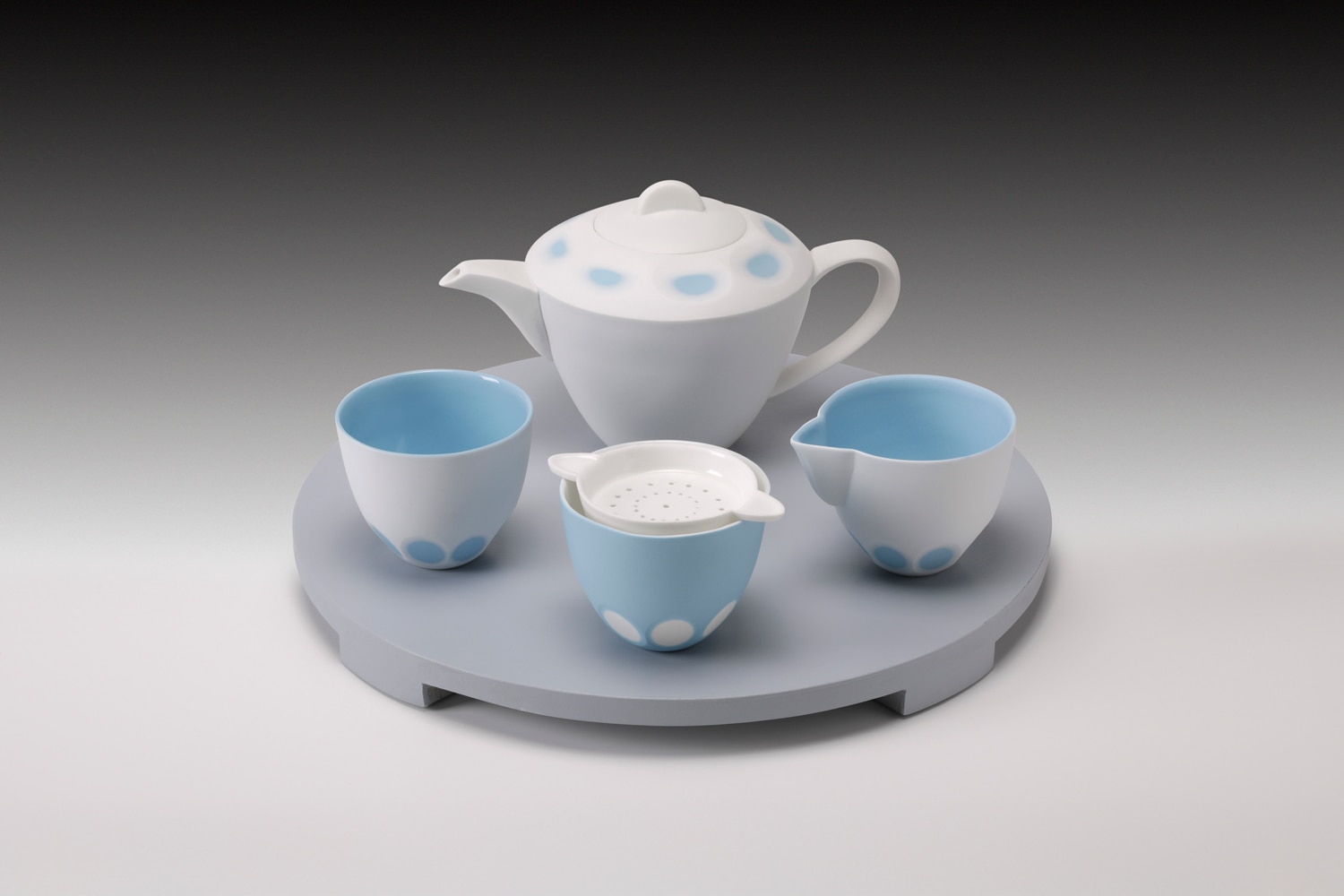
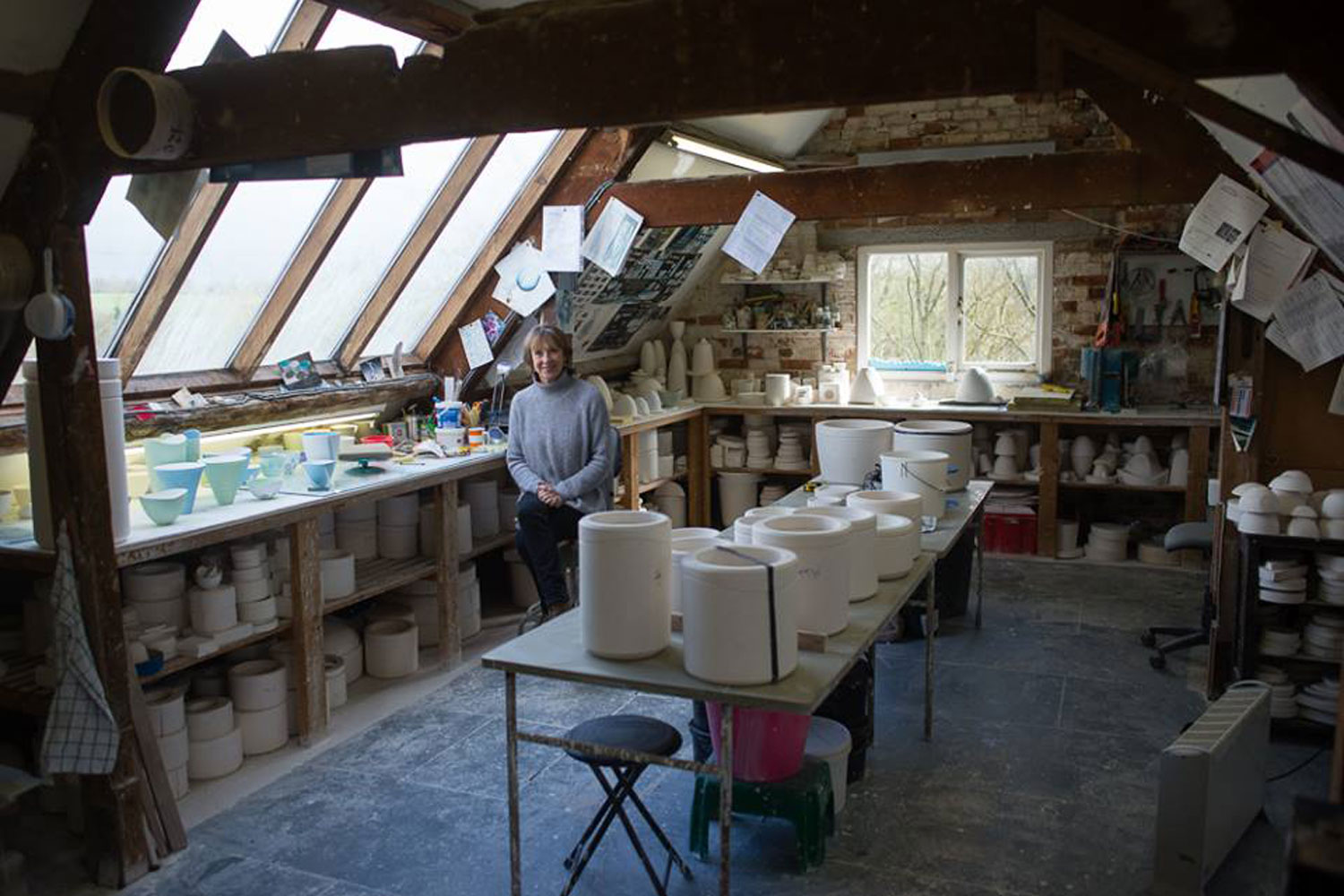
Originally a student of graphic design at Bath Academy of Art, Sasha Wardell transferred to ceramics mid-course when she discovered a love of slip casting. Through an Erasmus exchange in Limoges and a masters degree at Stoke-on-Trent, she has spent time refining her technique of casting double-layered bone china. Sasha’s mastery was complete as she found a place teaching ceramics for several years in Crewe on a newly established course. “It proved to be the best springboard, giving me the freedom to experiment in a role akin to an artist-in-residence,” she says. While there, Sasha first exhibited her ceramics when the British Craft Centre put out a tender for black and white work and several of her pieces were selected. Today, her practice is rooted in the west of England where she creates slip-cast pastel-toned pieces that celebrate the luminous and delicate translucency of bone china.
Discover her work
INTERVIEW
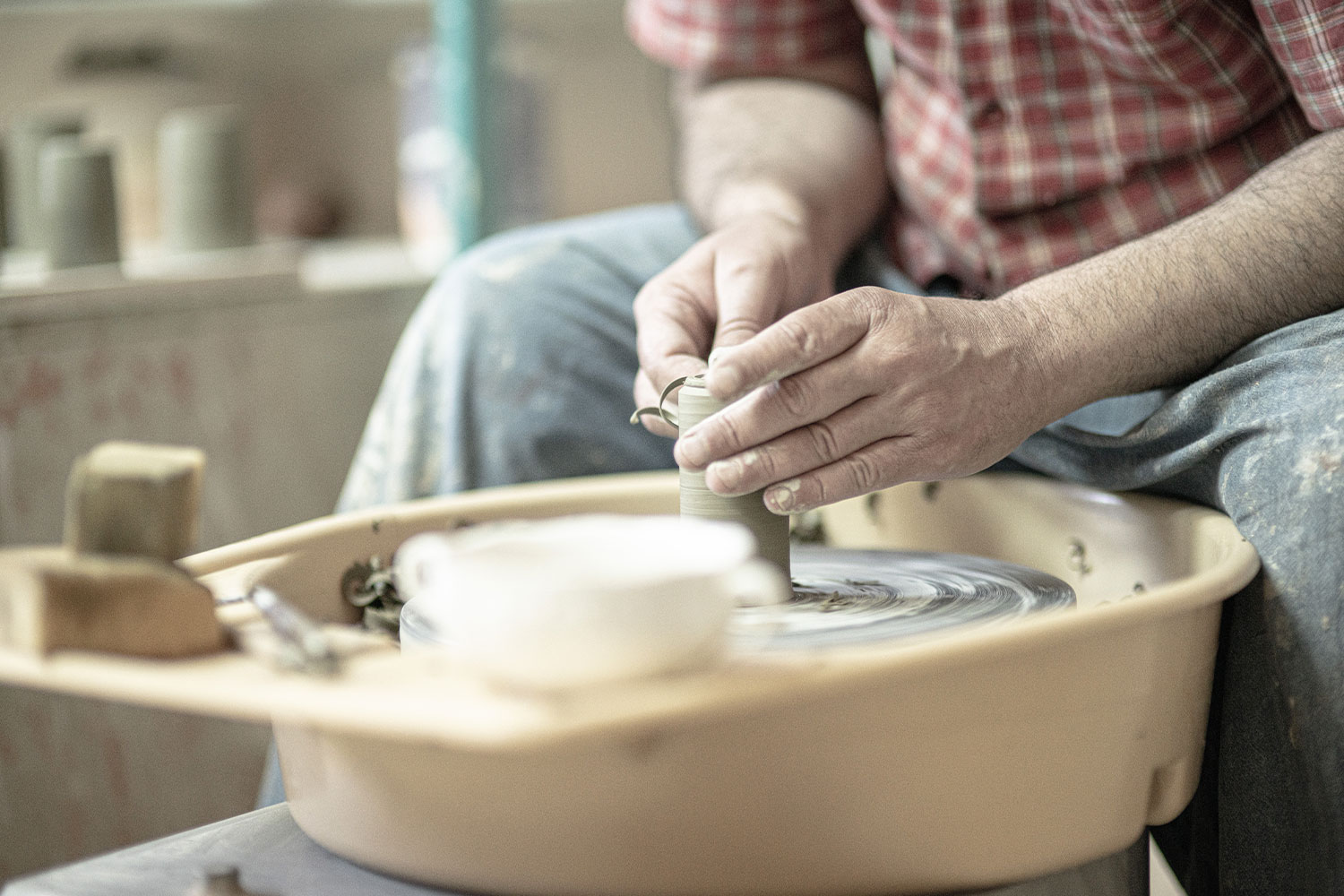
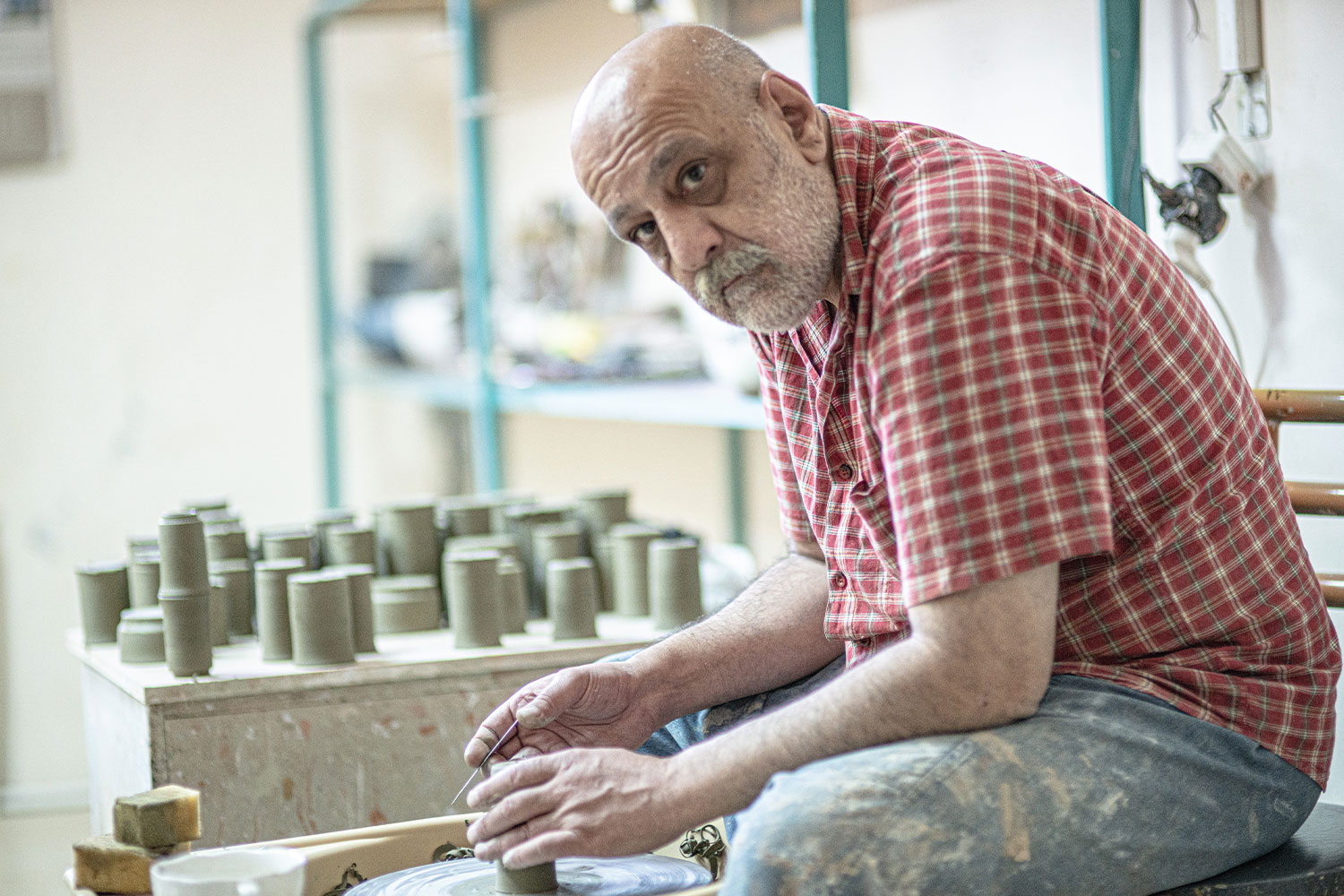
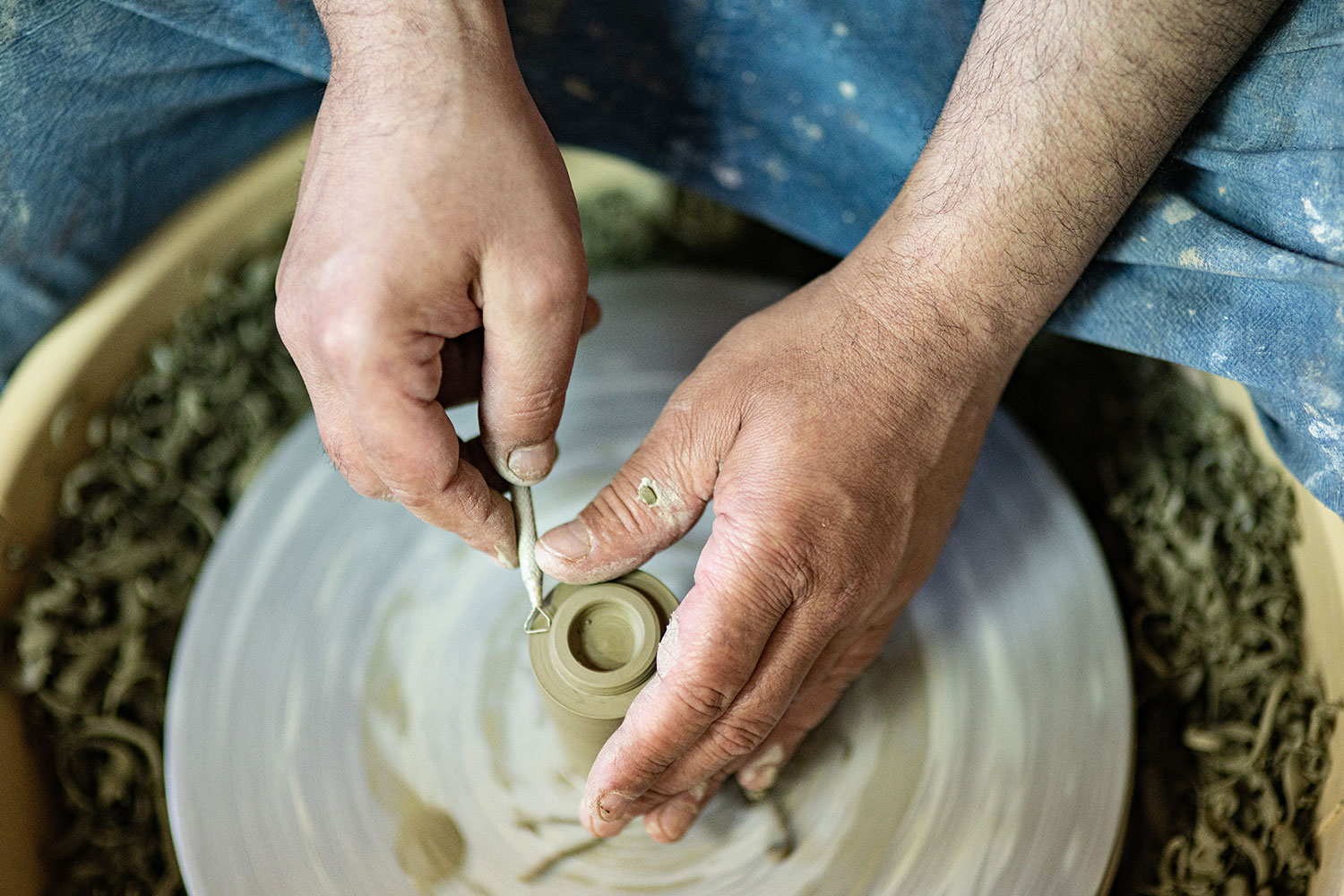
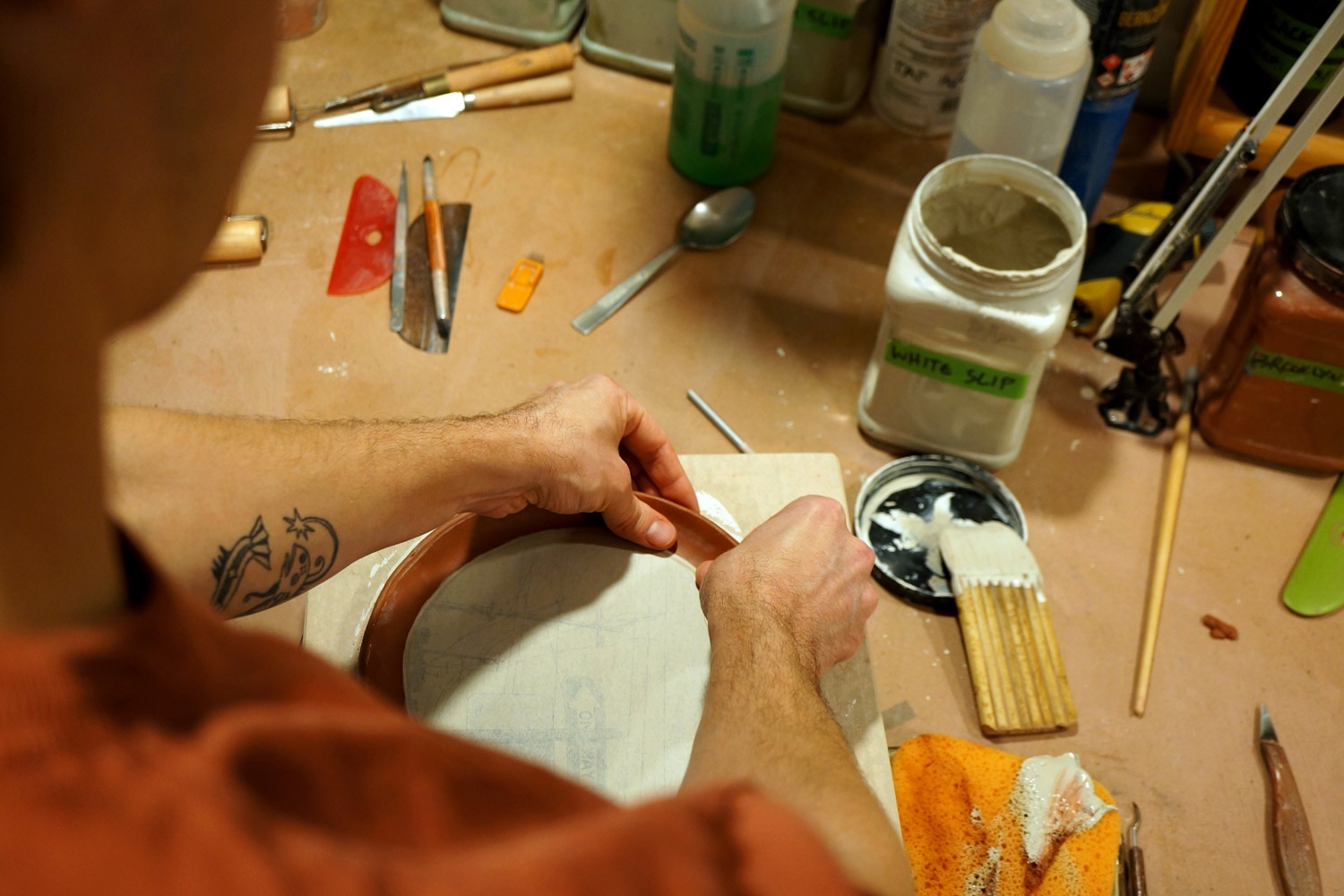
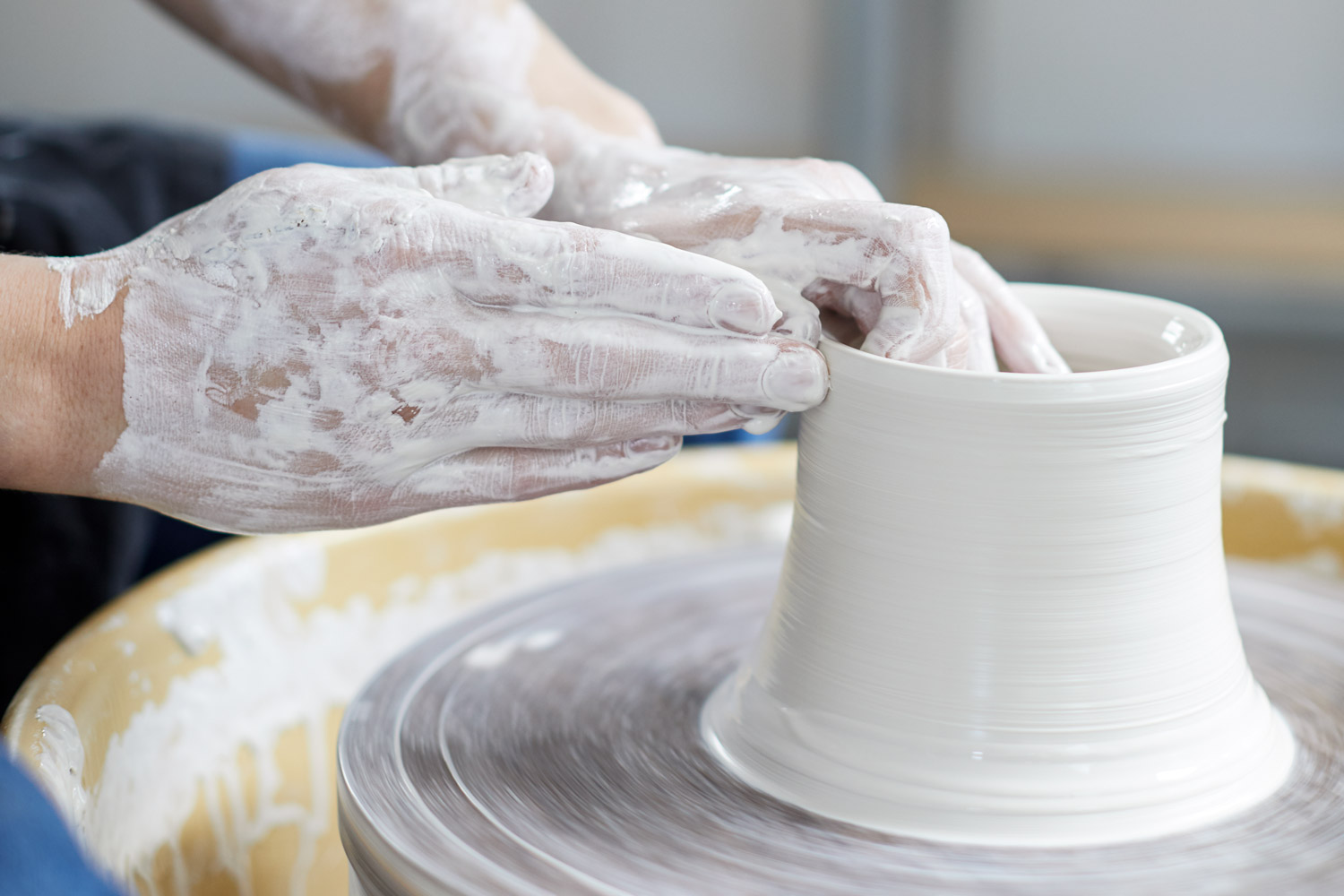
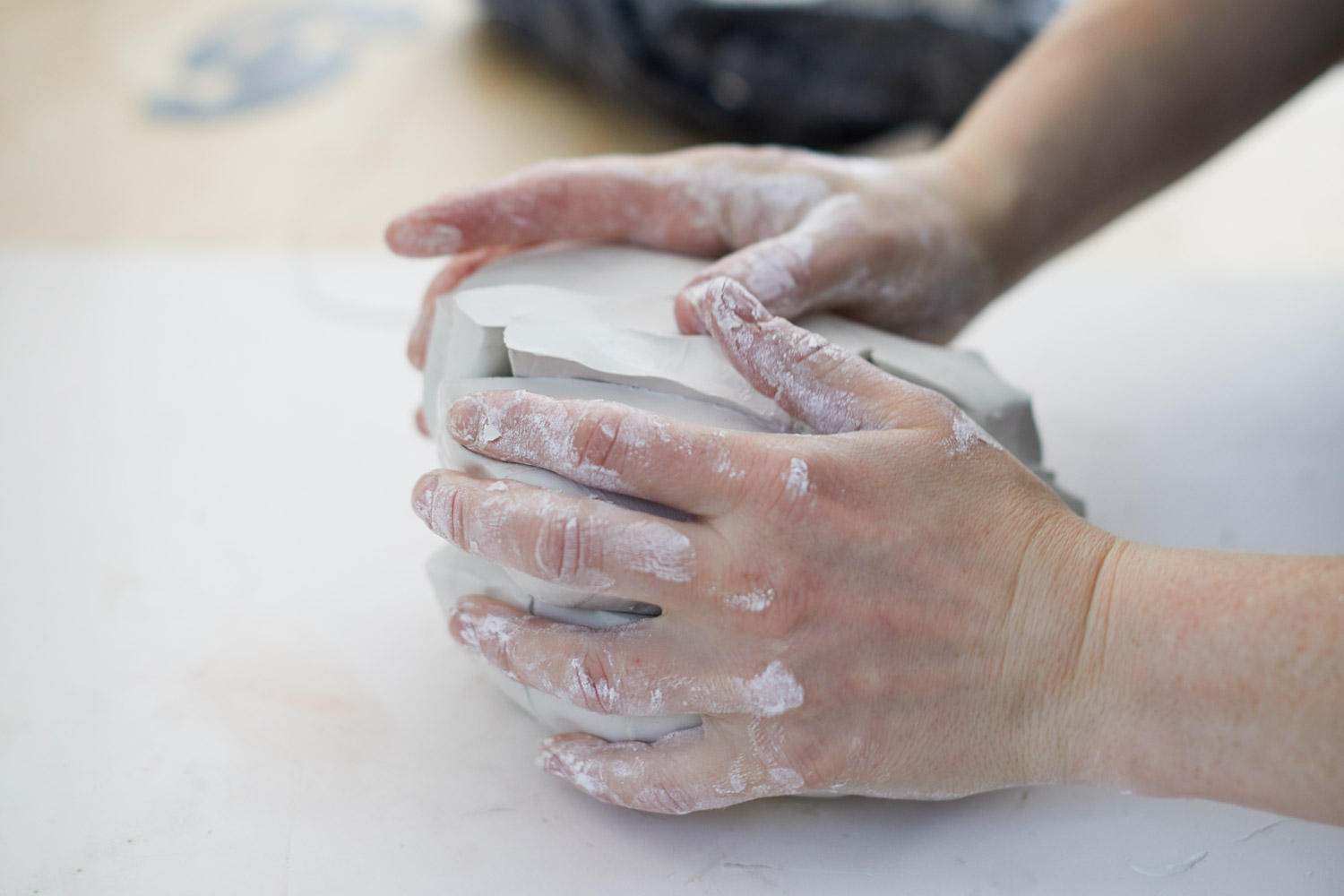
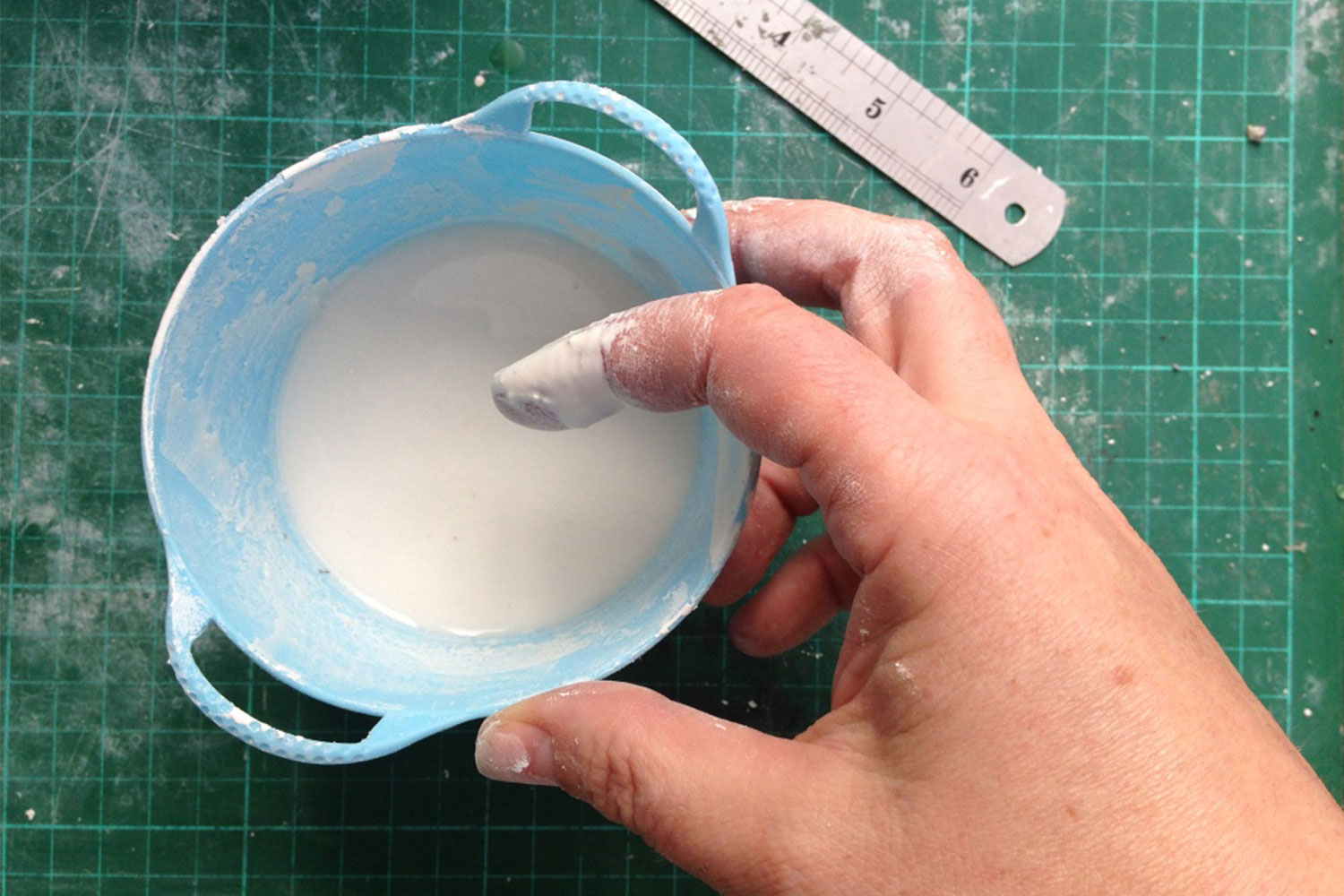
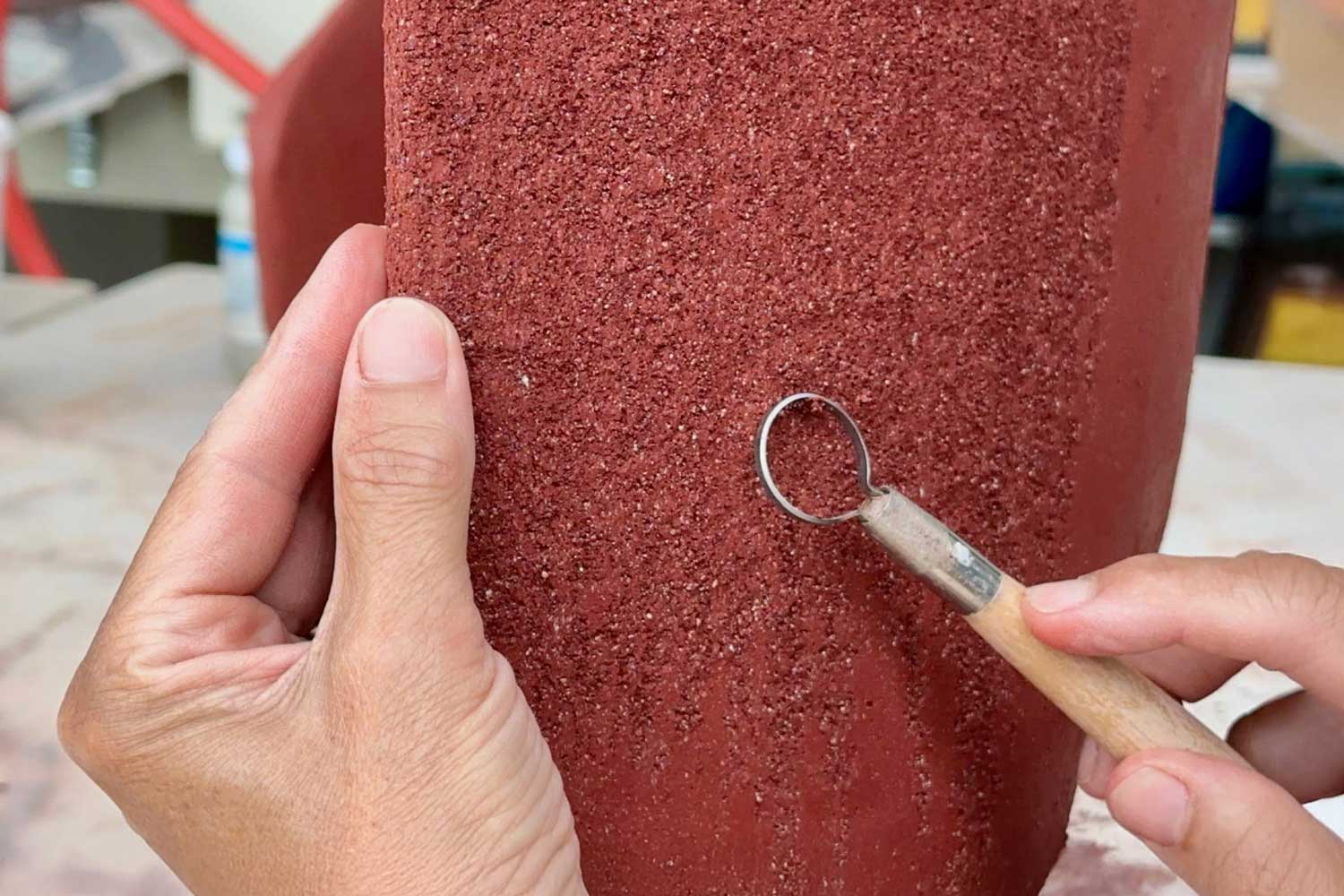
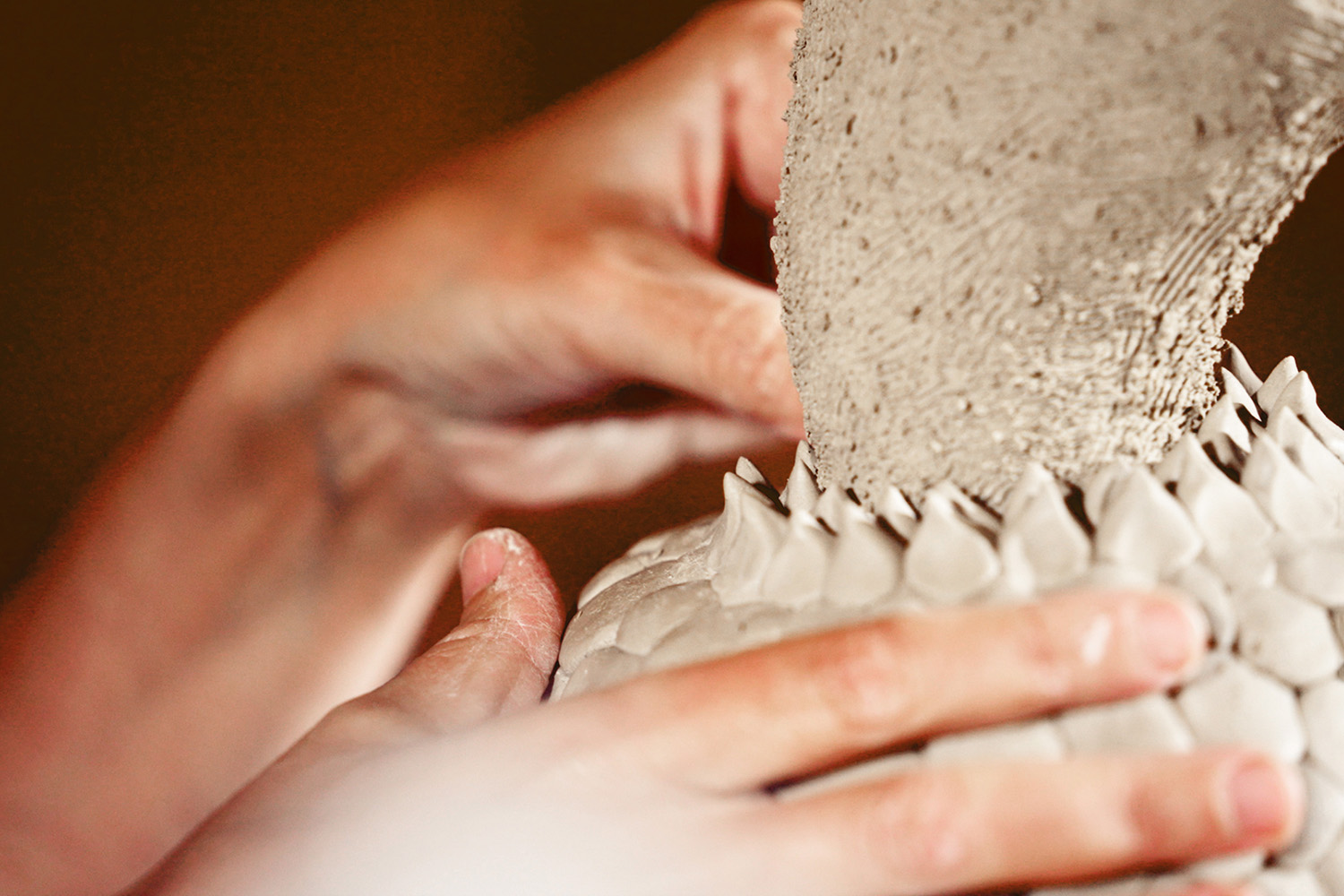
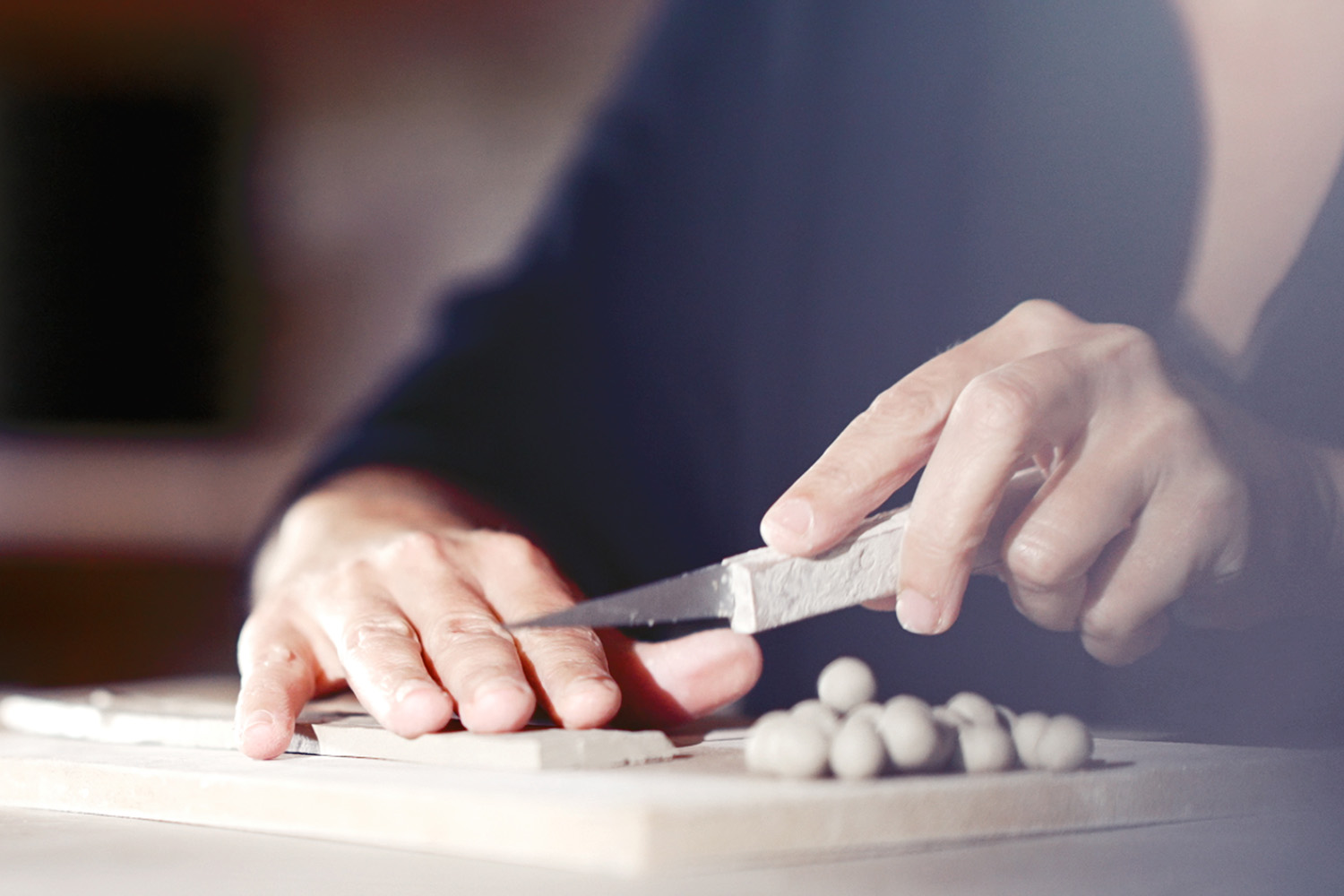
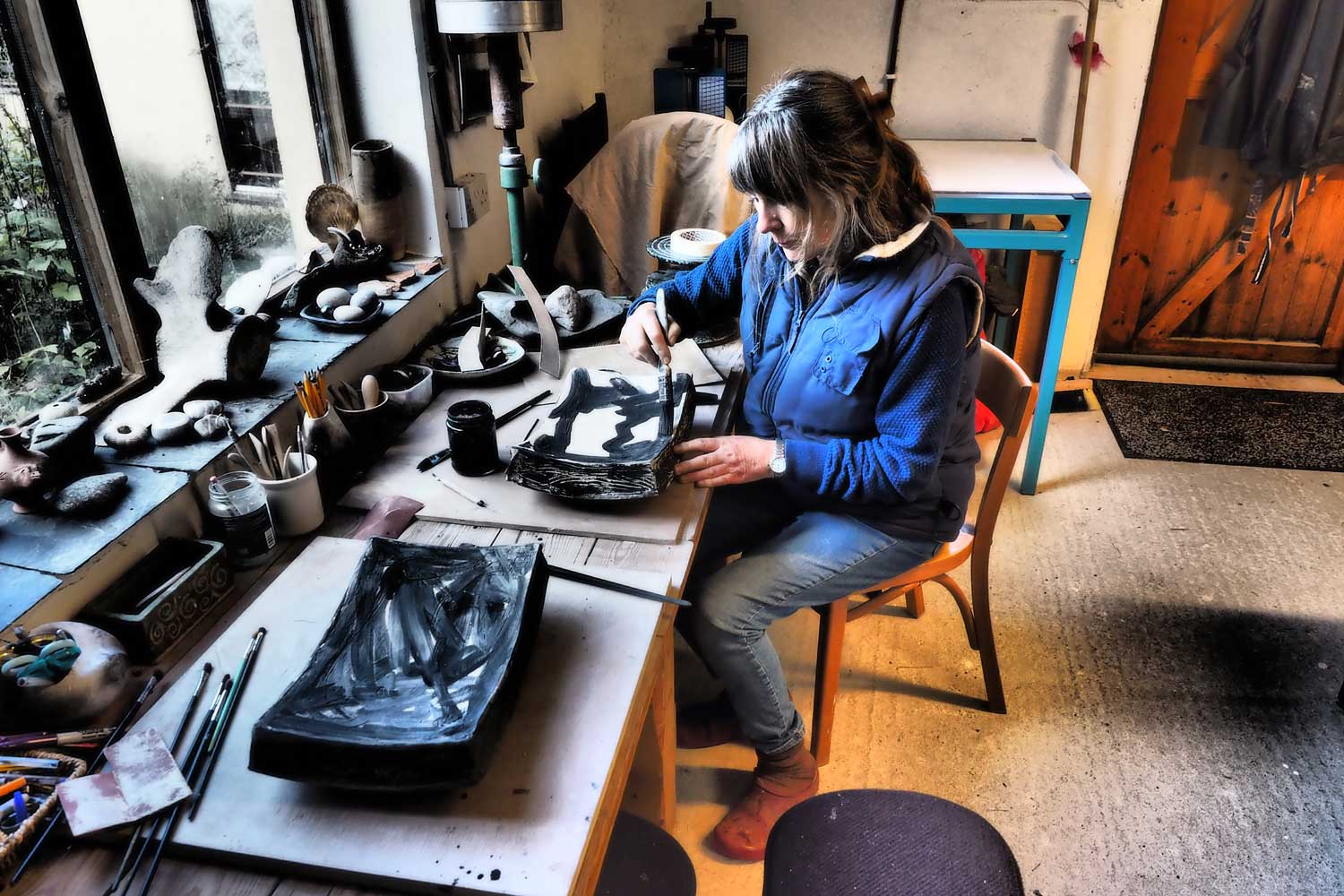
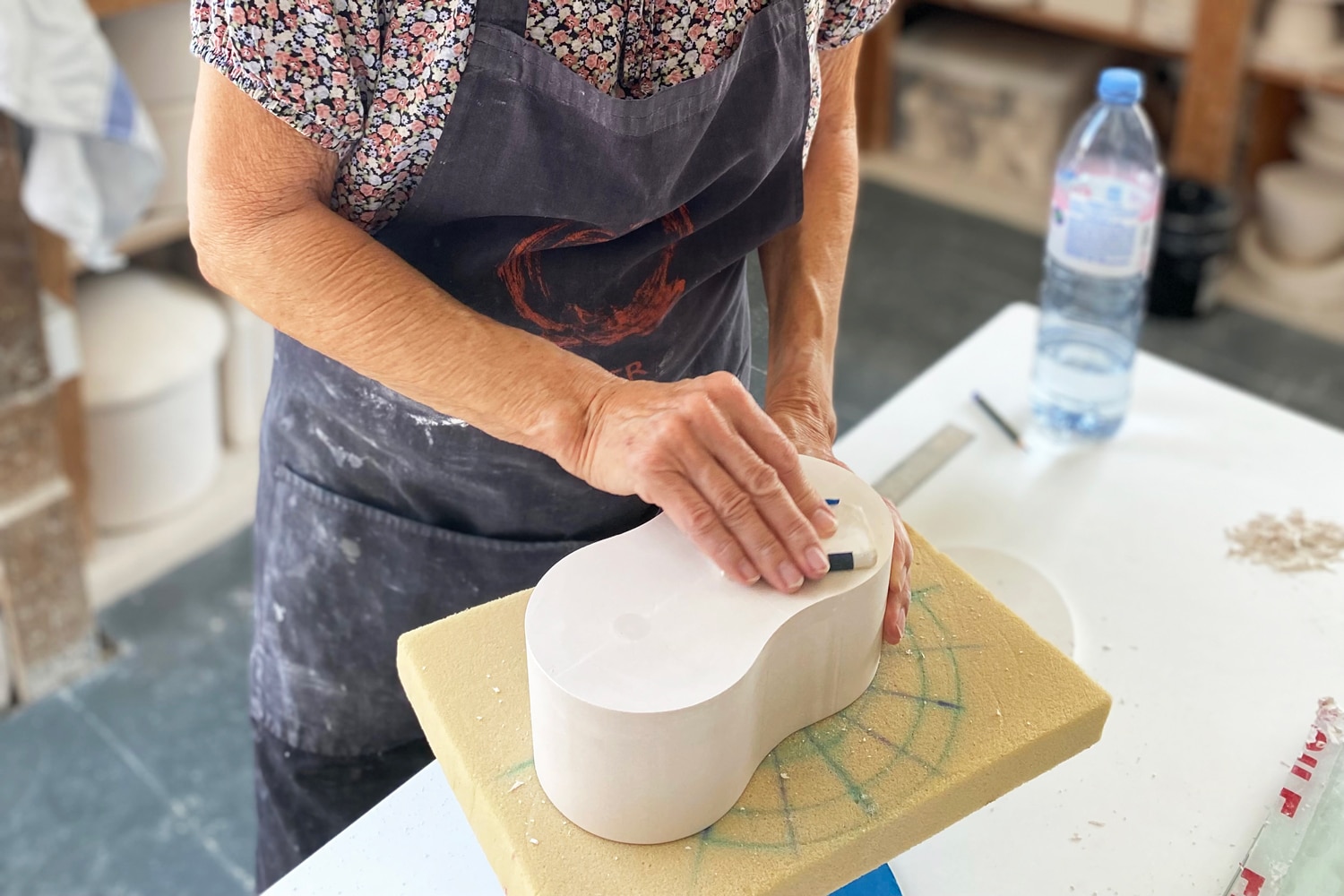
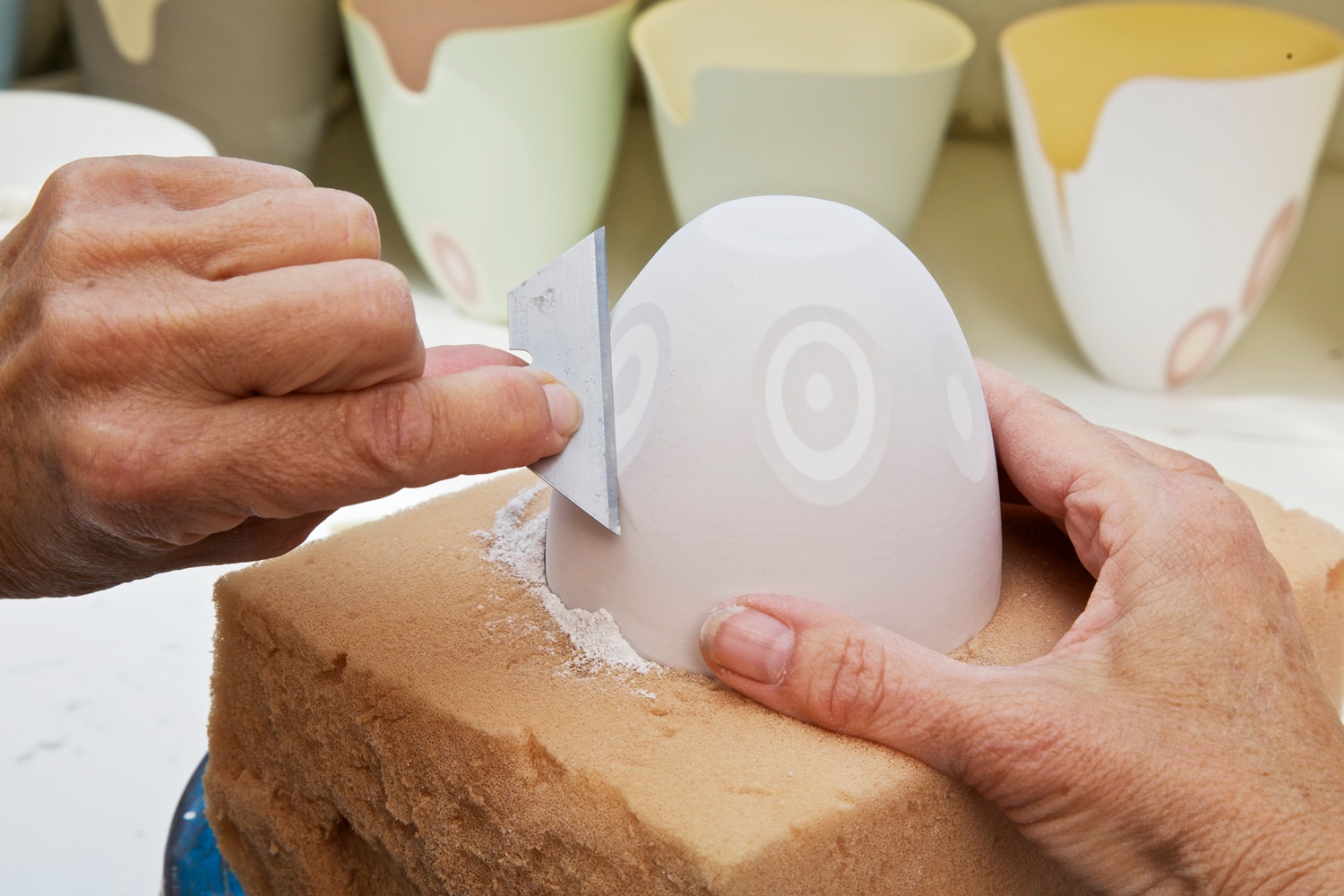
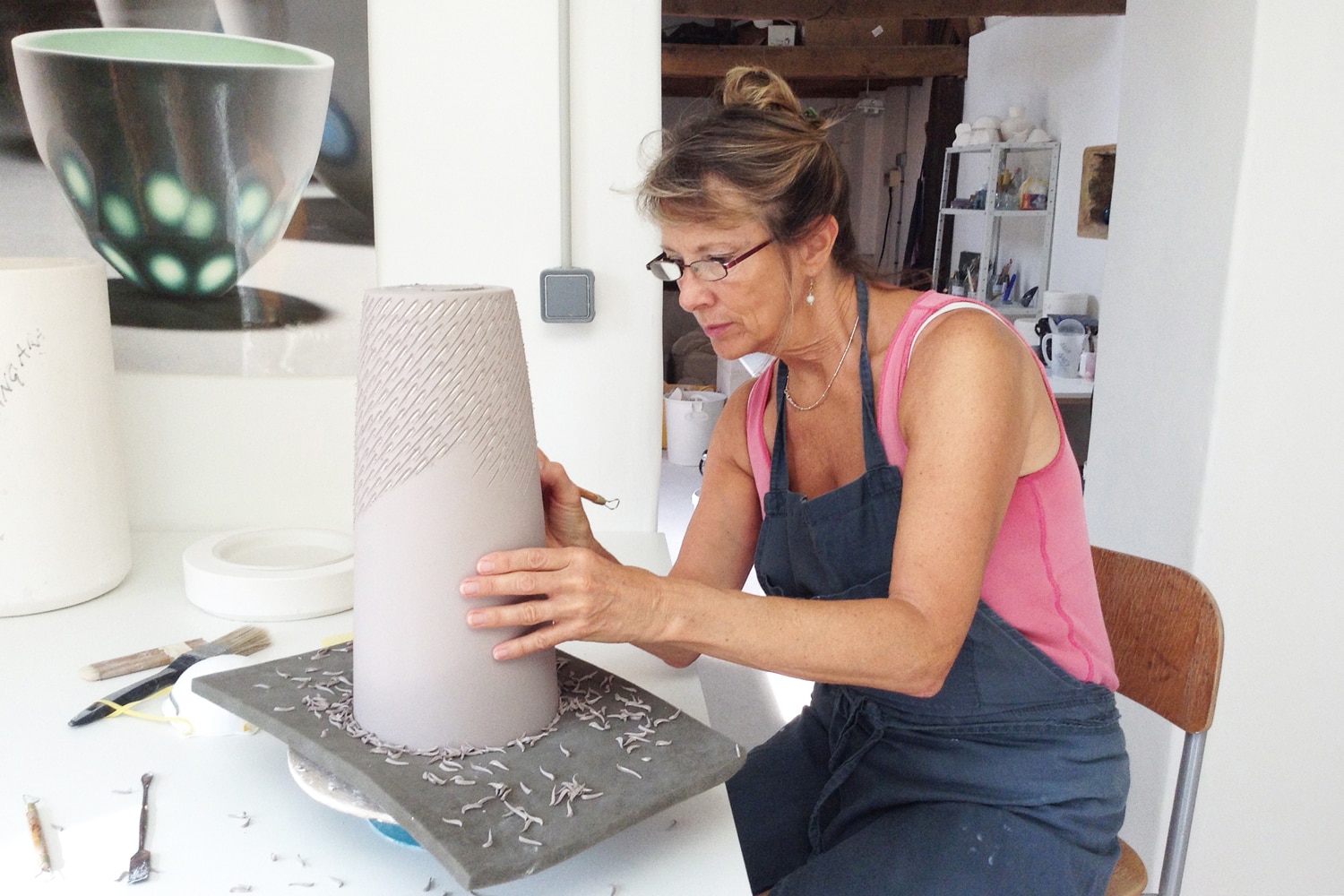
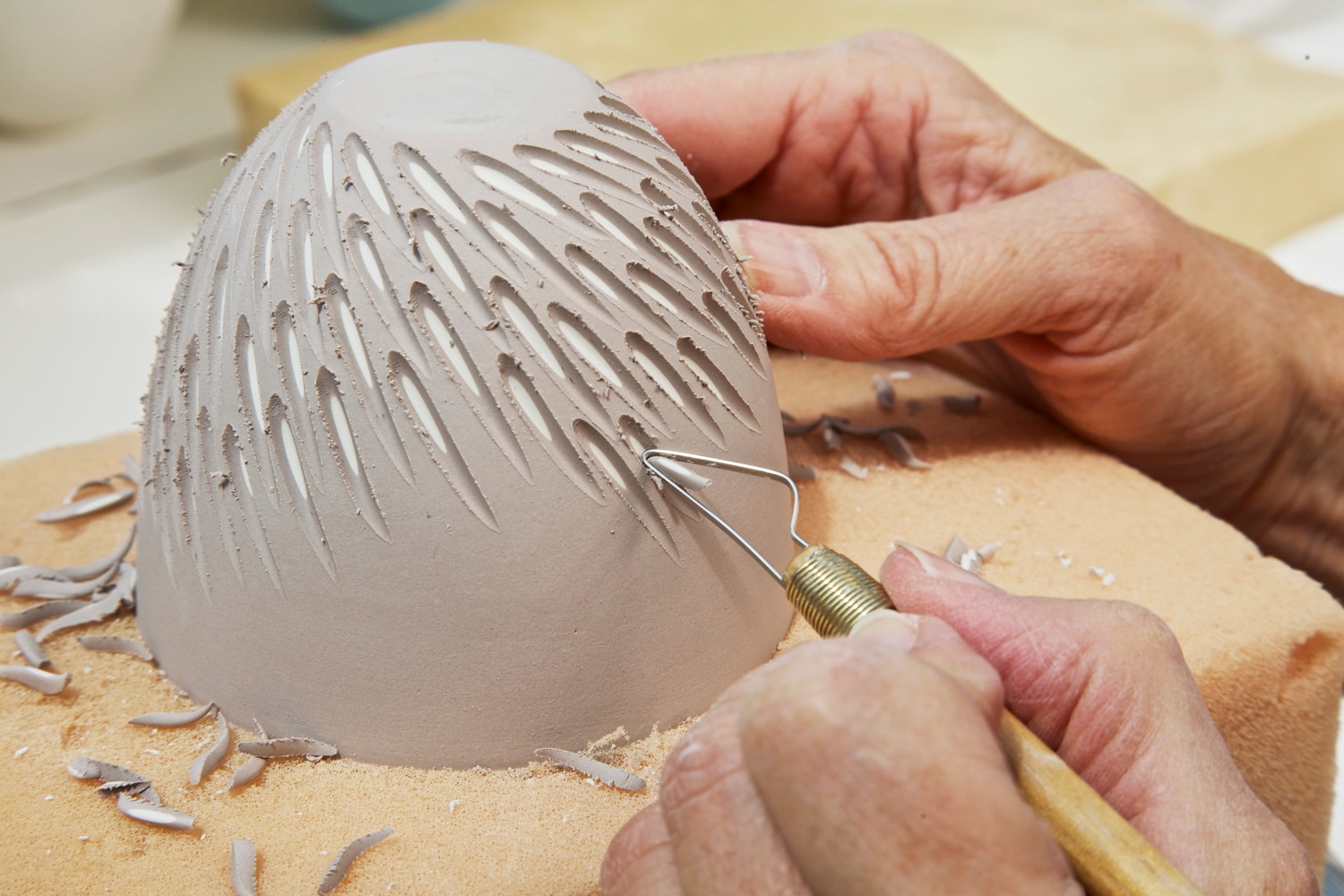
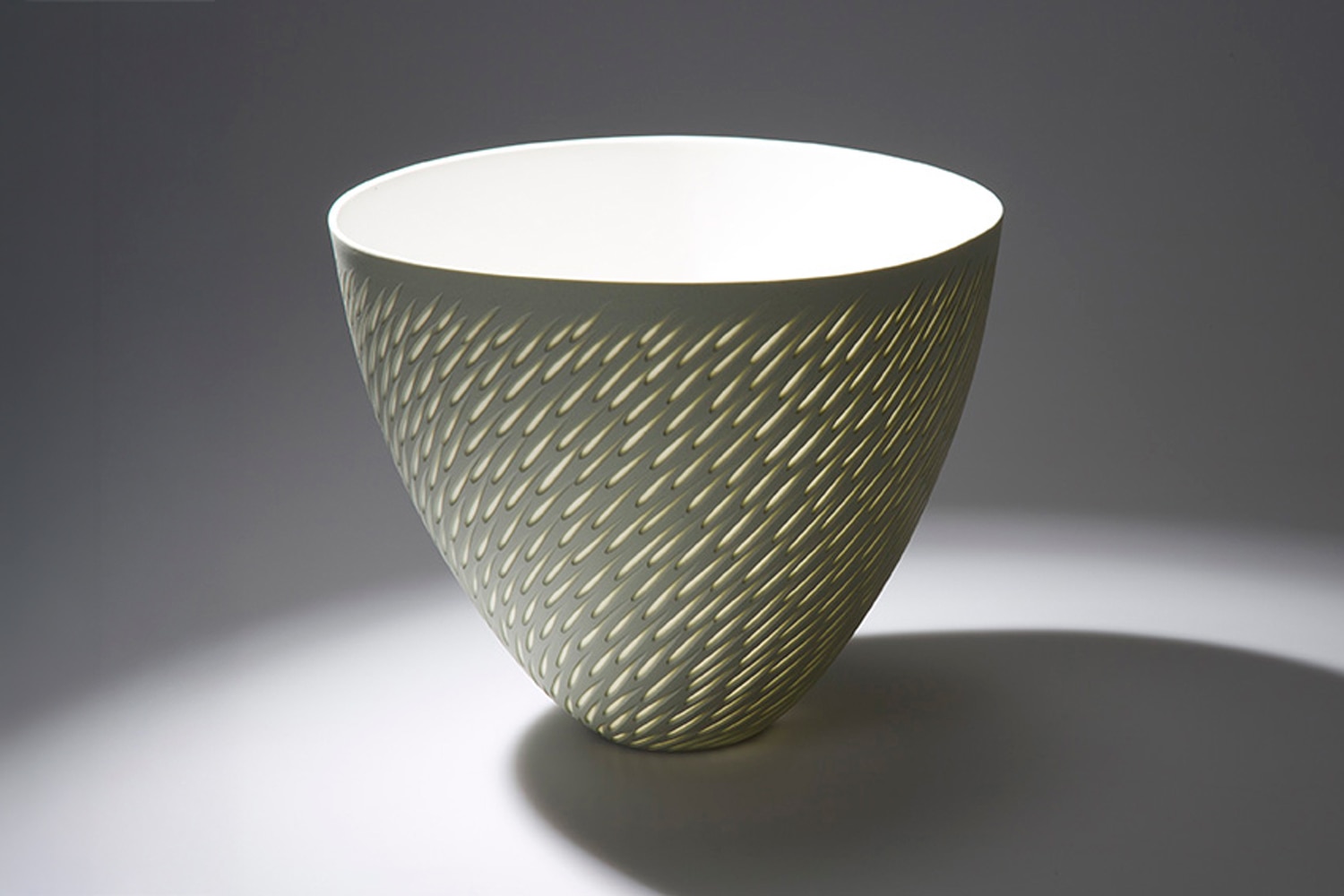
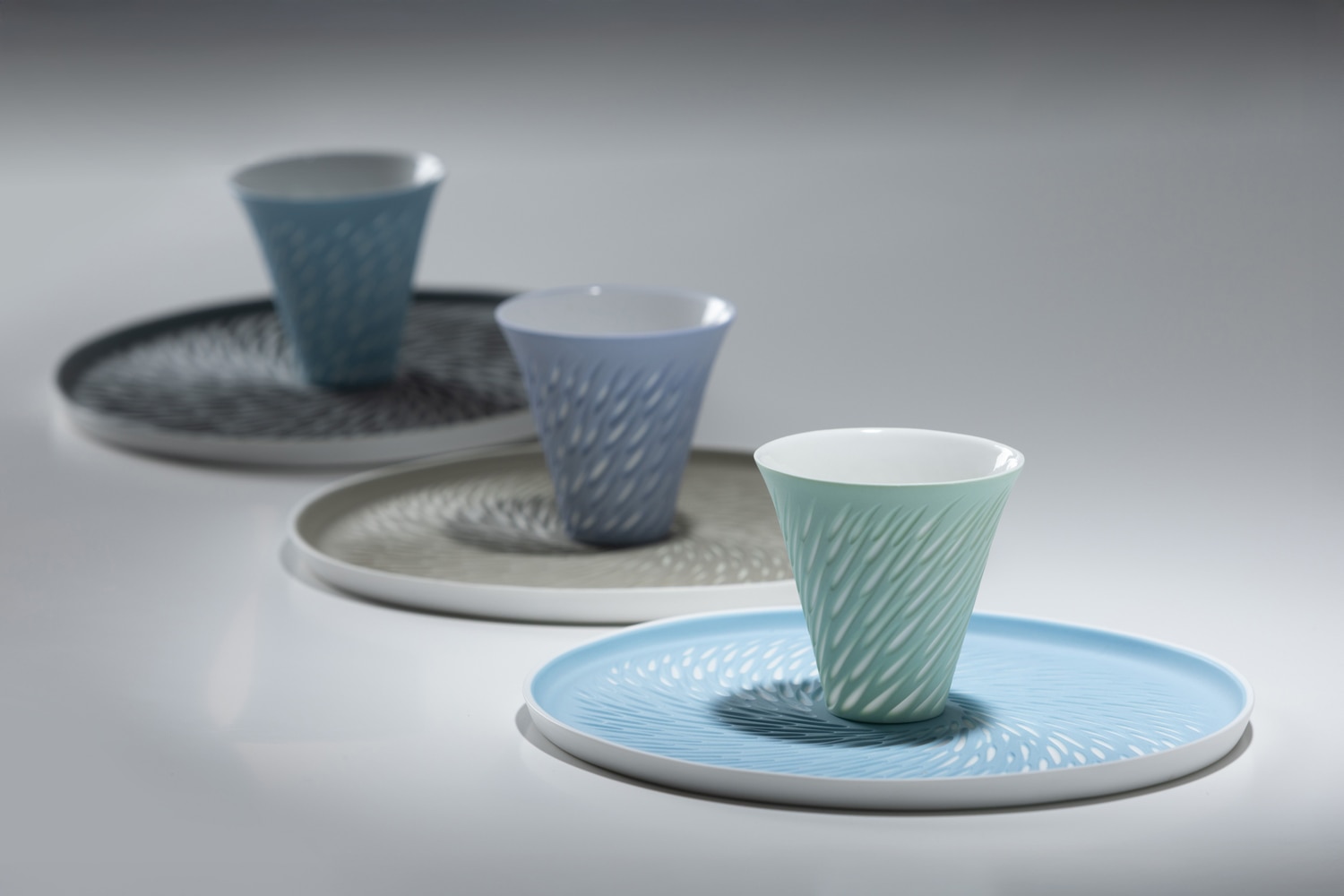
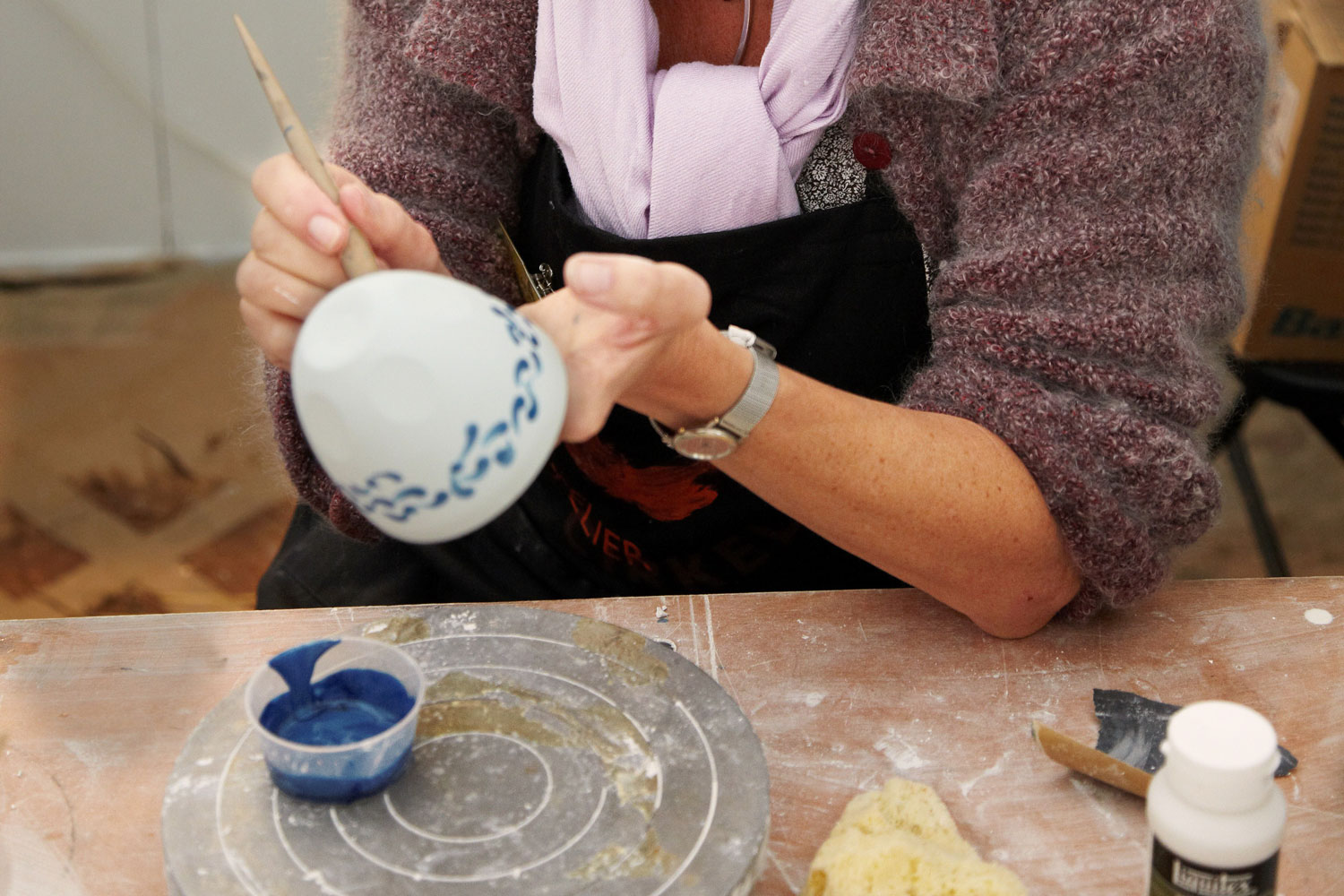
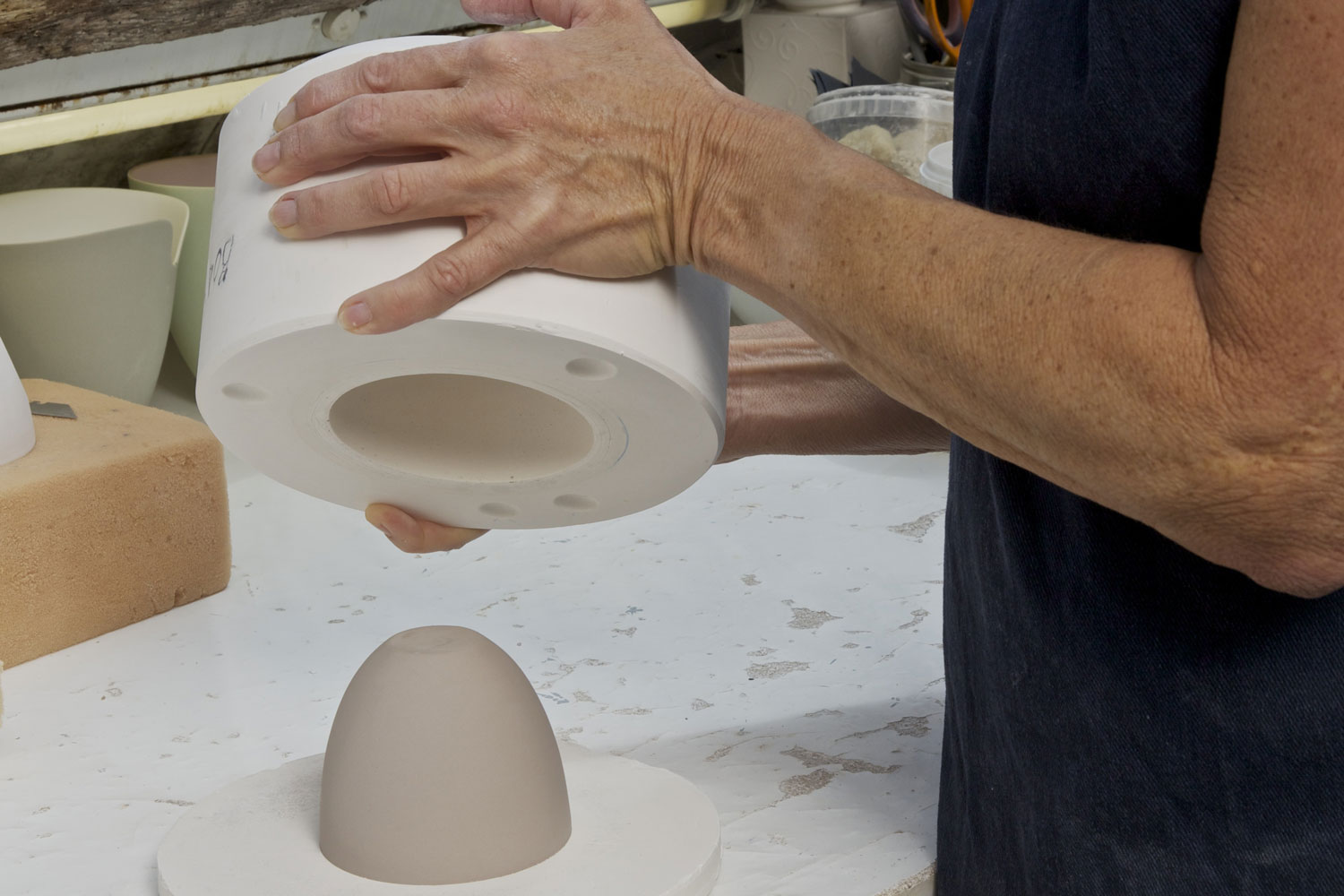
My pieces are cast double layered. I stain half of my slip and pour the coloured layer in first to give a thin, even coating in the mould. Then I put my white slip in. When the piece is leather-hard, I take it out and put it on a banding wheel. With a loop tool, I gently scoop making marks, not too deep, nor shallow. That part of the process is all about muscle memory.
I get my bone china from a very good supplier in Stoke-on-Trent and I use it is because it is whiter than porcelain. It looks whiter because there is no colour hue in there as it is only oxidised, unlike porcelain. In my view, it looks more translucent.
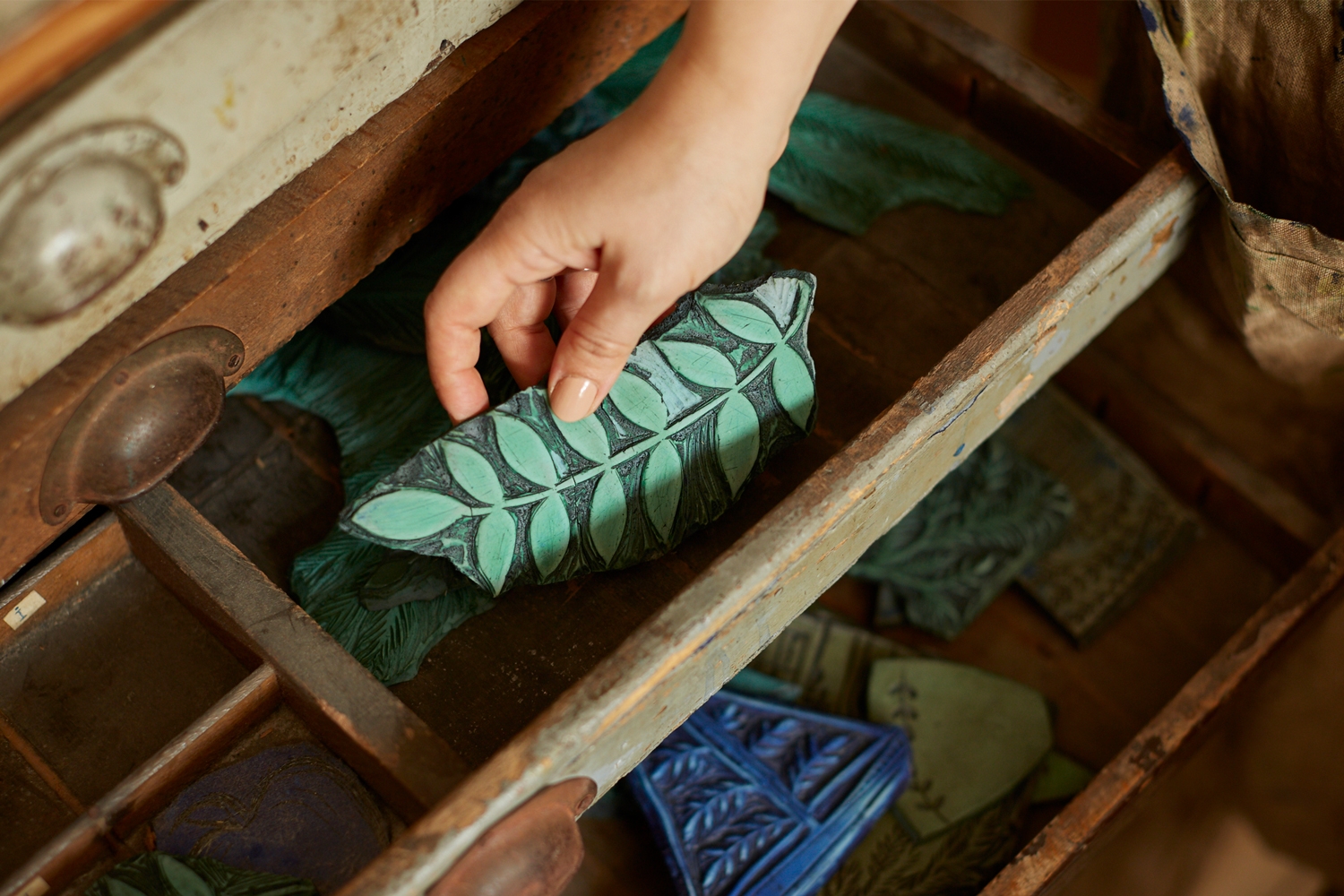
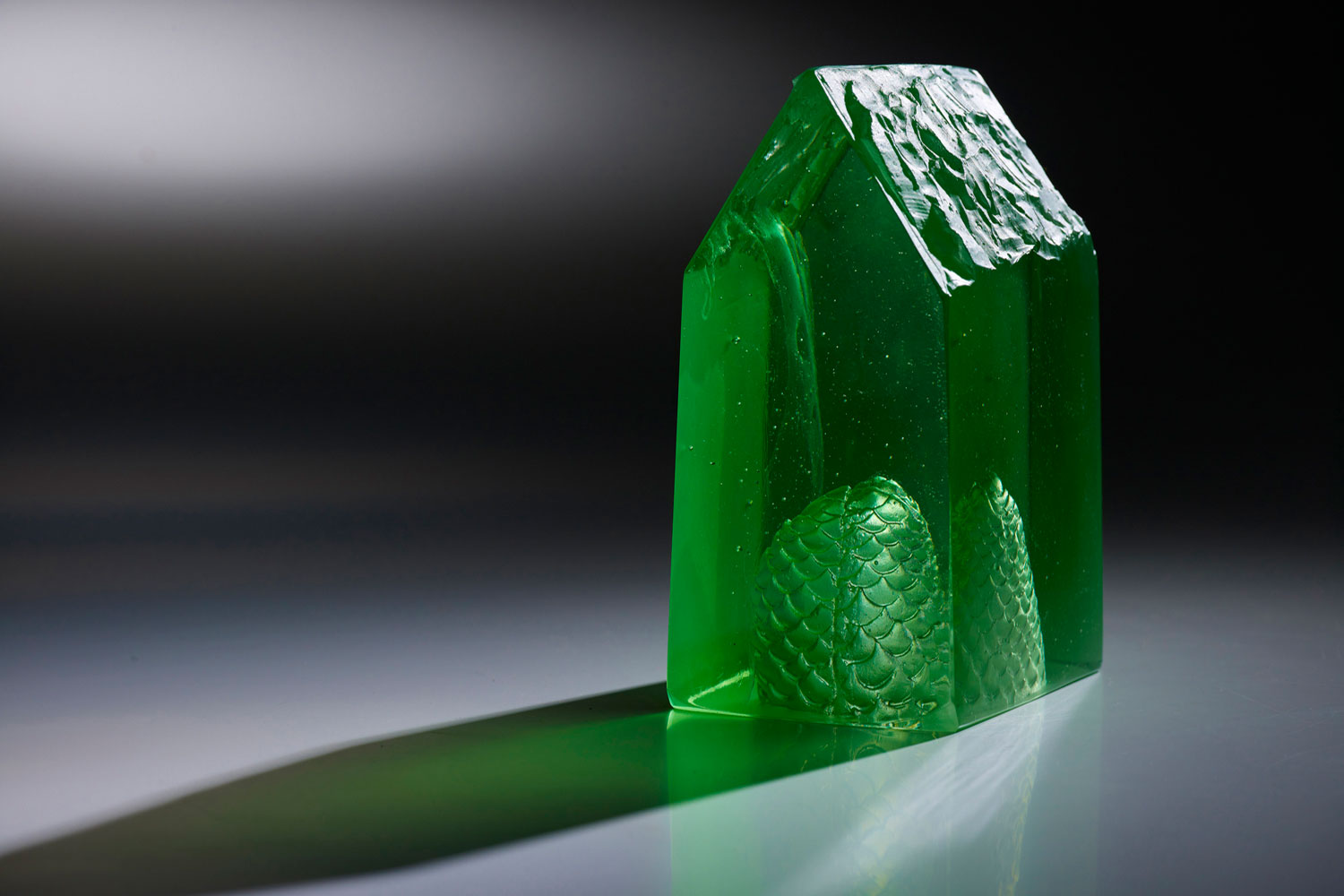
It is about repetitive patterns and marks that enhance translucency. That is my goal. I want to capitalise on working with a semi-transparent material, so I try everything that will bring that to the fore.
To begin with, I have a little kernel of an idea and I imagine what I want the piece to be. I remain really open to change in the process. I react to the different notions and different ways of making that fly in and maybe alter that original idea as I am going along.
Sasha Wardell
Ceramicist
Bradford-on-Avon, United Kingdom
ADDRESS
Address upon request, Bradford-on-Avon, United Kingdom
AVAILABILITY
By appointment only
LANGUAGES
English, French
Homo Faber Finds is a new service aiming to inspire admirers of craft to connect and collaborate with exceptional artisans.
We invite you to submit an enquiry here.