
Marie-Isabelle Callier
Decorative painter
Luxembourg, Luxembourg
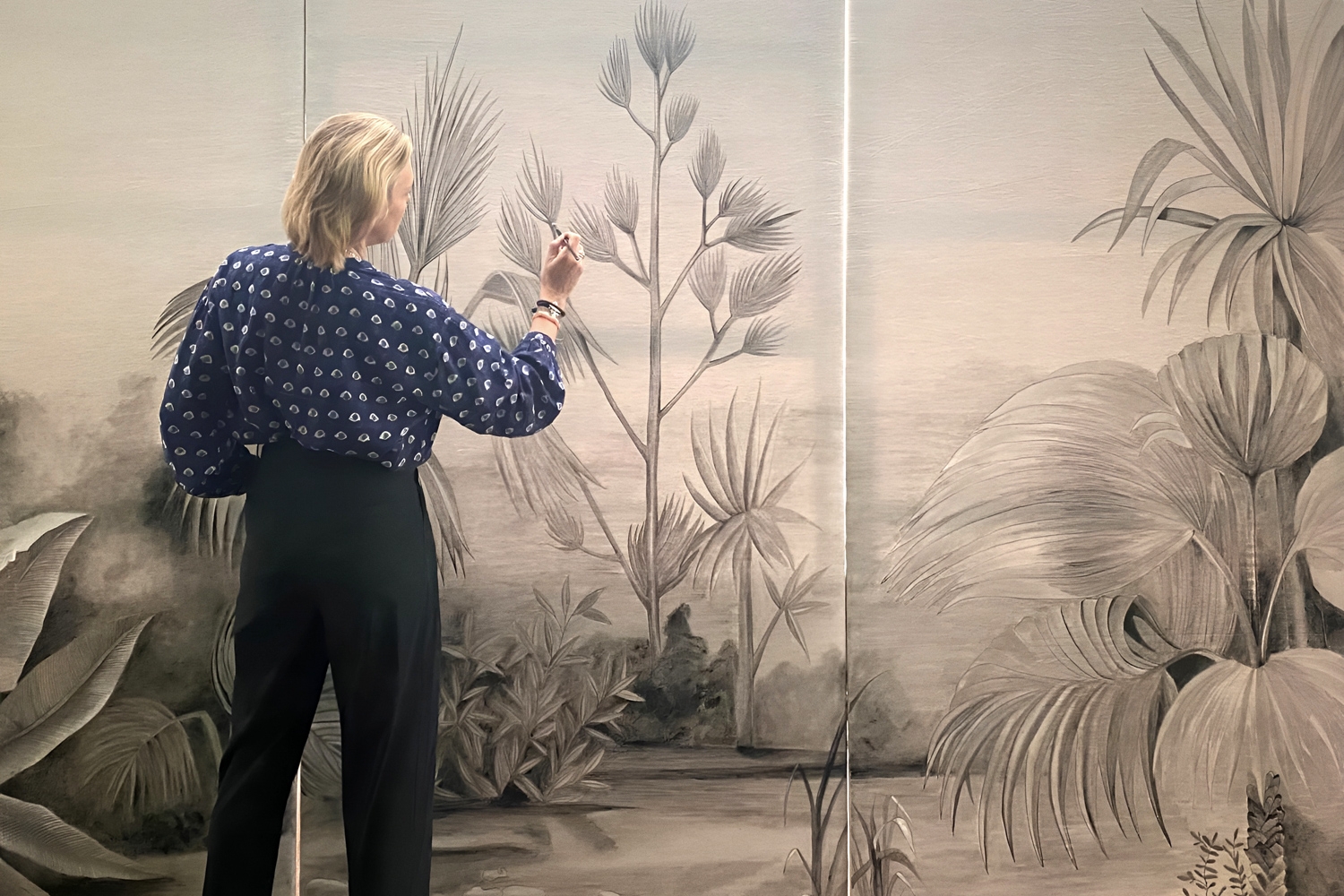
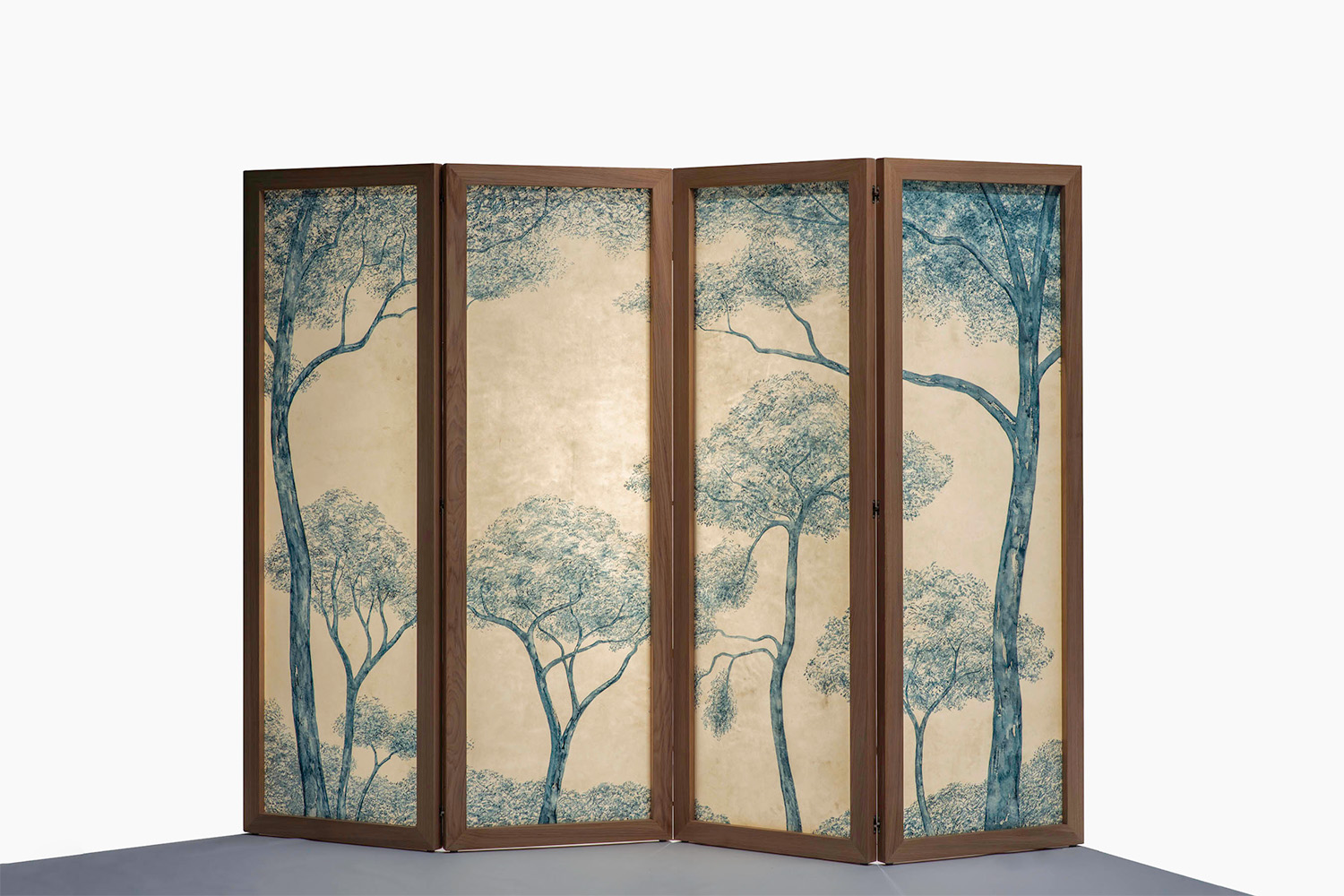
Dreamy landscape panels
- Marie-Isabelle makes double-sided paper screens
- Her creations have a mysterious transparency
- She is inspired by nostalgia and nature
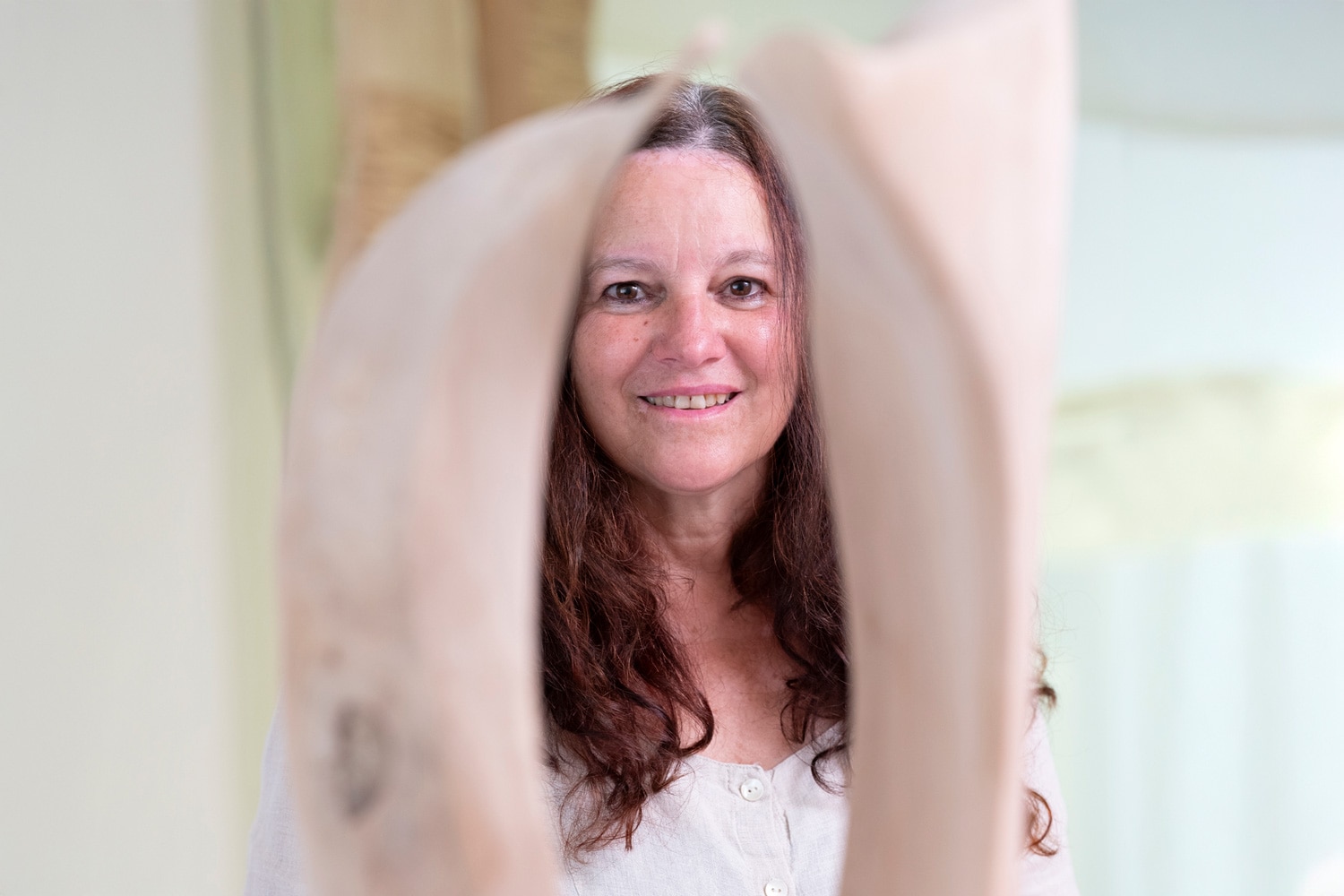
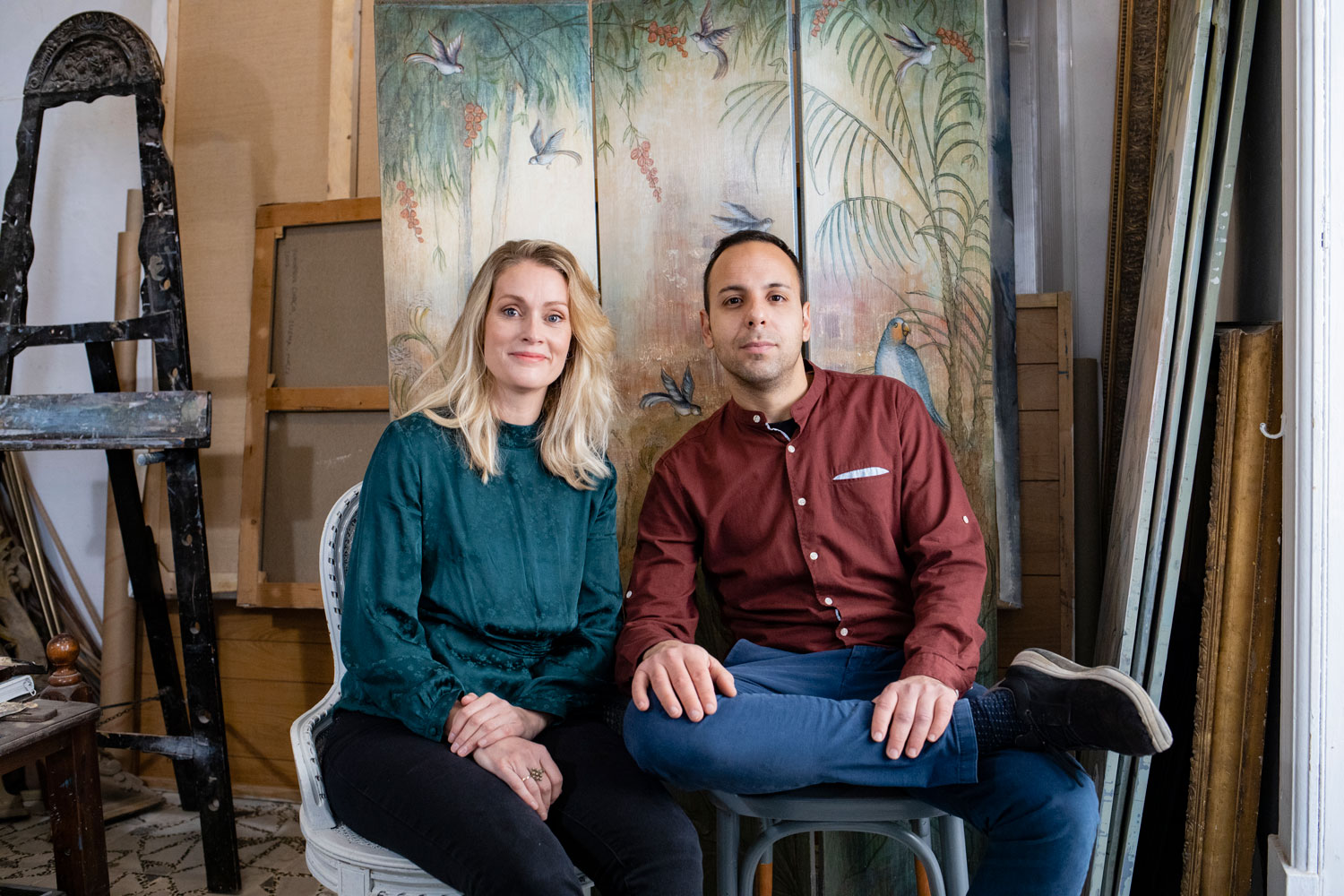
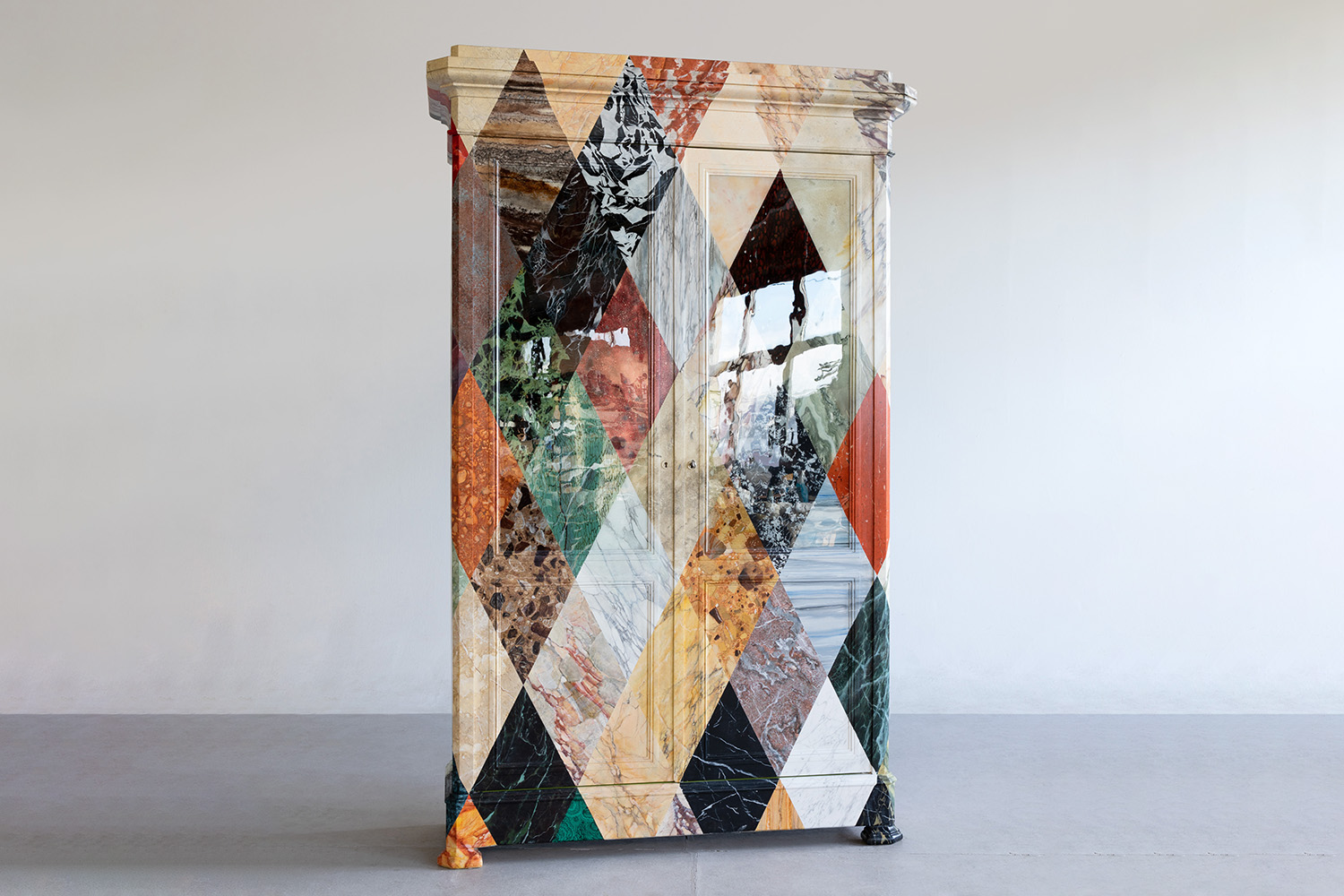
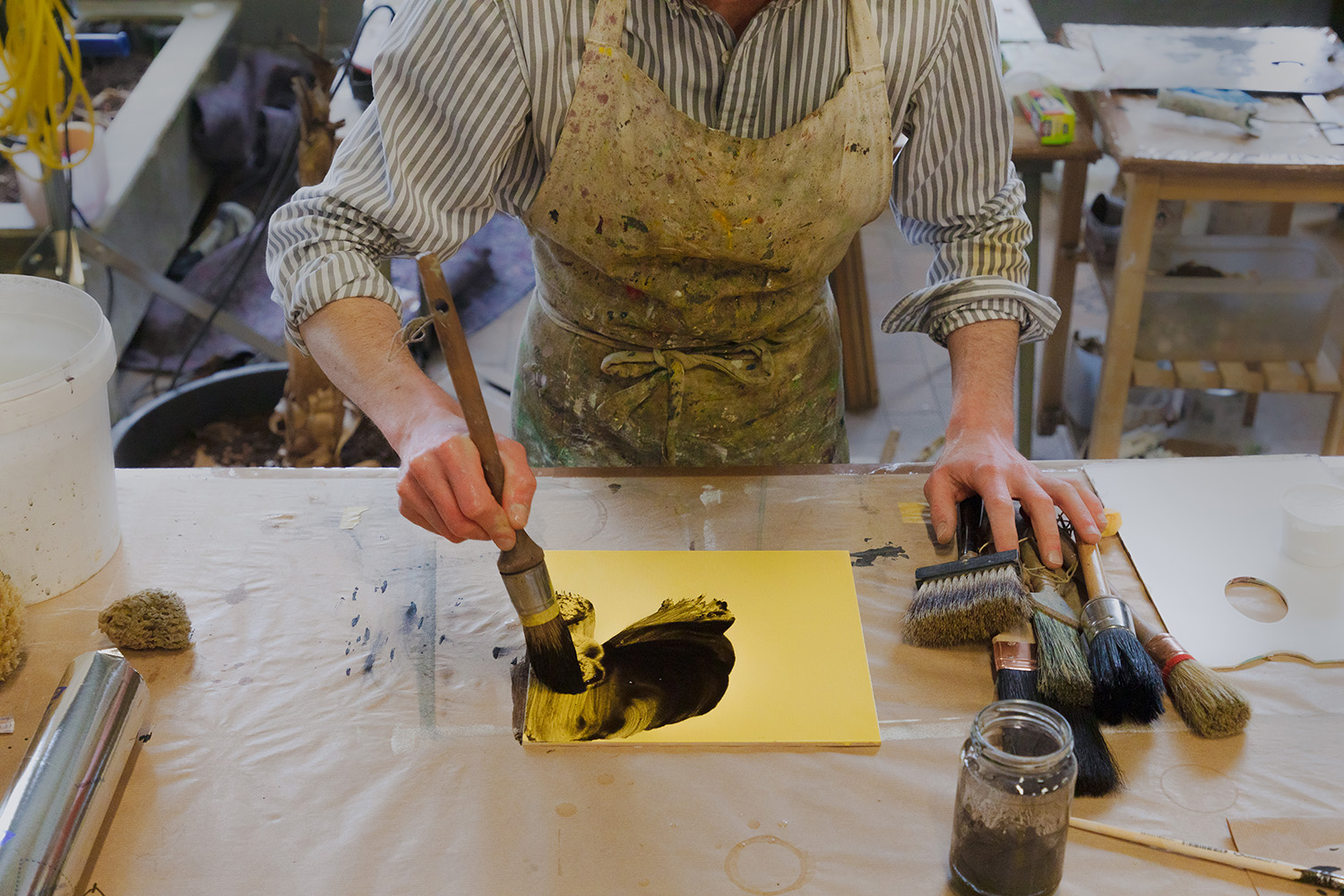
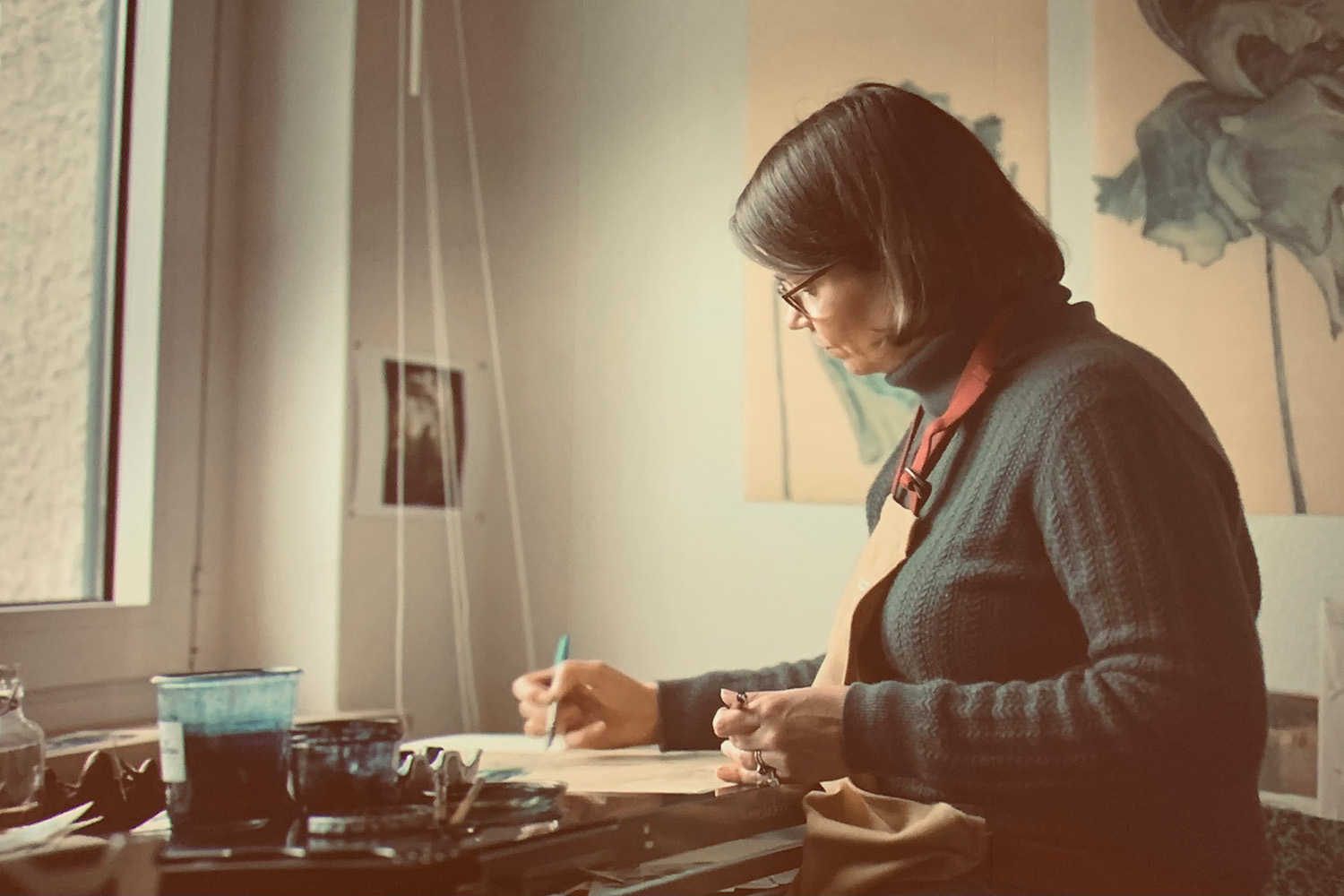
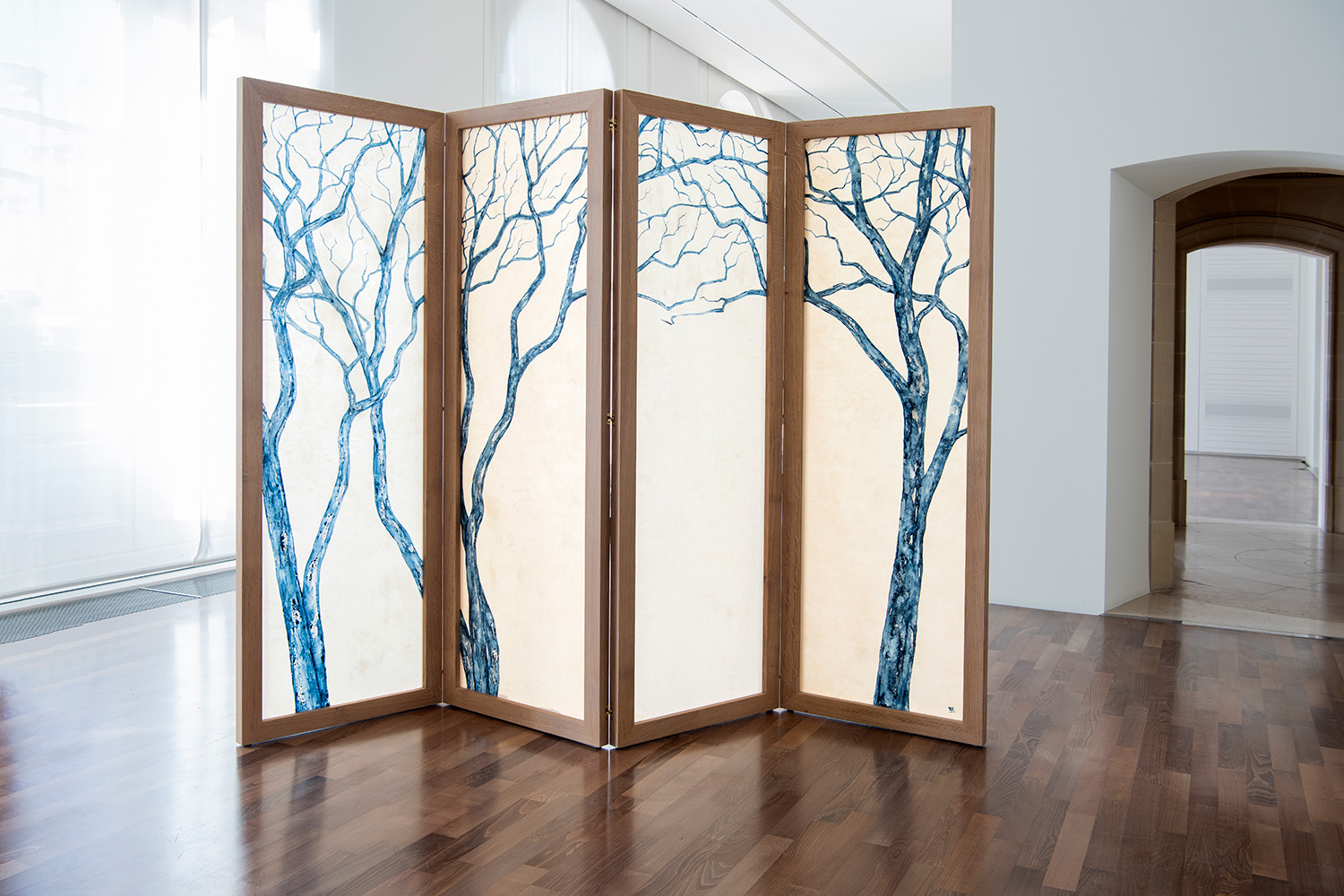
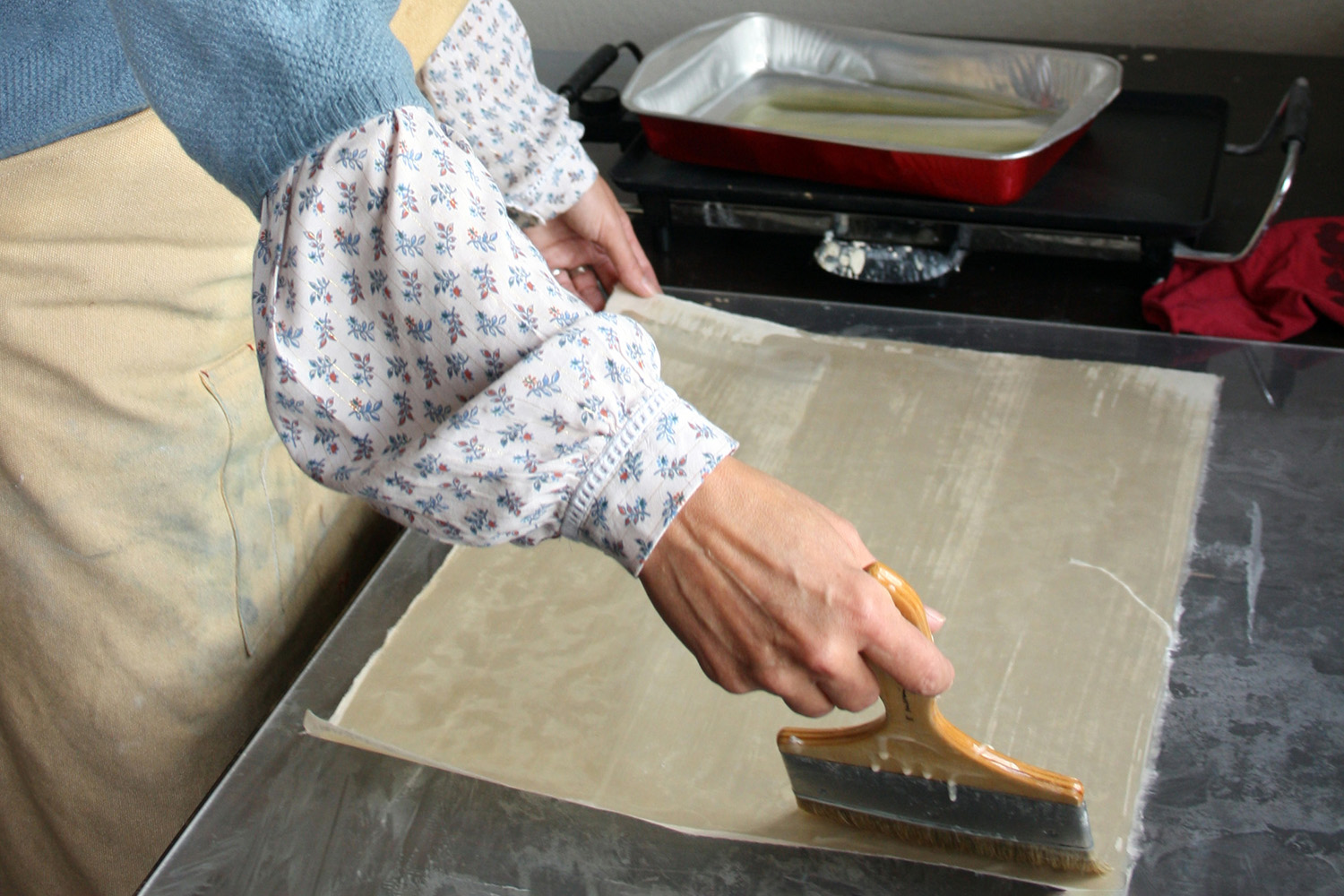
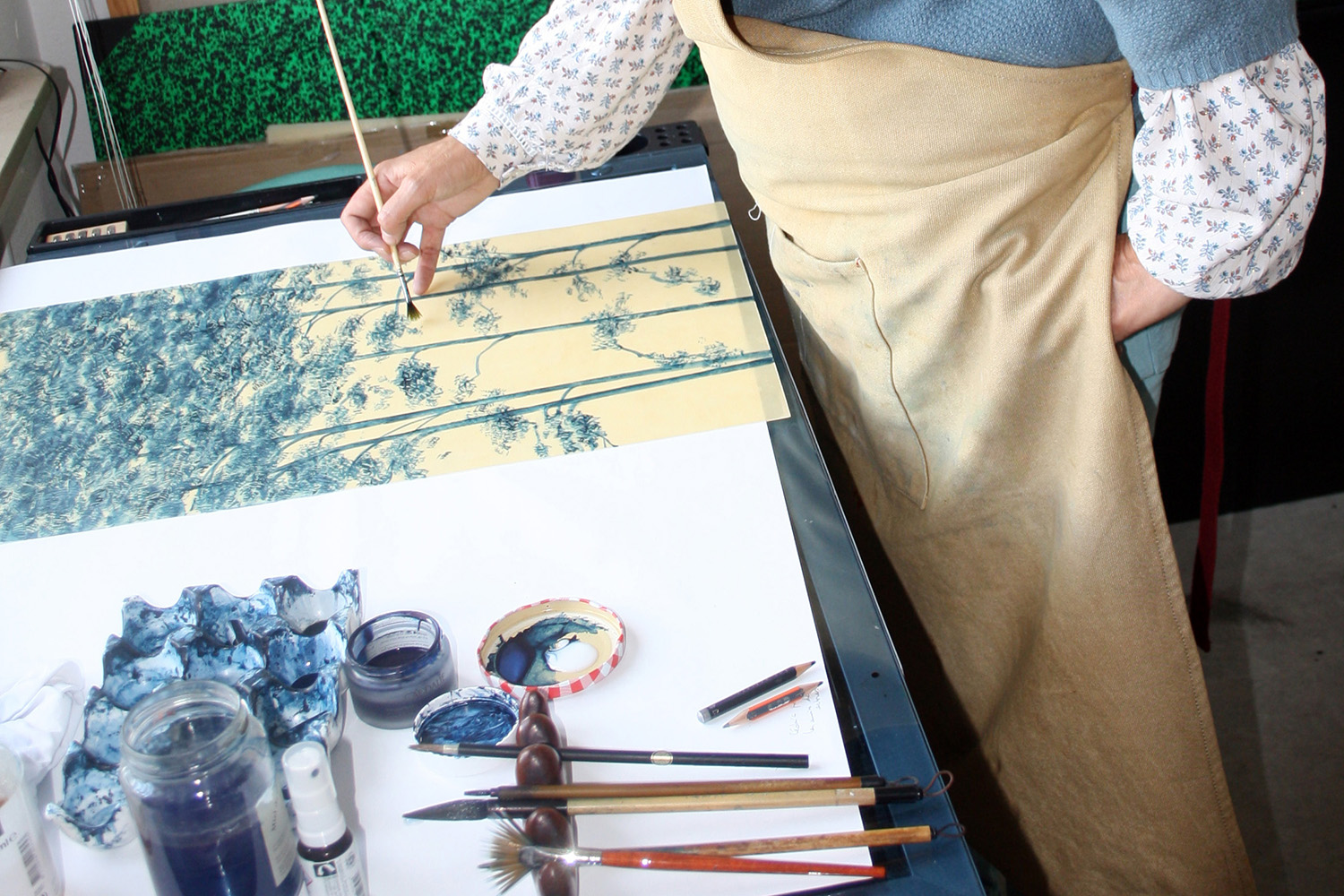
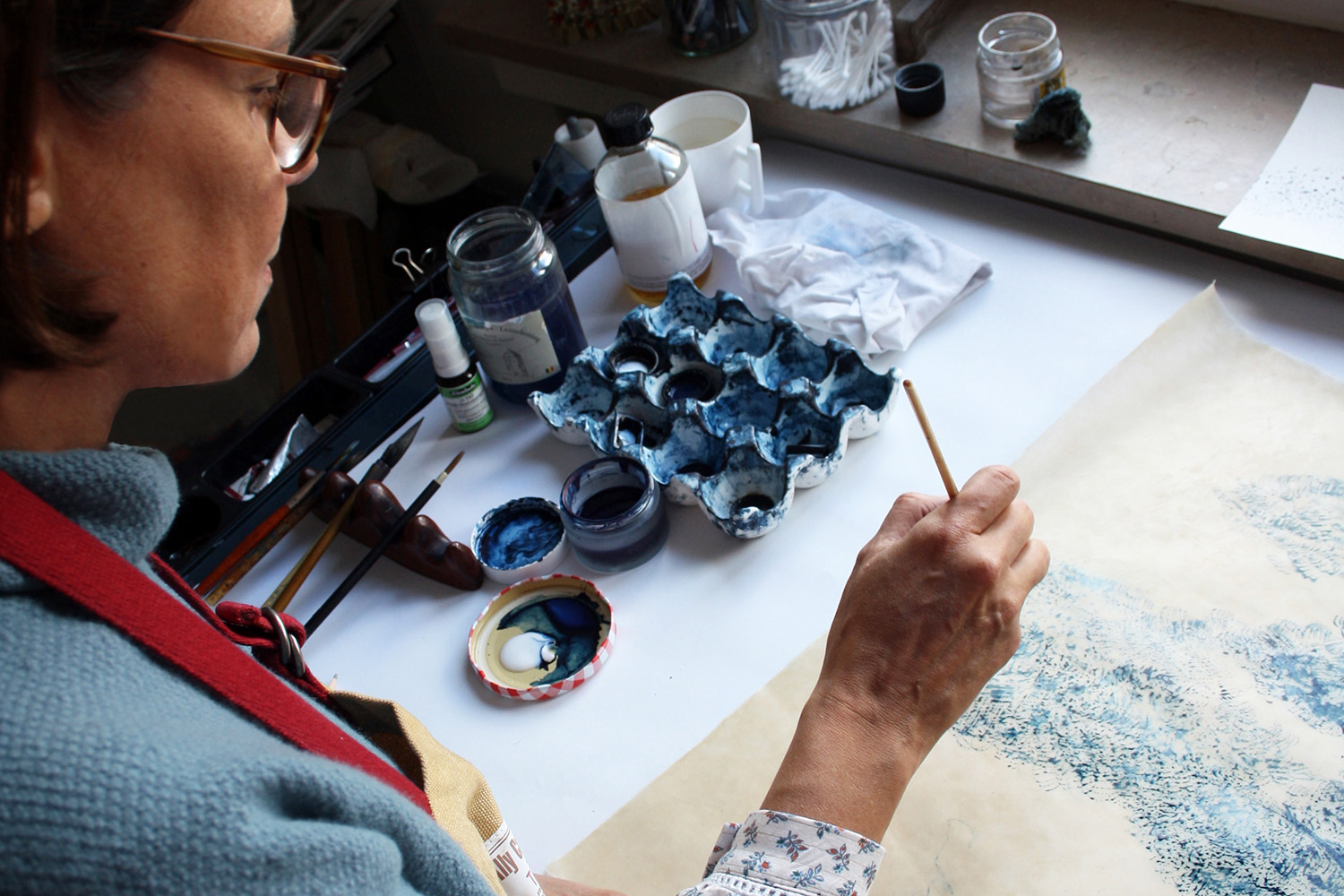
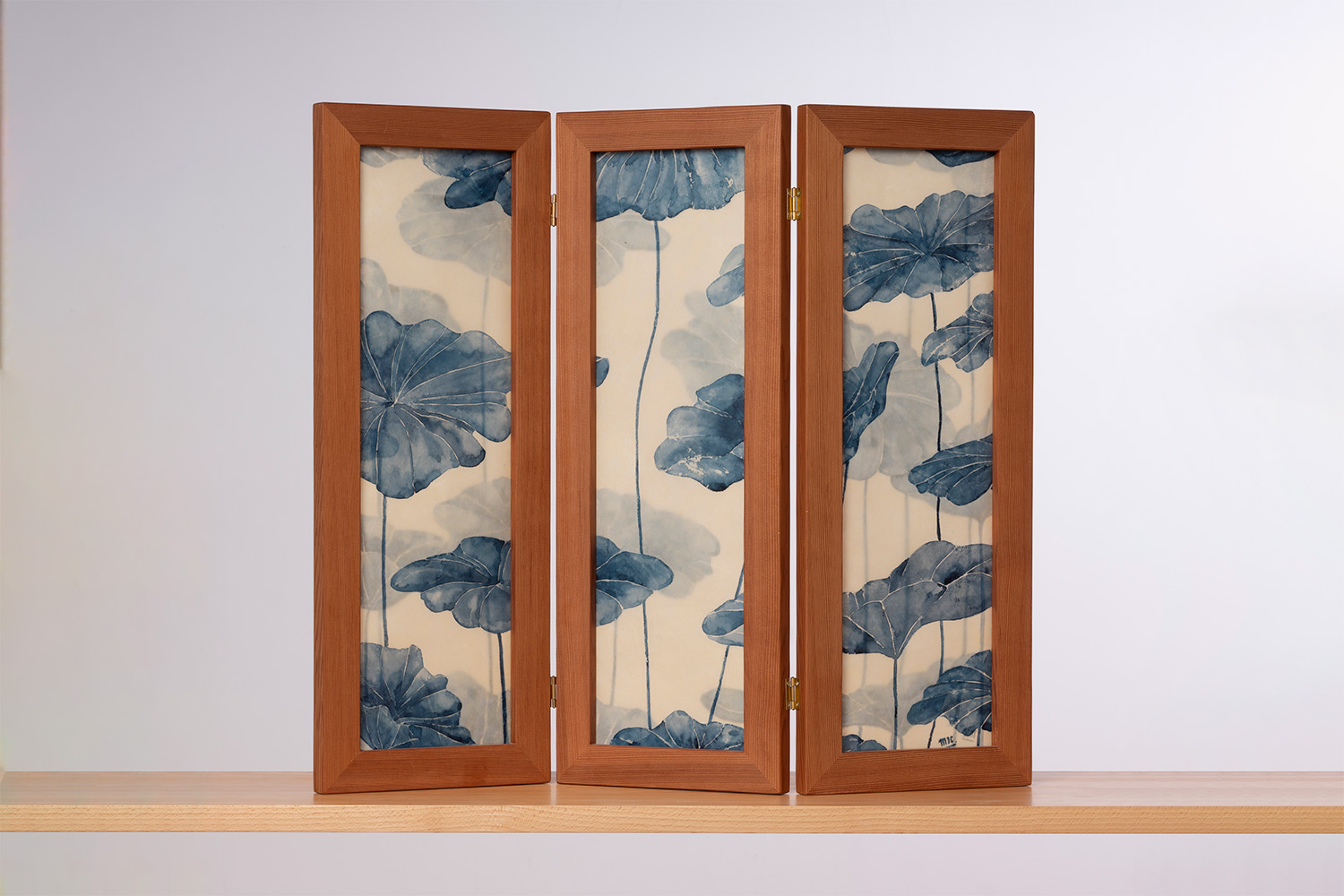
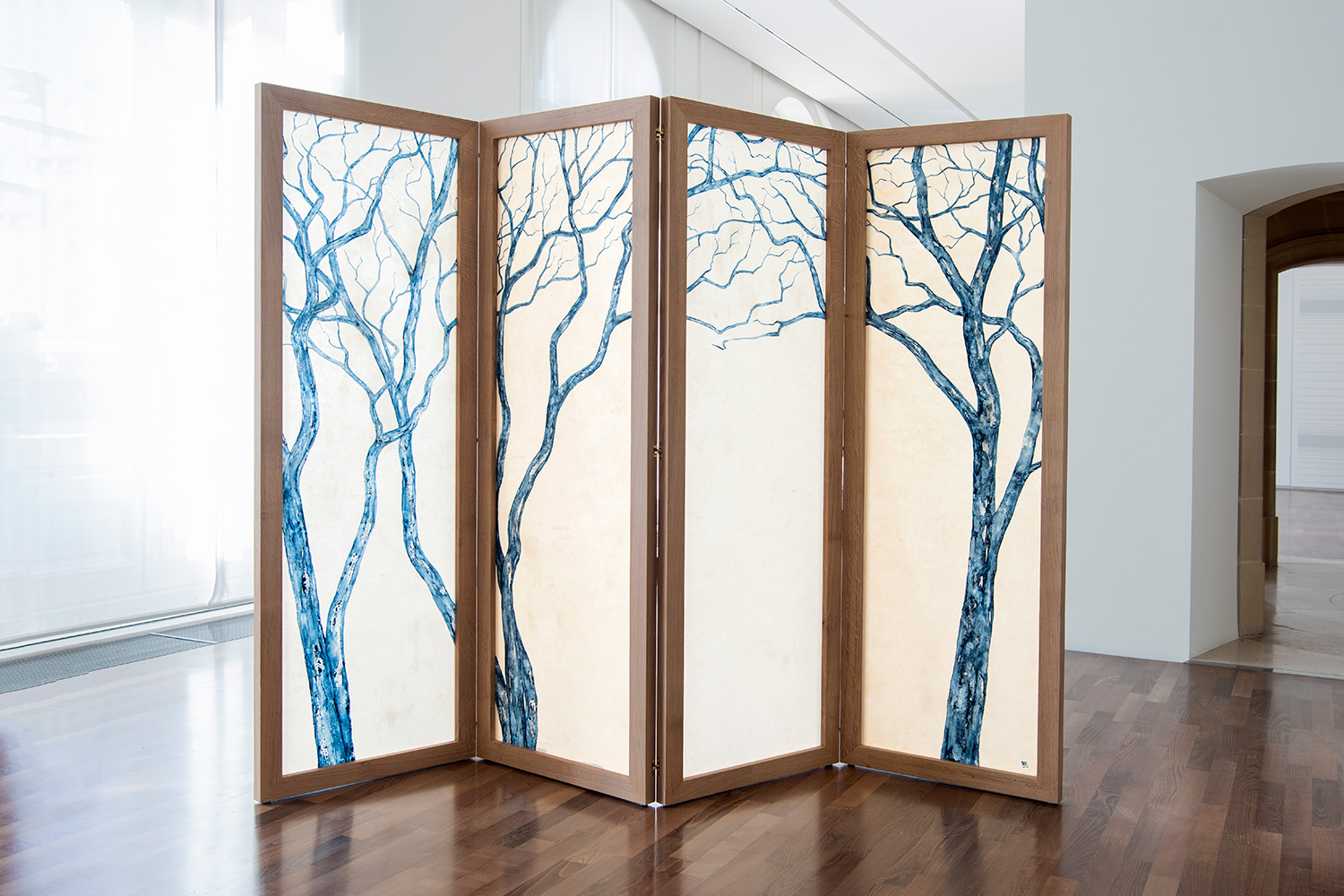
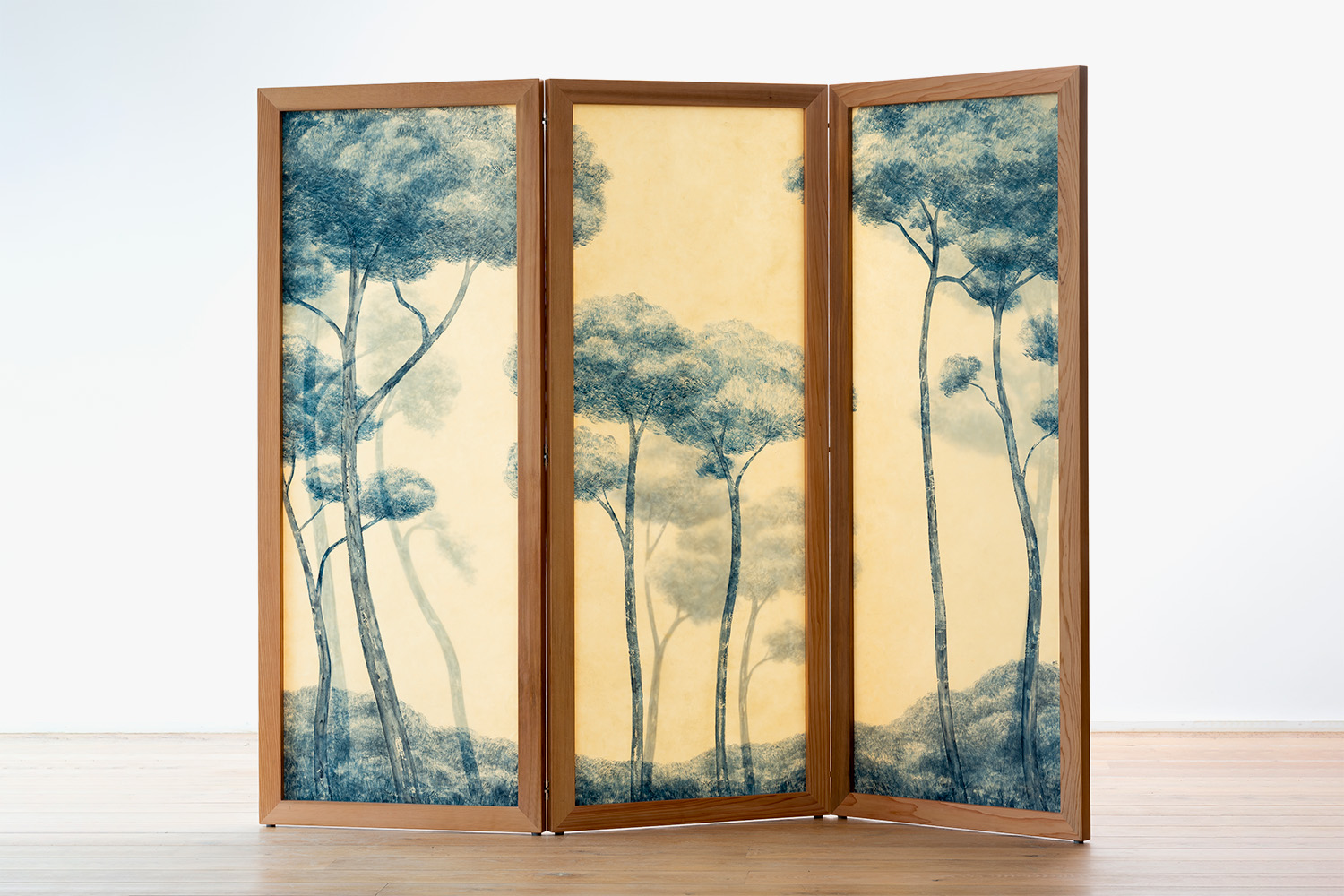
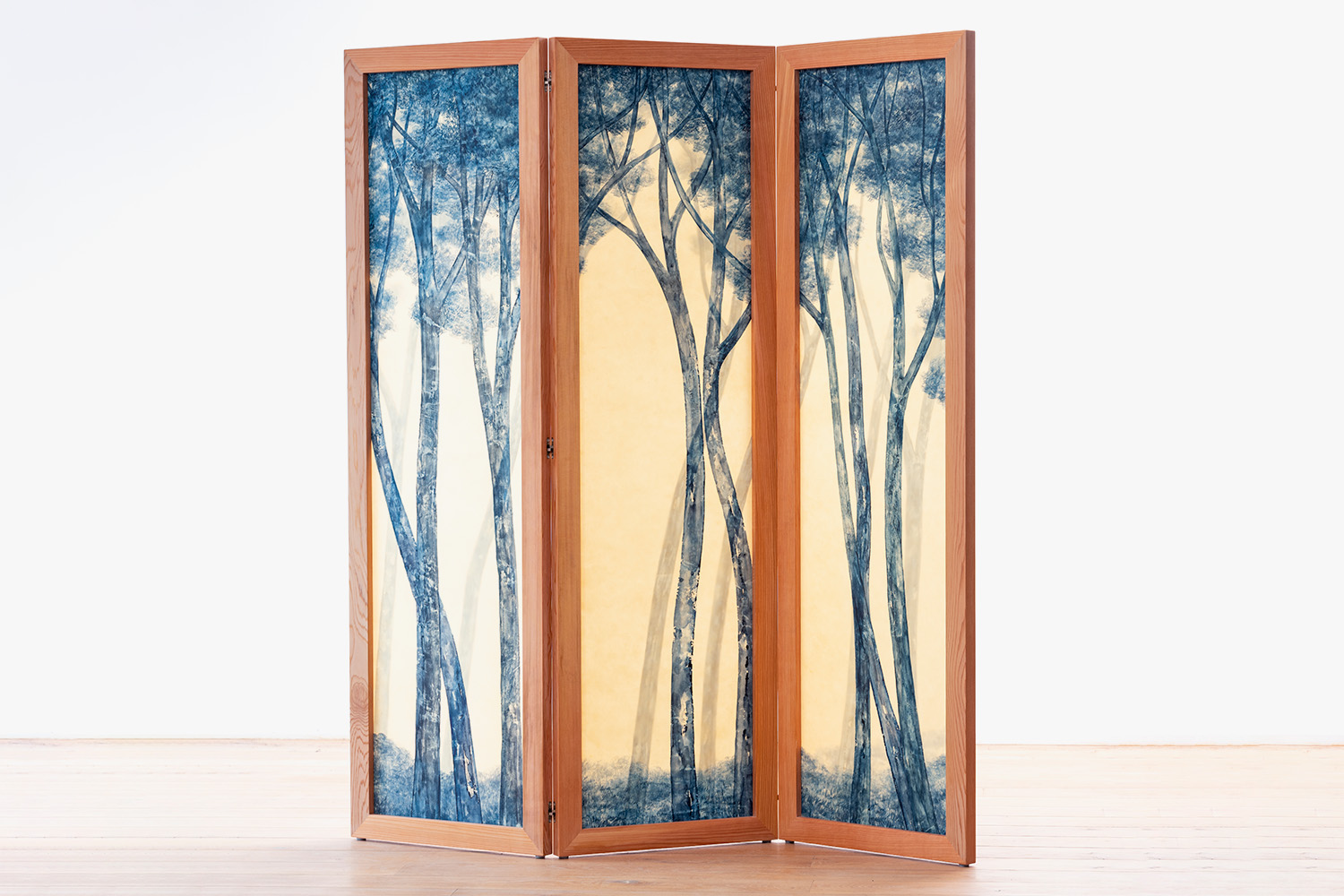
Marie-Isabelle Callier started out as a graphic designer and advertising illustrator, and subsequently focused on children’s books and painting. Since 2018, she makes painted room dividers with a special technique – she paints in watercolour on waxed Japanese paper. “I coat the paper with wax to make it waterproof and give it a velvety transparency that changes with the lighting,” she explains. With her double-sided screens, Marie-Isabelle aims to create a dialogue from both sides of the screen. “The murmurs of the material continue on the other side. Depending on the light, the transparency allows us to see a certain blur, a presence of light and delicate shadows. There is an invitation to go see and experience the material on the other side.” Marie-Isabelle is currently based in Luxembourg.
INTERVIEW
I try to offer people beautiful images that allow their mind to get lost in serene thoughts. To be able to do that, I need to think, observe and feel freely. I then express my experiences in my very own way.
Nostalgia is an important one, for example childhood memories. Nature is another: my work often features landscapes, in which trees take centre-stage. By shifting between the abstract and figurative, I create a scenery that appears distant and personal at the same time.
They are not linked to an actual territory, only to my imaginary territories. These are places, often based on memories, that I can only visit in my dreams. I am for example inspired by childhood memories of poplar trees along canals in Flanders.
I consider a work as well made when there is no defect in it, so you can feel a unity. Think of the vital force called qi in Chinese culture, which literally means ‘breath’ and refers to a kind of material energy. I want to give such a feeling of energy to the people who look at my work.
Marie-Isabelle Callier
Decorative painter
Luxembourg, Luxembourg
AVAILABILITY
By appointment only
PHONE
+352 691707979
LANGUAGES
French, English, Spanish
Homo Faber Finds is a new service aiming to inspire admirers of craft to connect and collaborate with exceptional artisans.
We invite you to submit an enquiry here.