Ionel Cococi
Ceramica de Vădastra
Ceramicist
Vădastra, Romania
Vădastra pottery fired back to life
- Ionel is a completely self-taught ceramicist
- He is one of the first and only potters to revive the Neolithic culture of Vădastra
- His ancient ceramic pots are authentically recreated in a cone-shaped kiln in the ground
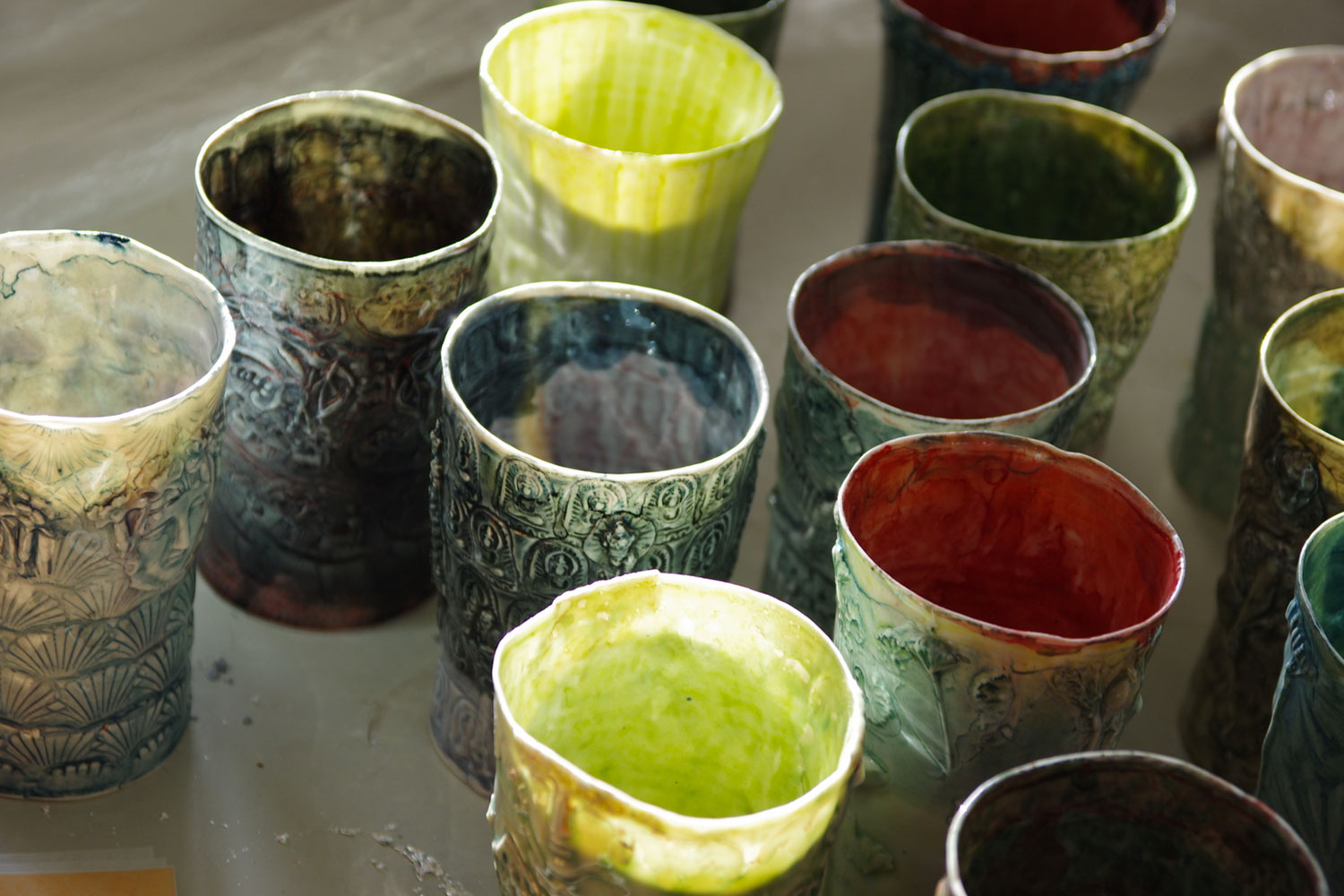
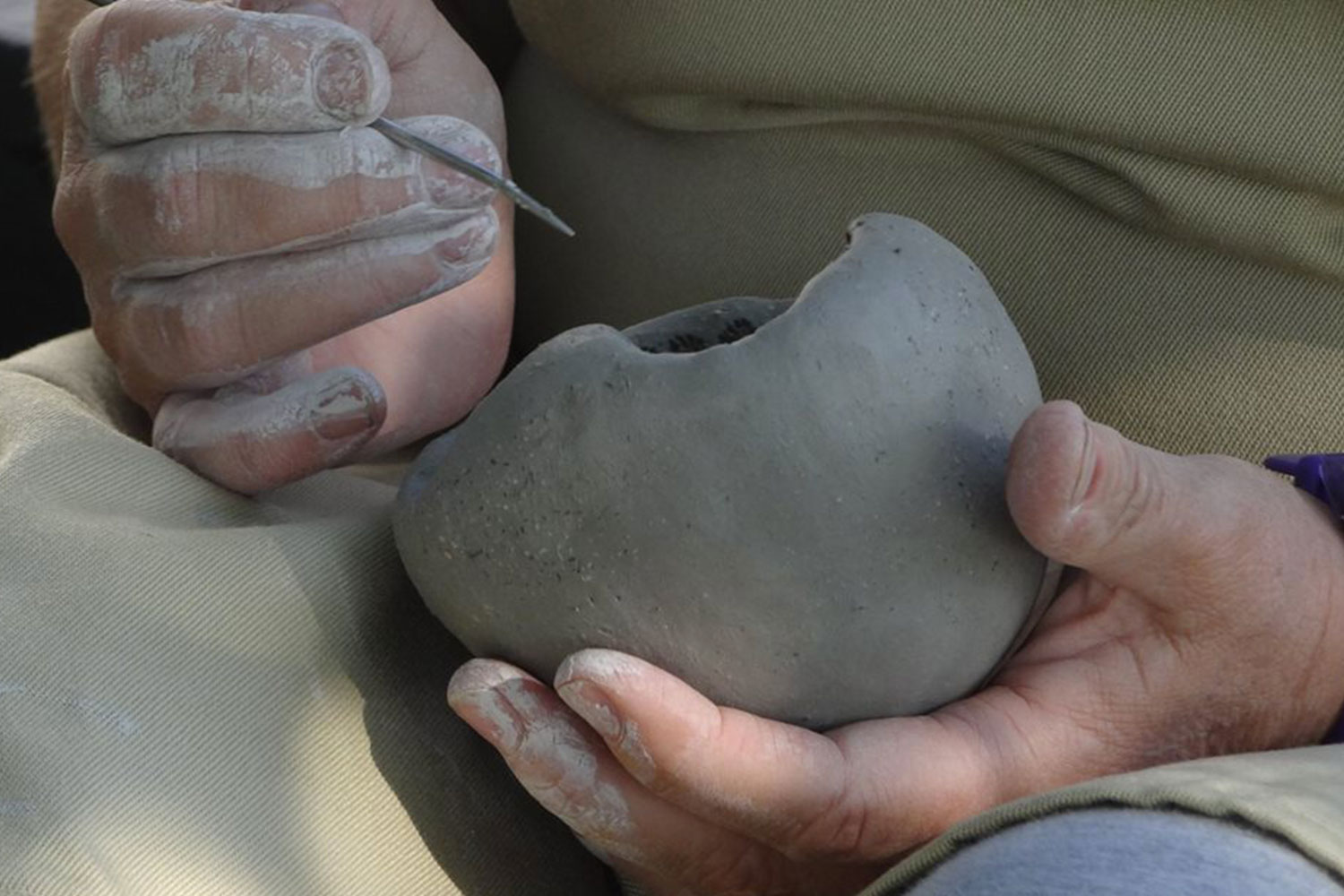
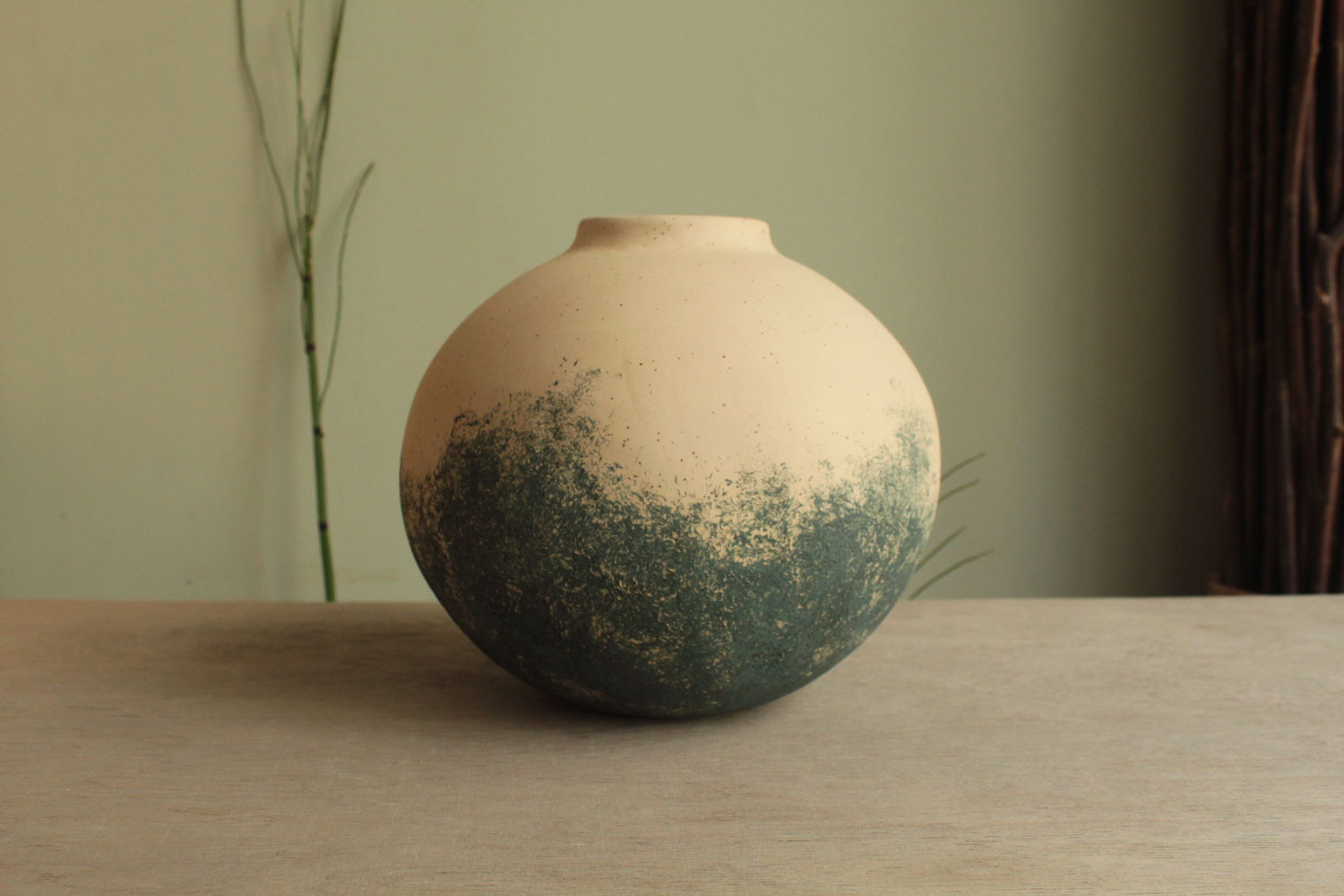
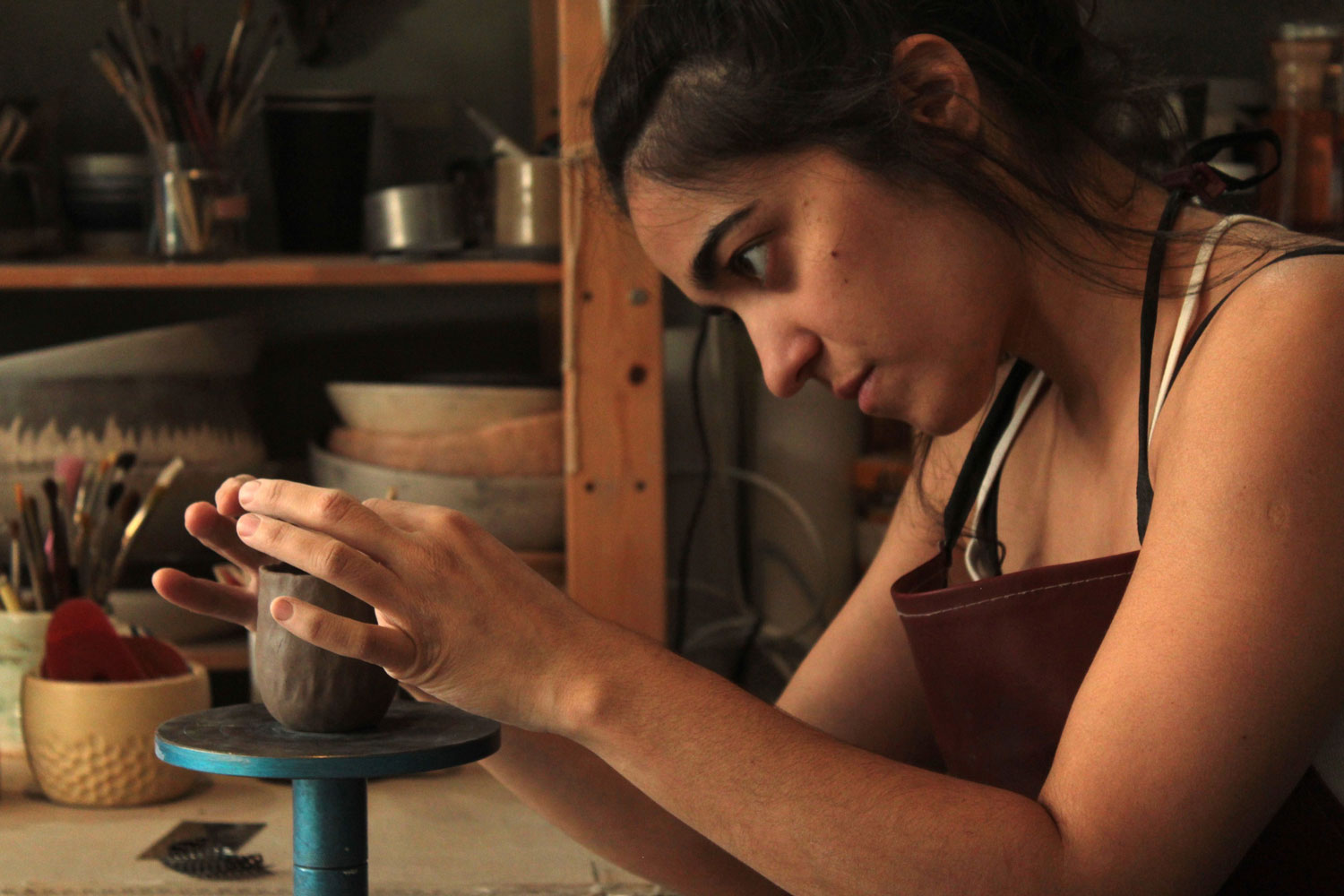
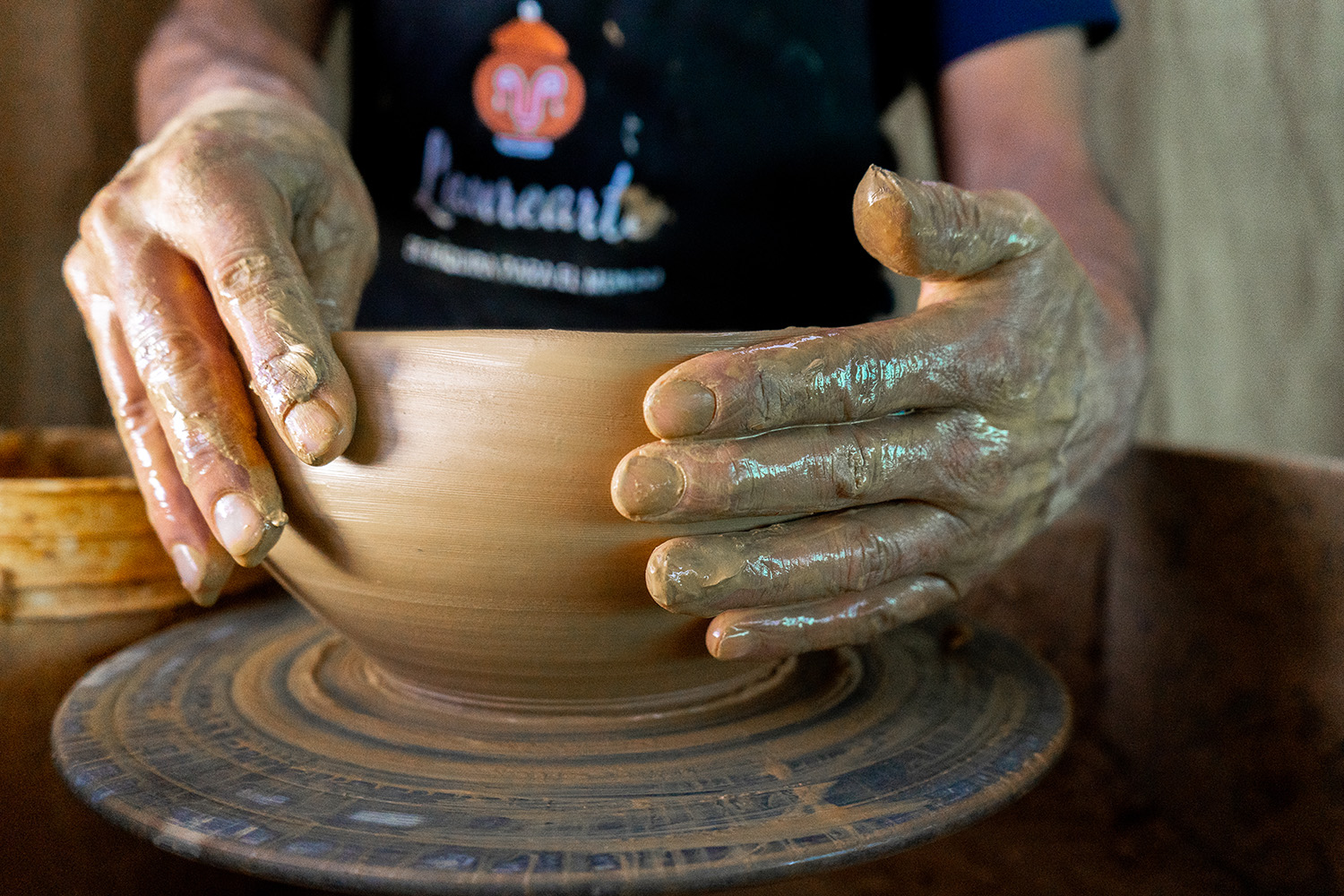
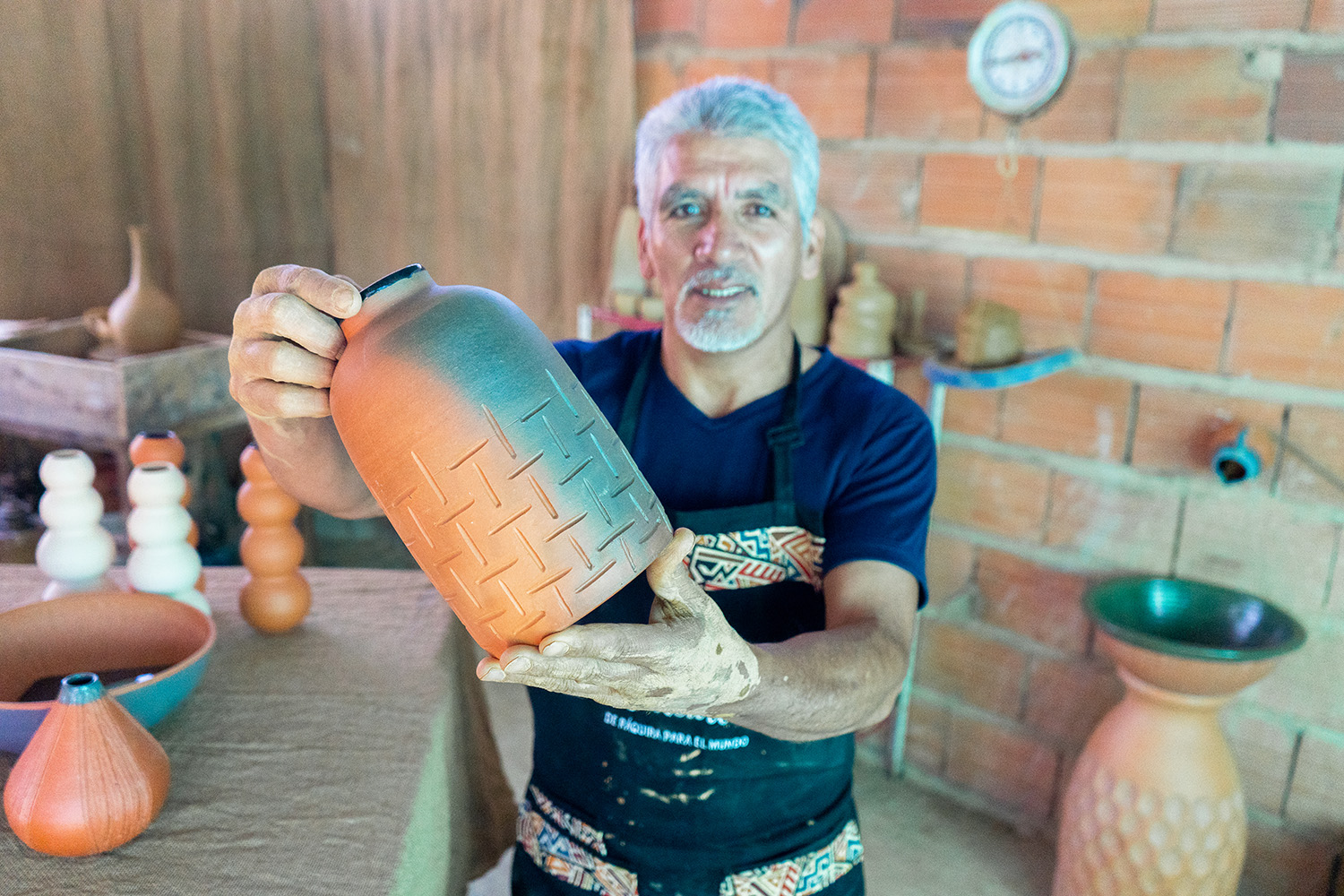
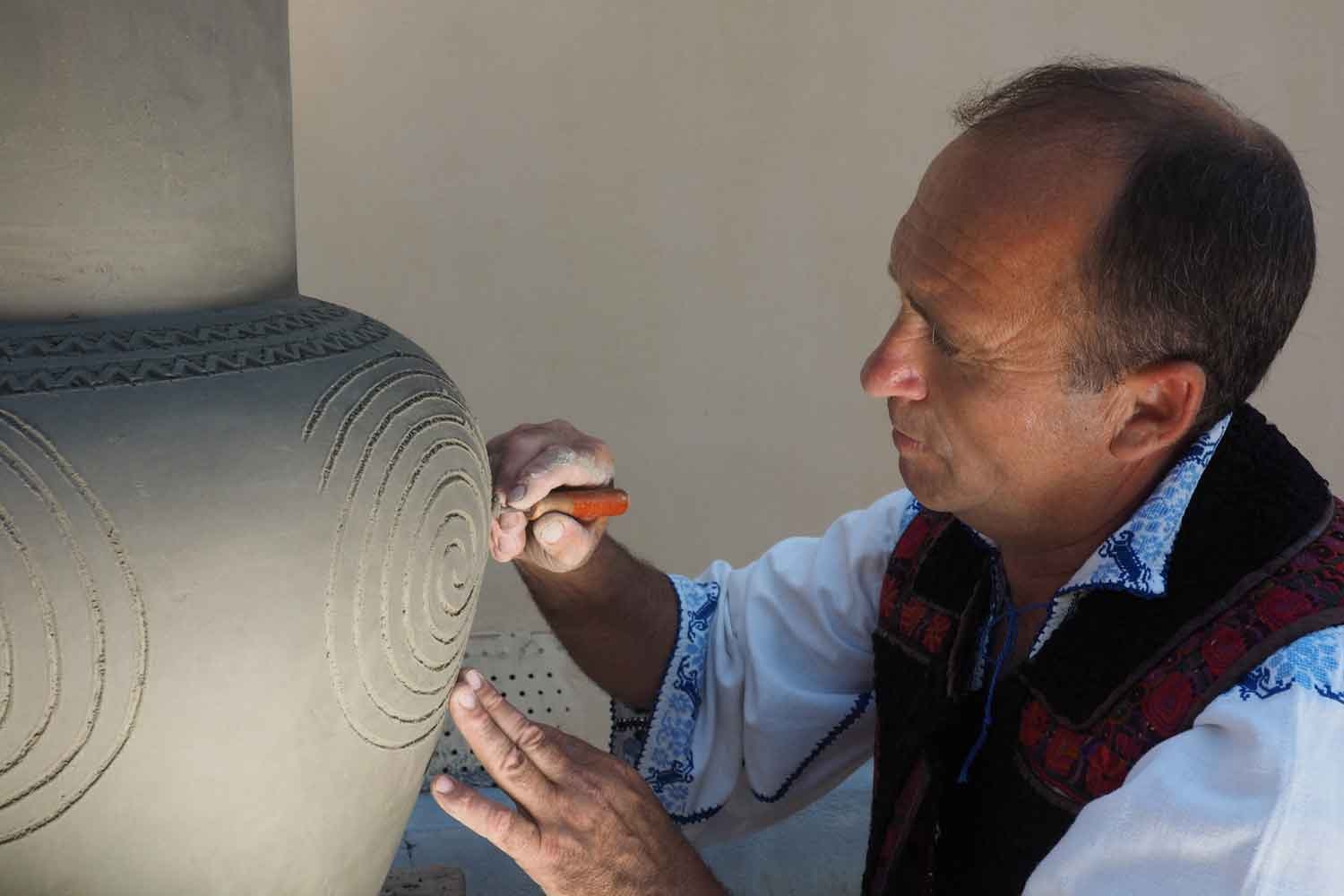
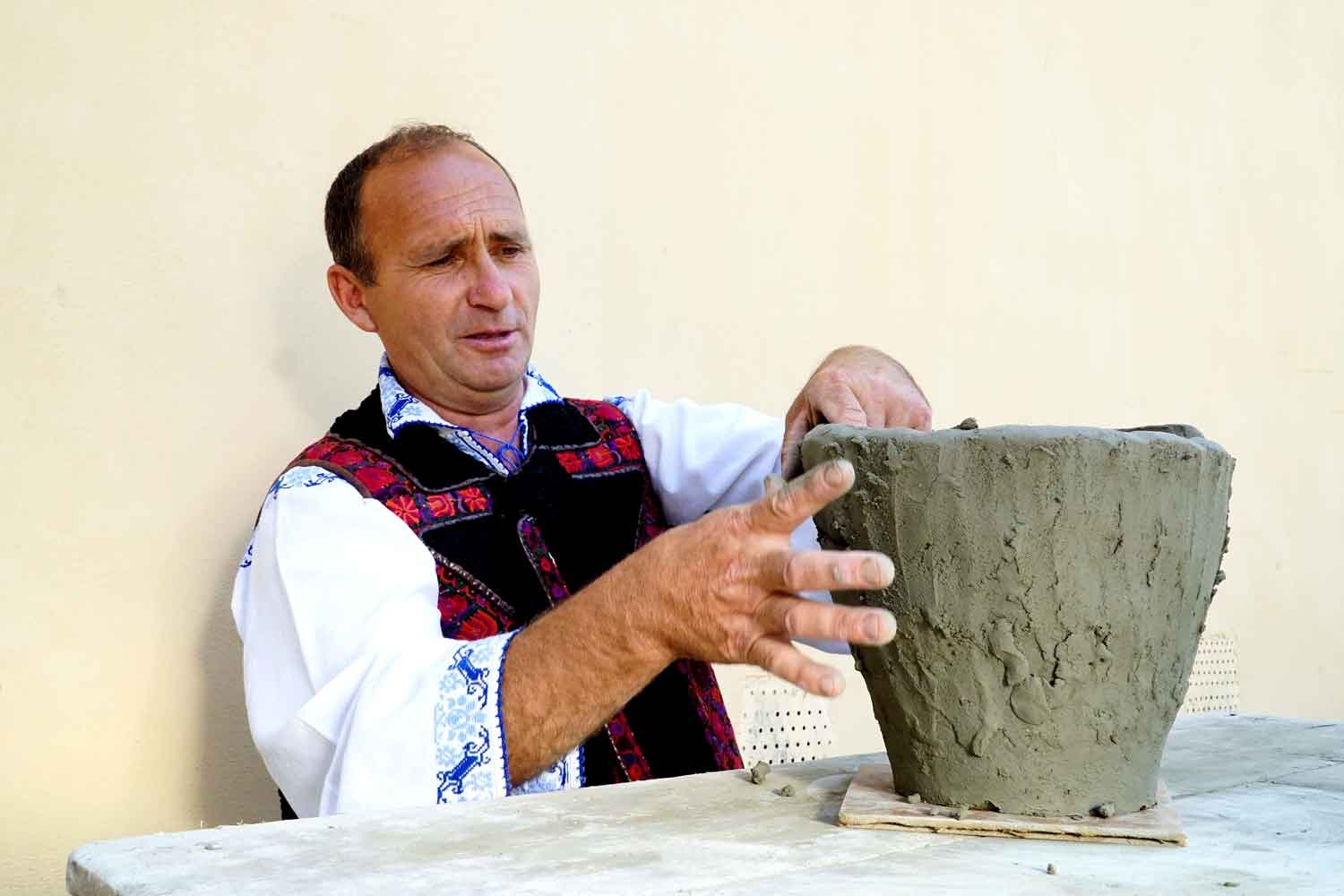
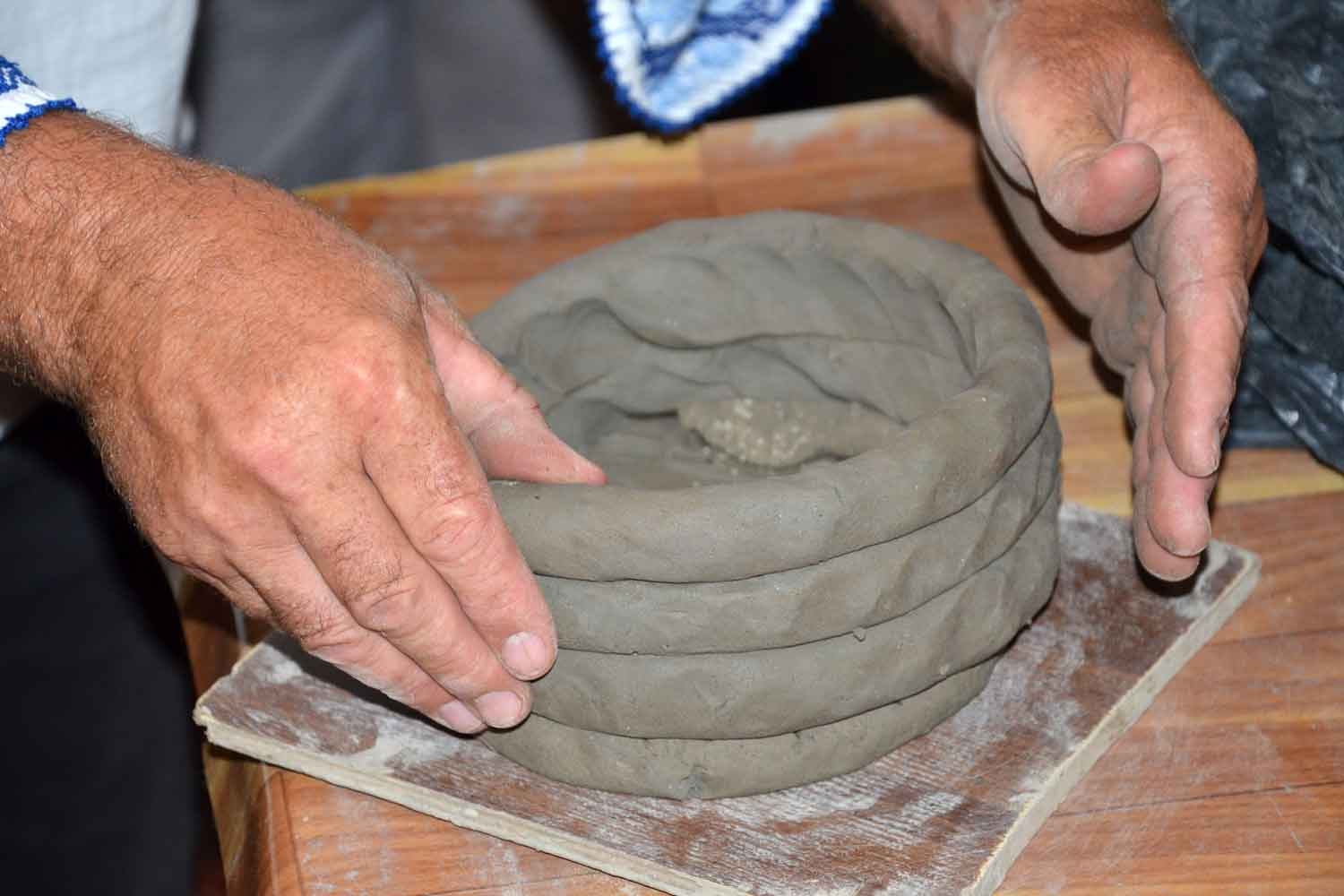
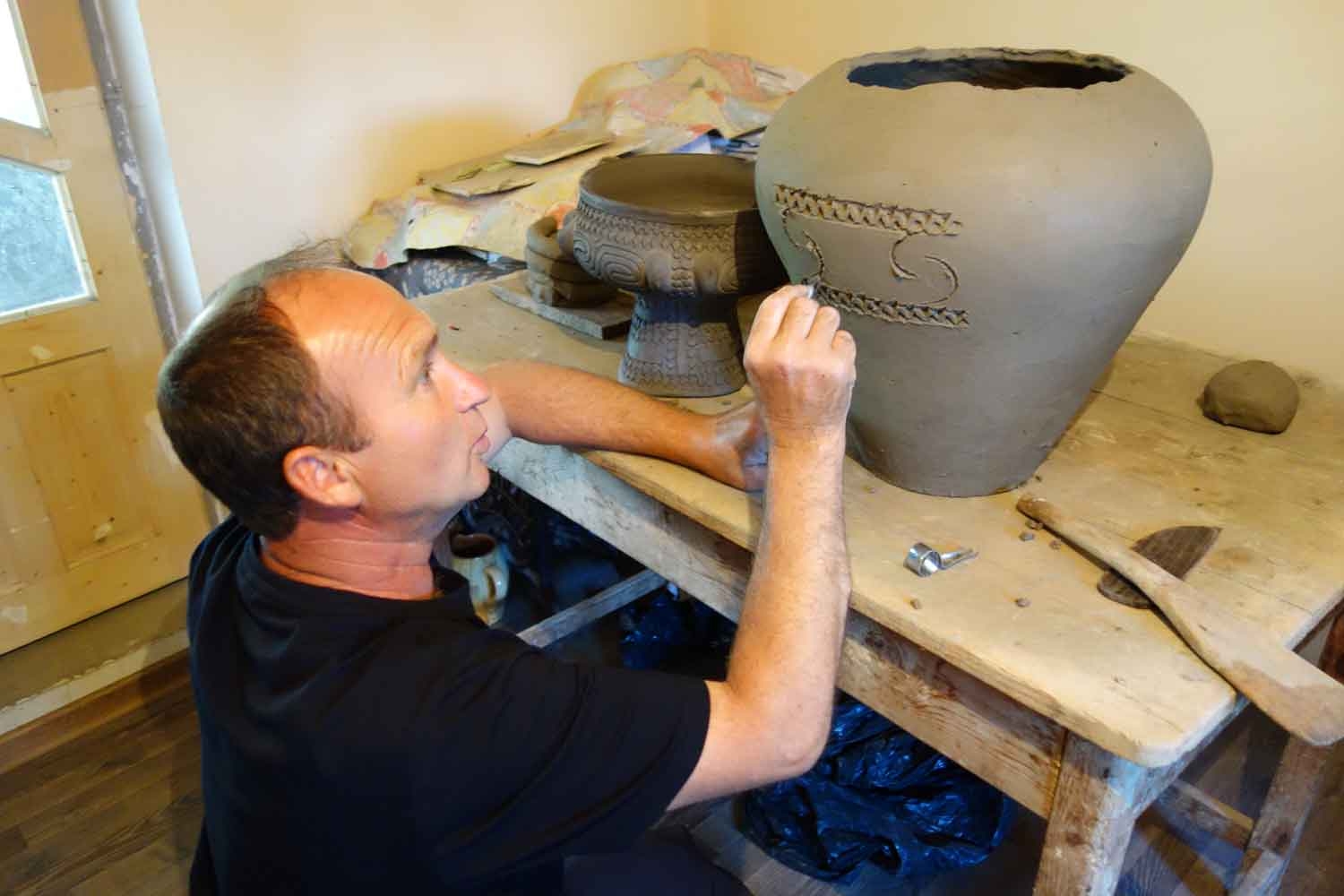
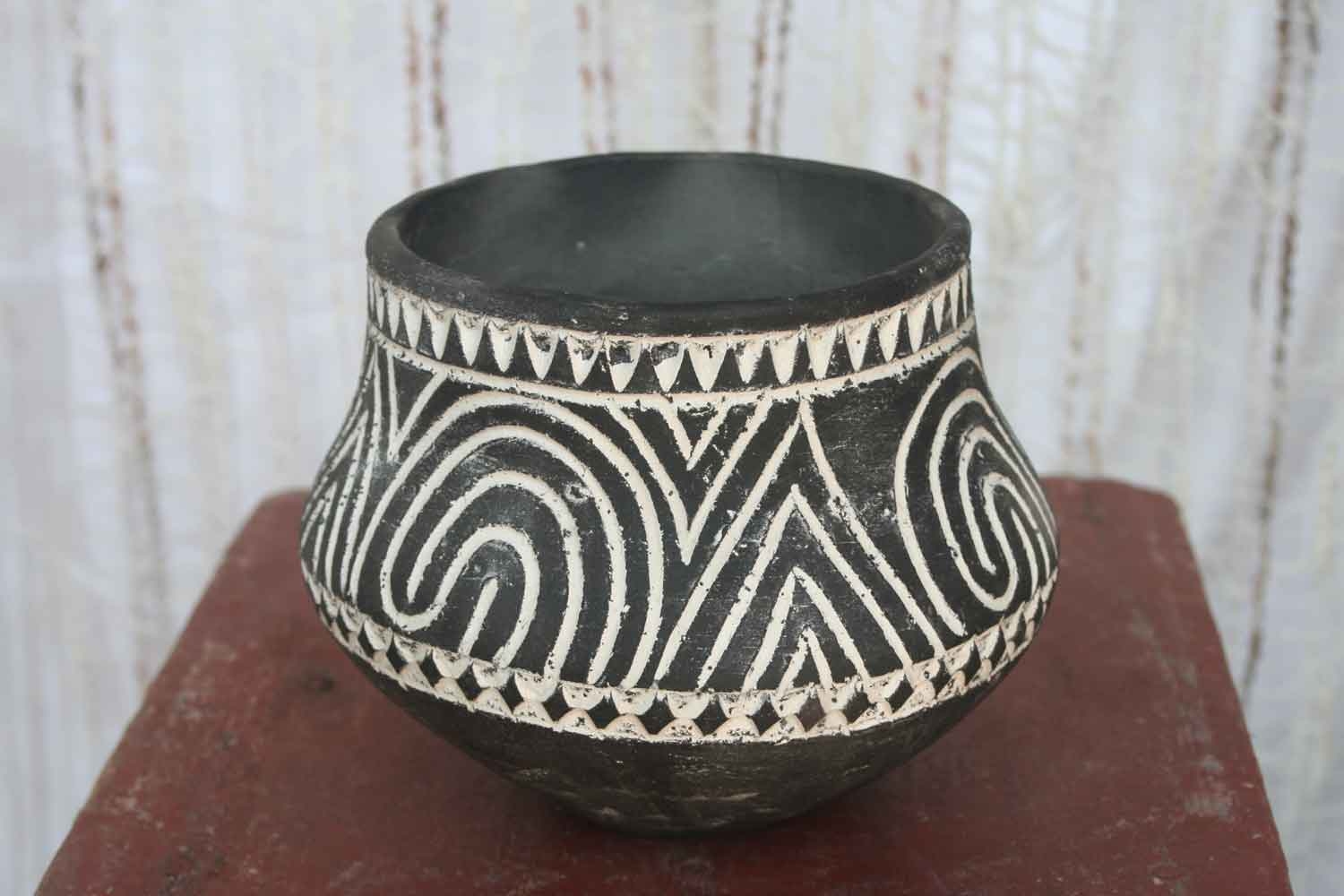
Ionel Cococi creates exact replicas of the Neolithic pottery of Vădastra, reviving an ancient heritage and culture that occurred 7,500 years ago. Ionel's creative journey began in 2000, when he took part in a project aimed at restoring Vădastra pottery, alongside professors from universities around the world. "I initially volunteered to help with transportation, but I was captivated by the researchers' work," he says. Inspired by their dedication and findings, Ionel crafted his first pot, moved to Vădastra, bought a house and opened his workshop. Since then, he has become widely recognised for his black pottery vessels, which he makes in various sizes using traditional techniques and archaic methods. Ionel has participated in numerous national fairs and international exhibitions, and has been invited to speak about his craft in academic settings. He also teaches pottery classes to children at the School of Arts and Crafts in Slatina.
Discover his work


INTERVIEW
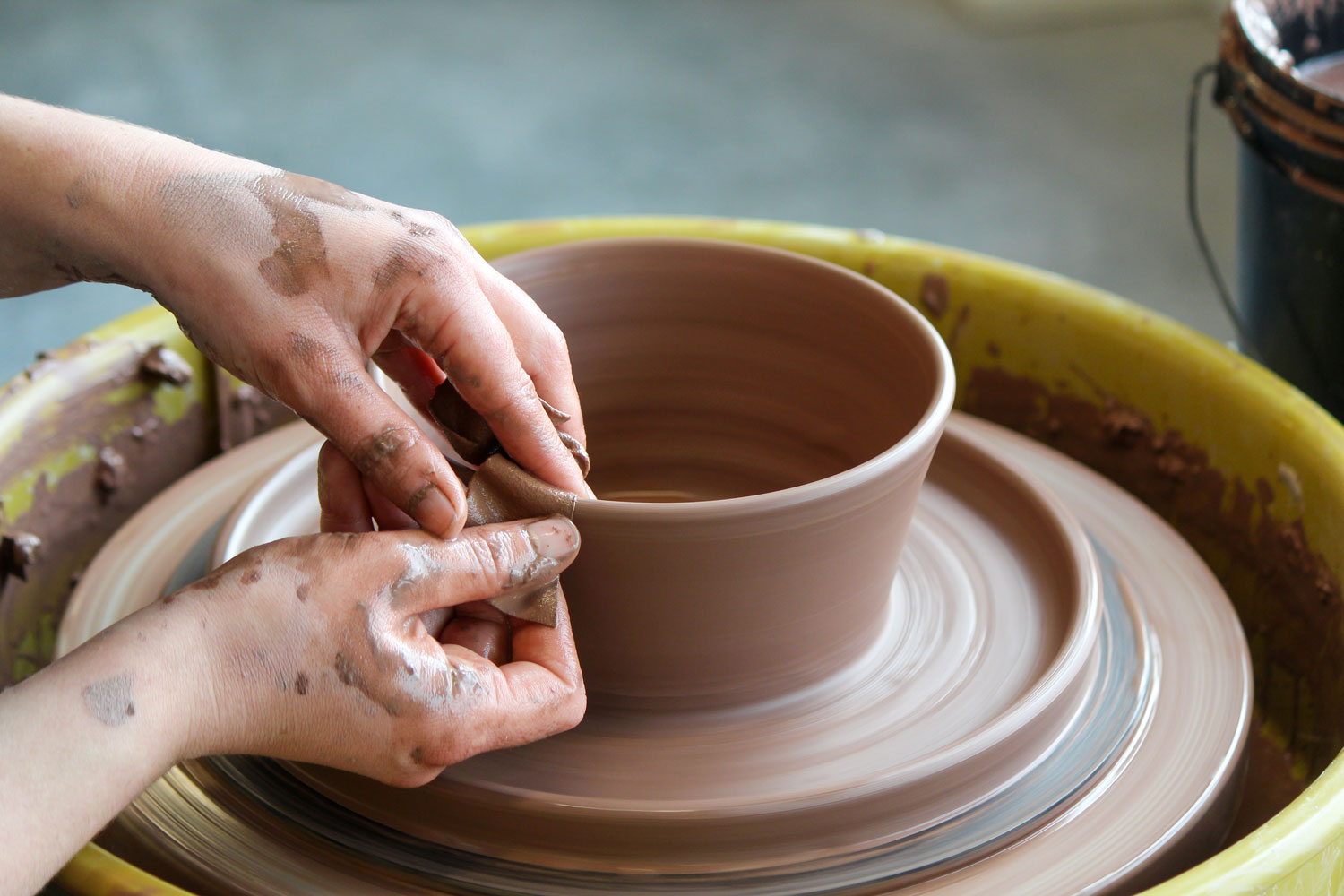
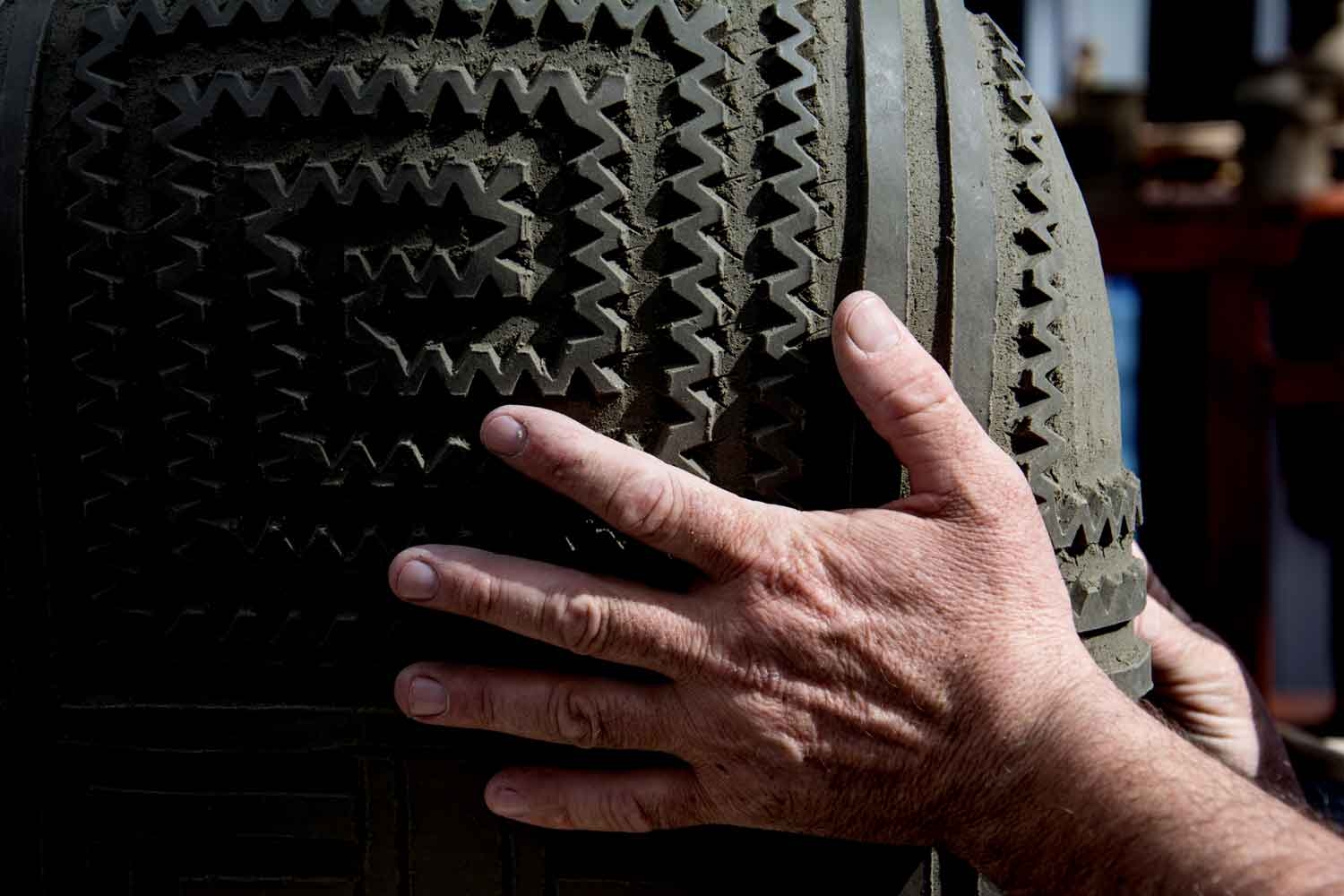
One of my strengths is spatial visualisation. I can easily picture shapes and how they come together in the finished object before I even begin creating. I am good at drawing and can freehand circles and straight lines, without any prior sketches. When I create the vases, I do not use any units of measurement and I decorate directly on the piece.
I am inspired by relics from the Vădastra culture. I fully respect the form, the decoration and the Neolithic firing method. I create very close replicas of objects found in Vădastra, and I am happy to be one of the first and only artists who choose to revive this 7,500 year-old culture.
After creating and decorating the pots, they need a lot of time to thoroughly dry. I place them in my Neolithic-style kiln, a three-metre deep cone-shaped hole in the ground. Before adding wood for firing at 950°C, the pots are stacked on top of each other to ensure they are fully supported. The process ends with a reductive burn, where leftover wood carbonises in the absence of oxygen.
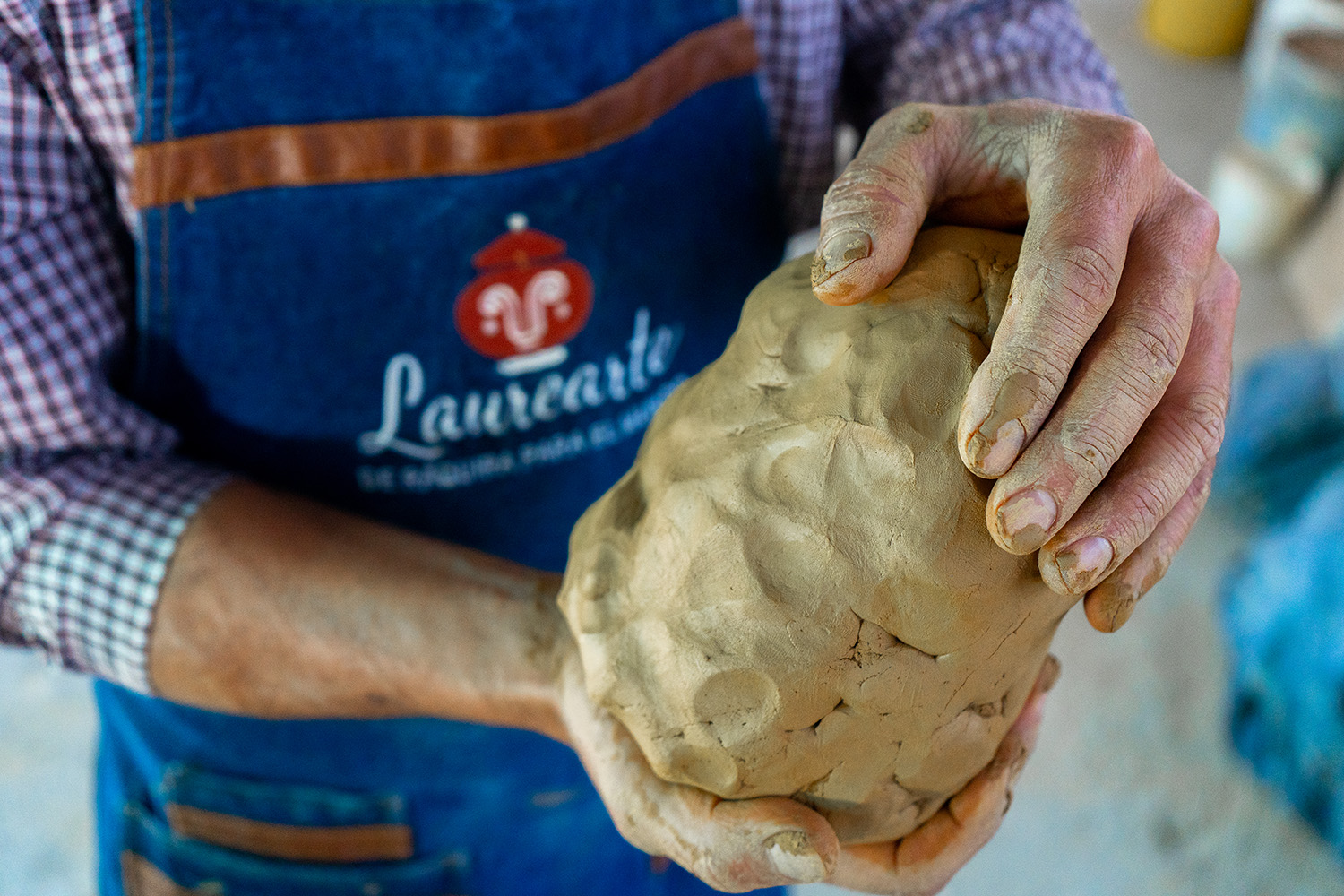
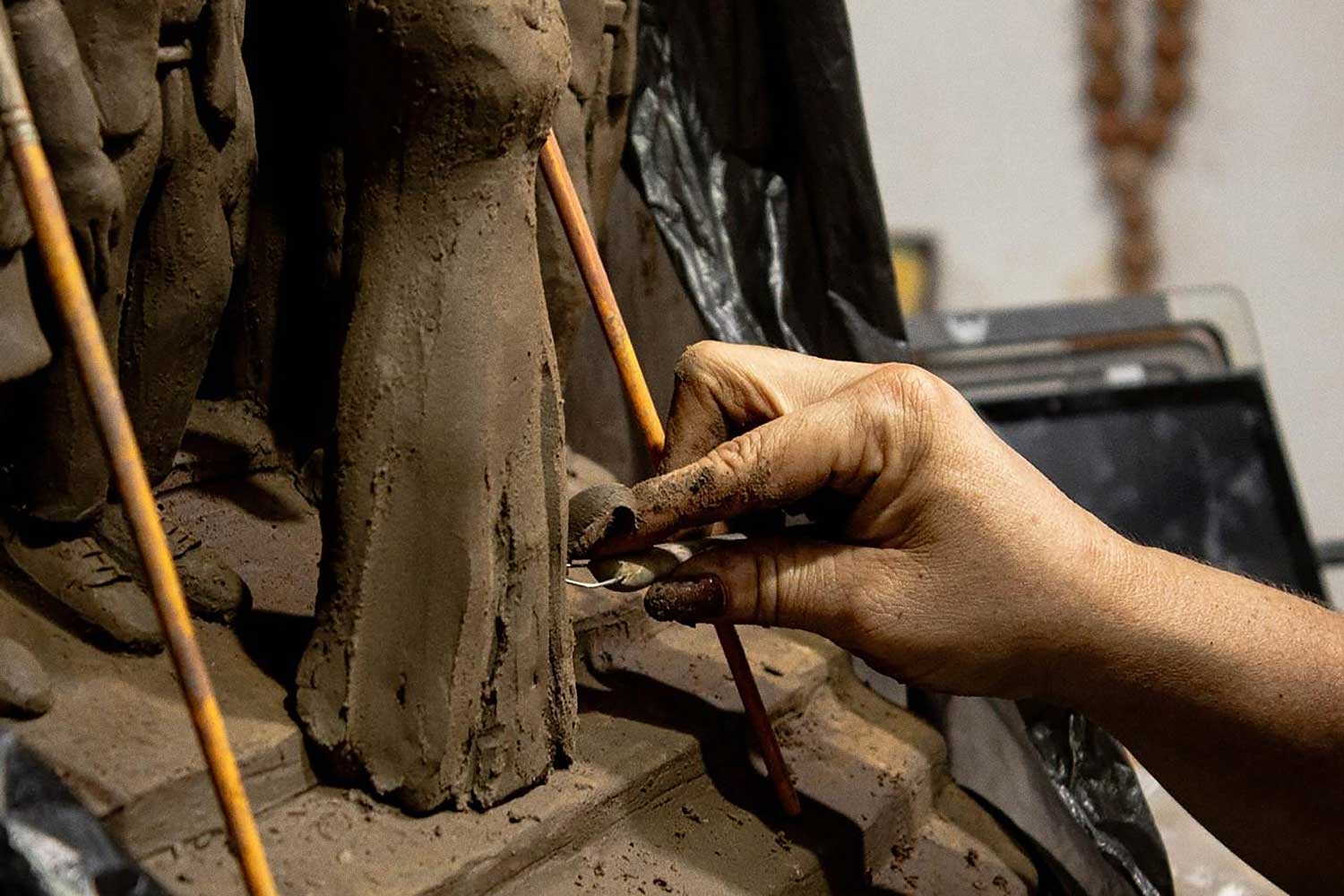
I love what I do, and the most rewarding part is connecting with my audience. What I create is not for everyone, as it comes from a special culture. There are people who have read, studied and understood the effort that goes into each ceramic piece created. I like when the audience knows the emotions an artist pours into the process, from extracting and shaping to decorating the clay.
Ionel Cococi
Ceramica de Vădastra
Ceramicist
Vădastra, Romania
AVAILABILITY
By appointment only
PHONE
+40 761164092
LANGUAGES
Romanian
Homo Faber Finds is a new service aiming to inspire admirers of craft to connect and collaborate with exceptional artisans.
We invite you to submit an enquiry here.