Hicham Essaidi
Palais Damasquini
Metalsmith
Meknes, Morocco
Recommended by Maison de l'Artisan
A fragile tradition in damascening
- Hicham is a fourth-generation damascening craftsperson
- He teaches the craft at Meknès School of Traditional Arts
- His works have been exhibited worldwide
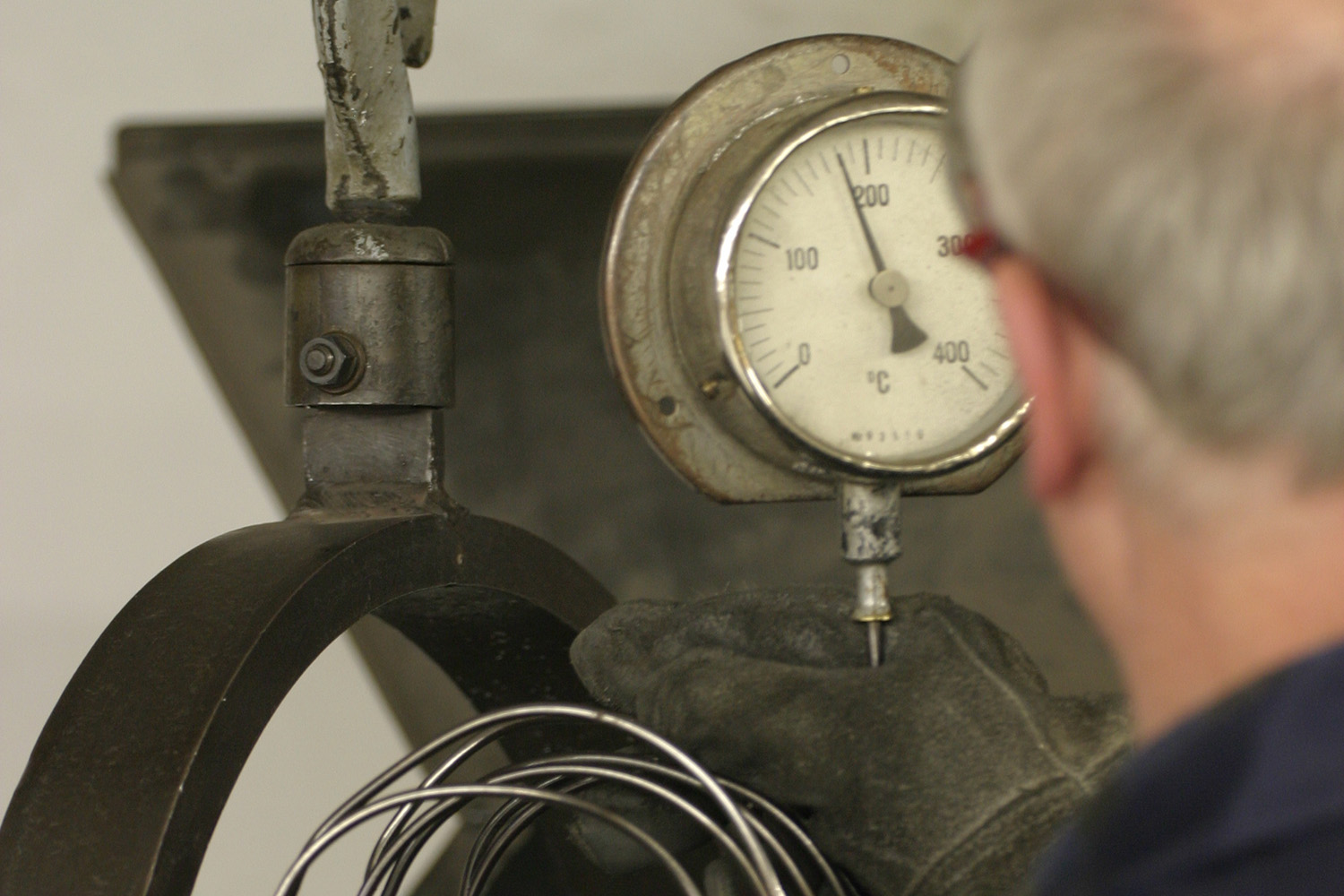
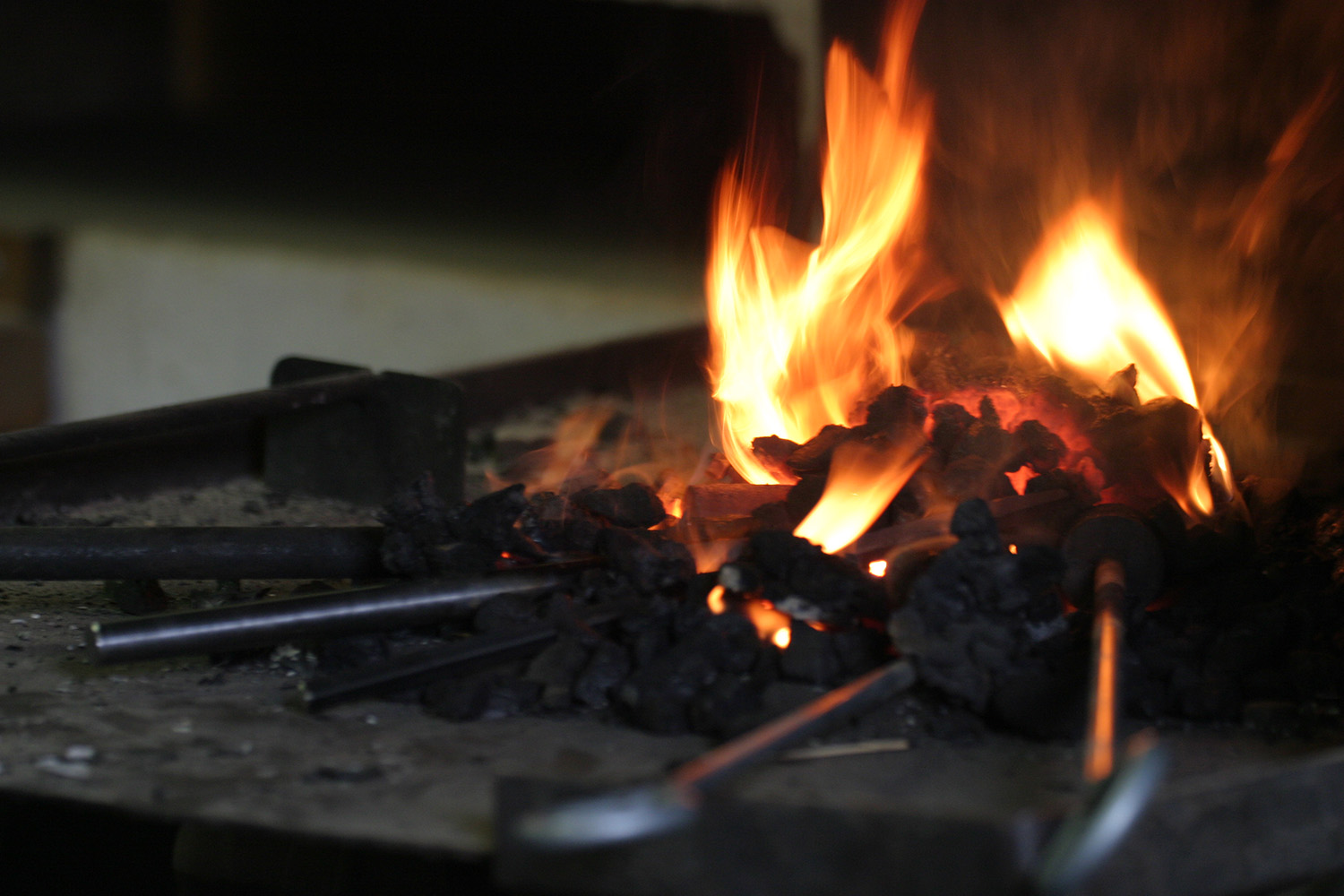
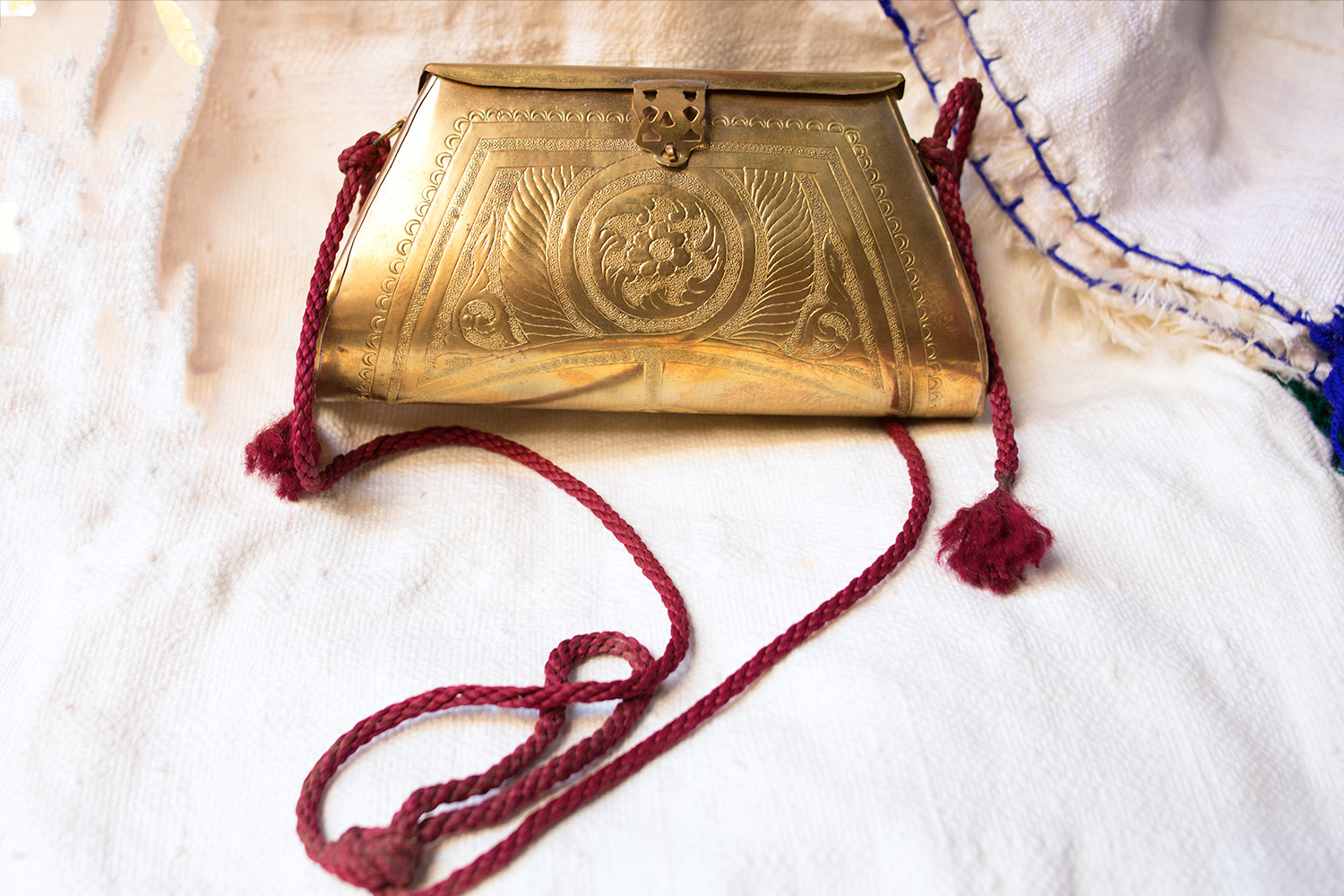
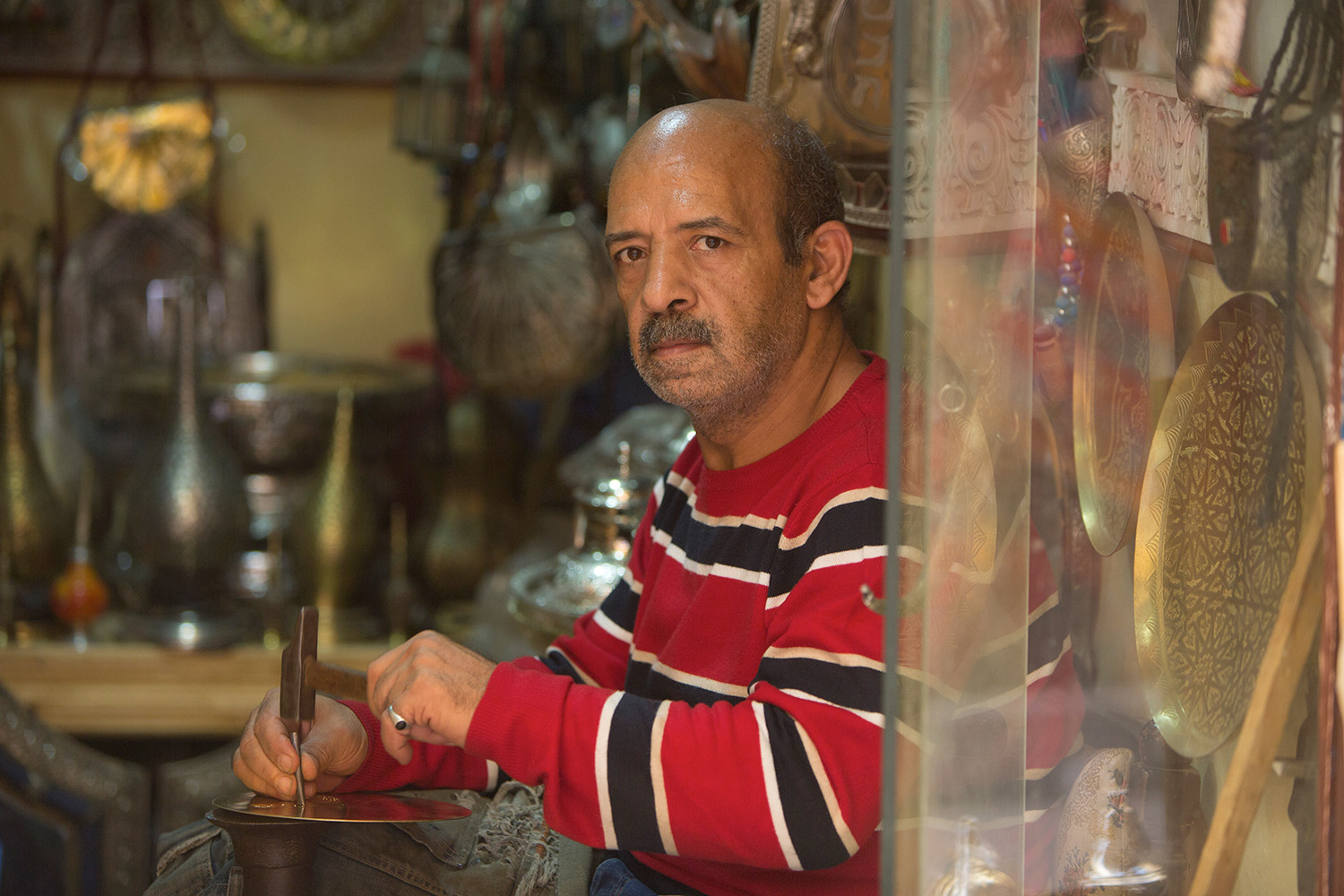
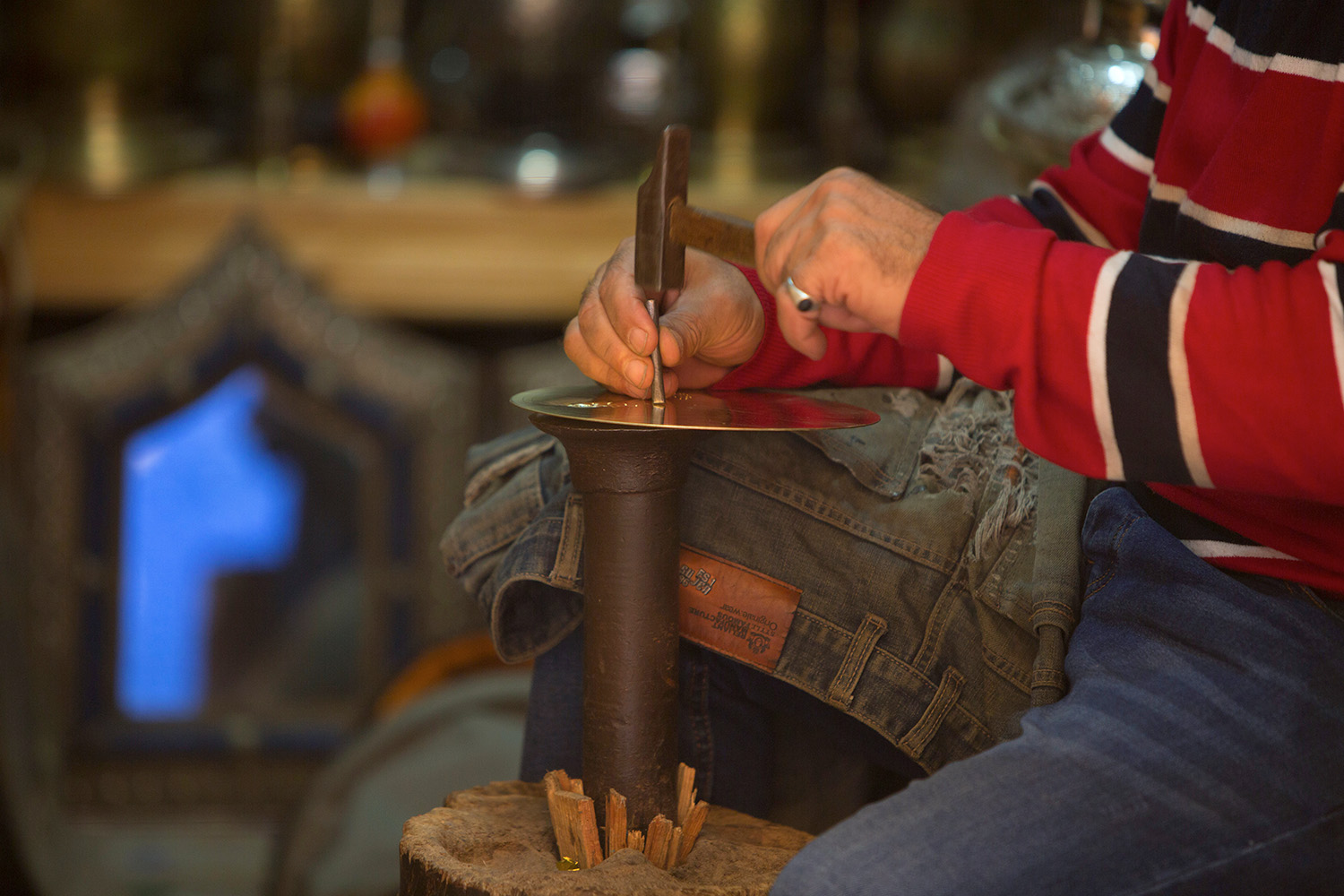
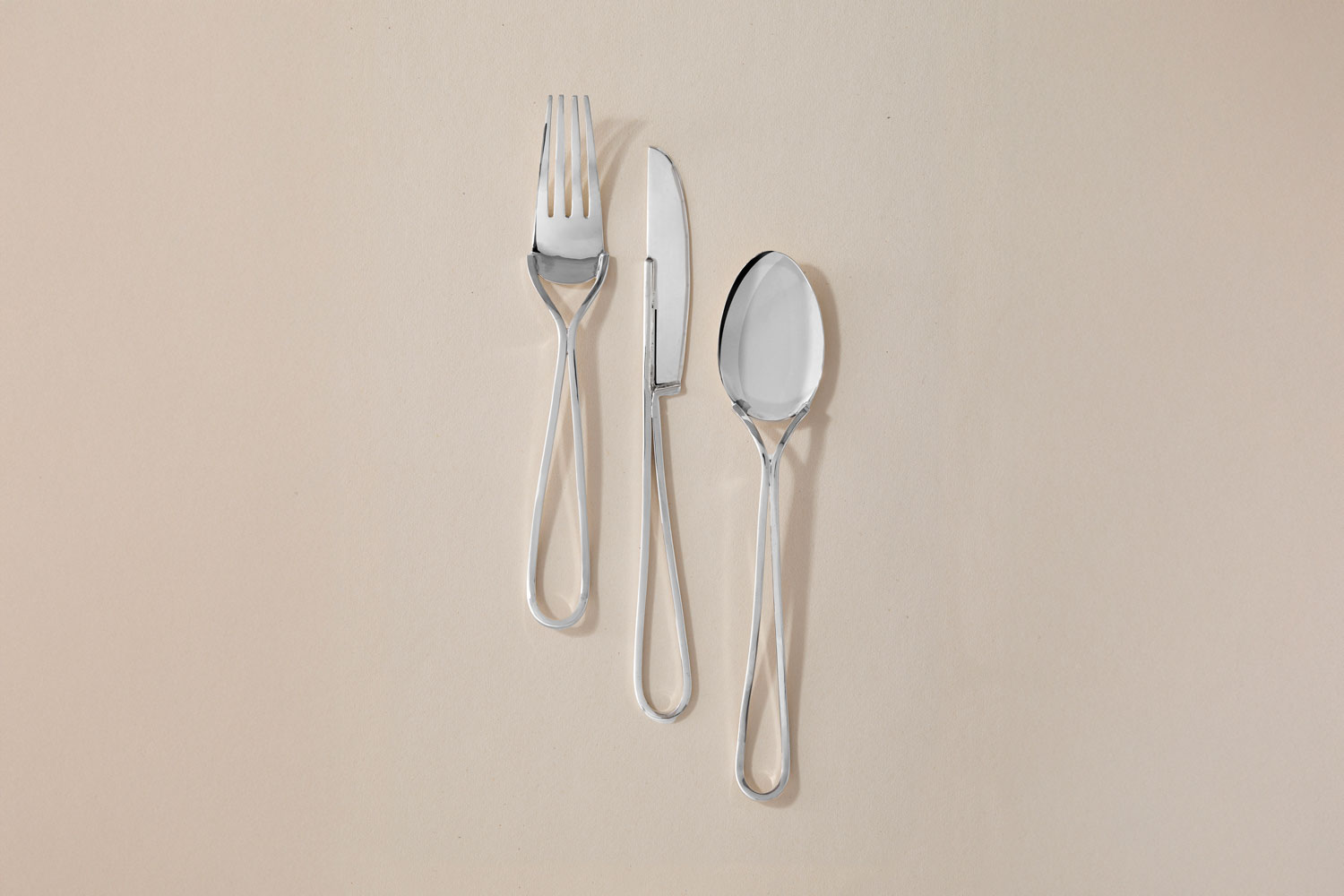
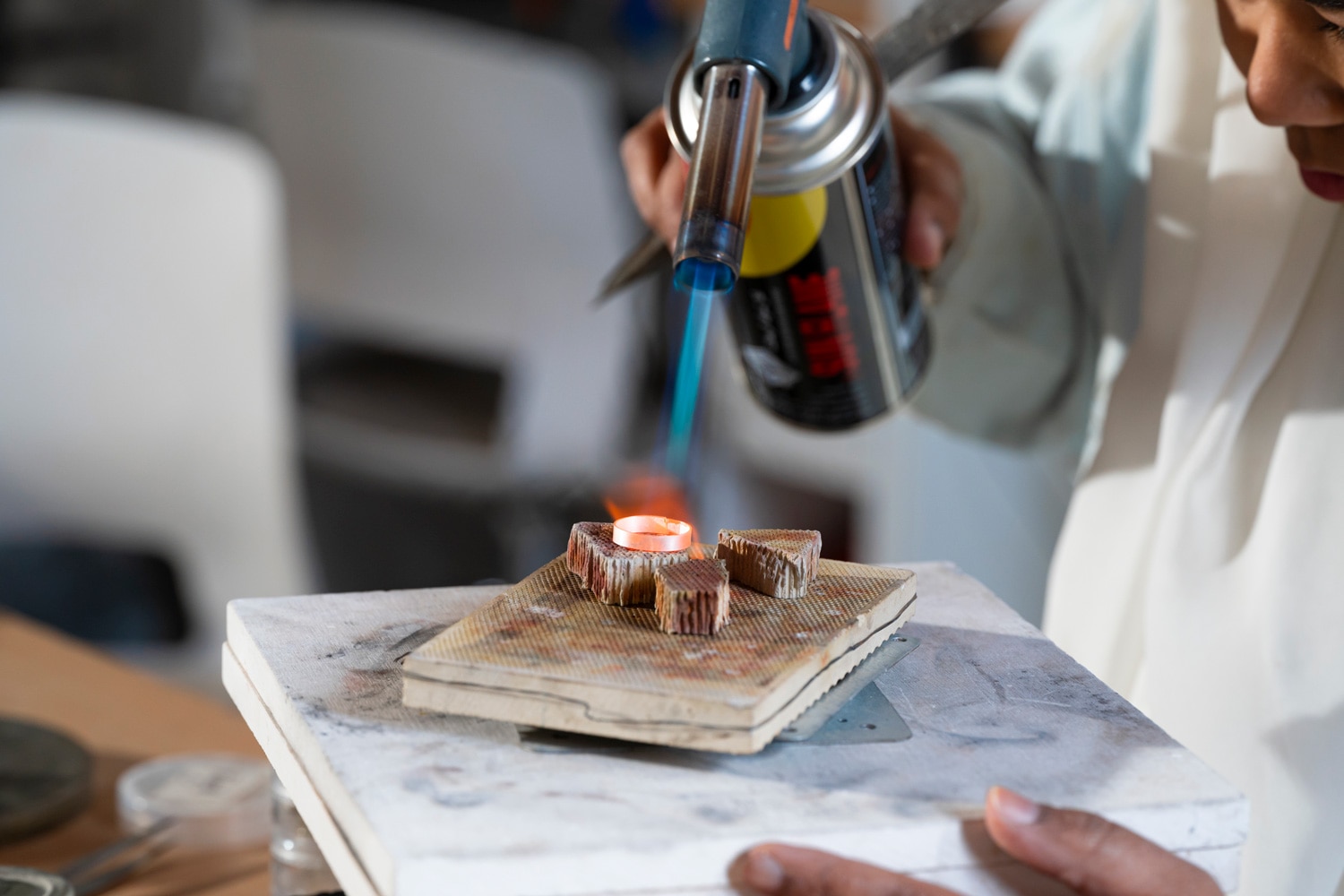
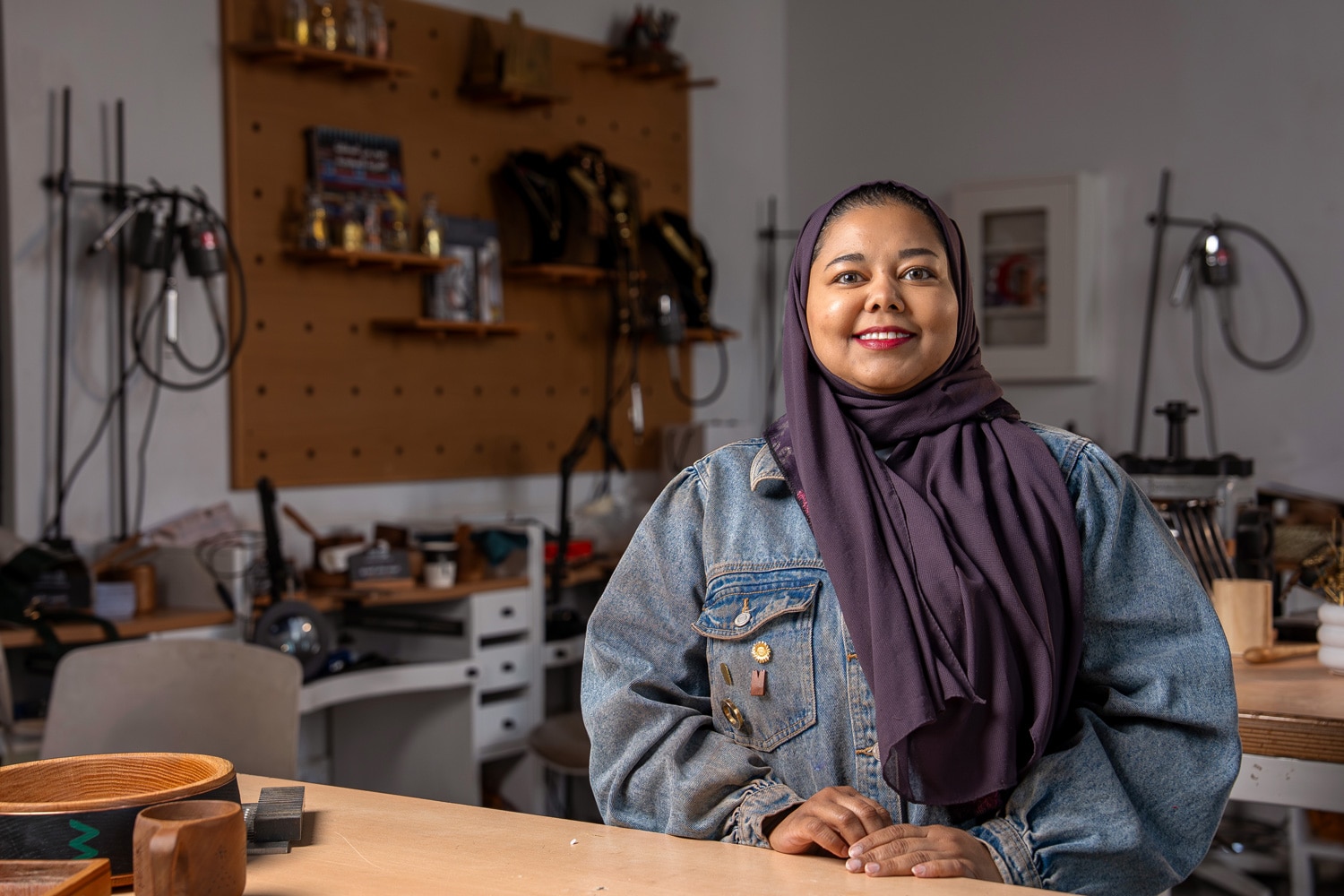
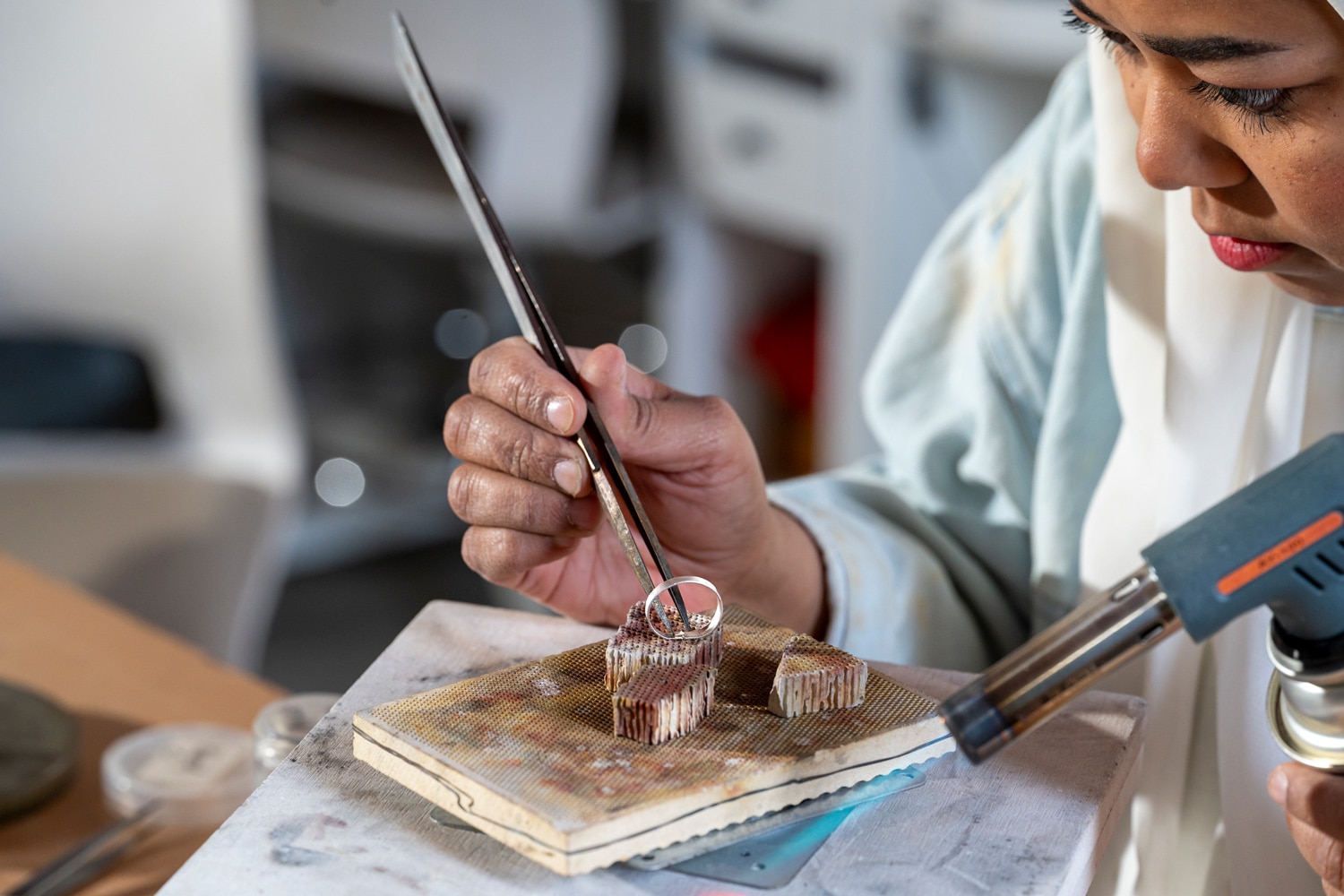
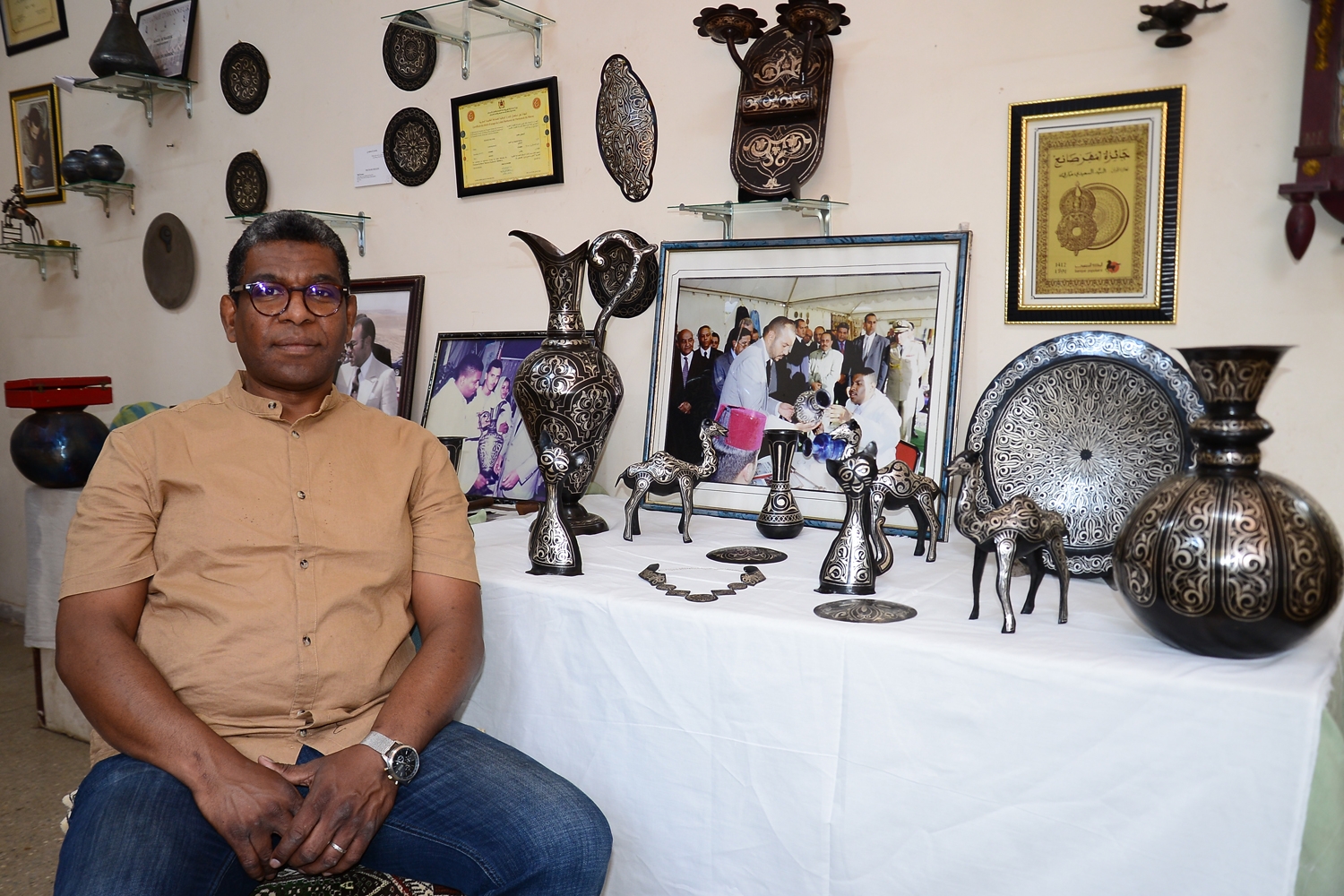
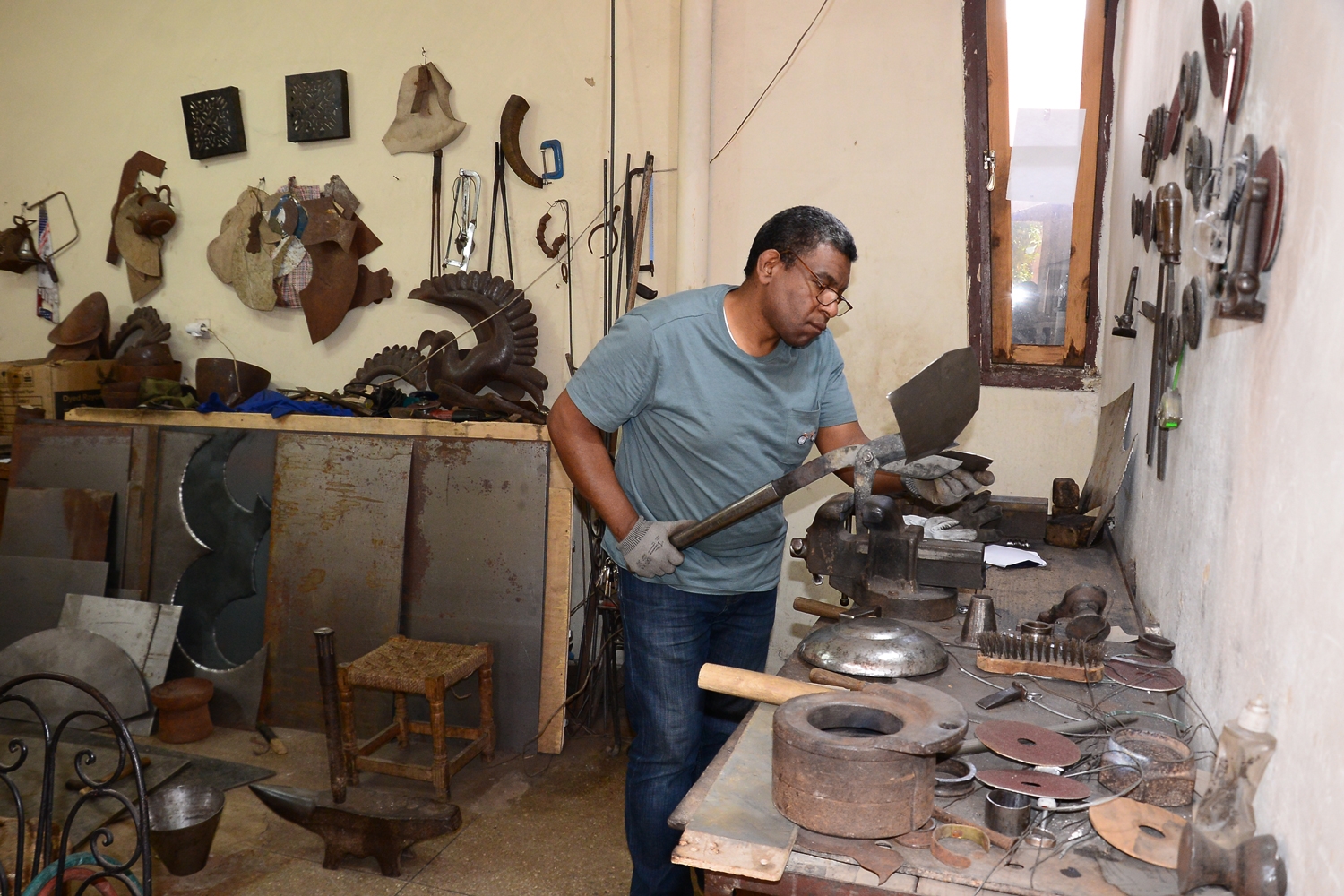
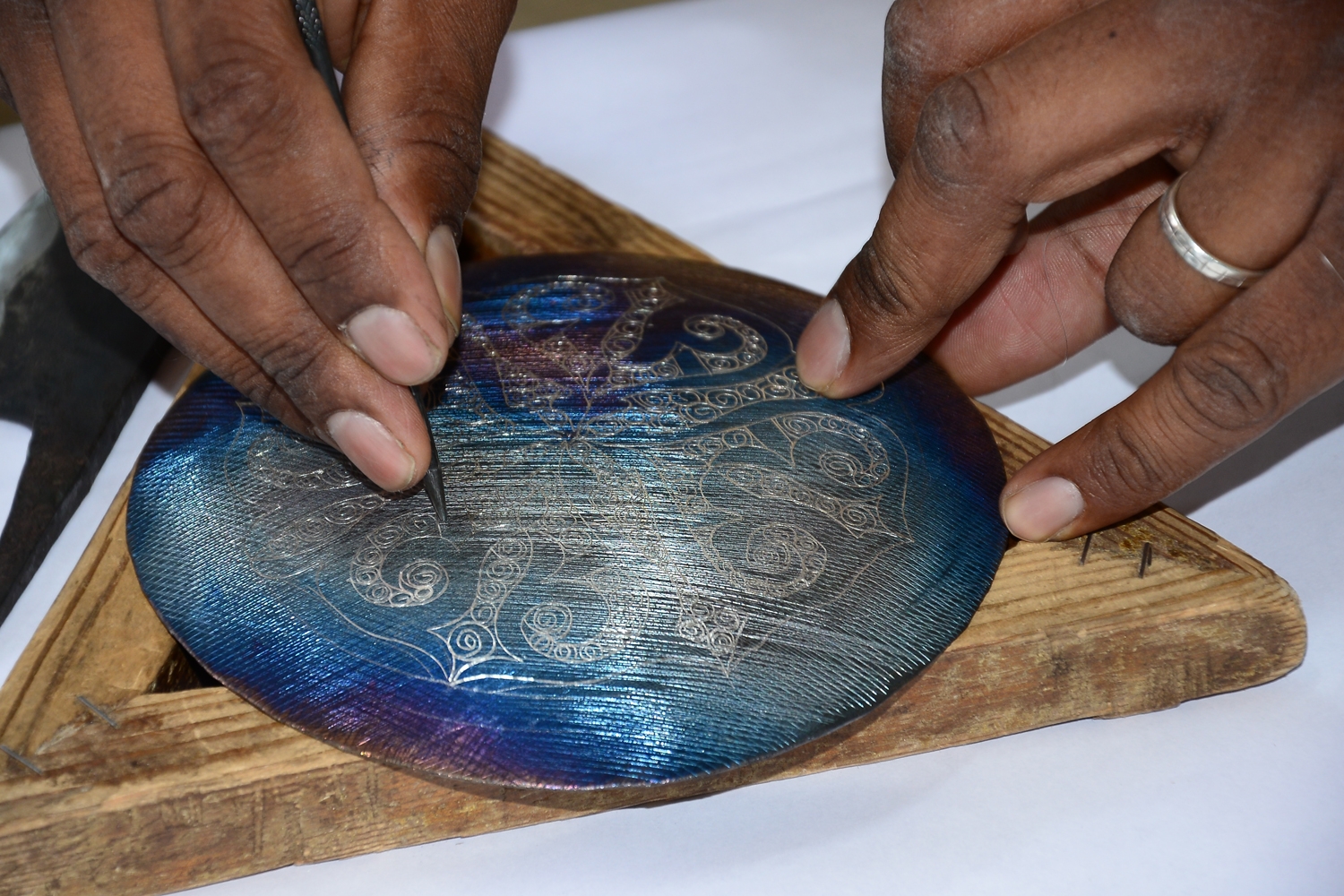
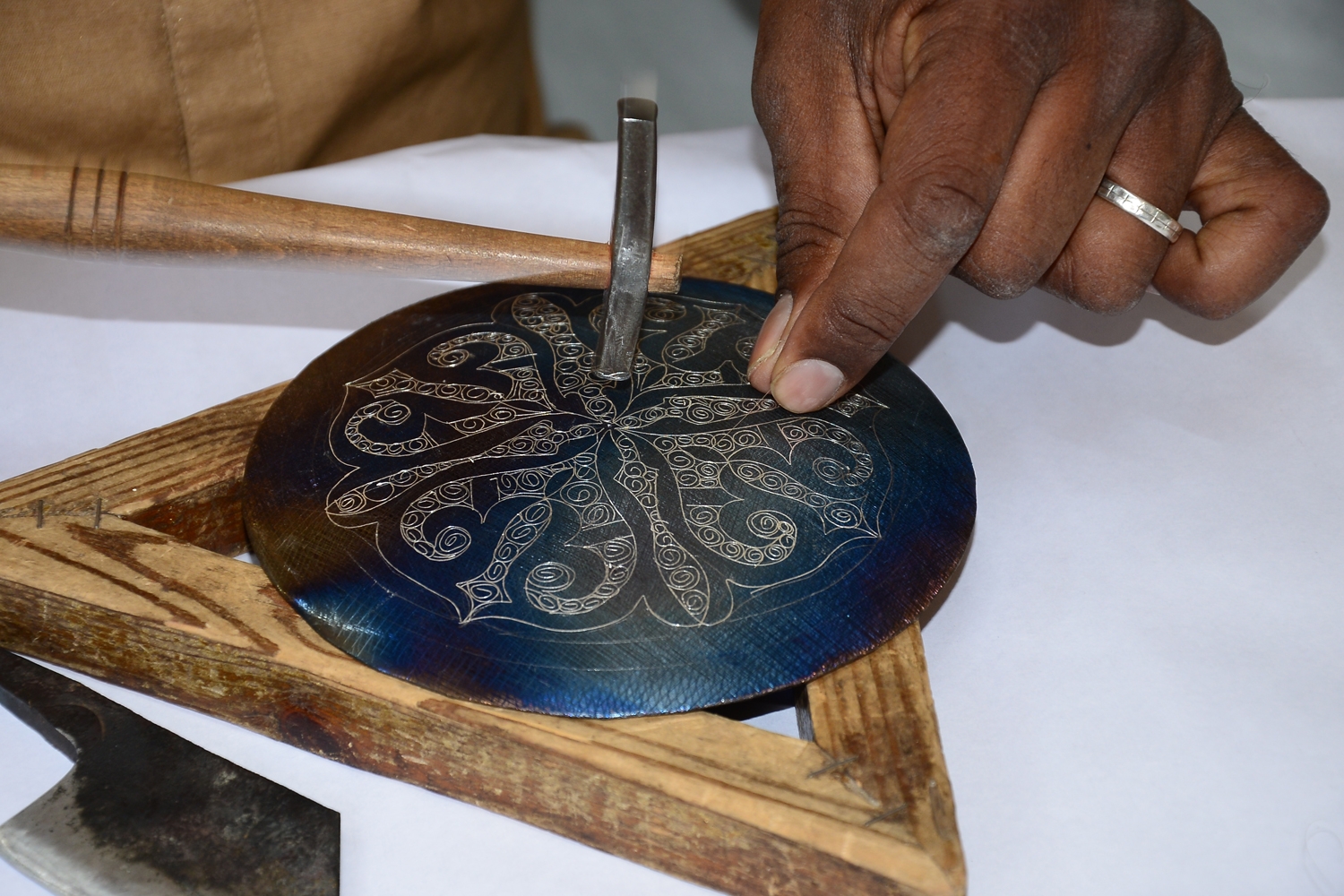
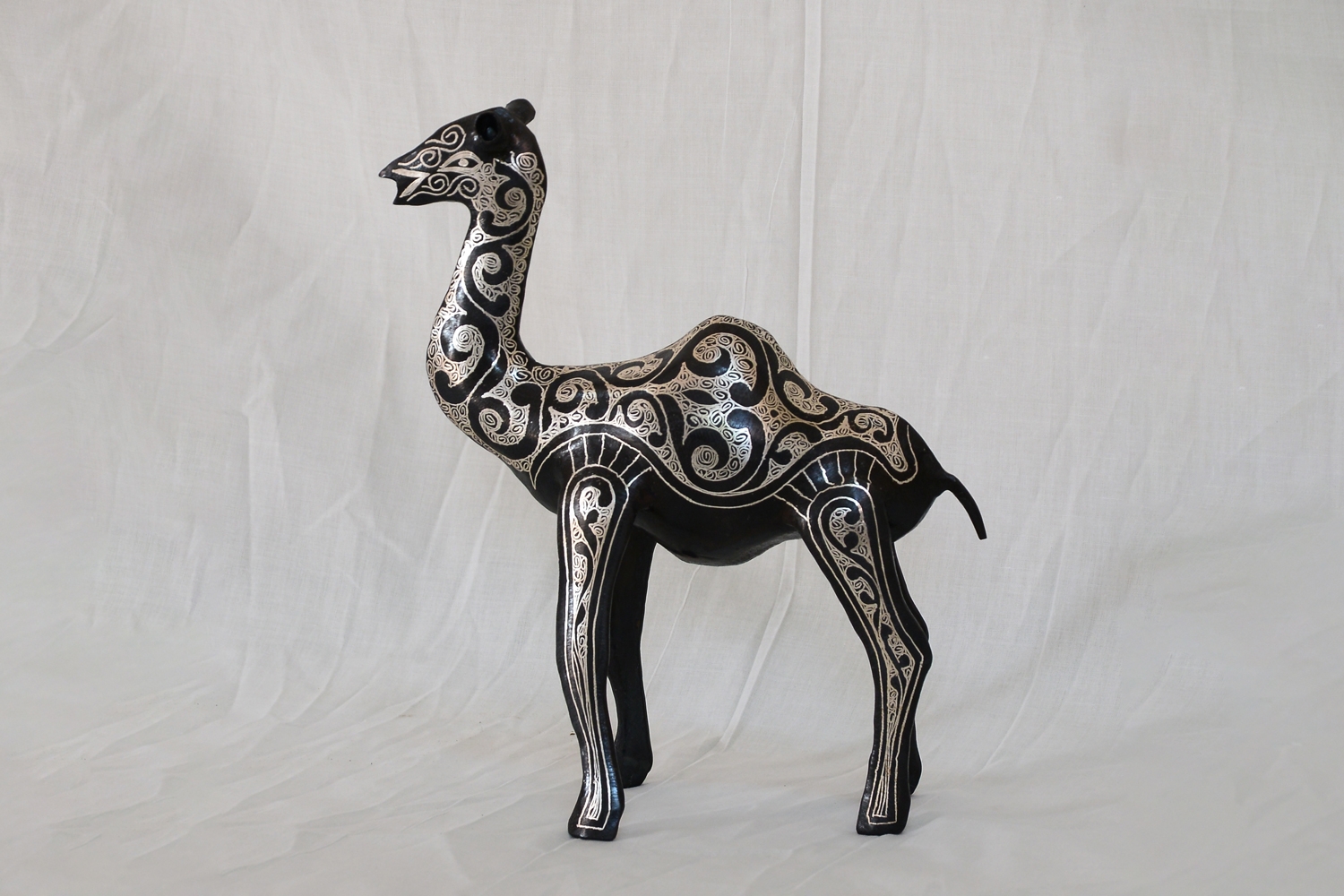
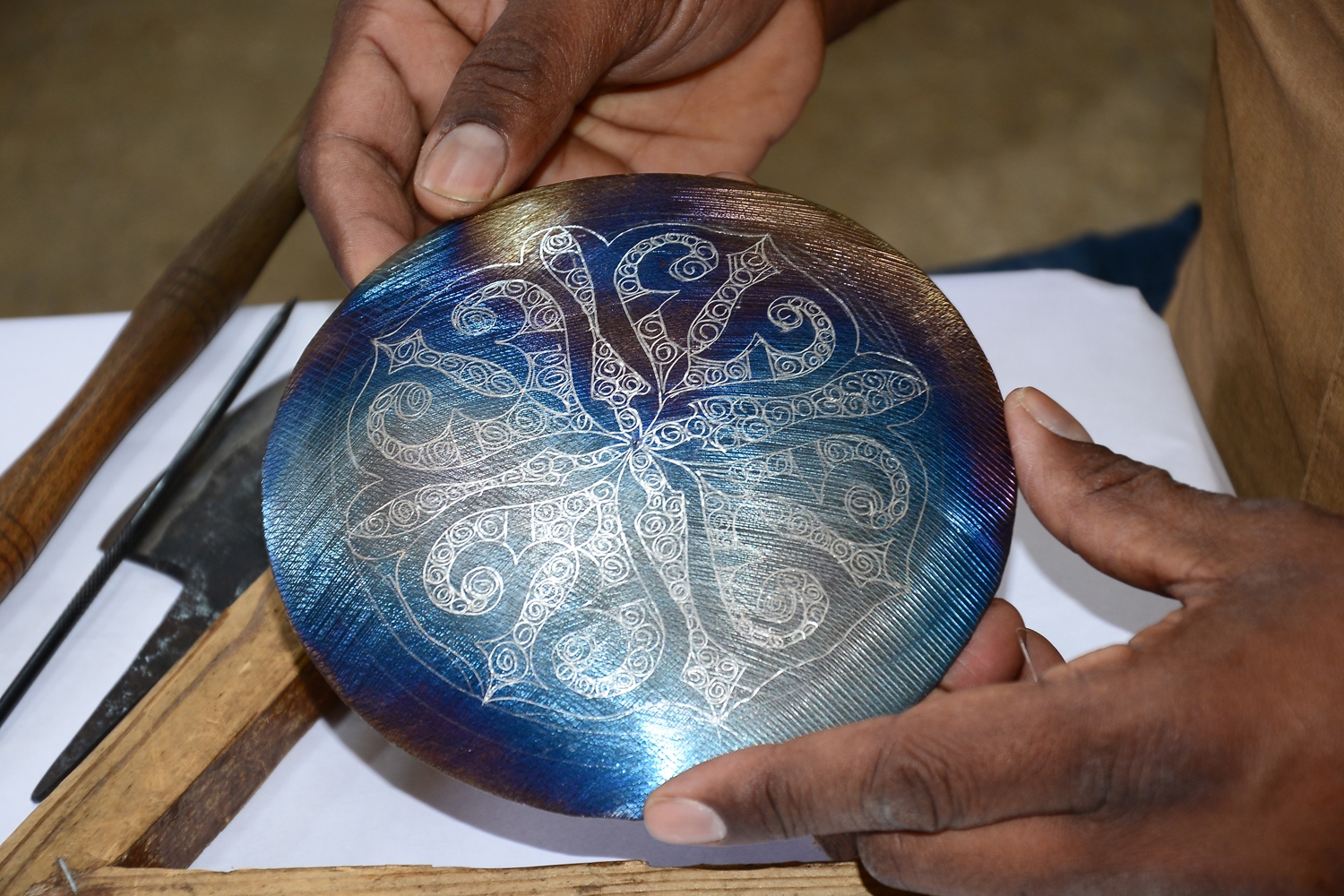
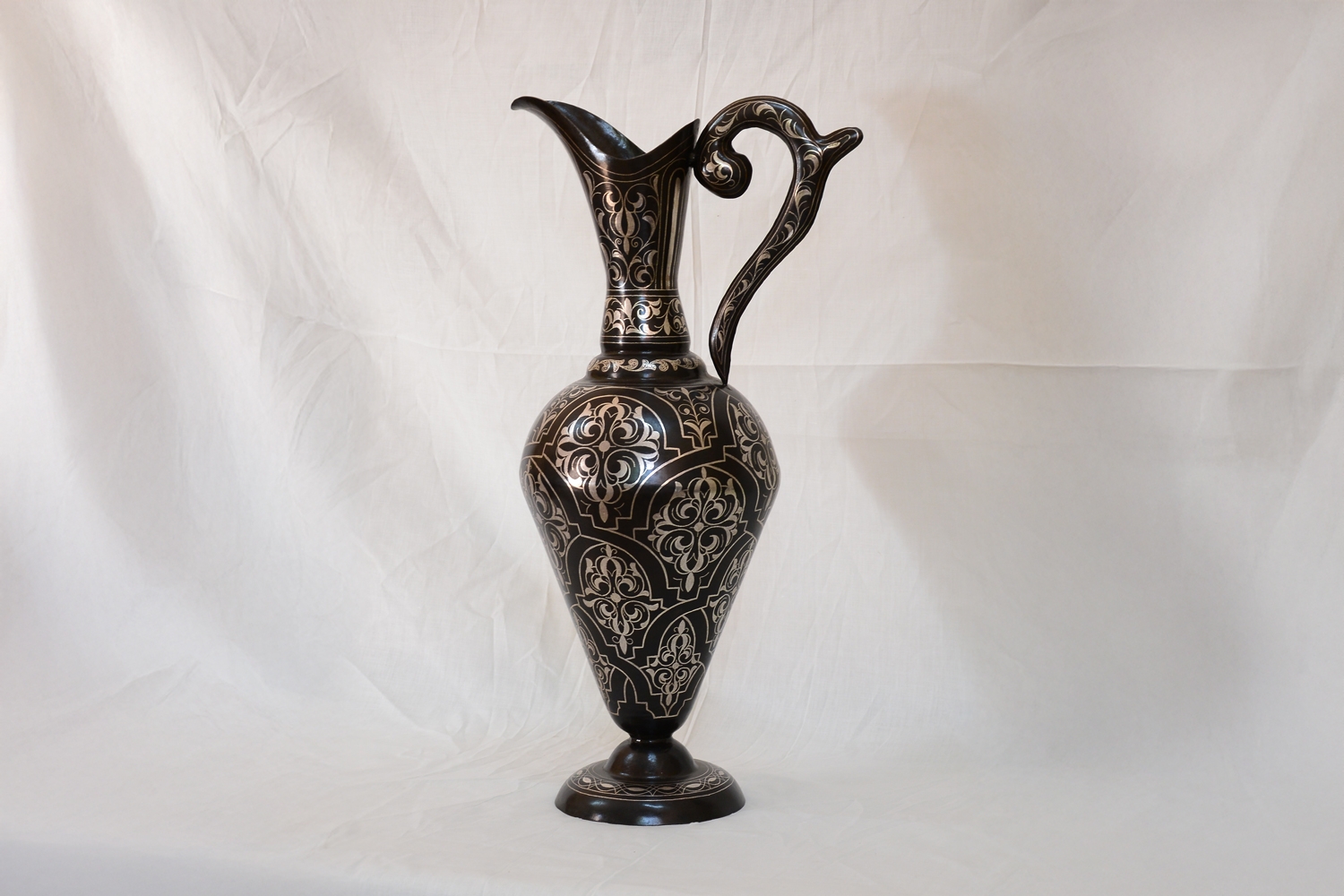
Hicham Essaidi specialises in damascening, a complex decorative metalworking technique involving metal and precious metal inlaying. For four generations, his family has practised the intricate craft of inlaying fine silver threads into steel. Hicham's family workshop stood for 80 years in Kobbat Al Souk, Meknès' historic artisan quarter, where the heart of the craft still beats. "My aim is to preserve this centuries-old traditional craft and ensure it lives on today and in the future," Hicham says. His works have been exhibited across Europe, Canada, Brazil and Africa. Hicham now teaches at the School of Traditional Arts in Meknès, part of a state-run training programme supported by the Moroccan Ministry of Handicrafts. "Damascening is a craft rooted in precision, patience and pride. My mission is to pass on the art before it disappears," he explains.
Discover his work
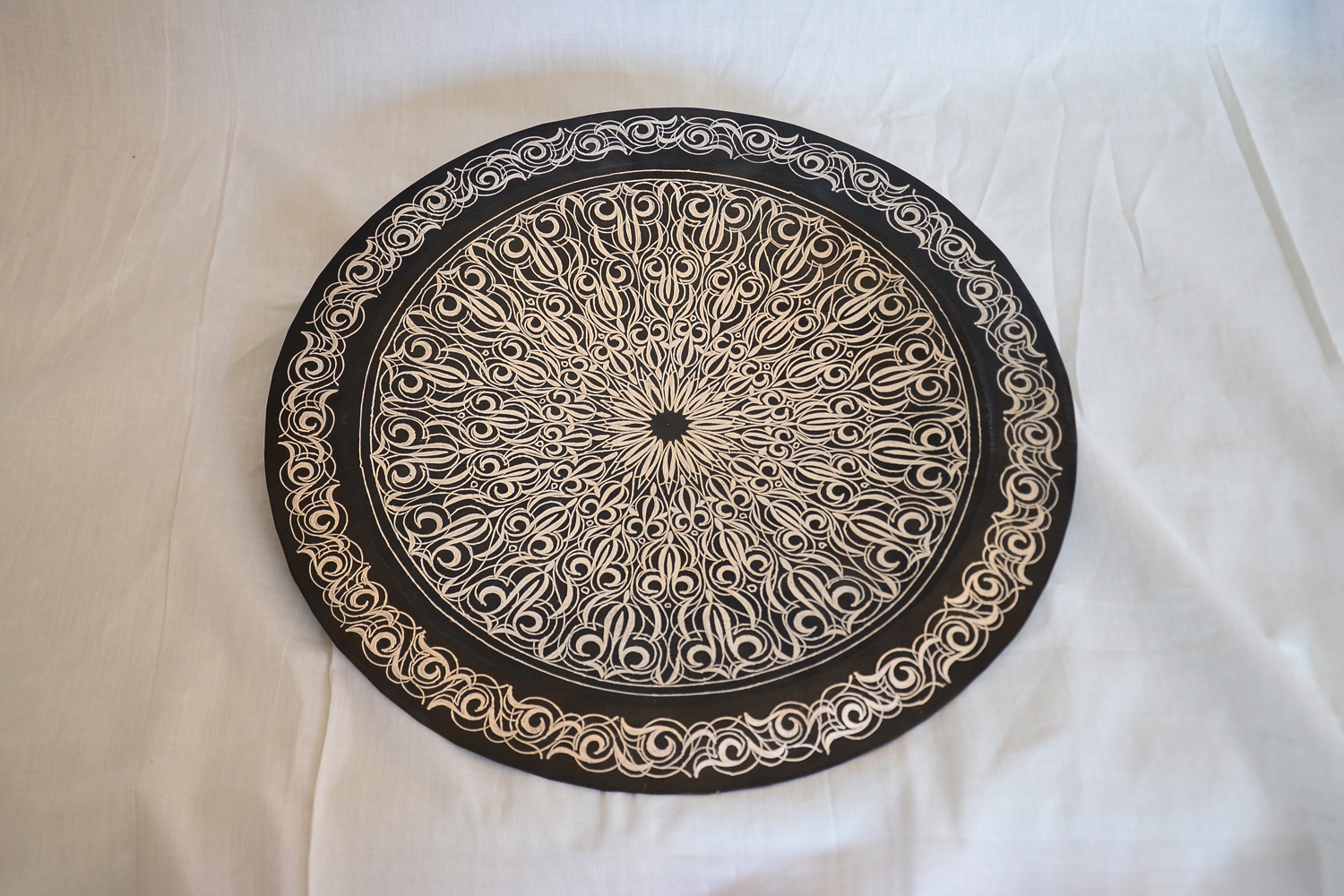
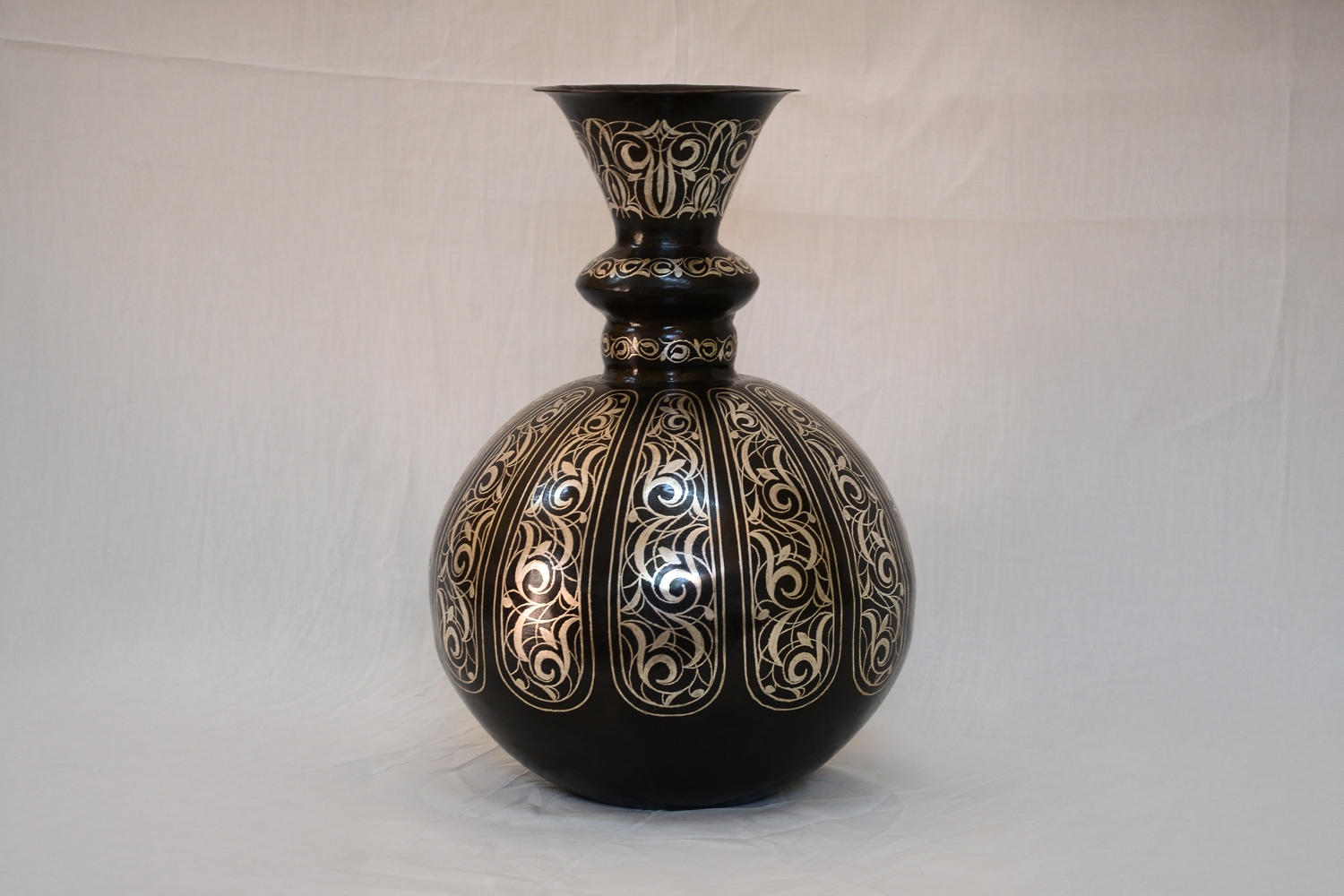
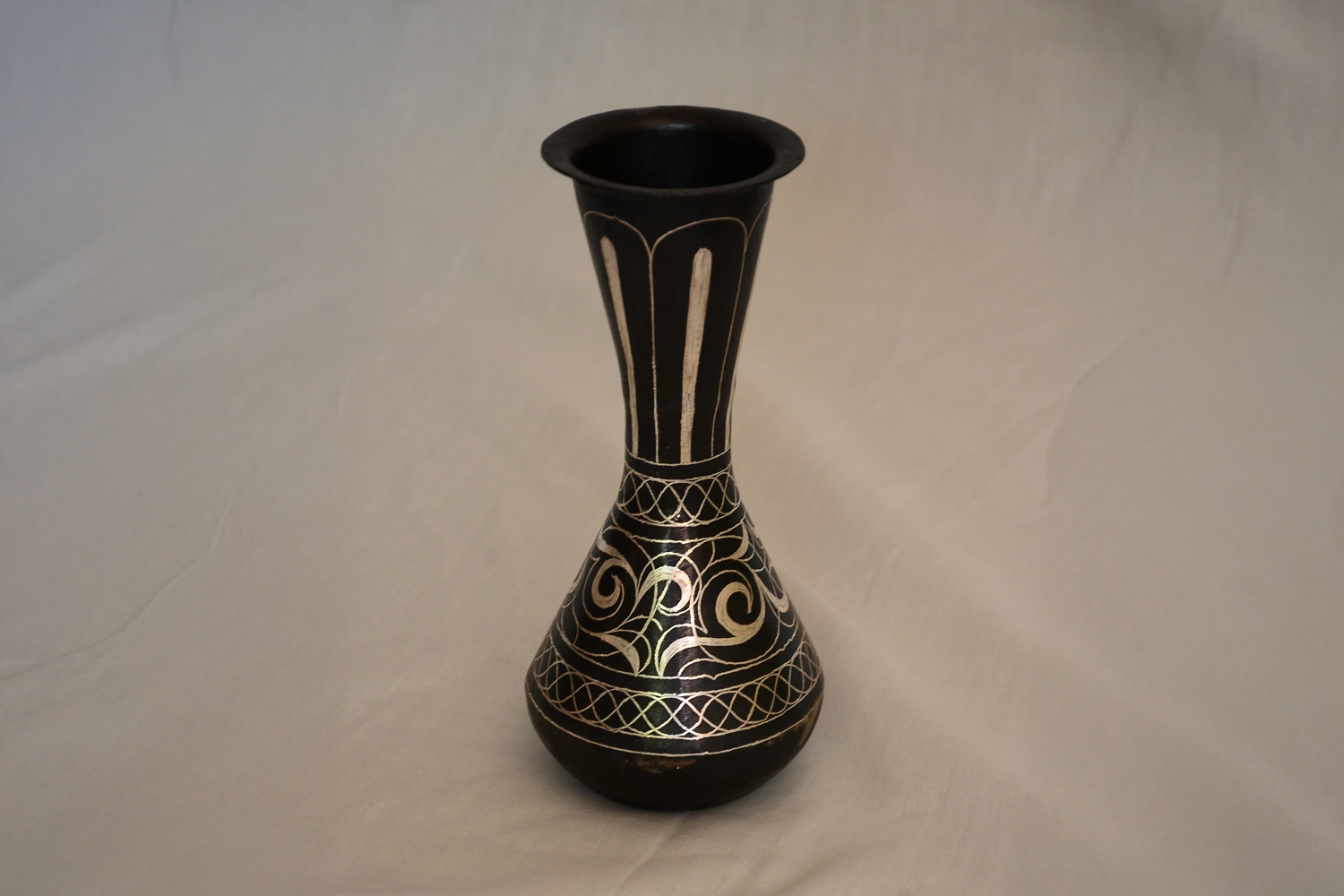
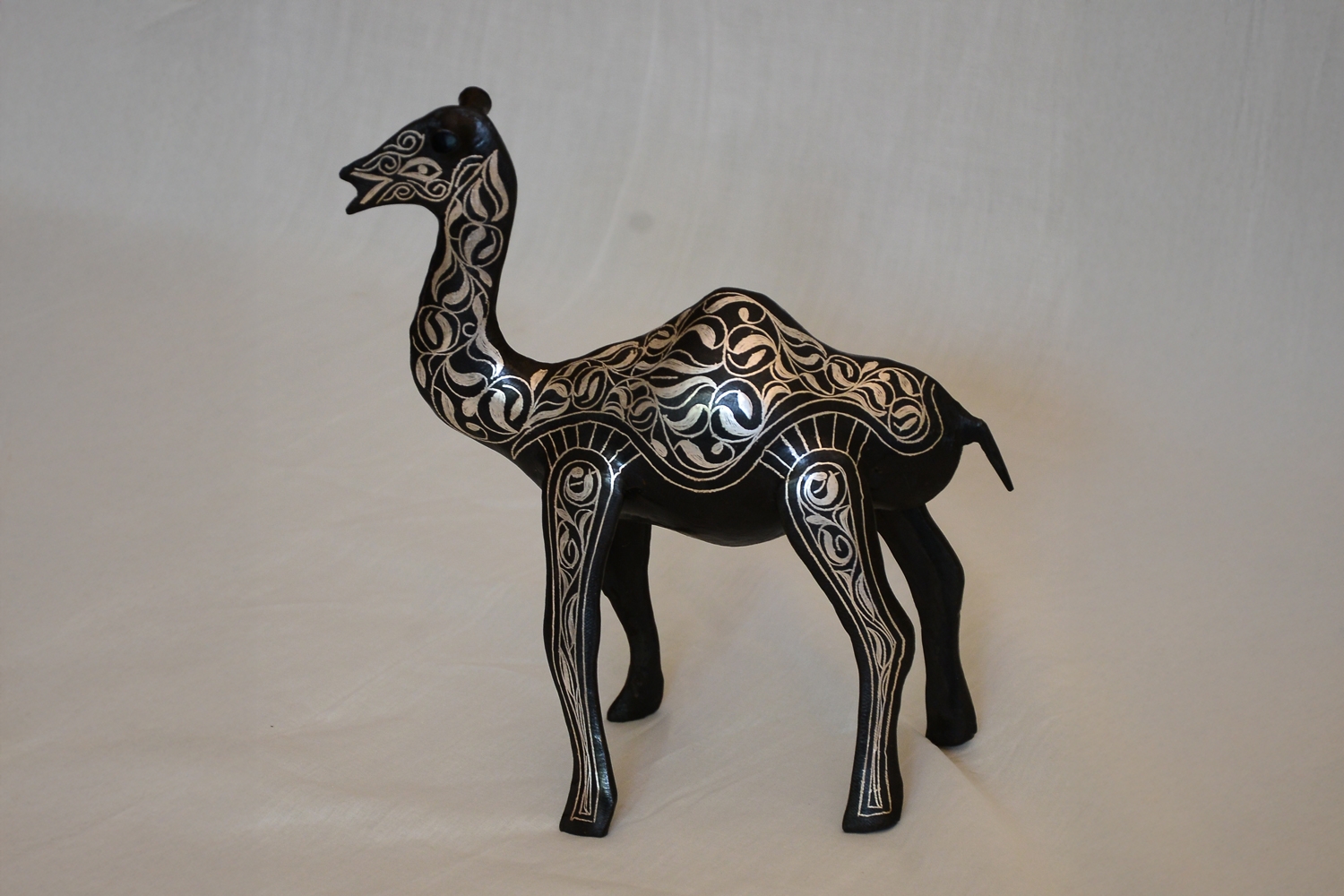
INTERVIEW
Damascening has been in my family for four generations. I watched my father in the workshop and helped him during holidays. By the time I was 17, I chose to make it my own profession. I was drawn to the discipline it requires: steady hands, sharp vision and immense focus, as the silver threads are as thin as hair.
It is both a national and a family legacy. My great-grandfather decorated fantasia rifles. My father learned the craft in the 1950s and went on to train over 50 apprentices, earned a best craftsman award and even created a piece for King Hassan II. He later became an Amin, the profession’s arbiter and respected elder. Working with him, I learned not just the craft’s techniques, but also its ethics.
Yes. Since 2022, I have been teaching a two-year programme for women at the Meknès School of Traditional Arts. So far, only seven apprentices have completed the course, as most are intrigued by the craft but do not wish to pursue it professionally. I also train art school interns for short periods. True passion is rare today, but I keep the door open to everyone.
There are only nine master damascening artisans left in Meknès. The biggest challenge is to keep creating – renewing the art without losing its essence. Transmission is crucial but difficult. Damascening was recognised by UNESCO in 2019, but awareness is still low. My hope is that people truly see its value and that the next generation gives it a future.
Hicham Essaidi
Palais Damasquini
Metalsmith
Meknes, Morocco
Recommended by Maison de l'Artisan
AVAILABILITY
Daily 09:00-13:00 / 14:30-18:30
PHONE
+212 661503043
LANGUAGES
Arabic, French, English, Spanish
Homo Faber Finds is a new service aiming to inspire admirers of craft to connect and collaborate with exceptional artisans.
We invite you to submit an enquiry here.