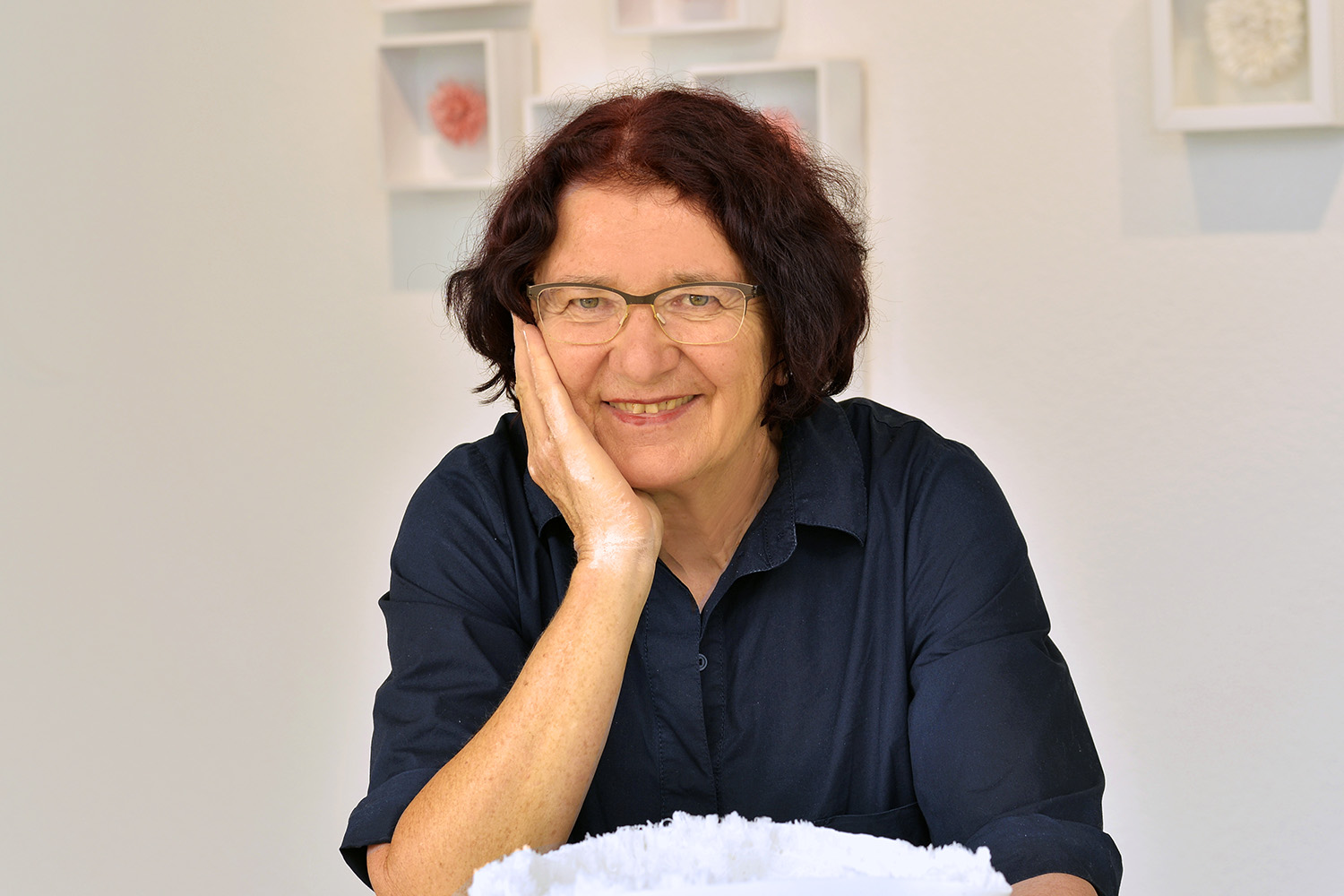
Heide Nonnenmacher
Mixed media sculptor
Nattheim, Germany
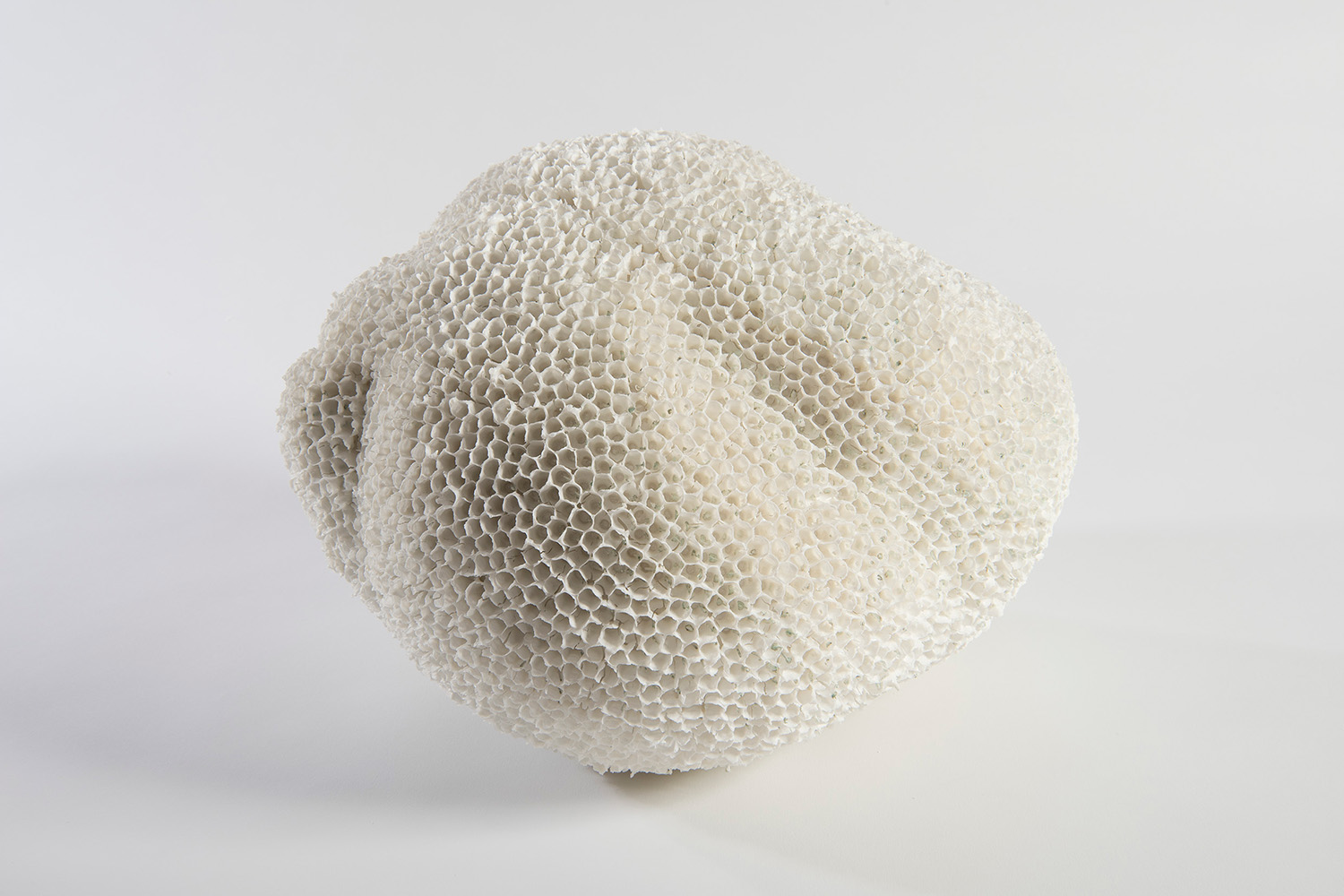
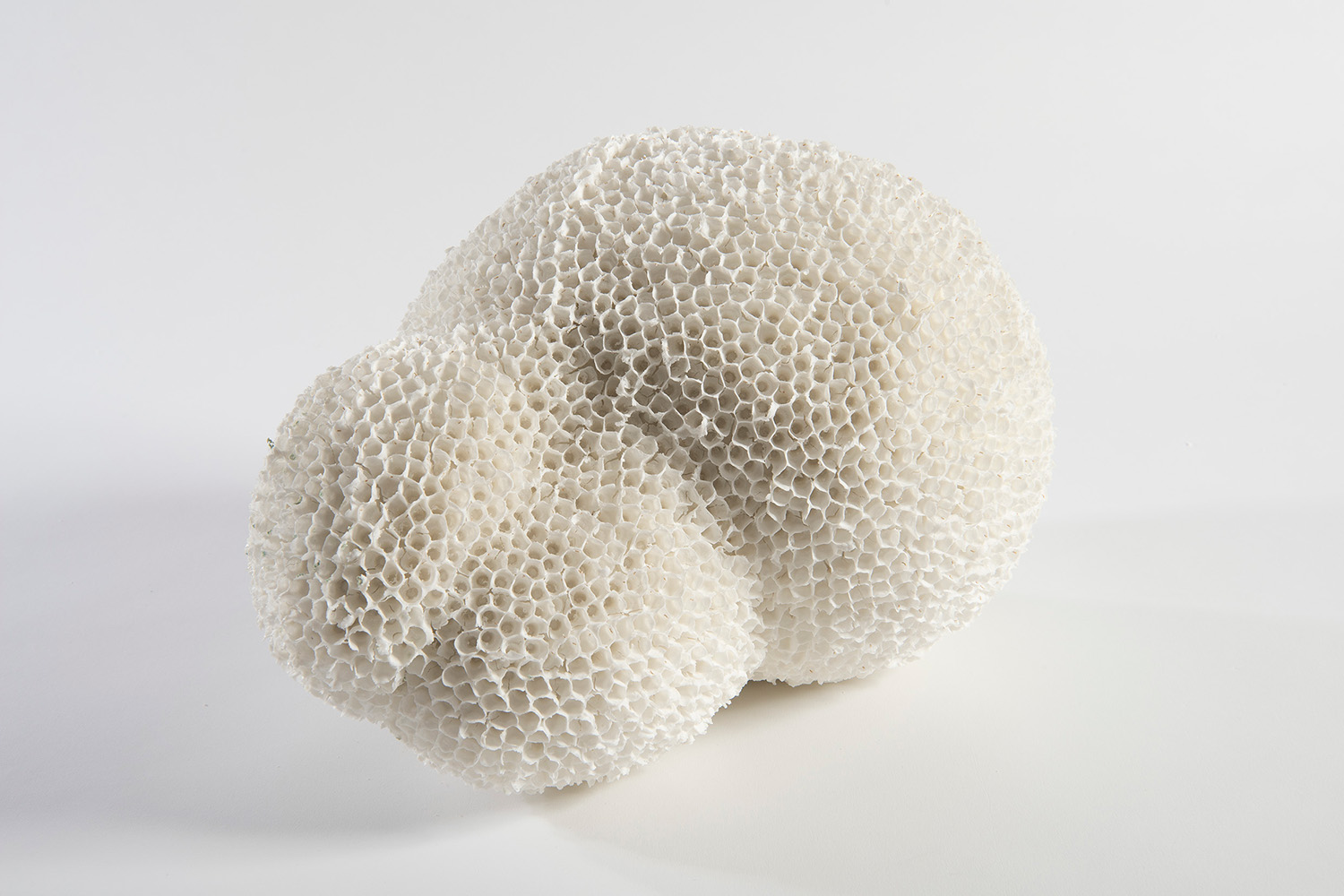
Porcelain to explore fossilisation
- Heide's work revolves around the fossil phenomenon in her region of Germany
- She started out as a functional potter before becoming more conceptual
- She shows a playful interest in science in her works
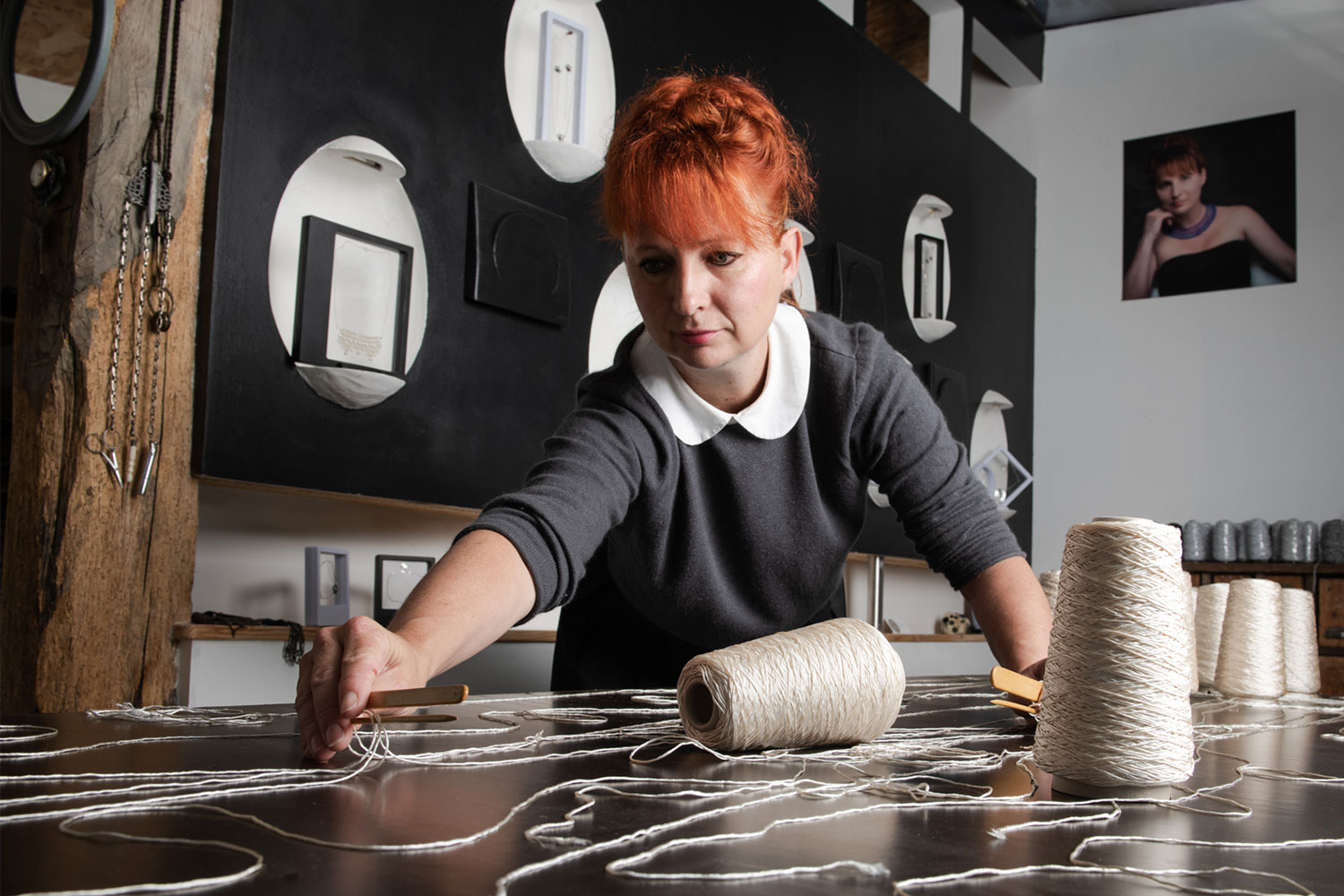
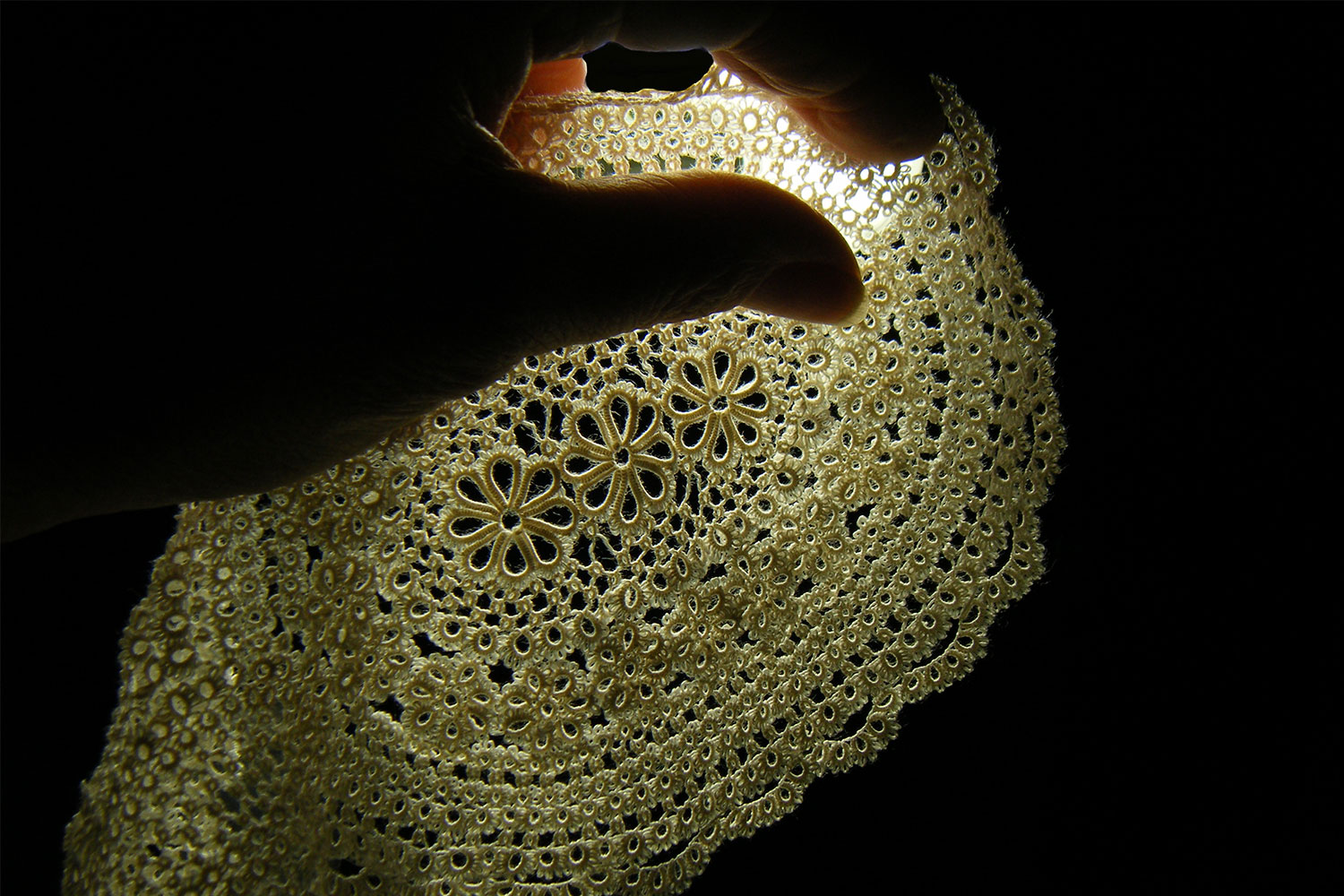
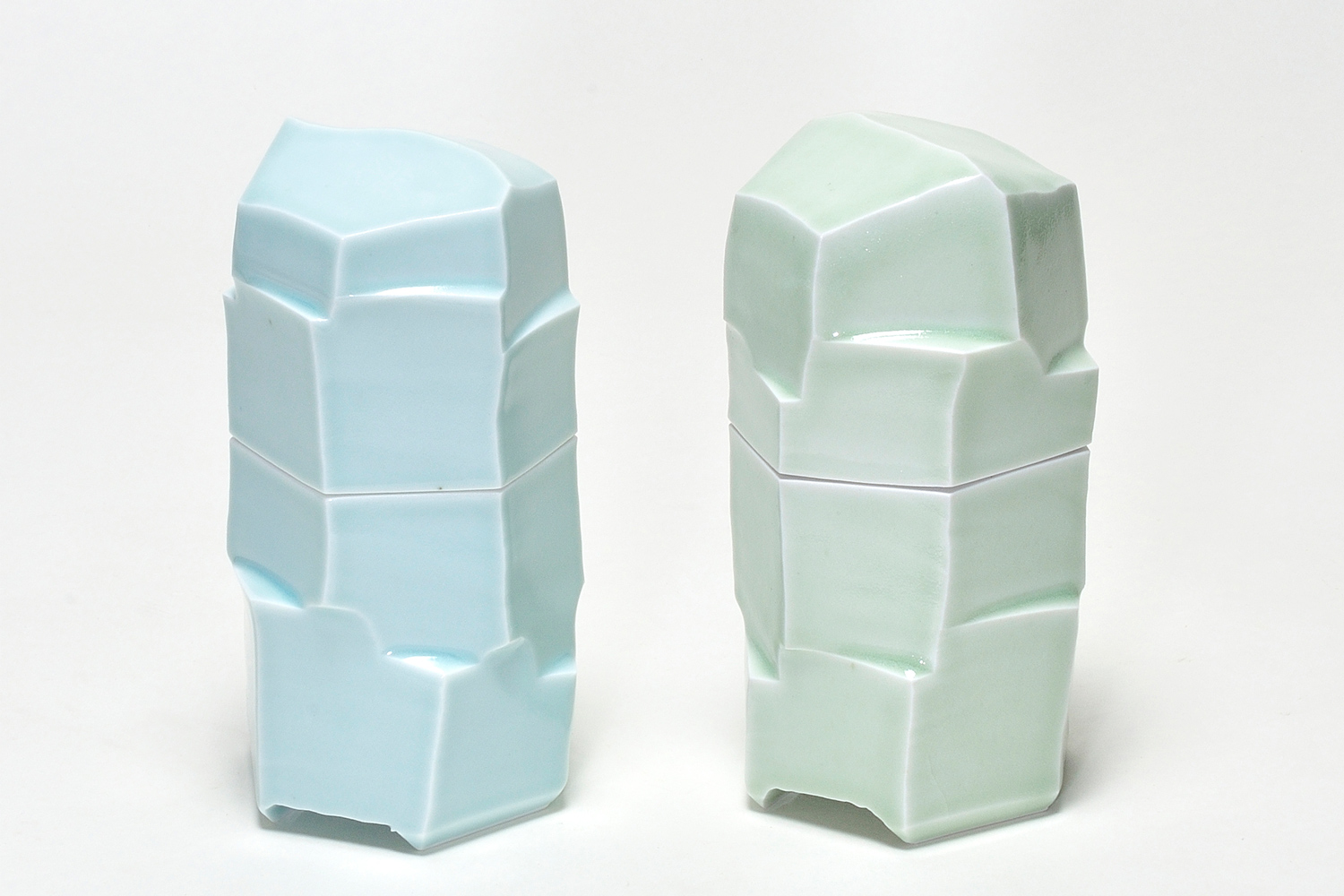
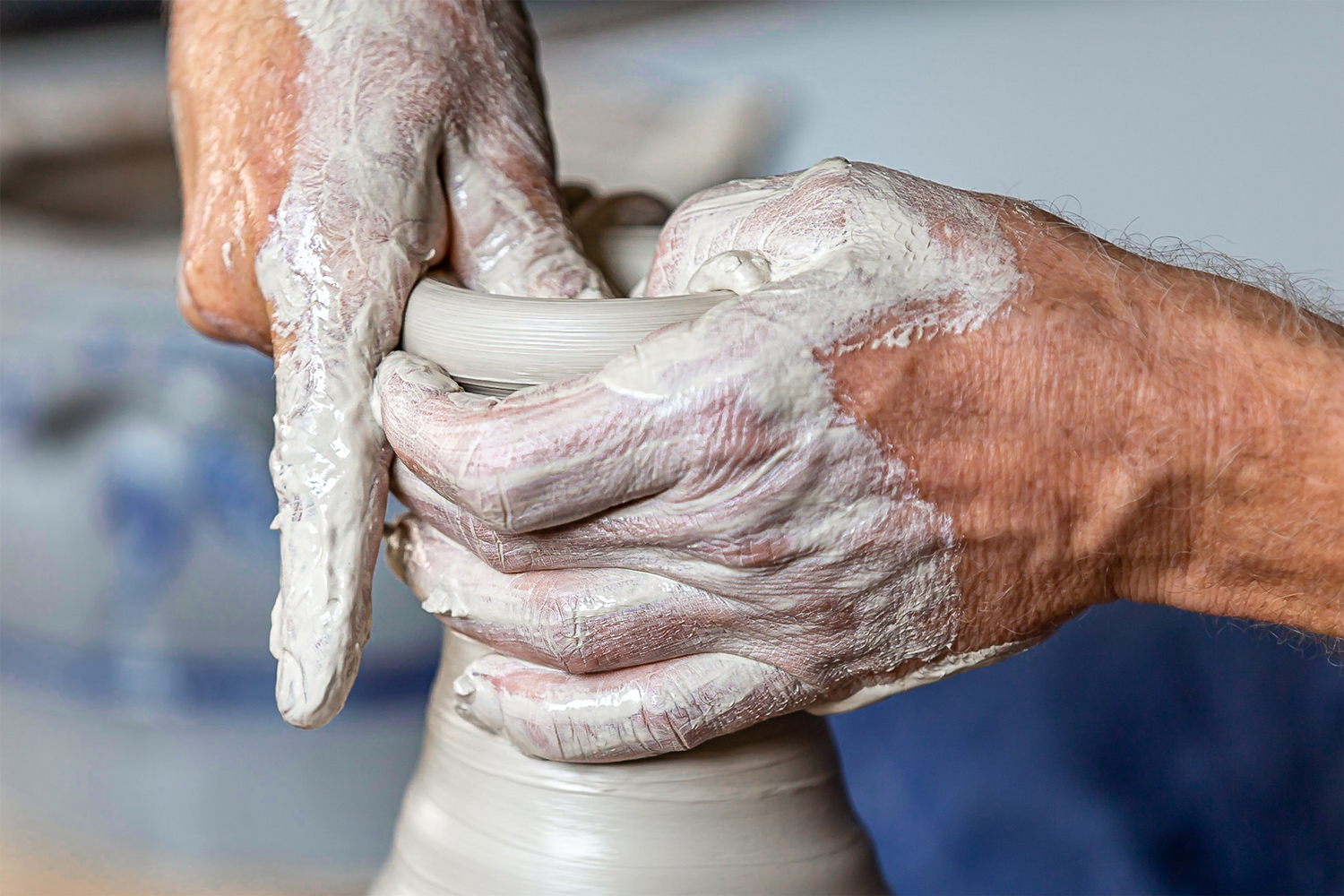
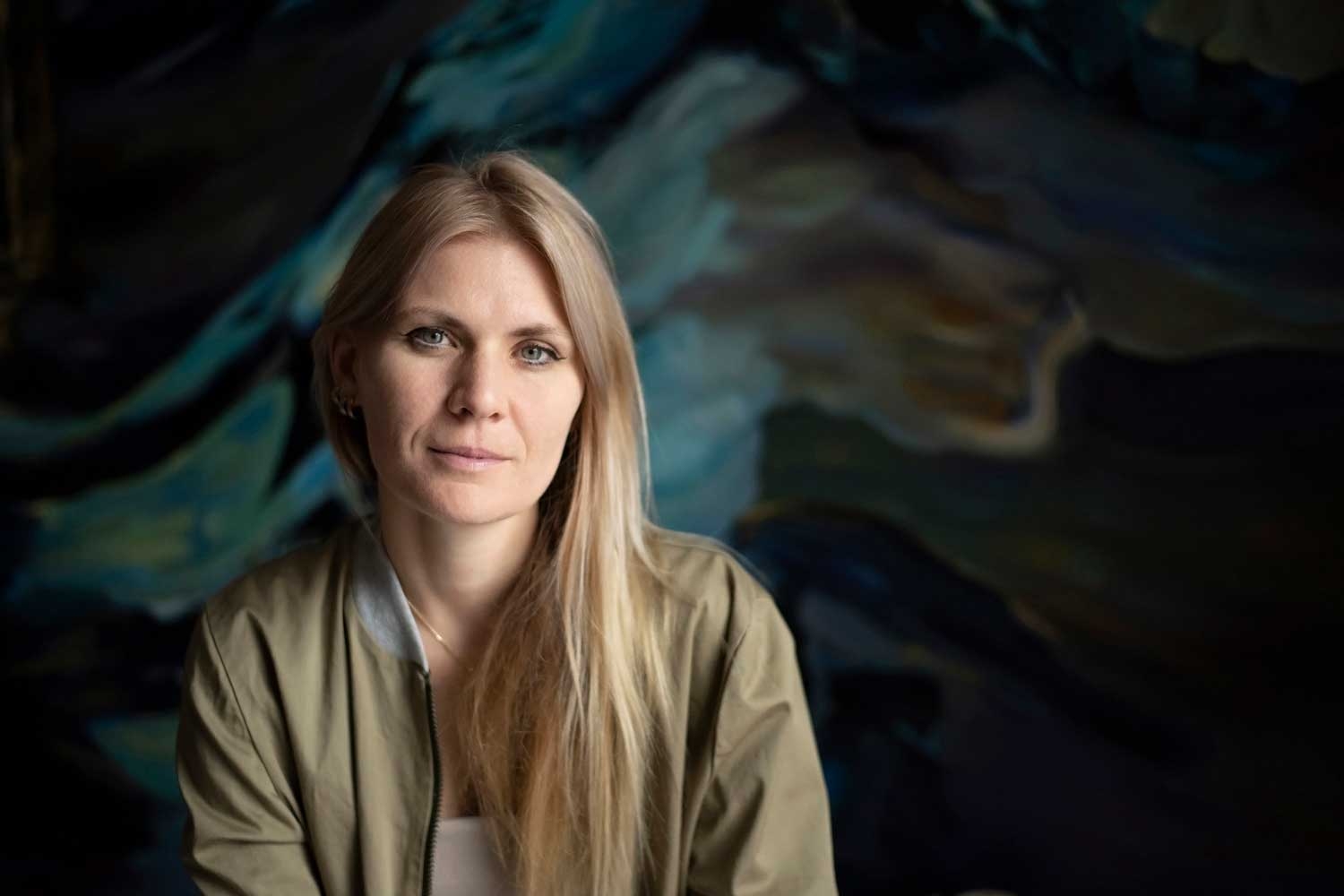
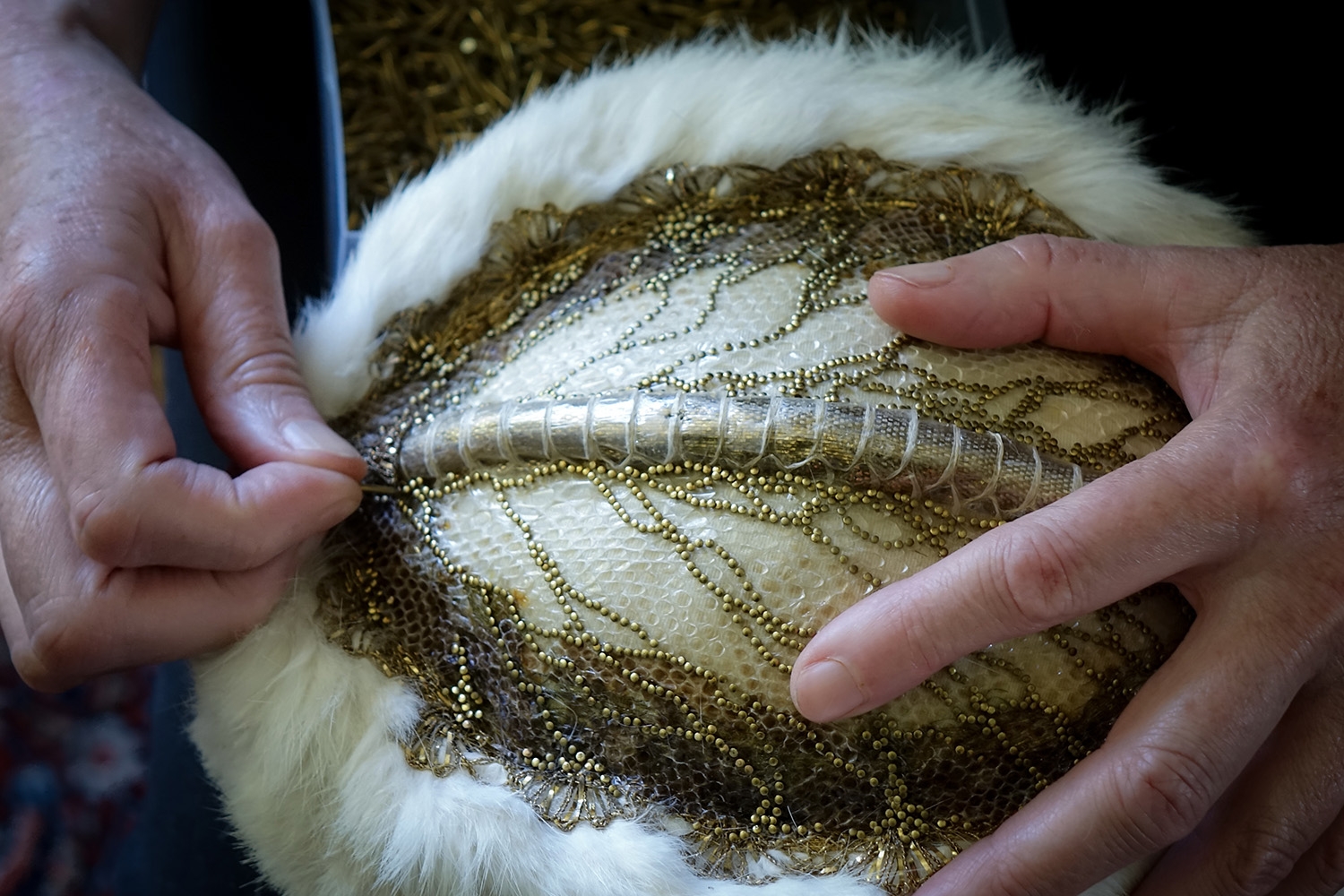
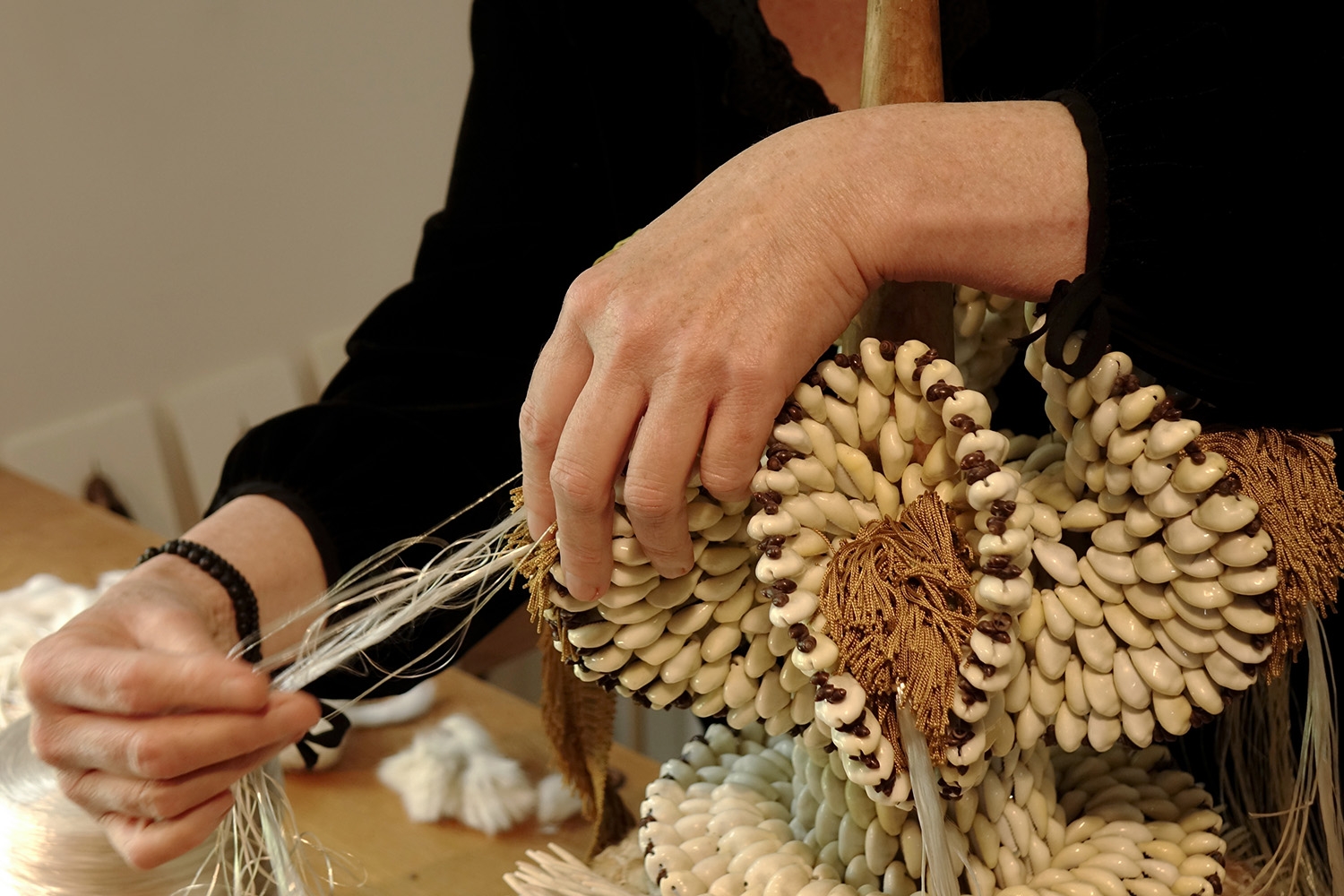
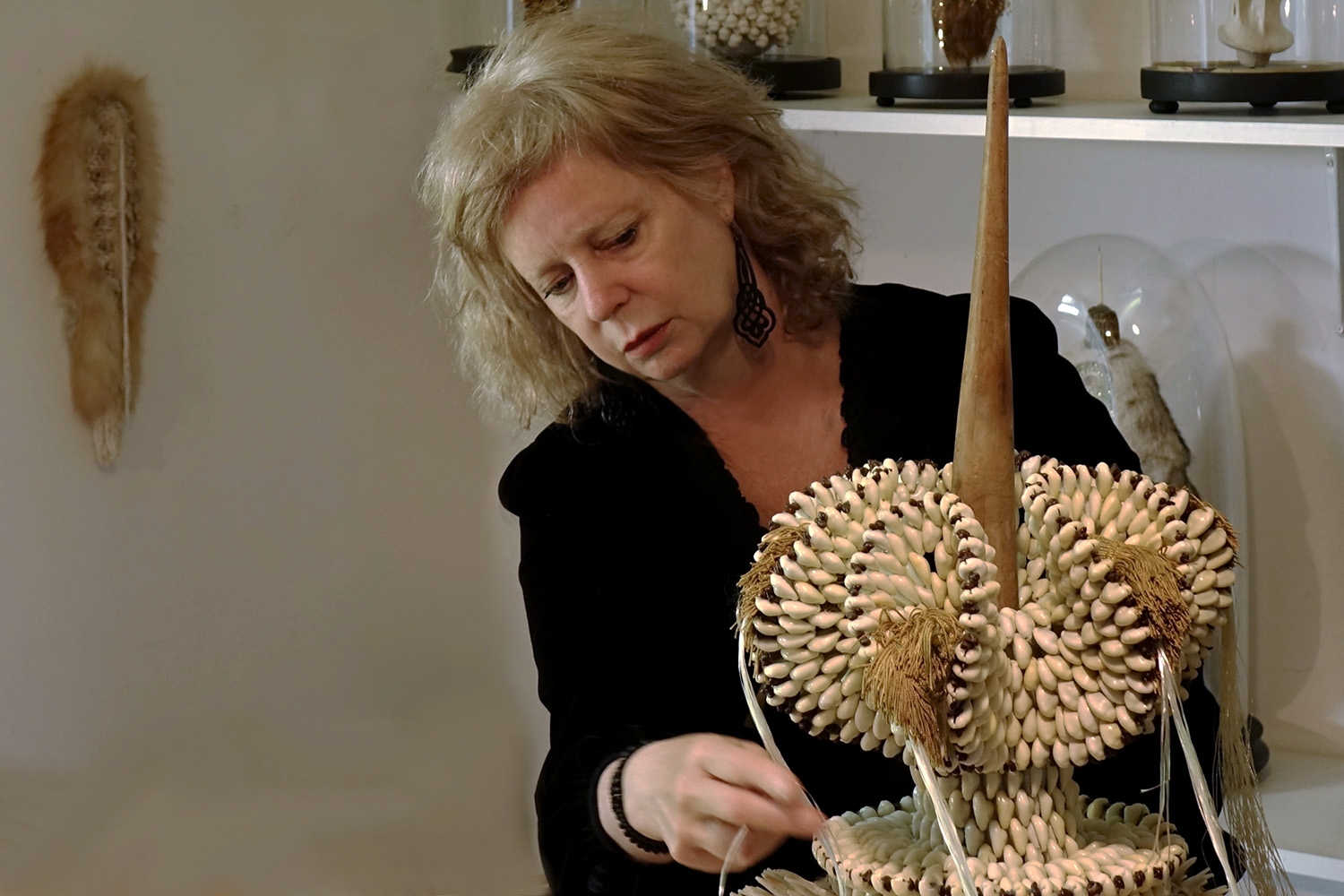
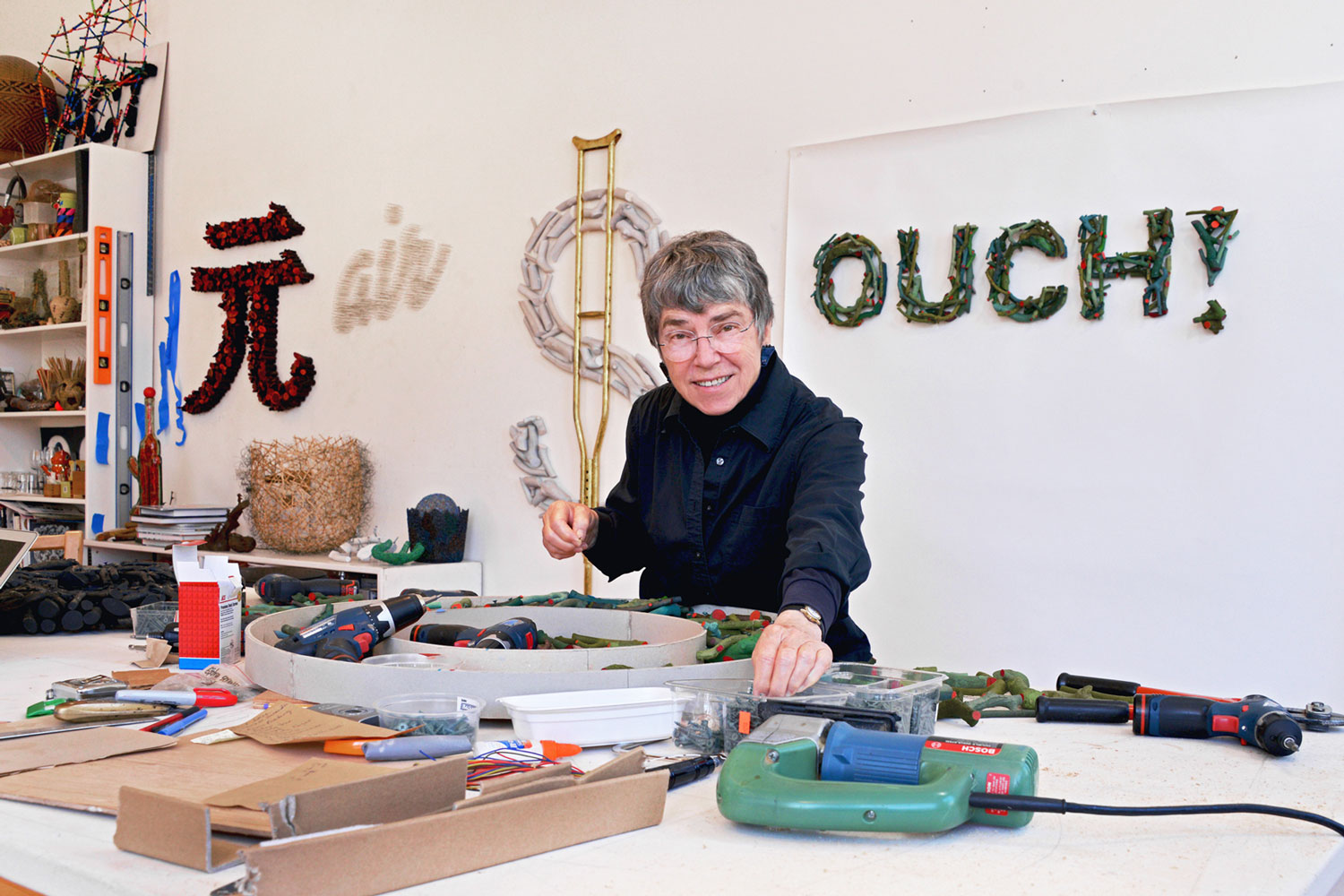
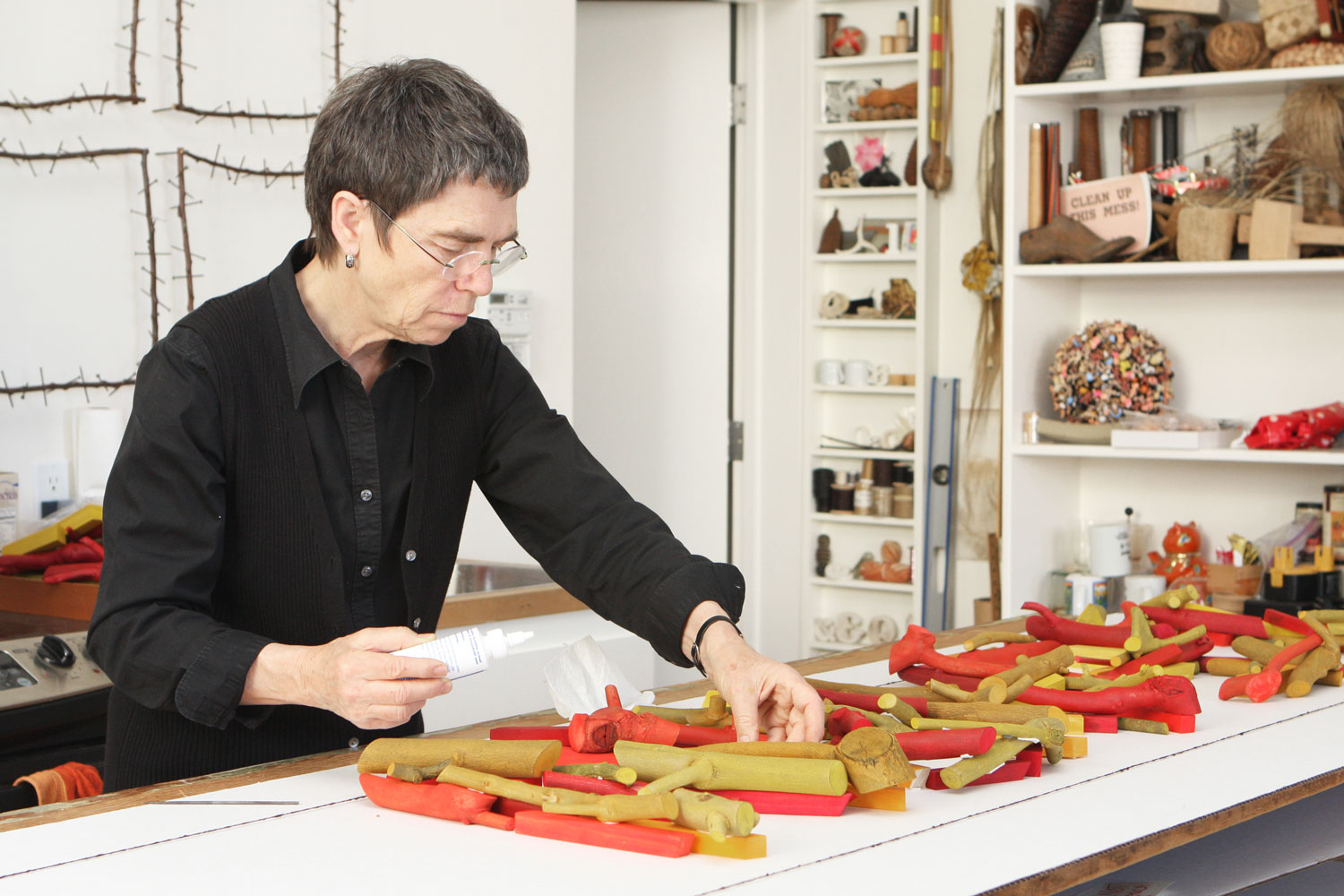
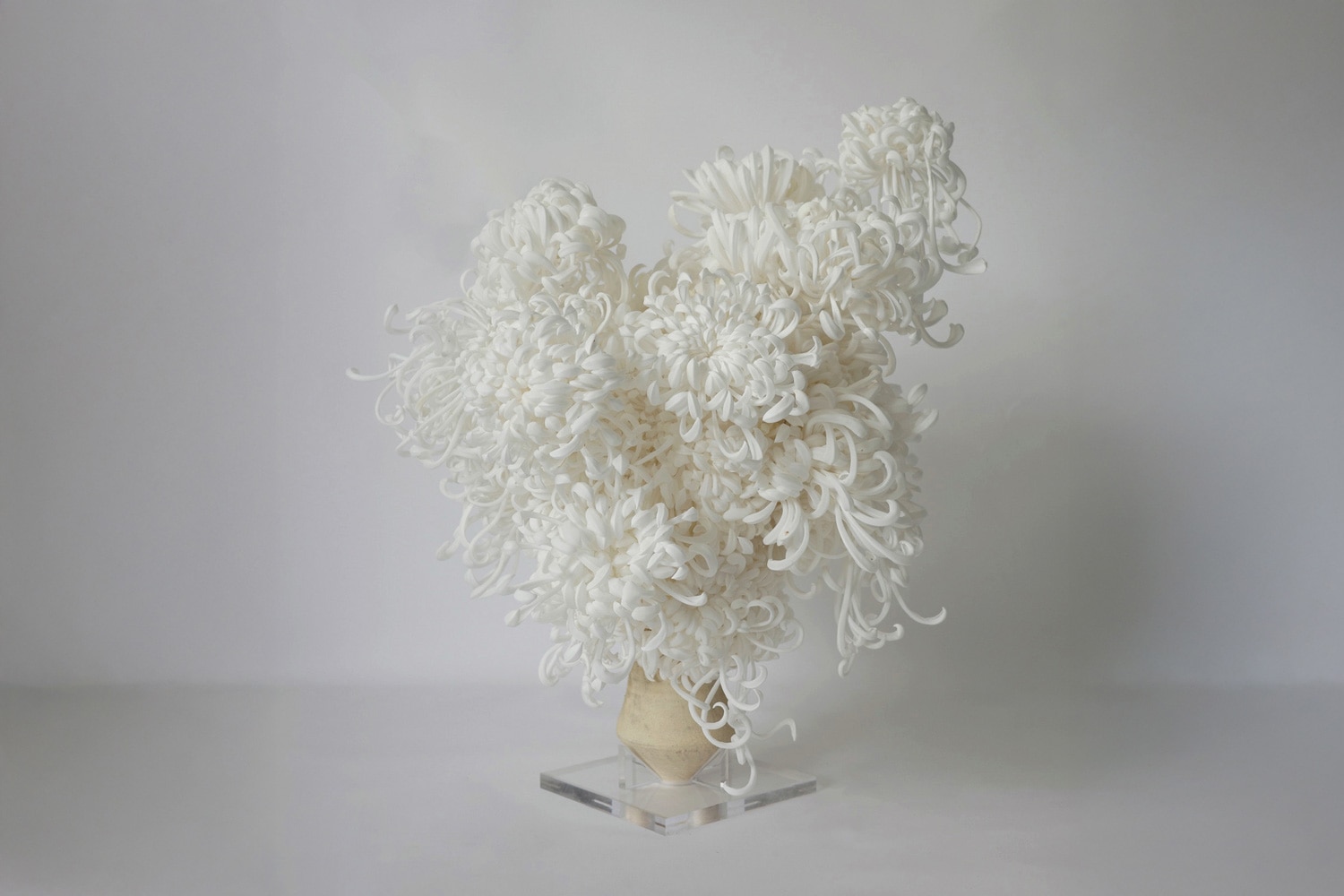
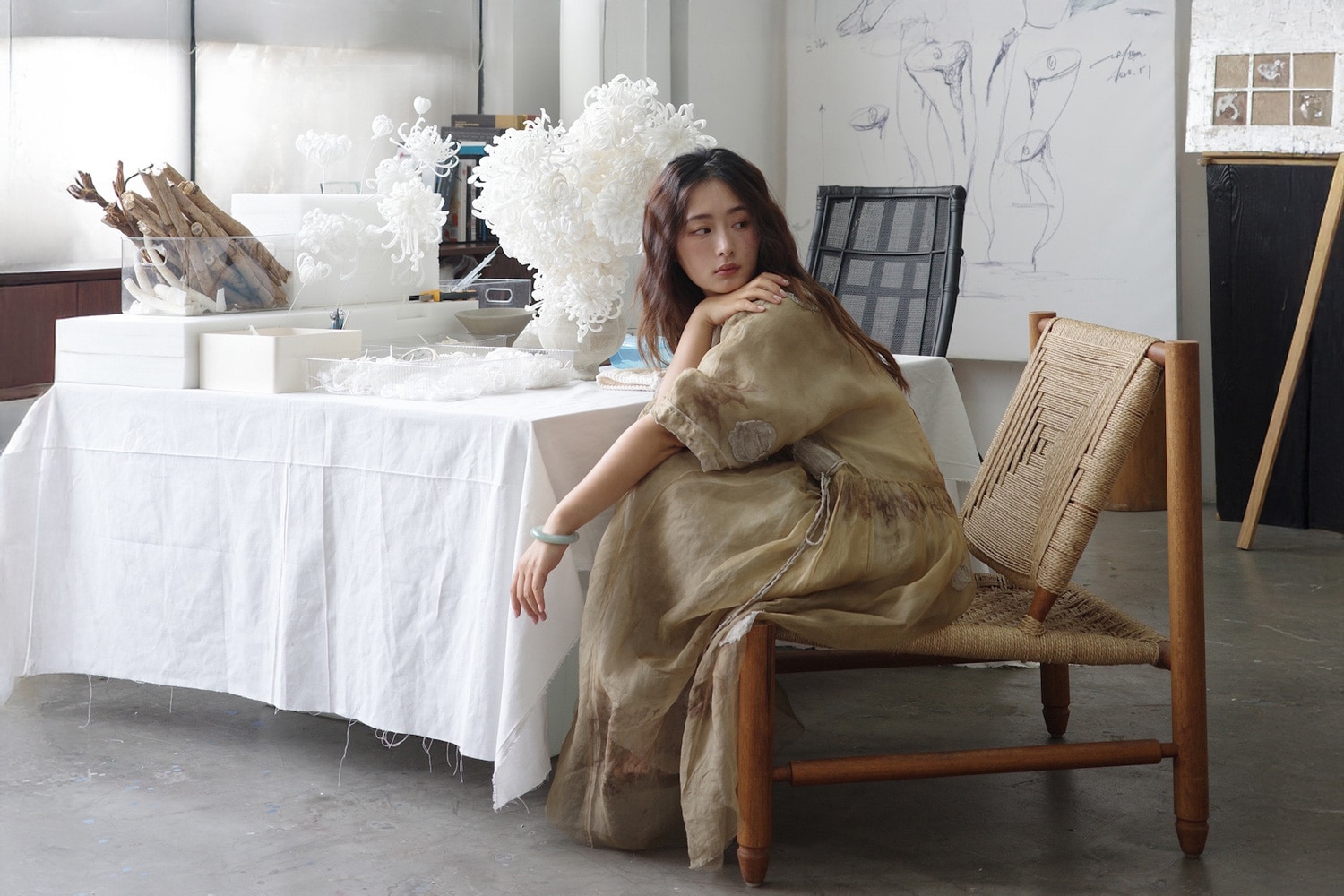
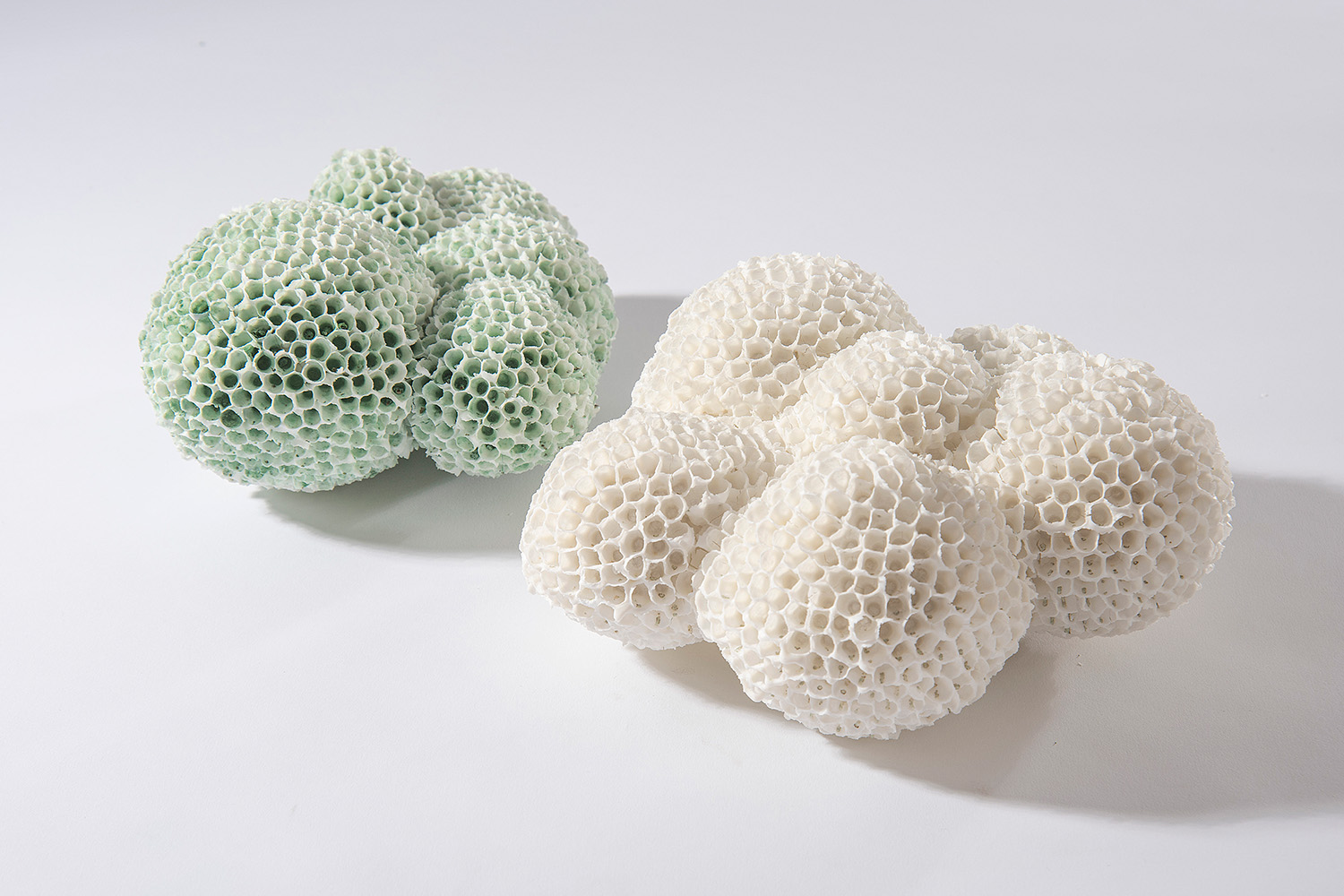
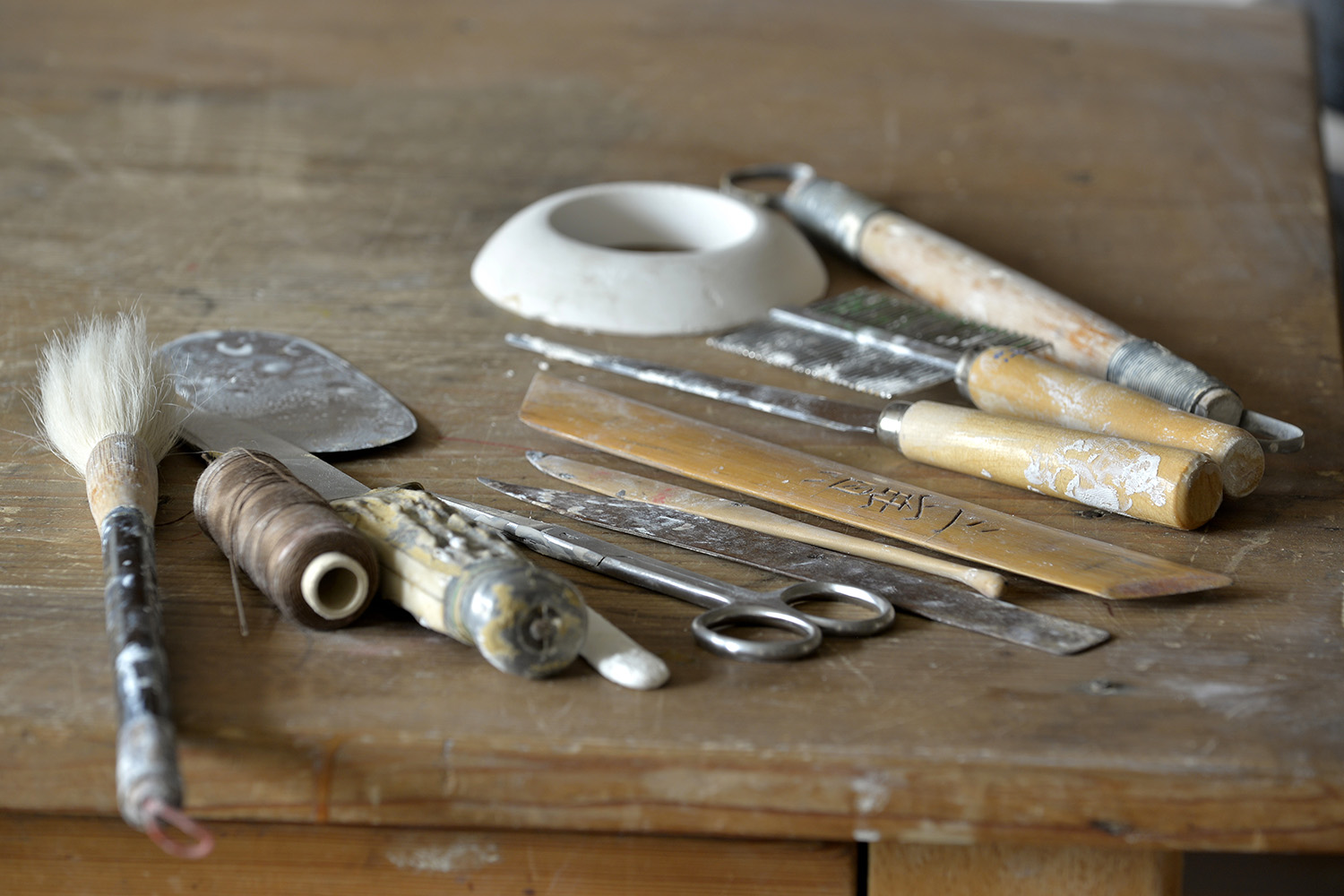
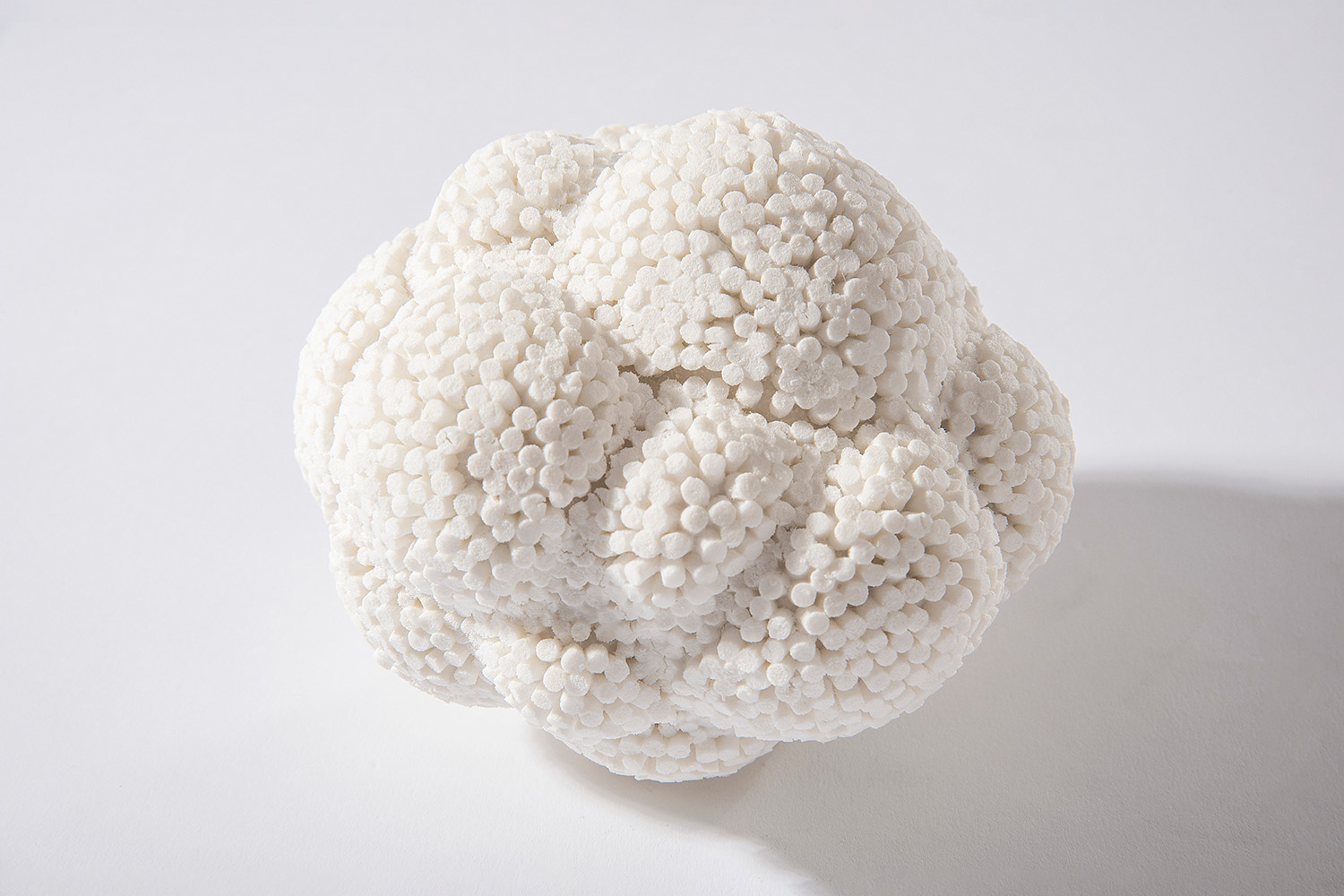
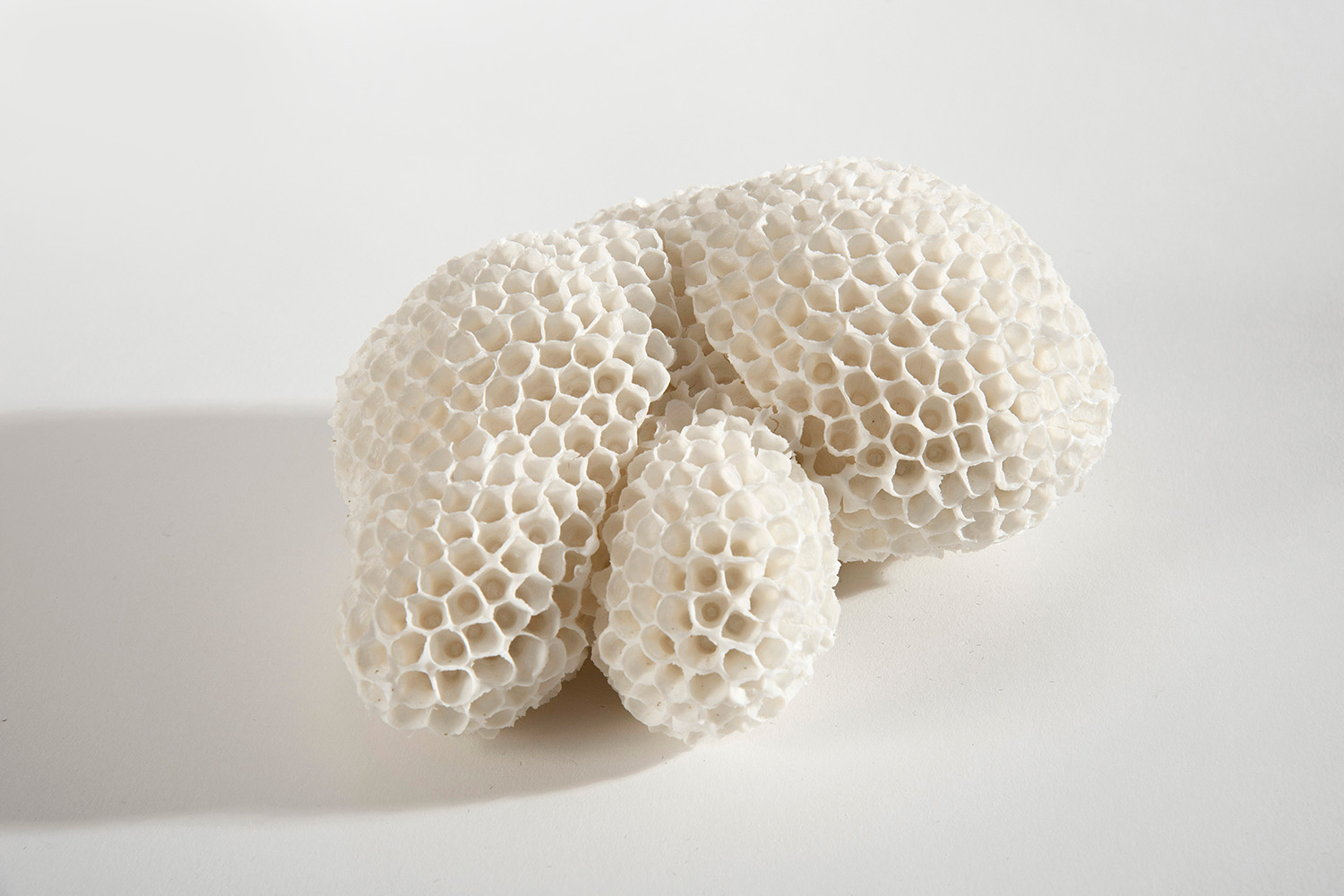
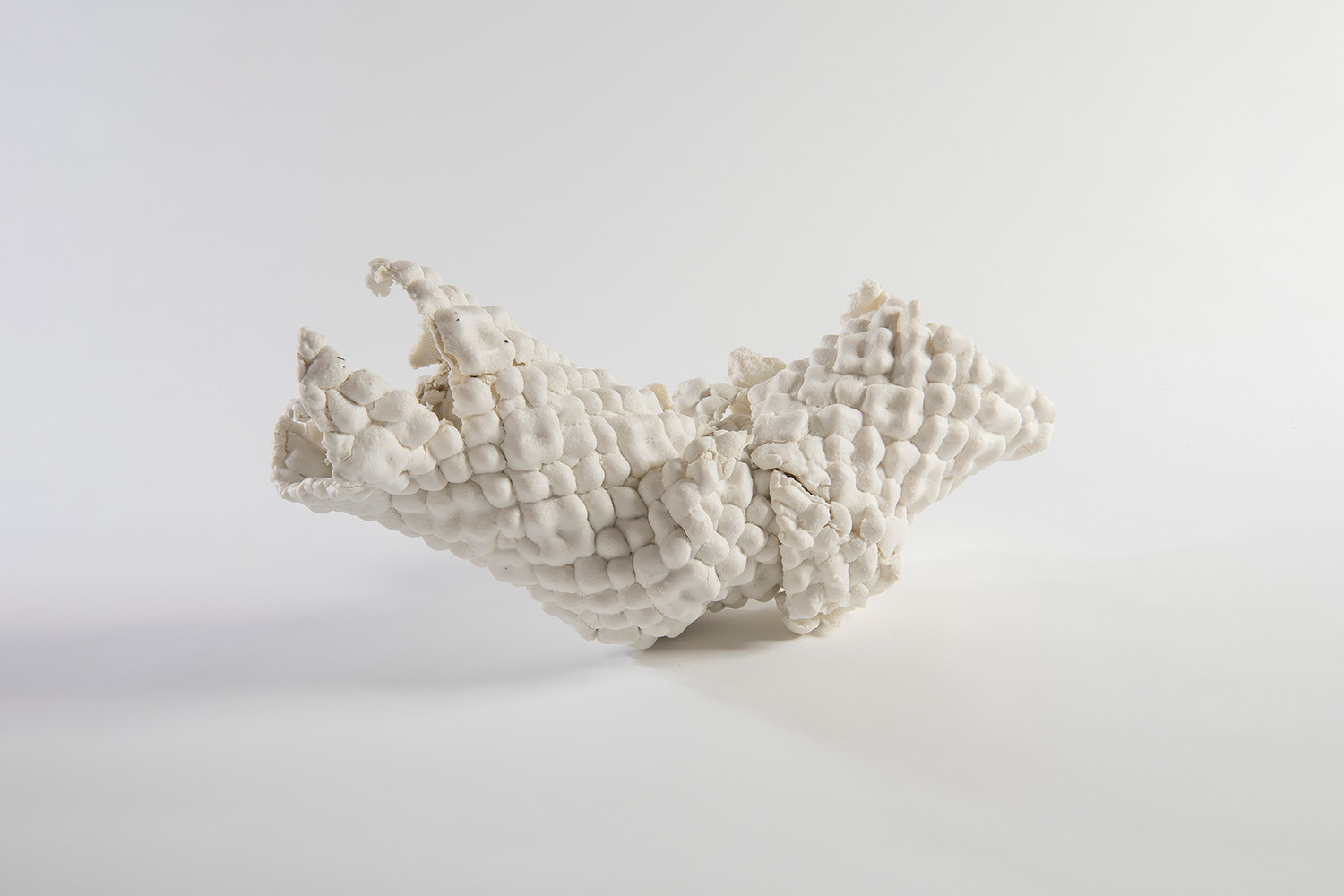
Heide Nonnemacher admired her aunt, textile artist Lotte Hoffmann, as a child. "When we were with her, it was like we were in a magical world." Heide studied art to become a teacher. In parallel to this a friend taught her many ceramic techniques, and she opened her own pottery workshop in the mid-1980s. As a free artist, Heide's works are deeply rooted in her region. Nattheim is known for its unique natural phenomenon involving corals and sea urchins in sandstone. Heide's own research into species enables her to search for forms and creatures that will survive. Her choice of porcelain is deliberate, for in addition to being able to create fine details, it also gives her a clear sense of the aesthetics of Nattheim fossils.
INTERVIEW
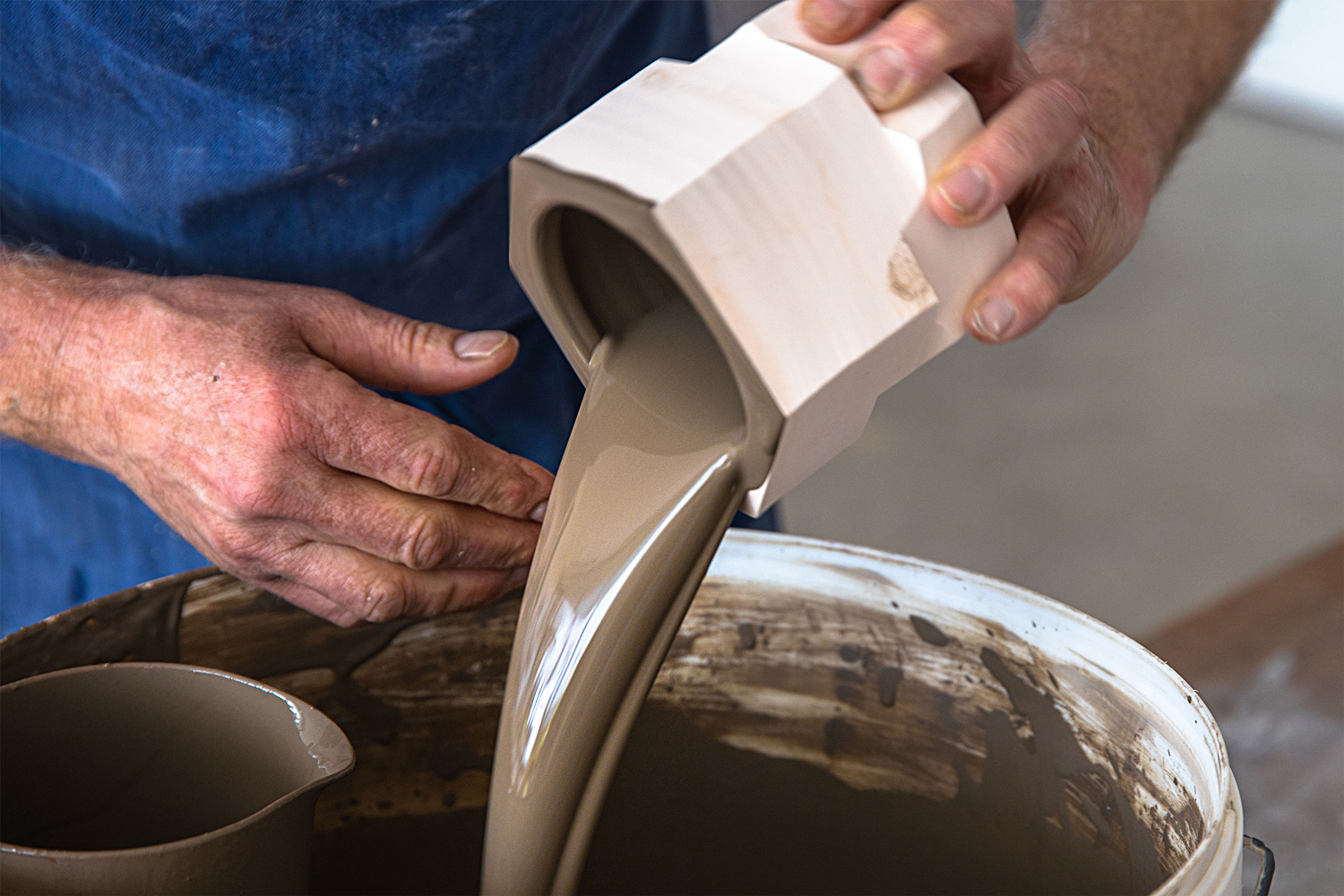
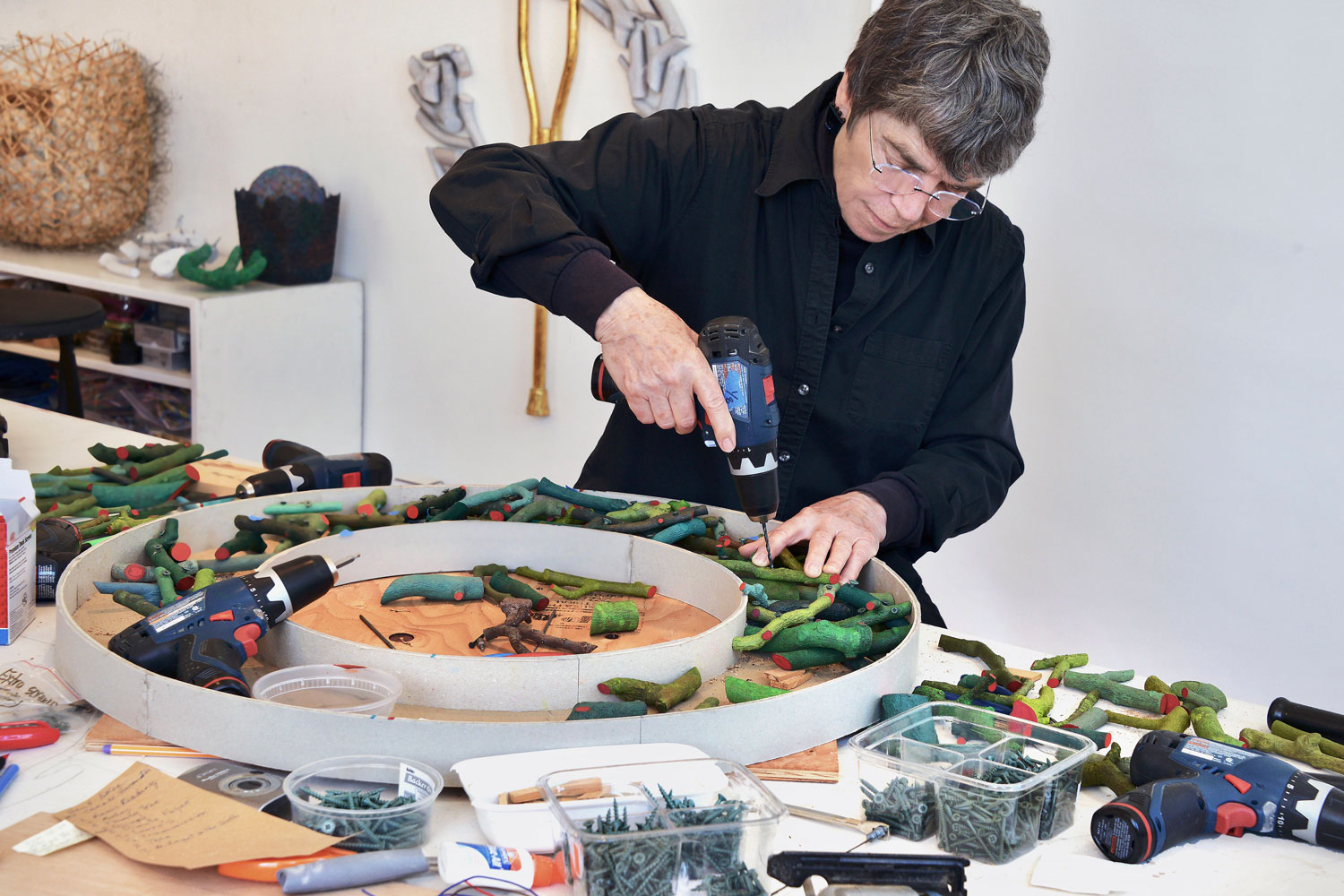
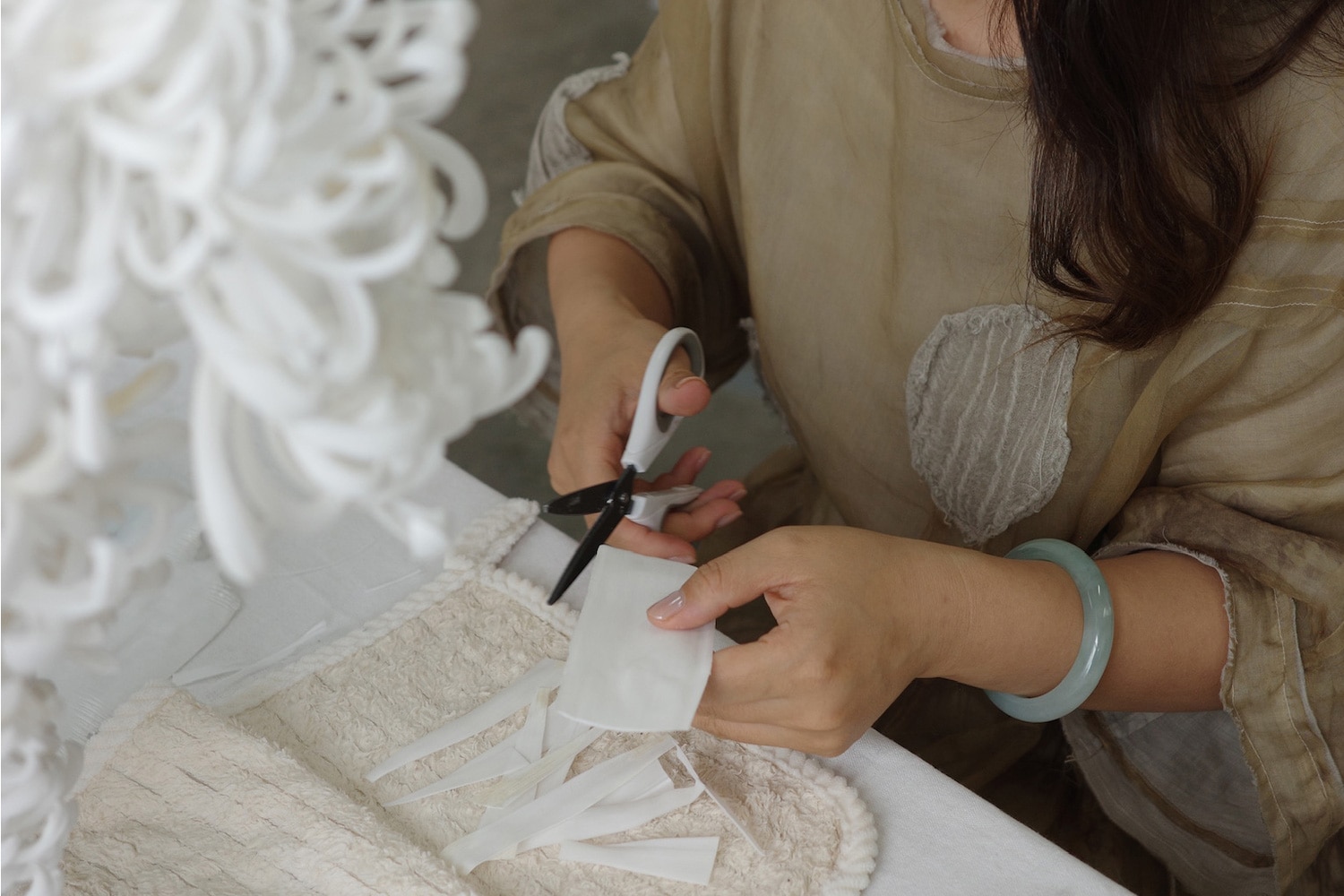
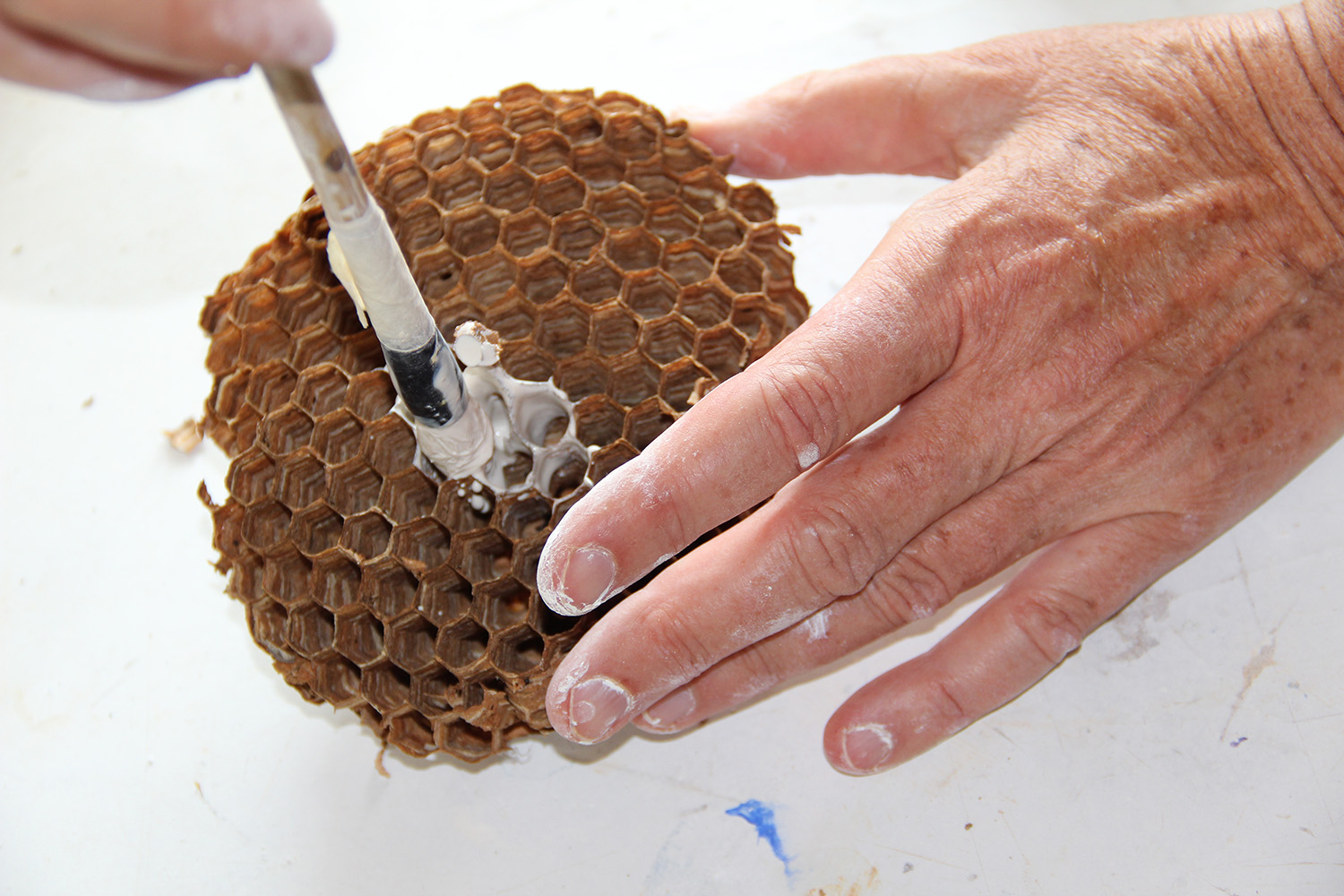
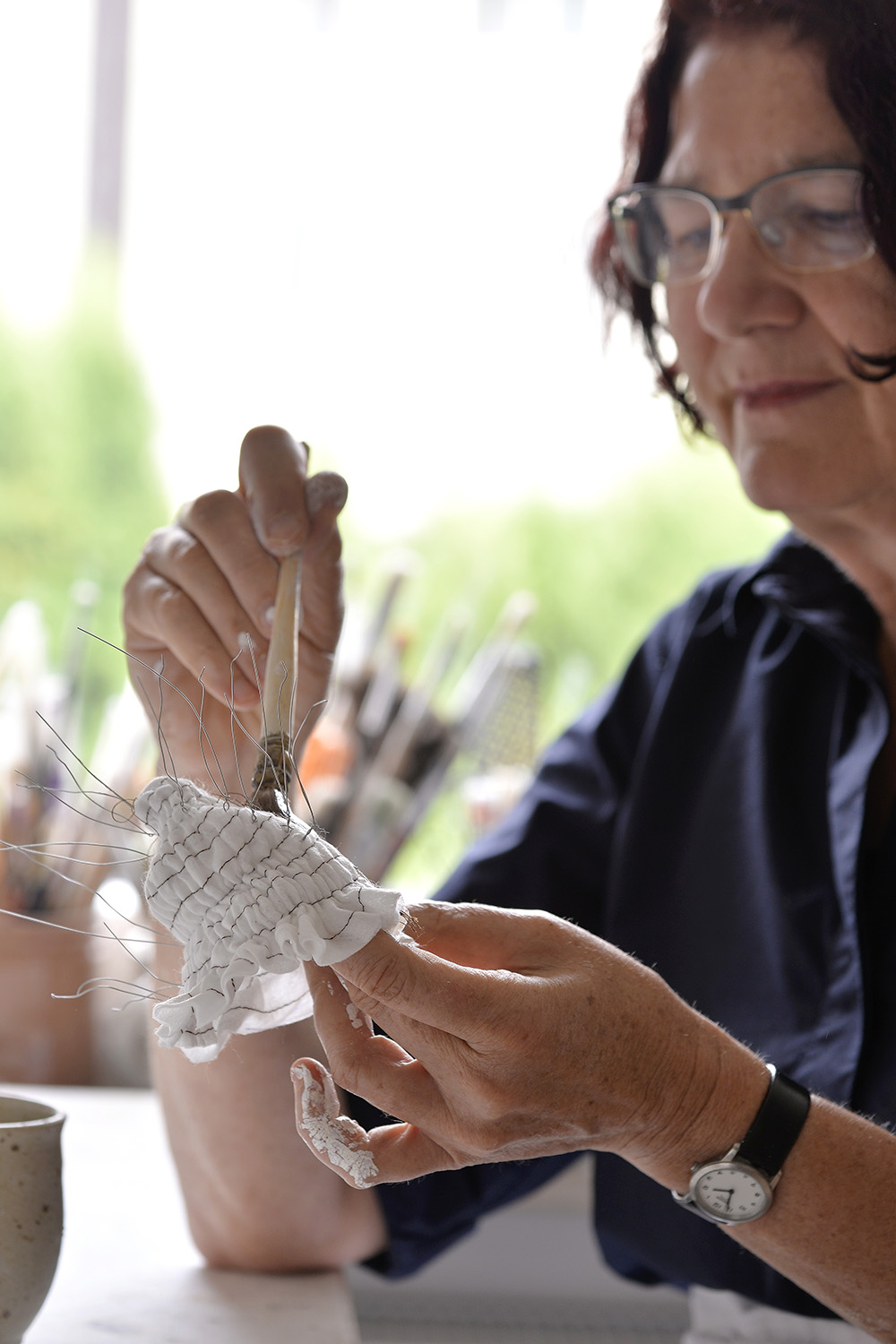
I call my technique mixed media, because my work uses a variety of absorbent materials to carry porcelain. Among these are all non toxic materials, sponges, wool, all types of cellulose, and even roots. I have a lot of experience with these combinations.
To prevent cavities from forming in the ceramic after firing, I ensure that the ash melts to a glaze that holds the object together from the inside. My usual method is to dip the material in sodium silicate.
I usually sketch in advance and plan the finished form of most of my objects. But it also happens that my hands take on a life of their own and take me in directions that I had not intended. This always excites me.
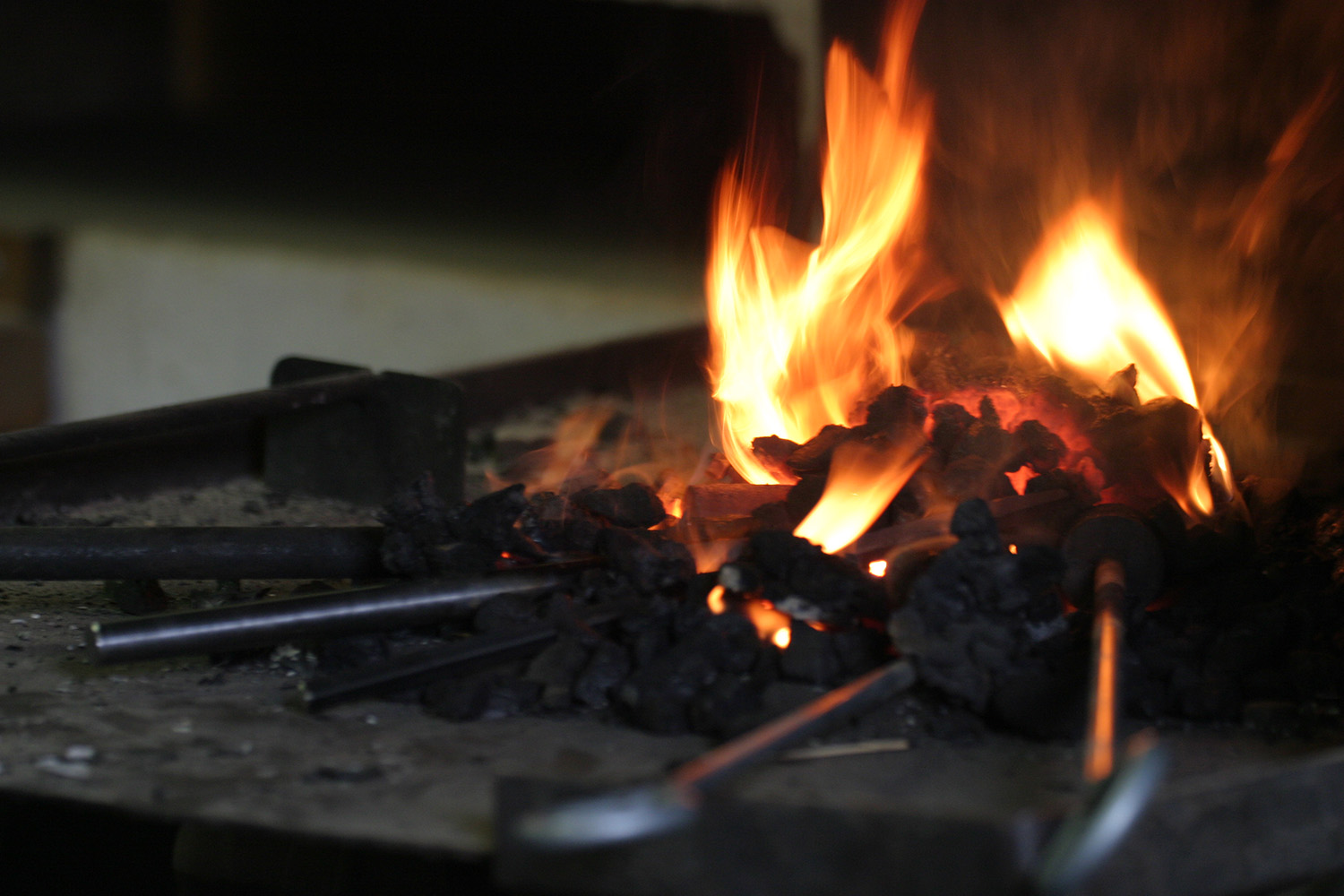
I travelled to Japan for an artist residency, and there was a firing in a Noborigama kiln at the end of the residency. It was a very special experience throughout my stay there. All the way from digging up the raw materials ourselves to keeping the fire going all week long.
Heide Nonnenmacher
Mixed media sculptor
Nattheim, Germany
ADDRESS
Address upon request, Nattheim, Germany
AVAILABILITY
By appointment only
PHONE
+49 1704764379
LANGUAGES
German, French, English
Homo Faber Finds is a new service aiming to inspire admirers of craft to connect and collaborate with exceptional artisans.
We invite you to submit an enquiry here.