Carl Stewart
Weaver
Ottawa, Canada
From broken threads to woven stories
- Carl tackles difficult societal issues in his art
- He transforms found matter into yarn he can weave
- His pieces are held in public collections across Canada
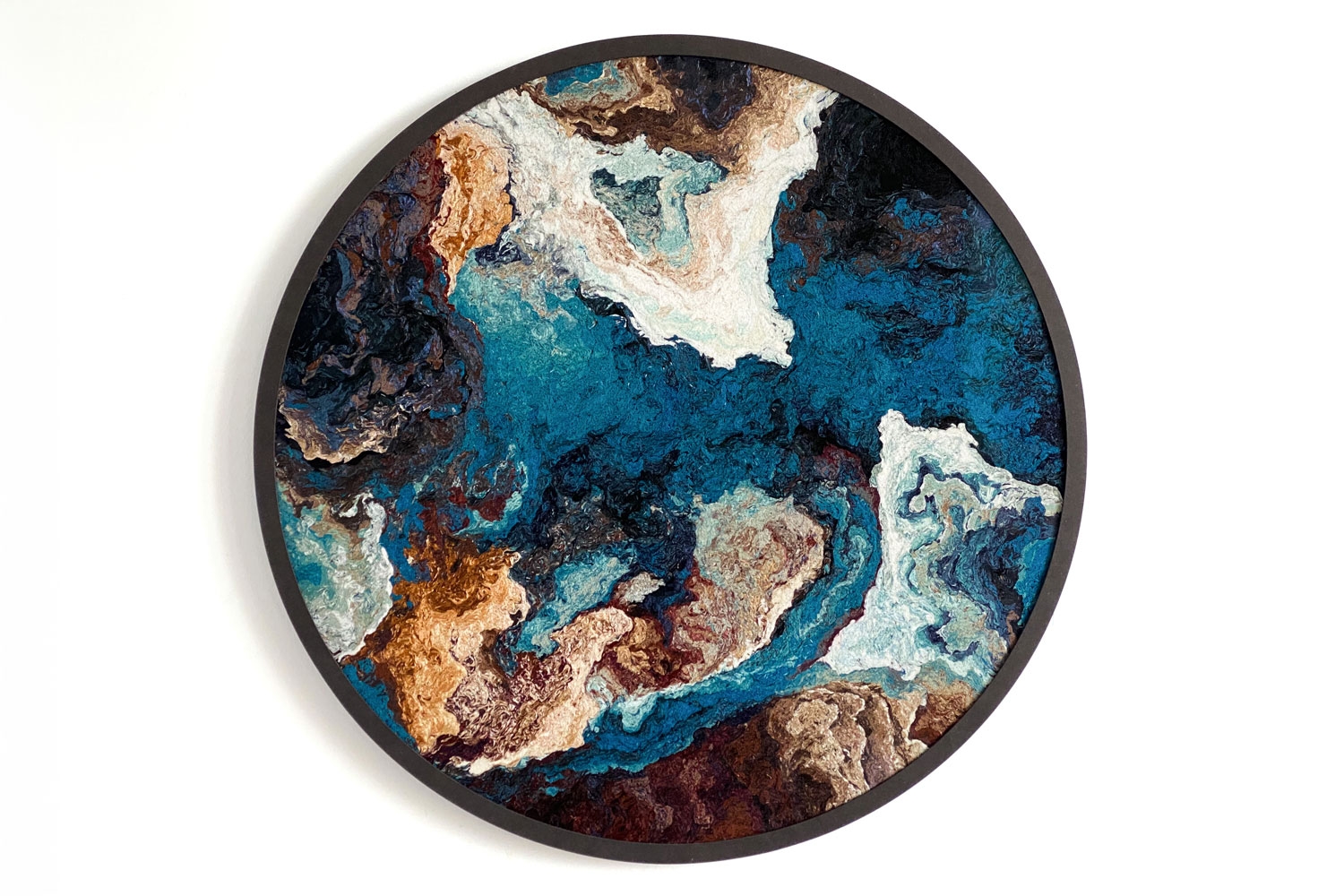
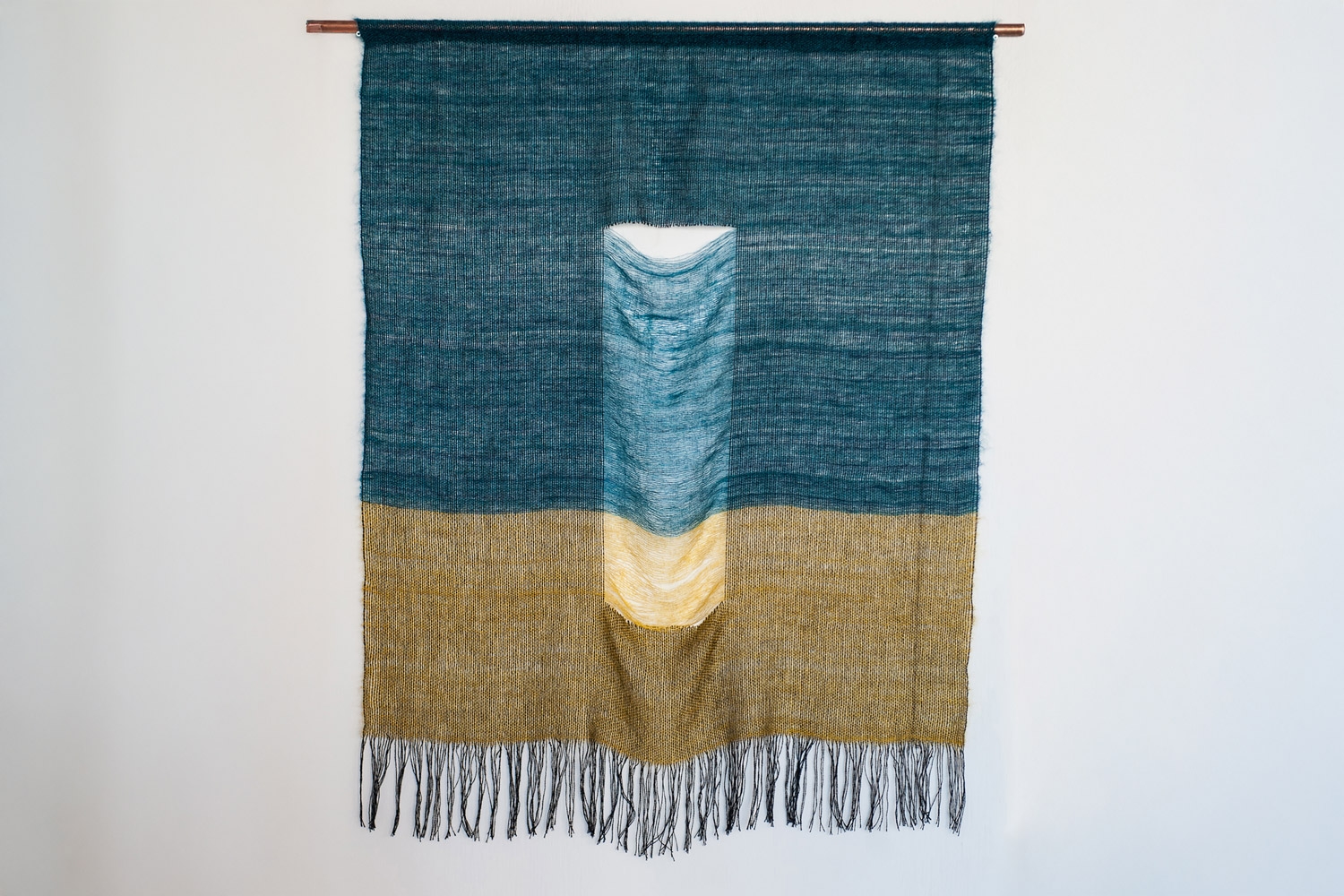
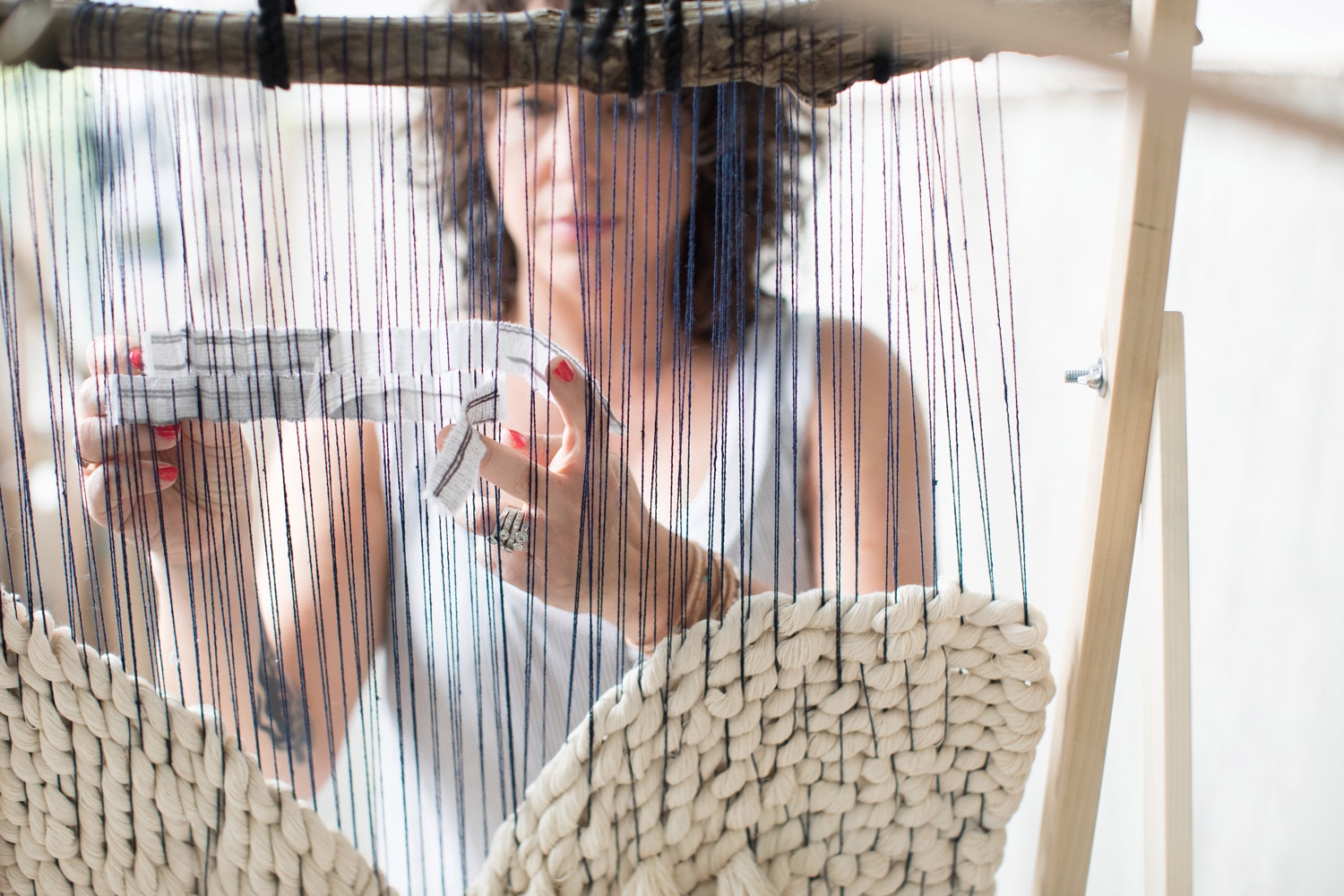
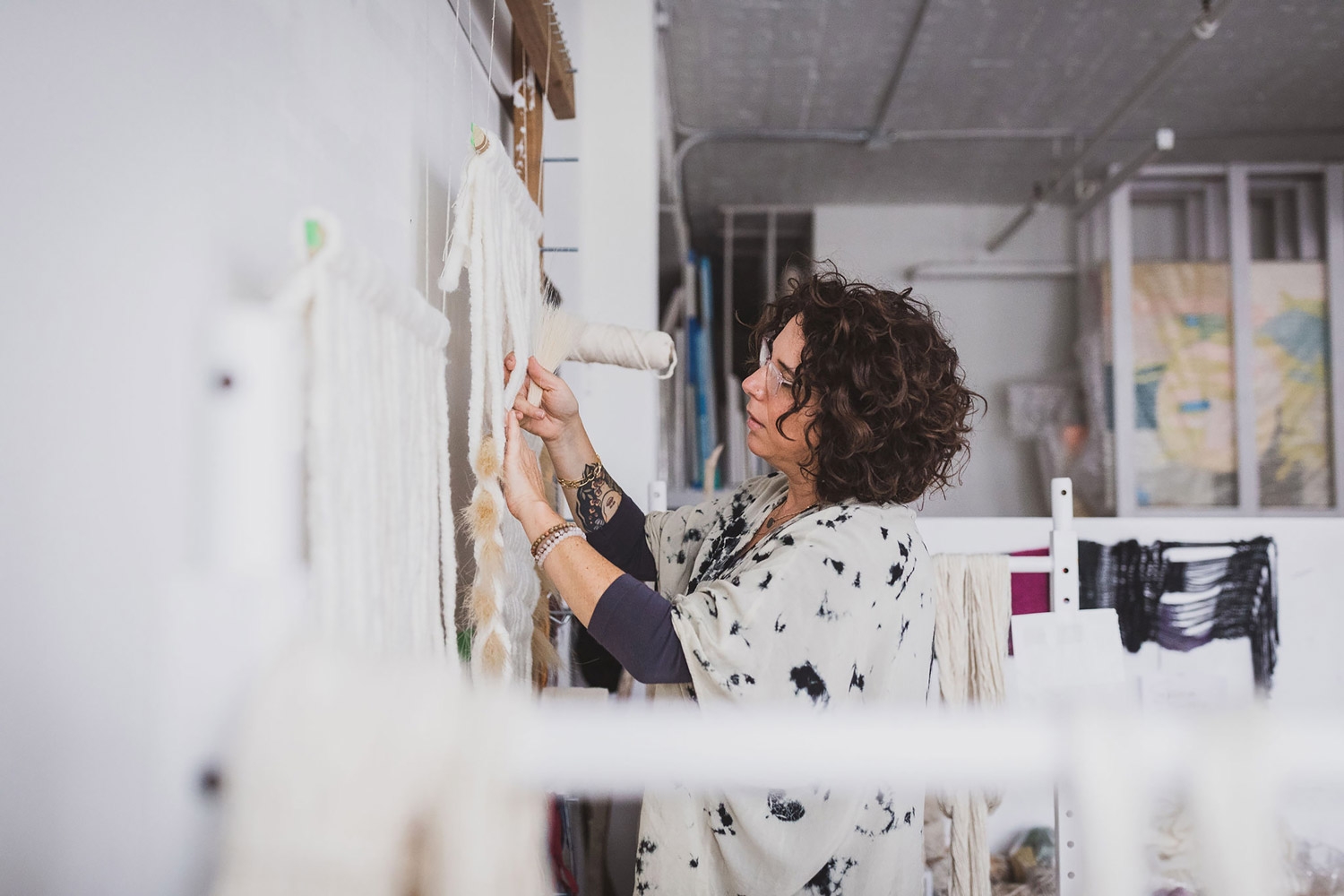
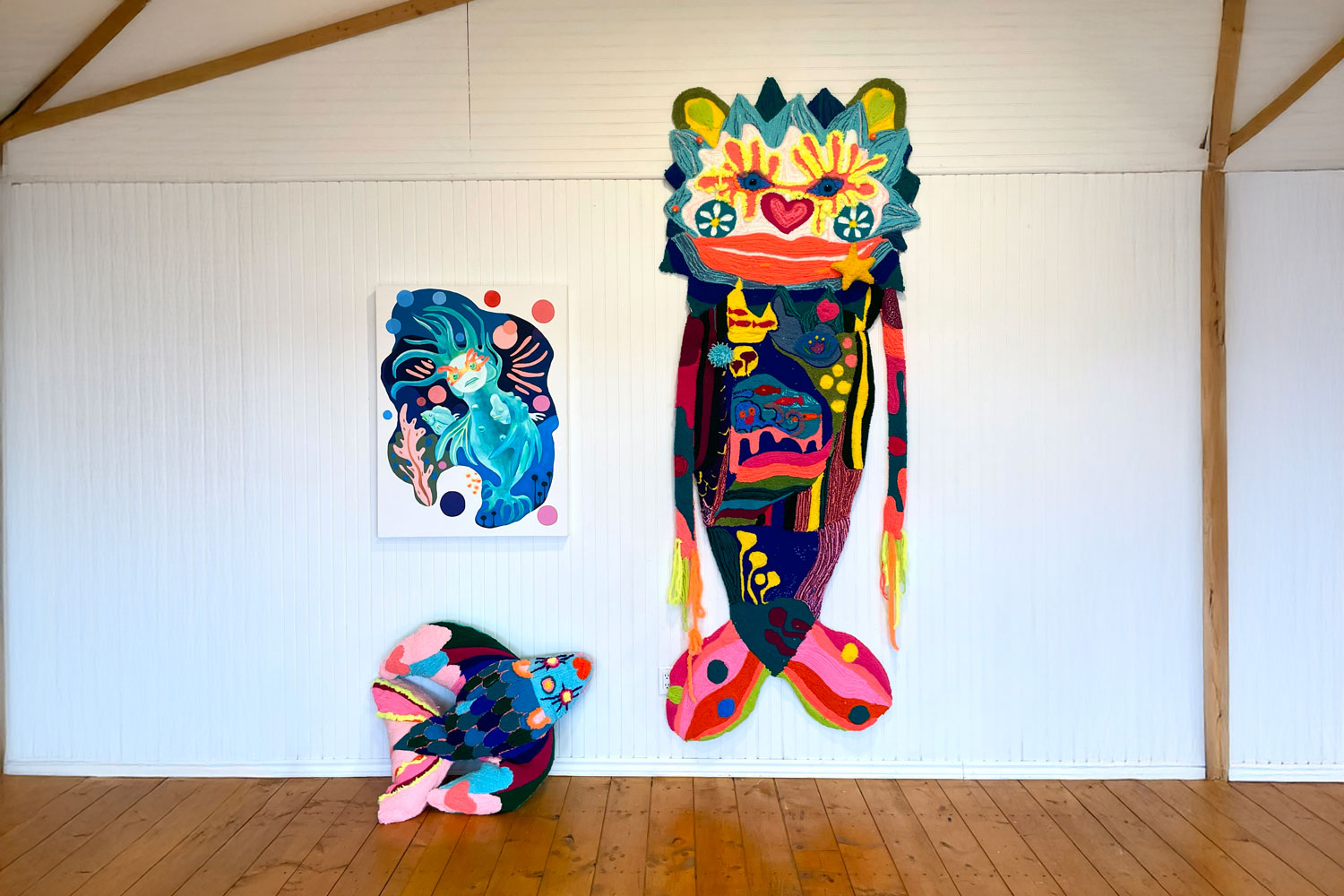
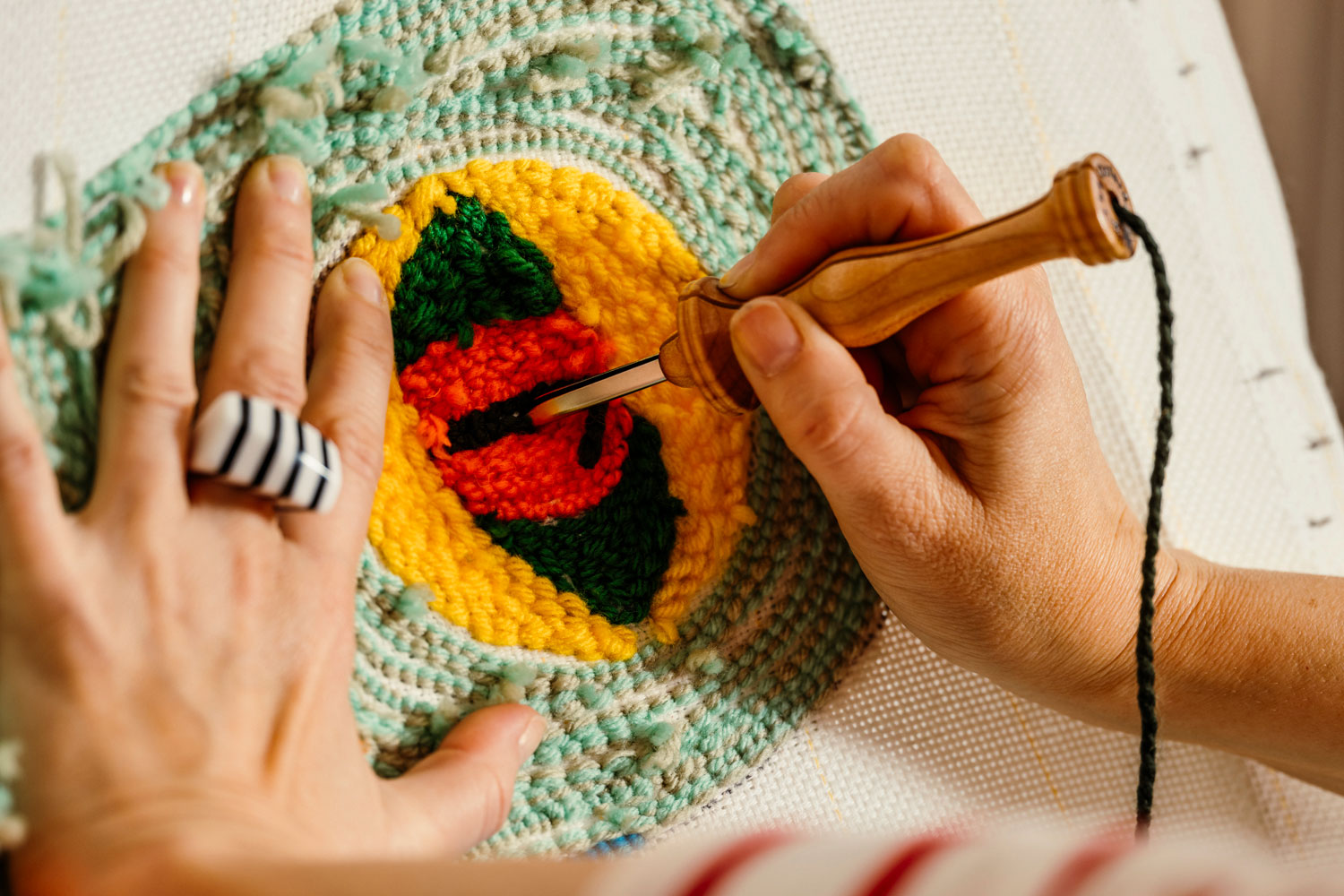
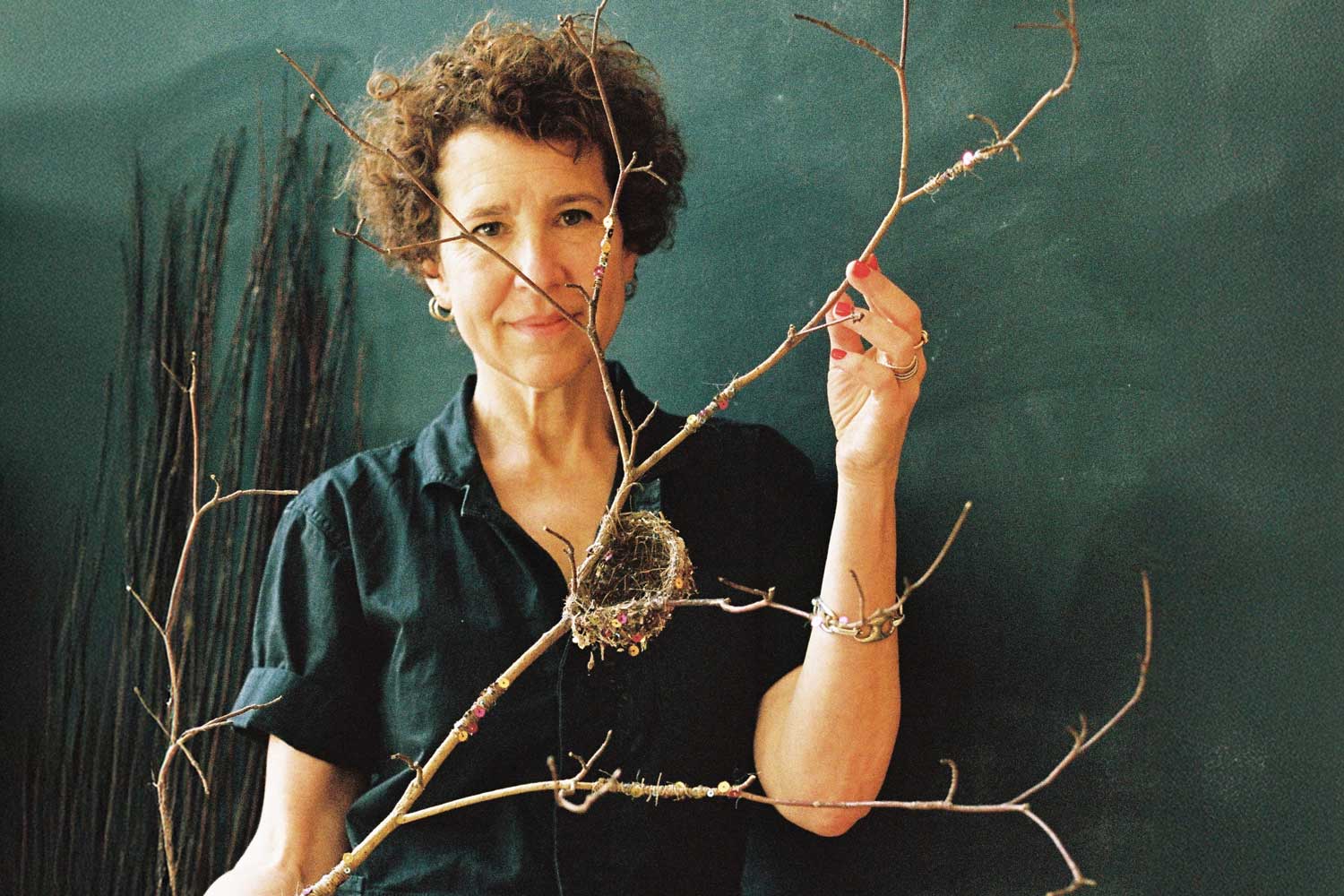
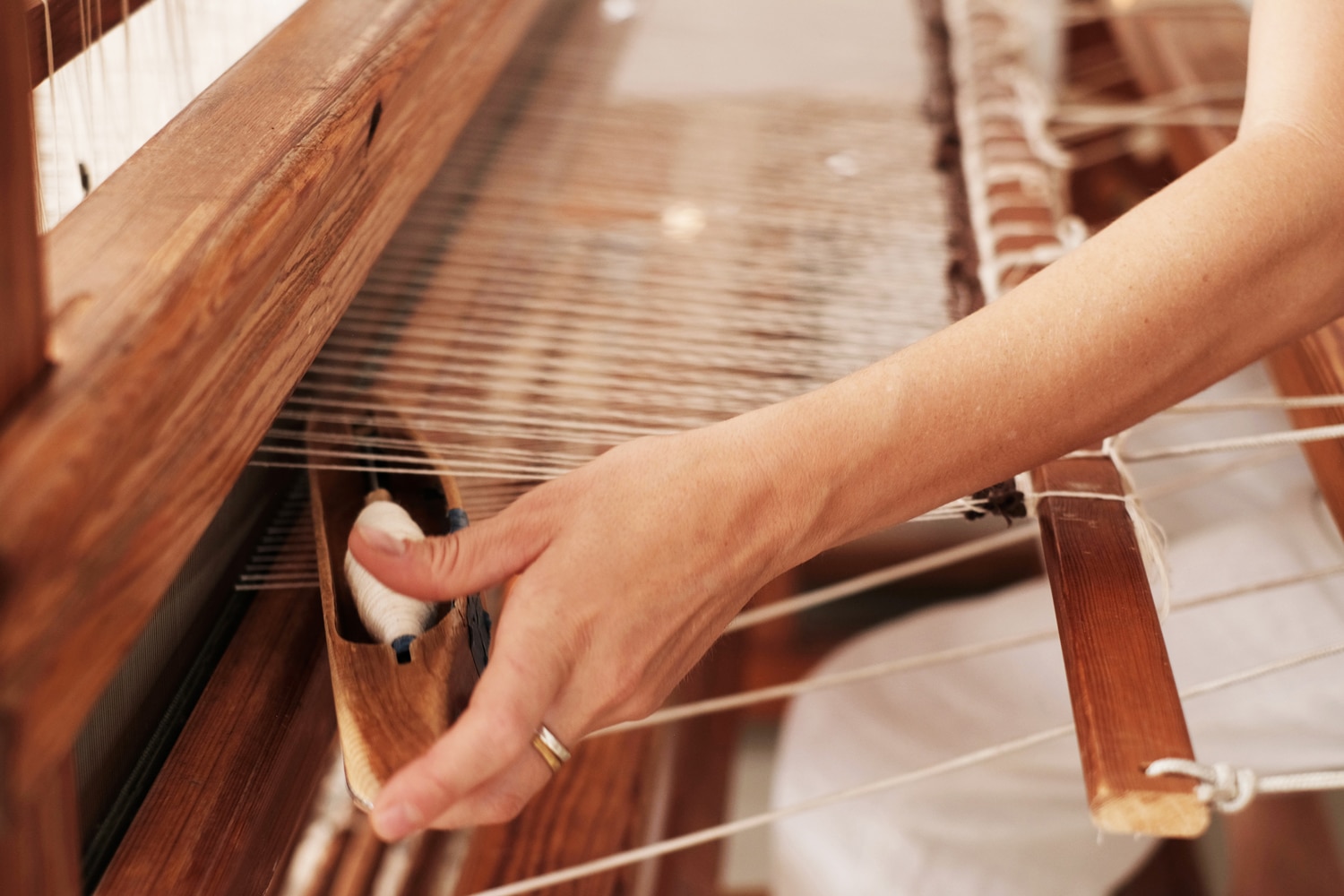
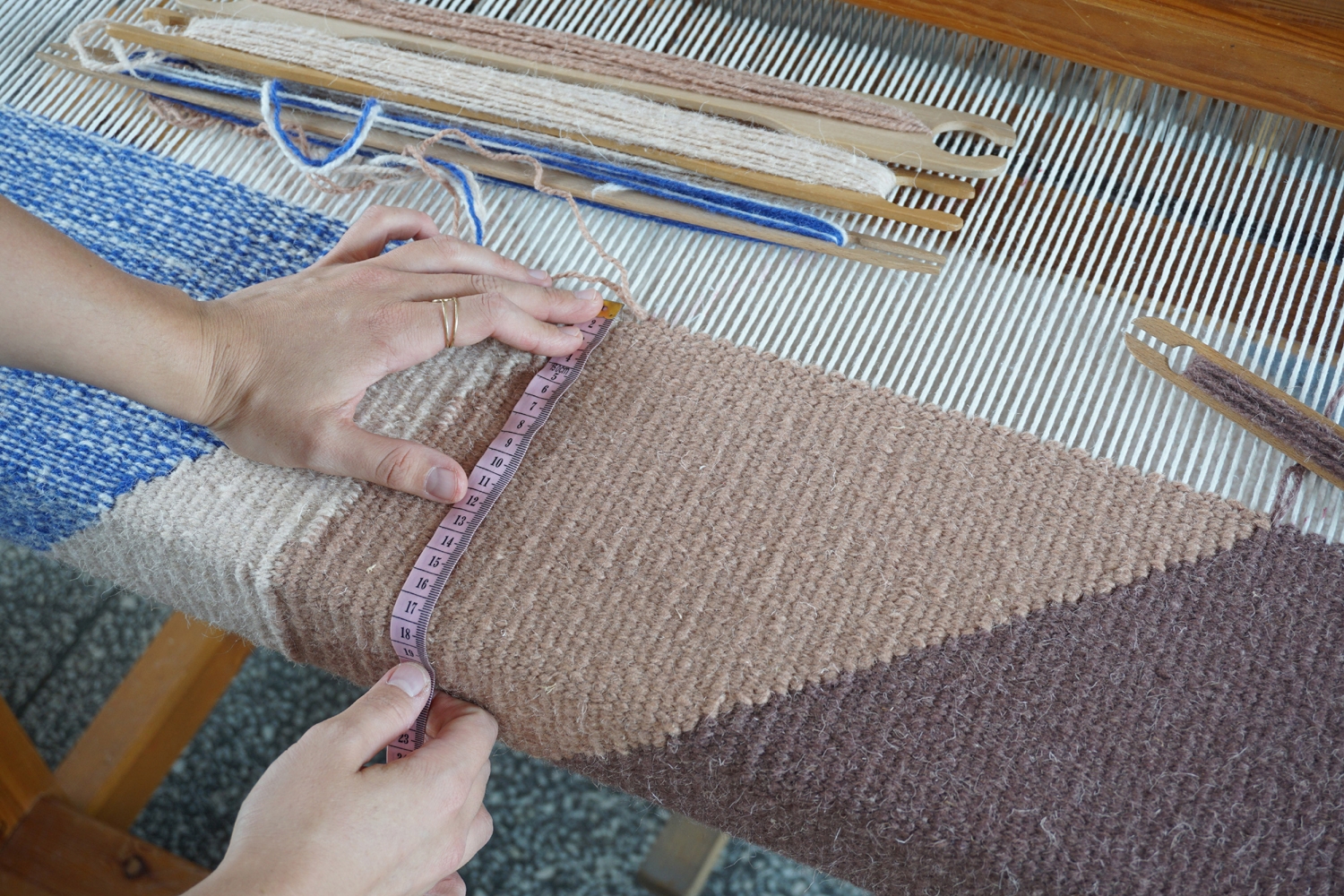
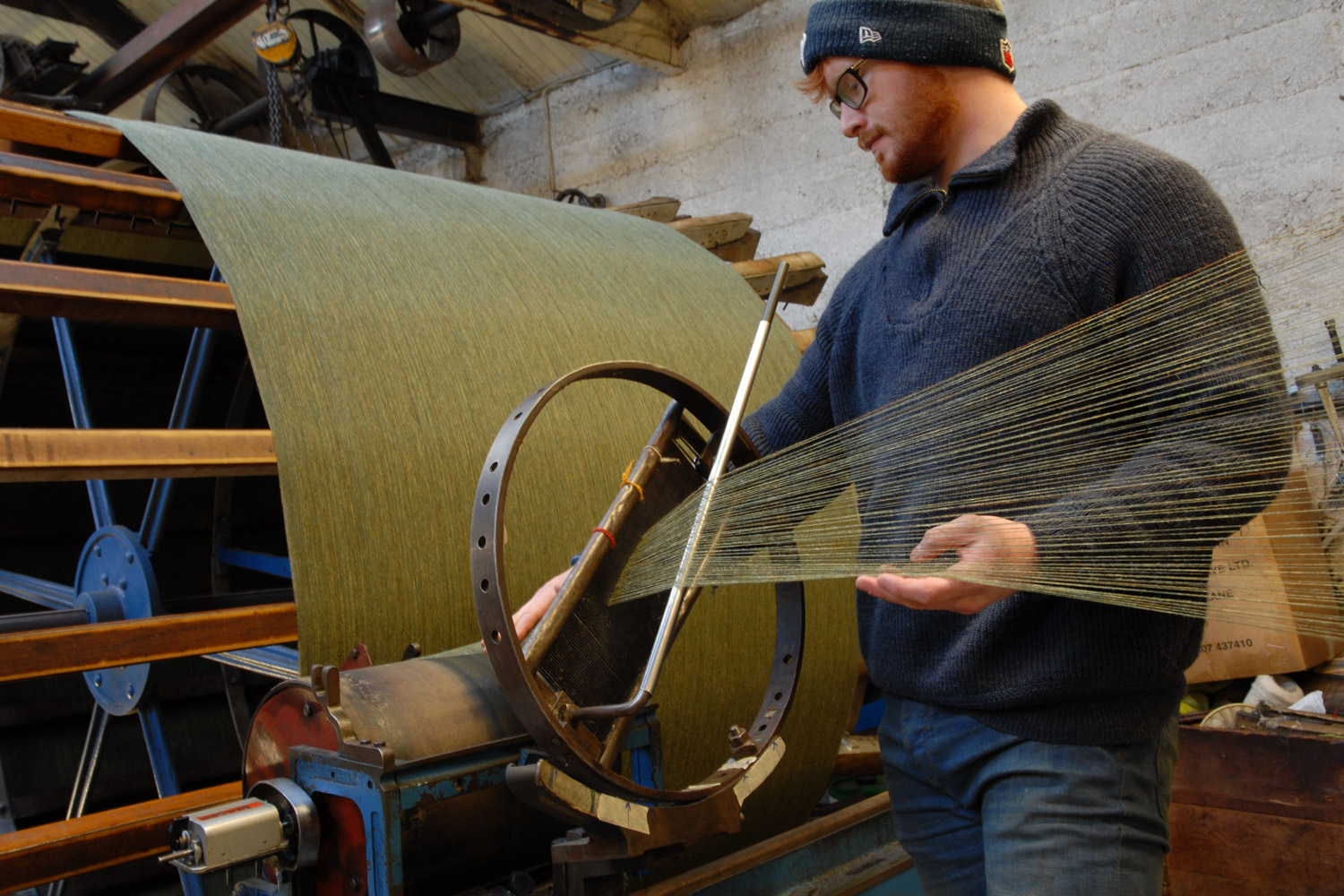
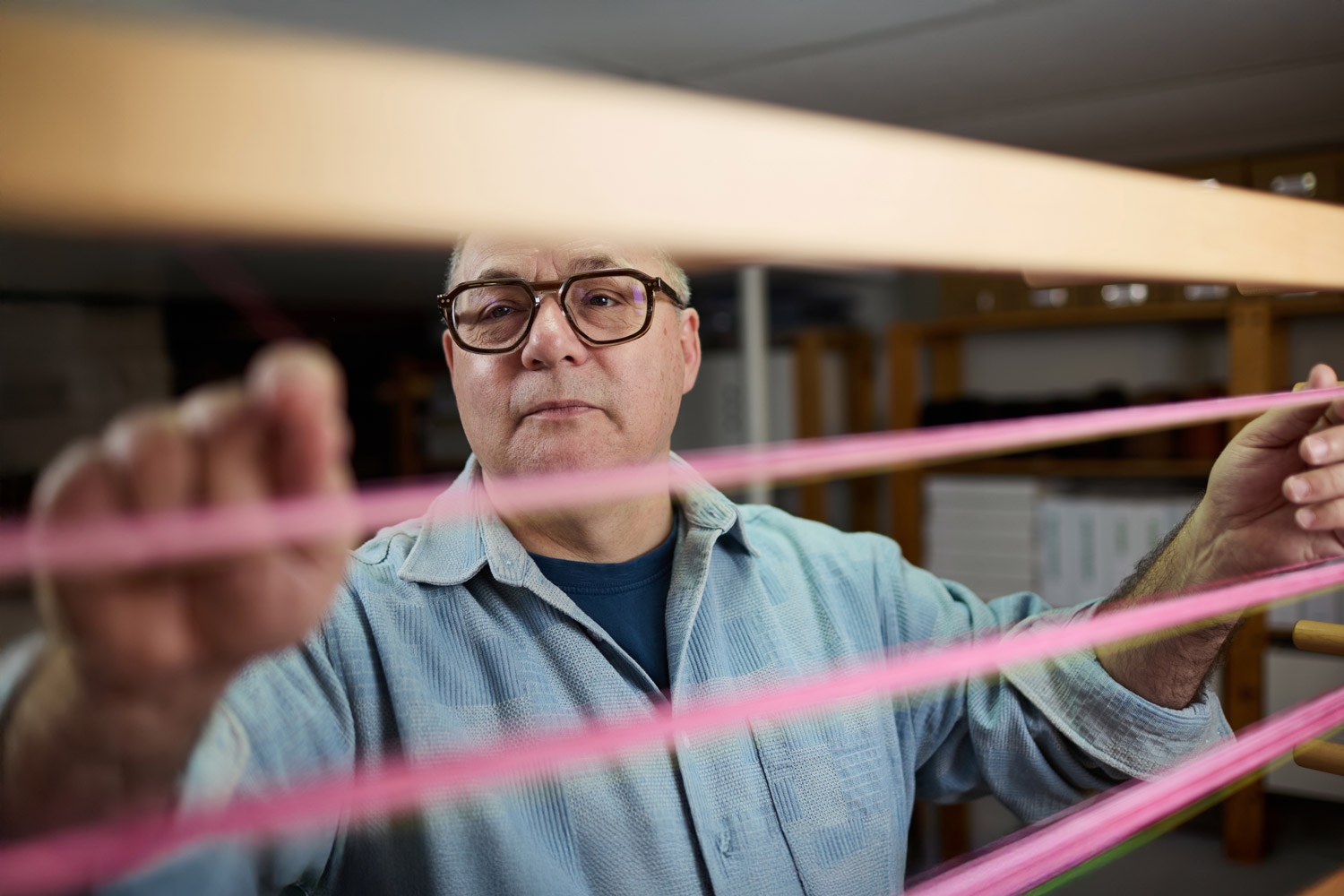
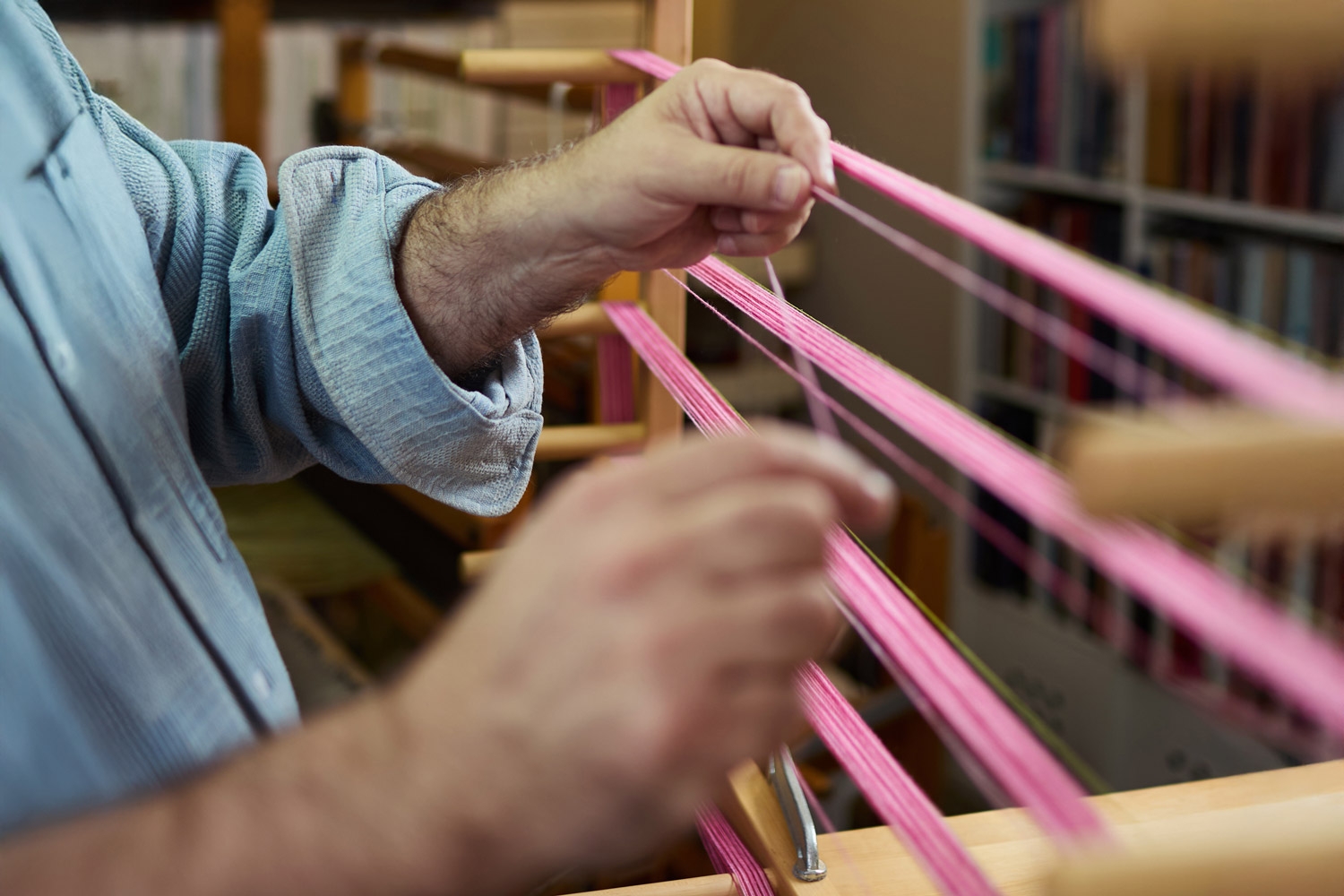
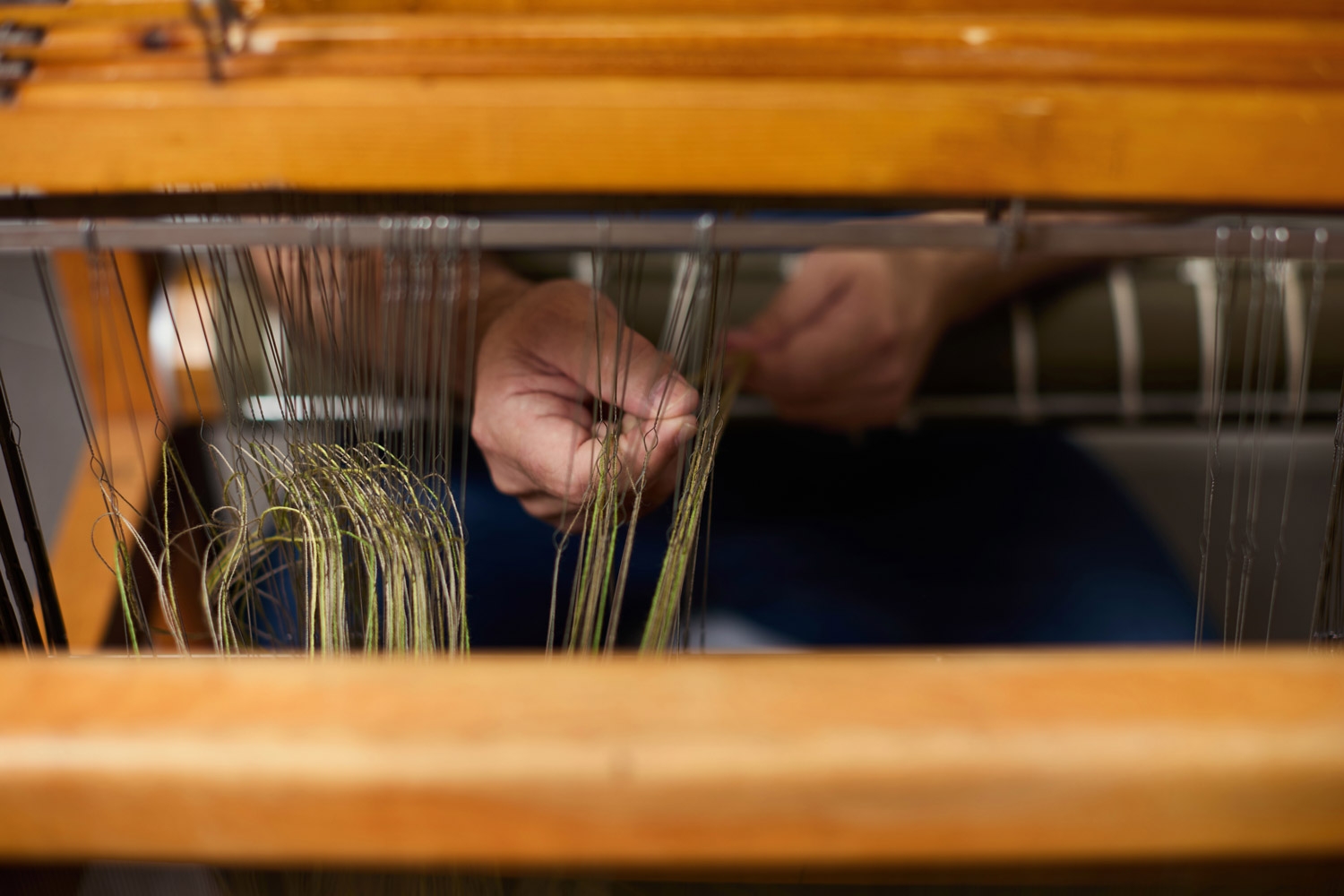
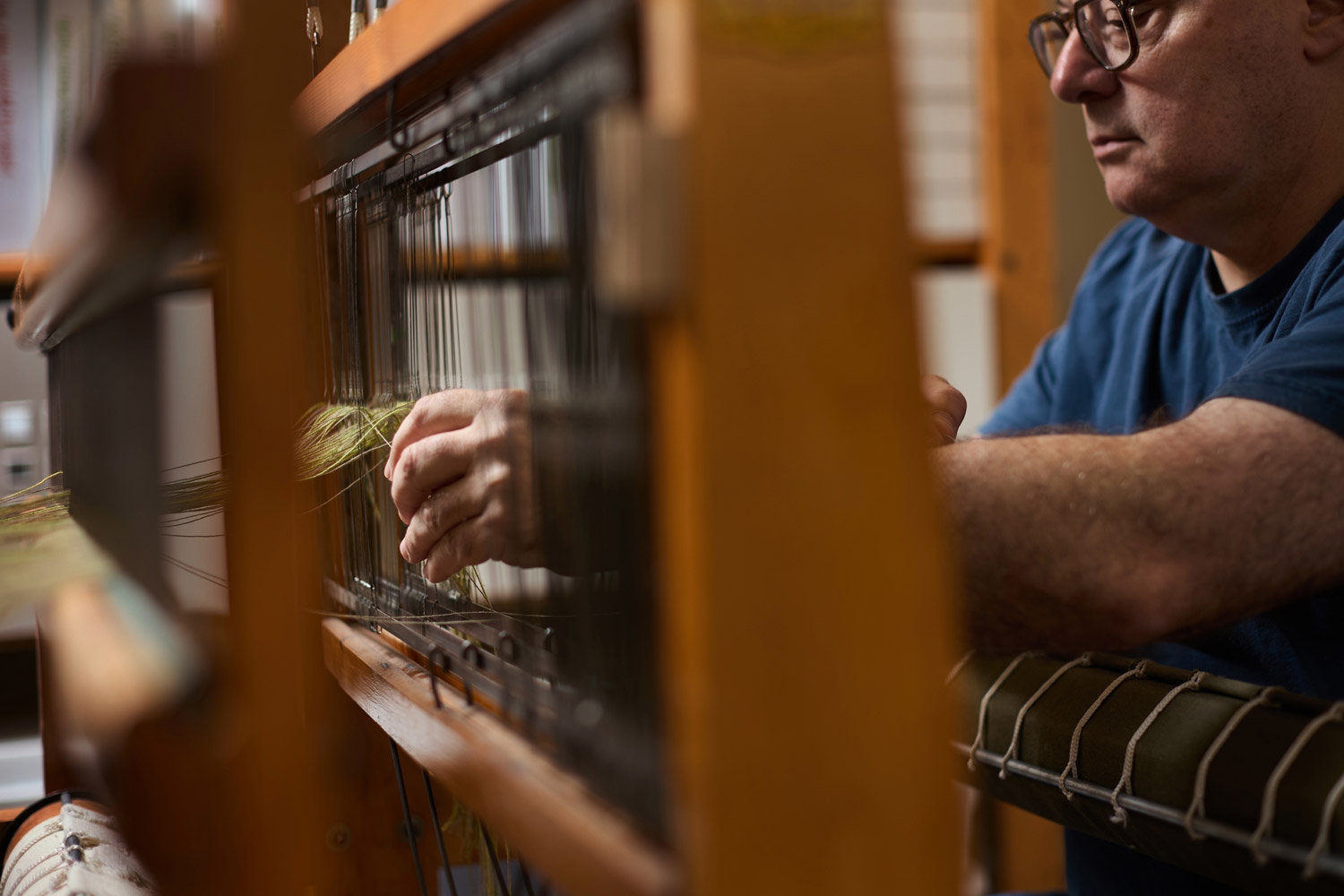
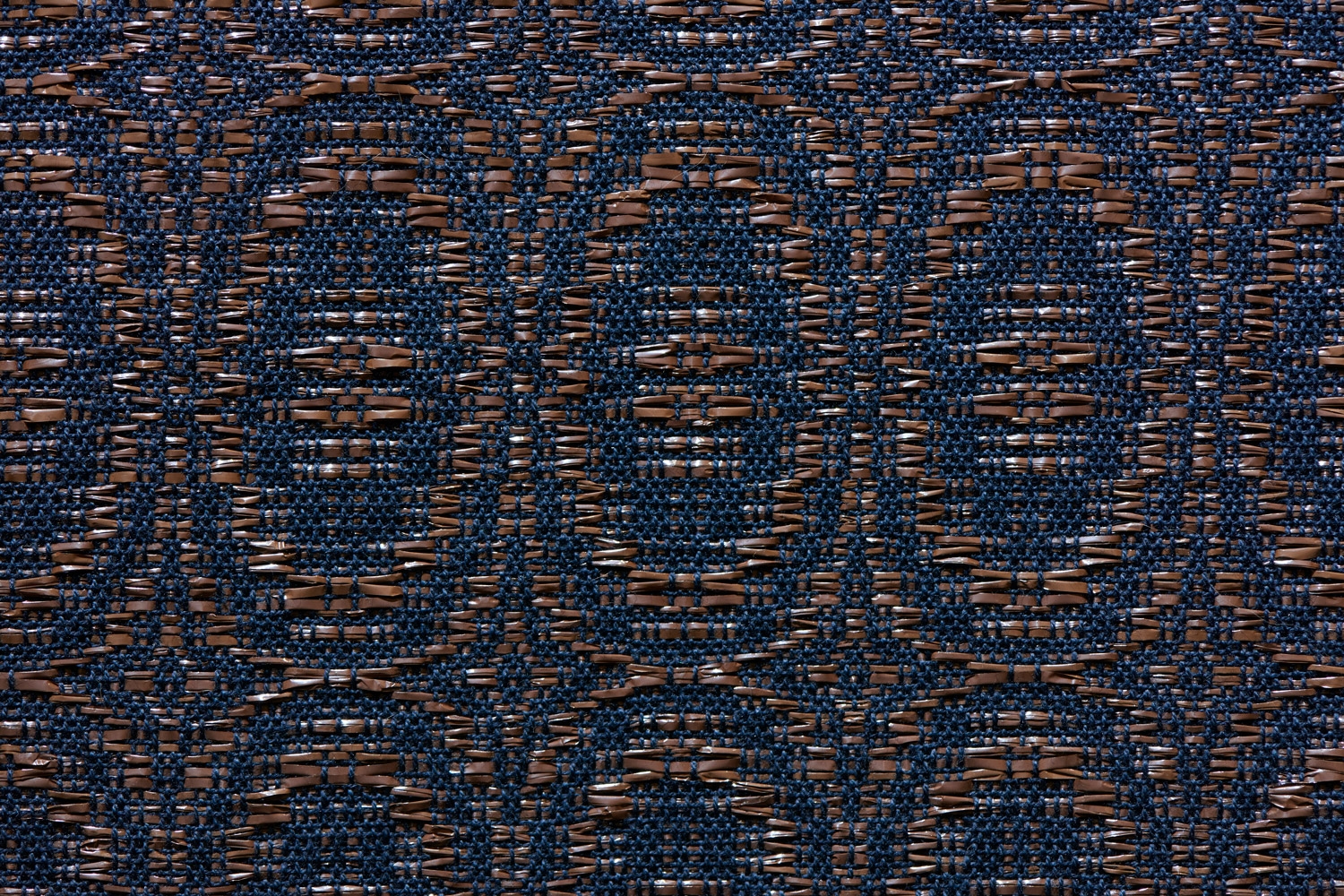
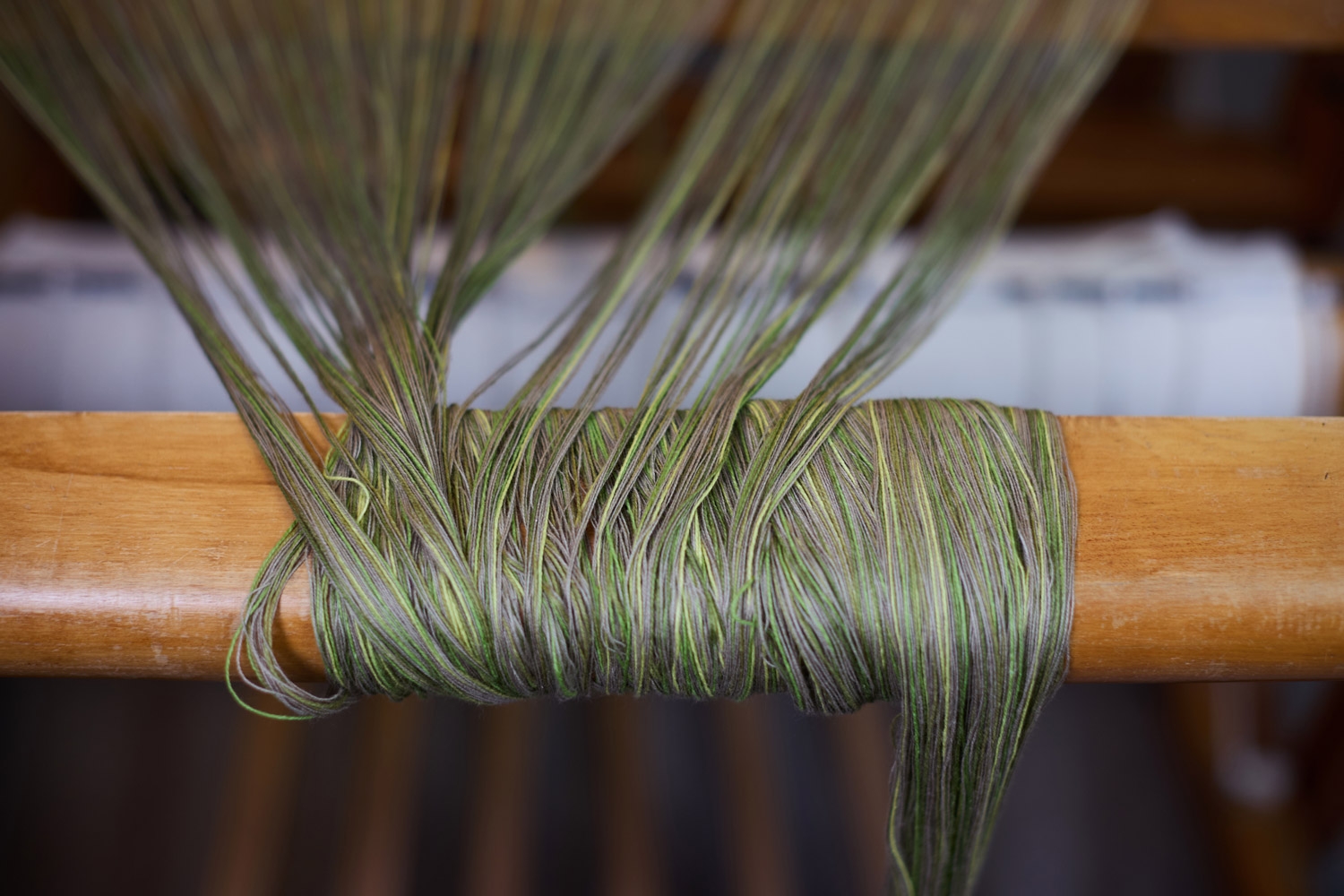
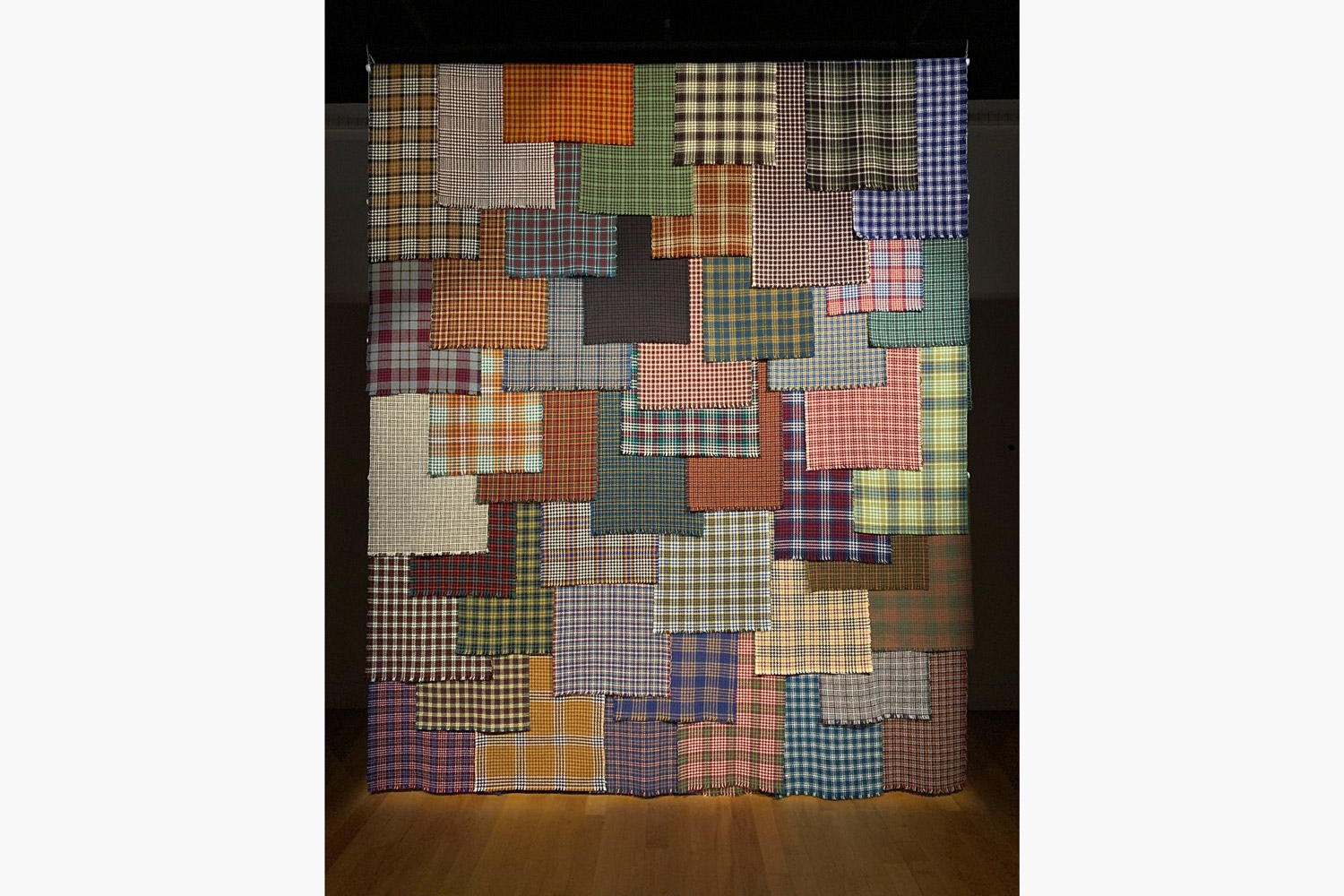
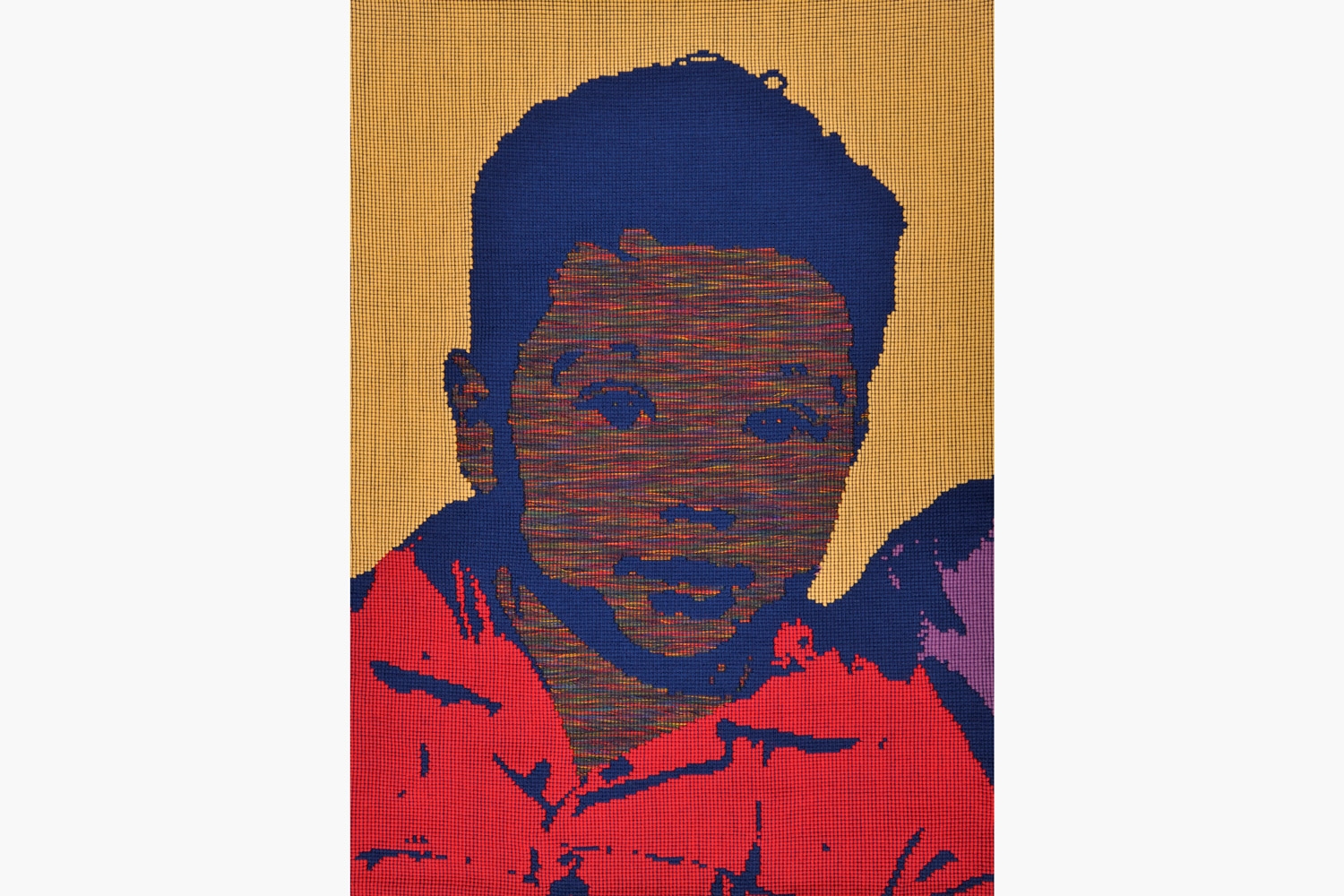
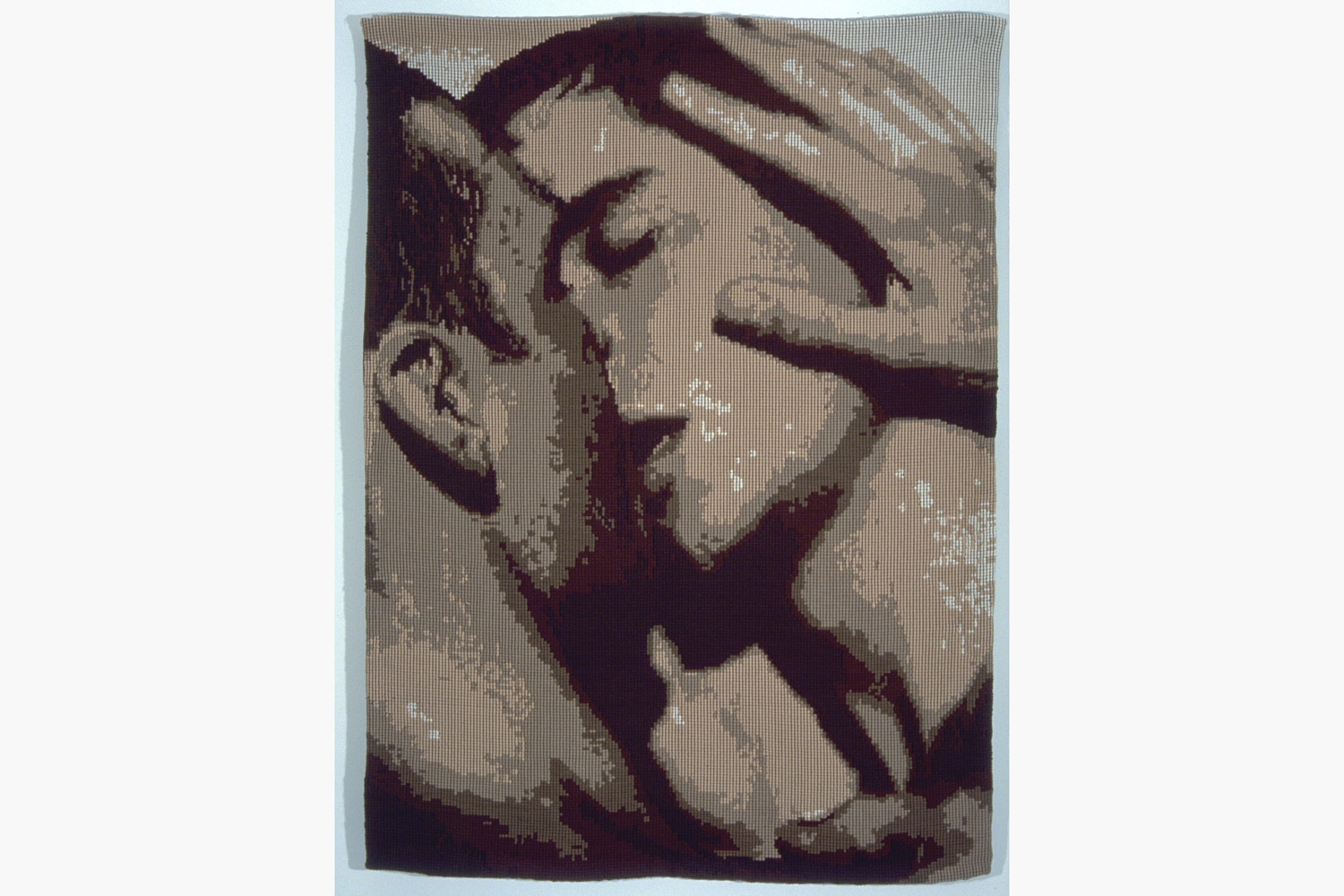
Carl Stewart (he/him) was born and raised on a potato farm on Prince Edward Island. He found his vocation when he walked into the weaving studio of the former School of Visual Arts. The experience led him to study textiles. He has woven since 1985, balancing a full-time day job with a studio practice. Carl’s artworks include clò mòr, which he developed in response to the criminalisation of homosexuality in more than 60 countries around the world, and Nice Shoes Faggot, a piece about the homophobic murder of a waiter in Ottawa. His creations are woven with conventional yarns and a miscellany of items including recycled fishing nets, cassette tape and yogurt-foil turned into yarn. “Technique is central to my practice: I test unfamiliar materials, weave colour gamps, create wrappings and conduct research,” he says. Carl started teaching in 2022 and models a generous, confidence-building approach.
INTERVIEW
In December 1984, I went to see an exhibition at the School of Visual Arts in Charlottetown. Upon walking into the weaving studio I remember quite clearly thinking, "so this is where I am supposed to be". I applied on the spot. Five days later I dropped out of university and began weaving in January 1985.
There are qualities inherent in textiles that make them a uniquely powerful medium for talking about challenging subjects. Textiles are so familiar to us, we are surrounded by them our entire lives, and that familiarity disarms and creates an entry point for engaging with difficult themes.
Sometimes a project arrives fully formed, while others incubate and morph over years. My tweed project, clò mòr, was a five-year process of responding to stories coming out of Iran, Russia and Uganda. Sometimes, one body of work seeds the next. Making the tweeds as near to zero-waste as I could, led directly to the recycling and upcycling in my project, wholecloth.
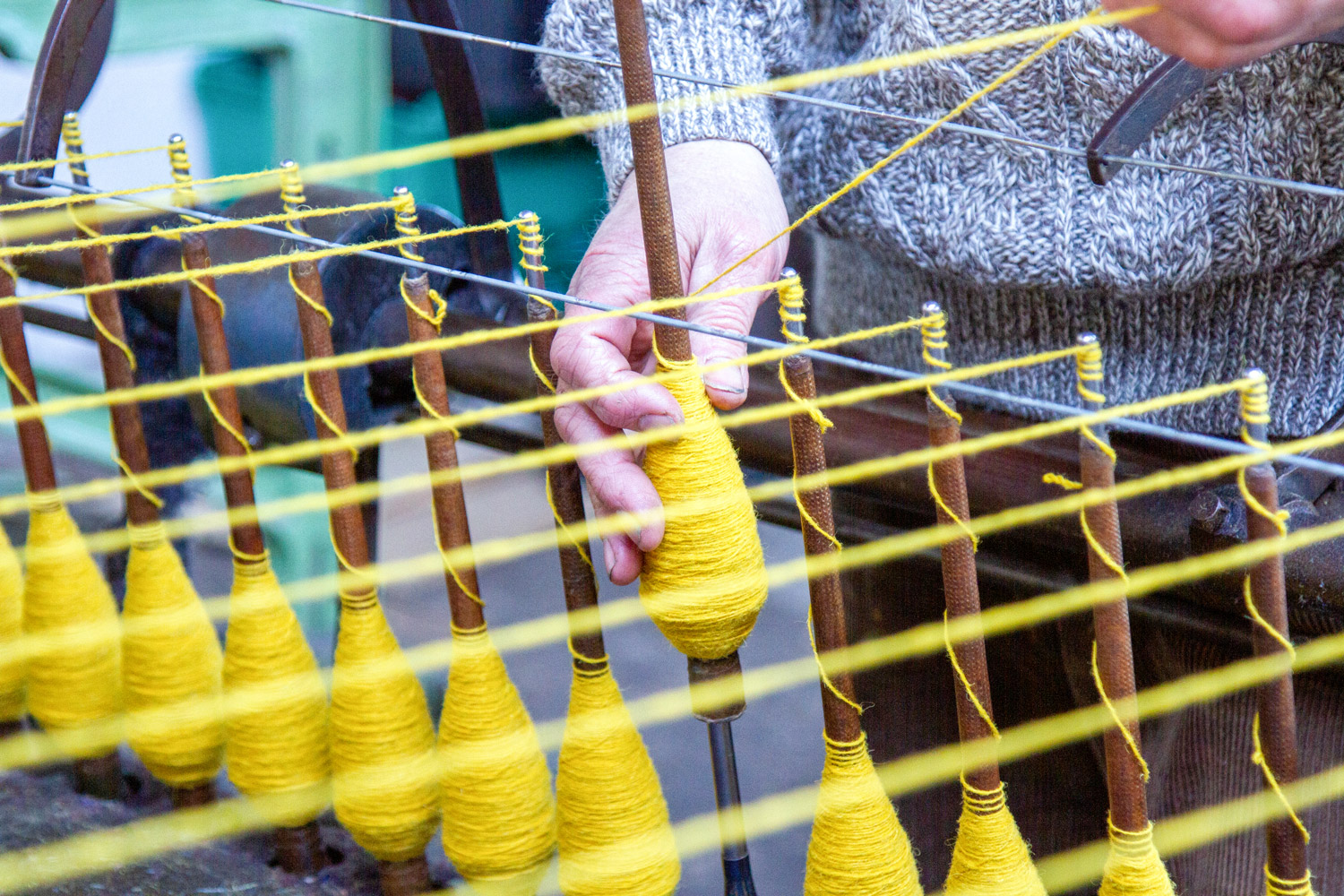
The process of turning found materials into a yarn for weaving can be time consuming, labour intensive and surprisingly physical. This gives me a strong sense of what the material can and wants to do. I sample the found materials extensively to be sure they will survive the loom.
Carl Stewart
Weaver
Ottawa, Canada
ADDRESS
Address upon request, Ottawa, Canada
AVAILABILITY
By appointment only
LANGUAGES
English
Homo Faber Finds is a new service aiming to inspire admirers of craft to connect and collaborate with exceptional artisans.
We invite you to submit an enquiry here.