Amalita Bruthus
Restorer
Porrentruy, Switzerland
Recommended by Métiers d'art Suisse
A new lease of life
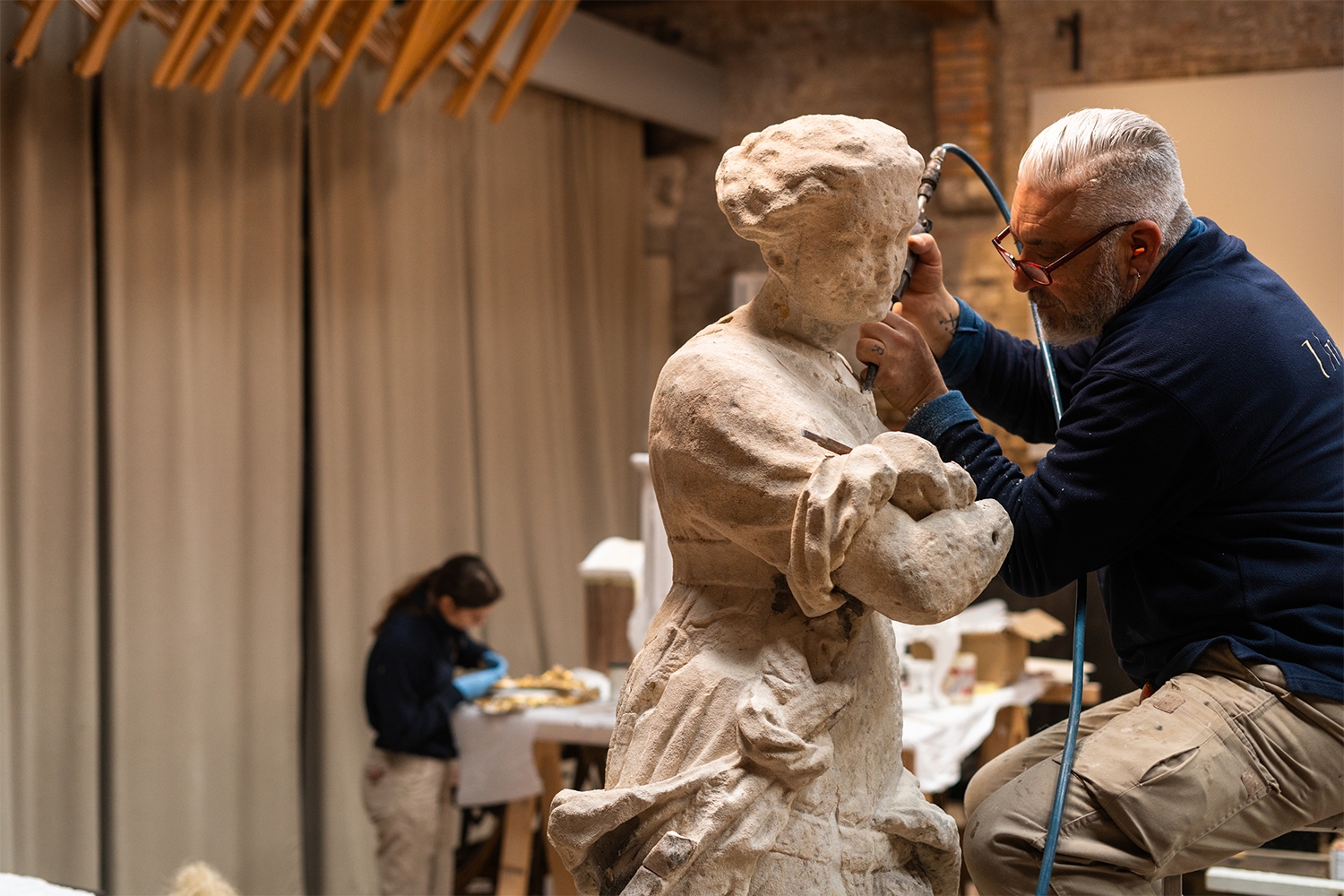
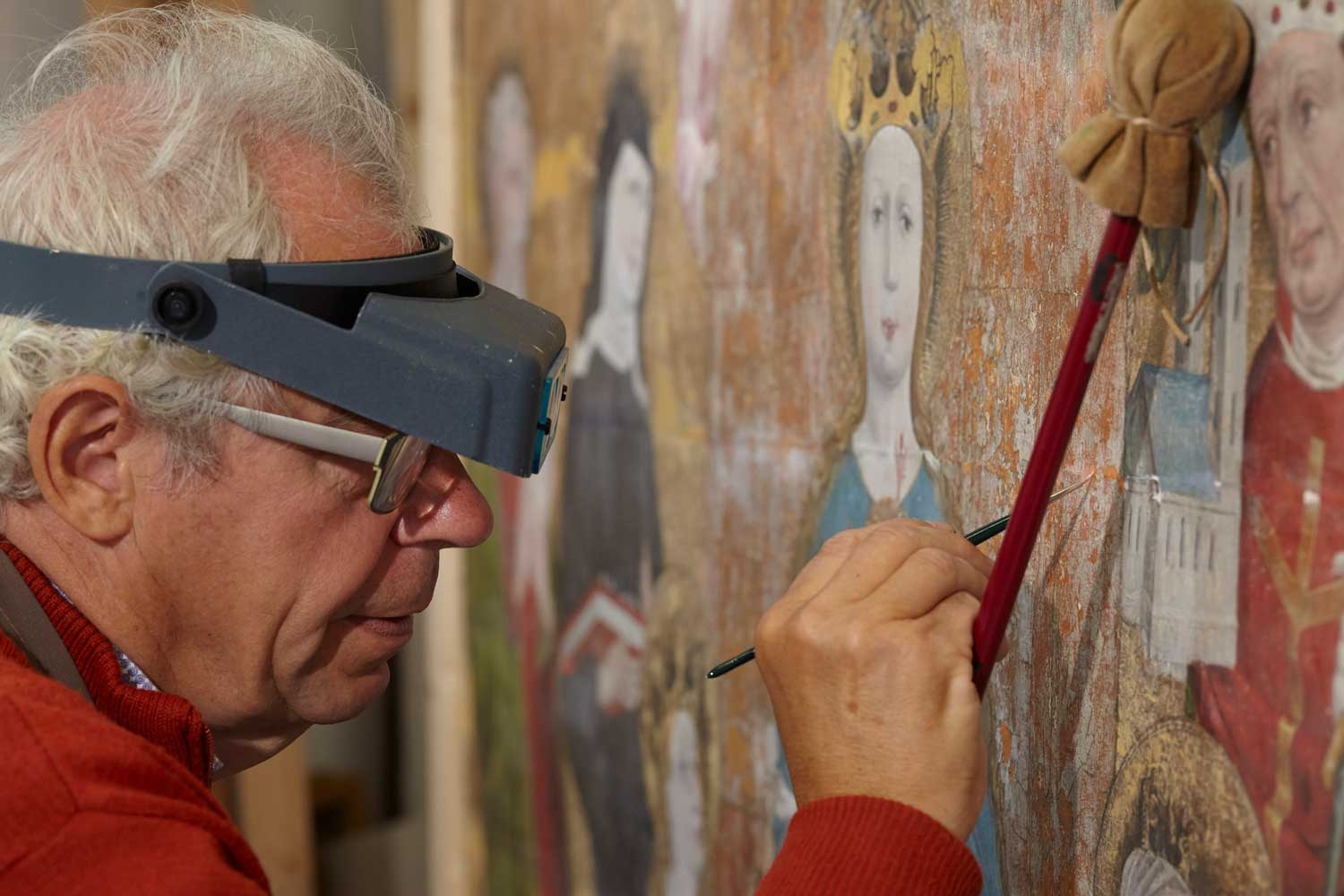
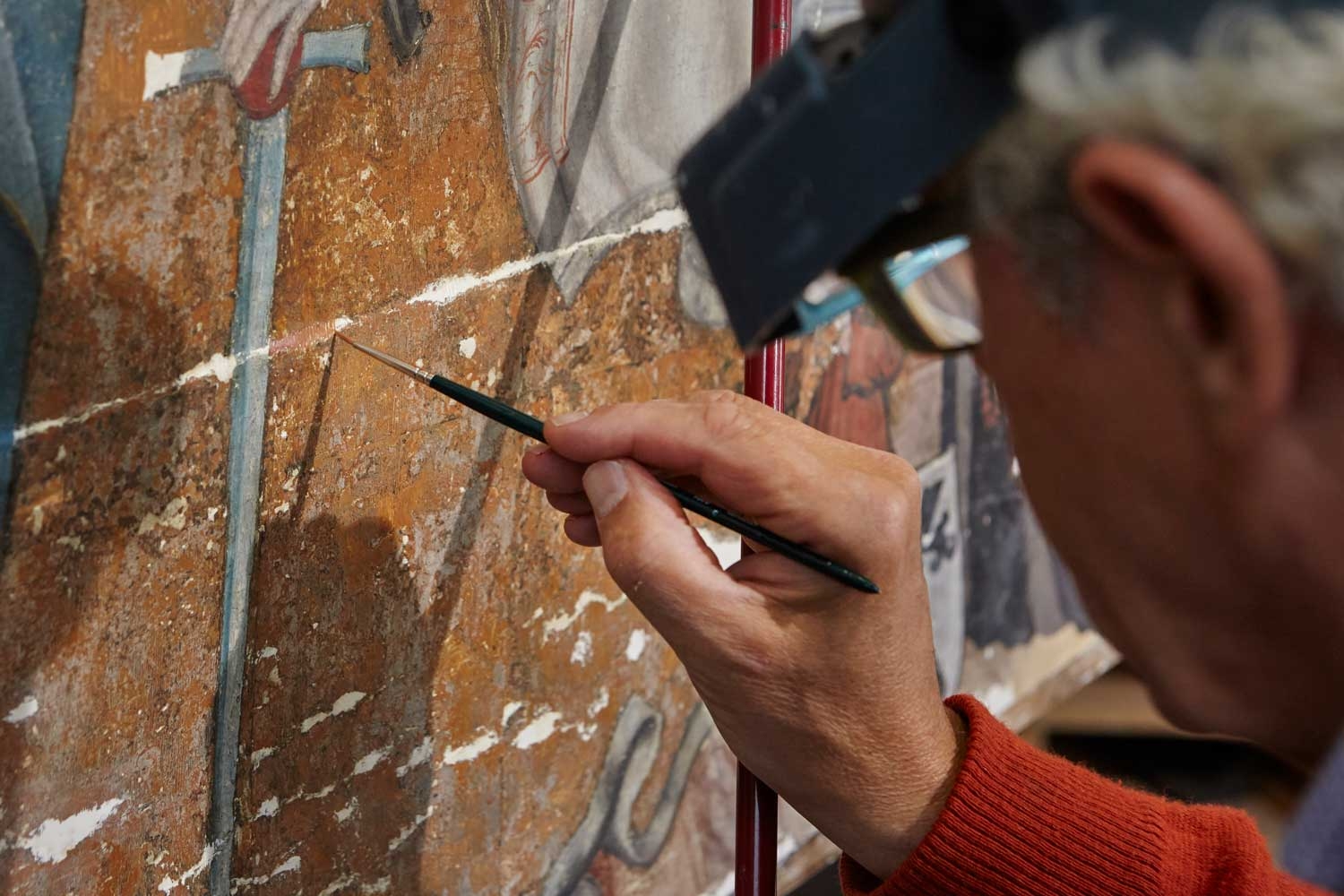
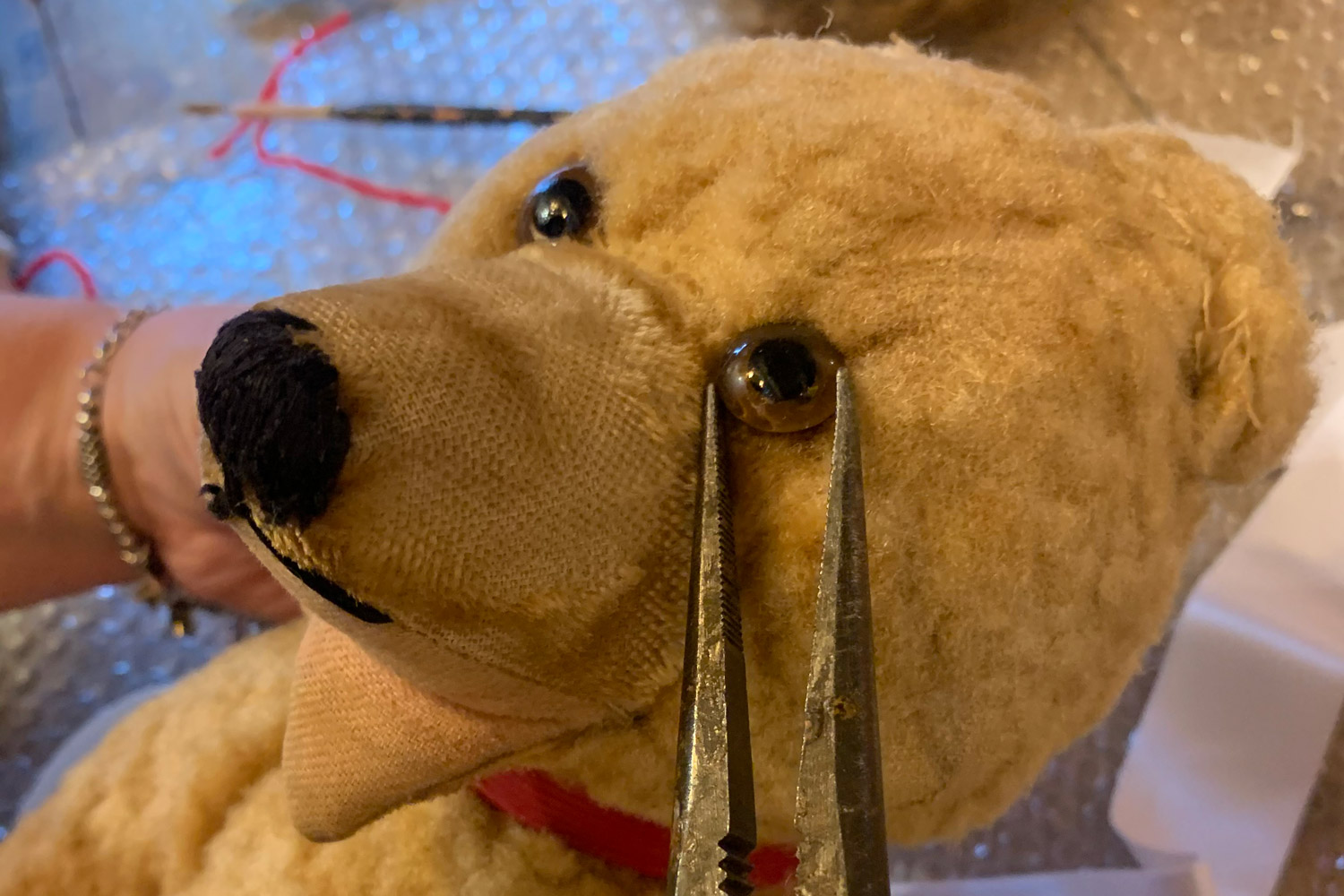
- Amalita increases the lifespan of works of art
- She loves to discover new materials and the techniques
- In 2019, she won the first Métiers d'art & Patrimoine prize
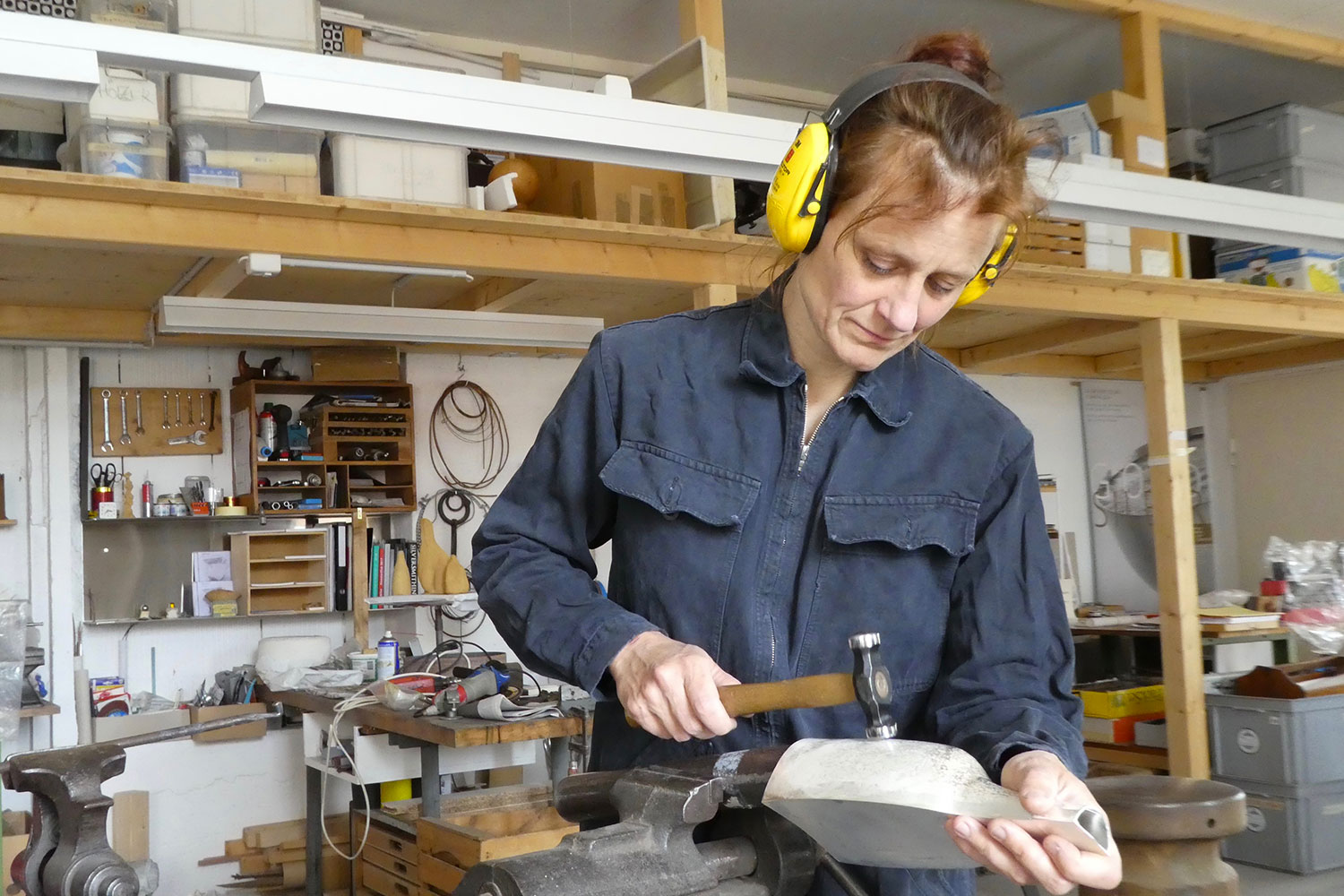
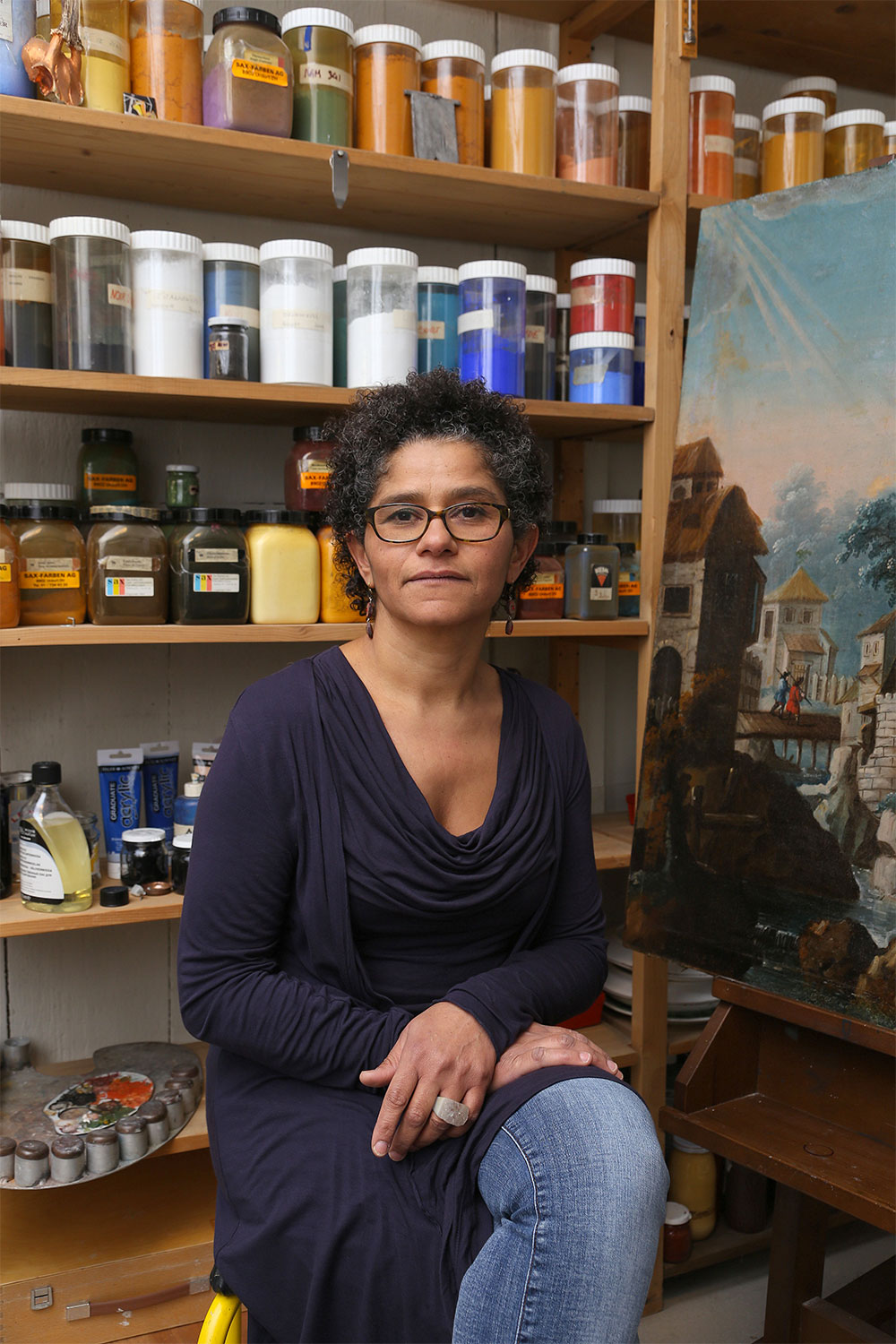
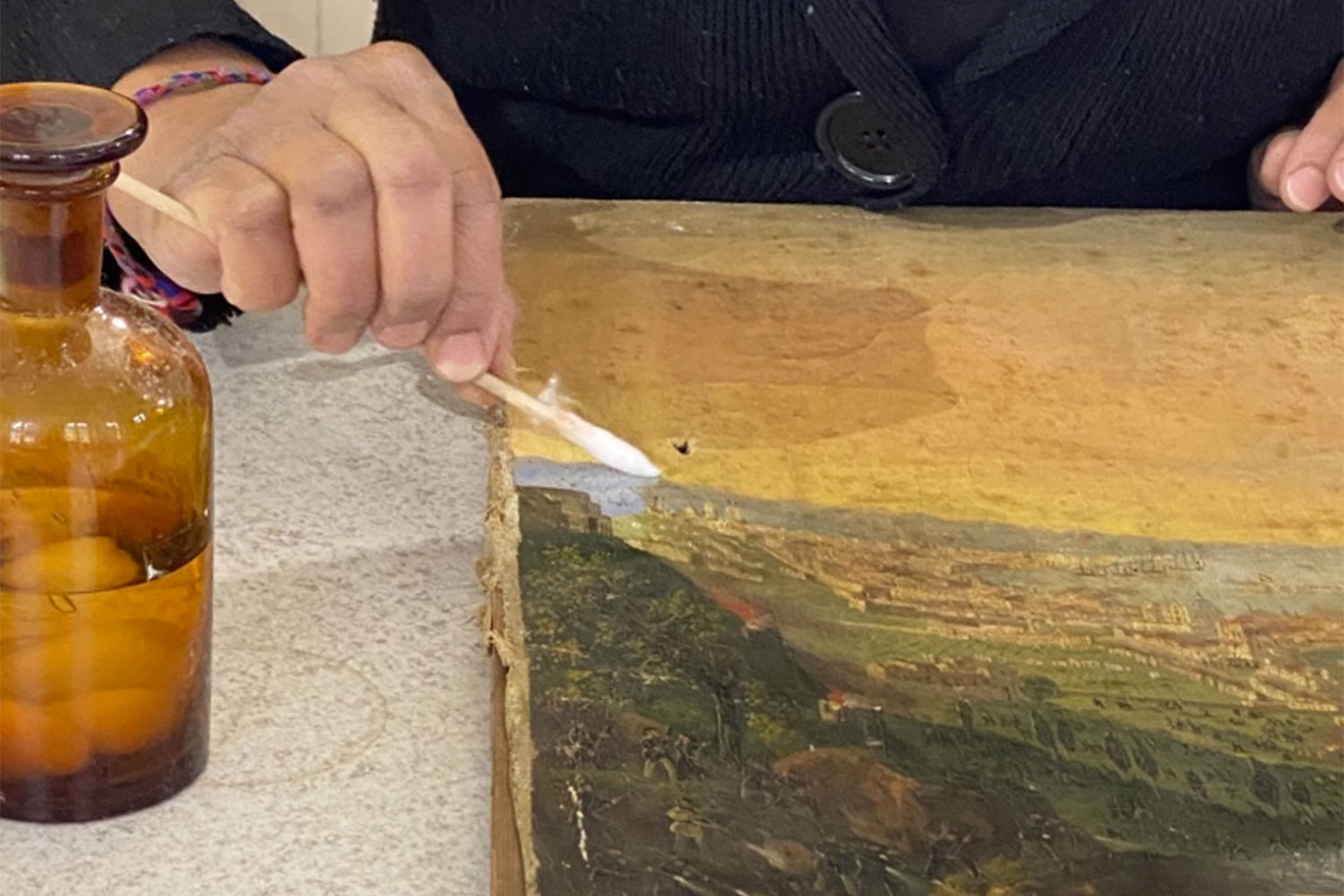
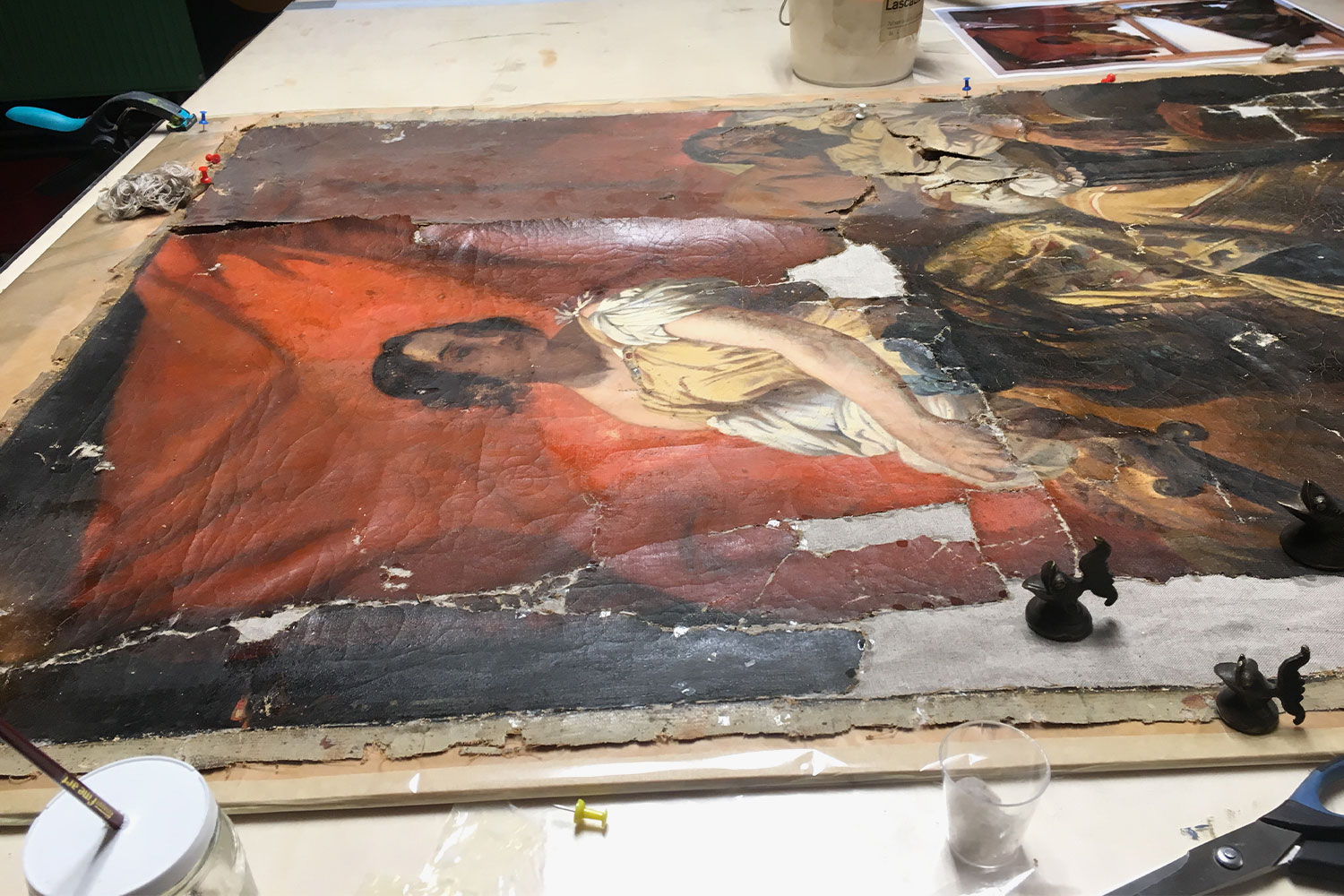
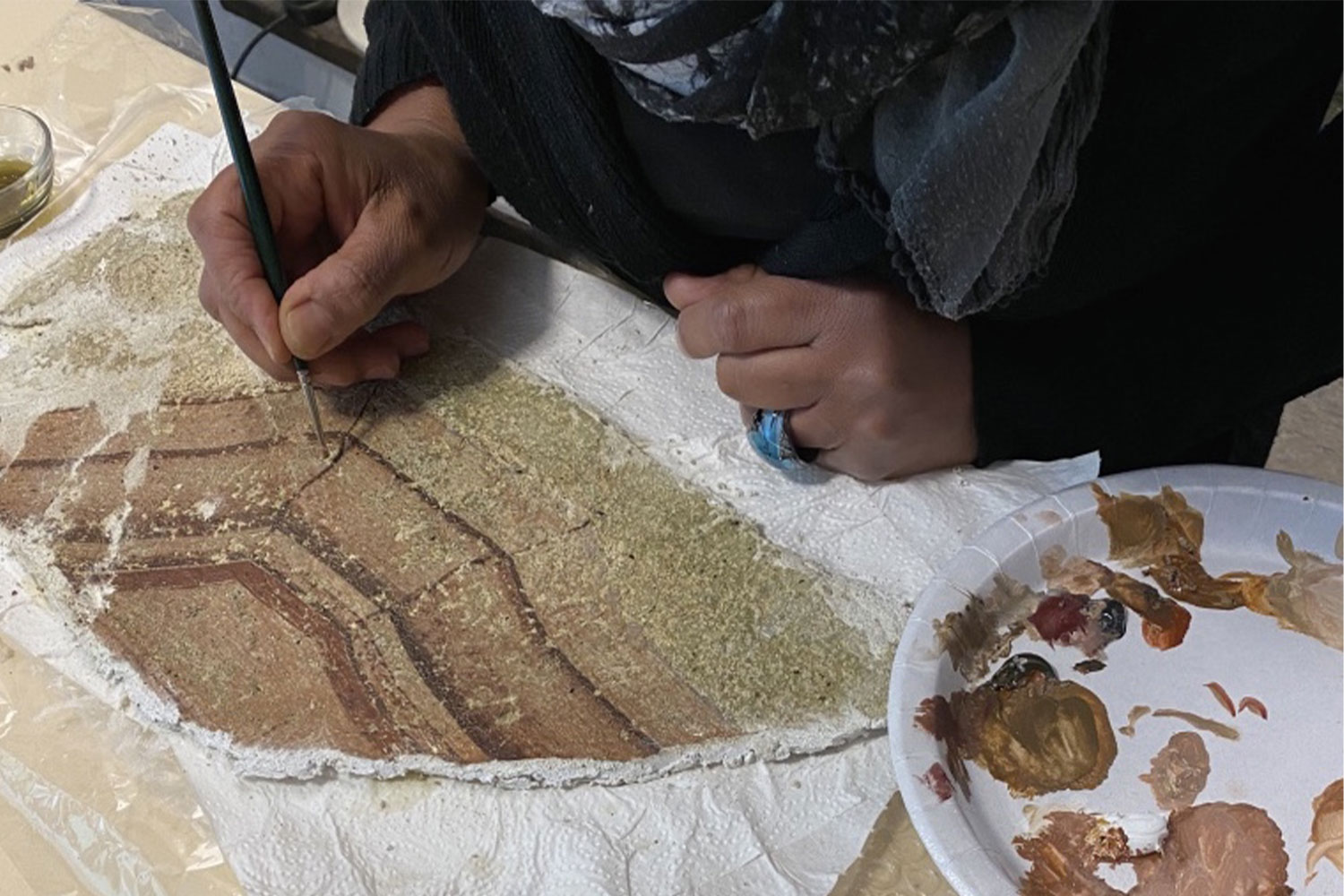
I chose this profession,” explains Amalita Bruthus, “because of my love, my great interest, my curiosity for art and science, especially chemistry. I wanted to understand the materials of which artworks are made, the mixtures, the compositions of a painting. I longed for the opportunity to discover the hidden facets and details of these works.” In the 1980s, alongside her studies at the Faculty of Biology at the University of Lausanne, she regularly attended lessons with Vaud artist Jacques Walther in painting and drawing. Her interest in the arts in general was born from these exchanges and pictorial practice. “The scientific spirit and my growing affection for the artistic field led me to a restoration-conservation workshop. I discovered this doubly fascinating universe in Martigny, and I continue to develop it today in Porrentruy," Amalita adds.
INTERVIEW
In 1996, my work brought me to the canton of Jura, to the workshop of Jean-Philippe Villoz in Porrentruy. The tangible and intangible cultural heritage of this region of peripheral Switzerland immediately fascinated me.
In 2002, following the decease of Mr Villoz. The Culture Office of the canton of Jura, as well as the parishes and individuals, found themselves without an art restoration workshop. It was only natural that I should take over the work of my predecessor.
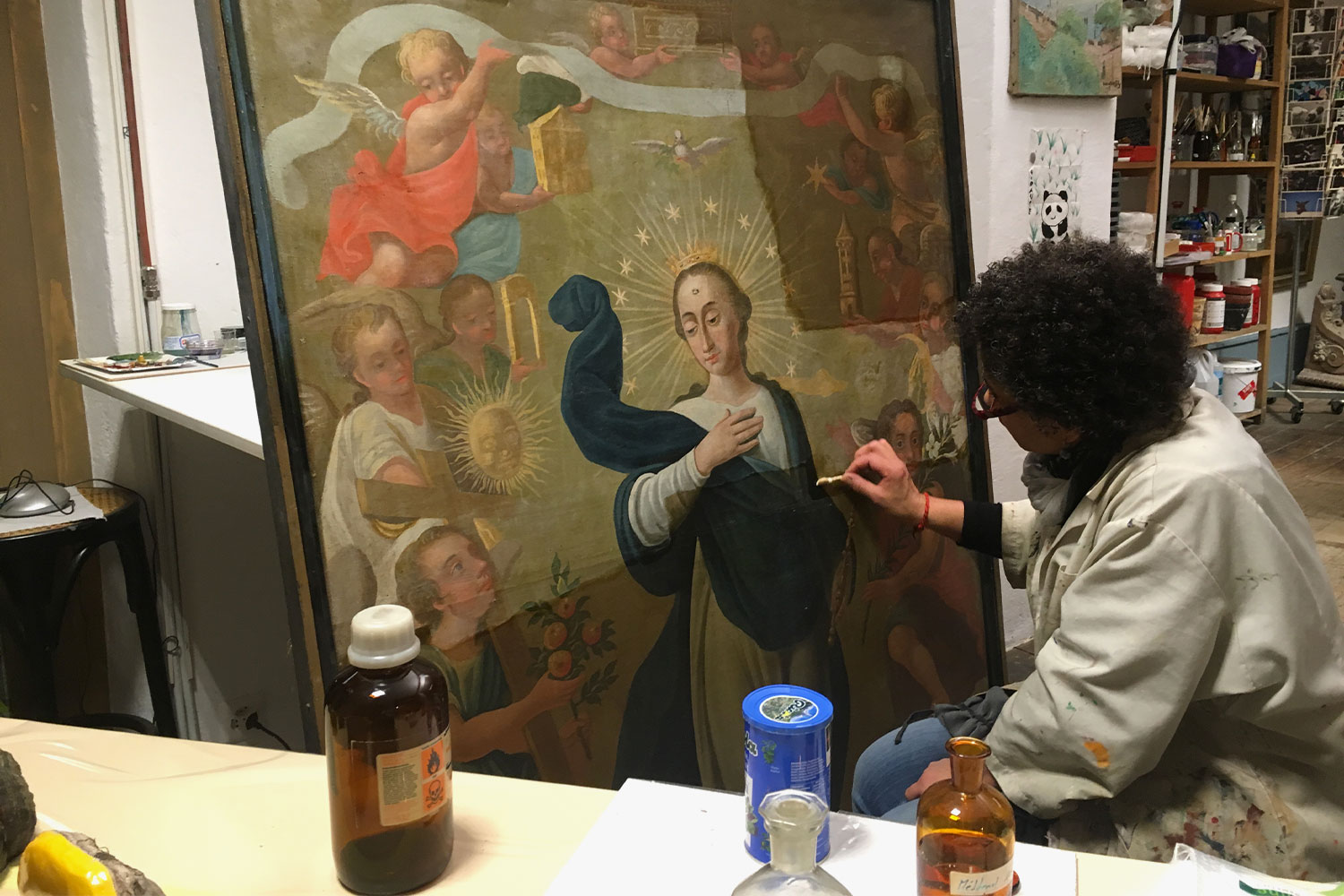
I master the pictorial techniques and the identification techniques of the original execution. As each work presented to me is a relatively unique object, it is essential for me to constantly train myself in the new challenges presented by the great diversity of the arts over the centuries.
I particularly admire the work of Paolo Cadorin, the late chief restorer of the Kunstmuseum in Basel. To this day, I am deeply influenced by his example, both for the quality and the delicacy of his restoration works, as well as the modernity of his technical approach.
Amalita Bruthus
Restorer
Porrentruy, Switzerland
Recommended by Métiers d'art Suisse
AVAILABILITY
By appointment only
PHONE
+41 797396450
LANGUAGES
French, English
Homo Faber Finds is a new service aiming to inspire admirers of craft to connect and collaborate with exceptional artisans.
We invite you to submit an enquiry here.