
When clay is a way of life
- George studied at Gloucestershire University, UK
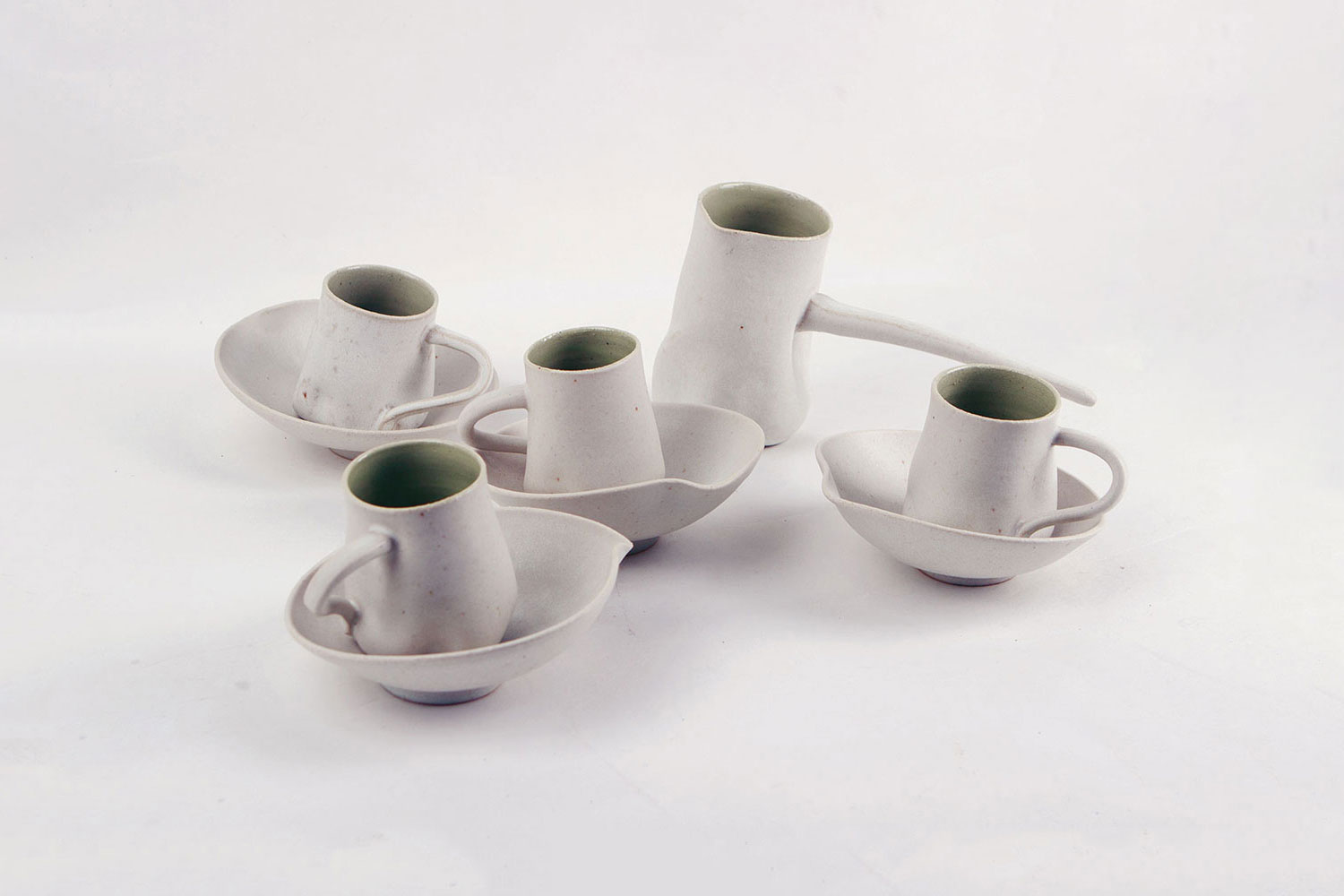
- The first object he designed was a coffee cup named Alice
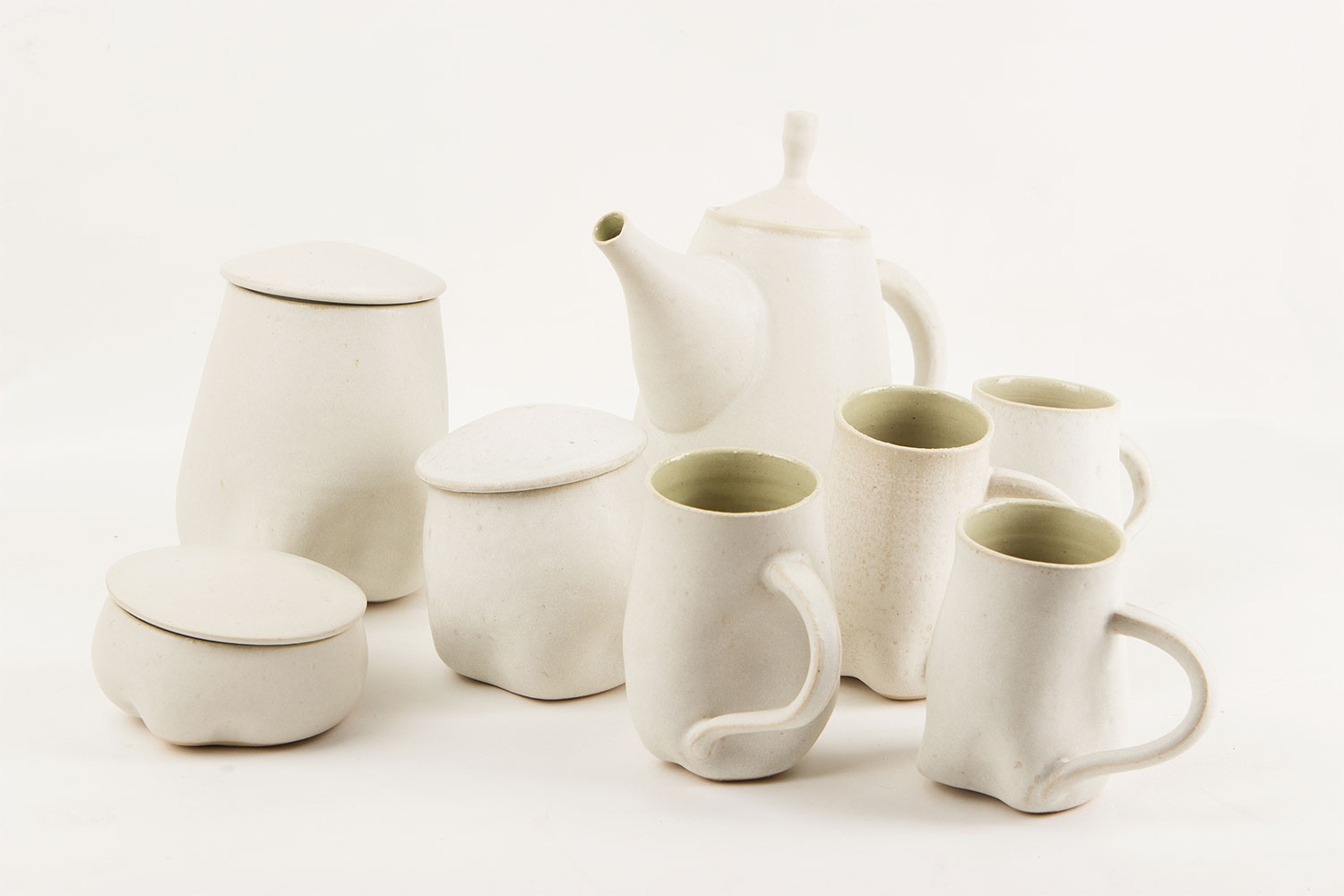
- His functional pieces are influenced by Greek everyday life
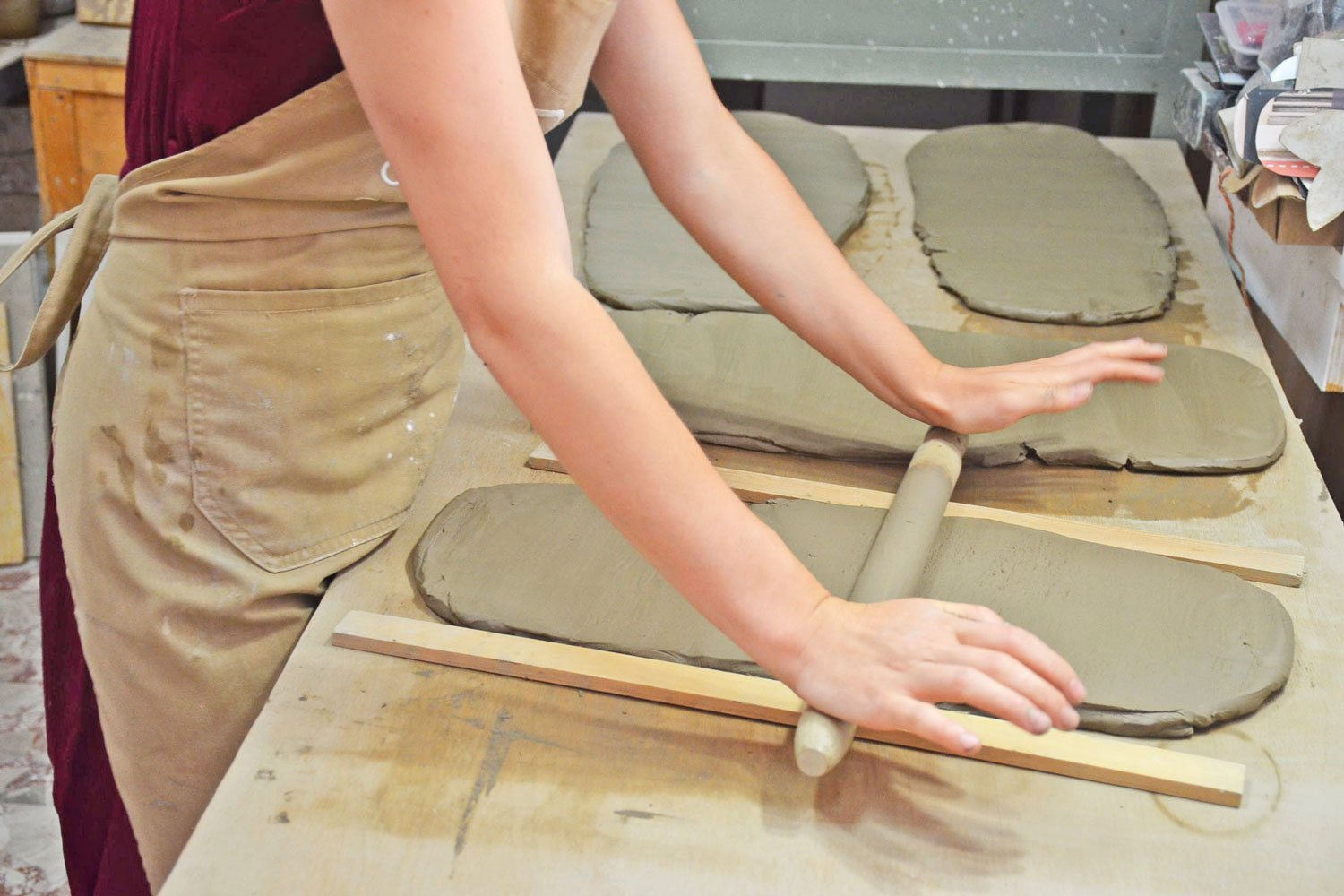
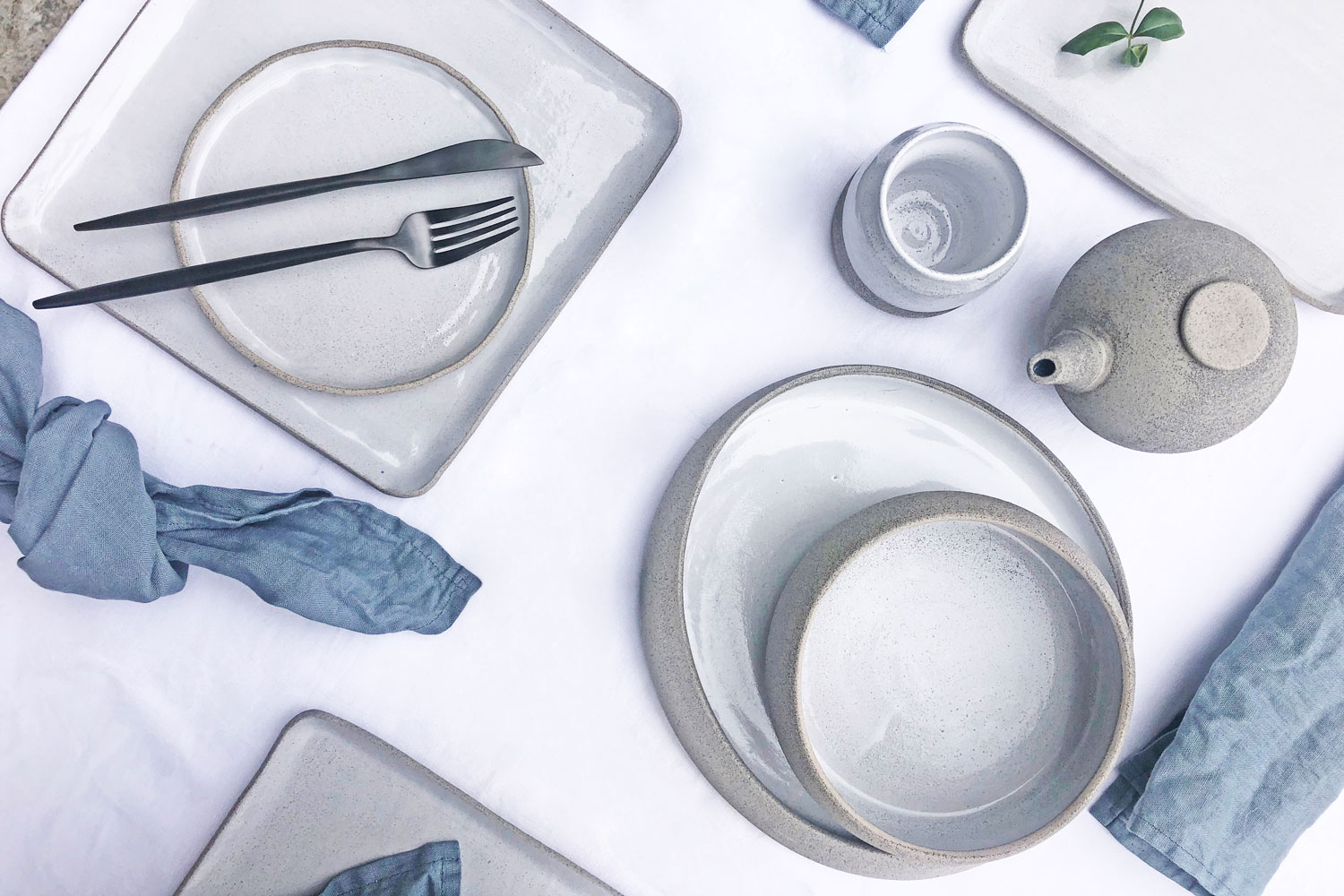
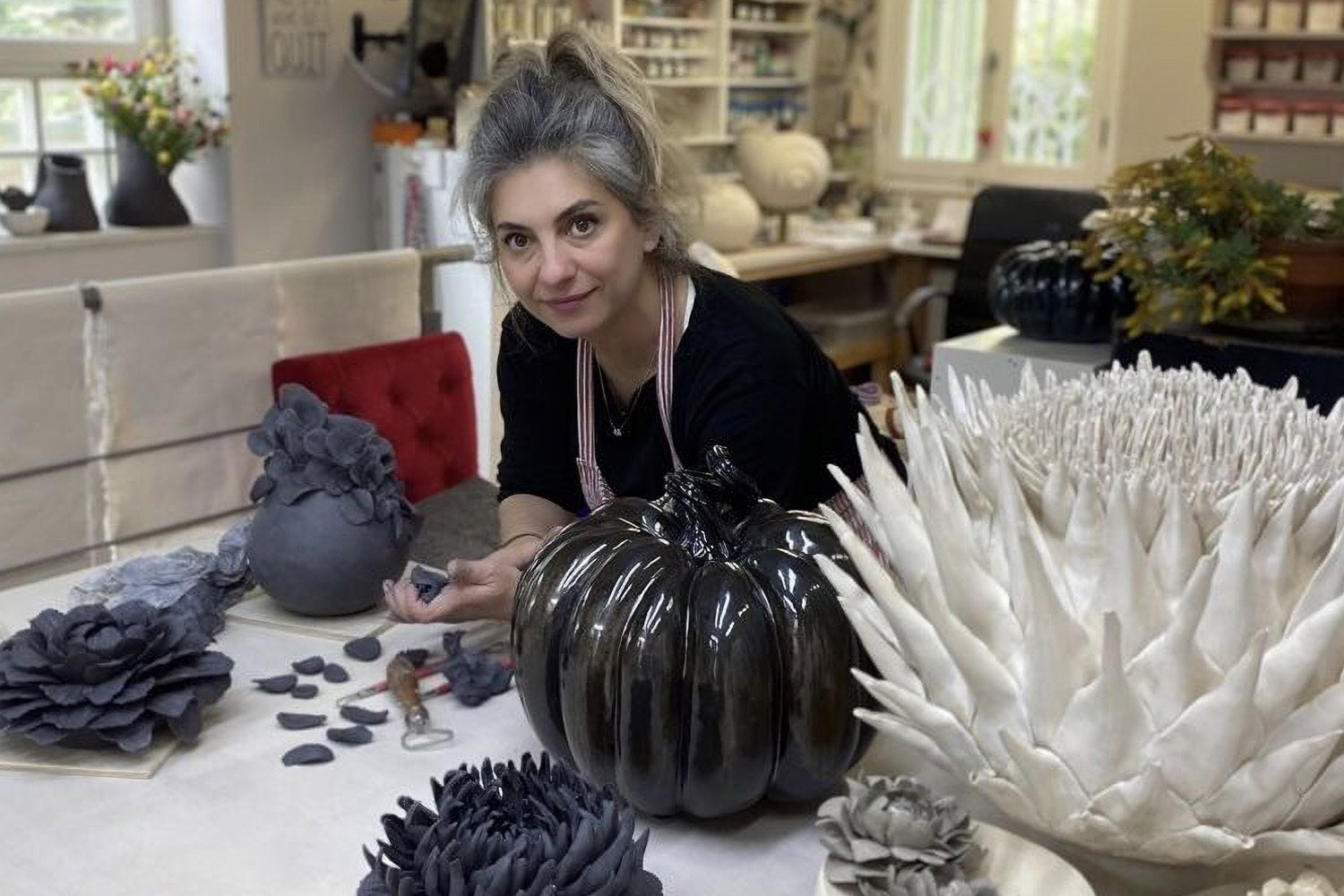
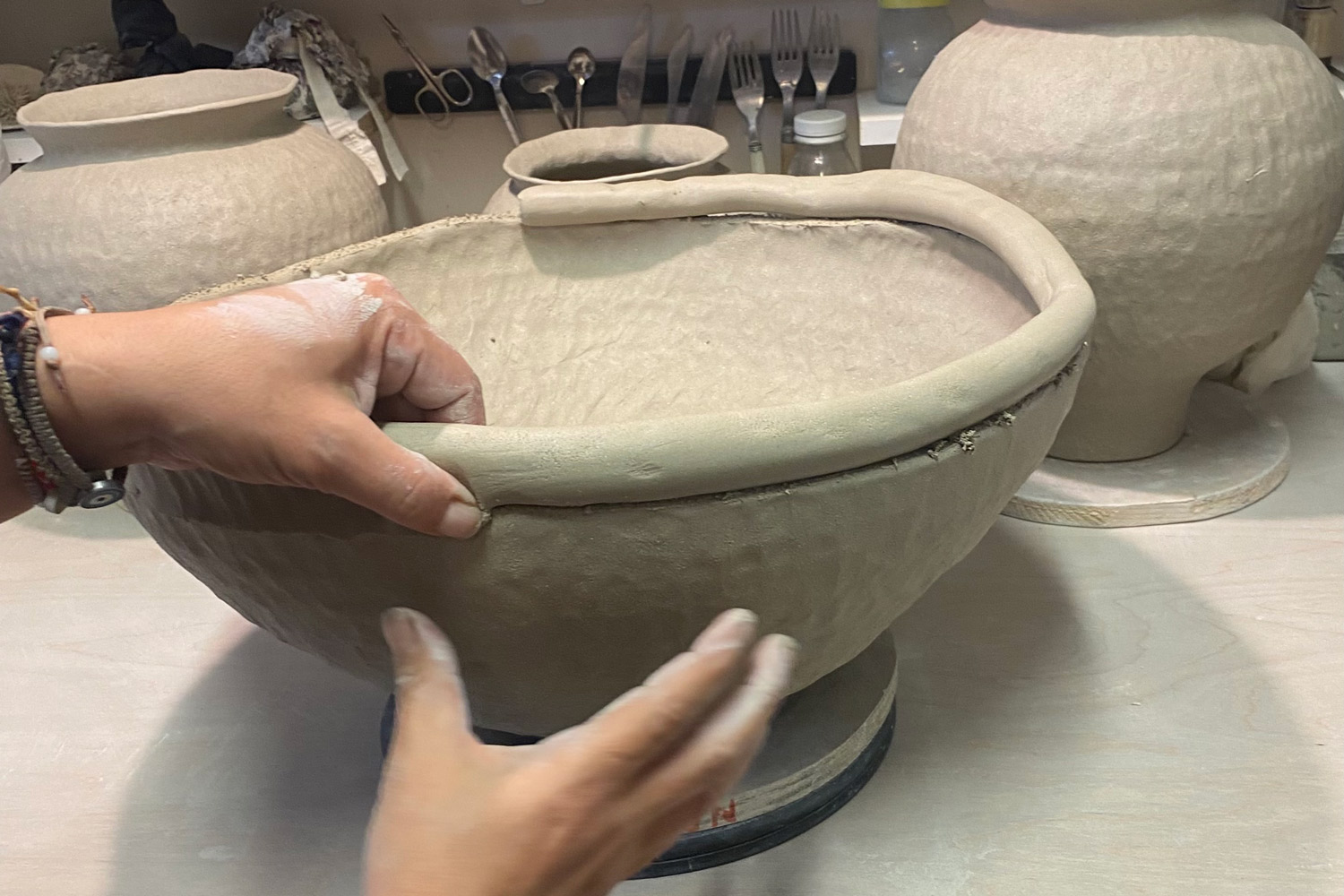
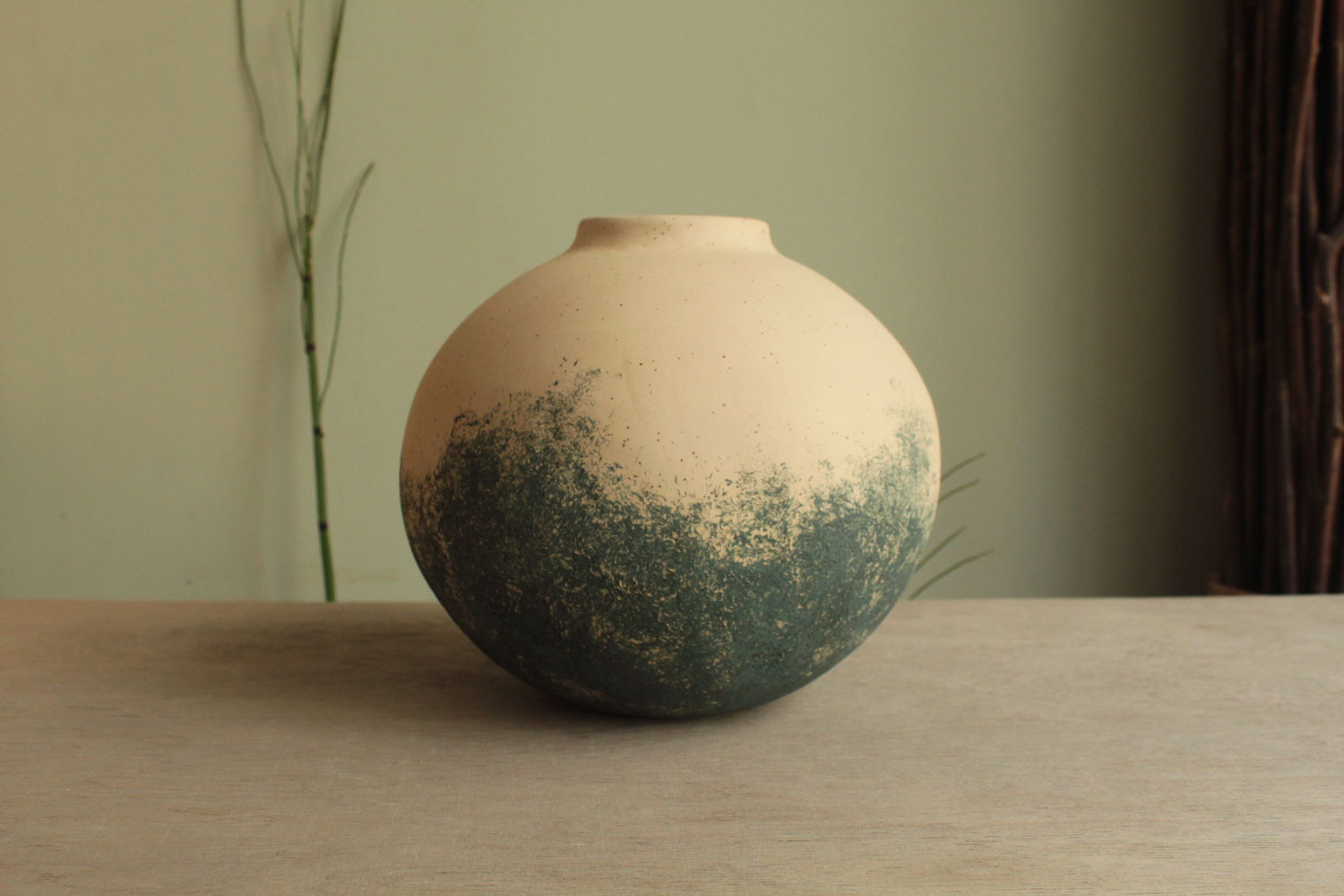
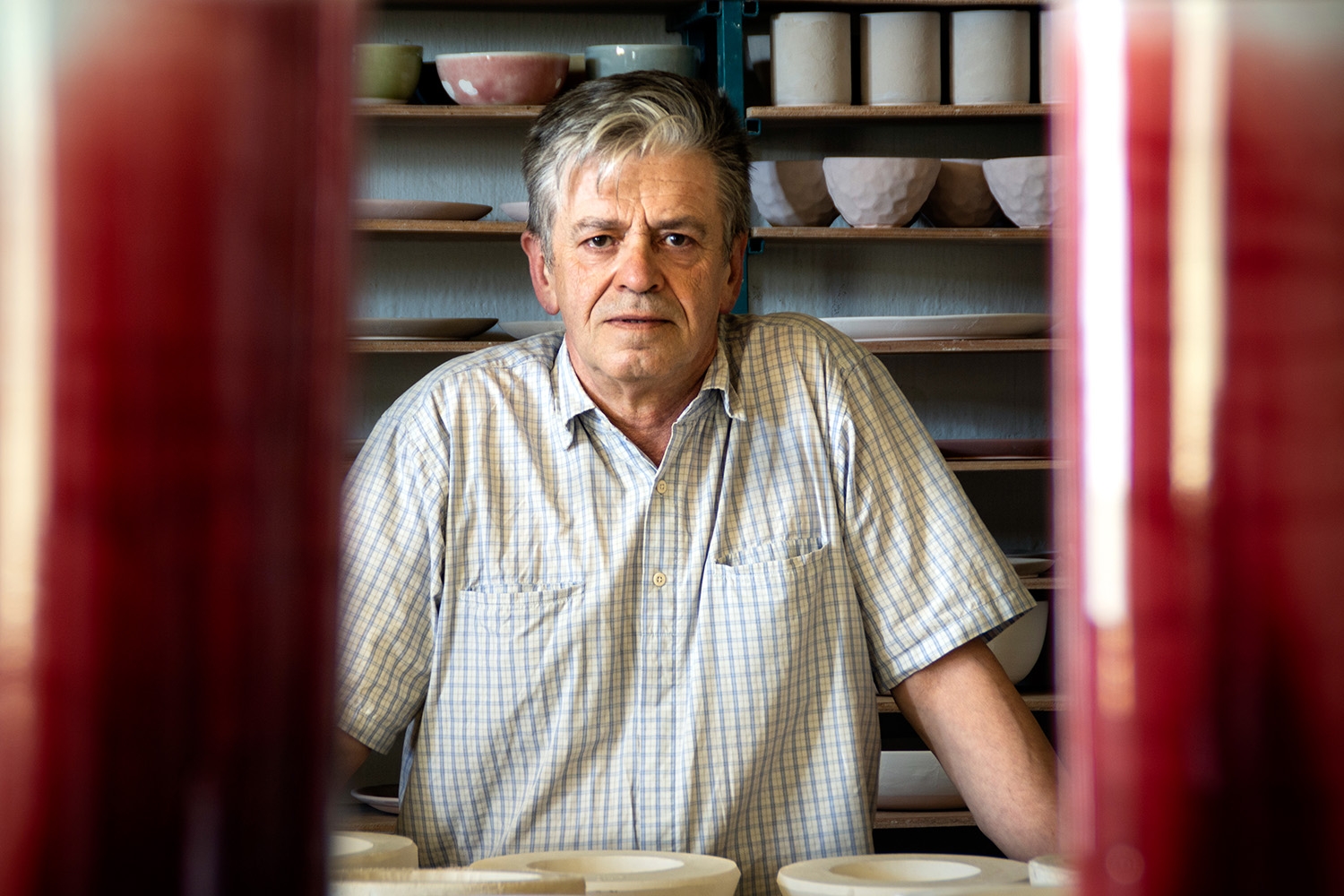
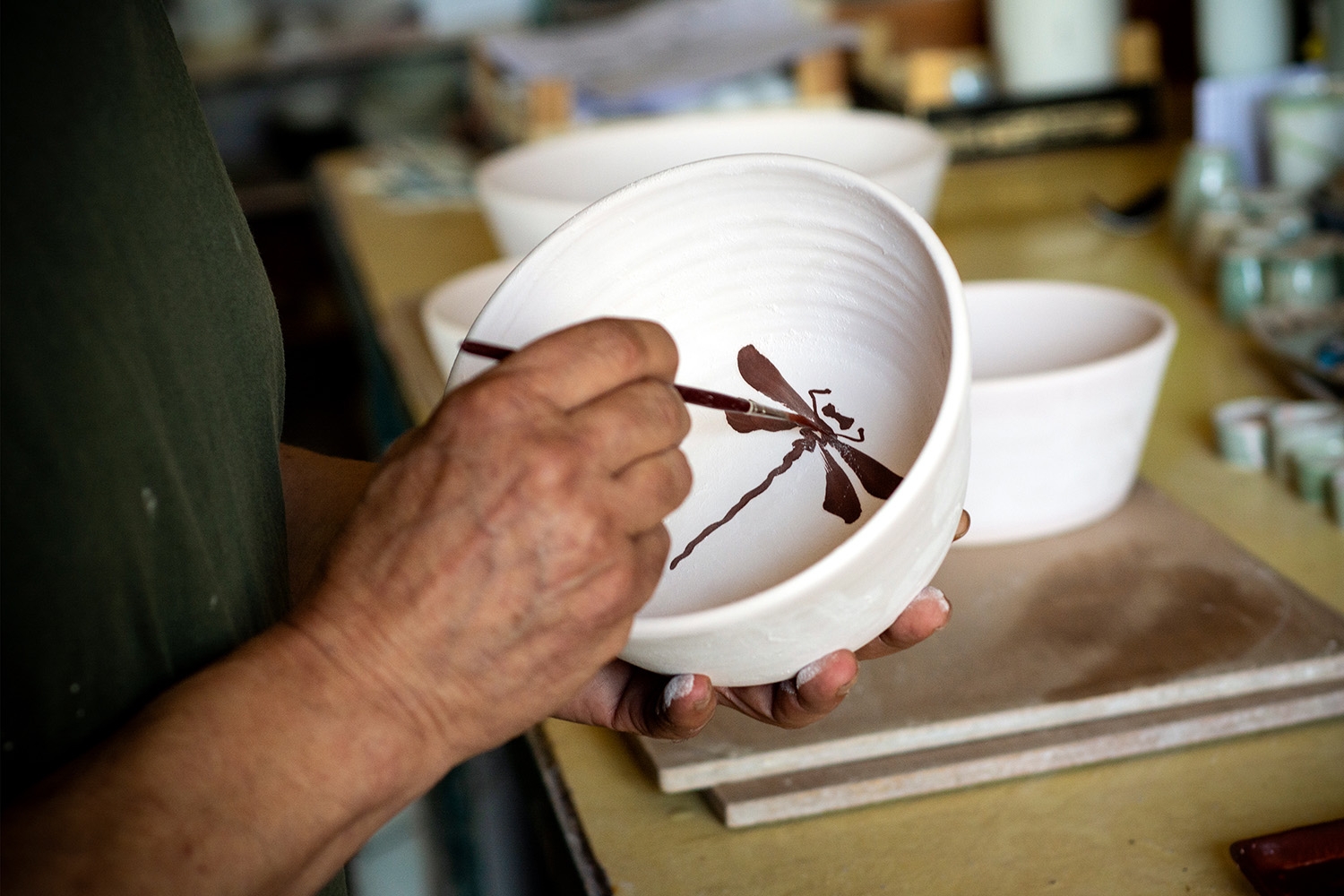
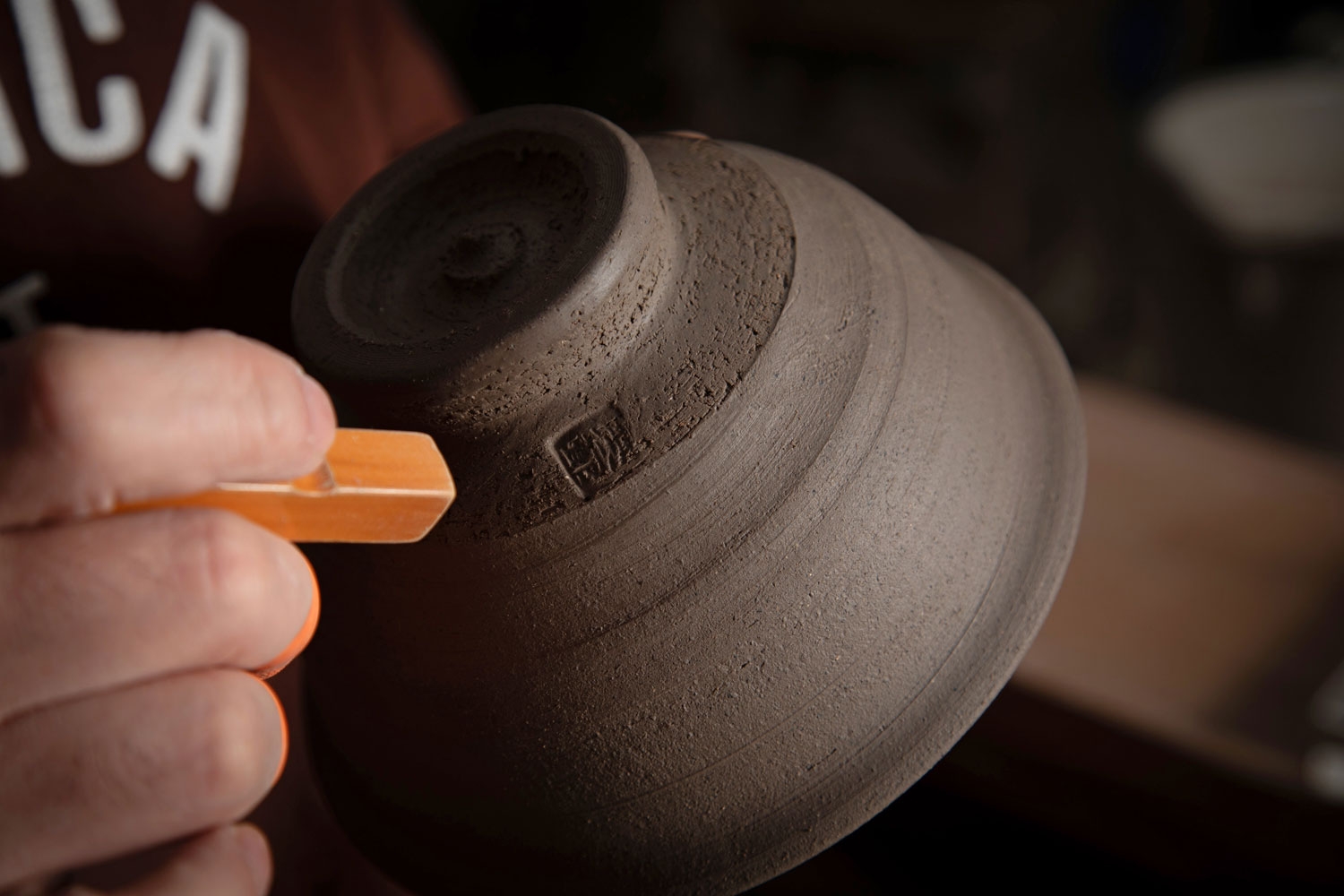
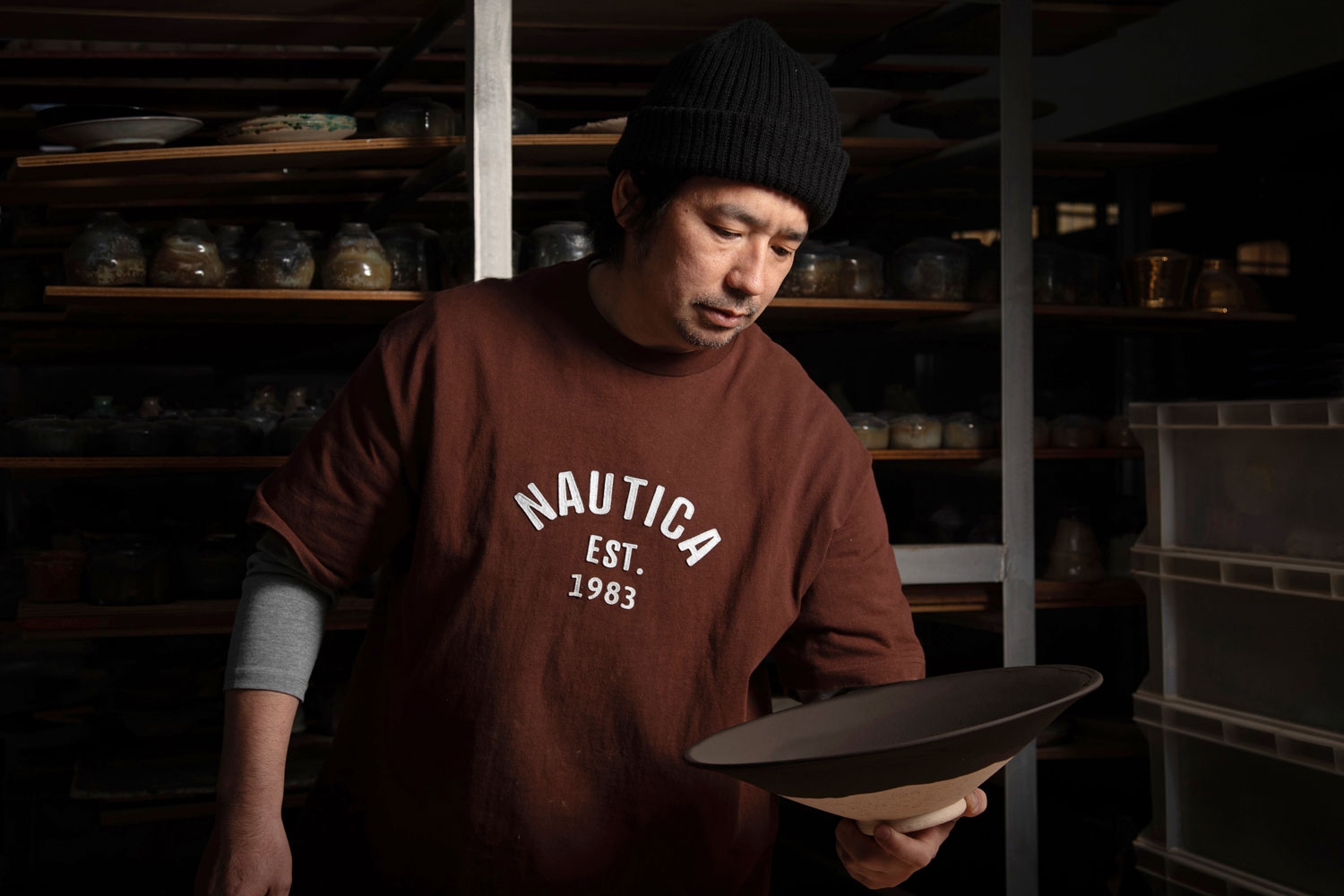
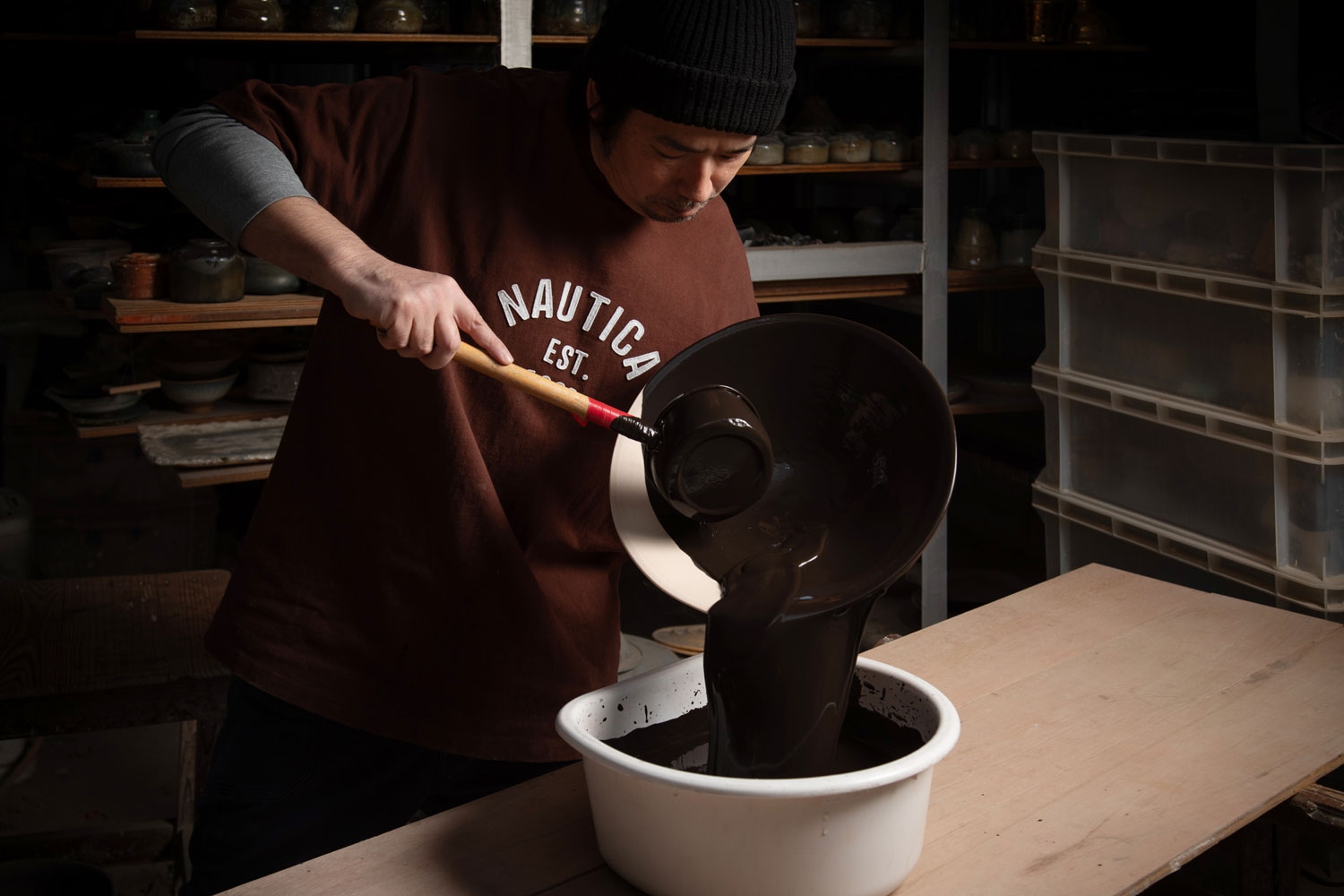
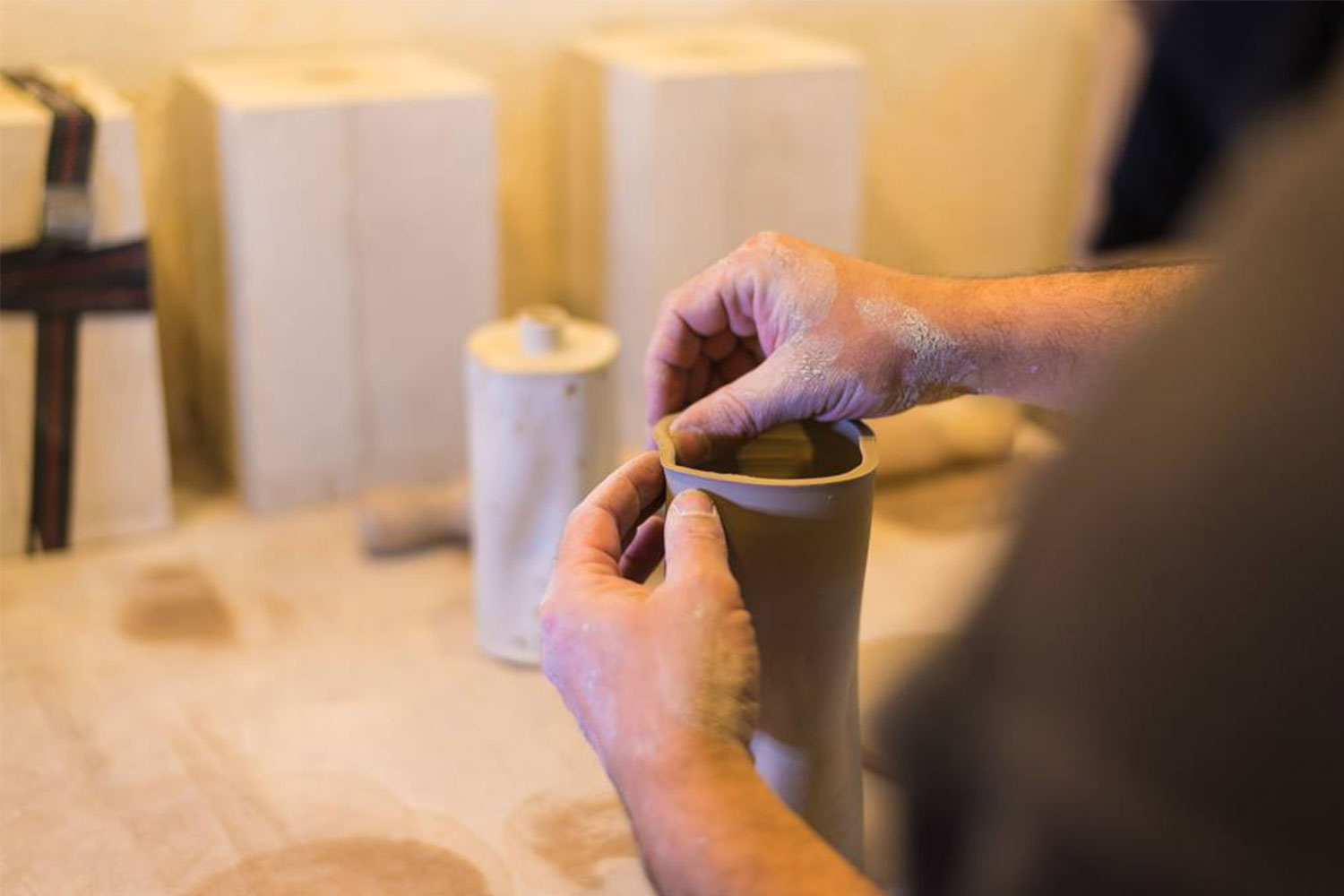
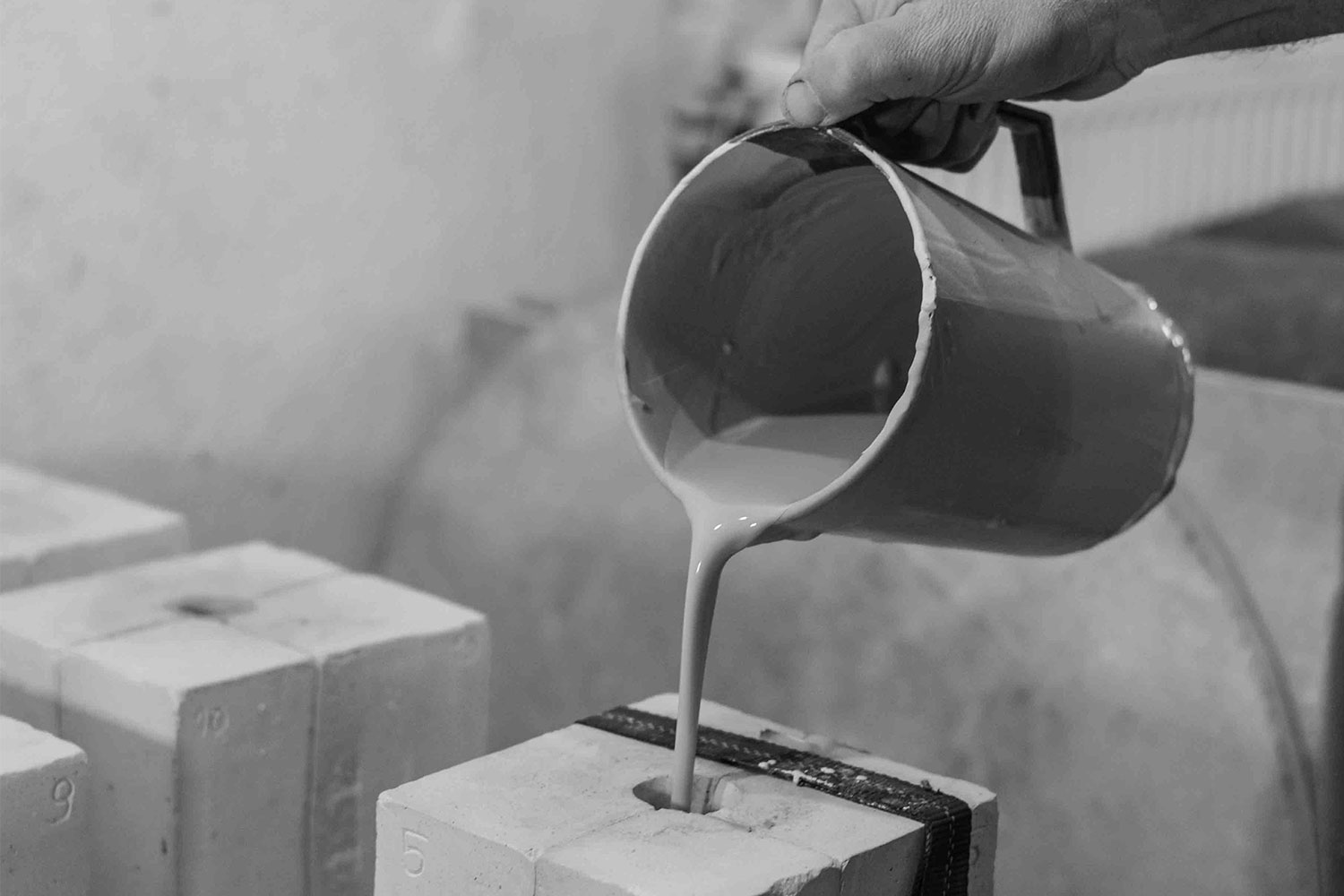
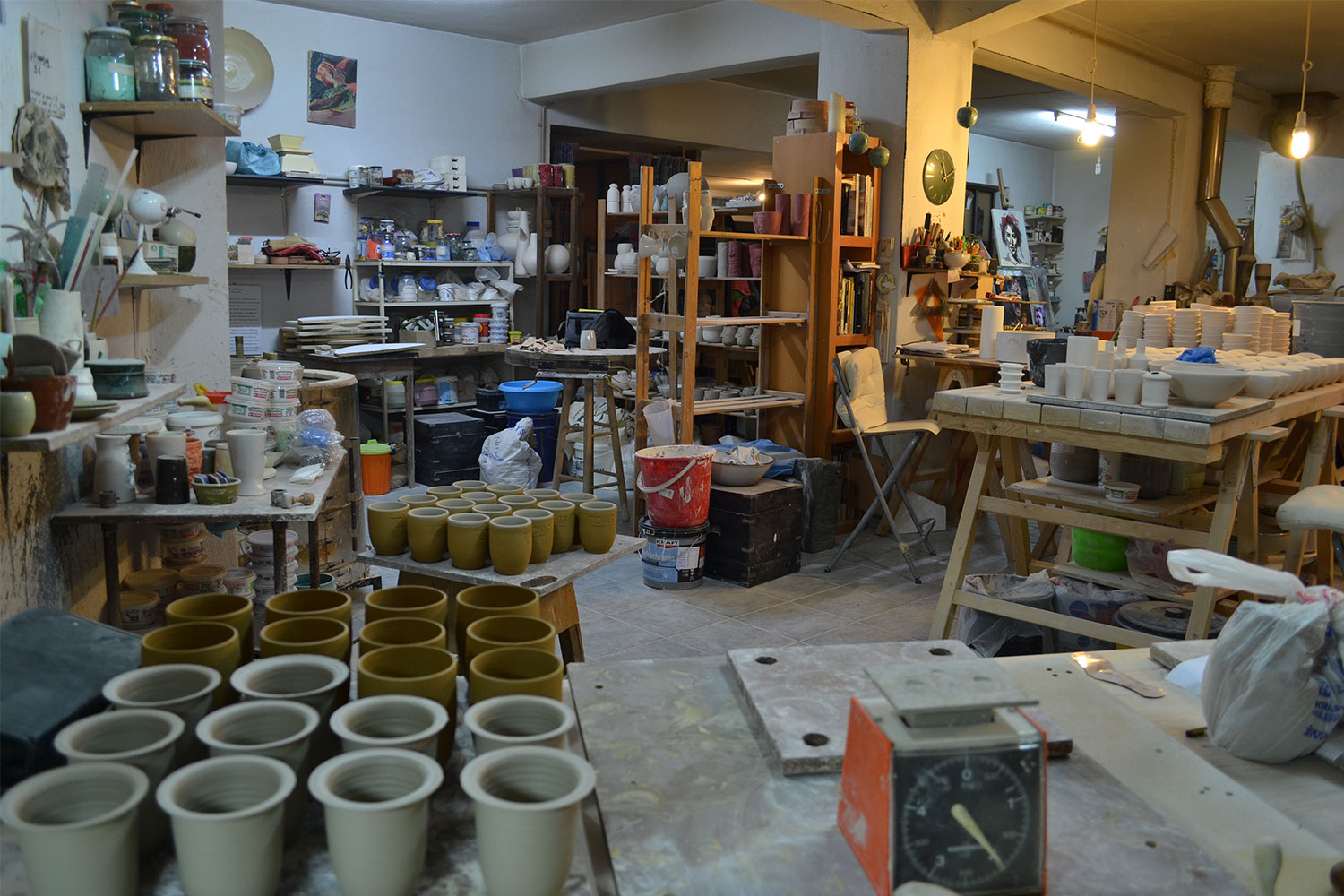
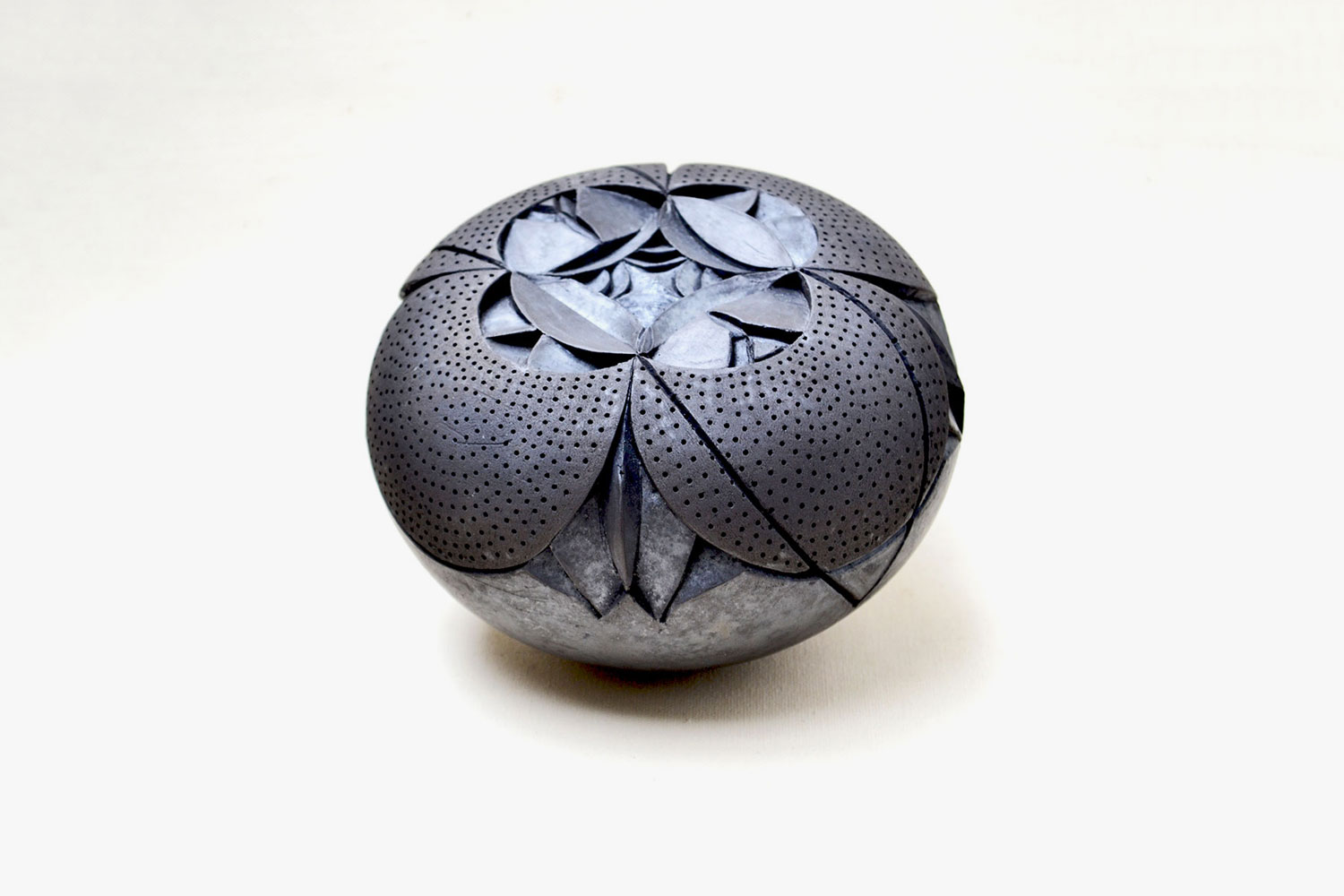
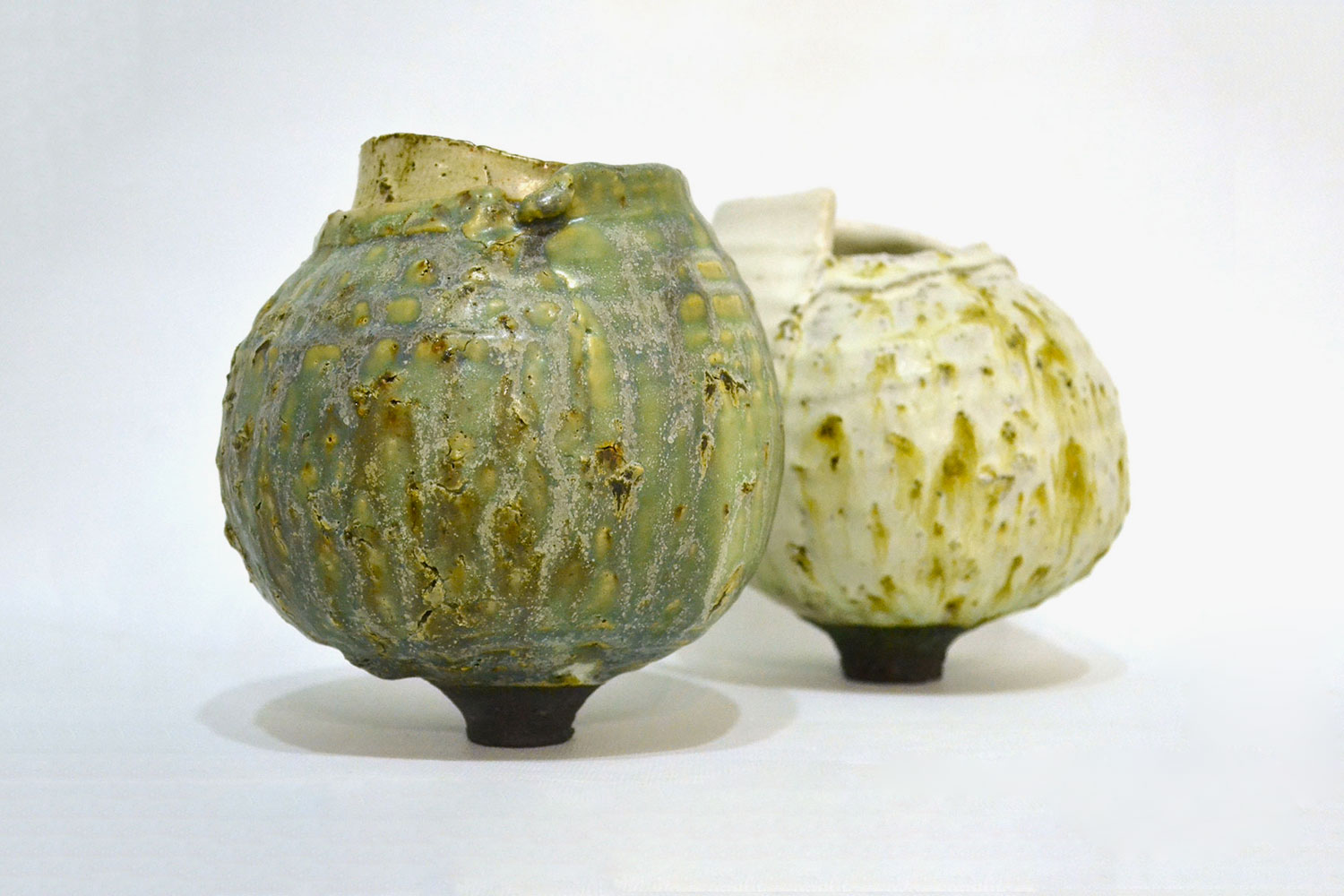
George Vavatsis opened his own workshop in 2000. Ever since becoming acquainted with the potter’s wheel while studying in England, he has been using it for the majority of his creations. In recent years he has also integrated minerals into his pieces. He carefully selects the minerals from various geographical areas within Greece, before introducing them to the clay chosen for the creation of his work. Through firing, these minerals form new colours and textures on the ceramic pieces. George does not consider pottery a job, but a way of life, no matter how laborious it may feel at times.
INTERVIEW
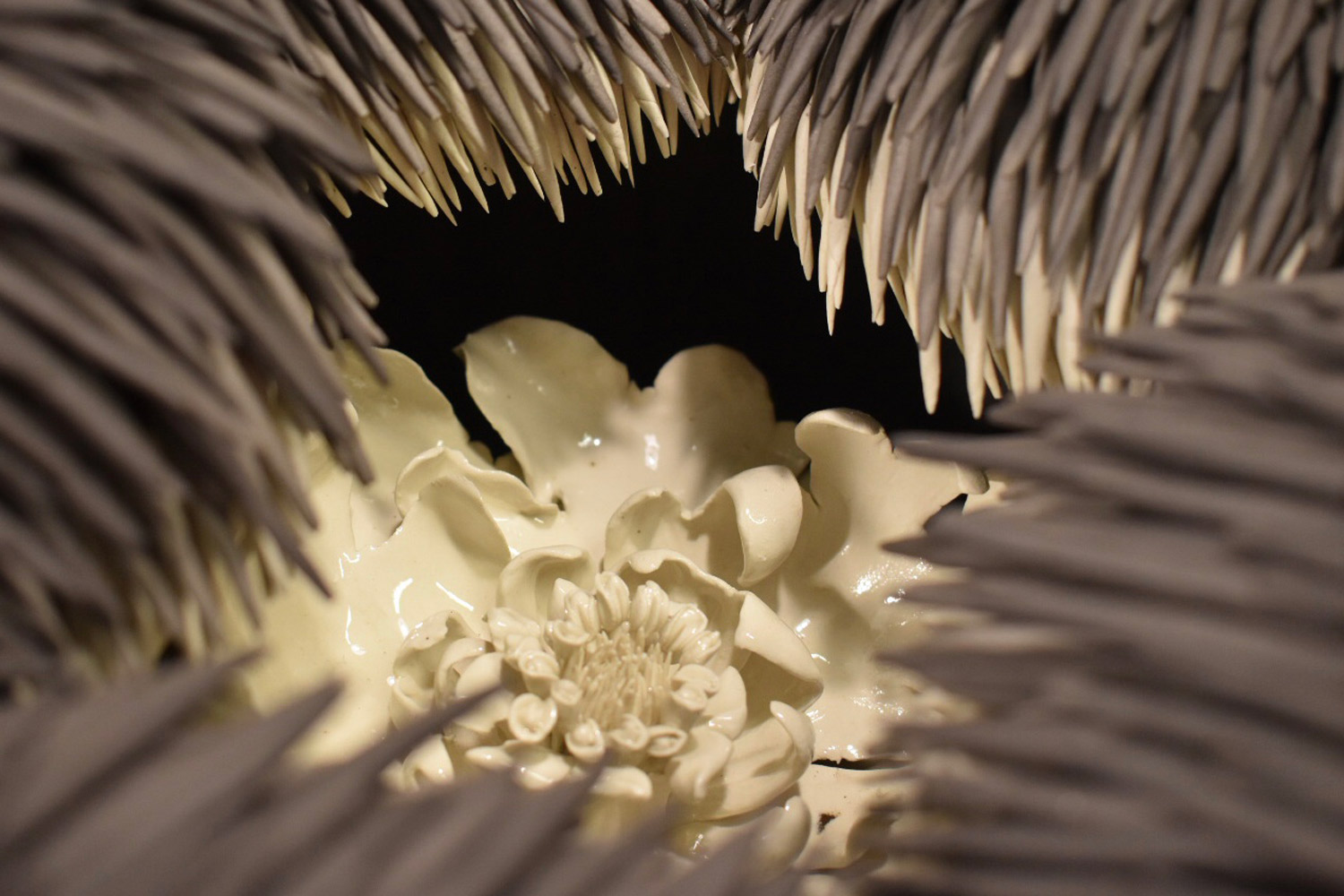
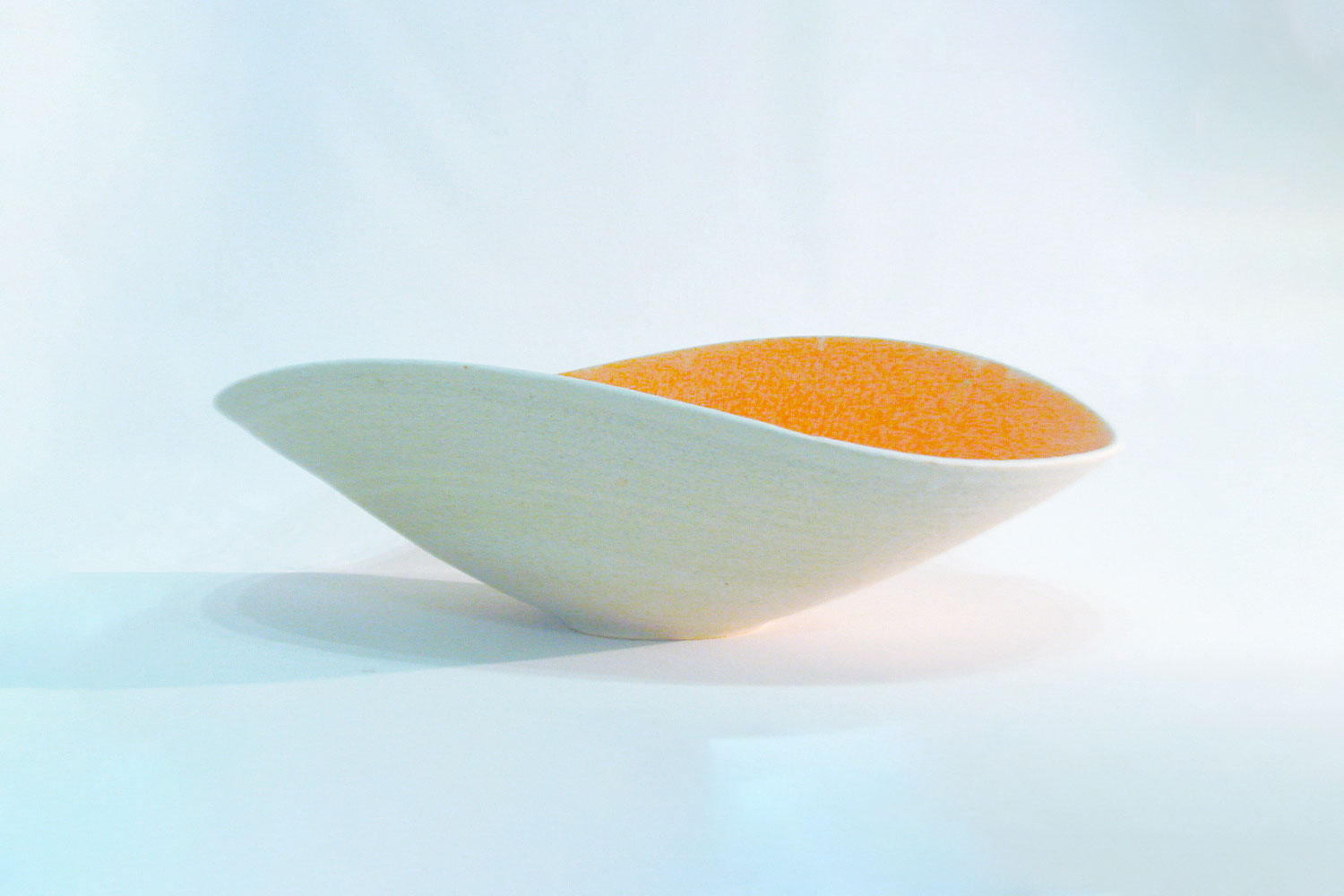
The forms I have been working on are based on my admiration of the aesthetics and craftsmanship of specific utilitarian clay objects I have seen at various traditional workshops throughout Greece. Also, using the colour white in my work connects it to Greek tradition.
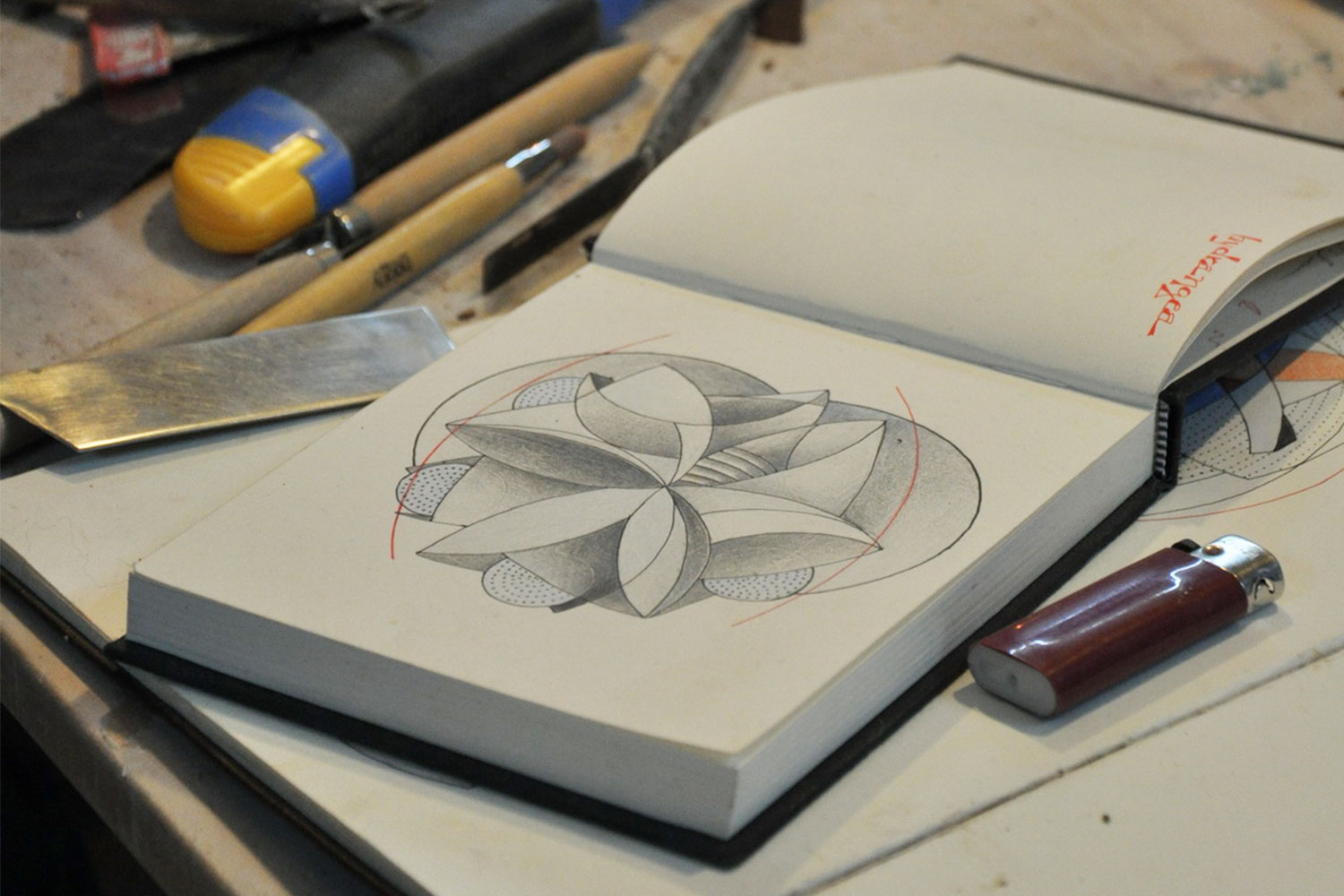
The concept of the unknown. The creation of each of my artworks is based on my need to surprise. In pottery I found a method of expression that I couldn't find in other art forms. Ceramics also requires skilled hands and constant experimentation.
I have been teaching since 2002. I mainly try to impart the overall enthusiasm I feel for ceramic art rather than training students in production processes. I tell them they must be determined to live, not just work, as ceramicists in order to enjoy this fascinating journey.
It would be easy to complain about the progress of ceramics in Greece. Yet we must not forget that my country is part of a whole world, and in this sense, ceramics, being the most ancient of arts, seems to be flourishing.
EDITED__MG_7091_©-Kalliopi-Kalaitzidou-copy.jpg)
EDITED_035221-A-_MG_1344-(2)-copy.jpg)
IMG_5637-copy.jpg)