Yoshinori Tsuchiya
Kimono weaver
Seki, Japan
A Kimono's multidimensional beauty
- Yoshinori is named a Living National Treasure for the monsha weaving technique
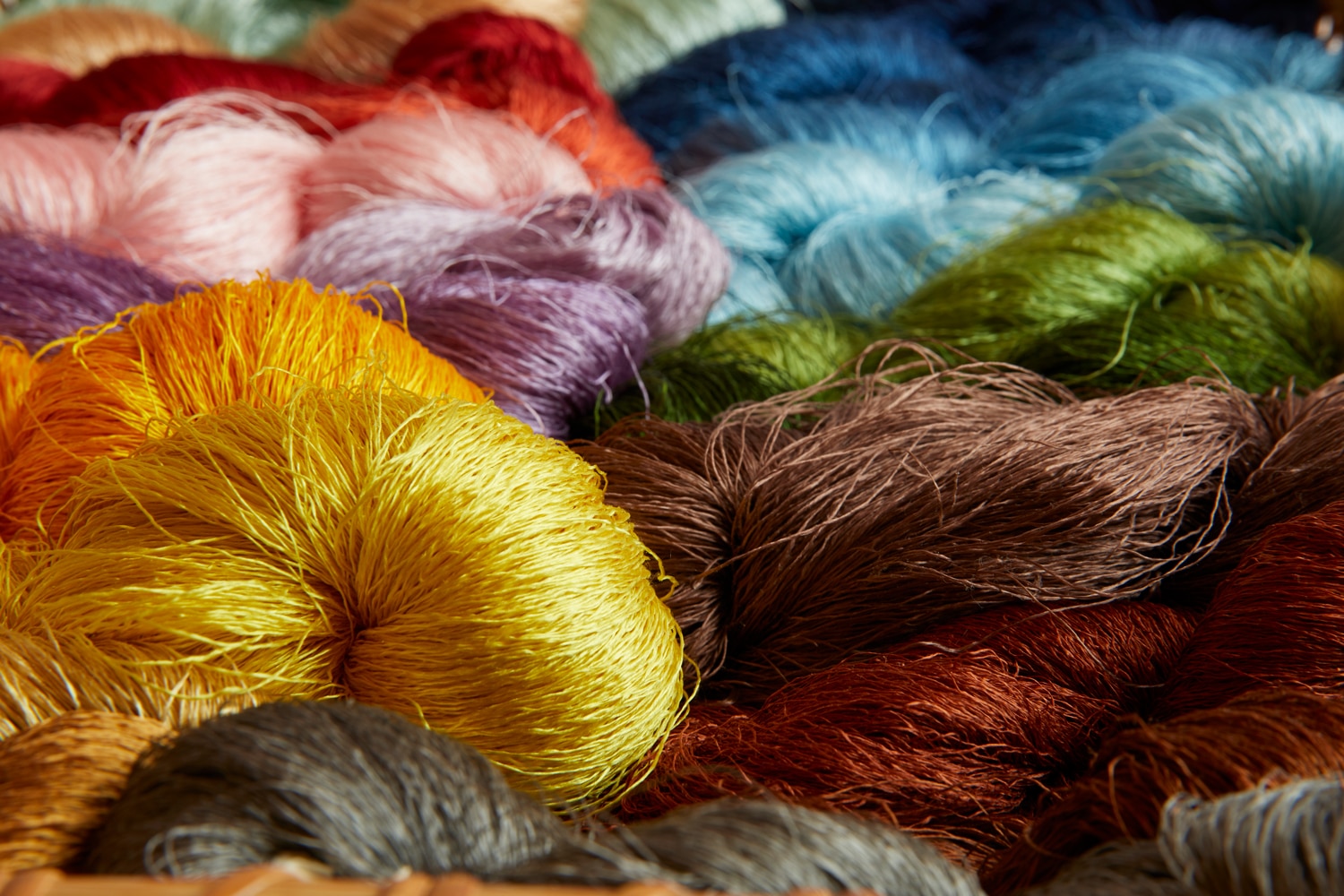
- His vibrant colours are all derived from plants
- For him, art and craft are not separate concepts
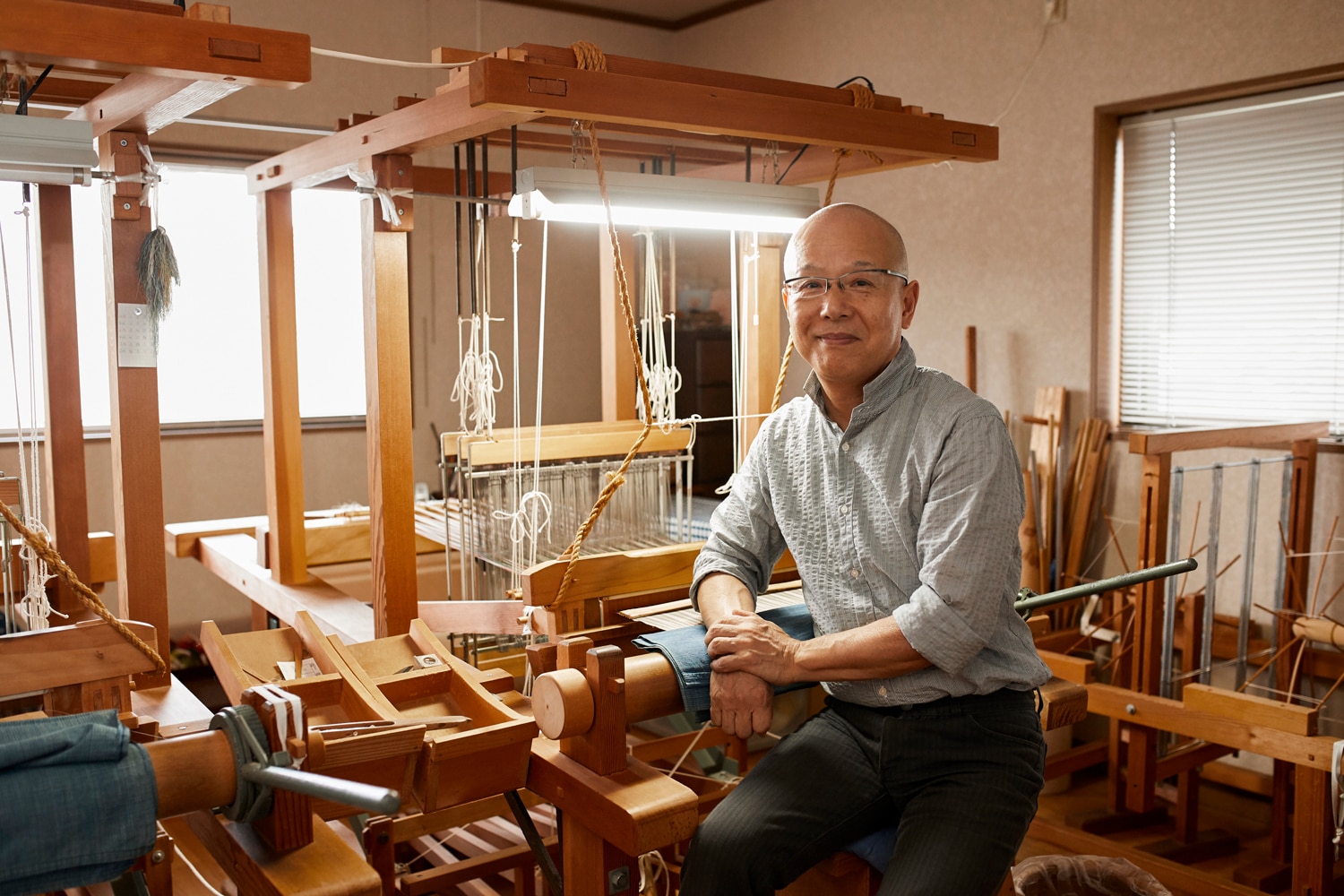
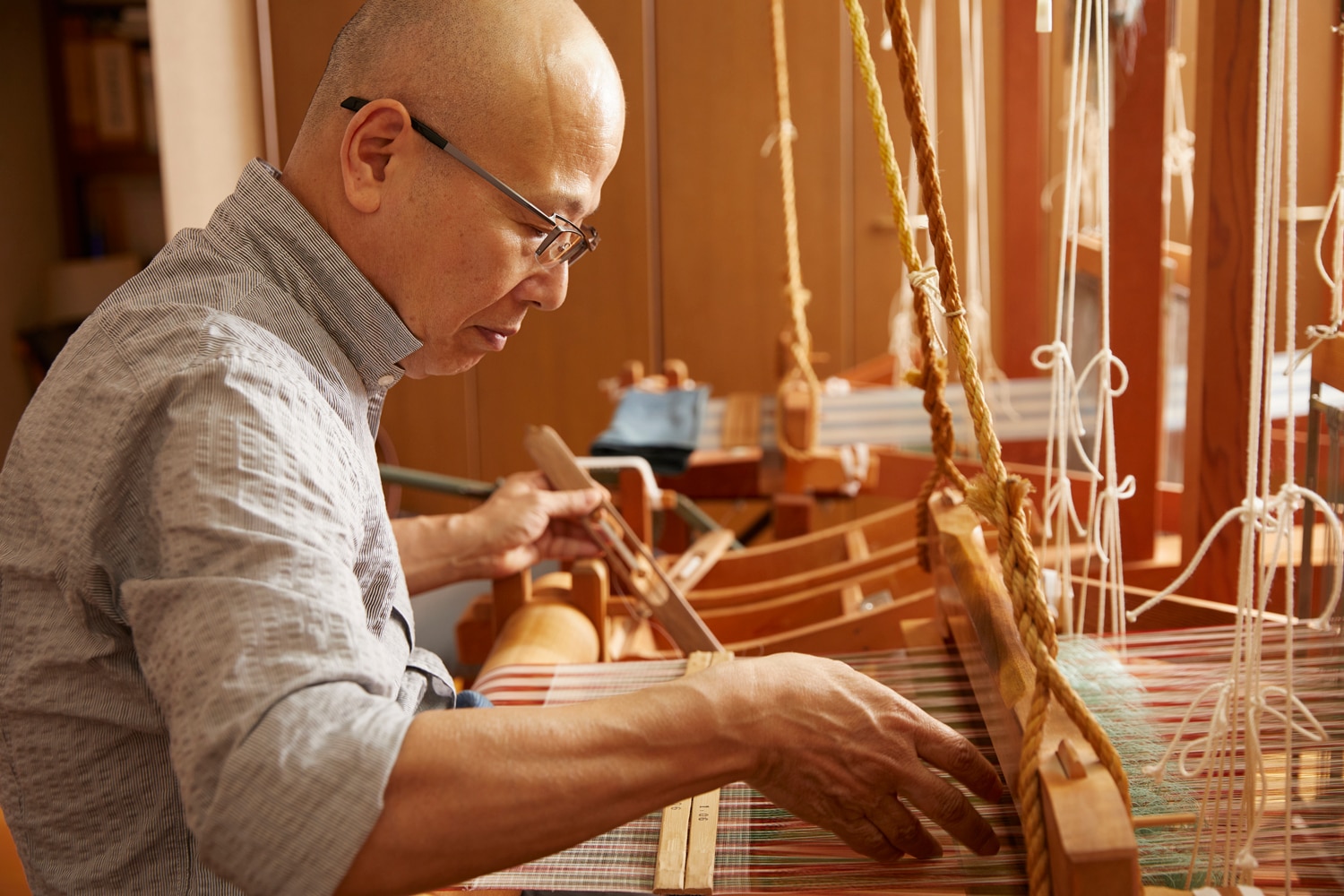
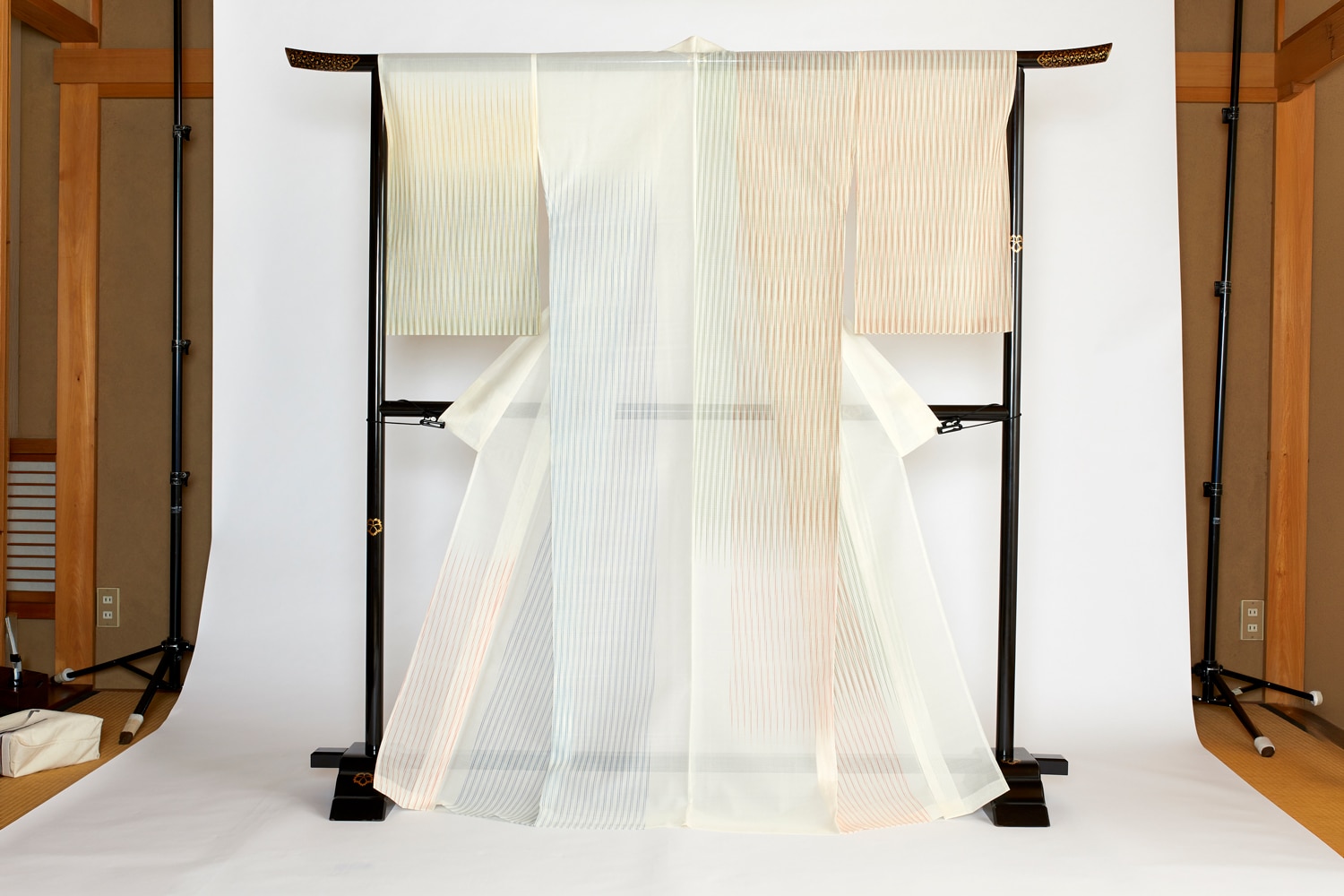
The roots of Yoshinori Tsuchiya’s kimono weaving practice are tied to childhood memories of the mysterious beauty of geishas in his neighbourhood, and the kabuki actor Tamasaburo. He formally learned his craft with two Living National Treasures, Fukumi Shimura and Takeshi Kitamura. “It was a blessing that I failed the entrance exam for art university and went instead to an international art institute,” Yoshinori says. After graduating, he pursued the ancient art of monsha weaving. “It was the translucency that spoke to me,” he explains. Today, Yoshinori produces at most two kimonos per year, spending about three months making each piece. "Even though kimono weaving is demanding, and sometime not very enjoyable, it is the only way to bring a complete kimono to life,” he says. Yoshinori seeks the beauty of a finished kimono, which is a crystallisation of time and energy.
INTERVIEW
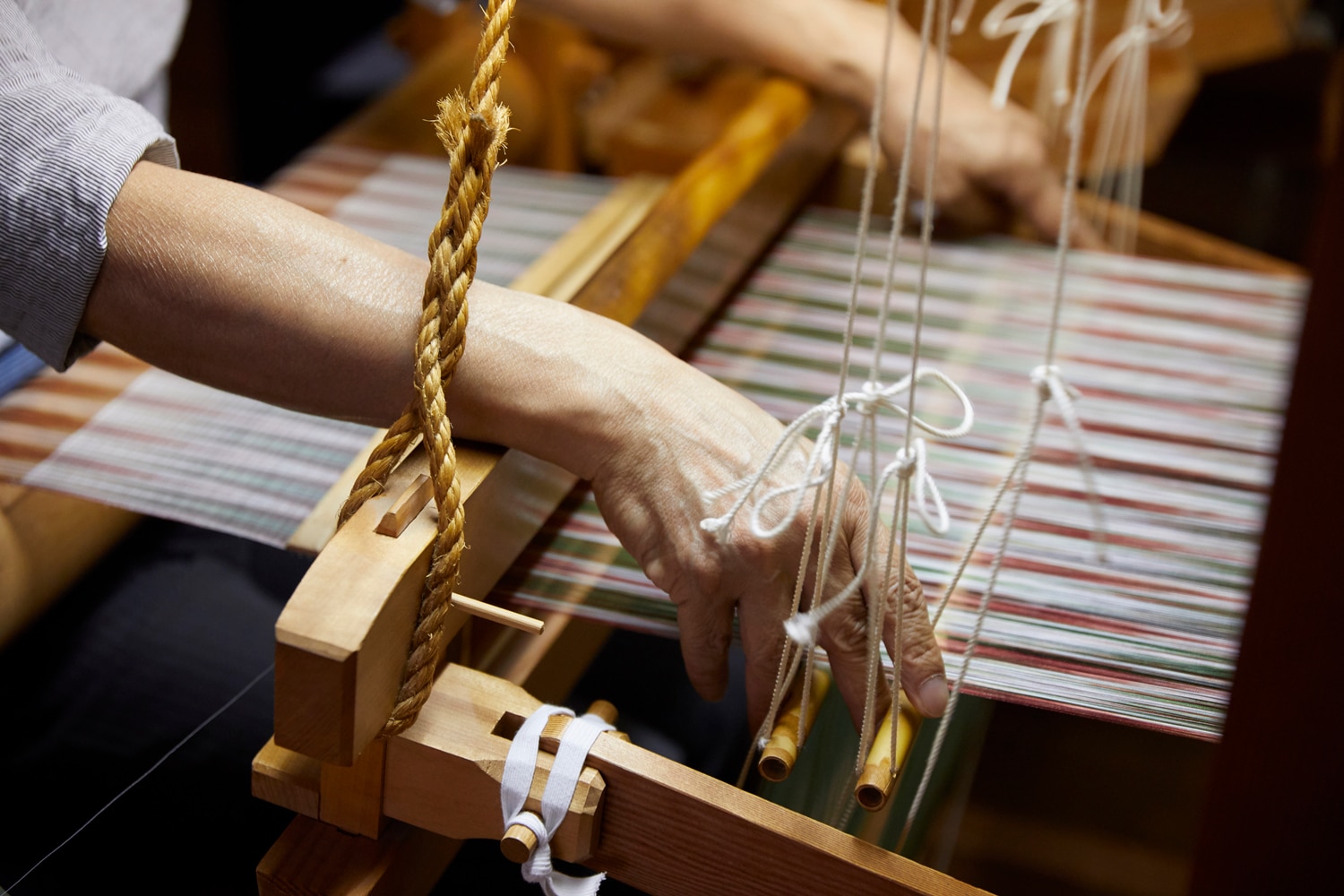
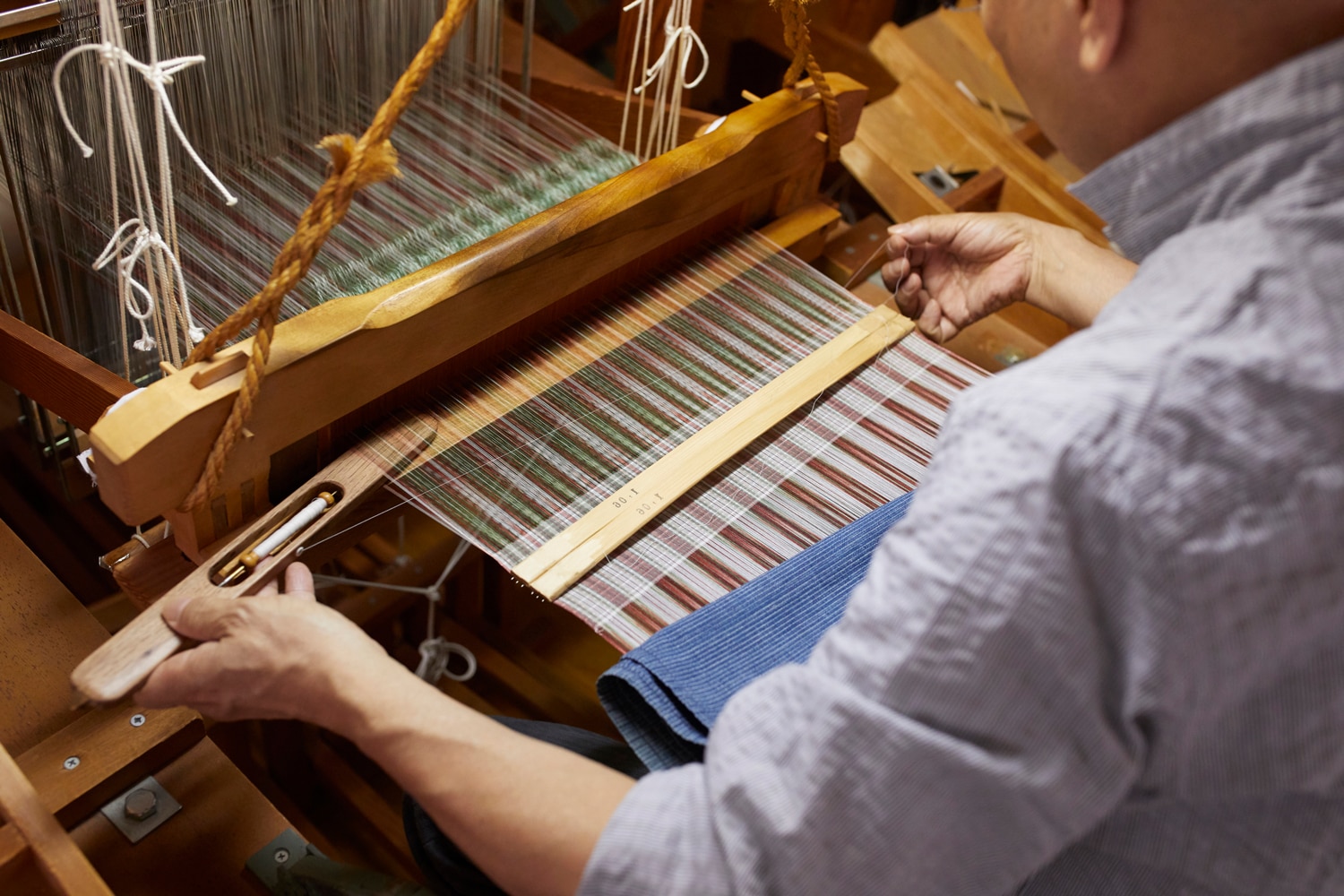
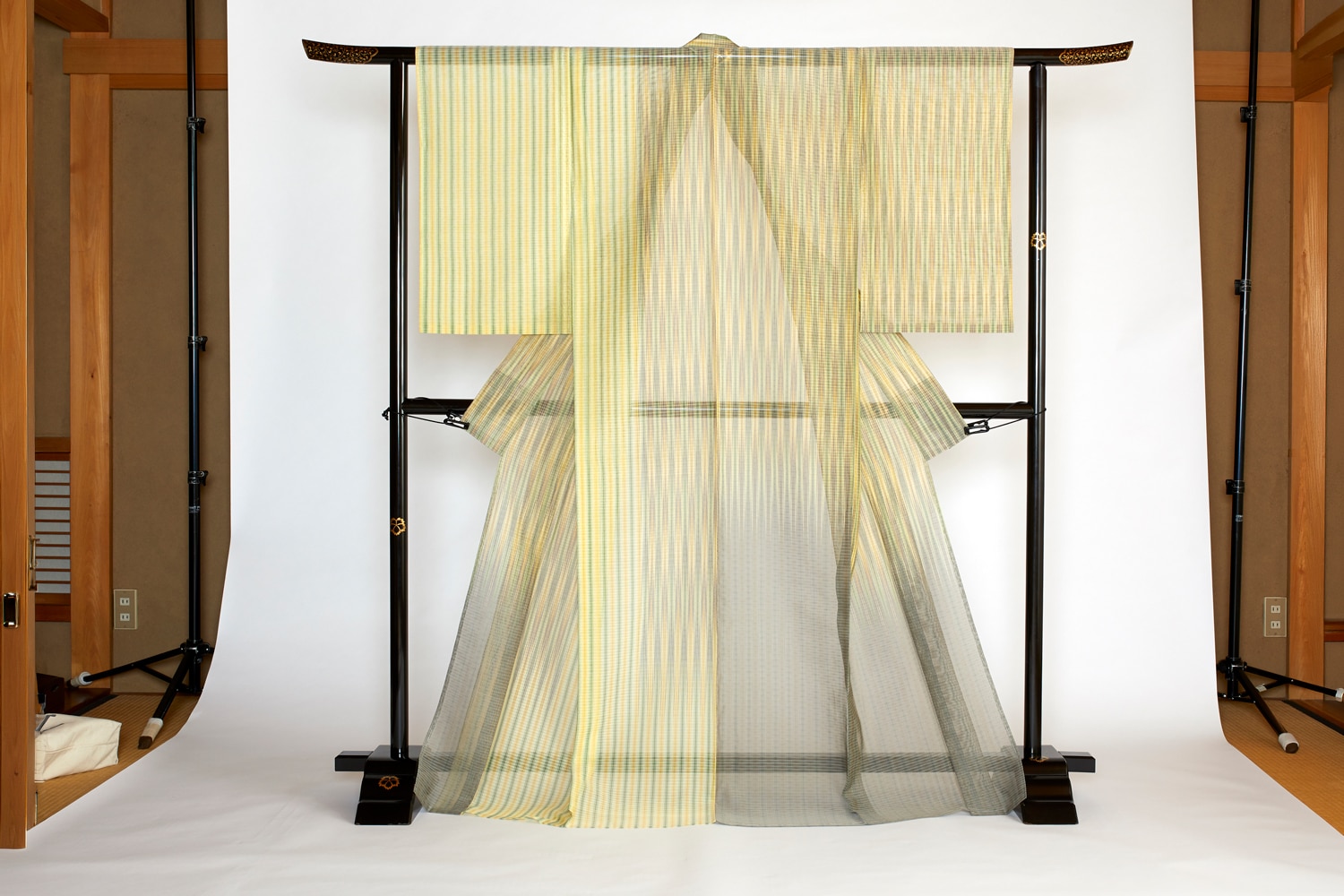
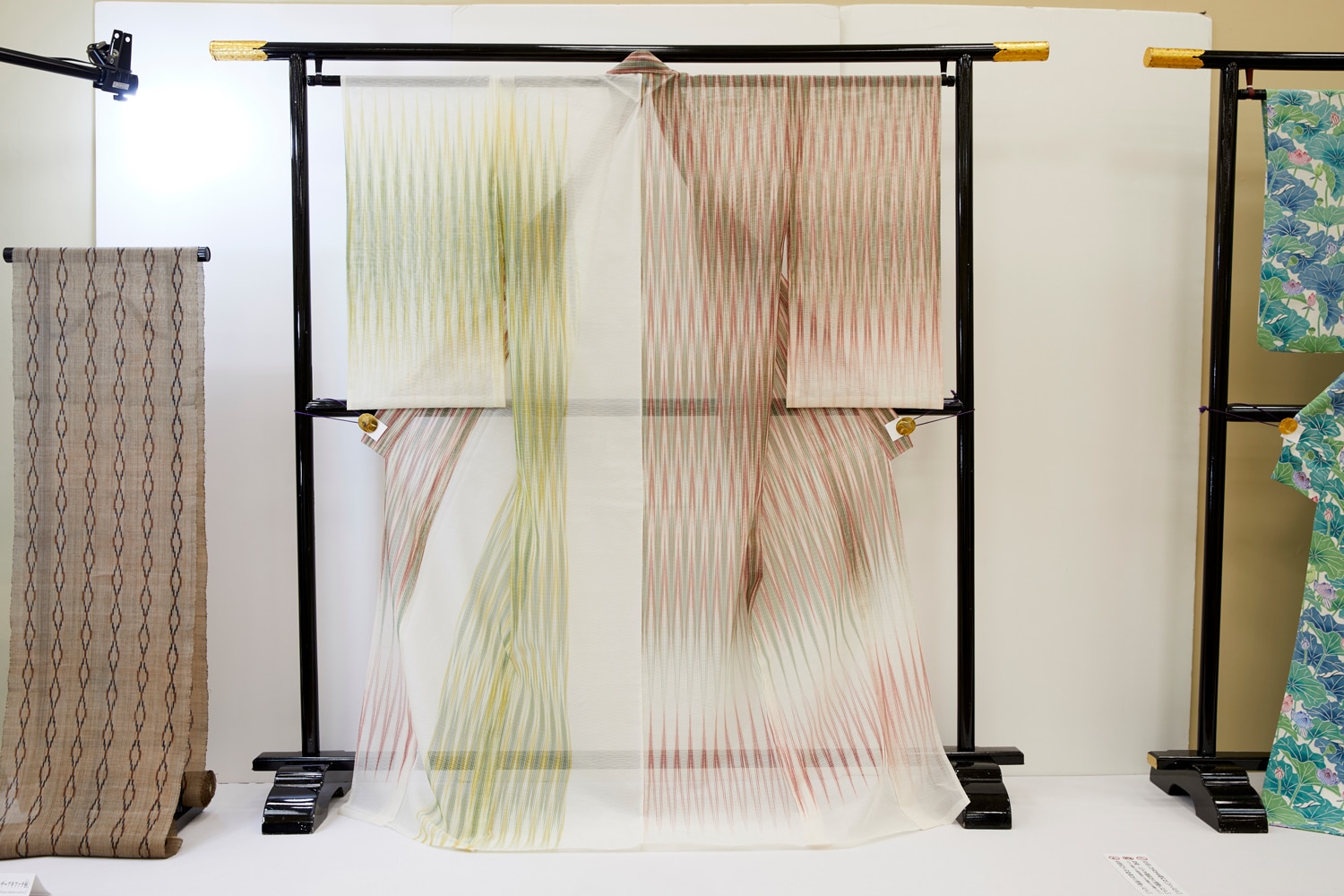
Monsha is described as figured gauze: two warp yarns twist around each other, locking the weft in place. This technique, which dates back more than two millennia, creates a characteristic translucency. I combine it with kasuri, a technique similar to ikat dyeing, which adds vibrancy and depth to the overall composition.
I simply like the shape of the kimono, and the way the colours layer when it is hung on an iko, a kimono hanger. I find it more beautiful than a flat cloth hung on a wall, and I see beauty beyond its function.
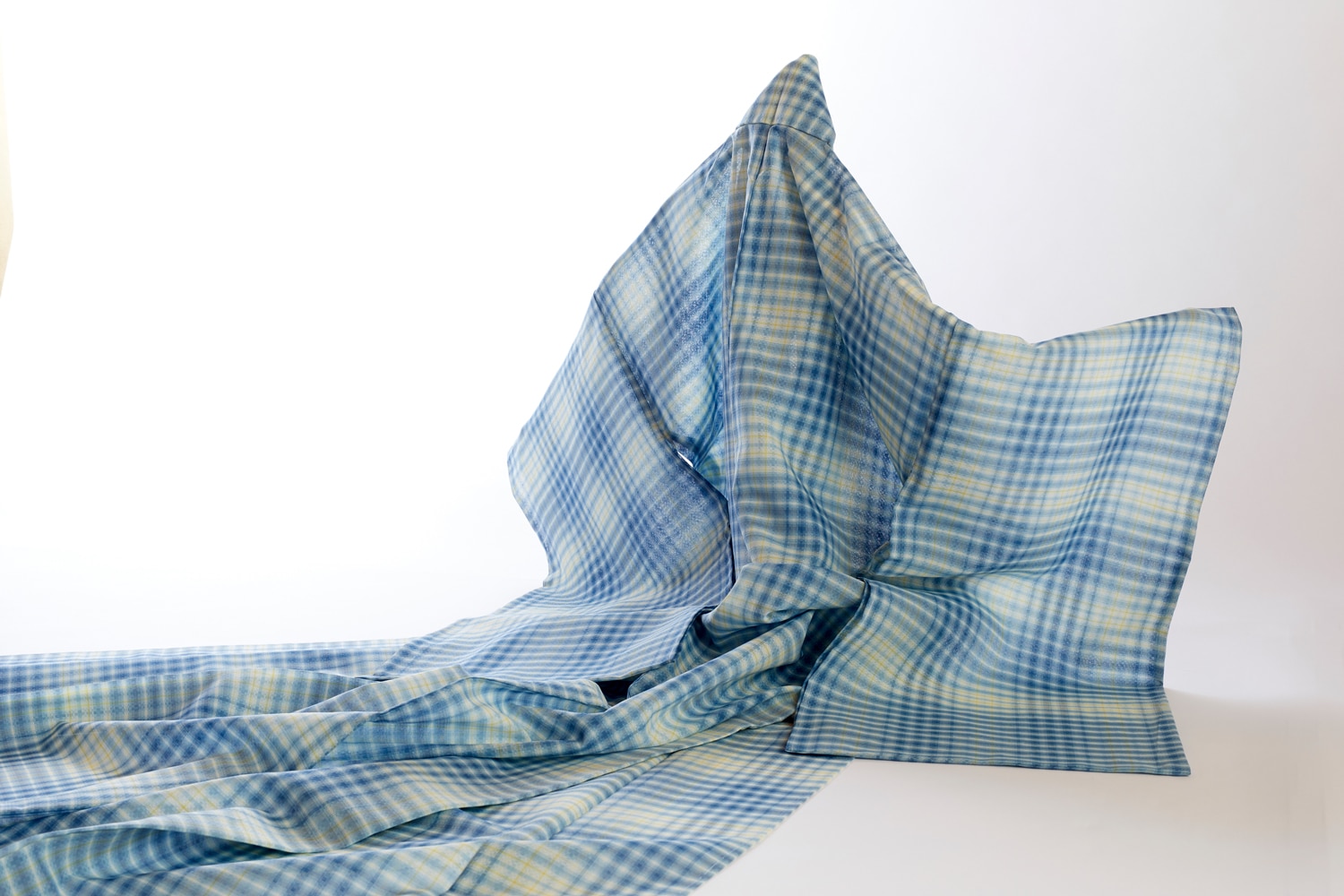
We often think crafts must serve a utilitarian purpose. I wonder if the distinction between art and craft is still relevant today, or whether kimono weaving in particular should still be bound by this idea. Some of my works have sleeves so long that they touch the floor. They could be shortened for wearing, but as objects made to be admired, they are perfect the way they are.
Thanks to what I learned at the institute and from the two masters who taught me both the philosophy and the technique of the craft, I am able to embody the world of beauty that captivated me as a child. I try to express myself freely through my work, which is only possible when I am grounded in technique.
Yoshinori Tsuchiya
Kimono weaver
Seki, Japan
ADDRESS
Address upon request, Seki, Japan
AVAILABILITY
By appointment only
LANGUAGES
Japanese
Homo Faber Finds is a new service aiming to inspire admirers of craft to connect and collaborate with exceptional artisans.
We invite you to submit an enquiry here.