
Valérie Lebrun
Ceramicist
Saint-Fargeau, France
Movement captured in ceramics
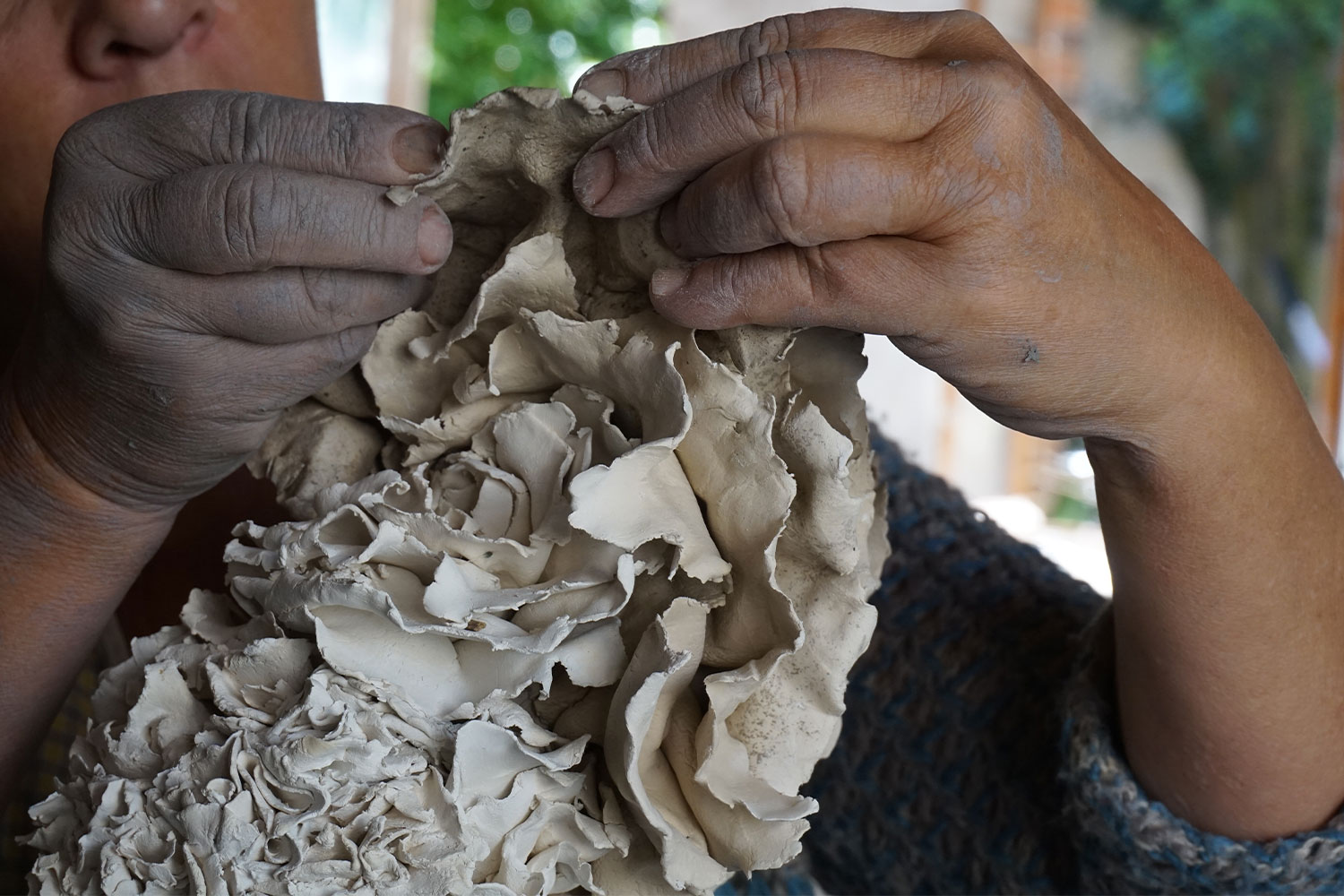
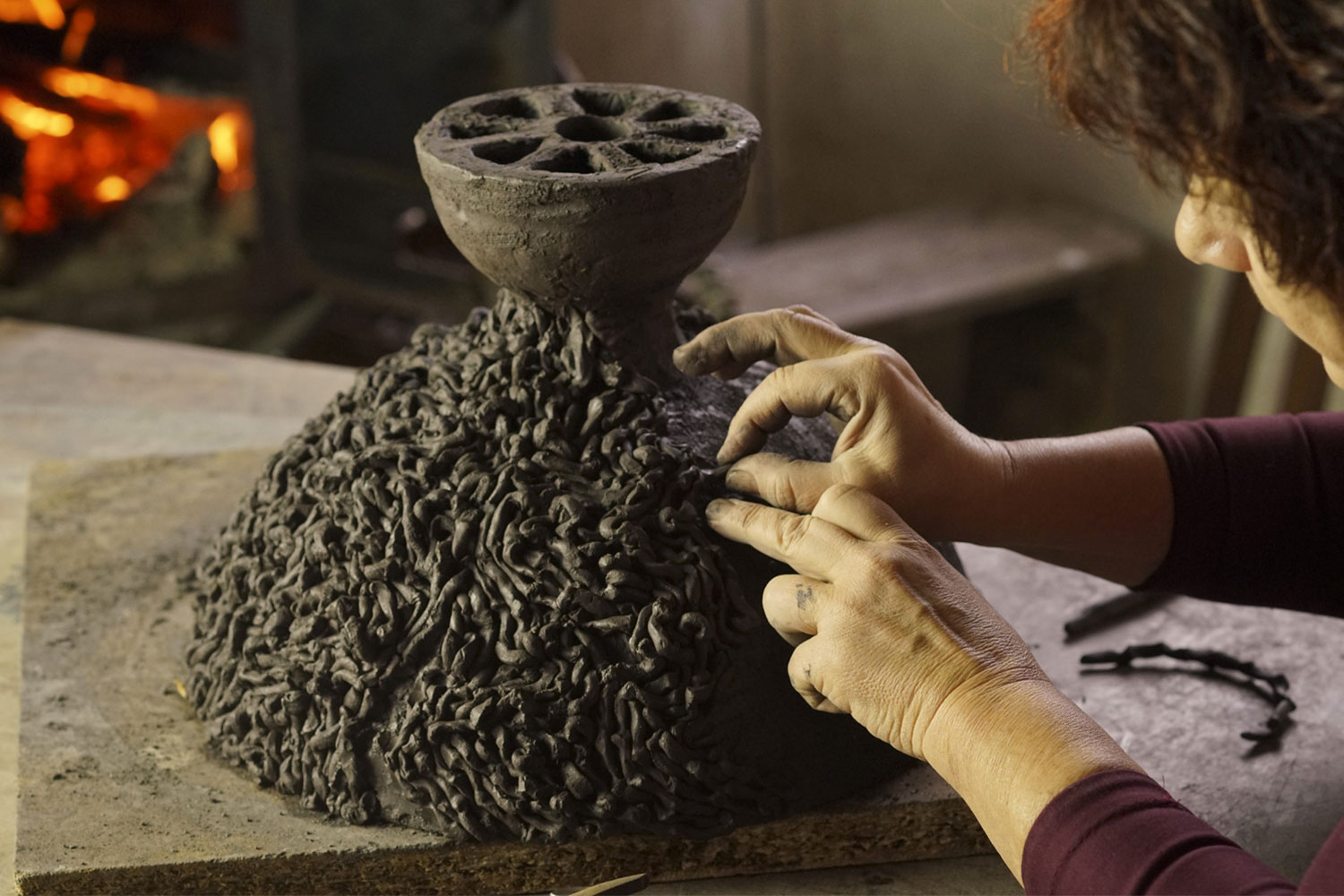
- Valérie manipulates clay as if it were fabric
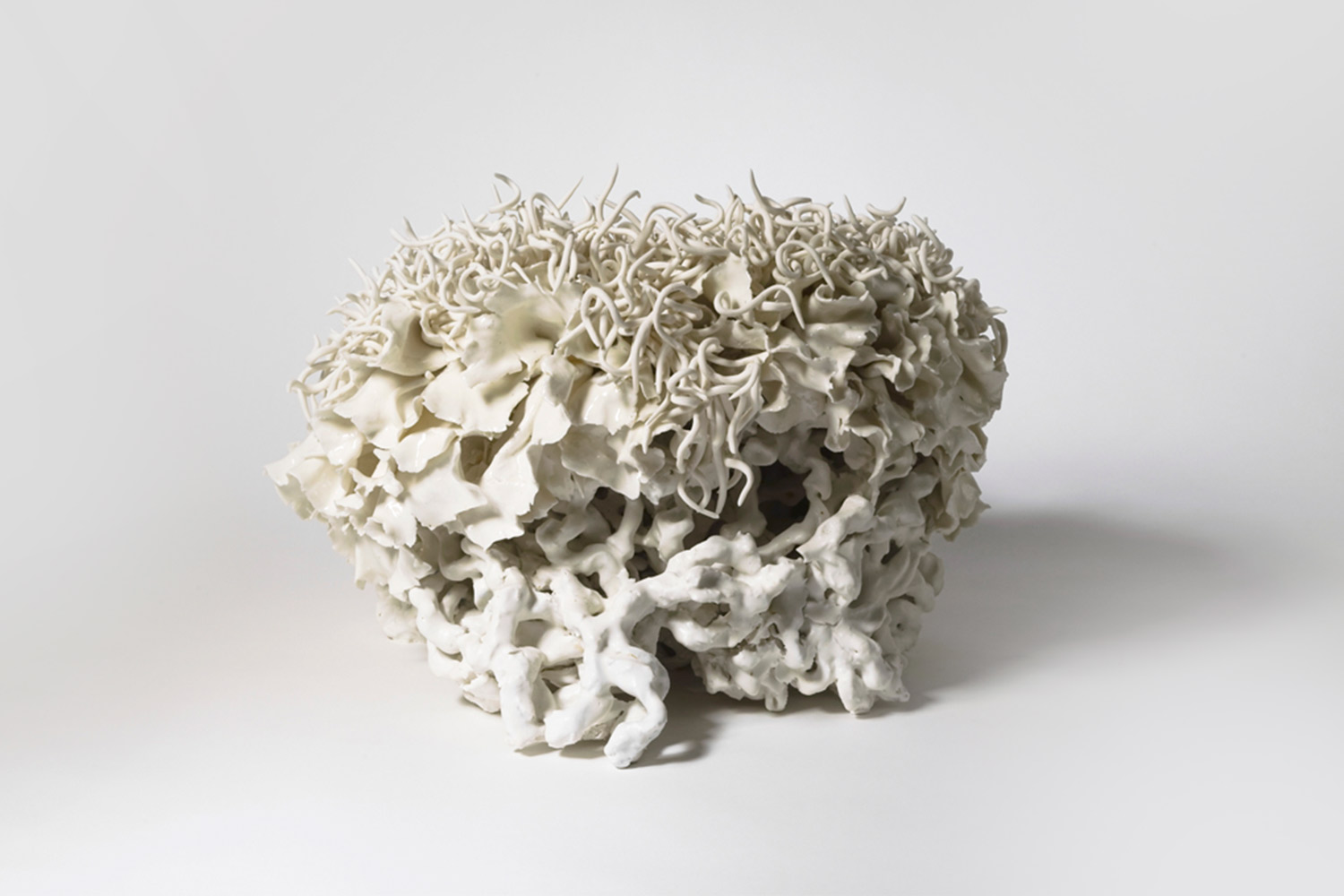
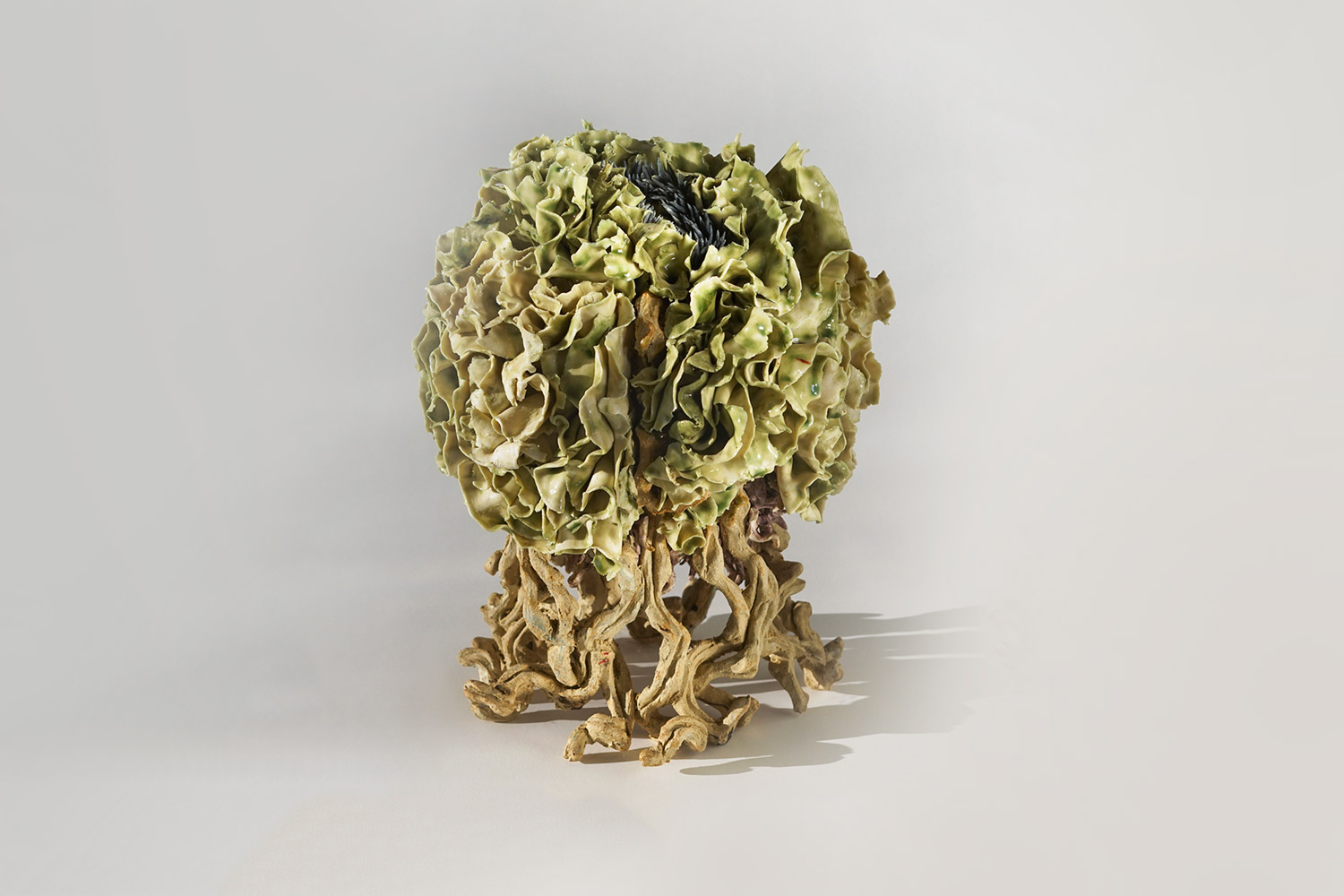
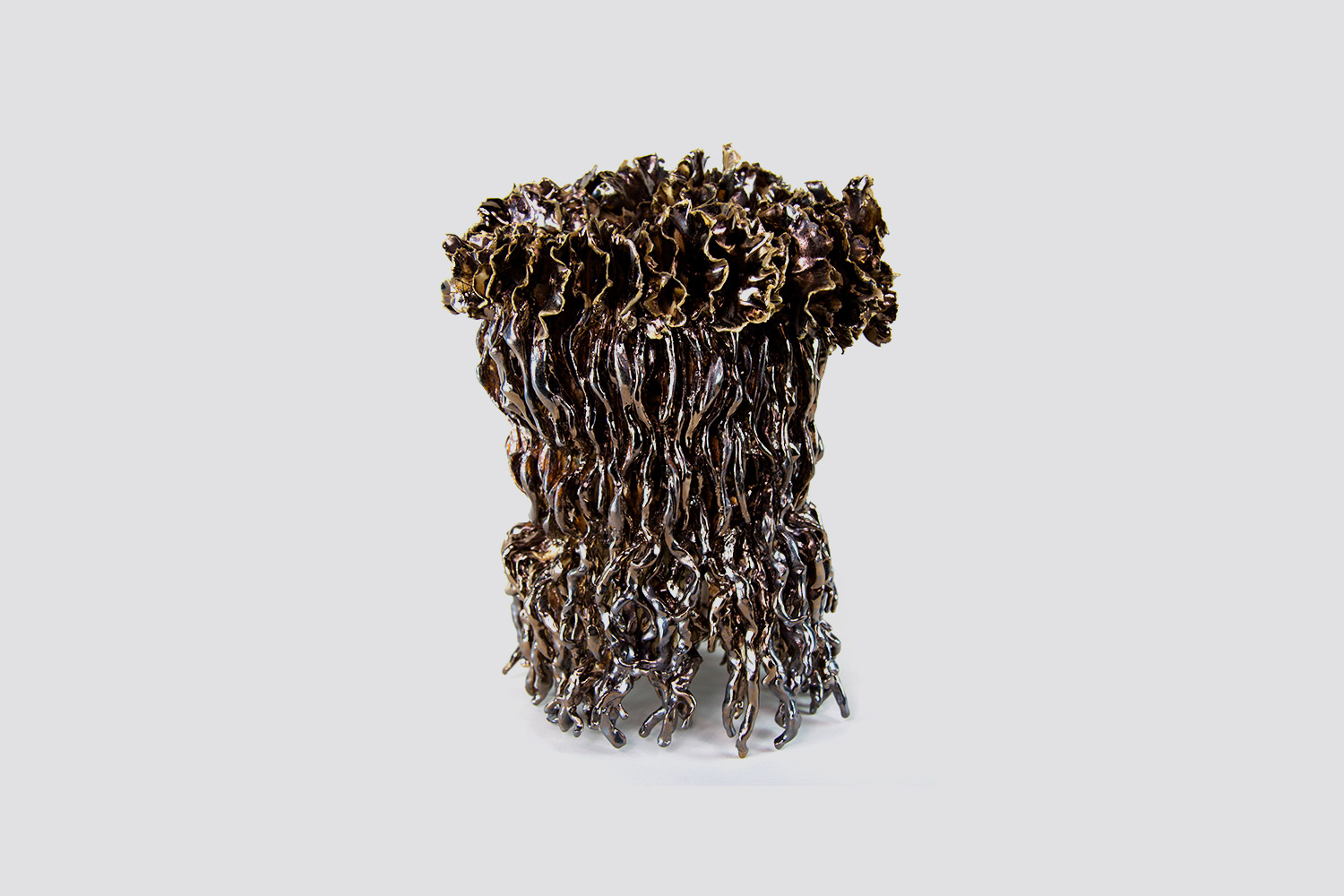
- She makes contemporary artistic ceramics
- Trainees regularly work with her
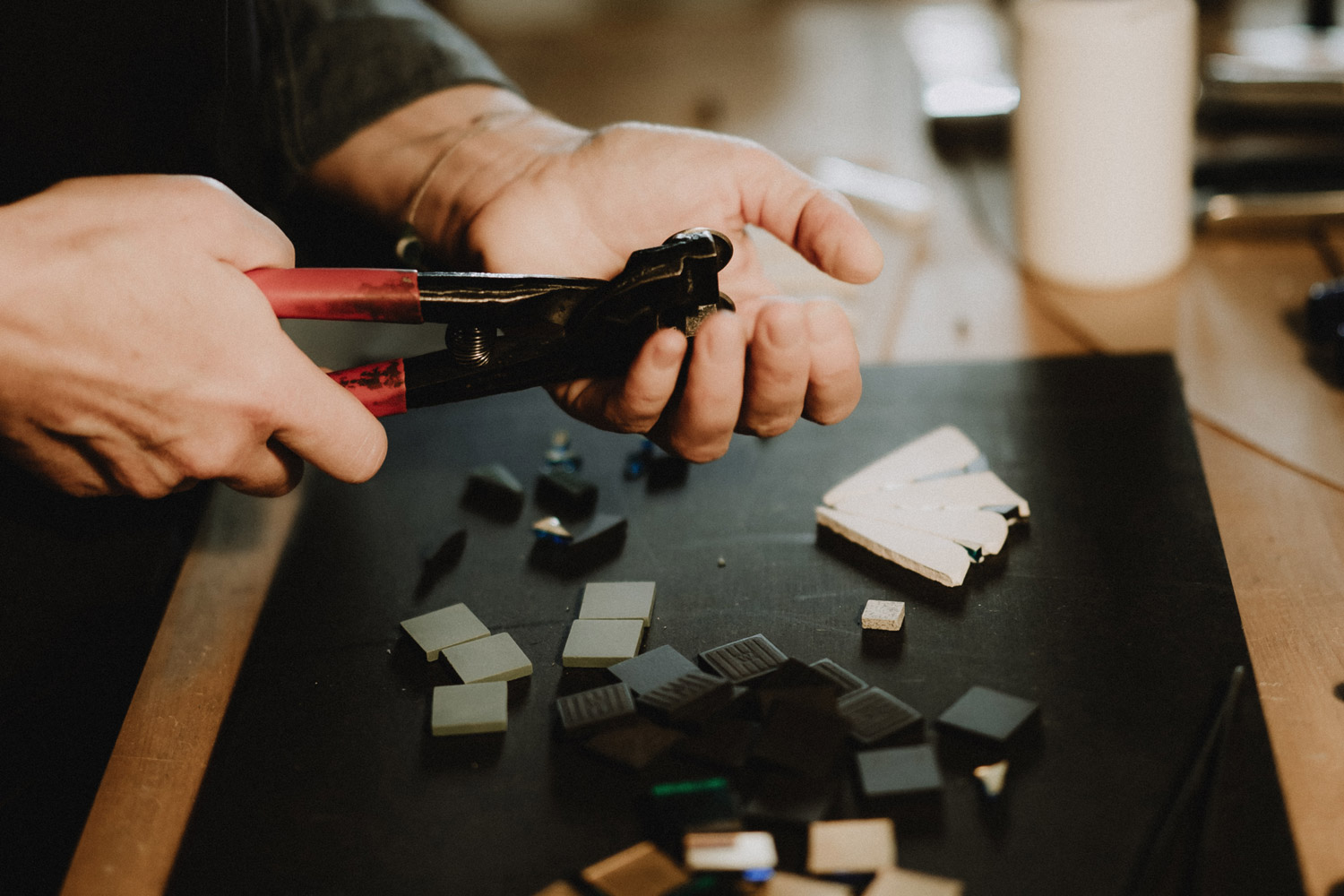
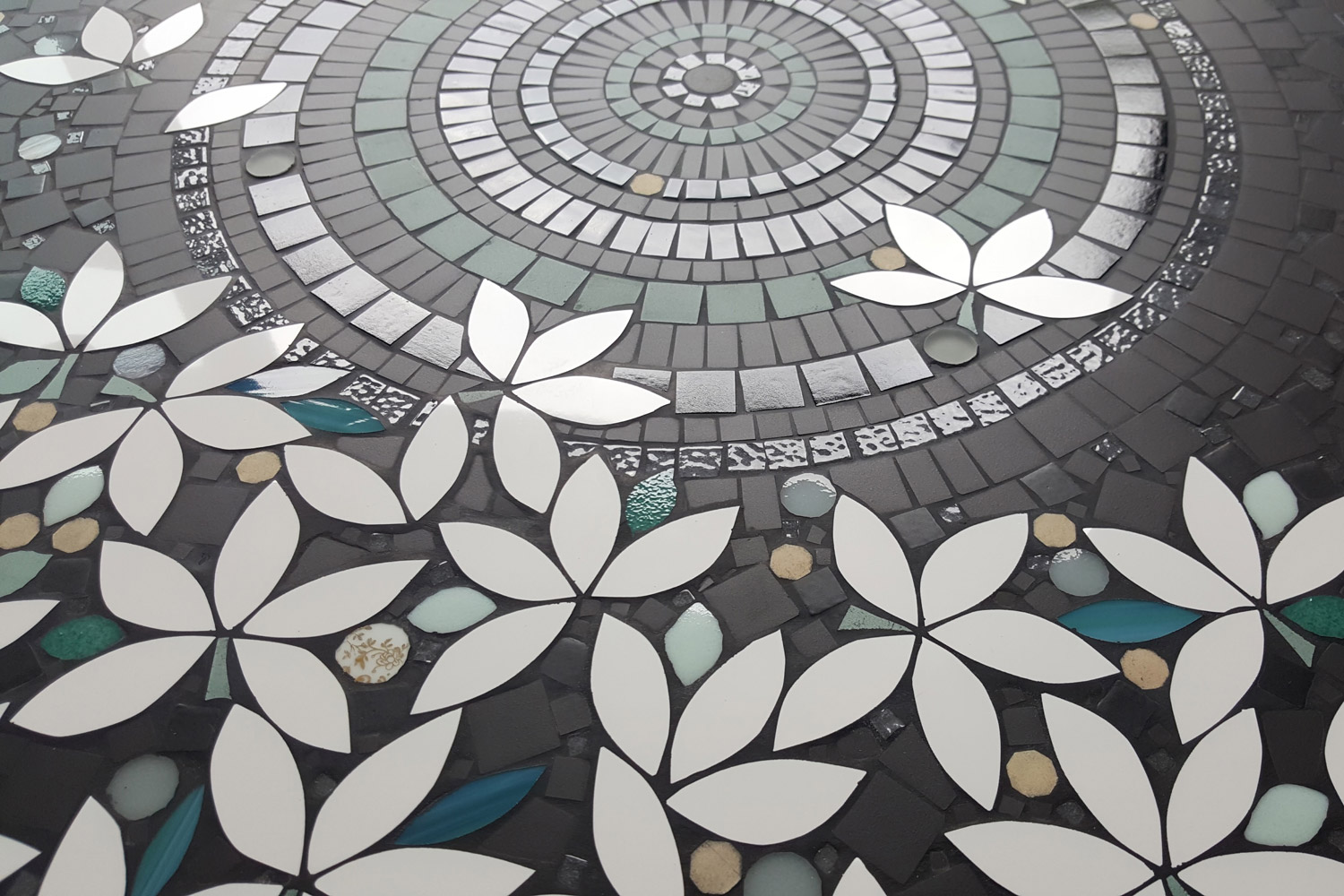
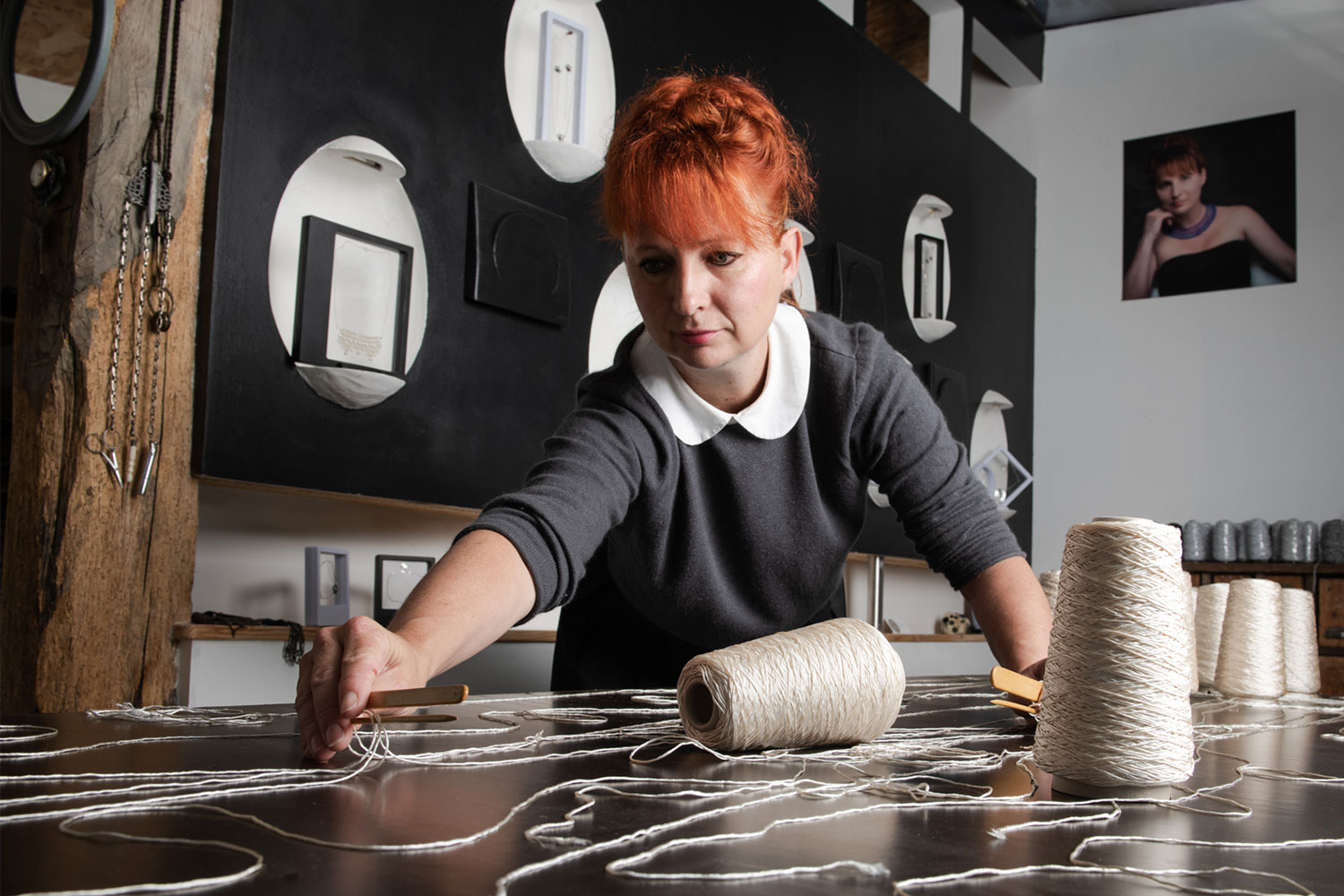
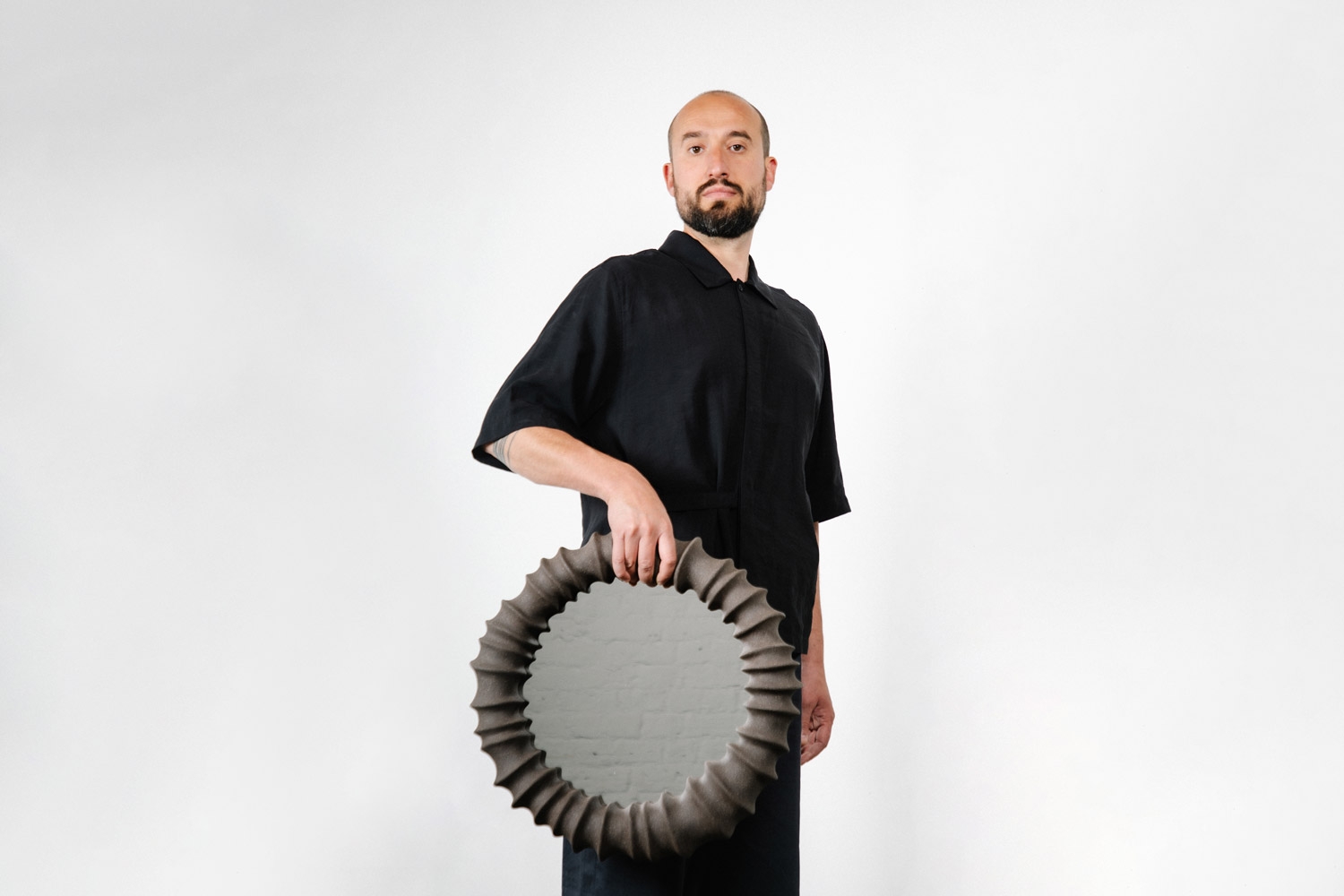
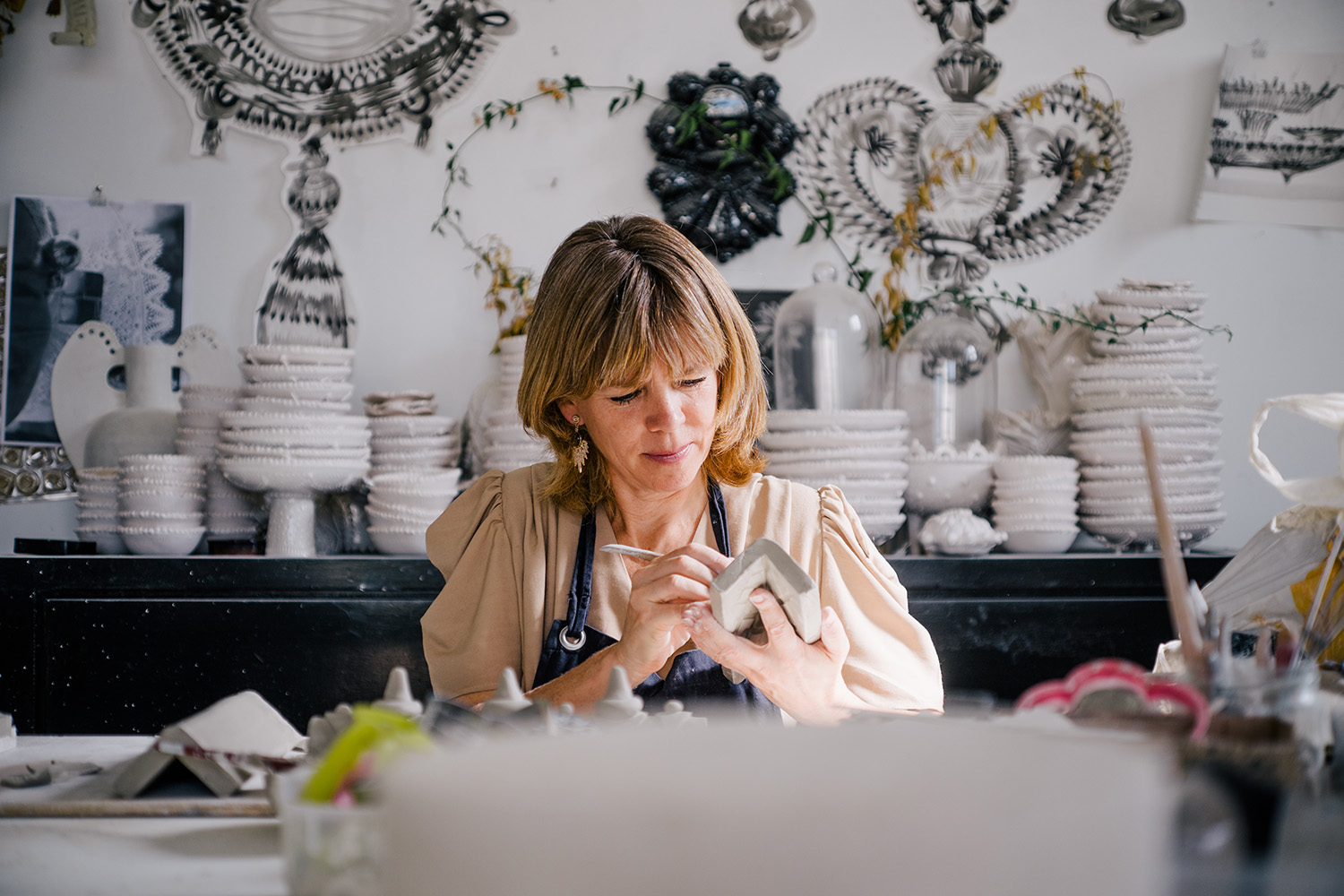
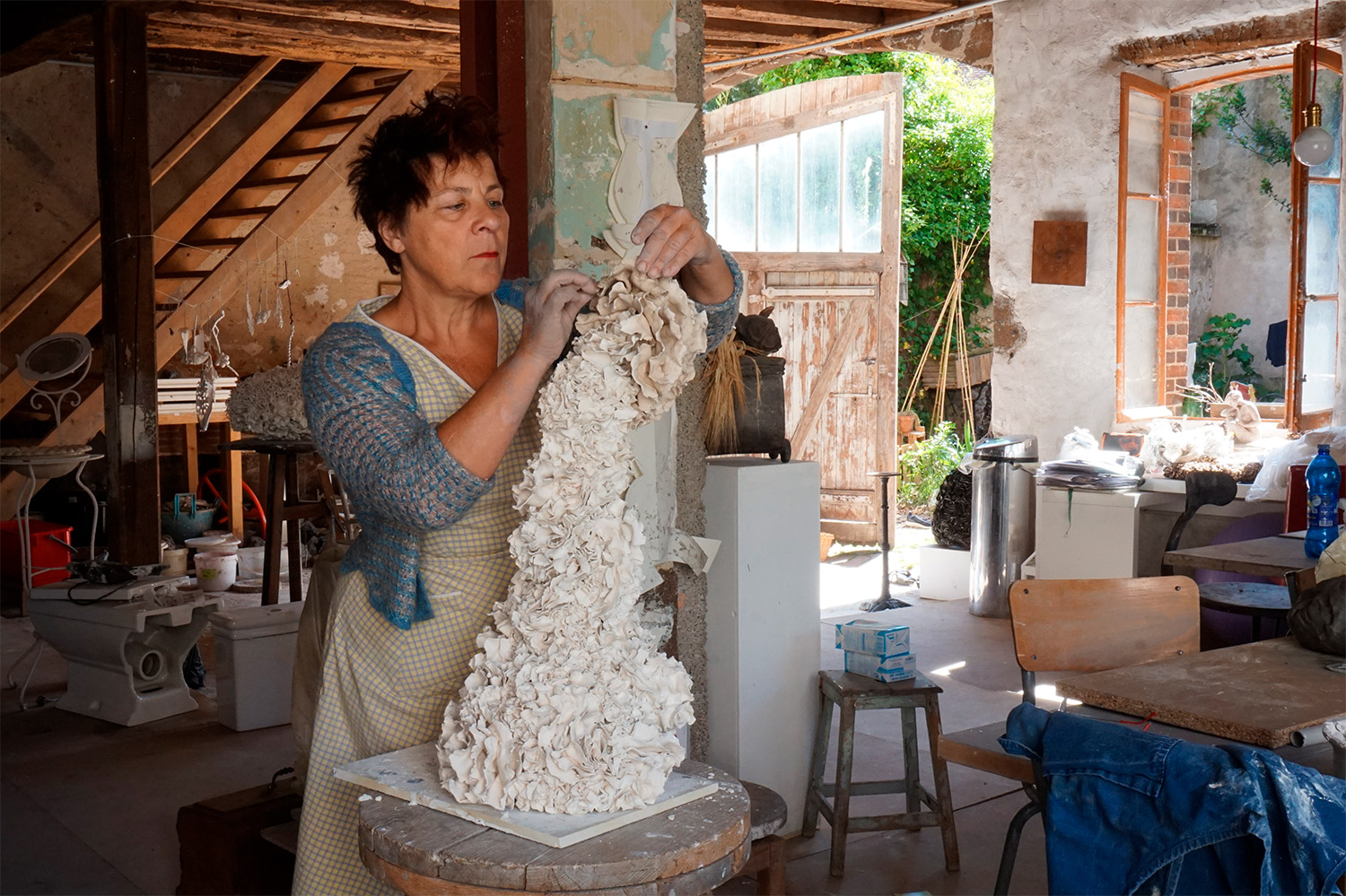
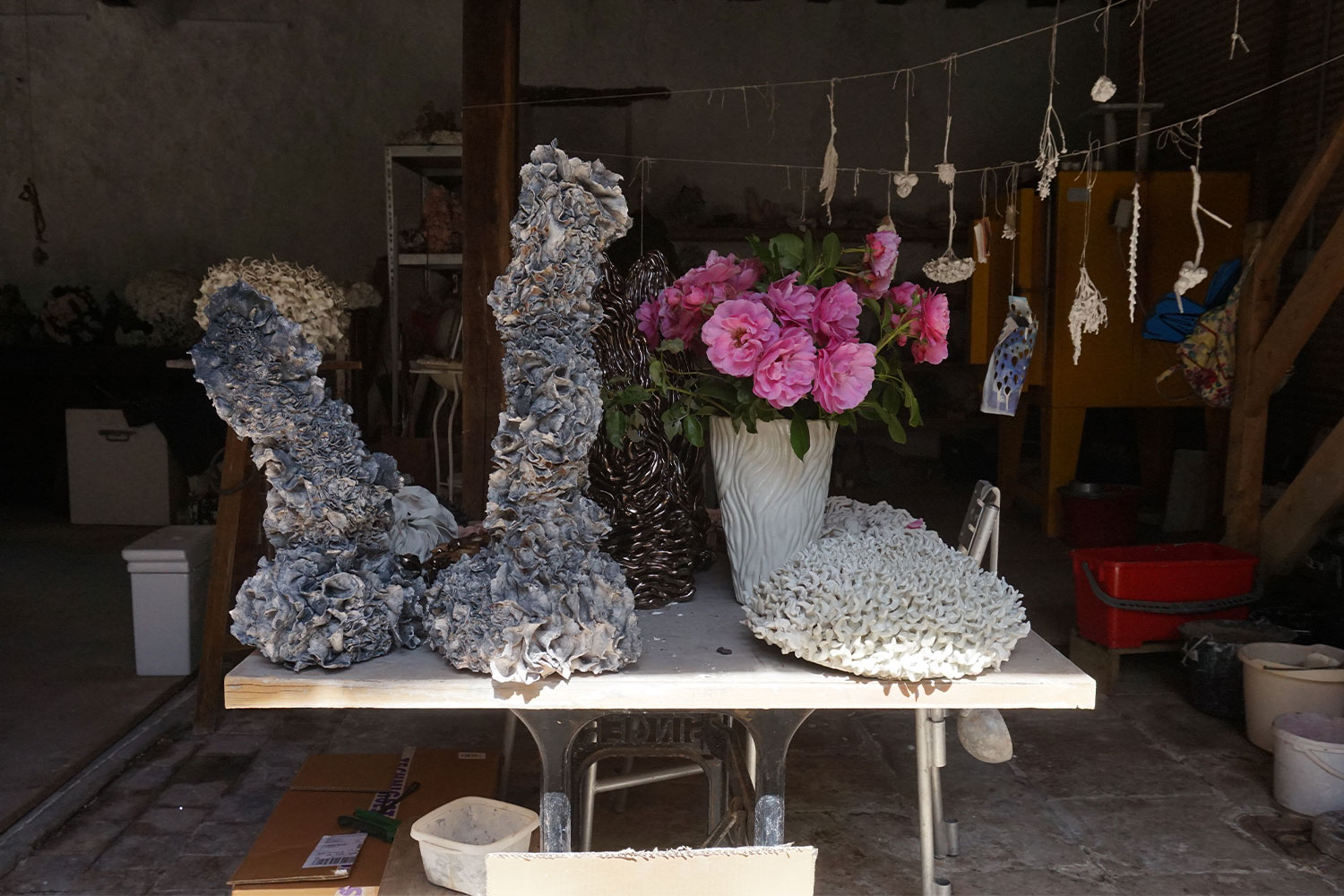
After working as a costume designer for 13 years, Valérie Lebrun left for a professional reintegration project where she was in charge of public mosaic commissions. Aiming to create gigantic human sculptures out of ceramics and mosaics, she did a diploma at the Institut de Céramique de Sèvres. But Valérie never made these sculptures. “When I arrived in Sèvres, I unwittingly adopted its very strong culture,” and so she started to develop her own work instead. After graduating, she exhibited at Galerie Pierre, one of the most important galleries in France. Other exhibitions followed, showcasing her organic pieces which explore the theme of movement and the process of addition. She now lives in Burgundy, where she creates in a spacious workshop, her “bohemian home”, as she calls it.

INTERVIEW
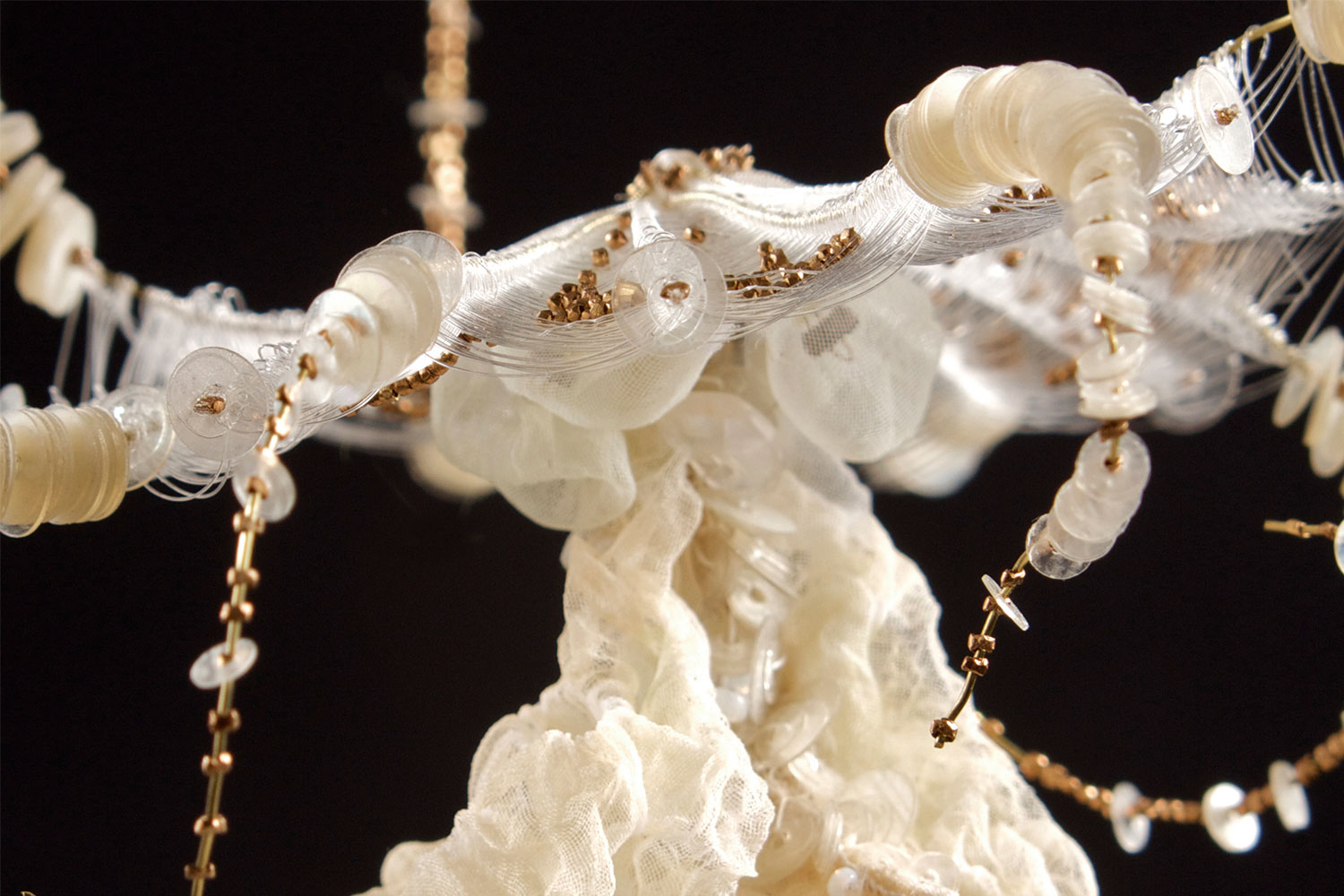
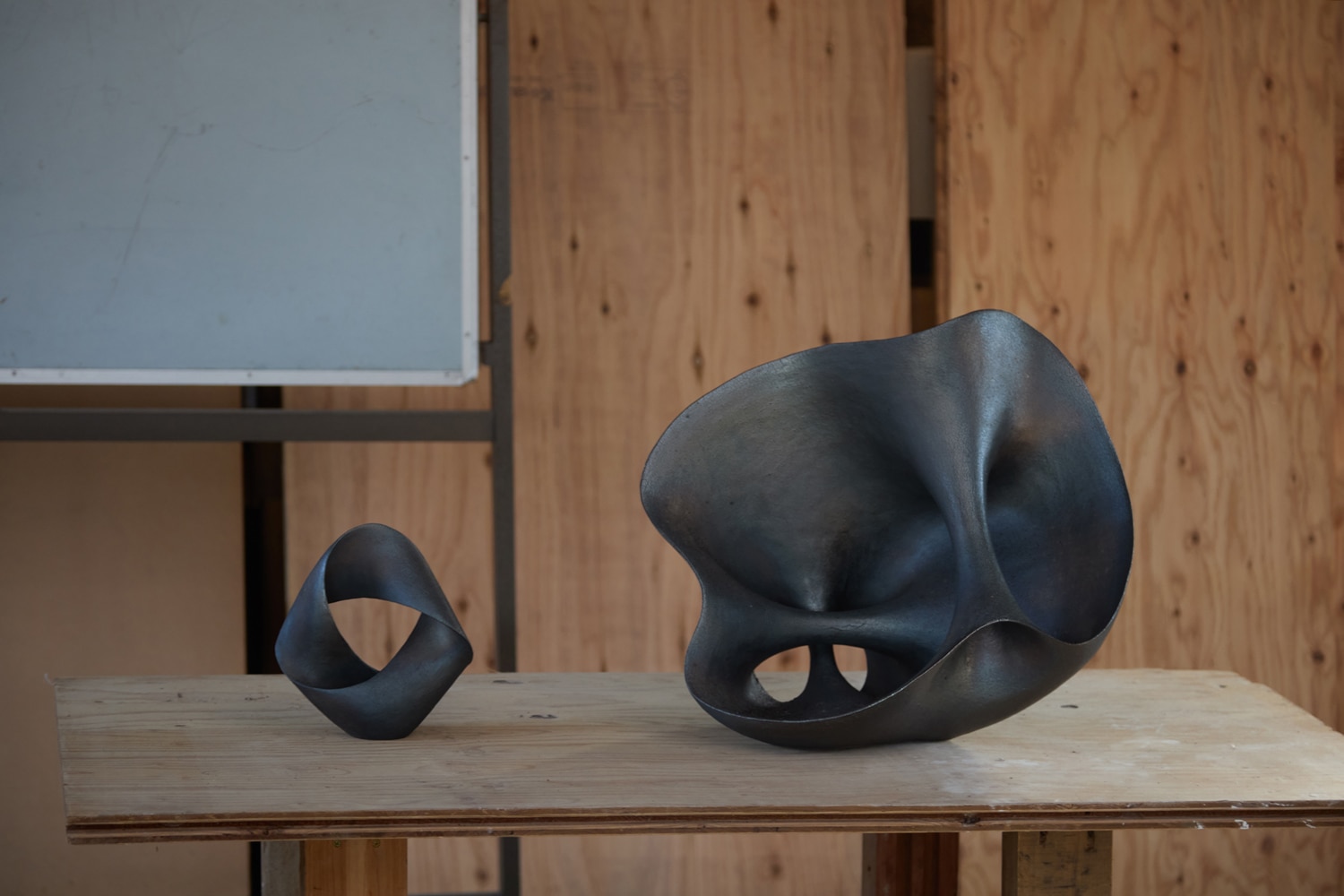
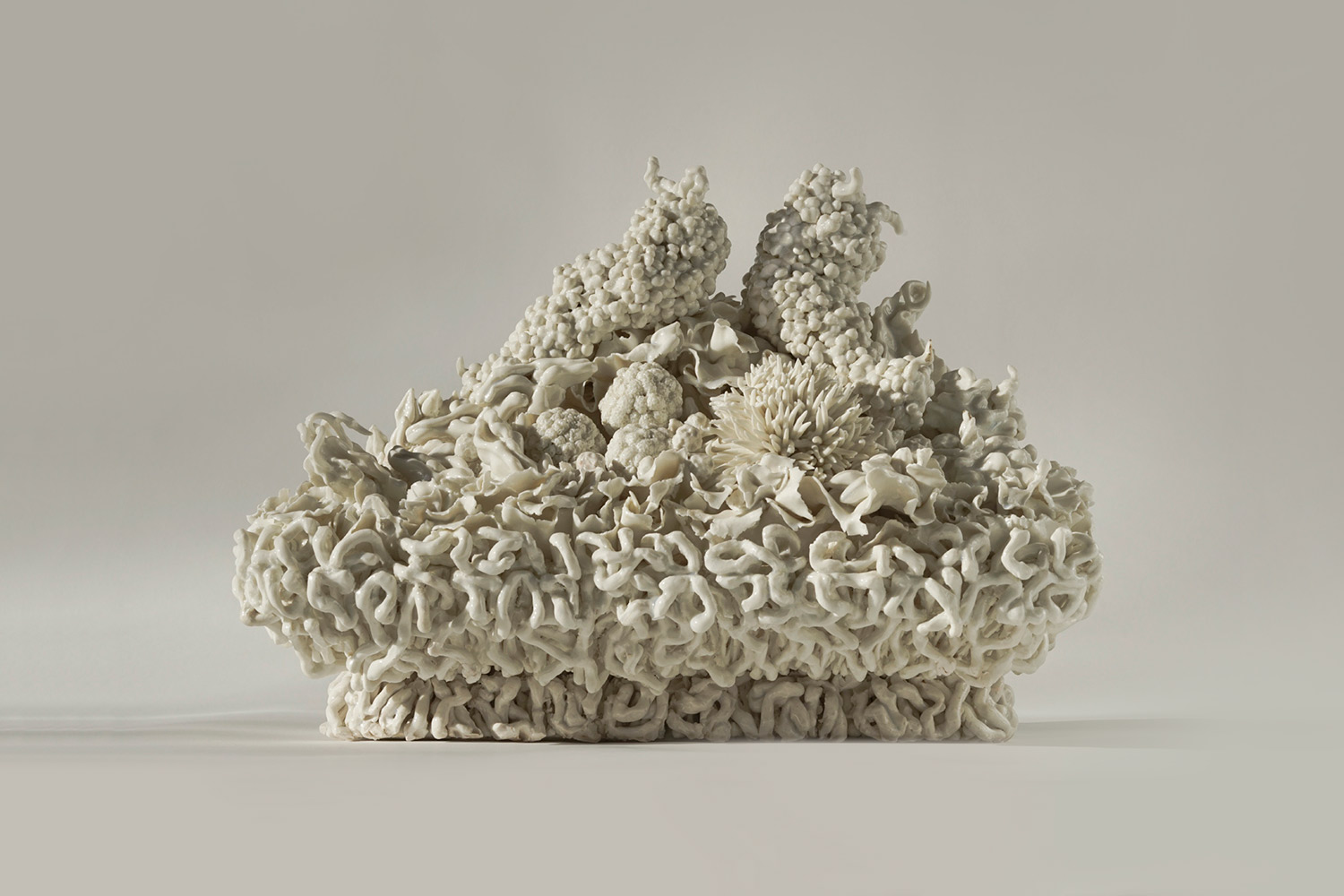
I would say the notion of movement; it is important that my pieces move, that they are organic. The first image that comes to mind is me as a little child in the bathtub seeing my hair move in the water, or seaweed moving in the sea.
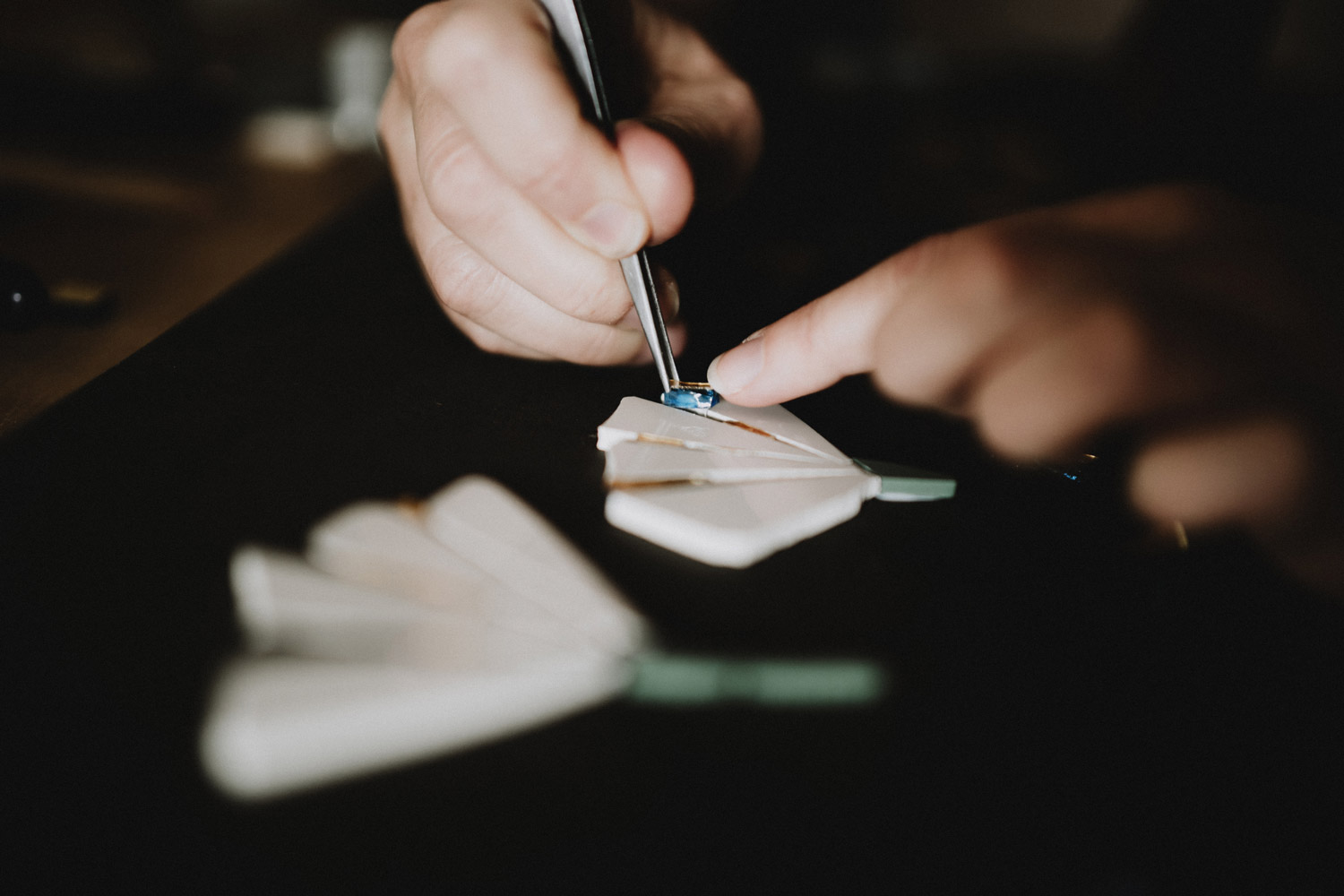
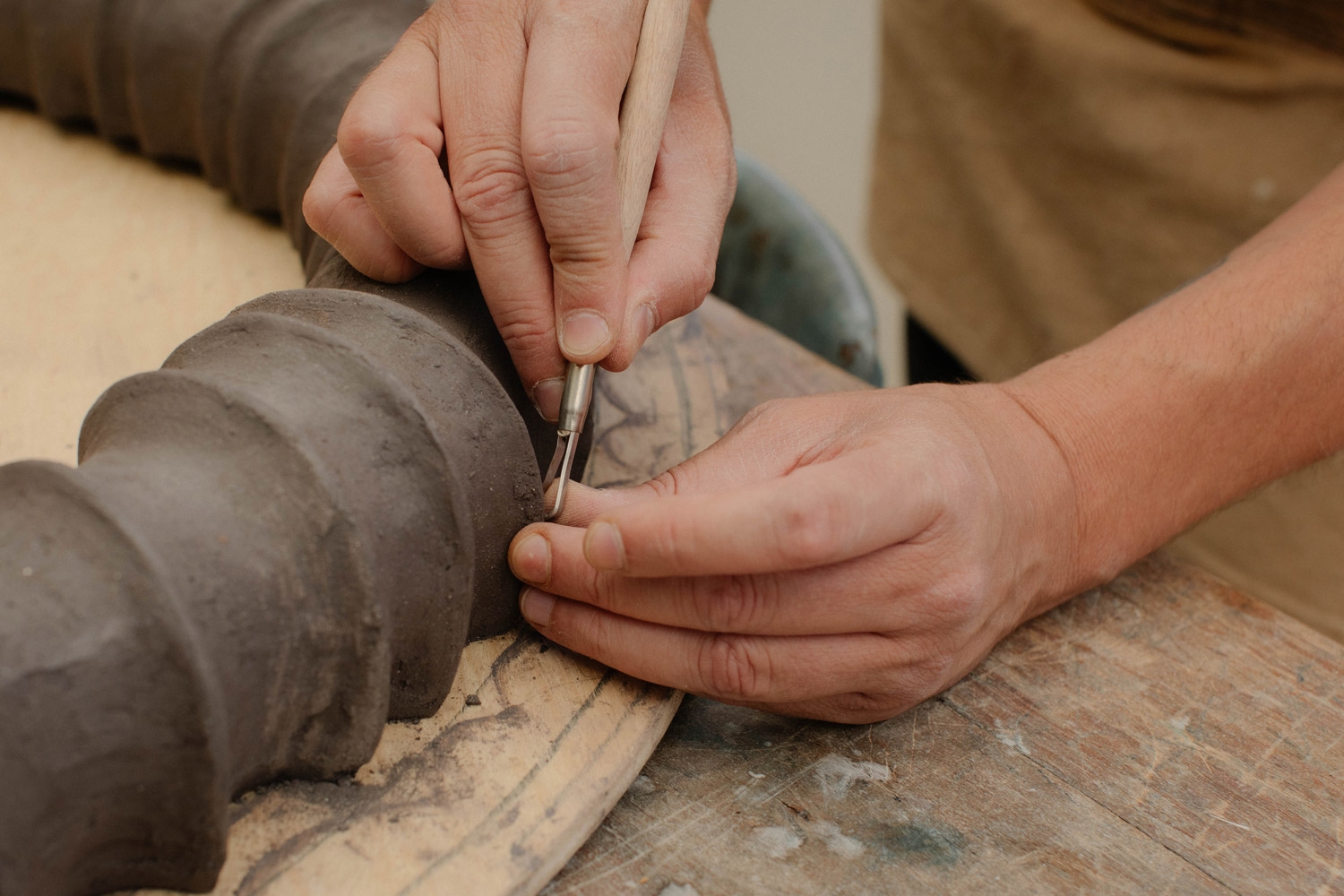
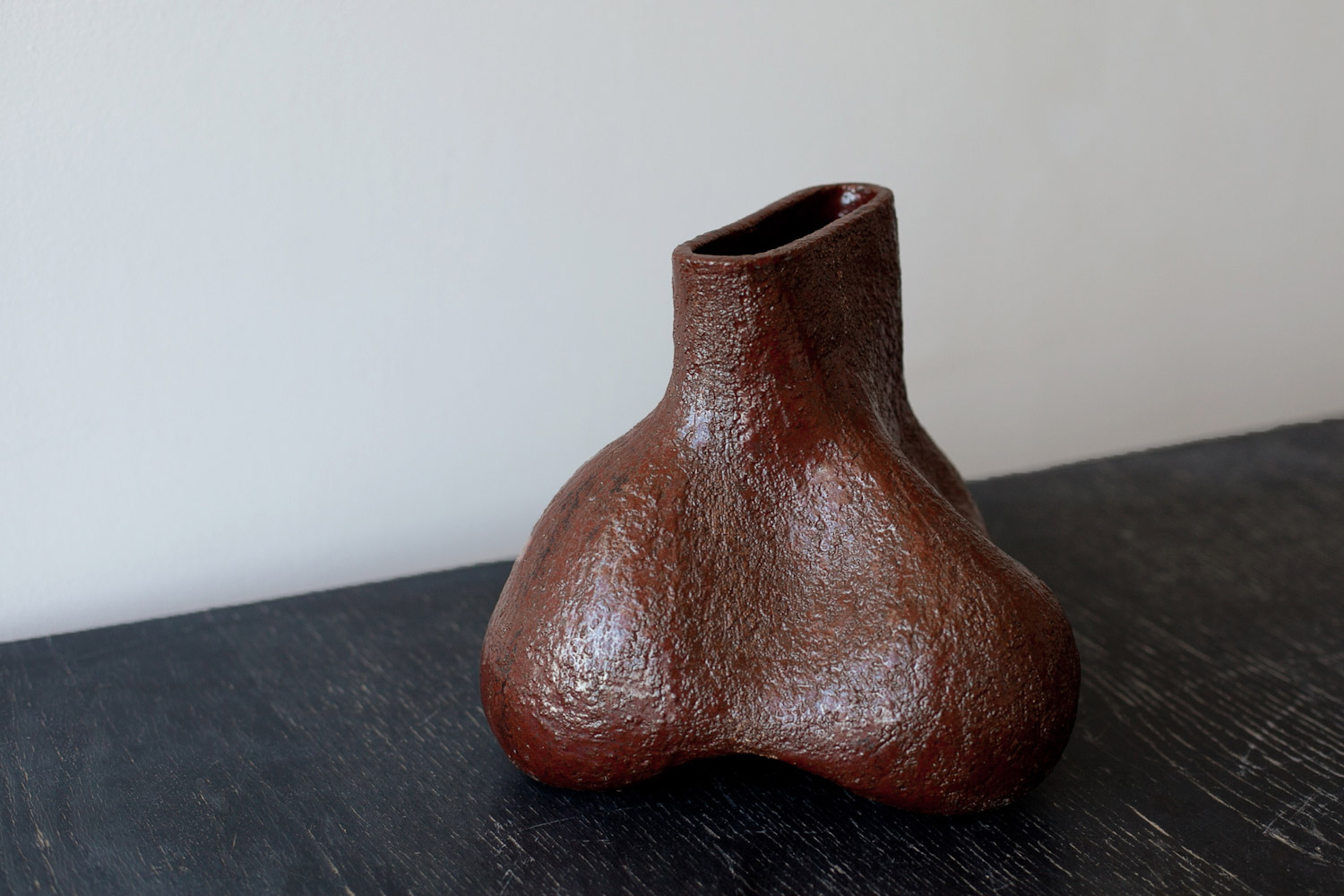
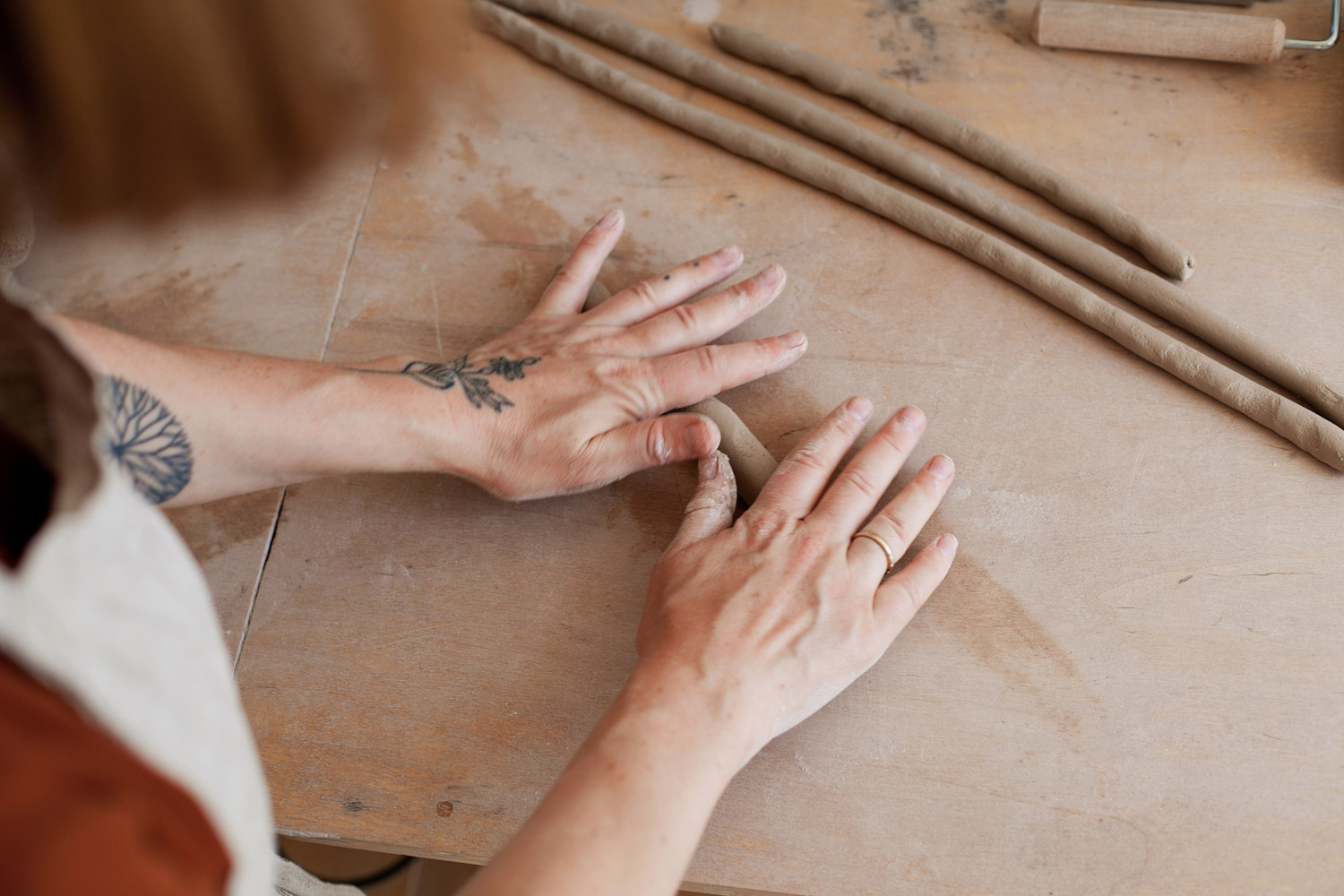
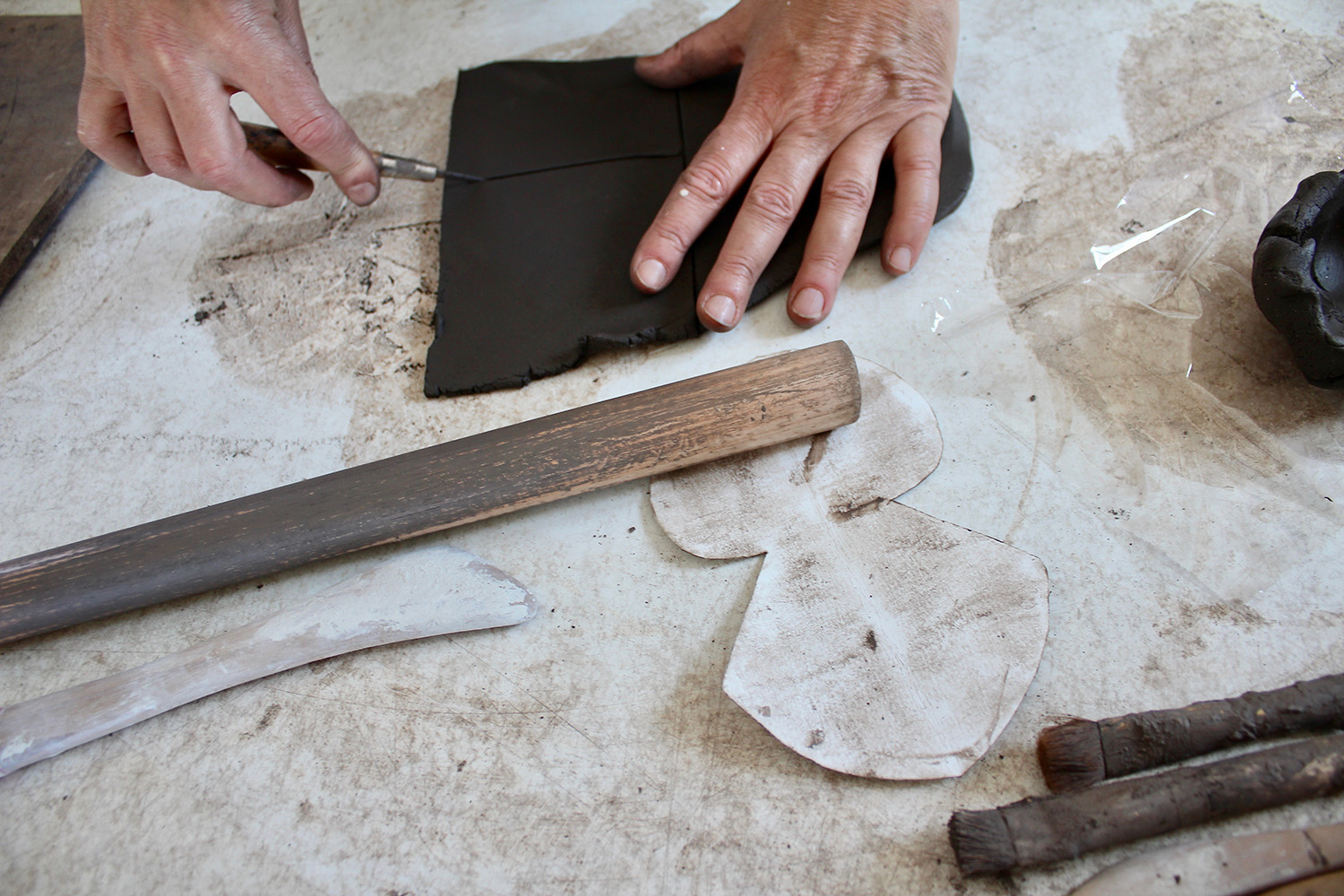
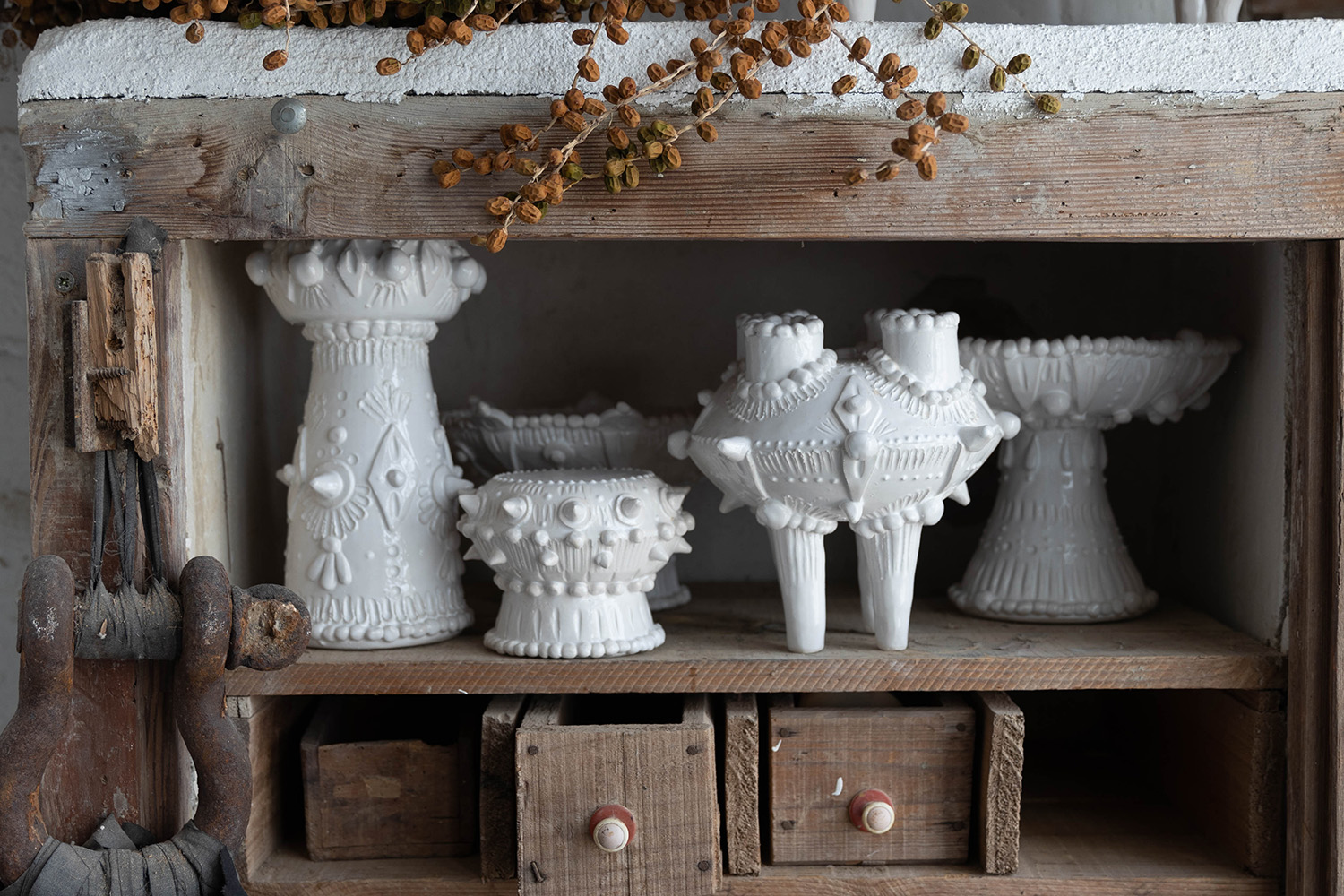
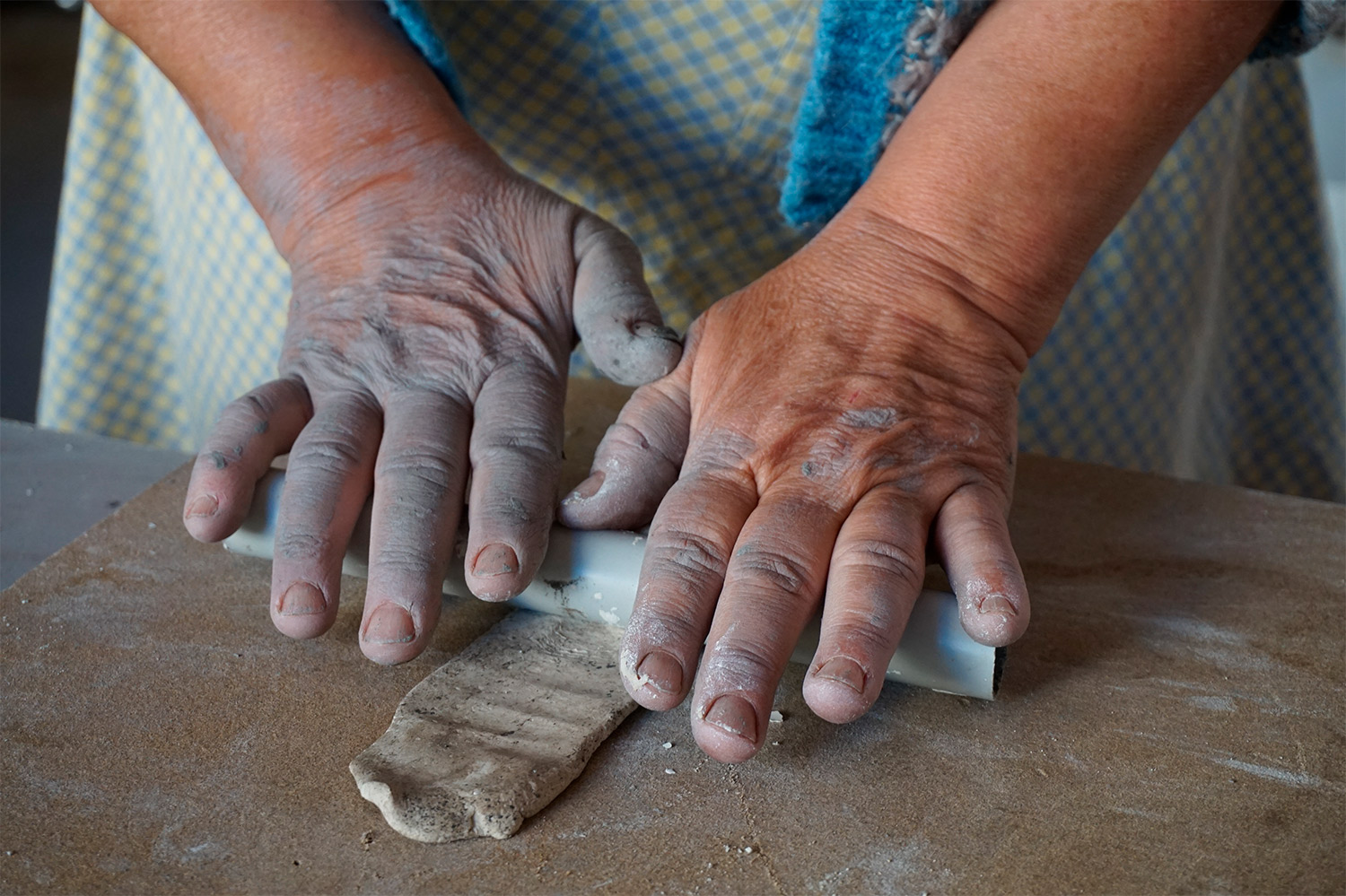
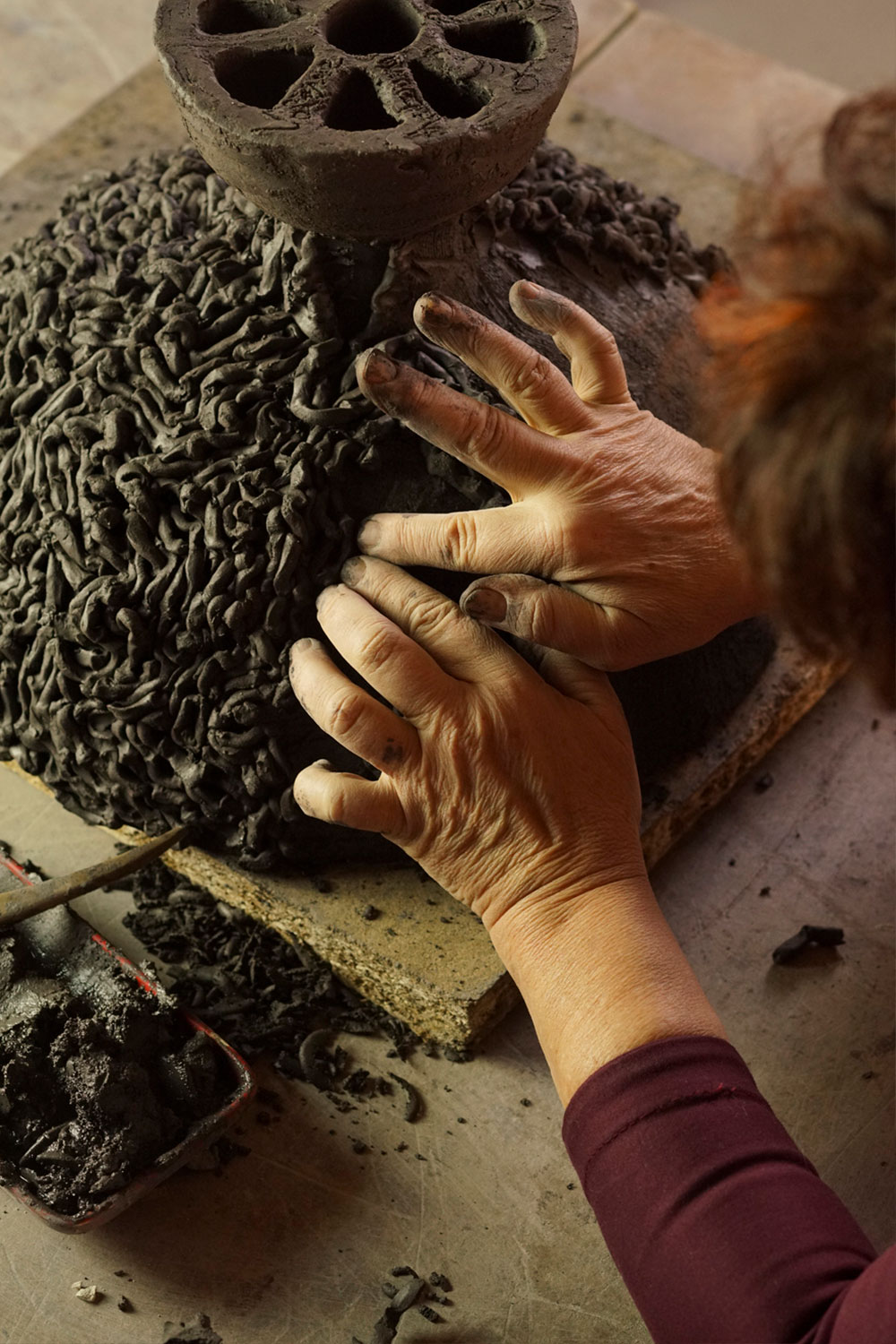
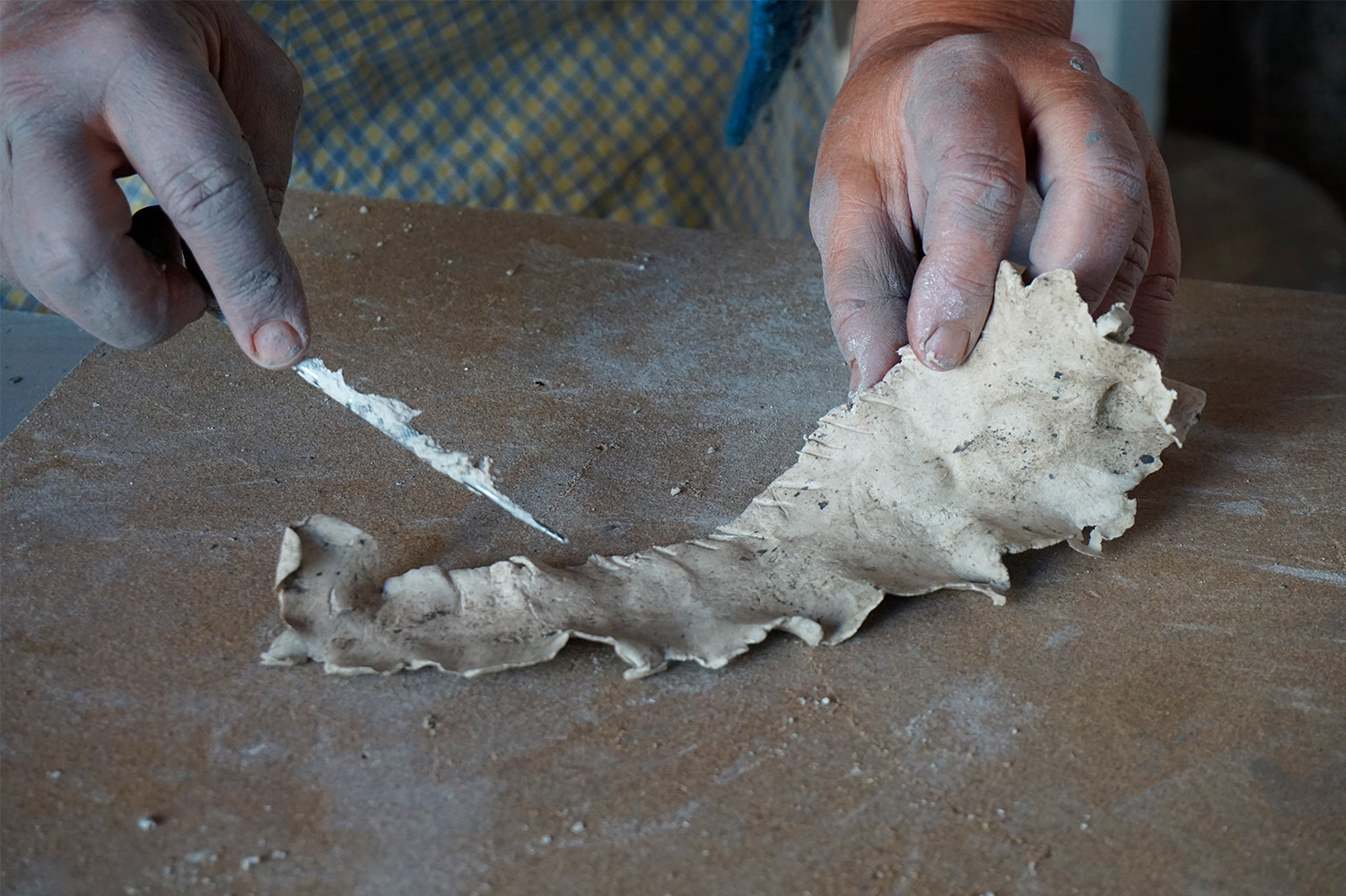
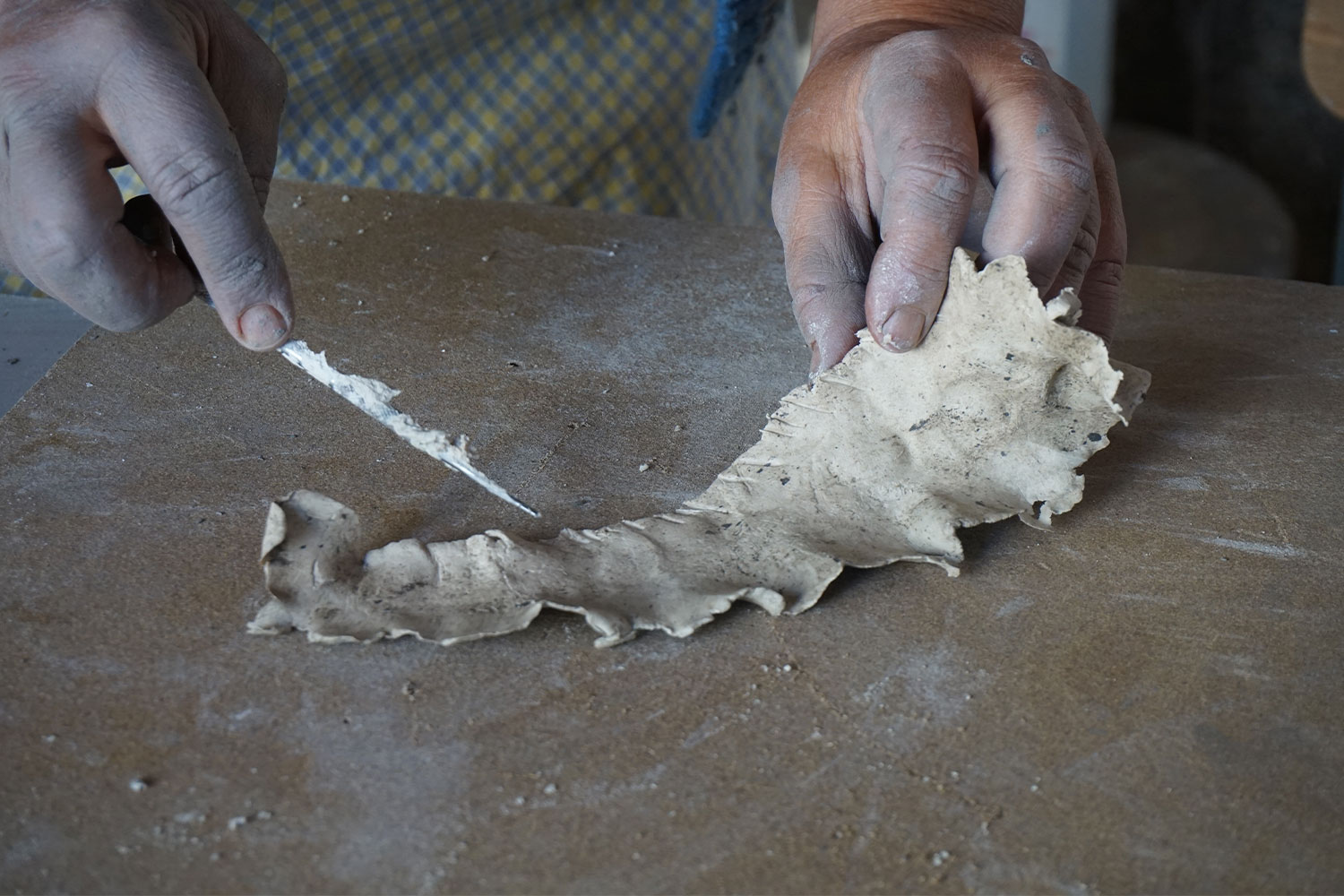
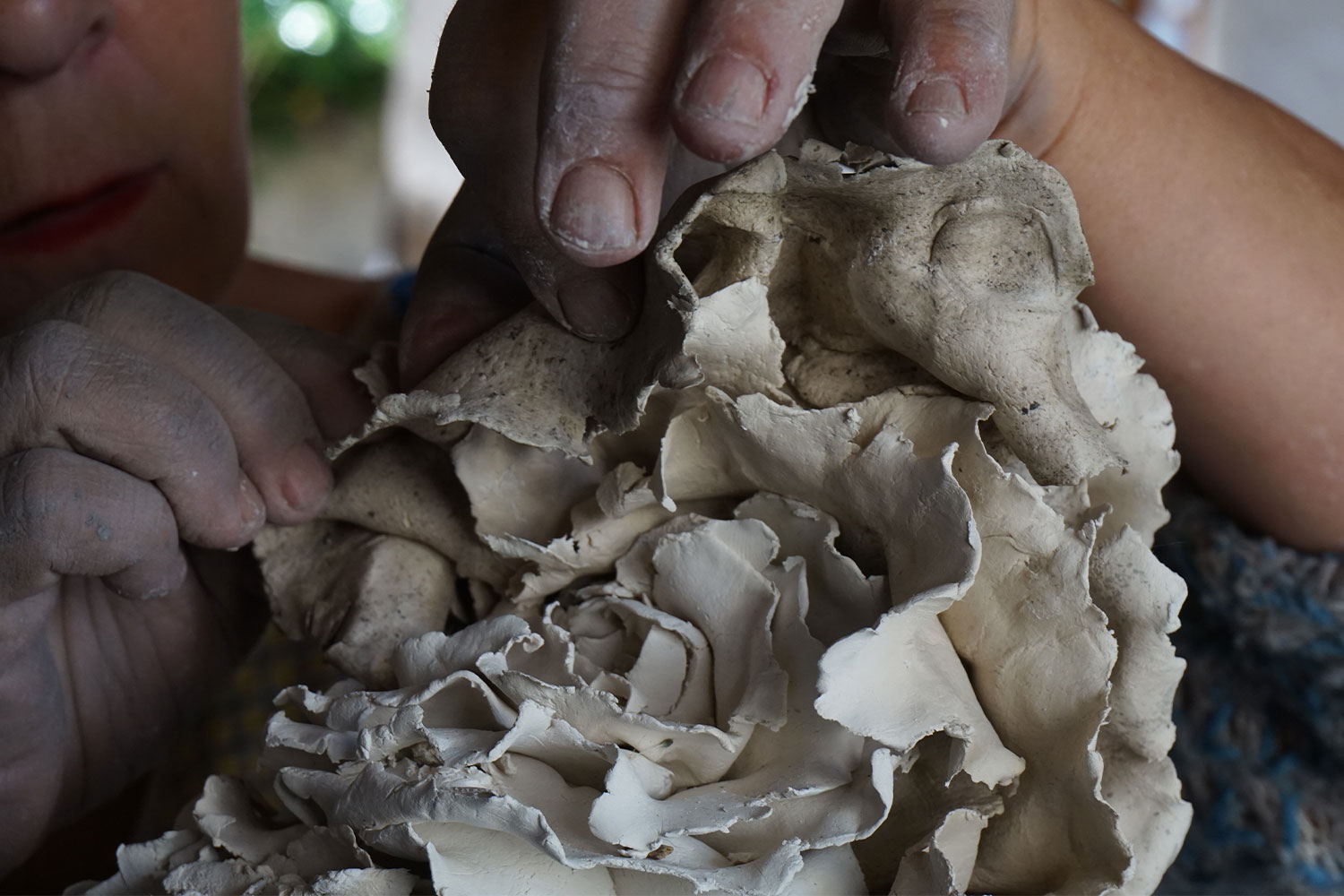
My work is very fine, so I work with stoneware and have a great love for porcelain. I also mix the two to make paper clay – it is extraordinary. One could say my technique is the accumulation of elements next to each other, always adding small elements.
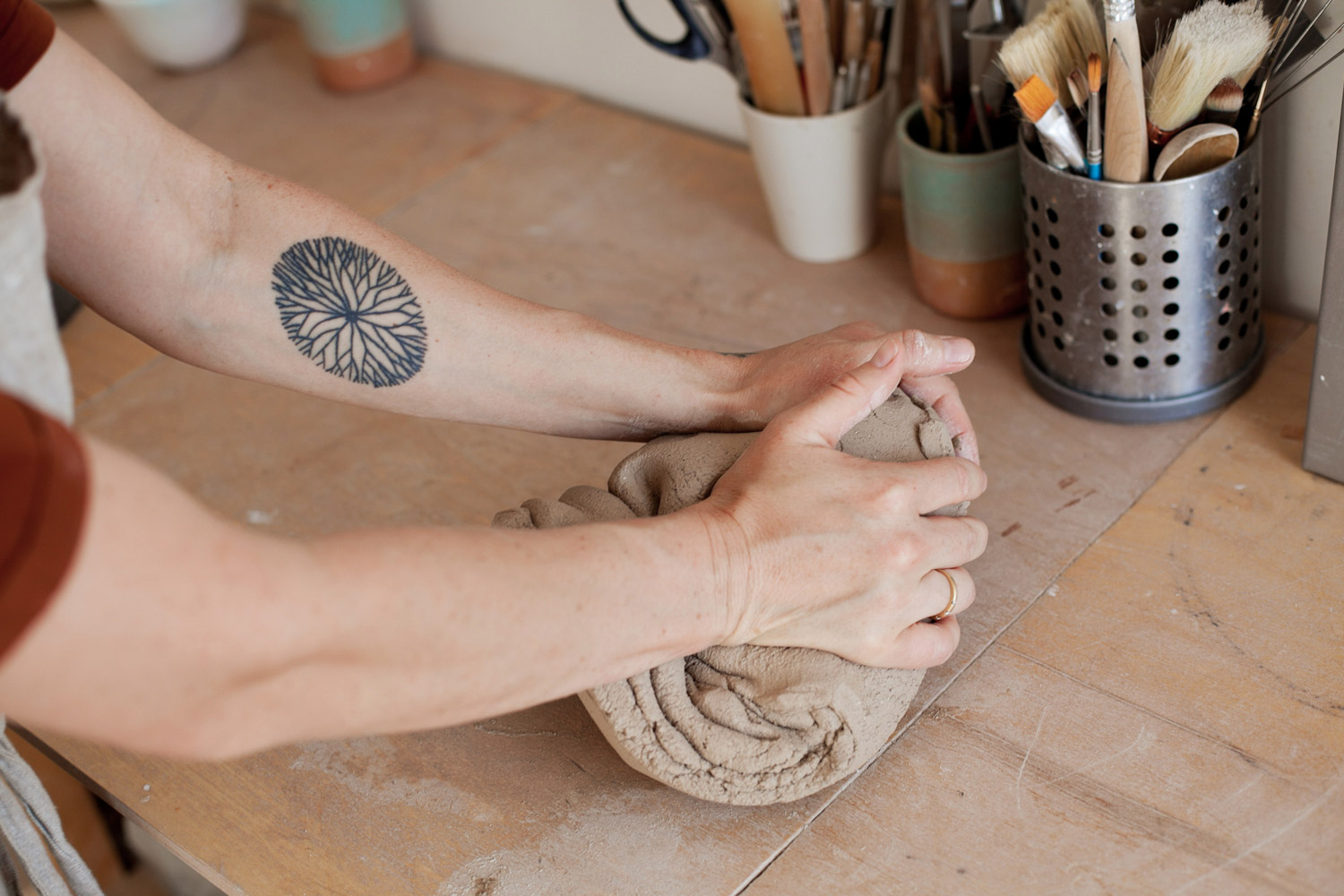
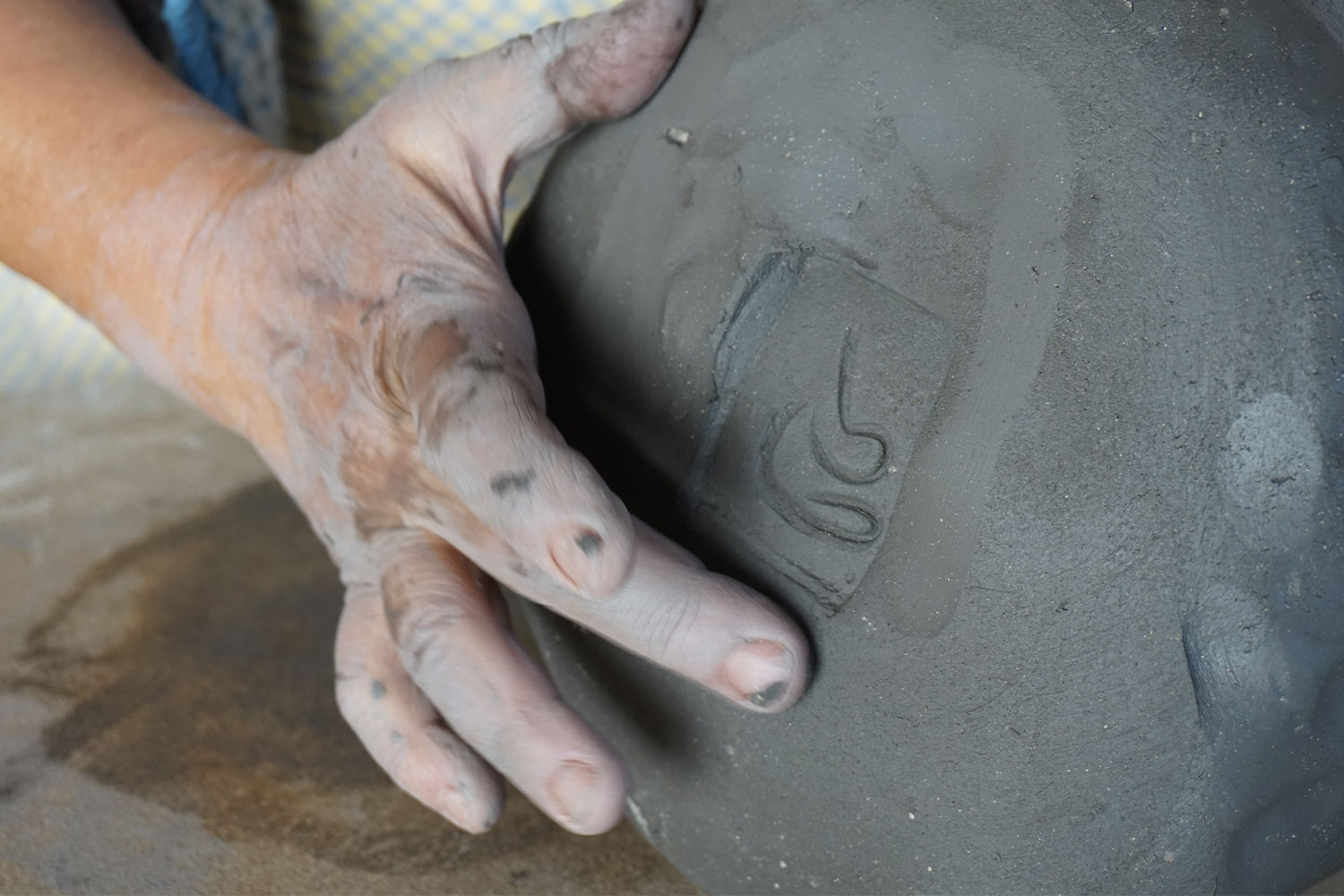
When I made costumes, I could work for hours on small details. Fabric is something that is very much alive, even though it is a dead material – it follows the body, it moves and you can do whatever you want with it. I touch clay as if it were fabric.
When my first piece was sold in a gallery I burst into endless sobs. Later I learnt that the buyer had just had a breast cancer diagnosis. Also, the young Malian artist Abdoulaye Diakité won a three-month scholarship and I taught him how to make paper clay sculptures.
2 EXPERIENCES
2 EXPERIENCES
Valérie Lebrun
Ceramicist
Saint-Fargeau, France
AVAILABILITY
By appointment only
PHONE
+33 766690443
LANGUAGES
French
Homo Faber Finds is a new service aiming to inspire admirers of craft to connect and collaborate with exceptional artisans.
We invite you to submit an enquiry here.