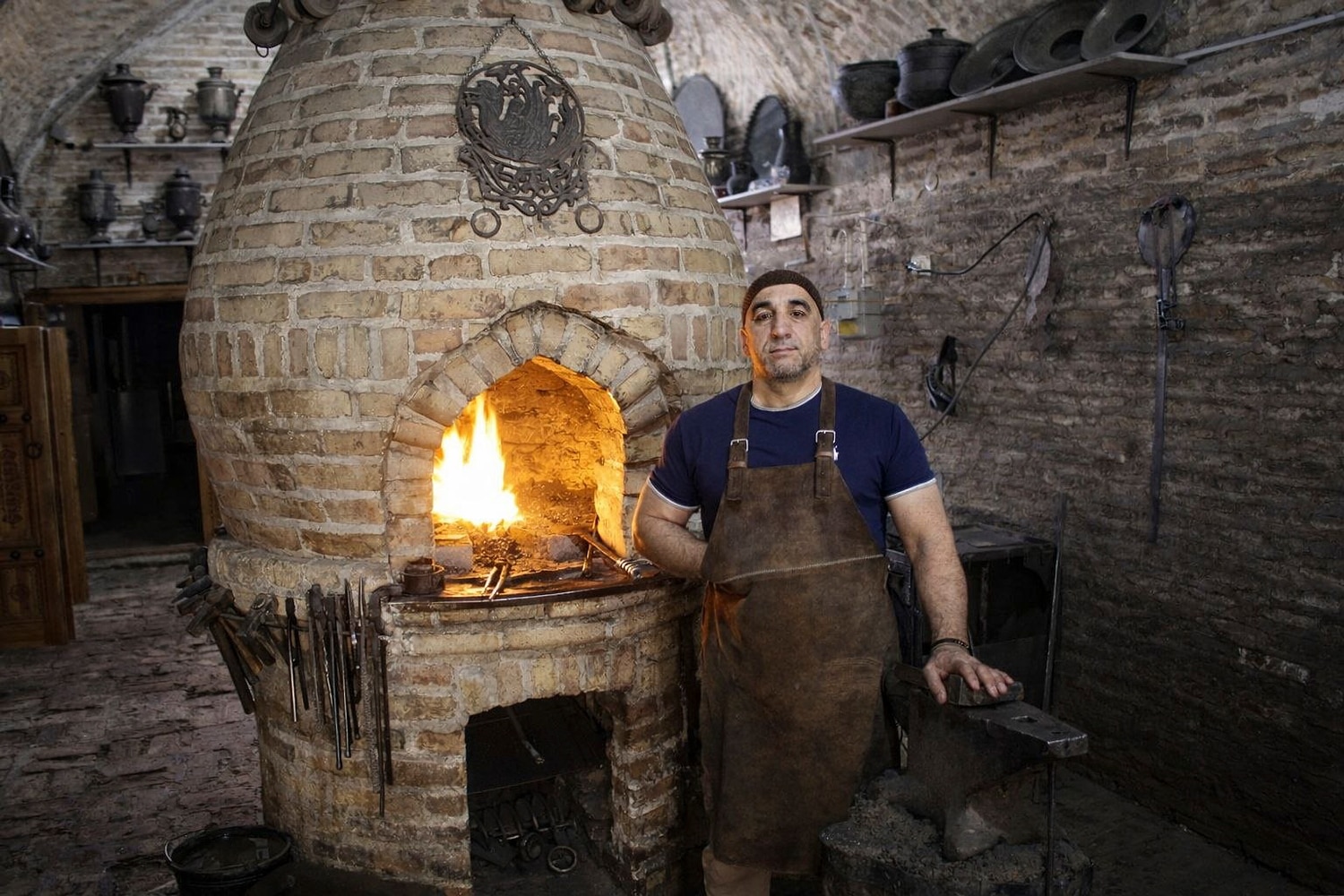
Jurabek Sidikov
Karavan Saray Sayfiddin
Coppersmith
Bukhara, Uzbekistan
The intricate art of embossing
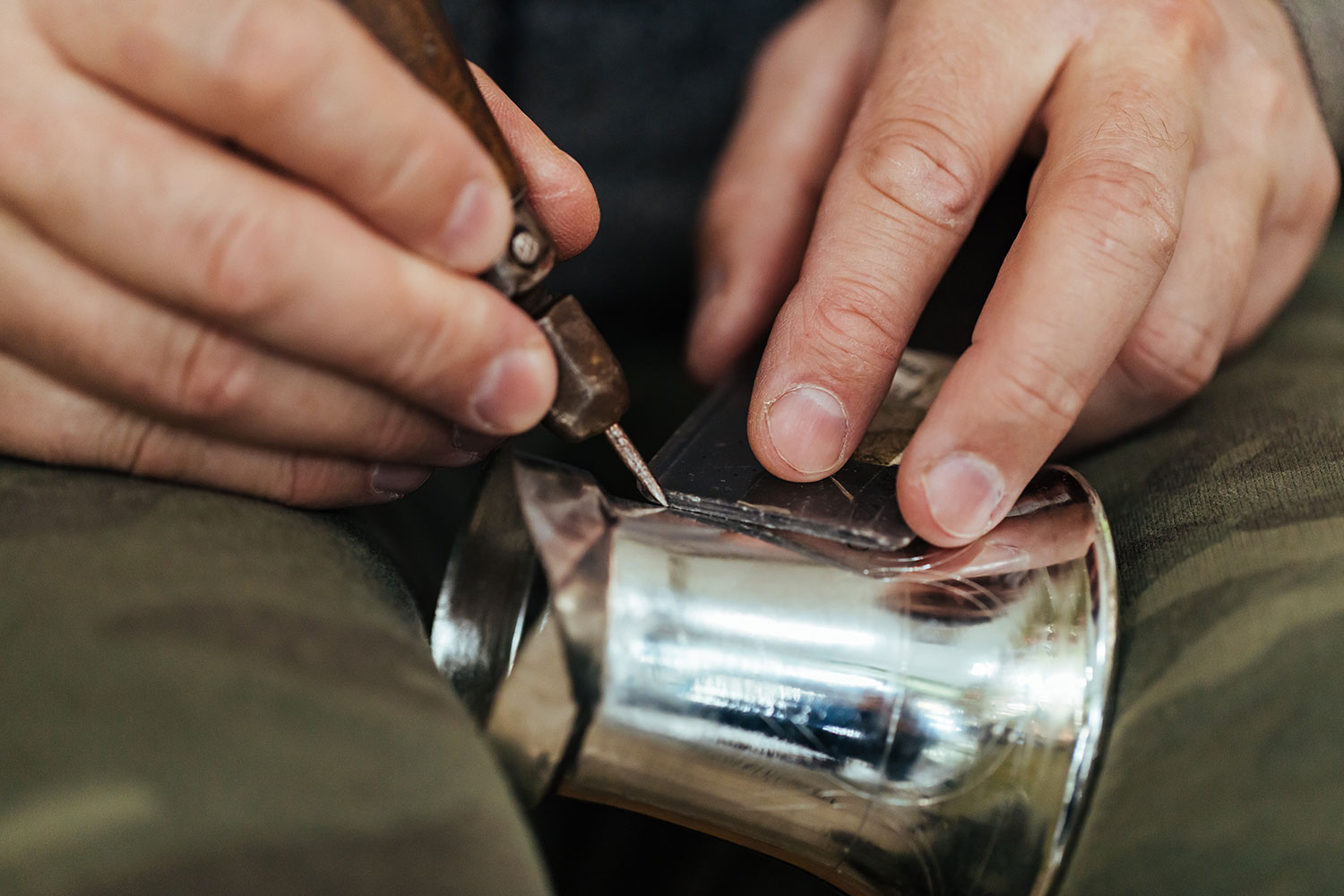
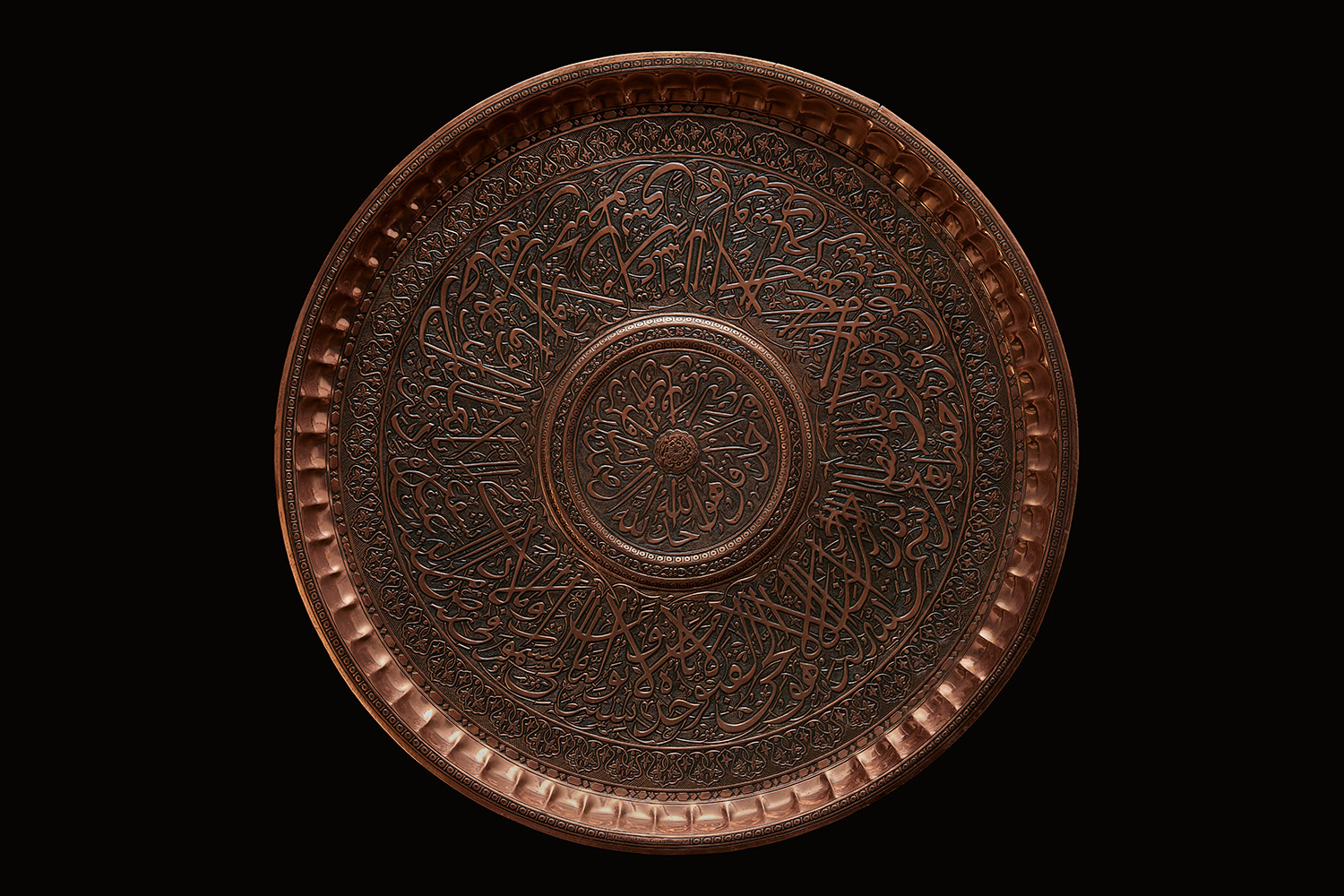
- Jurabek creates unique patterns in the local tradition of Bukhara
- He has inherited of this ancient craft from his mother
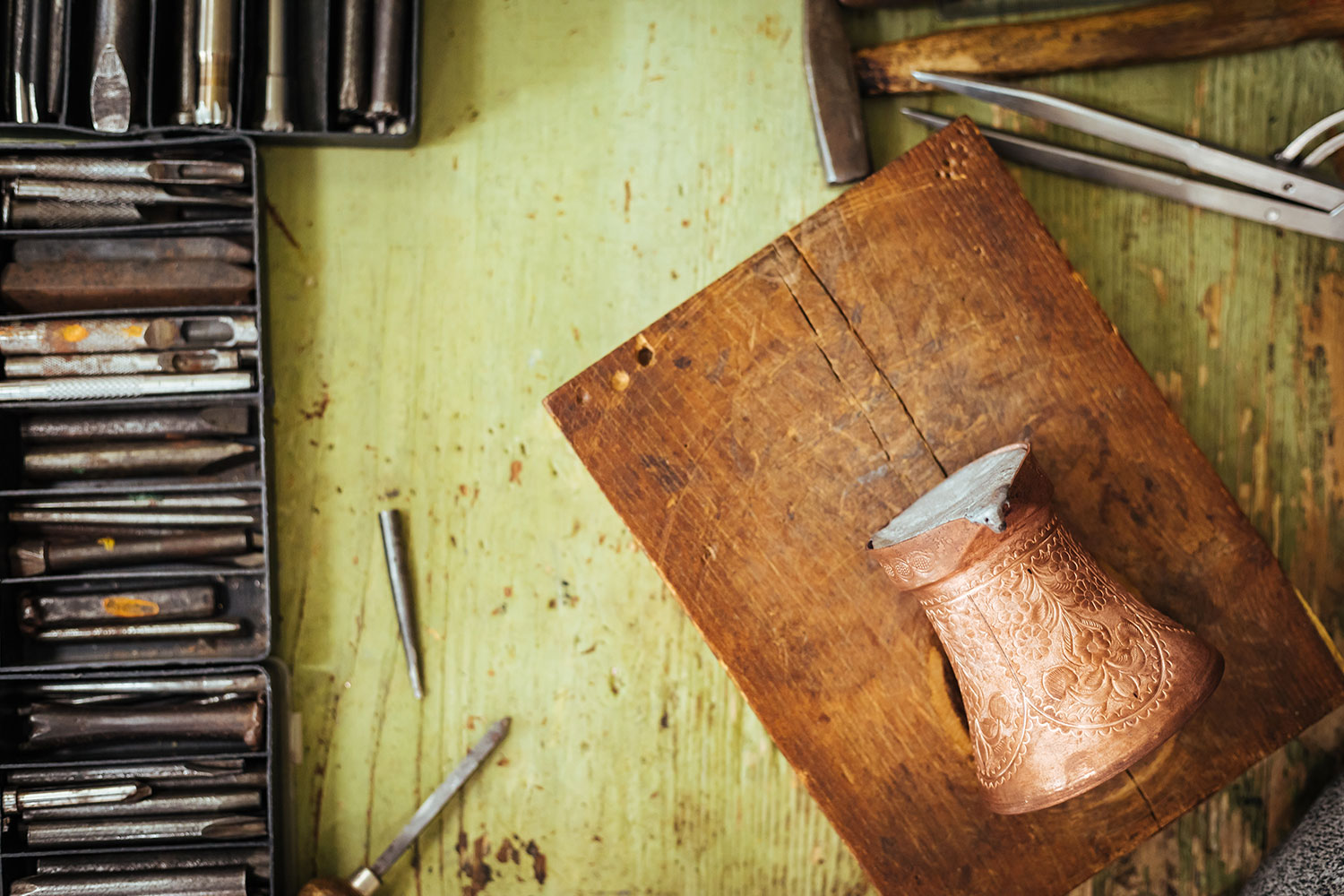
- He often depicts flowers that grow in his native region
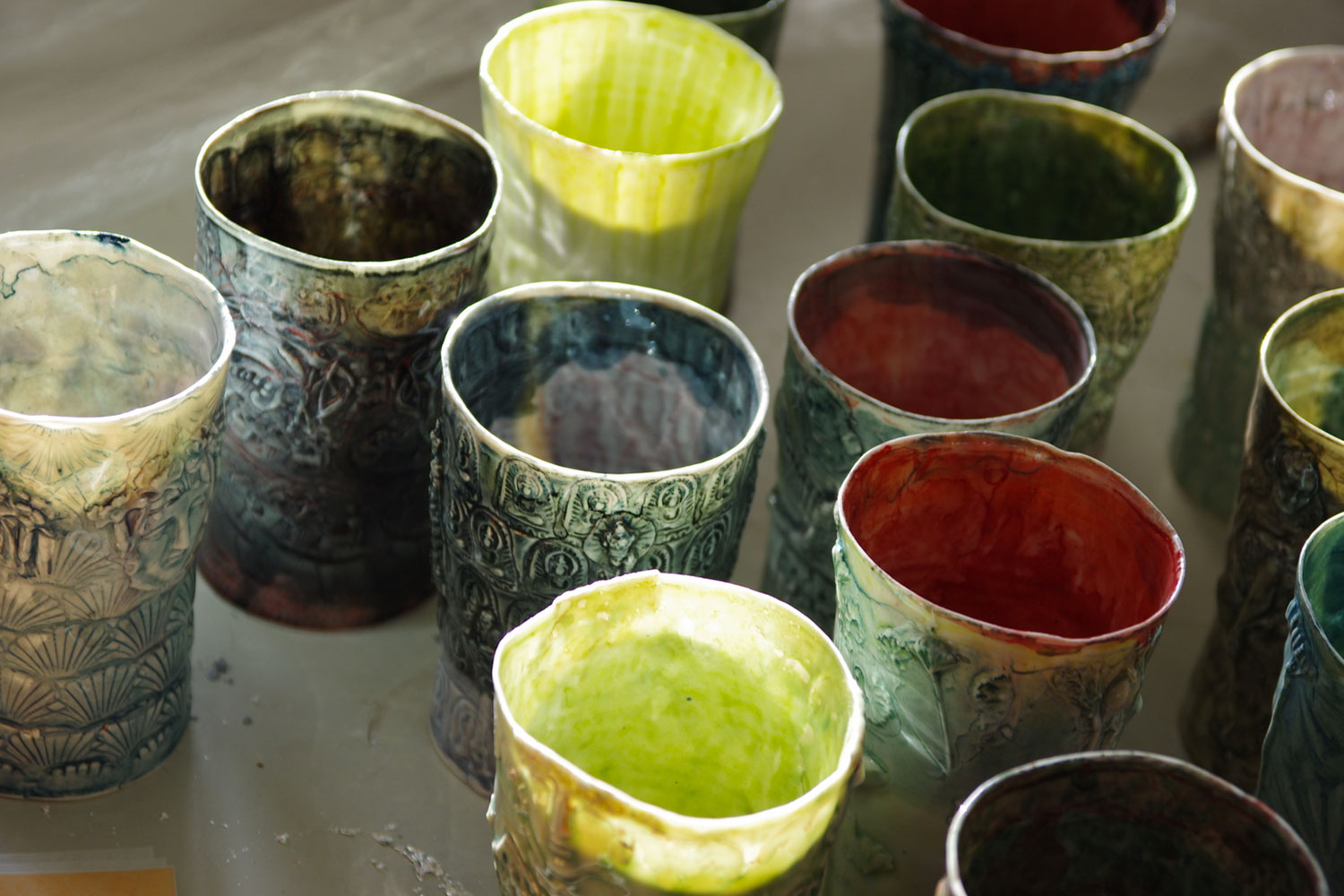
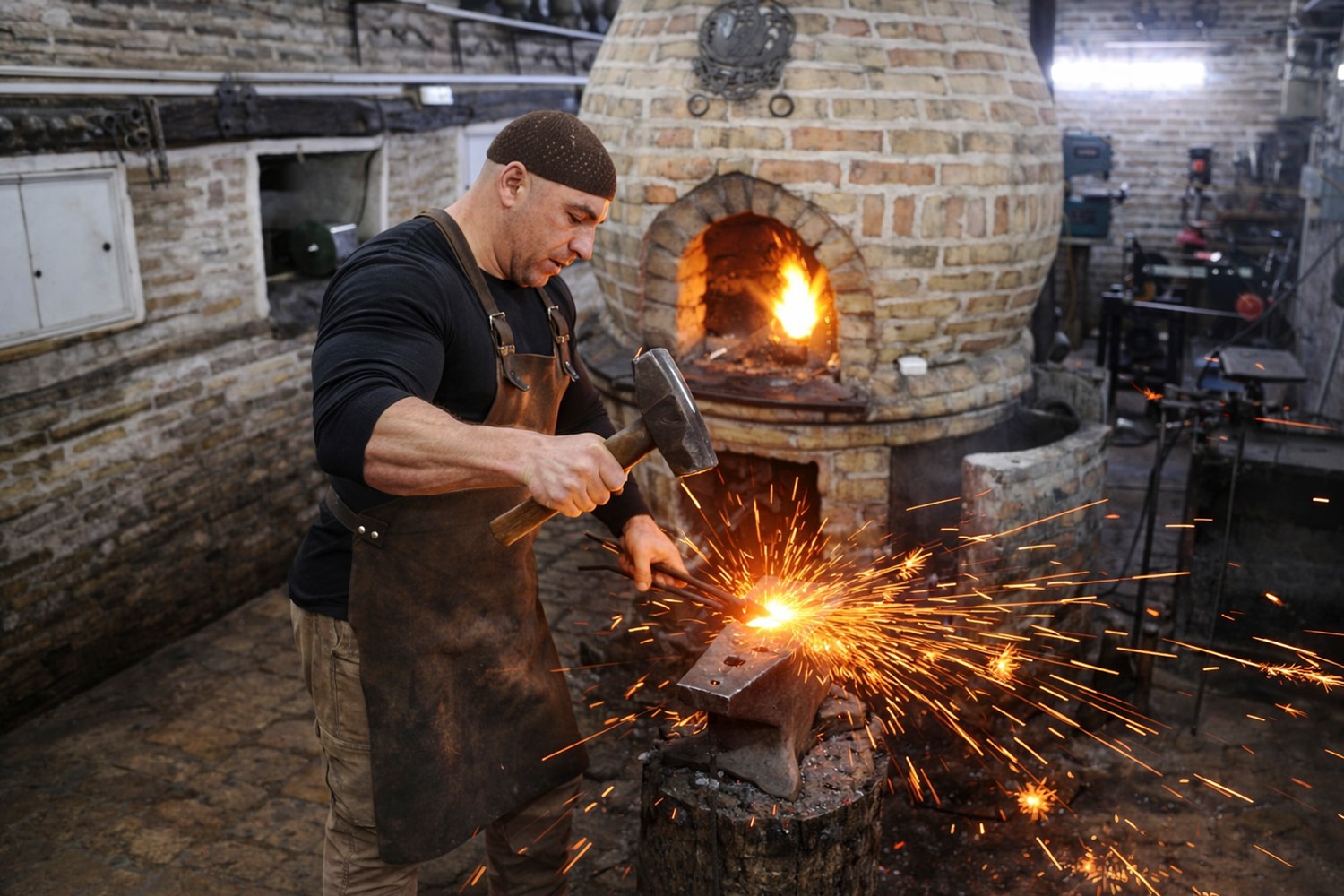
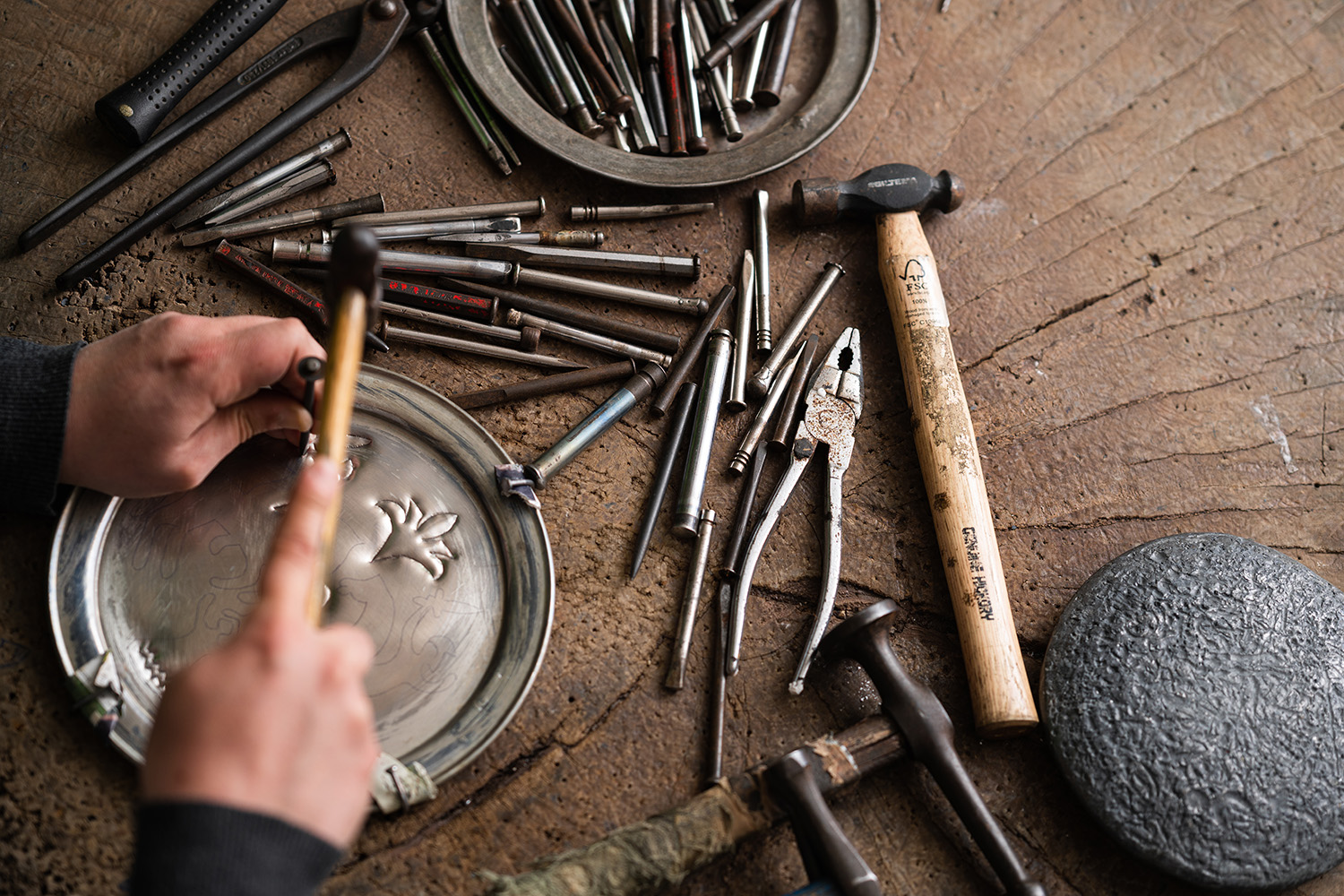
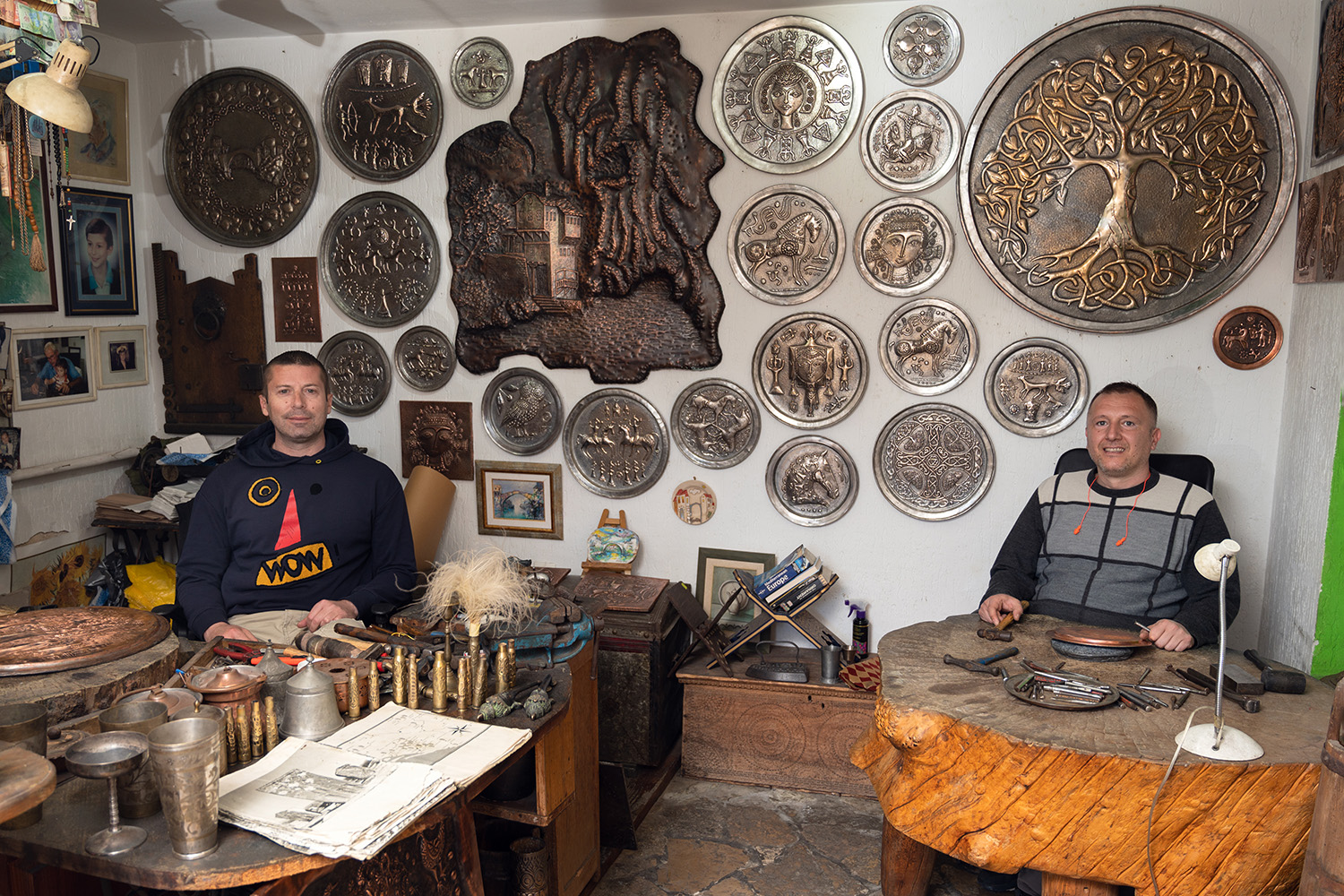
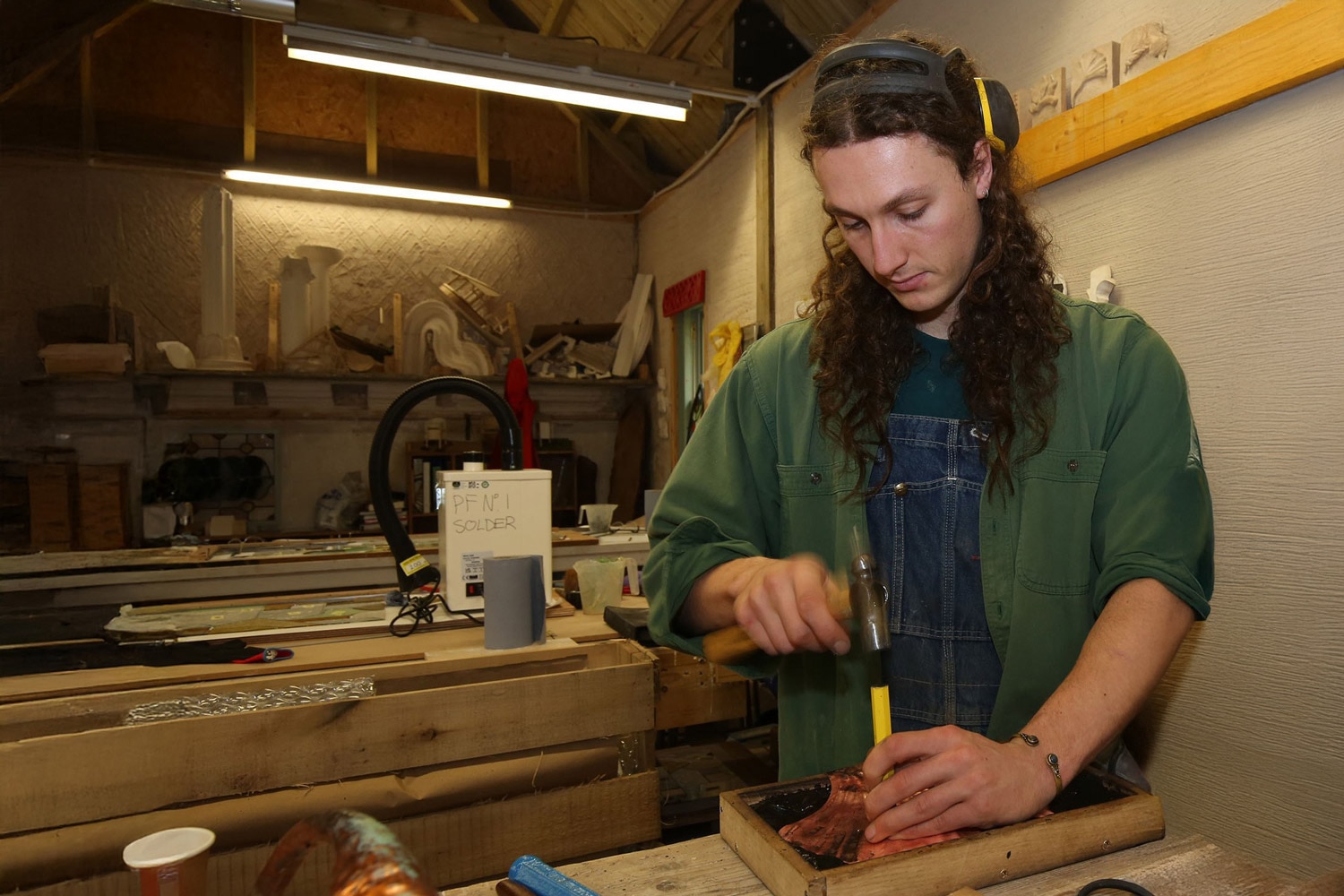
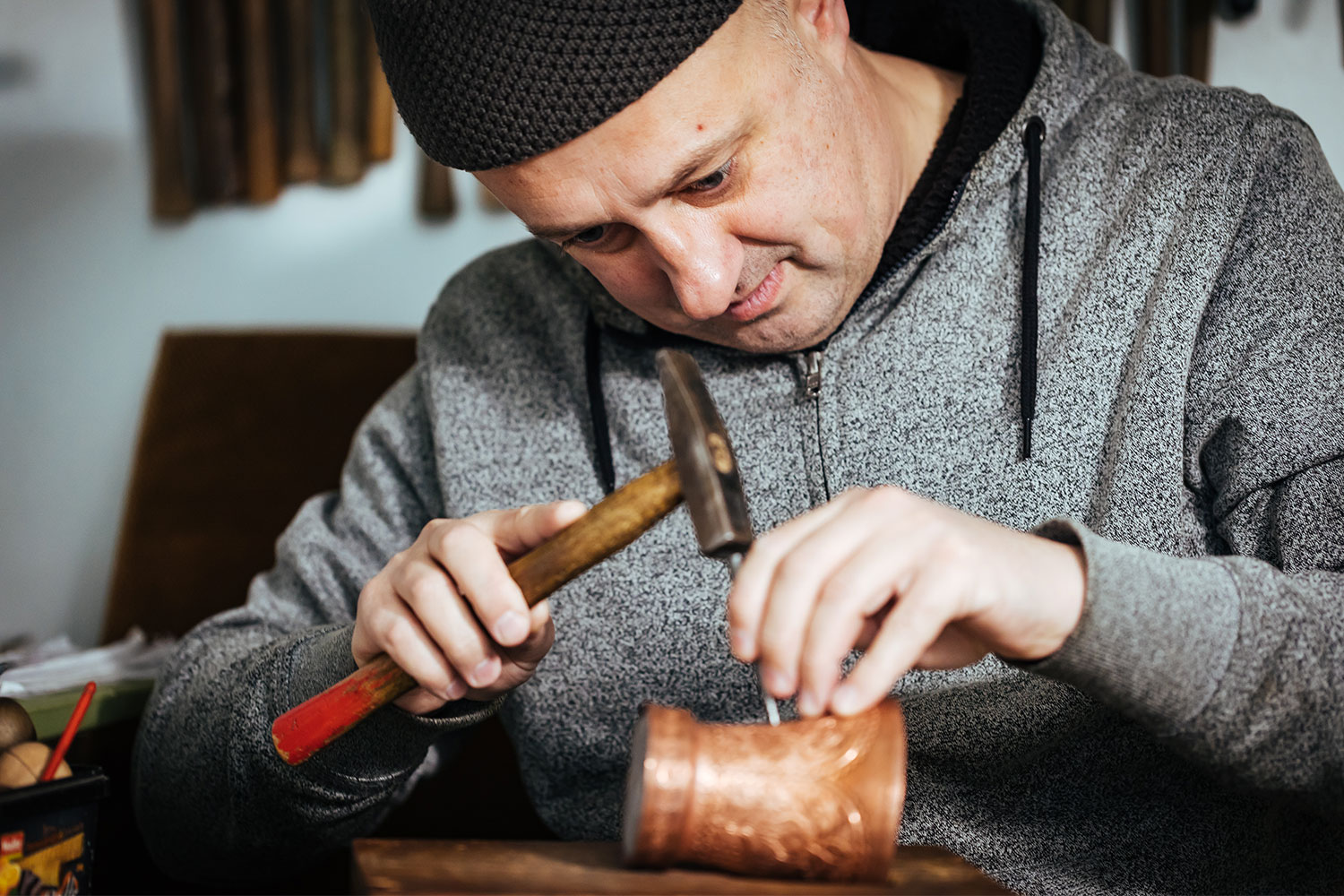
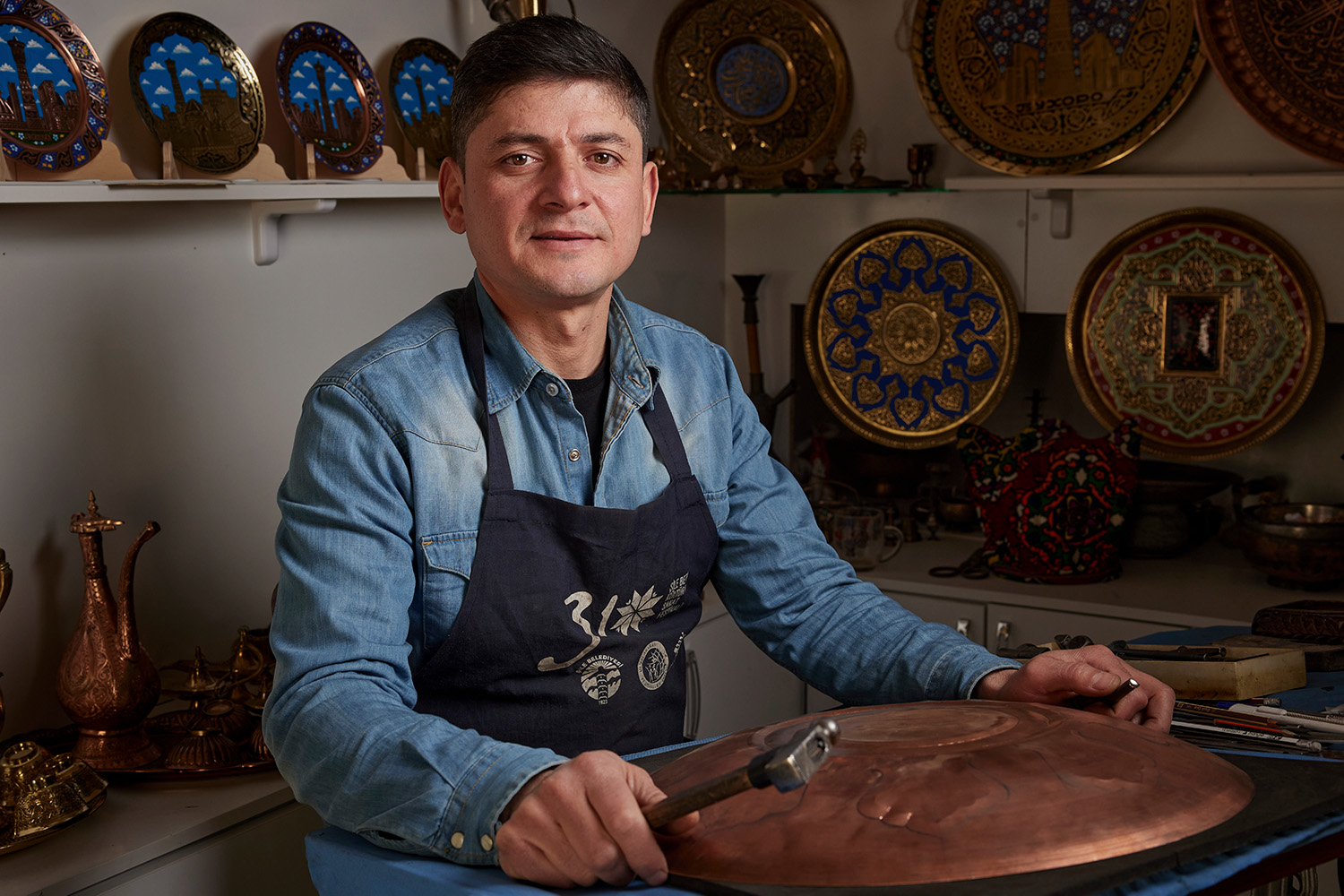
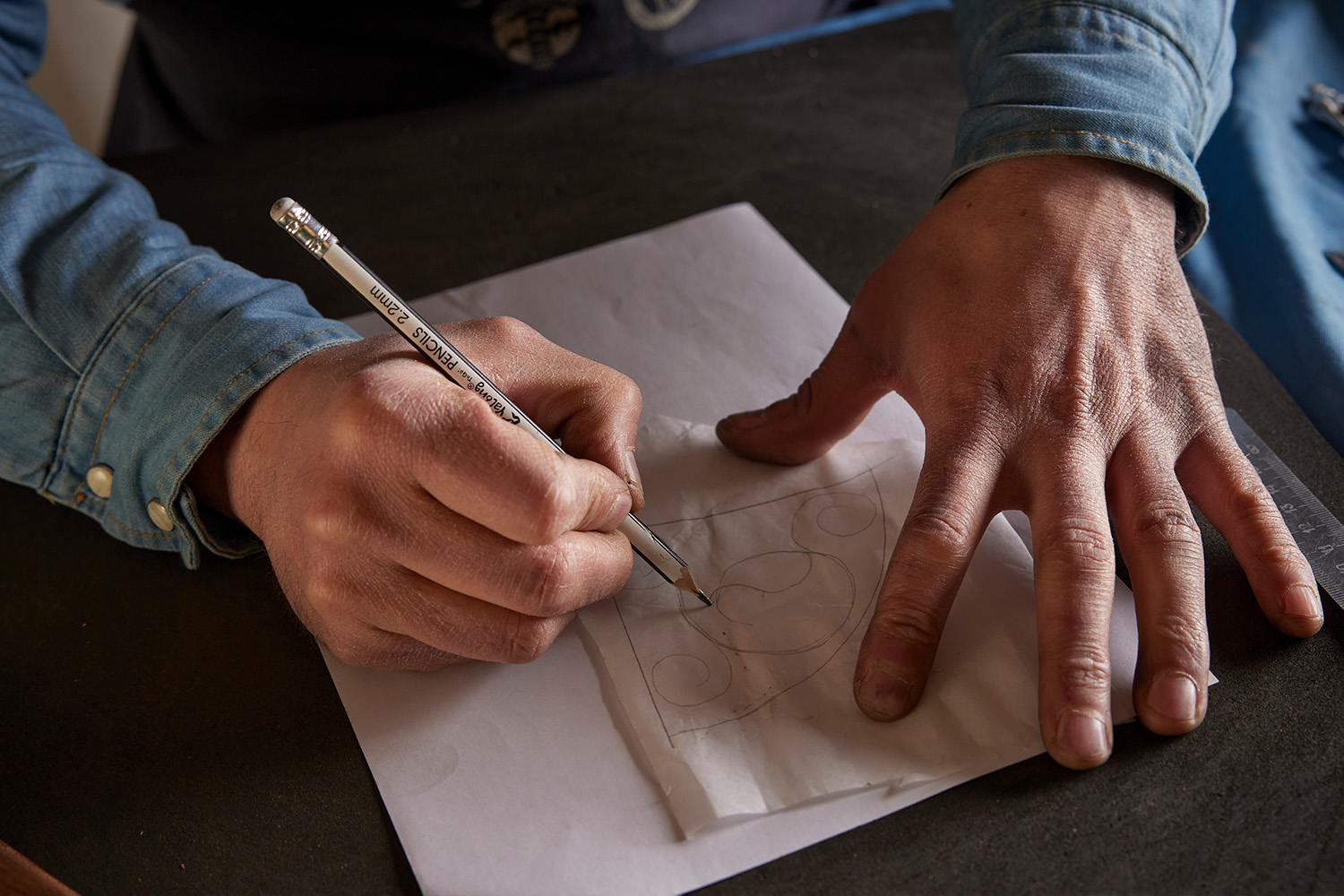
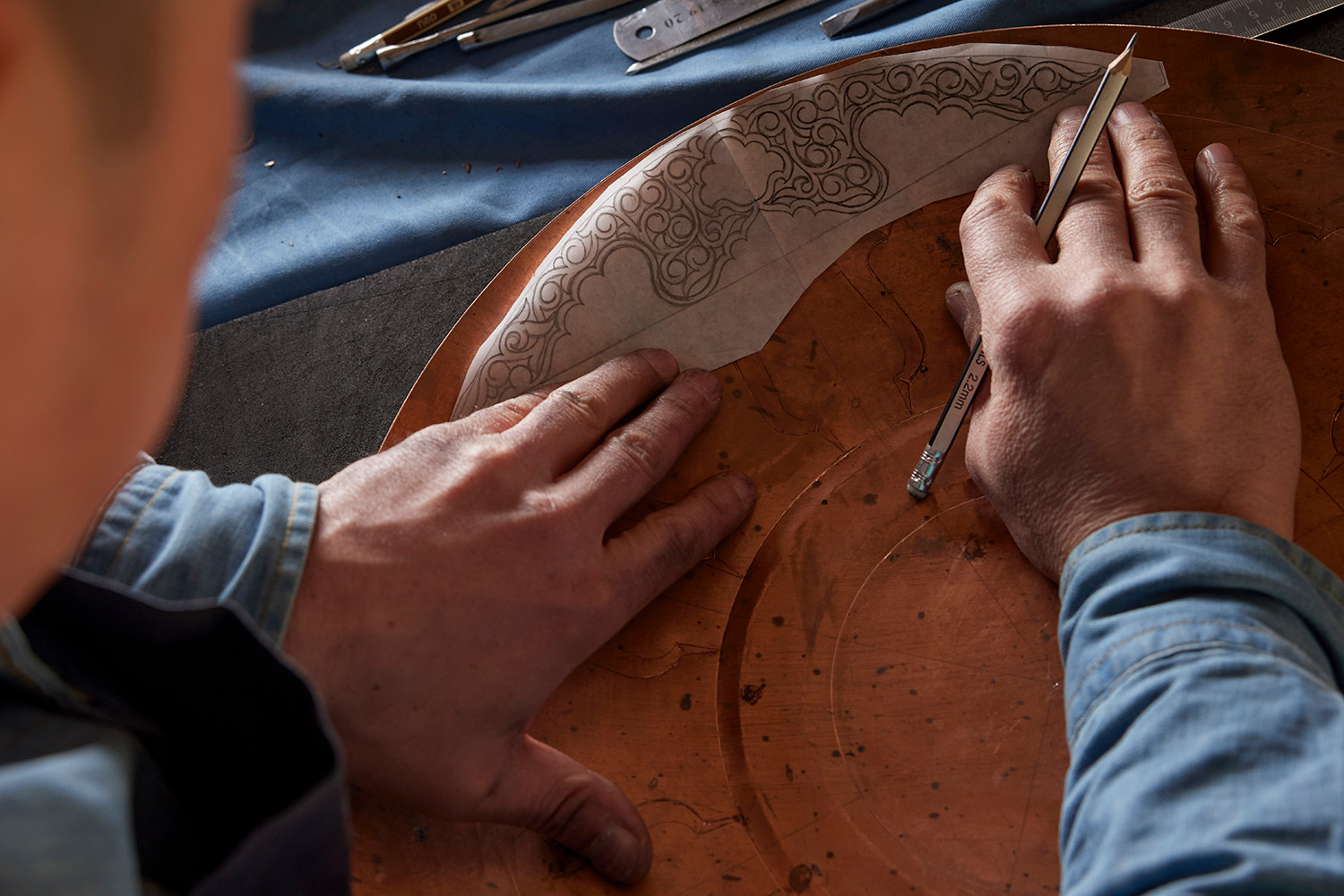
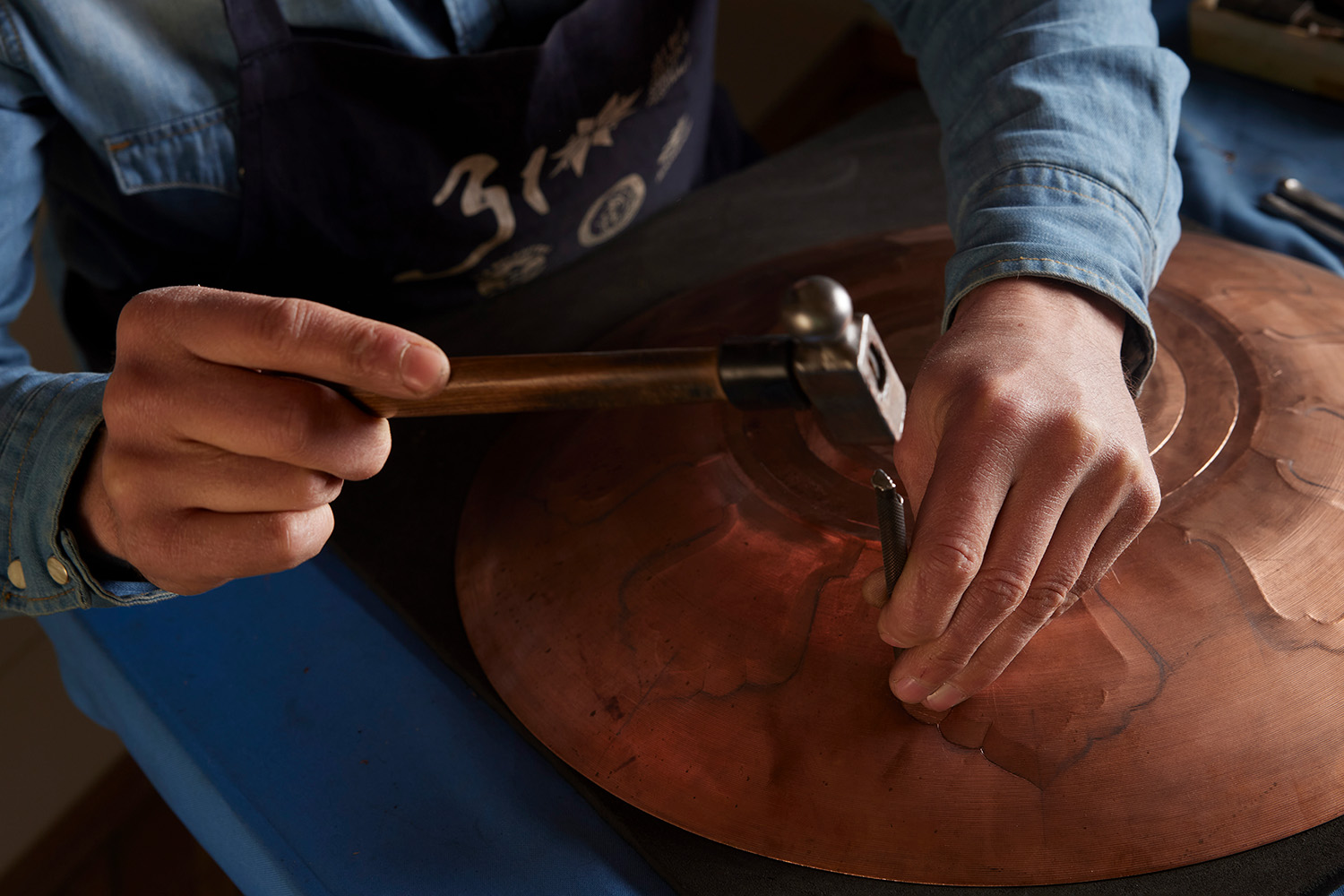
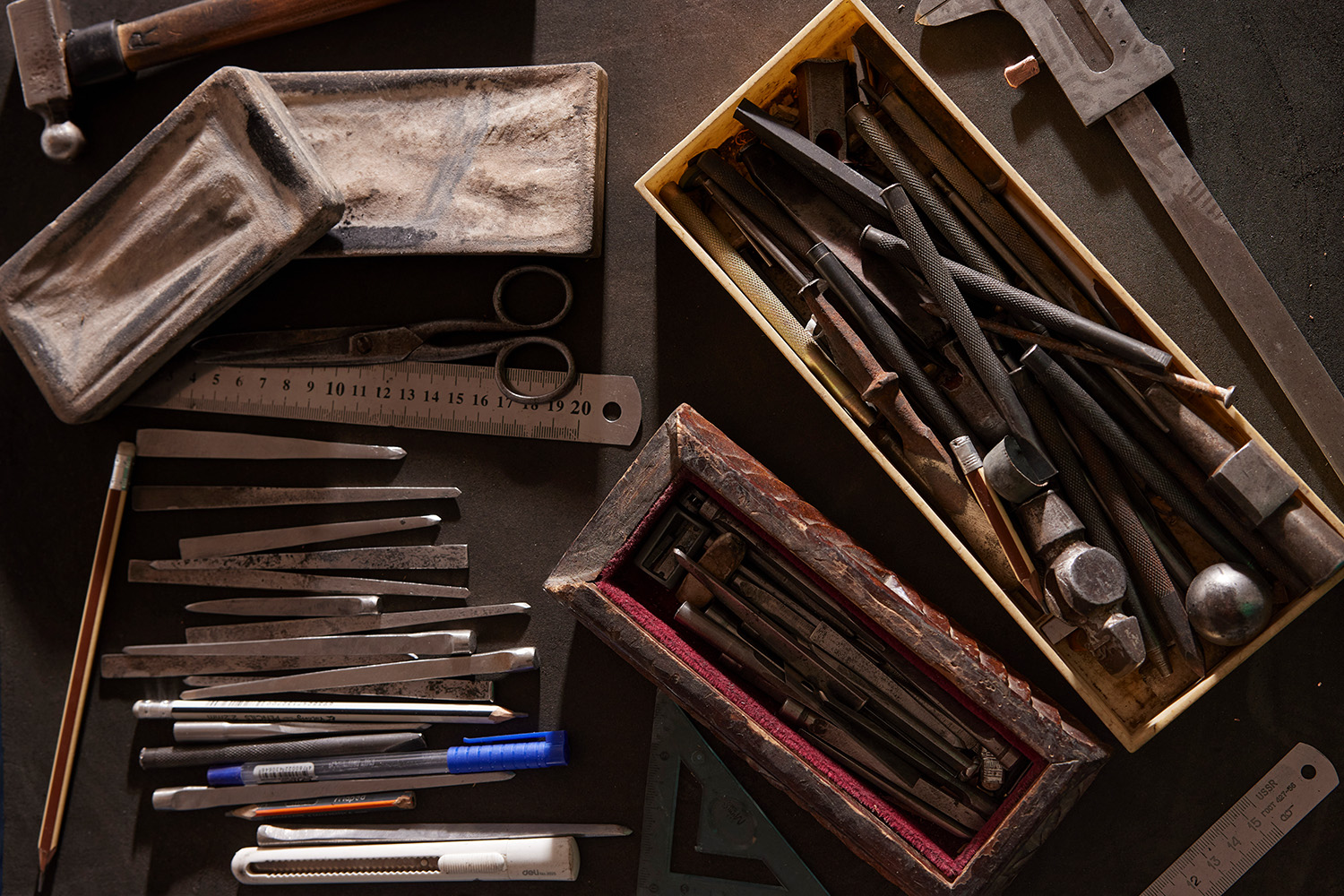
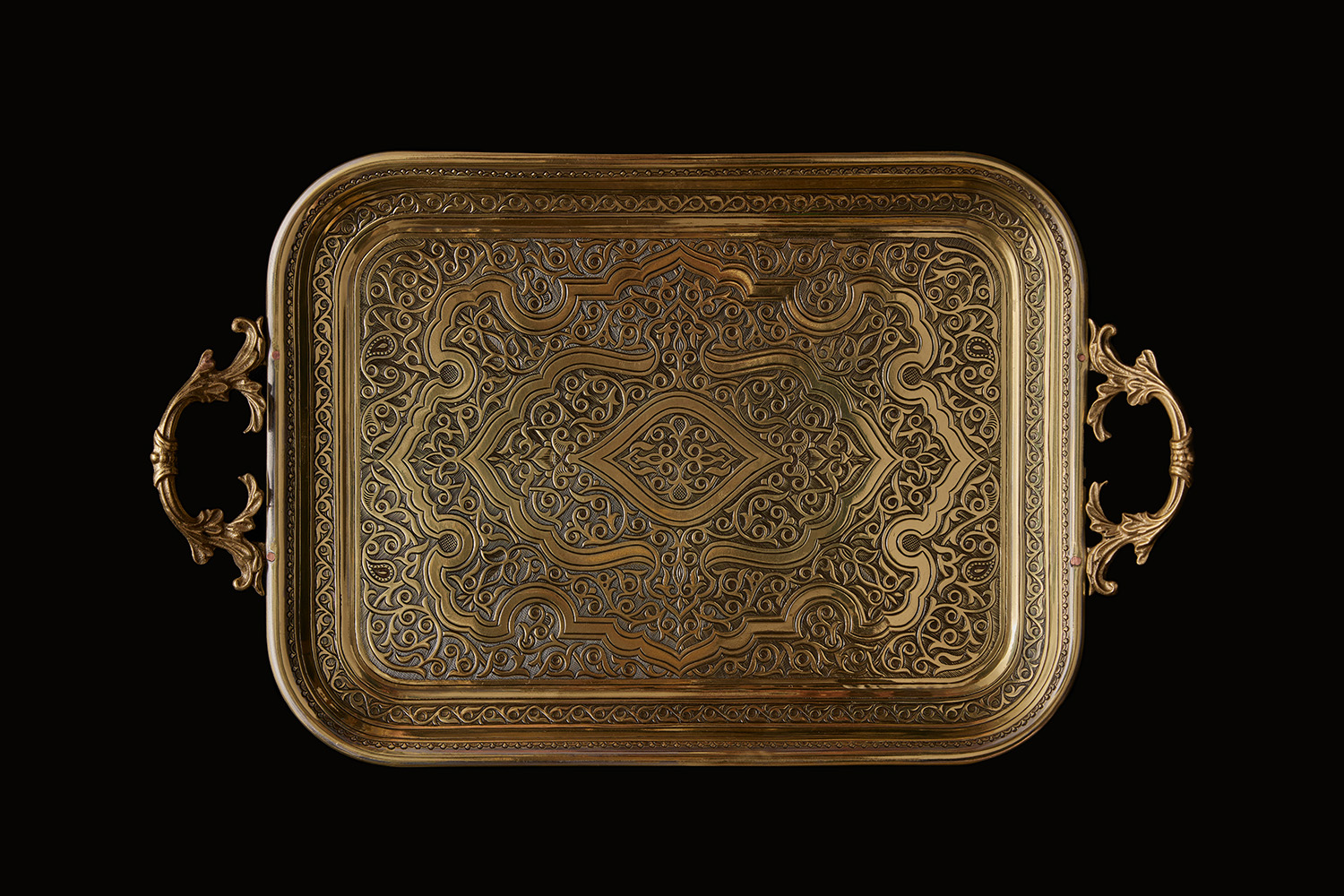
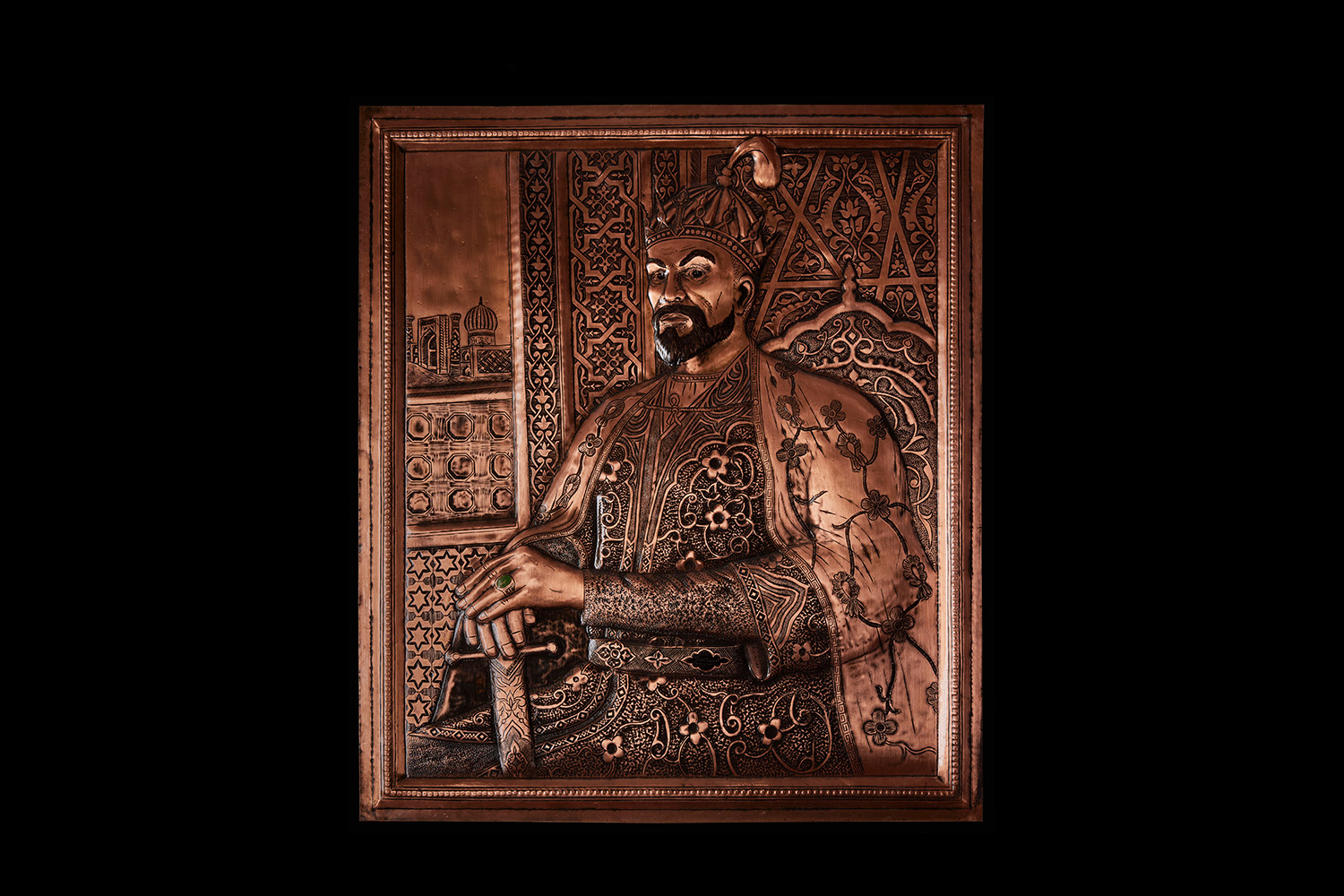
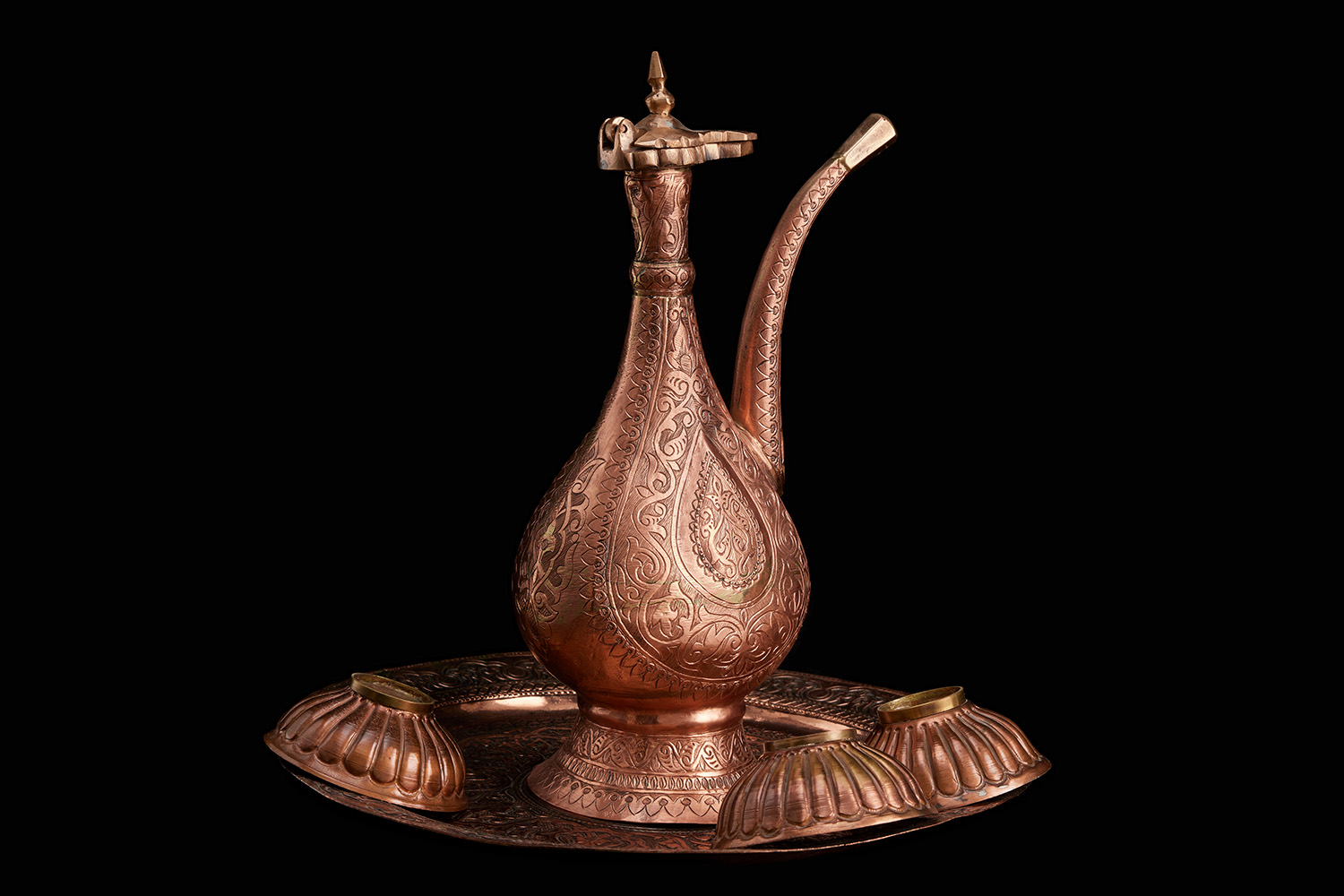
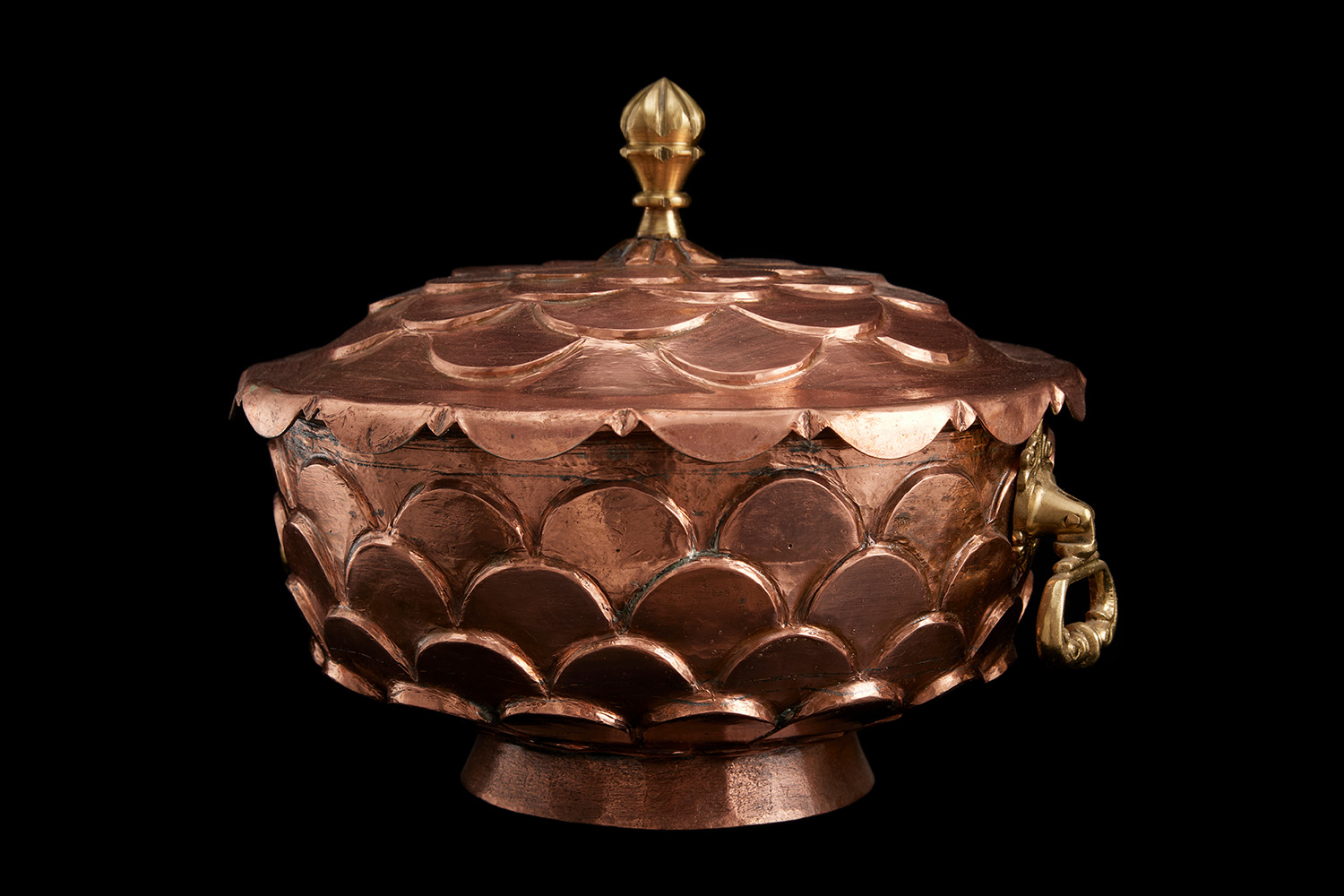
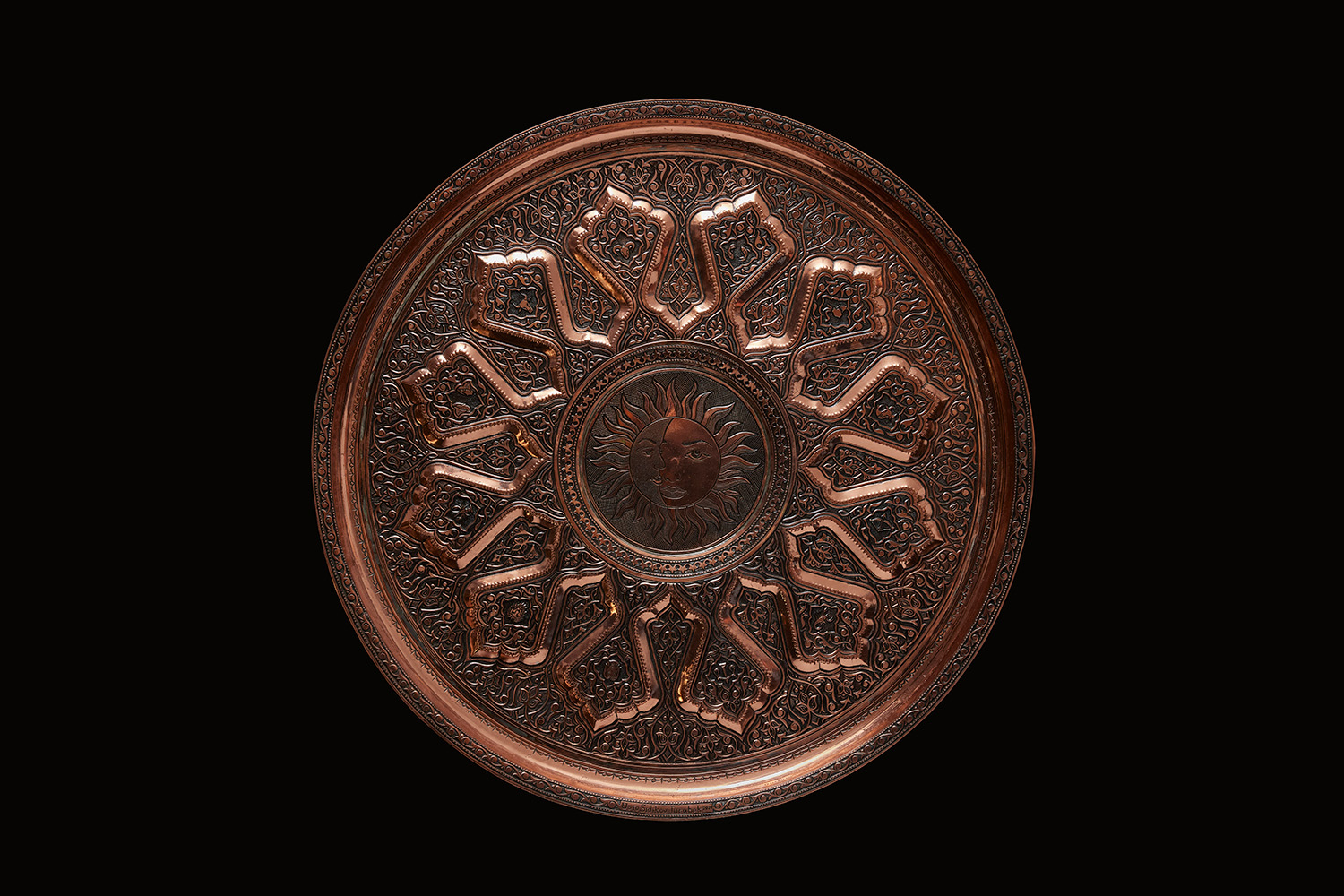
Jurabek Sidikov took up embossing from his mother, who practised it herself. Conscious of her young boy's desire to study this ancient craft, she brought him to master Rakhmat Ruziev who taught him everything. Jurabek learned how to work with different metals and different tools, how to develop patterns and how to use them for different types of finished works. Today he creates various objects, from decorative panels to vessels, trays and jewellery. He covers them with traditional abstract ornaments, floral patterns, ayahs, figurative images. Jurabek says that some of the ideas for future work come to him in his dreams – and he follows these visions, trusting that they come to him from the richness of life.
Discover his work
INTERVIEW
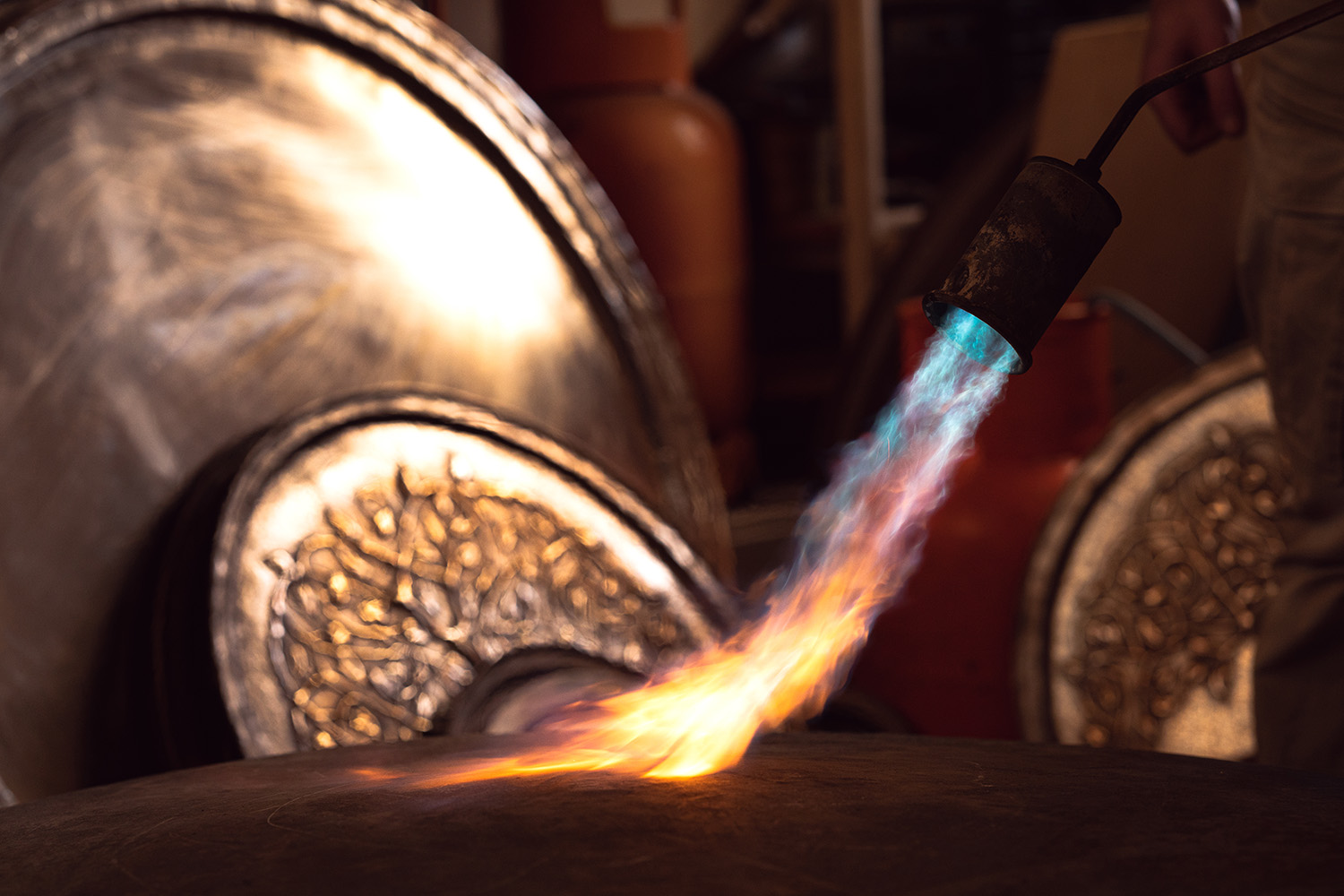
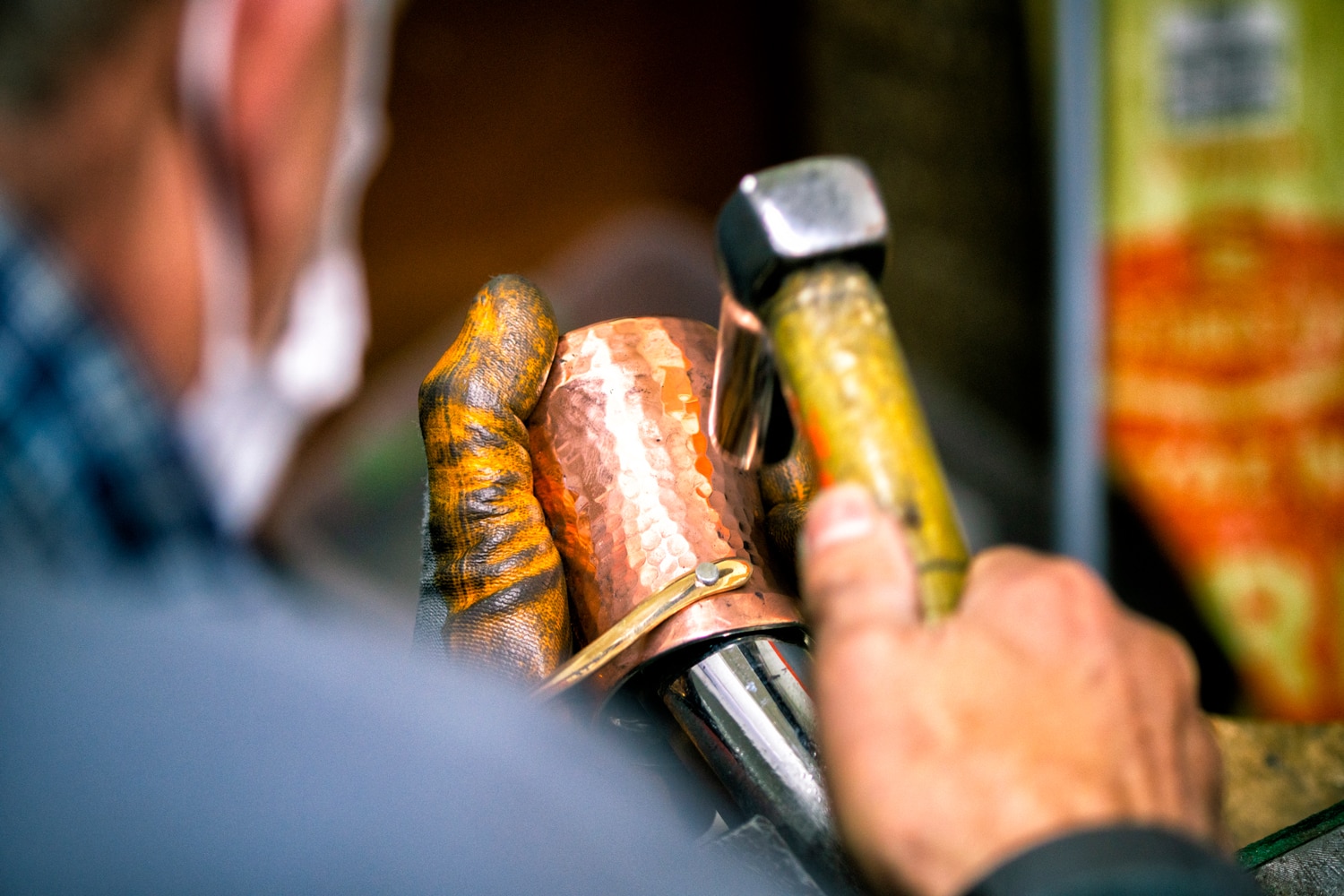
Embossing is a very delicate and painstaking craft and there are a lot of techniques that I am constantly using. The most basic of them is chasing on brass or copper, and then there is embossing, miniature, enamelling and calligraphy among others.
My first significant project was a square double-carved abstract panel that I made in 2000. I was inspired by the work of Kazimir Malevich and I combined it with Uzbek motifs. Today it is in Poland in a private collection.
I get inspired by everything that is good and pure in this world. I try to keep keen senses and to see beauty in everything that surrounds me. The motifs and the topics come to me naturally in the moments when I do not pressure myself into being creative.
I always think about those who worked before us and how hard it was in those days, and despite this, they made such masterpieces which are now in many museums around the world. I want to be worthy of our ancestors and to have my work passed on to future generations.
Jurabek Sidikov
Karavan Saray Sayfiddin
Coppersmith
Bukhara, Uzbekistan
AVAILABILITY
Daily 08:00-22:00
PHONE
+998 902988733
LANGUAGES
Uzbek, English, Russian, Turkish, Tajik
Homo Faber Finds is a new service aiming to inspire admirers of craft to connect and collaborate with exceptional artisans.
We invite you to submit an enquiry here.