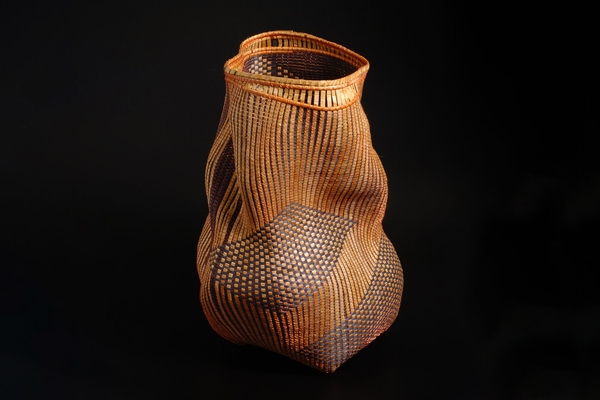
Basketry sculptures and asymmetric art
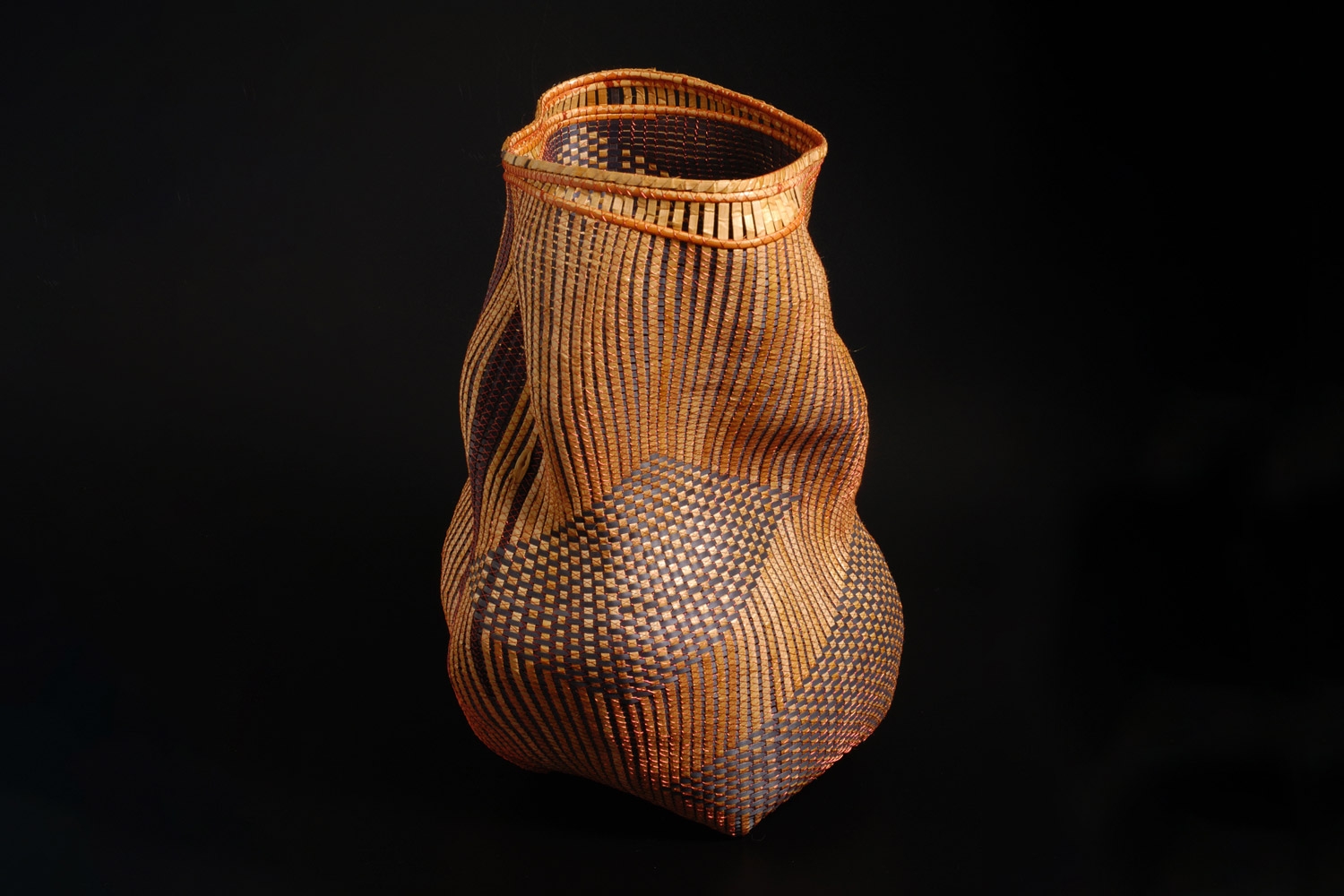
- Polly’s cedar bark sculptures are influenced by basketweaving traditions
- Wire enables the pieces to assume unconventional shapes
- Her approach is instinctive, allowing shapes to develop as she works
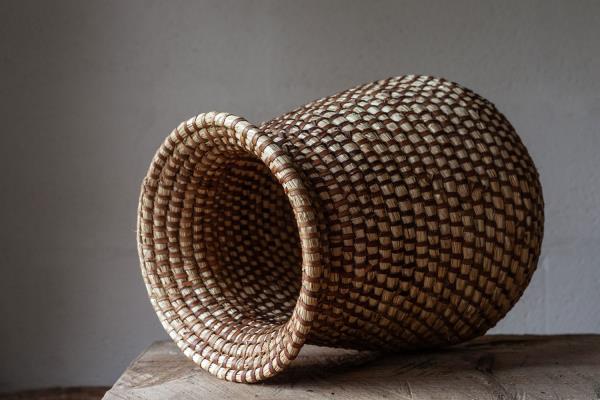
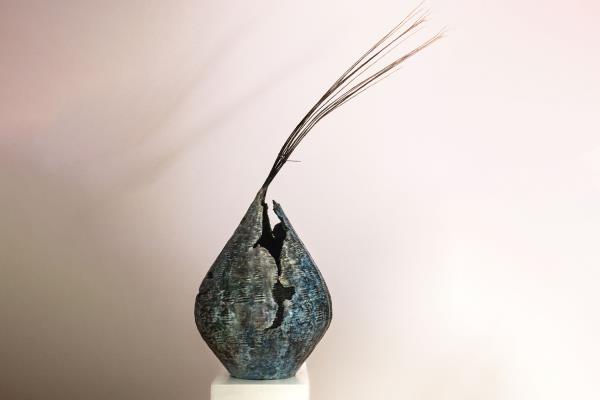
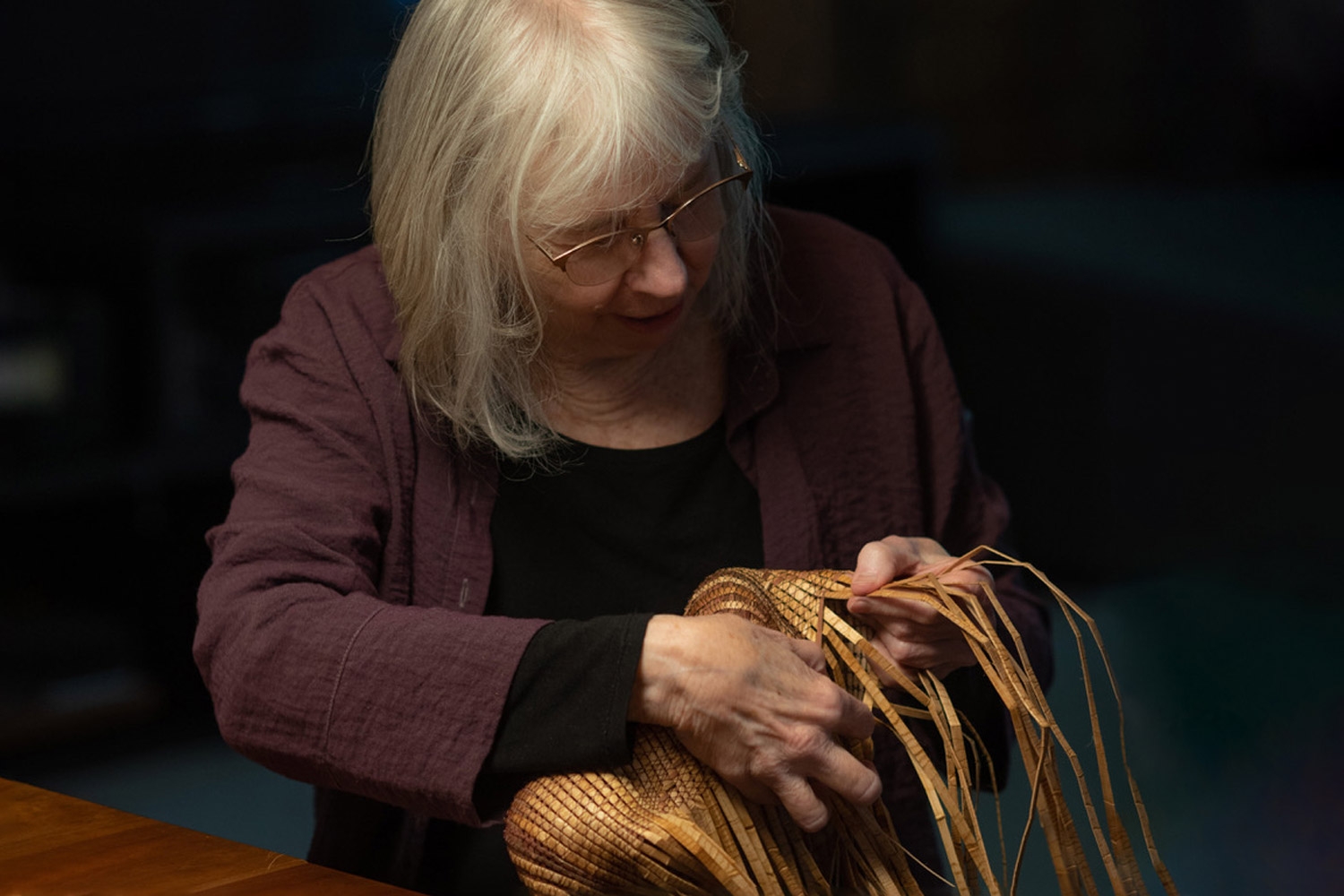
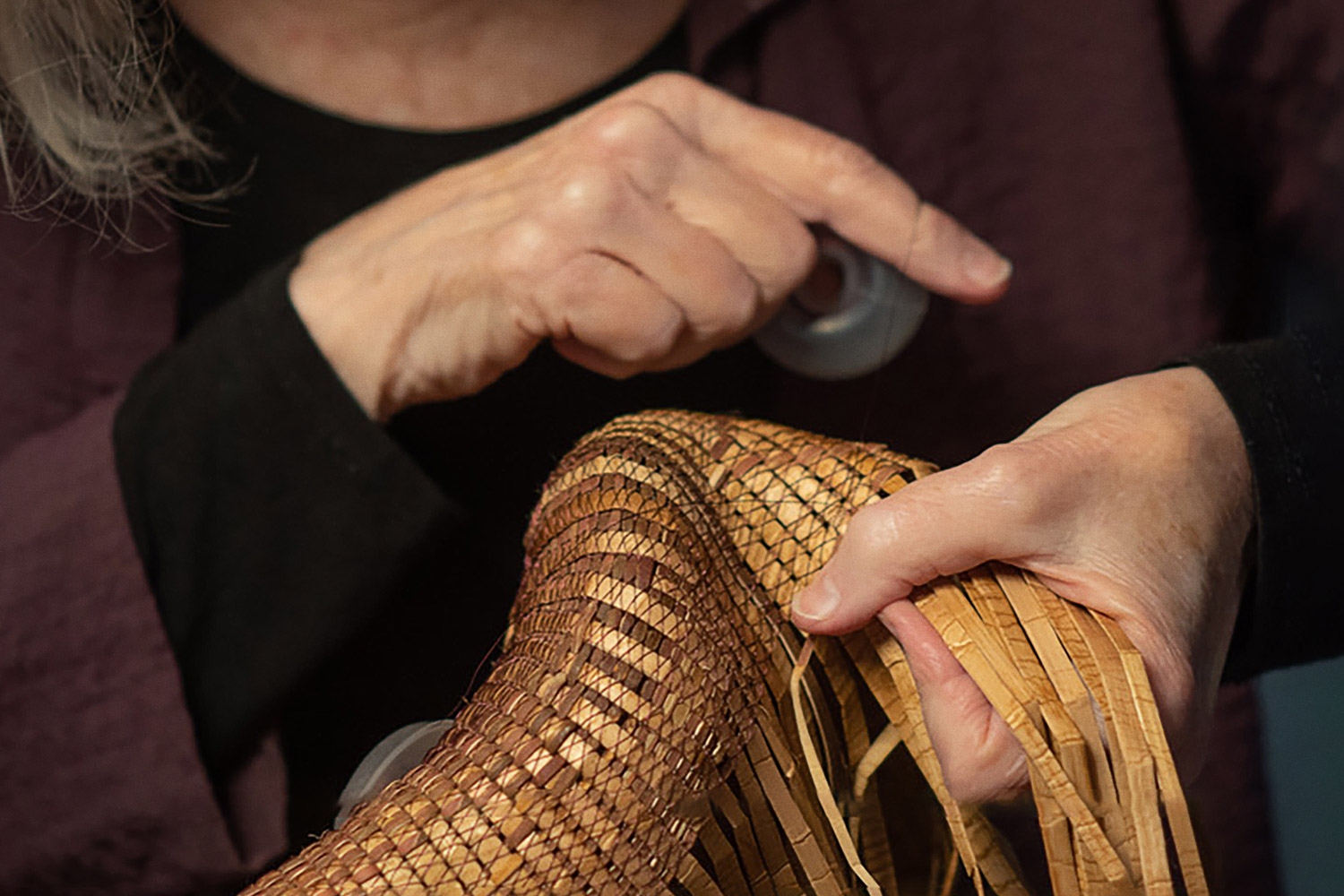
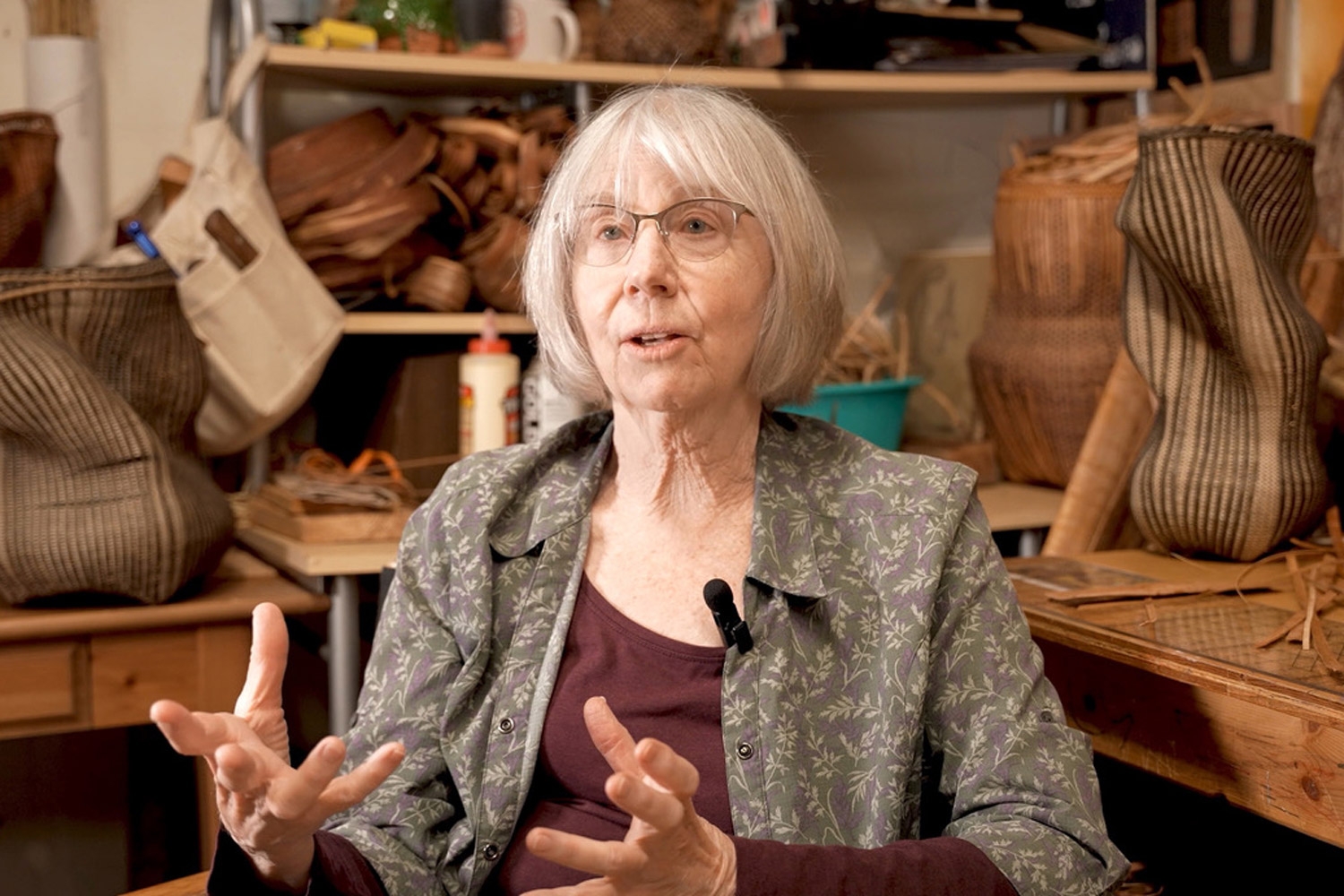
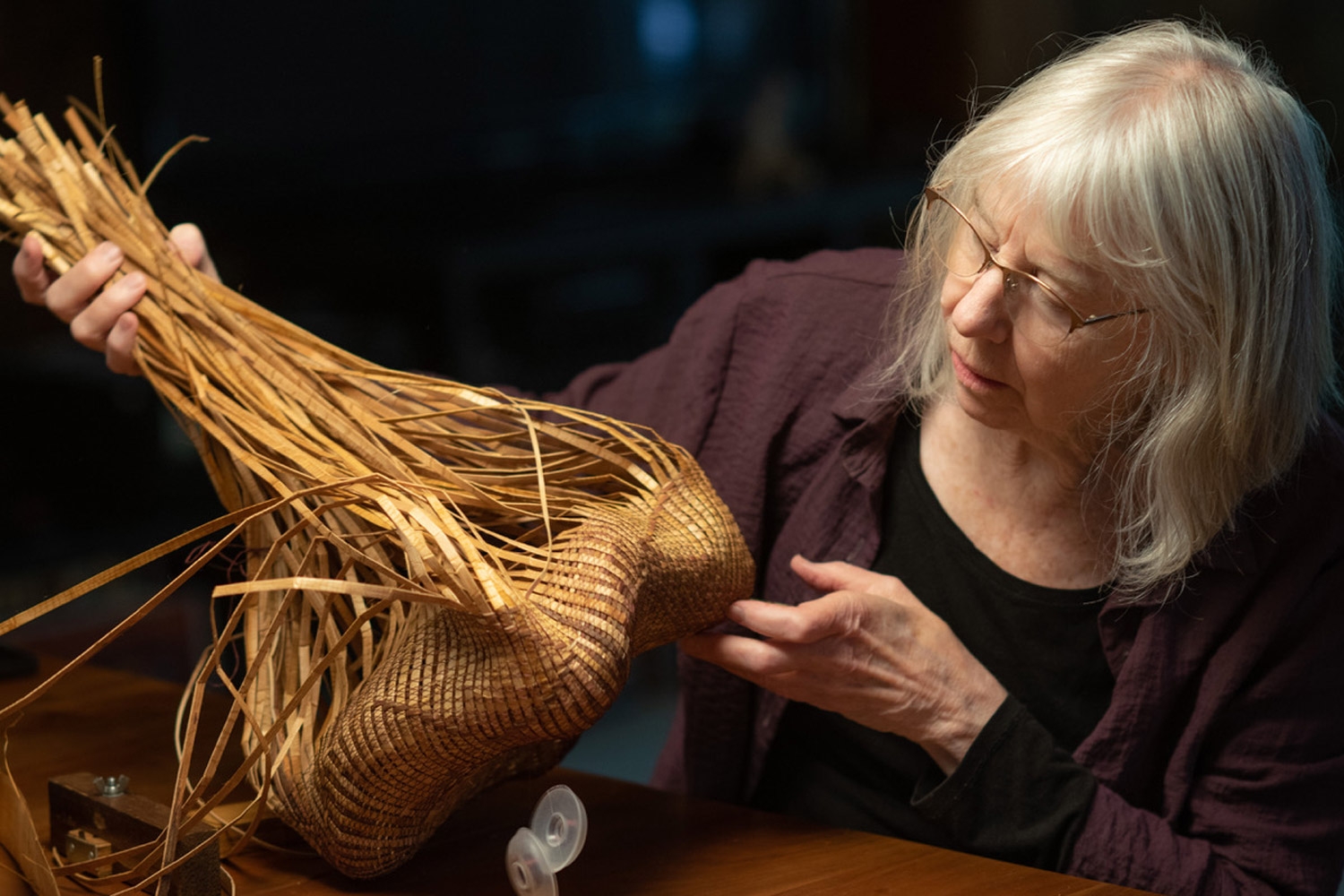
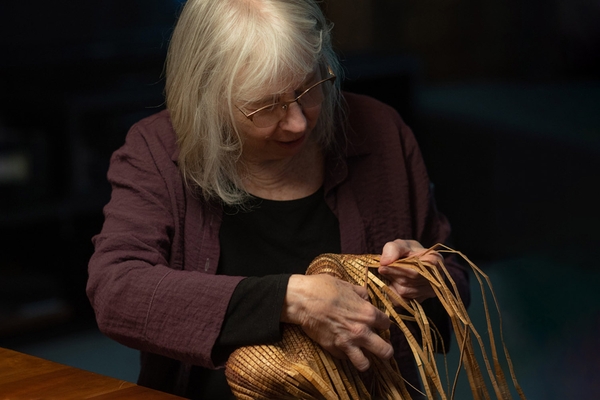
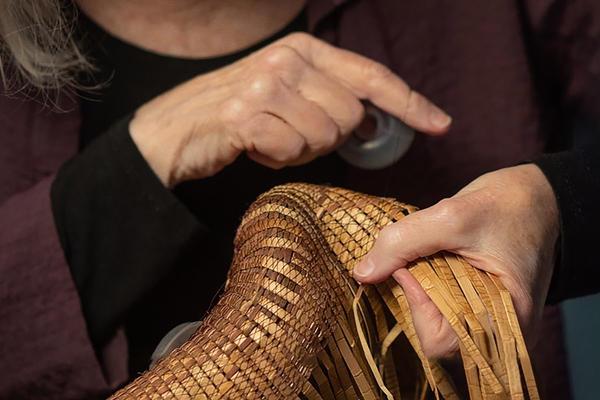
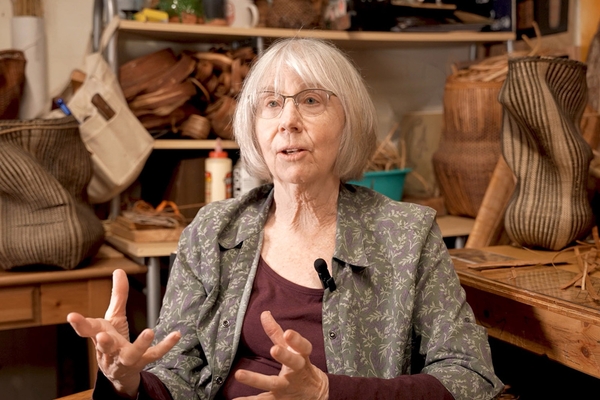
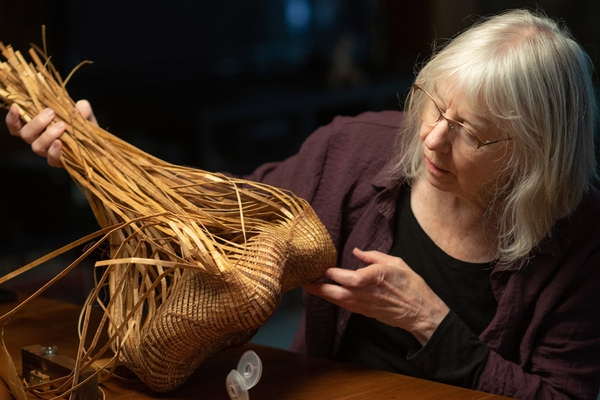
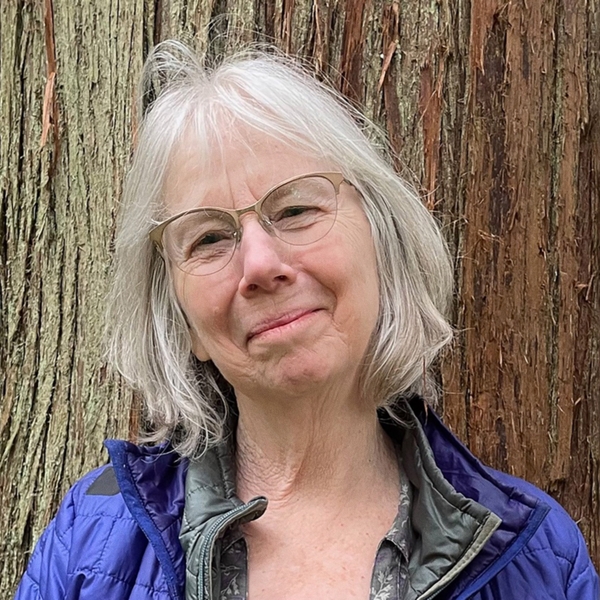
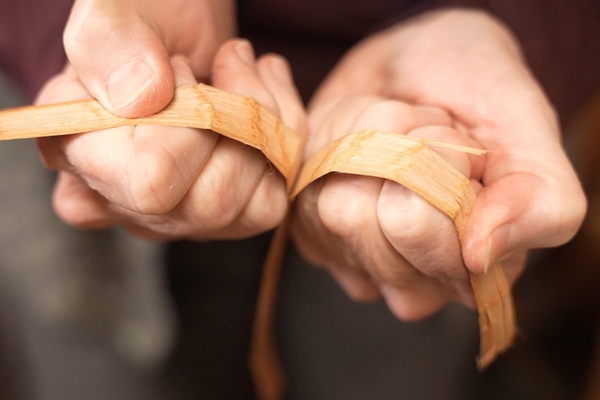
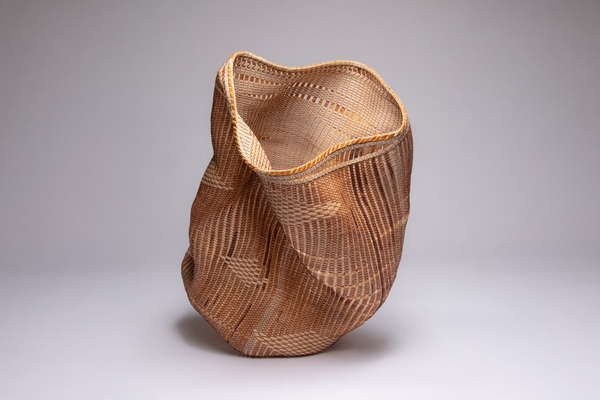
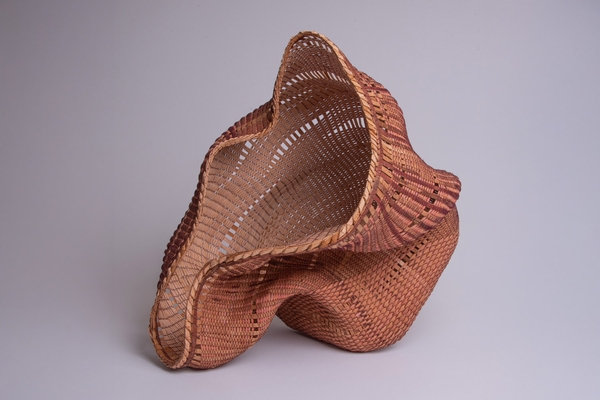
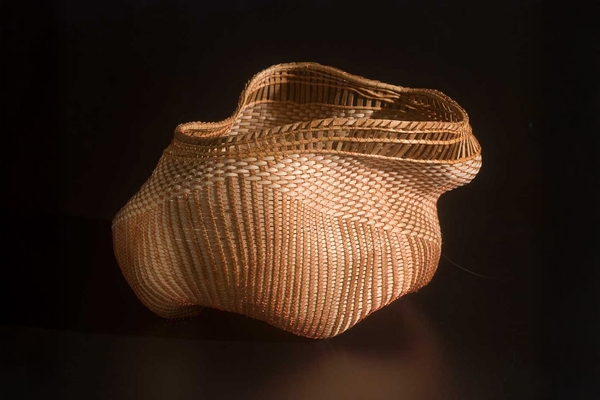
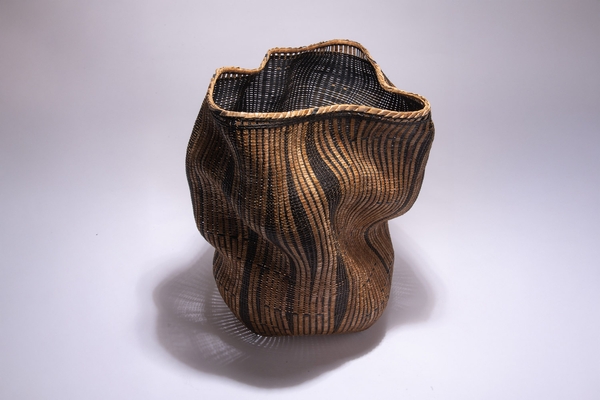
Polly Sutton has been making structural and sculptural baskets since the 1980s. Based in the Pacific Northwest, her practice is influenced by the basketweaving traditions of the local Native American population. Polly’s pieces are made from woven cedar bark supported by wire to add structural integrity, with cane and sweet grass for embellishment. She sources materials from her local area, gathering cedar bark from freshly logged forests and sweet grass from Pacific Ocean tide-flats. Polly is a self-taught artist and approaches her work intuitively. “I just start sculpting and see what happens,” she says. Polly has exhibited extensively across the USA. In addition to being featured at the Sculpture Objects & Functional Art Fair, over 50 museums, galleries and associations have her pieces in their collections.
Interview
- What are the main materials you use for weaving?
- Cedar bark is the main thing. I did not use wire for a long time, until another basket maker encouraged me to try it. I realised how much I could shape the pieces by integrating wire. It was helpful because I was always trying to create sculptural baskets.
- How does the use of structural wire change the form of your works?
- It shifts it from a useful basket with a function to a sculpture that is not really a basket, though it shares a similar shape. It also allows me to sculpt and find a shape that I have not seen before that pleases me.
- Do you follow a particular approach?
- Not really. I did not go to art school and I was never a conceptual artist. If I sketch something and have a shape in mind, it never really works out. I take an instinctive approach and try it out. Because the cedar is really soft and pliable, and I can bend it the way I want it with the wire will hold it there, eventually I will get something that I like.
- Can you offer any advice for young craftspeople?
- Stay in contact with any craftspeople who are willing to share their techniques and what they know. You should learn as much of that as possible and be exposed it as much as possible. But it is also important to have your own expression of your craft.
Polly Sutton is a master artisan: she began her career in 1983 and she started teaching in 1984
Where
Polly Sutton