Maxwell Mustardo
Ceramicist
Flemington, NJ, USA
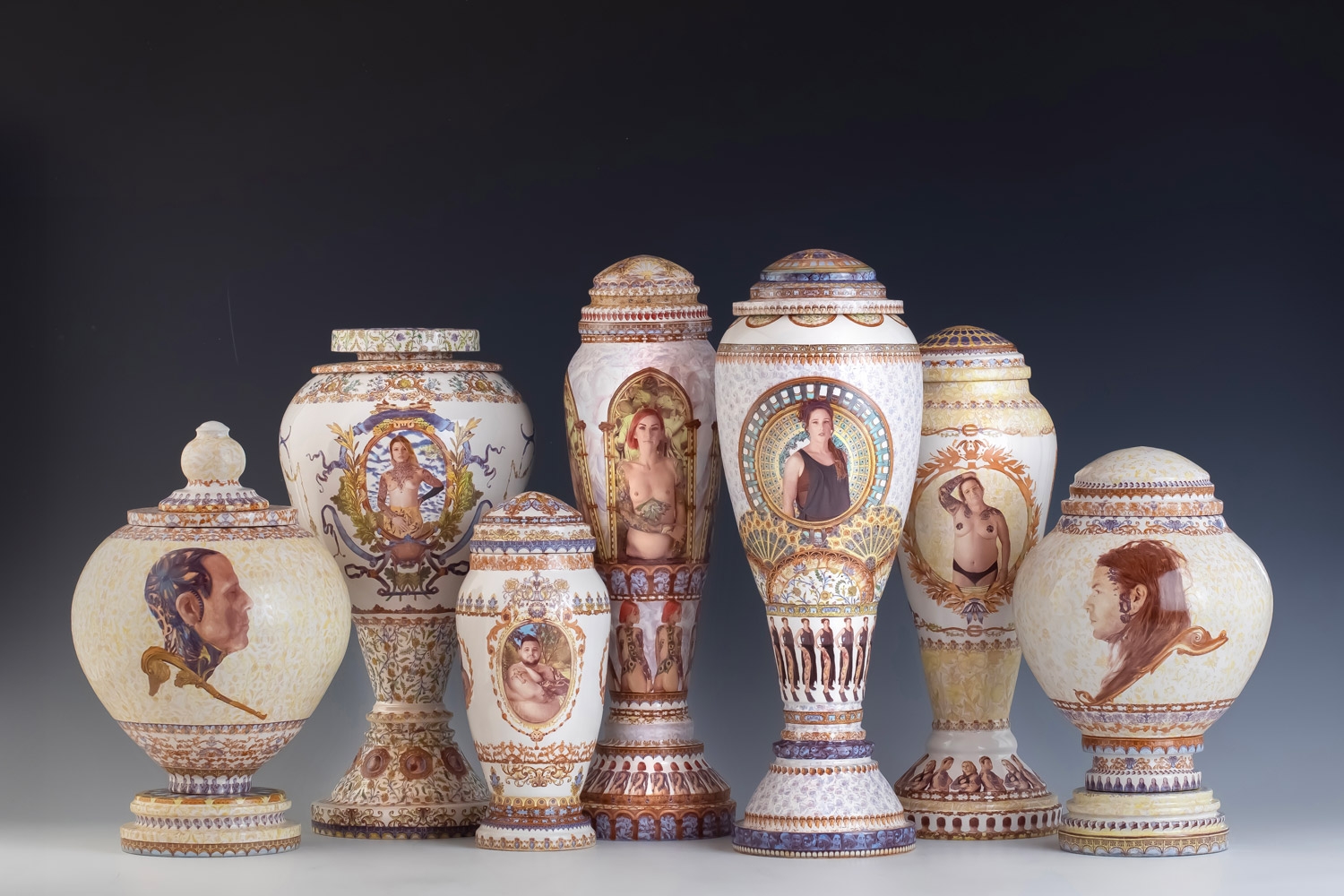
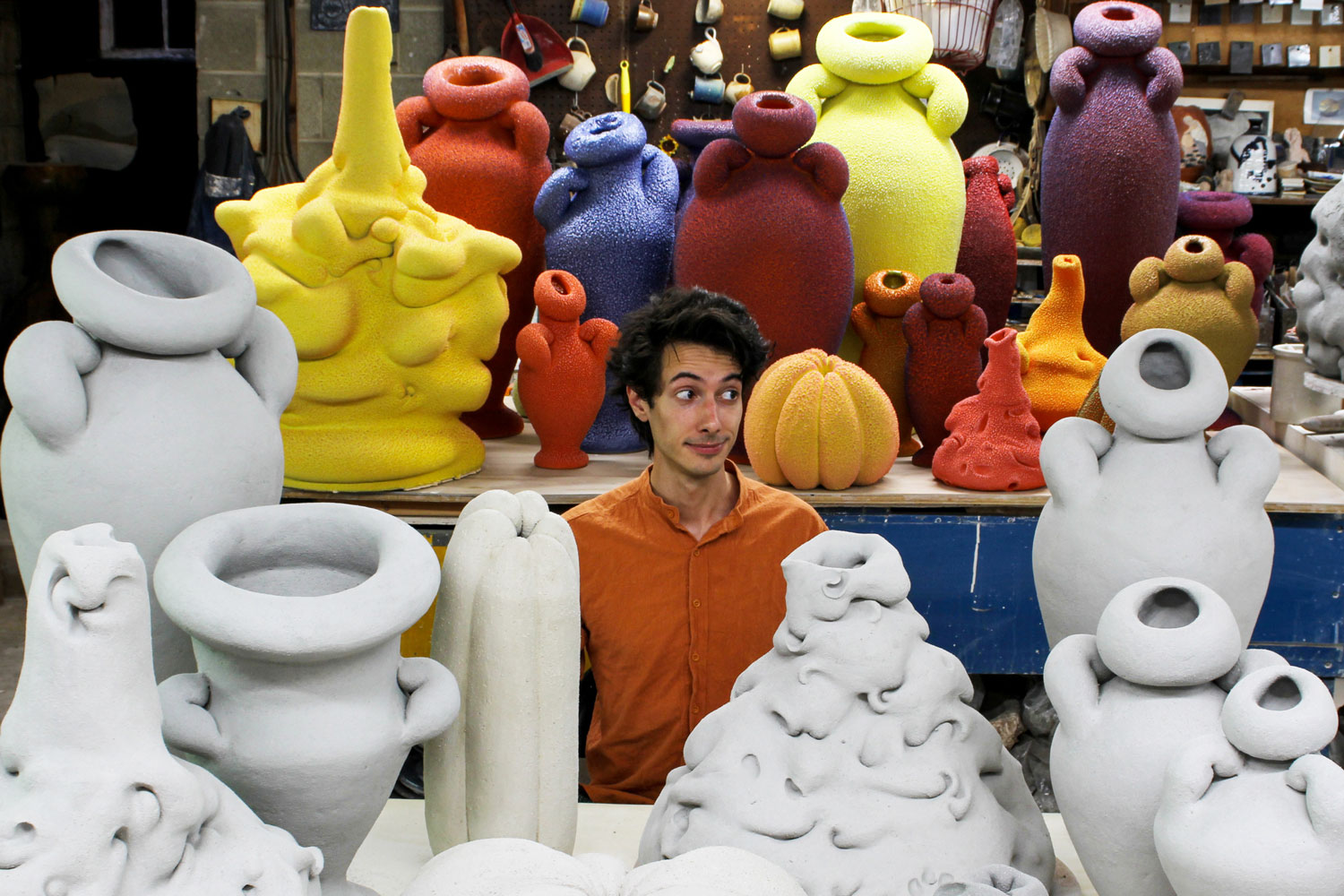
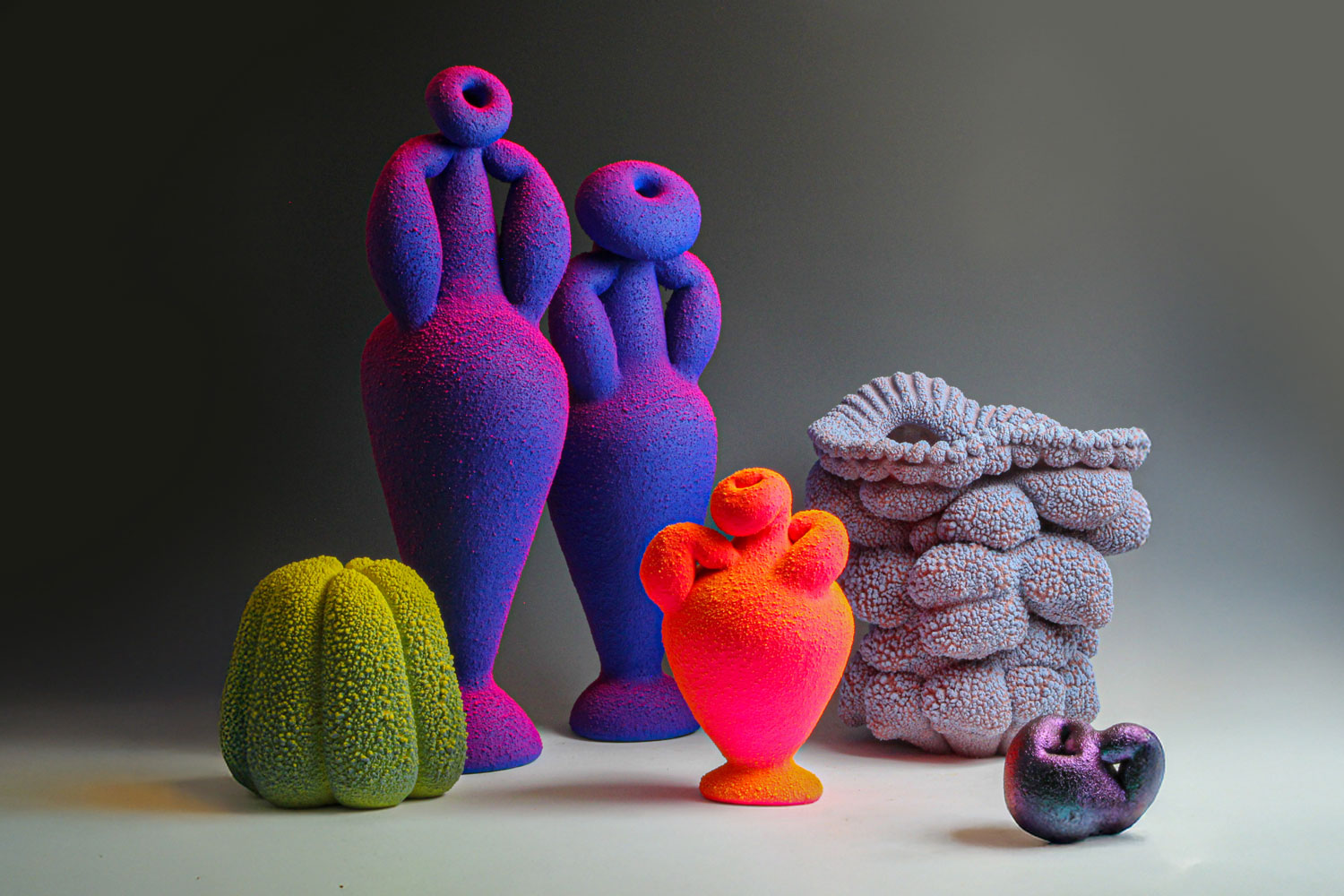
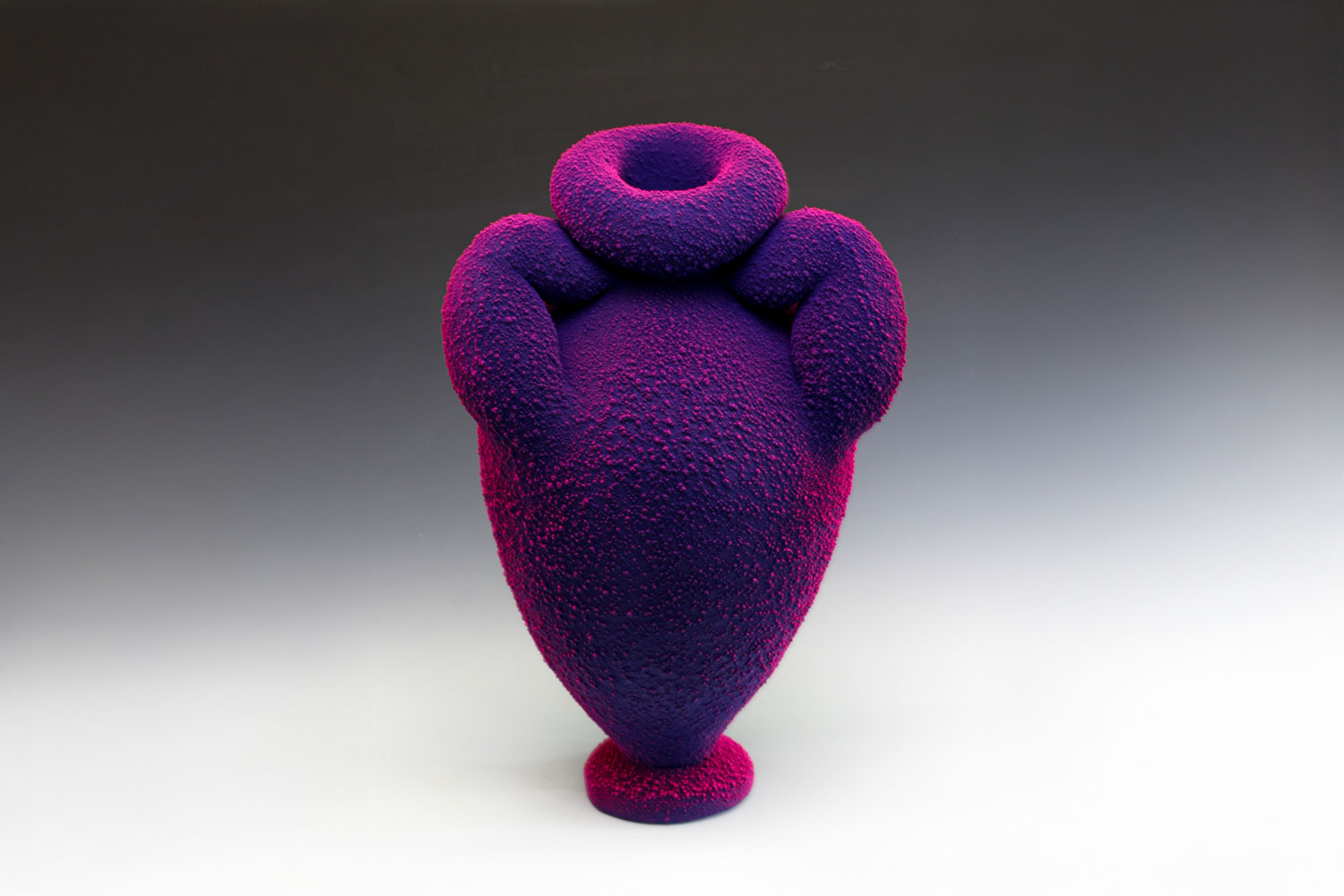
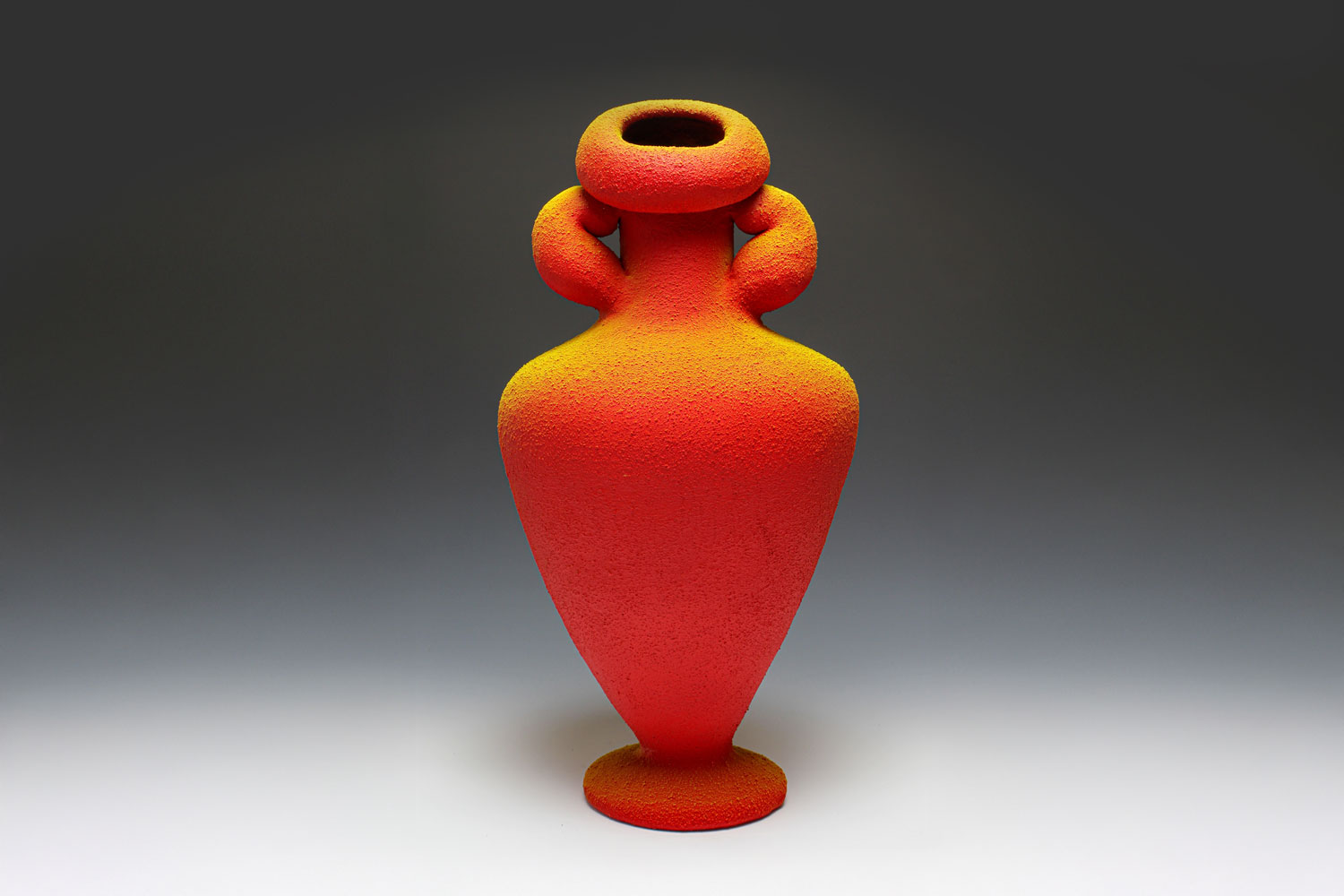
Anthropomorphic amphoras
- Maxwell enjoys playing with volume and functionality in his pieces
- He studied fine arts and art history at Alfred University
- Working with galleries was a significant turning point in his career
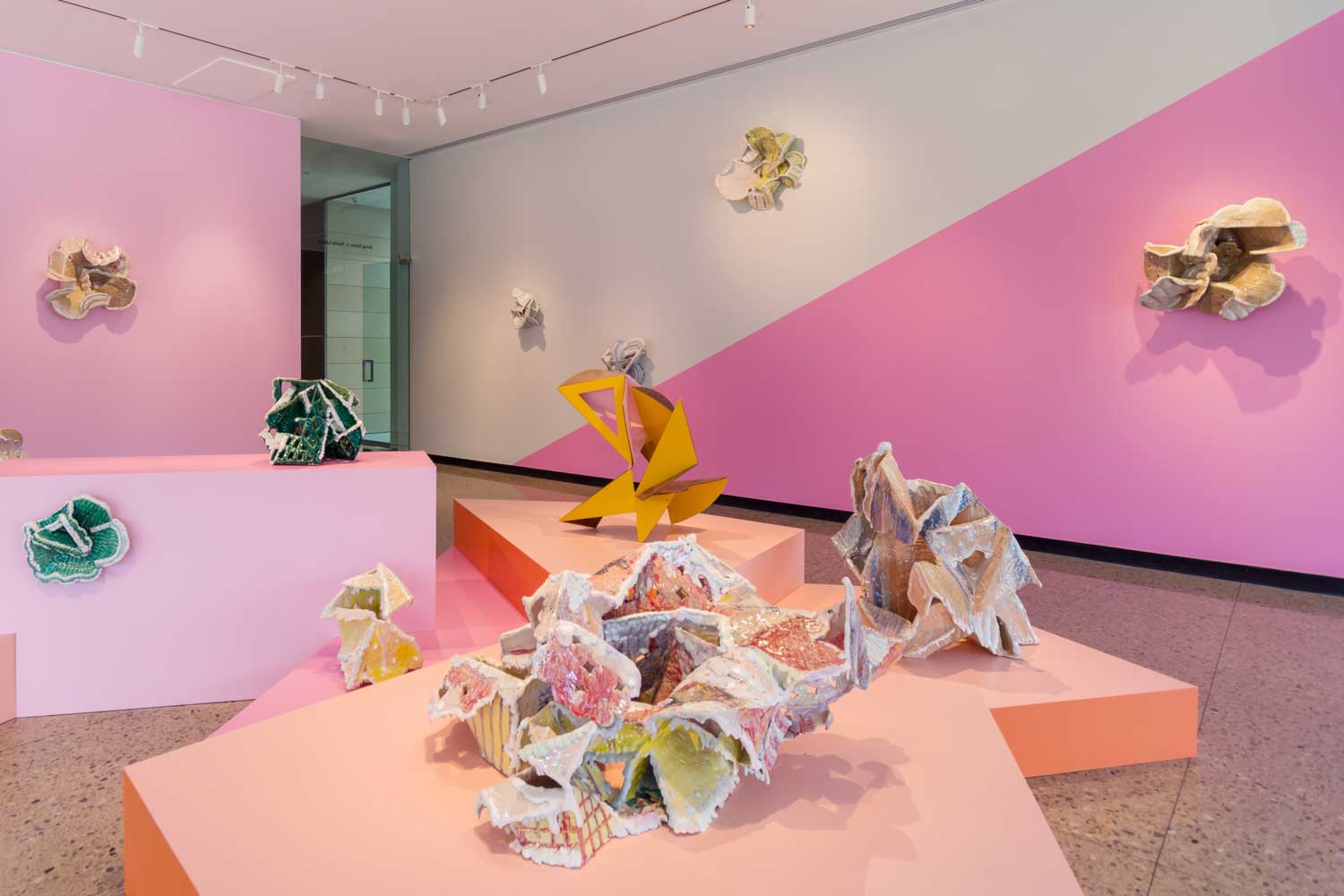
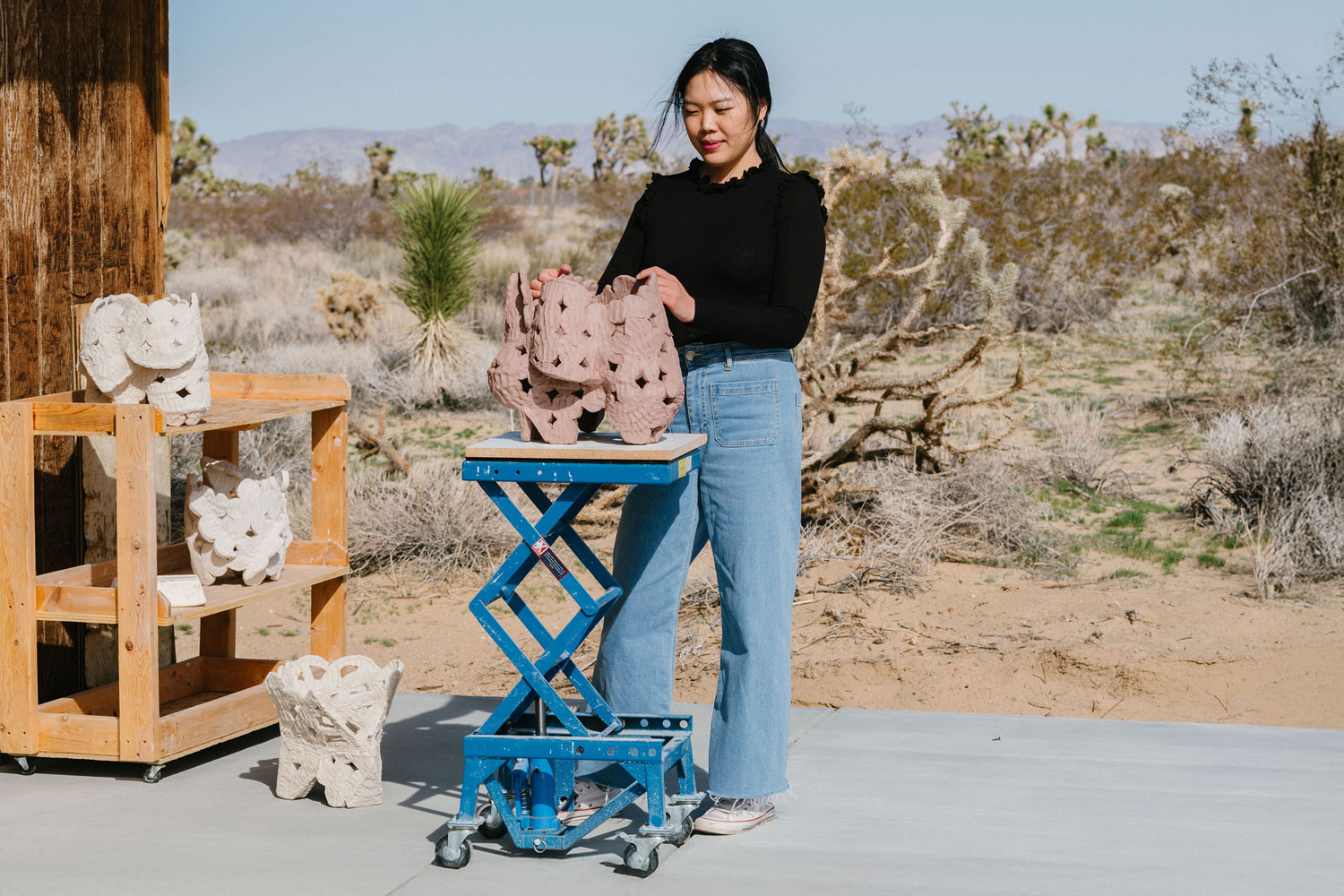
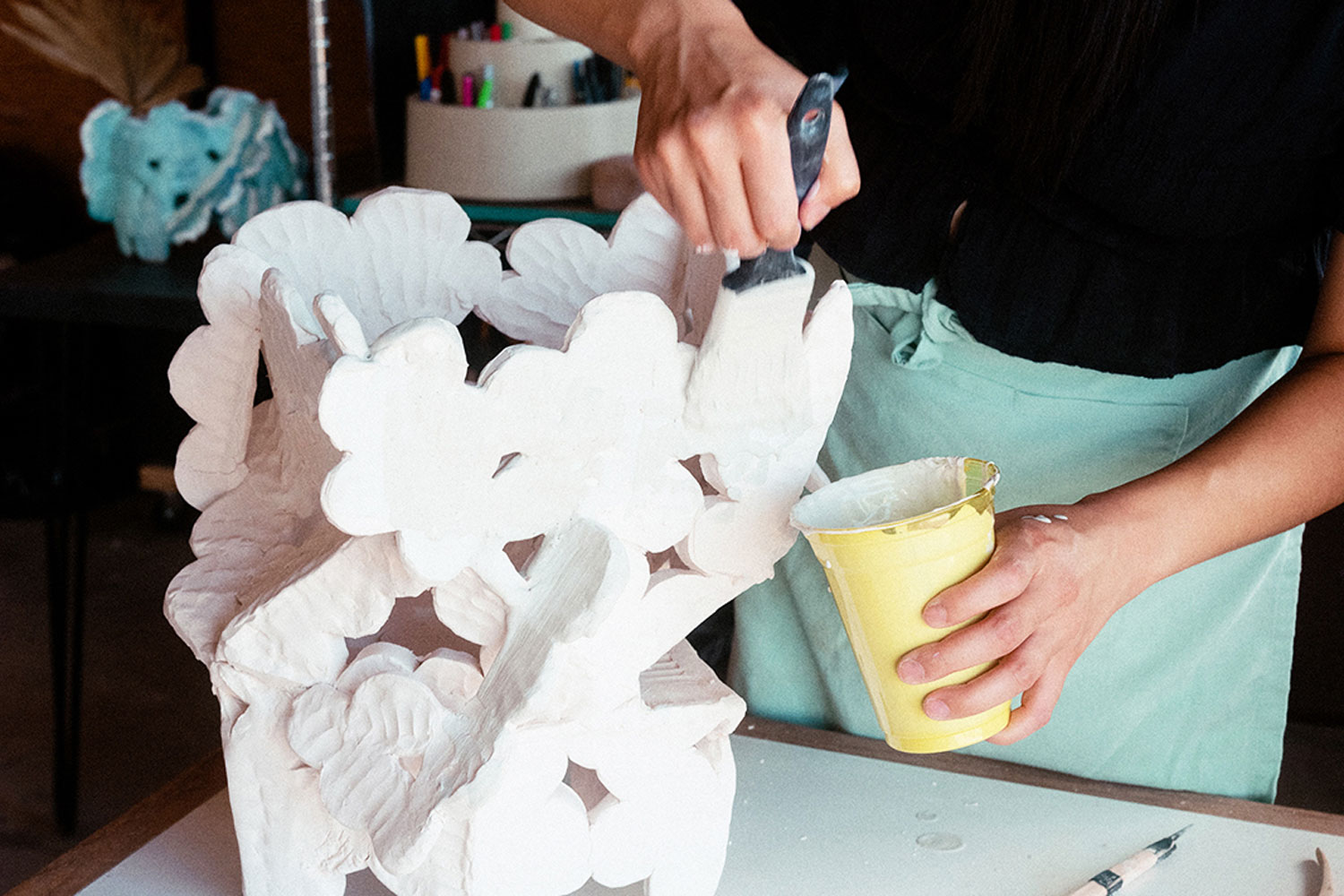
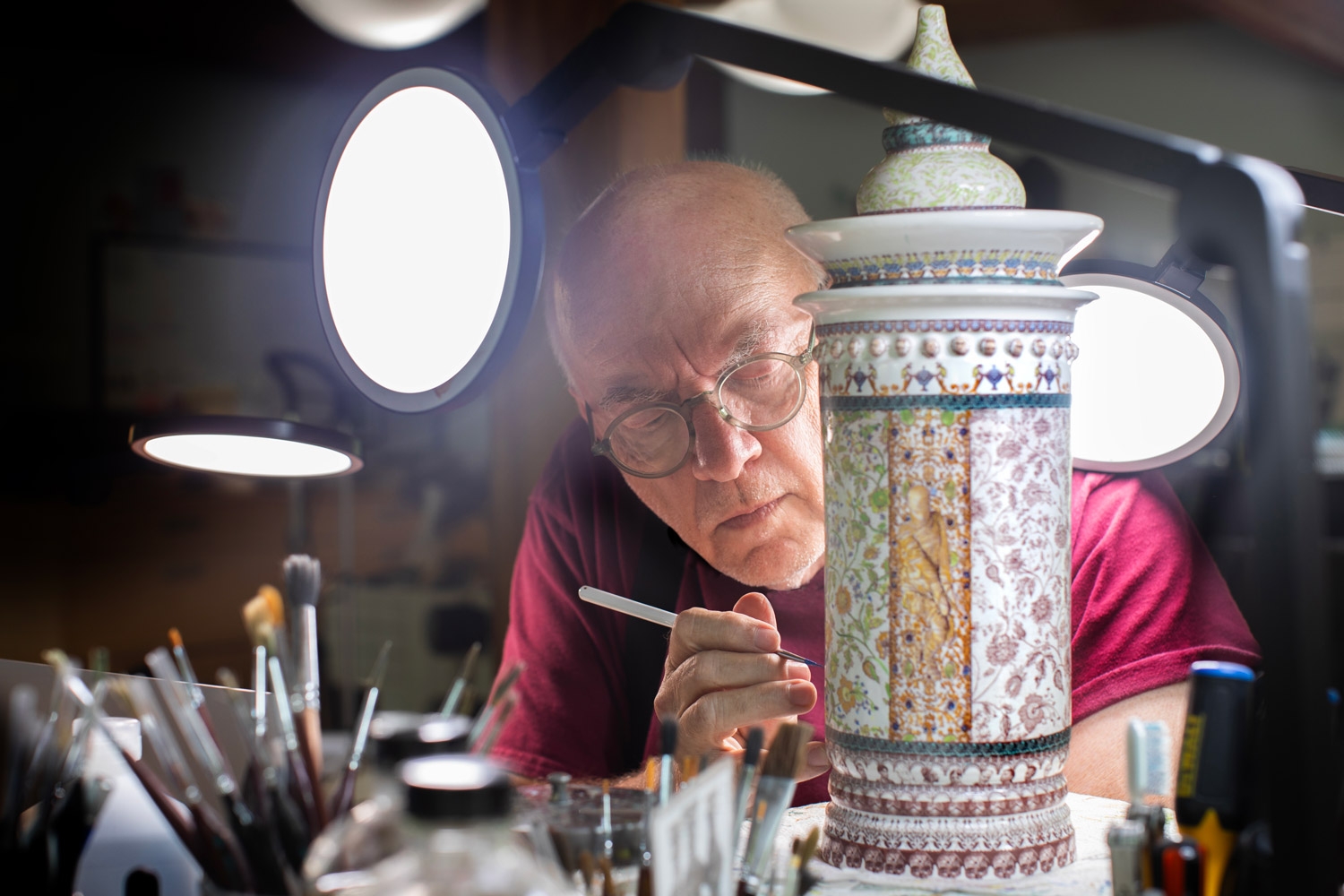
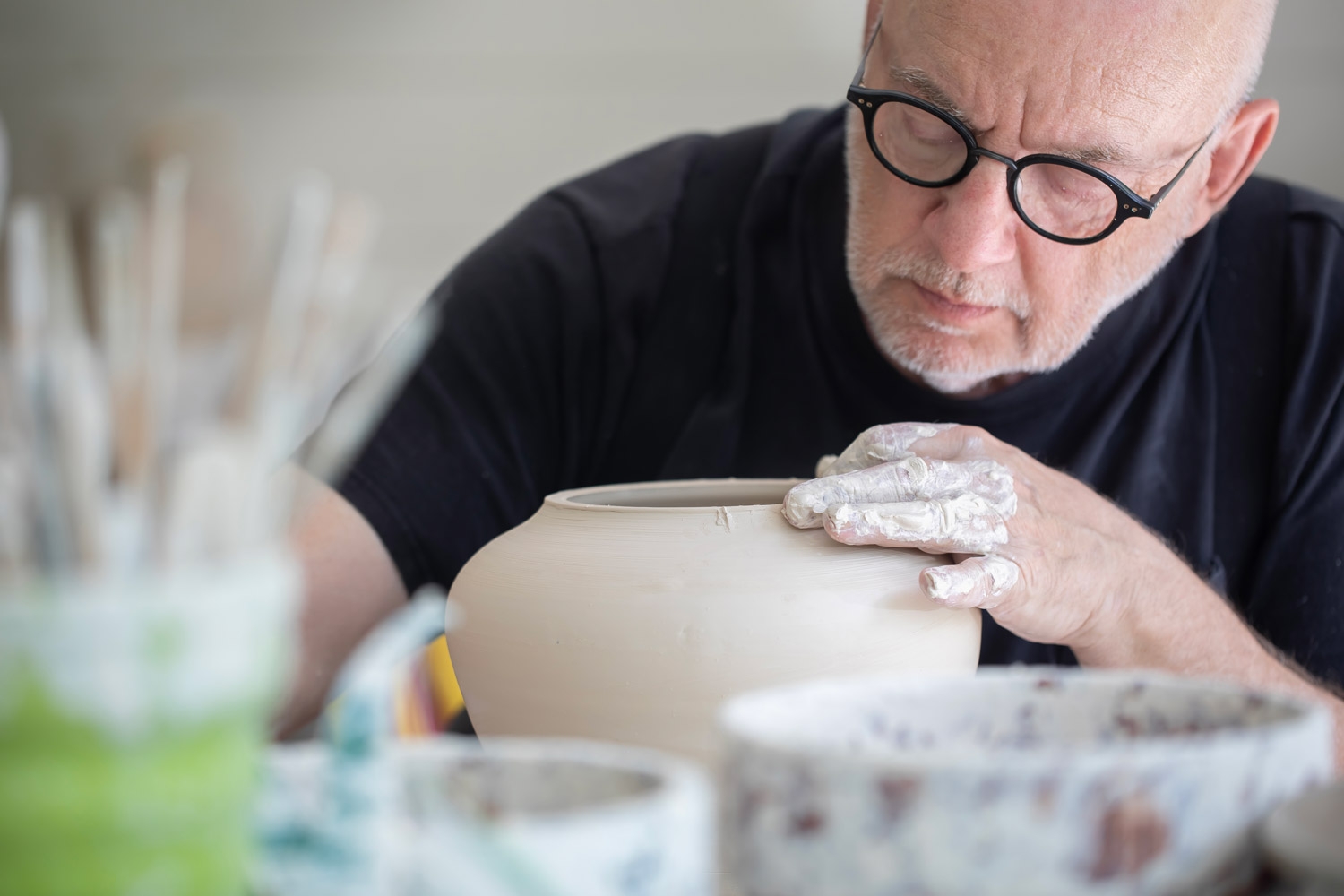
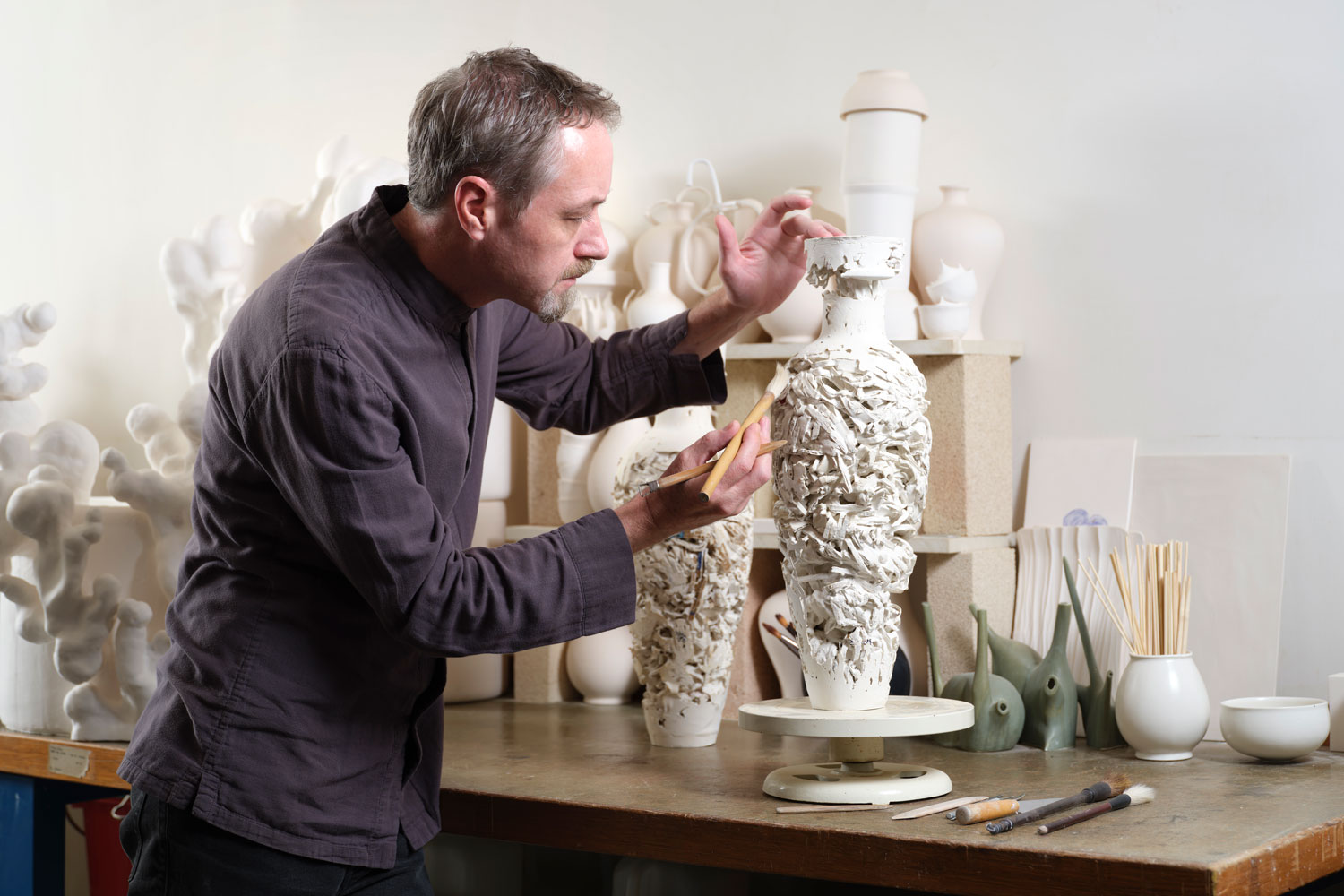
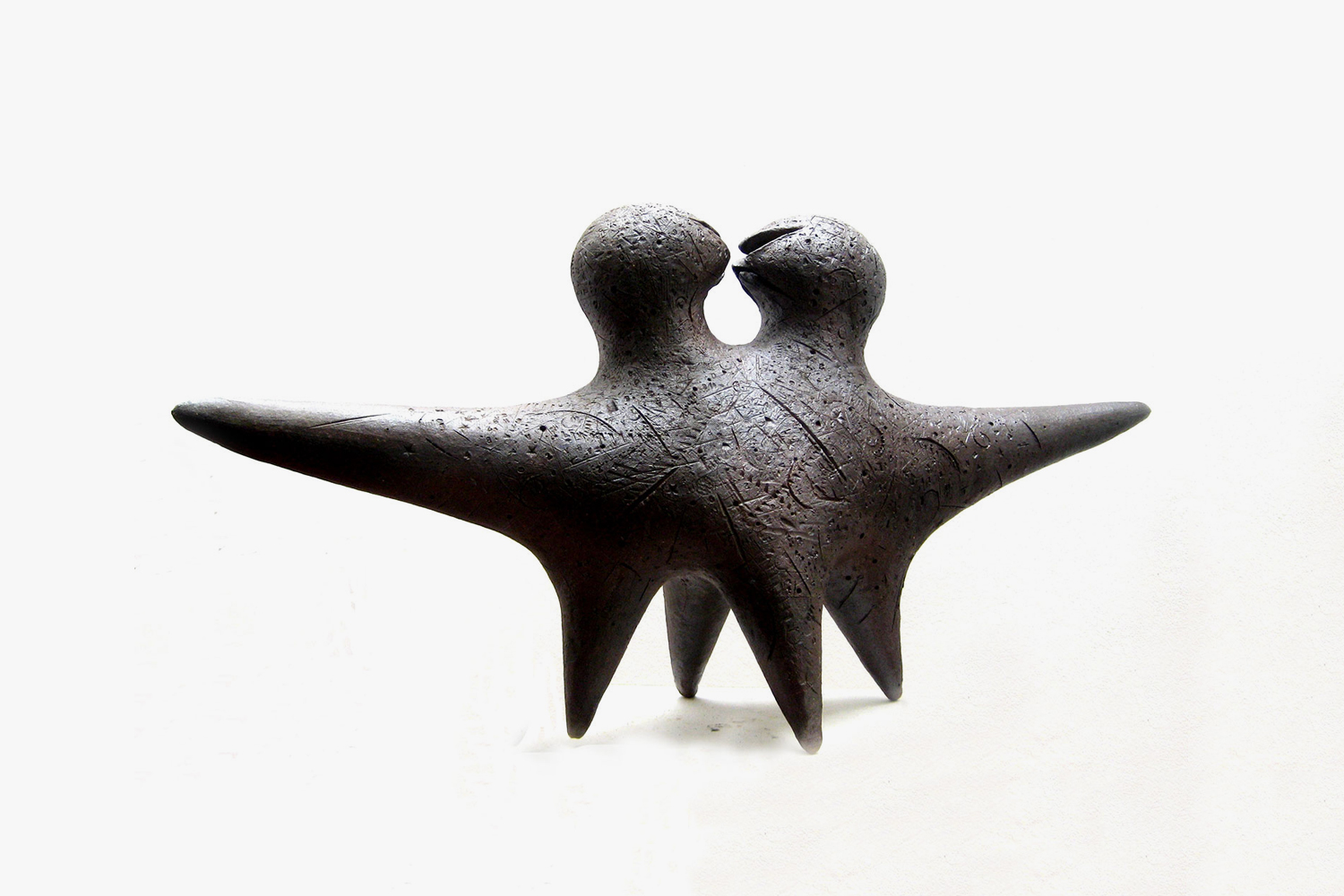
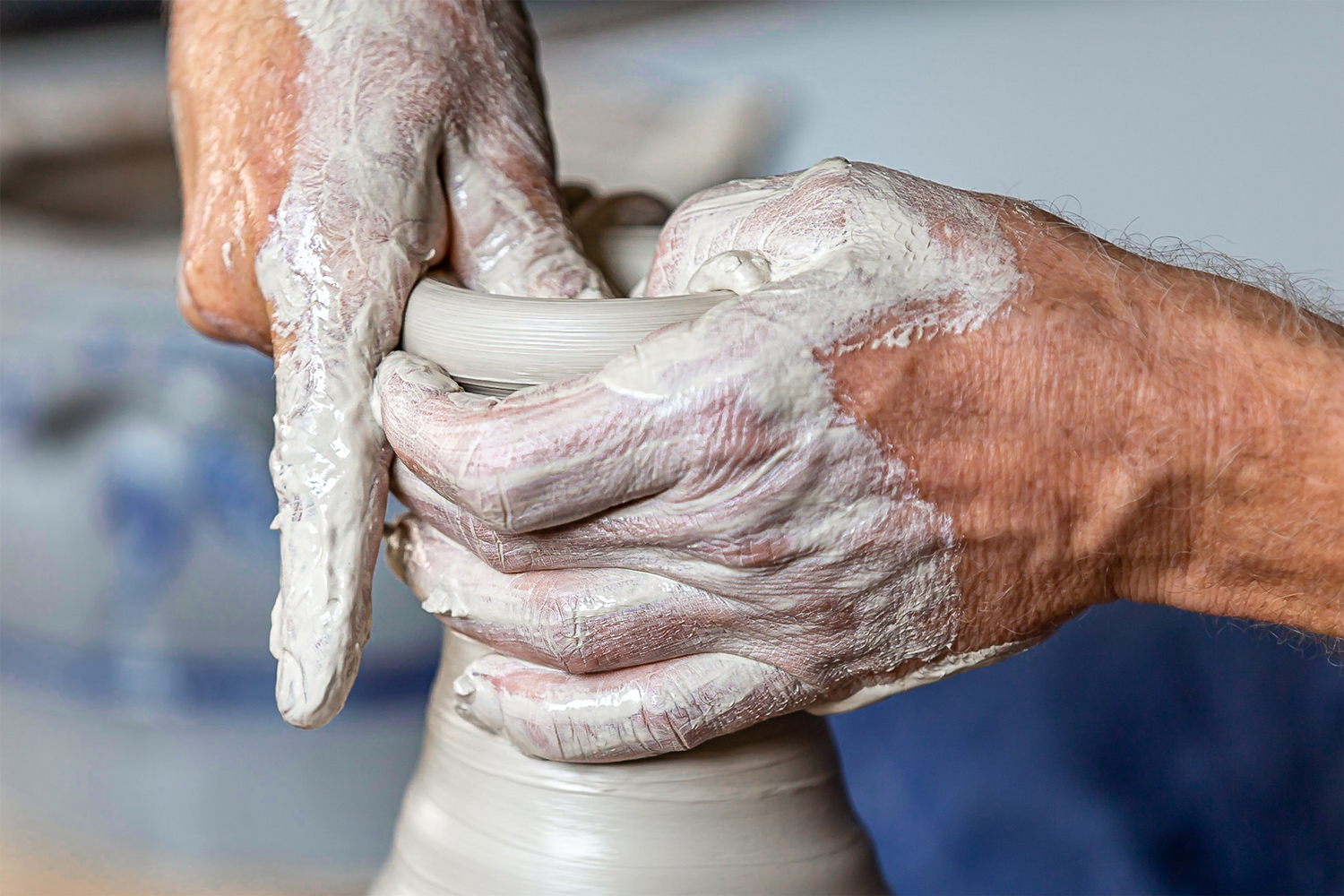
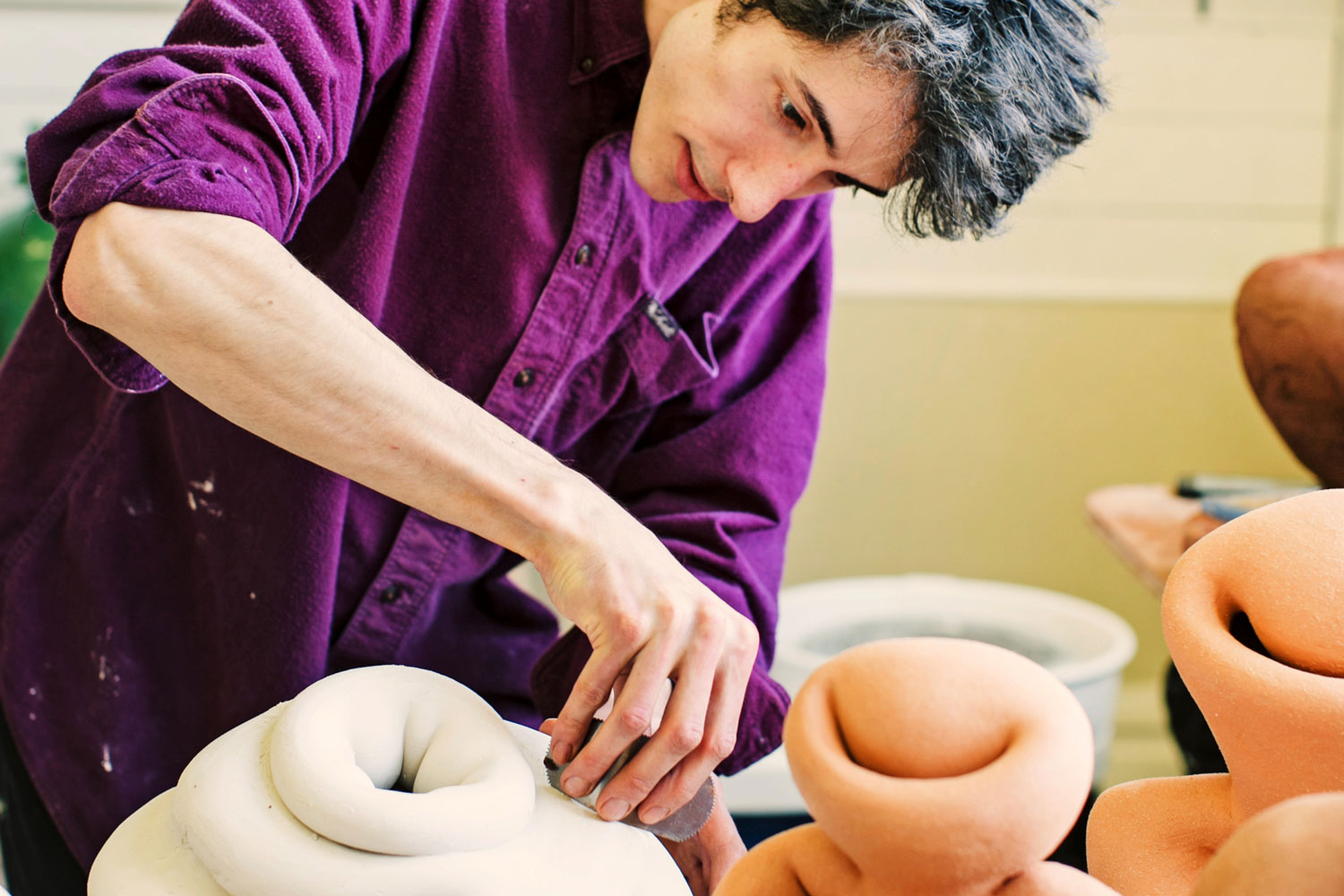
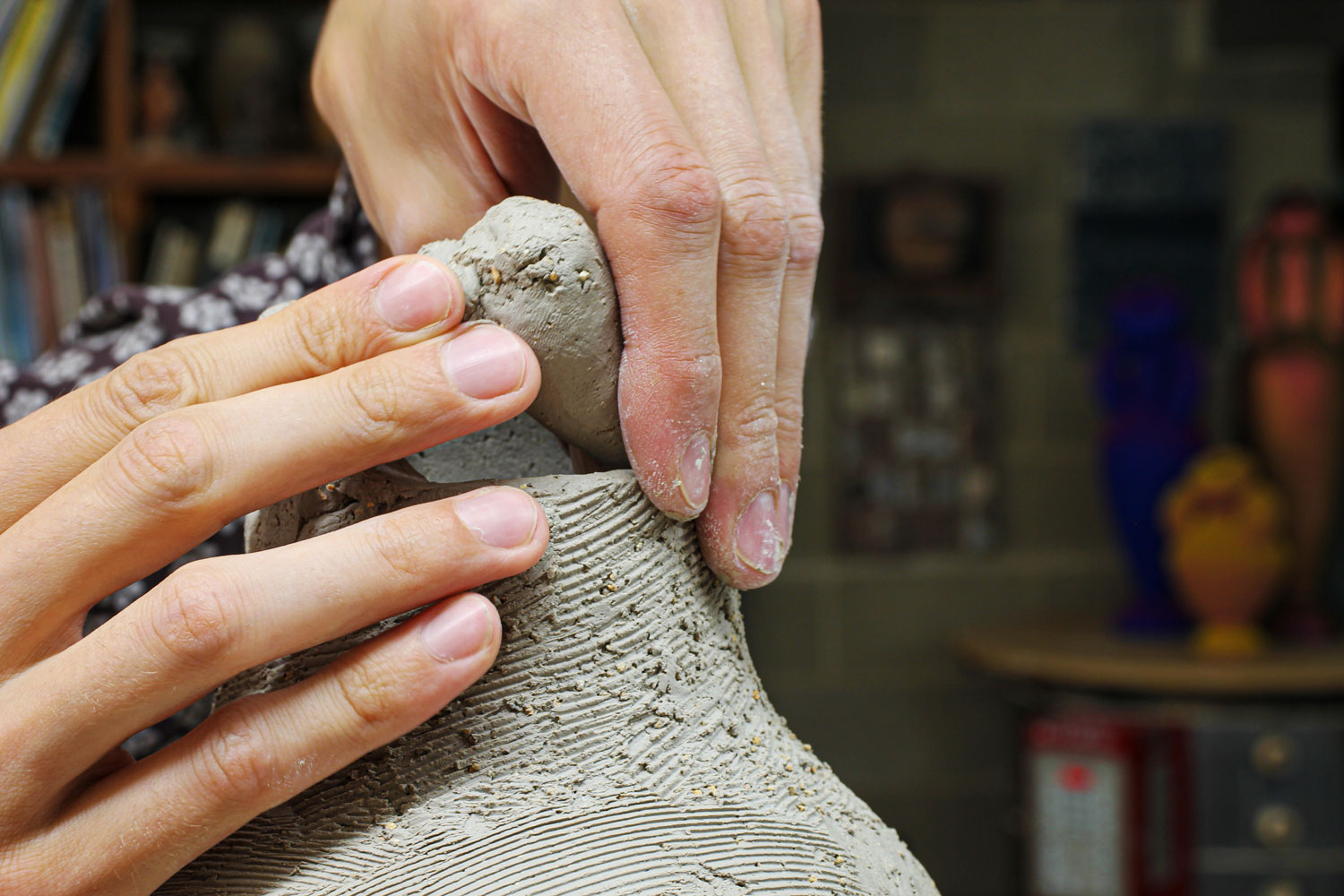
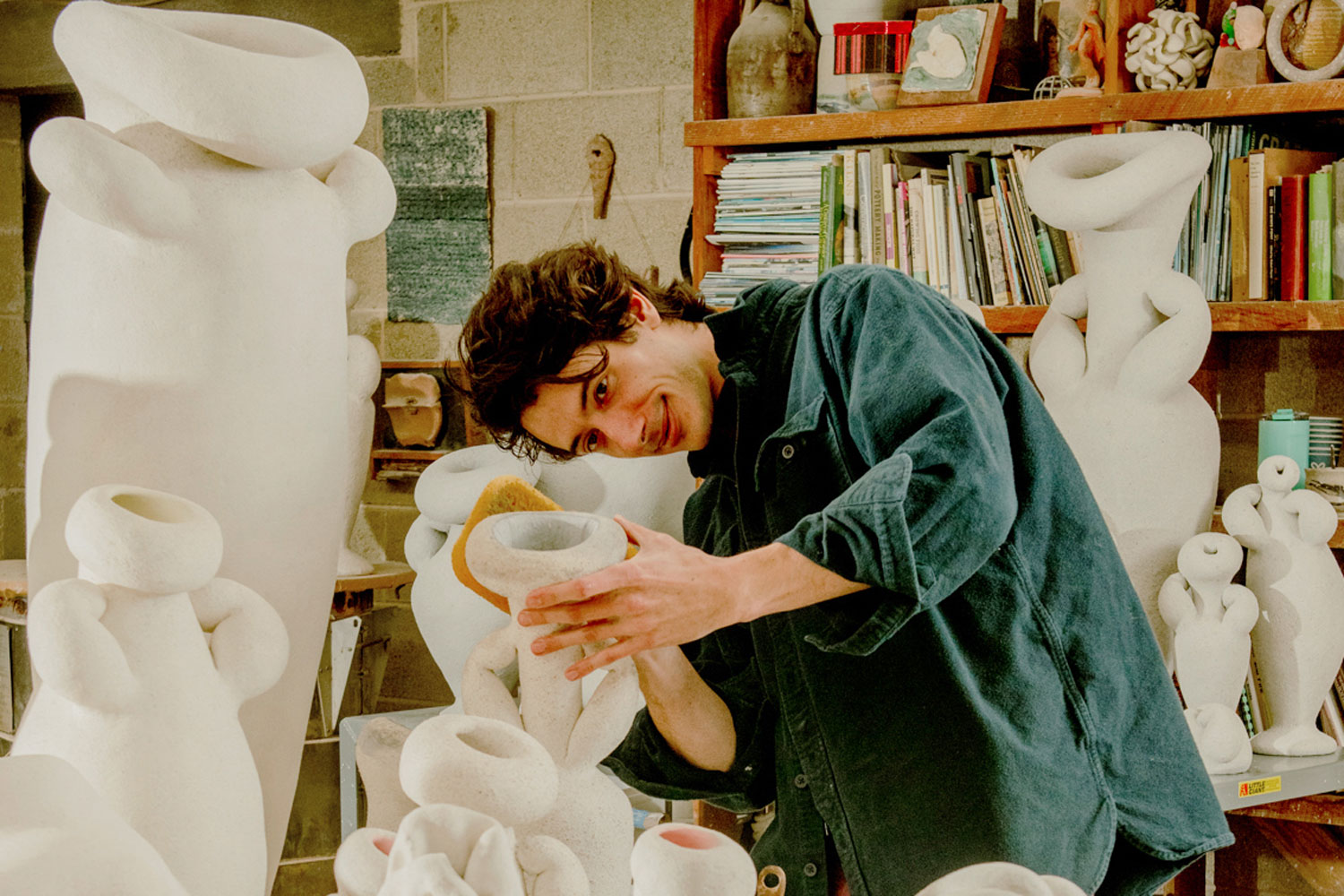
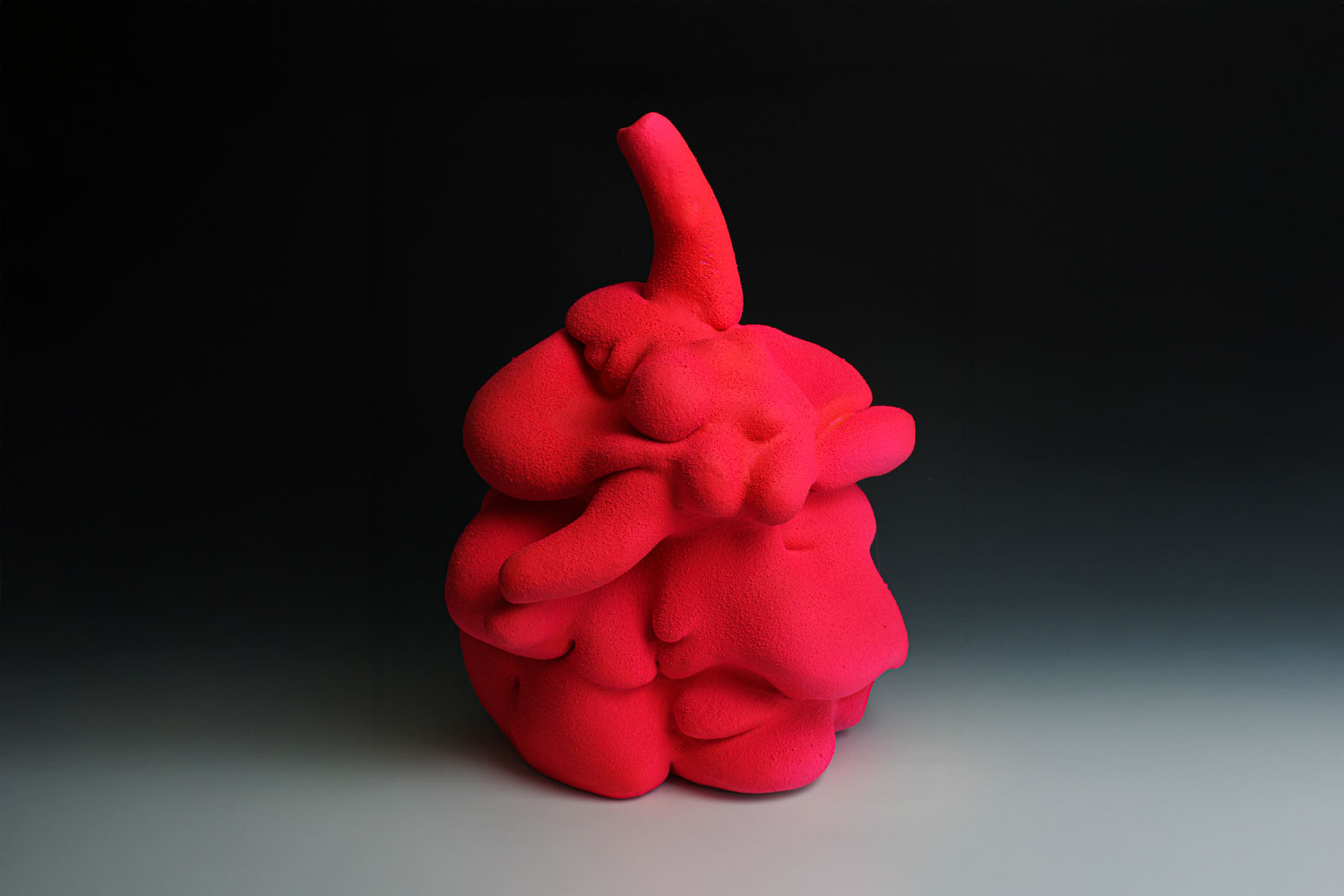
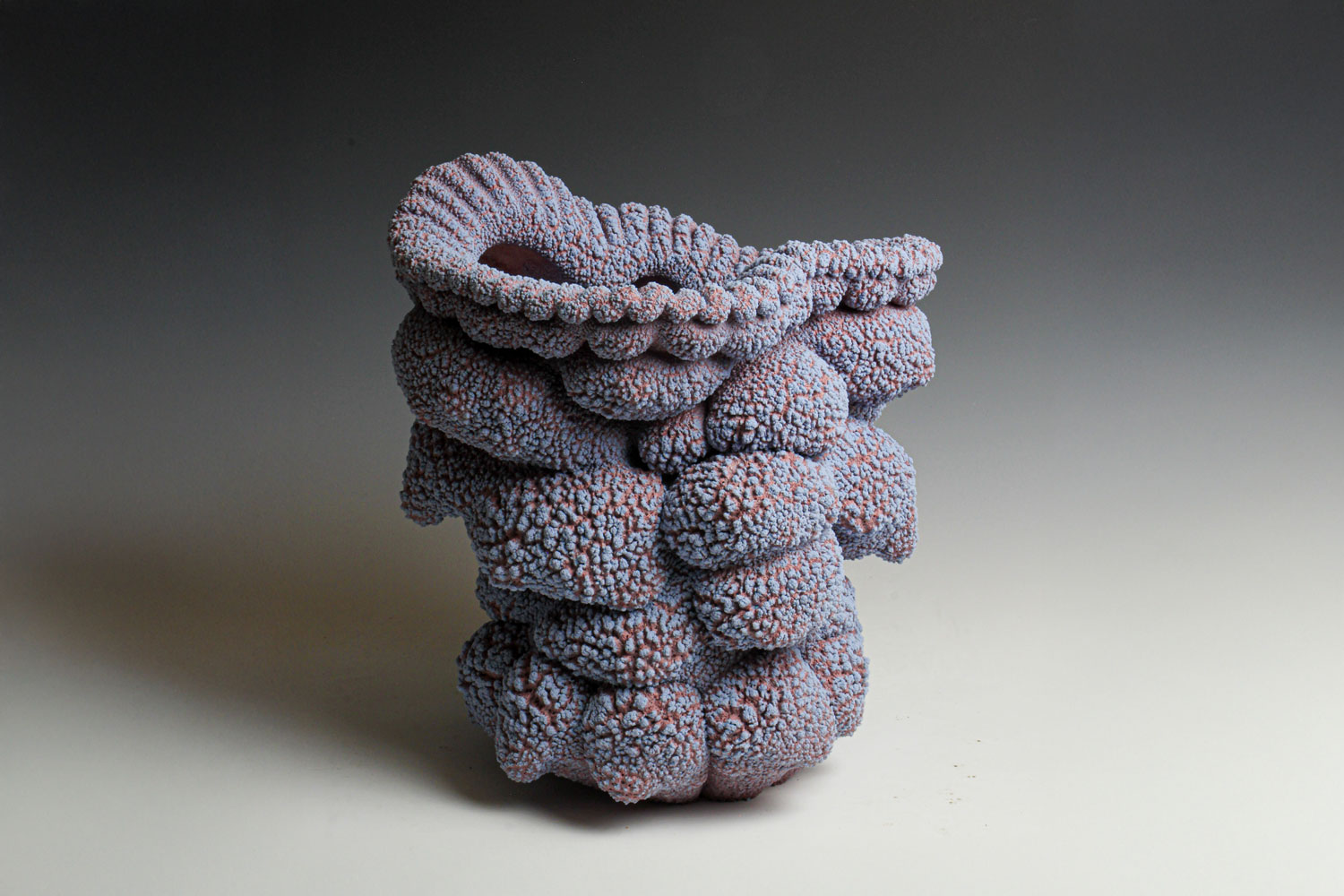
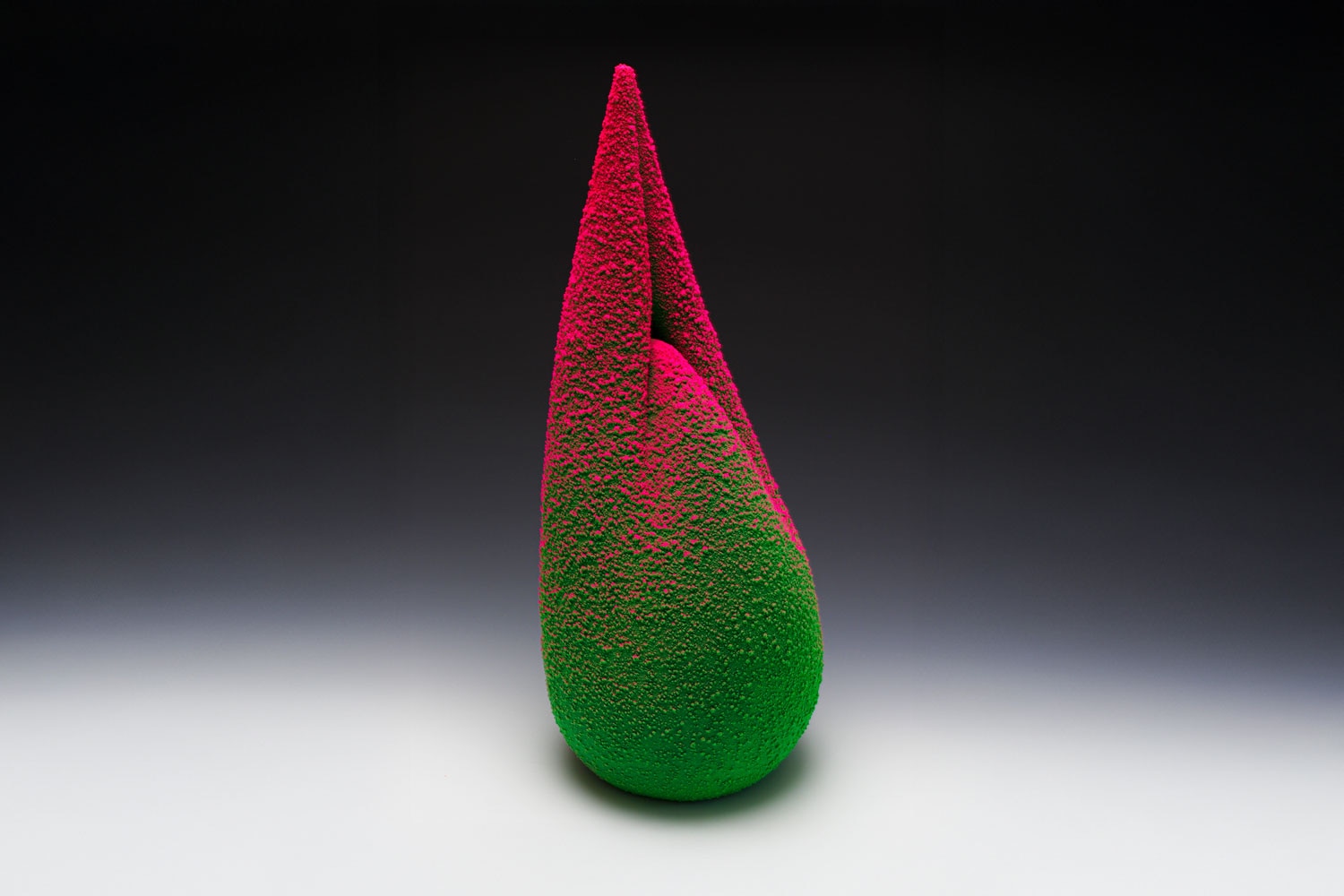
Inspired by traditional forms, Maxwell Mustardo takes his ceramic forms to their tangential edge. “A lot of my pieces are confrontational and their functionality is thwarted,” he says. At the age of 16, Maxwell's first visit to Toshiko Takaezu’s ceramic studio in rural New Jersey made a lasting impression. By the time he was 29, he became studio manager and created his own work in that very same place. His coiled and pinched clay forms are often coated in vibrant, pigment-saturated plastic, metallic automotive paint or richly textured glaze, surfaces that he began to explore when he received a materials research grant in college. Maxwell is represented by gallerists in the USA, Mexico and Europe and his pieces are in permanent collections at MIC in Faenza and the Stanley Museum of Art in Iowa.
INTERVIEW
Initially, I was interested in film and video, but as the video class was full in high school, I took a ceramics class instead. Later on, I experimented with different materials in other courses, but I eventually came back to clay. Ceramics involve all the skills that I picked up from working with other media, which can all can be explored in ceramics.
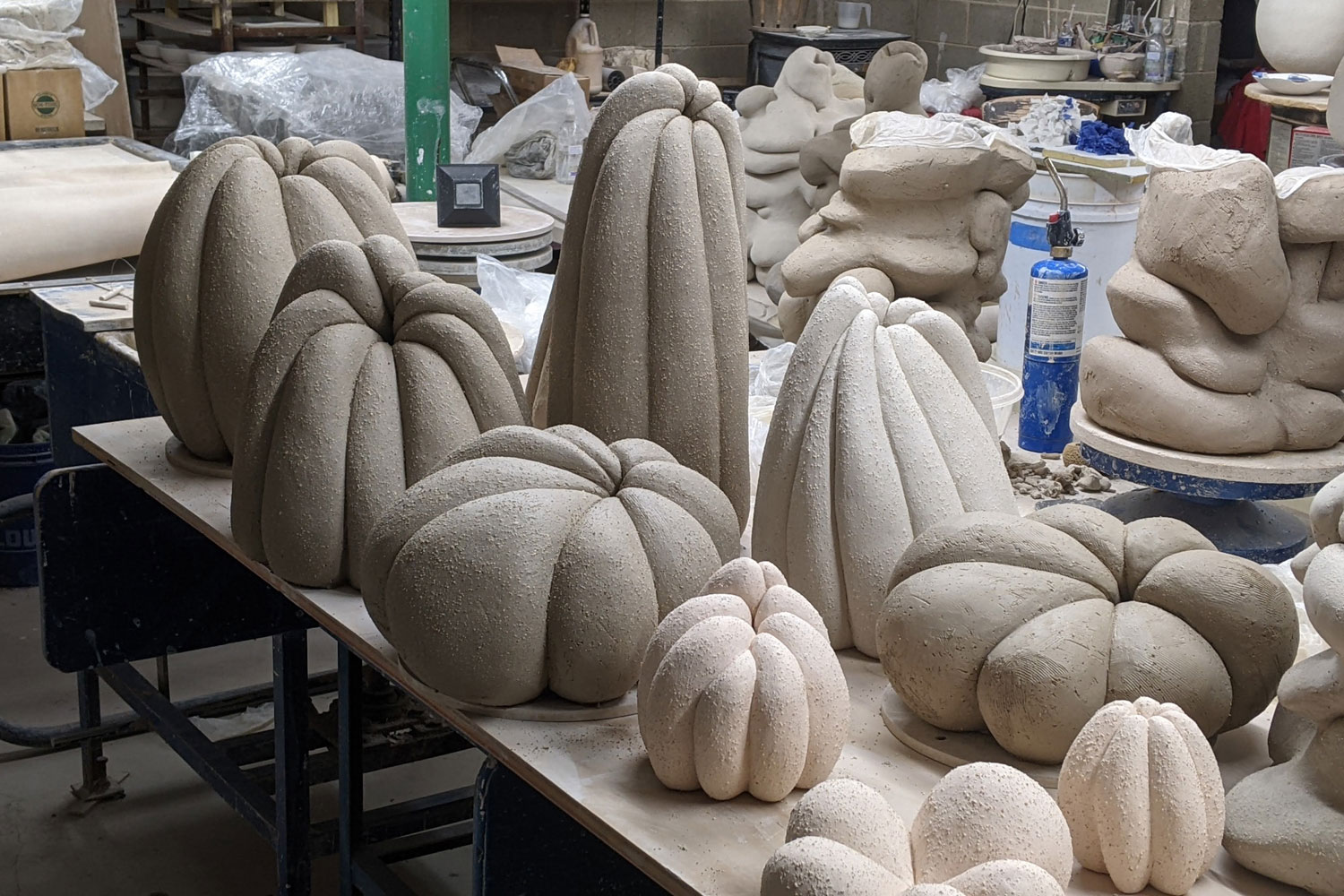
When I am leading into a new series, I draw constantly and work on a number of pieces at a time. The drawing allows me to experiment in broad strokes, while the experimental batches allow me to see how a drawing resonates in person. Some new forms require new surfaces, and vice versa.
Almost all my works pull from historical sources, whether archetypal forms, such as the mug or amphora, or more unique examples such as Delft tulipieres or abstract expressionist bottles by Peter Voulkos. Core forms remain perceptible, but they are very much redesigned to reflect my own formal interests.
I love the endless problems and problem-solving. A successful piece presents multiple opportunities for other successful works. Solutions tend to lead to complexity, not simplicity. The studio is a battleground of ideas and that is a source of perpetual joy for me.
Maxwell Mustardo
Ceramicist
Flemington, NJ, USA
AVAILABILITY
By appointment only
PHONE
+1 9088920204
LANGUAGES
English, Italian
Homo Faber Finds is a new service aiming to inspire admirers of craft to connect and collaborate with exceptional artisans.
We invite you to submit an enquiry here.