Kenta Hirai
Studio Jig
Furniture maker
Yoshino District, Japan
The curve of a century
- Kenta applies freeform lamination to softwood
- His practice allows him to bring together design and crafting
- He reveals the natural properties of Yoshino cedar in his pieces
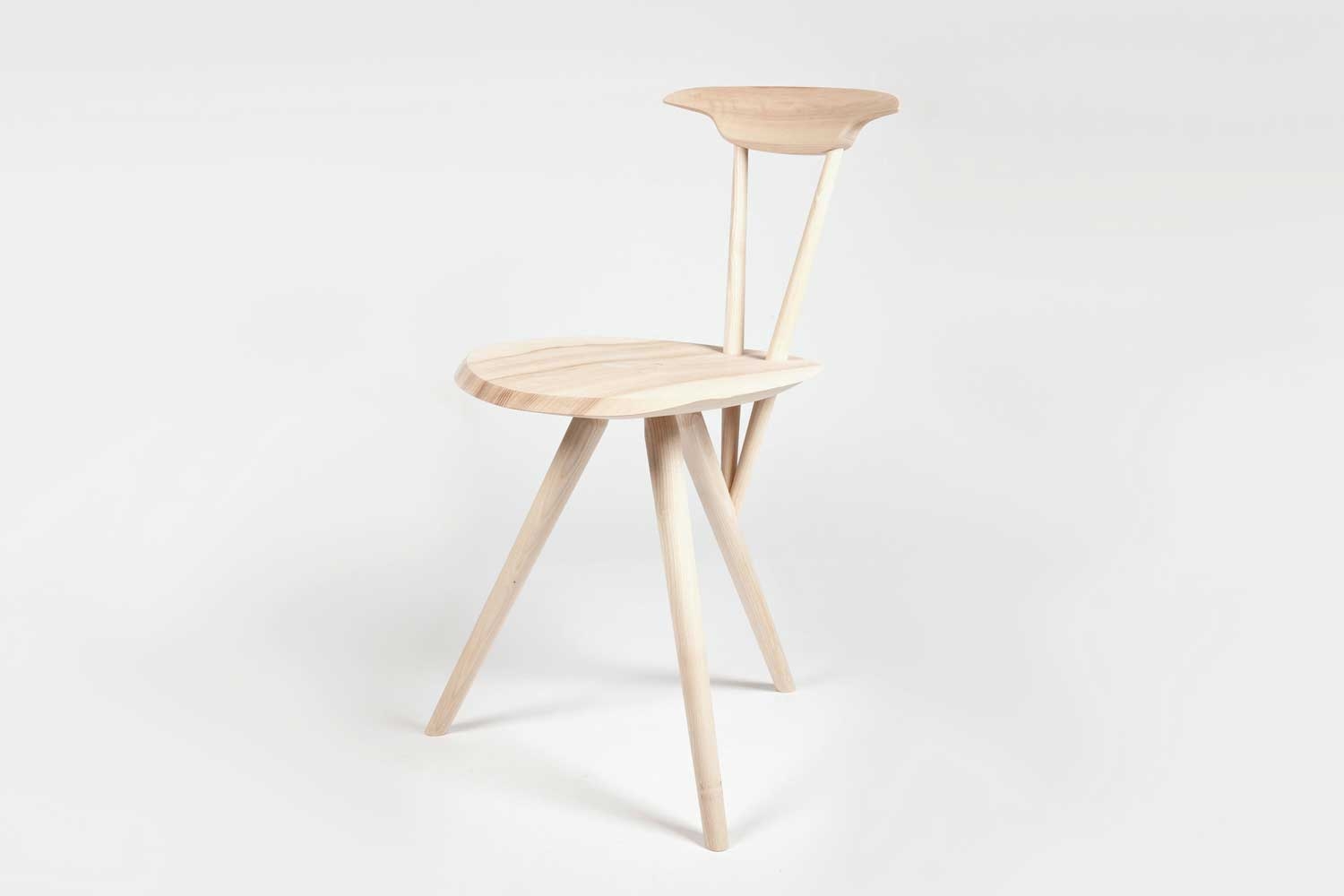
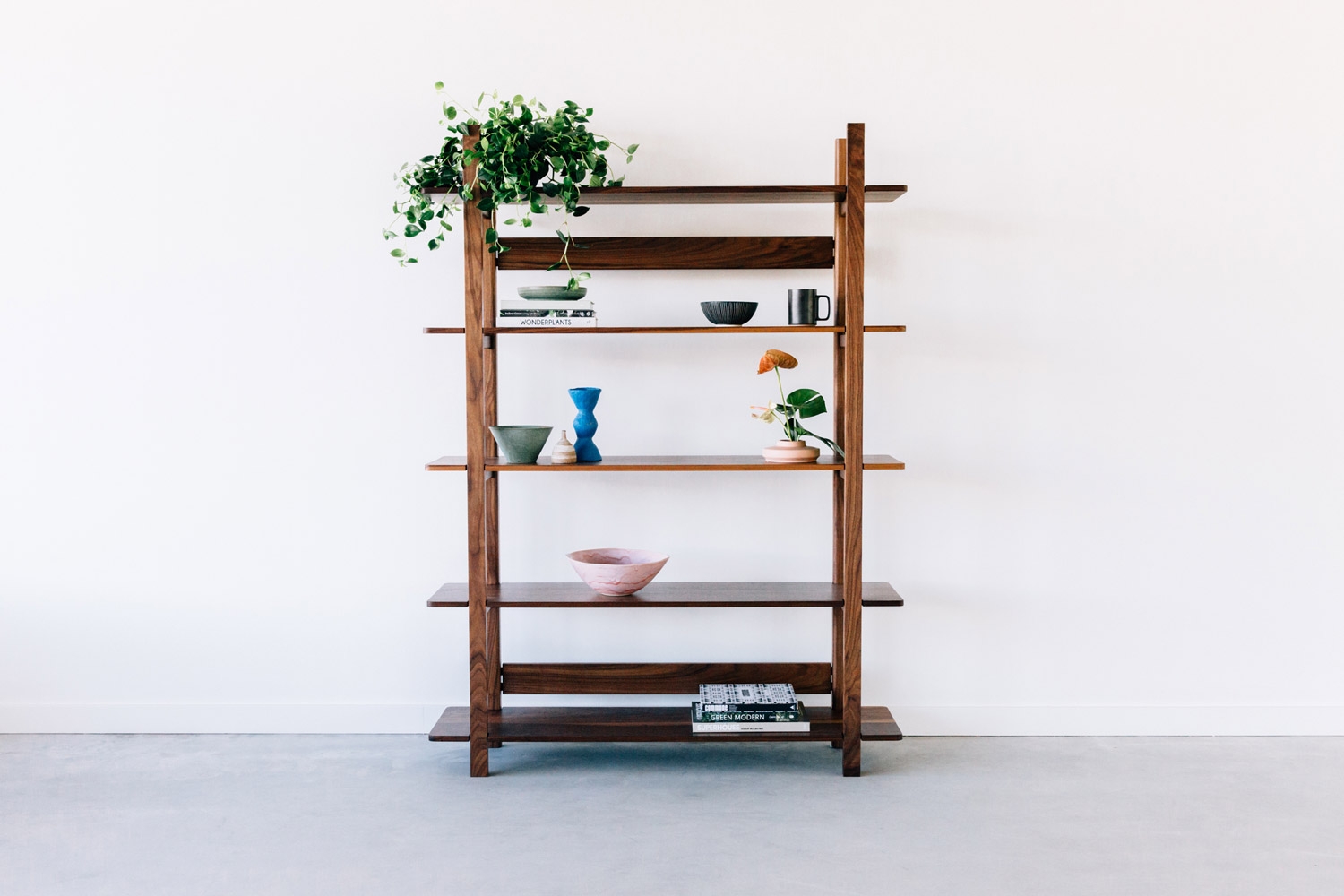
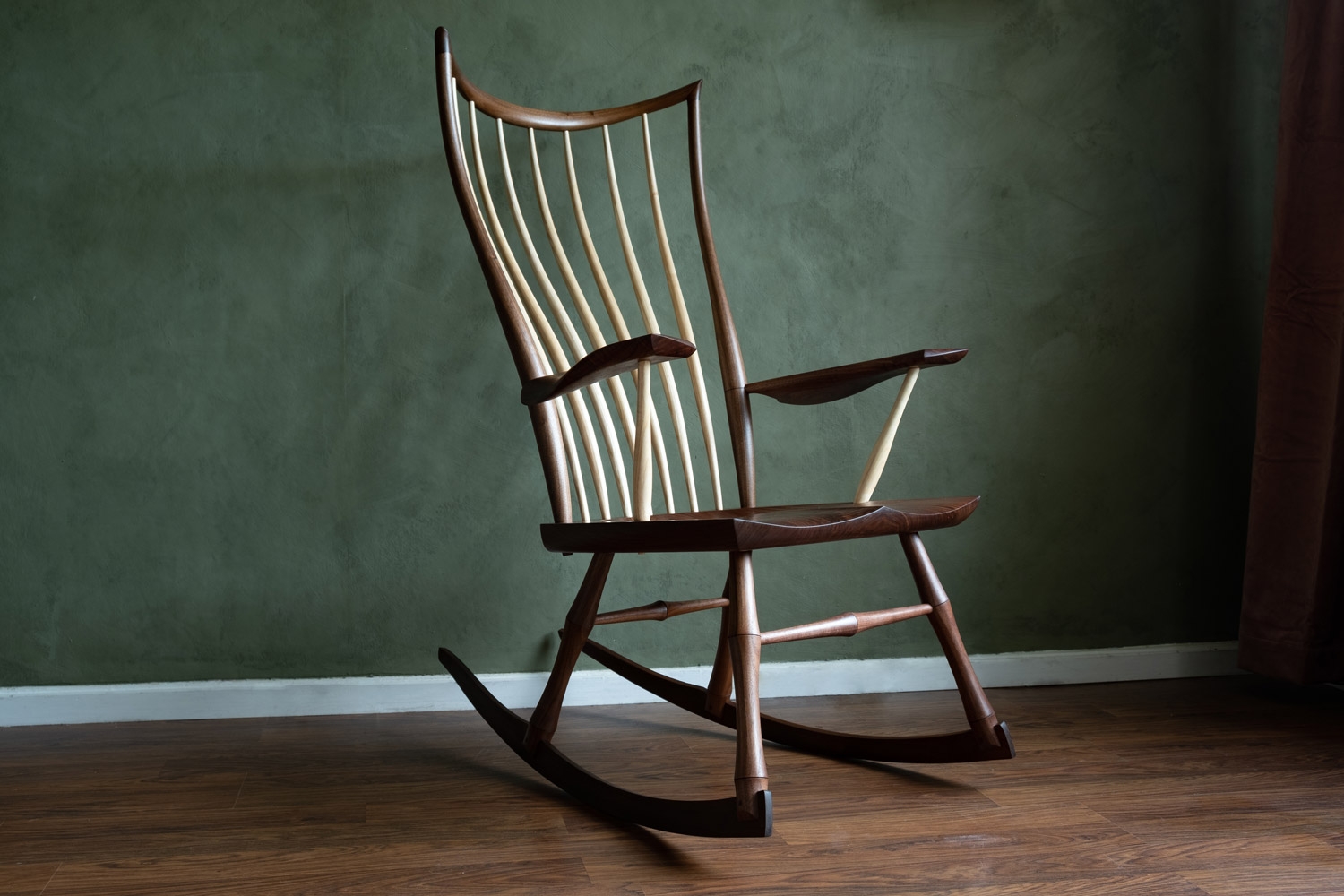
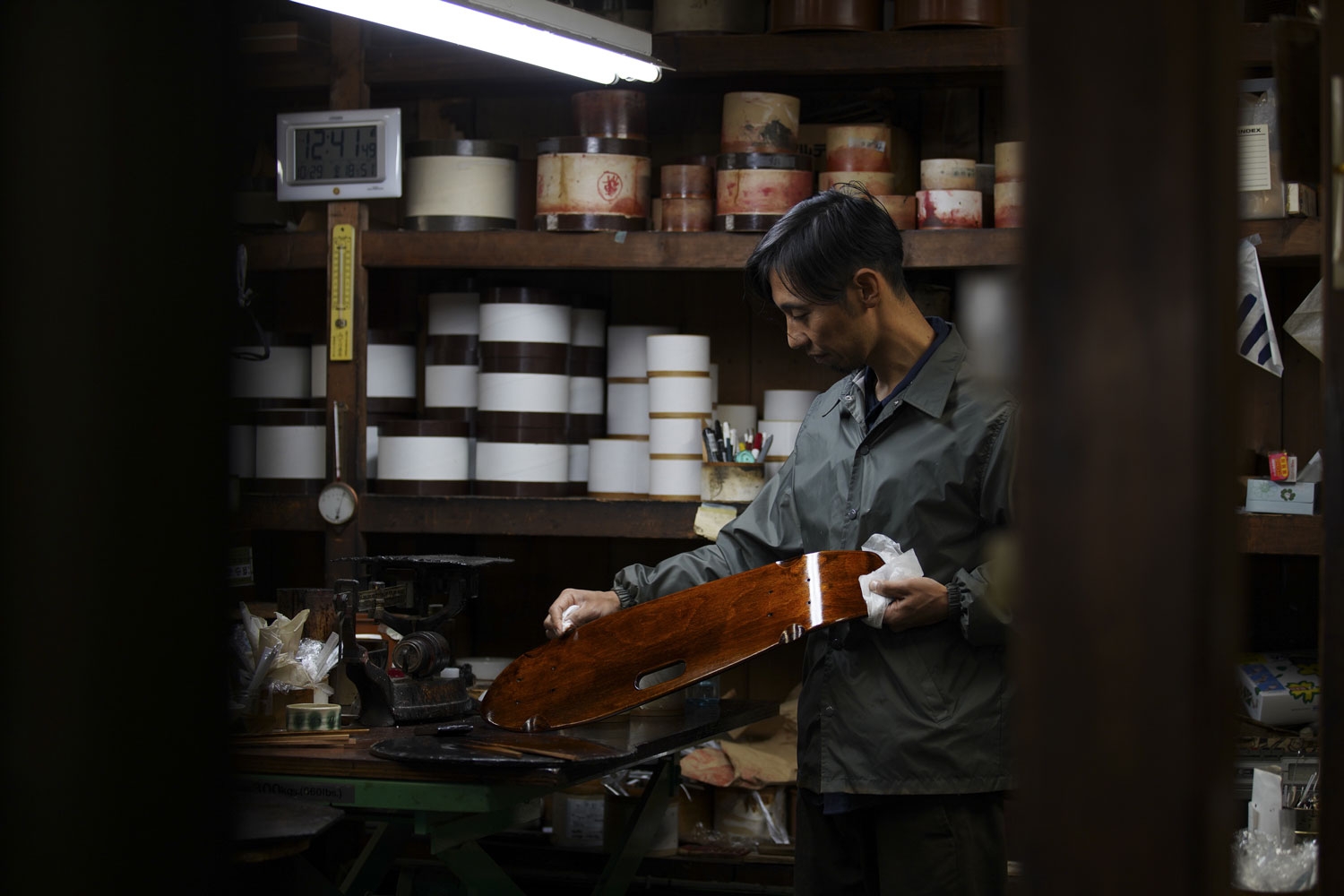
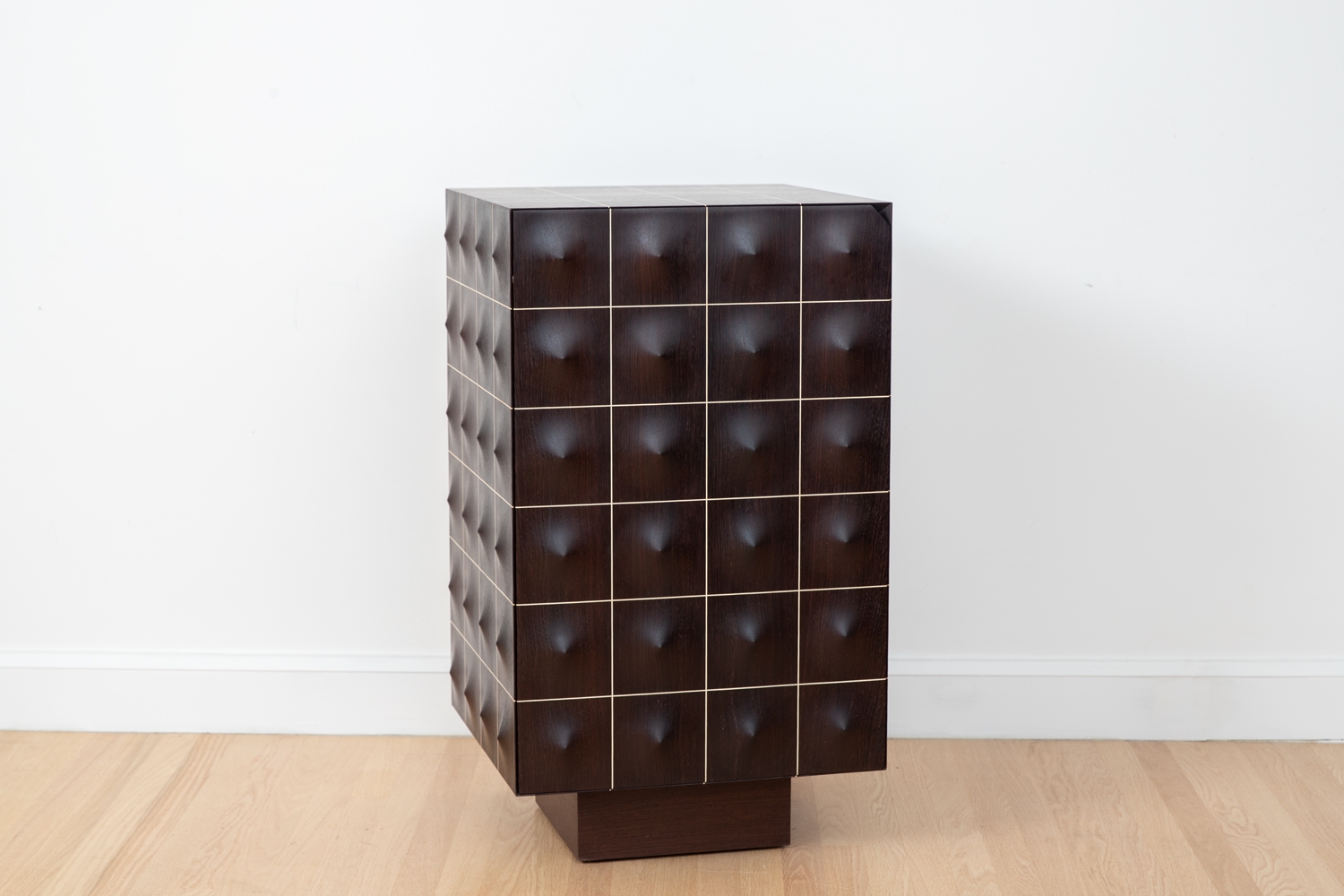
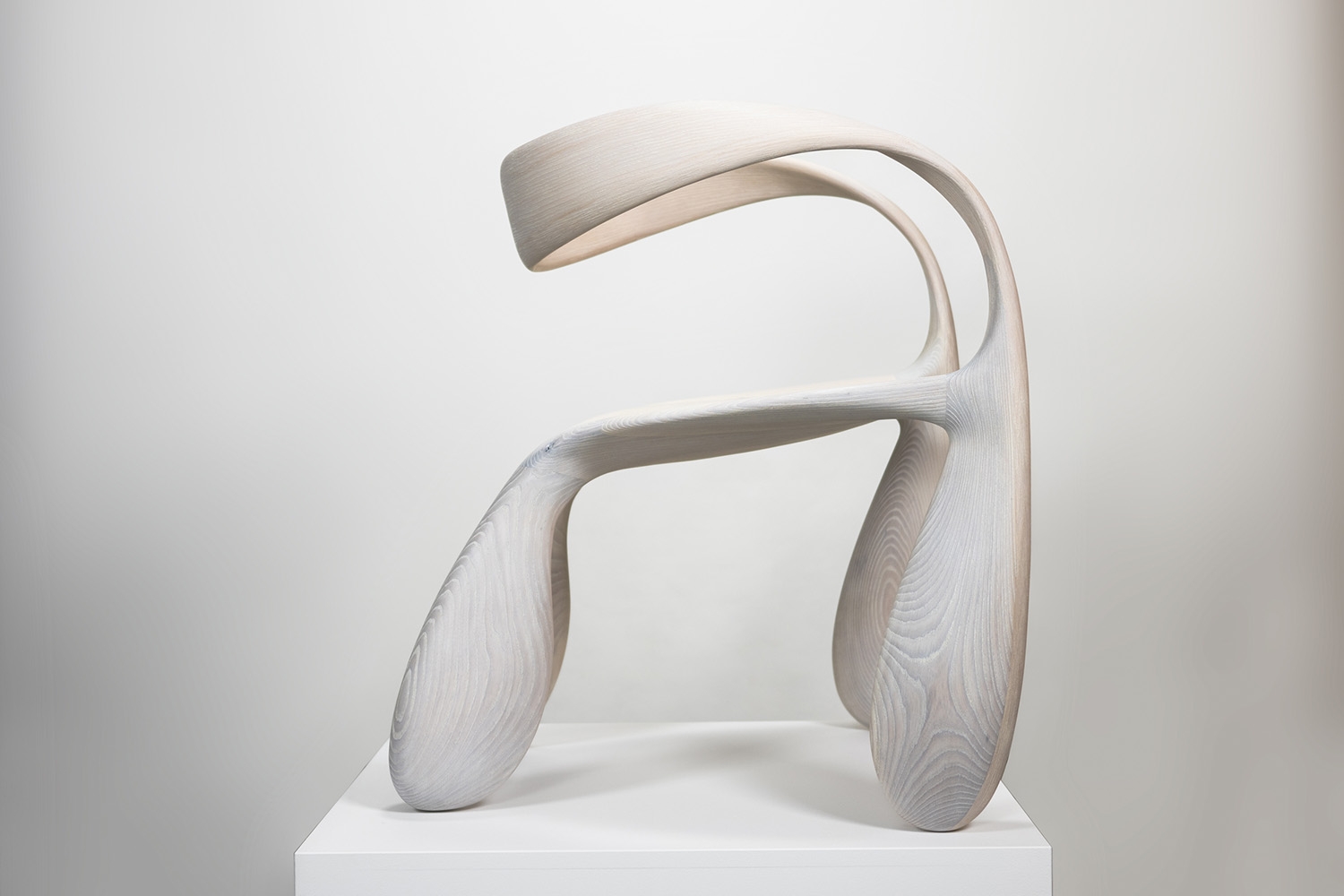
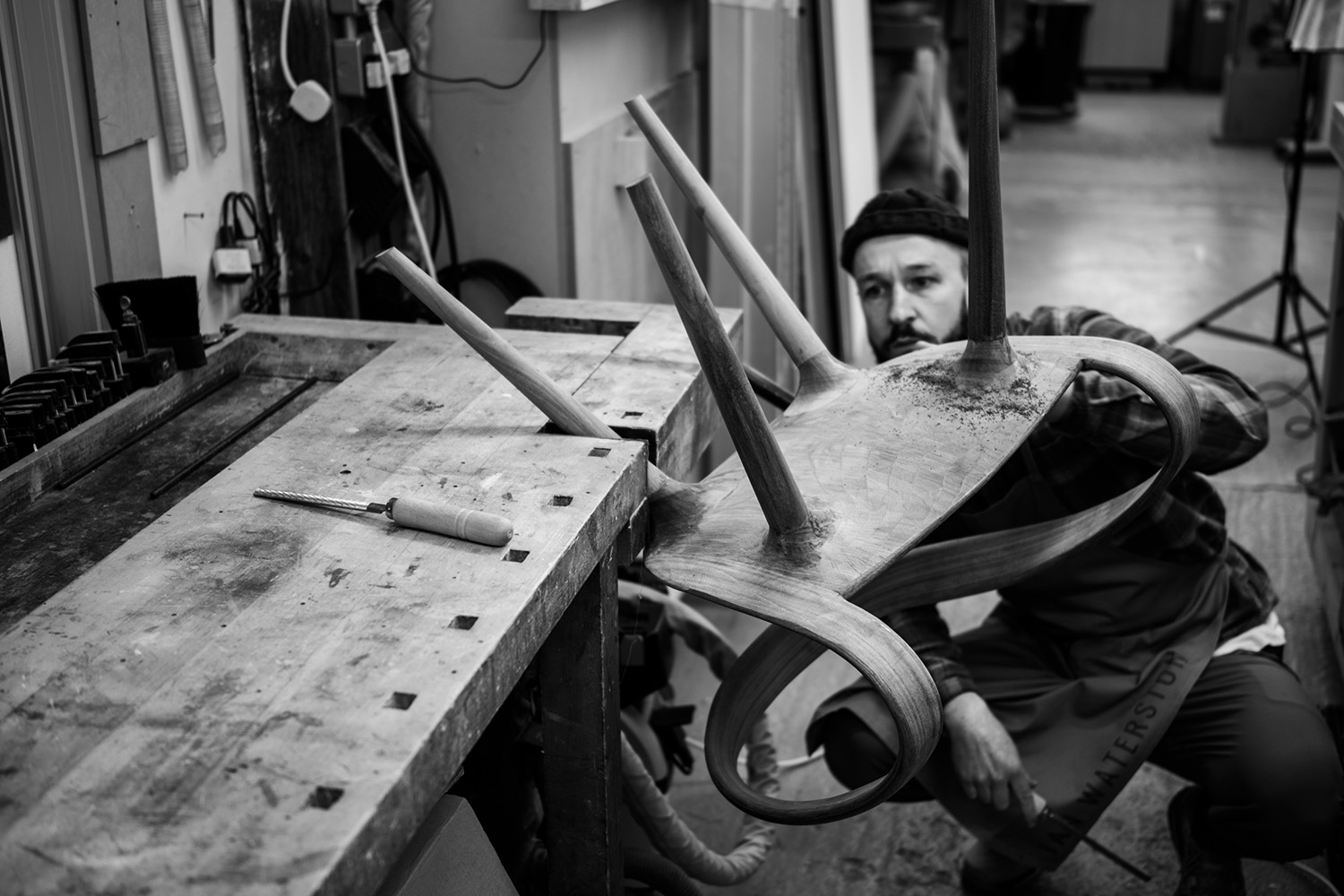
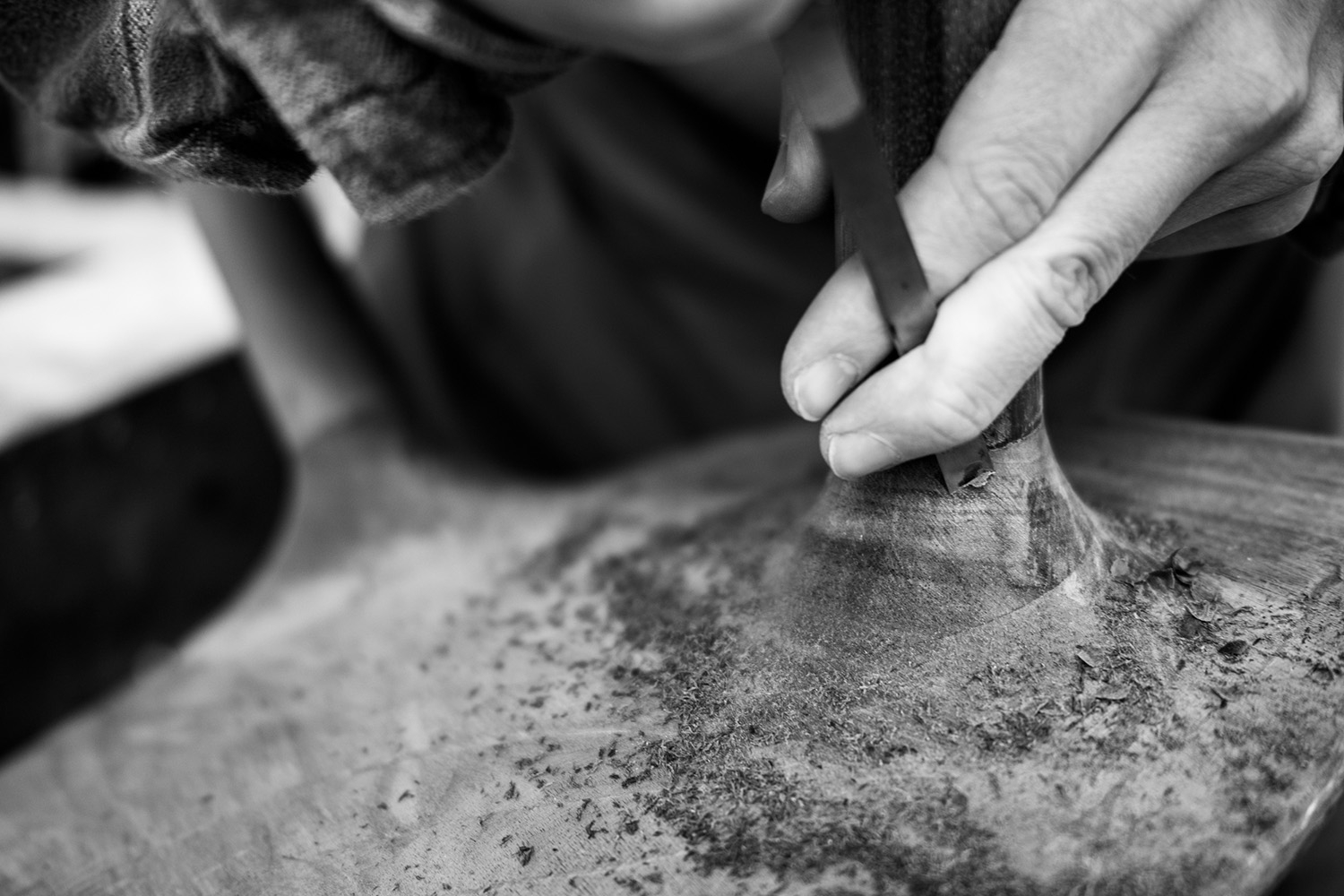
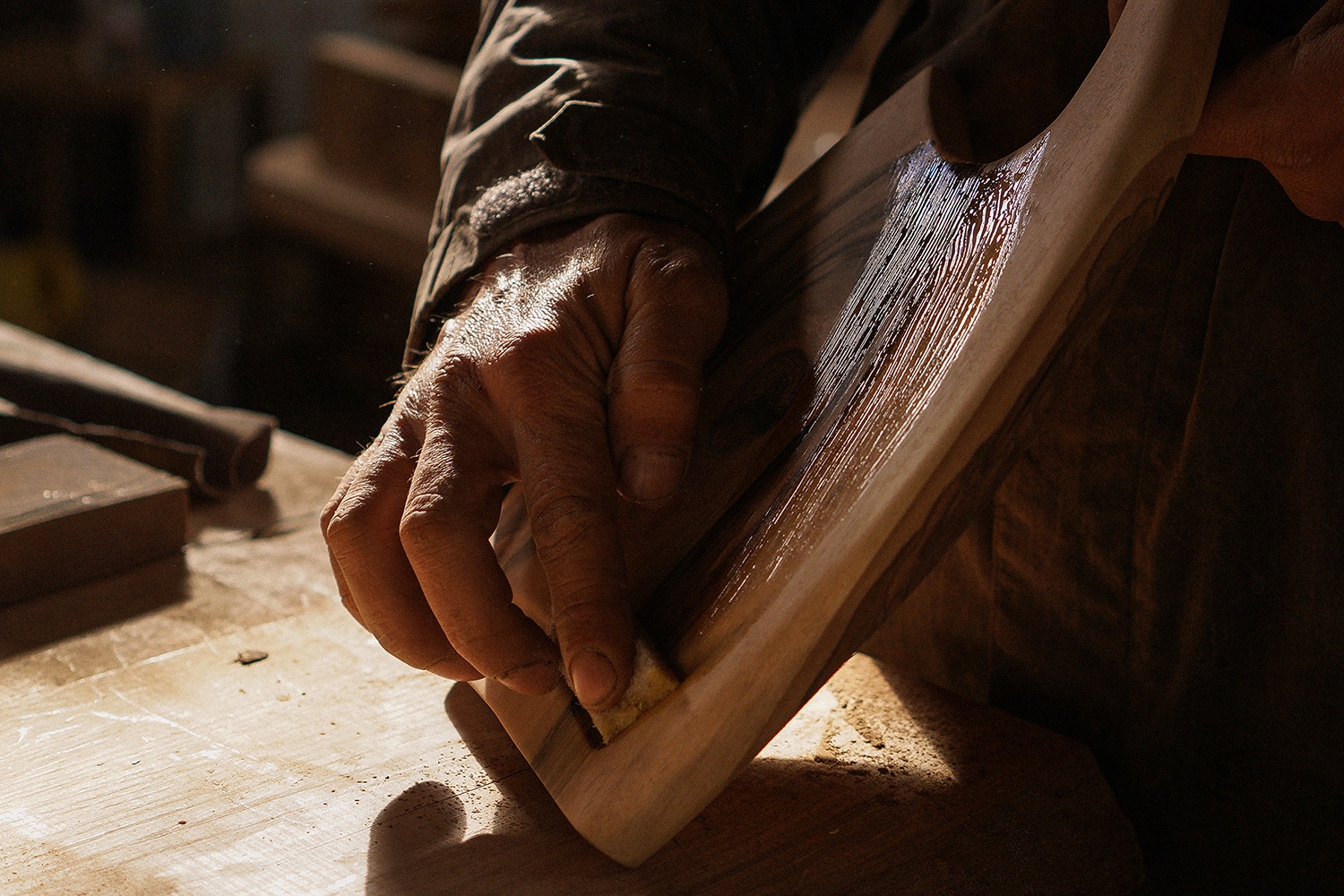
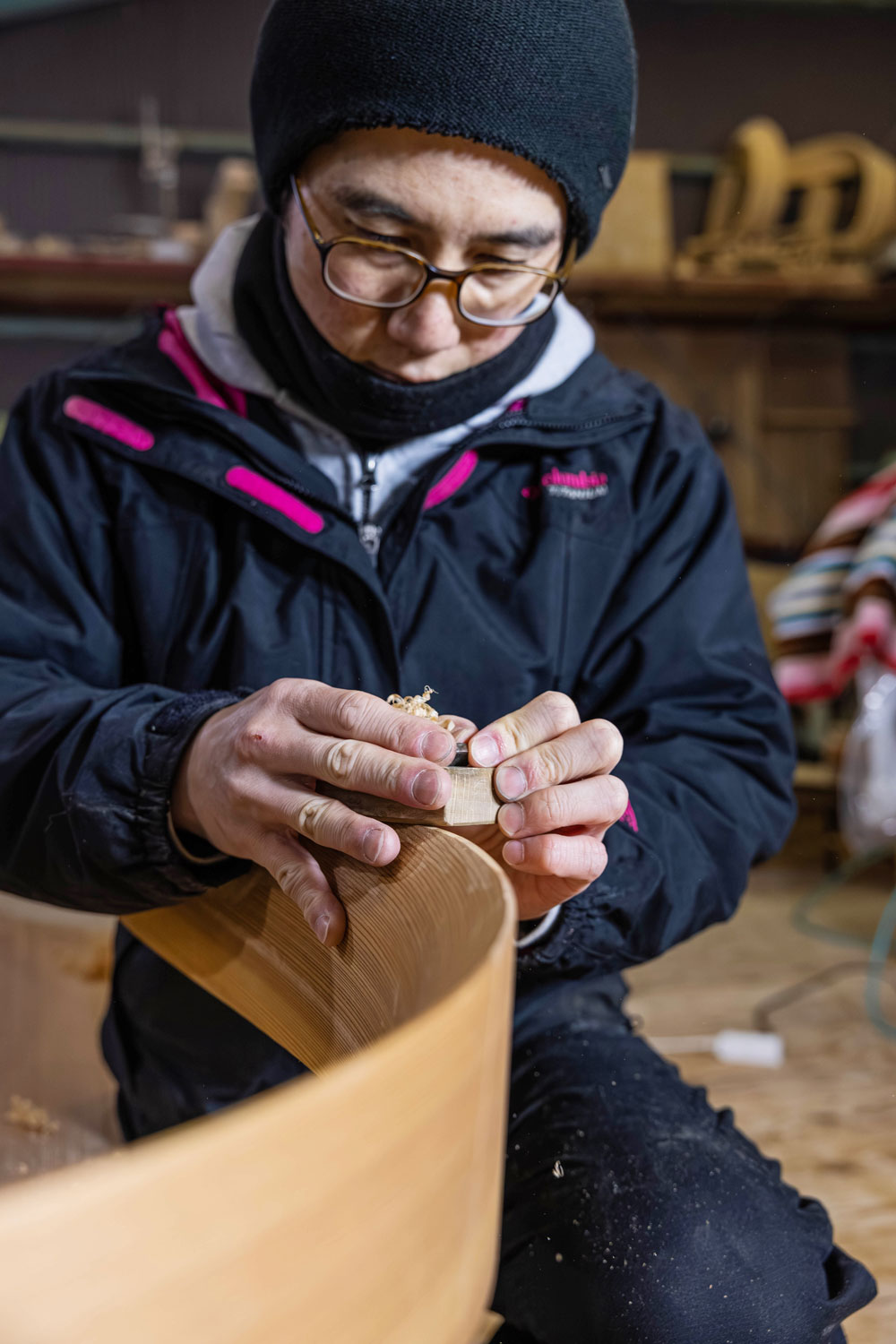
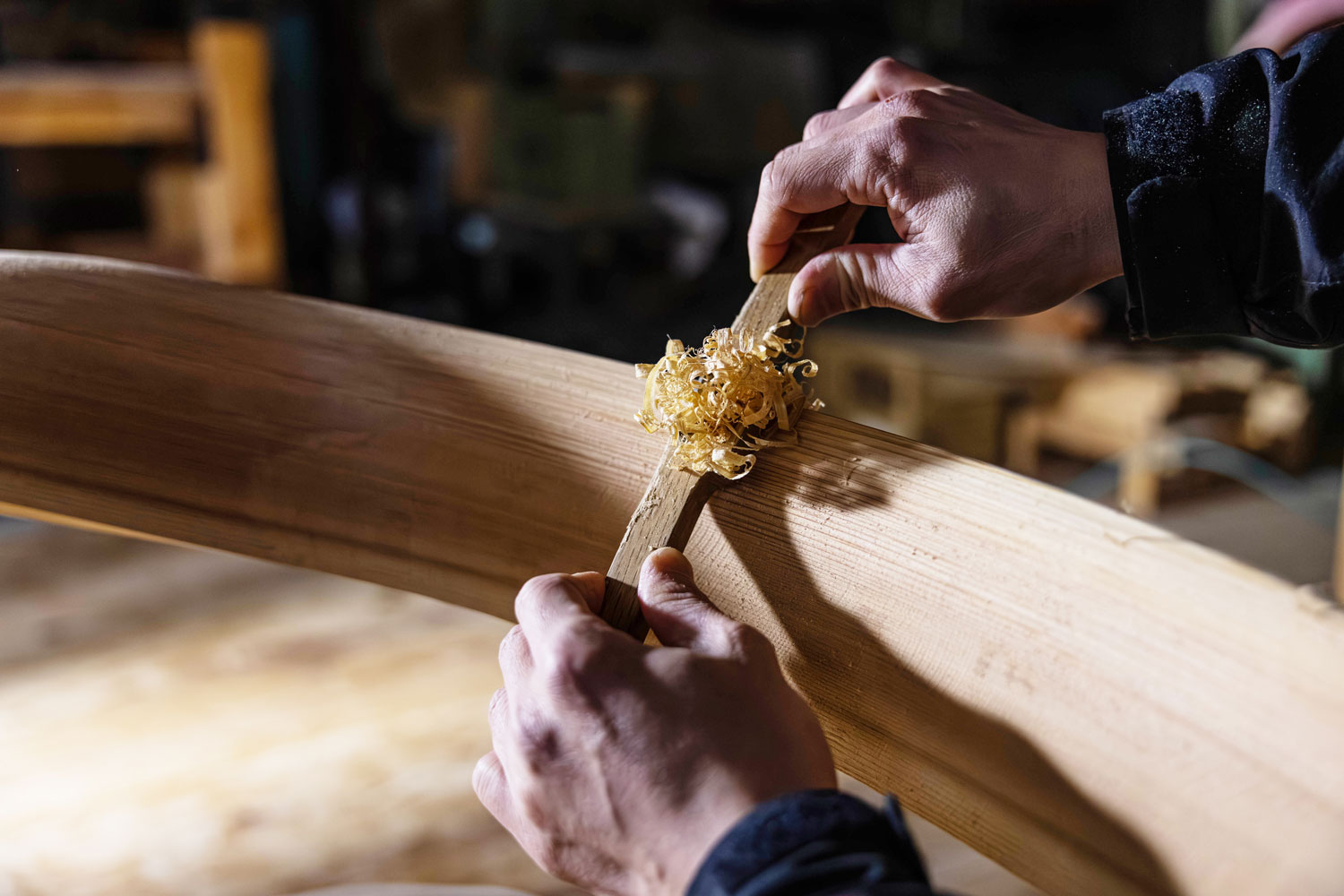
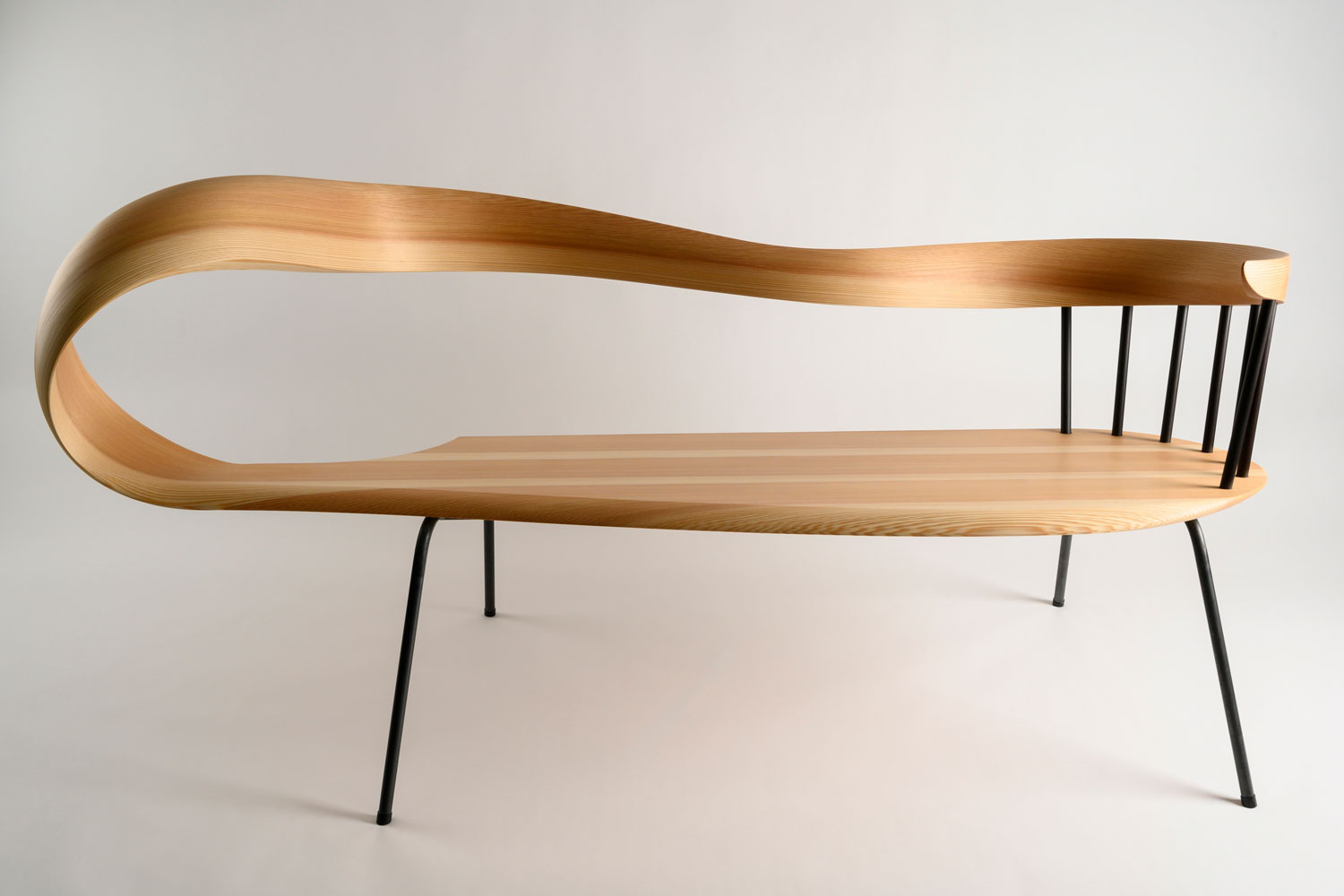
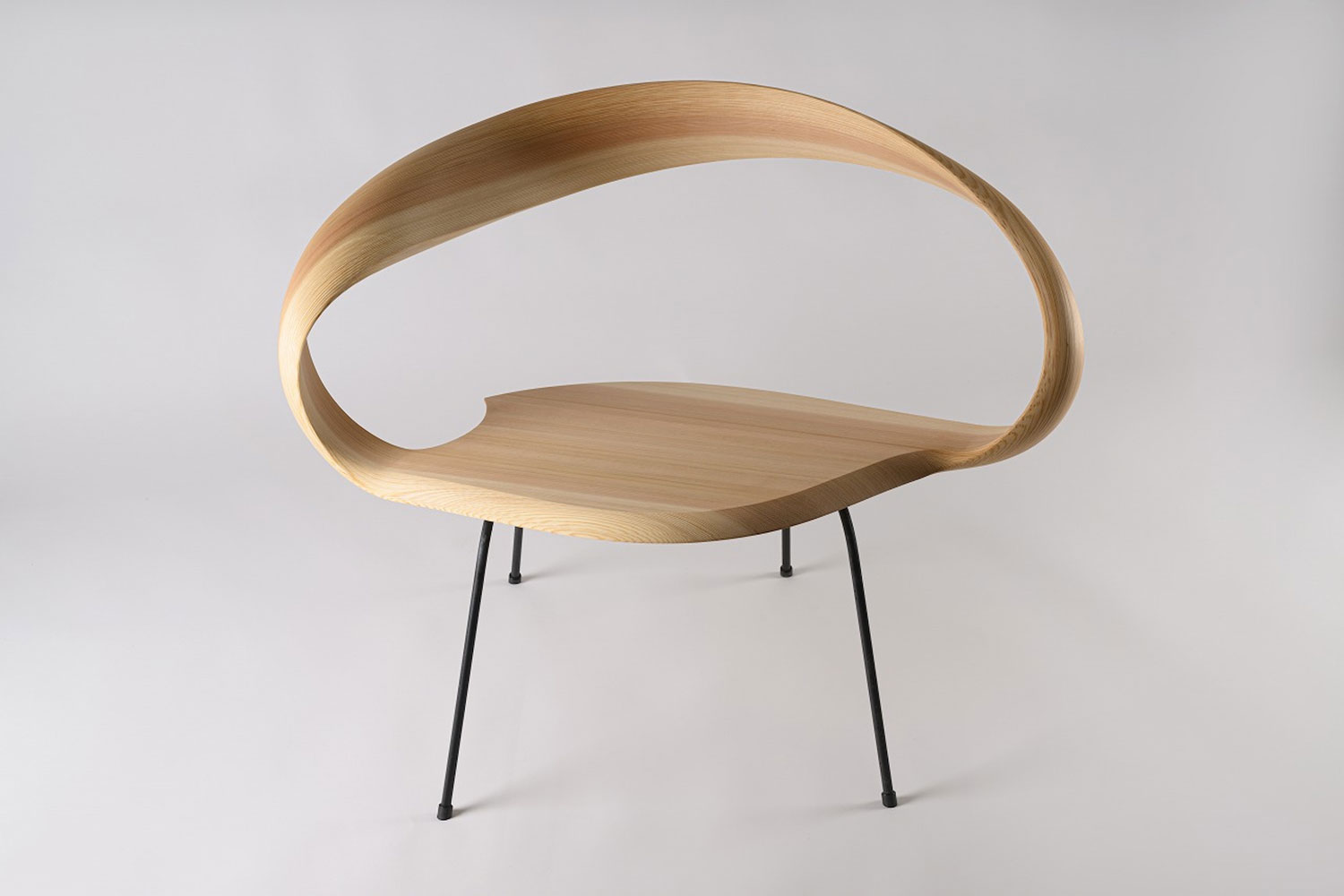
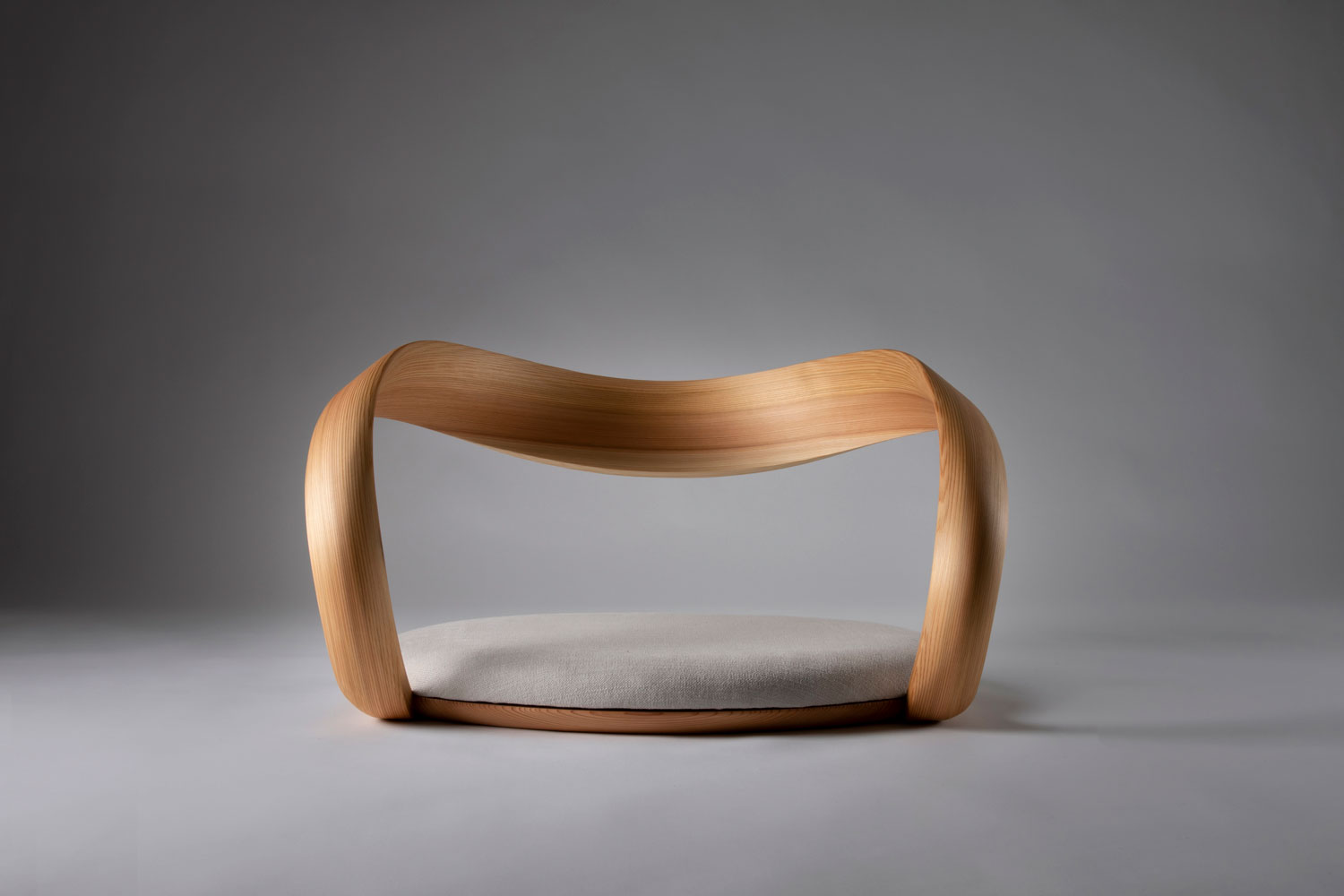
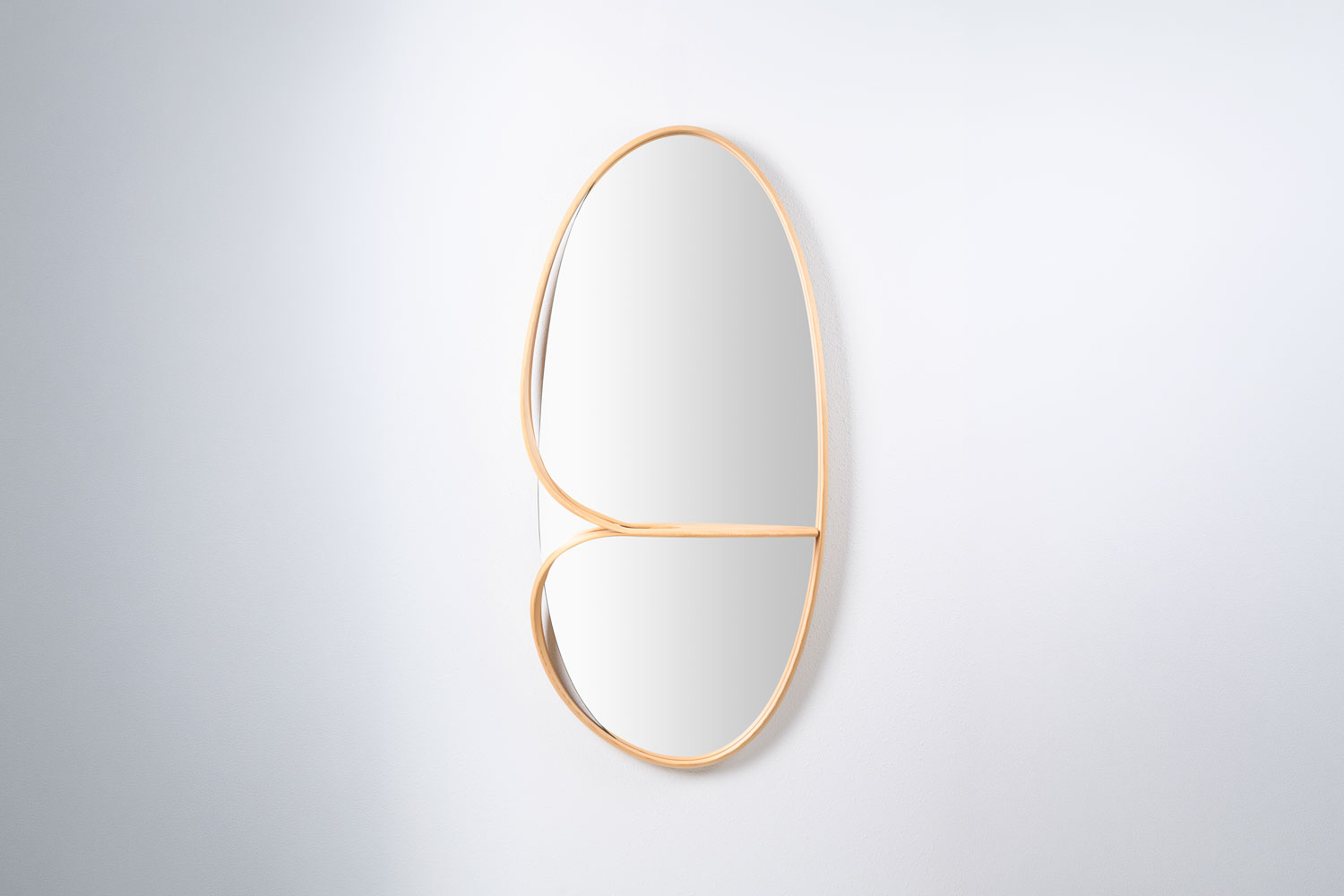
Kenta Hirai creates wooden furniture in Kawakami Village, in the Yoshino forestry region of Nara, where he is based. Trained in environmental design and architecture, he turned to furniture in search of a practice that would combine design and making. "I was seeking a more direct relationship between idea and object," he says. Kenta retrained in woodworking in Hida Takayama, then spent three years in Ireland at Joseph Walsh Studio, where he learned freeform lamination. Returning to Japan, he founded his workshop, Studio Jig, in 2017. Today, Kenta applies freeform lamination to Yoshino cedar, a softwood traditionally reserved for architecture. His work brings together cultivated timber, controlled bending and a process that begins in the hand and ends in a singular form.
INTERVIEW
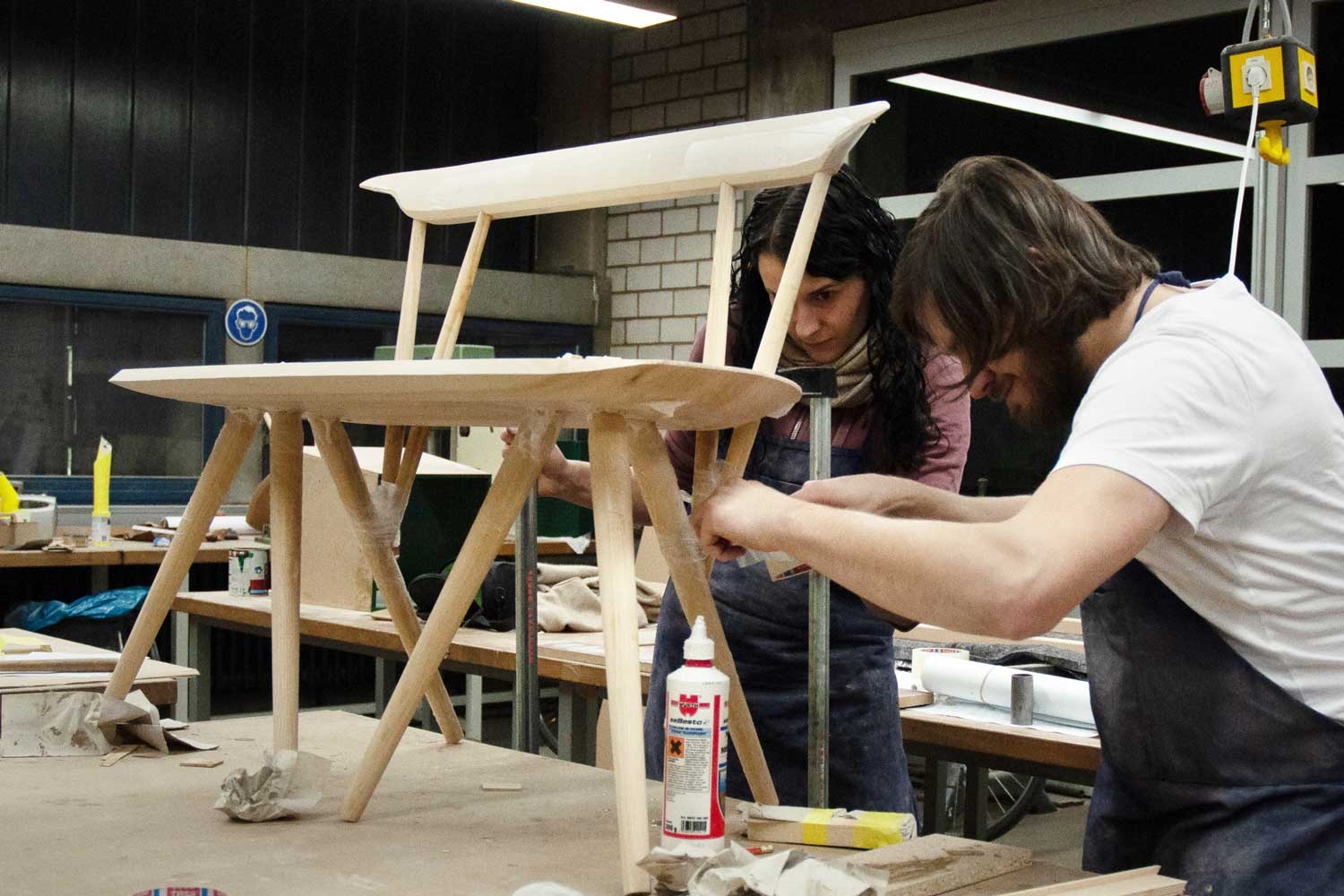
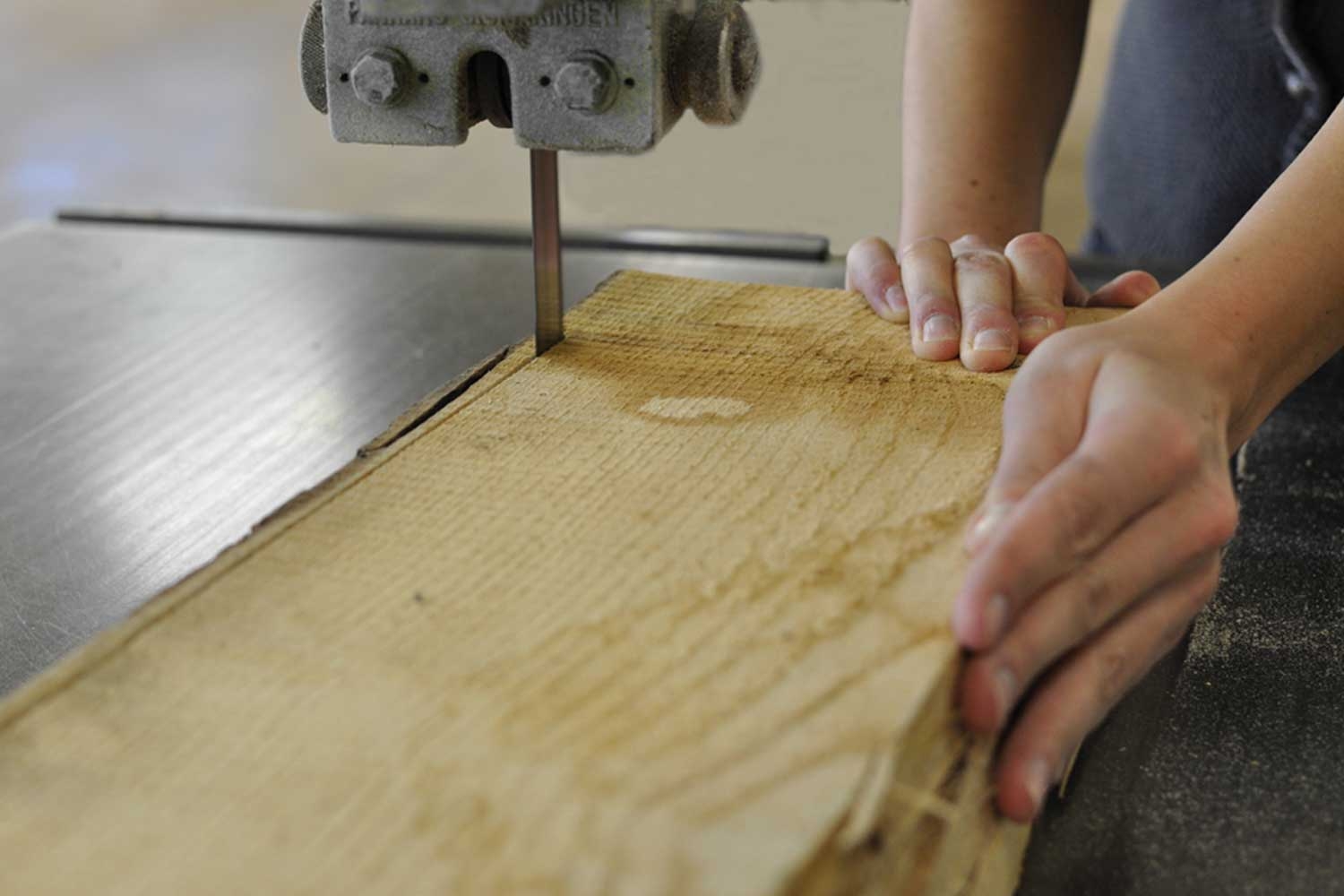
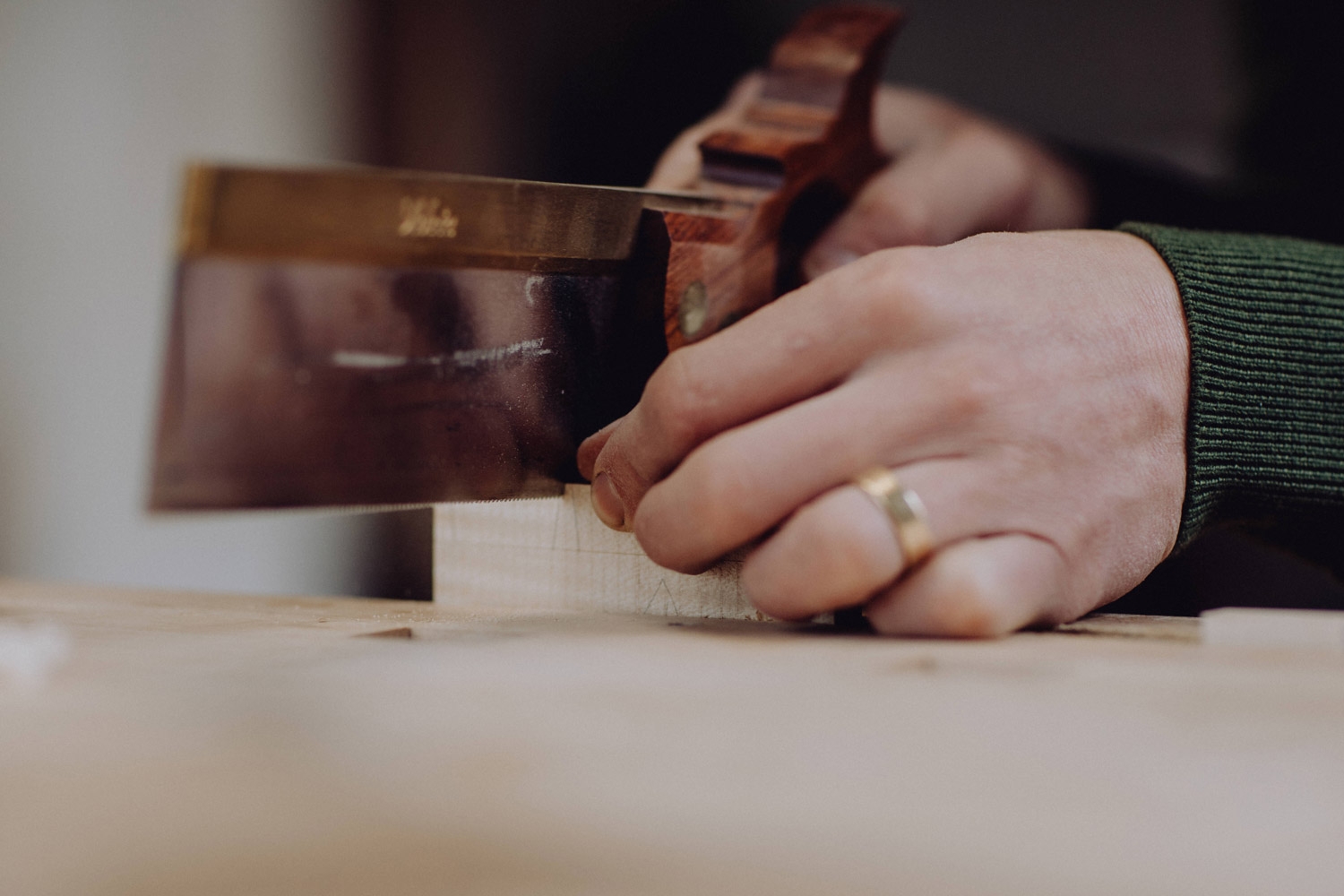
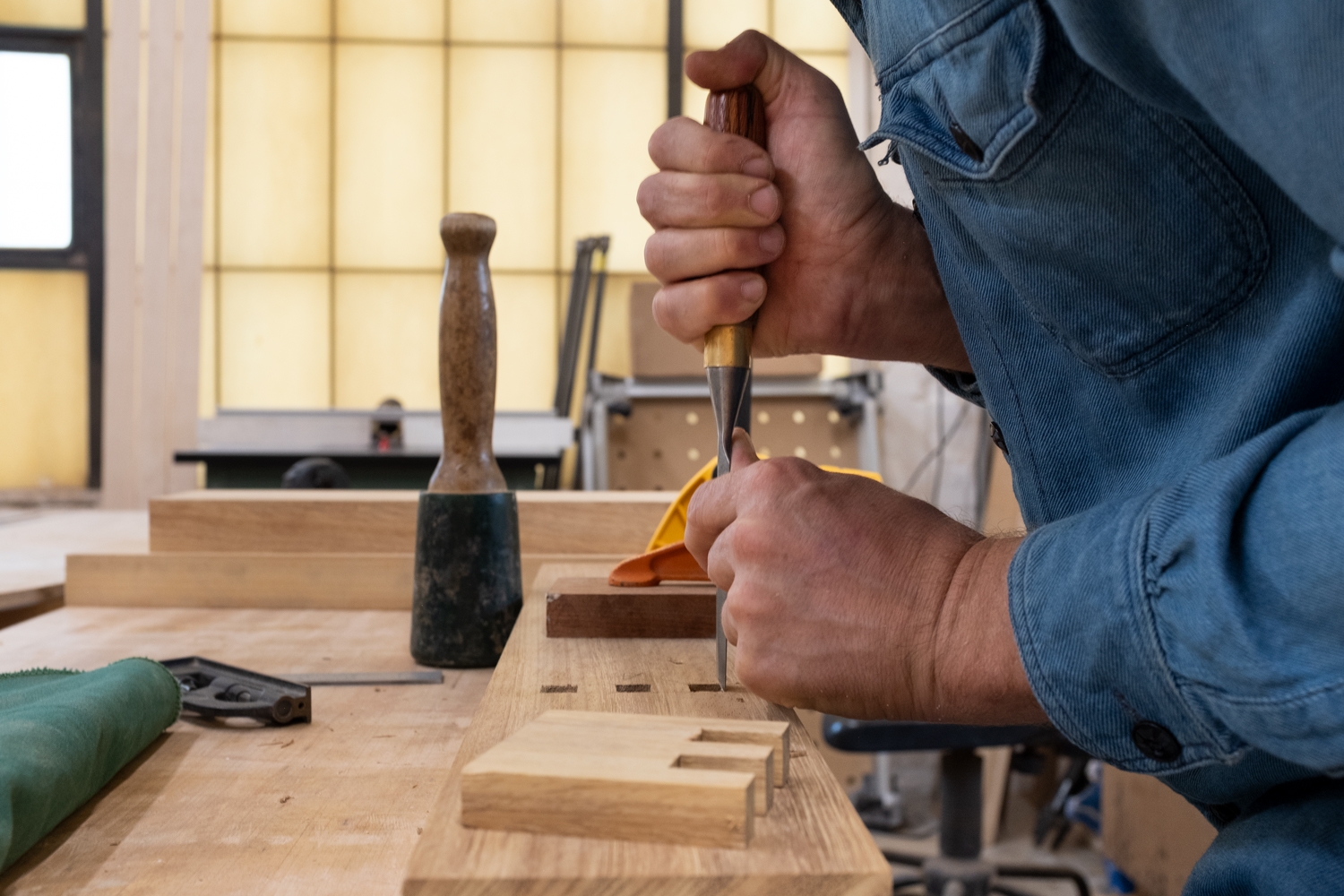
In architecture, I was able to design, but I could not build. I wanted to be in charge of the whole process, from drawing to fabrication to sale. Woodworking allows me to unite those steps and work with my own hands.
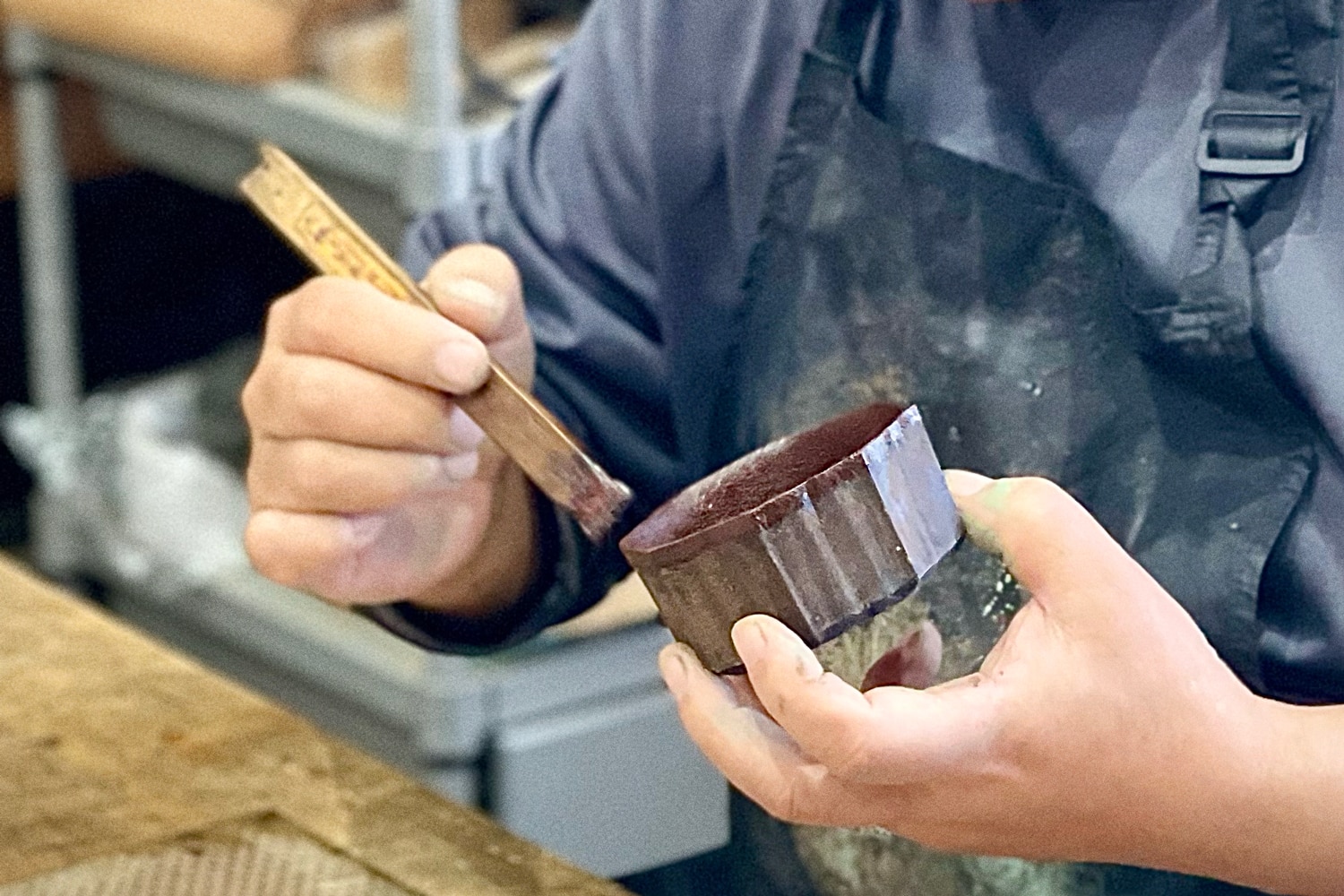
I start by bending thin aluminium sheets by hand to test curves. Unlike wood, metal keeps its shape, so it helps me study proportion and balance. When a form feels right, I recreate it in laminated cedar, knowing the bending will define the result.
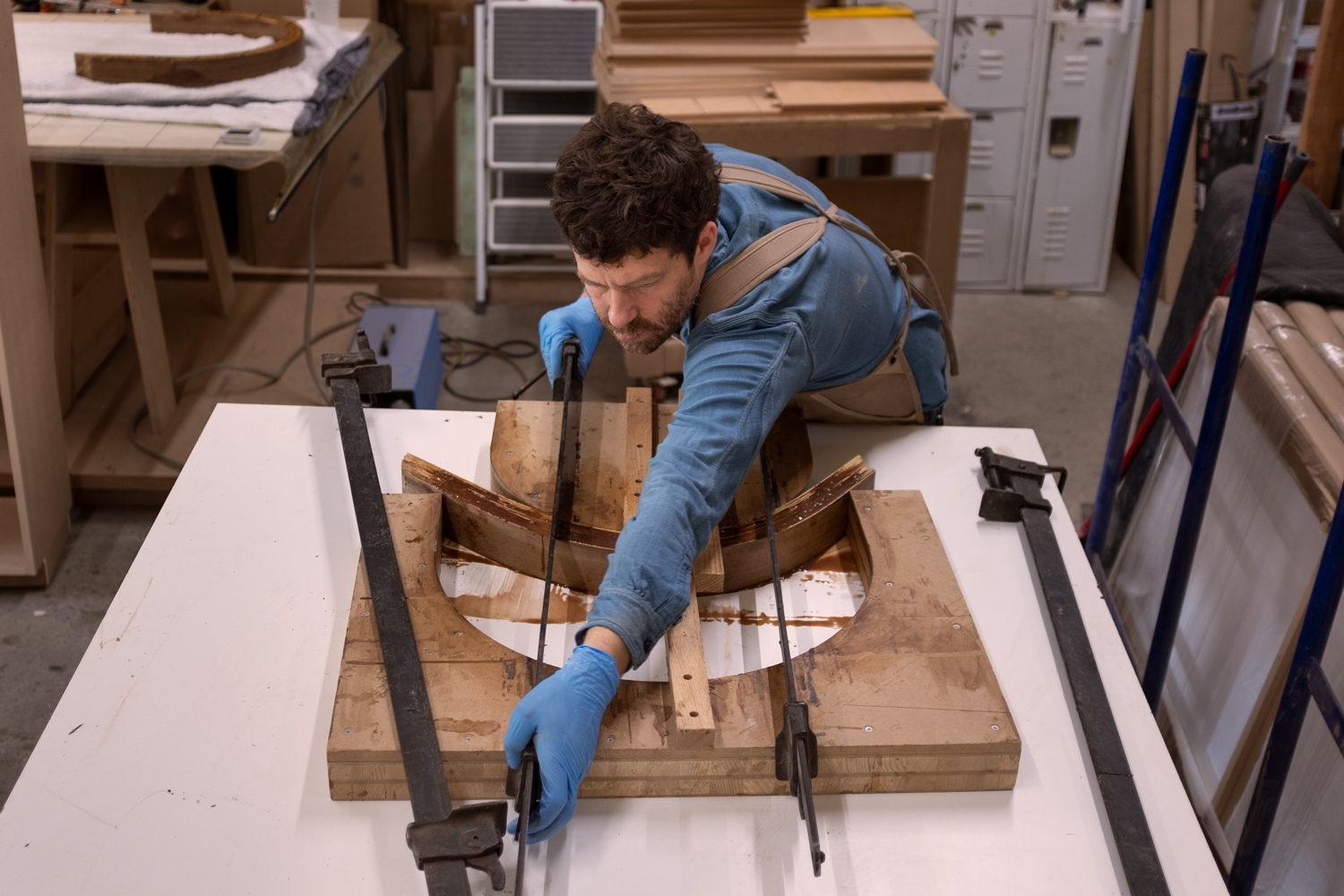
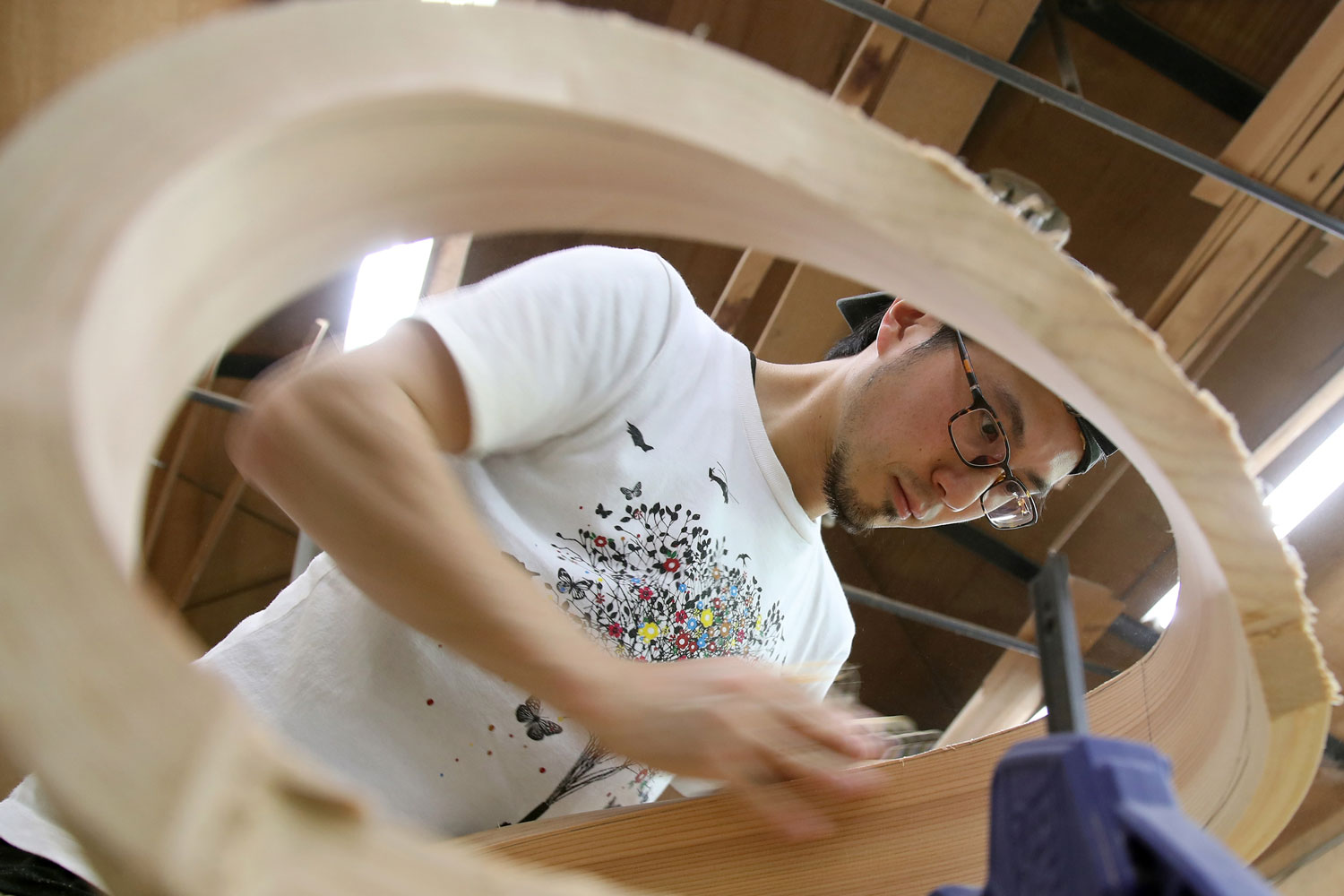
Wood always tries to return to its original state. I laminate thin sheets with adhesive and bend them together so the curve sets as it cures. It is a single, irreversible step. If the bend fails, the material is lost. The success of the bend determines the final piece.
Yoshino cedar is slow-grown over a century, which results in tight, even grain and long, knot-free lengths. Unlike naturally grown hardwoods valued for variation, this timber reflects careful forestry. Through my work, I hope people notice the material itself.
Kenta Hirai
Studio Jig
Furniture maker
Yoshino District, Japan
ADDRESS
Address upon request, Yoshino District, Japan
AVAILABILITY
By appointment only
LANGUAGES
Japanese
Homo Faber Finds is a new service aiming to inspire admirers of craft to connect and collaborate with exceptional artisans.
We invite you to submit an enquiry here.