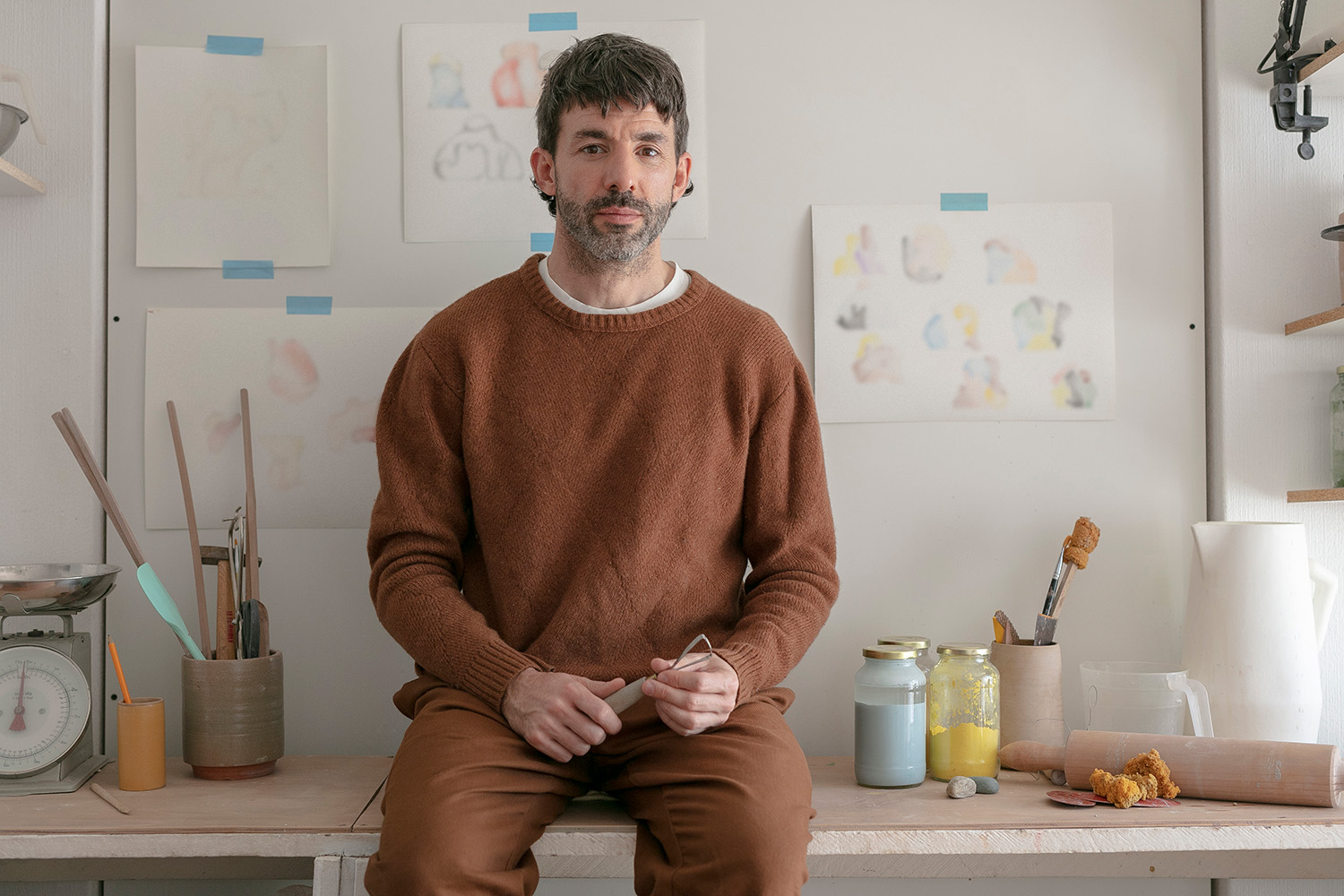
Jennifer McCurdy
Ceramicist
Tisbury, MA, USA
Firing the shapes of nature
- Jennifer shapes porcelain into gravity-defying natural shapes
- Her practice involves wheel throwing and hand shaping clay
- The final pieces develop in the kiln as they slump and fall
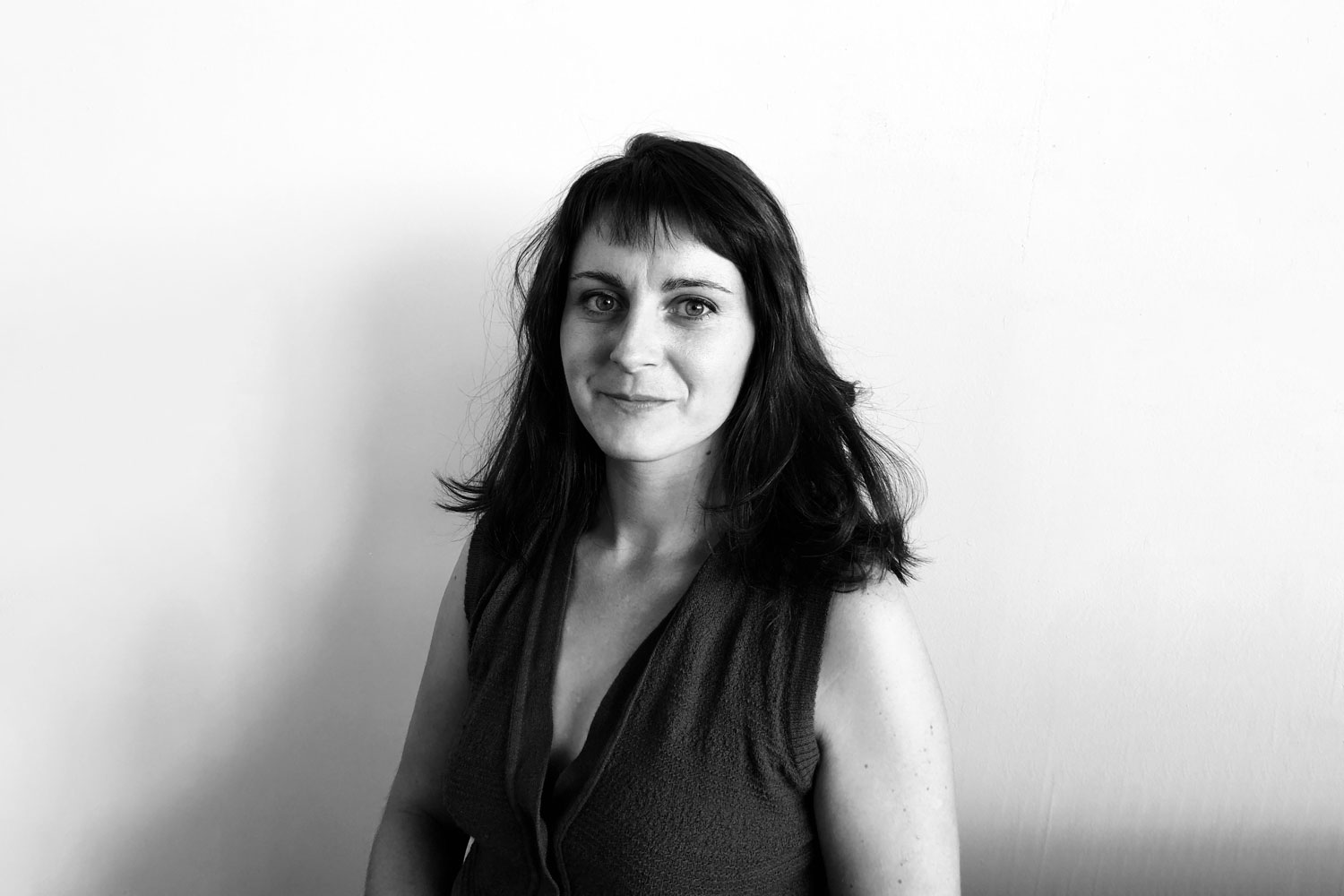
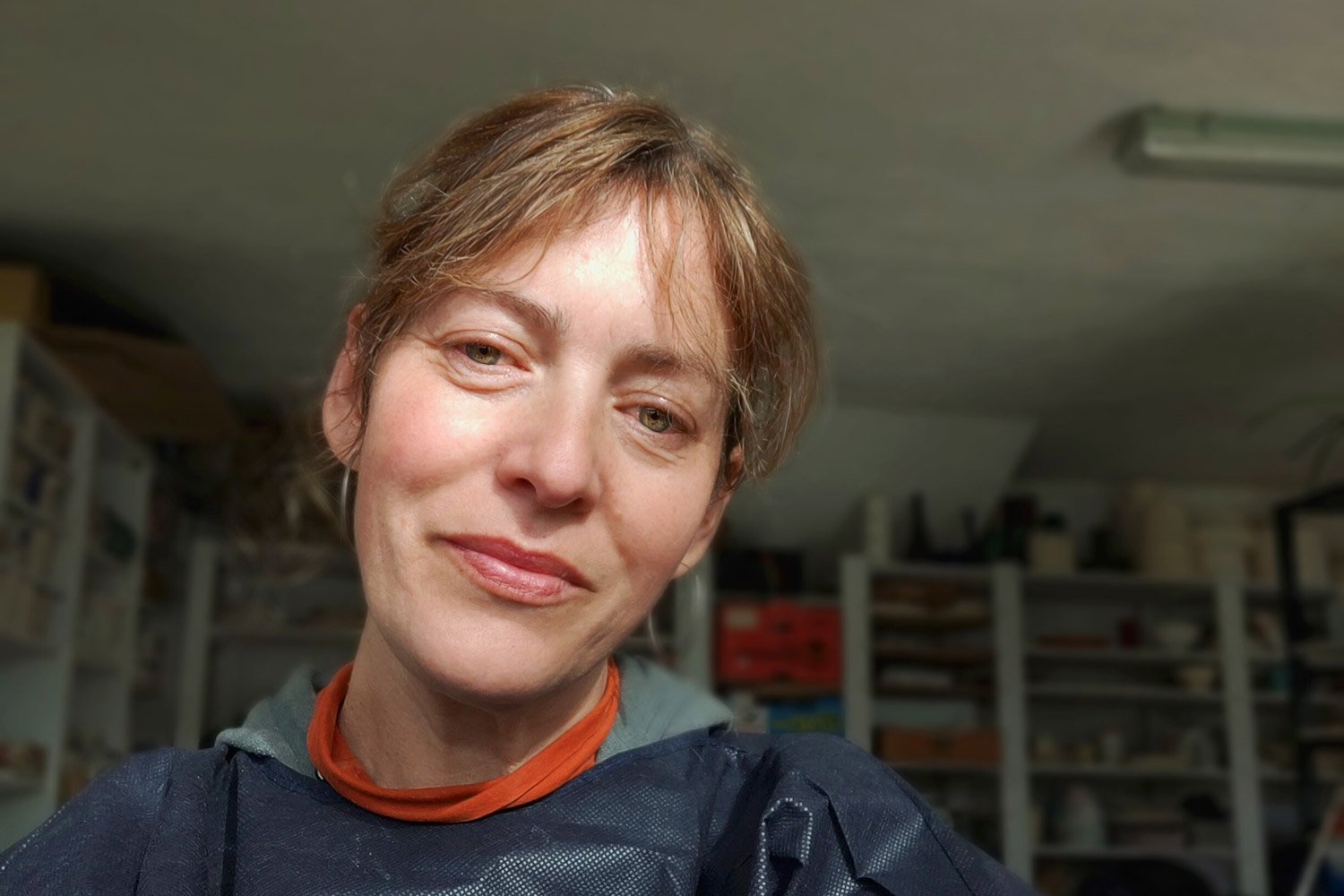
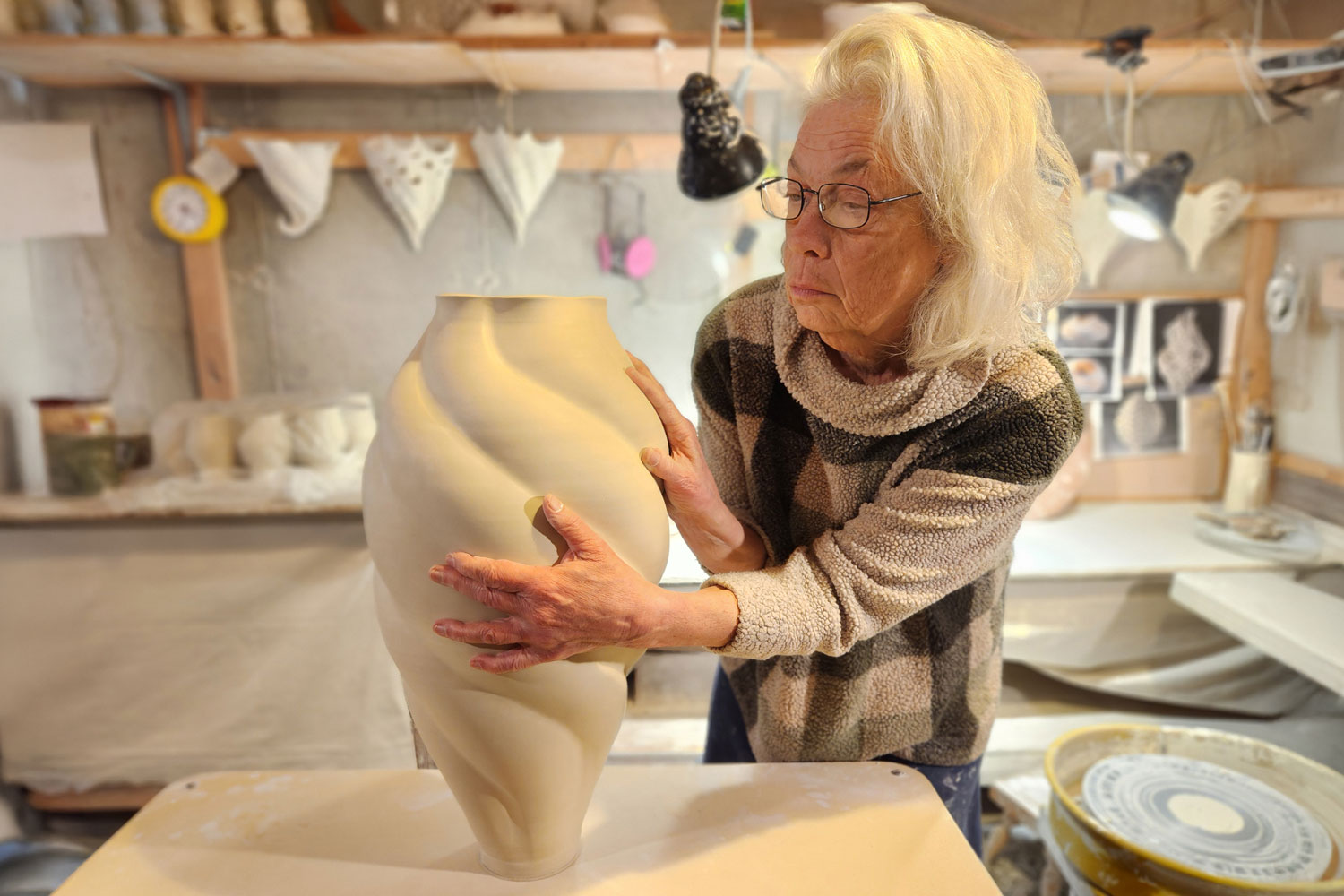
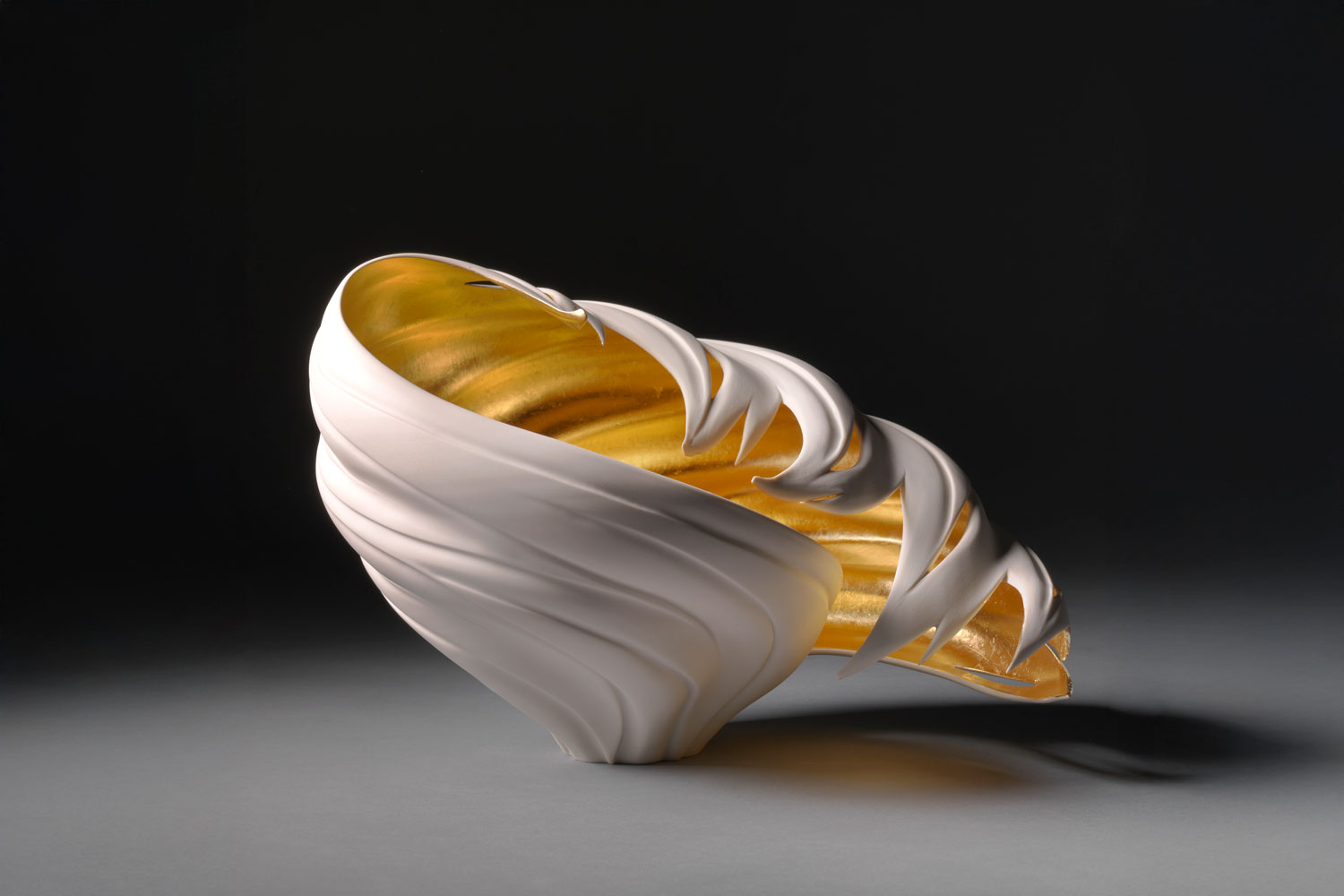
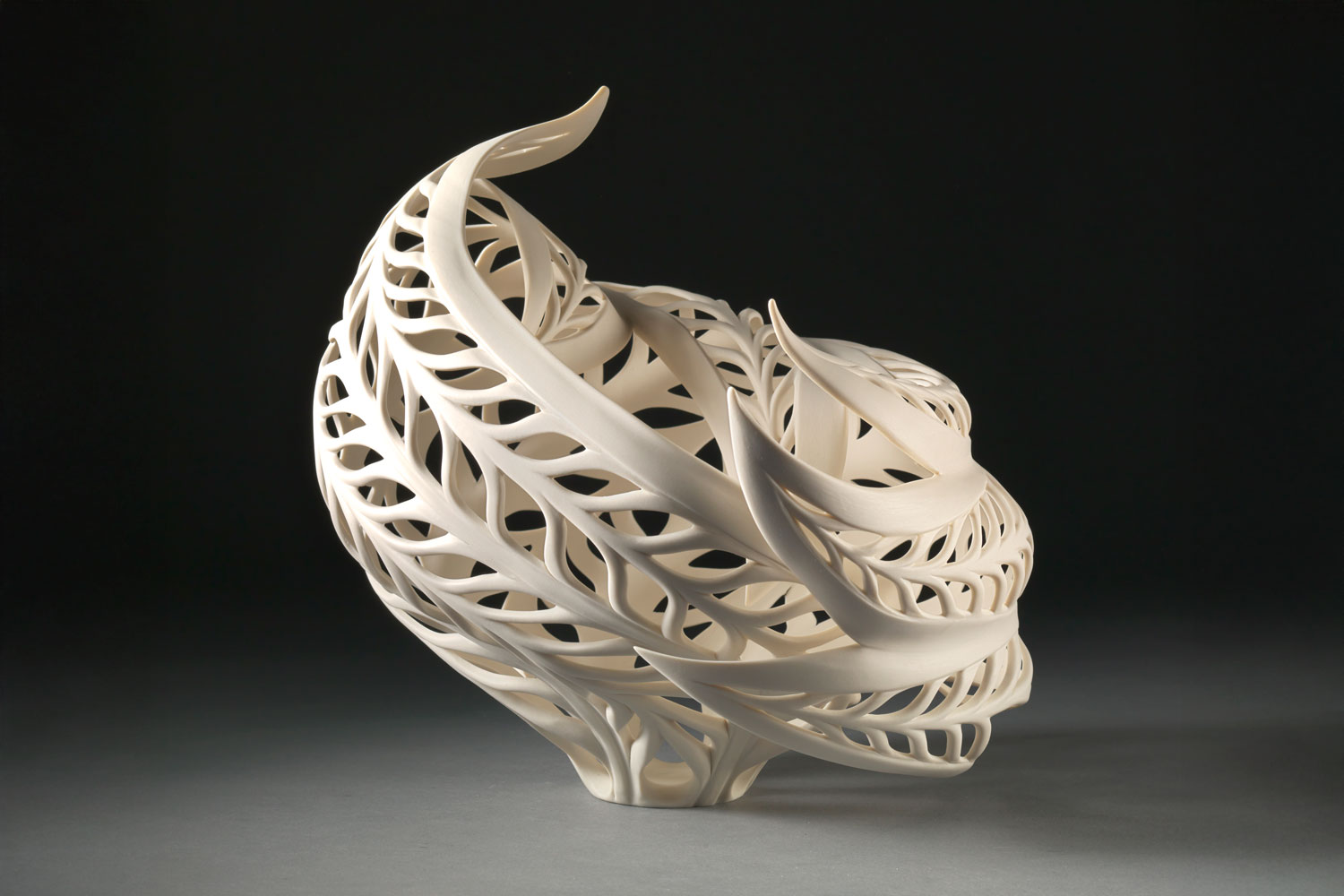
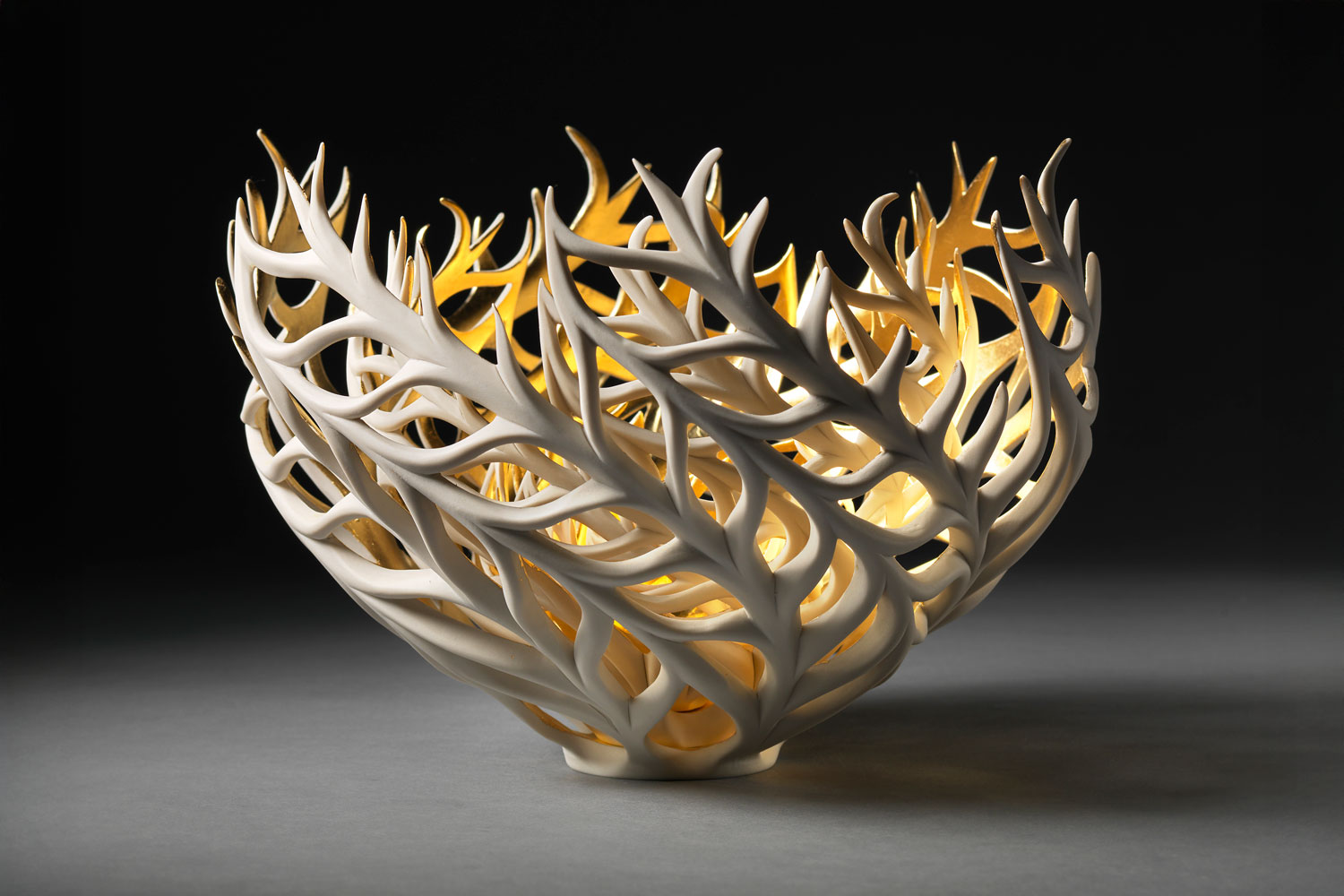
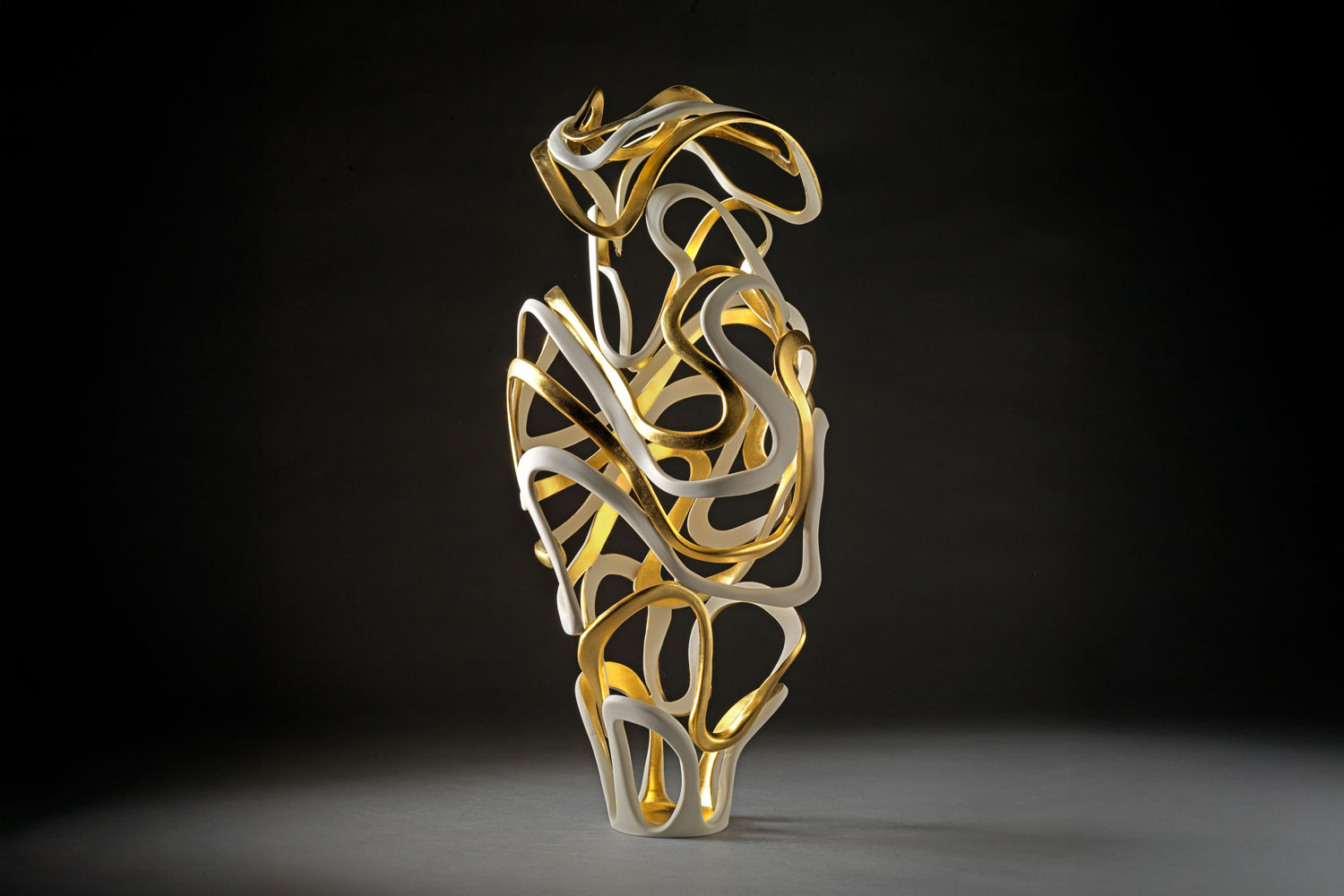
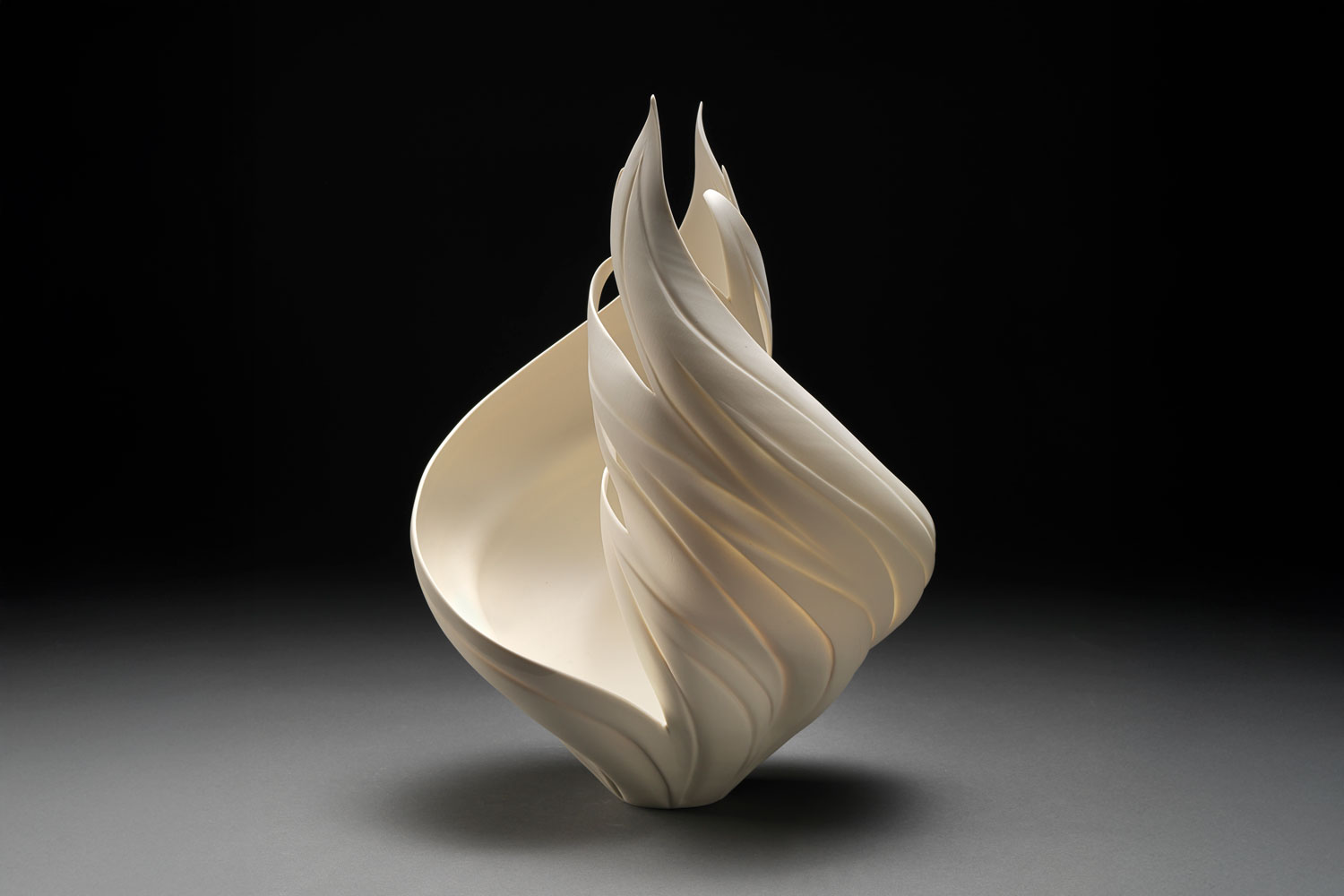
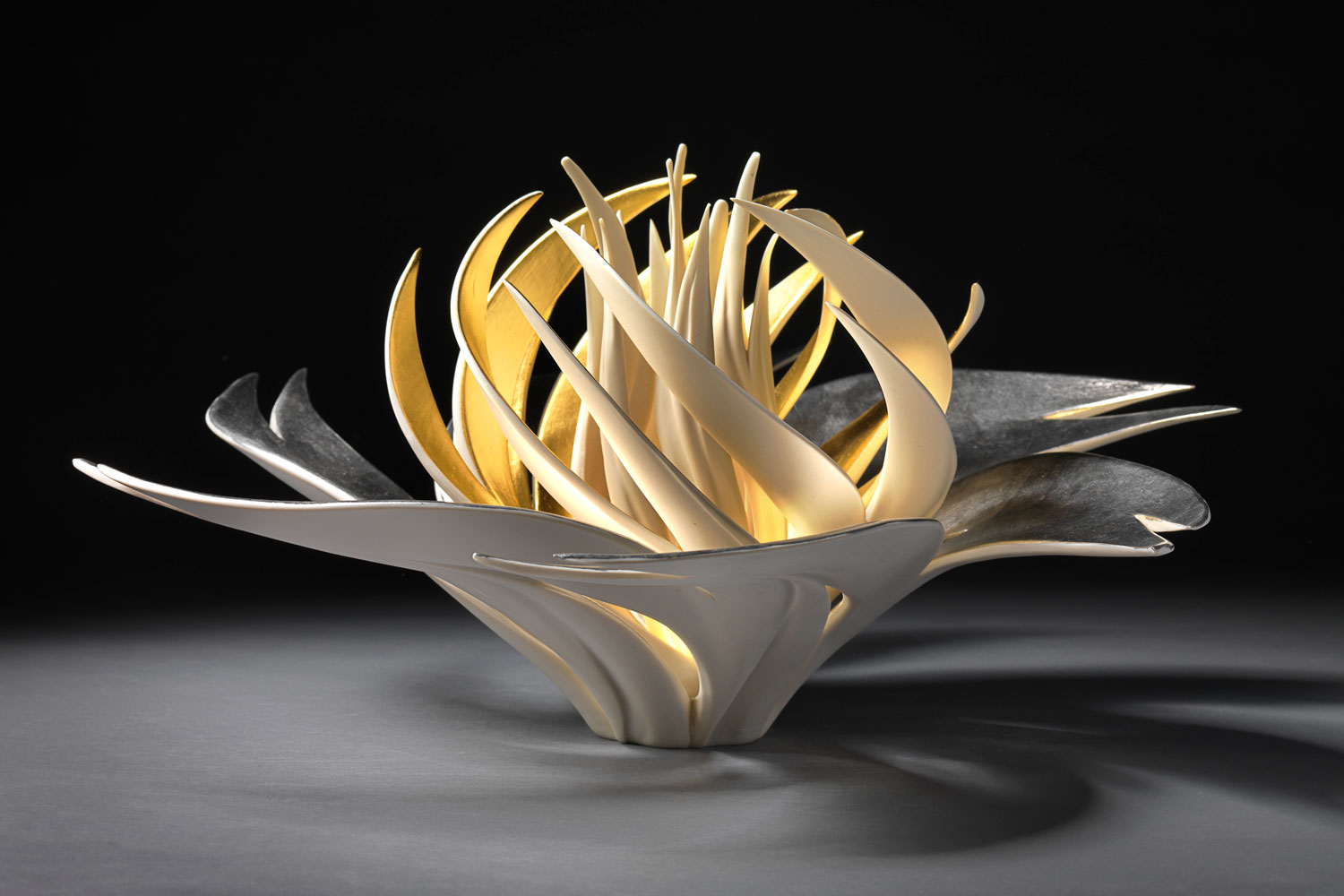
While some people consider Jennifer McCurdy a ceramicist, she thinks of herself as more of a potter applying her skills in a new way. She studied graphic design initially, appeasing elders who wanted her to have a viable trade, before training in ceramics. From then on, Jennifer has taken her own distinctive path. “For me, there was no direct path to a life spent working with clay,” she says. Her pieces, with their hard, thin walls and sinuous tails, can give the impression of being plant life caught in the motion of the sea or the wind. Jennifer’s home of Martha’s Vineyard off the coast of Cape Cod gives plenty of natural fodder for her work. Jennifer’s pieces are displayed in institutions including the Smithsonian’s Renwick Gallery, the Philadelphia Museum of Art and the Brooklyn Museum.
INTERVIEW
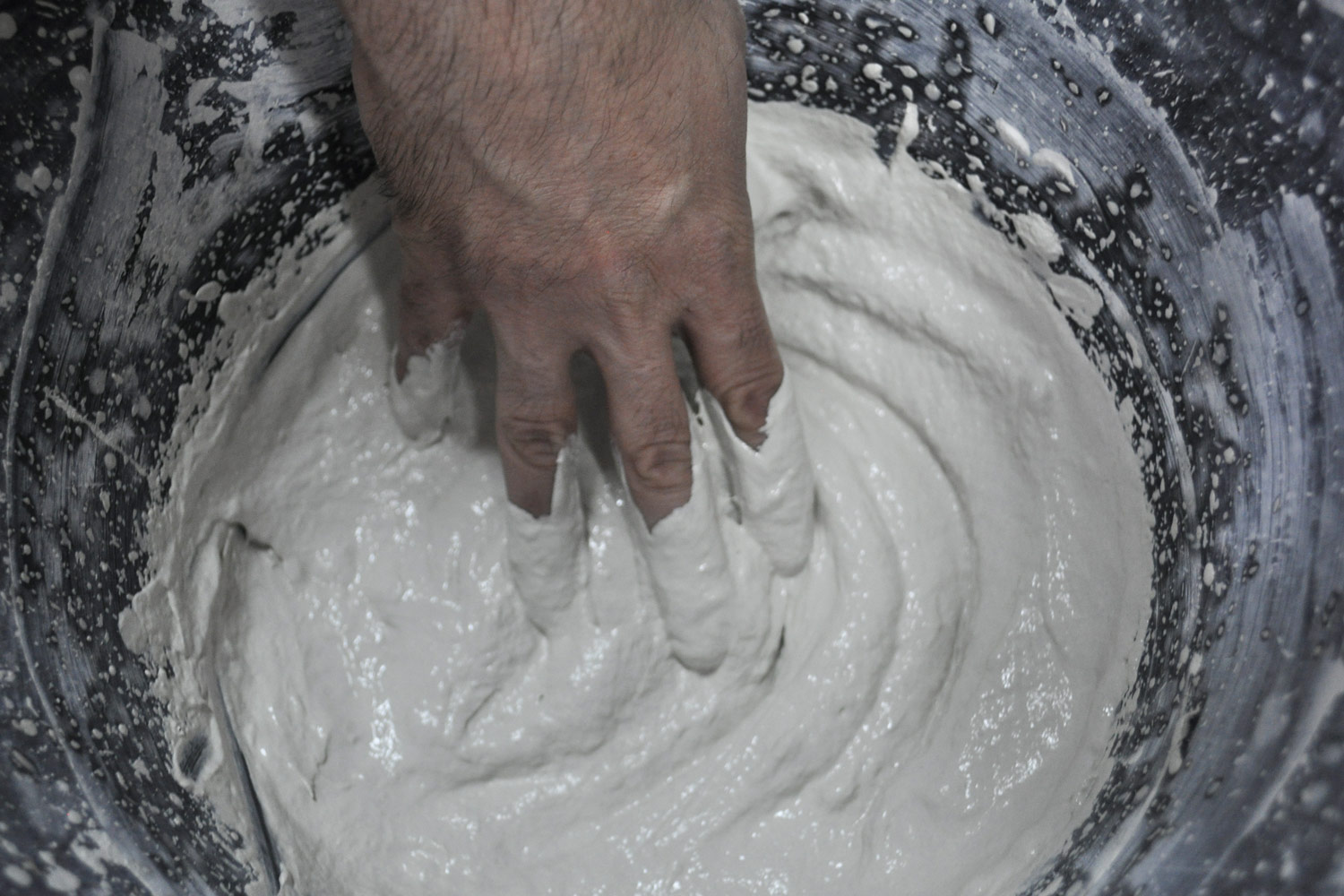
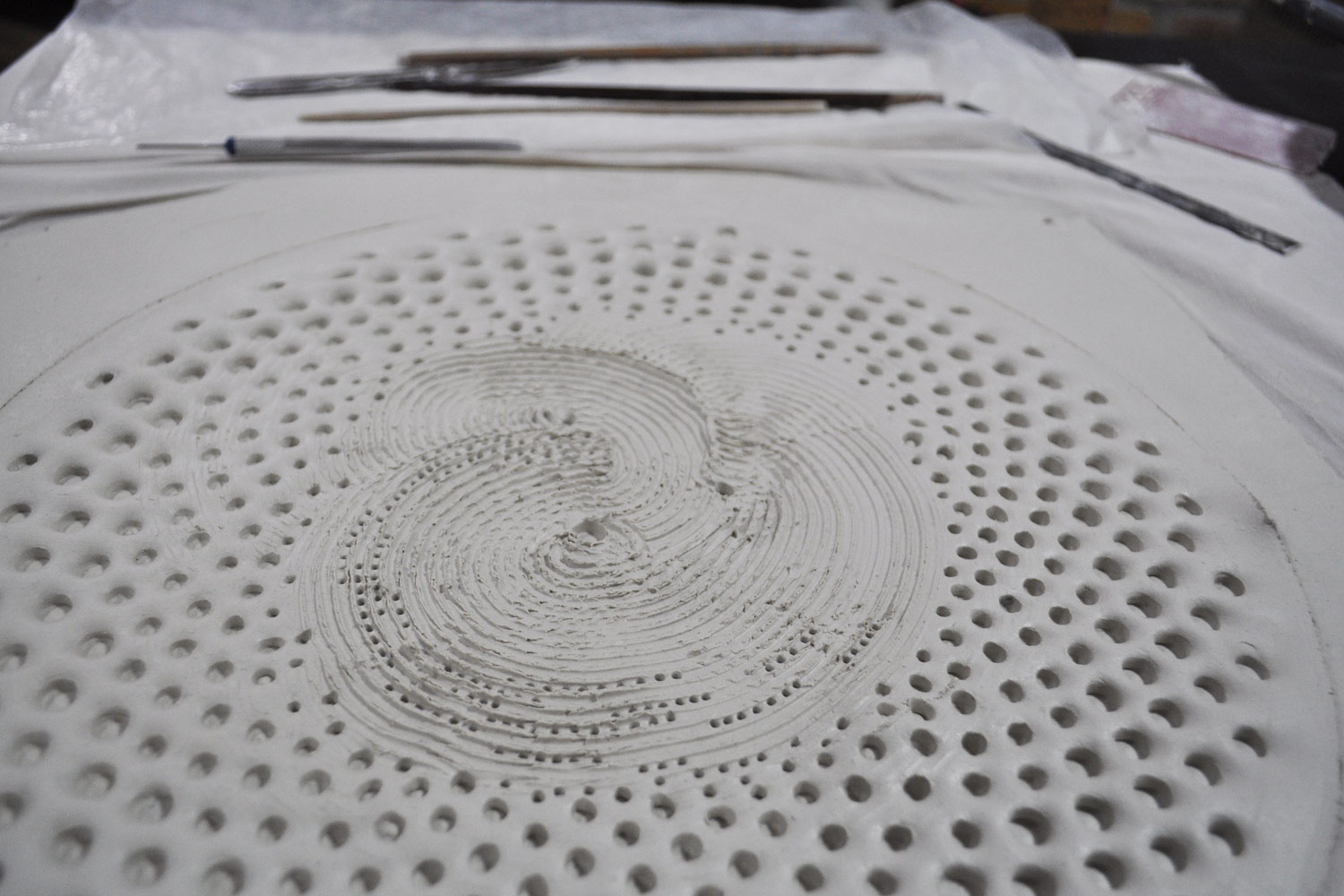
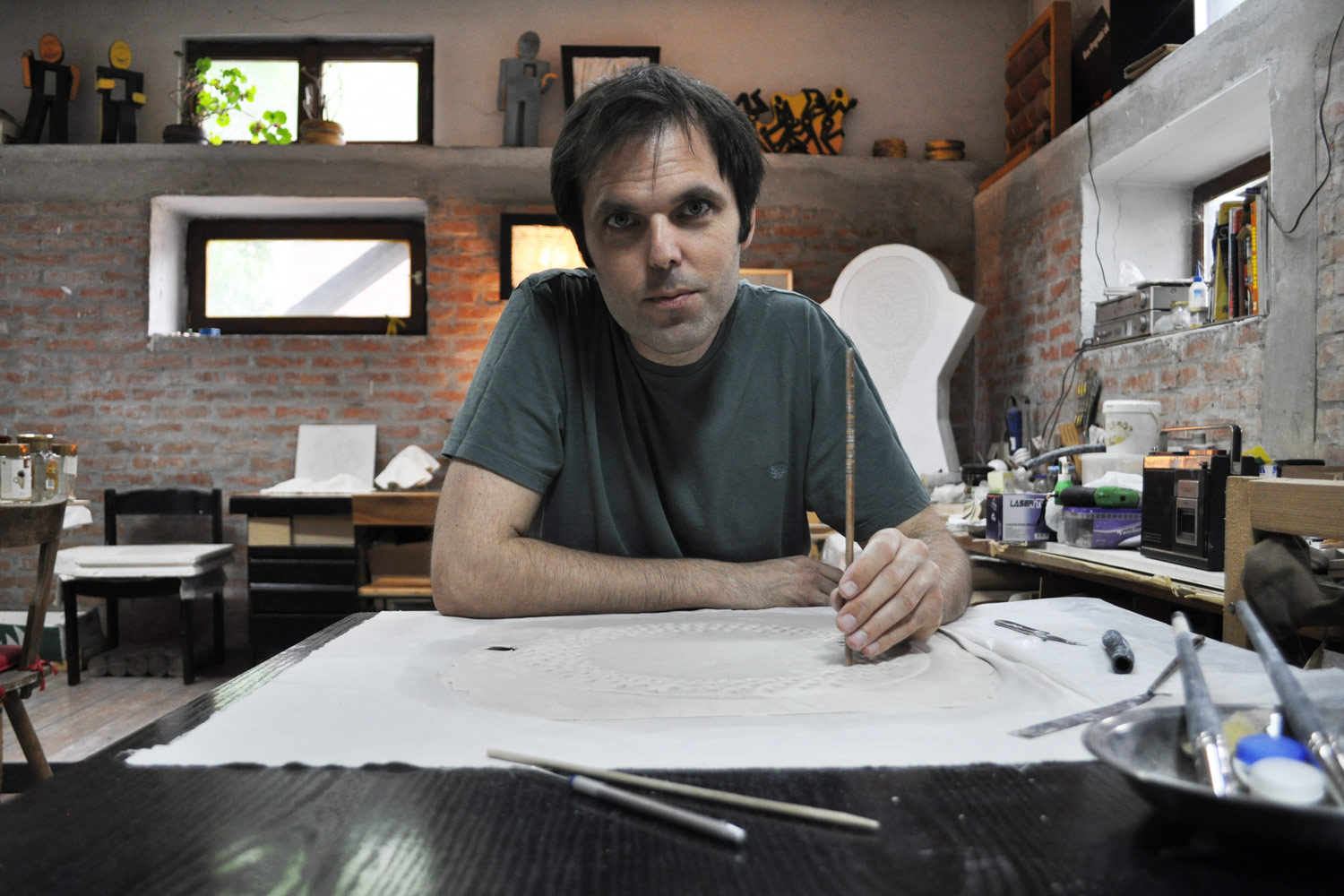
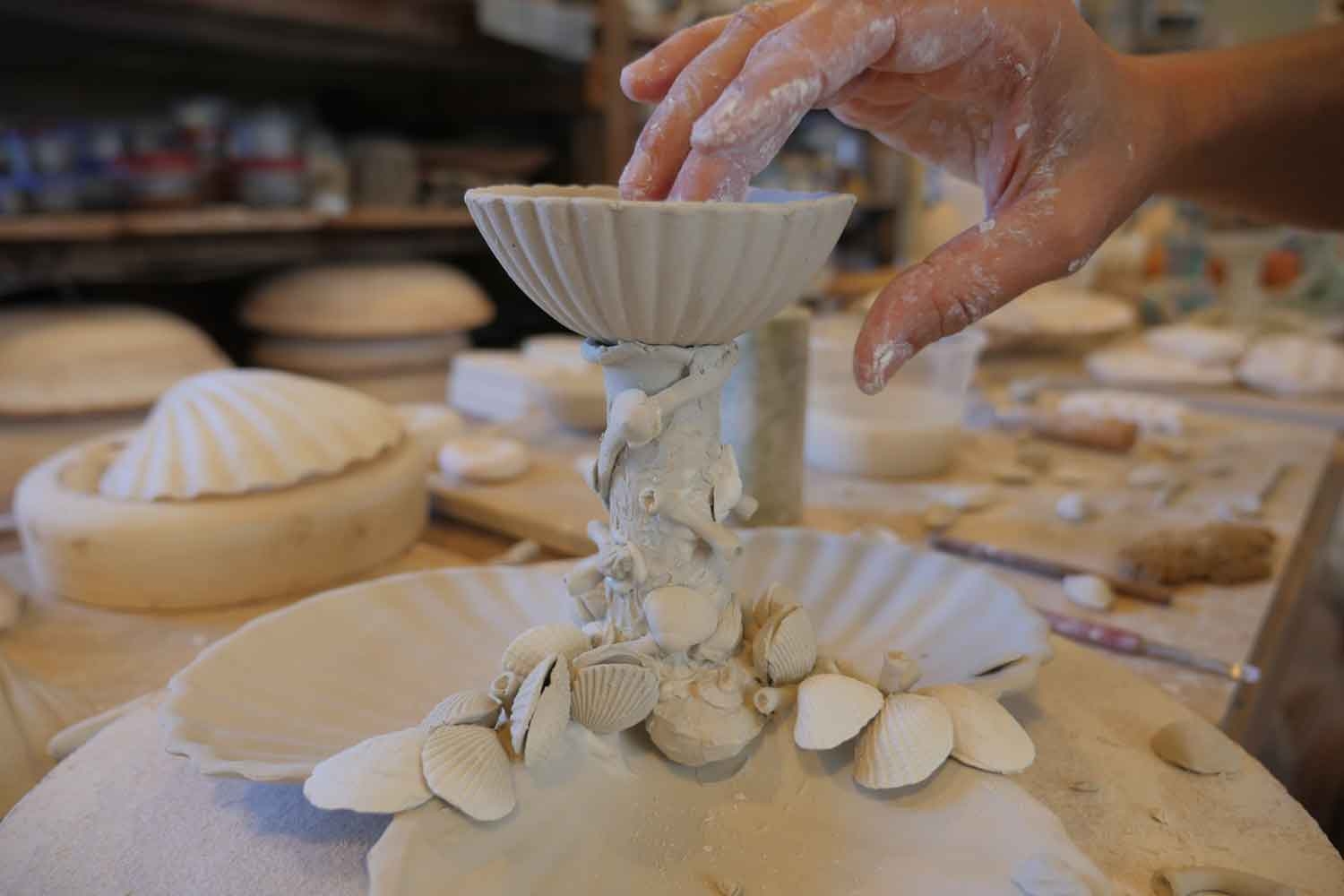
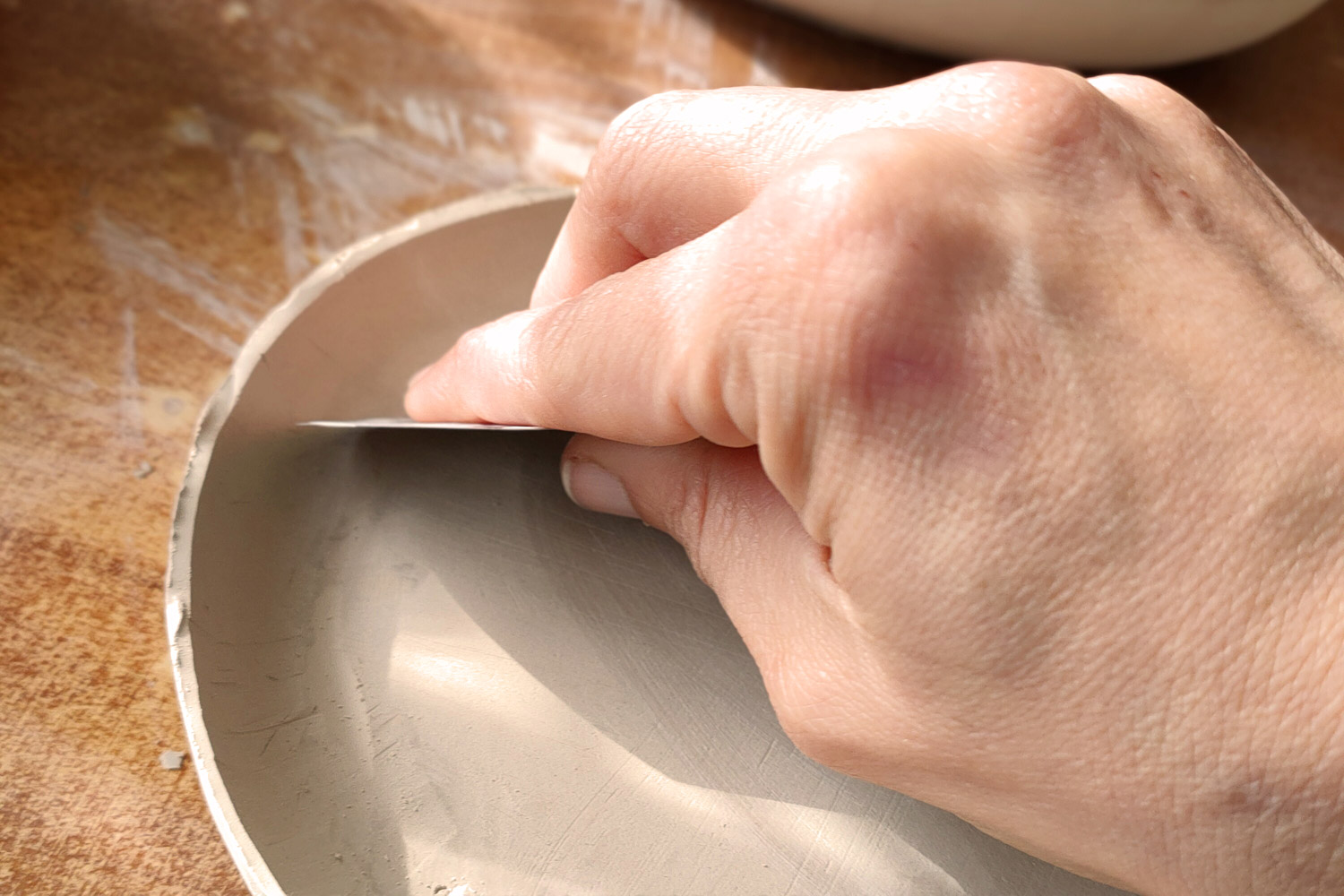
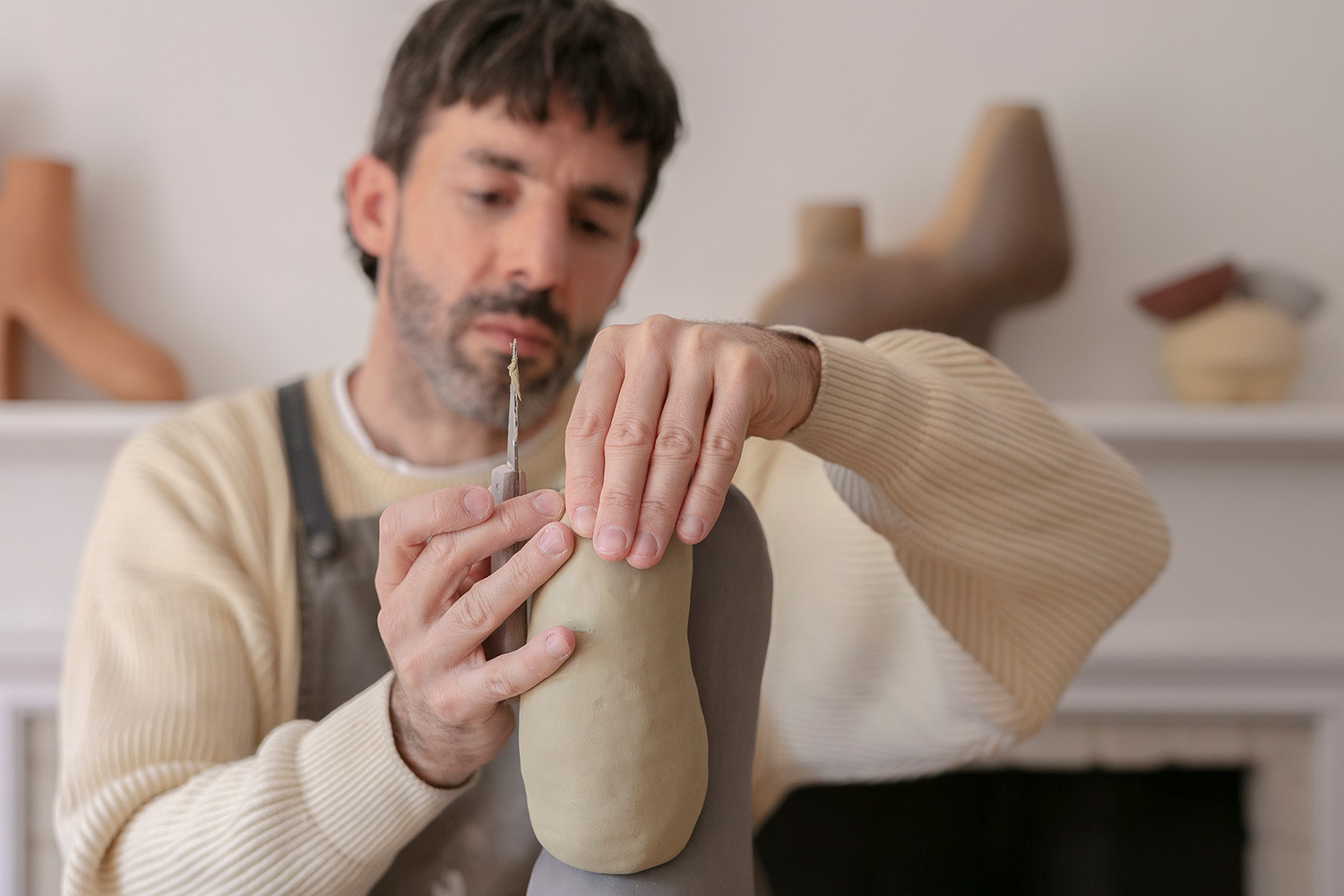
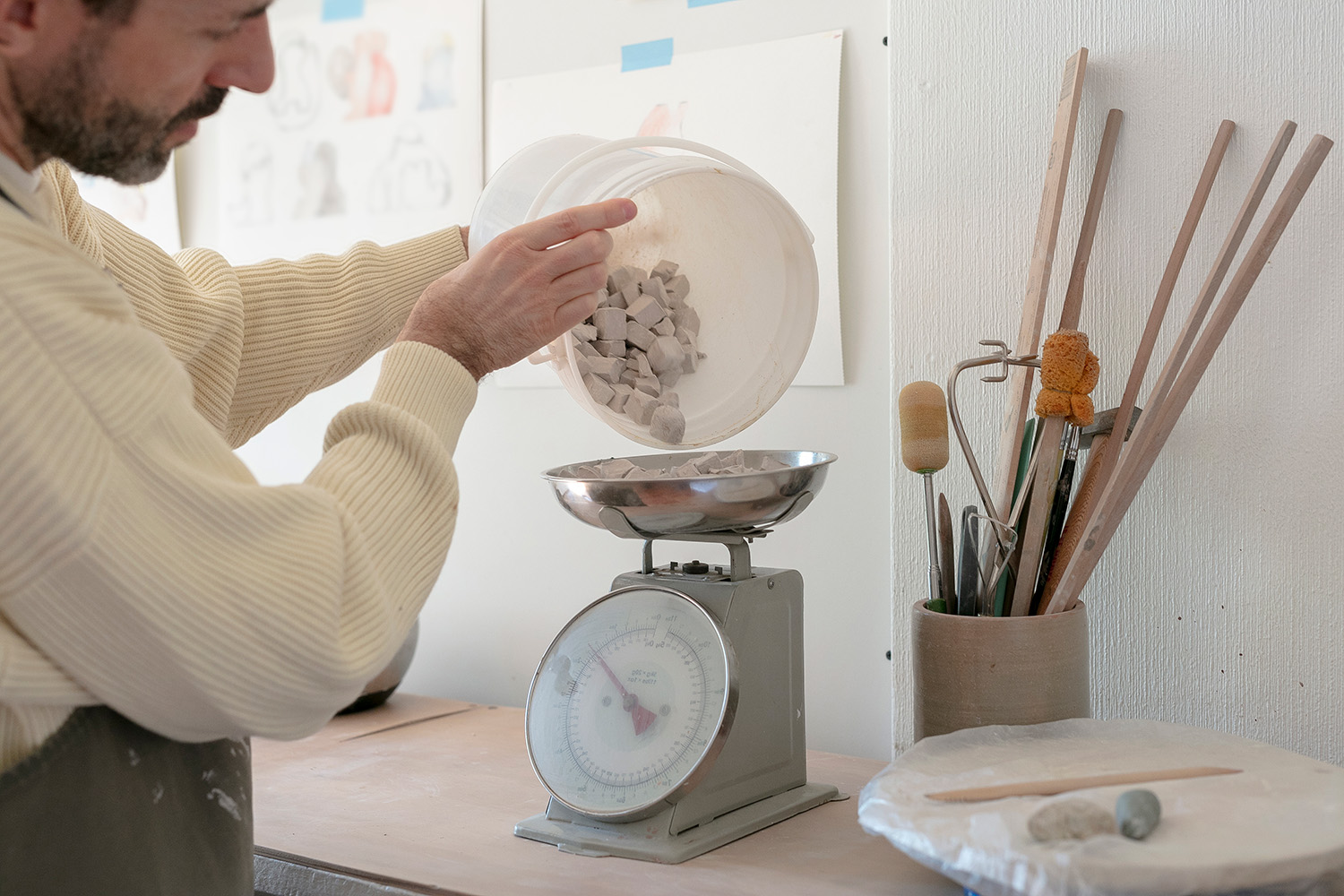
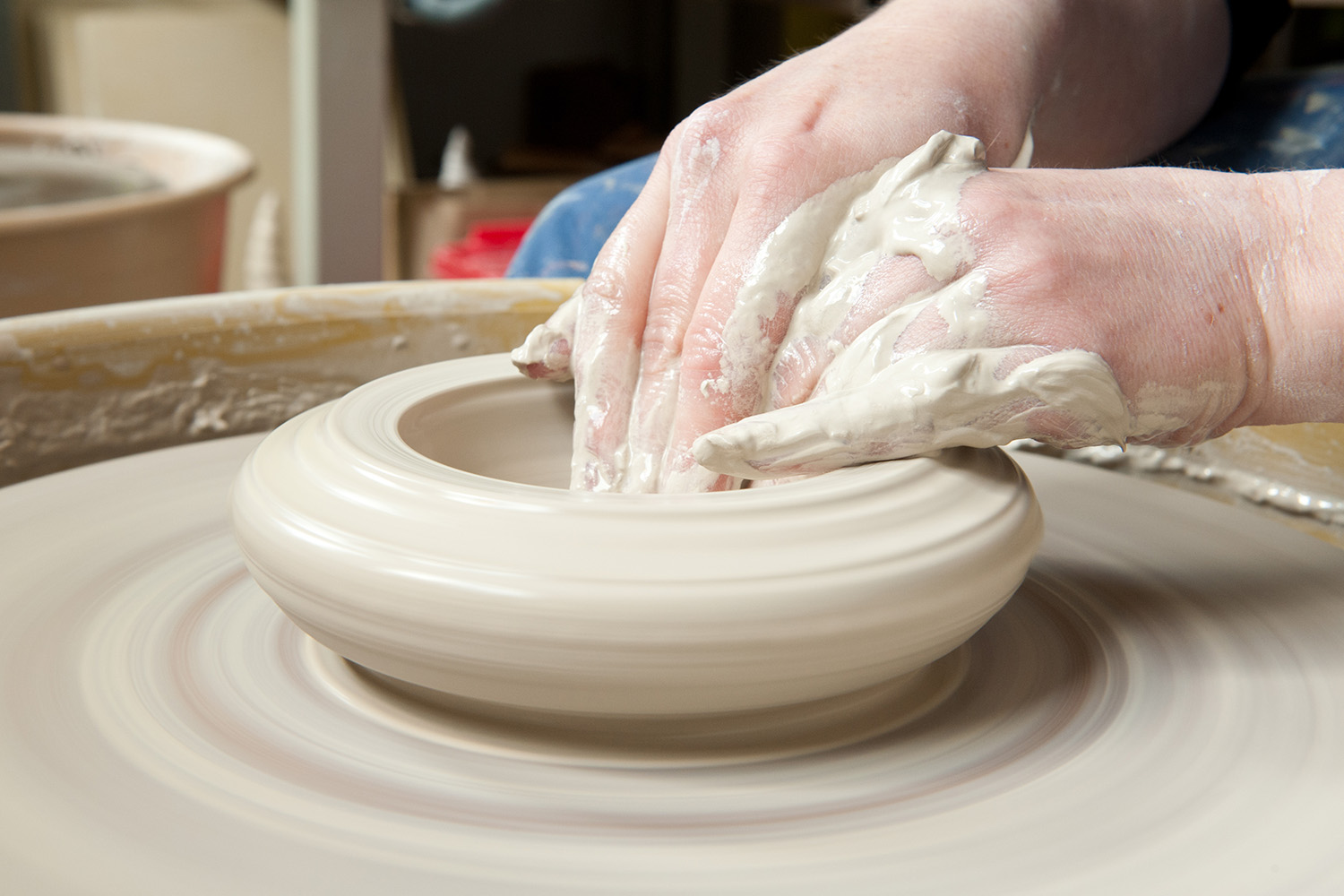
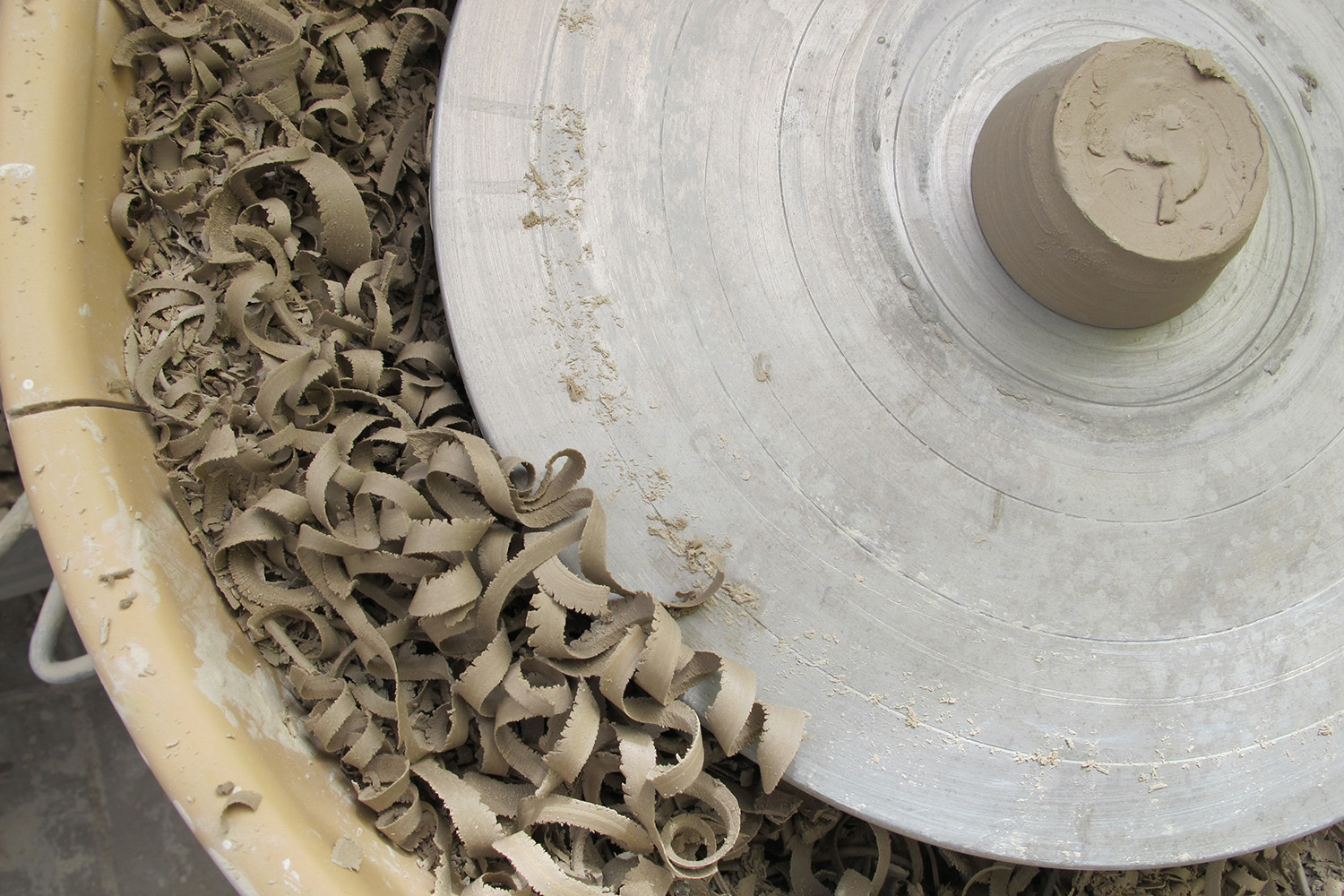
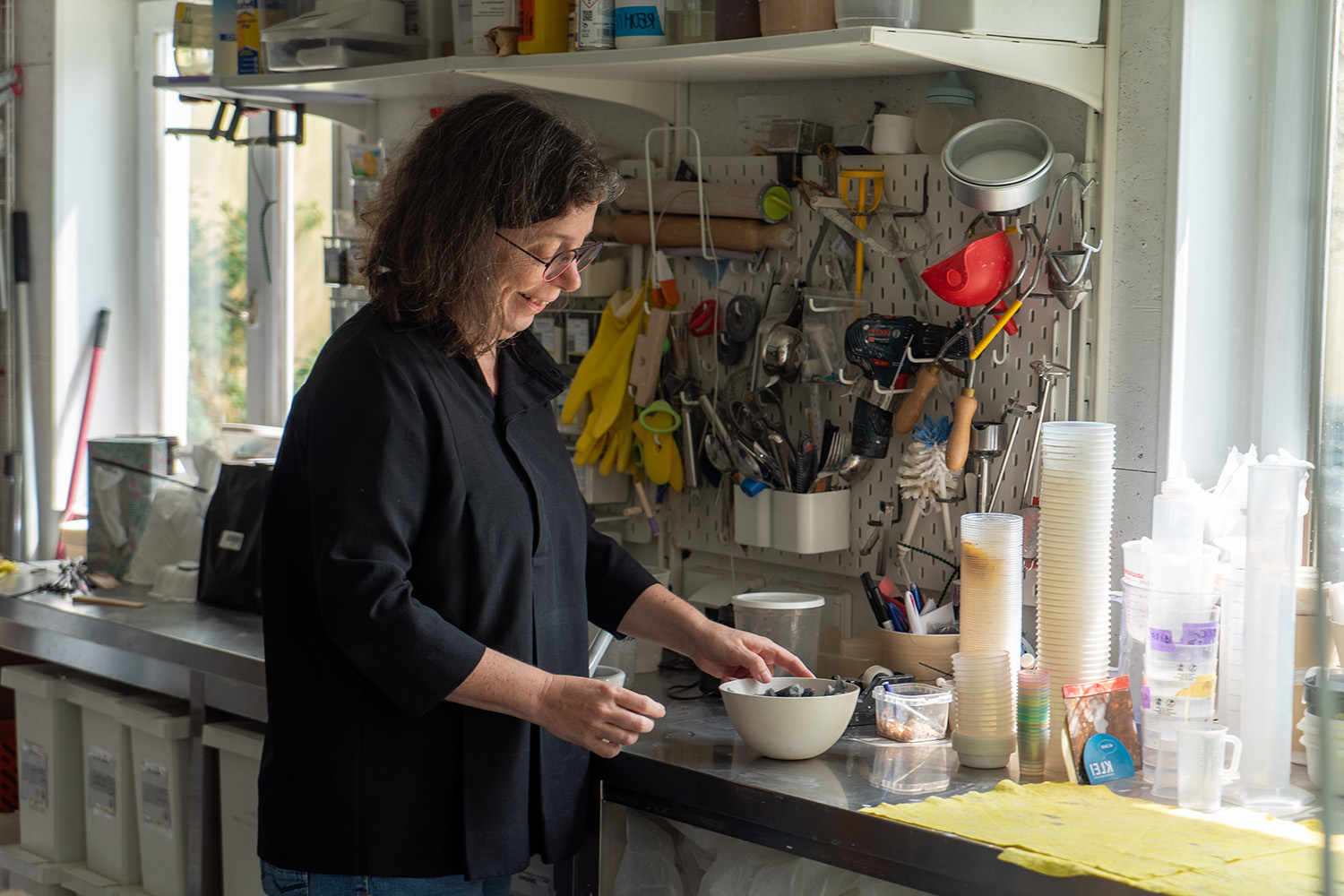
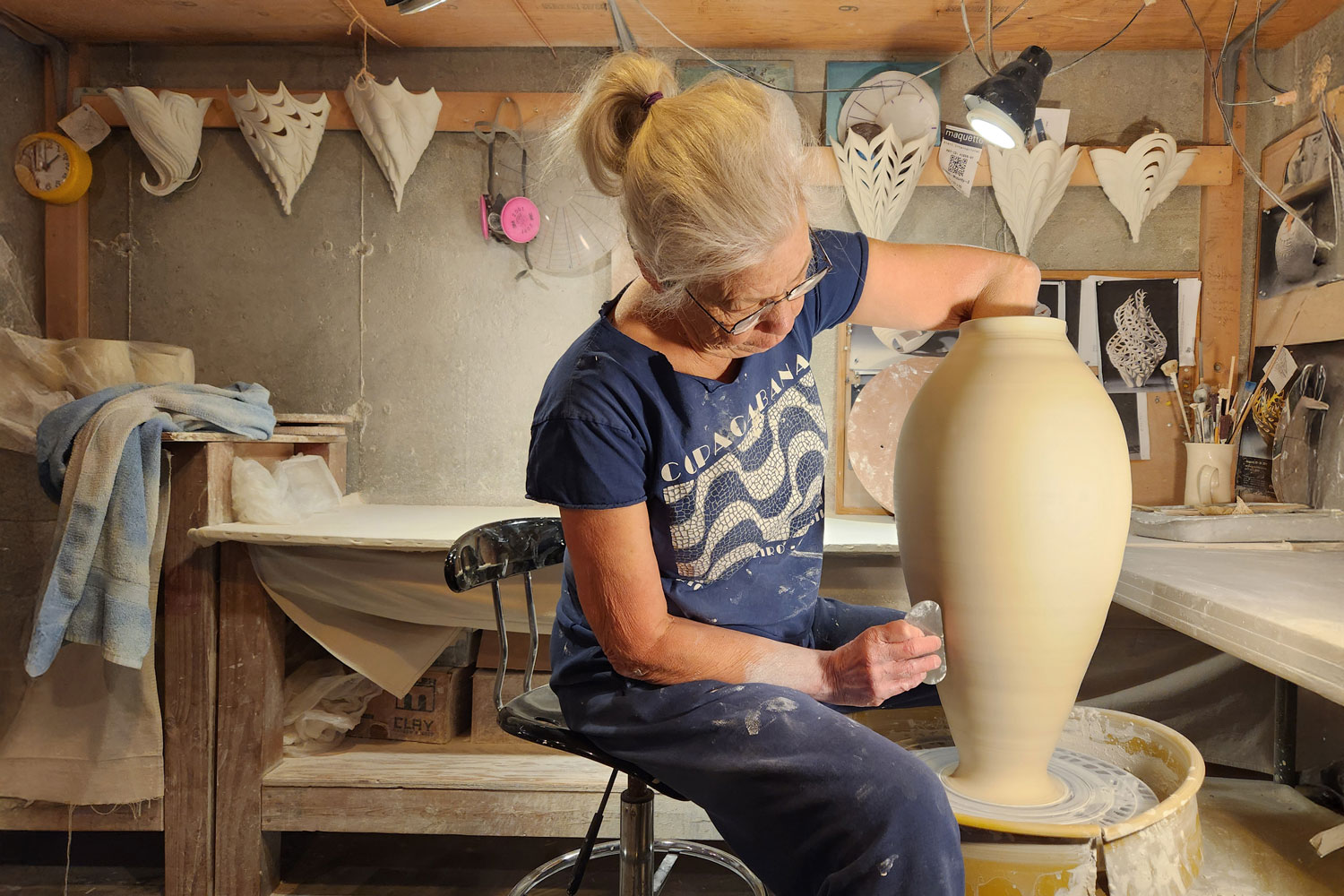
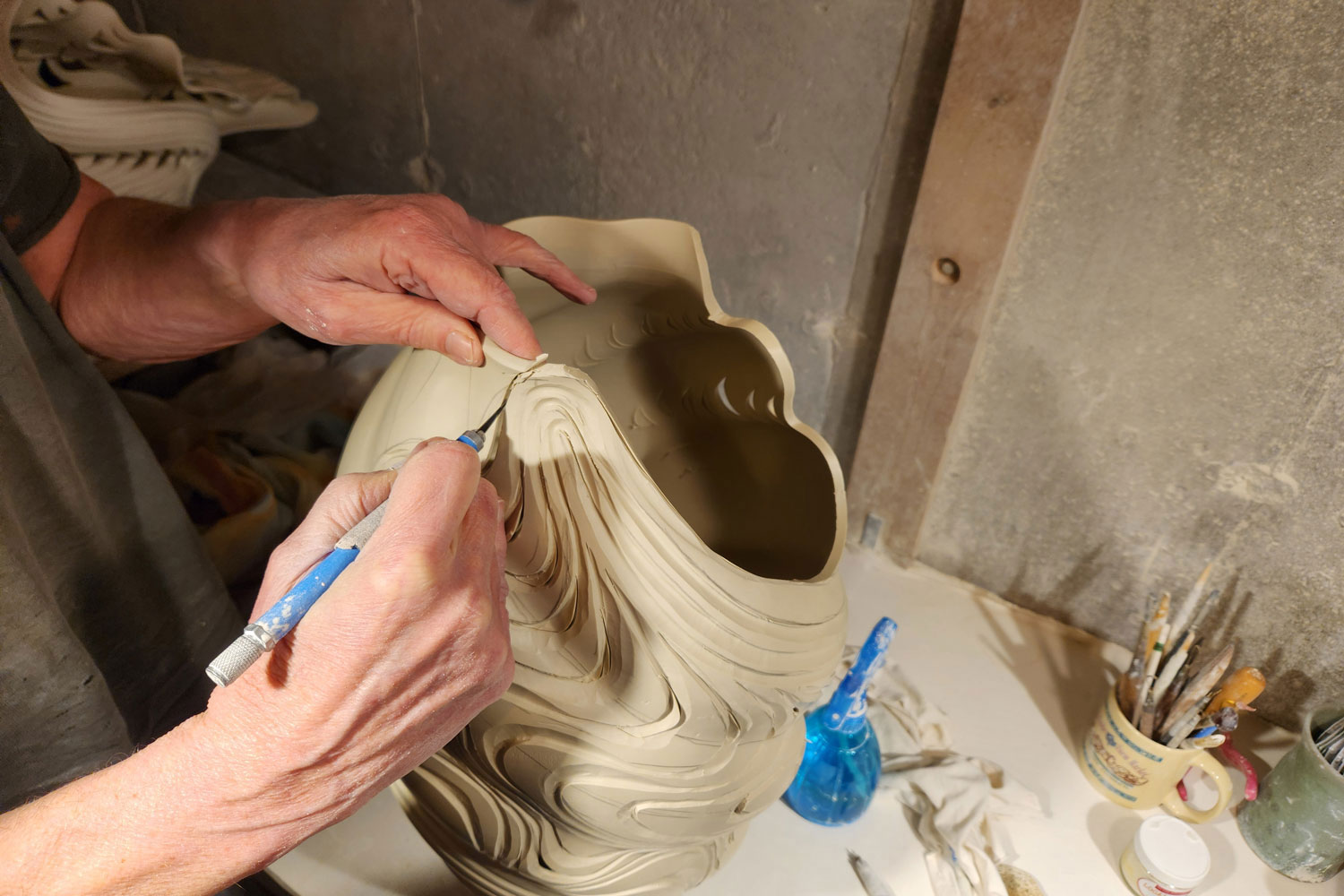
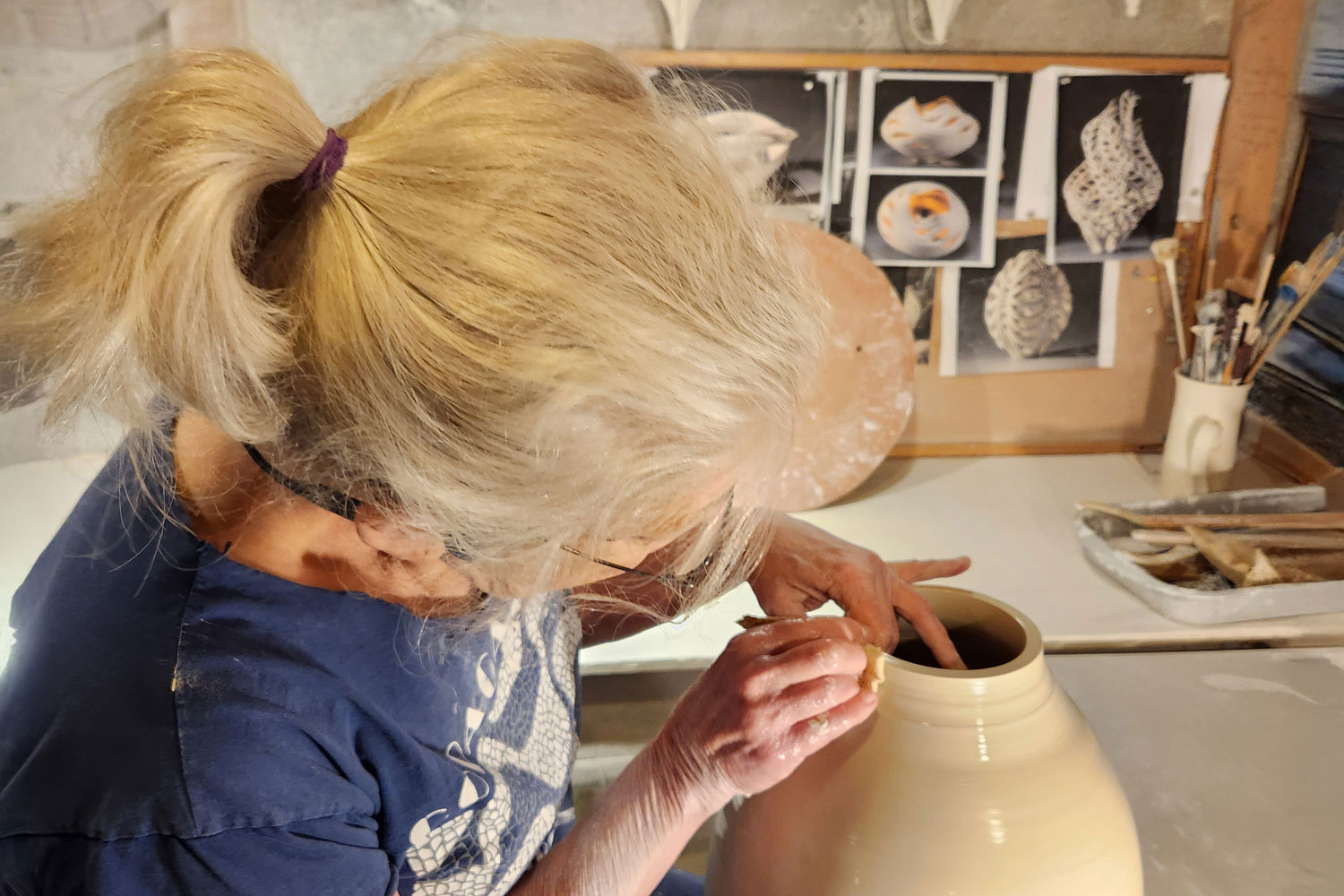
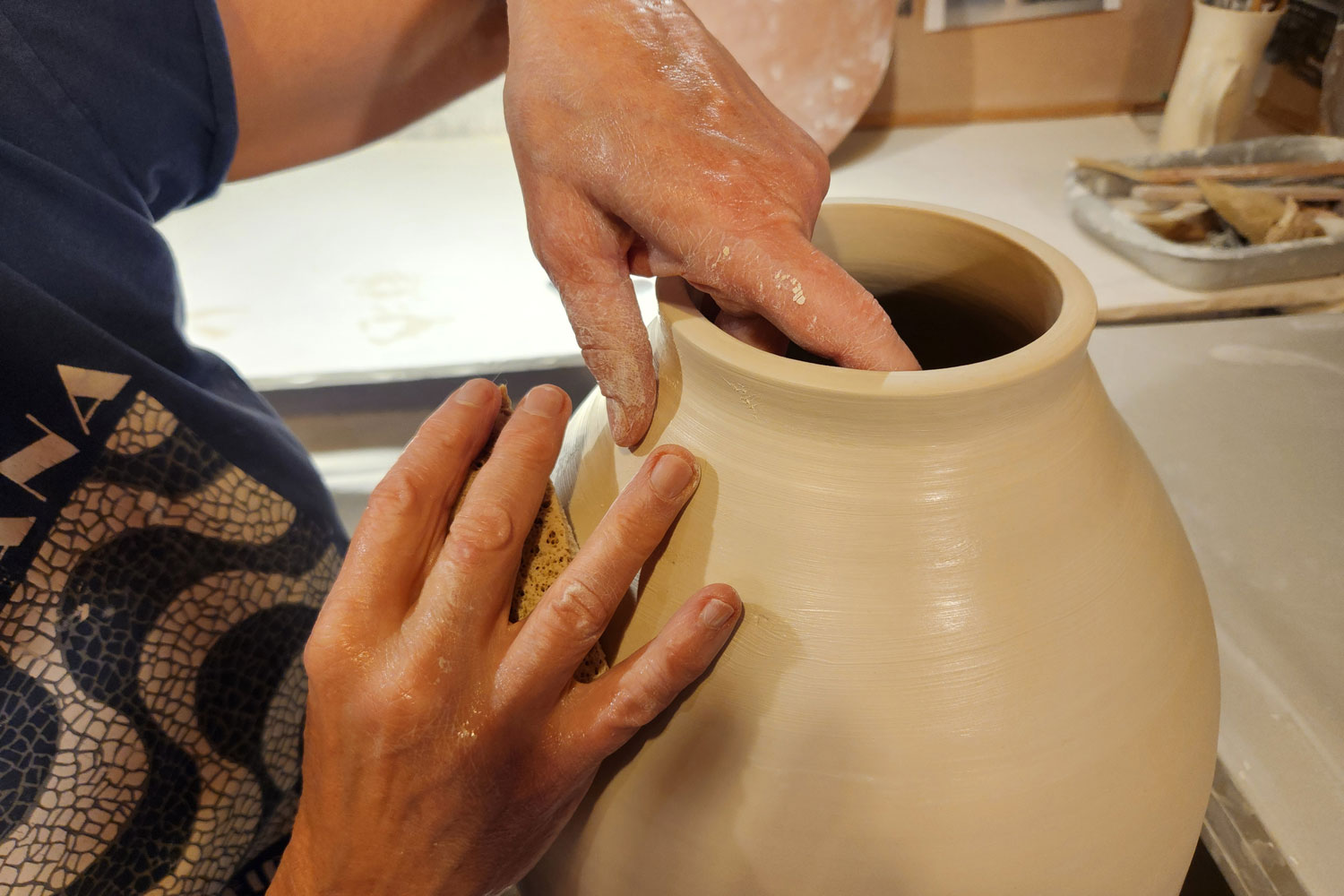
I throw the form on the wheel to get the initial shape, and then I take it off the wheel and work it by hand. I alter the shape to make it look more organic and to create volume, with corrugations running through it. I come back when the clay is halfway between wet and dry, and I carve it away with an exacto blade. Once it is completely dry, I sand it.
The porcelain moves and slumps in the hot fire because it has a high silica content. By carving it, I have lost much of the high-arch support that was there when I threw it originally. So I have set up strategies so the form falls the way I want it to. Sometimes I balance them upside down on a kiln post, other times I use supports.
I have used the same porcelain body for a number of years and my practice has responded to the qualities of it. I sometimes get commissions to use a different clay, like a terracotta or something else that does not collapse in the firing. Clay is clay, but the biggest difference between the porcelain I use and another clay body is how much it is going to melt in the final firing.
I started being a ceramicist straight out of college in 1978. I never took any workshops or had apprenticeships anywhere, because I had to be making a living right away. I love to see people who have these goals, with masters degrees and apprenticeships, but I was focused on making money and paying bills. I just had to trudge through.
Jennifer McCurdy
Ceramicist
Tisbury, MA, USA
ADDRESS
Address upon request, Tisbury, MA, USA
AVAILABILITY
By appointment only
LANGUAGES
English
Homo Faber Finds is a new service aiming to inspire admirers of craft to connect and collaborate with exceptional artisans.
We invite you to submit an enquiry here.