Amandine Steck
L’Amande et l’Obsidienne
Stained glass maker
Honfleur, France
Stained glass and everything in betweeen
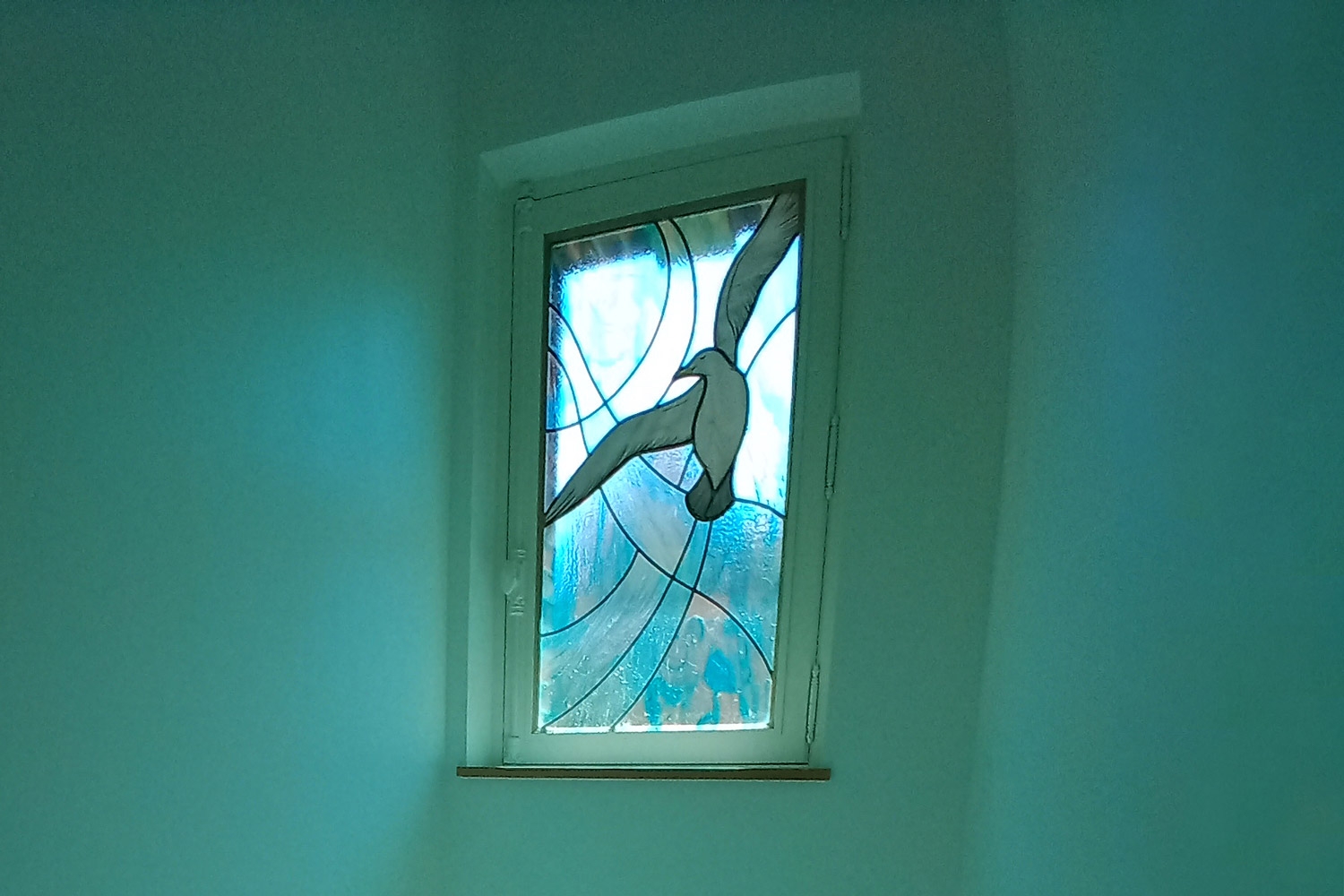
- Amandine is inspired by her travels and the sea
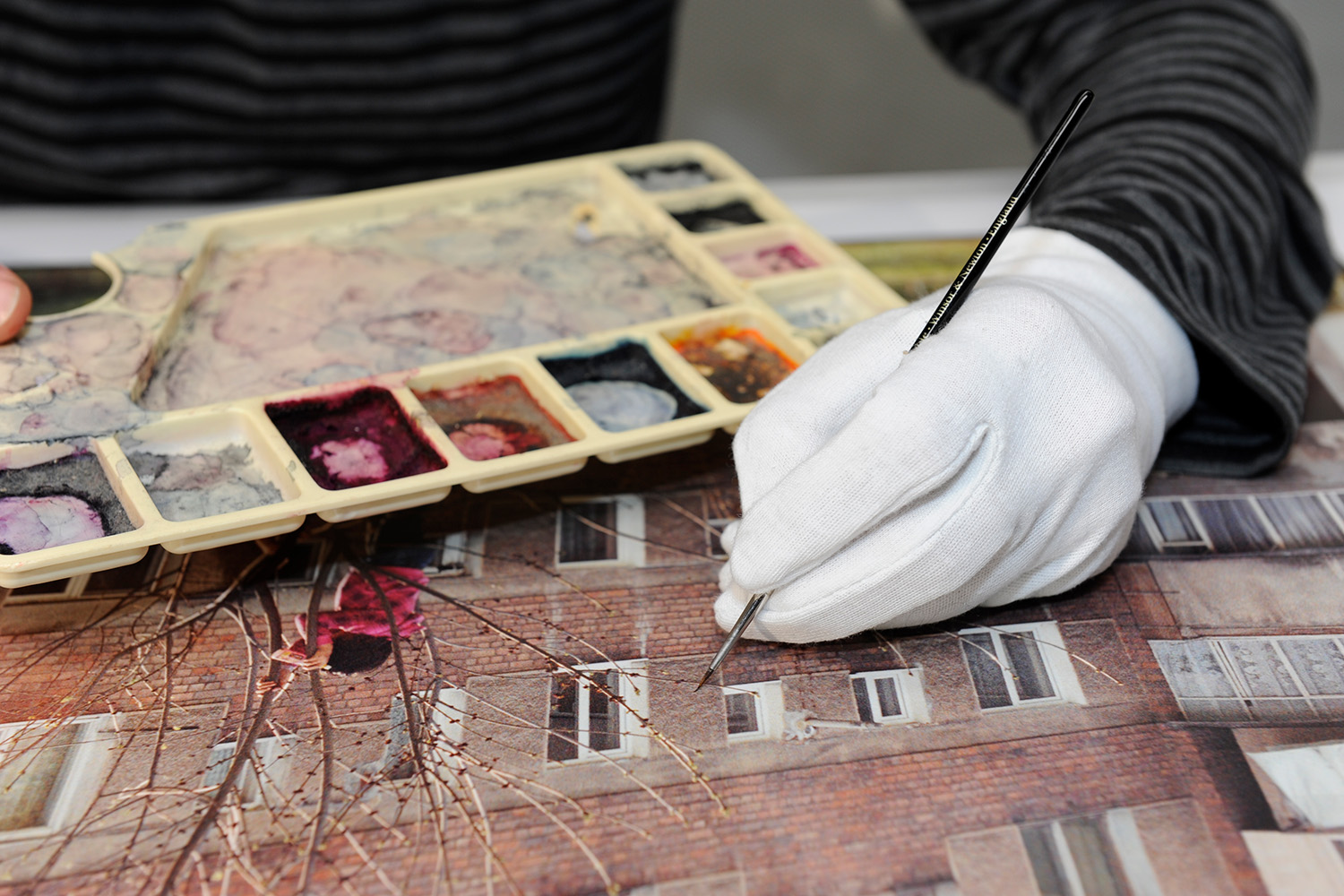
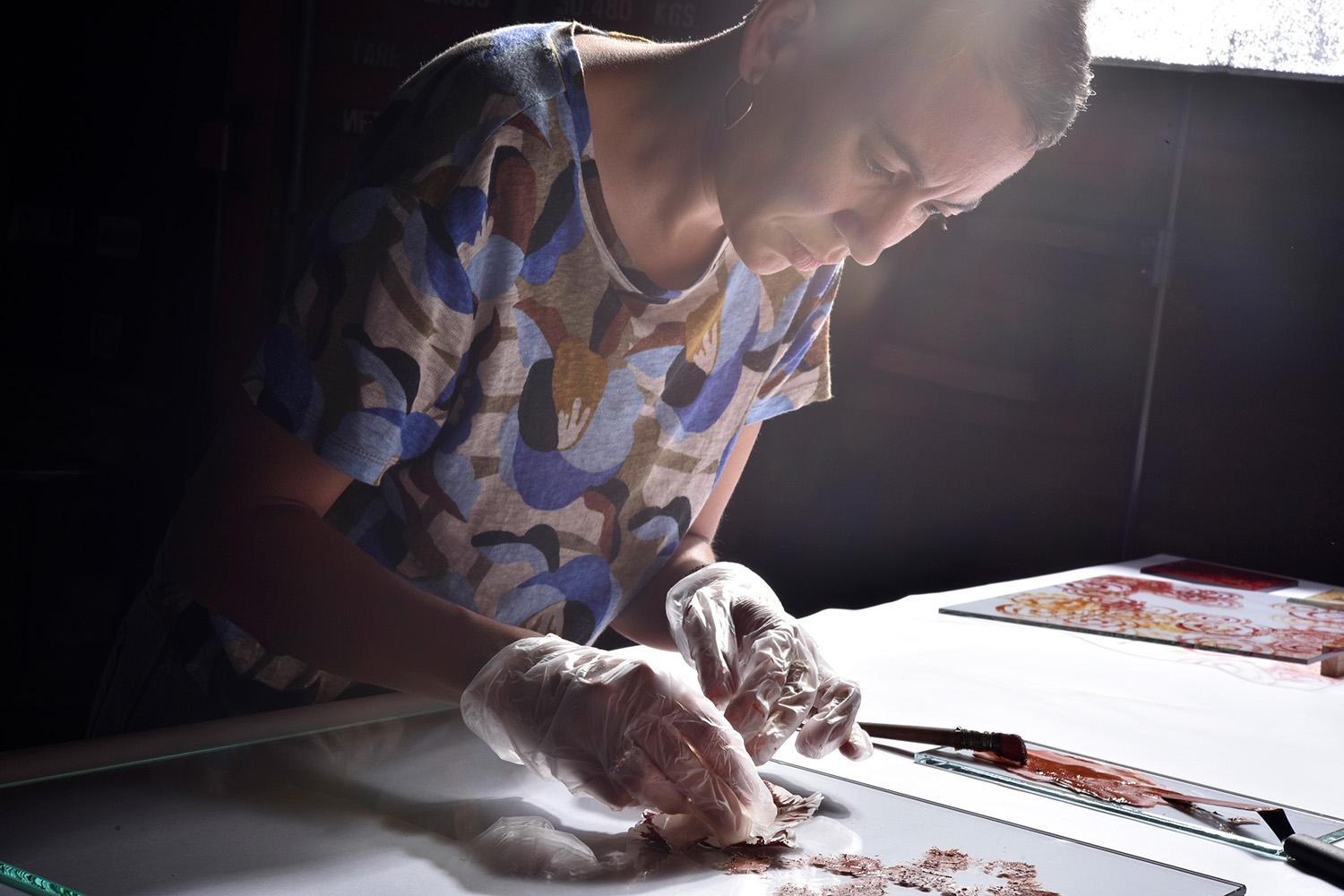
- Drawing and painting on glass are at the heart of her practice
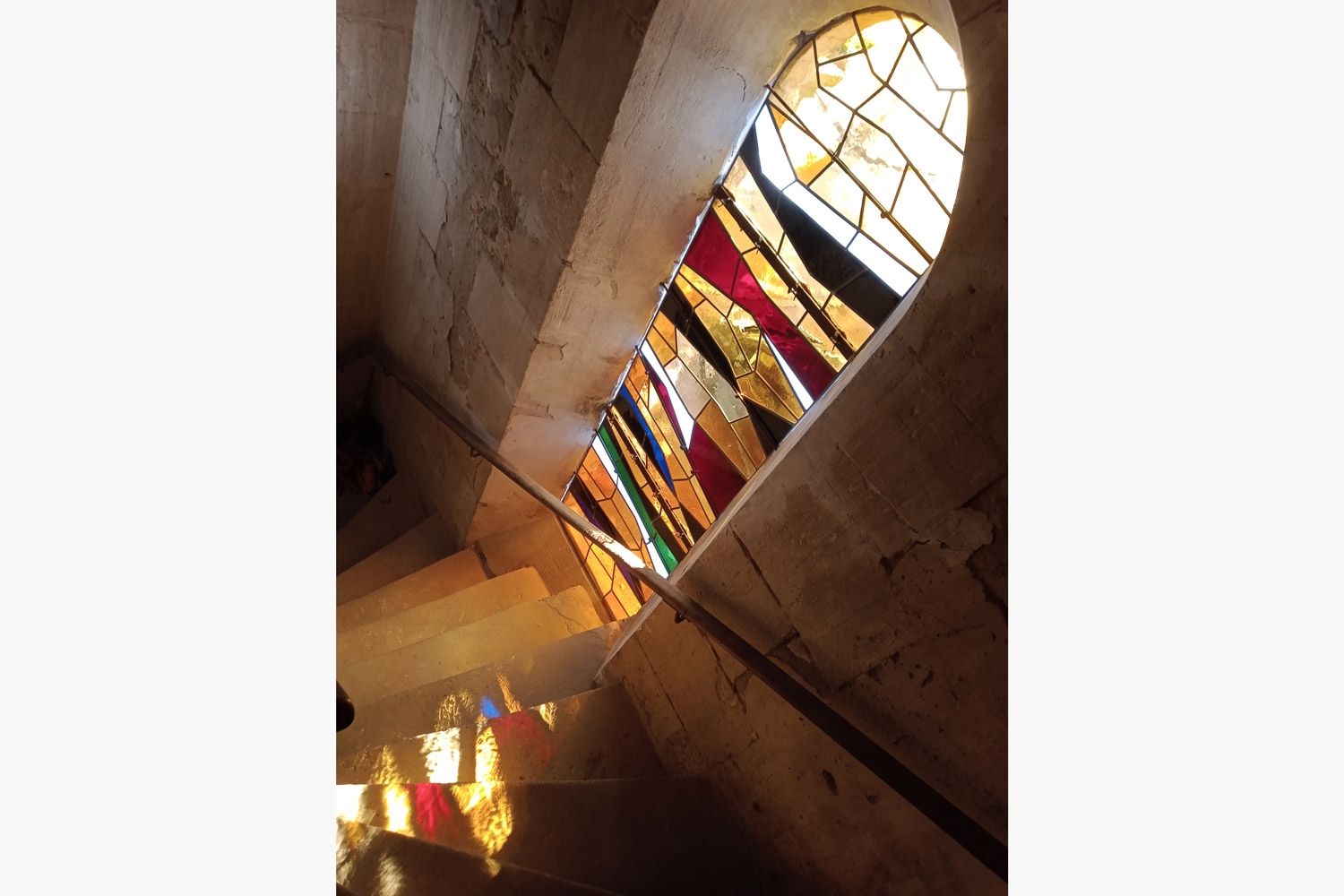
- She is attentive to the expressive possibilities of colour
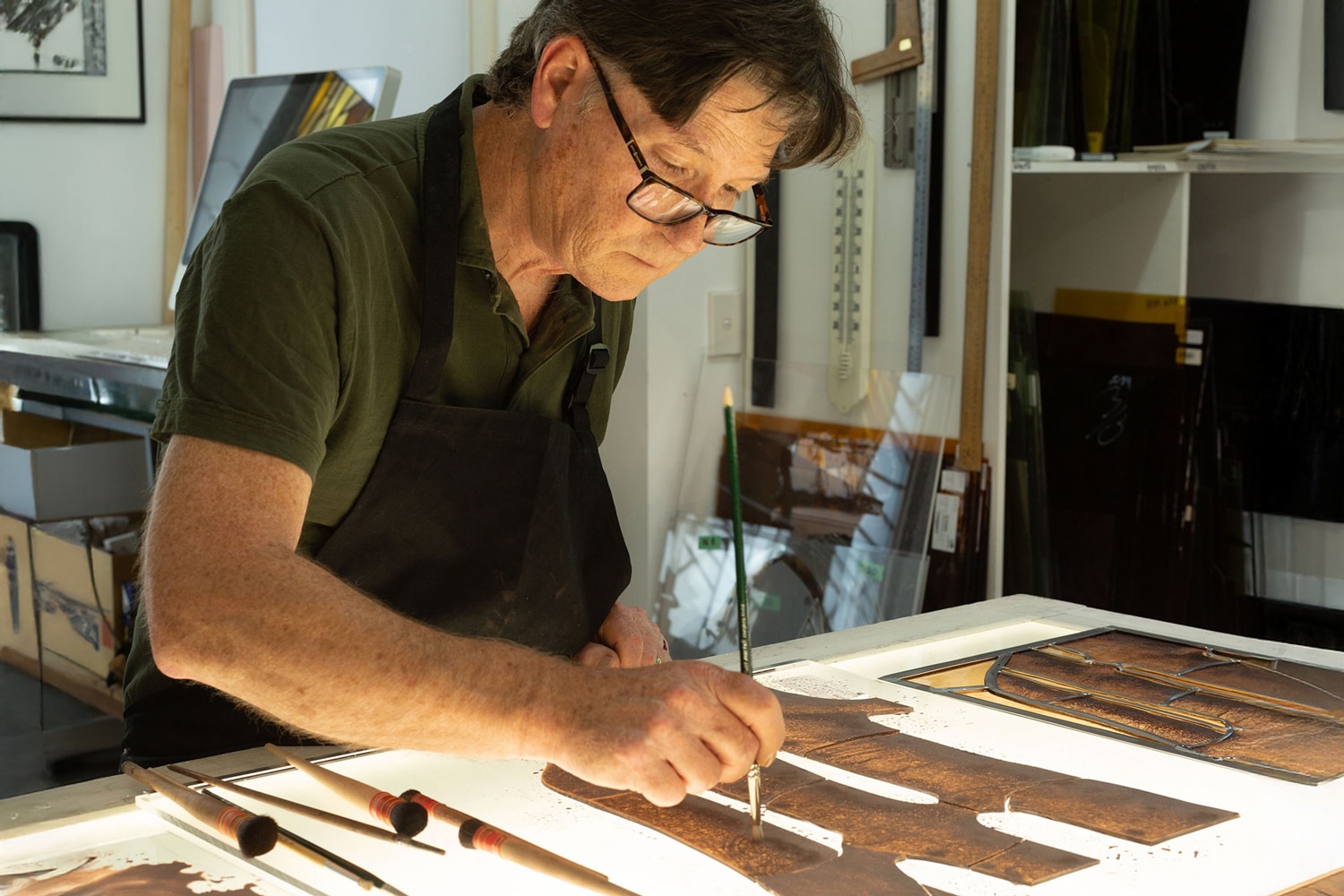
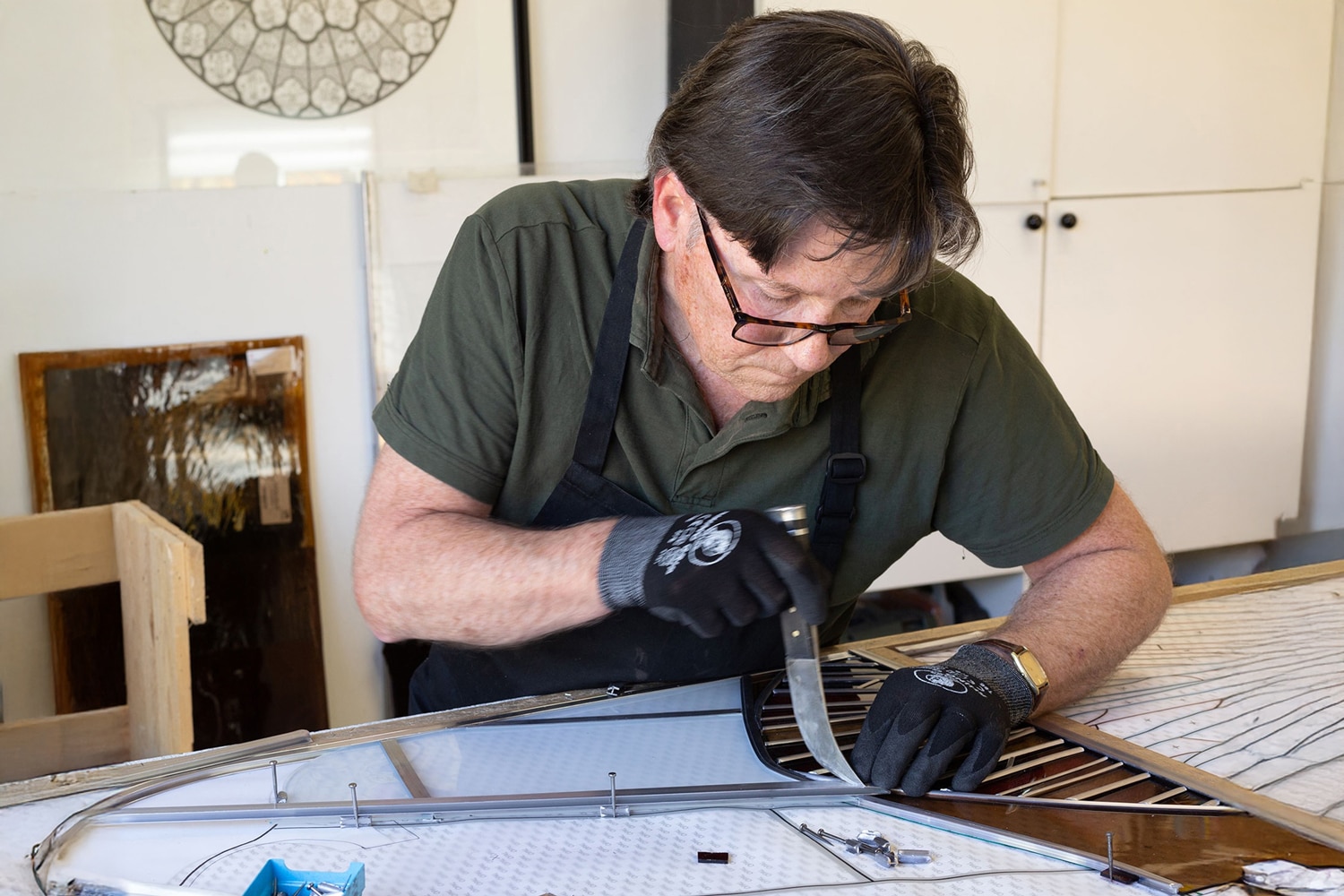
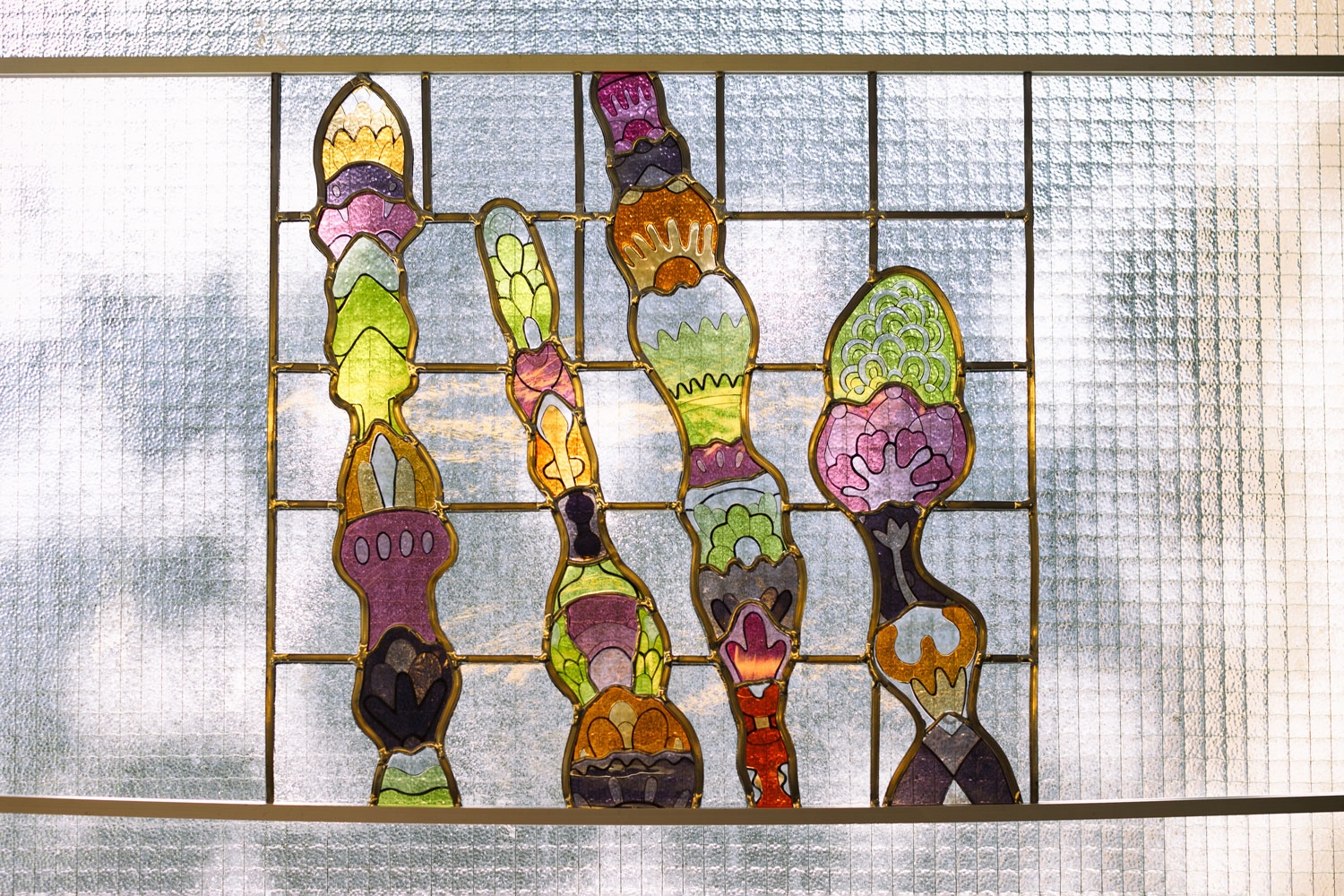
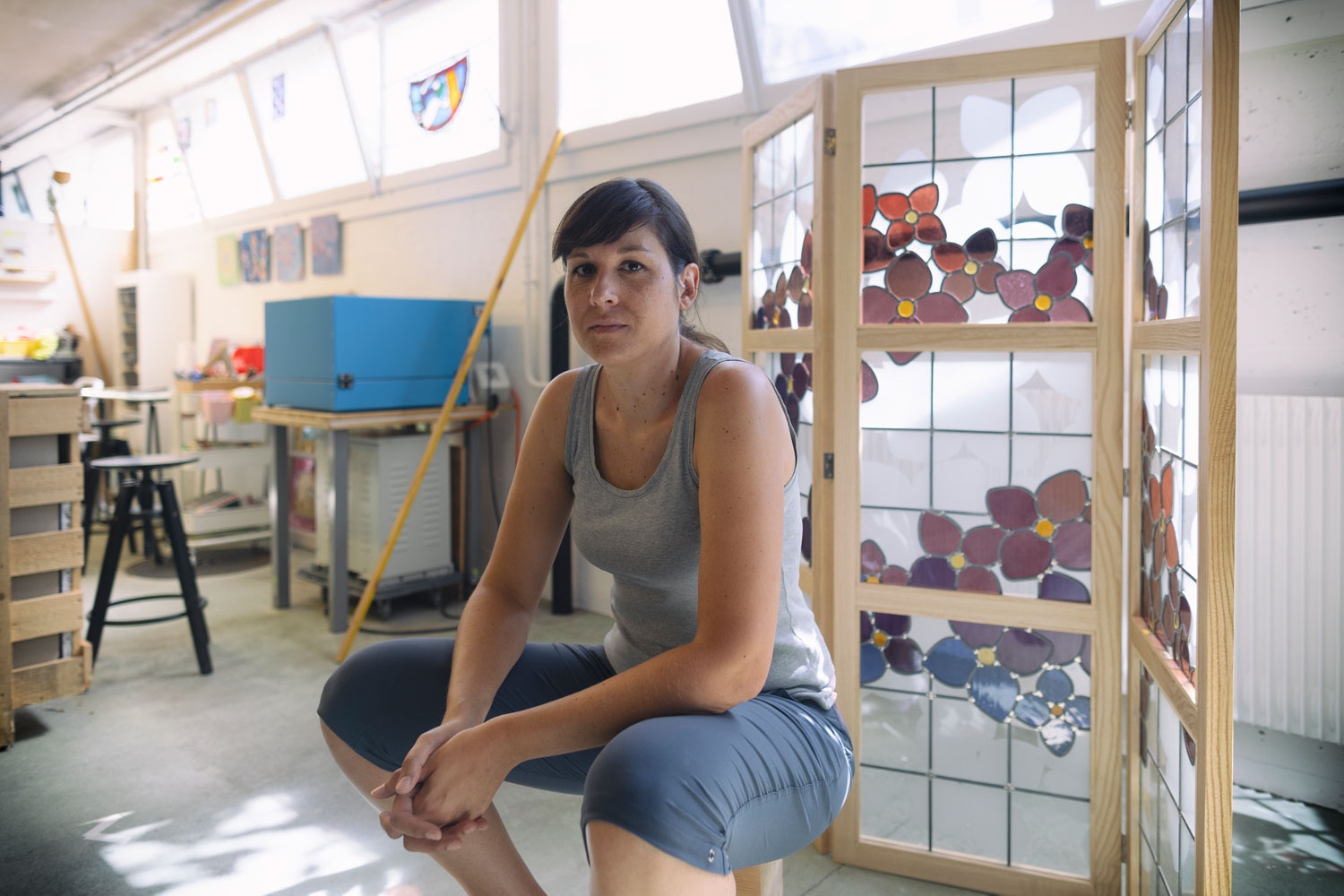
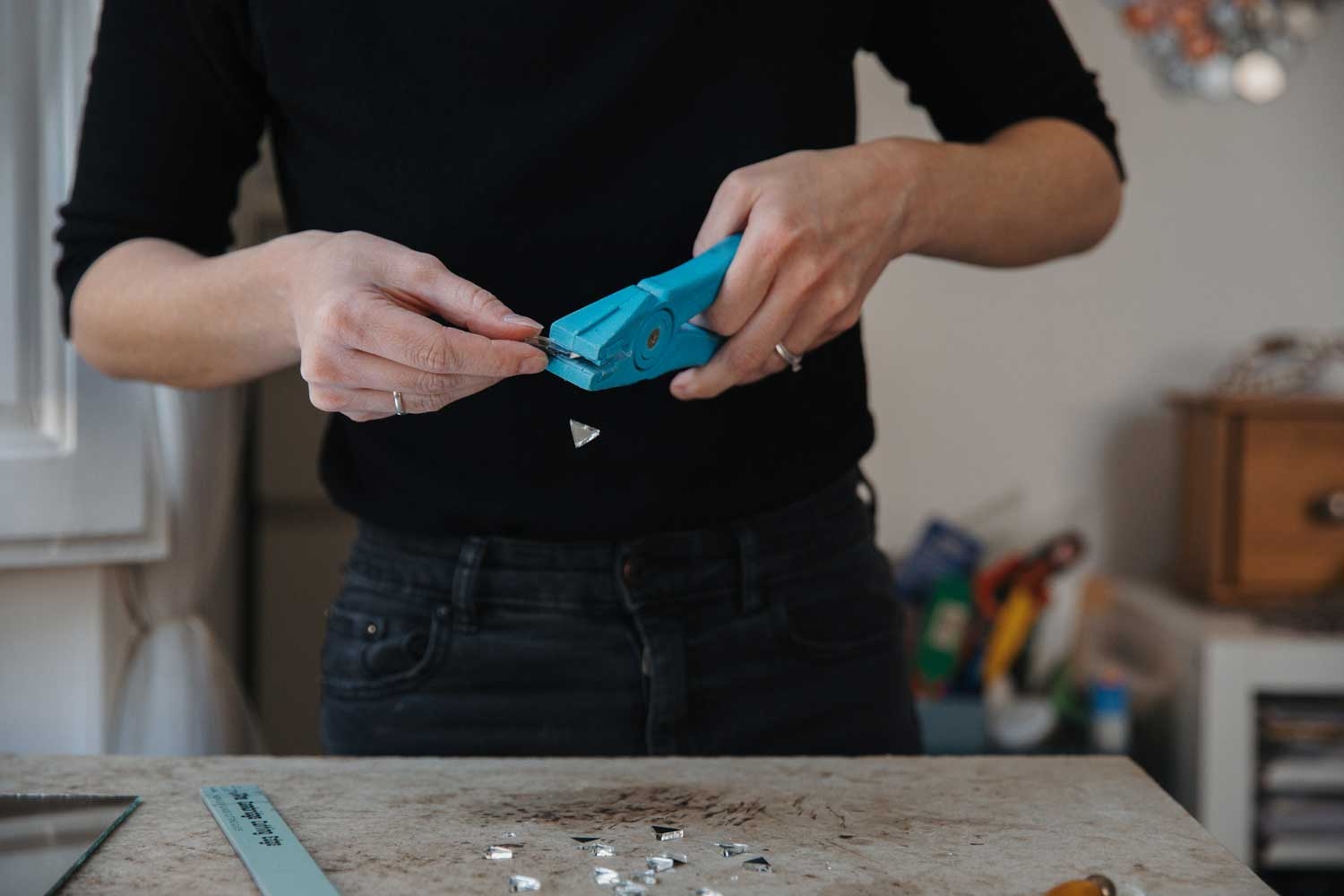
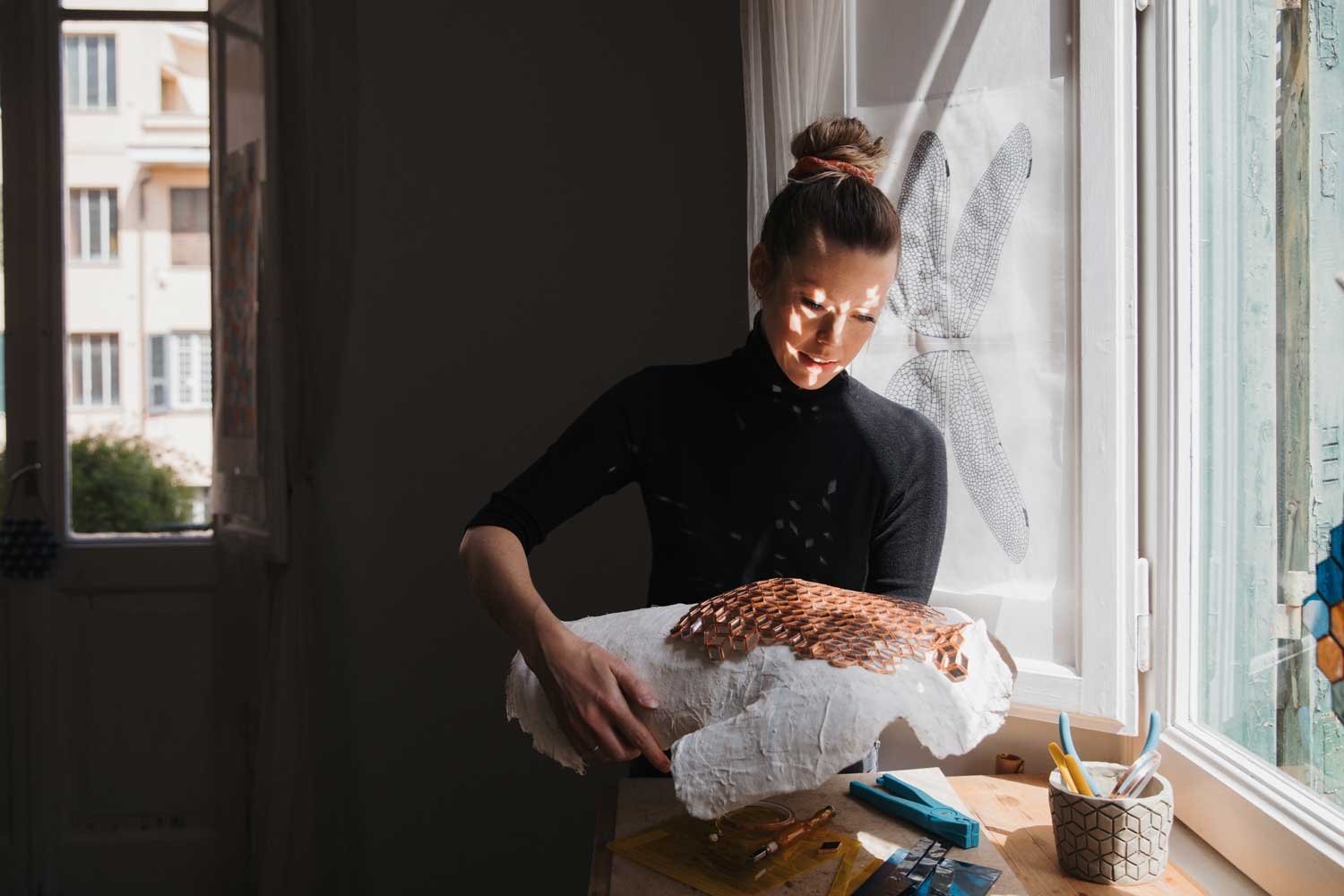
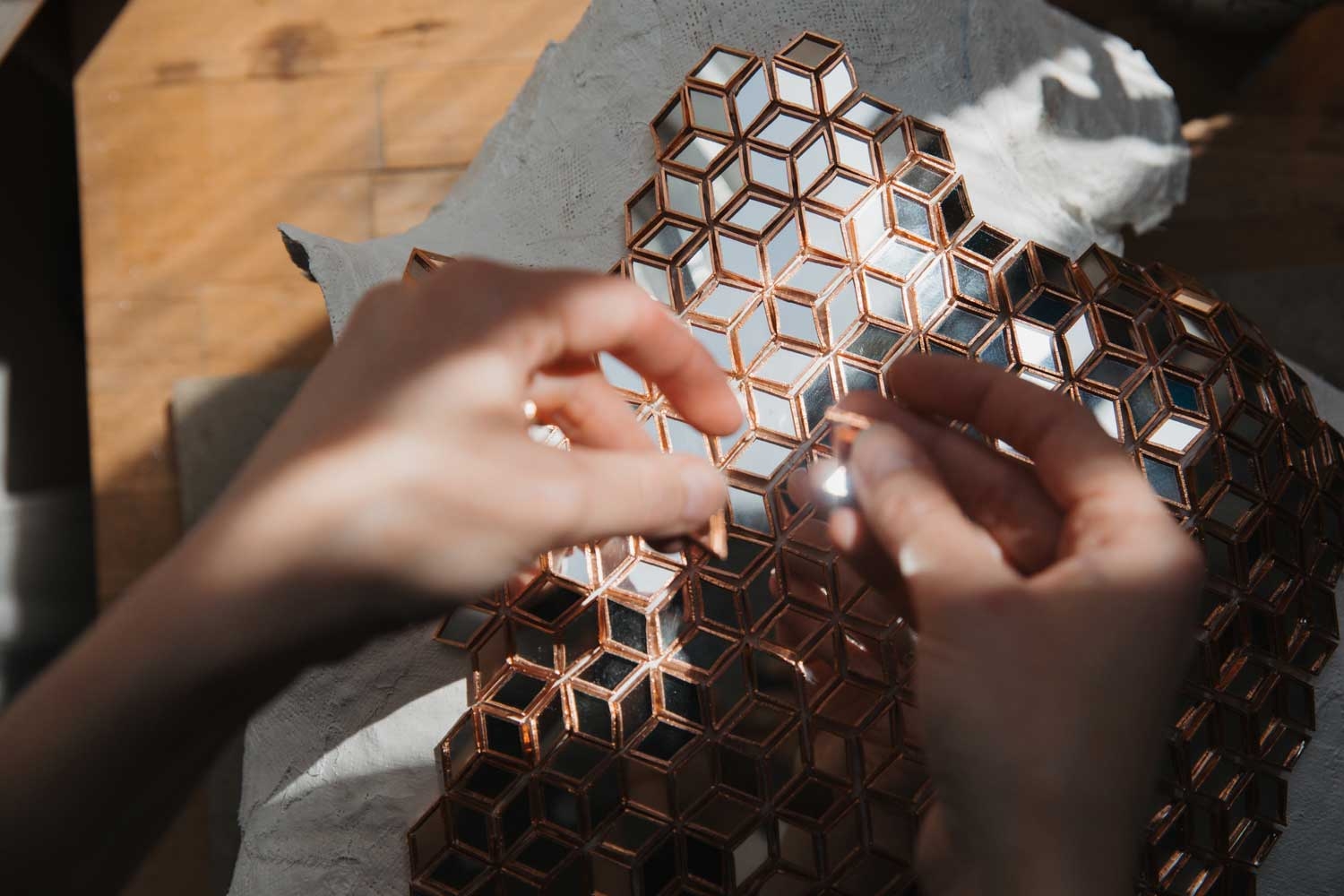
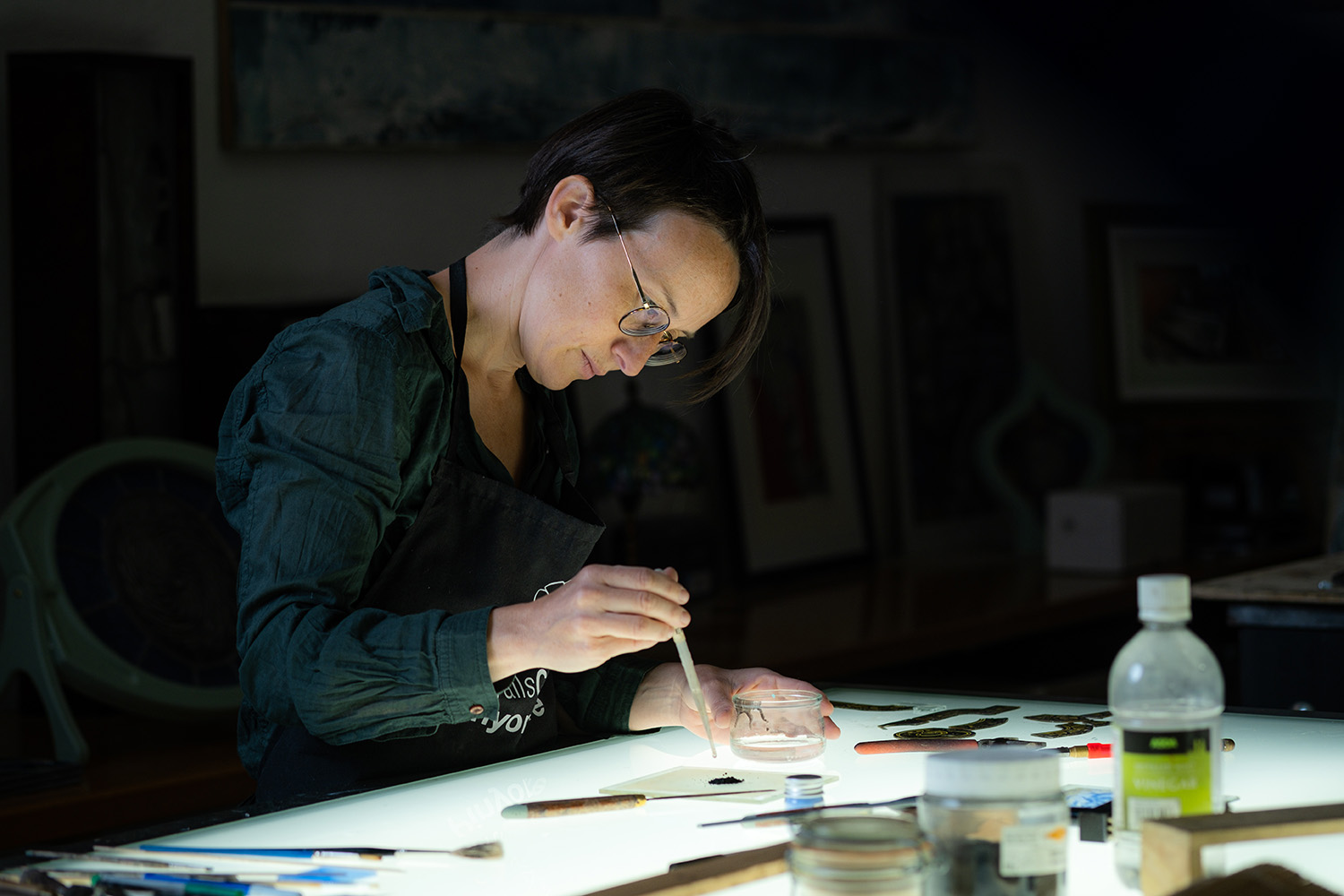
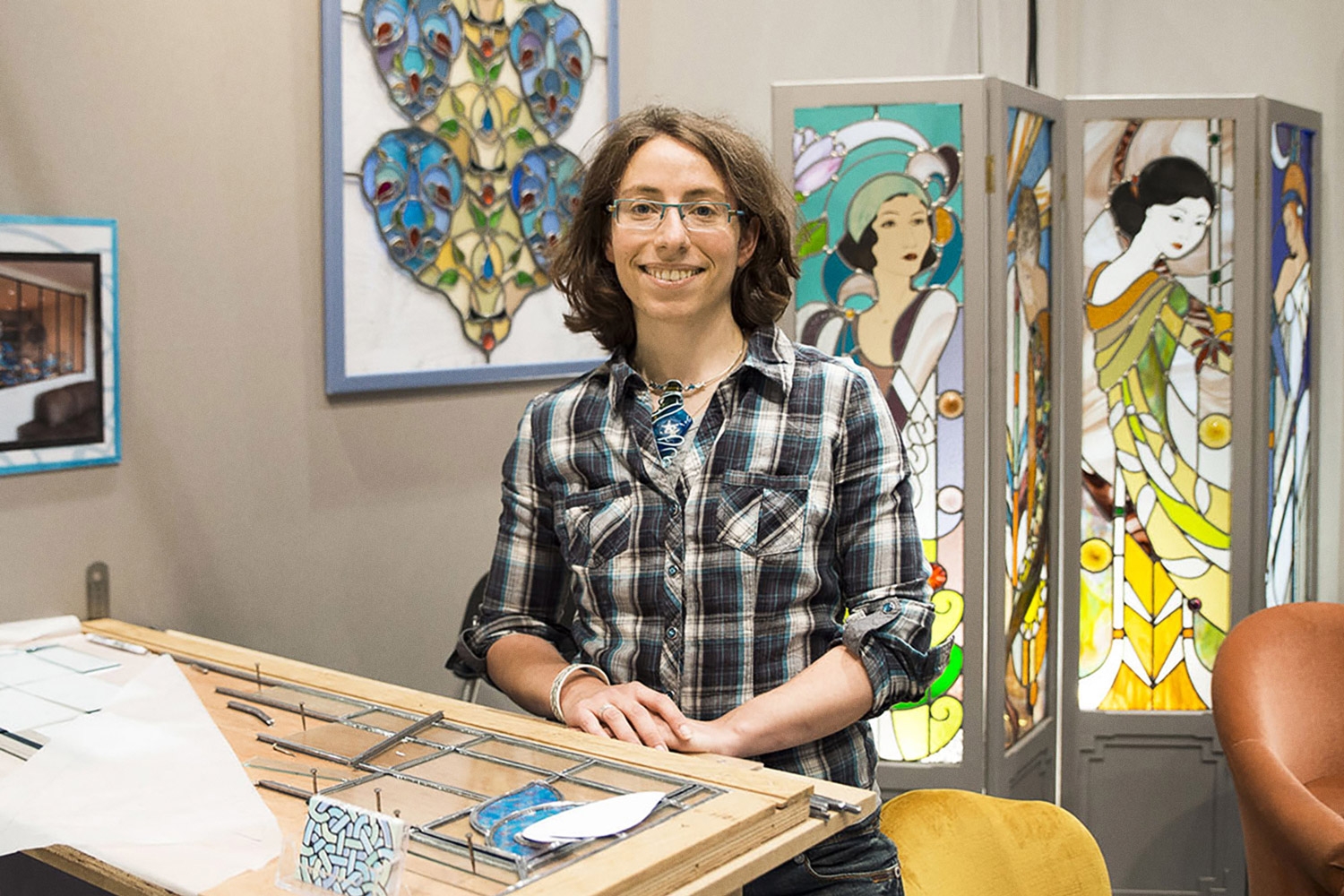
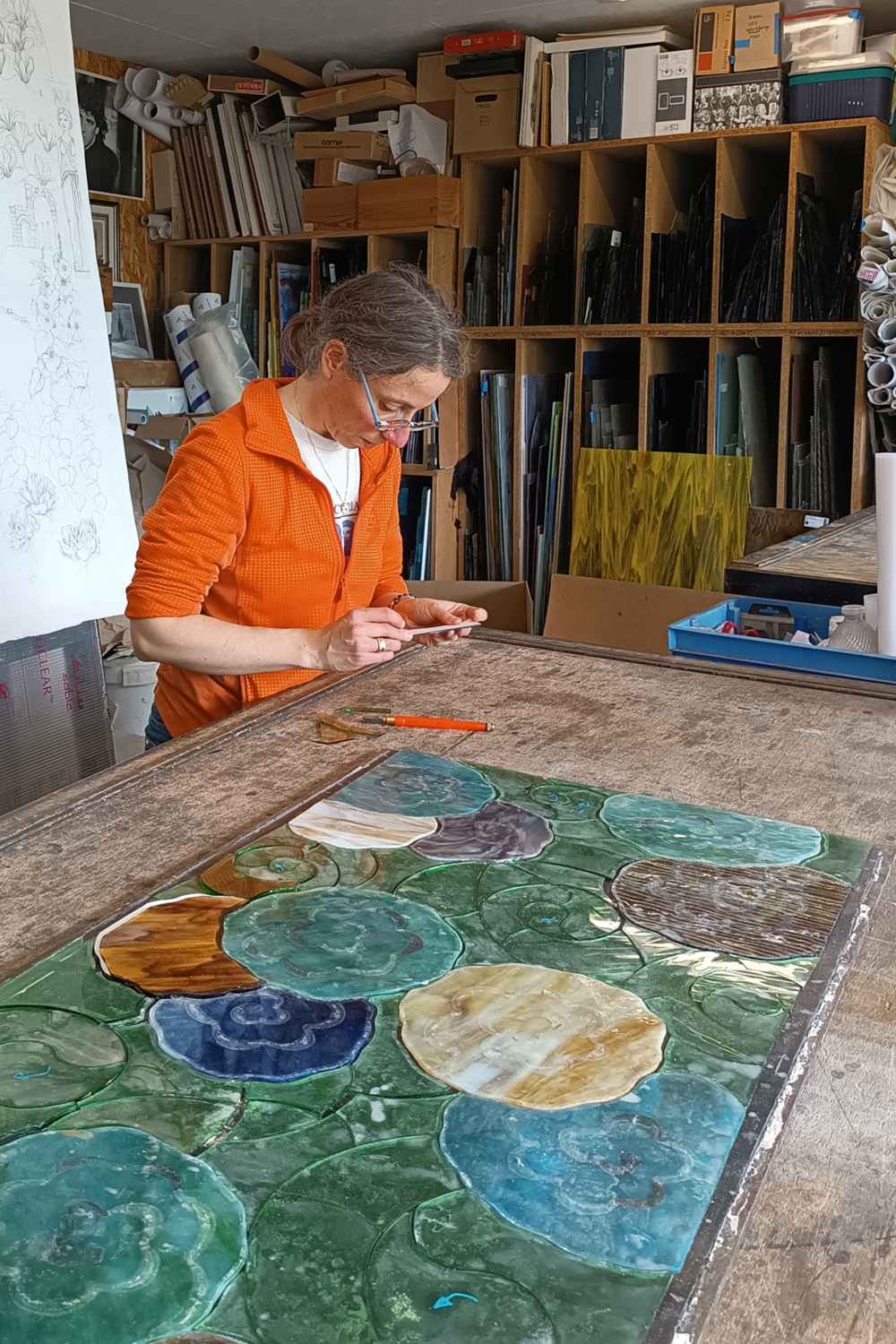
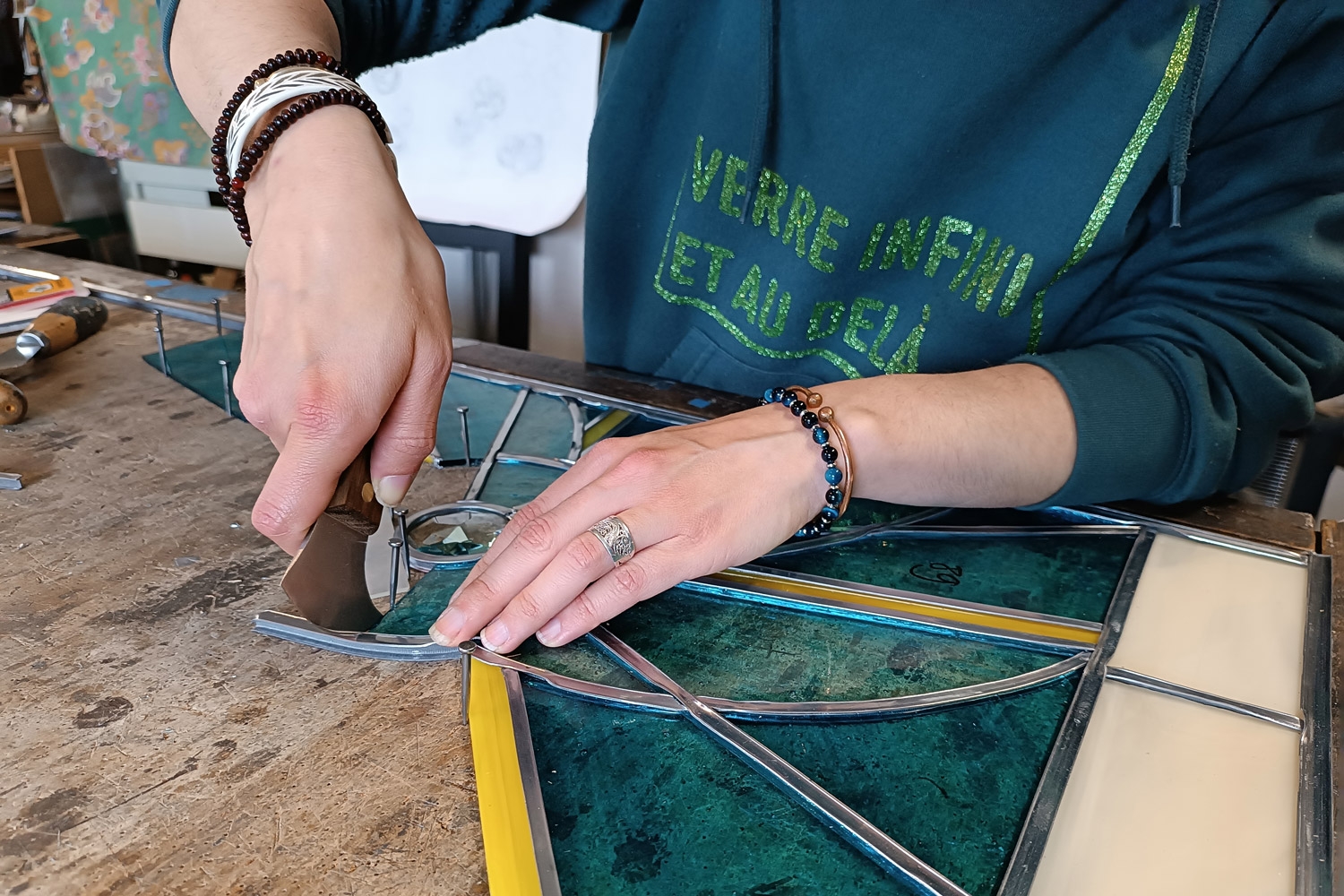
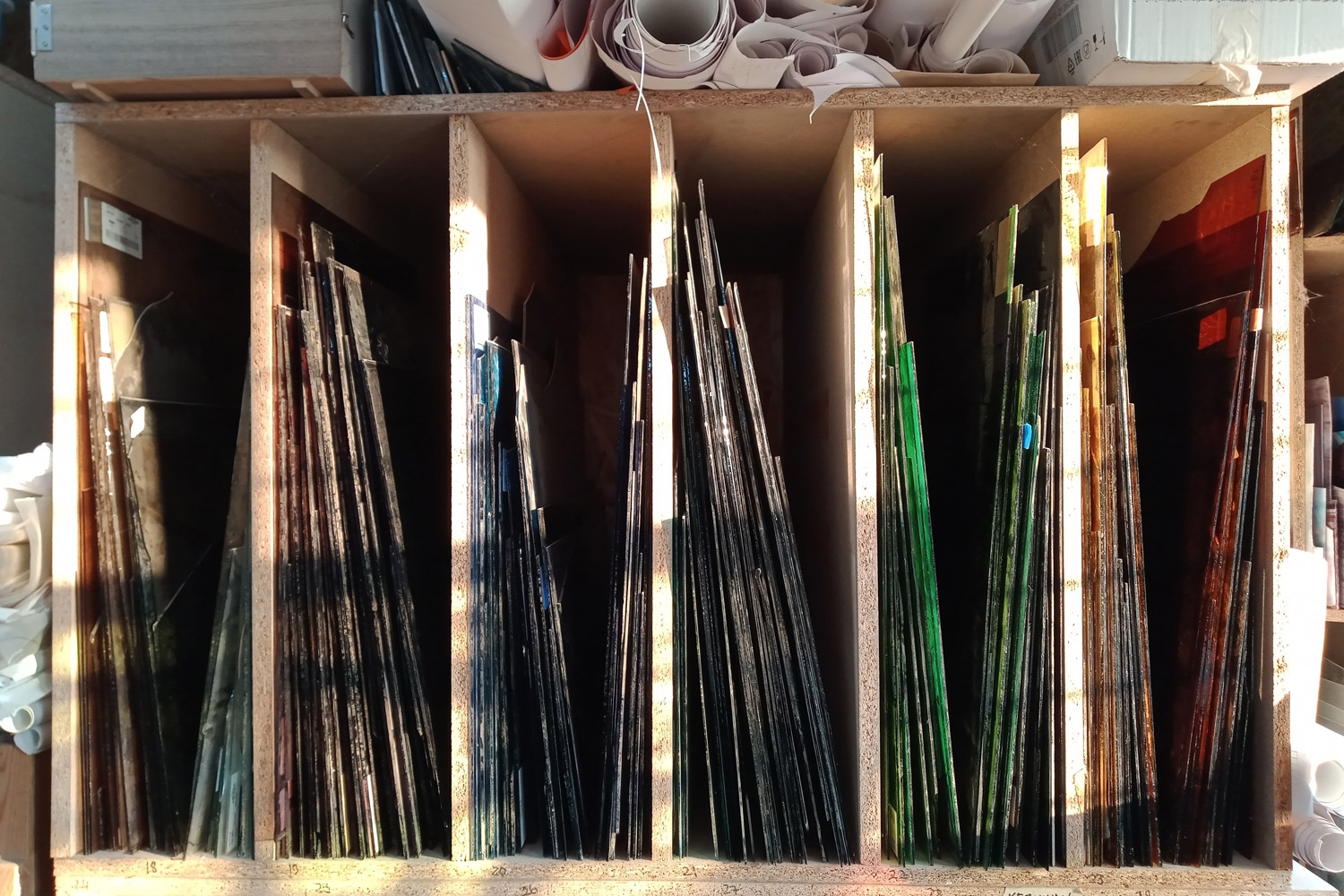
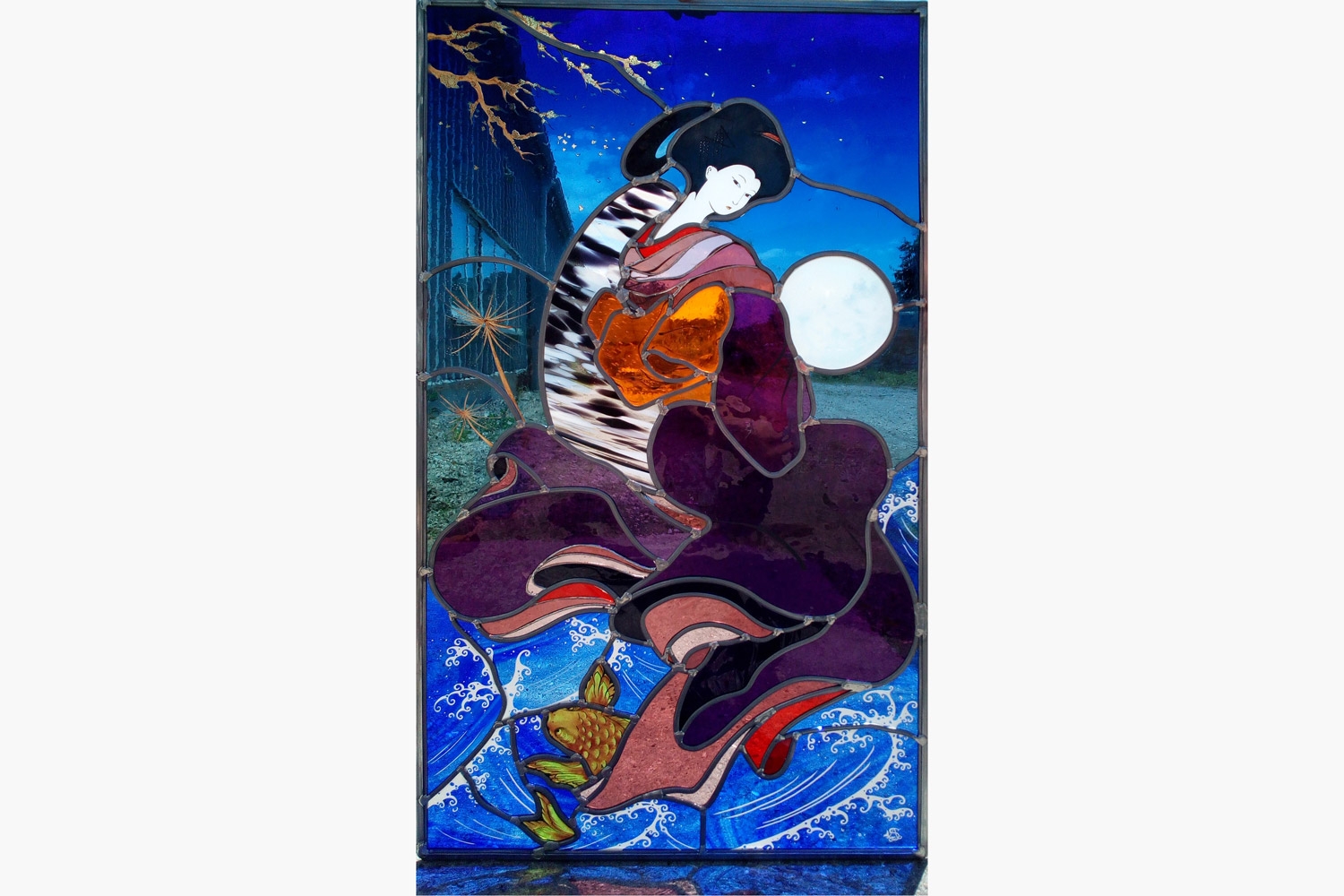
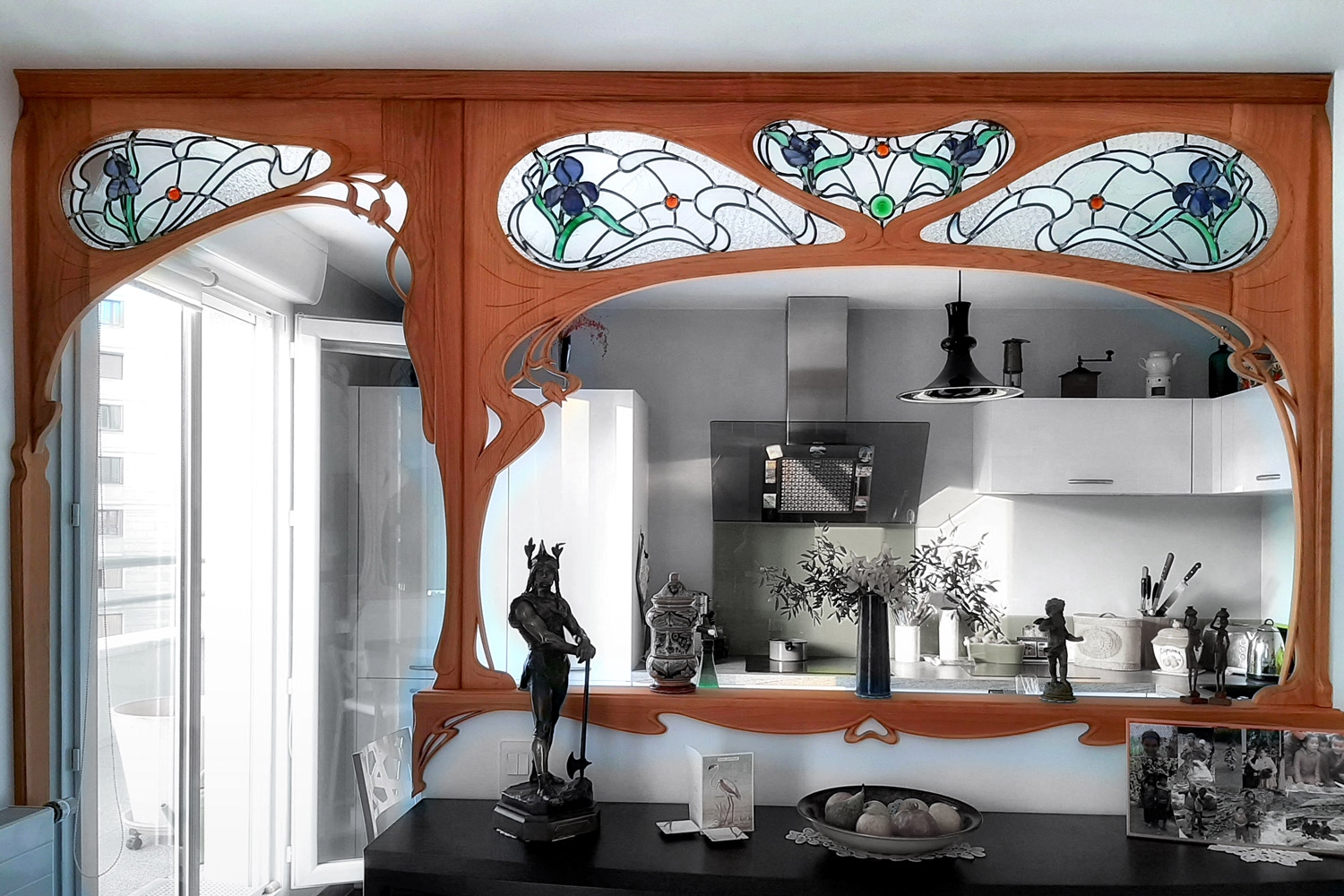
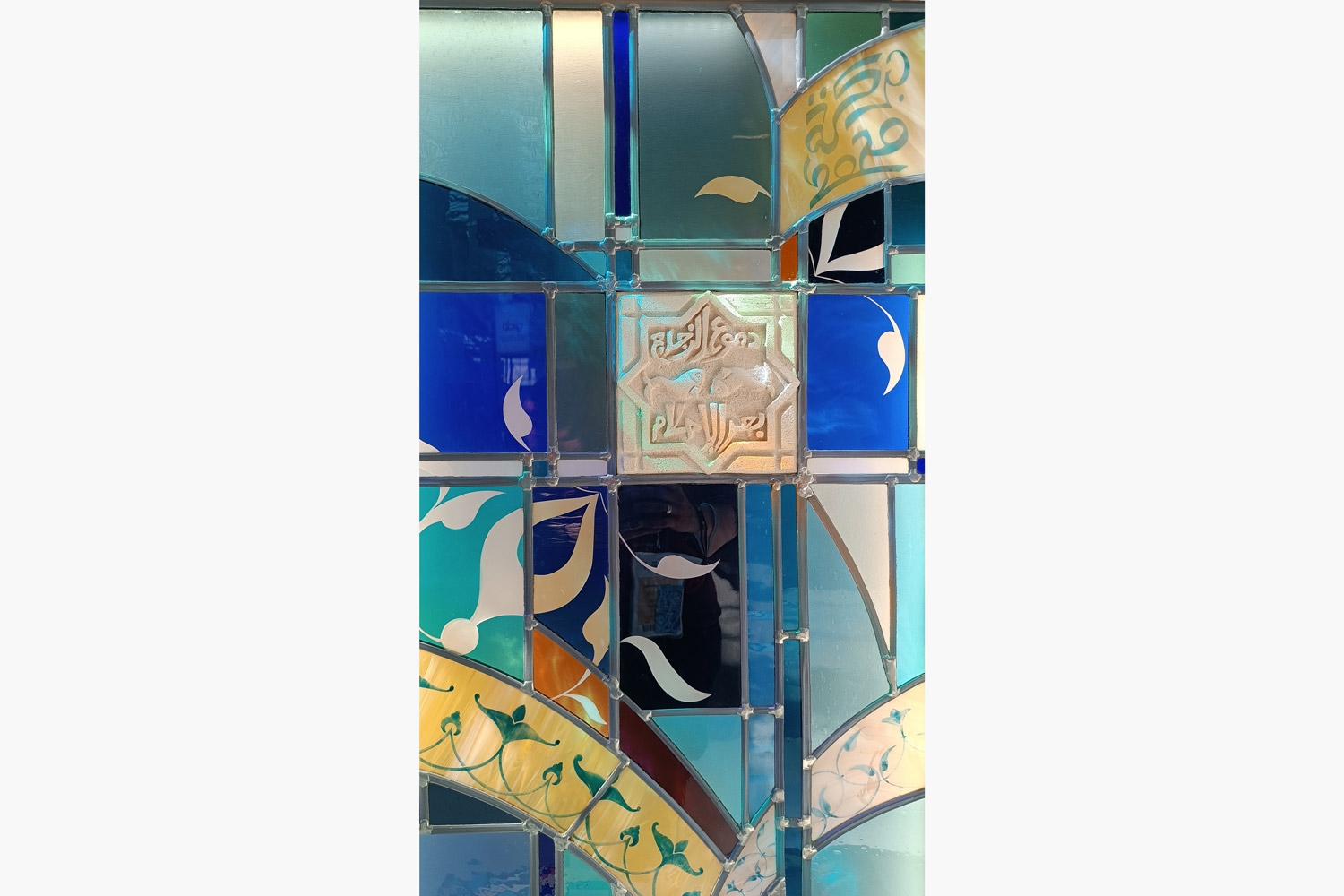
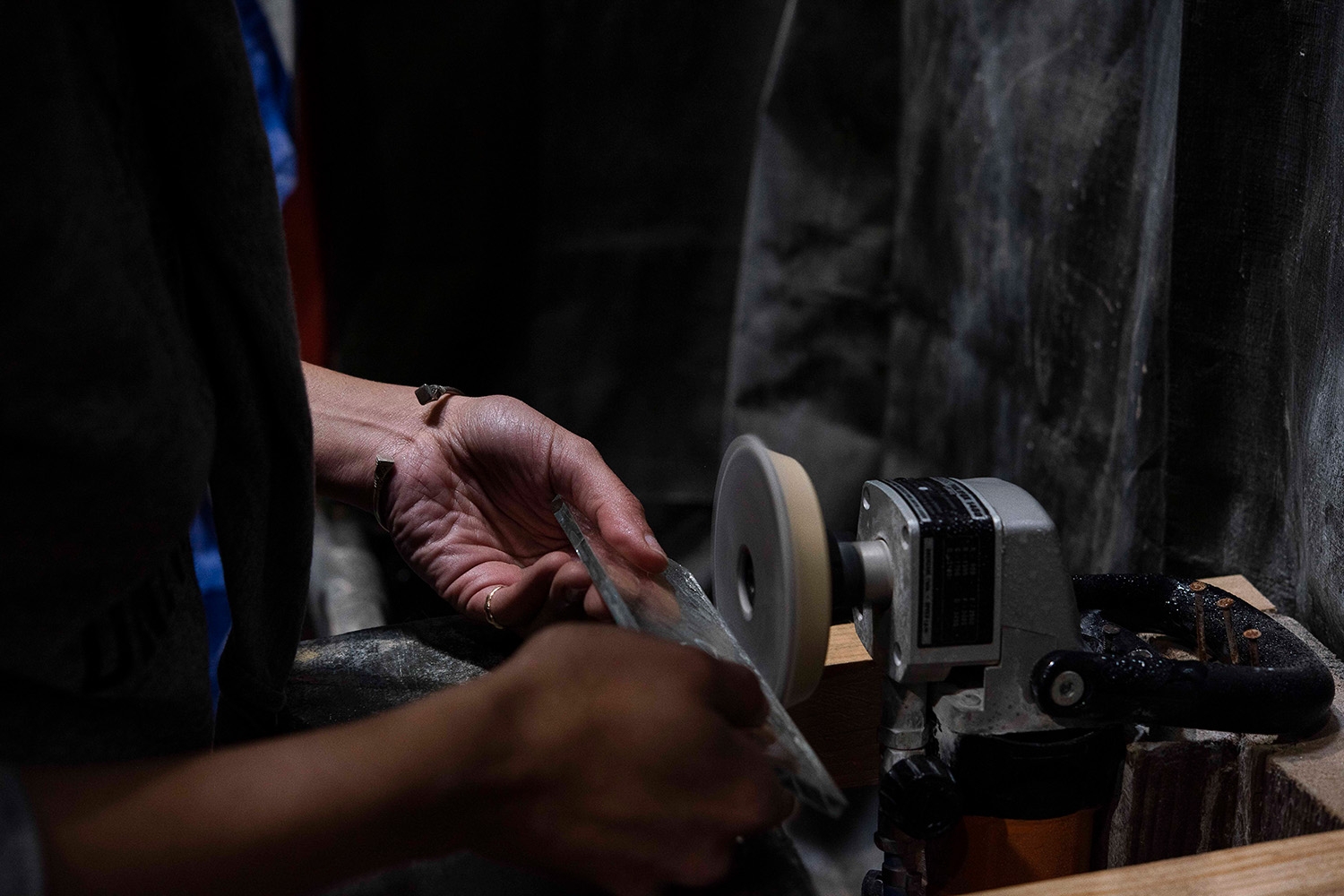
Amandine Steck creates and restores stained glass, and adds unexpected materials to her works, such as fabric, ceramic and sand. Her atelier, L’Amande et l’Obsidienne, was originally founded in 1976 by Martial Mayel in Honfleur in Normandy, a region with a remarkable heritage of 16th and 19th-century stained glass. Since taking over in 2014, Amandine has worked on both restoration projects and original commissions, designing each piece to interact with light and space while exploring the endless possibilities of glass. "I draw inspiration from the sea, its myths and my travels. I combine Japanese, Moorish and Art Nouveau references in search of harmony in line, colour and light," she explains.
INTERVIEW
I grew up near the Chartres Cathedral, home to one of the largest ensembles of 13th-century stained glass in France. As a child, I was fascinated not only by the windows, but also by the nearby Galerie du Vitrail. It is run by the renowned Ateliers Loire, and there, I could see both historic restoration and modern creations.
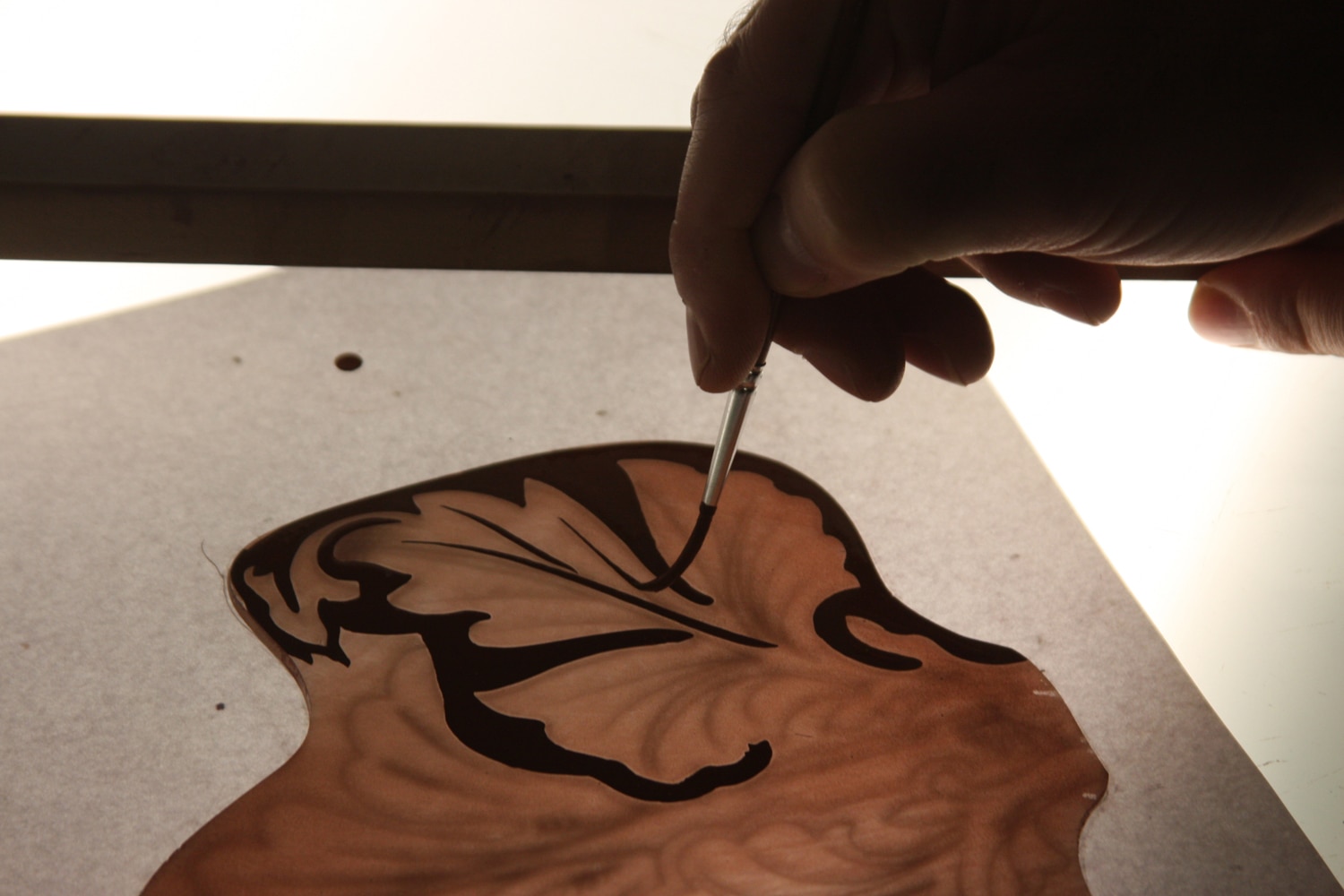
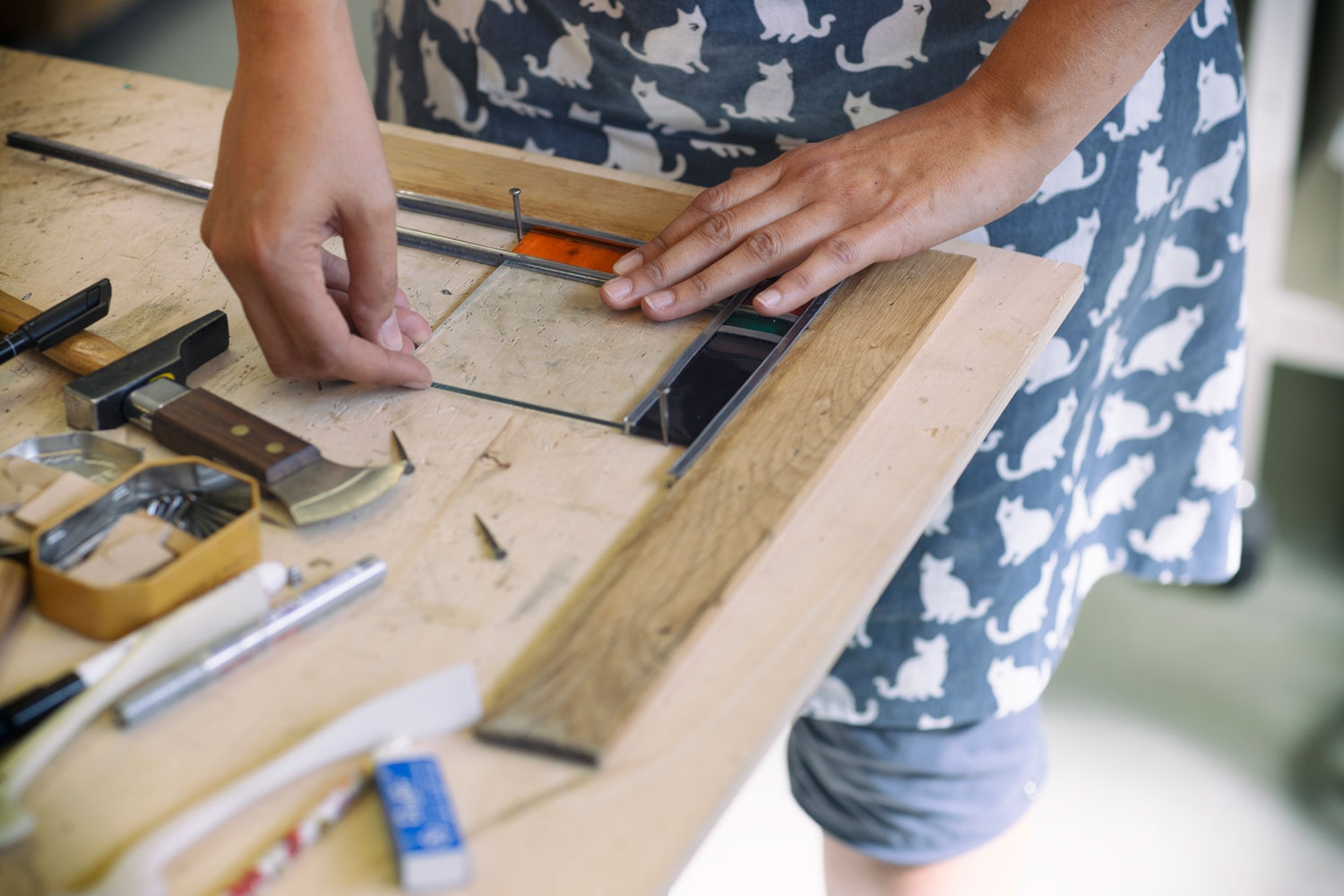
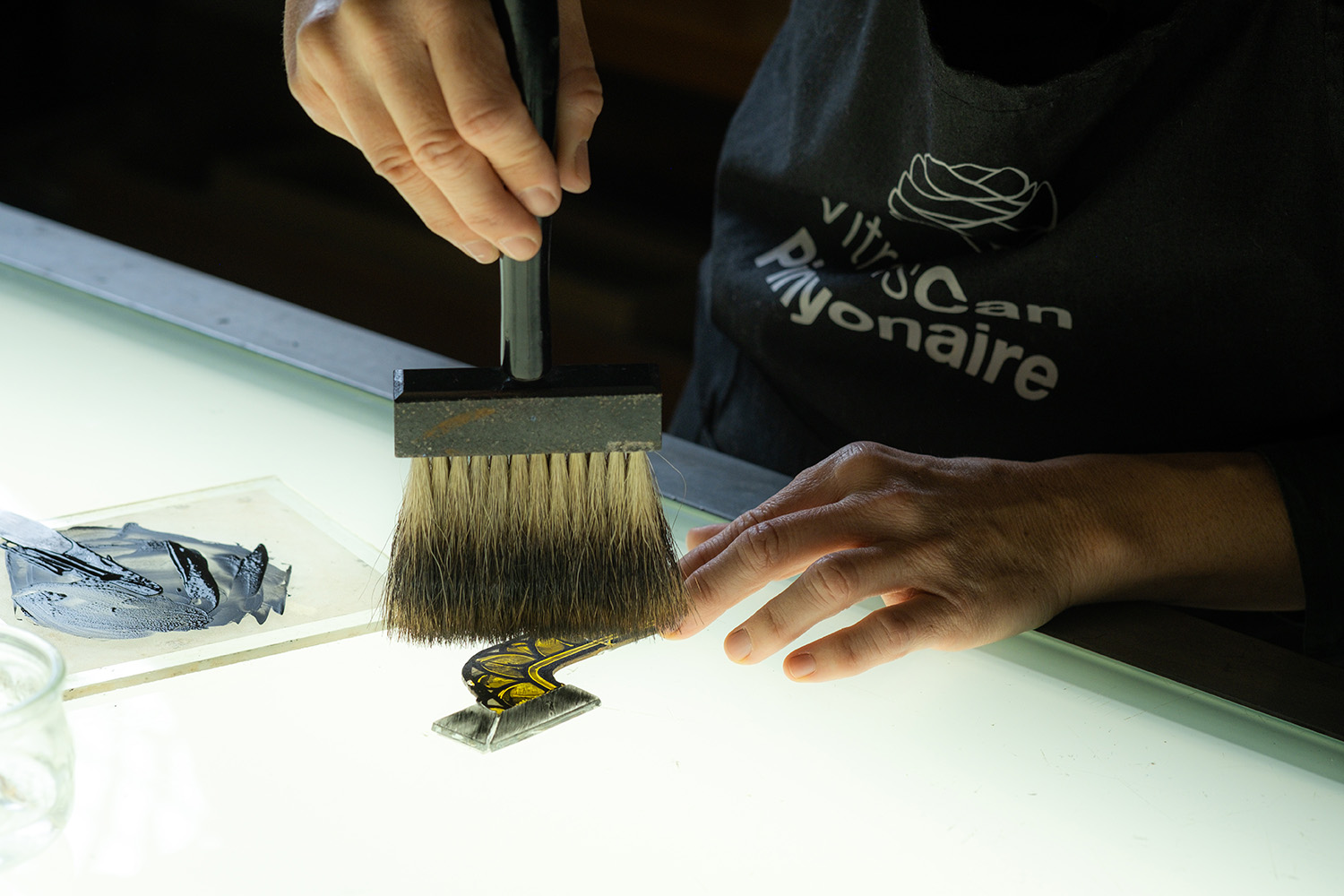
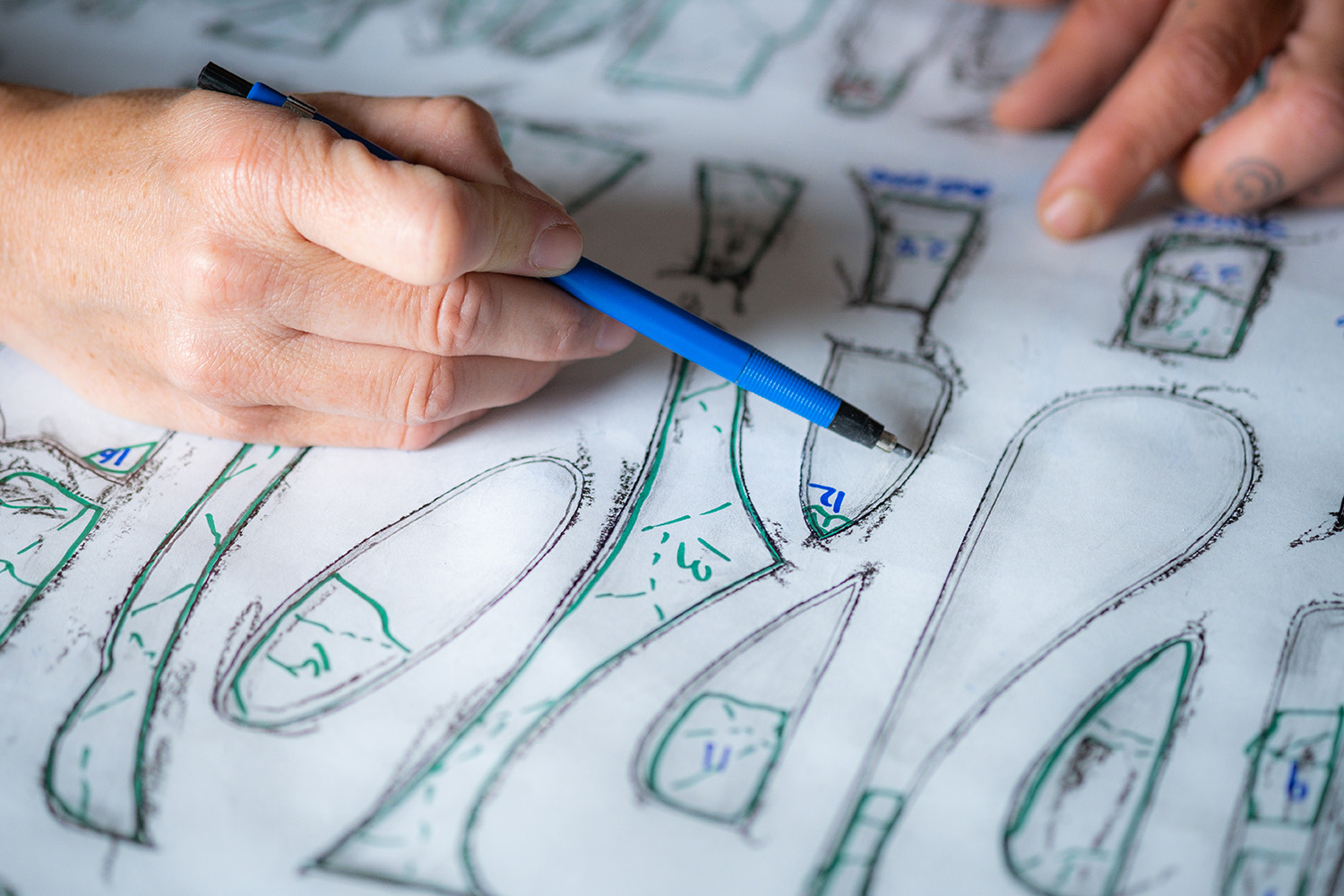
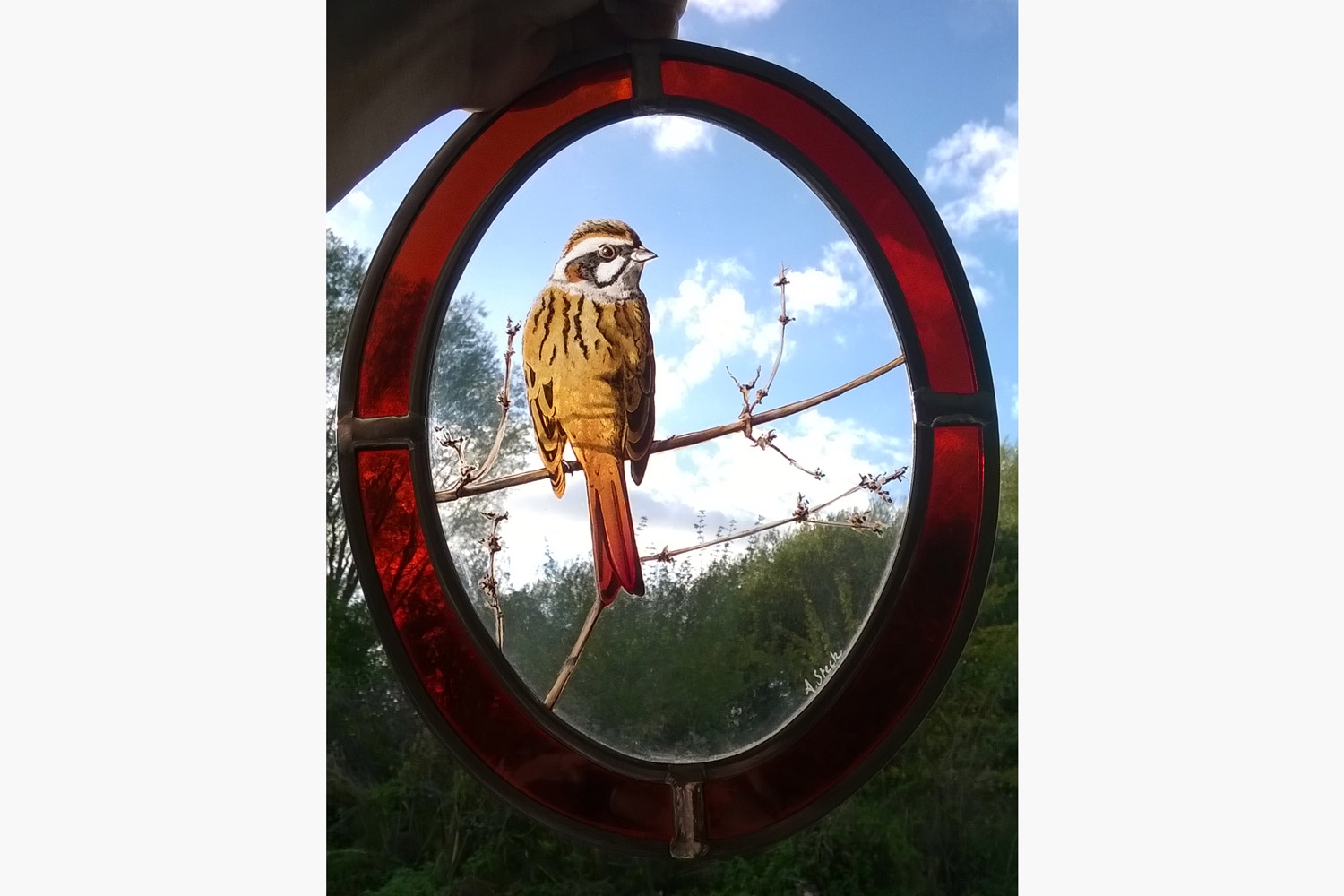
Drawing and painting on glass are at the heart of my practice. I began with painting before learning cutting and assembly, which is unusual. I also consider myself a colourist, attentive to the subtlest nuances of hue and the expressive possibilities of colour.
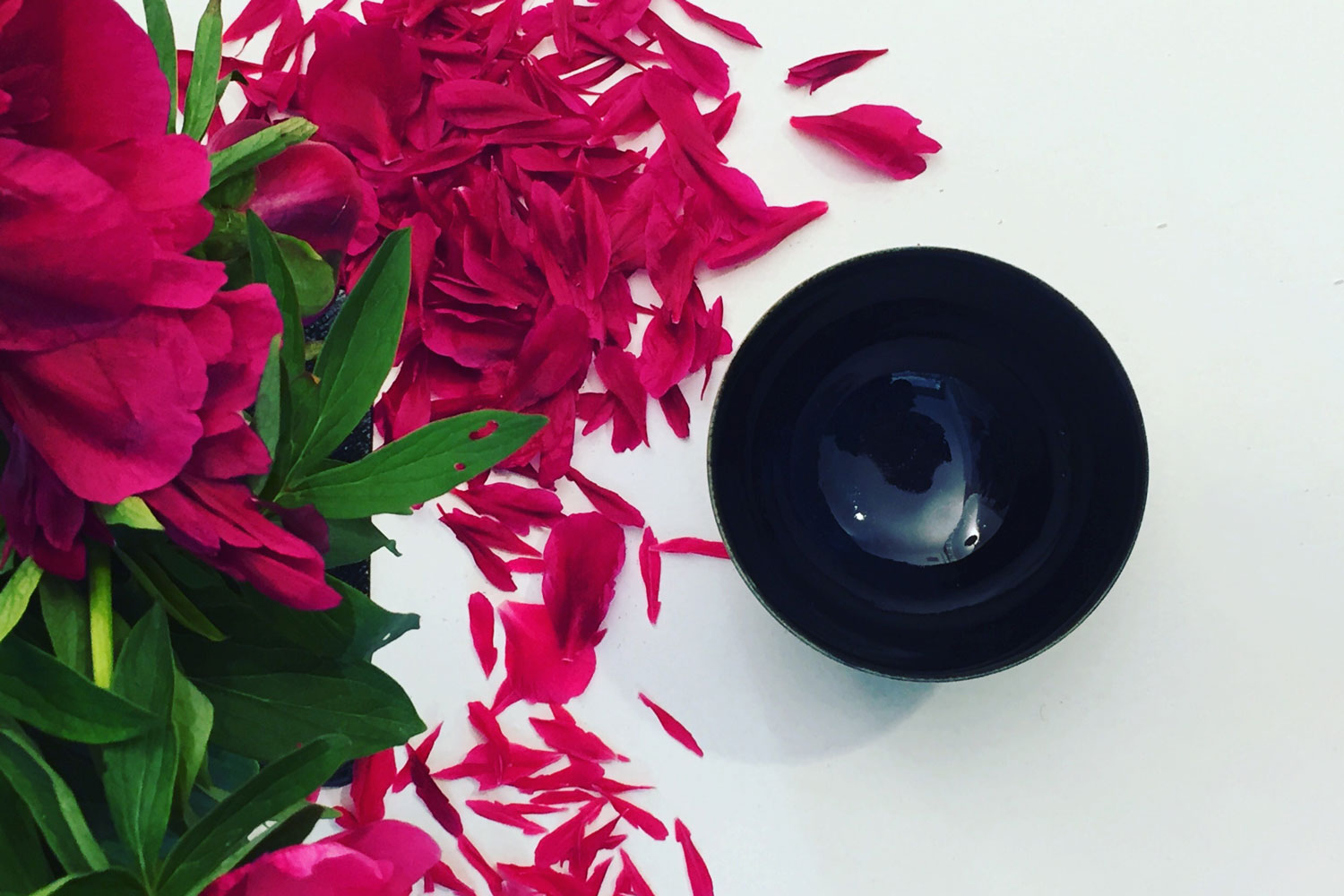
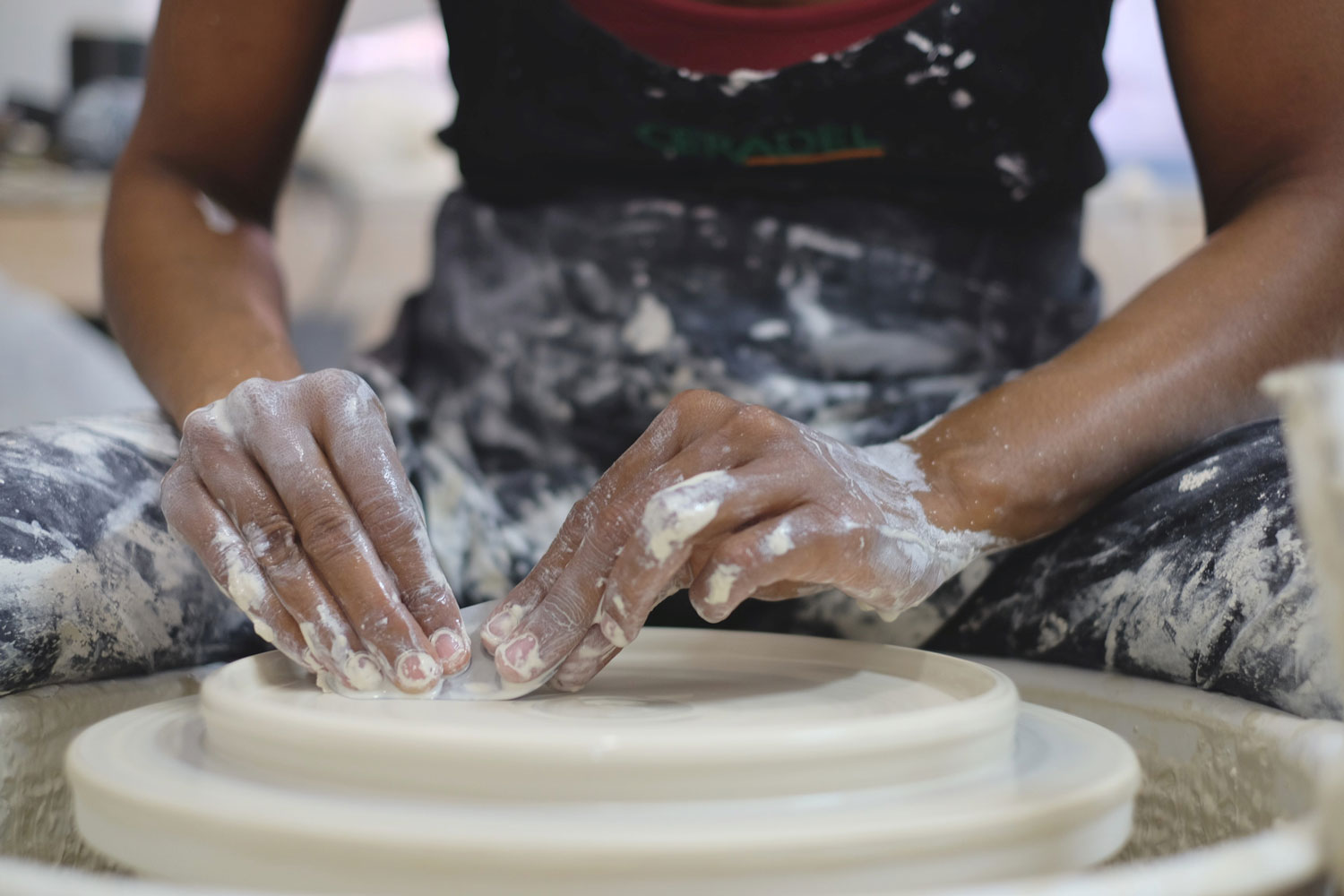
I introduce materials that viewers do not expect. I have integrated fabric, ceramic, sand, enamel and even analogue photographic techniques, such as cyanotype on glass. People forget that it is a highly versatile craft that allows for contemporary creations through textures, colours, light and out-of-the-box materials.
Yes. I learned how to be patient and how to appreciate slow processes. I now let things unfold at their own rhythm. Nothing happens instantly, which is the opposite of the world we live in. Since I started running my own workshop, I have learned that I must make time, not simply wait for it to come to me.
Amandine Steck
L’Amande et l’Obsidienne
Stained glass maker
Honfleur, France
AVAILABILITY
By appointment only
PHONE
+33 672205701
LANGUAGES
French, English
Homo Faber Finds is a new service aiming to inspire admirers of craft to connect and collaborate with exceptional artisans.
We invite you to submit an enquiry here.
chanel_goossens-savoir-faire-©alix-marnat_18-HD.jpg)
chanel_maison_goossens_©alix-marnat-11-HD.jpg)
chanel_goossens-©alix-marnat_17-HD.jpg)