An experimental approach
- Edita sources her leather locally
- She opened her workshop in Galicia in 2012
- Her imprint is evident in each of her pieces
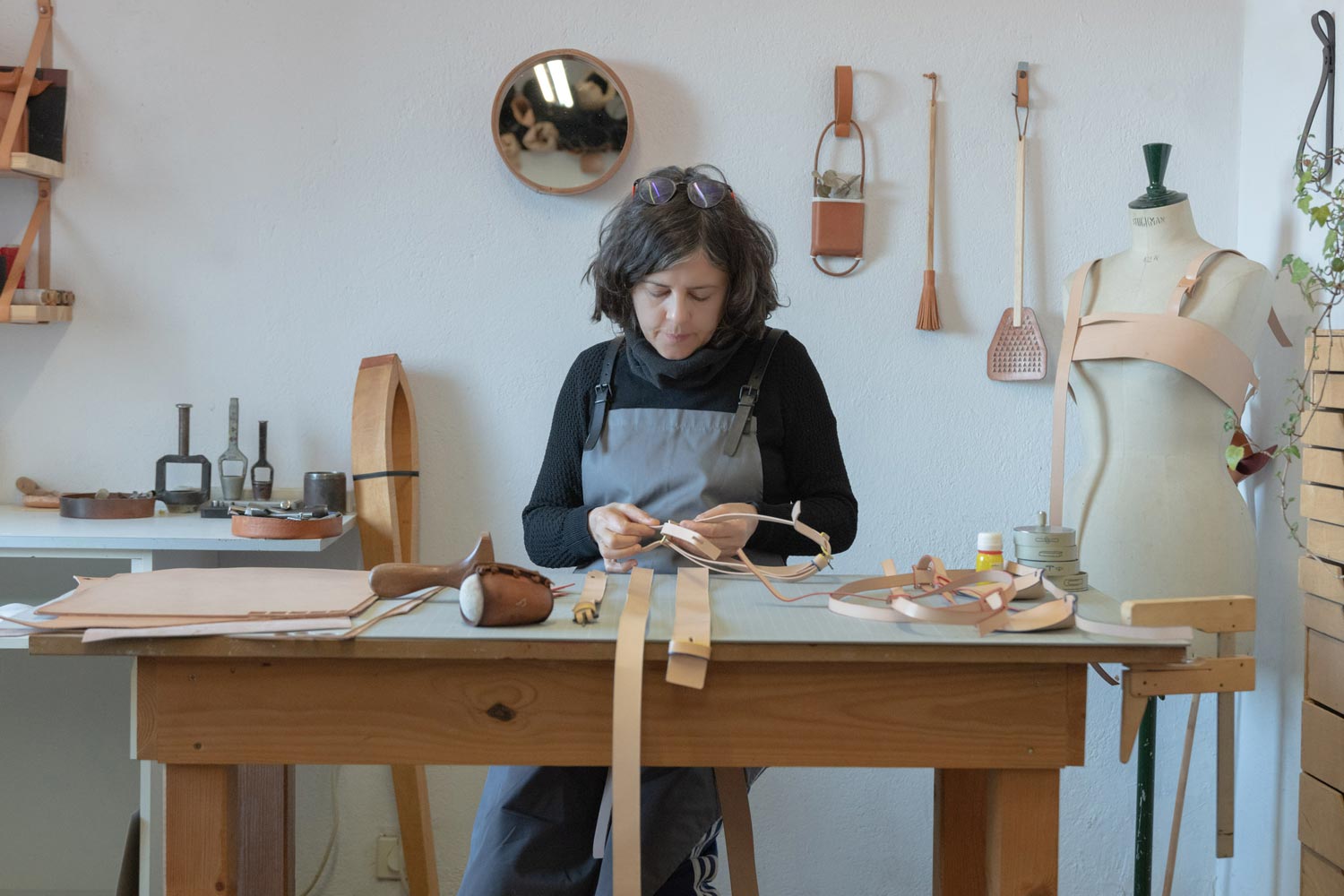
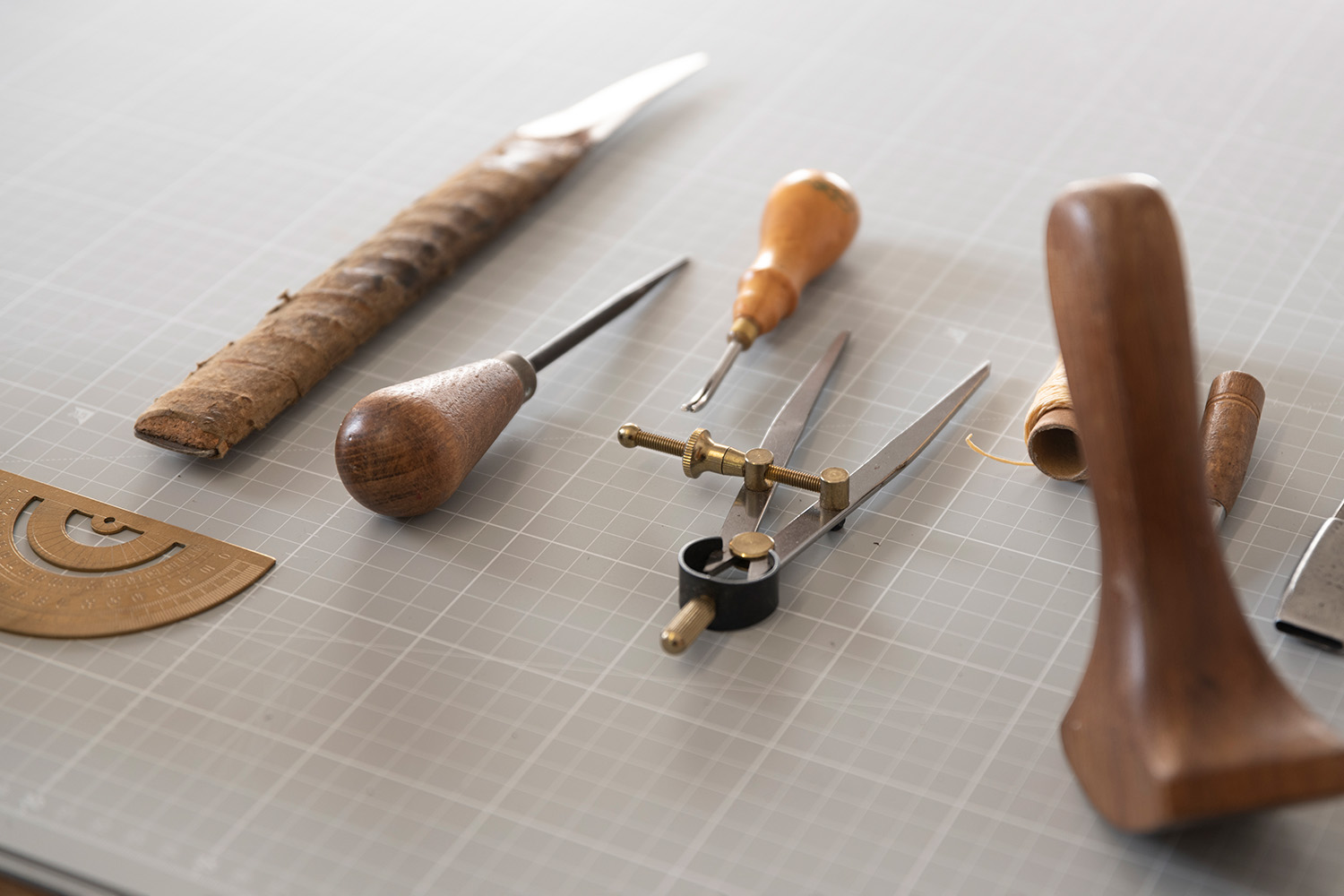
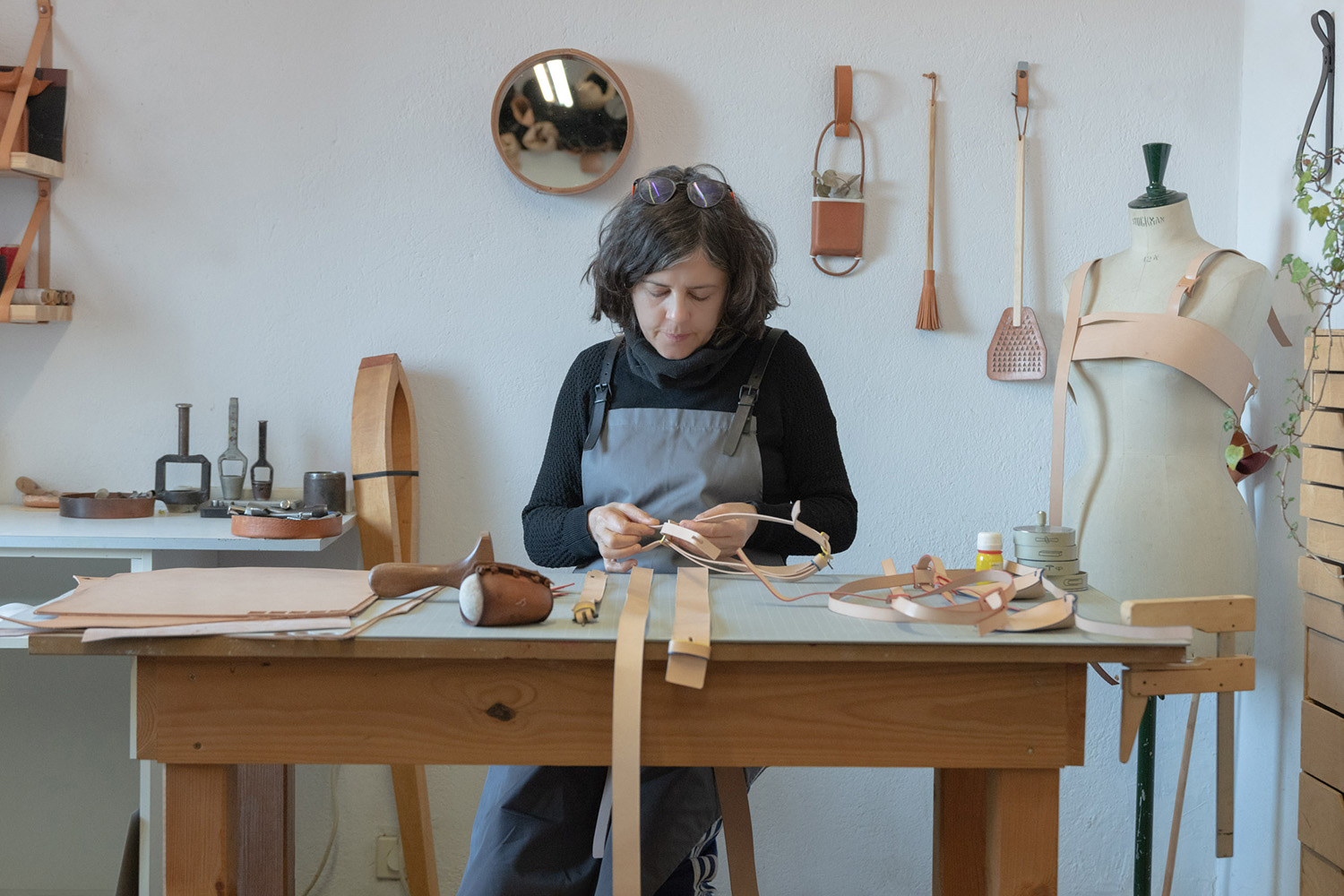
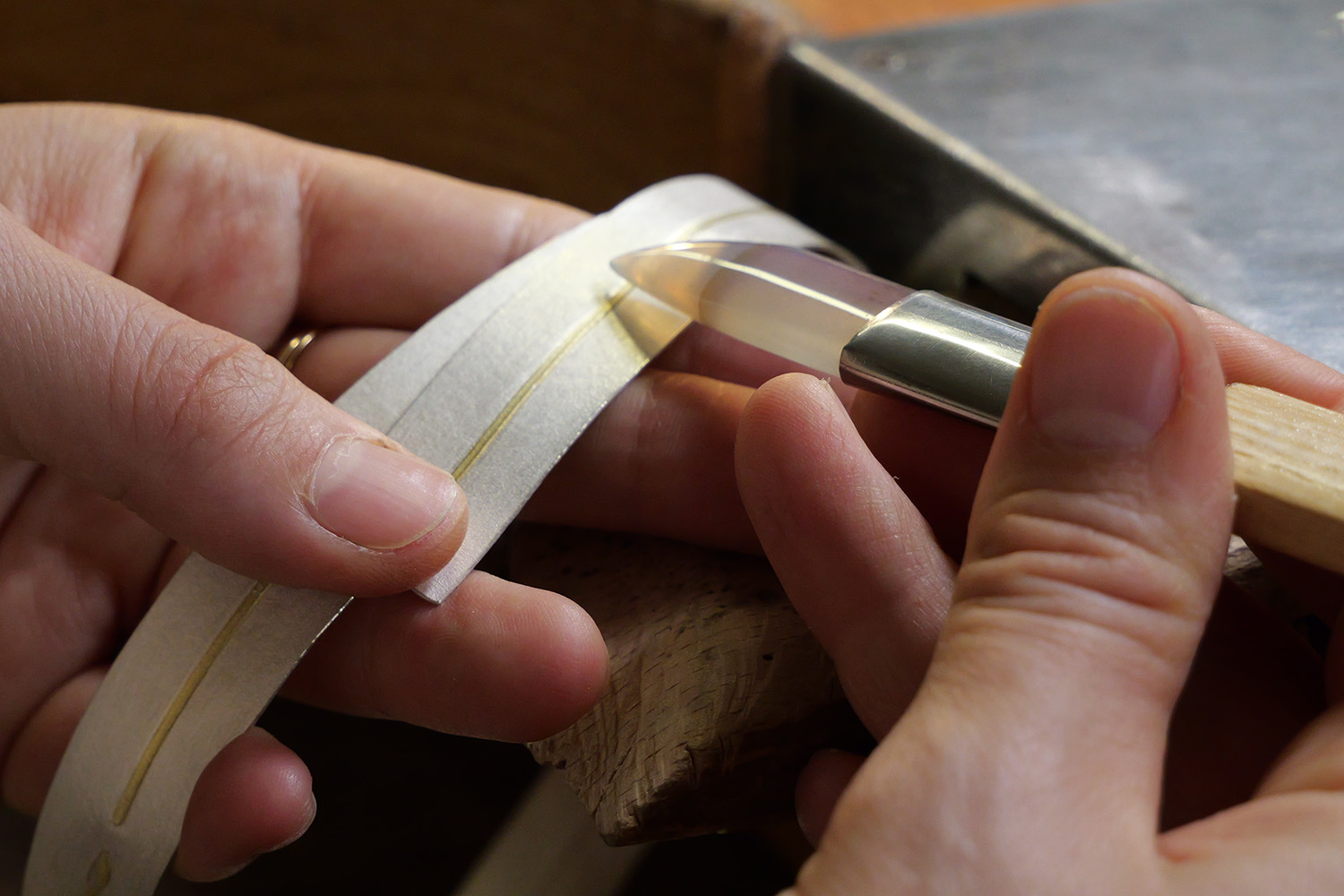
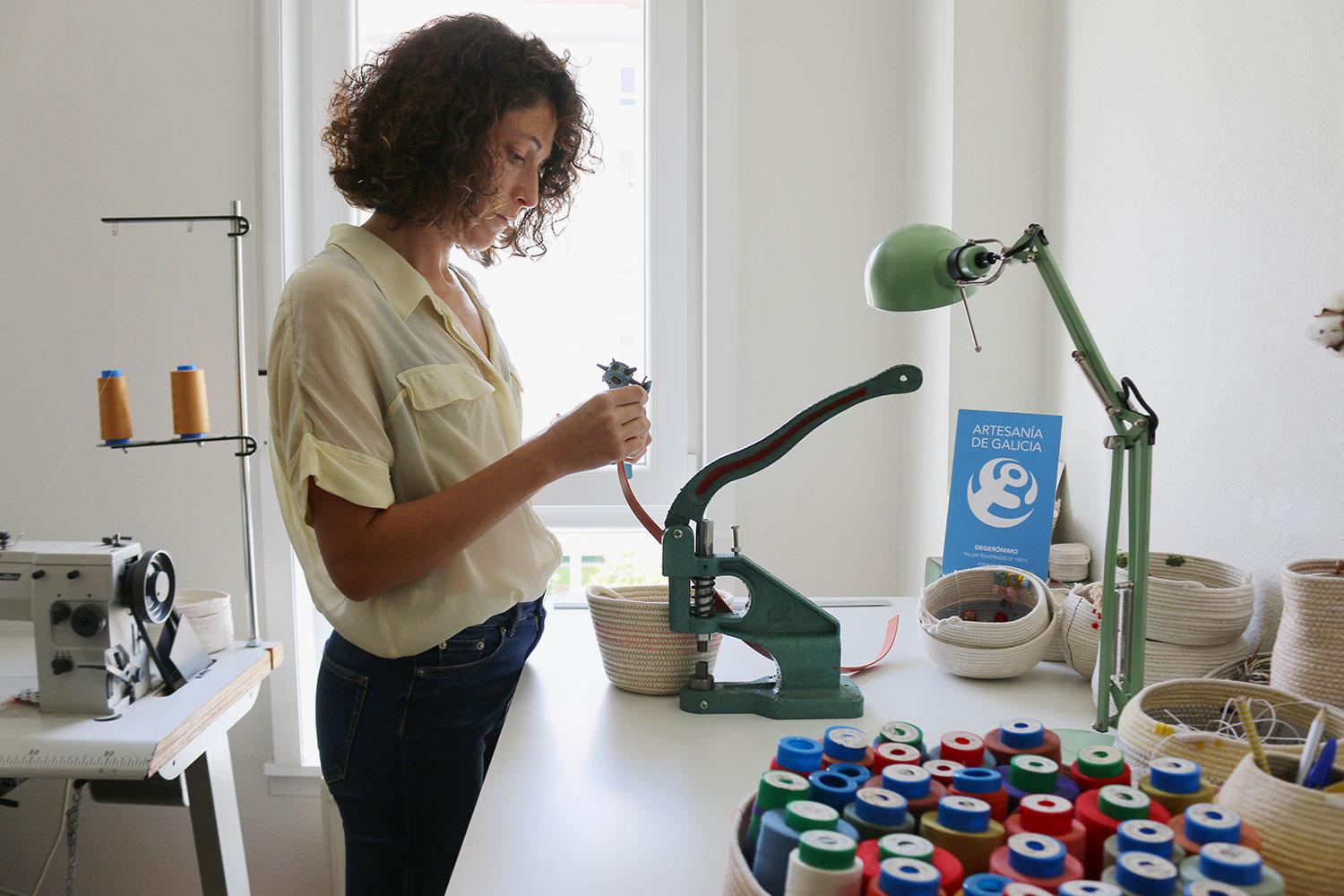
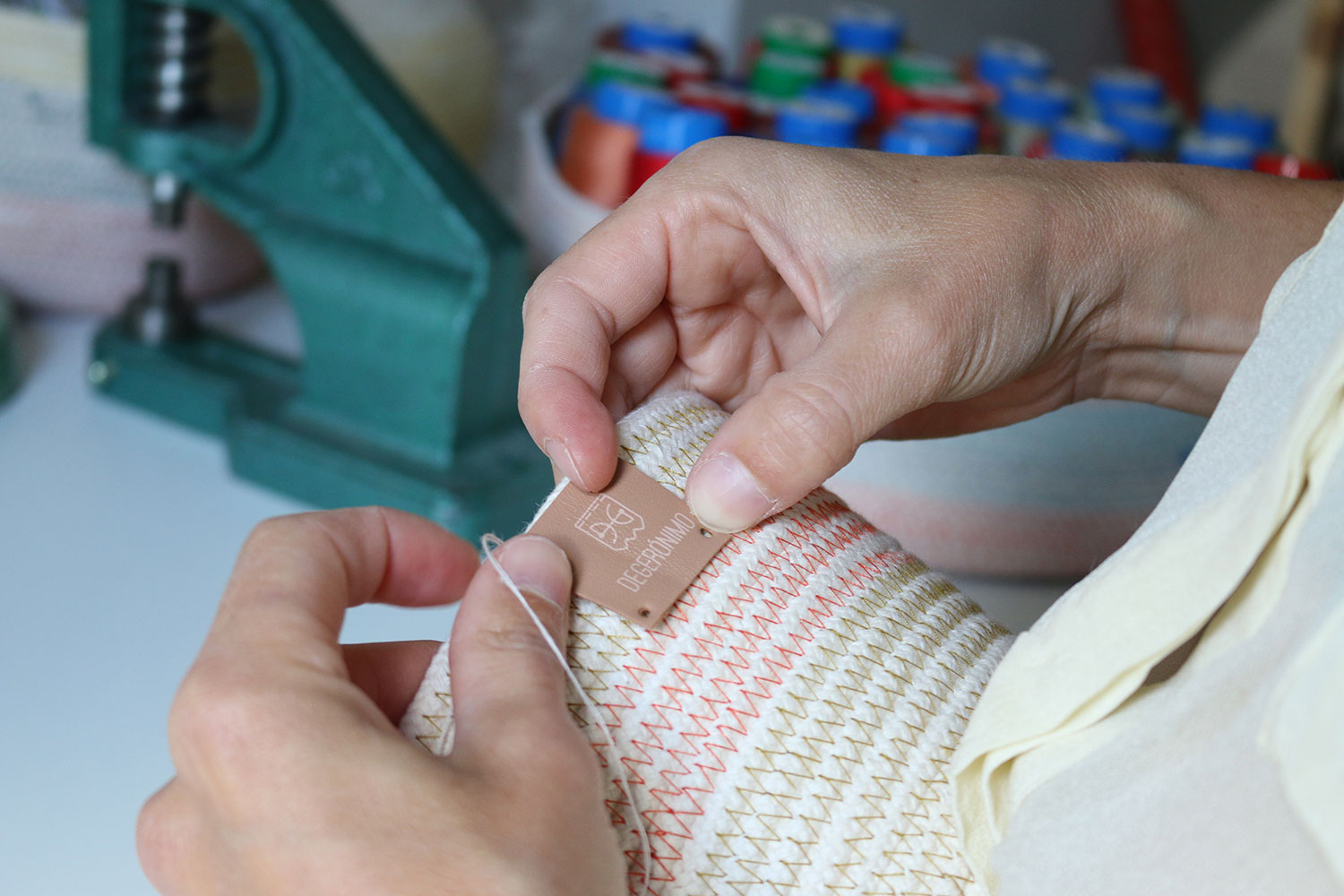
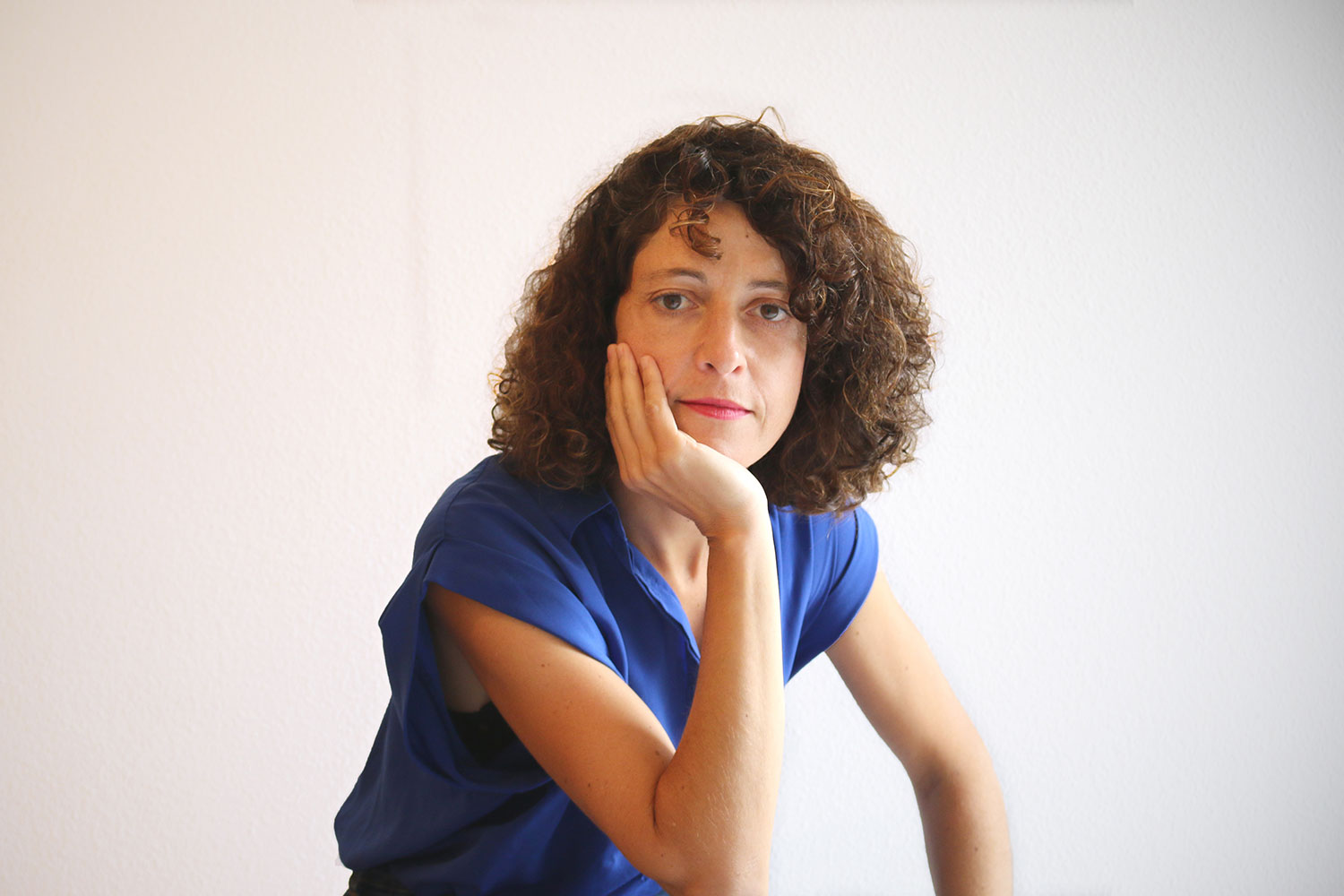
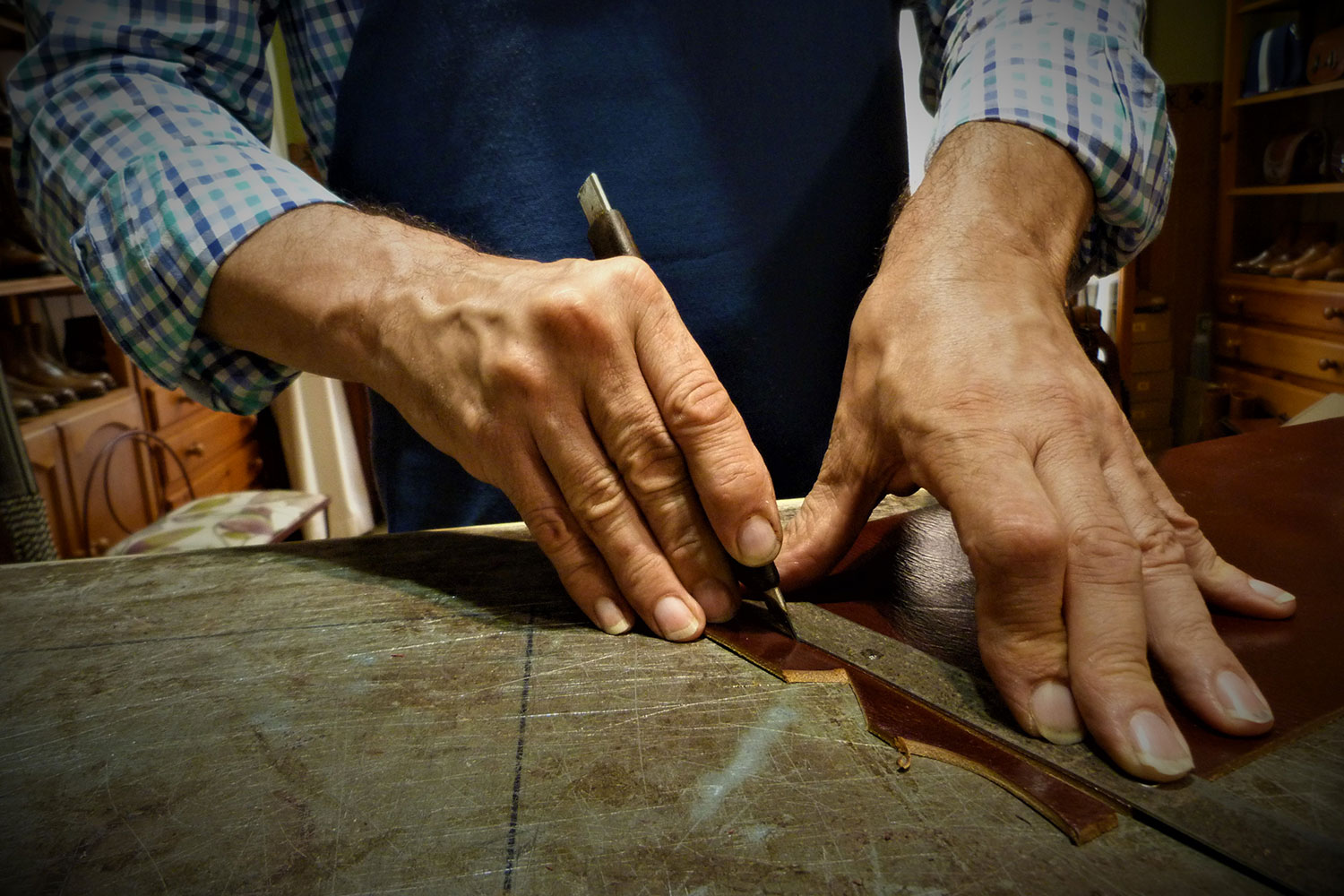
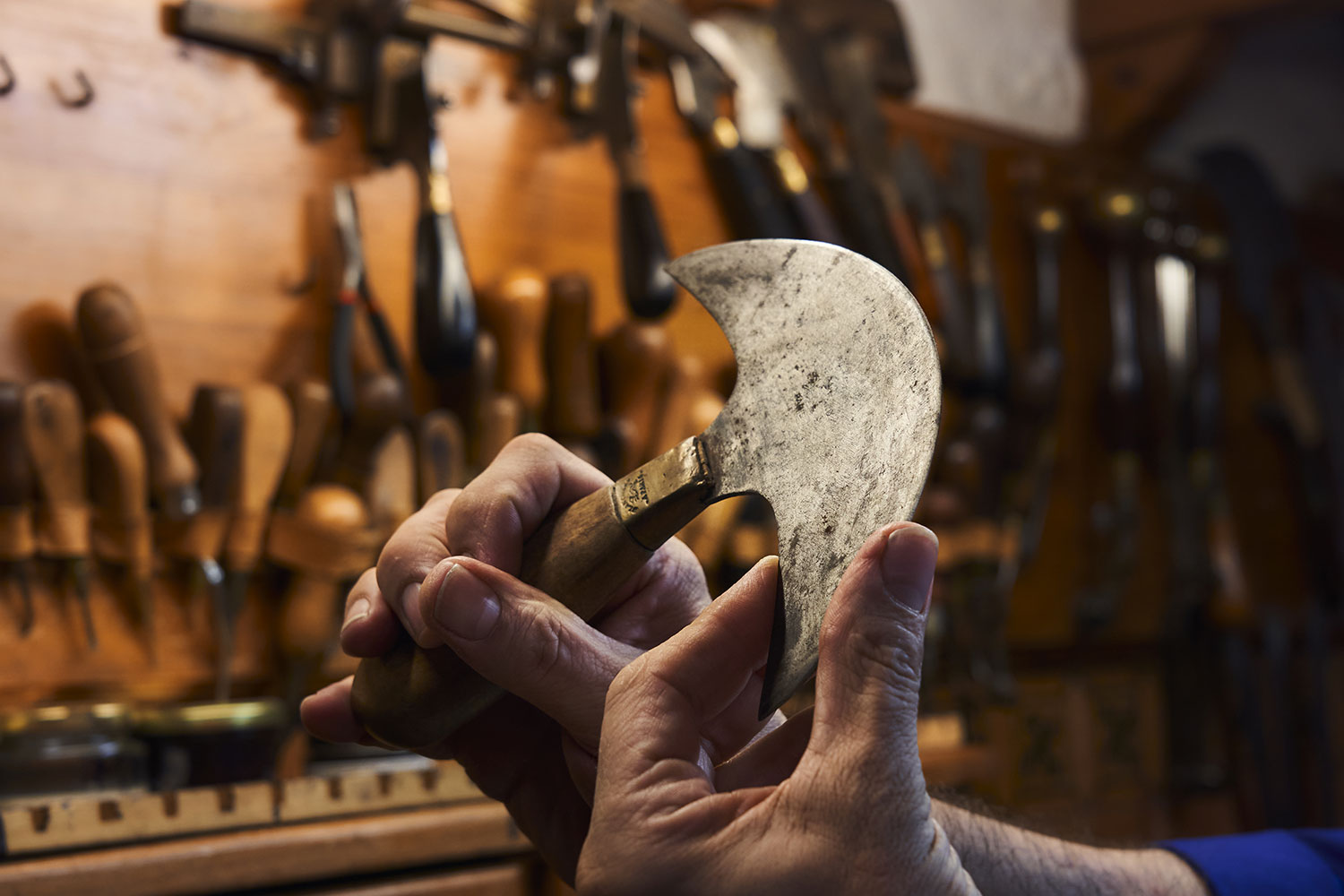
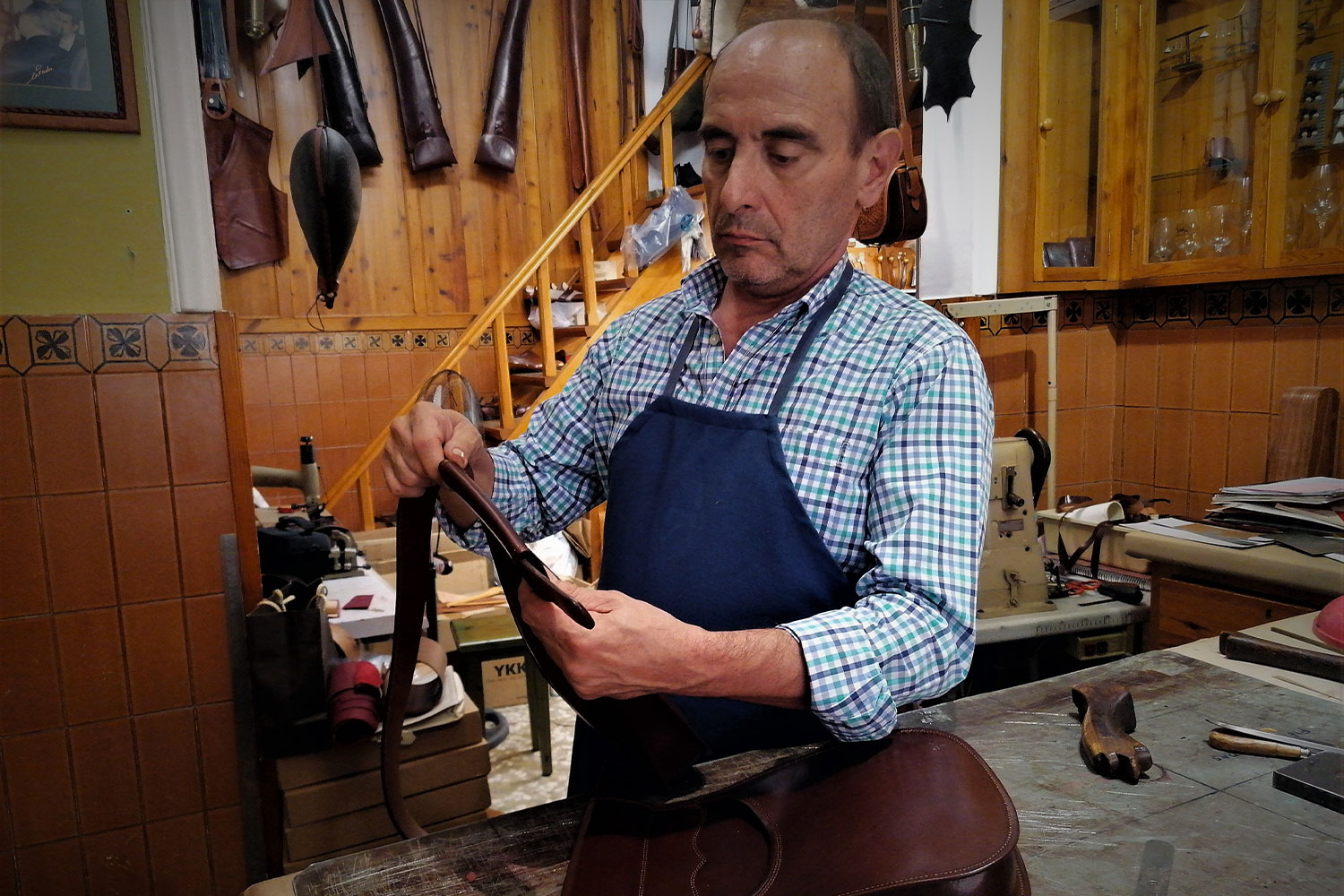
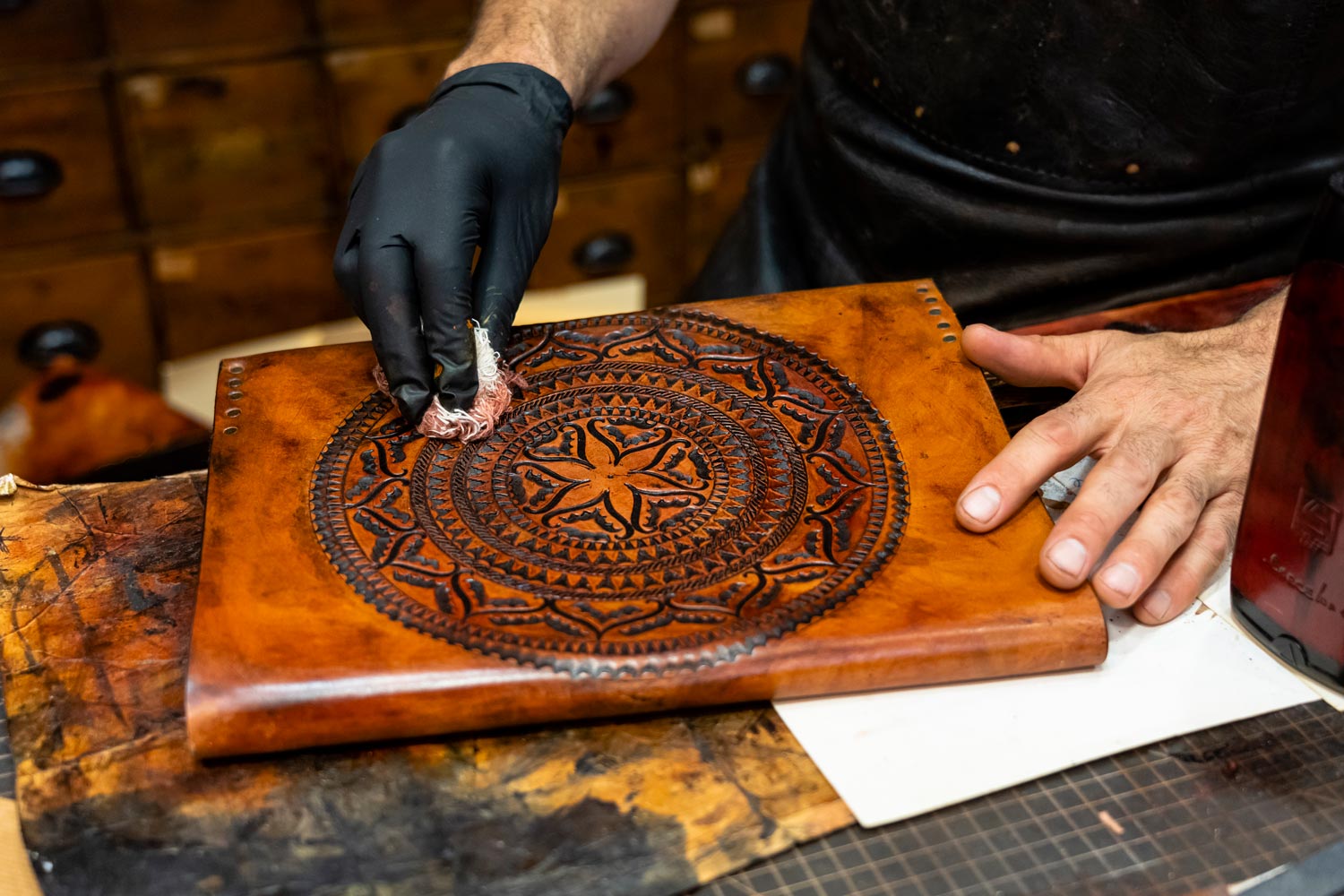
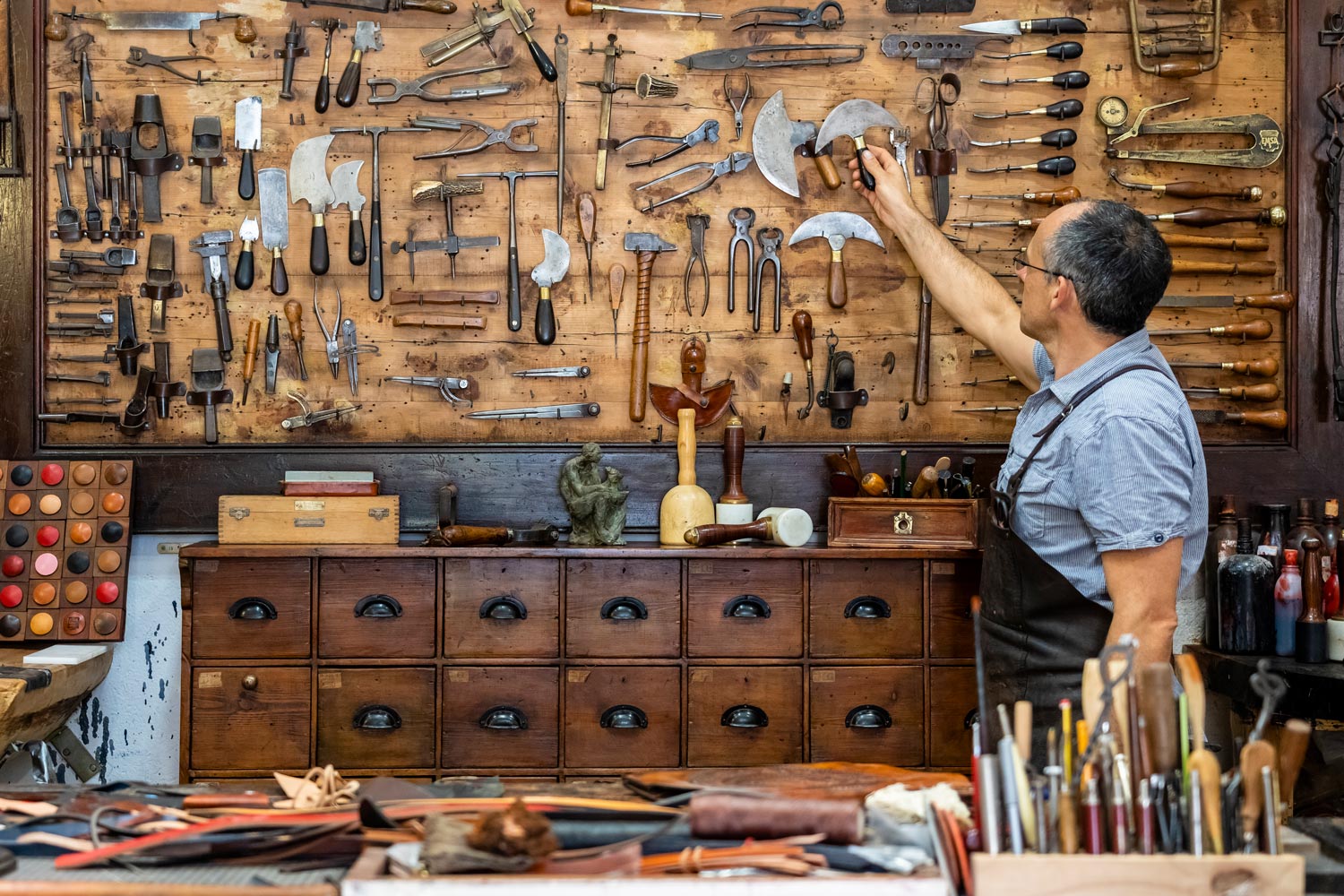
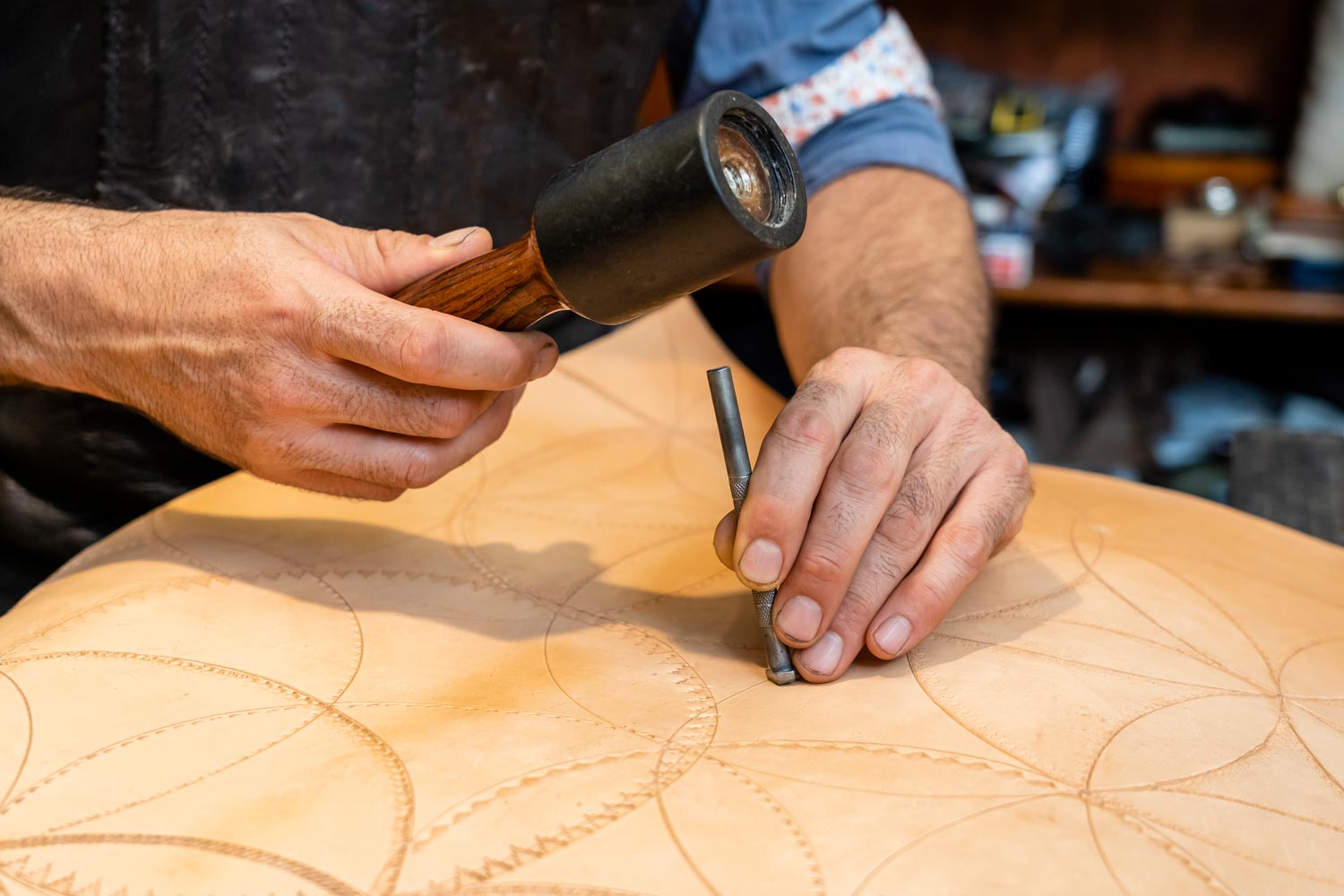
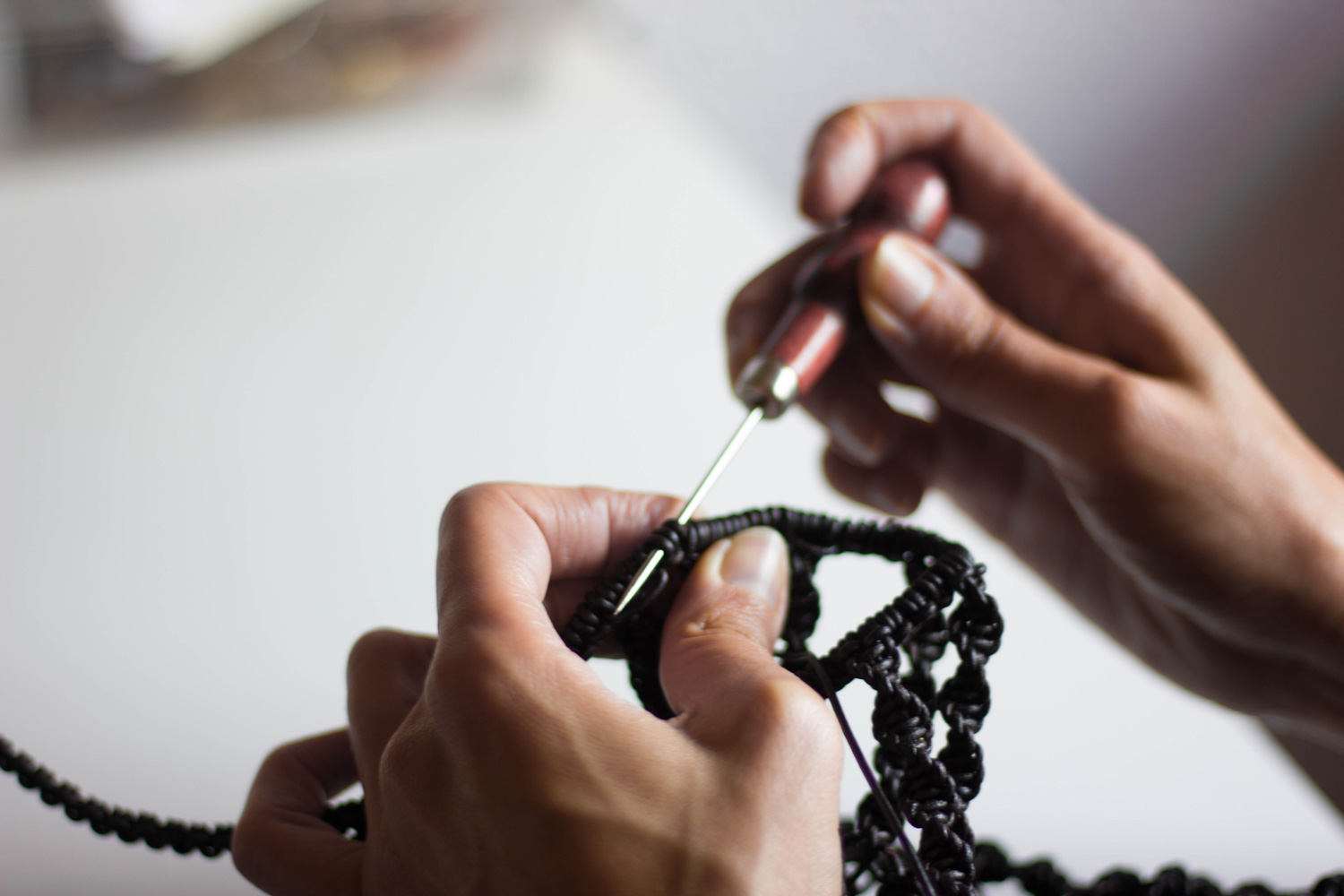
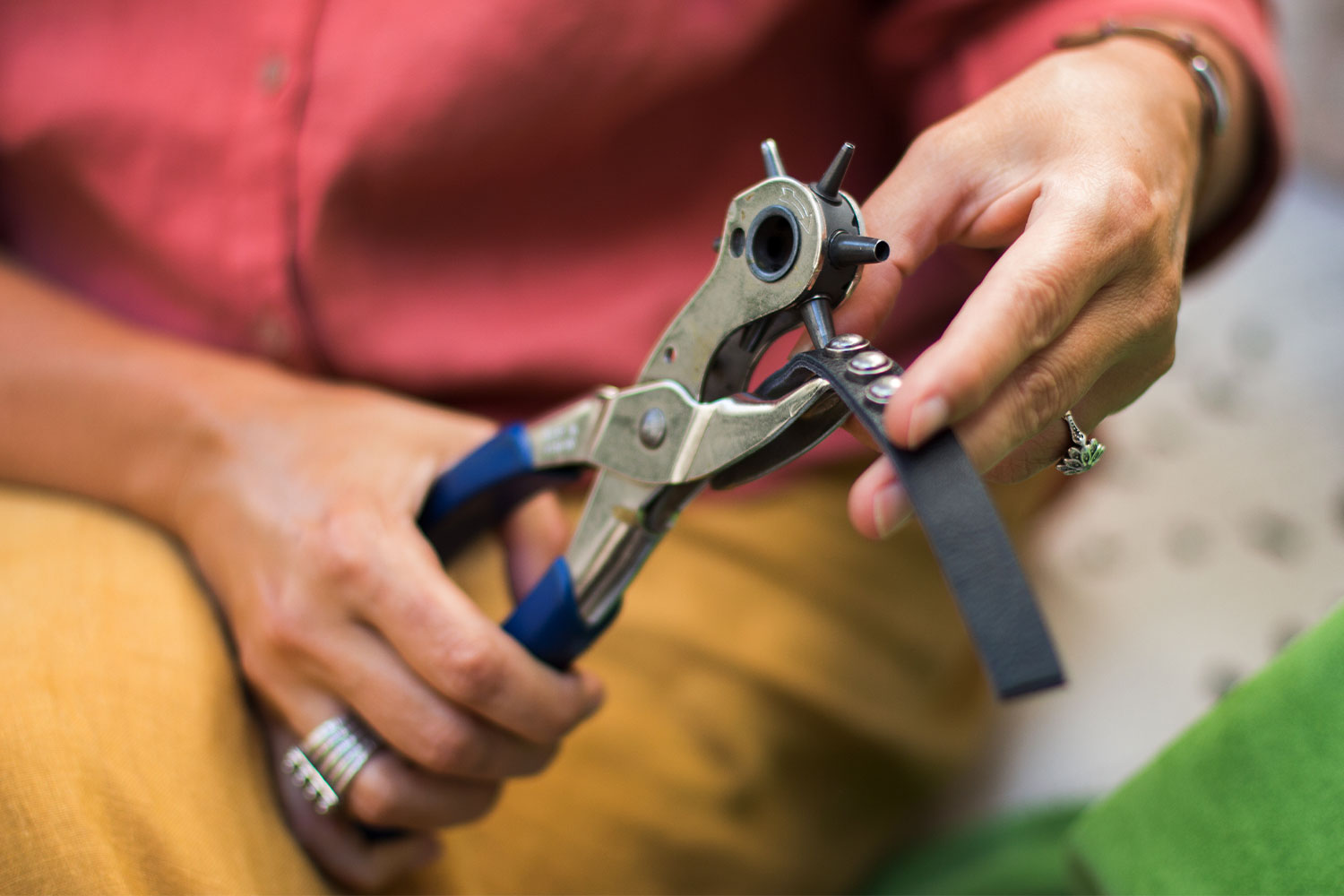
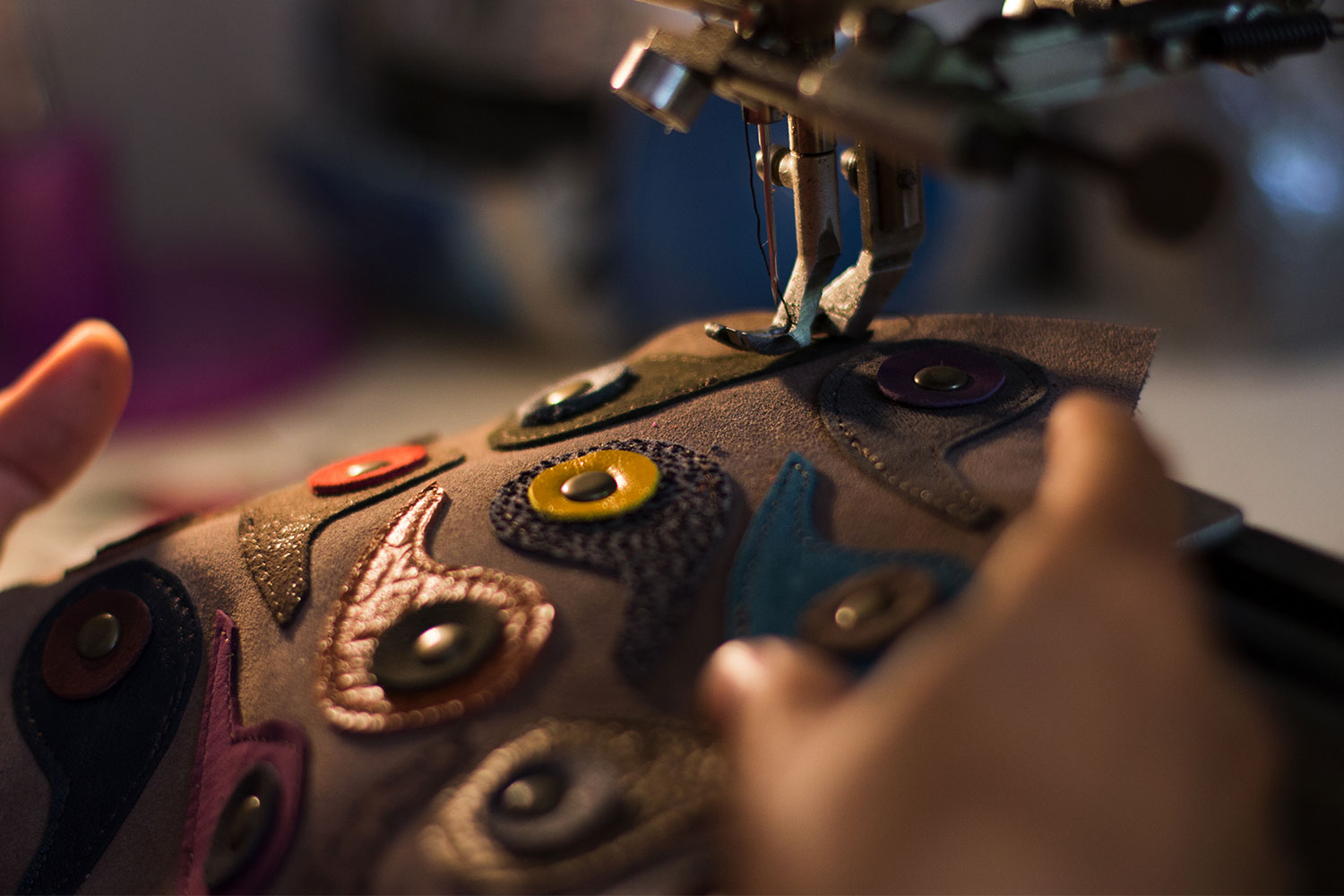
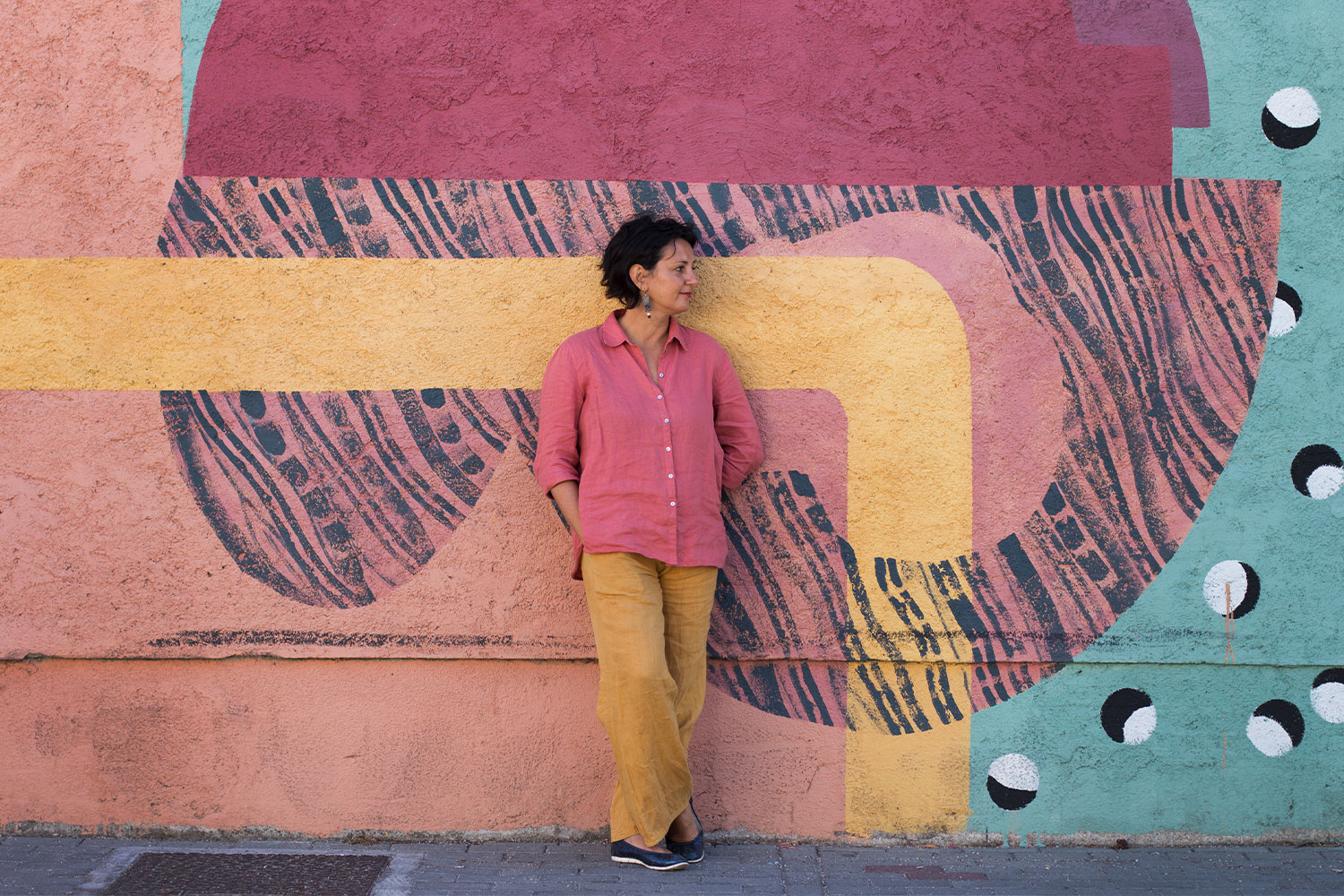
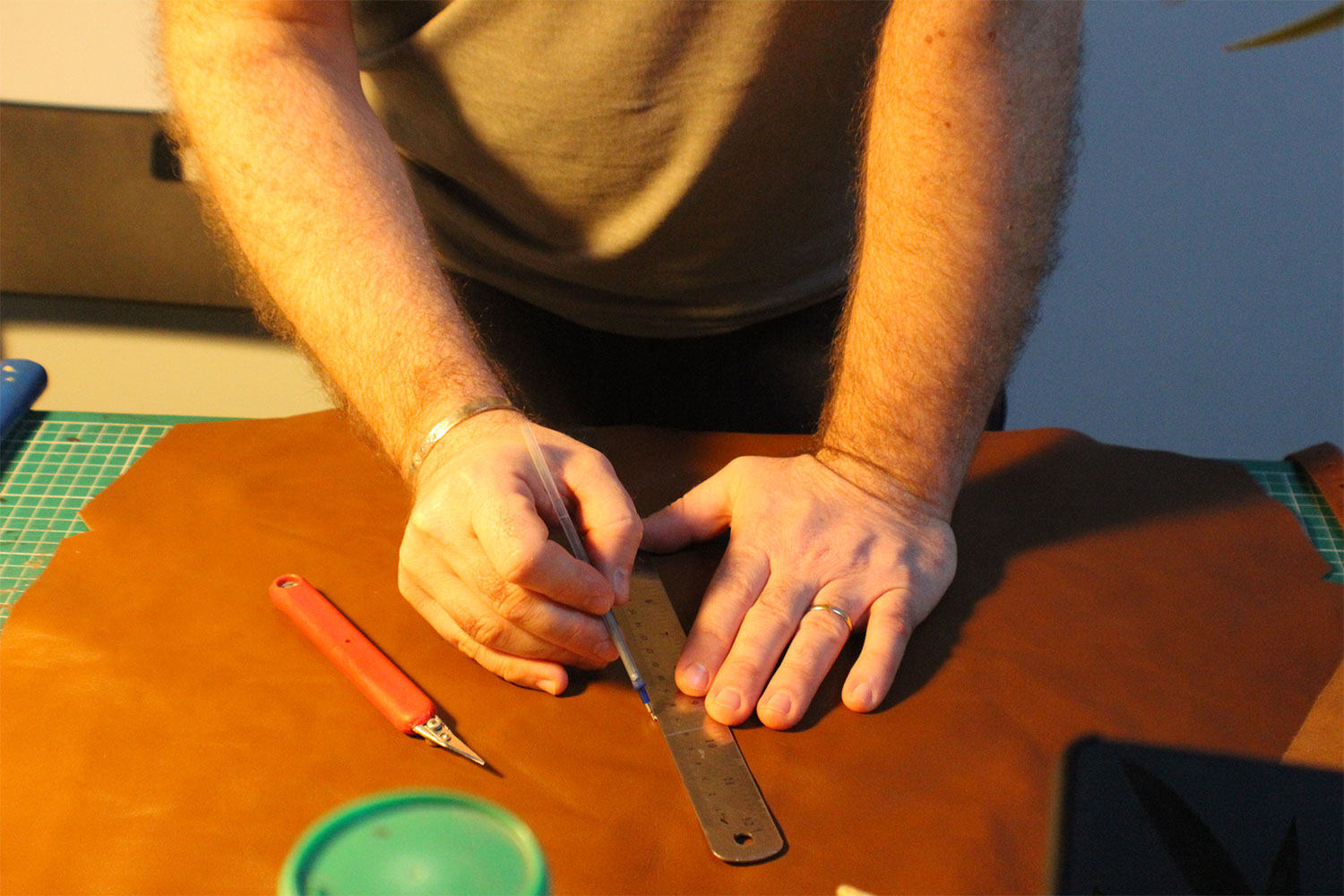
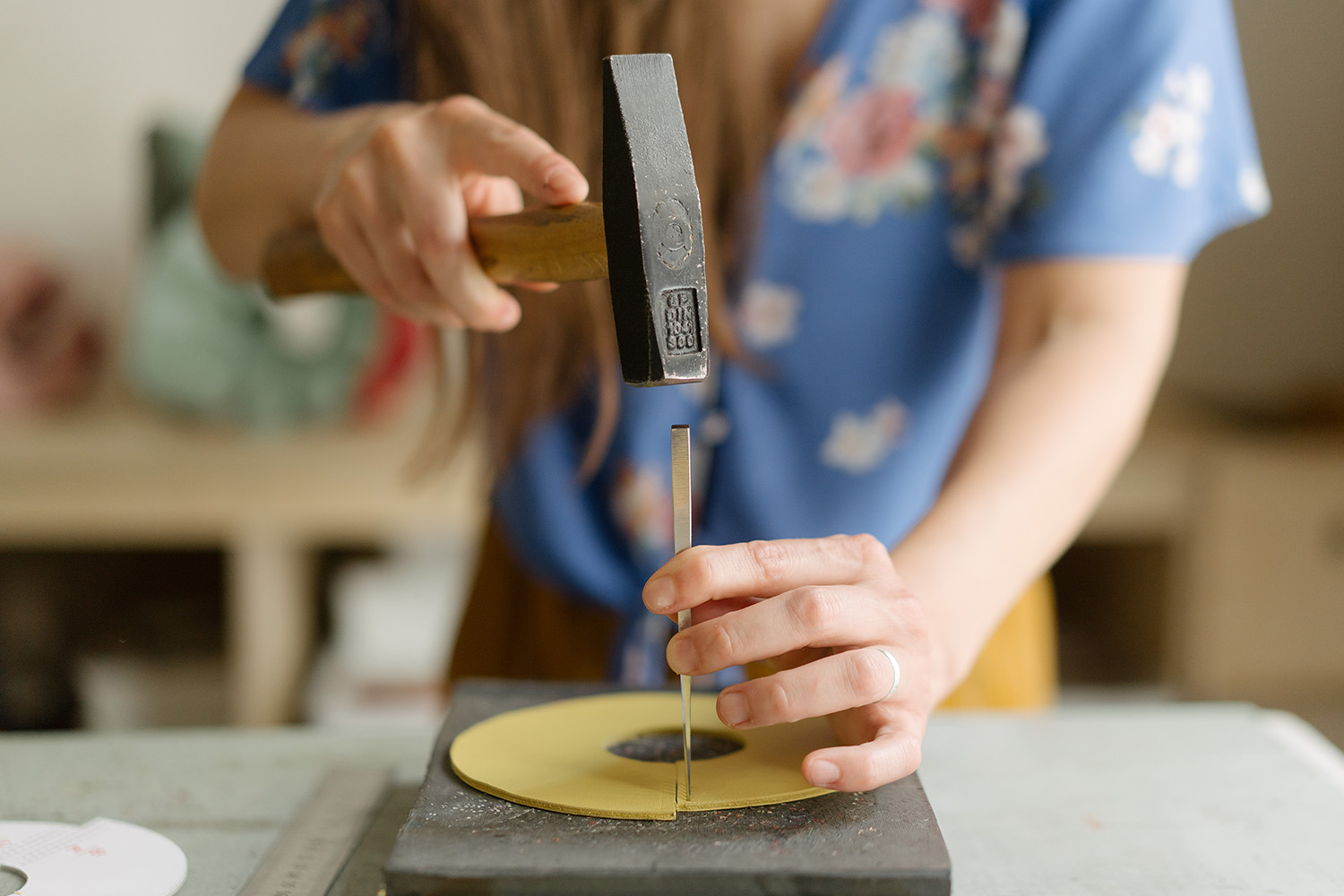
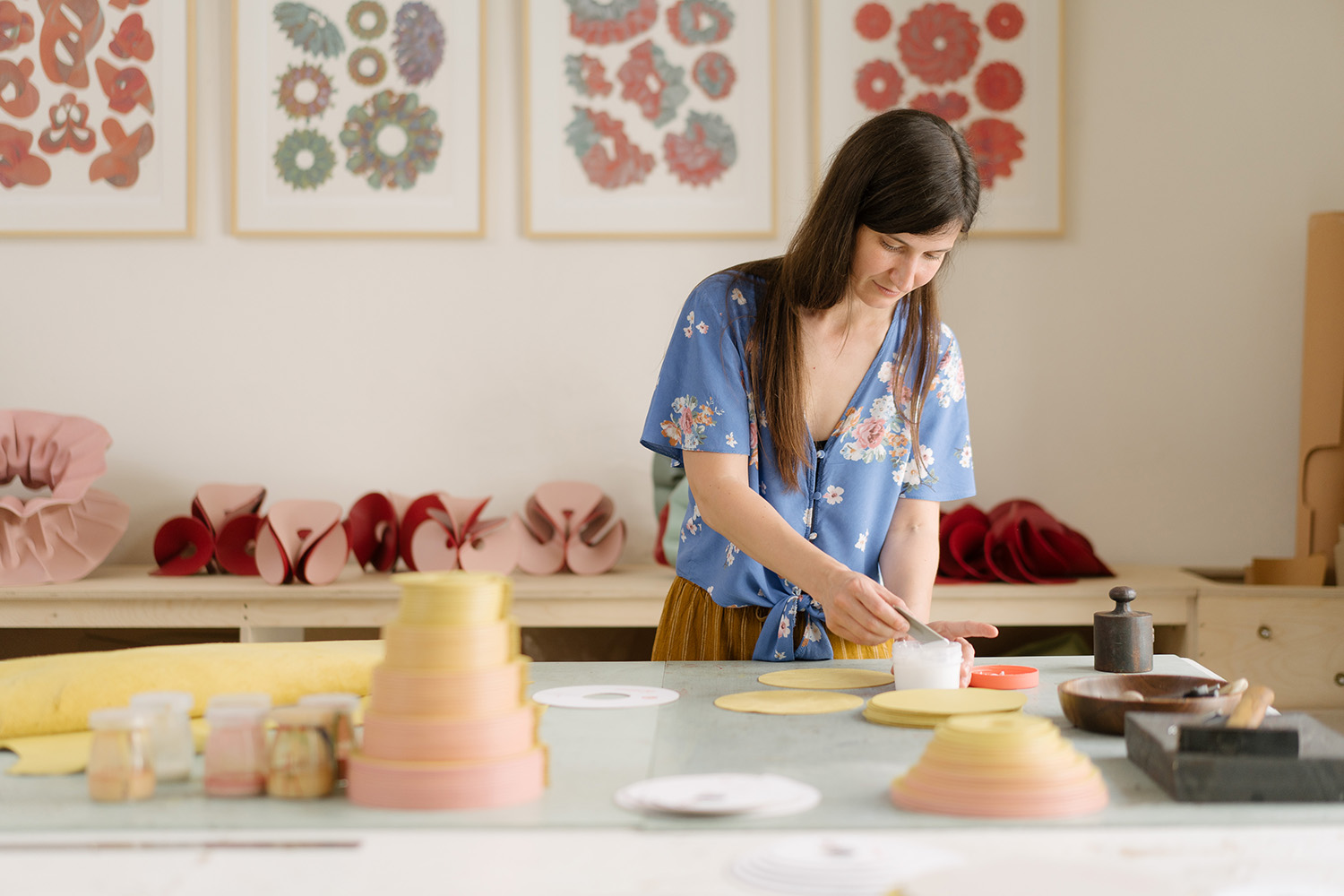
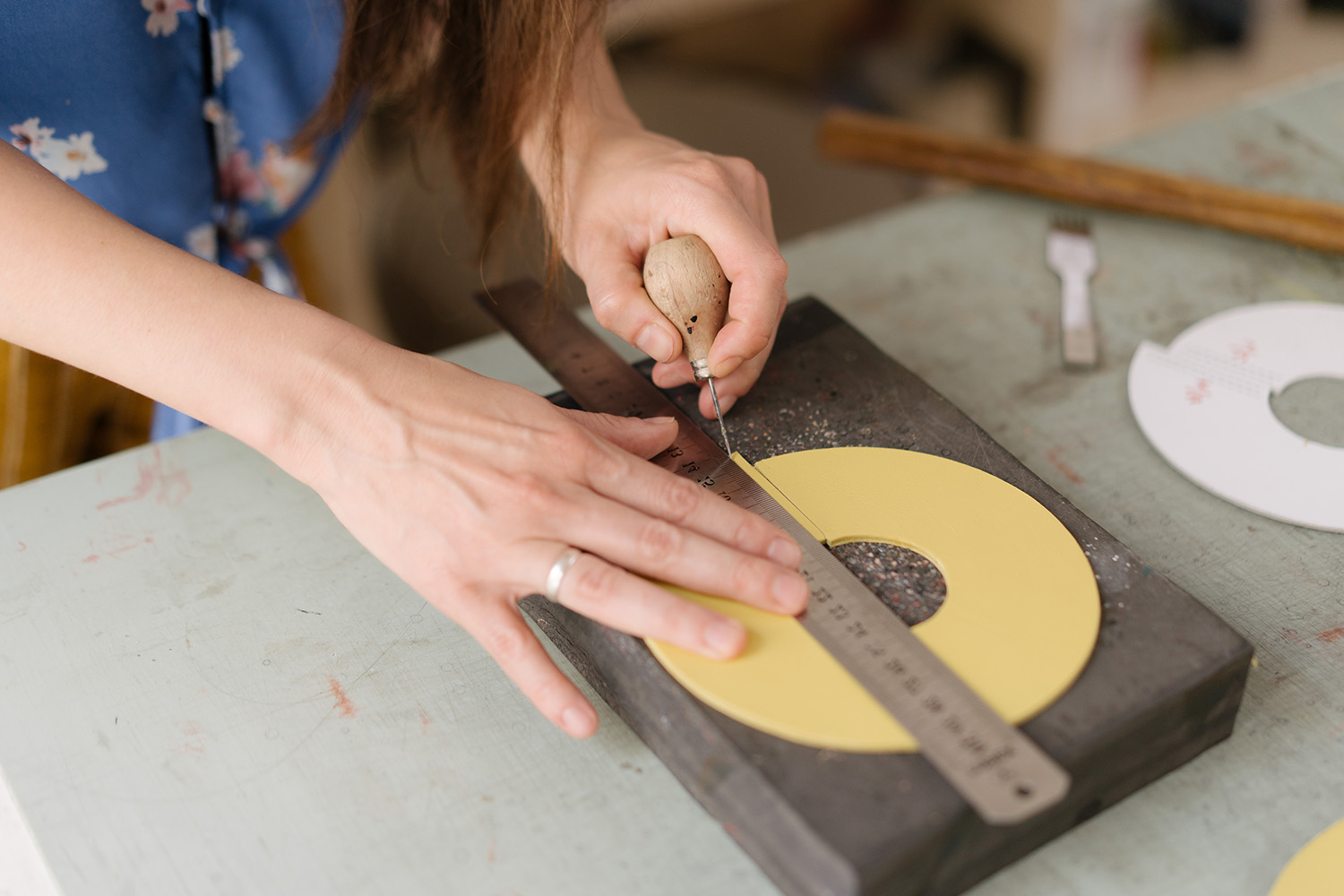
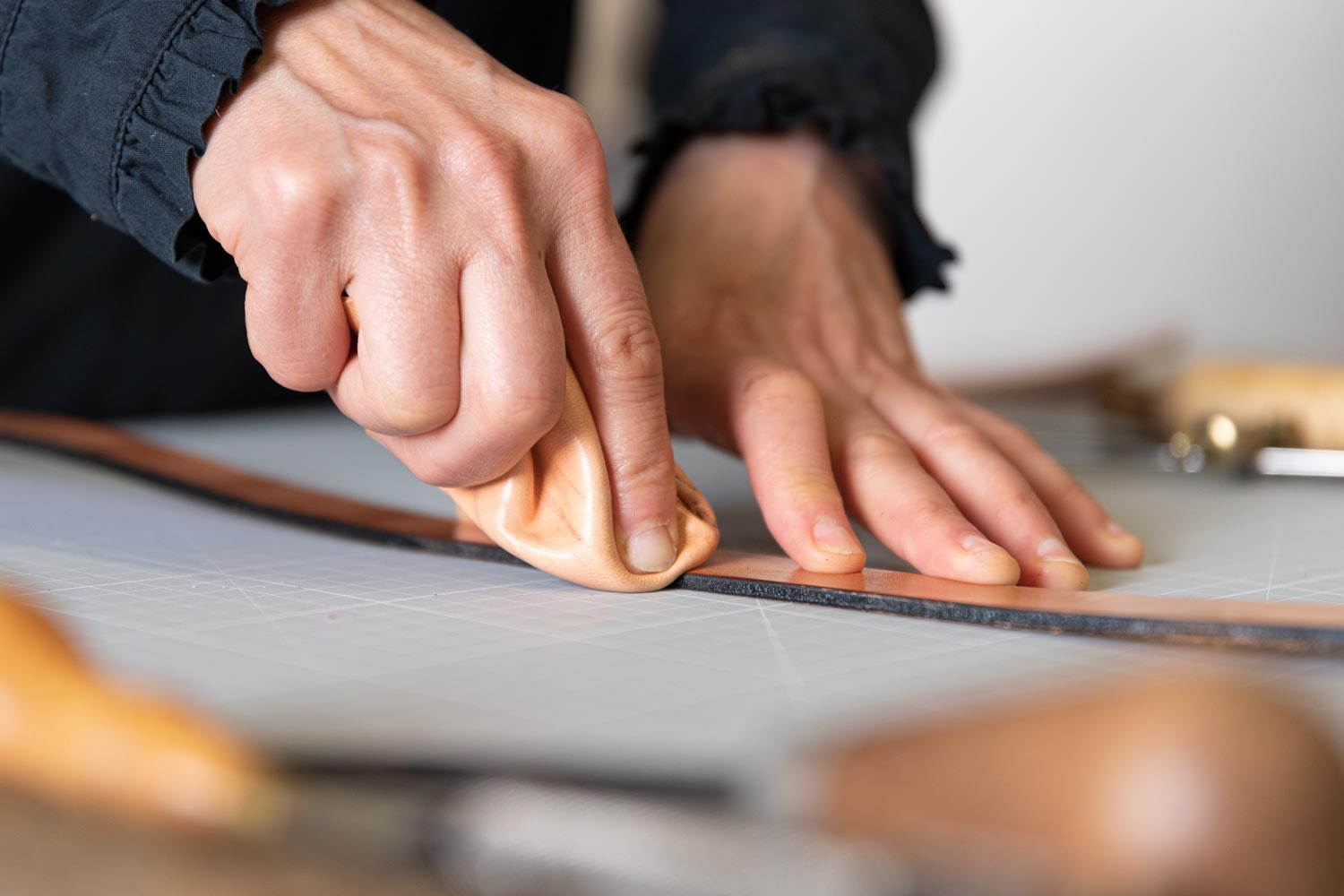
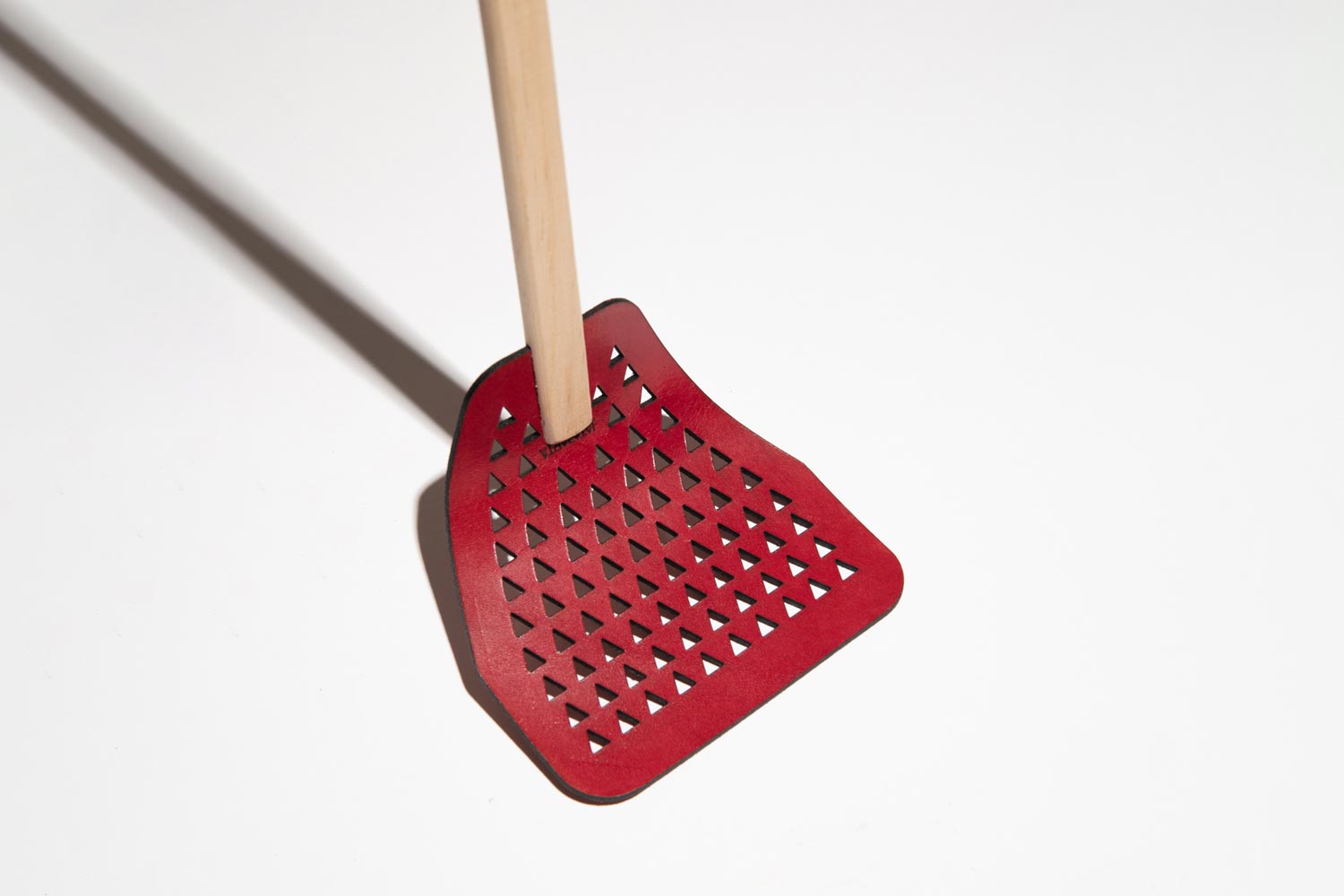
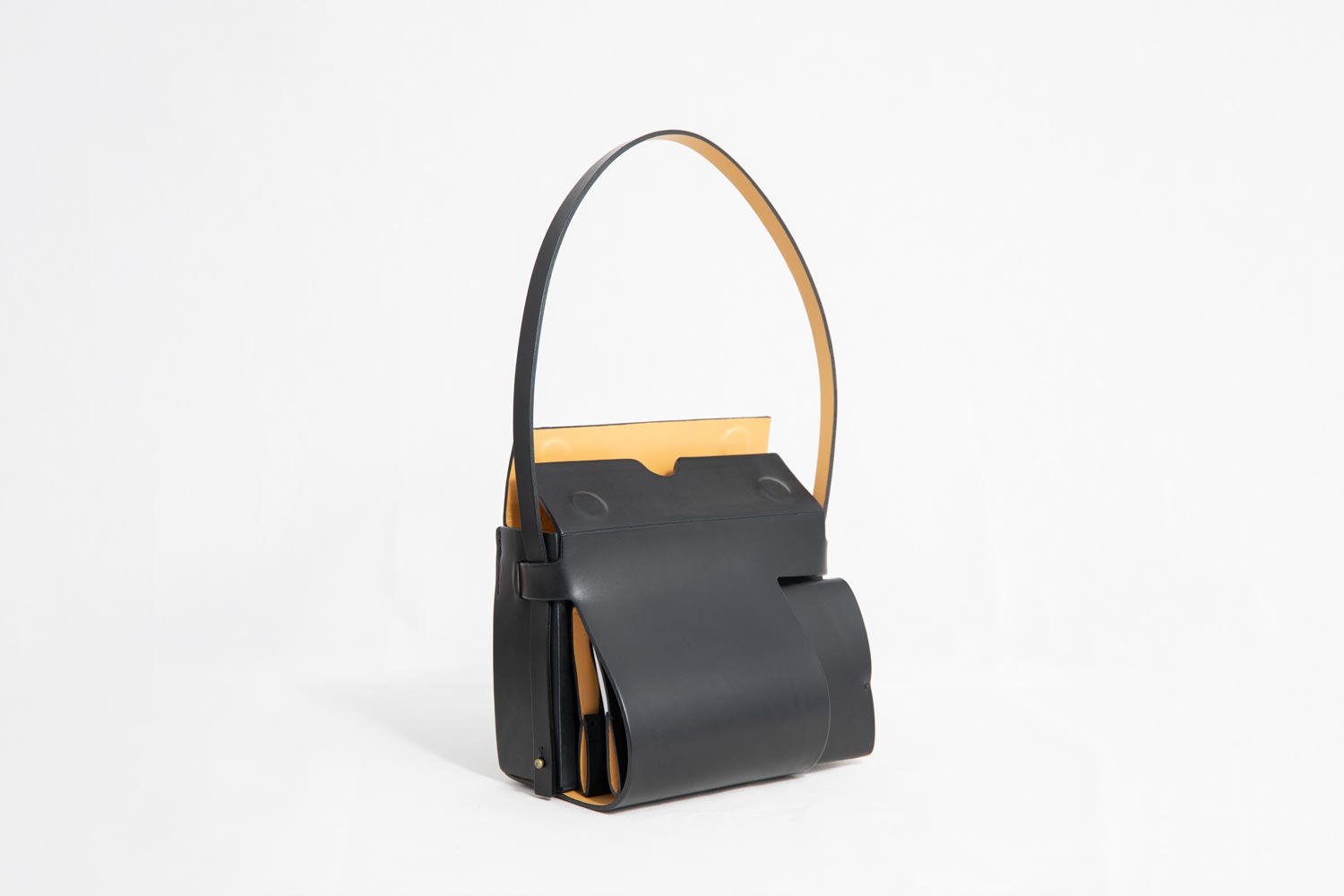
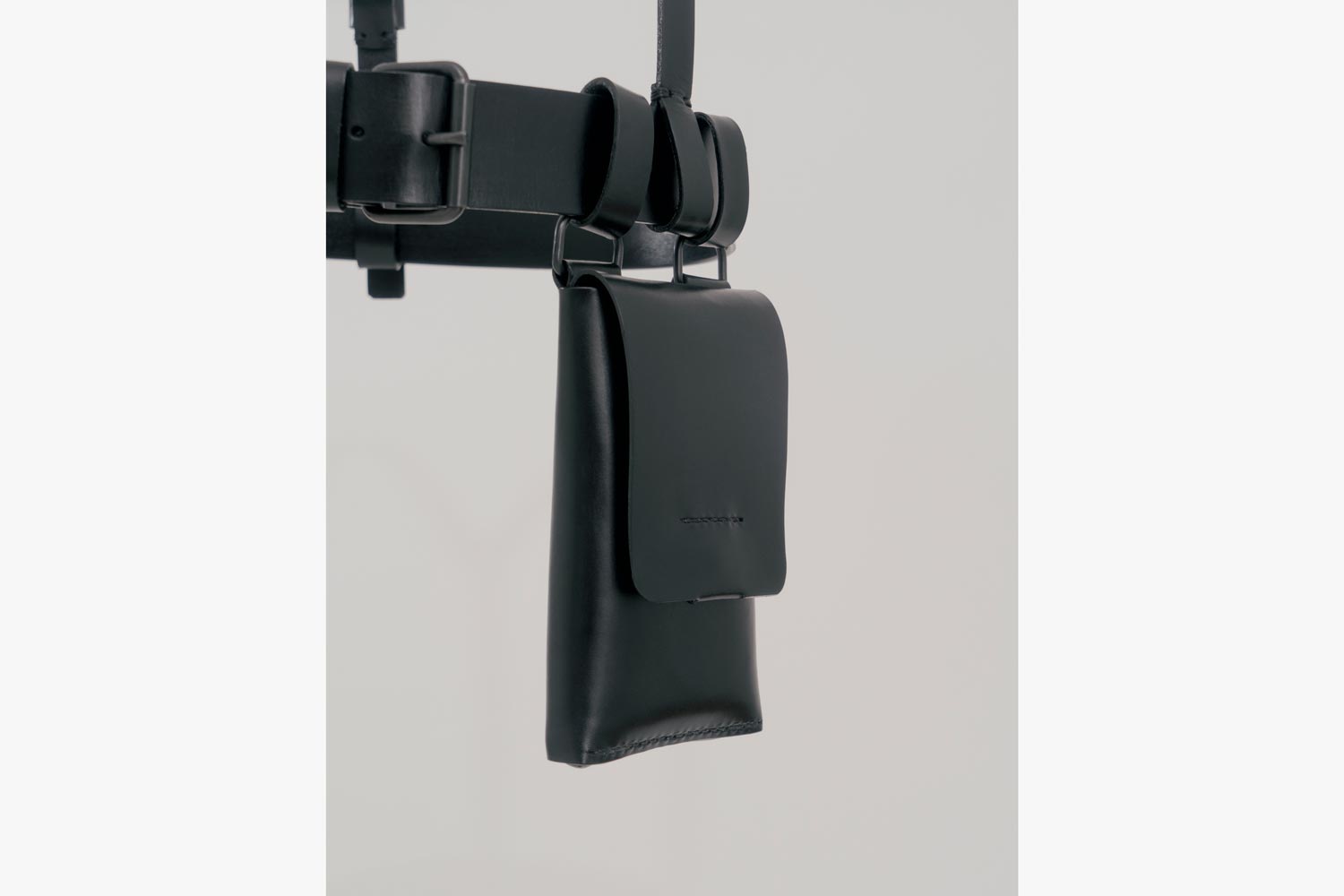
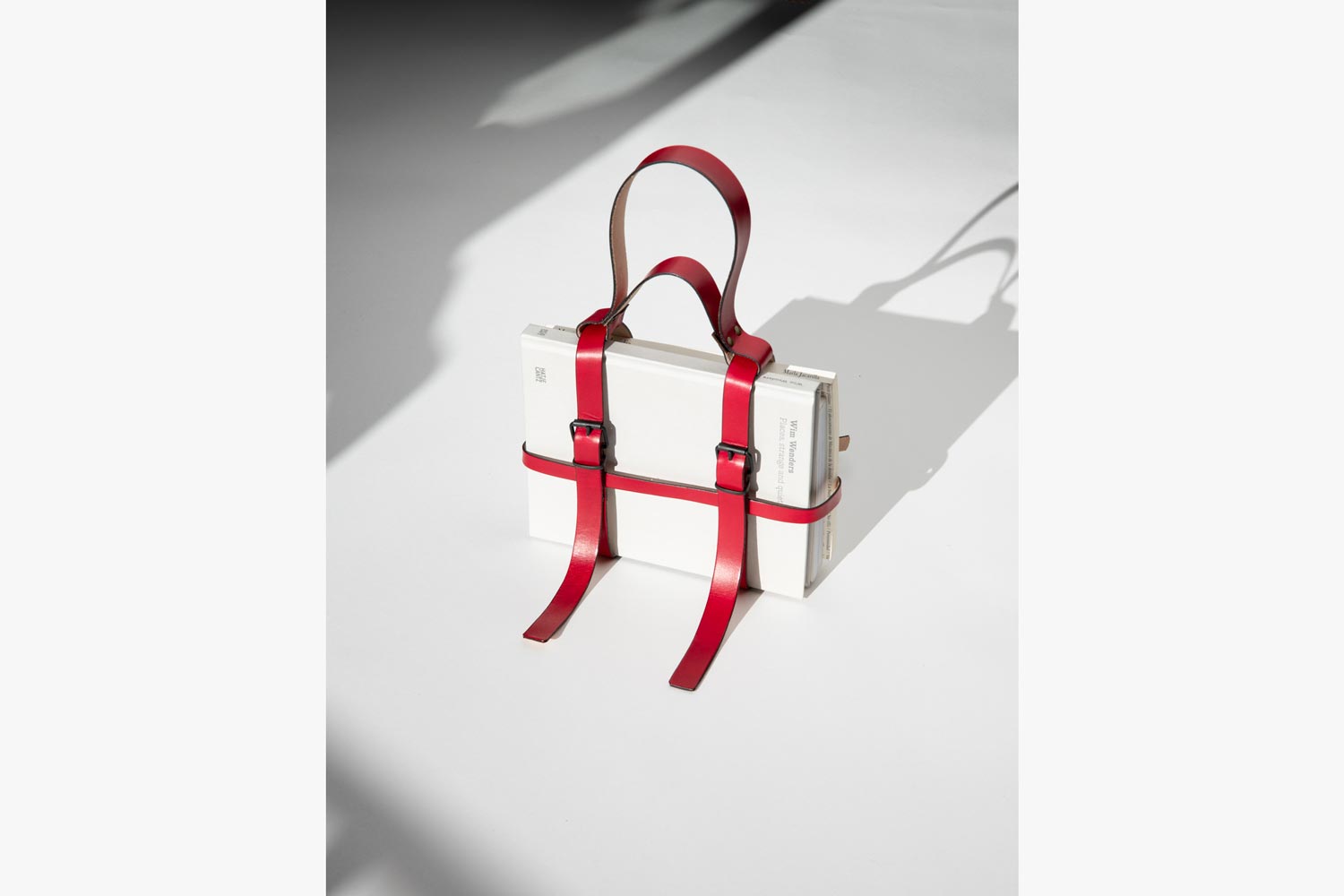
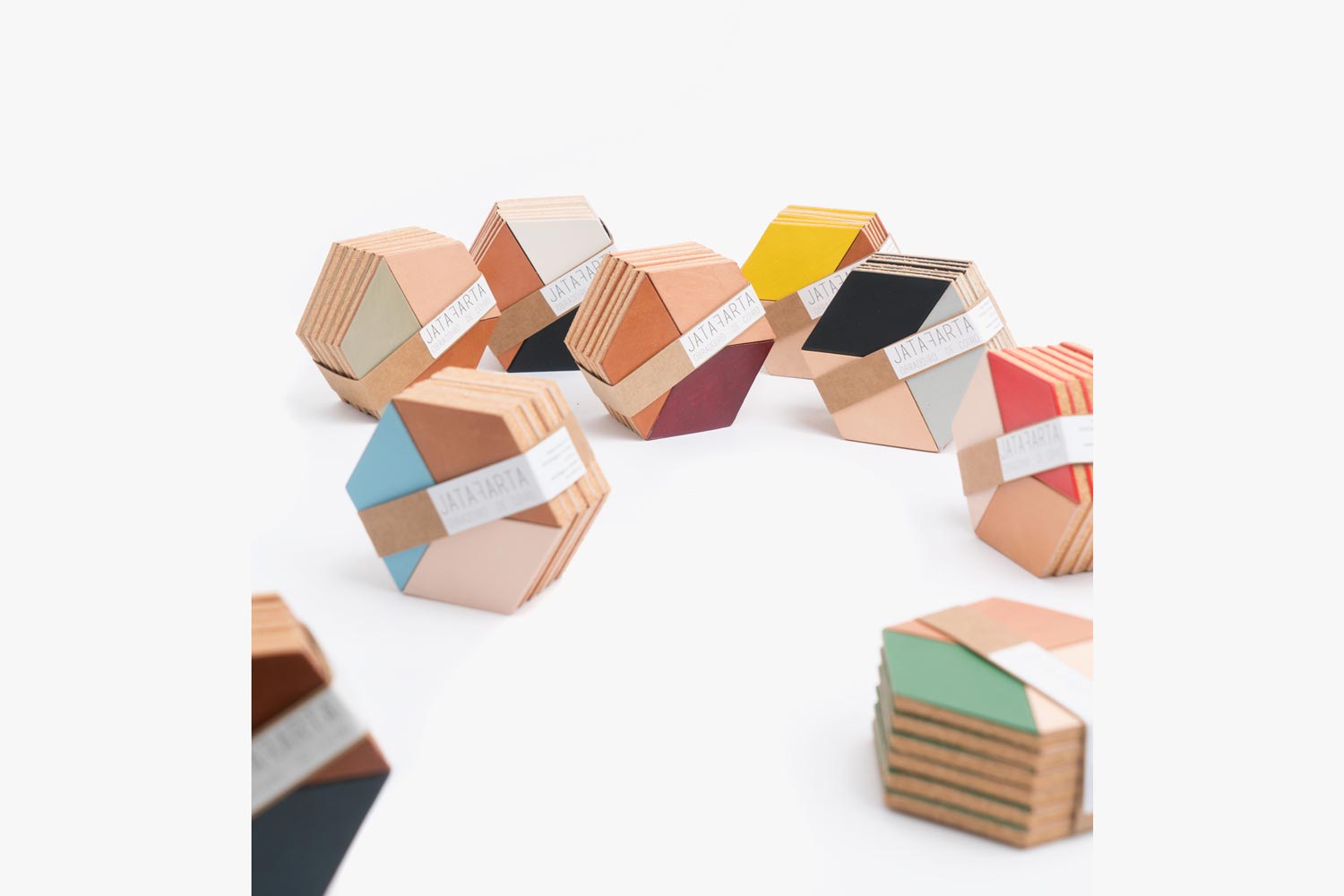
The artisan heritage inherited from her family and her academic training in Fine Arts have guided Edita Rodríguez Oca's career. Under the name Jatafarta, she creates handcrafted leather objects by applying traditional techniques, but always incorporating elements linked to sculpture and to design. Her brand's collection includes a wide variety of accessories such as wallets and bags, as well as homeware pieces such as mirrors, lamps, and drink coasters. Edita creates pieces made with raw materials in their most natural state, as well as objects where the material is in its most sophisticated version. She values slow work, in contrast to the unbridled pace of production of large corporations and respects small and responsible consumption.
INTERVIEW
When I finished my doctorate, I wanted to leave academia and do something related to the workshop and materials. I had two options: art or craftsmanship. At that time, craftsmanship was more accessible to me because I lived in an environment of artisan workshops.
The materials I use are from local producers. I try to use the resources I have nearby as much as possible. Another way of connecting with my territory is the use of the Galician language when I communicate with local clients.
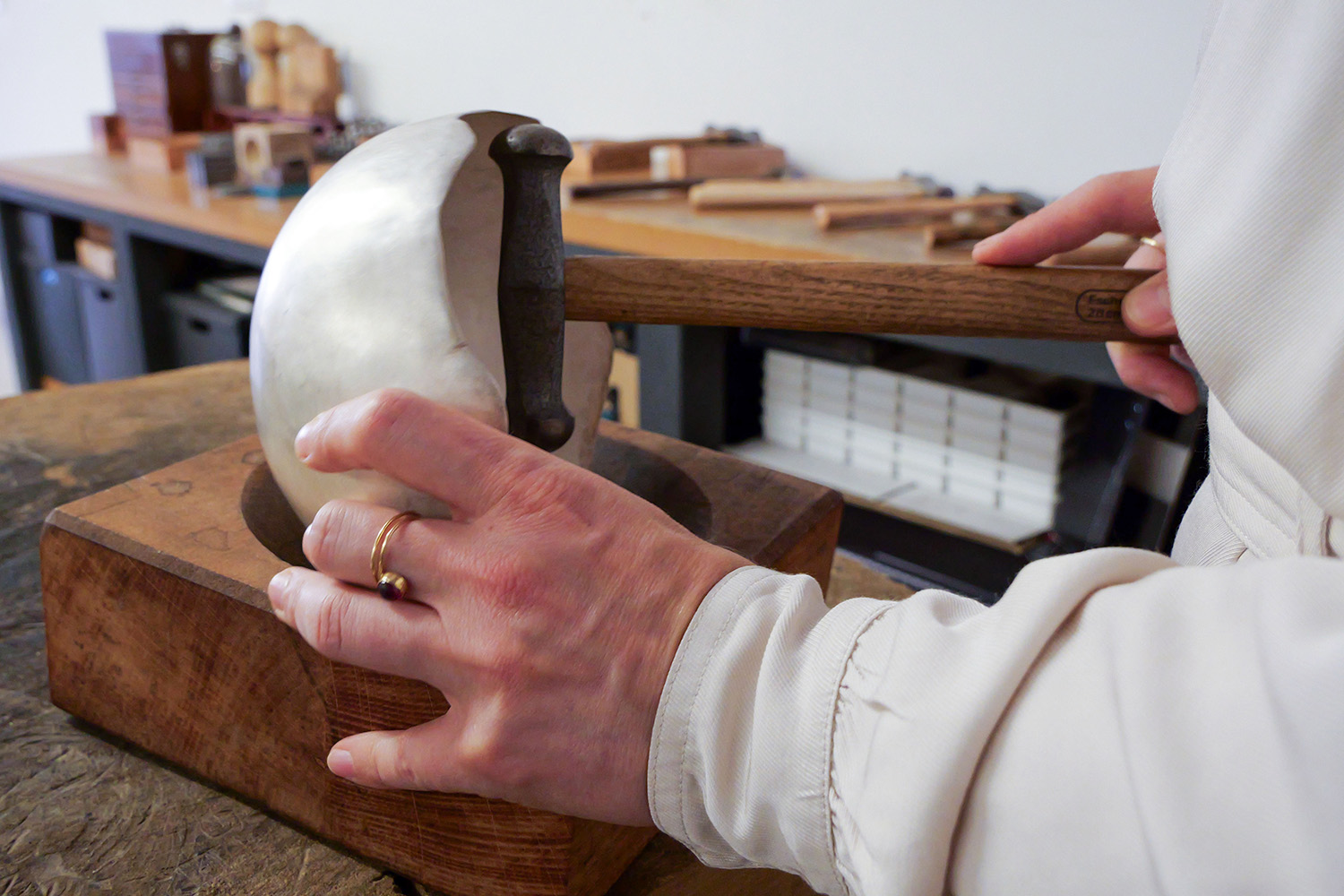
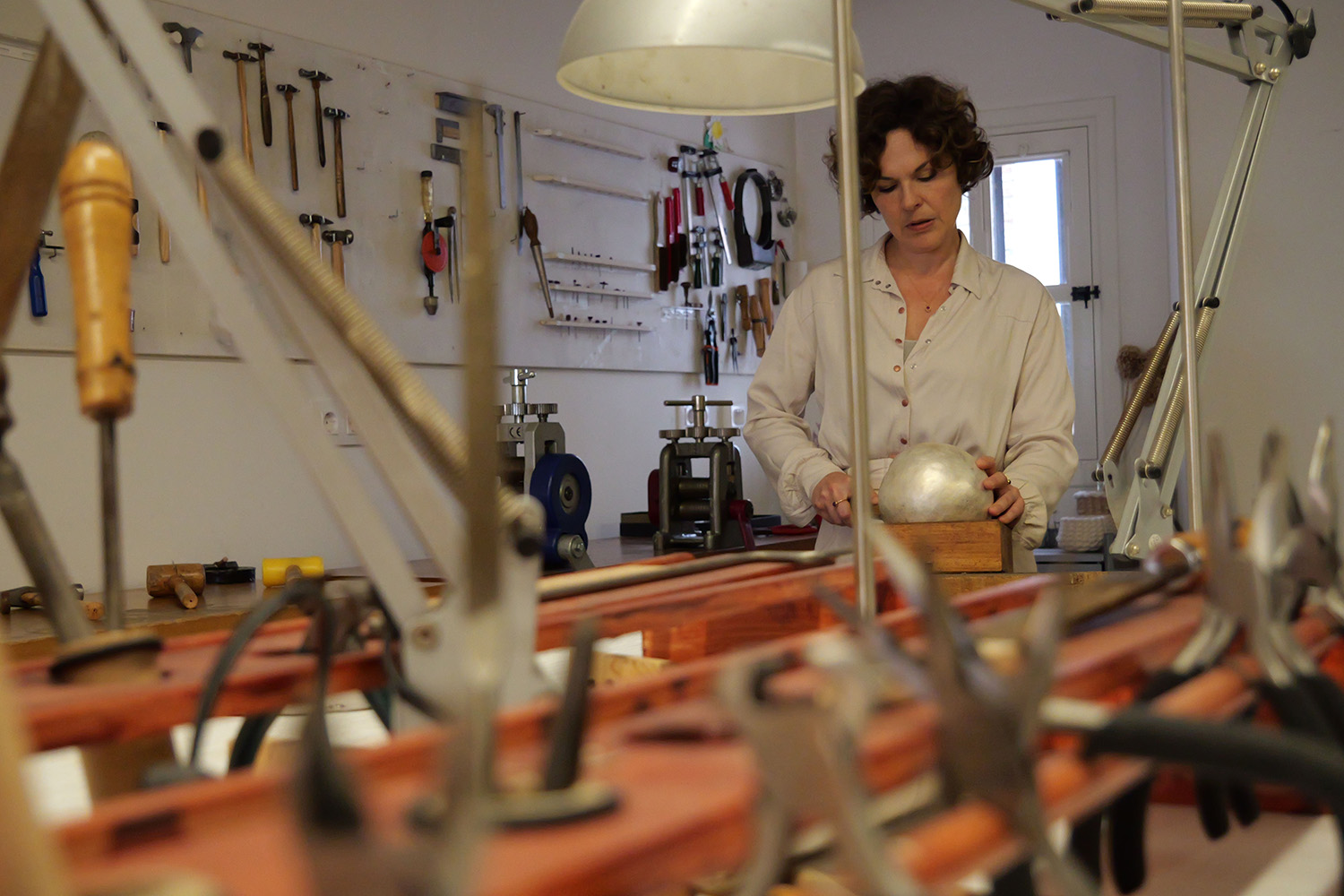
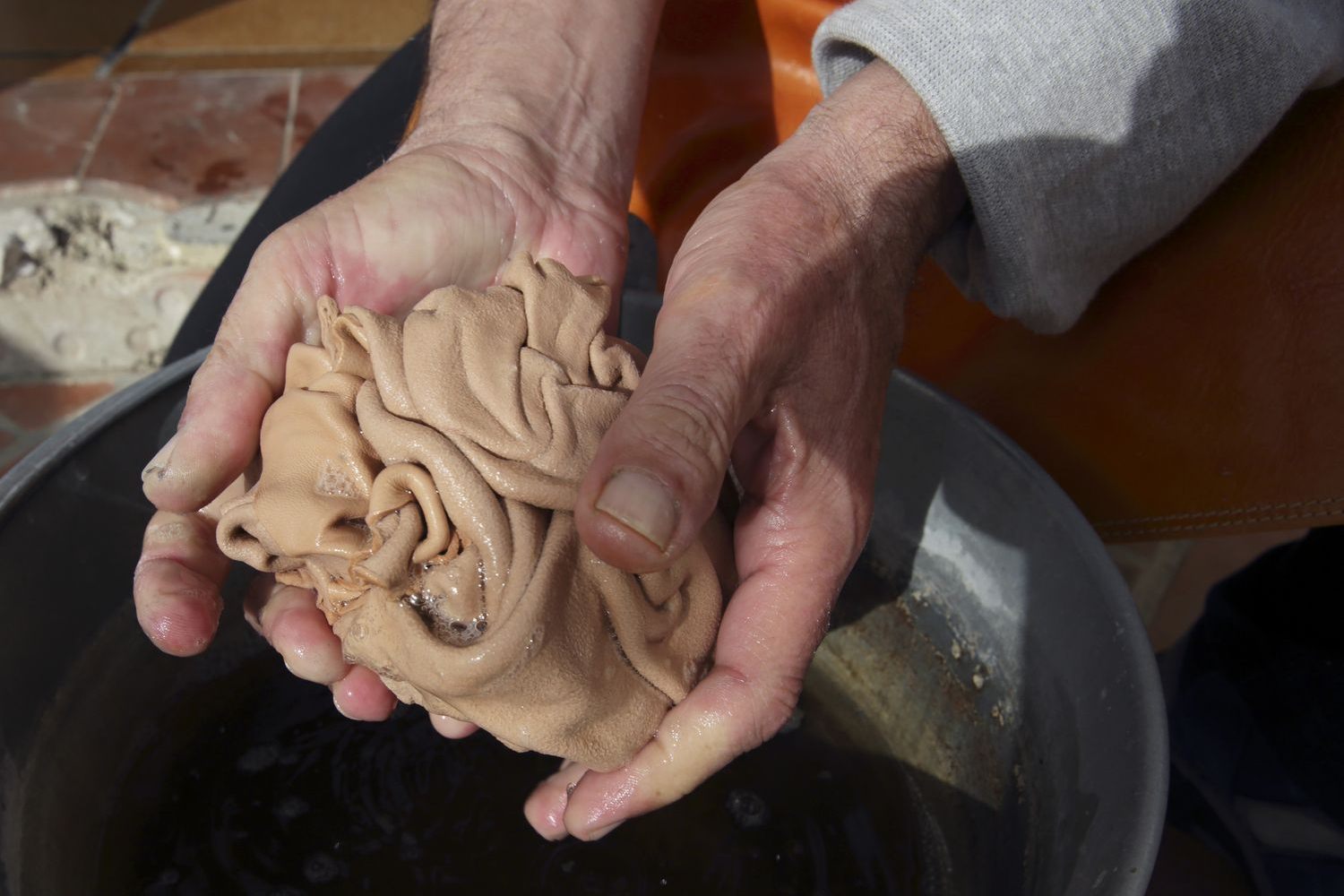
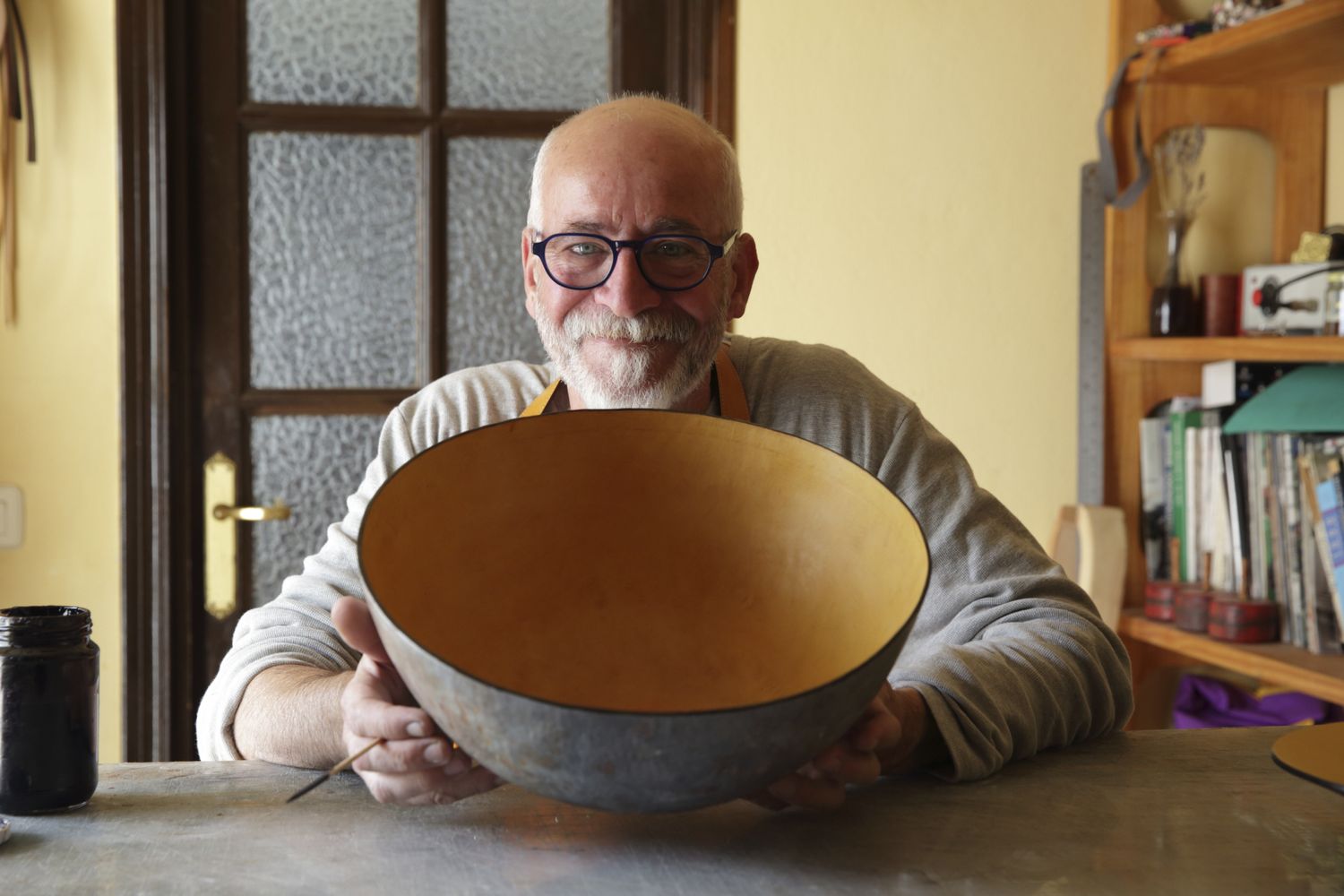
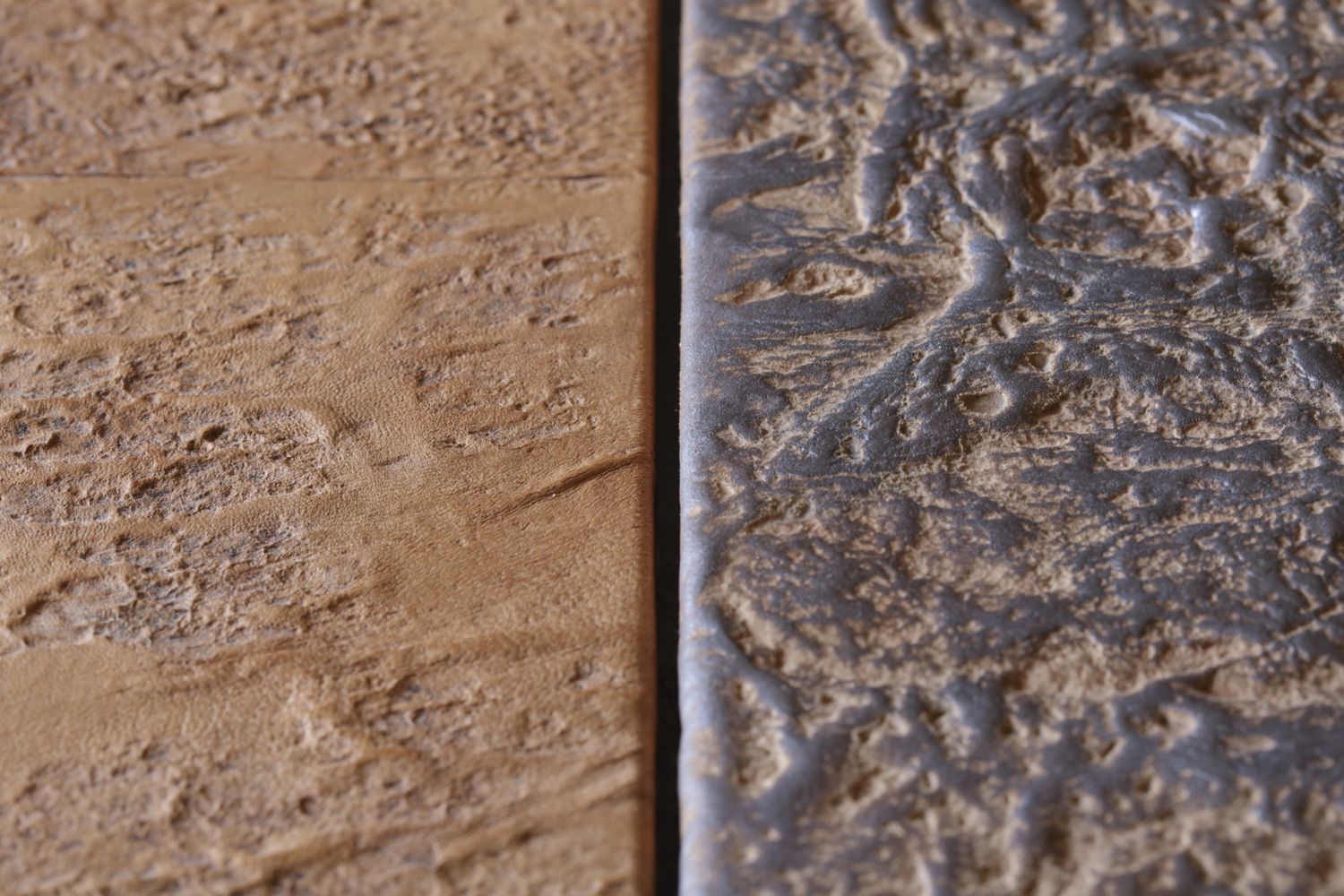
Yes, I do. For years, I have been researching a very interesting medieval technique applied to leather: baked leather. I sense that this technique is going to be a very long field of experimentation and maybe I will specialise in it.
There is a kind of obsession with the simplicity of shapes, the absence of ornaments and seams. The folds and layers seek formal solutions to achieve clean volumes. I use many resources from minimalist sculptures and origami.
2 EXPERIENCES