Julie Barbeau
Embroiderer
Saint-Aignan-Grandlieu, France
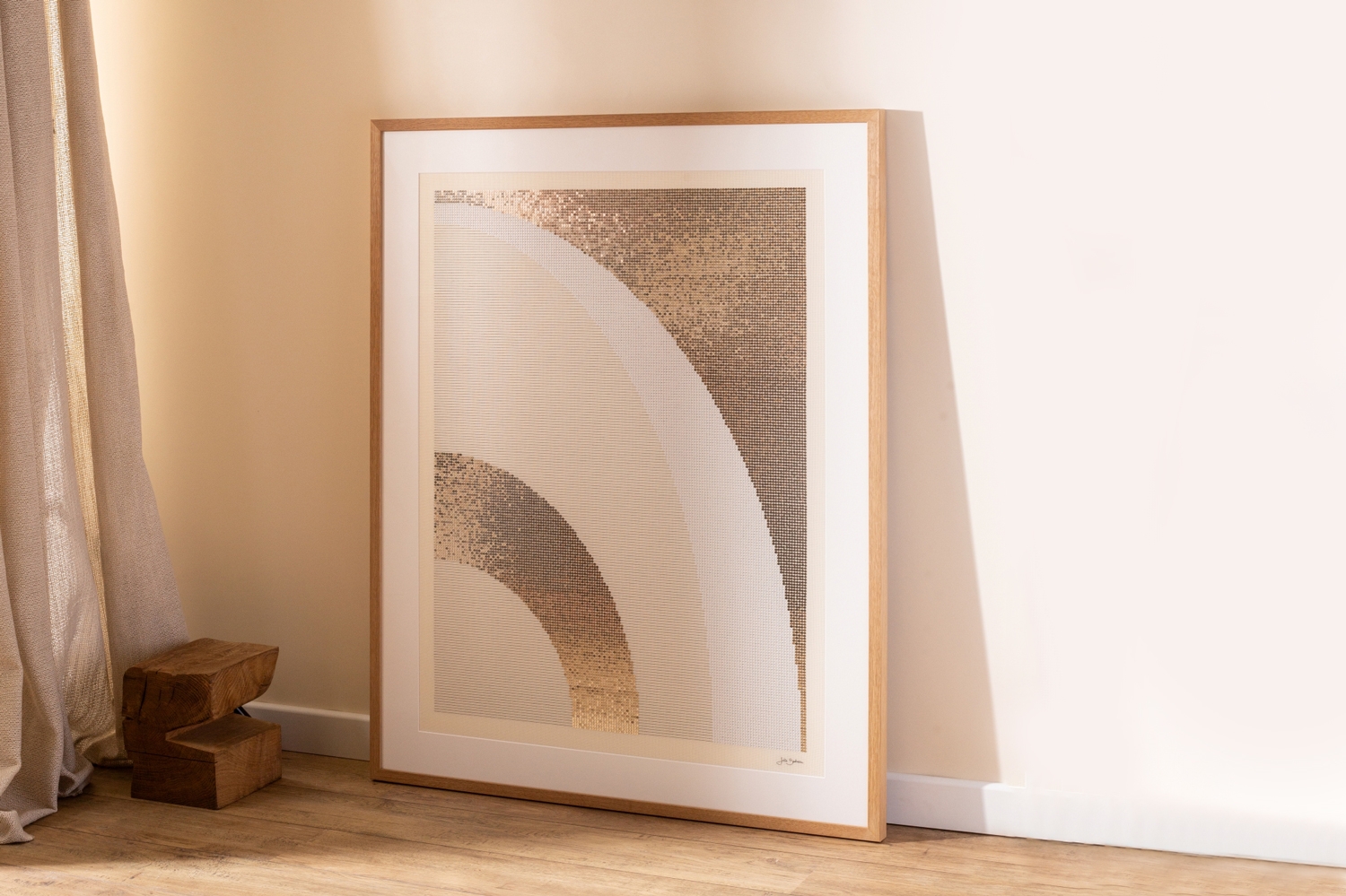
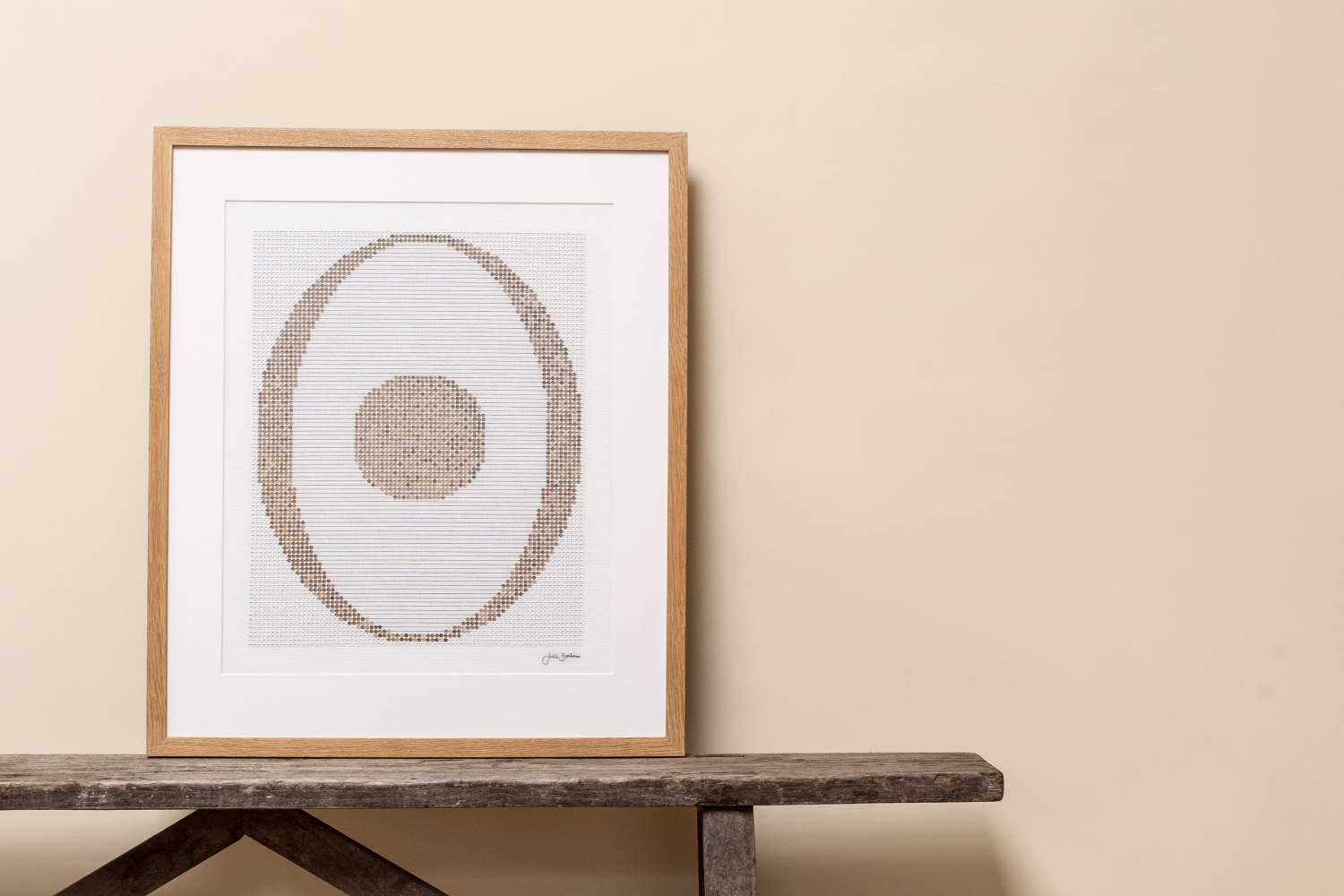
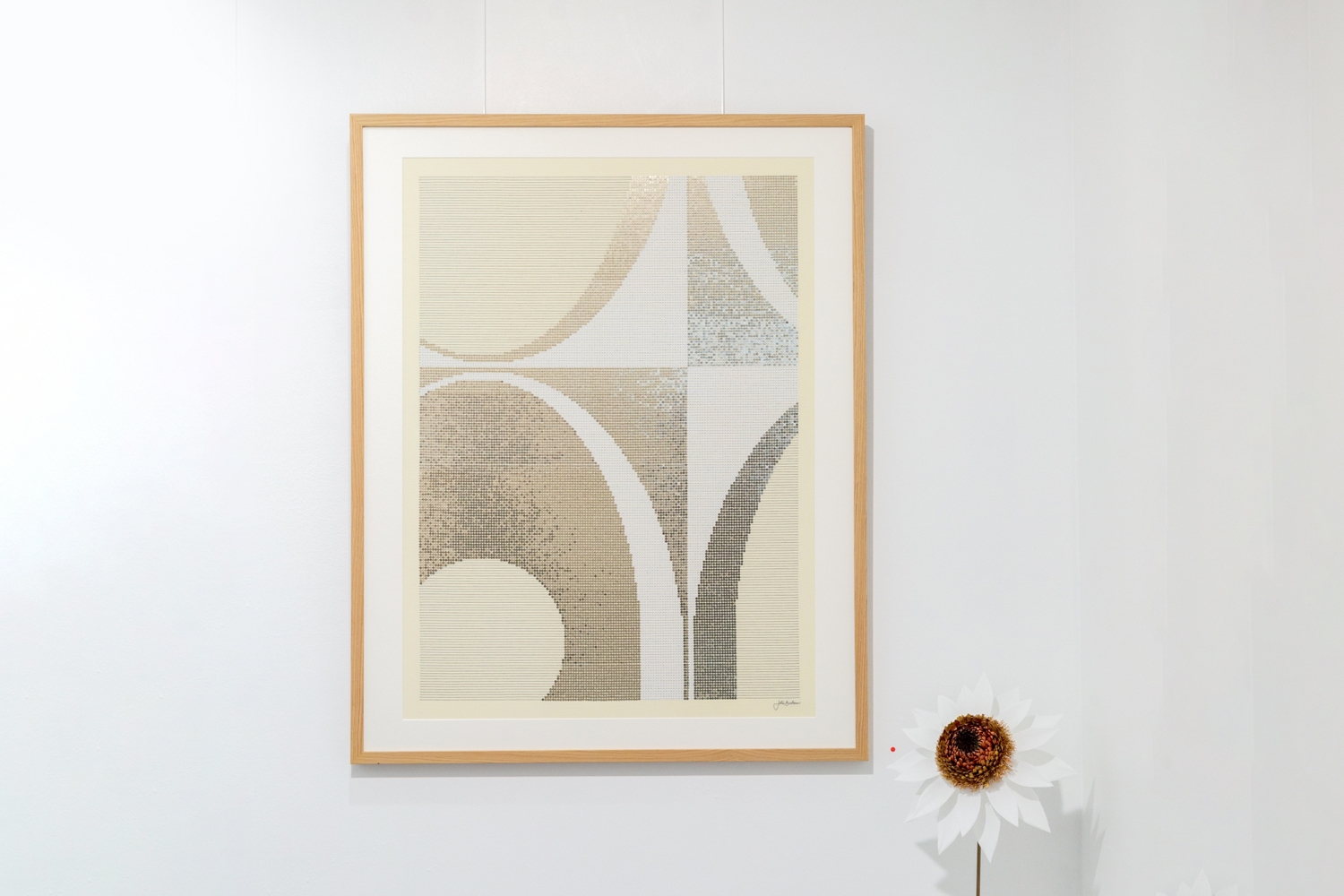
Scintillating sequin works
- Julie studied design and applied arts before turning to embroidery
- She tackles the creative process of her embroidered artworks as though they were paintings
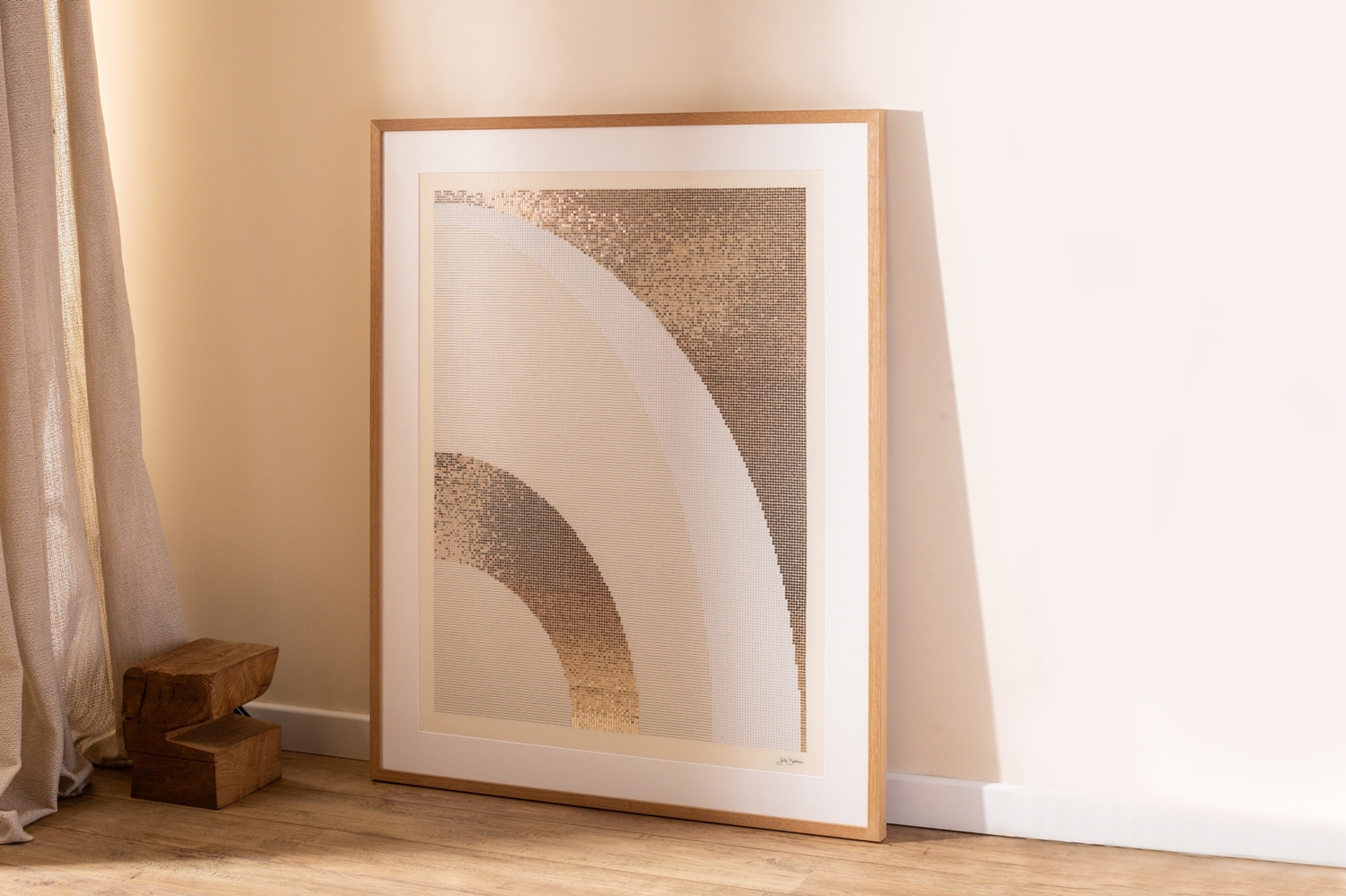
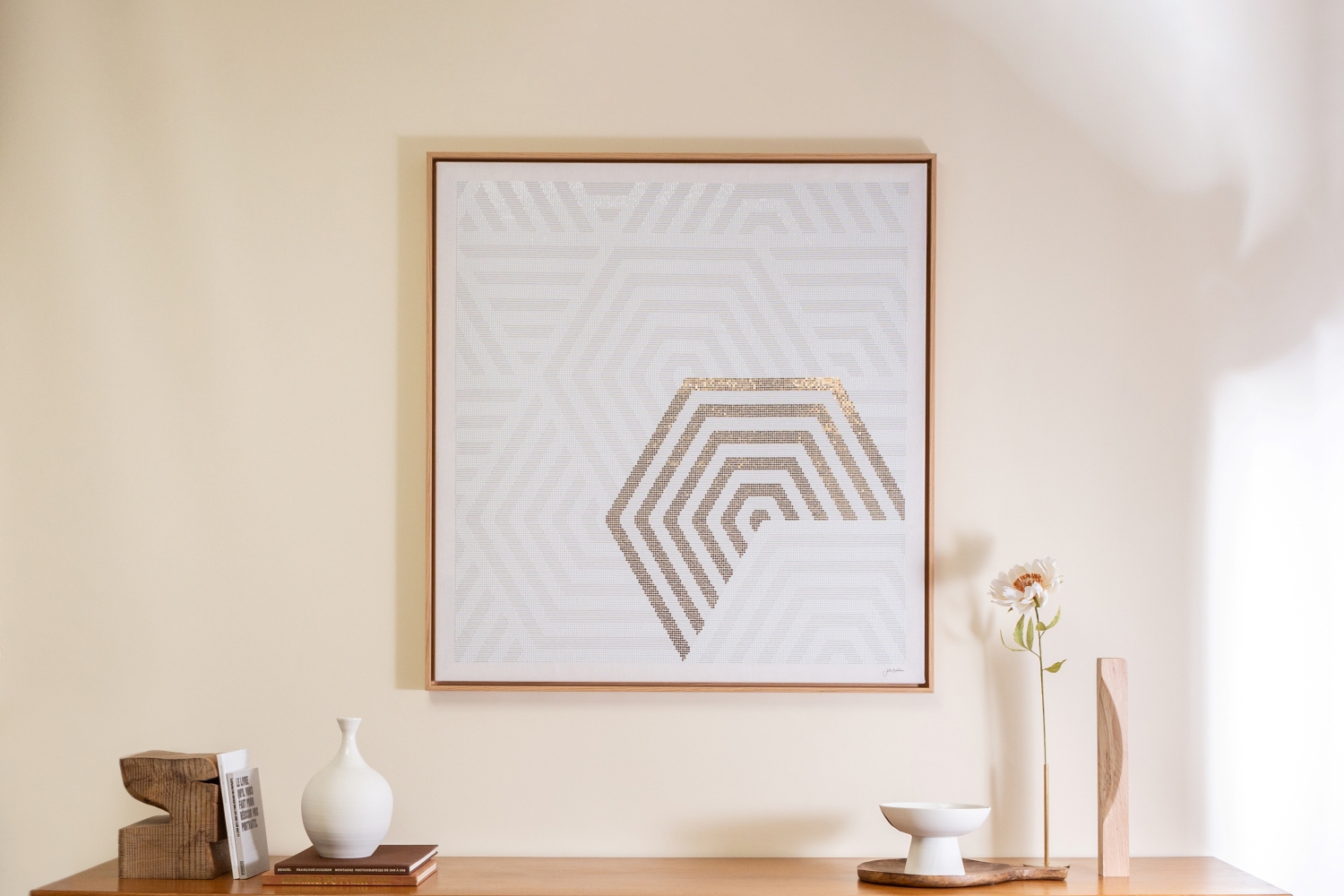
- Each finished piece is made of thousands of sequins
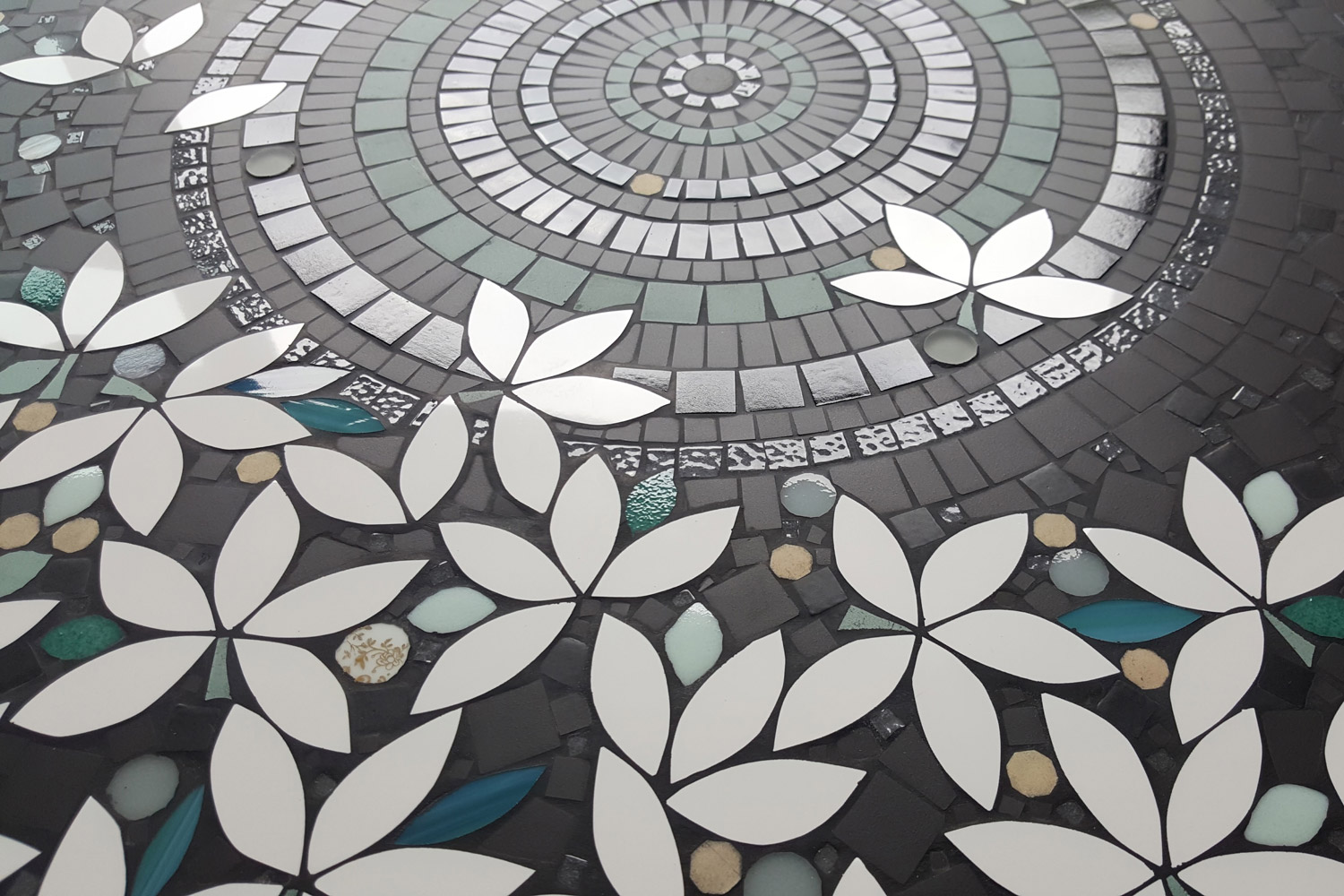
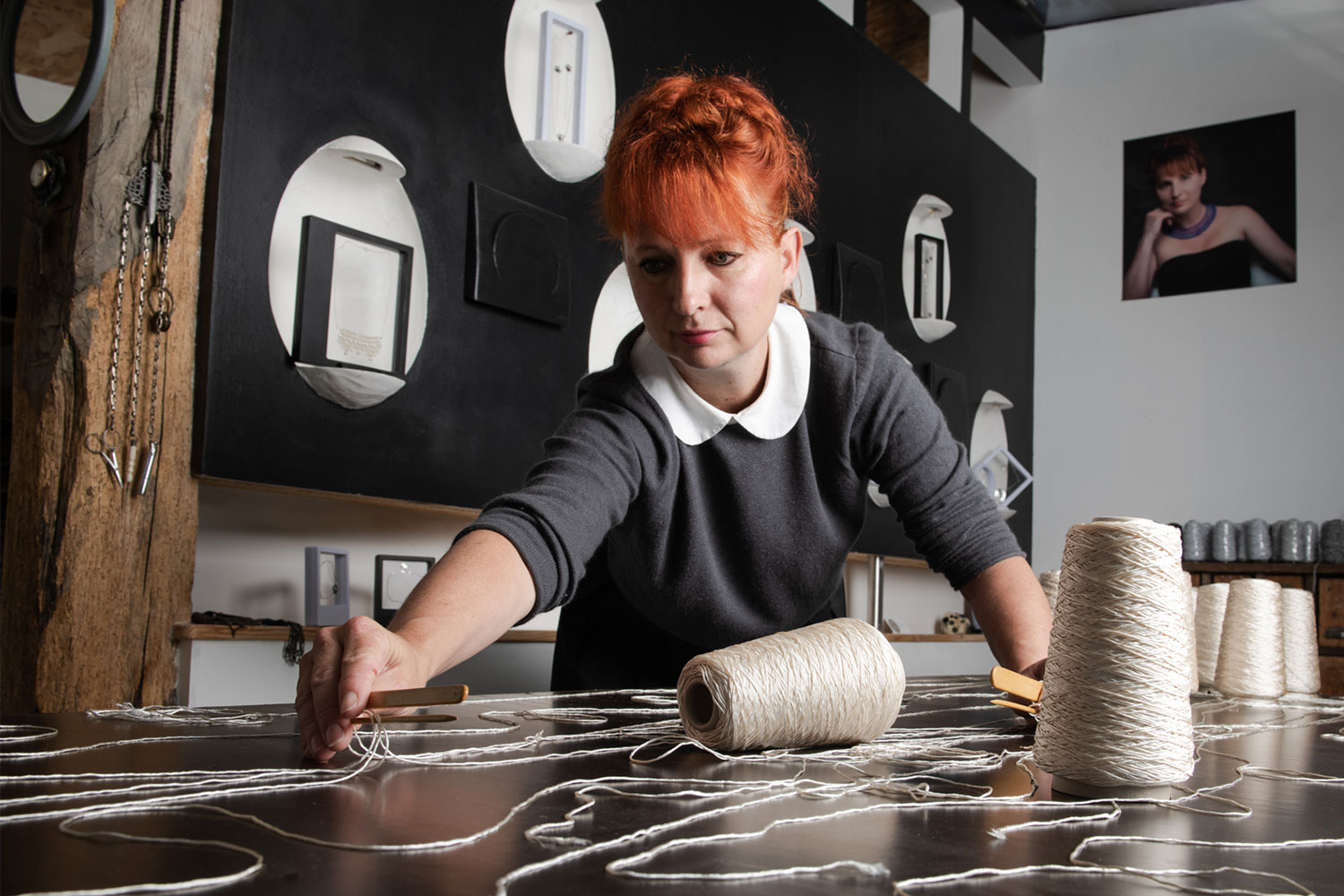
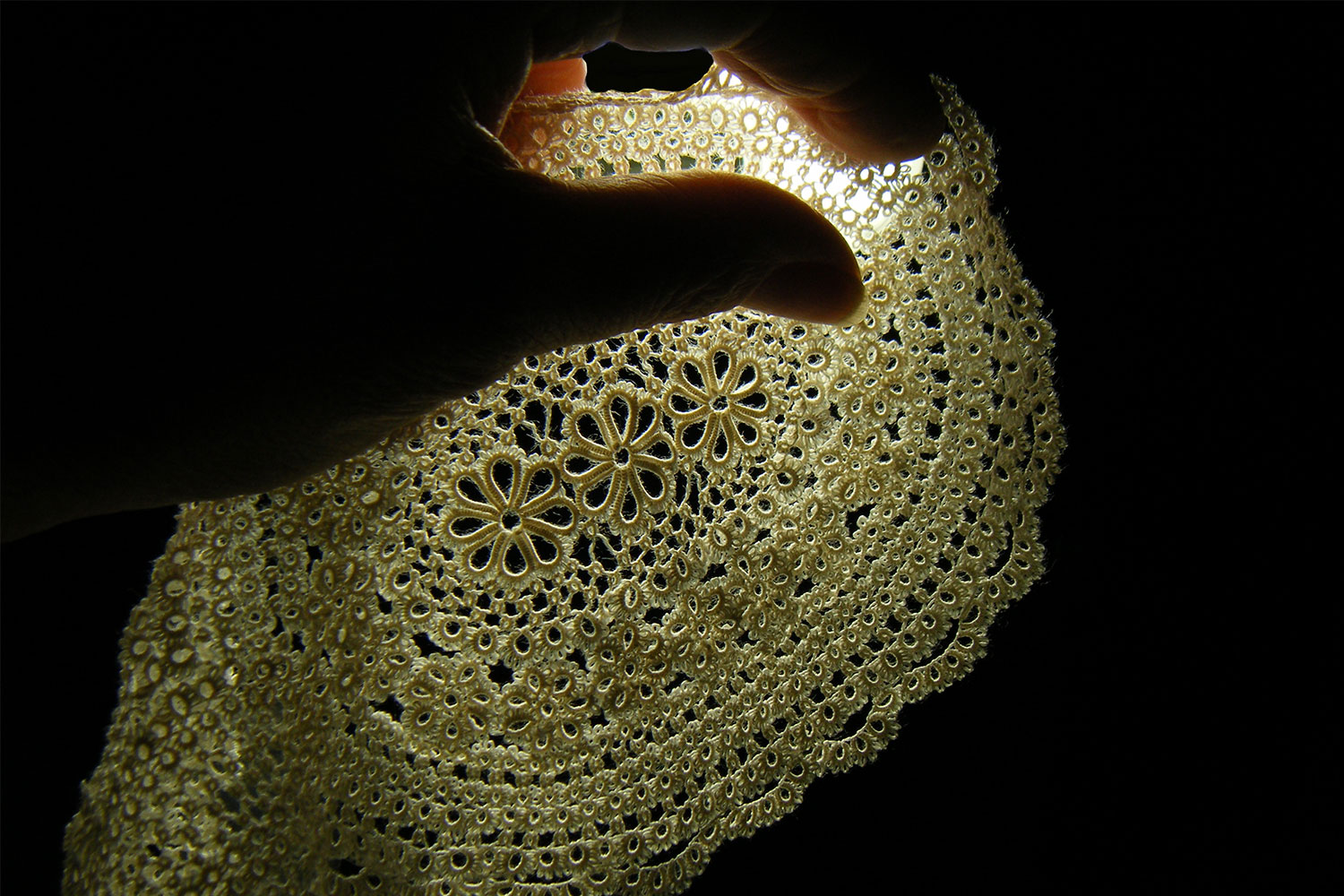
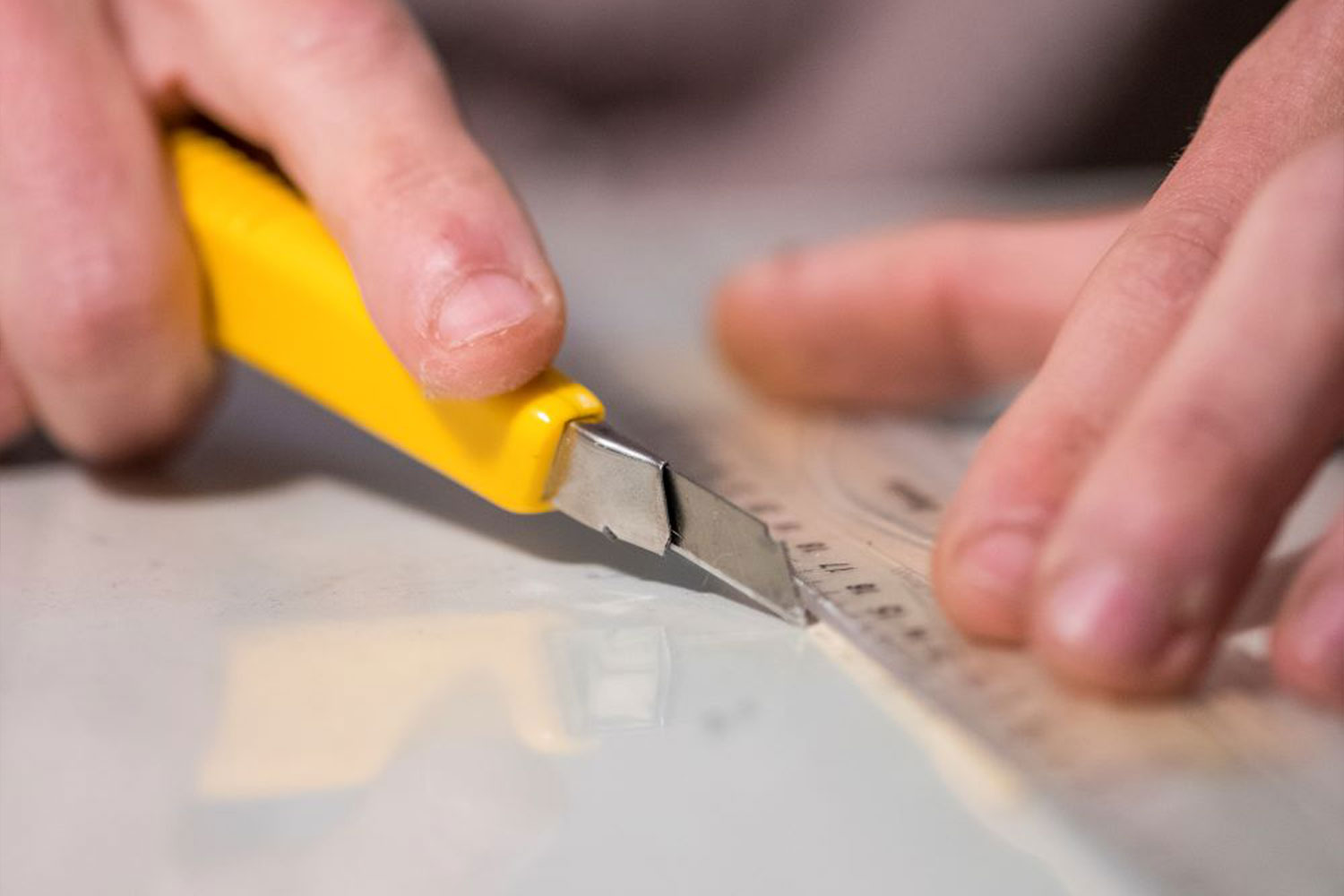
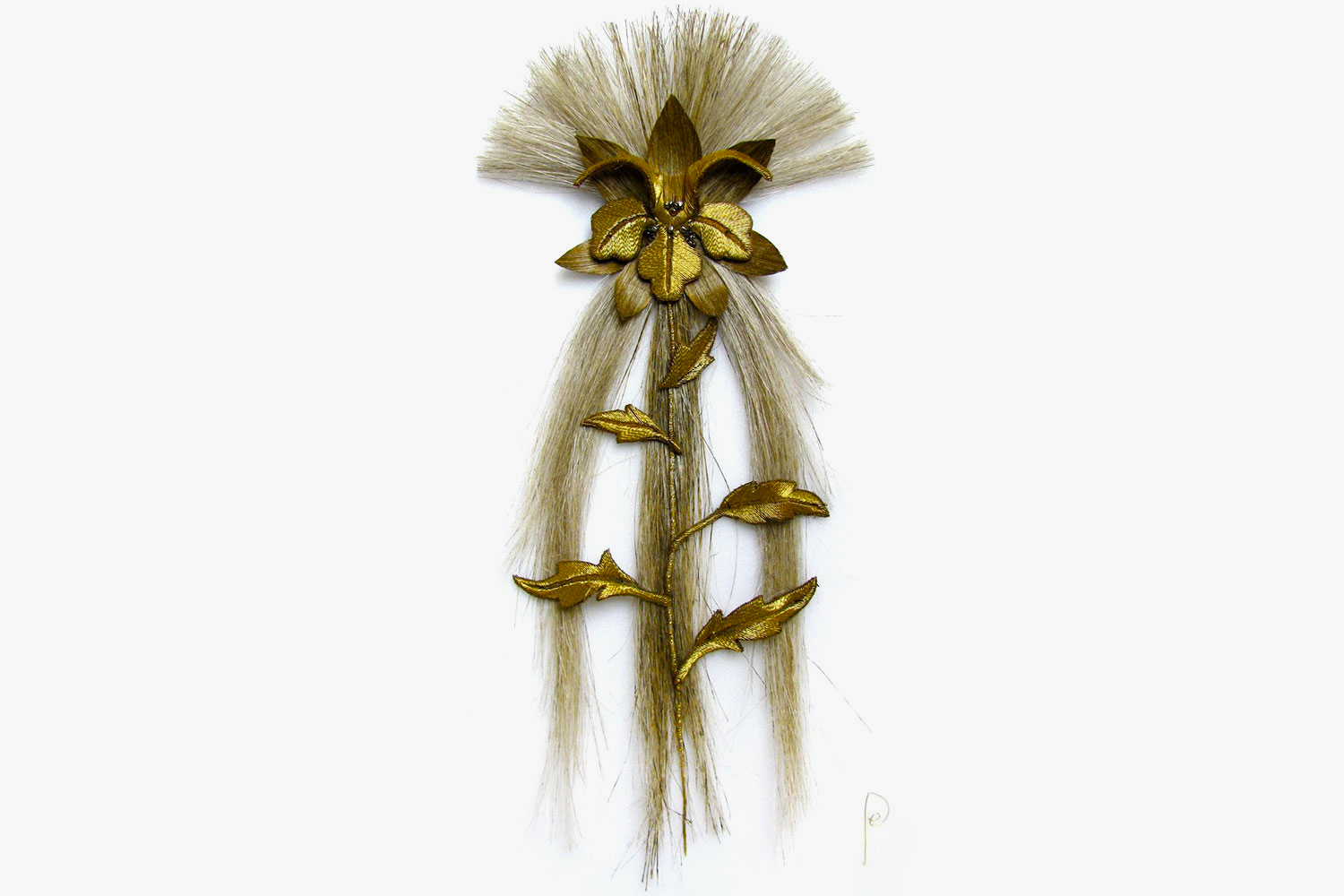
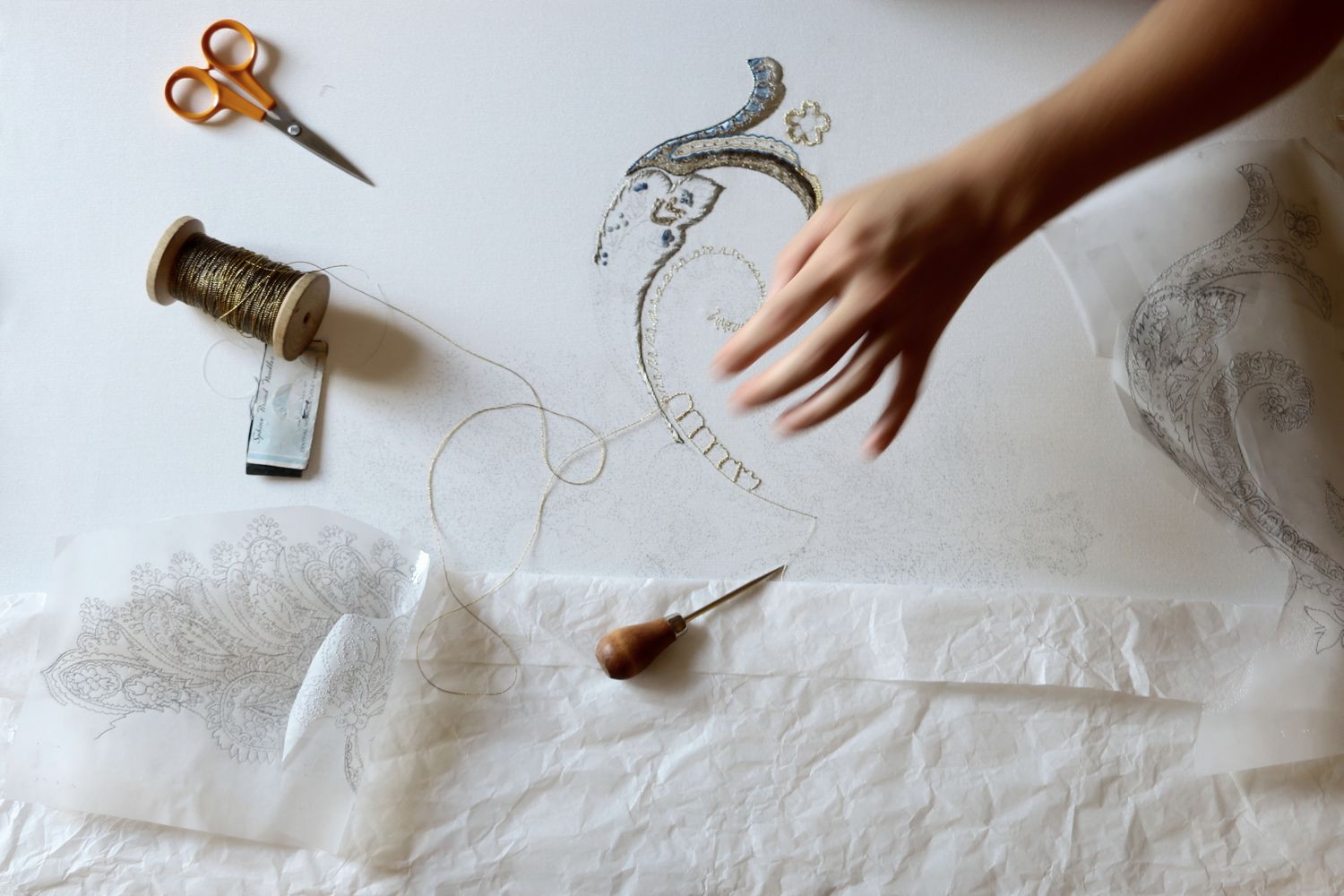
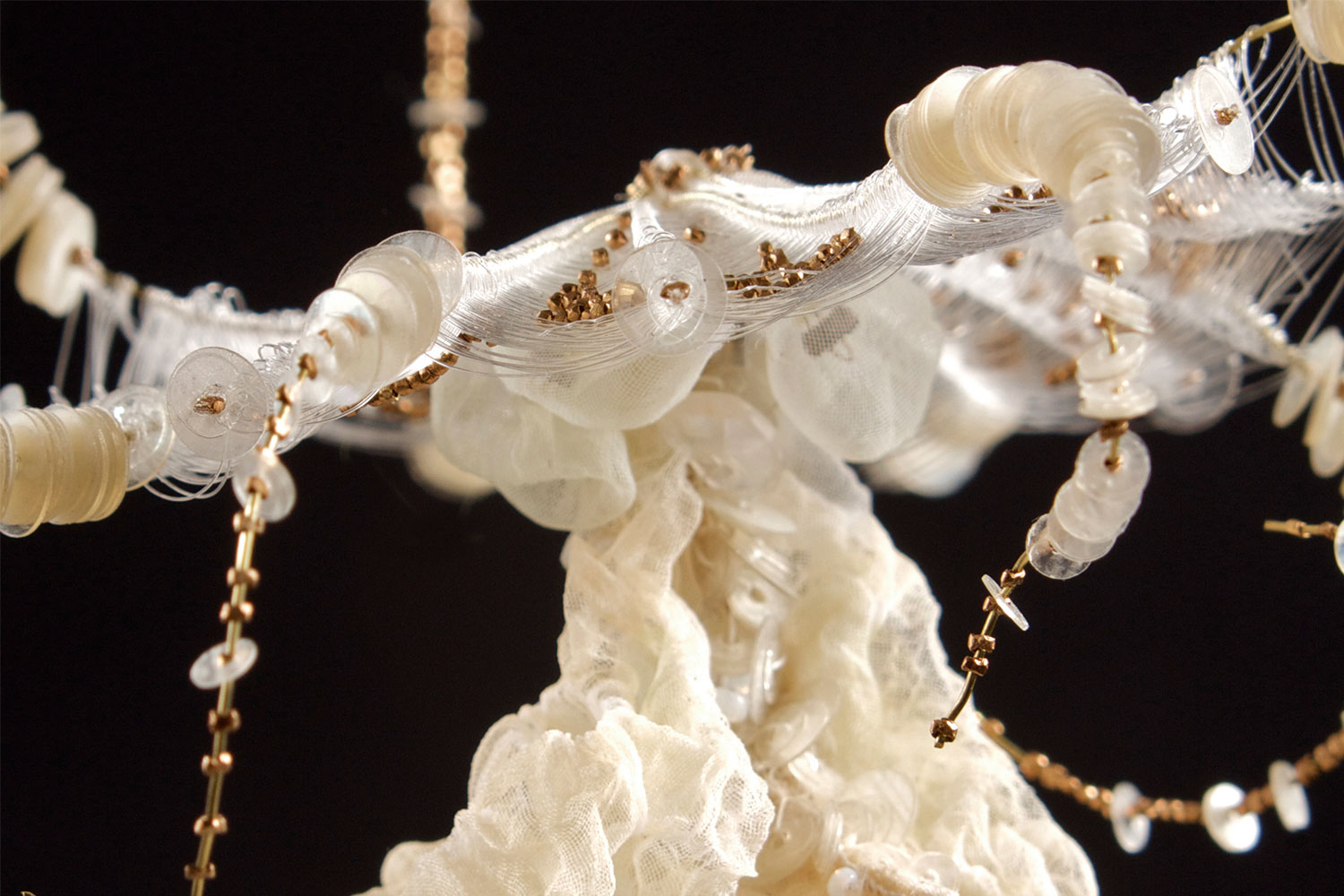
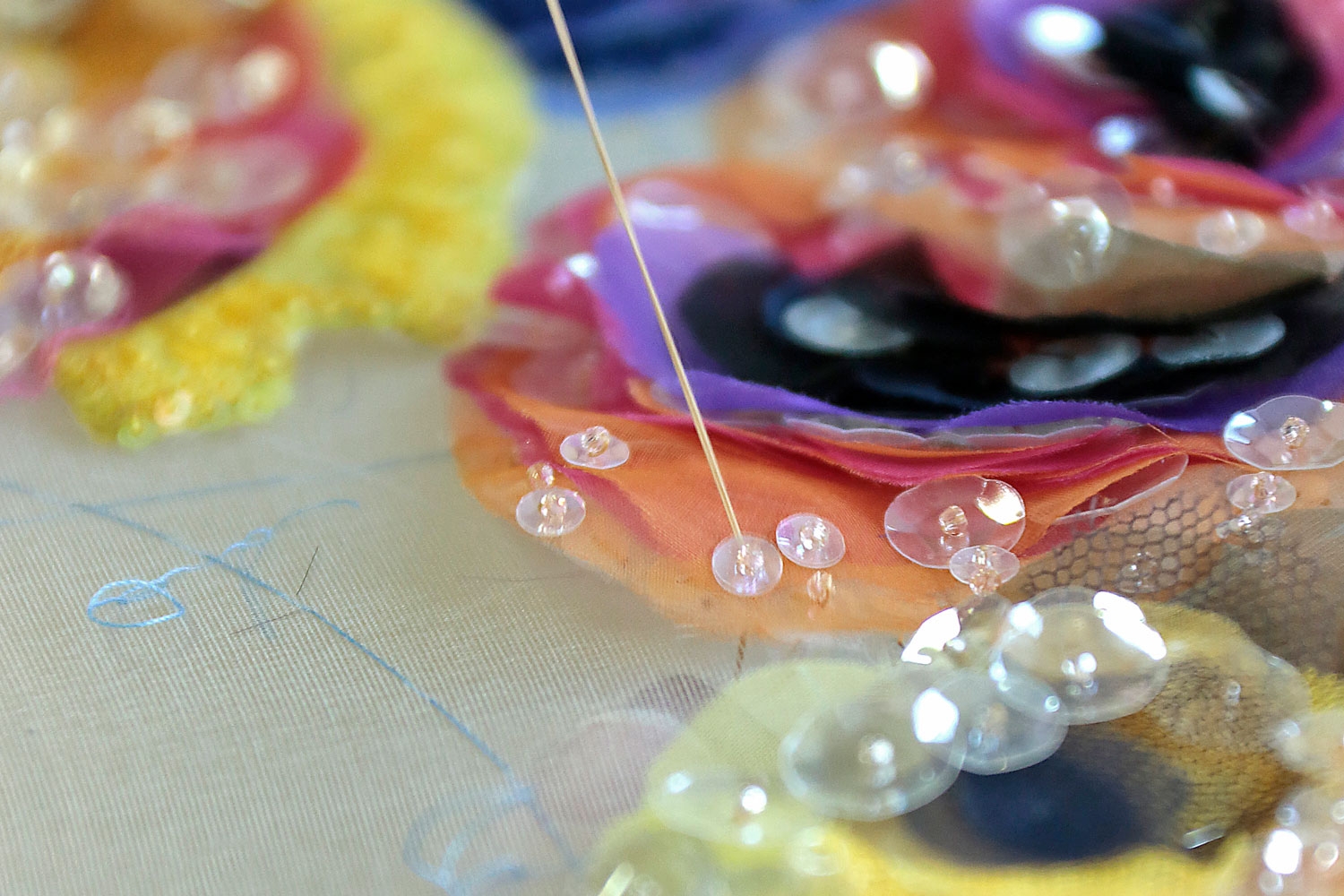
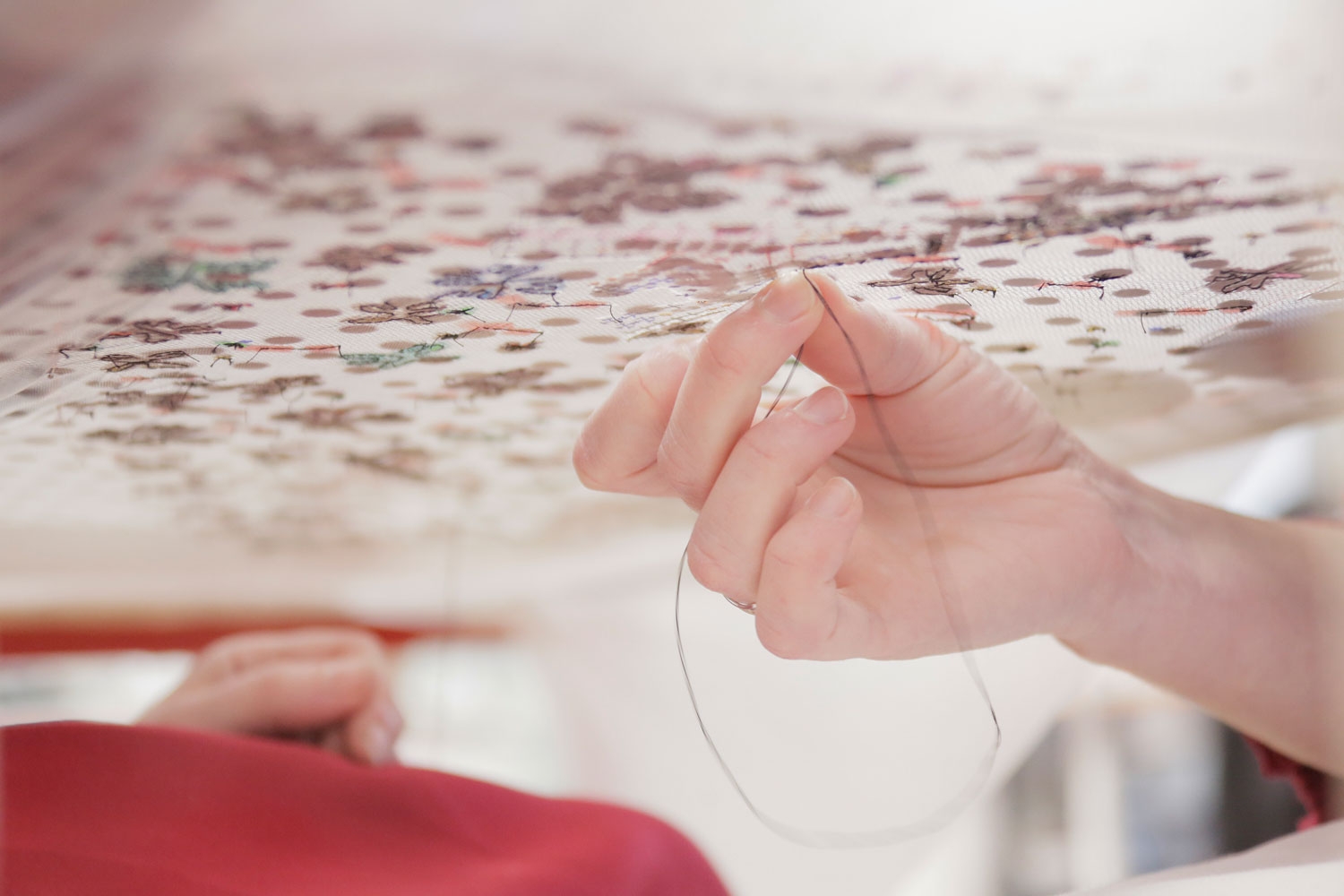
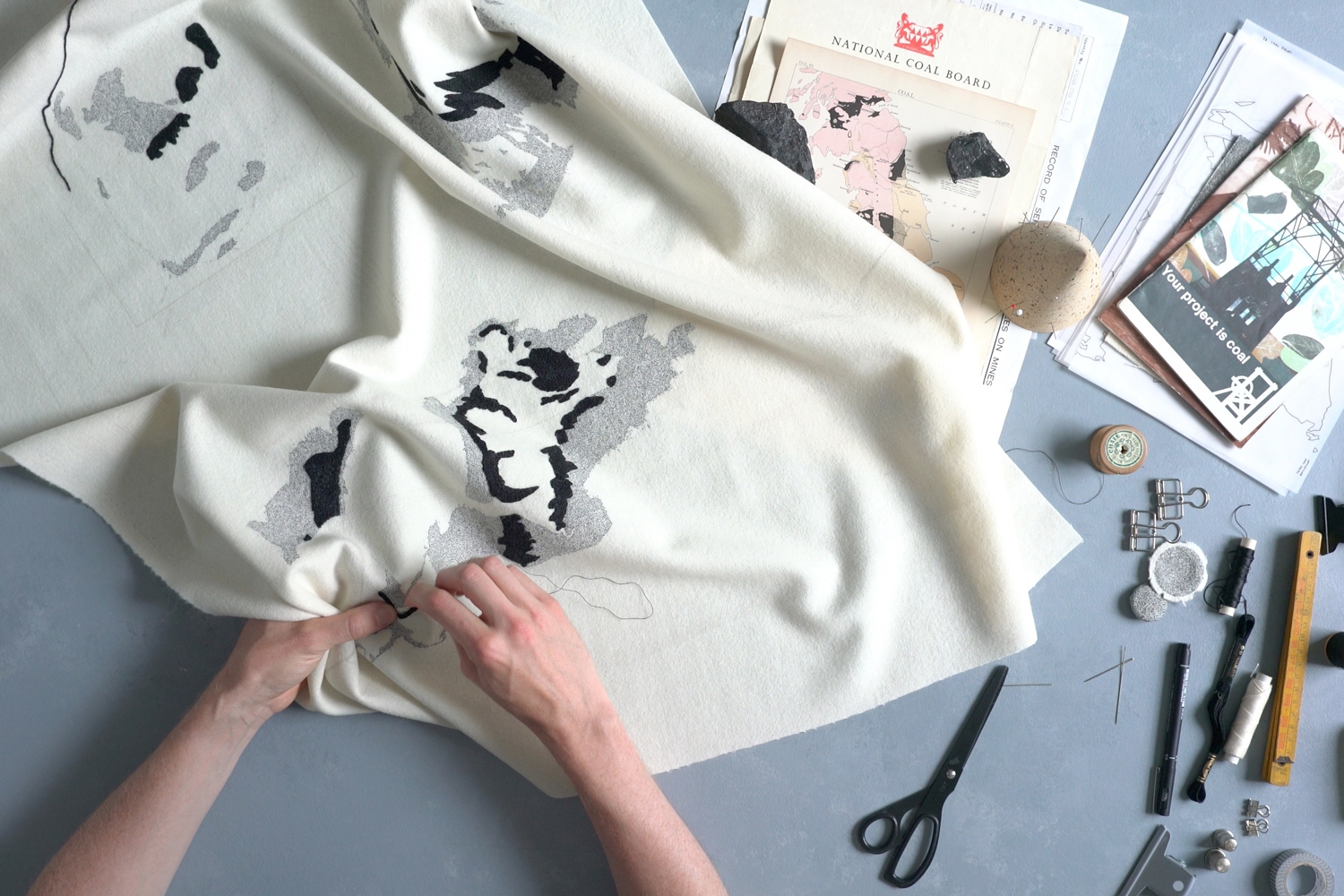
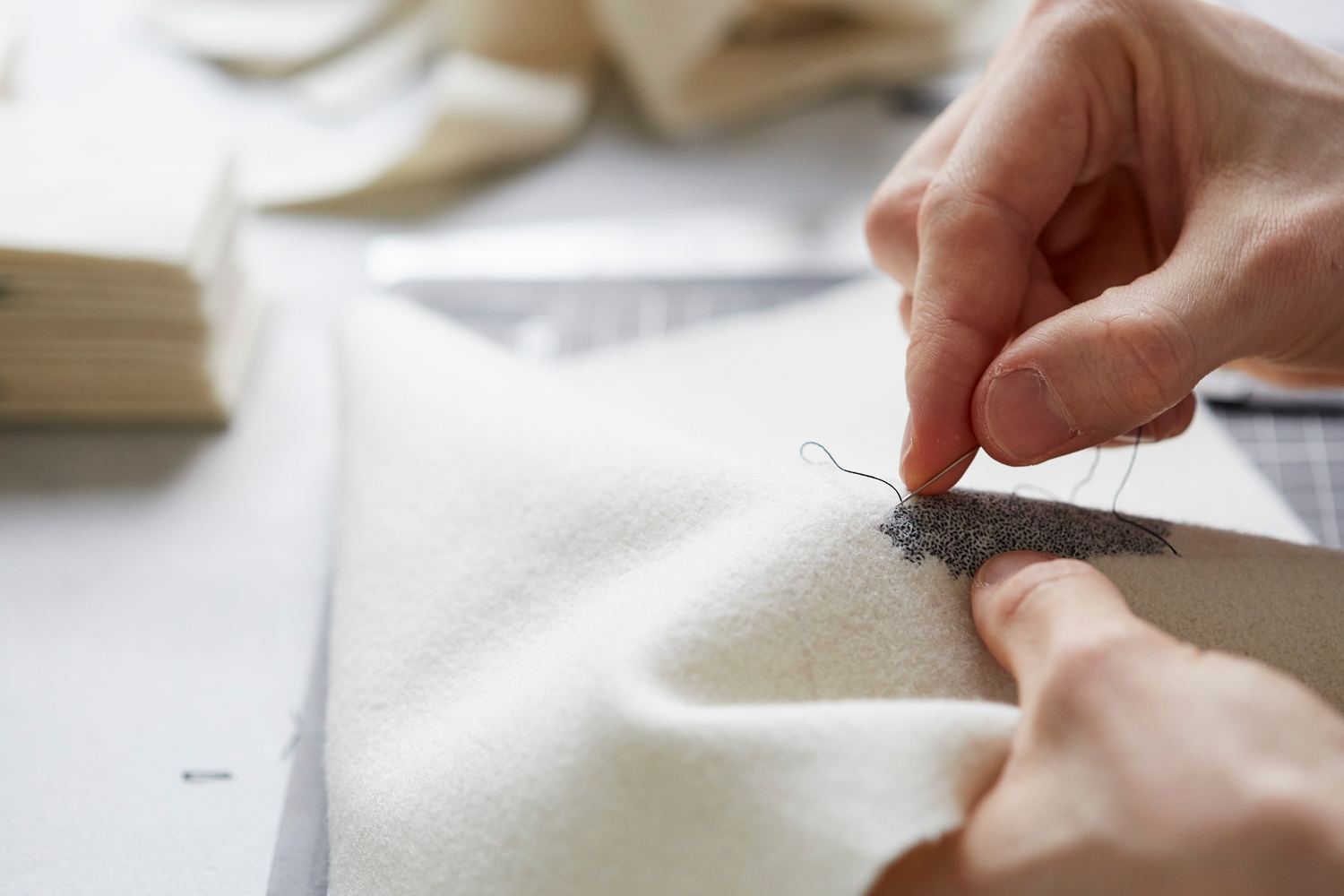
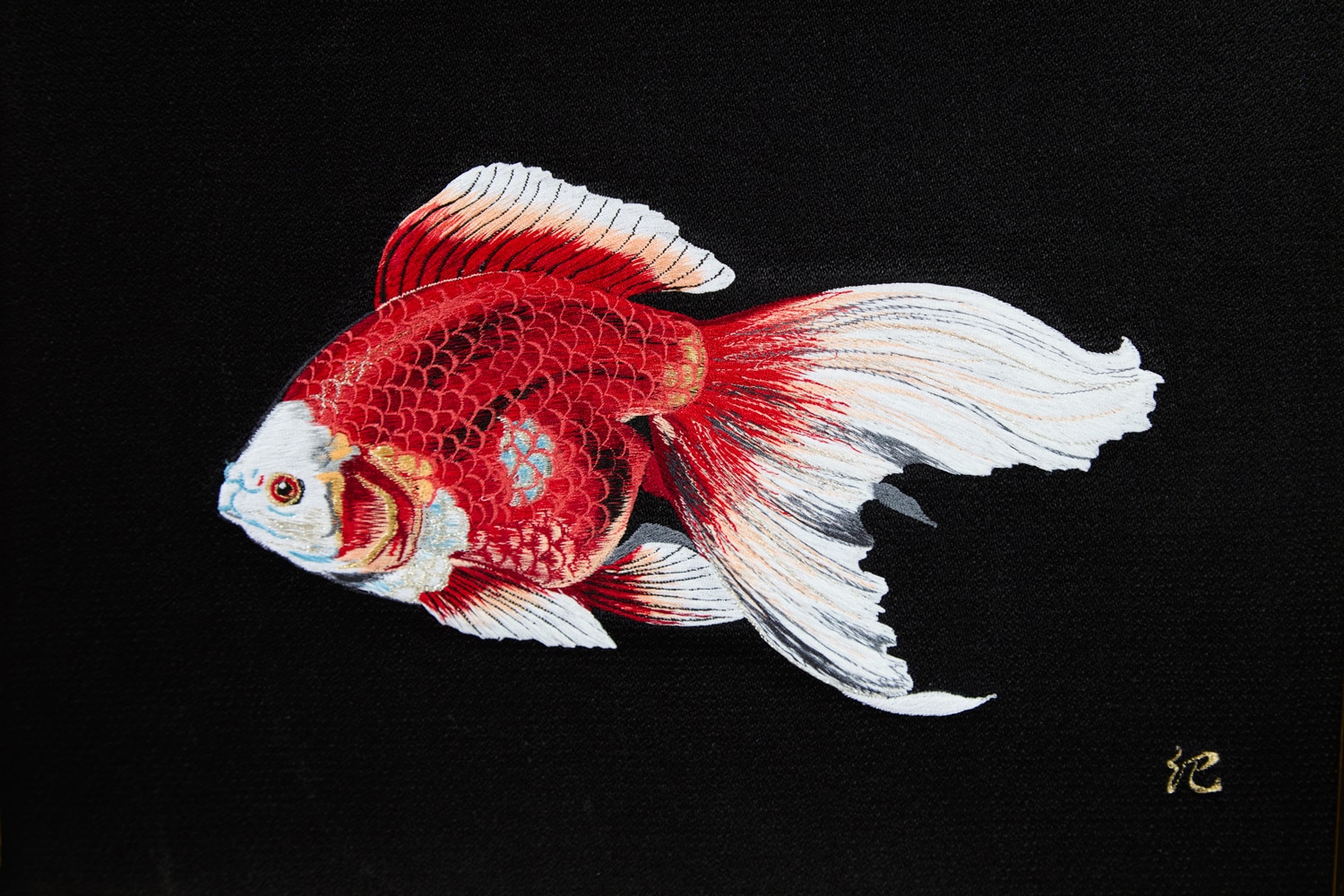
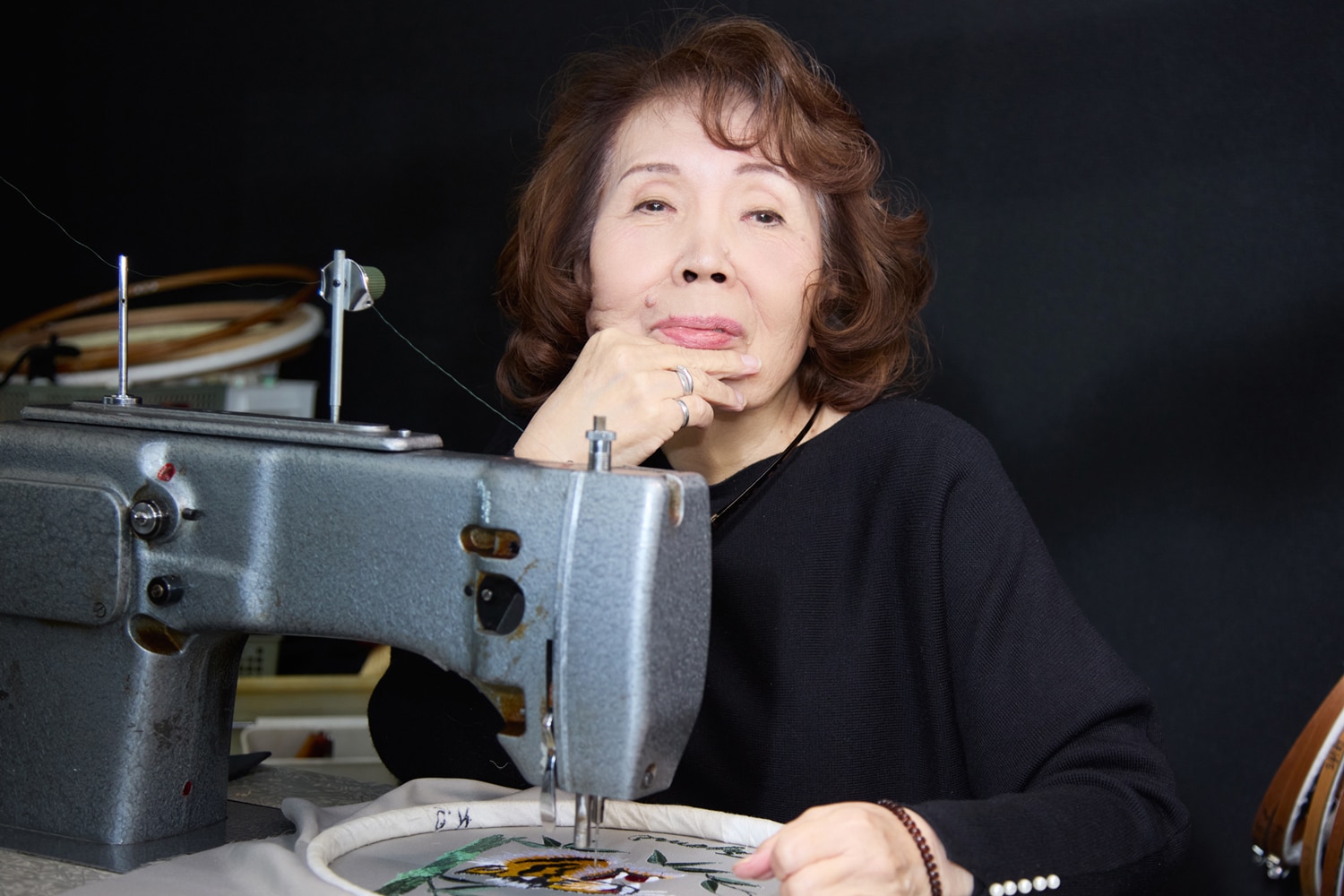
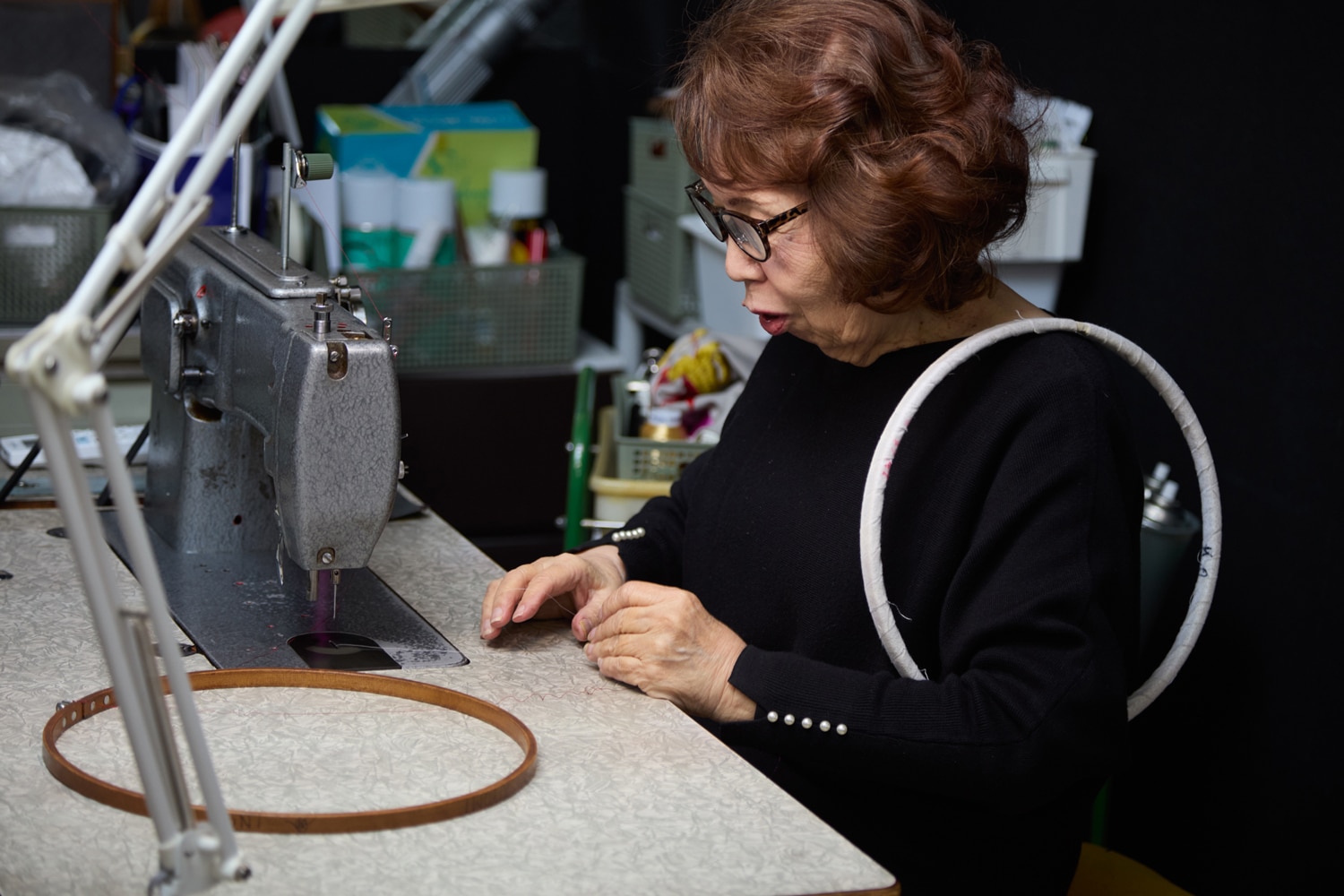
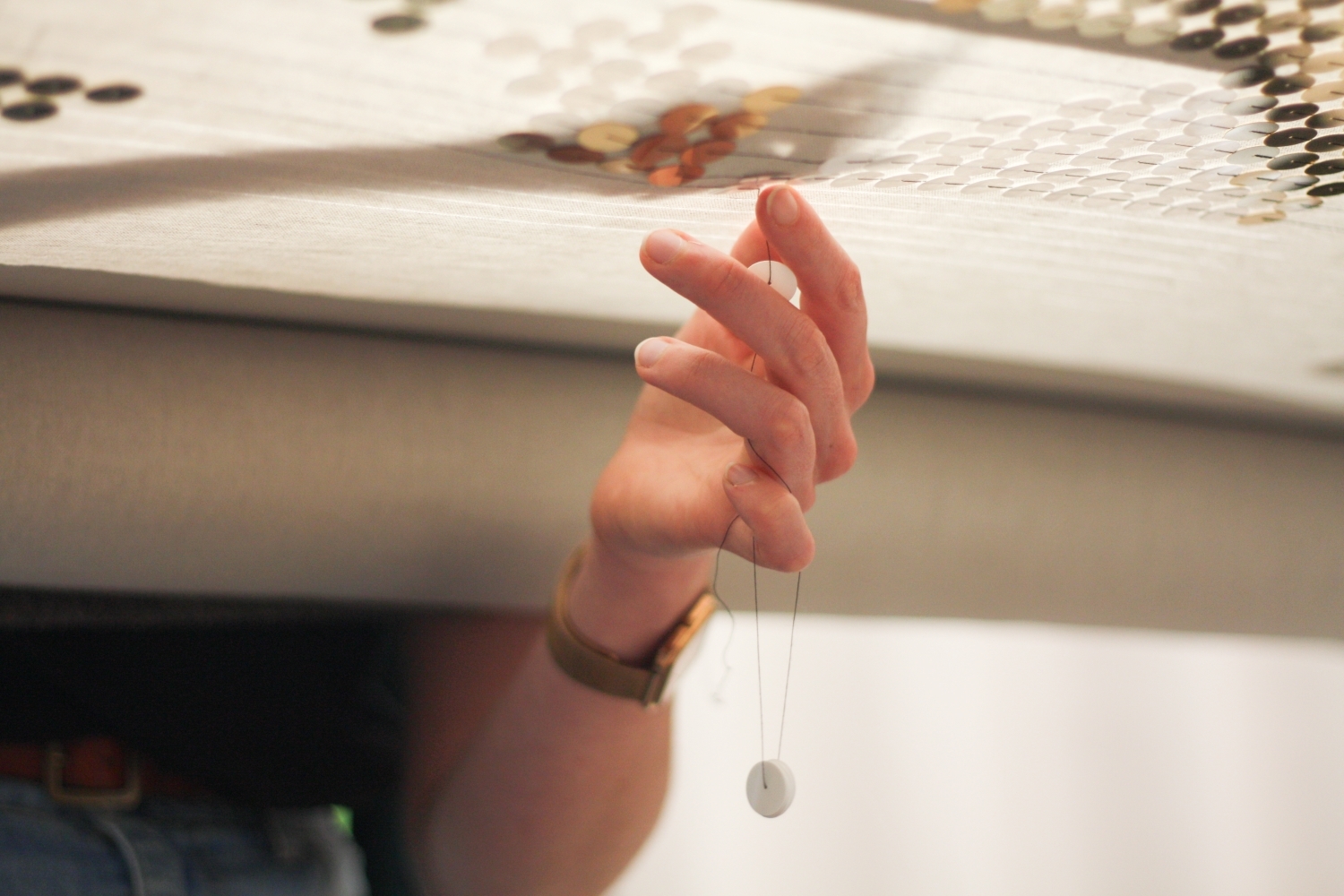
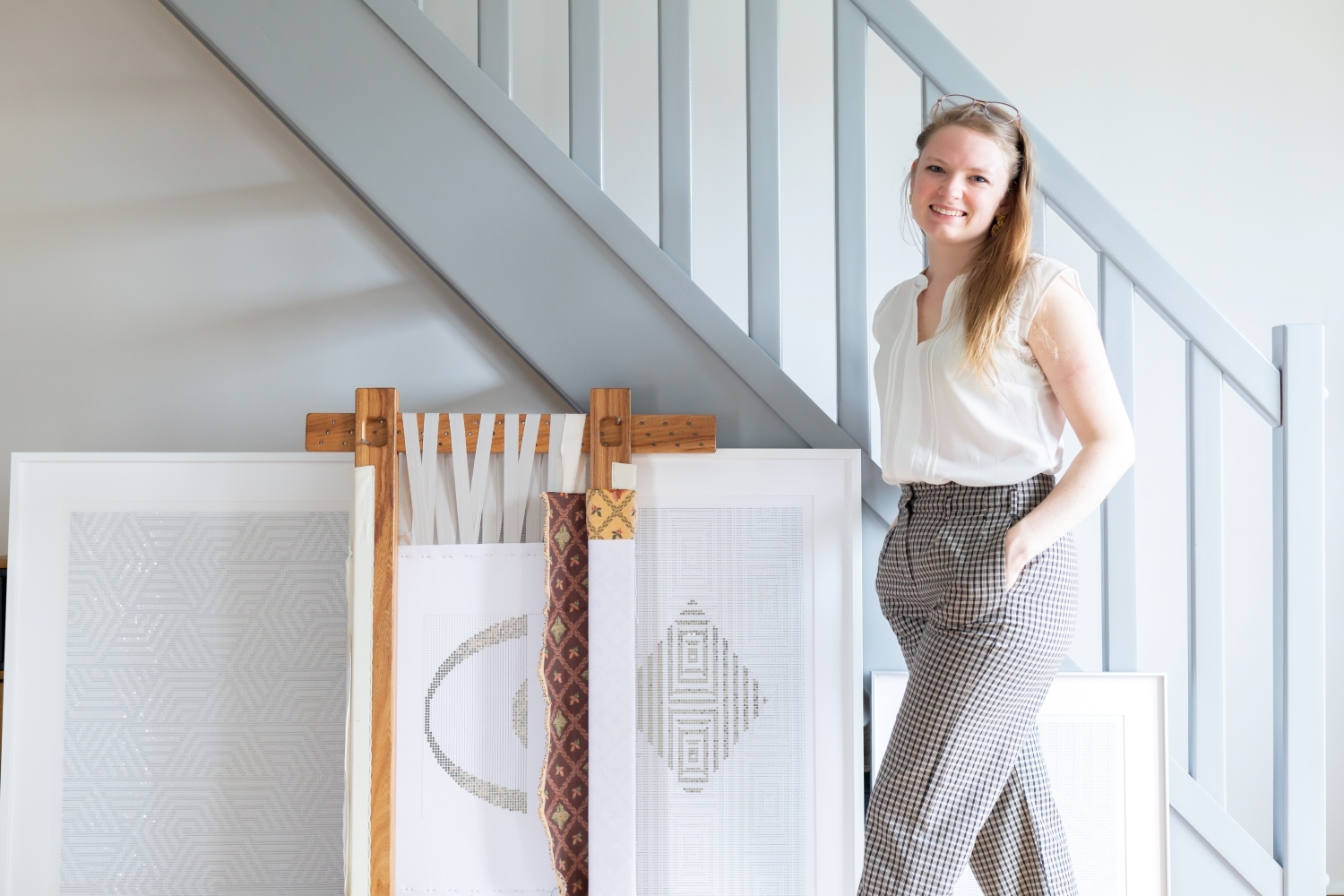
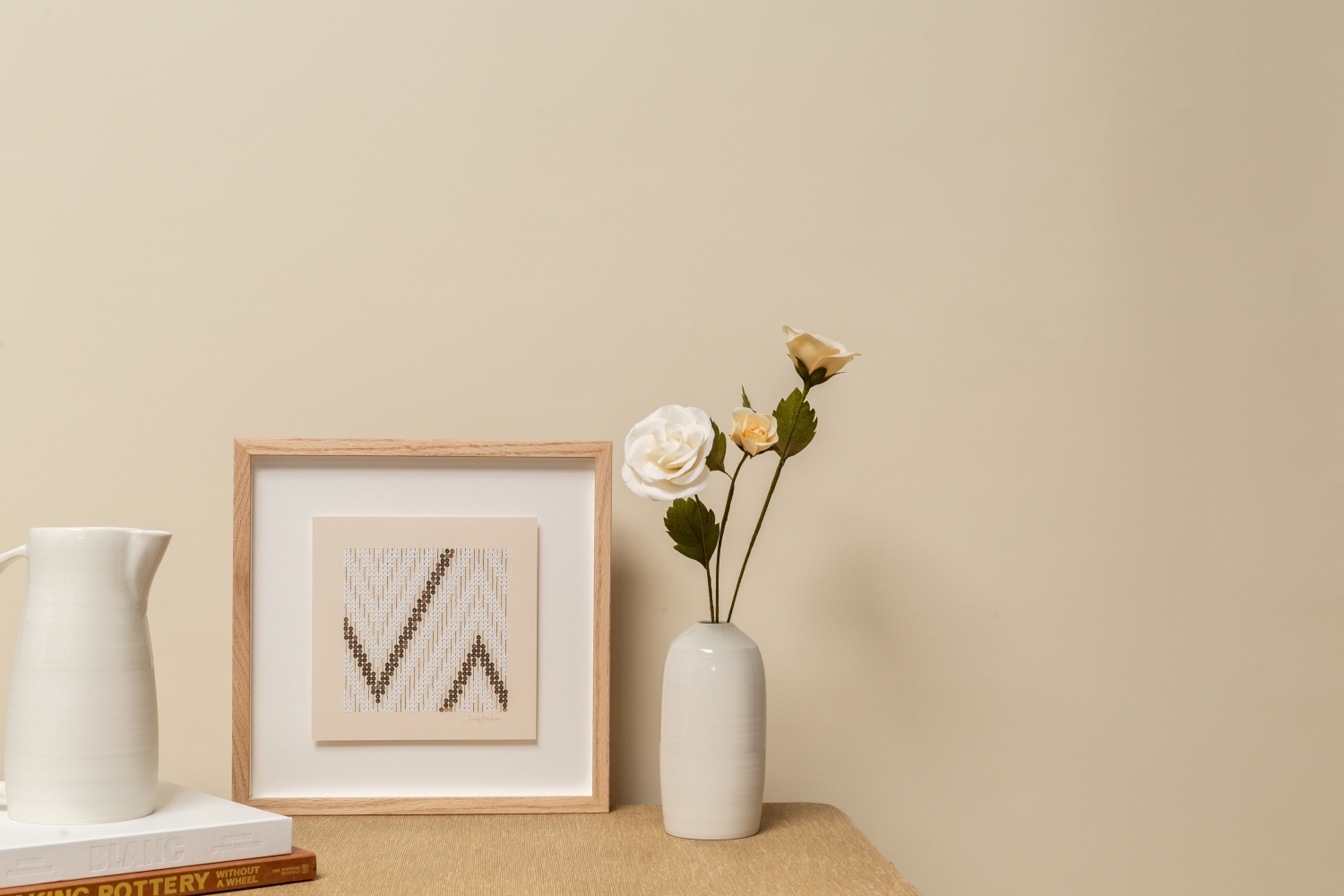
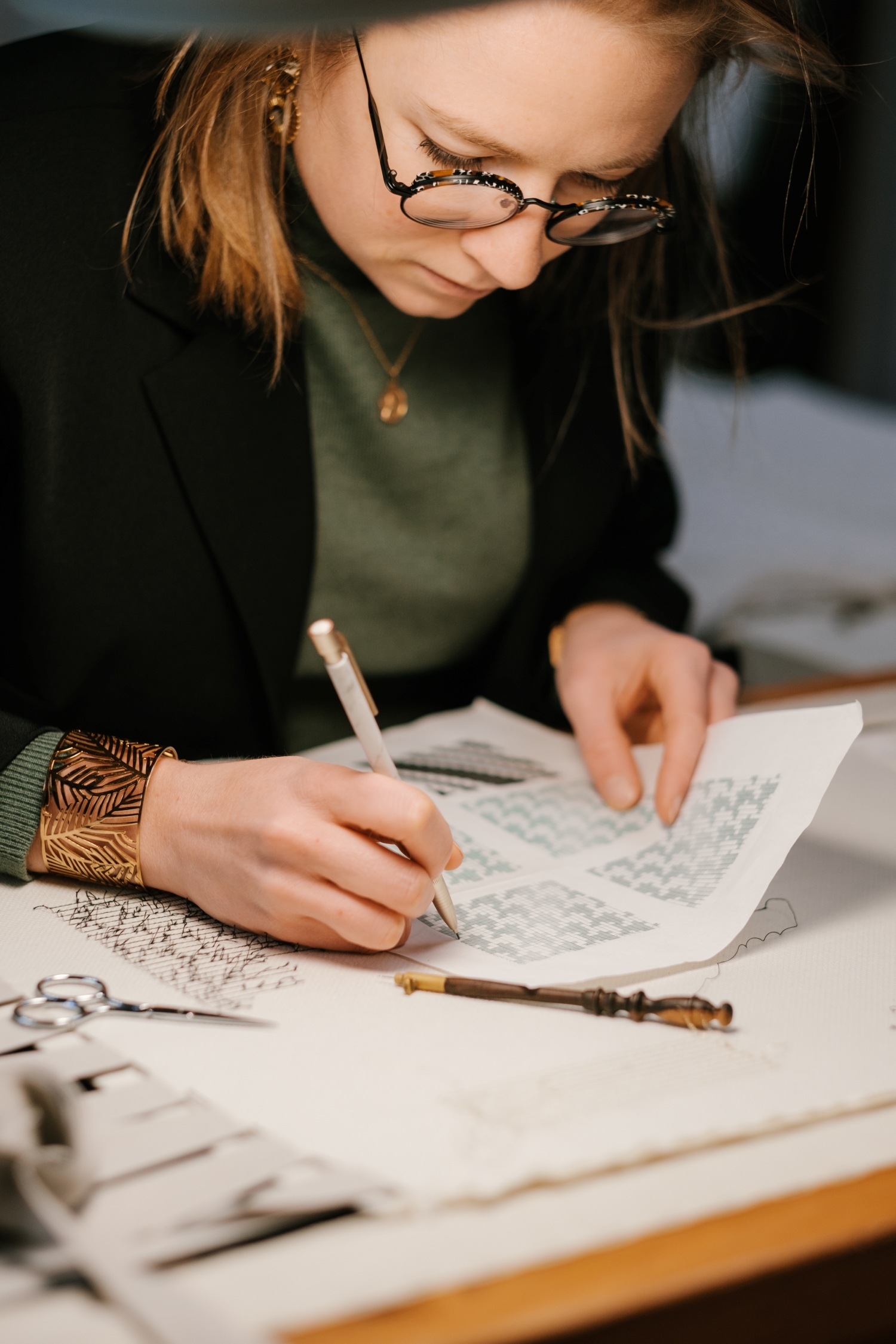
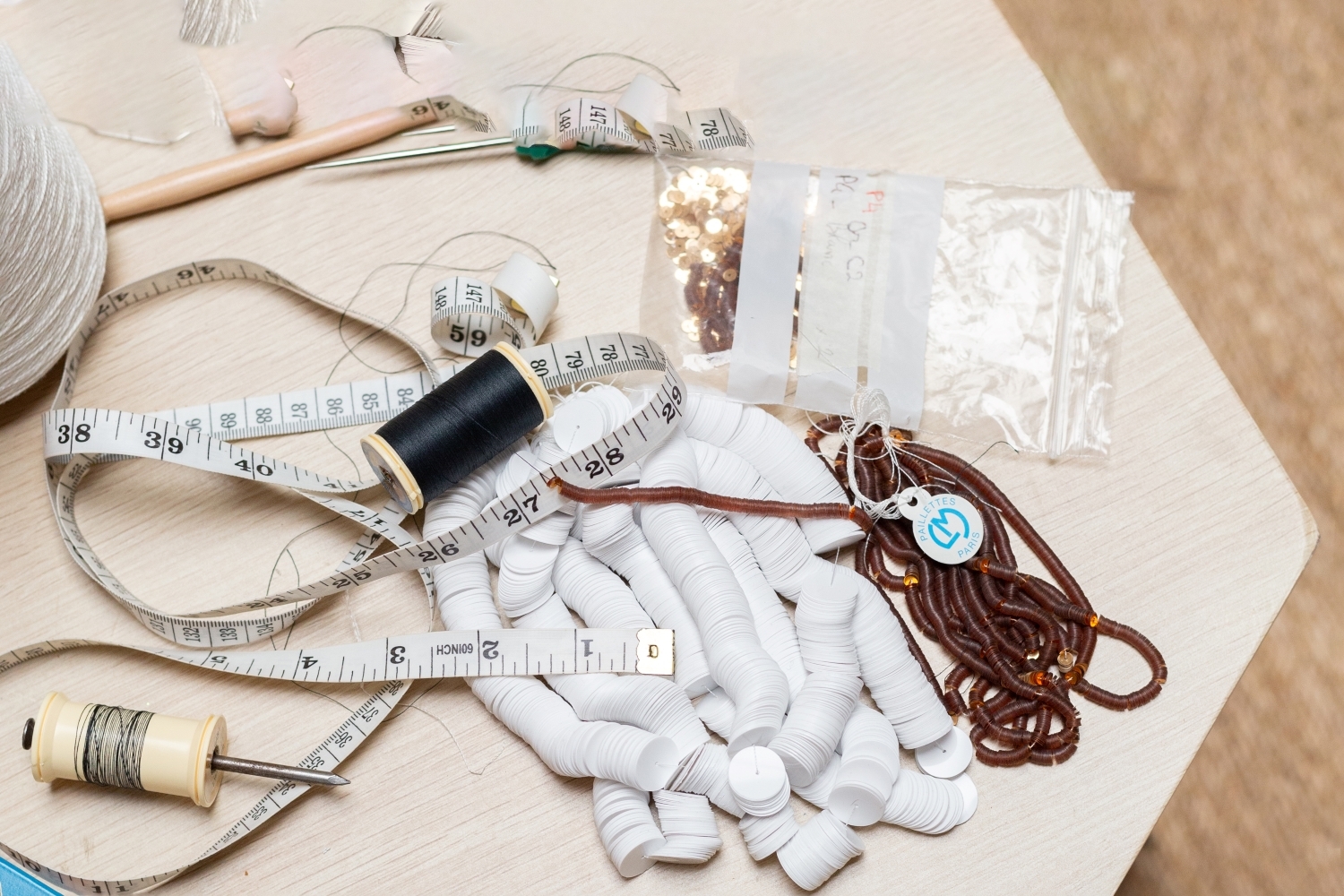
Julie Barbeau founded her eponymous studio in 2019 after training in haute couture embroidery. Specialising in the traditional and meticulous technique of Lunéville hook embroidery, she creates intricate designs by hand, fixing sequins with a chain stitch on fabric stretched over a loom. To produce her framed artworks, Julie must work on the reverse-side of the canvas until the end. Her approach blends science, mathematics and optics, as she produces abstract, geometric, monochromatic pieces with gold accents. Each piece reflects her passion for light and composition. "A piece I made for France Design Week in 2024 was 8 metres long and took two months to complete," she recalls. Julie prioritises ethical sourcing of her materials from local France. She has earned numerous honours and awards, and exhibits at the Révélations show at the Grand Palais, as of 2025.
INTERVIEW
I learnt when I was 17, when I discovered this know-how in a professional school near Paris.
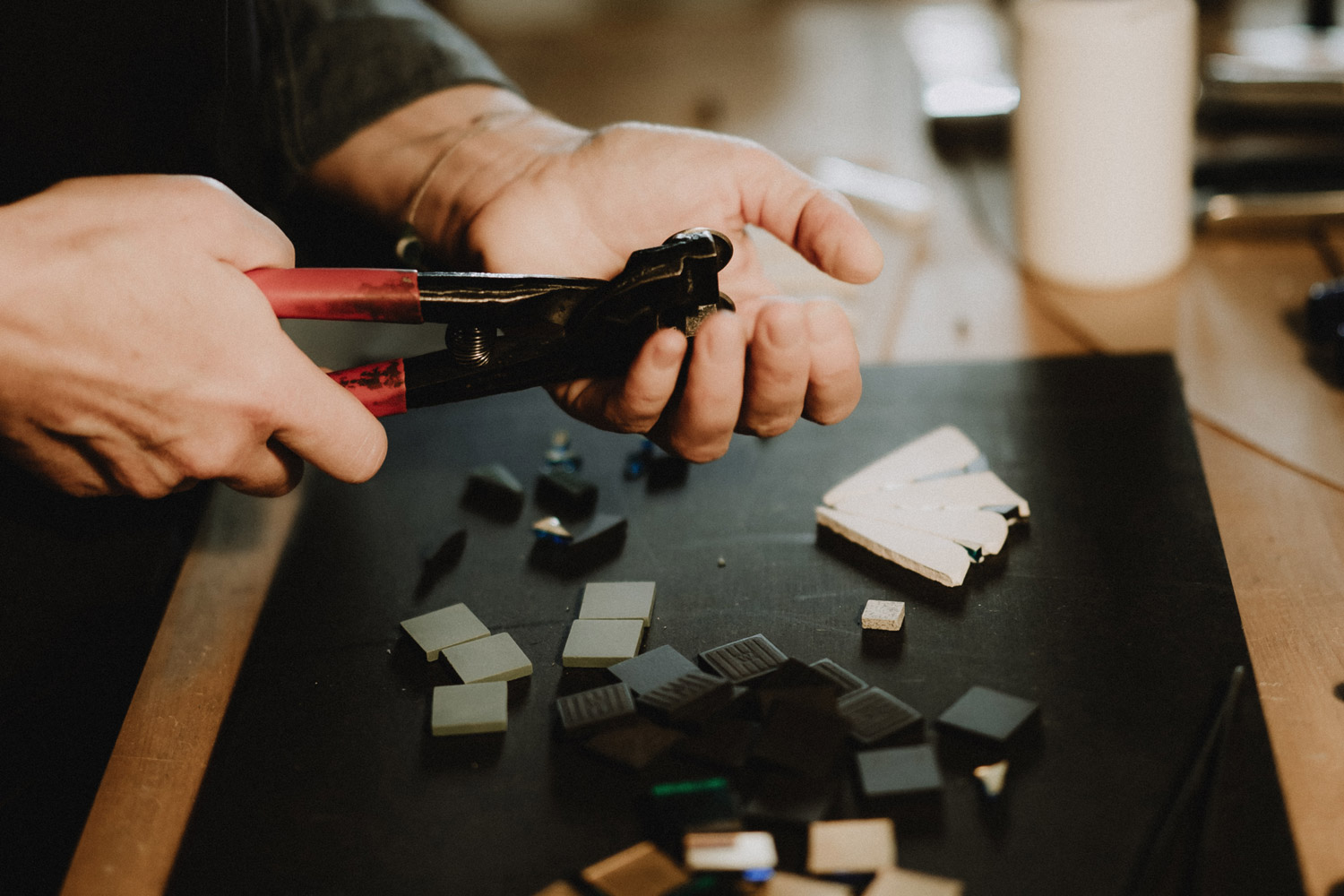
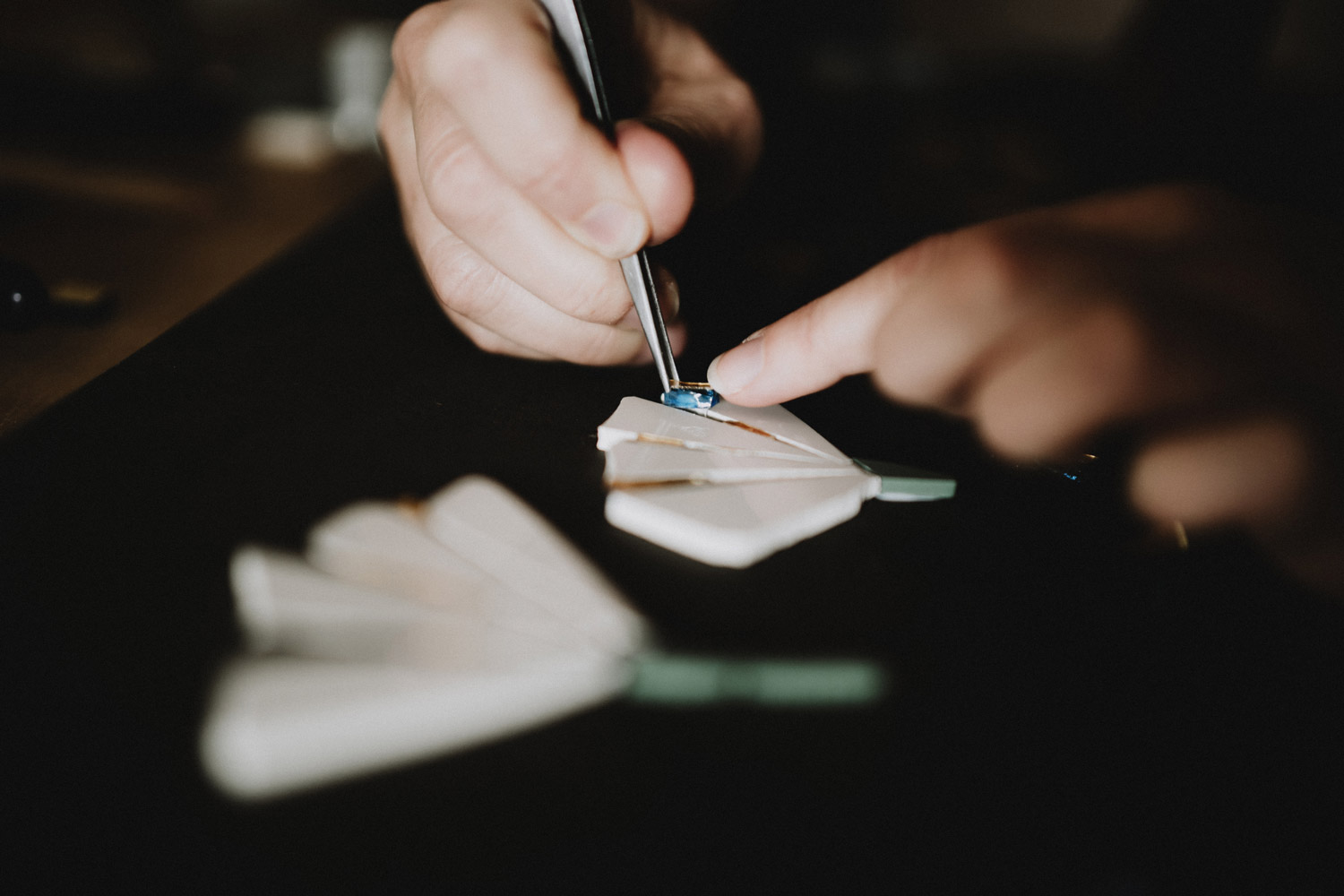
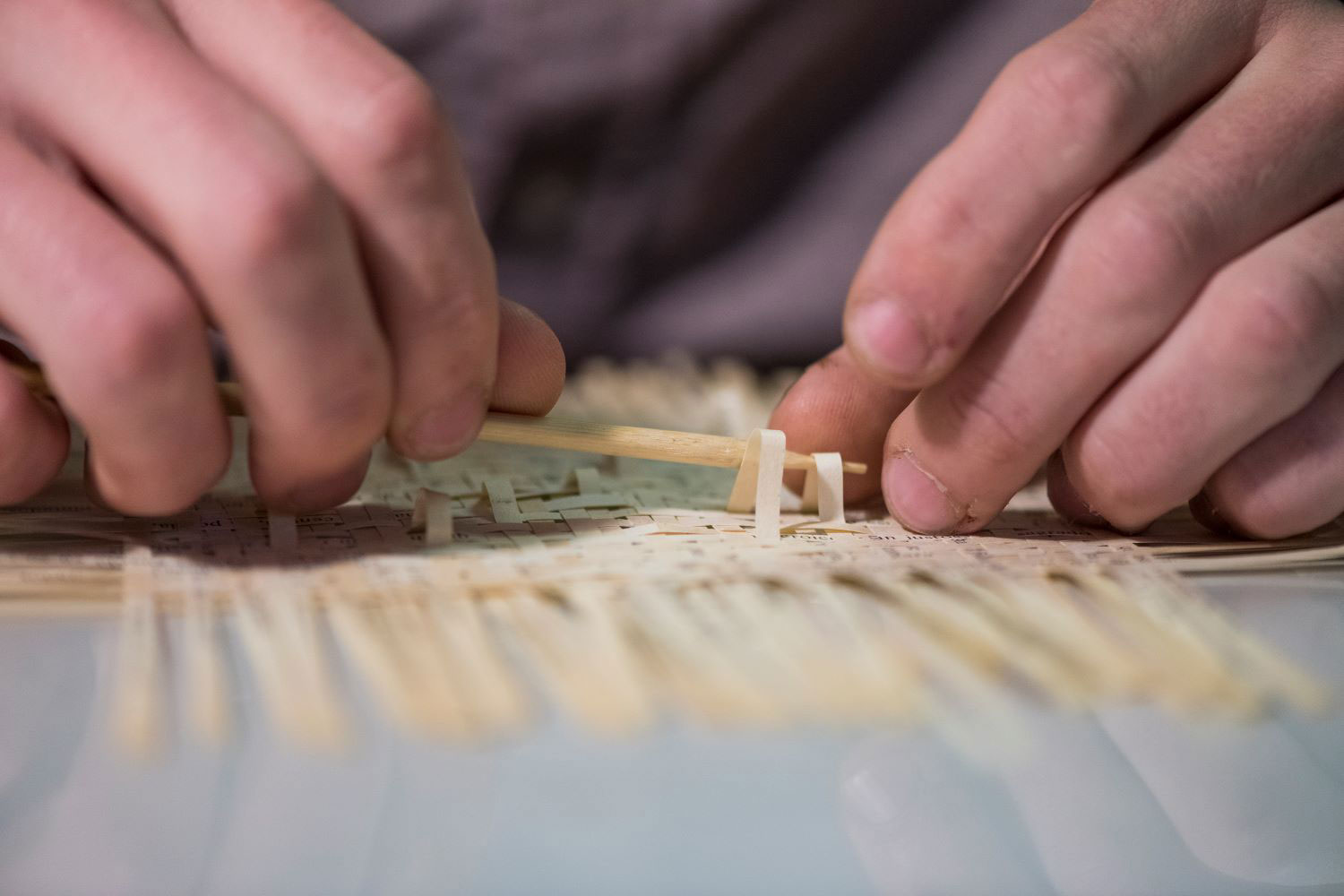
Each panel starts with a sketched-out drawing of the design. Then I stretch fabric on a loom. I embroider each sequin one by one with a Lunéville hook, according to my composition. After finishing, the sparkling fabric is framed or shaped into a finished artwork.
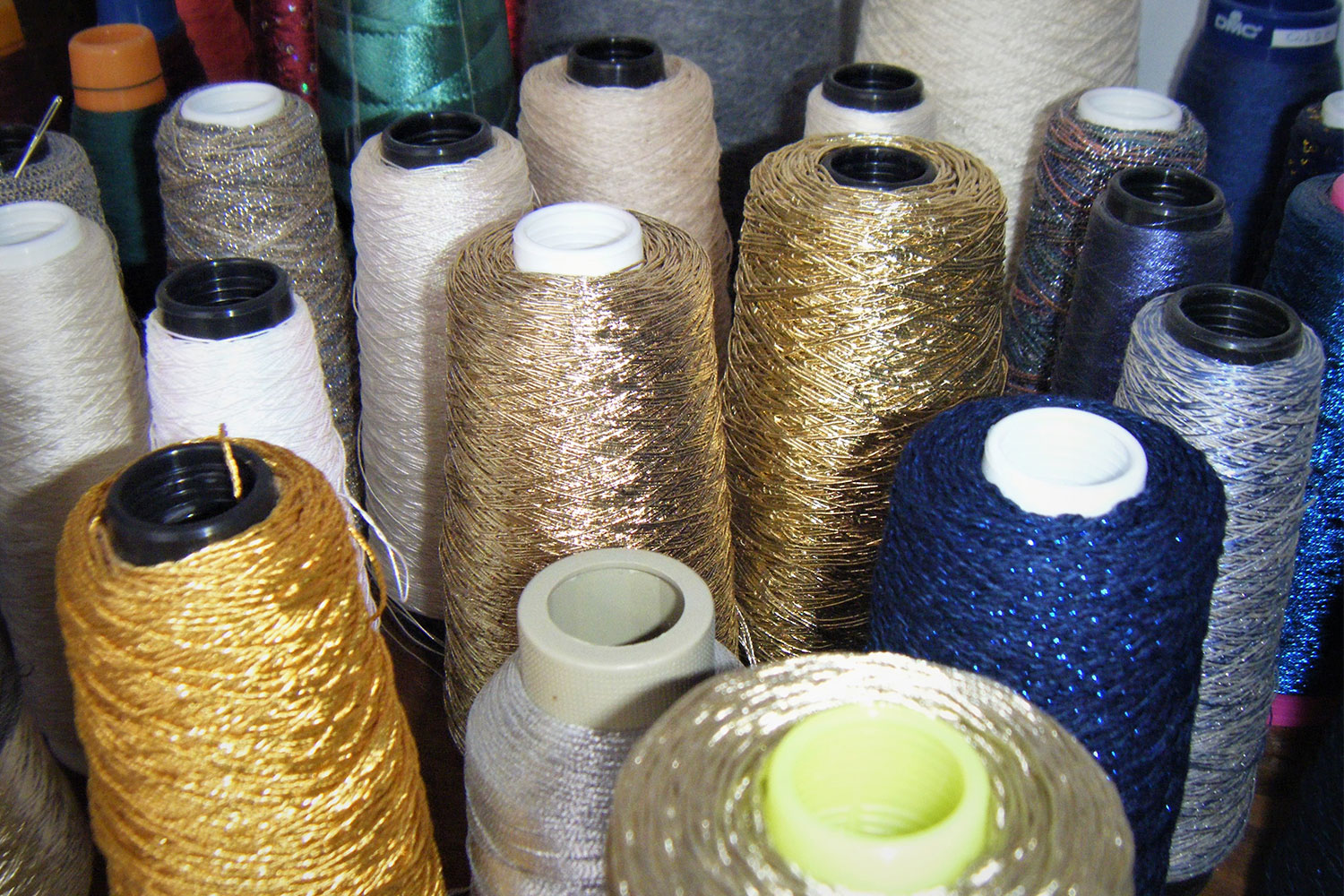
I only use traceable and sustainable materials in my work. My sequins, threads and fabrics are made in France, with organic materials such as linen, cambric and cotton. The threads are cotton and the sequins are made from cellulose acetate.
Yes, I use ancestral embroidery gestures from the traditions of haute couture, to make contemporary art pieces, murals and installations. Traditional embroidery becomes contemporary in my works, in the aesthetics and use.
Julie Barbeau
Embroiderer
Saint-Aignan-Grandlieu, France
AVAILABILITY
By appointment only
PHONE
+33 681558469
LANGUAGES
French, English
Homo Faber Finds is a new service aiming to inspire admirers of craft to connect and collaborate with exceptional artisans.
We invite you to submit an enquiry here.