Maria Diana
Jewellery maker
Rome, Italy
A touch of porcelain
- Maria makes jewellery and framed works from decorated porcelain
- Her creations have been exhibited in international museums
- Her jewellery can be found in boutiques around the world
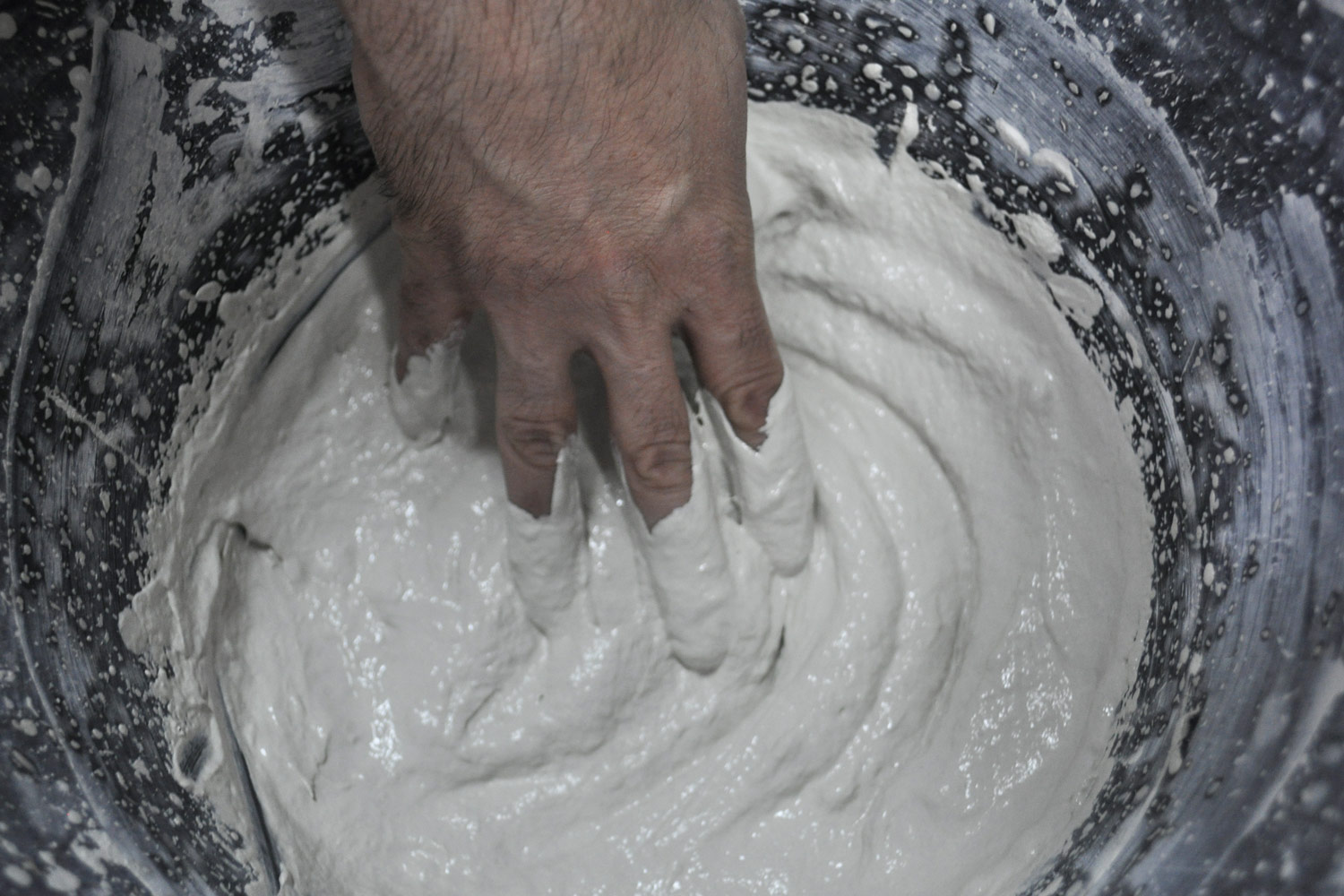
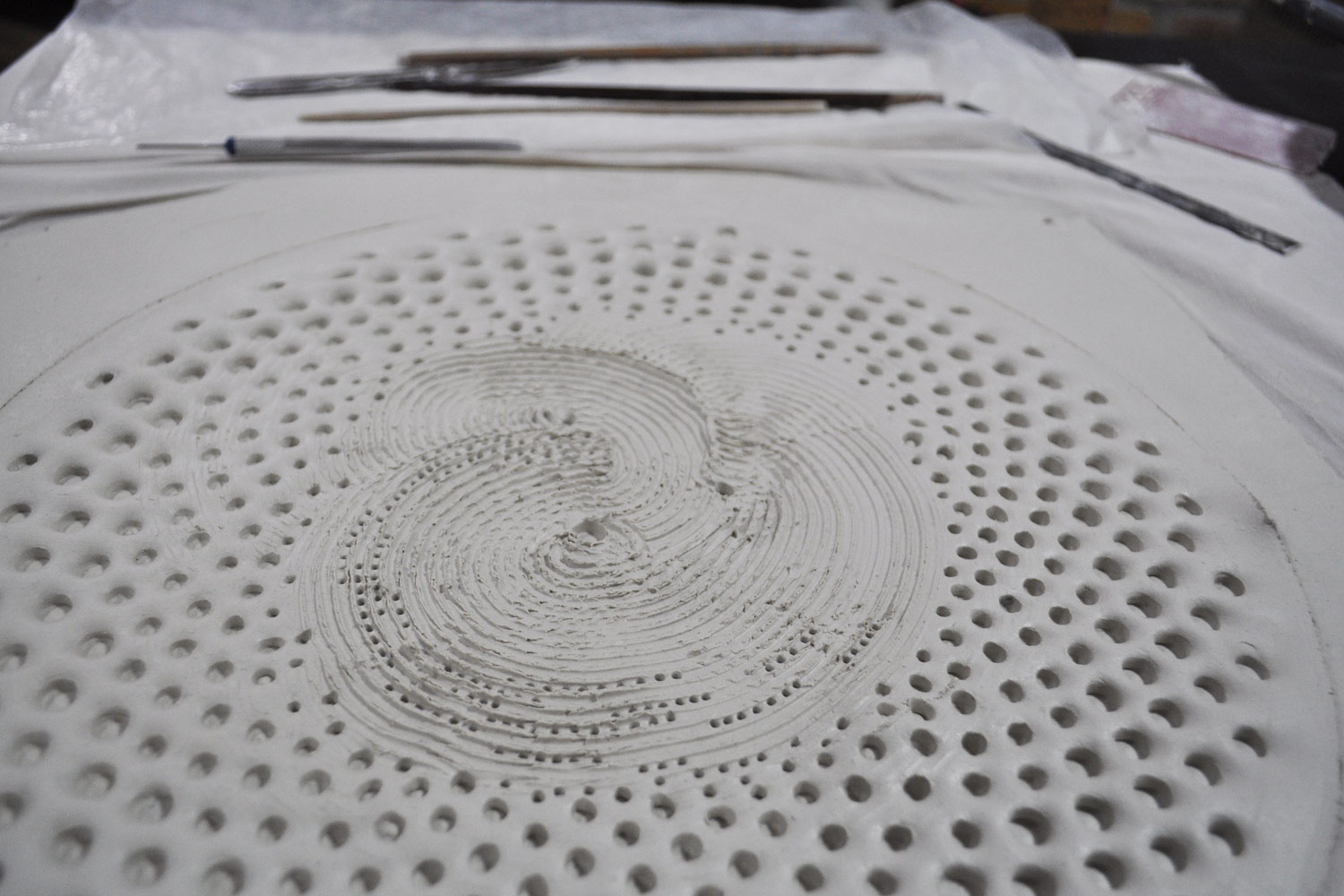
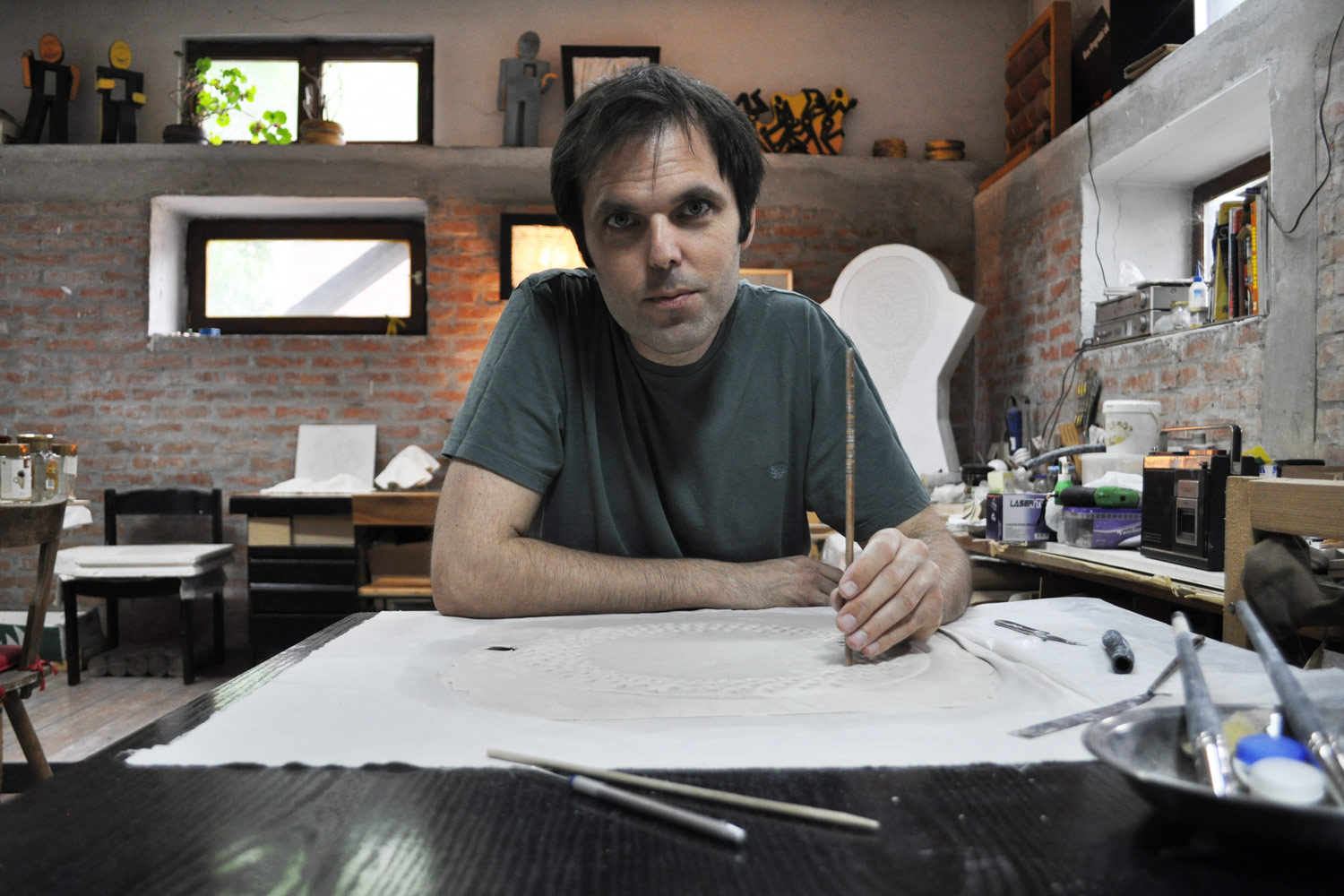
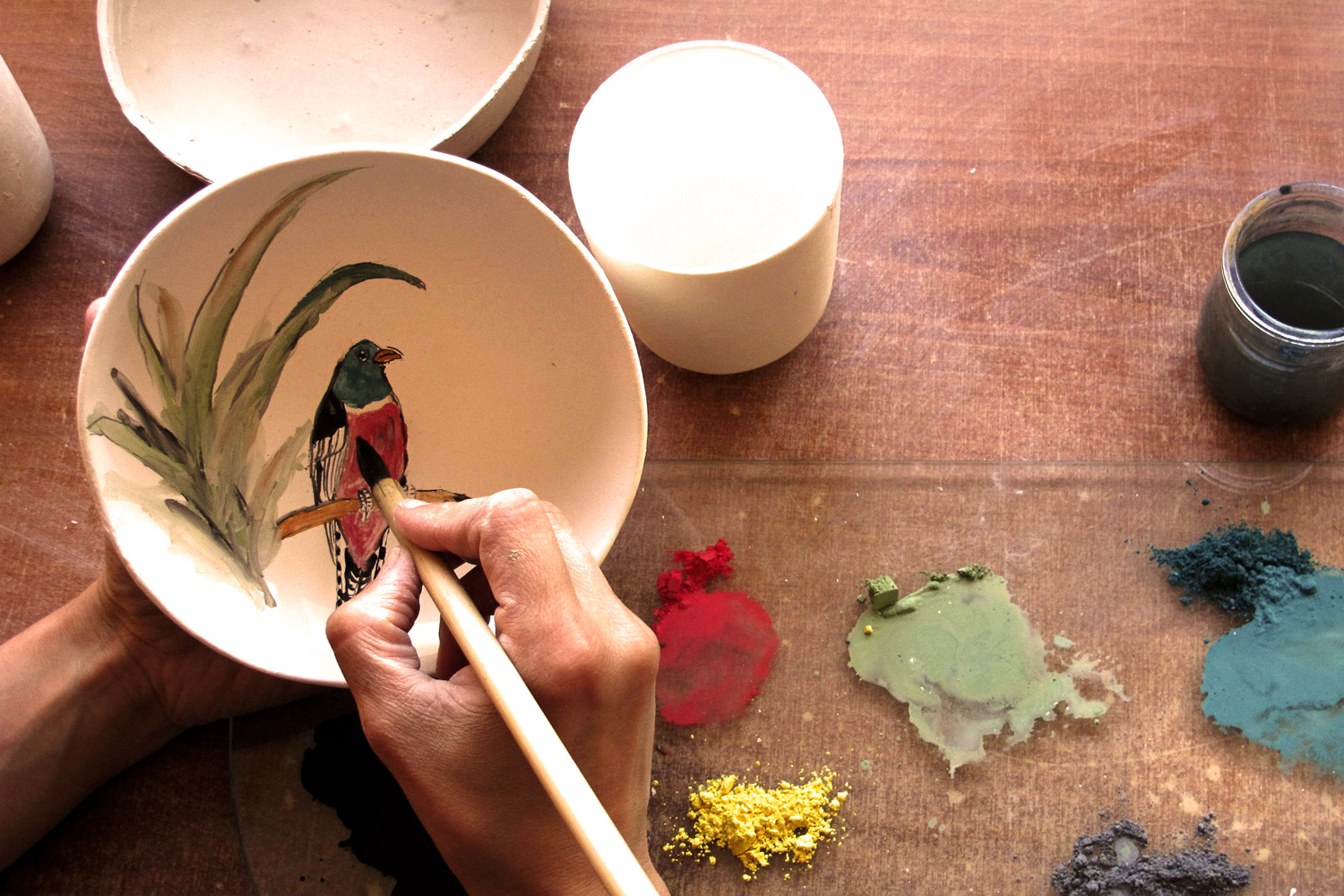
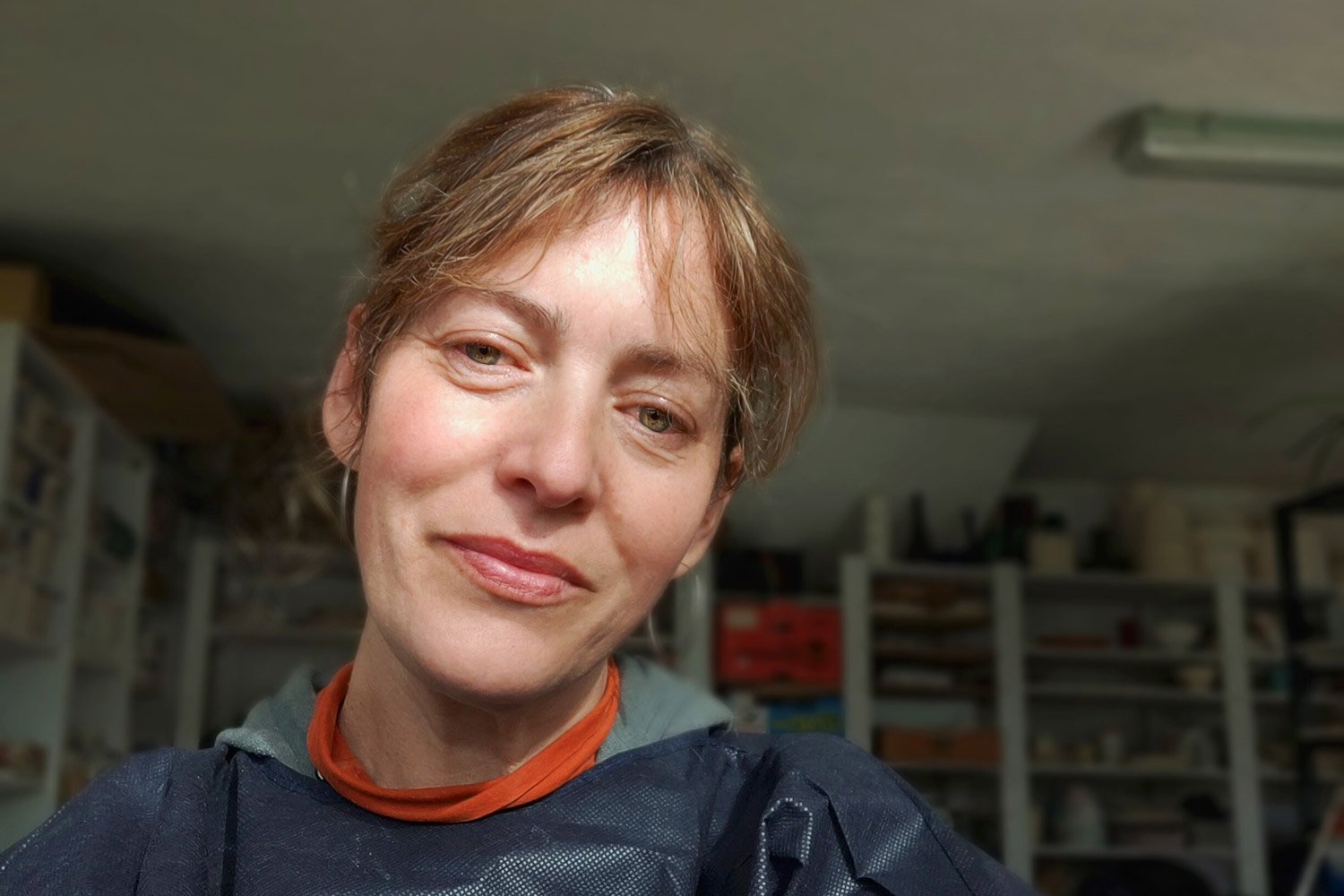
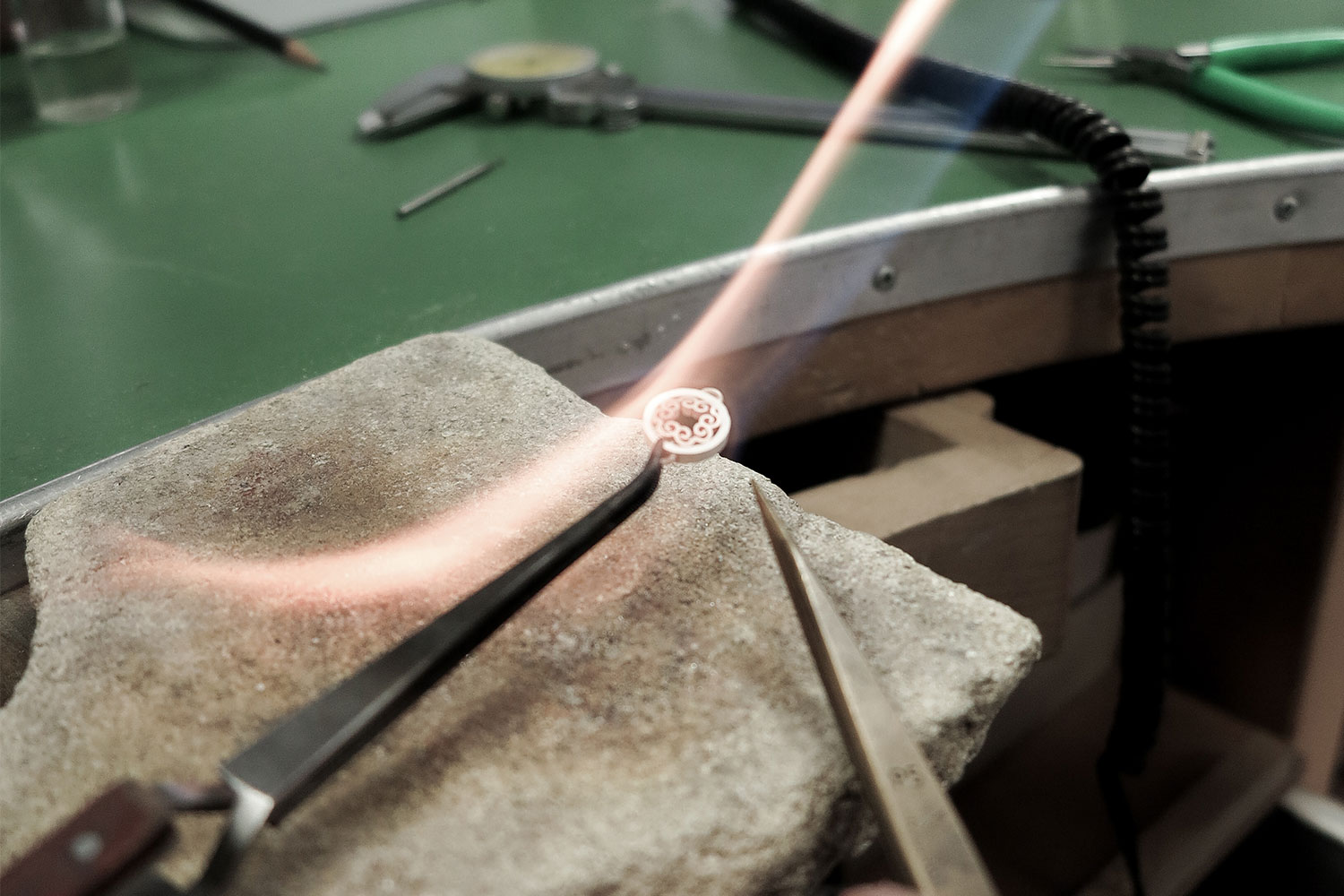
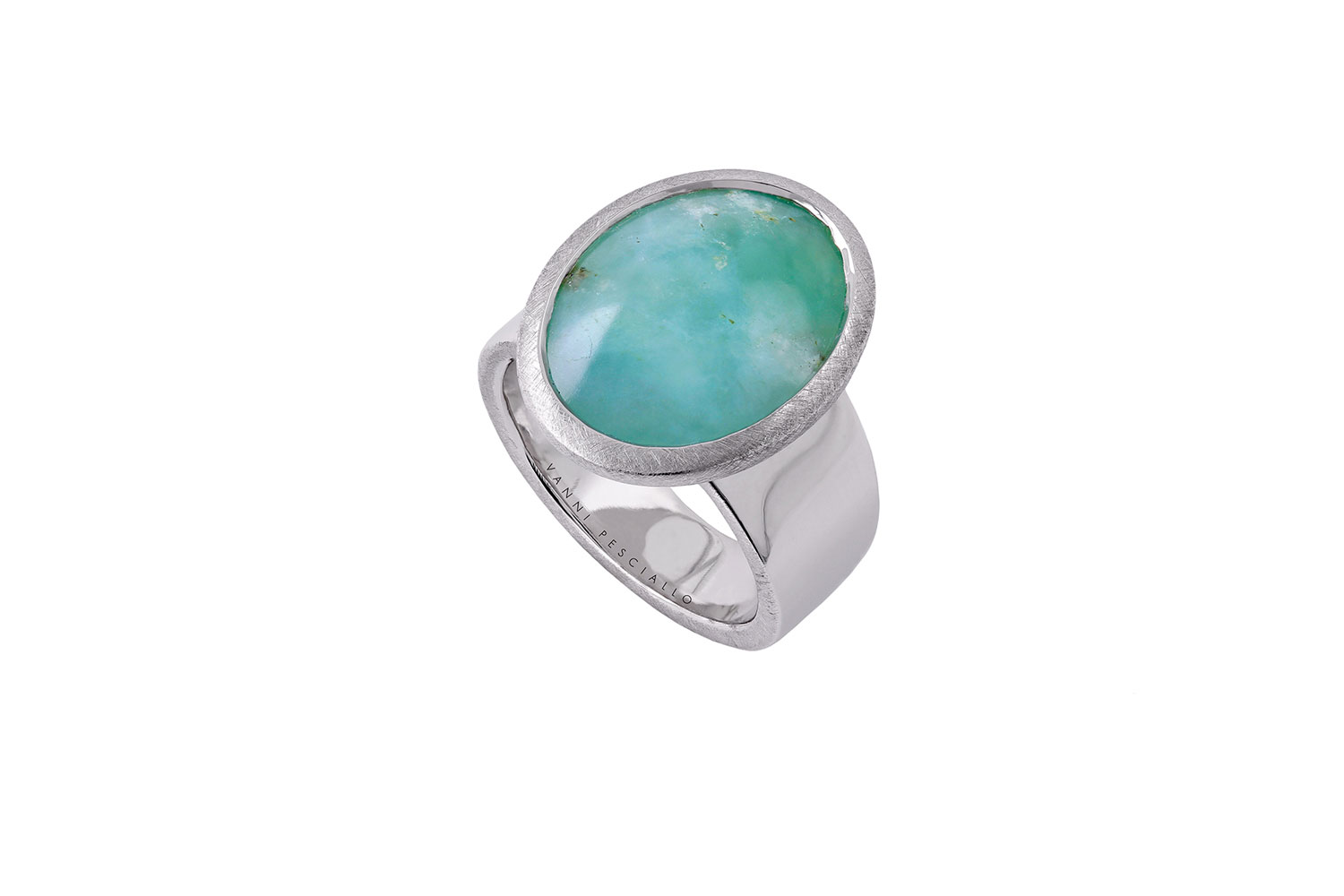
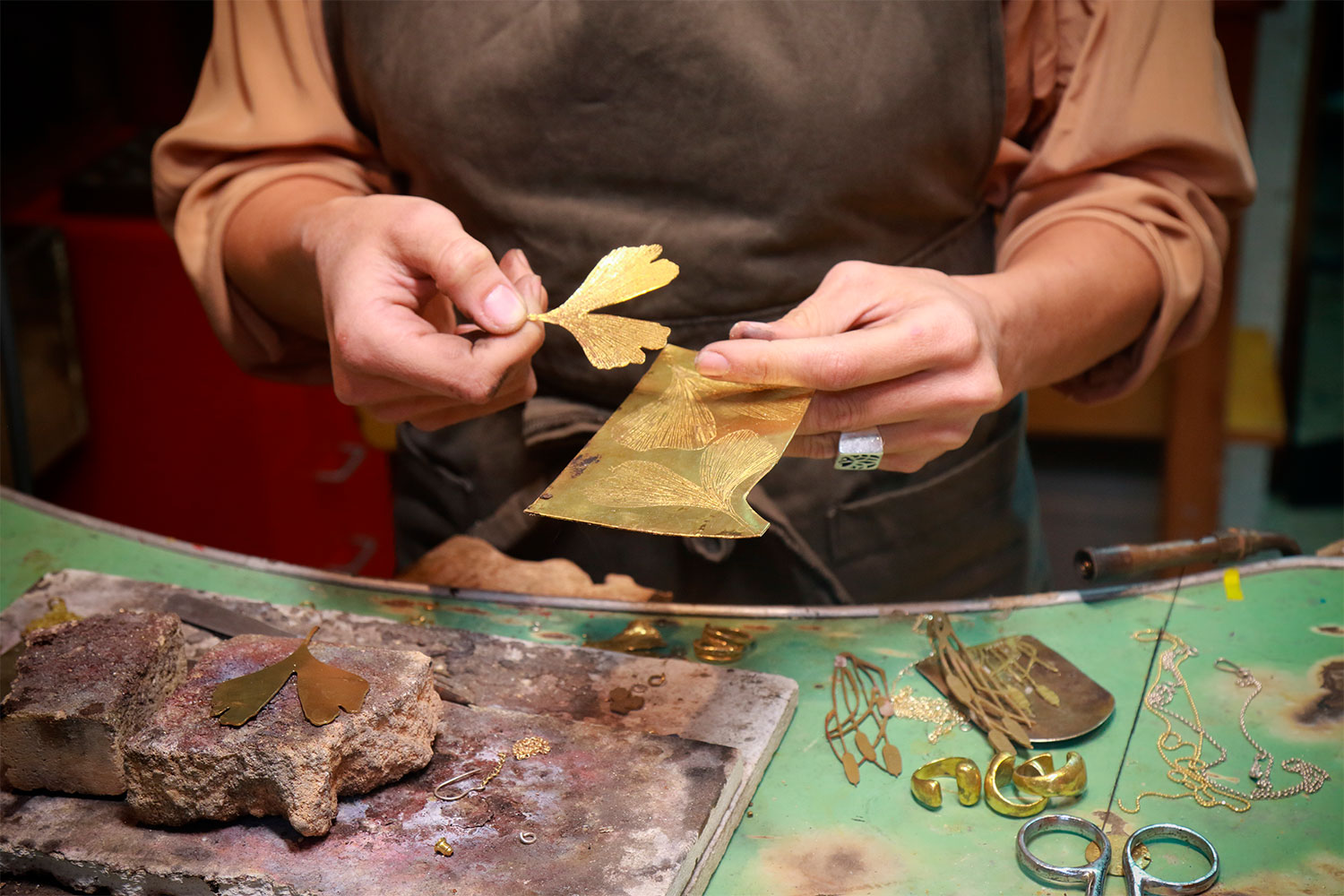
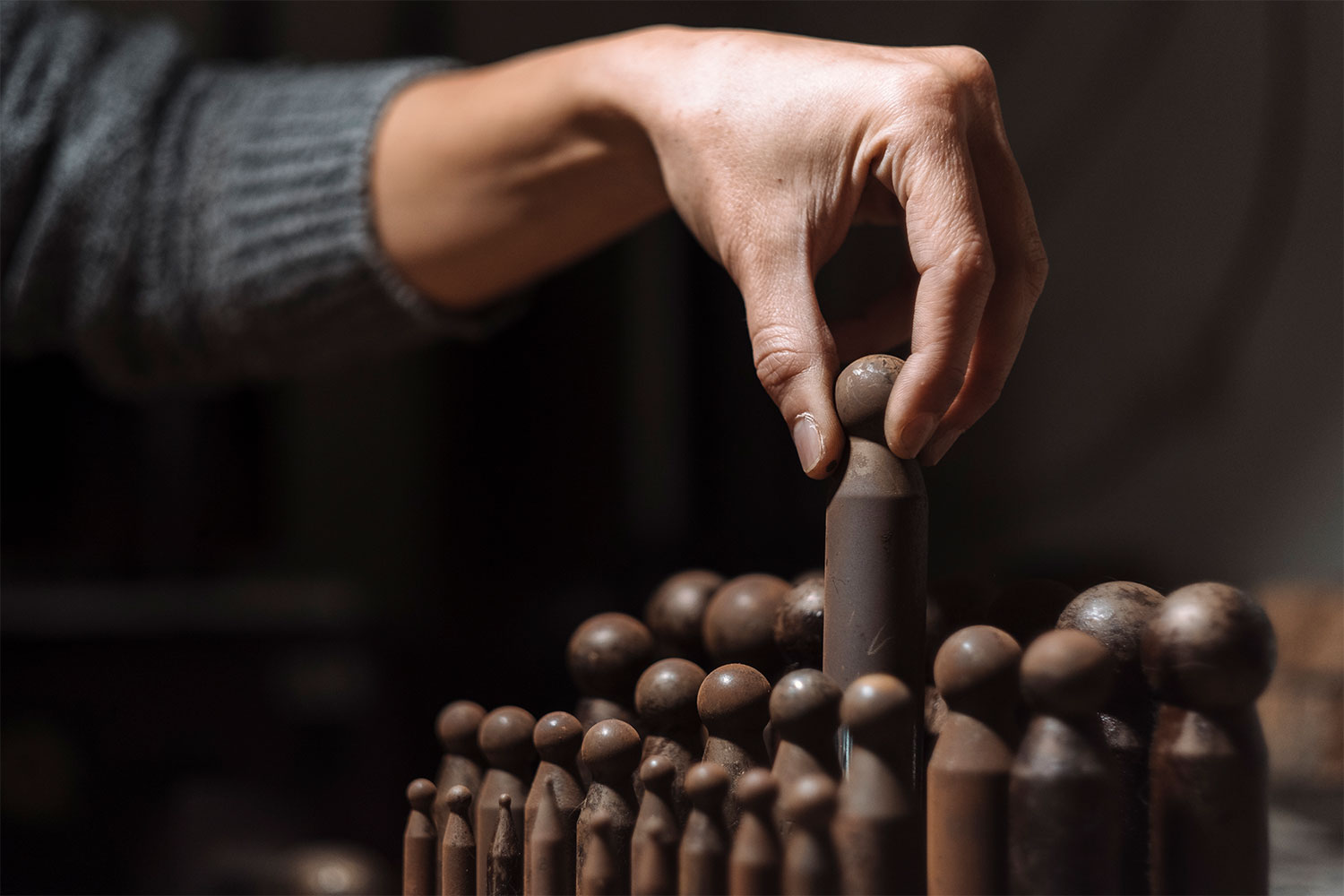
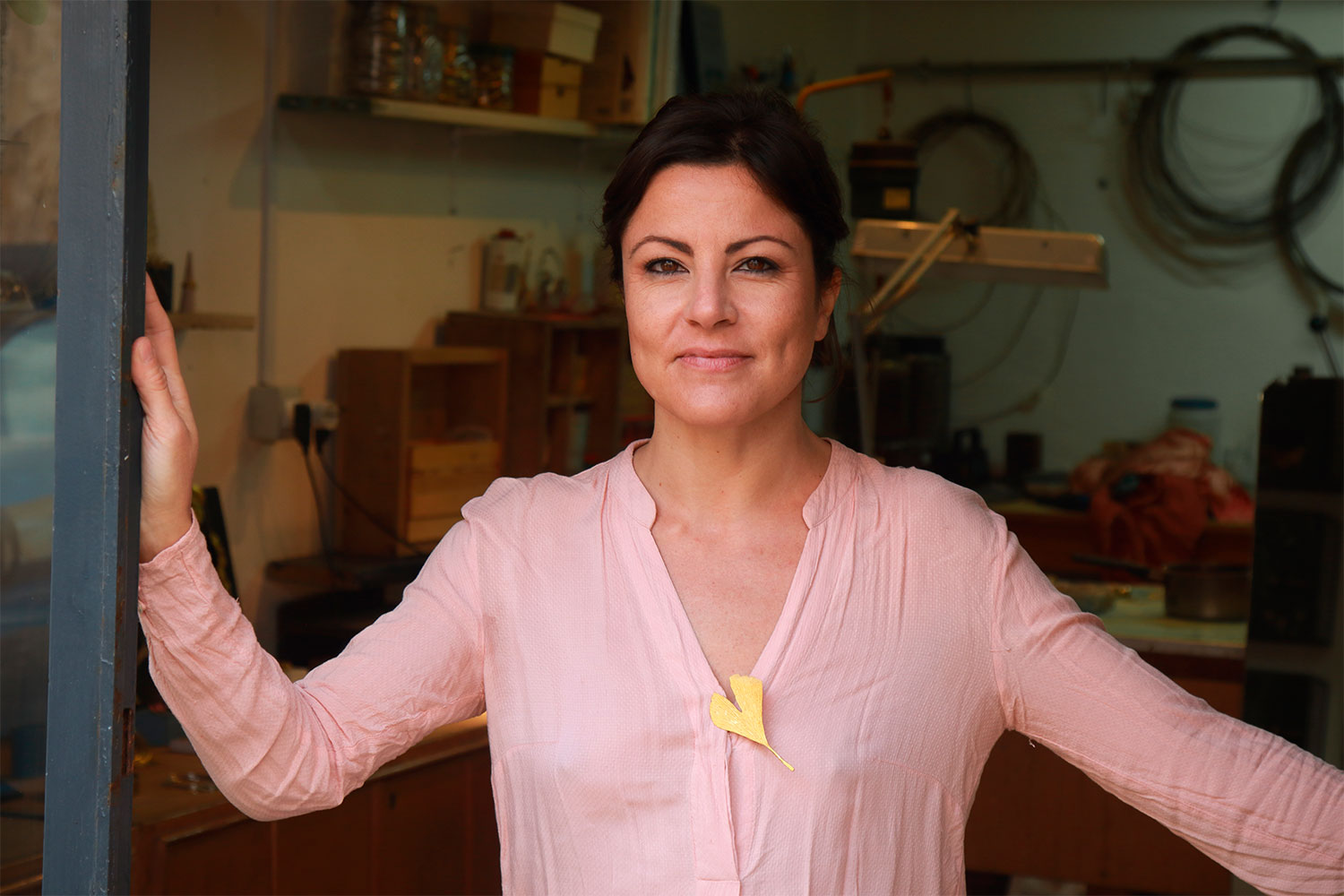
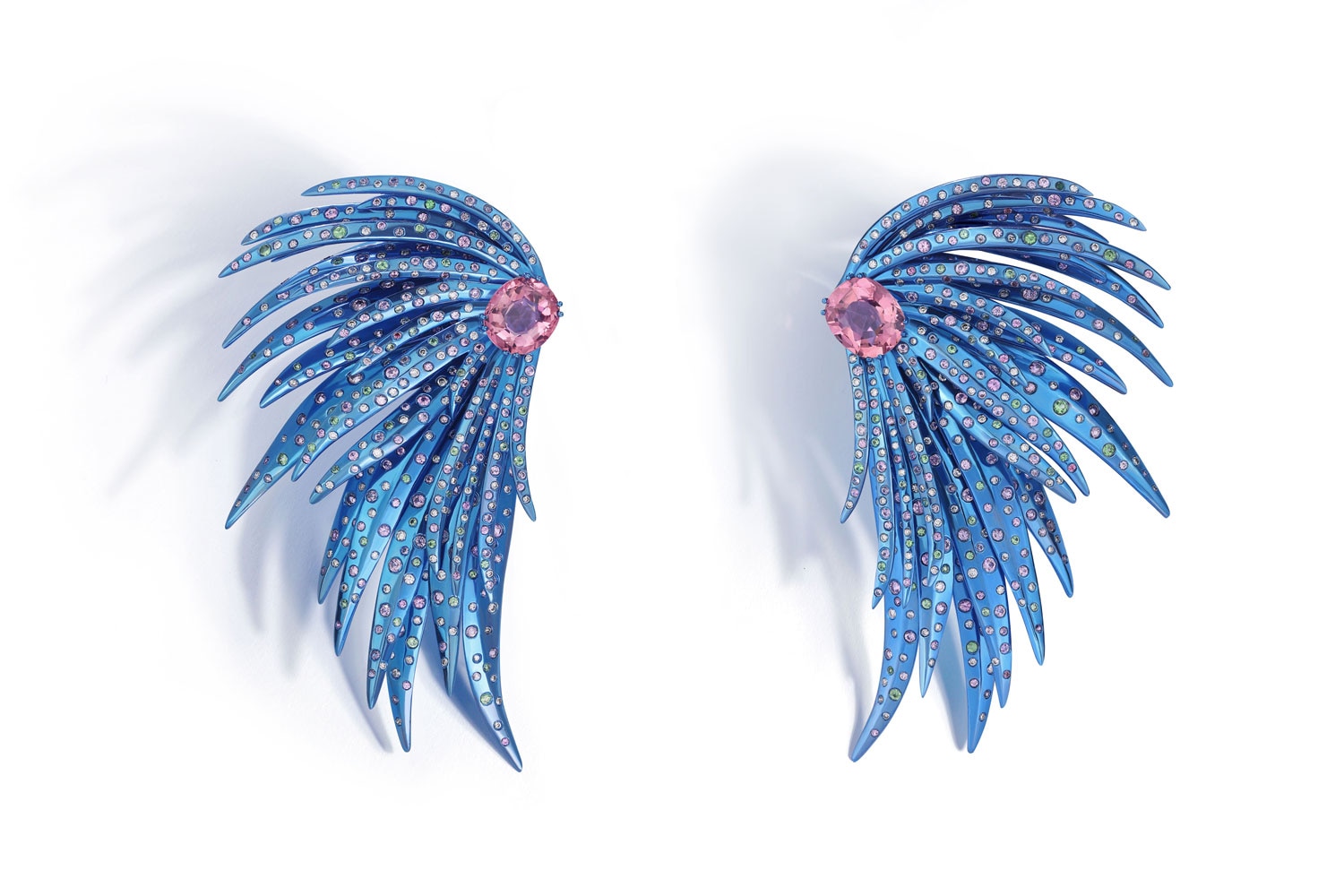
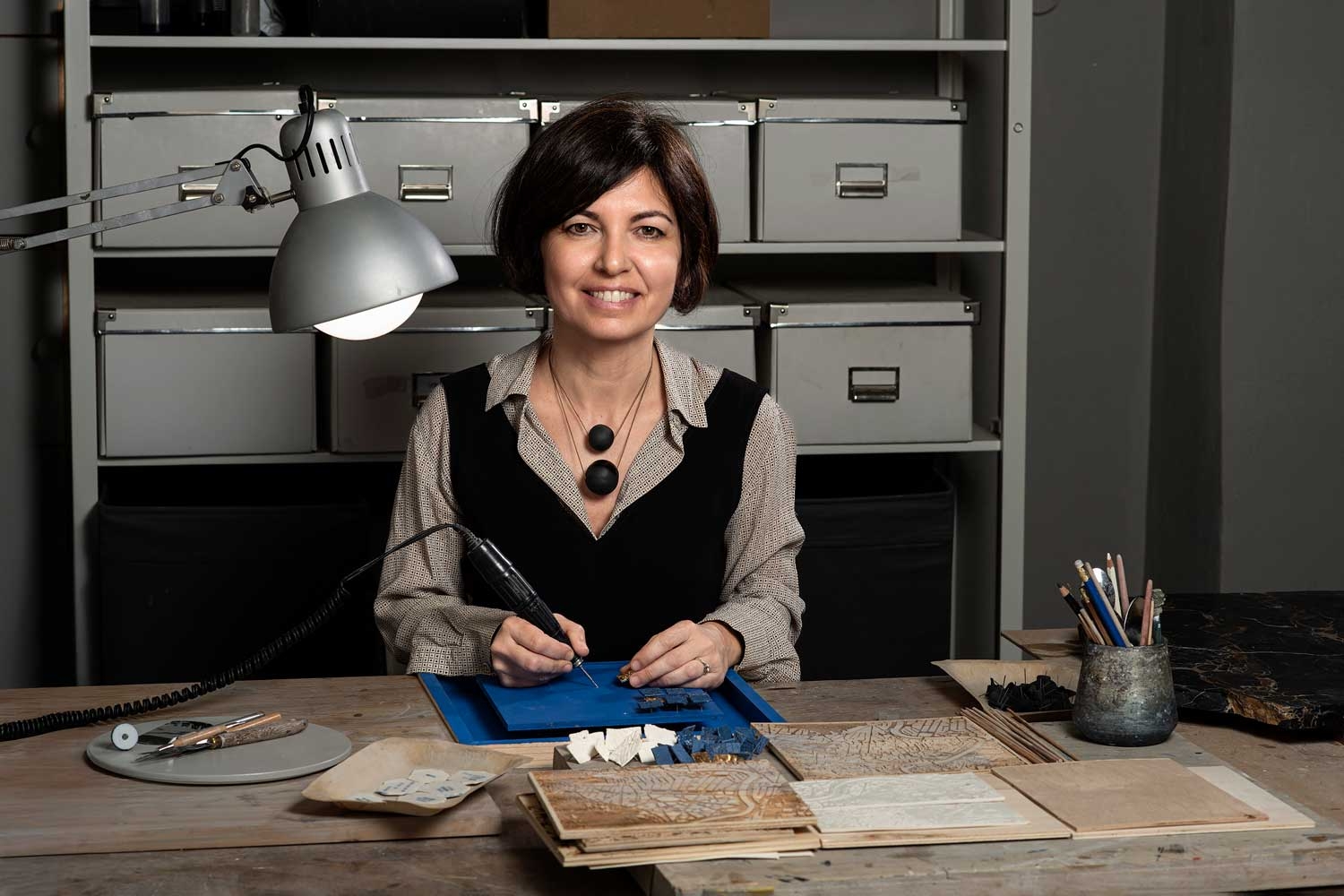
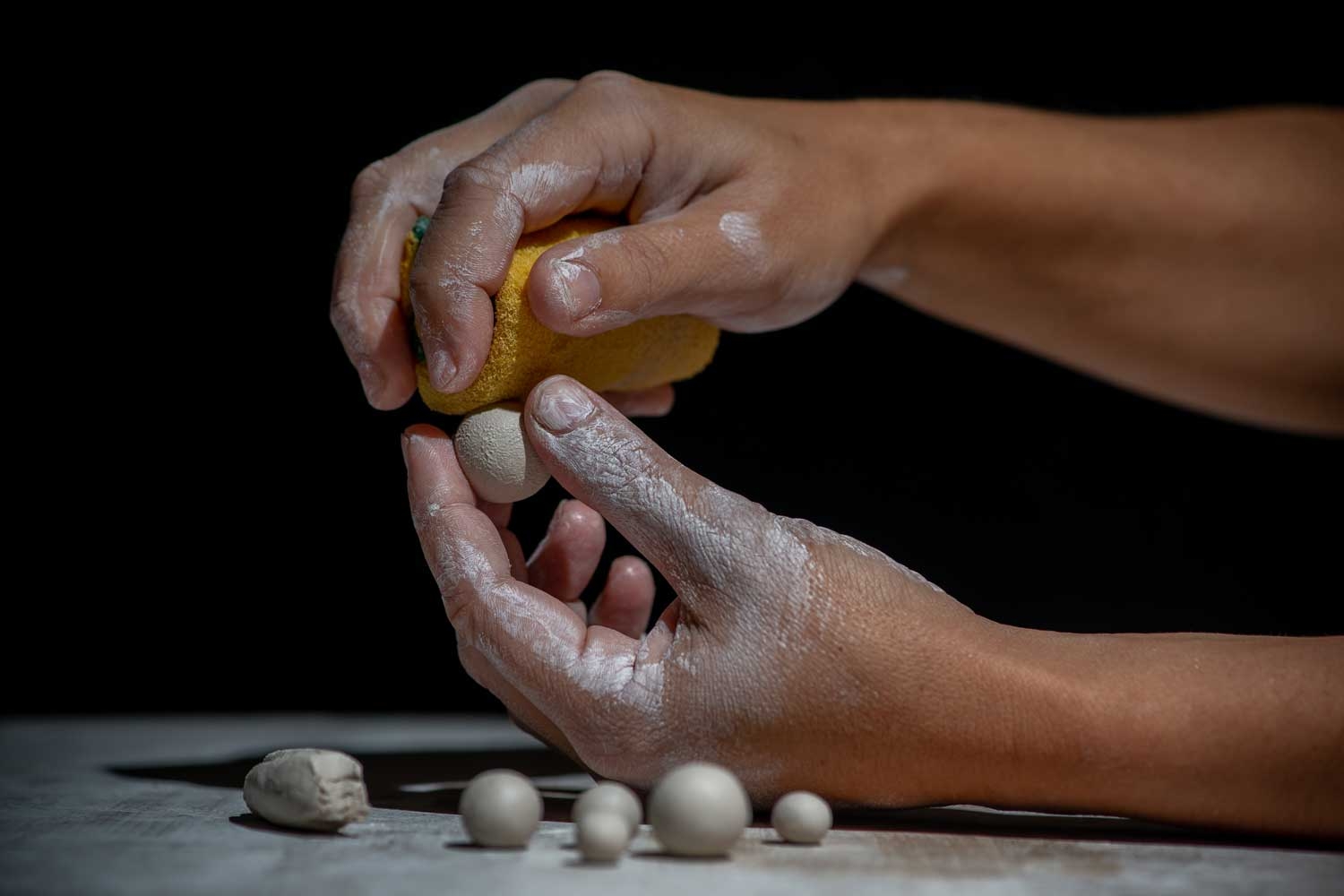
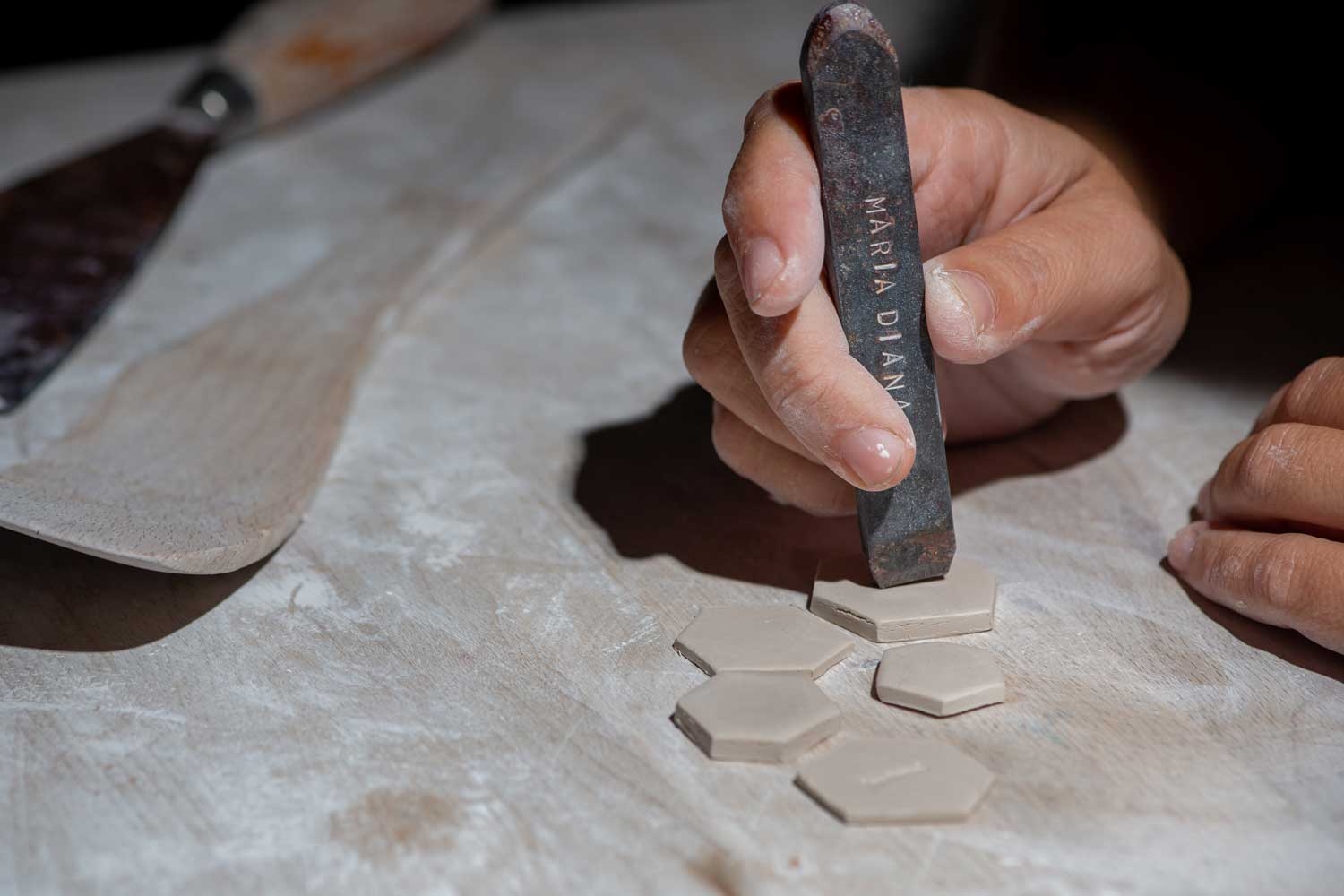
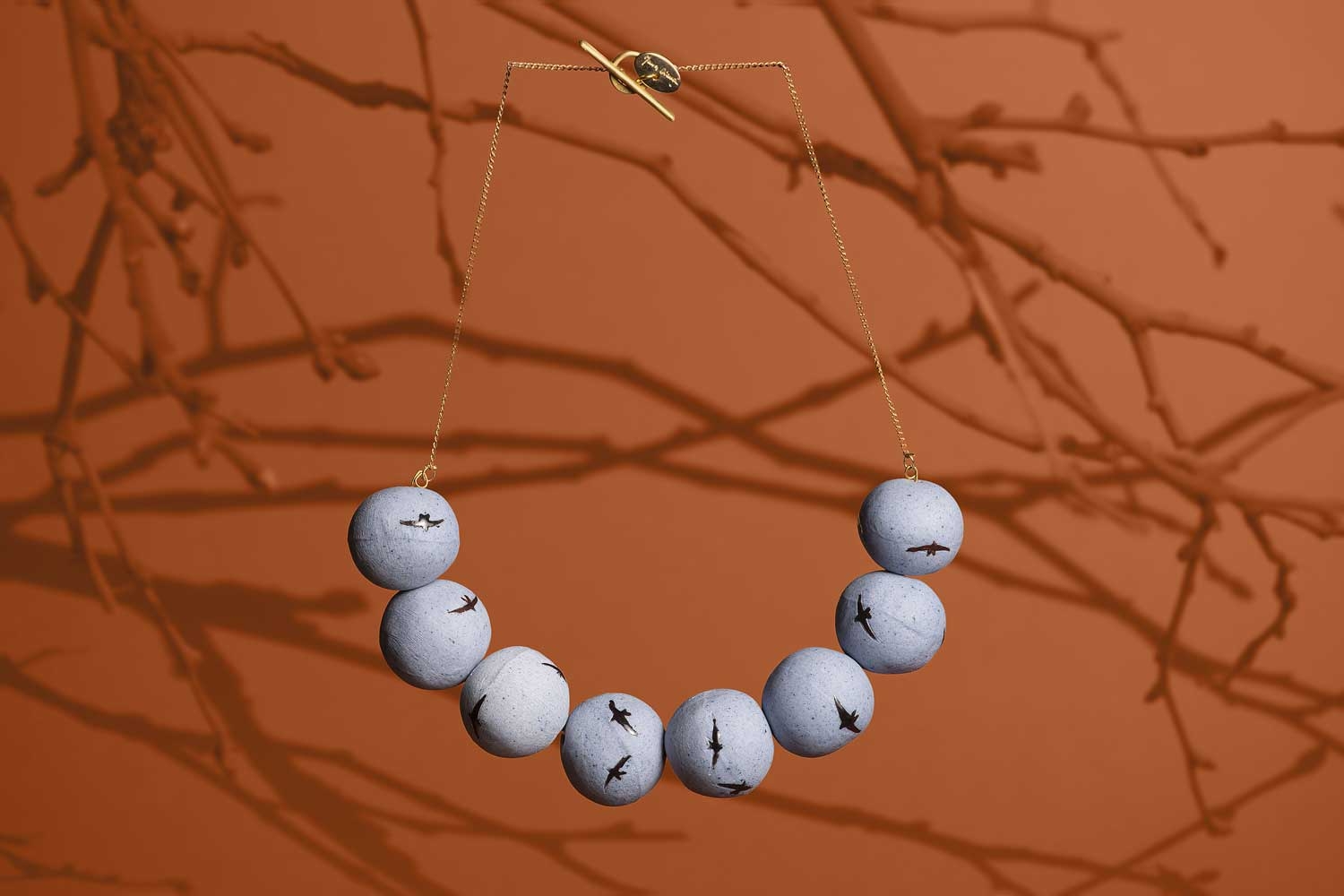
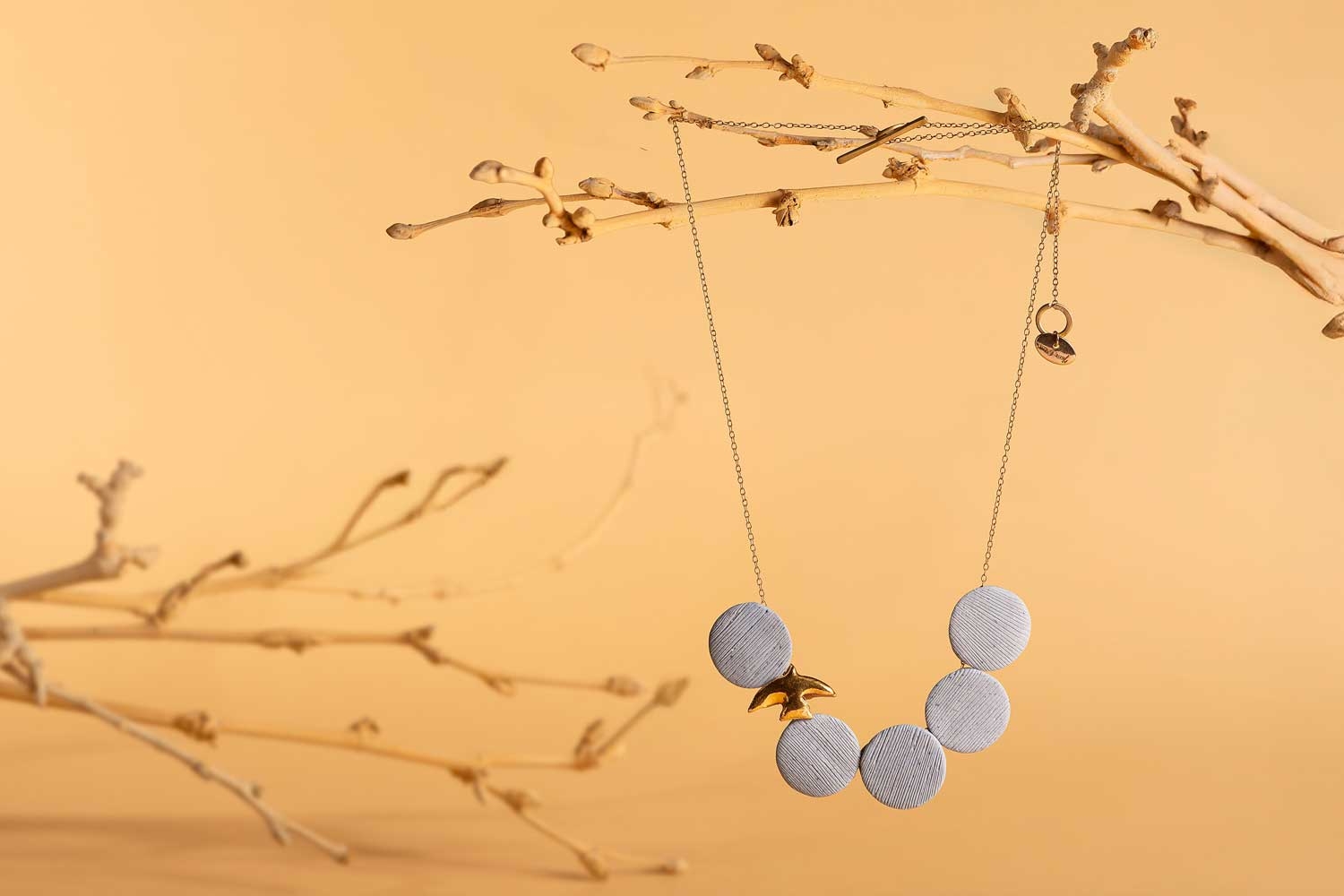
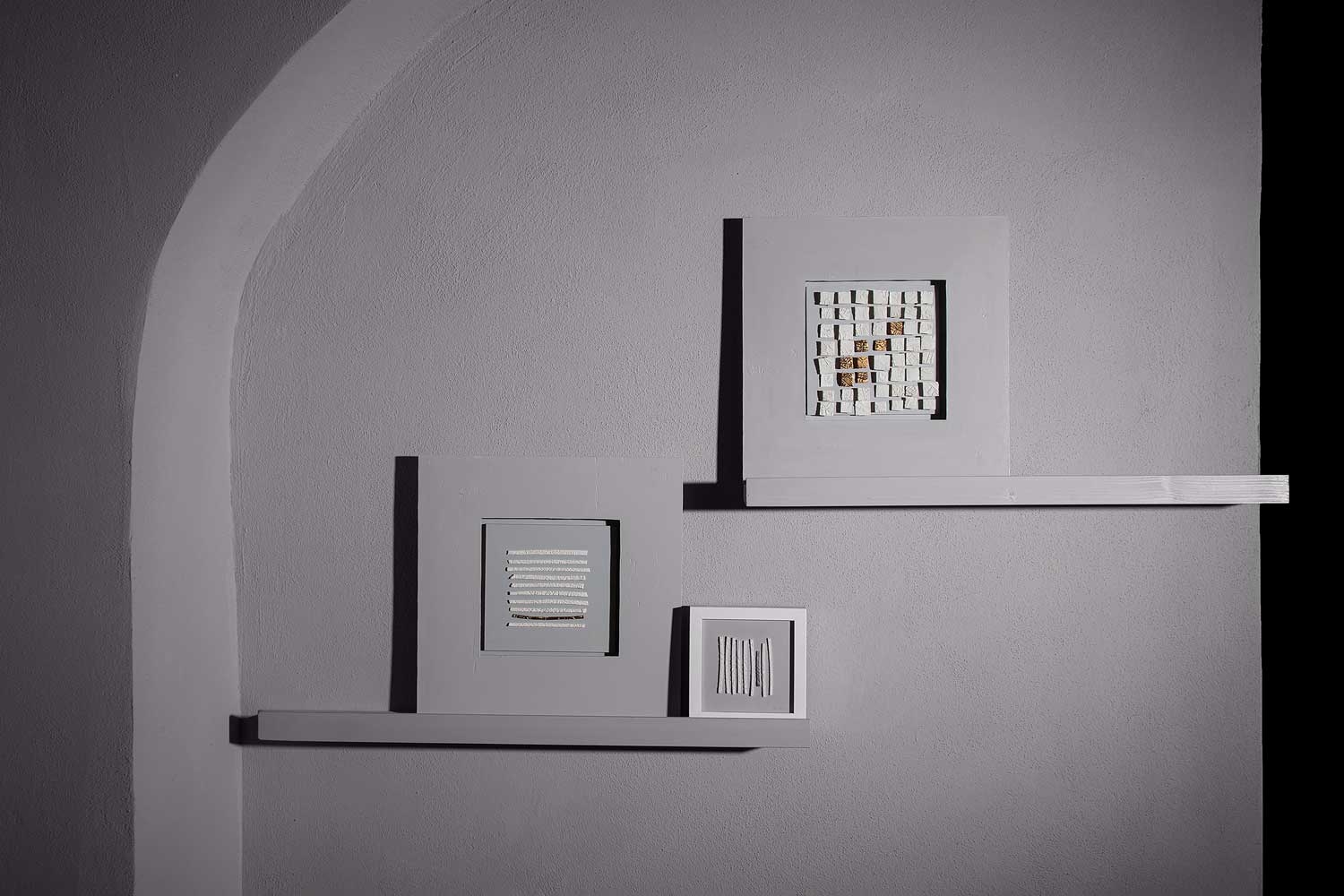
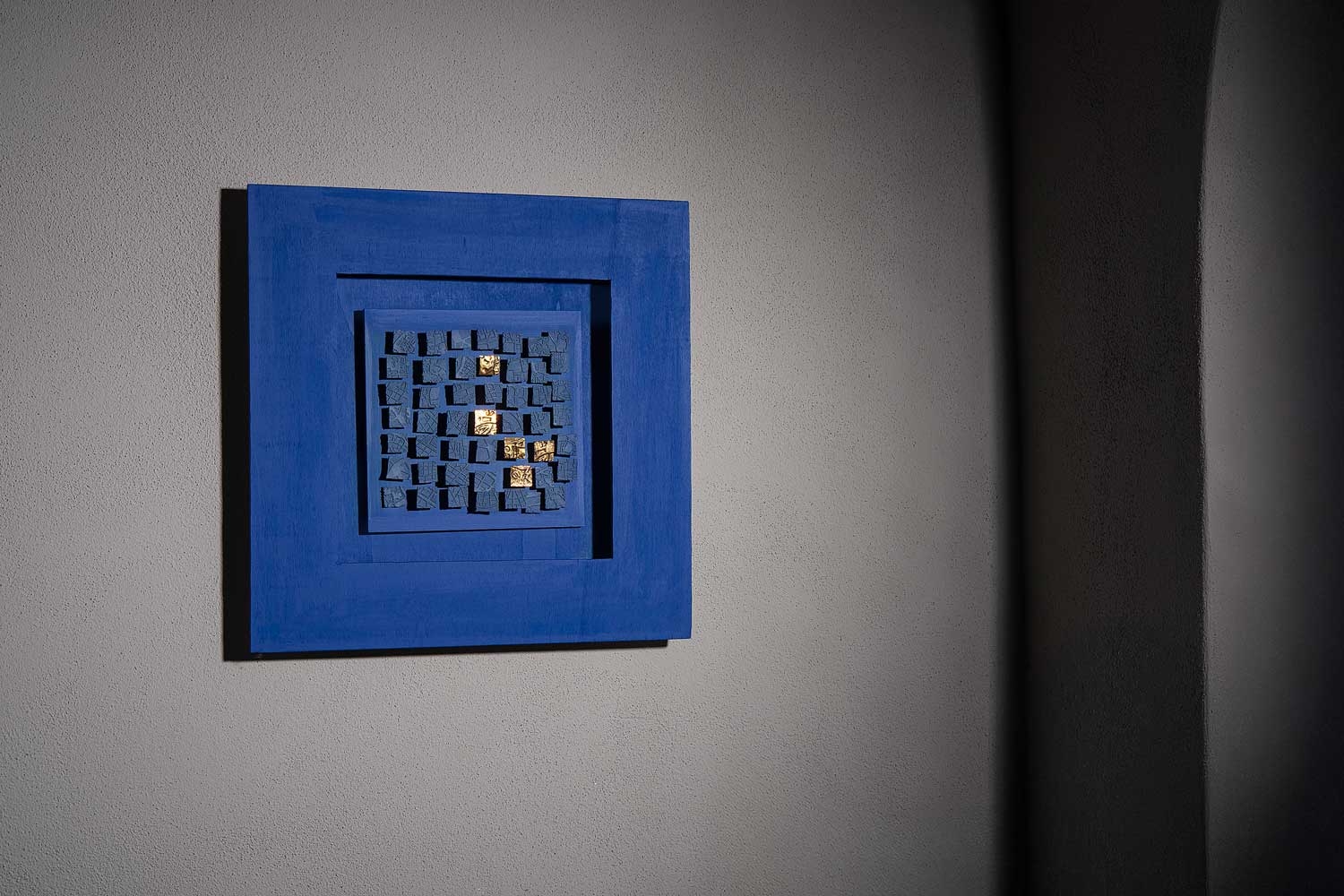
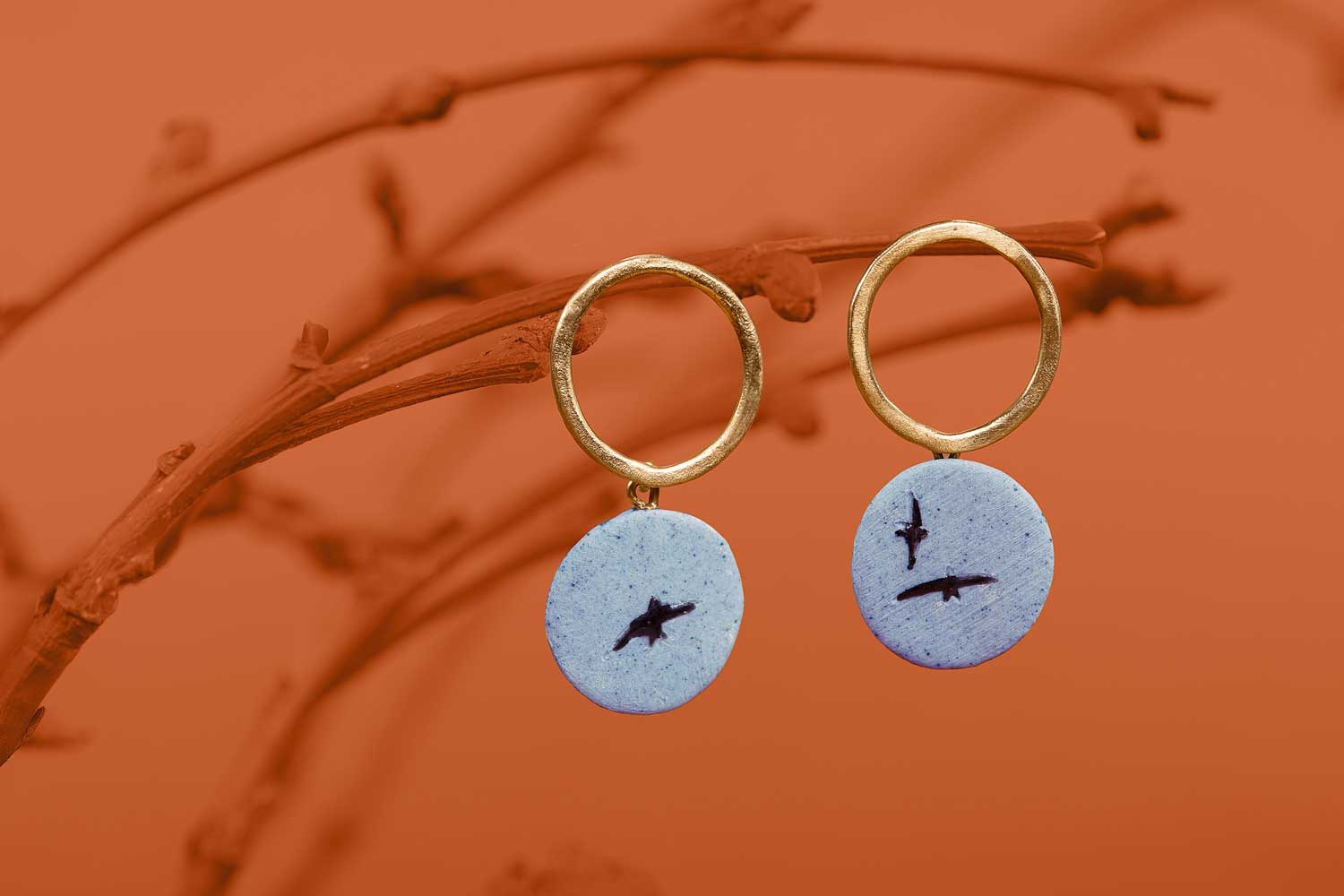
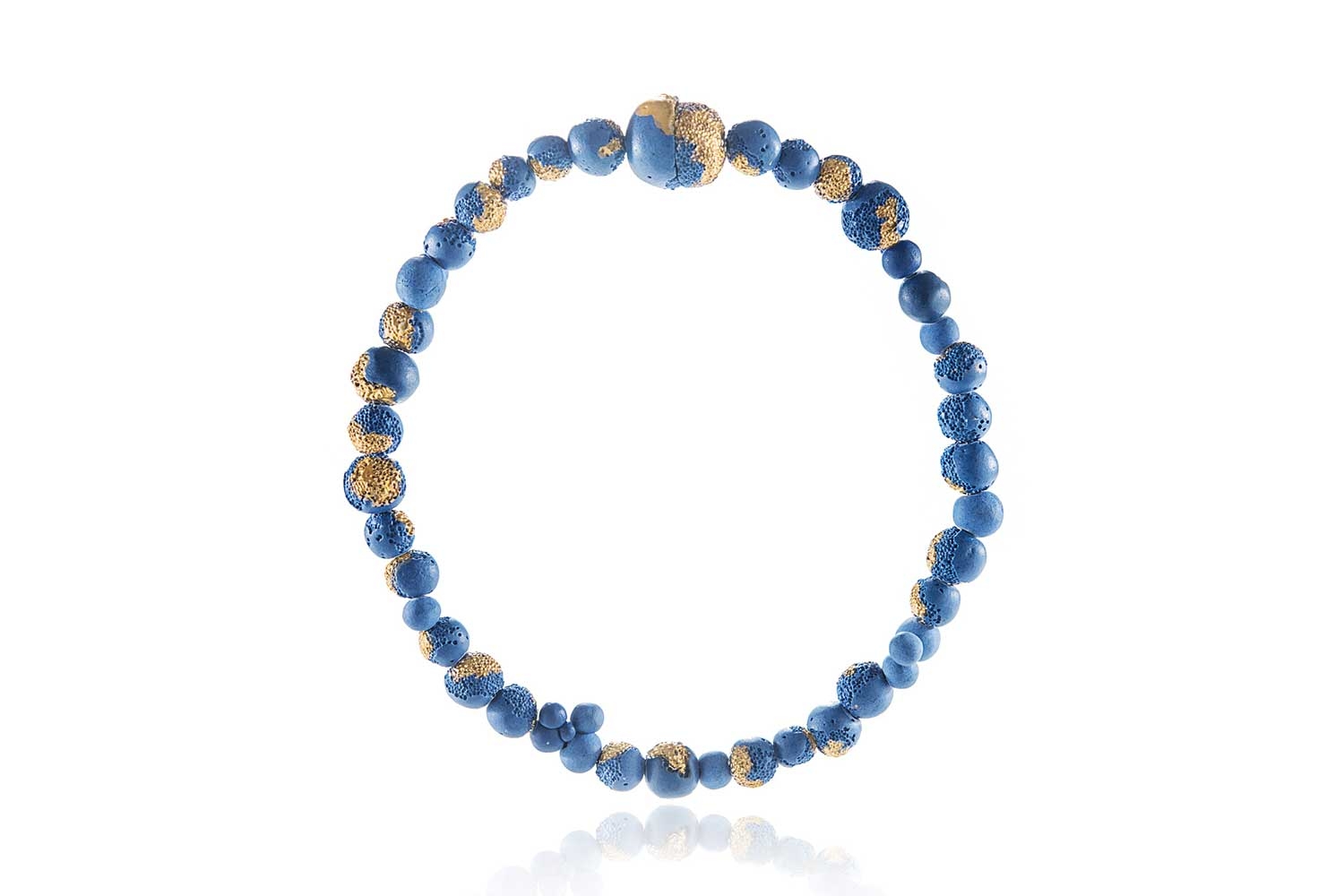
Maria Diana was introduced to porcelain by her great-aunt, the Sardinian artist Maria Lai, to whom she was very close. "I was always fascinated by her work, which she called her way of existing and seeing the world," shares Maria. It was with this great-aunt that Maria took her first steps in porcelain and found her way into contemporary jewellery. Since the late 1990s, she has been making jewellery with organic and geometric textures. To white or coloured porcelain, Maria associates different materials such as bronze and silver, and applies her ceramic and goldsmithing techniques in a single object. In recent years she has also developed her aesthetic into wall-frame artworks based on maps of Rome, decorating a porcelain map with gold accents and colourful frames.
INTERVIEW
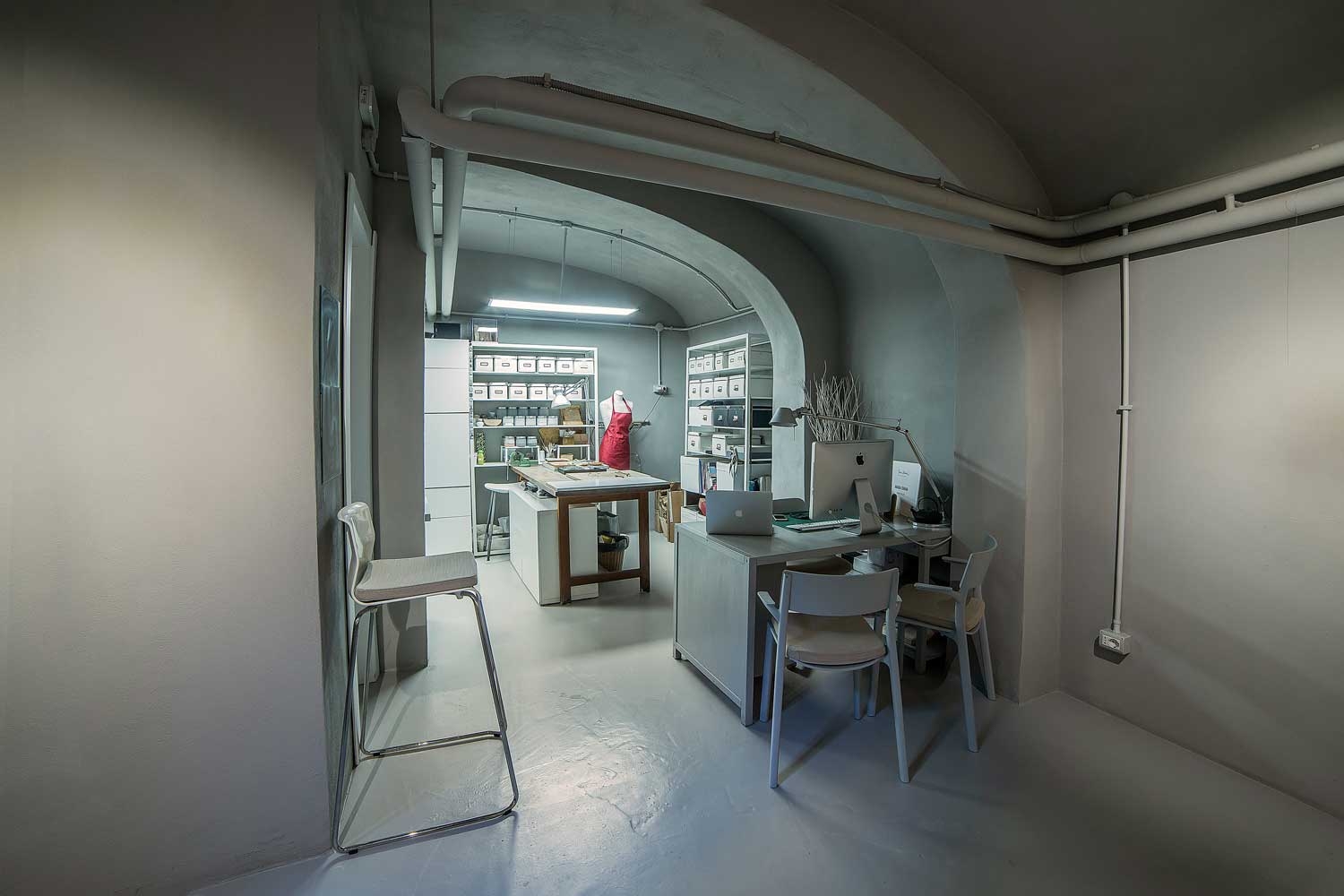
Jewellery remains an interesting field of work because it allows us to think on several levels. It is an ornamental object that has a very important structural part and must be wearable in order to function. To create a piece also requires artistic spirit and design skills. All this allows me to apply what I learnt in my training as an architect.
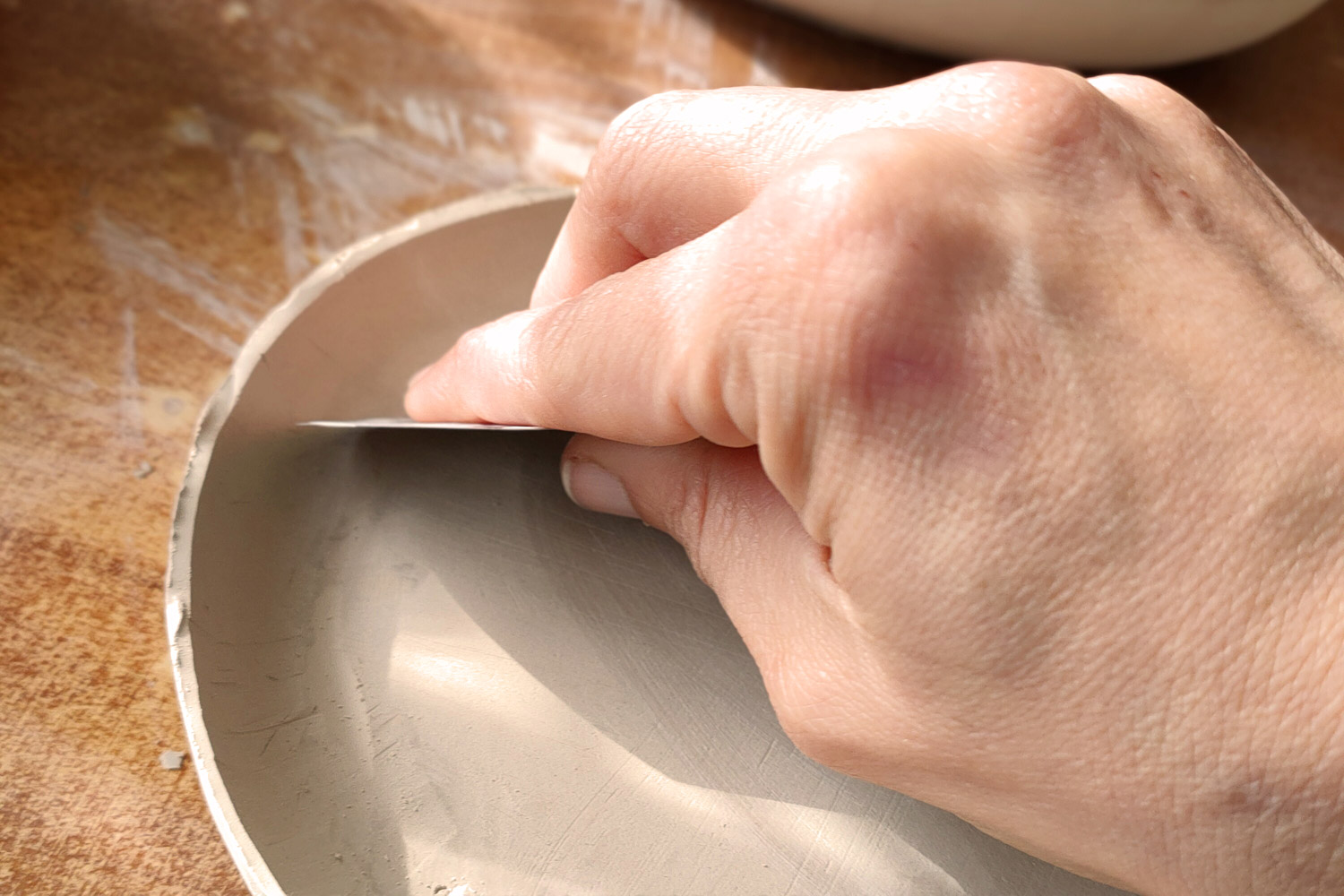
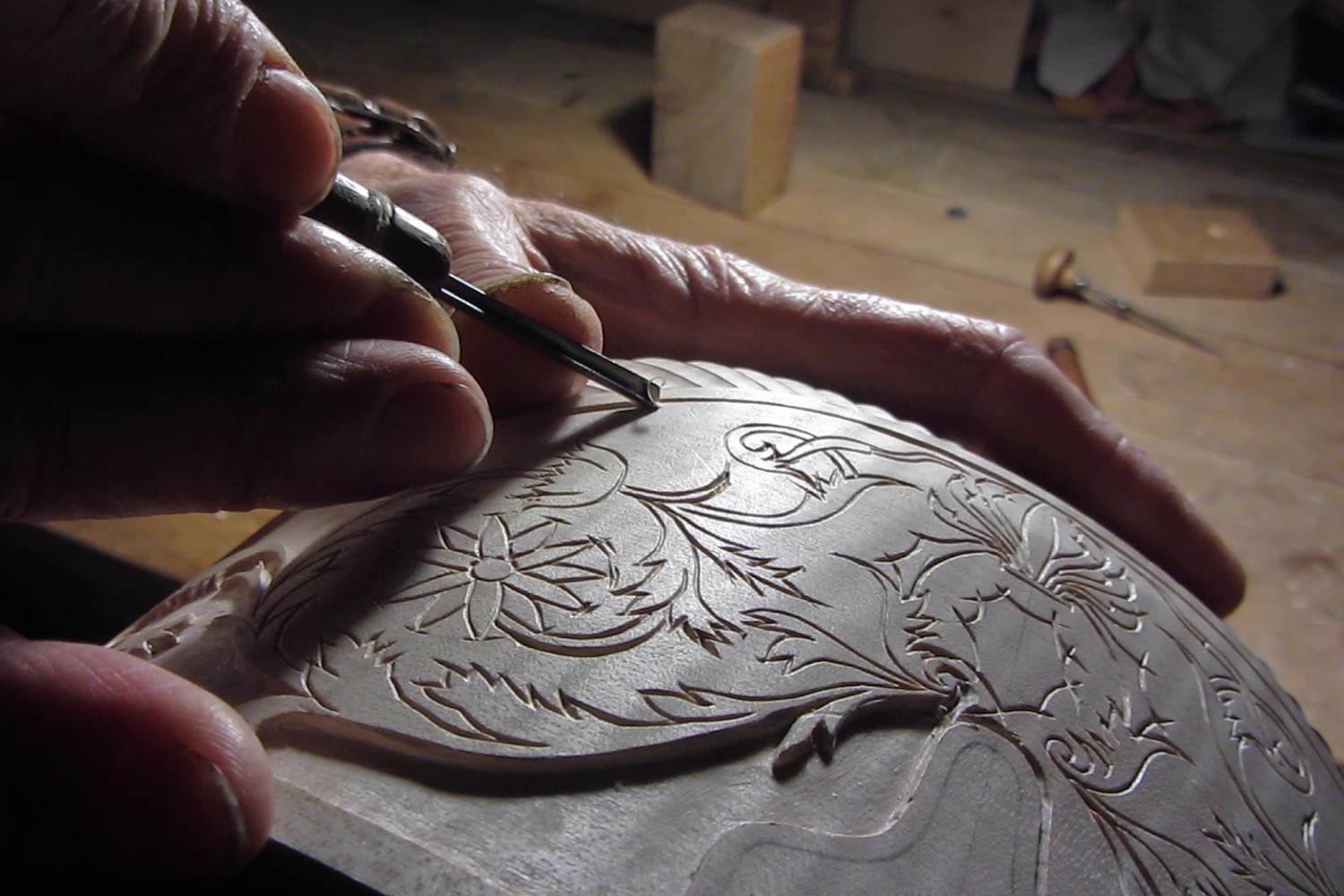
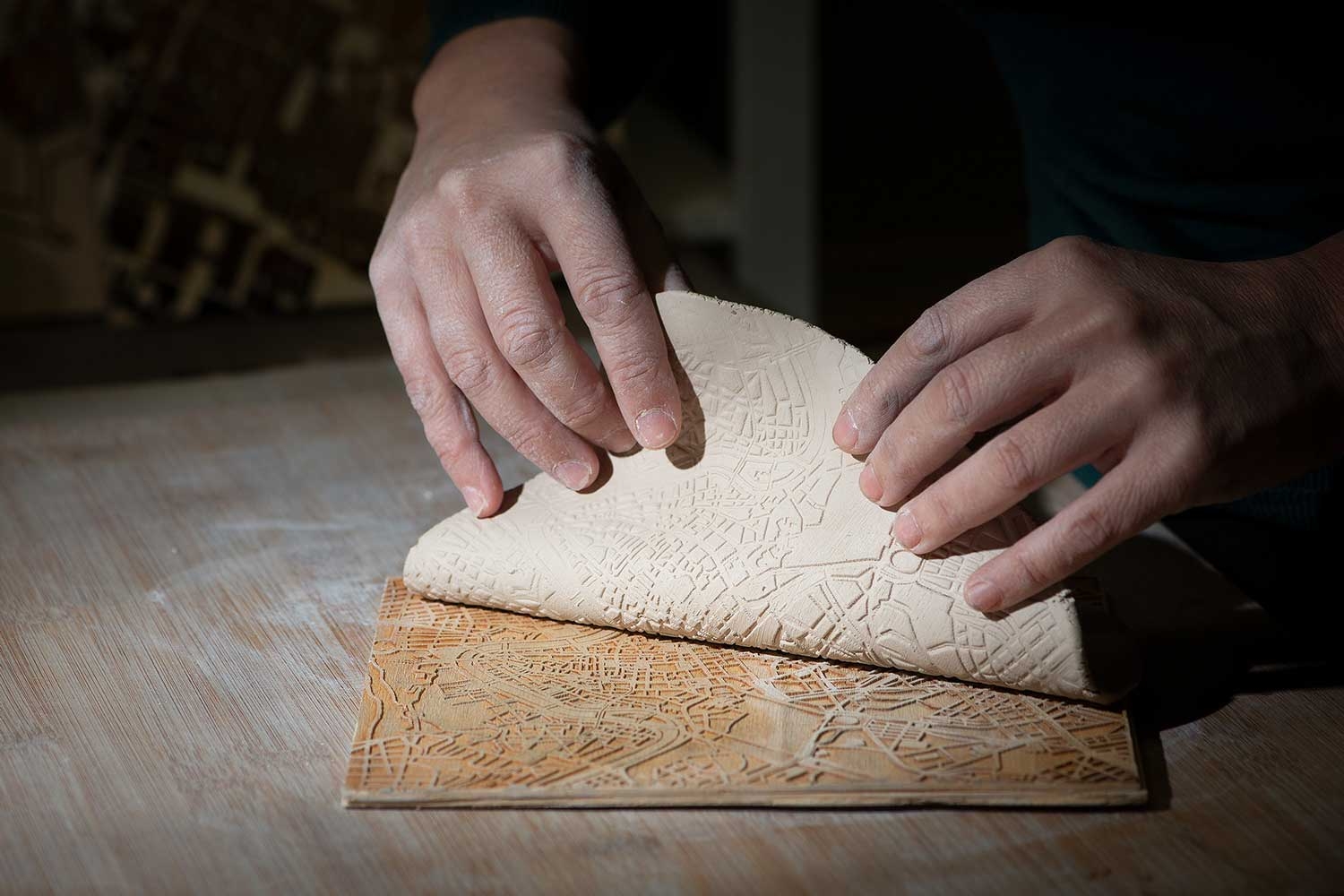
In recent years, I started working on city maps, creating both jewellery lines and independent works inspired by this theme. The maps are engraved on wooden casts (made in collaboration with the Department of Design at La Sapienza University in Rome) and then imprinted on porcelain sheets that I cut and assemble in various ways.
I think that for an object to be artfully made, it must involve basic technical knowledge. However, technical perfection is not enough, it is necessary for the artistic object to speak and communicate something in order to be unique.
I will answer as my great-aunt answered when I asked her this question: “I am attached to what I will do tomorrow.” Let us not stop to look at the past uncritically, let us treasure it to build a better future.
Maria Diana
Jewellery maker
Rome, Italy
AVAILABILITY
By appointment only
PHONE
+39 3489131792
LANGUAGES
Italian, English
Homo Faber Finds is a new service aiming to inspire admirers of craft to connect and collaborate with exceptional artisans.
We invite you to submit an enquiry here.